Posts Tagged ‘Lo-Fi’

27th November 2025

Christopher Nosnibor

Richard Rouka is… an unusual man. He’s existed around the Leeds scene since the emergence of the goth scene, and he documented it back in the day, in real time, but to describe his own musical output as ‘adjacent’ would be generous, to say the least. The mid-to-late eighties saw his label, Rouska, release a stack of stuff, predominantly by The Cassanda Complex and Dustdevils, bands with strong Leed connections.

His own works, released under the guise of WMTID aka Well Martin This Is Different! draws on the post-punk vibe of that period, but is predominantly primitive electropop with a distinctly bedroom / four-track vibe. WMTID has been a thing for over forty years, but Rouska’s output has skyrocketed in recent year.

One way of pitching it would be early Depeche Mode as performed by Young Marble Giants, but this wouldn’t really convey the ways in which these elements – played and tossed together in the most ramshackle of ways coalesce. But what it hopefully would convey was the fact that this is steeped in early eighties analogue experimentalism, the time when synths were breaking through as emerging technology and the Musician’s Union was shitting itself about how this would herald the death of ‘real’ music – particularly on account of the increasing popularity of drum machines, which they feared would end the need for drummers. Just as home taping didn’t kill music – and if anything it meant that music sharing exposed more people to new acts (I know I discovered countless new bands because people gave me mix tapes), so synths and drum machines broadened musical horizons instead.

Silica Bombs revels in the primitive: ‘Fool Moon’ is simple, sparse, in its arrangement, synths quavering around a persistent piston-pushing drum machine beat. With its stark, minimal production, paired with a fairly flat, monotone vocal delivery, ‘If It Happened Anywhere Else’ very much channels the spirit of Joy Division. The bleak, synth-led ‘Walk With Me (Into the Sea) sounds like a demo for New Order’s Movement. And yes, the recording quality is pretty rough, and it very much captures the spirit and sound of the late 70s and early 80s.

It’s different, alright, but above all, it feels like a magnificent anachronism. The eighties revival had been ongoing for at least a decade now, and so many acts have sought to replicate the sound and feel they’ve largely failed. Maybe you needed to there. Maybe you need the right kit.

But the weird, trilling organ sound of ‘Good Mourning’ brings a dark weight and fizzed-put production which are incompatible with contemporised production values. ‘Crushing Bore; brings a certain humous to proceedings, while coming on like Cabaret Voltaire. ‘Opposites Attract’ brings some heavy drone which contrasts with the sing-song vocal melody, and in may ways this is typical of the way in which WMTID explore polarities with a shameless eighties naiveté. By this, I mean that the 80s was really the last decade of real innovation. The 90s were exciting, and that’s a fact – I was there – but the 80s witnessed the arrival of synths, of electronica, and marked a real turning point in the trajectory of music. And Silica Bombs doesn’t replicate that era so much as live there. With its thumping beats and swirling synth sound, ‘Rouge Planet’ has a strong club vibe. That vibe gets stronger and harder, with the pulsating groove of ‘Sweet Jesus’, which Rouska tells us ‘I’ve got a friend in Jesus’. Yeah. The Jesus and Mary Chain, perhaps. ‘Personal Jesus’ maybe. It drives hard fir a relentless five and a half minutes.

This is an album which wears its influences on its sleeve and shows no signs of shame in that. And why should it? Rouska is very much of that era and played a part. The fact that his musical output over the last few years is indicative of a person who doesn’t go for meetups with former colleagues. More than its predecessor, Finding the A.I. G-Spot, Silica Bombs feels significantly beat-orientated, and more hard-hitting. It’s retro, and its catchy. It’s retro and it’s weird in that it has no specific identity… it’s just what it is. And it’s a groove.

AA

AA

AA

a2195822840_10

Originally released digitally on 14th March, and recorded at Hermitage Works during November 2024, the four track EP will receive its first physical release and will be available via Bandcamp.

Mixed and mastered by Max Goulding and Nathan Ridley.

Track Listing

One Window Open

Polar

Unit

Void Request

a1695055066_10

Liner Notes (by Fred MG):

Bo Gritz have been at it for ten years now. Or do we mean five?

You see, while the trio of Benjamin Salt, Max Goulding and Finn Holland have been together since 2015, they are also one of those groups who have a significant fork in the road in their past, specifically the Coronavirus pandemic. Lockdown gave Bo Gritz the opportunity for a hard-ish reset, with the band using all that time as a chance to work new synthetic textures into the tried and tested combo of guitar/bass/drums/vocals. Coupled with them securing a new permanent practice space in South London, the Covid period ultimately led to the hair-raising noise-rock of Bo Gritz’s most recent LP, 2023’s Chroma.

On Prang, Bo Gritz continue to reap the benefits of their new era. This is a potent four-tracker, industrialised and bristling. From the single-note lurch that heralds first track ‘One Window Open’ to the last thwack of closer ‘Void Request’, Prang’s barely-shackled chaos makes for an unpredictable and arresting listen. It’s ambitious, grizzly and extremely hard not to fall for.

At the noisier end of rock, there’s a strong modern lineage of album openers which get all their mileage from a stomping single-note riff. To a list which includes Pissed Jeans’ ‘Waiting On My Horrible Warning’ and Death Grips’ ‘Giving Bad People Good Ideas’ we can now add ‘One Window Open’. The track sitting just below mid-tempo allows space in the beat with which Bo Gritz can gesture towards all manner of beat-based stylings, from mercurial junglism to broken-beat techno.

The stall set out, Prang’s other three joints also tow the line of order and bedlam. ‘Polar’ is screed with strange, almost-tuneful noise which sounds like a revving motorcycle fed through an ungodly array of outboard gear. Occupying a space between texture and melody, this sort-of-lead line increasingly becomes the centrepiece of the song as things go on. Something similar takes place on ‘Unit’, and this track’s nervous twitching also has one thinking of that instrumental version of ‘Breathe’ by The Prodigy which used to be on the soundtrack of one of the Wipeout games.

As with the instruments, so with the vocals. Across this EP, Holland assimilates a sense of barely-controlled chaos into both the lyrics and delivery. The way in which ‘Polar’ sets lurid imagery (‘they said his eyes were cut out’) against the straight-laced sloganeering of capital (‘business must only get better’) makes one think of Thom Yorke’s star-making era cut with a little of that Gilla Band hysteria. ‘Void Request’ – a joint with a hint of Leeds lifers Bilge Pump in its DNA – finds Holland barking stentorian code one minute, muttering in the background the next.

Times change, but humanity doesn’t. Whether Bo Gritz had been doing their thing for five, ten or fifty years, the feeling at the heart of Prang – the suppressed horror of contemporary civilisation, the ugliness lurking underneath the workaday – is one for the ages. It’s just that now, in Bo Gritz’s new phase, they’ve got the emotional and material tools to deliver their message with a viscerality which feels thrillingly contemporary.

Bearsuit Records – 5th September 2025

Christopher Nosnibor

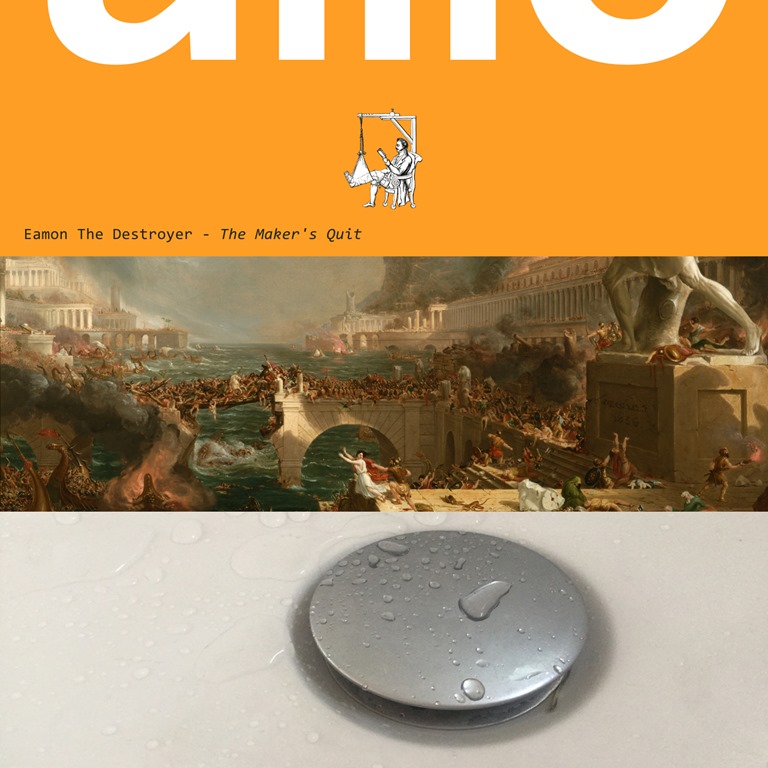
The thing with Eamon the Destroyer is that you never know what you’re going to get. The Maker’s Quit is different again from We’ll Be Piranhas, which in turn was quite unlike Small Blue Car (which remains a personal favourite, even if it does make me feel impossibly heavy on the inside). If We’ll be Piranhas marked a step forward in terms of experimentalism and optimism, The Maker’s Quit sees a greater emphasis on songwriting and structure – but don’t for a second think it’s in any way straightforward, and that the experimentalism has taken a back seat – it’s still very much a copilot here, and with the accent on the mentalism.

Here, the title track commences what is an incredibly varied set with a song that has the theatricality of Alex Harvey crossed with 1990s Leonard Cohen, before ‘Silverback’ confounds all expectation by bringing some shuffling funk-infused jazziness. In contrast to the fairly minimal arrangements common to previous ETD releases, this is pretty busy, then is settles into a mellow groove that’s almost loungey – bar the mid-section, which is rent with a protracted burst of extraneous sound. It’s almost as if he purposefully weaves around the line between genius and self-sabotage simply to tests us as listeners. There are some nice, light, poppy moments on here, and – albeit fleetingly – some captivating grooves. But it wouldn’t be Eamon the Destroyer without a huge helping of straight-up weird shit mashups, and The Maker’s Quit brings the lot, from frenzied jazz and post-grunge, wonky vaudeville waltzes and whistling, via electropop and slices of pan-culturally inspired melody.

More often than not, the verses and choruses are so contrasting as to seem to have been spliced from different songs – that’s when there are verses and choruses. ‘Three Wheels’ is a veritable patchwork, which compresses segments of what sounds like half a dozen songs into five minutes as it spins from grandiose heavy country dirgery by way of an intro, which even hints vaguely at recent Swans, before swerving into Europop with a hint of Sparks, through a off-kilter but gentle soundscaping that slides into laid-back salsa before winding up with a segment of jaunty indie rock. But rather than feel like an identity crisis, the effect is more that of a multi-faceted artist showing all his facets simultaneously. It’s hard to keep up, but one can only imagine what it must be like to live in his head.

The lyrics are equally fragmented, between stream of conscious and cut-ups, producing a Burroughsian, dream-like quality. This snippet from ‘The Maker’s Quit’ exemplary: ‘Saturn kid – spins and reels – in a city / Little Feet – lost in a wave – out to sea / A grandmother – nods – to a space in the crowd / Cap gun assassin – emerges – from a conjurers cloud…’ Beyond oceans and waves, it’s impossible to pin down any notion of themes or meanings. The images float up and fade out instantaneously.

‘The Ocean’ begins dramatically, a swelling, surging drone that halts abruptly, yielding to one of the most typically Eamon the Destroyer passages – lo-fi folktronica with a low croon reminiscent of Mark Lanegan, which slowly tilts its face upwards from scuffed boot-tips towards the sun…. and then all mayhem happens in a brief but explosive interlude, and your head’s suddenly spinning because wherethehellhasthiscomefrom? It’s this wild unpredictability and unapologetic perversity which is – strange to say – a substantial part of the appeal of Eamon the Destroyer.

When Eamon the Destroyer goes downtempo, as on the mournful, string-soaked introductory segment of ‘Captive’, you can actually feel your heart growing heavier by the bar, but then it twists onto some semi-ambient avant-jazz, and the sensation transitions to bewilderment.

The final track, ‘The Buffalo Sings’, is a twelve-minute behemoth is s slow, surging lo-fi electronic exploration. Face the strange? It embraces it, hard, then absorbs it by ghostly osmosis. If ever a song was less country, less ‘Buffalo’… maybe some of the western themed electrogoth songs by James Ray and the Performance are on a par on that score, but this wanders into a sonic desert without even a hat for protection from the punishing sun, and slowly, everything melts in the heat. Circuits bend and warp, and the weirdness rises like a heat haze… and it’s wonderful to be immersed in a work which celebrates creative freedom with no sense of constraint or obligation.

On reflection, with Eamon the Destroyer, you know exactly what you’re going to get: visionary hybridity, moments of aching sadness and fractured beauty, shards of melancholic memory , unbridled inventiveness and fevered creativity, and music like nothing anyone else is making. In a world where meaning seems to have all but evaporated and it’s increasingly difficult to make sense of any of it, The Maker’s Quit feels like a fitting soundtrack. It exists purely in its own space, and it’s the perfect space to escape to in these most dismal of times.

AA

Eamon-TD-3_Cover

Following the demise of Needlework, who we absolutely loved here at Aural Aggravation, front man Reuben Pugh has been keeping busy and keeping creative, with the swift emergence of lo-fi slacker country act Troutflies.

Ahead of an imminent debut album, The Dancing Years, they’ve dropped the song ‘Cross on a Hill’, which has hints of Pavement and Silver Jews, blended with the drawl of Mark E. Smith, and is accompanied by a video that matches the loose, low-budget feel of the song. We dig.

AA

531393817_122160077354381252_7463272933200659176_n

Christopher Nosnibor

When it comes to formats and the strategies for marketing new releases, it’s clear – particularly in hindsight – that the 90s was the peak period for milking fans with myriad formats, each featuring different mixes or edits, B-sides, and artwork. Now, I am by no means a nostalgia nut, but as a collector, part of me does miss this – particularly when most releases aren’t even available physically anymore, and some aren’t even downloadable. Adding a track your playlist is… nothing.

The latest offering from Glasgow’s wonky lo-fi maestros, Dragged Up, sees a different approach, at least, with an edited version of the A-side being released to streaming platforms but a full-length version available to download via Bandcamp, with the B-side being released a week later, followed by a physical release via the ever-innovative label Rare Vitamin.

You really need the full five-minute version of ‘Blake’s Tape’ to take it all in, to bask in the glory of the epic intro of churning feedback and rumbling discord which eventually gives way to a stomping, rambunctious indie tune which brings in elements of post-punk and folk, a collision of UK 80s and US 90s, and with the verses and choruses sounding like they belong to different songs, the dynamic is strong, switching as it does from nonchalance to pumping energy. And both are magnificently executed.

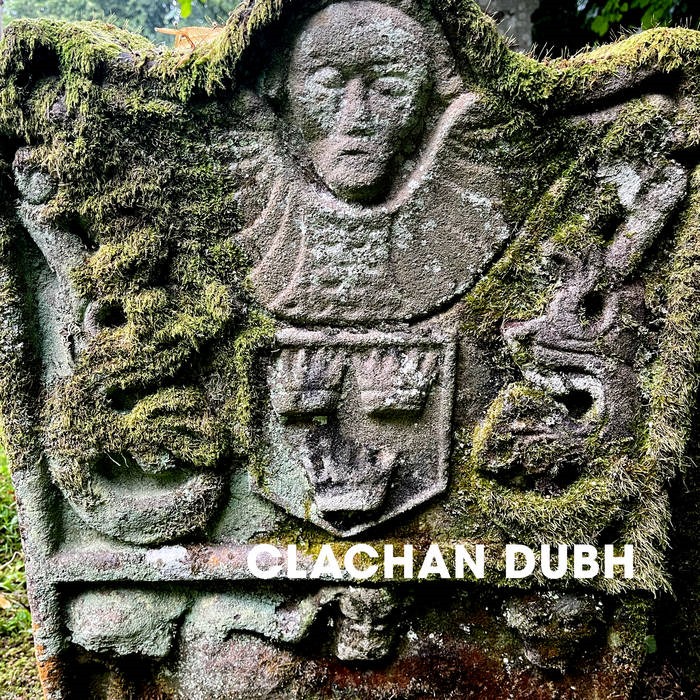
‘Clachan Dubh’ is a fast-paced, high-energy blast of fizzy guitars and blissfully loose interswitching vocals, and again it’s a collision of Pavement and The Fall plus all the scuzzy indue acts you’d read about in NME and Melody Maker in the early 90s. It’s less a case of them sounding like this band or that band, and more about the way they distil these various zetigeists and amalgamate them into a magnificent alt-rock hybrid which sounds like so much that’s gone before, and at the same time completely unique.

Oh, and they’ve got songs. Great songs. Get stuck in. And maybe go and see them on tour in a small venue in August, because after touring as the support for Steve Malkmus’ new band in the summer, there’s a fair chance they’ll be playing bigger places by this time next year.

AA

a3966480230_16a1631882881_16

1st March 2025

Christopher Nosniboir

Richard Rouska is something of a cult legend in his own lifetime: back in the 80s he was pivotal in the Leeds zine scene, documenting the emerging post-punk movement Leeds remains so renowned for, in real-time, subsequently writing a number of books. Along the way, he’s made some music of his own, recently making Well Martin This is Different his primary focus, with some prolific results. Finding The Ai G-Spot is WMTID’s fifth since their inception in the mid-late eighties, and serves up a set of remixes, with proceeds from any donations going to the Throat Cancer Fund.

And yes, it certainly is different, and that’s clear from the get-go. WMTID’s music is essentially electronica, but draws on a host of elements which have their origins in different decades and different scenes. I will admit that I misread the title as Finding The Ali G-Spot initially. Ai-iit! But while this album draws on a huge array of influences, you won’t find any naff cultural appropriations.

‘The Prince is Dead (Again)’ is a twisted hybrid of lo-fi post-punk, 80s electronic industrial (think Wax Trax! stuff in the late 80s / early 90s), space rock, and Krautrock, a motorik groove stricken through with some wild orchestral strikes and multi-layered vocals – and this is to an extent the template: ‘03:33 Time’s Up’ is exactly the same duration as the original version (‘333’) which appeared on I Know What You Are But Who Am I? in the Autumn of 2024, tweaked to optimise the hypnotic rhythm and detached-sounding vocals. The result is somewhere between DAF and early Human League. ‘Deep Down Low II’ – again reworking a track from I Know What You Are goes full-on techno / cybergoth stomper, with industrial-strength beats pounding away relentlessly. It works so well because it doesn’t take from the original, instead simply rendering it… more. More. MORE! And I want MORE!

There are hints of both KMFDM and very early New Order about ‘It’s (Another) Lovely Day’, but then, it’s as much a work of buoyant lo-fo indie and bedroom pop, while ‘Little Bombshells’ comes on a bit Prodigy, but again, a bit technoindustrial, and a bit kinda oddball, bleepy, bloopy, twitchy, stuttery, the vocals quavering in a wash of reverb as crashes of distortion detonate unexpectedly. Elsewhere, ‘Waiting For The End…’ goes dark and low and robotic, and ‘Three O’Clock Killer’ is hyperactive and warped, and brings menacing lyrics atop a baggy 90s beat.

It really is all going on here, and the end result feels like a wonderfully eclectic celebration of music, articulated through some quite simple compositions, all of which have solid grooves providing the backbone of each.

My general opinion of remix albums is widely documented and not entirely enthusiastic, but Finding The Ai G-Spot is a rare exception, mostly because it doesn’t feel like a remix album an doesn’t offer three or four unnecessary and unrecognisable versions of each song, boring the arse off all but the most obsessive fan. In fact, if you’re not up to speed on WMTID’s output – and there’s a fair chance you may not be, to be fair – Finding The Ai G-Spot offers a neat entry point and summarises the last couple of albums nicely, too.

AA

a2835565654_16

Cruel Nature Records – 21st February 2025

Christopher Nosnibor

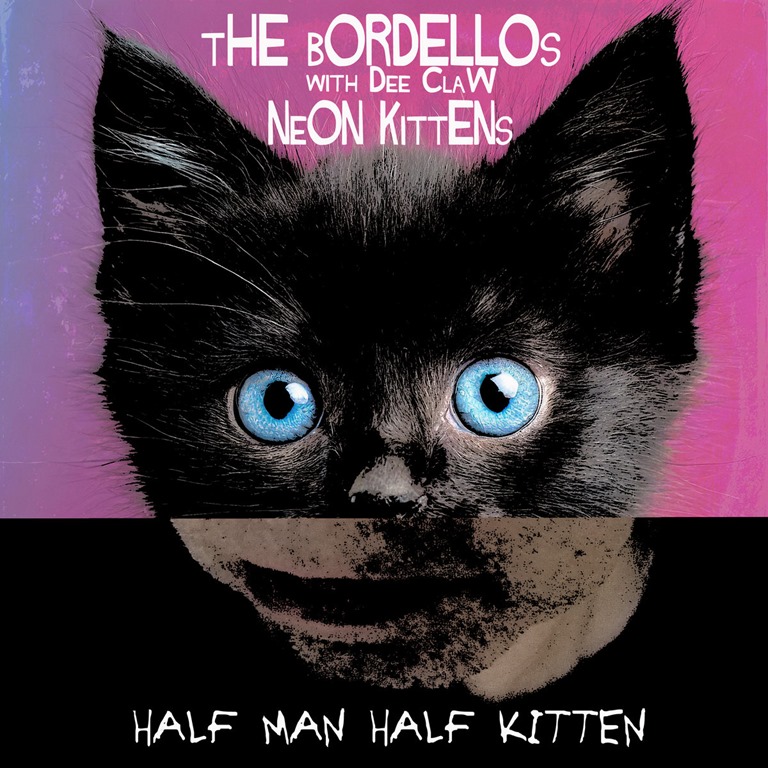
This split release has a lengthy backstory, which is given in full on the label’s Bandcamp page – but the short version is that when York’s Neon Kittens (how had I not heard (of) them, given that they appear to be from round my way and absolutely my bag? I feel ashamed, and fear I cannot even remotely claim to have the finger on the pulse of my local scene right now – but still, better late than never, right?) approached The Bordellos about a collaboration, the latter, having taken an eternity to only half-finish their current album-in-progress, some ten years after the release of will.i.am, you’re really nothing, offered everything they had for a split release. And lo, this is it.

I suppose the eight songs Neon Kittens have contributed here provide a solid starting point to their rapidly-expanding catalogue, and being paired with The Bordellos works a treat. Both espouse the same lo-fi DIY ethic, with a certain leaning toward indie with a trashy punk aesthetic.

That the cassette edition sold out on advance orders hints at the anticipation for the release: for, as The Bordellos describe themselves as being ‘ignored by millions, loathed by some, loved by a select few’, when you’ve got a small but devoted following, they get pretty excited for new material.

‘Set Your Heart to the Sun’ is perfectly representative of their scratchy, harmony-filled indie – kinda jangly, a tad ramshackle, but direct, immediate. Dee Claw’s airy vocal contributions really lift the sound and raise the melodic aspects of the songs. Not all of the songs have full drum-kit percussion, often favouring tambourine or bongos or seemingly whatever comes to hand, and more than any other acts, I’m reminded of Silver Jews or really, really early Pavement – those EPs that sounded like they were recorded on a condenser mic from the next room with more tape hiss than music, but still undeniably great tunes. And yes, they really do have great tunes – overall, they’re pretty laid-back in their approach to, well, everything: remember when ‘slacker; was a thing? Yeah. In place of polish, they have reverb, and these songs tickle the ears with joy.

Neon Kittens bring a rather denser sound and a greater sense of urgency with the buzzy, scuzzy ‘Better Stronger Faster’. A hyperactive drum machine stutters and flickers away beneath a sonic haze of fuzzy guitar: there are hints of Metal Urbain crossed with The Fall and Flying Lizards in the mix, while ‘All Done by Numbers’ brings Shellac and Trumans Water together in a head-on collision – and one suspects any similarity to Shellac’s ‘New Number Order’ is entirely intentional from a band who recently featured on a Jesus Lizard tribute. ‘Cold Leather’ presents a spoken word narrative over a lurching, lumbering morass of discord, held together by the whip crack of the snare of a vintage-sounding drum machine.

The majority of their songs are around the two-minute mark, and crash in, slap you round the chops, and are done before you really know what’s hit you. ‘Deaf Metal’ is a work of beautiful chaos, constructed around a thick, rumbling bass and rolling drums., while the rather longer ‘White Flag’ is almost a stab at a grunge-pop song, while the discordant clang of ‘Sailing in a Paper Boat’ is absolutely The Fall circa Hex Enduction Hour: lo-fi post-punk racket doesn’t get much better than this.

AA

a3951021685_10

Cruel Nature Records – 21st February 2025

Christopher Nosnibor

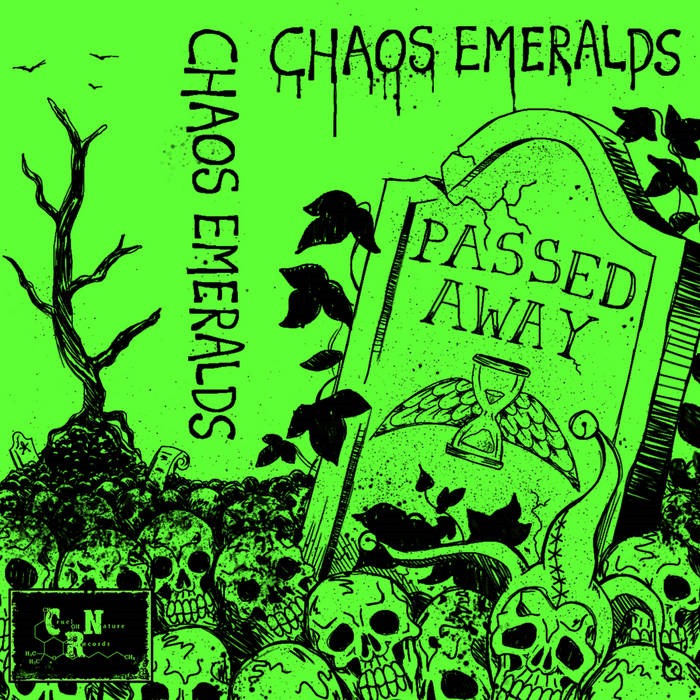
Cruel Nature are delivering a slew of releases on 21st February – an overwhelming volume, in fact. We’ll be coming to a fair few of them in the coming weeks, but first up, is the second album from Lanark / Reading based sludgy shoegaze project Chaos Emeralds, Passed Away, which comes in a hard-on-the-eye dayglo green cover which is catchy and kinda corny in equal measure.

According to the bio, ‘Chaos Emeralds is Formerly the solo project of Charlie Butler (Cody Noon, Neutraliser, Mothertrucker) with releases on strictly no capital letters, Les Disques Rabat-Joie and Trepenation Records, Chaos Emeralds has now expanded to a duo with Sean Hewson (Monster Movie, Head Drop, This) joining on lyrics and vocals.

Passed Away combines the lo-fi slowcore, shoegaze and doomy post-rock sounds of the previous Chaos Emeralds releases with a more song-focused approach to create a set of scuzzy emo gems.’

For some reason, despite ‘sludgy shoegaze’ and ‘lo-fi slowcore, shoegaze and doomy post-rock’ featuring in the above description, I didn’t quite expect the Pavement gone Psychedelic vibes of the title track which raises the curtain on the album. A primitive drum machine clip-clops away, struggling to be heard above a tsunami of feedback and waves of distortion on ‘Count Me Out’, which adopts the kind of approach to production as Psychocandy – quite deft, breezy and ultimately melodic pop tunes almost completely buried in a blistering wall of noise.

‘Juggler’ brings a wistful tone – somewhere between Ride and Dinosaur Jr – amidst ever-swelling cathedrals of sound, a soaring lead guitar line tremulously quivers atop a dense billow of thick, overdriven chords which buck and crash all about. The way the elements play off one another, simultaneously combining and contrasting, is key to both the sound and the appeal. It’s one of those scenarios where you find yourself thinking ‘I’ve heard things which are similar, but this is just a bit different’, and while you’re still trying to decide if it actually works or not, you find yourself digging it precisely because of the way it’s both familiar and different.

The vocals, low in the mix, feel almost secondary to the fuzzed-out wall of guitar, but their soft melancholy tones, sometimes doused in reverb, add a further minor-key emotional element to the overall sound, especially on the aching ‘Matter’.

When they do lift the feet off the pedals, as on ‘Welcome Home’, the result is charmingly mellow indie with a lo-fi sonic haze about it – and a well-placed change in tone and tempo, paving the way for the epic finale that is ‘In Our Times’, a low-tempo slow-burner which evolves from face to the ground miserabilism into something quite, quite magnificent, Hewson’s near-monotone vocals buffeted in a storm of swirling guitars as the drum machine clacks away metronomically toward an apocalyptic finish.

AA

a4117384026_16

skoghall rekordings – 10th January 2025

Christopher Nosnibor

The notes which accompany this release are more of an anti-pitch than a promotion: ‘depression, dourness, gloom, sex, drinking, drugs and male anxiety – some of it true, some made up.’ I had been warned. Should this maybe even come with a trigger warning?

Hell no. Art is life., and life doesn’t come with a rigger warning. If you truly want to avoid anything that’s a potential trigger, you probably just need to die right now, because there is no other way to avoid everything.

But my misery is your reward is pretty fucking bleak. It’s not Dave Procter’s first foray into acoustic-based musical work, and by no means the first release to feature his first spoken word works, although it is perhaps his first to present both these and an array of other styles with the purpose of exploring a core theme, namely of being fucking miserable.

I should make the up-front presentation of the fact that I am absolutely by no means being critical of the album’s miserabilism. For years, the theme of much dialogue has been ‘we need to talk more about mental health! We need to destigmatise mental health! We need to talk about mental health more openly!’ And I agree without reservation… but… It seems that the limit of most conversations – and this is perpetuated, sadly, by sufferers, and by artists, and by bosses (especially bosses) and by social media –remains at ‘I’m having trouble with my mental health’/ ‘Oh dear’. That is not talking about mental health. But people are not comfortable discussing the details, the way those troubles manifest, what it really means. Tell someone what that really means and oftentimes it will likely be a very brief and one-sided conversation. Male anxiety: are we even close to a place where blokes can sit and talk about their disturbed sleep and panic attacks down the pub with their mates? Are we hell.

The spoken-word pieces – succinct and pithy – are impactful partly because they say so much with so little verbiage, but equally because of the monotone delivery recorded close to the mic, with no studio slickness, no compression or reverb, but dry, as if Procter is leaning forward to confess in low tones the unutterable darkness. ‘no sleep no peace’ is exemplary:

I get no sleep at night

No peace in the day

There’s shit in the kitchen

There’s shit on the floor

There’s shit all on my life

Since you walked through the door.

So many of us will have lived with some squalid fucker at some point, and what may on paper appear trivial can in fact become a living hell.

The majority of the songs are sparse acoustic guitar and vocal works which sit between bedroom gloom and neofolk, with similarly direct and downcast lyrics: ‘the choices are stark enough / between dope / and a rope / it doesn’t take much these days’, he sings on ‘not much’. They’re simple and super lo-fi, and wouldn’t work any other way, because the nature of the recordings imbues them with an intimacy which brings a lump to the throat on many occasions. Even the bits that are made up, because it’s all interwoven and ultimately inseparable.

Elsewhere, ‘the visitor’ has the haunting reverb-drenched melancholy of Leonard Cohen, while ‘his face, my place’ is like a demo for a goth take on the kitchen sink non-drama of The Wedding Present, and ‘when you want her back’ sounds like David Gedge in collaboration with Stereolab.

As the label’s Bandcamp page states, Skoghall exists to present ‘a collection of past and present work involving Dave Procter’, and my misery is your reward is very much a work mines from the archives, ‘originally recorded during several periods of the above in Leeds and Stockholm in 2007 and 2008, although the ideas have been around since late 2005…’ Procter adds, ‘I think they call it catharsis. This LP is meant to be listened to in one sitting.’

Almost twenty years since conception and seventeen or so years since its recording, some may consider it curious that an (extremely) active artist would serve up these somewhat primitive and one might even say juvenile recordings now. But there does come a point in life when, perhaps we make peace with our discomfort and awkwardness and with the distance of time, can appreciate the merits of those works which were necessary in the evolutionary journey to the artists we become. To finally release it… yes, there must be an element of catharsis in casting out those thorny thoughts, the kind of twisty, churny recollections that insist on needling away, years after the fact.

my misery is your reward is a world away from Procter’s work as Legion of Swine or Fibonacci Drone Organ, and even the no-nonsense spoken word of Dale Prudent, and there’s a touching humanity, and the lack of sophistication is an asset when it comes to conveying difficult emotional states in a relatable fashion. Yes, we need to talk about mental health, and what we also need is for documents of unflinching honesty and for artists to take the lead. This is what we need.

AA

AA

a2113781565_10

A homage to Speilberg’s seventies masterpiece Close Encounters, masterfully recreated by Dave Meyer.