Posts Tagged ‘Live Review’

Christopher Nosnibor

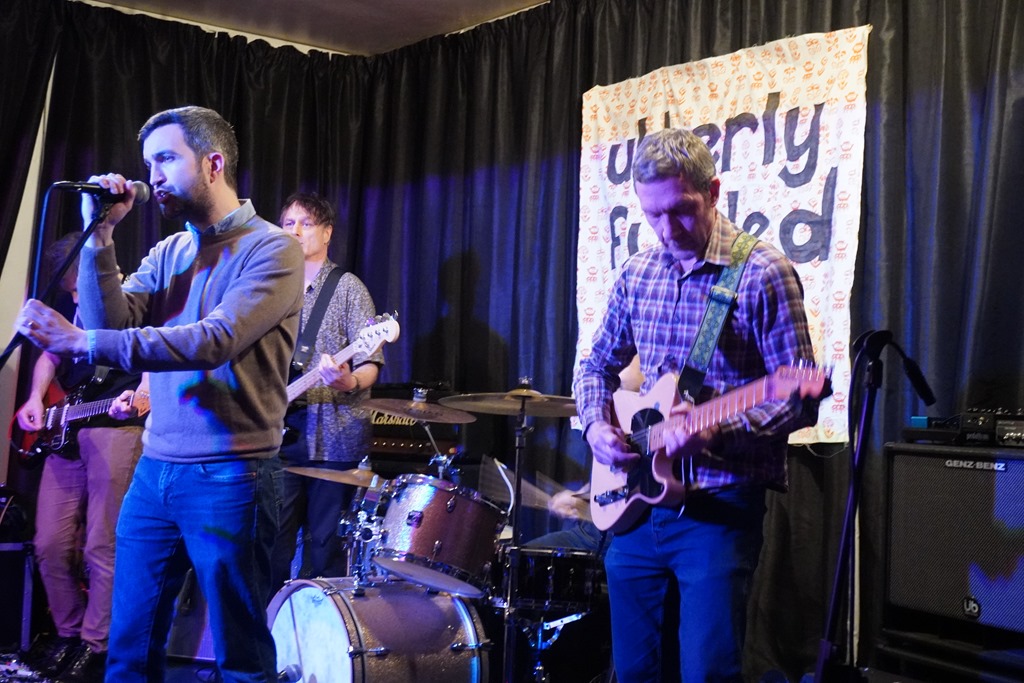
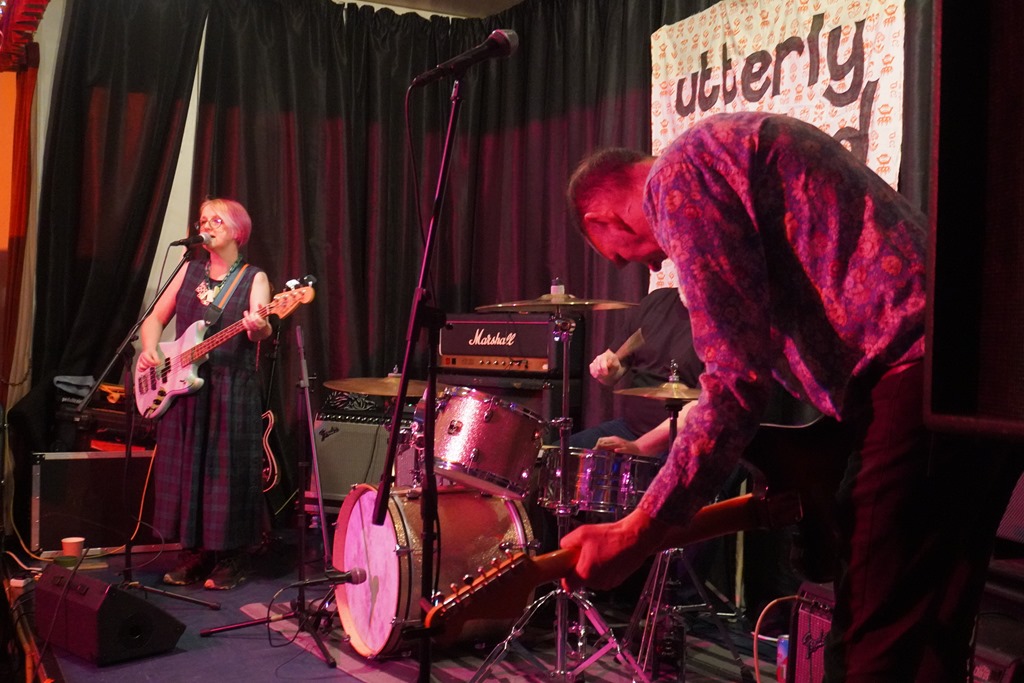
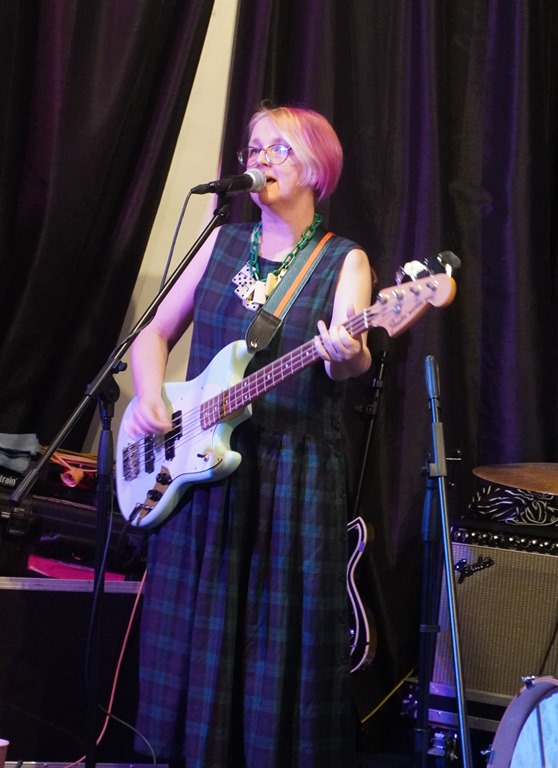
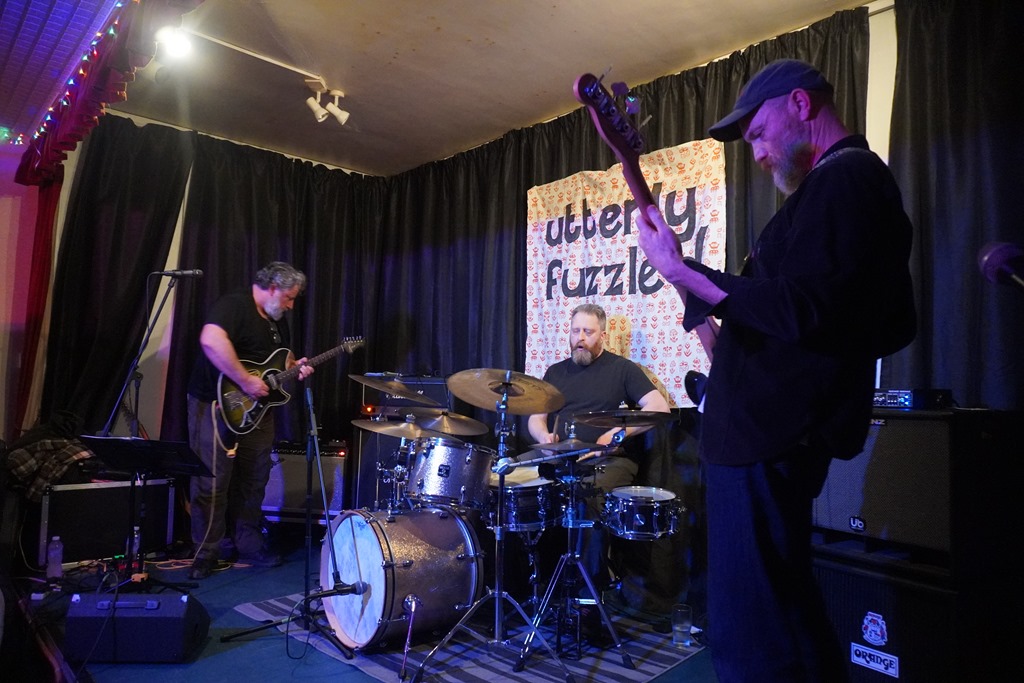
It’s a cold and very wet Thursday night in December. The kind of night that would validate the narrative that music venues go bust because they’re not supported, and people want to see bands they know over local acts and so on – if the place had been quiet. But there’s nothing quiet about tonight., in terms of turnout or decibels. Ok, it’s not rammed, but it’s respectably busy, and as for the volume… These guys take it all the way to eleven.

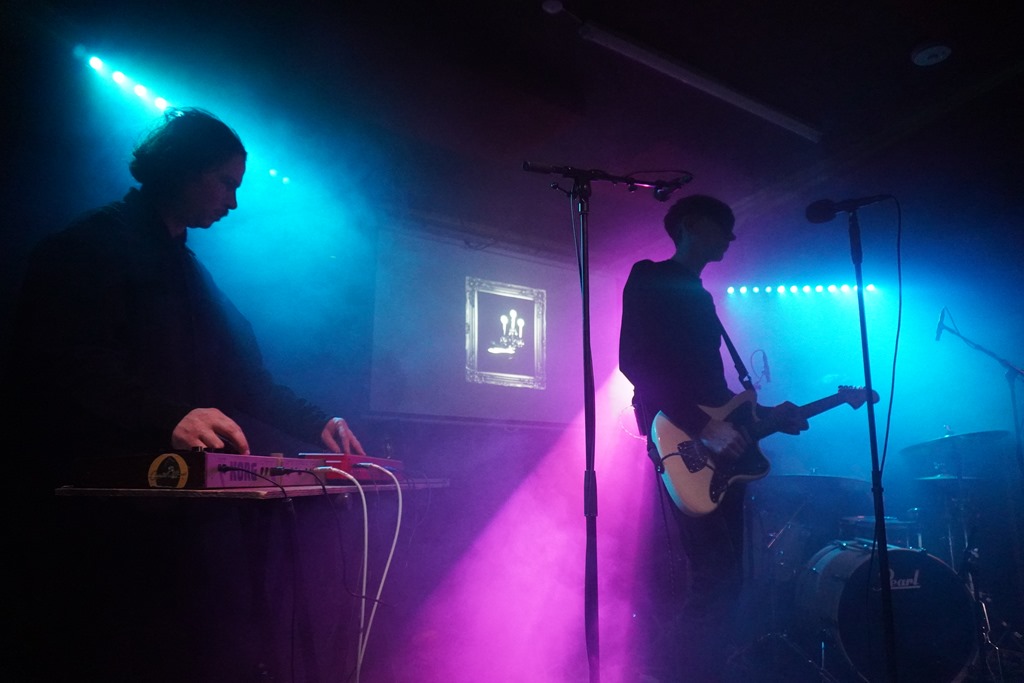
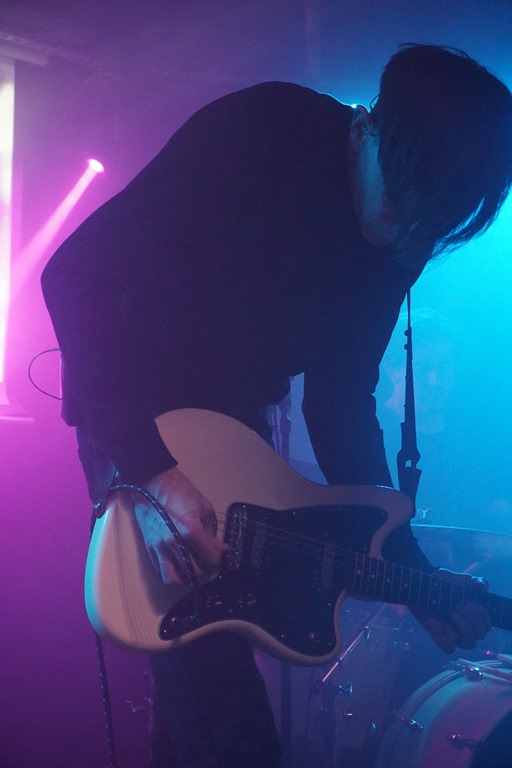
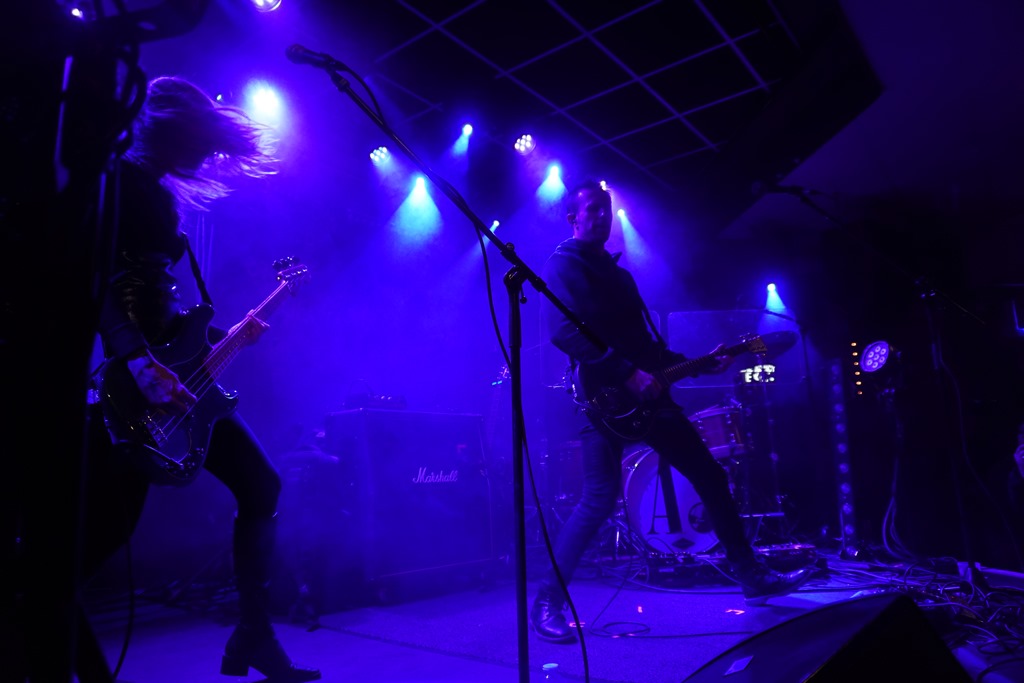
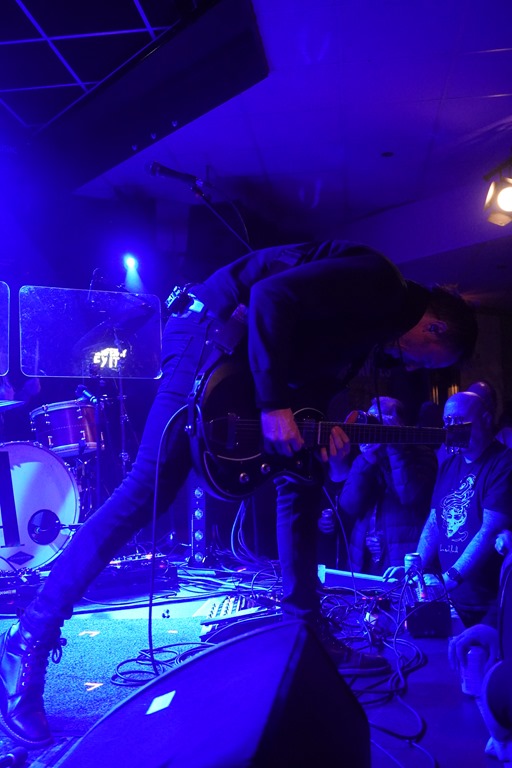
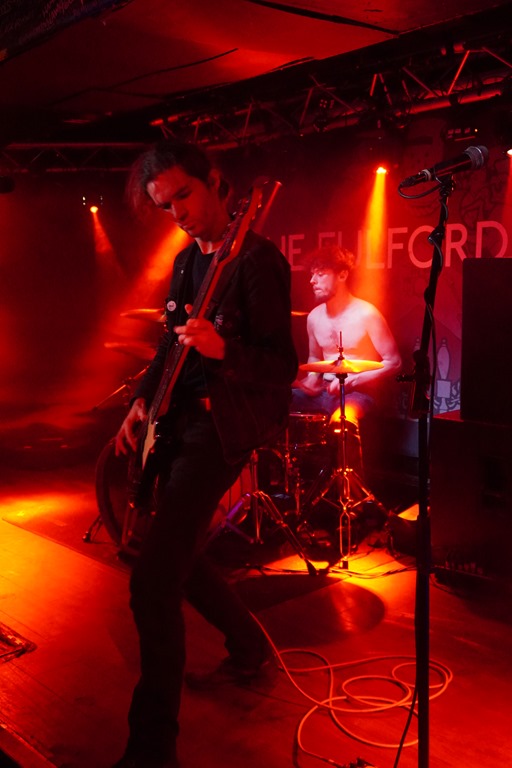
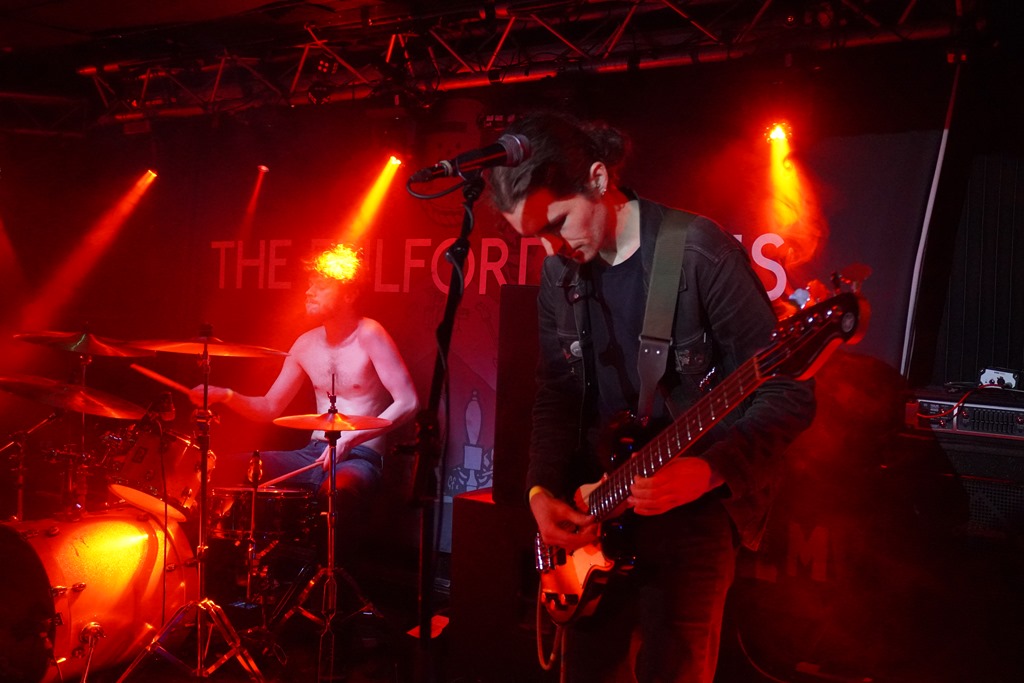
The promoter’s strategy of booking a local / student / uni band to open up is one that rarely fails, and there’s a significant turnout early doors for ATKRTV. It helps that they’re good, albeit an acquired taste and not your average uni band. Operating in the classic power trio format, their primary inspirations are clearly US noise rock and grunge – there’s a bit of the Jesus Lizard here, a dash of Sonic Youth and Shellac there – as well as UK 90s noise that makes nods to the likes of Fudge Tunnel and Terminal Cheesecake – but there’s a lot going on, with hints of avant jazz in the blend, too. They’re a bit rough round the edges, but there is a musical style which is forgiving of this, and the jagged jarring juxtapositions of squalling guitar work with some meaty bass work evidences a technical ability beneath the surface of the feedback-strewn tempest. And while the banter might need some work, the songs are a glorious angular explosive racket, and they give them a hundred percent. And this is why it’s always worth getting down early doors. Every headliner was a support act once, after all.

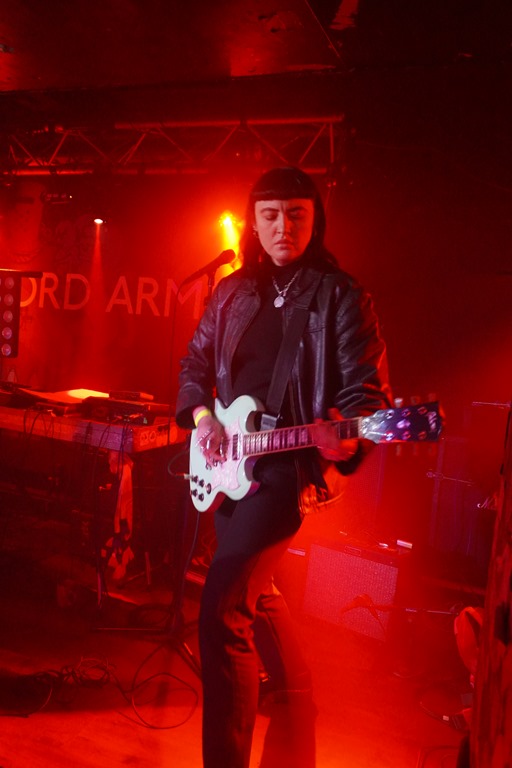
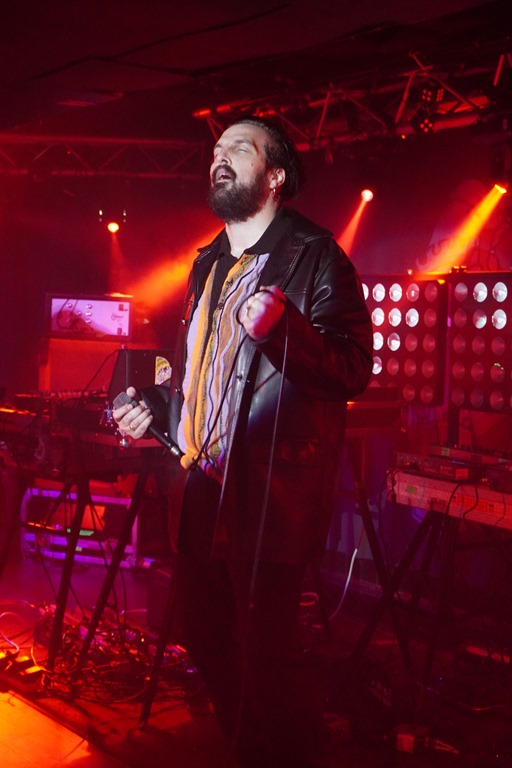
DSC05224DSC05185

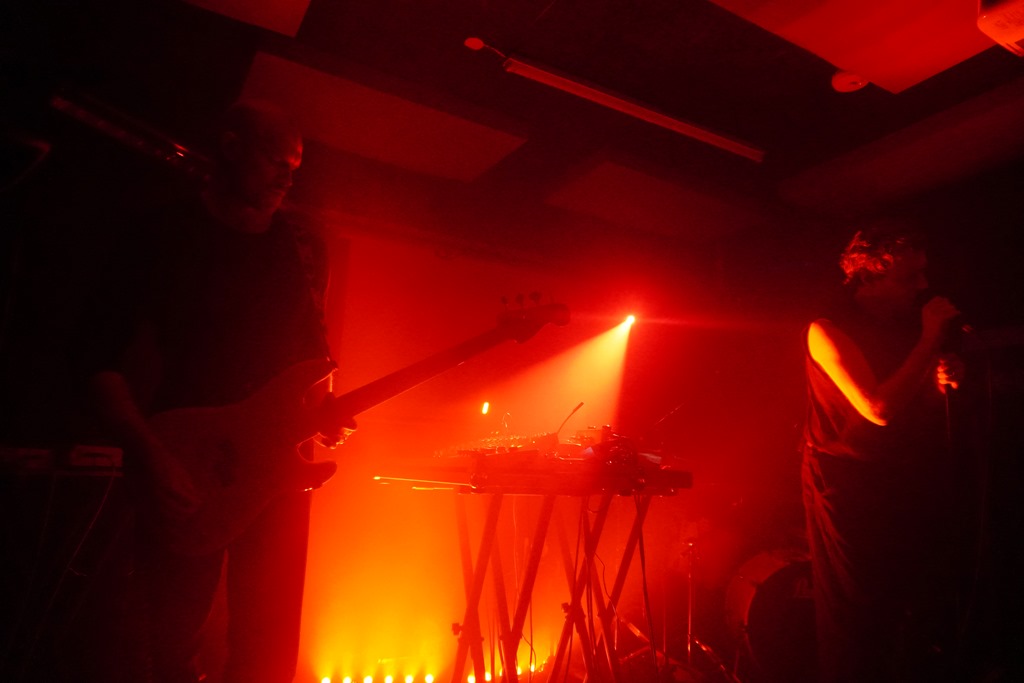
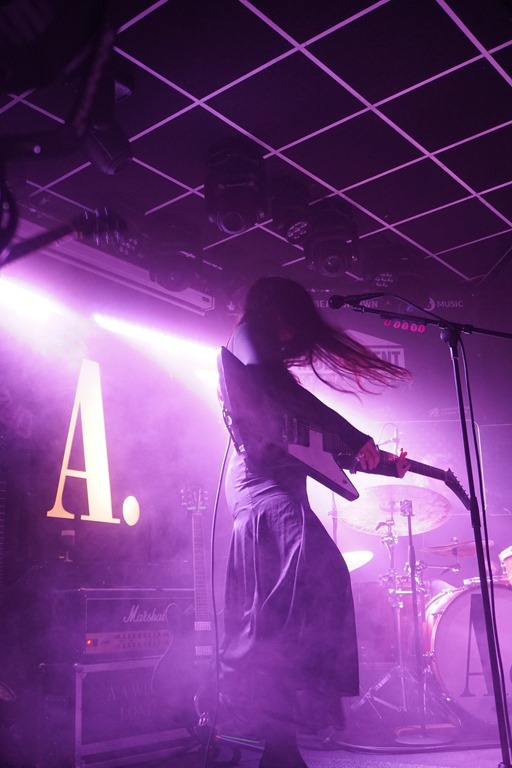
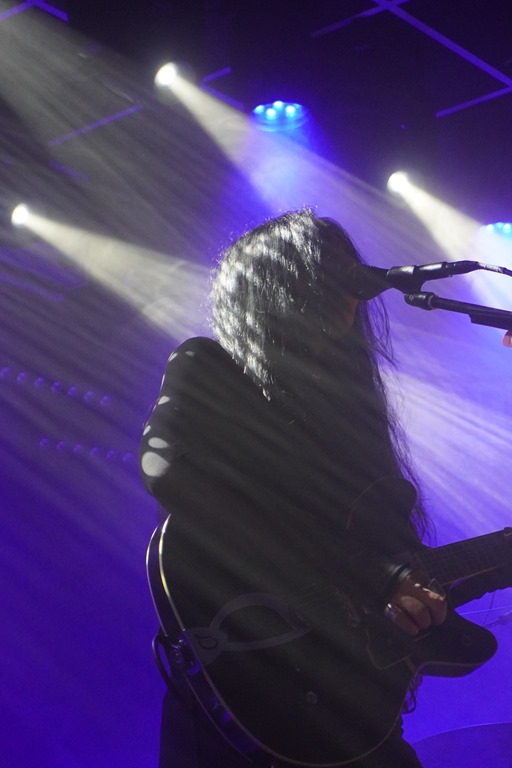
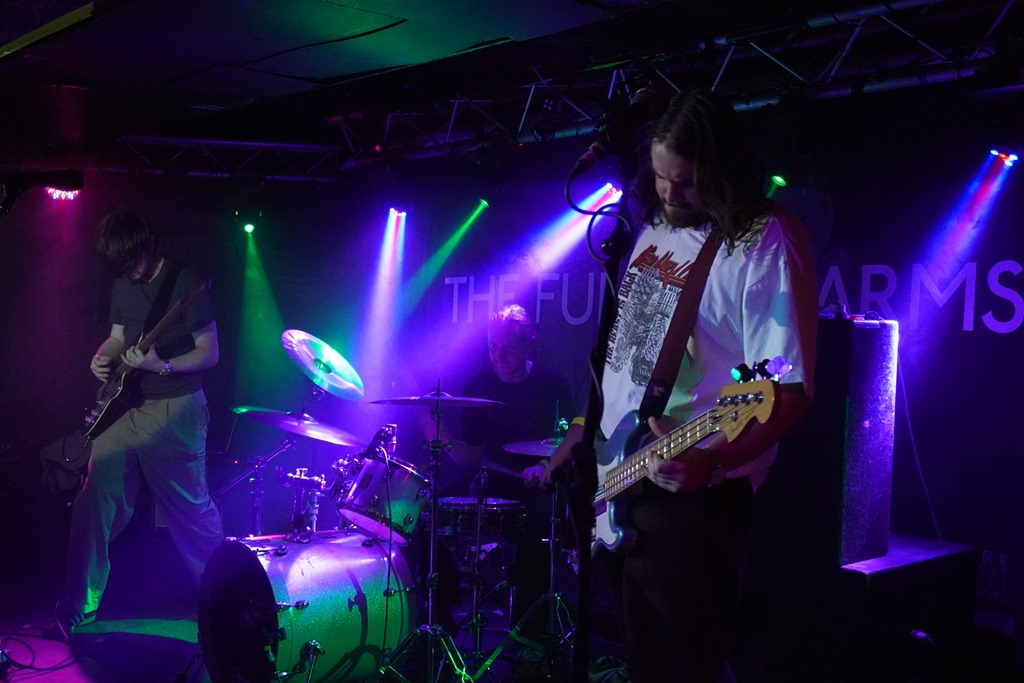
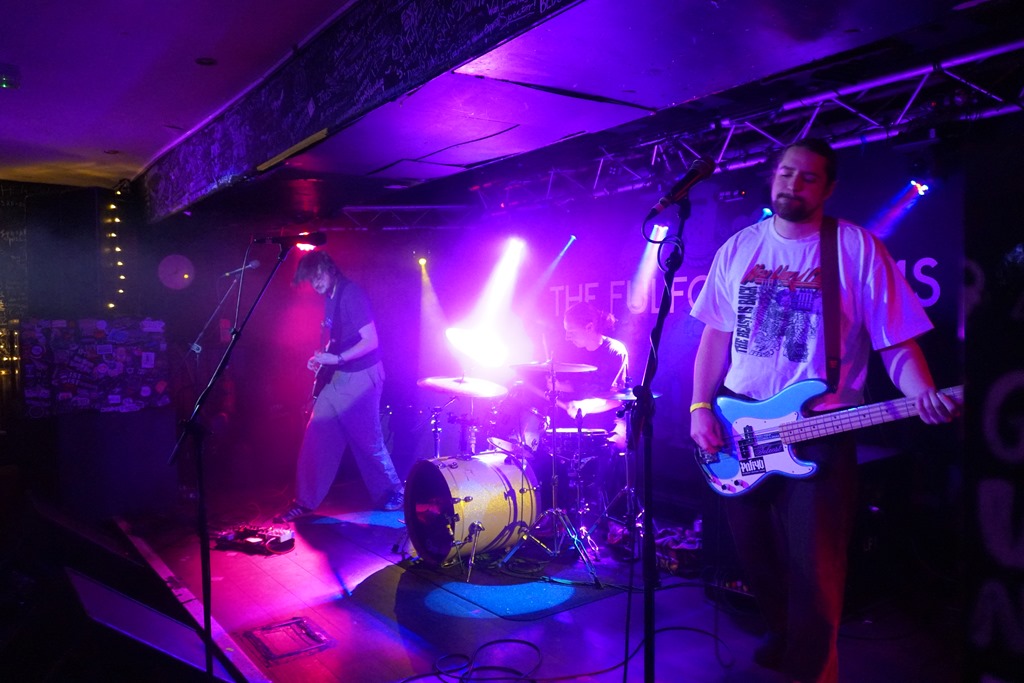
In my recent review of that debut album, Atavism, I commented on how the challenge would be for them to replicate the live sound in the studio. This is because their life sound is simply immense. There really is no other word for it. And this is not volume simply for the sake of it: this is volume as an expression, volume which renders the music physical, volume without which certain frequencies and tonalities, so integral to their sound, would not be achievable. Their performance in this same venue back in February was spellbinding, and I came tonight in the hope of replicating that experience. And oh yes, I did, and then some: Teleost seemed to take things to the next next level tonight.

Theirs is a subtly different take on the whole droning doom / stoner form, incorporating almost folky elements in the way that more recent Earth albums do. And instead of being solely about bludgeoning riffery – and hell, there’s plenty of that – there’s a rare attention to detail, not just in the delicate picking and soft cymbal splashes in the quieter moments, but in the full-spectrum sonic experience they conjure. And yes, conjure is the word: this is a world of magic made with a mystical blend of musicianship, amps, pedals, and something else quite indefinable. The way Leo Hancill uses a standard guitar, played through a substantial but not extravagant pedal set and two amps, to cover the range of both guitar and bass is spectacular in itself, but what really makes their sound unique, and it’s so easy to lose yourself in the timbre and texture, the way the sounds reverberate against one another to create this sensurround experience.

DSC05272DSC05244DSC05267

Teleost

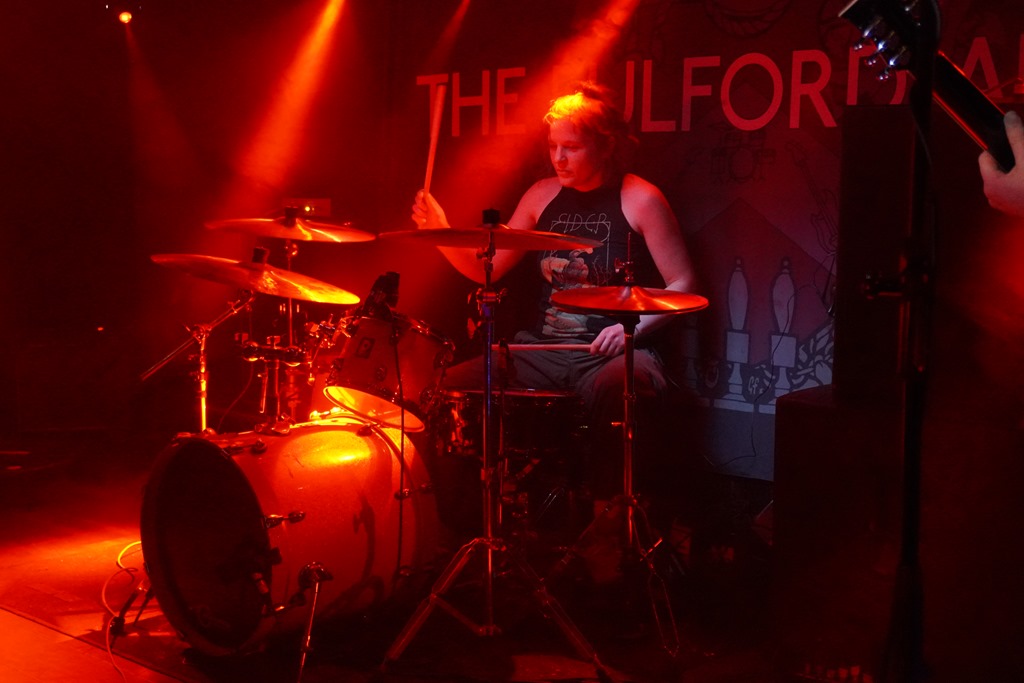
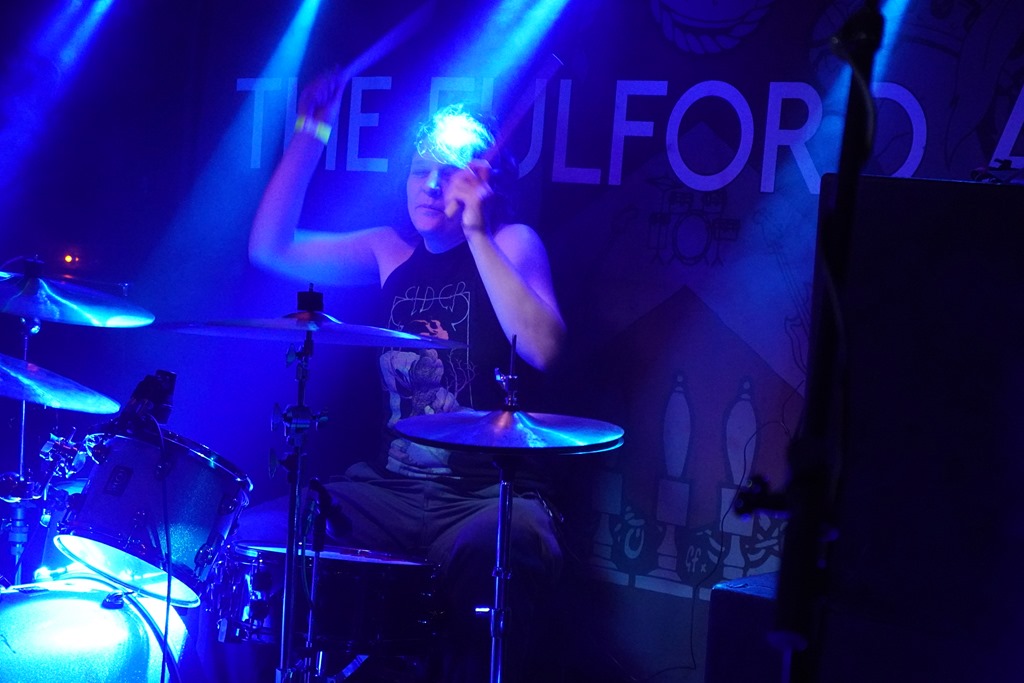
Once again, I find myself truly mesmerised by Cat Redfern’s ultra slow drumming. What’s most remarkable is how effortless she makes it appear. Granted, her sticks are batons, but she is still an immensely hard hitter please with absolute precision. Yet she plays with an order of serenity, her expression calm, almost a smile, although it’s clear that’s behind this is intense concentration, and perhaps an element of telepathy between herself and Leo. Certainly the intuition between pair is remarkable, and no amount of rehearsal alone can achieve this level of tightness. The way they navigate the peaks and troughs, spinning elongated quiet passages, where they reduce everything to a hushed hum and the tinkle of a cymbal before bringing in a cataclysmic riff with pinhead precision is nothing short of phenomenal. And for all the noise, the experience is remarkably calming.

Before Teleost, there was PAK40. But with basis / vocalist Andy Glen now resident in Germany, and Leo Hancill living in Glasgow, activity from this former York duo is now extremely rare. That they’re touring with Teleost, having released a new EP simultaneous with the Teleost album makes economical sense, but also represents a significant feat of co-ordination.

It’s not difficult to identify the origins of Teleost when listening to pack 40. They’re certainly slow and heavy. But their style draws more overtly on the Sabbath-based doom sludge template, and there much more overtly metal. In places, they present a sort of blackened New Age metal hybrid. There’s also something more direct about their drum / bass combination. But oh, that bass. The thick, tearing distortion when the riffs kick in are agonisingly close to brown note territory: you feel your ribs rattle and your skin quivering.

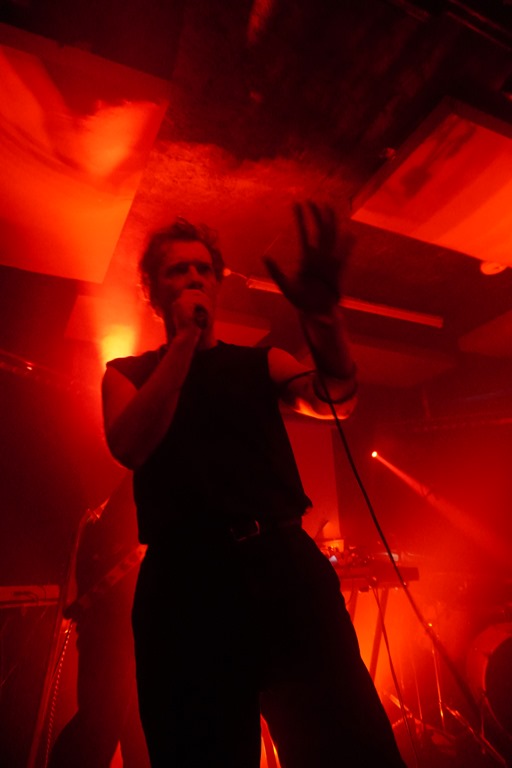
In contrast to Cat Redfern’s zen drumming, Leo drums with his face, and in contrast to Hanclil’s slow nodding guitar style, Andy Glen goes all out with some unrestrained headbanging as he unleashes the most pulverising bass riffs. PAK40 are harder, and more abrasive. And this is why the double-header works: for all of their similarities, the two bands bring different shades of heavy. And they’re both intense, physical forces.

DSC05300DSC05280

PAK40

I babble some shit to people on the way out. I think I got away with it, because everyone is equally dazed. We’ve been blitzed, blown out of our minds and shaken out of our skins tonight by a musical experience that borders on transcendental. It’s a cut above your average wet Thursday night in December, for sure.

Christopher Nosnibor

Benefits exploded onto the scene not long after lockdown – and I mean exploded, an atomic detonation of rage. The essence of the setup was pretty simple: angry sociopolitical spoken word delivered with blistering vitriol, backed by a blinding wall of noise. The result could reasonably be described as something in between Whitehouse and Sleaford Mods, but the fact is that from day one, Benefits created their own niche. The live shows were jaw-dropping, and the debut album, Nails captured that raw energy with a rare precision.

The arrival of second album, Constant Noise marked a necessary departure – sonically mellower, far more beat-orientated, a lot less shouty, angry-sounding. My first impression was that it was decent, more produced, but still packed some sting in the lyrics., and will be hard to top in terms of the number of mentions of dogshit in albums of the 2020s. But it’s a fair reflection of post-lockdown Britain: dogs have proliferated exponentially, and concordantly so has the volume of dogshit – and, just as bad, bags of dogshit tied and dropped, piled next to or on top of bins, and hung in trees. What kind of twat does that? A selfish one is the only answer. But as for the album, I kinda let it sit for a while. But over time, with more – and more – listens, the album’s depths reveal themselves. Constant Noise is every bit as angry as Nails, and if anything, the more moderate, tempered delivery hits harder. It just takes a little bit longer to reveal its depths and quality. But how would this translate live, especially now they’ve been stripped back to the founding duo of Kingsley Hall and Robbie Major?

DSC05075

Benefits

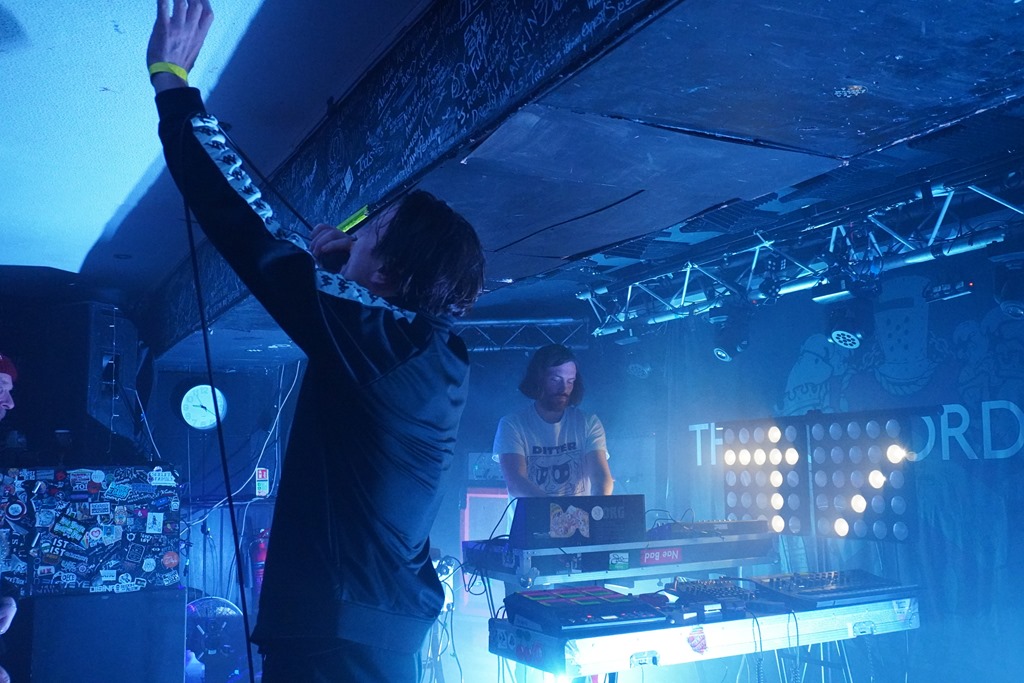
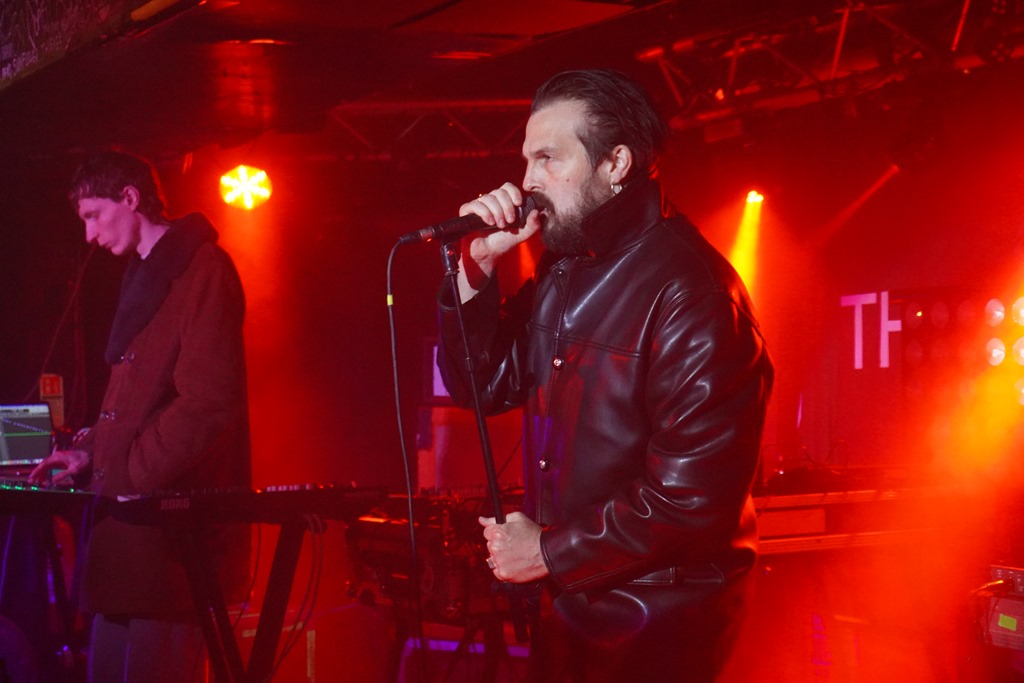
Before we would get to find out, there was the equally intriguing support. The Eighties Matchbox B-Line Disaster are one of those acts who may have only attained cult status during their time together, but it’s one which has expanded since their demise. They were always a band destined to implode, as was apparent when I witnessed a particularly fractious gig here in York circa 2007. But this was always a band which had derangement and volatility wired into their makeup. Guy McKnight formed DSM IV in 2018, and they’re an altogether different proposition, trading in gothy electro with some tidy guitar textures woven into the fabric of the songs, and Guy seems altogether more settled. It’s all relative, of course, and he ventures into the crowd on numerous occasions, and at one point around the middle of the set, tosses mic stand over, drops the mic and busts some tai chi moves. It’s a solid set, both compelling and entertaining, and they’ve got some tunes, too.

DSC04943DSC04962DSC05008

The DSM IV

Benefits don’t really have a great many tunes in the conventional sense. Choruses and hooks aren’t the primary focus of their compositions. Hall’s words range from reflective and ponderous to outright roaring rage, the backing spanning sprawling barrages of obliterative noise to quite chilled dance grooves. But at this volume, and when delivered with this much passion, there’s nothing chilled about this live show.

Here, I find myself returning to the topic of seeing an act you’ve seen before and been blown away by, and going to see them again in the hope of replicating that first time – only it’s a weak hope, because the first time has the element of surprise which is unlikely to be repeated. Yes, a band may be consistently awesome, but that first bombshell experience, that initial high… very few bands have the capacity to have that impact more than once. Benefits, however, hit even harder on this outing than any before.

DSC05025DSC05084

Benefits

There was word online that their current tour was as brutal as any they’d ever done. Having seen them three times previously, and never with the same lineup, it seemed like that claim might be a bit of a stretch, particularly without a live drummer. But synthetic beats have a way of bludgeoning and cracking in a way that live drums don’t always, and when paired with gut-churning low-frequencies and ear-bleeding top-end noise, the sonic impact of what blasts from the PA is positively immolating.

DSC05085

Benefits

Kingsley gets most of the chat out of the way at the start, with a bit at the end: in between, they power through a relentless set uninterrupted. And relentless it is, and not just sonically: with the sole lighting consisting of blinding white strobes for the entire duration of the hour-and-twenty-minute set, the stark, uncompromising nature of the music and lyrics is amplified. They put every ounce of energy into the show, Hall positively streaming with perspiration by a third of the way through. And we feel the passion; the whole room is buzzing and aglow with a sense of unity through a shared experience of catharsis. These are shit times. Dark times, bleak and scary times, domestically and globally. Benefits capture the zeitgeist, and rail against those who will one day be proven to have stood on the wrong side of history – the right-wing, flag-shagging, pro-Brexit, racist, xenophobic, hatemongering, exploitative, manipulative capitalist shits and their supporters and enablers – articulating thoughts and feelings with a unique precision and an intensity which is positively nuclear. The experience is nothing short of mind-blowing.

Christopher Nosnibor

The last tour of Swans’ current iteration, drawing the curtain on a succession of albums – and tours – which have been truly immense in every way: the build-up felt like the end of an era. The event itself, perhaps less so. At one point, someone calls out a request. “We don’t do that,” Gira explains, in a kindly manner. He seems pretty relaxed tonight, and smiles a fair bit. No-one in the band gets bollocked or scowled at, and they all seem to be having a pretty good time.

But no, they certainly don’t do ‘that’. You don’t go to see Swans expecting to hear choice guts from their extensive back catalogue. You don’t even go expecting to hear songs, at least not in any recognisable form. The versions of recorded songs bear only limited resemblance to their studio counterparts, twisted, stretched, and otherwise evolved while on the road to a point whereby they’re almost new songs entirely. Recent shows have seen the band playing sets spanning a full two and a half hours, while only featuring six songs.

Before we come to Swans, Jessica Moss, who, amidst an extensive catalogue of work over the course of a lengthy career, is best known for her contribution to Thee Silver Mt. Zion Memorial Orchestra and being part of the whole Godspeed You! Black Emperor milieu. Tonight, she plays a rendition of her latest album, An Unfolding, in its entirety, and it’s breathtaking. Her nuanced violin and vocal work is augmented with booming, resonant bass tones. There’s a lot of yakking at the bar and further back in the 1,000 capacity, sold-out venue, where the house light stay up toward the rear of the room for the duration of the night, but for those of us in the front two-thirds, it’s a spellbinding experience, which perfectly sets the tone for the main event.

Moss’ half-hour set is over by around 8:40, and Swans, after a few brief checks, take to the stage around ten minutes later. Gira politely asks that there are no cell phones – “at least not where I can see them”, before he begins strumming a monotonous at two strings. He does so for what feels like an eternity. Or perhaps not. When Swans play, time takes on a different meaning, and it’s been a feature of this current iteration that the songs evolve and elongate over the course of the extensive tours, transforming and transmogrifying over the weeks and months on the road. They’ve been touring Birthing and this ‘farewell’ for a fair while now, although the set on the most recent leg has only featured ‘The Merge’ from said album. With ‘Paradise is Mine’, from The Beggar, and ‘A Little God in My Hands’, from To Be Kind, this is as close to a retrospective set as you’re likely to get, but none of these songs much like the studio versions, and half the set therefore features material which is either new or so far removed that it’s been retitled as well as restructured. But as I say, you don’t come to a Swans show for the songs. You come for the experience. And what an experience it is.

S1

It’s fair to say that there is simply no other band like Swans. Their reputation for extreme volume is only part of the story, a piece of the equation. Older fans who saw them in the 80s love to regale with tales of people throwing up, passing out, and so on, and that they’re pretty tame these days, and I have no reason to believe that these are purely apocryphal. Gira just can’t do quiet: even his solo acoustic sets playing smaller venues circa 2003 / 2004 were fucking punishing.

Some time in, Gira downs his guitar and stands up, turning to face the band, and flails his arms as if experiencing some kind of rapture or episode. But every gesture is a signal, from which the band members – there are six of them, plus Gira – and his near-psychotic choreography guides them through ebbs and flows, to ever greater, more intense crescendos. It’s maybe half an hour before the full drum kit kicks in, and I feel my nostrils vibrate with the sheer quantity of air displaced from the speakers. It’s transcendental, euphoric.

S2S3

A number of people who had started the set near me in the front row dissolved. I didn’t really notice when: like almost everyone else, I was simply transfixed. And yet, this was by no means loud by Swans standards: while I can’t claim to have witnessed the nauseating brutality of their early years, or the notorious punishment of the Burning World tour (ironic that their gentlest album, released on a major label, should have been served by a tour of such infamous volume… or perhaps not, perhaps it was a statement to prove that they hadn’t sold out), their shows at Leeds Stylus in 2016 and 2017 were something else – something so intensely physical, it hard to find the words. Then again, on their last visit to Leeds, playing at The Belgrave, I found myself thinking ‘this isn’t so loud’ but before long finding myself dizzy and wondering quitter where that immense noise had grown from. And this is perhaps an indication of how they’ve evolved. The bludgeoning force is still very much present, not least of all with two basses and the return of Norman Westberg to the lineup – surely one of the world’s most patient and understated guitarists, content to stand, not playing for ten to fifteen minutes, before battering away at one or two chords and thirty BPM for the next fifteen minutes, creating noise and texture rather than doing the conventional ‘guitarist’ thing – but now it’s more subtle, growing building, slowly, so slowly. A tweak here and there, another player adds a later, and while you’ve been watching the dynamics of the two bassist and Gira’s windmilling, the volume has increased threefold and your ribcage is rattling and your brain is slowly scrambling. Kristof Hahn does things with lap-steel that is beyond comprehension, cranking out squalling, screaming walls of noise – but there isn’t a weak element in the lineup. They each bring something unique, and the collective output is something else.

If this is the end of Swans doing big band, big noise stuff, then they have certainly delivered a finale of spectacular proportions. And whatever comes next, we look forward with bated breath.

Christopher Nosnibor

Last time The Birthday Massacre played York, three years ago, it was at the 150-capacity Fulford Arms. It was sold out. This time around, they’re at the 350-capacity Crescent. They’ve sold that out, too. Despite having been around since just before the turn of the millennium, The Birthday Massacre are very much a band on the up. It’s an unusual trajectory: more often than not, acts explode early on, perhaps building over the course of the second and third album, or the first five years, and then plateau, having established their fanbase. It’s true that they’re a great live act, and that their latest long-player, Pathways, is a cracker, but something has clearly happened here that goes beyond the surface of these raw facts.

One thing that’s apparent is that there are people here for all of the acts – people who are keen, too: within five minutes of the doors opening, the front two rows are packed solid and people aren’t budging. From experience, this does seem to be something of a goth gig thing: the level of dedication and devotion is way up there. But the demographic is a broad mix, and it does seem that for all the hardcore fans, there are a lot of casuals in tonight. Quite how they’ve come by The Birthday Massacre is hard to tell, but given how crisp and poppy Pathways sounds in contrast to the full-throttle industrial drive of the live show, the chances are a fair few of them will be in for a shock.

I’ve seen Ben Christo play many times… But this is my first time seeing Diamond Black. Although Diamond Black are his band, the heavy touring schedule of his dayjob work as lead guitarist with The Sisters of Mercy mean they don’t get out quite as much. They’re on ridiculously early – tickets and some event posting suggest it’s doors at 7:30 rather than the first band, but they play to a pretty packed house. I’m dubious about the platform centre stage which serves the purpose of providing ben a place to stand and throw poses, but he’s not particularly tall. More significantly, for all the 80-s rock stylings (think Mr Mister but with bigger guitars and thunderous bass) all the calls of ‘Hello York!’ and so on, it’s hard not to like them. Ben is clearly a straight-up nice guy and he loves doing what he does, and they’re big on positive messaging and facing up to mental health issues in an uplifting way. ‘Dark Anthems’ from the new EP is gothiest cut of the set, the verse’s guitar line worthy of the Sisters, before breaking into a chorus that’s pure anthemic pop. They’re likeable and fun, and sound great… what more do you need, really?

DSC04402DSC04418

Diamond Black

Lesbian Bed Death win for attention-grabbing name. They go all out on the stage set, too, with banners, mannequins, and a mic stand that’s composed of a strange animal skull atop a curved spine. In contrast with Diamond Black – and The Birthday Massacre – they’re darker, heavier, more metal, and they bring a more theatrical and punk style to the night. The name is a strong one, and works with a collective of predominantly female musicians… but it wasn’t always thus, and the band’s mastermind is the stumpy bearded guy in a Misfits T, and with a hat and a beer belly who goes by the name of Mr Peach. For reasons I’m unable to fully articulate, I’m always suspicious of men with beards trimmed so neatly at the neck. And having whipped out ‘the coolest’ guitar for the last song, it sounds like ass, and he switches back to his other guitar after just a few bars. But, objectively, with a set bursting with churning, slicing riffs, and gutsy, full-lunged vocals, their performance is solid quality and great entertainment.

DSC04440DSC04493

Lesbian Bed Death

As for The Birthday Massacre… Woah. They sound phenomenal. Studio quality. But real at the same time. With six bodies packed on stage they need to be co-ordinated, and they are – tight beyond tight. If the energy was electric on their last visit, they’ve unlocked a whole new level of intensity now. Midway through the set, they’re all dripping, hair lank and stringy, but they don’t let up for a second. There are no ballads for a breather, and the audience feed off the band’s energy who feed off the crowd who feed off the band… you get the idea.

Sara ‘Chibi’ Taylor may be compact, but she’s one hell of a presence, but at the same time, a friendly one: she hands out water after fanning a distressed fan on the front row and beams throughout the set like she’s won the lottery. And it’s clear that it’s not just her who’s enjoying herself: the whole band radiates an aura of pleasure as they crank out a dense industrial chug. Sweeping synths fill out the sound, as Owen Mackinder lurches around his keyboards and wields his keytar with an infectious exuberance. Amidst the strobes, this is a band with bounce. They start a clap-along with ‘Destroyer’, and it’s a powerhouse blast from beginning to end.

DSC04604DSC04638

The Birthday Massacre

It’s true that in the scheme of things, and by the marks of the genre, The Birthday Massacre are something of a NIN-lite pop band, but they’ve created their niche and nail it, and what’s more, it’s clear they’re enjoying themselves as mush as we are. The drumming on ‘Crush’ is immense, and the song builds to a euphoric climax.

DSC04584

The Birthday Massacre

This time, they do play an encore, and keep the fans baying for more. But when did ‘one more song’ become a chant? If you want more, surely you really want MORE! (this doesn’t work so well at gigs by The Sister of Mercy, who never play anything on demand), but fortunately for us, The Birthday Massacre deliver not one, but three more songs. The reaction is incendiary and completely deserved. By the time they depart the stage, having dispatched twenty songs with explosive energy, it’s clear we’ve witnessed something special, a band at the very top of their game.

Christopher Nosnibor

For many so-called ‘heritage bands’, the gig circuit can be trail of diminishing returns – then again, for others, the gigs are bigger now than in their heyday. Nostalgia is a powerful market, but one that often tapers off as the fanbase ages. Our older population may be expanding, but that doesn’t mean they’re all up for gig-going in their retirement years. Spear of Destiny sit in the middle of this range: they’re not playing the 1,500-2,000 capacity venues of some of their peers, but they’re packing out smaller venues, such as this one, often. You have to wonder if Kirk Brandon can even remember what his home looks like given his intense touring schedule, if not with Spear of Destiny, then, more recently, with the resurrected Theatre of Hate. They only finished their Janus tour in June, and here, they are, back on the road after barely time to do the laundry and restock the merch. The frequency of visits to destinations with smaller demographics does nothing to diminish the attendance, either: the fanbase is hardcore, and they do seem to be drawing younger people in, too, as interest in the bands kids’ parents listened to appears to be on the rise. I’m not going to claim that the 80s and 90s were better than now for music – not least of all because I don’t believe that’s the case, despite it being harder to find stuff now if you want to escape the algorithmic force-feed – but there was something about those times that’s lacking now, and it’s not just innovation. Politics and protest seemingly had a more central place then, too: in recent years have

It was only last September that Theatre of Hate stopped by this very same venue, and the Spring of 2023 that Spear of Destiny trod these same boards – and yet tonight, perhaps because it’s a Friday – the place is packed, perhaps more so than on the last two visits.

Immediately they dispel that whole ‘heritage band’ thing by opening a solid set with a slew of newer material, delivered with vigour. It’s also very much a set for the more devoted fans: popular songs and hits like ‘So in Love with You’, ‘Tinseltown’, and ‘Young Men’ are bypassed in favour of a set that works its way through recent tunes and deeper cuts, and only really goes all out on the big popular choices in the second half. No-one’s complaining, though, and the band look to be enjoying themselves: at one point, Kurt exchanges grins and chat with bassist Craig. And I’m reminded – as a huge, huge Sisters of Mercy fan, but one too young to see them in their first era – that I’m standing maybe six feet away from the bass legend that is Craig Adams. The fact that The Mission were the first major-league band I saw, from what felt like a mile away, at Sheffield City Hall in 1990 is the context here.

DSC04111DSC04198DSC04219

Kirk’s voice may not sound quite as strong as on his last visit, but the chap’s been poorly, and he’s still capable of belting out the tunes, and, soaring in all directions and, when it matters, leaping an octave in an instant and hitting all the high notes. And as a four-piece, while the absence of sax is notable particularly on some songs, they create a sound that’s dense, and as always, they play with precision tightness while maintaining a fluidity and a palpable energy. Everything else is in place, with a dominant rhythm section, from martial beats to thunderous tribal percussion, paired with Adam’s sturdy grooves.

Up front, there’s ‘Strangers in Our Town’, and ‘Never Take Me Alive’ lands early on, too. It’s easy for forget that this is a band who’ve released significantly more albums since their eighties heyday than during that time, and the set offers a fair balance of post-eighties material with a selection of songs from that commercially fruitful spell – and it’s worth noting that fan favourites aren’t necessarily the singles, but key album tracks. ‘Mickey’, for example, was only a single in The Netherlands, but is one of the highlights of World Service, and tonight’s set.

DSC04134DSC04157

Into the final leg, ‘Rainmaker’ really rouses the rabble, and ‘Radio Radio’ prompts a huge singalong before they depart the stage. The place erupts when the band come back on, and the encore launches with a spirited ‘Soldier Soldier’… and finished with ‘Liberator’ – because there is simply no other way to end a Spear of Destiny set. It brings the house down – every single time. More of the same next time, please.

Christopher Nosnibor

Anyone who suggests that the fact most gig lineups are male-dominated because there is a lack of female representation, or of quality female fronted acts on the rock scene is simply wrong. Tonight’s killer lineup is undeniable proof to the contrary.

Innovation Way really aren’t innovative in any way, playing a set that’s 50% originals and 50% emo covers, but it’s clear that they’re just starting out, finding their feet and their identity, so I’m not going to give them hard time over it. The originals don’t feel quite as evolved in terms of songwriting, but the only way to develop is to be given opportunities to try out, and they play well, really well, and one day they’ll be playing 90% originals and stretching further – and what’s more they’ve brought a lot of their uni mates down, so the place is busy. That means tickets sold and money over the bar. These are good things right now. It does seem strange to me that people in their twenties are now picking up on music that was big around the time they were born, but I suppose this is a generational thing. I’m just more surprised by the idea of an emo revival than a grunge revival.

DSC03623

Innovation Way

On the subject of developing, I had fully expected to report that Static Lives look very much like Weekend Recovery, and their sound isn’t a million miles away either. But this is not the case: having started out with the same lineup but new material, they’ve reconfigured as a five-piece, with two guitars, synths, and the vocals shared three ways. Having have just completed their first headline tour, which sold out, their place third on the bill was more likely due to travel needs than anything else. No two ways about it, they’re good: they bring the energy and look to be really enjoying themselves. The sound is full, there’s details and dynamics happening all over. The diminutive bassist whacks out some chunky low-end while also contributing a considerable amount of the vocals. This new division of labour means Lori can focus more on guitar and also being part of a team rather than the primary focus, and she seems to revel in this freedom.

DSC03688DSC03697DSC03727

Static Lives

Returning to the grunge revival, Blair Bitch Project bring Sabbathesque riffery and hints of folk horror married to gnarly grunge stylings. Despite the bassist being a late substitution, they’re tight and solid, and play with a confidence that carries not only the band, but the crowd. The drummer and vocalist switch for the third song and it’s a real heavyweight, with explosive riffery and thunderous percussion and a low-registering, gritty bass. Mid-set, with the drummer still on vocals, they deliver a cover of ‘Plump’ by Hole delivered with the raw intensity of the original. They get slower and heavier as the set progresses, and towards the end drop a second Hole cover, this time a ragged rending of ‘Teenage Whore’. There’s no question as to their influences, and they play with so much force that it’s hard to fault.

DSC03748DSC03762DSC03816

Blair Bitch Project

“Anyone else got a sweaty crack?” asks the singing drummer of WENCH! before introducing a song about men who shouldn’t have access to the internet, bursting with angular guitar and shouty vocals before ripping into a roaring scream and gut churning riff. Yep, they’re from Hull, they’ve no filter and they’re fucking phenomenal – and they don’t even know it, which makes us love them all the more.

DSC03839DSC03885DSC03922

Wench!

They, too, bring some Sabbath-inspired riffery, but there’s a whole lot more to them than that, not least of all high-octane punk, with the energy and aggression amped up to eleven. A measure of their structure is the fact the guitarist has two pedals, while the bassist has eight: the rhythm section dominates, and there’s wah-wah and shedloads of distortion on that dominant bass that shapes the songs in a unique way. Their set is a relentless rush, and the channel their feminist fury into the most glorious guitar-driven exorcism. Aesthetically, they are the absolute definition of punk, and the adrenaline rush they deliver is direct and pure.

Yes, yes, and YES! THIS is what it’s all about.

Christopher Nosnibor

Pub gigs provided me with my first experiences of live music, back in the early 90s. Often, pubs with upstairs rooms would pop bands on, and other still would simply pack bands somewhere in the bar. At some point, there seemed to be a shift away from this, with pubs seeming to be only really interested in solo performers and acoustic duos. Gigs in pubs stopped being such a thing. But now, pubs are dying. And grassroots venues are dying. Let me be more blunt they’re not so much dying, as being killed off in the interest of capitalist greed.

As I wrote recently on the repurposing of working men’s clubs – also suffering from a severe decline – as gig venues, so the return of the pub gig seems to solve two problems at once, namely how to bring punters into pubs, and providing bands with a place to play. This certainly seems to be happening in York.

The Black Horse used to be a Tap and Spile, and has always been a solid Yorkshire boozer – real ale and bar snacks, and a weekly quiz. But clearing the top part of the room – more a raised area than a mezzanine per se – creates a fairly generous stage space, and not being a massive space, means a basic setup whereby the bands play straight through their amps with only the vocals going through the house PA, simplifying soundchecks and making switchovers straightforward.

When this show was first announced, Strange Pink were an unknown quantity, but the release of their debut EP changed that, and the Hull-based power-trio-cum-supergroup consisting of Sam Forrest (Nine Black Alps, Sewage Farm), Eddie Alan Logie, and Dom Smith (whose resume is a feature in itself) make for a cracking opening act. They manage to be loose but tight at the same time, and it suits their 90s slacker rock stylings. As the EP attests, their approach is varied, and so, accordingly, is their set. They seem to grow in confidence as the set progresses, the sound coming clearer and brighter, too, and by the end of the set, they’re on fire. They close with ‘Boys Club’, the lead single from EP. It’s a clear standout and possibly their best song, with a strong hook, making for the perfect way to leave the crowd with something to remember.

DSC03153DSC03159

Strange Pink

The Bricks have become Aural Aggravation staples, and are a band I will always go and see whenever possible, for two simple reason: they have great tunes, and they’re a great live band – always. During their brief soundcheck, I began to wonder if their run of infallibility might come to and end tonight, but I needn’t have worried, because they were firing on all cylinders from beginning to end. In fact, they seem incredibly at home in tiny venues such as this, and flame-haired Gemma cranks up the wild, eyes-wide, lung-busting intensity, as if relishing the proximity. By the end of a fierce set, her fringe is swept away and plastered to her forehead. The band play relentlessly hard, too, and I try to analyse what it is about them that’s so compelling, why they work so well. The songs are fairly simple, both structurally and in terms of musical complexity – simple lead parts, four-chord riffs, classic (post-)punk, built around solid rhythms, with most songs two or three minutes long and strong hooks. Simple proves effective, especially when played with precision and passion.

DSC03160DSC03168

The Bricks

This does mean that Cowgirl have a tough act to follow. But they’re super-seasoned professionals. Danny Barton (guitar and vocals) plays bass in Sewage Farm, previously played bass with White Firs with former Federals drummer James Holdstock (who’s also drummed with Cowgirl), and has, in short, played in more bands in and around York than I’ve had hot dinners, and the same is true of Sam Coates (also guitar and vocals), who’s been pretty much ubiquitous on the scene for years now.

Looking around the room – it’s standing room only, and there’s plenty of beer being drunk, and I bet they’ve not sold this much on a Thursday night in a long time – half the people here are in other bands, or are otherwise recognisable as gig-going regulars, highlighting what a close-knit scene the city has, but also that this lineup has brought people out on a night that’s not exactly a popular one for gigs or pubs. The free entry and donations bucket may be a factor (although a facility to take card donations would likely have seen more contributions), but still, it’s proof that a quality lineup is a definite draw, and the fact a small venue can be filled more easily creates a sense of buzz, which is definitely the case here.

DSC03173DSC03177

Cowgirl

Early on in their set, a friend remarked that they sound like Oasis. He’s completely wrong, but the comment got me thinking. Some of the elements are there… some of the jangle, a bit of the swagger, but with a keen American indie influence. Perhaps his opinion was influenced by the fact that their sound is decidedly more ‘rock’ on this occasion than previous times I’ve seen, them, likely on account of the backline / PA setup, resulting in a sound dominated by blistering guitars. But they have actual melodies and a psychedelic hue, and once again, it’s a set that builds in every way – confidence, cohesion, and volume. The final brace of songs is segued together to form a ten-minute melting wall of sound, an epic psych-wig out that’s nothing short of a brain-cleansing blast that leaves you dazed as the final strains of feedback taper away.

Everything about tonight feels like a win. I may have had one more than was wise – easily done when it’s hot because it’s packed and all hand-pulled beers are a fiver and there’s half a dozen to choose from – and I may be a touch emotional at having attended my last live music of my forties – but stepping into the night, I feel like I’ve experienced something life-affirming and positive in the bleakest of times.

Christopher Nosnibor

It’s good to be back at Wharf Chambers. Personal circumstances have meant that the trip to Leeds has been largely beyond me, but stepping into the place felt like coming home. It’s unassuming, some may even basic, but it’s got a unique – and accommodating – vibe. There aren’t many small independent venues that can keep going by sticking to a programme of leftfield live music, or being explicit in a keen leaning towards inclusivity for LGBTQIA+ and anyone else who stands outside the fence of the normies, but Leeds is a big enough, and diverse enough, city for a place like this to not only survive, but thrive. It’s kinda quirky, a bit shabby chic, and it works: the beers – local – are cheap, the sound in the venue space is good, and it’s all cool, and tonight’s advertised lineup is a cracker. Diverse, but solid quality of an international reach.

Before we come to that, it’s a strange and rare occurrence to arrive at a venue to discover that there is an additional, unadvertised, band on the bill, and even more so when the band in question has effectively gatecrashed the event without prior arrangement with the promoter, but by dint of deception. But the first band on tonight have done just that. Perhaps it’s the only way they can get gigs. Because they sure do suck, and it was obvious that they’d never have been booked for this lineup in a million years. I head back to the bar after a couple of songs, having heard enough. When they’re done, promoter and sound man (in both senses), Theo takes the mic to explain that he hadn’t booked them and that they didn’t espouse the experimental ethos of the acts Heinous Whining exists to promote. The band did not respond well to this, validating the opinion a number of us had already formed, and they fucked off in a huff. Dicks.

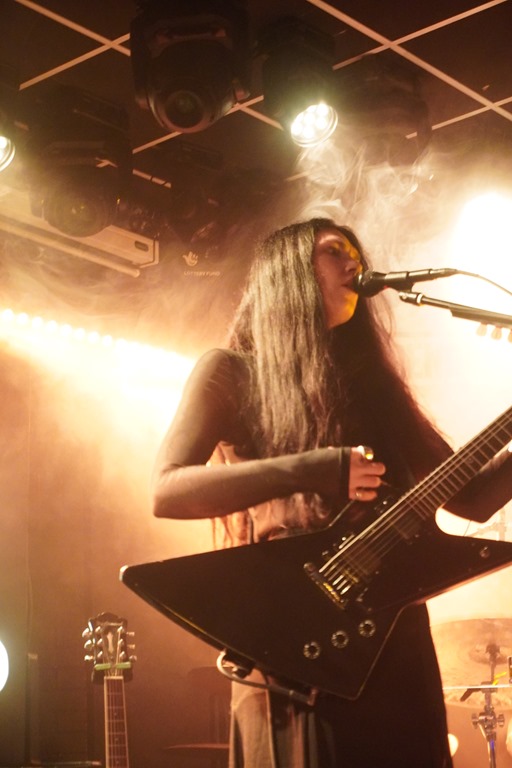
Thankfully, normality – of the kind we’re here for – resumed with the arrival of Sour Faced Lil, the solo project of Hilary from Cowtown. Her set starts – somewhat incongruously – with a quirky electropop cover of Bright Eyes. I just about manage not to cry. Then she swerves into swooshing space rock noise galore, and she explores the weird and wibbly, and it’s everything you’d expect from a Heinous Whining night. Live drums, looped, live guitar, and warped, undulating synths create a cacophony of sound in layers. The performance is a little tentative in places, but the audience is behind her all the way. There’s something quite enthralling about seeing a solo artist juggling myriad musical elements and instruments, knowing what a balancing act, how much effort it is to remember everything and keep the flow, and the fact she manages it is impressive.
DSC03057DSC03064DSC03070

Sour Face Lil

Also impressive are Lo Egin, but for quite different reasons. I feel I owe Lo Egin an apology, as it happens. When I reviewed their split release with Beige Palace a little while ago, I misspelled their name as Lo Elgin, more than once (although I managed to get it right when covering Volumancer in 2013) Hammering out reviews on a daily basis means I slip up sometimes. It’s not great, and I do try, to do better but… I did really rate that release, though, and I’ll admit that they were as much a draw for me as the headliners. And the fact is, they were worth the entry fee alone. On paper, they’re perhaps not the easiest sell, bring atmospheric post rock in the vein of early Her Name is Calla, with brass – sax and trombone – crossed with elements of doom – with the addition of screaming black metal vocals. They do epic. They do crescendos. They also do ultra-slow drumming, something I am invariably transfixed by having first become fixated during my first time seeing Earth live. The drummer raised his arms to fill extension above his head, before smashing down with explosive force.

DSC03079DSC03084DSC03092DSC03105

Lo Egin

Dolorous droning horns create a heavy atmosphere. Then, out of nowhere, from the delicately woven sonic tapestry they’ve been weaving, things turn Sunn O))) and the skinny baggy jeans wearing trombone guy who looks like a young Steve Albini delivers cavernous doomy vocals as he contorts and the mic stand and then all hell breaks loose. When they go heavy, they go heavy – and I mean HEAVY, the drummer smashing every beat so it hits like a nuclear bomb. To arrive with high hopes for a band, and to still be absolutely blown away is a truly wonderful experience, and one that stays with you.

I feel I should perhaps take this opportunity to apologise to Jackie-O Motherfucker, too: in my review of Bloom, I described them as a country band. And while there are without question country elements, they’re really not a country band. They’re not really a psychedelic band, either, or any other one thing. Instead, they’re a hypnotic hybrid, and they’re deceptively loud considering how mellow everything is. What they do is simple in many respects, but in terms of genre, it’s rather more complicated, not readily pigeonholed. I’d clocked them about the venue beforehand, and they seemed like really chilled folks, and while they’re not exactly chatty during their performance, it’s apparent that they’re humble, and simply really chuffed to be playing here. The room is pretty full, too. Tom Greenwood looks like he’s just taken some time out from doing some decorating to play. He’s got paint on his trousers, and is as unassuming as they come.

DSC03109DSC03130DSC03137

Jackie-O Motherfuker

The current lineup consists of three guitars, synth, and some electronic stuff including subtle percussion. No bass, no drums. There are, however, many pedals and much pedal fiddling throughout the set, as they sculpt a wall of reverb and feedback and a whole lot more from this hefty – but ultimately portable – setup.

The resultant sound is detailed, but at the same time a hazy blur. Picked notes – and much of the sound is clean, with next to no distortion, but with all the reverb – bounce off one another here and there, creating ever greater cathedrals of sound. I find myself utterly transfixed. Their hour-and-a-bit long set features just seven songs, and they are completely immersive. There’s no real action to speak of, just an ever-growing shimmer which envelops your entire being. In some respects, their extended instrumental passages invite comparisons to the current incarnations of Swans, only without the evangelically charismatic stage presence or crescendos. In other words, they conjure atmosphere over some extended timeframes, but keep things simmering on a low burner, without any volcanic eruptions. The end result is a performance which is hypnotic, gripping because of, rather than in spite of the absence of drama. Low-key, but loud: absolute gold.

Christopher Nosnibor

The Fulford Arms has quite a record for booking bands which are of a significantly larger magnitude than its 125 capacity – Wayne Hussey, and The March Violets are a couple which immediately spring to mind from personal experience, while Utah Saints, Bob Vylan, and Ginger Wildheart are further examples, and there are countless others who played here before going massive. And now Light of Eternity join that list. Formed with legendary drummer Paul Ferguson, whose credits in addition to Killing Joke are a feature in their own right, they’ve released a brace of belting EPs and are now undertaking their first tour, taking in a number of larger venues as a headline act, an even larger venues as support for Ministry. And here we are: the first night of the tour is also their live debut, here in this grassroots venue with its small, low stage, and black walls marked in chalk with the names of the acts who have played previously.

Soma Crew have a knack for landing a fair few of the city’s high profile support slots, and deservedly. Supporting The Fall will likely be a career highlight, but something about tonight is special. The Crew’s ever-shifting lineup sees them packing out the stage as a sextet, and they open with the crawling ‘Dead Insect’. Is it the right choice for this occasion? Do they care? On the second song, ‘Counterfeit’, they hit the motorik groove that’s their strong suite, and from hereon in, they’re away. Broken string? Meh, it’s no issue when you’ve got three guitars (plus a bass), one with an E-bow plugging away at a single chord. With the addition of a throbbing bass, it all makes a magnificent hypnotic drone. This is Soma Crew at their best.

DSC02831

Soma Crew

The DJ spun Ministry (‘Just One Fix’) and Murder Inc. between bands. Is it the done thing to play tracks by bands related to those about to take the stage? Why not, eh? I’d actually played not only the band’s two EPs but Locate, Subvert, Terminate, just the other day in advance of tonight, and it proved appropriate. There’s an interesting – and perhaps somewhat telling – selection of bands T-shirts on display here: no shortage of Killing Joke, but also The Sisters of Mercy, Paradise Lost, and The KLF… and the near-capacity crowd is suitably rewarded with a belter of a set, with twelve songs in all, which represents both EPs and another EP’s worth of as-yet unreleased material.

DSC02851DSC02847

Light of Eternity

Ferguson’s drum kit isn’t only the focal point: it occupies the majority of the little stage, with Fred Schreck (bass and vocals) and Pauly Williams (guitar) positioned either side. It’s perhaps as well they’re not given to ambulating a great deal. In Williams, they’ve found a guitarist with a sound that’s incredibly close to that of the late, great, Geordie Walker, and capable of churning out methodical riffs – and his dense, compression-heavy sheet metal thunder really rings out in a live setting, more so than recorded. He keeps his head down and just keep cracking ‘em out, and it works well alongside sturdy bass grooves, while it’s the busy, full-kit drumming that provides much of the action, the movement, within the songs.

DSC02911DSC02896

Light of Eternity

Their presence could be reasonably summarised as unassuming but focussed. They’re not a band for chat: Schreck does begin to speak on the subject of America, and hope, before ‘Dark Hope’, but it’s curtailed by the onset of the next percussive barrage which marks the start of the song. Ferguson not only leads proceedings, but does so in his own world, and that world is the centre of all of this. After the first few songs, he’s one hundred percent in the drum zone, and it’s apparent he doesn’t do breaks, preferring instead to keep that relentless momentum. Some may read it as standoffish, but it’s fairly apparent that it’s about the intensity, the songs slamming in back-to-back, the explosive beats, the churning riffs. Singer may not have Jaz Coleman’s charisma, but his reverb-drenched vocals are crisp and clear and delivered in such a way that the experience is that of an unyielding force.

DSC02893

Light of Eternity

Checking the setlist encapsulates the mood and subject matter of Light of Eternity: ‘Conformity’, ‘Distraction’, ‘Tipping Point’, ‘Explode’. They may be older (Ferguson is 67 now), but they’re not settling into a comfortable relationship with the status quo, offering a cocktail of anger and disaffection at the state of the world. ‘Dark Hope’ is grungy, built around descending chords played with steely guitars. The unreleased ‘Fascist X’, landing near the end of the set is a full-throttle heavy grinder, while ‘Aftershock’ is an absolute juggernaut. They simply don’t let up: every song is driving, solid, muscular, a wall of leaden density.

There isn’t a weak song in the set, and their live debut more than delivers on the promise of the first studio releases. Most of those present reasonably expected quality, but for a live debut, this was phenomenal. The smaller venue was a test, in a way – and they passed it, and then some. The rest of the tour promises to be fantastic – but those who were here tonight witnessed something special that they won’t forget in a hurry.

Christopher Nosnibor

There was a time when there wasn’t really much doing in York, which was particularly disappointing for a city with two universities. But, despite grass roots venue disappearing at an alarming rate, right now, the city is offering up some exciting stuff on the grassroots scene. Tonight, there are three quality live music events on, and had I mastered cloning, I would have gone to all three. The Fulford Arms was serving up a night of top-notch goth and post-punk, while there was experimental and ambient work on offer at The Basement under the City Screen cinema. But I feel I made the right choice plumping for Needlework at The Crescent, not least of all because it transpired that this was to be their last show.

Needlework have only been around a couple of years, and only played a handful of shows, but they’ve made a serious impression, as tonight’s crowd shows. Sure, they’ve got plenty of their sixth-form / college mates down, but this is a band who had built a keen following in their own right. In a previous time, John Peel would have been all over them and they’d have achieved national cult status. Instead, because it’s 2025, they’re bowing out with only an EP (released today, but without mention) and a few shows to mark their existence. But I guess this is how it goes.

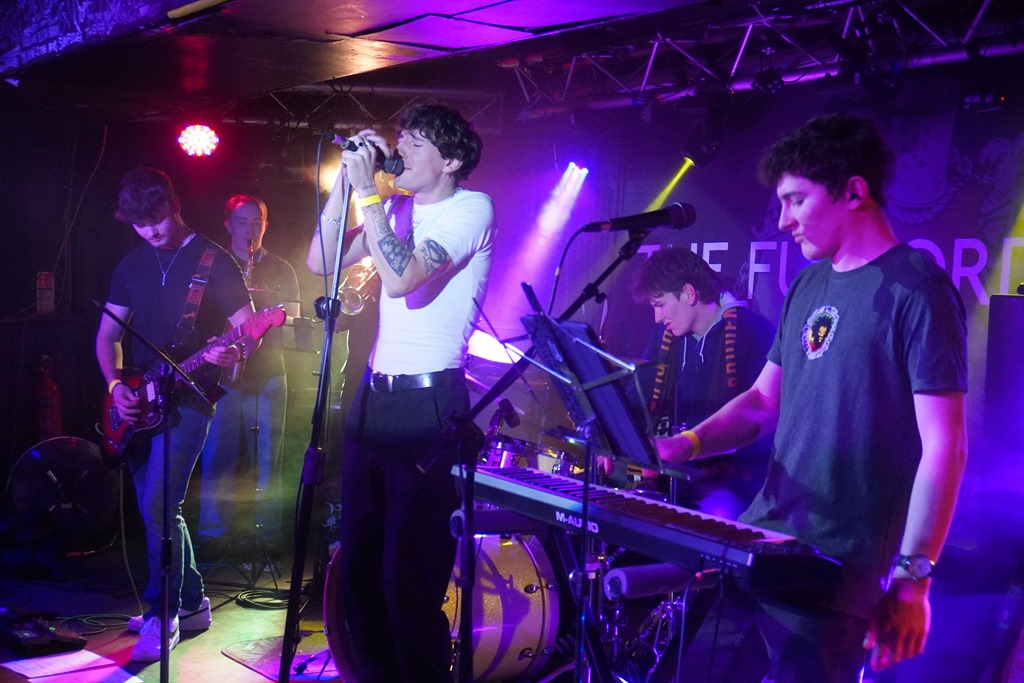
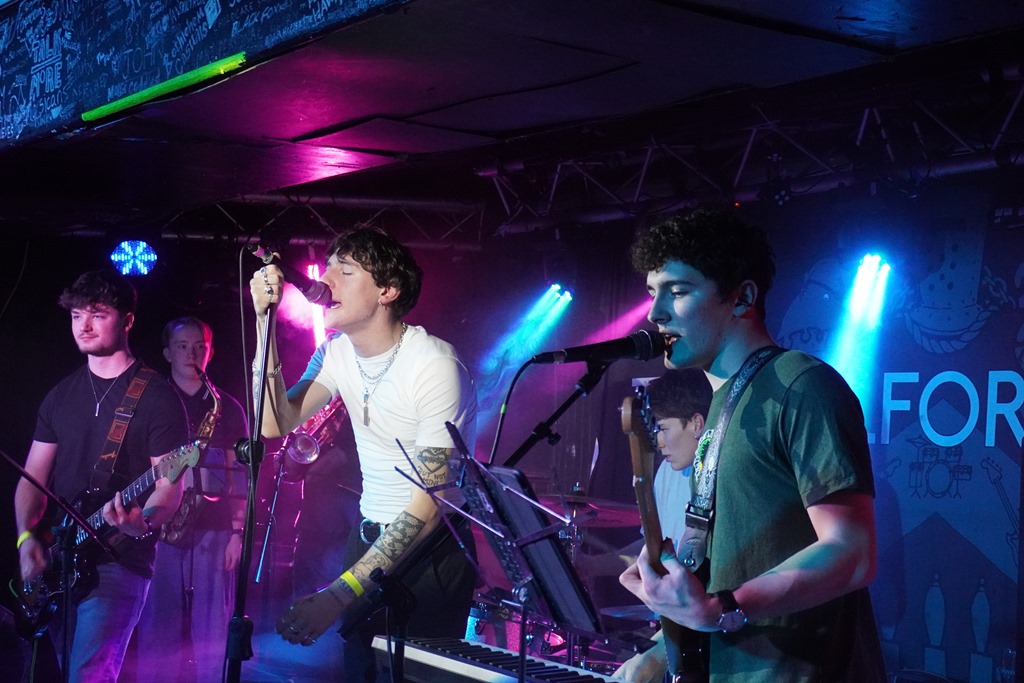
First up, it’s Speedreaders. They’re nothing if not consistent., and tonight’s set brings all of the things I’ve highlighted in my previous coverage. They’re tight, but slow and mellow. And this evening they’re slower than ever. After imparting his opinion on Fleetwood Mac being shite in a rare bit of between-song banter, singer David Mudie spent longer tuning his guitar for the next song than it actually took to play it. That’ll teach him to engage in conversation with the audience. My mate went to the bar and returned with two pints before he was done tuning. Still, when they’re back on track, they’re sounding good. It’s the harmonies which stand out in tonight’s clean, crisp set, with clear balanced sound.
DSC02705DSC02709

Speedreaders

Divorce Finance sound pretty much the same as they look…. meaning I can’t remember the last time I so wanted to punch a whole band. Actually, I lie: Sleuth Gang, who I witnessed in the same venue a few months ago emanated wankerdom from every pore. It must be something about bands who take their style cues from The Village People.

DSC02733DSC02735DSC02720

Divorce Finance

It’s sort of tongue-in-cheek but not really rockabilly country hoedown hillbilly bollocks. There are people down the front getting down with some boisterous line-dancing moves, and there are plenty who are digging it, but I just can’t get on board with this is corny, gimmicky shit, and the fact they play it well doesn’t get them a pass. All the whooping and whelping is high-energy and perfectly executed, but… It’s just so much cheesy turd-polishing, and the singer’s smug, grinning, cheeky chappie, eye rolling delivery only makes everything so much worse. I found myself feeling not irritated, or annoyed, but – most unexpectedly – angry.

Needlework are simply something else, and what that something is is not easy to pin down. Their entire existence is constructed around a mass of contradictions and paradoxical premises, none of which are reconcilable or make any obvious sense – but this is precisely why they work, and why they exist in a league of their own. They’re really tight and together, but create the illusion of being lose, even a shade shambolic; front man Reuben Pugh is simultaneously intense and aloof. Each member of the band brings something different, stylistically, and in terms of personality – that goes for both their musical contributions and stage presence. Jagged, scratchy guitar work slices across rolling basslines, jittery drumming finds a counterpoint with soft, trilling woodwind and synths interwoven through the scenes as they unravel.

DSC02765DSC02768

Needlwork

They’re not really a ‘songs’ band in terms of conventional verse / chorus structures, either, instead exploring routes which take obtuse twists and turns, and they’re unafraid to do slow, wonky, spoken wordy, abstract narrative. They understand dynamics, and the power of jarring angularity. It’s post-punk, it’s jazz, it’s experimental, and it’s utterly spellbinding. Needlework are one of those rare bands that seem to suck you into a parallel universe while they play. Time hangs in suspension and you find yourself on another plane, utterly gripped while wondering what they’ll do next. During the time they’re on stage, something transformative takes place: it’s more than simply five people on stage making music. Needlework conjure aural pure alchemy.

Pugh takes his shirt off to substantial applause, and a big fella in the front row responds by whipping his T-shirt off and lobbing it on stage after helicoptering it above his head a few times. He asks for it back a song or two later, and the band duly oblige.

DSC02762DSC02741.CROPDSC02801

Needlework

The set builds to a perfect climax, a monumental whirl of sonic chaos which is electric. And then, that’s it. Finished. Done. They leave us stunned, dazed by the magic we’ve witnessed. They certainly concluded on a high, and one suspects that this is a band which will be remembered, and talked about, for years to come.