Posts Tagged ‘Hip-Hop’

Cruel Nature Records – 11th March 2022

Christopher Nosnibor

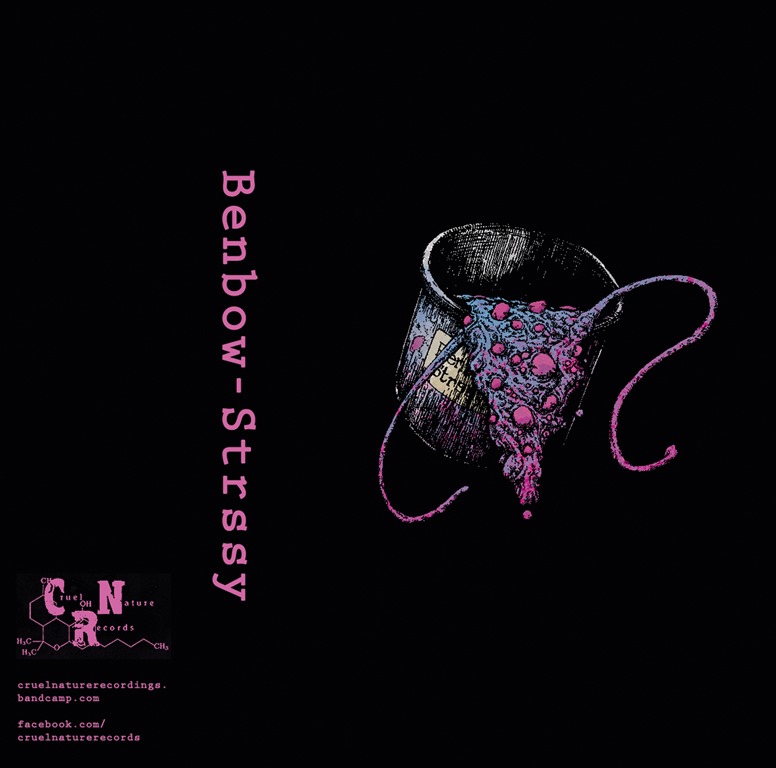
This is something that the CD or digital release simply cannot really do justice to as a full, multi-faceted, multi-sensory experience: the split LP. And while I’m more of a fan of vinyl and cassette, this most certainly does the job: you have to turn the thing over. It is truly an album of two halves. In this case, half Benbow, and half Strssy. And while some split releases simply stick two artists back to back – and there’s nothing wrong with that – Benbow and Strssy have history.

As the biographical notes detail, they first met ‘in a basement café in Lausanne, Switzerland just before the first sliced loaf was presented at the World’s Fair. Benbow had just finished a tour of the Alps with wandering trapeze troupe, NORMAL MAN while Strssy had taken a well-earned sabbatical from conjoined mime act, DIET PILLS. Over the following years they exchanged correspondence and encouragement as they independently began making experimental electronic music’. This split release, then, is pitched as ‘a celebration of this journey’.

Benbow’s eight cuts make for a hell of a journey in their own right. The tone is far from celebratory: it’s dark, claustrophobic, driven by dense beats and even denser atmosphere. Short, fragmentary snippets that straddle the space between sketched ideas and something more fully realised, all bar two are under three minutes in duration, but pack in a lot. Broadly, Benbow explores the tropes of minimalist, dark-hip hop, with thwacking solid beats and phat bass that gnaws at the gut with simple repetitive motifs or only three of four notes. It’s kinda heavy, and the effect is cumulative.

‘Slowly’ grinds, chugs, and churns away, the bass thick and gnarly amidst a swirl of reverberating synth oscillations that emulate the nagging call of a siren toward the end. Benbow’s final track, ‘Two’ marks quite a shift, with strings galore and an altogether lighter mood.

Strssy similarly trades in contrasts and juxtapositions. ‘Off a Watering Can’ starts out gentle, but when the beat kicks in, it’s pretty bloody heavy, and the mood changes significantly. It’s no longer chillout, ambience, but dense and tense, and layers of noise build exponentially to incorporate shrill whistles of modular synth abuse. ‘Deep Interior’ is all the twitch and bleep against dank, rumbling caverns of sound and then, from nowhere, it’s more rapid and relentless wails like a misfiring smoke alarm, only with a squeaky toy embedded in the circuitry. On a bad day, I’d likely find this seriously fucking annoying, but in a balanced and objective mood, it’s possible to give kudos to the way in which Strssy incorporates dance elements into a more freeform approach to electronic music which also incorporates industrial and ambient leanings. ‘Bath Night’ is a thumping industrial melting pot that’s more like drowning slowly than floating serenely, while ‘A Beautiful Brown Catalogue’ is all about the bowels with its booming bass frequencies, plus additional wild trumpet action. It’s got that late 80s wax Trax! vibe, but with a more experimental twist, and it pinches the brain.

Paired, Benbow and Strssy make for a formidable duo, a tag-team of hard-hitting genre-splicing, slow-groove bashing behemoths.

AA

Xcover

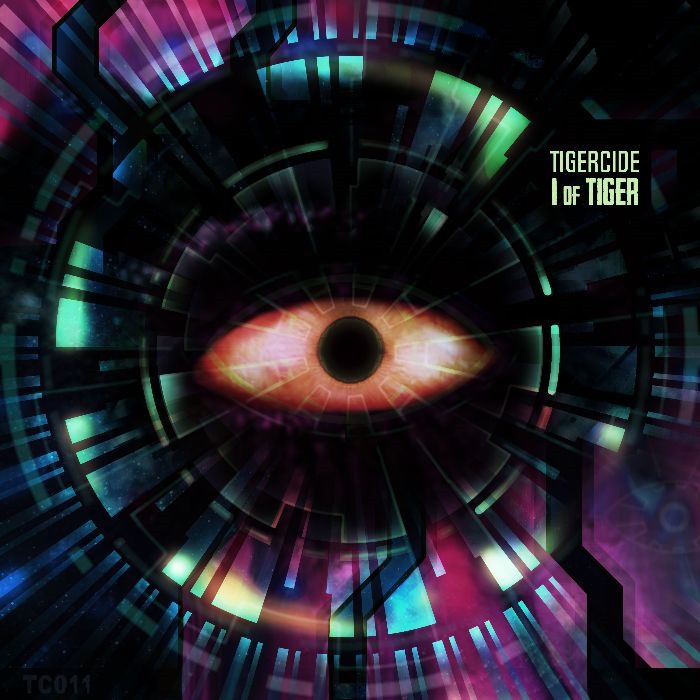
Beneath the bright lights, and beyond the velvet ropes of Hollywood lies a different Southern California: a desolate land filled with darkness, punctuated by unrealized dreams, and broken down with anguished hearts. TIGERCIDE, formed half a decade ago in LA, gives musical form to this landscape with the ethereal, melancholic vocals of Shexist and the sparse, shadowy, and balanced beats of Saint Brendan.

The post-punk of bands like Joy Division and The Fall embodied a de-industrializing Manchester. The Bristol sound of Massive Attack and Portishead gave voice to the multicultural grittiness of their city. So too does the darkwave trip-hop of TIGERCIDE capture the ethos of Angelenos anxious about their future. In a city characterized by soaring rents, temperatures, and population, can there be any more California dreaming?

Watch the video here:

AA

f4f4cd55-d4ee-124a-c744-229065ba3ea9

SIGE Records – SIGE100 – 25th June 2021

Christopher Nosnibor

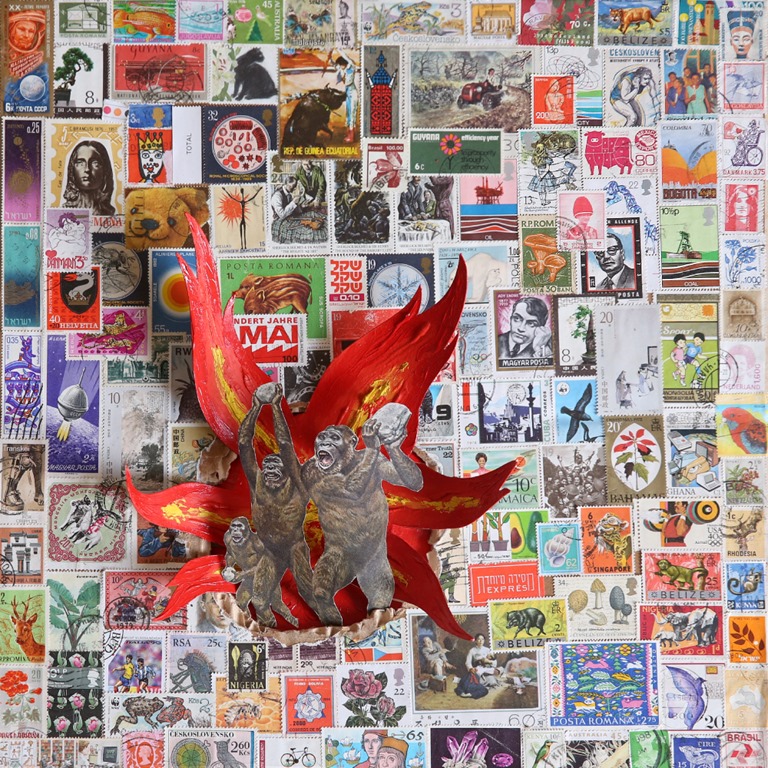
Woah! Dizzying, head-spinning chaos and cacophony! Twangs and bangs – strings stretched to within a millimetre of snapping, bending and scraping and scratching. Every instrument is playing across the others at an angle. About ten minutes into side one, you realise the discoordinated racket, having had some flickers of brass bubble through – like tentative flames licking around an oversized log on a fire that’s yet to fully establish itself -has congealed into a dense, soupy drone with industrial strength hip-hop beats played by a live drummer. And it just doesn’t stop. For twenty minutes straight. It gargles and parps and booms and toots and parps and growls and farts on and on and on, while the drums clatter and crash and thwack and thwock and bump and fuck me it’s an almighty headache-inducing din.

Details about this release are fairly limited, but details tend to be lost to history anyway. And most of history suggests that White People Killed Them is a common recurring theme throughout. There are so many of ‘them’, anonymous, often buried in unmarked graves in the name of progress – white progress. History is a narrative of shameful exploitation and bloodshed.

Whether or not the three musicians, Raven Chacon, John Dieterich, and Marshall Trammel, intended any such connotations when they came together in New Mexico in 2019, I have no idea, but the forty minutes of music recorded and relayed on this eponymous release would certainly make for a fitting soundtrack to the sheer brutality of history as a catalogue of killing. It’s so relentless, it makes you want to stand up and shout ‘stop! Enough is enough!’ But of course, as history shows us, it never stops. And nor, seemingly, does this album. It’s not a particularly pleasurable experience. It is an intense experience, and one that instils a kind of anxious excitement, even exhilaration. But pleasure… not really.

Things take a turn for the strange on side two, where from some warped, stretched-tape nastiness, there’s some twangy, spaghetti western weirdness that emerges briefly, before everything gets fucked up and mangled again. And it just builds and then sustains this massive wall of thick, discomfiting sound. The end leaves you absolutely drained, desiccated, mentally and physically decimated. If it was possible to achieve death by avant-jazz, White People Killed Them have slain us all with this monster.

AA

SIGE100_front

Edelfaul Recordings – 5th June 2021

Christopher Nosnibor

Just as you should – at least ideally – never judge a book – or an album – by its cover, so you should never judge a musical project by its geographical origin, or judge the population by their government. This is particularly important as a point of note right now, and especially in context of this release. At home, we’re often led to believe that arts are of a lesser importance in the face of a pandemic or any other crisis, but history – and social media – will tell you otherwise: the natural human response to any trauma or crisis is to immerse oneself in either the creation or consumption of art or music. When bombs are dropping, people write poetry. It’s both a coping mechanism and a means of documenting events, and there is a clear logic to it: for me, writing helps to order things, both events and my own thoughts. The very act of writing gives mental effluvia a sort of solidity.

Spirit Skinned, the press release informs us, is ‘a duo rooted in the musical underground of Tel Aviv and Jerusalem’ and goes on to note that ‘The area is known worldwide as a high tension zone, and the small musical scene that bred Spirit Skinned enjoys a reputation for an uncompromising and often radical sound approach, paired with a rare level of perfectionism. If anything, their music lives up to that notoriety.’

Watching the news, one would be forgiven for being shocked and amazed that there would be any kind of music scene in Tel Aviv or Jerusalem, let an underground one. But even during sporadic war, life does go on, and citizens are always desperate to maintain some sensed of normality, and this is clearly true of Ben Ronen (aka diburnagua), former vocalist in various punk and noise projects in the Tel Aviv area and Ofer Tisser, producer/instrumentalist and a central figure in Jerusalem’s underground music scene, who have come together as Spirit Skinned.

The pair’s eponymous debut is pitched as ‘spanning the gaps between grime, industrial, hardcore, musique concrete, politics and expressionism’, and across the course of the album’s seven tracks, Spirit Skinned wanders far and wide stylistically. And you can’t criticise an album for any lack of focus when its focus is set so wide.

Many of Ronan’s crazed, yelping, barking vocals are largely impenetrable, and often partially submerged beneath layers of noise, not least of all highly dominant percussion: heavy industrial clanks and cracks dominant, but then again there are swamps of alternative and buoyant indie lurking in the mix.

‘Dry Season’ introduces the album with a slice of minimal DIY that’s brittle, spiky, and more than just a bit quirky, and lands somewhere between Young Marble Giants and Einstürzende Neubauten. Reverb bounces all over the place, while a slow, lowdown bass squirms away. They conjure seme tense and atmospheric scenes, and the claustrophobic, repetitious throb of ‘Leaving Room’ evokes the impotent rage of early Swans: it’s the sound of frustration vented through shouting into the void against a backdrop of music that bludgeons. ‘The Root’ is built around a monotonous pulsation that passes a significant nod in the direction of Suicide, but then there’s braying free jazz sax all over the top of it, and in combination, they’re pretty punishing. There’s a physicality to the music that’s affecting as they lunge from doomy drone to fractured, splintering harsh noise.

The album’s final track, the eleven-minute ‘Once Was Blind’ is sprawling monstrous hybrid of dark hip-hop, jazz, and psychosis. It’s like a beat poetry night on a bad trip. It’s a suitably weird end to a weird album, and one that’s well worth hearing.

EFT003_front

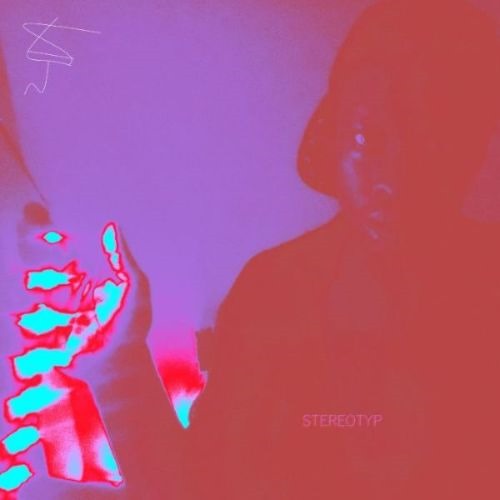
Canadian DJ & Multi-Instrumentalist JHNN has unleashed his highly-anticipated new album, StereoTYP.

StereoTYP is a personal dark album redefining the definition of what it means to be a walking "StereoTYP" who enjoys different kinds of music.

As a taster, he’s unveiled the video for ‘Heroin’: check it here:

AA

JHNN says regarding the album, "Basically the album was made from 2016 – 2020 and it’s about my biggest pet peeve of society which is the existence of StereoTYPs. It only scratched the surface of what I like to talk about; what it means to be a black man who just likes, is not afraid of experimenting, and making synth pop without being too expressive. I wanted to have fun as well and I wanted to get the point across. I also wanted to show all my sides of trying to cope like in the song "Darkness Will Always Be There", the fact that all the people in power won’t matter; "Children Are The Future", dealing with being anxious "The Warning/Warfare" and some views on religion "Greatest Lie."

AA

cbf714bd-3f3b-4d3f-858b-fe2ad3380b90

Cae Gwyn Records – 22nd January 2021

Christopher Nosnibor

It’s dark. It’s winter. We’re in lockdown – again / still. Whatever cheer Christmas and the prospect of new year brought – and let’s face it more than cheer, it was a flicker of false hope, or worse still, a diminutive moment of delusional hope – has faded with the return to work (from home) and (home) schooling and the prospect of socialising, pubs, and gigs but a snuffed candle for the foreseeable, meaning that the jaunty Christmas tunes that assailed us last month can well and truly delete themselves while we get back to reality.

‘Doppelgänger’, the debut single from IsoPHeX, aka 19-year-old Cian Owen from Anglesey, it pitched as ‘brooding electronica of the highest order’, and it fits the bill and no mistake.

If you’re expecting – or wanting – more dark ambient, you’ll likely be disappointed, although ‘Doppelgänger’ brings atmosphere in spades, and one that’s cold and dark.

It may only be three minutes an eighteen seconds in duration, but ‘Doppelgänger’ melds an array of styles, incorporating hip-hop and sparse electro to create something that’s simultaneously bleak and dynamic, as chilly synths wrapped like mist around a hectic beat: uptempo hip-hop or downtempo drum ‘n’ bass? Who cares? Despite the urgent pace of the stammering rhythm, ‘Doppelgänger’ is sparse, minimal, and edgy, a twitchy trip through dark alleyways at night, tense and paranoid. Is there something there? Or is it all in your head? Keep one eye over your shoulder. Keep moving. Trust no-one. Apart from me, of course, when I tell you this is a killer tune.

bAF3hL-z

generate and test – 30th October 2020

Christopher Nosnibor

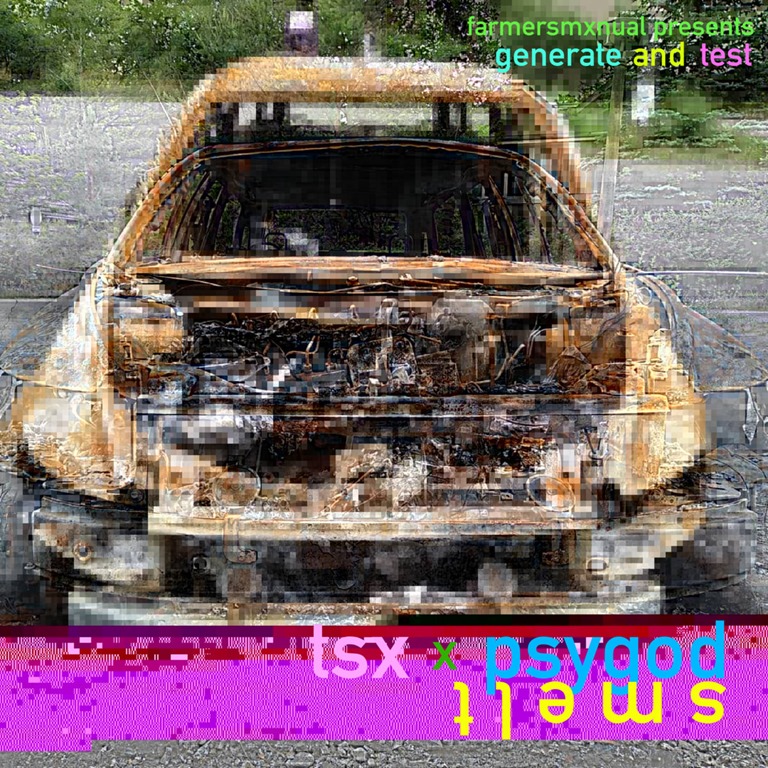
The blurb bewilders me before I hear a note, as I read how ‘ʇןǝɯs is a high density package crafted with care and luck from a rare mixture of ingredients. The four track MP (micro-package) takes you on a ride across a one- dimensional checkerboard landscape rendered in colors of euphoria and terror. Players emerge at side exits and diffuse presently. If the album title is unmanageable you can use the unoffending smelt.’

Delving deeper, I learn, ‘Entire package produced on-the-go using mobile phones, some of them rooted. Apps are Nanoloop, g-stomper, termux/python, different media recording apps. Custom app autovoice takes care of slicing the voice tracks and beat aligning them on the track.’

From this fragmentary non-narrative, I’m braced for something irregular, unusual, beyond boundaries, and that’s very much what this is. Micro-package is a fair description of an EP comprising four tracks, none of which really exceed two and a half minutes, although it doesn’t convey the flickering intensity of slow-tripping hip-hop that’s rooted in samplist, cut-up methodology with disjointed loops and fragments providing the fabric of this digital tapestry.

It may not be easy to follow, and at times so deeply immersed in obscure referencing and the exploration of the technology used to create the material, ʇןǝɯs feels as much like a case of experimentalism for its own sake than a document of artistic creativity. The titles are more or less impenetrable, at least in terms of their significance or relevance, although ‘very veird’ is quite odd, if not overtly Germanic, a collage of bleeps and a bubbling stew of vocals simmering over minimal beats and bloopy, stammering bass. It actually makes for a long two minutes, but the richness of the layering and density of the combined source materials is undeniably impressive.

There’s almost infinite bubble and fizz, crackled and grind, particularly on the closer, ‘argh uargh (kann ich ans handy?)’ where the title is a fair summary of the chaotic cacophony it contains.

ʇןǝɯs is messy and uncomfortable, but taking its sequence of input > process > output as a creative model, it’s likely the ultimate summary of 2020.

AA

a1325420827_10

Cruel Nature Recordings – 16th October 2020

New York’s Lip Critic return with their second album, imaginatively titled Lip Critic II. Now, I have a tendency – and I know it’s spurious – to associate numbered albums with prog and indulgence, ranging from Peter Gabriel to Led Zeppelin. But there is nothing remotely proggy or indulgent about Lip Critic’s second eponymous release, which crams nine tracks into 21 minutes of genre hybridity and maniacal mayhem. And make no mistake: this is intense and crazy shit, all going off in a boiler at once.

The lazy hookline would be that the album’s first track, ‘Why Not’, sounds like The B52s on acid, but more accurately, it sounds like The B52s on acid and meth imitating a fictitious Dead Kennedys / obscure hip-hop collaboration for the Judgement Night soundtrack. But none of this really convey just how frantic, frenetic, fucked-up and actually quite how wrong this all is. Yes, the world of Lip Critic is a bewildering one that absolutely defines the concept of ‘crossover’, and the closest comparison I can think of is Castrovalva, who were ace but niche and probably for a reason. It’s so far into niche crossover it’s hard to determine the level of seriousness behind the hybridized mess of noise that is Lip Critic II: this is an album that goes beyond so many boundaries all at once.

I don’t know what this is, and I suspect it doesn’t either. And nor should it: music should exist for its own sake, free from any constraints of genre. But with Lip Critic, it’s brain-bending and bewildering: there is simply so much going on, and all of it’s incongruous and seemingly incompatible.

‘Dreamland I’ is out-and-out mad, not so much a mash-up or hybrid as a multi-genre pileup with gas tank explosions and flames and wailing sirens and probably some people being cut from cars by fire and rescue and others being abducted by aliens.

‘Like a Lemon’ brings garage, grime, and industrial-strength hip-hop together with mangled beats a punishingly heavy groove that provides a backdrop to a more narrative-orientated approach to the lyrics, describing a guy with ‘A double-breasted suit and tight shorts / they’re so tight they cut off the circulation to his legs / … he said ‘I’m going to fill you up with rhinestones’.

At every turn, Lip Critic deliver mind bombs of every shape and form: sonically, stylistically, lyrically, Lip Critic II is simply an explosion. With every song being so brief, one barely has time to realise it’s started before it’s finished, and by the end, the listener is left punch-drunk, bewildered and dizzy. I think it’s good. I think it’s horrible. I think it’s a mess. But I can’t be sure.

AA

a4151206807_10

‘7 INC (Creeping Death Version)’ (out on 5th January 2019) is the latest offering from Hull, UK-based minimal electronic music producer, Dom Sith, under the new guise of God Is 7, Sith returns with a much darker, heavier sound.

“I want GI7 to be a brand, man. It’s a representation of everything I wanted my early work to be, but with a stronger, darker sound and vision, I’m really pleased with it, and I hope it resonates with some." 
Alongside imagery developed by Andrew Jones (who has also worked extensively for artists including Taproot), GI7 presents a sonic shift away from Sith’s more ambient work. “This is going to be more powerful – the beats on this are more influenced by hip-hop, UK grime and industrial, it’s still a soundtrack, but it’s meant to put to a listener on edge, and to make you a little bit uncomfortable.”

Inspired by everything from The Haxan Cloak to Burial via The Smashing Pumpkins and Tricky, ‘7 INC’ is a foreboding introduction to a new chapter for GI7.

Tweet: twitter.com/d0mS1th
Bandcamp: godis7.bandcamp.com/releases

Check ‘7 INC (Creeping Death Version)’ here:

Ipecac Recordings – 23rd November 2018

Christopher Nosnibor

Planet B finds Justin Pearson – of Dead Cross, Retox, and more bands and projects than even he could probably name – pair up with hip-hop producer Luke Henshaw. The result is a gloriously mangled hybrid of punk and hip-hop that’s more in the vein of the crossover collaborations that featured on the Judgement Night soundtrack than anything thrown up subsequently by nu-metal or anything else that’s followed. No doubt this is something Ipecac head honcho Mike Patton considered when the album landed with the label, having delivered the belting ‘Another Body Murdered’ with Faith No More in collaboration with Boo-Yaa T.R.I.B.E. back in ’93.

Having spent what seems like forever criticising people for becoming fogeys prematurely and becoming locked in an era that corresponds with their late teens / early twenties and bemoaning the fact that there’s no new music that’s any good, I’ll confess with no small disappointment that just typing that gave me a major pang of nostalgia, and that I haven’t listened to any mainstream or chart music in about eight years now, and I really don’t know who’s who or what the kidz are listening to now (and although I have been subjected to ‘What Does the Fox Say?’, Pingfong’s ‘Baby Shark Dance’ and ‘Skibidi’ by Little Big, I’m not sure how representative these are of anything). But the notion that there’s no new music that’s any good is patent bollocks. The fact of the matter is there’s more good new music emerging now than ever before – it’s just a matter of taste and knowing where to find it. Ipecac, it has to be said, are pretty consistent as a source of things both noisy and strange, and while the styles and forms may not be entirely predictable, the quality usually is. Planet B’s eponymous debut is illustrative, and while it’s new music with roots in older music, it still doesn’t sound quite like anything else current.

Political and pissed off, Planet B is an album with attack, taking not the mellowed out doped-up end of hip-hop but presents a fiery force-for-change antagonism that’s more Body Count or Beastie Boys at their best. As one would reasonably expect from an act featuring Justin Pearson, the result isn’t pretty, but it is pretty intense, and ‘Crustfund’ makes for a strong start: deep, pounding hip-hop beats and snarling synths provide the backdrop to an uncompromising and aggressive vocal courtesy of Kool Keith, (one of a roll-call of inspired guests featured on the album).

Things take a turn for the more direct and driving with the fast-paced pulsating groove of ‘Join a Cult’ – the backing sounds like Sigue Sigue Sputnik, while the vocals are a pure punk whooping holler, brimming with anger and nihilism. ‘Manure Rally’ and ‘Come Bogeyman’ are also thunderous stompers reminiscent of Ministry (the latter featuring the percussive talents of Martin Atkins), and big mid-tempo beats and dense, looping low-end are one of the defining features of the album as a whole. This certainly contributes to providing Planet B with a sense of cohesion – which is much-needed given its eclecticism.

Like many, I’m wary of covers of songs I really, really like, and am often heart howling in despair ‘Sacrilege! How could they do that?’ or, conversely, ‘why did they bother? It doesn’t do anything different.’ The cover of Depeche Mode’s ‘Never Let Me Down’ is unexpected – slowed down, stripped down, it’s brutal and ugly – and quite outstanding.

Although the production is significantly cleaner and the overall, and the vibe altogether less violent, Planet B shares shouty, sneering, snotty common ground with Uniform’s The Long Walk. And as The Long Walk is one of my favourite albums of the year (despite its relentless fury and clanging noise invariably leaving me physically and emotionally drained and with a headache), it’s a big thumbs up for Planet B.

AA

469426