It doesn’t seem like five minutes since Beauty in Chaos emerged with their debut album, and here, in the blink of an eye, we are looking at a twenty-nine track ‘reimagined’ version of the fourth album from this ever-expanding collective, curated by Michael Ciravolo (formerly of Human Drama and Gene Loves Jezebel. I’m not even going to start on the roll-call of personnel who have featured on these releases: I’d still be going by the time I’d finished listening to all twenty-nine tracks.
It’s certainly quite an expansion on the original eight songs which made up Dancing with Angels, which notably featured Wayne Hussey and Ashton Nyte among its guest vocalists. There is, as one might anticipate, an abundance of remixes – no fewer than five versions of ‘Holy Ground’, for example, and four of ‘Hollow’. Some are better than others, some are pretty radical, others less so, with the standard examples of slapping a big beat and some effects tossed into the mix with variable results, but Combichrist and Bellwether Syndicate are noteworthy for their contributions.
The ’almost acoustic version’ of ‘Made of Rain’ stands out not only by virtue of not being a remix, but also being a really good take on the song. But the selling point here are the songs which didn’t appear on the original album, which appear right at the very end of the monumental track-listing.
Their take on T-Rex’s ‘Children of the Revolution’ harks back to the early 90s when Al Jurgensen was arguably at his peak and dropping leftfield covers of ‘Lay Lady Lay’ and ‘Da Ya Think I’m Sexy?’, accompanied as it is by a video which finds the band performing behind a mesh fence, as Ministry did while touring Psalm 69 (as much for their safety as for effect). It also calls to mind the club scene in The Hunger where Bauhaus play ‘Bela Lugosi’s Dead’, and I don’t doubt that this is also intentional: Bauhaus – and Bowie – can both be heard waving influence through Beauty in Chaos’ songs. “The revolution will be televised”, Al announces through a loudhailer, and well, if you’ve seen any news in the last fortnight, you’ll know this to be a fact. However, the issue isn’t that anyone’s being fooled here, but that no-one seems willing or able to stop it: just as the world watched on as Israel perpetuated genocide on the Palestinians in Gaza, so it gawps, motionless, as Trump and Musk undertake a coup, and not just making a grab for absolute control over the United States, but world domination. It’s absolutely fucking terrifying – unlike this recording. It’s a solid enough cover, but perhaps lacks the bite and heft it deserves, being more straight-up than cranked-up.
‘Open Your Eyes’, originally by Lords of the New Church, also feels apposite – indeed, lyrically, it’s never been more relevant, and while this cover, again, is almost entirely faithful to the original and is accompanied by a video clearly shot during the same session as ‘Children of the Revolution’, it hits home to wrap up the album in fine style.
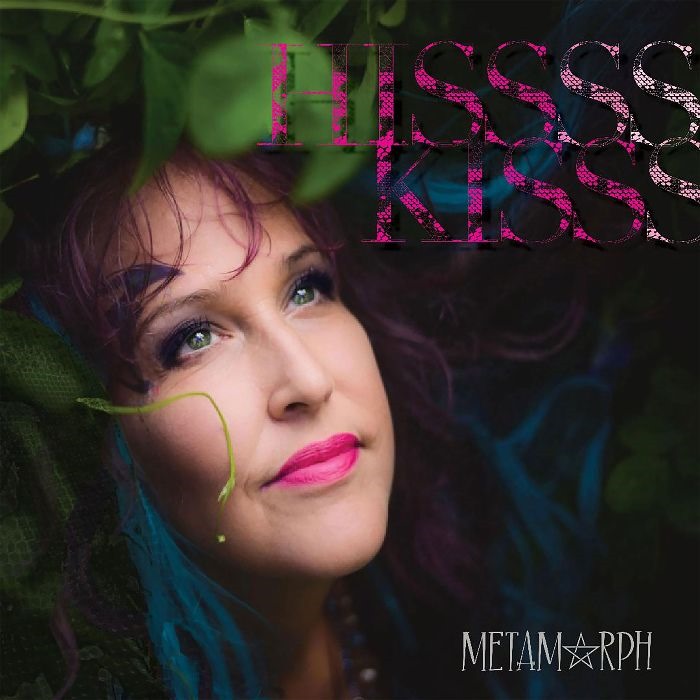
METAMORPH conjures 2025 with the new single & video, ‘Hiss Kiss,’ a celebration of the snake’s magic and the promise of rebirth. Dropping in time for Valentine’s Day, the witchy Imbolc celebration, and the Year of the Snake. Love strikes like venom, and ‘Hiss Kiss’ is the antidote—a gothic dance floor anthem that wraps you in its serpentine embrace.
Launching METAMORPH’s Wheel of the Year release ritual, ‘Hiss Kiss’ is the first single to drop for these witchy holidays. The ritual culminates with the release of the album on the harvest celebration, Mabon (September 22) and closes the year with haunting remixes to complete the spellbinding journey.
“’Hiss Kiss’ is serpentine spells set to sound—your fangs deep in my flesh, feel the world’s caress, new pardine, dance divine,” tempts Margot Day.
Dark, seductive, and dangerously divine, ‘Hiss Kiss’ is the ultimate goth dance floor banger to kick off the year.
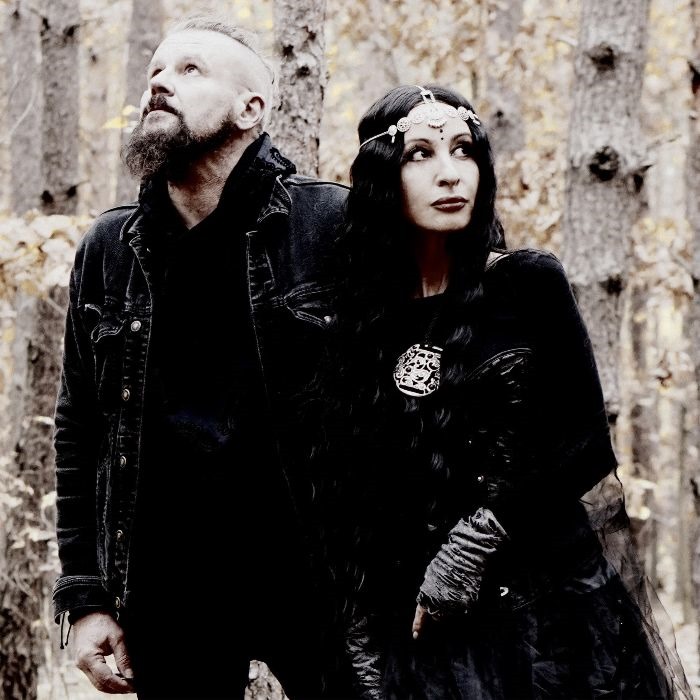
Dark electronic & trans-atlantic duo, DEATH BY LOVE has just announced the release of their debut single & video, ‘Strong Inside’ courtesy of Distortion Productions.
‘Strong Inside’ is a song that deeply reflects the inner struggles of the human experience. The lyrics touch on universal themes of vulnerability, self-acceptance, the constant search for inner peace, and authentic connections. It’s a song about self-preservation and a yearning for closeness and connection and the aspiration for a balanced and authentic self. It’s the resilience of the human condition that makes us all “strong inside”.
DEATH BY LOVE is poised to captivate the goth-industrial music community. offering a compelling glimpse into the band’s artistry. The band is also finalizing their first full-length album, set for a summer release. It promises to deliver an immersive and richly-layered musical journey.
‘Strong Inside’ is available on most digital platforms including Bandcamp.
I suppose I lost track of ‘new goth’ bands at the end of the 90s, and am still a way behind even now I’m a bit more back on it, and so History Of Guns, described by Mick Mercer – the authority on all things goth, who’s Gothic Rock Black Book was a bible for be when I was 13 and discovering the scene, as “By far, the most inventive UK band to have got their hands caught in the Industrial threshing machine” – bypassed me.
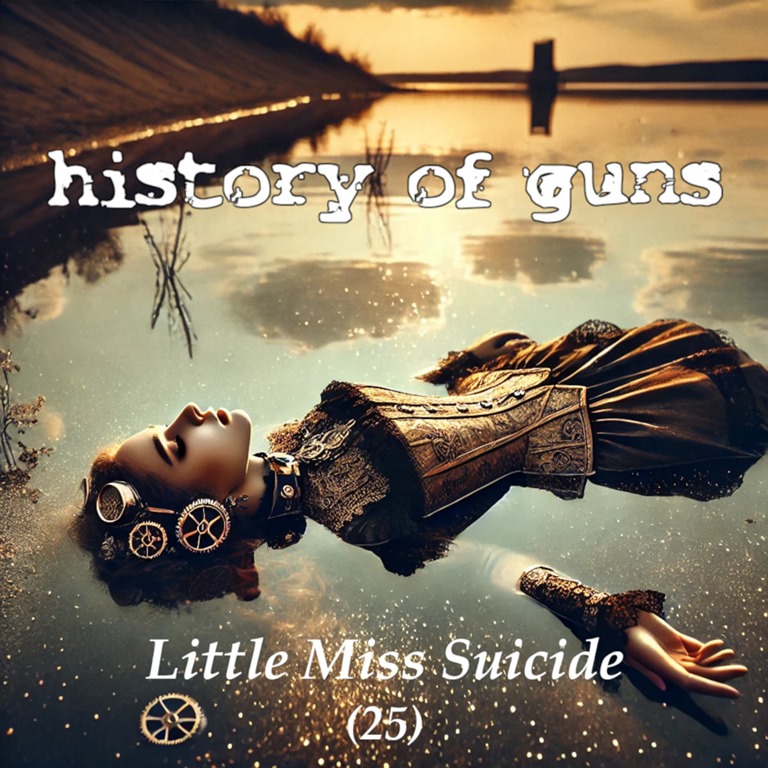
As the parenthetical numerals in the title suggests, this is a remixed version of their debut single, released twenty-five years ago, and it’s accompanied by a brace of new songs by way of B-sides, in the way things used to be done back then, when you had 12” and CD singles – and while I don’t get nostalgic for much, there was something special about these formats. Then there’s the fact a 12” single used to cost about £3.50 and a CD single a couple of quid – which probably sounds as incredible as a £1 pint or 3p tin of beans (Kwik-Save, No-Frills, c1995) to anyone under 35 – meant they were affordable, accessible.
But while we’re talking nostalgia and the passage of time, the accompanying video uses footage, originally filmed by Danni Cutmore on a VHS camera, of the band writing and performing the song at Earthworks studio in Barnet in 1998. It’s grainy, fuzzy, saturated, and looks like it could just have easily have bene shot in 1988, or even 1978. On the one hand, digital technology means the quality of video footage, even when shot on a cheapy mobile phone, is usually crisper, and isn’t prone to deterioration – but on the other, it’s so commonplace, it has less currency and less buzz about it, somehow.
The music itself… yes, it’s got that vintage post-punk feel to it, spun with an industrial edge, and pitching the band alongside Alien Sex Fiend, Cabaret Voltaire, Nitzer Ebb, Coil, Nine Inch Nails, Deathboy, The Prodigy, and LCD Soundsystem is all quite fair enough.
The classic spindly goth guitar sound spins spidery webs across a thumping drum machine, and there’s that quintessential low-slung bass groove… not to mention Del Gilbert’s theatrical baritone which looms powerfully over all of it. But then there are shuddering laser synth blasts which bubble up from nowhere, fizzes and whizzing and bleeps create the sensation of listening to two songs at the same time. Perversely, it somehow works, not least of all because there are strong hooks and the beat hits just right.
First B-side, ‘i am defective’ shows how they’ve evolved: it’s a dubby instrumental which leans far more into the electronic territory which only coloured their debut single. It’s also harder-edged and more overtly industrial, too, not just with the electronics, but the crunching, serrated guitars which cut in and threaten speaker damage. ‘LMS (Deep Mix)’ – a radical reworking of ‘Little Miss Suicide’ is in the vein of Rosetta Stone circa The Tyranny of Inaction – at least to begin with, but then swerves hard into the kind of electronica that qualified as technogoth or even cybergoth and reminding me why I drifted from the goth scene at the time. Now, I’m a bit more open to these things, and as an example of hard-edged industrial goth, it’s solid.
This release presents a neat straddling of the band’s formative years and their current sound: a clear win for fans, and a neat introduction for the unfamiliar.
Under The Sanguine Moon is the fourth album from Denver, Colorado-based goth rock band, Plague Garden. As the pitch tells it, ‘The album features a prominent vampiric theme. Delve into the catacombs of a nocturnal world, where tales of bloodlust at dusk reign supreme. Listen to fantastical tales of the undead and even a little bit of Greek mythology added in for variety… From the album’s blood-red artwork to it’s [sic] hemophilic lyrics, this LP is bound to please even the darkest children of the night. For fans of gothic rock, post punk, deathrock, darkwave.’
Having got into gothness around 1987, just on the cusp of teenagerdom, I would come to discover that, just as with metal, this was a genre with many disparate threads. The vampiric fascination, which represents the popular image of goth – and espoused by the myriad dark souls who descend upon Whitby for the legendary goth weekends and trace the steps of Dracula following the small port town’s prominence in Bram Stoker’s genre-defining novel – is a league apart from the origins of the music which would come to be synonymous with early goth – predominantly Leeds-based acts such as The Sisters of Mercy, Red Lorry Yellow Lorry, The March Violets, and Salvation. You won’t find a hint of vampirism here. Bauhaus’ debut single, ‘Bela Lugosi’s Dead’ predates the emerging Leeds scene, and the whole vampire / spooky template can be pinned squarely on this single, which can’t exactly be considered representative of their output as a whole. But still, people like to latch on to easy tags.
This perhaps unduly preface is to say that the goth / vampire thing is something I find difficult to fully embrace. Goth bands doing vampy stuff is simply not the same as Steven Severin providing live soundtracks to classic silent movies.
The other thing I find difficult to really align is that while there is a whole new wave of acts of a goth persuasion emerging, there are a lot of goth acts loitering and lingering featuring older guys – in the forty to fifty-plus demographic, which I will, in the interest of transparency record as being my demographic – doing this. Plague Garden do sit within this bracket.
Under The Sanguine Moon is a solid album. It sits in the third wave goth bracket alongside the likes of Suspiria and the Nightbreed roster of the late ‘90s – brooding, theatrical, with booming baritone vocals that are sort of aping Andrew Eldritch but fall into that more generic ‘fah-fah-fah’ singing down in the throat style. With piano taking a more prominent position among the standard musical arrangement of drums / bass / guitar, Plague Garden create a layered sound which does stand out from many of their peers, and they so absolutely nail that quintessential goth sound with the solid foot-down four-square Craig Adams style bass groove. This is nowhere better exemplified than on ‘Shadows’, with its spectral guitars, the perfect cocktail of chorus, flange and reverb creating that brittle, layered sound which defined the 80s sound.
The vocals are mixed fairly low, and it’s the bass and drums which dominate, and this is a good thing – not because the vocals are bad, but because it puts the atmosphere to the fore, and means the lyrics are less obvious, which is probably no bad thing.
‘The Dirty Dead’ is a crunchier, punkier take on the sound, and carries hints of early Christian Death – think ‘Deathwish’ – and this carries on into ‘Pandora’.
The cover they mention is ‘#1 Crush’ by Garbage, an early B-side that’s one of the hidden gems of their catalogue. Plague Garden’s take is unsurprisingly lugubrious, theatrical, and makes sense as a song selection with its nagging, picked guitar part and crunching percussion.
There’s a flood of blood at the end, with ‘Blood Fingers’ and ‘Blood Debt’ closing the album. The former, haunting, hypnotic, a classic moody goth cut, the latter offering a slower, dreamier take on the former. These guys have got their sound honed to perfection, and if you’re into more trad goth delivered with a more contemporary spin – but not too contemporary – you probably can’t go too far wrong with Under The Sanguine Moon.
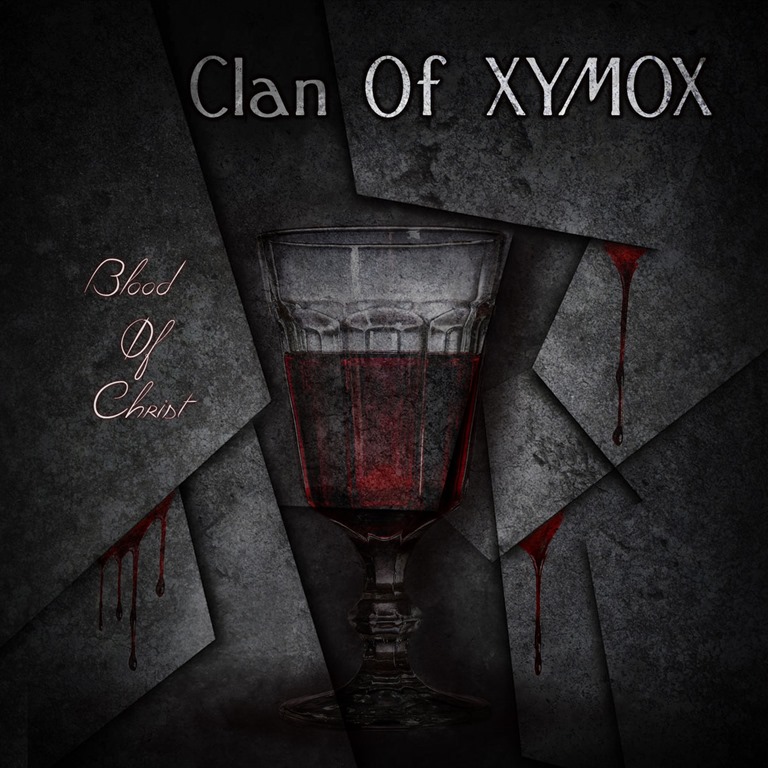
Clan Of Xymox will release a new EP entitled ‘Blood of Christ’ on 6th December. The title song is also included on ‘Exodus’, the current album by the dark wave wizards released in June 2024, with the EP also including the brand new ‘You’re The One’ plus six remixes of each track for a total running time of 64 minutes.
The reaction:
EP? EP??!! Well, yes, I suppose with fourteen tracks and a running time in excess of an hour, its play is certainly extended. What kind of duration would qualify for a long player, I wonder? On vinyl, this would be a double album at 33rpm. Available as a download only, Blood of Christretails at the same price as the album which spawned it, Exodus, released in the summer.
Carping and pedantry aside, this is an ambitious project for a single, with the album track accompanied by a non-album B-side – something which is always welcome – and, as advertised, six remixes of each. Does anyone really need six remixes of any song, even the most diehard fan? It’s debatable, although not a debate I’m about to open to the floor.
I suppose electronic music does lend itself more readily to remix treatment than more rock-orientated stuff. The 80s and early 90s witnessed the rise of the remix via the extended 12” mix and then over time, we began to see 12” and CDs with different remixes, which were all about milking fans in order to boost sales and chart positions
As a choice of single, ‘The Blood of Christ’ is a strong one: pumping beat and pulsating bass underpin a solid tune with stacks of atmosphere and a huge, theatrical chorus, straddling the boundaries of both classic and contemporary goth. ‘You’re the One’ is a bit popper, but still driven by those all-essential dark undercurrents.
And so, onto the remixes: the album’s remaining twelve tracks alternate between the two songs, the obvious benefit being that you don’t get back-to-back takes of the same track for half an hour. However, by presenting the same two tracks alternately, it’s a little like the old days of flipping a 7” over and over, only hearing differences and new details with each play, and over the course of an hour and a bit it becomes quite mind-addling, and with both tracks employing similar stabby, undulating synths and tempos, the sameness starts to dull the senses after a while.
Too much of a good thing? Perhaps. And perhaps there’s a time commitment involved in distinguishing between the different versions and finding your favourites, preserved for the serious fan. Individually, the tracks are great, although I’m not convinced any of the remixes really improve on the originals, but presented together in such quantity, it feels like overkill.
Anniversary editions and reissues have become a massive part of the music industry in recent years, in keeping with the ever-growing tendency to milk all things nostalgic. Many are shameless cash-ins, designed to compel dewy-eyed fans to purchase an album from their your again at eye-watering expense in order to hear it in a new ‘improved’ remastered form, accompanied by several discs of demos, outtakes, acoustic and alternative versions, and contemporaneous live recordings that no-one ever plays more than once if at all, while cherishing a deluxe booklet of photos and whatnot and reflecting on just how fucking old they are and wondering where the decades have gone.
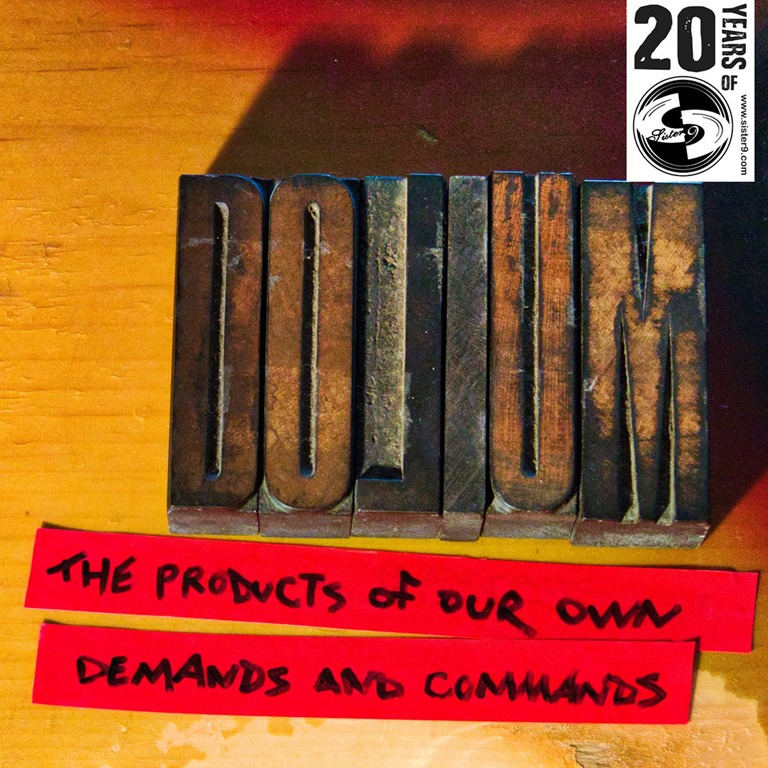
That doesn’t mean there’s no merit to marking anniversaries, and this release is rather different, being a part of the commemorations of twenty years of Sister 9 Recordings with a comprehensive retrospective of cult Sheffield act Dolium, who first broke onto the city scene around the turn of the millennium, before coming to the attention of John Peel in 2004. The band went on indefinite hiatus in 2010, but during their years of activity, amassed a substantial body of work, including two full-length albums, Kisses Fractures (2005), and Hellhounds On The Prowl (2008). A third album, Brother Transistor, was recorded but never saw the light of day… until now. Add all of their singles and other bits and bobs, including their shelved debut single – which made it to test pressing but no further due to lack of funds – and this four-CD set provides instant access to their complete discography, and more. As such, it’s a boon for fans and an ideal introduction for anyone unfamiliar with an act described by KERRANG! as ‘a less depressing Joy Division mixed with the black horror of Bauhaus and the melodic dynamics of the Pixies’.
I’m not entirely convinced there’s much ‘black horror’ to be found in Bauhaus’ catalogue, but it does capture the punky / goth stylings of a band who espoused the indie / DIY ethic and injected every moment with pure adrenaline. They started out with a drum machine, but progressed to live drums when Simon Himsworth joined. Being a small world, it would appear that this is the same Simon Himsworth who would later play guitar in brief but legendary York band We Could Be Astronauts alongside former Seahorse Stu Fletcher.
There’s an obvious chronology about the first two discs, which contain Kisses Fractures and Hellhounds On The Prowl respectively, with contemporaneous EPs and singles by way of bonuses. As titles like ‘She’s The Pill That Makes Me Want To Stay’, ‘Drug City’, and ‘Whore Whore’, all from Kisses Fractures indicate, this is a band who are fully committed to the trash aesthetic of sex ‘n’ drugs ‘n’ rock ‘n’ roll – with a heap of death and suicide on top – and Kisses Fractures is a low-fi blast of post-punk drama. With hints of The Jesus and Mary Chain and The March Violets in the mix, likening the sound to any specific bands is difficult and rather too specific: what they bring is an assimilation of an era and an aesthetic, and the sound is more that off the mid-80s than the mid-00s. It’s exciting: there’s no let-up, no mid-album lighter-waving anthem, just back-to-back overdriven explosions of raw energy that are every bit as punk as anything released in ’77 or ’78. ‘Driving With The Deathettes’ B-side ‘Daddy’s Swinging in the Attic’ cranks up the sleaze true-crime dirt, against some repetitive lo-fi riffage.
The same themes are present on Hellhounds On The Prowl, which delivers another batch of tightly-packed squalor-filled shock, horror, and filth with titles like ‘“Suicide” Was My First Word’, ‘Coughin’ In The Coffin’, and ‘Junkie Howlin’’, the latter being a swampy, hipshaking fucked-up rockabilly boogie which pretty much sets the level for the album, which does feel more evolved, if not necessarily more mature. ‘We Want Your Blood’ is a lurch into straight-up B-movie horrorcore, and the thunderous ‘She Can’t Steak My Heart’ continues to place the vampire fixation, while ‘Gü the Destroyer’ melds the high-octane explosivity of Dead Kennedys with an Industrial edge. It works, and they get away with it because there’s clearly a dash of pastiche and self-awareness infused with the relentlessly rambunctious rock ‘n’ roll.
As much as they’re about drawing on, and revelling in, cliché, and the work of their precursors, there’s clear common ground with contemporaries like Eighties Matchbox B-Line Disaster. I say ‘like’, but it’s a very short list, to say the least. Then again, the scuzzy garage blitzkrieg of tracks like ‘Godspeed Your Love To Me’ sits comfortably alongside garage revival acts like The Strokes and The Hives. Only this evidences that Dolium were better. As is so often the case, it’s not always the good bands who make it, and perhaps Dolium were just too intense, too wild, too primitive. Among an endless list of contemporaneous vampire-themed ragers, including ‘Holy Water’, ‘Oh Lord, I See No Reflection’, ‘These Fans Have Fucking Fangs!’, ‘You’ve Got Holes!’ comes on like Queens of the Stone Age, and if nothing else, showcases the band’s eclecticism.
I’m sure forums and fans have debated the ins and out of why they decided to call it a day before putting out album number three, but there’s little out in the world on the topic, and hearing the material on its belated arrival gives no clue: it presents the band in ferocious form, evolved to another level, bursting with gritty guitars and showcasing a newfound level of songwriting ability – there are hooks galore, and the production is meaty. It may be more accessible than its predecessors, but it’s by no means mainstream. ‘Get Off on My Machine’ brings the riotous grunge blitzkrieg of Pulled Apart By Horses; ‘(There Goes My) Jellies Girl’ offers unexpected melody and could almost qualify as ‘anthemic’. The gritty uptempo chuggernaut of ‘The Future In Hands’ seems to take not-so-subtle cues from ‘My Sherona’. It’s so tempting to contemplate what might have been… but to do so is futile. The past is past, and Dolium’s peak is certainly past, but Brother Transistor is a belter and that’s an ineffable fact.
AA
The fourth and final disc, which brings together everything else not included on the other discs, namely the first four-track demos and a bunch of offcuts and rarities from the span of their career, is, as one would anticipate, something of a mixed bag, and often raw, rough, and barely ready. The demos provide an insight into the early evolution of the band and their early material, again sounding more like they were recorded in 1983.
With seventy-six tracks, this is not only a monster, but a truly definitive collection which presents the good, band, and the ugly – but mostly it’s either good or ugly. One thing is clear: Dolium were a band out of time: sounding like 1984, they’d likely have gone down a storm now or as part of either the goth revival of the late 90s or a few years ago. They just weren’t the sound of the post-rock dominated mid-noughties. But if there’s any justice, history will recognise Dolium as underground greats.
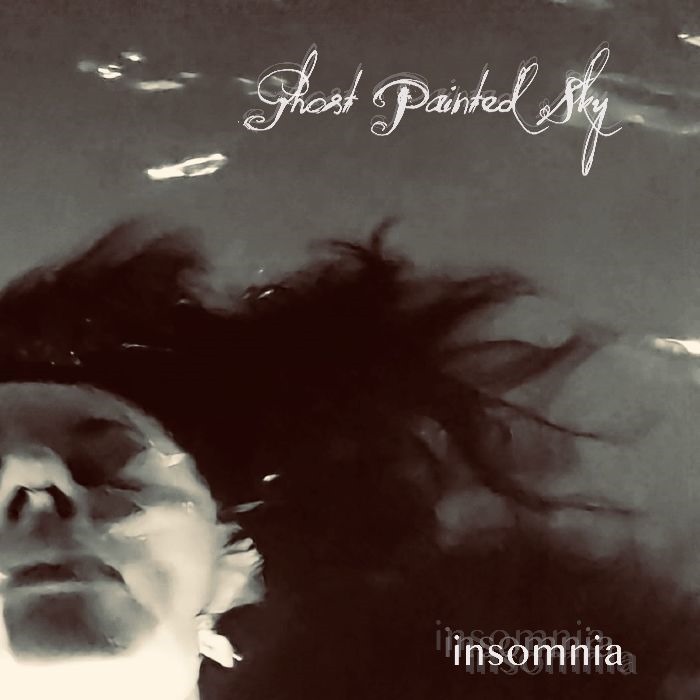
Goth rock/post-punk band, Ghost Painted Sky recently unveiled their latest single, the introspective ‘Insomnia’.
Ghost Painted Sky have always tried to write songs that are true to their own life experiences, while also tapping into something a little more universal. With the new song ‘Insomnia,’ they explore some of the most familiar of common modern plagues: stress and sleeplessness.
Raw, claustrophobic, and perhaps a bit more aggressive than some of their previous material, ‘Insomnia’ is the sound of the night fight against the thousand micro-demons of anxiety that crawl and claw around the edges of peace and sanity.
AA
GHOST PAINTED SKY began as the solo studio project of David Strong, as a way to process some major life changes through songwriting, which resulted in a debut self-titled EP released in 2014. The following year brought a second short EP, The Shadows Breath, and the first live performances.
In 2017, Lisa Wood began contributing vocals with the Scars EP, and then with the first full-length Ghost Painted Sky album, Flightless, released in the summer of 2018. Lisa has since become the second official member of the band and the primary vocalist, continuing through the Ephemeral Wake EP (2021), and a series of singles – of which ‘Insomnia’ is the latest – offering previews of what to expect from the forthcoming second full-length album, Failure Blooms. While David remains the principal songwriter, Ghost Painted Sky continues to include work with musical collaborators and live band members (including current violin player, Aurora Grabill and guitar player, Michael Boudreau) while continuing the ever-present theme of songwriting as vessel for personal exploration and catharsis.
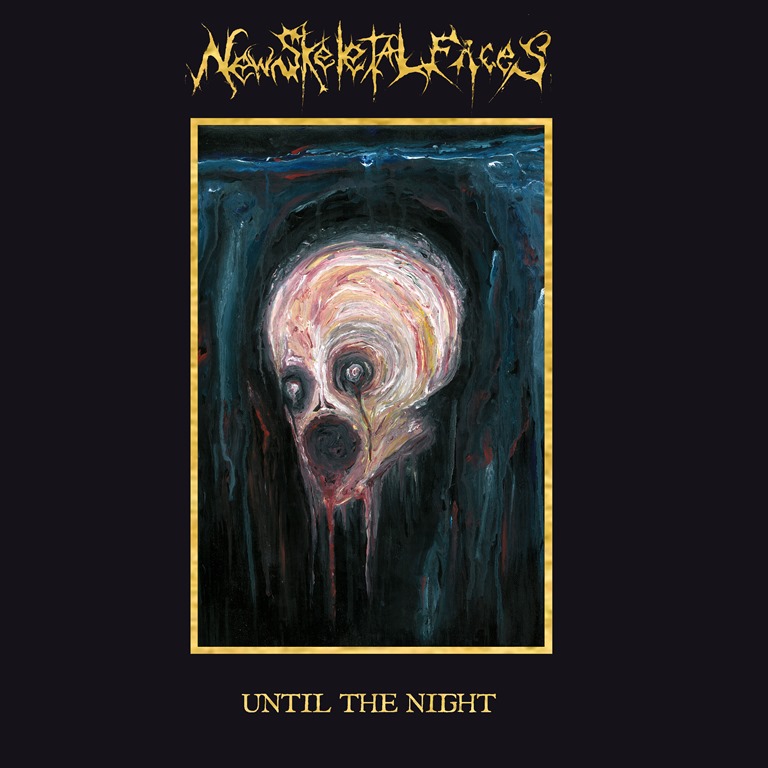
The claim that ‘New Skeletal Faces cast their own black light onto the long dormant corpse of Death Rock, shattering the mirror of modern Heavy Metal into fragments that reflect back a fresh new take on this form of music with an energised & outlandish conviction’ is a bold one. Ominous, menacing, perhaps, or deluded and deranged?
California may be known for its sun and sand, but it has a long history or dark currents which run contra to its popular image, perhaps most notably Charles Manson’s Family being based in The Golden State – which in turn drew Trent Reznor for the recording of The Downward Spiral. In between, Christian Death spawned the proto-goth / nascent death rock sound which, while evolving in parallel to the scene in the north of England, was unique and distinct, and the early eighties saw California home to a thriving hardcore punk scene. I suppose that wherever there is affluence and clean-cut TV slickness, there is bound to be rebellion, a counterculture which stands at odds with it all. No doubt some of these factors drew New Skeletal Faces to California for the recording of Until The Night, the follow-up to 2019’s Celestial Disease.
They proffer an ‘effortless blending of the spirits of old; with the seductive & spellbinding gothic prowess of bands such as Christian Death fused with the raw unbridled energy of early Swedish black metal legend, Bathory to create a bold new statement of intent, in stark contrast to the often overly-refined polish of contemporary metal. Until the Night is, as a result, something more akin to listening to the 1980’s Sunset Strip in an alternate universe from hell.’ For good measure, and to really clarify their position, there’s a cover of Bathory’s ‘Raise The Dead’.
In all, it’s apparent this is destined to be dark from the outset. Across the album’s eight tracks, they paint everything darker shades of black with densely-woven layers of sound. The guitars, while overdriven, are reverby, and quite smooth, and while the riffs take their cues from black metal, there are some overtly gothy licks, and the atmosphere is very much reminiscent of Only Theatre of Pain but with the dial cranked a few notches further over into the ‘metal’ domain for the most part. Then again, the title track, with its thunderous tribal percussion, spindly guitar laced with flange and chorus, and thumping bassline, encapsulates the sound of goth circa 1985, only with shouty vocals which belong more to the hardcore sound of the same time.
Titles such as ‘Ossuary Lust’, ‘Wombs’, and ‘Pagan War’ are fully invested in the trappings of gnarly metal and its themes, but ‘Zeitgeist Suicide’ reflects a self-awareness which may not be immediately obvious.
As I touched on in my recent review of Vessel’s cover of ‘Body and Soul’ by The Sisters of Mercy, while there is a clear interface between goth and metal – even if it does tend to be primarily a one-way street, which finds metal fans embracing goth bands, in particular The Sisters of Mercy and Fields of the Nephilim – its rare to encounter a particularly successful merging of the genres. In the main, goth-metal is cliché and cack. Despite appearances, Until The Night is neither, and is perhaps the most potently-realised stylistic synergy since The End of Mirrors by Alaric in 2016.
AA
Chiming guitars swirl around relentless, barrelling beats on ‘Wombs’, before ‘Zeitgeist Suicide’ leads with a weaving bassline and some fizzy, treble-dominated guitar, and they go at it hard and fast. ‘Enchantment of my Inner Coldness’ brings together vintage goth with a vocal performance that evokes the spirit of Public Image Limited, and in doing so, succeeds in sounding – and feeling – both expansive and claustrophobic at the same time.
Until The Night scratches and drives its way – all the way – to the Bathory cover which drawn the curtain down on this dark, fiery, and furious album. It may well alienate goths, metalheads, and post-punk fans alike, but it feels very much like their loss, being an album strong on songs and confident in its own identity in the way it positions itself uniquely across the genres.
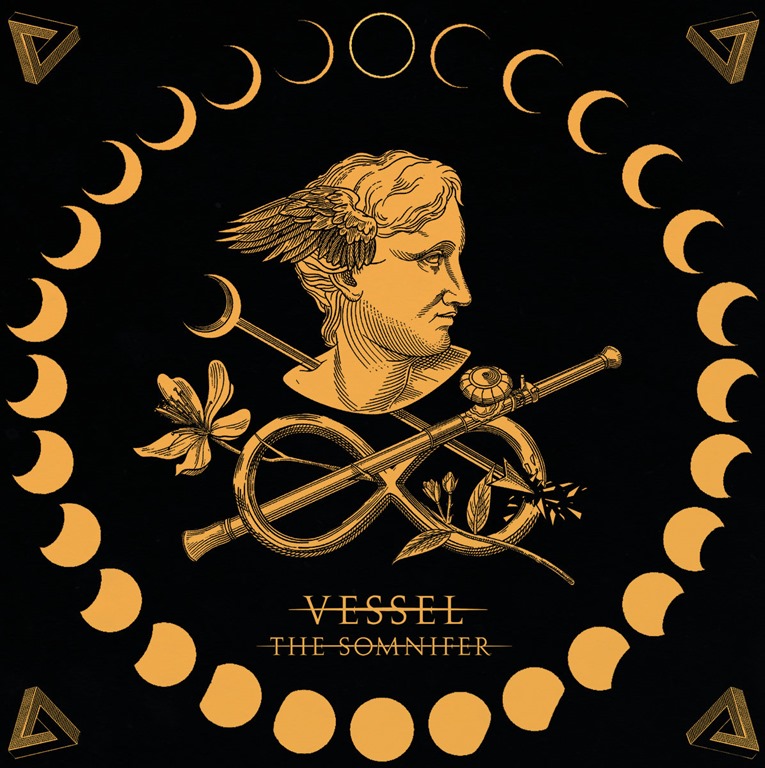
It was the single release of their cover of The Sisters of Mercy’s ‘Body and Soul’ which brought me to this album. I’ll not retread the ground I covered in my review of aforementioned cover, other than to note that I was uncommonly impressed by the band’s spin on the track, and shall instead pick up on the point that I was intrigued as to precisely how a cover would fit into the art of a concept album.
In a sense, I find myself back in the 80s, when – before it was possible to stream an album online or otherwise hear it without owning it, unless a mate passed you a tape recorded from their copy – one purchased an album on the strength of a single heard on the radio. It was not all that uncommon that the single was absolutely in no way representative, and you’d feel somewhat duped. Imagine buying Faith by The Cure in the basis of ‘Primary’, for example. You may not necessarily feel duped, but you’d probably struggle to reconcile the single and album experiences, assuming you could lift yourself off the floor to do anything at all by the end of the album. But then, oftentimes – because you probably only bought an album a month, on vinyl or cassette, you’d play it enough times to come to appreciate it anyway. This simply doesn’t happen anymore, and what’s more, the art of the album is one which is criminally undervalued. That isn’t to say I feel in any way duped by The Somnifer: it’s simply that the single, while obviously the most accessible and attention-grabbing track, is not entirely representative.
Taking pause for a moment, there’s that term – ‘concept album’ – which creates immediate obstacles; it can be perceived as self-indulgent, overblown, conceited, arty in the way that implies a superiority, or even just plain wanky. You can largely blame prog for that, but there have been plenty of excessive concept albums in other genres, particularly metal. But I’m not here to prejudge: I am genuinely curious, especially as the single showed considerable promise. So, first things first: what is the concept?
As they set it out, ‘The album captures the different mental stages one can pass through, from feelings of self-empowerment to existential dread. The Somnifer takes listeners on a journey that blends the drama of classic doom (Candlemass, Cathedral), cosmic psych explorations (All Them Witches, King Buffalo), and the aggression of hardcore and crossover scenes, with the timeless instrumental journey of classic heavy metal.’
The title track certainly builds atmosphere, and it’s the kind of brooding, heavy-timbred tones which call to mind Neurosis, interlaced with a hint of the gothic, which draws the listener into the album. The guitar sound is clean, but rich, and earthy, gradually shifting towards a thicker, overdriven sound, but there’s lots of space and separation. This paves the way for the haunting ‘Draining the Labyrinth’, which takes some time before really going all-out on the riffery before ploughing into ‘Rapid Eye Movement’, the first track to really feature vocals prominently. With ethereal backing vocals floating in to balance the almost speechified spoken-word delivery atop a Sabbathesque riff, it’s an interesting blend of elements.
‘Eat The Day’ comes on like Melvins aping Sabbath with an overloading blast of thick, mid-rangey guitar, before the rippling instrumental ‘Delta Waves’ brings softness and respite, starting out a bit Pink Floyd before growing gradually more intense in its playing. ‘Recurring Nightmare’ slams in out of nowhere, snarling, downtuned doom riffing, churning power chords and darkness, replete with dramatic, theatrical vocals and searing lead guitar work. One of the album’s heaviest pieces, is brings the intensity of the sense of being trapped in a nightmare, the repetitive guitar motif recreating that terrifying sense of déjà vu.
In terms of concept, it works well: instead of pursuing some artificially-imposed narrative arc, The Somnifer explores the way in which moods and emotional responses can manifest as rapid and unexpected transitions, which aren’t always provoked by obvious triggers.
‘Image Rehearsal Reaction’ is a towering monolith of a track, a colossal ten-minute stoner/doom exploration that suddenly hits turbo at the mid-point, blasting fierily forward while the guitar solo runs wild. This is where they’re at their most ‘trad 70s metal’ of anywhere on the album, which is impressively diverse, something which the ‘concept’ allows for.
The album in fact closes with ‘Body and Soul’. It’s incongruous in many ways, but it oddly works to conclude a varied and yet consistent and quality album.


 Aural Aggravation