Posts Tagged ‘goth’

Ahead of the release of their new album, Fascination, released 18th February 2022 on Metropolis Records, The Birthday Massacre have unveiled ‘Dreams of You’.

Listen to ‘Dreams of You’ here:

A Canadian darkwave ensemble who incorporate elements of electronica, goth and new wave into their lush and atmospheric dark pop sound, The Birthday Massacre have enjoyed success over the last decade with albums such as ‘Hide And Seek’ (2012) and ‘Under Your Spell’ (2017), both of which charted at home and abroad. The early spring of 2020 then saw the release of the brooding and mystical ‘Diamonds’, just as the onset of the global pandemic curtailed extensive touring plans to promote it.

The group has released a brand new single entitled ‘Dreams Of You’ today as an opening taster from their upcoming ninth album, ‘Fascination’, which is out on 18th February 2022. Expansive sounding yet intimate feeling, TBM’s signature blend of captivating electronics, aggressive guitars, cinematic melodies and beautifully bewitching vocals are on full display, while the album shows that the magical world they have created with their music has grown ever more captivating.

The Birthday Massacre commence a 30 date US tour the week after album release, with a similarly extensive set of dates in the UK and mainland Europe to follow later in 2022.

The Birthday Massacre formed in 2000 in Ontario and were originally known as Imagica, their name taken from the title of a novel by Clive Barker. Having relocated to Toronto, they renamed themselves The Birthday Massacre just before the release of their debut album, ‘Nothing & Nowhere’, in the summer of 2002. The ‘Violet’ EP was issued in 2004 and then made available in expanded form as a full album via Metropolis Records, a label with whom the group have remained ever since.

The next two TBM albums, ‘Walking with Strangers’ (2007) and ‘Pins and Needles’ (2010), plus the EP ‘Imaginary Monsters’ EP (2011), were followed by 2012’s ‘Hide and Seek’, which enjoyed a warm critical reception and a measure of chart success. The group turned to their fans to help crowdfund their sixth album, ‘Superstition’, which appeared in late 2014 and was supported by major tours in North America, the UK, mainland Europe and Brazil.

A compilation of early four-track demos entitled ‘Imagica’ (2016) preceded ‘Under Your Spell’, released in 2017 and which made a strong showing on multiple US charts. Three years later, the band celebrated their 20th anniversary with ‘Diamonds’, its release seeing new drummer Phillip Elliot and bassist Brett ‘Bat’ Carruthers join the band’s ranks. The latter is also the frontman of alternative rock band A Primitive Evolution.
2404a3cc6255e036d4779a41b476f4484d2dd75c

7th December 2021

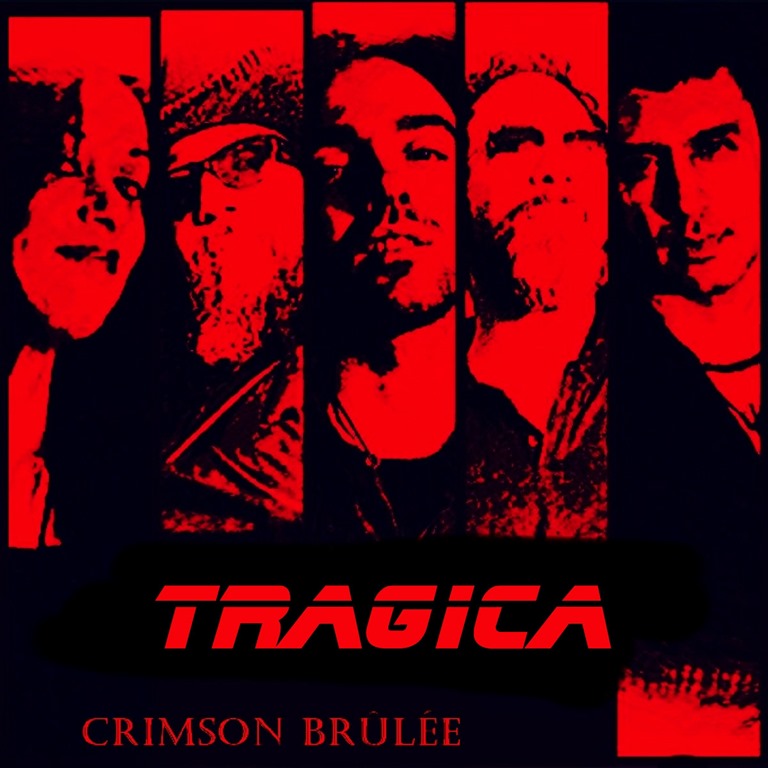
Crimson Brûlée emerged in 2019 as an offshoot of guitar-driven goths The Witch-Kings, after a difference of opinion over the incorporation of synths. No diss to The Witch-Kings, but Tragica presents a magnificent sound.

It’s a pretty awkward band name and so-so title for a great album, but there is context, at least for the latter, in that the EP is delivered in homage to the band’s original bassist, Johan, who passed away in early 2021.

He would likely have been proud. With Tragica Crimson Brûlée really nail their position as a top-notch goth act. It’s billed as an EP, but comes with a stack of remixes which bulks it uo to nine tracks, which is effectively an album or two EPs.

‘I Came Back to You’ is a strong opener, combining trad goth with the sound and feel of early Psychedelic Furs, packing minor chords and an insistent beat in the verses, that burst into something wonderful in the choruses. Light explodes and it feels redemptive. It could easily be a Talk Talk Talk outtake. The intro to ‘Nothing Dies Forever’ invites comparisons to She Wants Revenge: it’s dramatic, bold, bombastic, synth-led but driven by some meaty guitars, and absolutely fucking epic, and never lets up for its five-minute duration.

It’s the strolling bass that dominates ‘Restrained’, which is anything but in terms of its epicness. All bar one of the songs are over the five-minute mark, but ‘Where the Tarantulaa Roam’, extending beyond the six-minute mark, is an absolute beast, and one that calls to mind Susperia, only with swirling backing vocals reminiscent of All About Eve’s Julianne Reagan. With the synths backed off but sweeping all around, the mix is immense.

‘Why I Wear Black’ is more guitars, more SWR-like. Yet for all the references, this feels fresh and innovative: this is not an album that deals in tropes and the lyrics are personal and genuine rather than contrived.

It’s a really, really strong suite of songs, The remixes are pretty good, to be fair, but non-essential.

AA

a3393228744_10

Chapter 22 Records – 4th of December 2021

Christopher Nosnibor

Dawn After Dark first emerged in the second wave of goth in the late 80s, at the point where goth intersected with indie and straight-ahead rock to create something altogether more digestible for the masses than the dark, shadowy stylings of the like of The Sisters of Mercy and The March Violets (and this isn’t the time for the goth / not goth debate here, and no-one needs to hear my position on it: I’m going for the short cuts to provide context, nothing more).

The Birmingham-based act were pretty active during this time, playing in the region of 150 UK shows as headliners and support to acts including Balaam And The Angel, Wolfsbane, Fields Of The Nephilim, and Living Colour, and releasing 3 12” singles on Chapter 22 (the label that also launched The Mission in ’86 and released their first two singles, ‘Serpent’s Kiss’ and ‘Garden of Delight’) before calling it a day in 1991. 30 years on, they’ve finally delivered their debut album, and as the title suggests, its emergence is something like a phoenix from the ashes, since they’ve lain dormant all this time save for a one-off show in their hometown in September 2019.

Those three singles – ‘Maximum Overdrive’, ‘Crystal High’, and ‘The Groove’ are all featured here, albeit rerecorded using post-millennium technology and mastering, slotting in nicely alongside seven previously unreleased songs. It’s ‘Maximum Overdrive; that kick-starts the 11-track collection and is pure Cult, which is no shock given the original as performed by a band who sported long hair, leather jackets and bandanas back in the day. This version is much more polished and much more dense than the original, and you get a sense that this was how they always wanted it to sound. It’s less manic, smoother, but it still basks in rock ‘n’ roll excess and wild solos flame all over.

I’ve always filed DAD alongside the likes of Rose of Avalanche, although it’s fair to say they’ve always had a rather harder edge, and this is pressed to the fore on their long-delayed debut album, to the point that on reflection they’re more ones to file alongside The Cult and Zodiac Mindwarp now (only without the preposterous excess of the Bradford hard rockers).

‘The Day the World and I Parted Company’ brings more gritty riffery, and sounds like Sonic Temple era Cult with a hint of The Mission thanks to the twisting guitar lines and all the hammer-on descending runs. It’s enhanced by some overloading chug in the rhythm department, although there’s an expansive psychedelic workout in the mid-section.

Apart from slower, more anthemic stabs like ‘When Will You Come Home to Me’, they focus on the bold rock riffing, and you can’t exactly criticise a late 80s rock band for sounding like a late 80s rock band – and yes, that is the sound of New Dawn Rising, a title that perfectly captures their history and belatedness of their debut. It’s like they’ve never been away, apart from the fact that they’re back sounding crisp, and dense and more 2021, in terms of production if not songs.

It’s a solid, ballsy, gut kicking debut that packs in back-to-back slabs of the kind of rock they supposedly don’t make any more… only, of course, they very much do.

AA

Dawn After Dark artwork 1

Washington DC-based dark alternative band, AMULET has just unveiled the video to their song, ‘Last Ditch.’  The song appears on their latest album, House Of Black + White.

About the song: You can only take so much tragedy. There comes a point where you wonder if you’ll be able to go on. The ache of sorrow and loneliness feels eternal and all-consuming. You have a choice to make. You wonder if seeing crimson is the only way to really heal.

Watch the video here:

AA

c28a9d44-a779-17e1-ff01-af8731b118a9

Electro-pop artist EVA X has just unveiled the new video for her single, "Machine."  The video was directed, shot and edited by Erik Gustafson (GRENDEL / ADORATION DESTROYED).

About the song: "Machine" is the first look at EVA X’s upcoming album, I Dream Of A Reality. EVA X has the following to say about the song and its story: "I have a complicated relationship with my body. I do love it, but sometimes I wish it was different. I wrote "Machine" in a vulnerable spot, when I’d have given anything to feel beautiful like other women on social media. Chasing that aesthetic with injections and makeup was powerful, but also scary – I could create the face and body I wanted, but what would happen when it wore off? I took all of these tangled feelings and poured them into "Machine". When I brought the demo to my co-producers, Shane and Adam immediately jumped on it, bringing it to life with a frenetic energy that captured perfectly how alluring and isolating that illusion can be. In the music video, I wanted to explore what being beautiful in the alternative community looks and feels like, and how far we go for aesthetics. I taught myself choreography to capture the movement I wanted. Erik and I designed a video that captured both the sexiness I wanted and the reality of cutting and injecting ourselves for it."

Watch the video here:

AA

d984cc4c-767f-5710-ea98-c4ecc0379655

10th September 2021

James Wells

Whoever said goths and industrialists have no sense of humour? Or that they hate pop? It’s long been a myth perpetuated by outsiders pedalling stereotypes that goths and fans of industrial music are moody, po-faced twats who mope around looking glum while listening to depressing music and reading depressing literature. Cheer up goth – have an Irn Bru! The early noughties advertising slogan pretty much sums up the popular perception of anyone with dyed black hair and black clothes, but in a position of polarity to so many straights who are crying on the inside, you’ll likely find adherents of shadier subcultures are laughing on the inside, while rolling their eyes at the normies.

There’s a long history of whacky covers going right back to the post-punk roots of the genre, with Bauhaus and The Sisters of Mercy making some inspired cover choices spanning ABBA to Dolly Parton, not to mention Fields of the Nephilim’s stunning take on Roxy Music’s ‘In Every Dreamhome a Heartache’, and Revolting Cocks’ crazed, audacious ‘Da Ya Think I’m Sexy’.

And if the outré cover has over time become rather standard form, there’s always room for a good one, and this, people, is a good one, courtesy of LA-based quartet FleischKrieg, who you’d never guess were influenced by Rammstein and 3TEETH.

Lifted from the forthcoming FleischKrieg album, Herzblut, due out in October of this year, they’ve cranked up the sleaze for this one. It may be a fairly straight cover, but it amplifies the original eightieness and adds a while lot of grind. Instead of blasting up the guitars, the synths are more grating, the drums bigger, more explosive, and of course, it’s the gritty metal vocals that really define it. If it’s a shade predictable in its straight-up approach, then it makes up for it just by being so damn solid. Hurgh!

AA

288899

24th September 2021

Christopher Nosnibor

Pink Turns Blue have been around practically forever, having formed in 1985, and while they may not be widely regarded among the first wave of goth acts, they very much emerged from that milieu as a duo with a drum machine, and what they’ve achieved over so many of their peers while lingering on the peripheries is longevity. Having re-emerged in 2003 after an eight-year hiatus, they’ve continued to mine the classic post-punk seam that’s distinctively theirs, due in no small part to Mic Jogwer’s vocals. And of course, what goes around comes around. Their return in the early years of the new millennium was well-timed, coinciding with the point at which the post-punk renaissance bloomed with the likes of Editors and Interpol breaking through. There were of course countless also-rans, and bands who emerged but failed to fulfil their promise, but nevertheless, time has proven that the style has remained current, and the darker the times, the greater the craving for dark tunes, and this is where Pink Turns Blue really prove to be as contemporary and vital as ever.

Their eleventh album was written, recorded, mixed, and mastered during lockdown in their Berlin studio, and the first thing that strikes about Tainted is just how bleak it is. It’s achingly majestic, it’s magnificent, and possesses some wonderful hooks and choruses, but there’s an all-pervading atmosphere of sadness, of melancholy that’s draped over every beat and radiates from every note. Glimmers of positivity are dampened by an air of resignation, optimism doused with defeat. The next thing that soon becomes apparent is just how consistent the album is. It’s not only all killer, but had a remarkable cohesion. It’s true that that for cohesion you might interpret sameness, and they do operate with a fairly limited sonic palette. One suspect this is at least in part the result of the material being the product of three guys in a studio without any external input or interference.

But working within such limitations places the focus on the songwriting, on the tunes, on the delivery, instead of throwing in all sorts of fancy stuff.

The guitar to opener ‘Not Even Trying’ evokes the into to ‘Severina’ by ‘The Mission’, and it’s got that same solid four-four strike on every beat bassline that Craig Adams made his signature back in the early days of The Sisters of Mercy, and which has become something of a defining feature for so many gothy post-punk bands, and it makes the song an instant grab. ‘I’m not even trying’, Jowger admits blankly, as if admitting defeat from the outset, and setting the pessimistic tone that echoes through single cut ‘There Must Be So Much More’. It’s a song of yearning, of questing, and of determinism, and a song Editors would have likely killed to have penned for one of their first two albums.

This isn’t an album of depression, but the sound of downward-facing defeat, of staring at the ground and wondering where it all went wrong. ‘Never Give Up’ encapsulates the conflict, the inner turmoil of staring emptiness and defeat straight in the face and realising there are only two choices. But to never give up is not a positive thing, merely the stubbornness that comes from not knowing what else to do.

The bass and guitar are melded together in a tunnel of chorus and reverb, and tied to a relentless drum track, and it’s gripping and compelling. ‘Why Not Save the World’ has heavy echoes of mid-80s Depeche Mode and would sit comfortably on a She Wants Revenge album, while ‘I’m Gonna Hold You’ comes on like New Order as covered by A Place to Bury Strangers, with a nagging bass and brittle guitar that grips hard.

Just as Robert Smith can make a skippy pop song sound tear-jerkingly sad, so when Jowger sings of the joys of ‘a new day’, it’s with a wistful melancholy that aches deep and you feel something tug in your chest as you swallow it down, that inexplicable sadness. ‘Listen to the bumble bee’ he sings on ‘Summertime’, and it’s carried a way on a chiming jangle of guitars that are so wistful, while the tone is of deep nostalgia. A perfect sunny day can have its joy marred by the realisation that it isn’t quite as perfect as sunny days of a time gone by, happy, carefree times that will forever be trapped in the memory as magical, but now faded and never to be recreated.

The song structures are comparatively simple and straightforward, and built around repetitive chord sequences and guitar motifs, and there’s nothing fancy about any of the playing – which is absolutely key to the success.

Any fan of Interpol or Editors would do well to explore Tainted – but then again, so would any fan of not only post-punk, but anyone with ears and with a heart and soul. It’s a masterful work in music of the mood. The mood is low, the mood is sad, and this is an album of real depth that speaks and resonates beyond the immediate.

133936

12th June 2021

Christopher Nosnibor

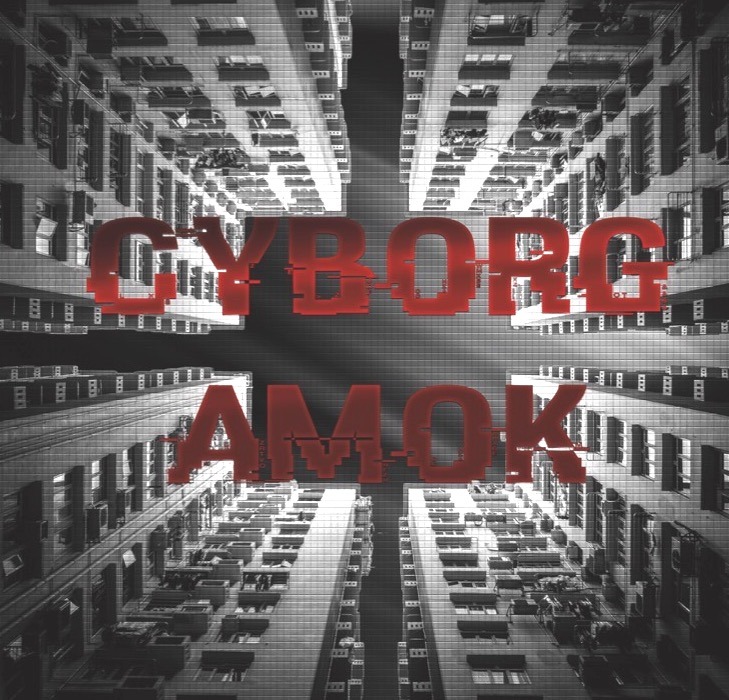
I wasn’t entirely sure what to expect from Cyborg Amok’s eponymous debut. Sure, there’s the press release, and no, it’s not lazy journalism to take cribs and pointers from press releases. This one forewarns that Cyborg Amok ‘resides somewhere between the brilliance of twilight and the apocalyptic darkness. Their gothic infused synth-rock sound delivers the listener to a panorama of synthetic waves, twisted organic tones and a slightly pop crust … the language angels speak in the darkness.’

I don’t entirely compute the implications of this, can’t even really unravel them, not least of all because I can’t always grasp what passes for ‘gothic’ these days having lost the thread some time in the mid to late 90s with the emergence of cybergoth, which sounded just like so much bad techno to me, and a million miles from the post-punk origins of the genre, and the subsequent ‘waves’ of goth which coincided with myriad hybrid mutant strains. Perhaps I am something of a pursuit in my personal tastes, but as a critic, I try to be more accommodating. But sometimes, you just have to accept that music is music and it’s either good or bad, because your audience are unlikely to share your prejudicial quirks.

Cyborg Amok is Greg Bullock (formerly the keyboardist with RealEyes and Shamen) and drummer Brydon Bullock (no relation as far as is obvious), and their debut album is in fact bringing together their first two (now deleted) EPs, so, if I’m being picky it’s not really a debut album but a compilation (which is also true of The March Violets’ Natural History among others. Not that it detracts from the force of these seven songs pulled together in one place. Oh no. Cyborg Amok kicks.

‘Burden Away’ brings bulldozing bass and stuttering mechanised drums. The rhythm guitar trudges and grinds, while Greg’s brooding baritone vocals registers in the ribcage – but while it’s so much industrial grind, the lead guitars are warped country, and there’s a twangy inflection in the vocals to match. It’s solid, but if you’re looking for a pigeonhole, you’re going to struggle. Things get even more complicated with ‘Still Too Far Out’, which straddles Nightbreed-flavoured second/third wave goth with its organ synth sounds evoking sepulchral gloom against guitars that fizz in a swathe of chorus and flange… and then there’s a fuck-off keyboard solo that’s B-Movie and Ultravox and it may be incongruous by 2020s standards, but perfectly in place in context of those precursors.

With its space-themed title and snarling, bulbous, electronics, ‘Dancing on the Floor of the Sea of Tranquillity’ provides more of the vibes the moniker and title perhaps evoke, and if it suggests extravagant prog enormity, it’s no criticism to say that after its dark, stark intro, it slips towards 80s electropop in the vein of A-Ha.

There are some Cure-esque moments scattered about the album, too, but then this is an album, that assimilated huge swathes of 80s that’s not exactly band-specific, but the zeitgeist.

There’s some overblown prog guitar that’s Yngwie Malmsteen overdone, but once they’re done with the moments of indulgence (‘Choice Not Taken’ is perhaps the greatest showcase of guilt), they deliver some impressive musical moments, where the ambition is equalled by the ability.

They’re at their best when they keep it minimal, sparse, nailed down: last track ‘Another Turn’ bears solid – and favourable – comparisons to Red Lorry Yellow Lorry, with its steely beats and grey, steely guitars backing a gruff, ragged vocal delivery. It’s a style that works well, and while this compilation must provide a point at which to assess the trajectory of their career, the evidence here is that they’re doing everything right and need to forge ahead and capitalise on their work so far, because this is a strong dark album.

AA

240381

6th August 2021

Christopher Nosnibor

It’s not always easy to remember – what you’ve said to whom, what you’ve written before, if you’ve really experienced something or simply dreamed it. You’d think it would have become easier with not really going anywhere or speaking to anyone for a year and a half, but in my experience, the opposite is true. Everything blurs. So if I’ve mentioned any off this before, if I’ve touched on how electrogoth releases often clump together, or how genre tropes can so often be so much meh, then I apologise, but only a little. Reviews are, after all, personal, a personal response to musical release, and objectivity only cuts so far., meaning that this personal response, well, it’s all spilling from a review-a-day brain, dayjob and parenting and the confusion of every day melting into the next. It’s been a relentless barrage of bad news in the media, as well as from friends and relatives. By no means has all of the anguish and suffering been attributable to the virus – more often than not it’s been collateral resulting from lockdowns and a sustained sense of panic. We’re biologically designed to experience fear in short bursts. Fight or flight. To be trapped, immobile, powerless, is beyond comprehension, and there is no space to process grief and trauma in a normal way.

It’s against this backdrop that Eric Kristoffer developed the new unitcode:machine album, Themes For A Collapsing Empire. It’s very much an example off utilising a creative outlet as a form of therapy, with the blurbage describing Themes For A Collapsing Empire as ‘a journey through the mind of Eric Kristoffer after a series of tragic events that 2020 brought. It explores a path of loss and regret, and struggling to cope with such stressful personal events while also trying to endure a global pandemic’.

Electro-industrial isn’t a genre one immediately associates with emotional resonance, but with Themes For A Collapsing Empire, unitcode:machine really strike a level that balances thumping beats and melodies that convey the human aspect of the lyrical content. That said, the stark, mechanised percussion and cold synths highlight the bleakness of it all – and by it all, I do mean it all. Step back and survey the scene: August 2021 versus two years ago. It’s a different world, and so many have lost so much – not just loves ones, but connections, livelihoods, sense of self and place in the world. Where is it all heading? Where will it end? Will it end? With climate change an inescapable backdrop to societies which have never been more divided, how do we return from here? Do we? Can we? It’s not just an empire that’s collapsing, but – not to be overly dramatic – human civilisation itself. Themes For A Collapsing Empire feels like an essential soundtrack to this existential anxiety. Stark and dark, it’s reflective, paranoid, gloomy, and it’s very much song-orientated, with kicking choruses being a defining feature.

‘Falling Down’ is a clear standout, but there are plenty of strong tracks and easy single selections alongside it: Themes For A Collapsing Empire packs in the hooks and solid choruses, but without being remotely lame or overtly commercial – and that’s a real skill. Everything just flows, while at the same time punching you in the face.

With nine tightly-structured songs all clocking in under four-and-a-half minutes, Themes For A Collapsing Empire feels like a concise statement, and an album with strongly-defined parameters and an intense focus, with the end result being all killer.

AA

035223

Blaggers Records – 27th August 2021

Christopher Nosnibor

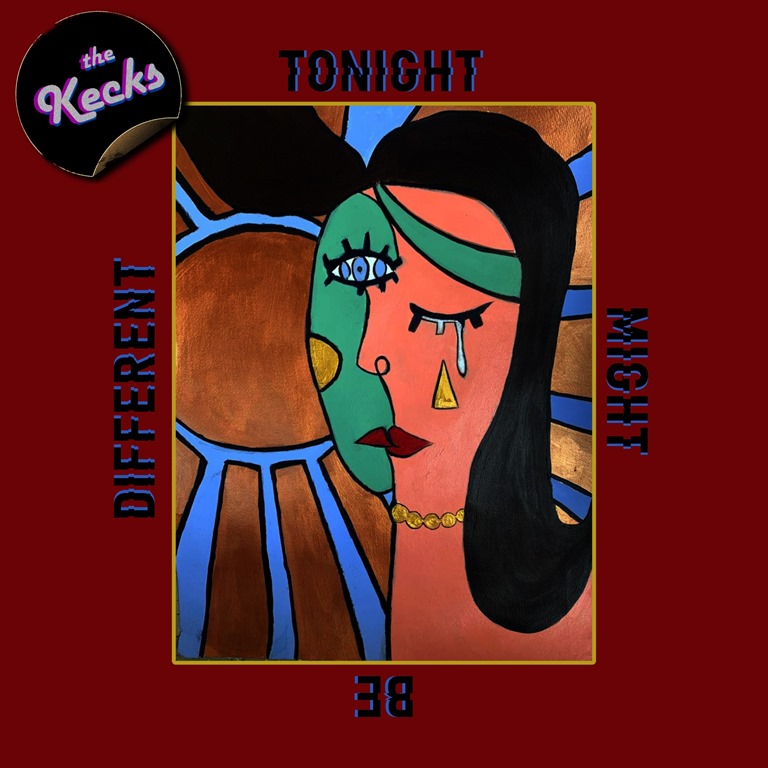
The Kecks go goth with their new single! Well, perhaps not quite, but ‘Tonight Might Be Different’ is certainly a slide down into darker territory compared to its predecessor, ‘All for Me’. It’s got a slinky bassline and a smooth but stutter lead guitar line that hints of late-night smokiness and even a dash of desperate sleaze. It’s not a radical shift in real terms: ‘All for Me’ made nods toward early Pulp, and this, too, expands on their Fire years death disco indie stylings, the combining the gloom and catchiness of tracks like ‘My Legendary Girlfriend’.

Lyrically, it’s an interesting one, veering between paranoia and frustration that are both relevant and relatable to many as Lennart Uschmann reflects ‘I’m so busy giving everybody else attention / My friendship starts to feel more like a disease’. But then again, these thoughts emerge from a jumble of confusion, a state which finds him ‘coming home too late and messing up the place by being way too stoned.’

Meanwhile, outside, ‘They’re kicking down the doors and making lots of noise’, and it’s all very visual, even if it is cut-up and fragmentary. It could, and probably should, all be a horrible and incoherent mess, but the end result is far from it, and it’s all in the execution.

Switching from a sinewy lead guitar to a chorus-coated echo-heavy picked rhythm that’s got that circa 1984 post-punk sound, the punchy drumming and solid bass bring a real rock swagger, and it all comes together to make for their strongest single cut yet.

A

The Kecks _Tonight_single_cover