Posts Tagged ‘gloomy’

Neurot Recordings – 16th May 2025

Christopher Nosnibor

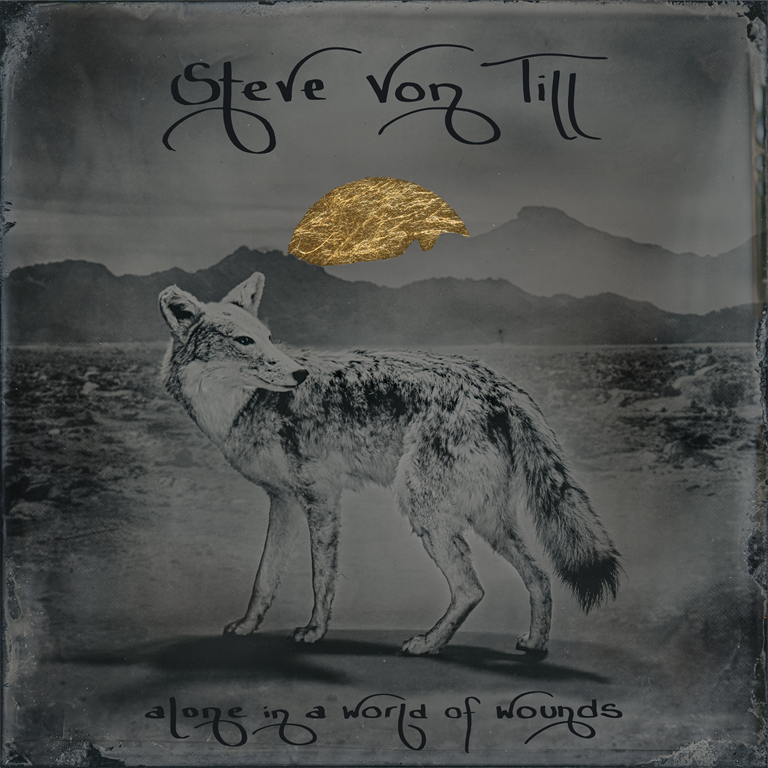
Steve Von Till doesn’t really require any introduction or preamble: the chances are, if you’re reading this, you’re already aware of his work, and if not as a solo artist, then as the guitarist / vocalist with Neurosis, active between 1985 and 2019. As much as Neurosis were labelled a post-metal band, they very much forged their own sound, which has, to an extent, become the house style of Neurot Records.

Von Till’s solo works may lean more toward folk and the gentler side of that style, but nevertheless have significant heft, and Alone in a World of Wounds – his seventh solo album, the follow-up to No Wilderness Deep Enough (2020) is no exception (he’s been busy in the intervening years with a trilogy of Harvestman albums, all released in 2024). The heft here comes from a sense of gravitas, rather than volume and distortion, and continues the softer trajectory of its predecessor, an album ‘initially inspired by the harmonic resonance of piano and synths and his long-standing love of ambient music’.

‘The Corpse Road’ sees Von Till croak and croon in a fashion that could me taken for Mark Lanegan in a blind test, against a sparse backdrop of strings which swell and swoon, heavy with sadness and gloom. There is a sense of times past, not just fading memories and bygone days, but a sense of the creak of wood and worn clothing of harder but simpler times. I find myself unexpectedly transported to a walk my daughter and I undertook from Ambleside to Grasmere in the Lake District a year or so back, via the ‘Coffin Route’. It was winding, and wet, and uneven, not to mention long, and it’s billed as a ‘strenuous’ walk, while still suitable for tourists: as the rain battered the hood of my anorak, I found myself contemplating what it must have been like hauling an actual coffin along that four-mile stretch without the benefit of modern hiking gear. Life must have been tough. Von Till taps into the essence of these past times, and a sense of the elemental.

The mood remains lugubrious on ‘Watch Them Fade’, a song redolent with sadness and reflection, weighted down with the reminder that mortality affects us all and is never far. Despite the fact that life’s only certainty is its expiration, we continue to shy away from the topic. While Alone in a World of Wounds does not confront mortality and death head-on, it’s there at every turn. “Keep on diggin’… dig a little deeper” he implores on ‘Horizons Undone’, and while there are psychological connotations here, it’s hard to ignore images of graves.

The eight-minute ‘Calling Down the Darkness’ is a super-sparse piano-led slow-burner, and confounds any expectation for a surging finish by remaining low-key and minimal to the end, ad something about it is so, so achingly sad.

‘The Dawning of the Day (Insomnia)’ is a brief spoken-word interlude with a moody piano accompaniment, while paves the way – or perhaps scatters woodchips – for the arrival of the swirling atmospheric start of ‘Old Bent Pine’, another song which revels in the forces of nature, before the six-minute ‘River of no Return’ flows toward the finish. It has hints of Slowdive about it. Moreover, its superficial ominousness reminds us that rivers only flow in one direction, and as with rivers, so with life: there is no return, no replay, no turning back. there is no undoing mistakes, only not repeating them.

‘Alone in a World of Wounds’ may be a largely acoustic album, but it is still heavy – really heavy – emotionally more than sonically – and consequently not an easy one to process. It would be impossible to deny the album’s quality. But the weight, the sadness…

AA

AA
450947

Cruel Nature Records – 21st February 2025

Christopher Nosnibor

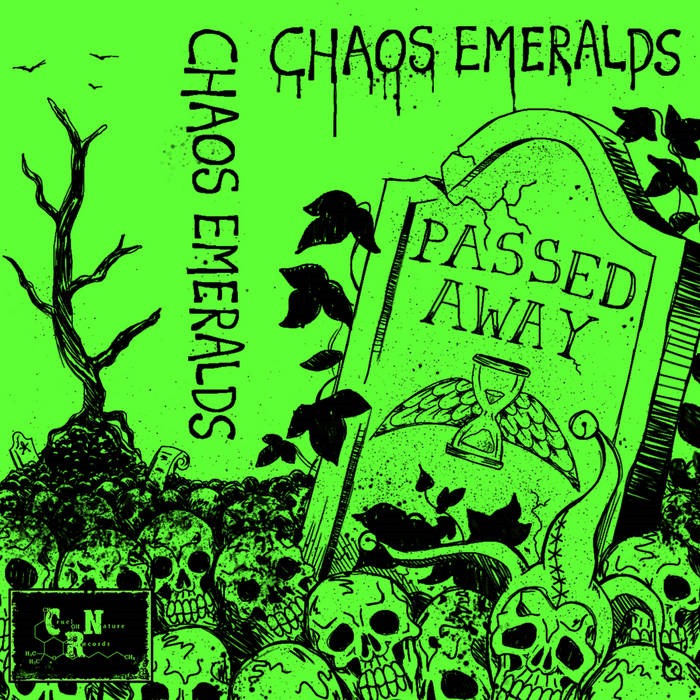
Cruel Nature are delivering a slew of releases on 21st February – an overwhelming volume, in fact. We’ll be coming to a fair few of them in the coming weeks, but first up, is the second album from Lanark / Reading based sludgy shoegaze project Chaos Emeralds, Passed Away, which comes in a hard-on-the-eye dayglo green cover which is catchy and kinda corny in equal measure.

According to the bio, ‘Chaos Emeralds is Formerly the solo project of Charlie Butler (Cody Noon, Neutraliser, Mothertrucker) with releases on strictly no capital letters, Les Disques Rabat-Joie and Trepenation Records, Chaos Emeralds has now expanded to a duo with Sean Hewson (Monster Movie, Head Drop, This) joining on lyrics and vocals.

Passed Away combines the lo-fi slowcore, shoegaze and doomy post-rock sounds of the previous Chaos Emeralds releases with a more song-focused approach to create a set of scuzzy emo gems.’

For some reason, despite ‘sludgy shoegaze’ and ‘lo-fi slowcore, shoegaze and doomy post-rock’ featuring in the above description, I didn’t quite expect the Pavement gone Psychedelic vibes of the title track which raises the curtain on the album. A primitive drum machine clip-clops away, struggling to be heard above a tsunami of feedback and waves of distortion on ‘Count Me Out’, which adopts the kind of approach to production as Psychocandy – quite deft, breezy and ultimately melodic pop tunes almost completely buried in a blistering wall of noise.

‘Juggler’ brings a wistful tone – somewhere between Ride and Dinosaur Jr – amidst ever-swelling cathedrals of sound, a soaring lead guitar line tremulously quivers atop a dense billow of thick, overdriven chords which buck and crash all about. The way the elements play off one another, simultaneously combining and contrasting, is key to both the sound and the appeal. It’s one of those scenarios where you find yourself thinking ‘I’ve heard things which are similar, but this is just a bit different’, and while you’re still trying to decide if it actually works or not, you find yourself digging it precisely because of the way it’s both familiar and different.

The vocals, low in the mix, feel almost secondary to the fuzzed-out wall of guitar, but their soft melancholy tones, sometimes doused in reverb, add a further minor-key emotional element to the overall sound, especially on the aching ‘Matter’.

When they do lift the feet off the pedals, as on ‘Welcome Home’, the result is charmingly mellow indie with a lo-fi sonic haze about it – and a well-placed change in tone and tempo, paving the way for the epic finale that is ‘In Our Times’, a low-tempo slow-burner which evolves from face to the ground miserabilism into something quite, quite magnificent, Hewson’s near-monotone vocals buffeted in a storm of swirling guitars as the drum machine clacks away metronomically toward an apocalyptic finish.

AA

a4117384026_16

Spleen+ (Alfa Matrix) – 1st December 2023

Christopher Nosnibor

Christmas has come early this year, with an absolute deluge of releases landing on1st December, many from acts I like or am otherwise keen to hear. Hanging Freud are in the former bracket, and Worship marks their seventh album release, following 2021’s Persona Normal.

The duo have established themselves as purveyors of premium-quality dark, stark, gothy electro, and with Worship, they solidify their position with aplomb. Persona Normal was recorded at a leisurely pace between 2018 and-2020, and, like so many other releases in the last couple of years, Worship was written and recorded during the pandemic and under lockdown conditions, and the accompanying notes lay out both the contents and context in further detail:

‘The 10 songs featured on this album literally come from a place of contradiction hanging somewhere between courageous vulnerability and fearful resilience, and deal with themes such as collective distress and loss, finding beauty in tragedy or yet questioning about what makes us human in the symbolic contrasts of life and death…. It’s no surprise to hear that this “less is more” introspective ode to melancholia was written in particular claustrophobic circumstances during the pandemic lockdown. “Because of what was going on, we were essentially stuck in temporary accommodation in Scotland, away from our studio and forced into a period unexperienced before. The songs that came out therefore come from a different place. Everything was done within a laptop and is proudly 100% digital. It was recorded and mixed while literally sitting on the side of a bed in a mouse infested apartment…” explains Paula Borges.’

If it sounds like a grim and oppressive set of circumstances for creating art of any kind, then the singles which prefaced the album have set the tone and expectation, while affirming the claustrophobic intensity of the music which emerged from these challenging conditions.

The result is a hybrid of Siouxsie and 17 Seconds era Cure with a hefty dose of New Order’s Movement and dash of Editors circa On This Light and On This Evening. Reference points may be lazy journalism, but they serve a purpose. While this album stands alone like an icy obelisk, singular and a monument to the darkest introversions, some musical context is probably useful for discursive purposes.

The stark ‘Falling Tooth’ is as bleak and haunting as it gets: Paula’s vocals are breathy but theatrical, pitched over a strolling squelchy synth bass and a vintage-synth sound that wanders around over just a few notes, while ‘I pray we keep the world’ is low, slow, sparse, and lugubrious, as well as emotionally taut, and dominated by a truly thunderous drum sound. ‘This Day’ is particularly drum-heavy, withy only gloomy, droning synths sweeping through a heavy mist of atmosphere.

There are some who bemoan the use of drum machines, and who complain that they lack the vibe of a live drummer. Hell, there are contributors to forums and groups devoted to The Sisters of Mercy who question why they don’t get a real drummer, some forty-two years on from their inception. These people are missing the point. Drum machines can do things that human drummers can’t, and one of those is how drum machines can be louder, heavier, more monotonous than a live drummer. And in context for certain music, this can be a real asset, accentuating the sensation of dehumanised detachment of synth music that sits at the colder end of the spectrum. And Worship is one of those albums which will leave you with chapped lips.

It’s against brittle snare cracks and sweeping synths that Paula claws her way through complex emotions, and where the lyrics aren’t immediately decipherable, the haunting vocal delivery is heavy with implicit meaning. It resonates beyond words alone. Everything is paired back to the barest minimum, exposing the darkest recesses of the psyche.

Standing alone as a single, ‘A hand to gold the gun’ was bleak and heavy. Sitting in the middle of the album, this sensation is amplified, accentuated, and the gracefulness of the vocals as they drape around the broad washes of sound which surge and well is that of a dying swan.

‘Her Joy’ is perhaps the least joyful thing you’re likely to hear in a while, and if ‘Beyond’ feels somewhat uplifting, it’s only because it’s a flickering candle flame in an endlessly dark tunnel, as devoid of air as light. The mood is heavy, and presses on the chest, slowly pressing the air out and crushing the spirit, and as the album progresses, the effect is cumulative. By the time we arrive at the piano-led ‘Don’t save yourself for him’, I feel my shoulders sagging and my back hunched forward from the endless weight of this.

Worship is a masterful exercise in poise and restraint, a work which conveys the purest essence of isolation, of desolation.

AA

HFreud

Cruel Nature Records – 16th June 2023

Christopher Nosnibor

After calling time on Head of David in 1991, Stephen R. Burroughs re-emerged in 2013 as Stephen Ah Burroughs with recording as TUNNELS OF ĀH, and offering a dark ambient focus. Since the first TUNNELS OF ĀH album, Lost Corridors, Burroughs has maintained a steady output through the years, also working under the FRAG moniker (although this project was conceived in the ‘90s, it wasn’t until much later that recordings would begin to be released).

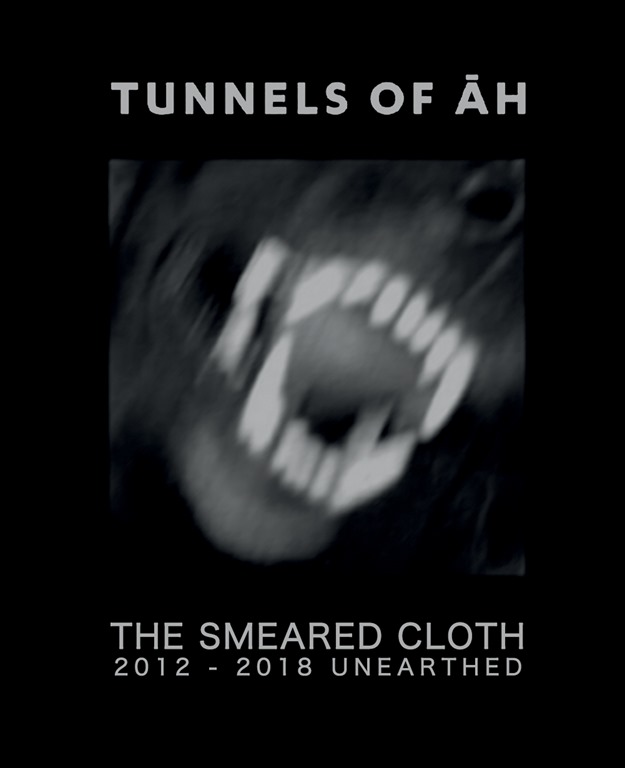
THE SMEARED CLOTH (2012 – 2018 UNEARTHED), as the title suggests, collects unreleased recordings made between 2012 and 2018 and more recently excavated. You couldn’t exactly call this a cash-in: this is ultra-niche and it is, however, a valuable dredging of the archives.

The cassette release is a double, with volume 1 spanning 2012-2015, and volume 2 spanning 2016-2018, and while an album conceived as an end-to-end listening experience would suffer from the enforced breaks, the (cruel) nature of this release means this isn’t an issue.

Oftentimes, with dark ambient works it feels as if the sounds are drifting out of the air rather than being forged by any kind of instruments, but the warping drones of the first composition, ‘Aceldama’, twist and grind and there’s quite analogue synth feel to it, with distant vocals adding an intriguing depth. In contrast, ‘Garlic Blades’ feels as if it something that has come not from instruments, but from a pair of bellows wheezing in a dank underworld. The two sonic facets come together on the third track, the heavy, stark ‘Brute World’ where drifting drones and creeping atmospherics filter over tense, brooding strings, and this all provides the backdrop to barely-audible incantations in a mystical tongue.

These contrasting elements highlight the range of the recordings featured on THE SMEARED CLOTH – and with twenty-one tracks, the majority of which are over six minutes in length, it’s a substantial document. But despite the contrasts – and the span of time over which the recordings were made – there is a certain cohesion to this collection, and the tracks run from one to the next without there being any jarring leaps.

Repetition is a common feature of the compositions; ‘Keys King at the Womb Again’ is centred around a short loop of a heavy industrial scraping, which equally sounds like a pained bark – or a pained barf, for that matter. Because Burroughs does venture into harsher territories at times, there’s some uncomfortable listening to be had among the drones and hums, scrapes and chants, and there are extended passages of quiet, ominous ambience, sounds without definition or any indication of origin ebb, flow, and eddy, to unsettling effect. The mid-section in particular is given to these more abstract forms, the sounds muted and creeping slowly, stealthily. ‘The Cloth is Smeared’ is exemplary: the words, spoken in an even, ritualistic tone, echo amidst creaking, creeping hums and clattering , and while stylistically worlds away, it harks back to themes that go back to early Head of David: the viscerality of ‘Smears’ (it’s a word which carries so much power and evokes a real revulsion, and religion, as represented by cuts like ‘Newly Shaven Saint’. Somewhat annoyingly and inappropriately because my brain is not my friend, the phrase ‘touching cloth’ insists on thrusting itself into my mind – and my mind wanders as it finds itself led through the dark, metal-edged passages of ‘Great Darkness’ with churning noise and what sounds like the clank of metal against railings, as if in protest or otherwise or trapped inside a prison cell. ‘Metallic Shoes and a Sword’ is particularly sharp-edged in the abrasive edges that saw through the swampiness of the damp gloaming, before ‘Gnosis of Self Loathing’ and ‘Amorphophallus’ drive us deep into some gruesomely dark spaces, suffocating, strangling, asphyxiating in their density: these are the sounds of slow punishment.

While the pieces themselves are (essentially) instrumental, the titles convey a great deal and ‘Circumcision (Hunter Christ)’ and ‘The Castrate Became An Angel’ largely speak for themselves. The latter is minimal, jittery, tense, like listening to the sounds in the walls at night and wondering if you have some kind in infestation. And perhaps. perhaps you do, but it’s in your body, inside your skull. There’s nothing here to calm that anxiety, only crackling distortion and drones and groans, grumbling, gut-shaking rumbles.

THE SMEARED CLOTH hangs dark, damp, and heavy, and rather than sounding like a bunch of straggly offcuts, it showcases the depth and breadth of Burroughs’ work, that the works in progress and outtakes and otherwise cast off and forgotten recordings are enough to make two full-length albums of consistent quality.

AA

cover

Room40 – 2nd June 2023

Christopher Nosnibor

I’ve been engrossed by Lawrence English’s works for some years now, and my appreciation of him and his methods were only enhanced when I conducted an interview with him about ten years ago for a now-defunct site (so many are now: the idea that once online it’s there forever has been proven false, and we’re all sitting, bewildered by as rapidly-vanishing archive of the recent past), where we touched on cut-ups and William Burroughs and I was struck by the depth of his knowledge and references.

But I have grave concerns around future history, or the future of history. While the move to digital was hailed as a move toward permanence, incorruptibility, the opposite has proved true. No-one writes anything down anymore, no-one produces additional. tape copies. If your hard-drive gets fucked, so does your entire library. The Cloud? Do you even know where it is? Does it even exist?

While we reflect on this, let us also consider this album and its slow gestation. David Toop is another artist I’ve spent some time listening to, and writing about, including his Breathing Spirit Forms three-way collaboration with Akio Suzuki and Lawrence English, but this is the first time just the pair of them have worked together, and Lawrence explains its evolution as follows: ‘Over the years, David and I have shared an interest in both the material and immaterial implications of sound (amongst other things). Moreover we’ve connected many times on matters which lies at the fringes of how we might choose to think about audition, our interests seeking in the affective realm that haunts, rather than describes, experience. The Shell That Speaks The Sea very much resonates from this shared fascination… I’m not exactly sure when we first mooted this duet, but I sense its initial trace is now more than a decade ago. I tend to live by the motto of ‘right place, right time’ and I believe David likely also subscribes to this methodology. A couple of years ago, David and I reignited the duet conversation and began exchanging materials. As a jumping off point, I explored a series of field recordings that, for me at least, captured something of this affective haunting that I mentioned previously’.

And haunting it is: ghosts of memories and fragments of half-recollections lurk and loom amidst the thick, dark shadows forged by the unsettling sounds. The title suggests an album of soft ambient washes, a gentle tidal swash, a soothing, tranquil work. It is not.

‘Abyssal Tracker’ is remarkably atmospheric in a sparse, gloomy, sense, and provides a fitting introduction to the duo’s idiosyncratic work, compiling sighs and vocal rasps over elongated strains of feedback and a suffocating atmosphere. Shrill shrieks echo out over eerie notes and a scratching insectoid clamour in the trebly range. Thuds ripple beneath the surface: there is so much texture and detail here, you find yourself looking about nervously, seeking the various sources and to see what’s over your shoulder, or hovering above your head.

Clanks and clatters and clanks and thuds are the dominant features of this album, and is lasers fire into the abyss of emptiness on the dense and disturbing ‘Reading Bones’, which scratches and scrapes, while there are earth-churning low-range disturbances – and words, but they’re indecipherable, spoken in low, whispering grunts, and it’s impossible to decipher even the language, sounding as it does like an ancient incantation.

It’s not all quite so skin-pricklingly tense, but much of it is: ‘Mouth Cave’ is dark, dank, low and rumbling, but has textures and what sounds like the trickle of running water spattering in the background amidst the cavernous gloom, and if ‘Whistling in the Dark’ sounds like a simplistic description, it’s accurate – but also suspenseful, scary and bordering on horror tropes; the whistling is deranged and floats through a heavy, crackling doomy drone. There are more ominous mutterings amidst the creeping darkness of ‘The Chair’s Story’, which feels like casting a look back through the ages through a thick fog at scenes of torture and pain and great sorrow and forward, to a laser-bleeping future.

As I seem to be prone to lately, I found myself nodding through fatigue but also, simultaneously, tense and alert during The Shell That Speaks The Sea, an album which possesses vast sonic expanses and a bleak, oppressive atmosphere. Each track offers something different, and this only accentuates the ‘otherness’ of the music this album contains; it’s like walking through a series of disturbing dreams, whereby each scene presents a new unfamiliar setting, and there are hints of BBC Radiophonic Workshop and vintage sci-fi about this incredibly imaginative work.

It may have taken a long time to piece together, but the results make the labour more than worthwhile.

AA

RM4205_front

23rd March 2023

Christopher Nosnibor

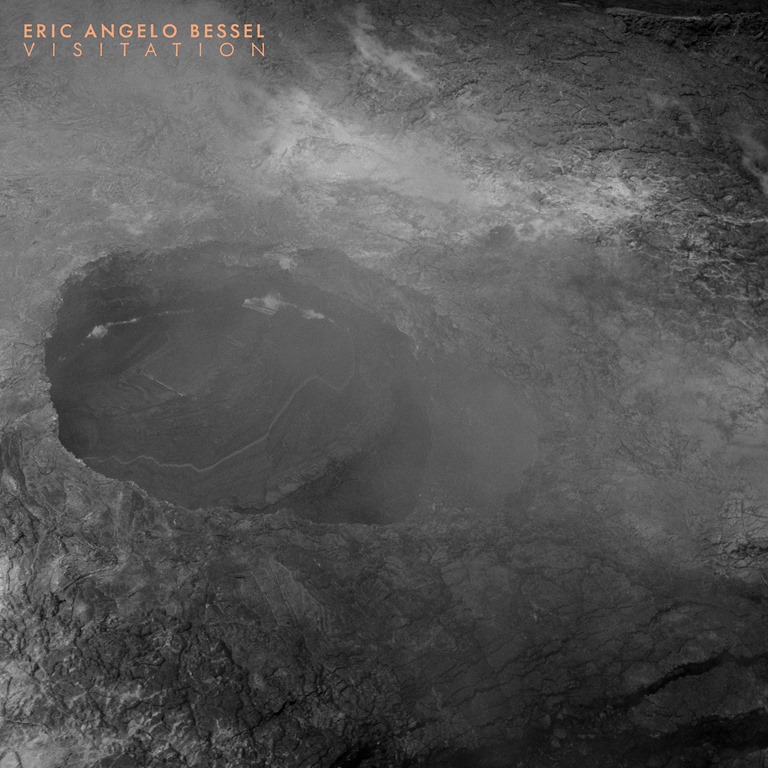
It’s been a while since I’ve seen it, but the title of Eric Angelo Bessel’s new single reminded me of the Jack Black ‘buddy comedy-drama’ (as Wikipedia would have it) from 2008, which reminds us that nostalgia for VHS and film rentals hit pretty swiftly after their demise, in real terms. In fact, here in the UK, Blockbuster creaked on with DVD rentals and secondhand sales into 2013. But as an article in The Independent in January 2013 reported, ‘While the North Finchley store had a poor selection of DVDs, the big surprise was that it was charging £5 to £8 for second-hand films to buy, so I bought brand new ones at HMV instead.’ As such, it was clear that times had changed and the world had moved on long before the last rental stores closed their doors.

But the idea of rewinding – something intrinsically connected to the age of the cassette, be it audio or video – is one which is an instant cut to nostalgia, and one which reminds us that thee one thing you can’t rewind is life: there is no rewind on time, and the past is past.

‘Kindly Rewind’ is a slow-swelling deep ambient piece that isn’t about nostalgia for the 80s or 90s, but instead drills deeper, venturing back to prehistoric oceans as its backward surges evoking images of slow evolution and microcosmic growth beneath the oceans. Sedate and supple, this is delicate and spacious and slightly disorientating. It’s also measured, musically articulate, and resonates unexpectedly. It’s a work of quality.

AA

Eric Angelo Bessel - Visitation

‘Terzo’ : an Italian word translating as ‘the third’, it represents an additional presence that new darkwave/shoegaze/post-rock duo Terzo sensed inhabiting their most creative moments when they began working together.

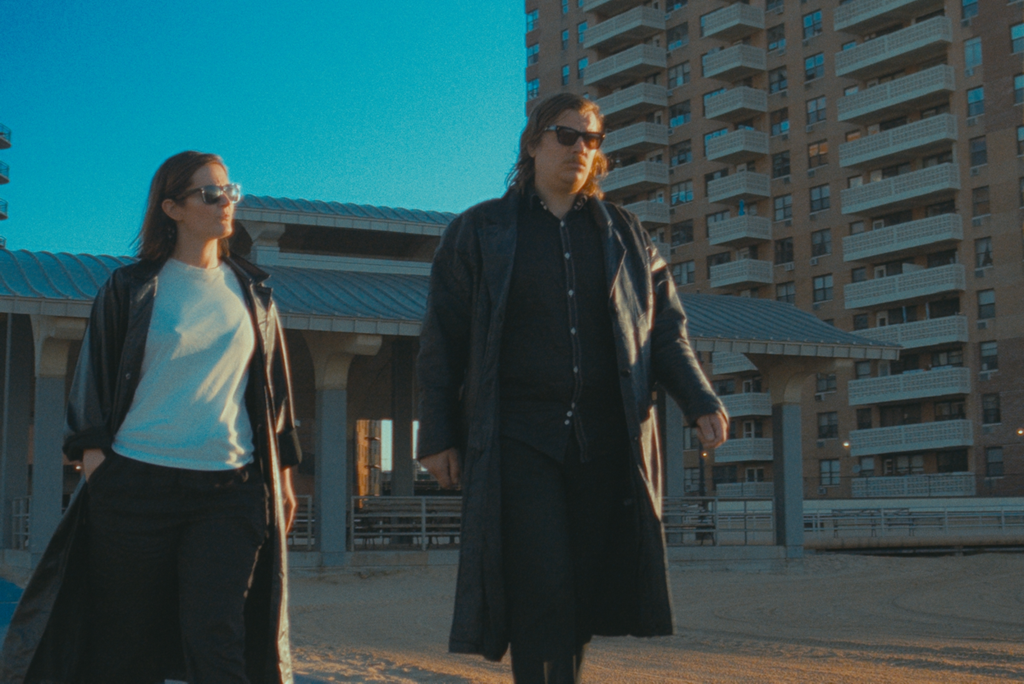
Karl Clinton (former bassist in post-punk act Diskoteket, plus co-founder of improvisational project Tsantsa) and Billie Lindahl (lead singer and guitarist in dream pop/dark folk act Promise and the Monster) share a mutual penchant for dark sounding music in all its forms. They have also both been itching to free the shackles binding them to strict timelines; not only those of the music industry, but society in general. “Terzo was born out of a discussion about songs we mutually liked and a wish to try a different work process to our then current projects,” they state. “We wanted to do whatever we wanted without restrictions, using our obsession and gut feeling as guidance.”

Their preference for music and art that embodies a degree of doom and gloom is evident on their upcoming self-titled debut album, with its central theme of ‘love and death’ linking all six tracks. Their very first studio session yielded the 10+ minute post-rock epic ‘Cymbeline’ (available now as a debut single), while in the midst of recording it they both had the sensation that a third presence was keeping them company. Intrigued by the thought, “we started talking about the appearance of a third element, in sleep and in dreams,” they explain. “Terzo is about acknowledging this, the swirl that light in the darkness generates, opening ourselves out toward our own weaknesses.”

‘Cymbeline’ is actually a unique cover of a 1991 song by the Celtic/world music singer-songwriter and composer Loreena McKennit, which has a lyric lifted from the William Shakespeare play of the same name. “We had a feeling that we could make something interesting with it,” says Lindahl. “Karl did most of the instrumental work, guitars and programming, while I recorded my vocal in one take. This song means so much to us because it was the first thing we did as a duo and I think we just sort of understood that we could do great things together.”

Terzo travelled to New York in the summer of 2022 to play their first live shows, with the video maker and photographer Johan Lundsten accompanying them to document the trip. Footage from this can be seen in the video for ‘Cymbeline’, with Lindahl adding that “we always pictured something in documentary style for this song. Johan filmed everything that we did, even just hanging around. It is very raw, but it feels right.”

Watch the captivating video to this immense song here:

AA

09fa22087a77c50ec64bf5bfc0b1abdd4f21a26c

TERZO | photography by Johan Lundsten

Cathedral In Flames were slowly preparing for live shows and writing their next record during the Covid pandemic when Vladamir Putin and Russian armed forces invaded Ukraine.

The band immediately decided to take action. They will donate all royalties and proceeds from their Hang Me High And Bury Me Deep record to support Ukraine, specifically to run Nexta, an independent news channel that brings the breaking news from across the battlefield.

In order to draw attention to the cause and raise additional funds for Ukraine from their fans, the band decided to record a cover version of Nick Cave and Blixa Bargeld’s duet ‘The Weeping Song’.

Phil Lee Fall says of the whole thing, "The war in Ukraine is horrible, the terror on children, innocents, the helpless. This song is maybe about crying, but at the end it sings "… we won’t be weeping long" because I’m convinced that Russia will be defeated in the end."

"Support Ukraine, Putin udi na chuj," ads Gatsby.

Listen and purchase here:

AA

22250e02-23d8-7475-f4af-e6bc651b82de

11th March 2022

Christopher Nosnibor

When it comes to goth, you might say that the apple never falls far from the tree: there’s a long history of references and recycling, with bands often taking their names from songs or otherwise referencing other bands, and there is, or at least should be, a goth band name generator somewhere on the Internet, with ‘Children’, ‘Sisters’, ‘Grooving’, ‘Dead / Death’ and ‘Ghost’ featuring prominently in the not-so random permutatable word selections. Funerals and marionettes are pretty popular, too, from as far back as 1986, when The Marionettes began life as The Screaming Marionettes.

Taking their name from the Charles Gounod composition of the same name, best known as the theme music for the television program Alfred Hitchcock Presents. The Funeral March of the Marionettes go back to that mid/late eighties heyday (broadly 84 or 85 to 87 or 88) that saw ‘goth’ solidify from being a nebulous array of post-punk bands (The Sisters of Mercy, Siouxsie and the Banshees, Bauhaus, Alien Sex Fiend) being lumped under an umbrella by a lethargic press into an actual genre with more defined stylistic boundaries, typically drawing on the aforementioned acts, but with more indie-leanings typical of The Mission and the style of guitar Wayne Hussey introduced to The Sisters on his arrival in 1984

The Funeral March of the Marionettes, from Rockford, Illinois, cite The Cure, Bauhaus, Joy Division, Siouxsie and the Banshees, and others among their influences, and while they describe their latest offering as something of a departure, it’s still dense with latter-day gothic tropes, albeit leaning more towards the atmospheric post-punk/industrial crossover space, whereby you’ve got Depeche Mode covering Joy Division, a brooding atmosphere as cool synths drift in an ocean of reverb while angst oozes from every corner of the dense, gloomy production.

Yet for all its adherence of those tropes, for all its stylistic familiarity (just look at that cover art, that’s The Sisters of Mercy / Merciful Release meets Joy Division via Rosetta Stone), ‘Slow’ hits a spot, because it’s dark, dark, dark, and the execution is spot on, sending a shiver of torment down the spine that entices you to bask in the gloom.

AA

203094

Cruel Nature Recordings – 11th March 2022

Christopher Nosnibor

Following on from their eponymous debut, Pound Land – the duo consisting of vocalist/lyricist Adam Stone (Future Bomb/Holy Ghost People/frequent collaborator with Dead Sea Apes) and multi-instrumentalist Nick Harris (Reverends of Destruction/ ex-Dead Sea Apes) return with what they describe as ‘eight tracks of post-industrial post-hardcore dead-pan misery – a ‘kitchen-sink’ punk for the 21st century’.

The album title isn’t one that’s likely to see Pound Land crashing the charts, and it’s one that runs the risk of drawing easy criticism, if its contents doesn’t hit the mark for some. But then, it’s a double-bluff, because ant critic who criticises the band for sounding like they can’t be arsed clearly can’t be arsed to critique with any effort.

They slap in straight away with the blunt and subtle as a brick ‘Twatted’, and it’s a six-minute barrage of top-endy guitar racket, a simple chord sequence put through the wringer after a succession of pedals with distortion and reverb and maybe a hint of flange. The lead guitar is sinewy, a snaking twang of treble and it’s so, so raw. A primitive drum machine sound thwacks away and Stone mumbles the expletive-laden lyrics in a northern drawl: ‘You know what I’m fucking saying, mate? Everyone’s a fucking twat, mate.’ It’s raw and it’s real. The production values are bargain basement and then some, and around the mid-point they come on full Fall circa 1983 as they bludgeon away at their wonky guitar racket.

‘Brain Driver’ is a dingy mess of seething, writing no-wave and industrial racket by way of a backing to a monotone vocal performance, and this time it’s six-and-a-half minutes of dirge-like scrapings and discomfort, but they’re just warming up for the album’s thirteen-minute centrepiece, ‘Tony Ex-Miner’. It’s a sparse, grating synth effort, like Suicide without the rhythm. It’s an atonal droning expanse of bleakness that saps your very soul. This is a reason to appreciate it, in case you’re wondering. A sampled narrative about Margaret Thatcher is almost, but not fully, audible.

The sneering grunge squall of ‘Tapeworm’ follows more conventional punk/rock structures; drums, bass, guitar come together to grind out a thunderous wall of noise, and it’s early Head of David that comes to mind as they slowly tug your entrails out and squeeze the mess of guts as they spill. There is nothing pretty or pleasant about this, not the dingy murk of the title track or the dislocated electronic dissonance of the disorientating slur of ‘Total Control’, that sounds like Stone retaining control of his bowels and bladder is no small feat. ‘I look after my mind’, he drones, detached, alone on the dark.

The compositions, such as they are, are sketchy, minimal, and there’s little to cling to by way of melody: instead, Pound Land drag you through city back alleys clogged with litter, smeared dog shit and the puddled piss of street drinkers – mate. The subject matter may be kitchen sink, but the atmosphere is abject and apocalyptic. It’s an album for out times. You’re not supposed to like it.

AA

a2595844187_10