Posts Tagged ‘Experimental’

gk rec.

Christopher Nosnibor

This makes for quite a refreshing change: it feels like about two-thirds of my reviews in recent months have been marked by a compulsion to comment on artists going into creative overdrive during lockdown and whacking out releases of new material because they’re not currently touring or working their day-jobs. But for Lithuanian electronic experimentalist Gintas Kraptavičius, it’s business as usual, with a steady flow of output over recent years, and with Amnesia being his second release of 2020.

One of the things I personally admire about Gintas as an artist is how broadly he explores the field of electronic music, with works ranging from minimal ambience to deep dives into microtonal territory, and a whole lot in between. Amnesia conforms to no genre or form, and instead spreads its myriad suggestions from across a host of conceptual spaces to create something wonderfully vague, and also vaguely wonderful.

The release comes with no information whatsoever about its concept or purpose or recording, beyond the fact that it uses drum samples by Travis D. Johnson. Those samples aren’t neatly assembled to form looped rhythm tracks and solid structural foundations for a work with an overt linear trajectory or other sense of solid form.

Amnesia contains a single track which spans a massive forty-four minutes, and begins with crackling, interweaving synths waves which crackle and fizz with distortion, while thumping clatters that sound more like shuffling, clumping footfalls than drums crash sporadically and arrhythmically.

There are some crescendos or swirling noise and shrill, trilling feedback notes that whistle and screech over churning blasts of bilious noise, violent sonic storms. There are segments of laser bleeps and skittering short, sharp toppy notes fire into a swirling morass of mid-range extranea.

A delicate piano tinkles in a nuclear storm and a stammering clanking rattles and clangs behind and alongside. This is a dominant feature of Amnesia: there is always a background and a foreground and a significant degree of contrast between the two, which is both textural and tonal. Harsh top and midrange are laced against softer, more gloopy lower spectrum sounds.

Time slips, drips, dribbles and cascades through a shifting sonic multiverse that’s often uncomfortable, at times undemanding, as the track transitions between ambience and abrasion, and towards the end it takes a turn towards synapse-collapsing early 80s power electronics.

What do you do with this? Where do you take it? What is it all about? There is no clear message, no distinct or decisive form, resulting in a longform composition that meanders and swerves in all directions but ultimately leads nowhere and articulates little – and that’s more than ok: Amnesia is not about sequence and making a bar, but about capturing a sense of vagueness and a certain lack of purpose, of point, and it does so magnificently.

AA

a2114610098_10

Christopher Nosnibor

Soupy exotica that calls to mind William Burroughs’ descriptions of Tangiers winds slowly from the speakers as people filter in, greeting one another in the chat section and the visuals alternate between the event poster and the running order. There’s something quite distinctive about Theo Gowans’ events, and he’s done an amazing job of recreating the vibe of Leeds DIY venue CHUNK on-line. A lot of it’s the culture and the people, of course, and CHUNK’s ethos of accommodating and encouraging the most far-out and fringe makers of music (while having a clear stance against fascists and bigots) is nurturing and community-spirited.

I’m oddly nervous: this will be …(something) ruined’s first on-line airing, and while I’m sort of comfortable shouting at people against a backdrop of extremely loud noise in person, knowing that we’re going to unleash probably our harshest, most experimental piece to date is an unknown.

In an attempt to better replicate the pre-gig experience, I’ve drawn the blind and cracked open a can of 8.5% Belgian lager – a kind of tradition developed when …(something) ruined took to the road (albeit briefly) in February. I manage not to pace the room anxiously, though, which is probably for the best, although it does mean I’m not working toward my daily 6,000 step target.

It’s a prompt start, and BLACKCLOUDSUMMONER pile in hard and strong with shuddering, juddering crackles and blasts of noise that shard from atop a booming, rolling bass. It’s apparently a saxophone, but fucked about with to be a potent, disorientating noise assault, building later upon later of interlooping shrieks of nail-scraping shrillness as the piece progresses. It’s rendered all the more tension-inducing by the cyclical visual consisting of just three rolling gifs. In a gig setting, this by way of an opener would clear the room before it even filled up: in the event, viewers steadily increase… 29… 34… 36…

DSC_4686[1]

Ordinarily, that would be an act you’d not want to follow, but Expose Your Eyes up the noise stakes with thumping percussion and buzzsaw churning electronic noise, some heavy synthy drones with serrated edges bristling all over, intercut with murky pulsations and looped snippets of dialogue. The accompanying videos appear to be clips shot at random while out and about, with the lighting adjusted for maximum dramatic effect, giving the whole thing a horror movie suspense vibe. Only much, much noisier.

The change in style that Labas Krabas being is welcome: the Newcastle duo deliver otherworldly vocal warbling accompanied by disjointed double bass, and we get to watch them perform, albeit with blocky, buffering movement. Said warbling builds to crazed, banshee wailing and shrieking. It is, however, a long set, and it’s perhaps because of its force that it becomes draining some time before the end.

There isn’t a lot to THF Drenching’s set: the beardy avant-gardist shows various artworks close to the camera against an audio backdrop of trilling, twittering and occasional toots, bells, and whistles.

DSC_4688[1]

Carnivorous Plants Trio bring more fucked-up noise-churning double bass action, compacted into a claustrophobic space with experimental guitar sculptures and random percussion. The technique of slapping the bow against the strings produced some interesting sounds, while the guitar work is very much about texture rather than tune. The layered visuals, which place all three musicians in the same space but as ghostly forms, are interesting, and work well.

DSC_4689[1]

Worship My Panther plunder deep drone, which is supplemented by footage of rabbits, mostly: rabbits hopping, fighting and being hunted by birds of prey. Sonically, it’s dark and ponderous and the contrasting visuals add a different dimension.

I can’t really review my own set, but it’s quick and brutal and Paul Tone’s noise and visual collaging feels like a creative success, and I read the silence in the chat comments as positive, like those present being stunned into silence instead of sending virtual missiles and ‘you’re shit’ comments our way. The Whining crowd may be respectful and nice, but they’d say if we were shit. YOL slammed in immediately after with a short sharp shock of a set that was seemingly a guy having a breakdown while straddling a bass drum. I have no real clue what it as about, but it was intense.

DSC_4690[1]

Heavy Lifting’s real-time programming yields tone-shifting phased synth wave sounds reminiscent of some early Whitehouse, minus the vocals. This is a good thing, because the vocals on most early Whitehouse releases were pretty corny, while blasts of distortion and feedback never get tired.

I kinda got distracted for a time in the aftermath of the …(s)r set: for some reason, people wanted to talk to me over various messenger services, but Swarm Front grabbed my attention with a politically-charged mash-up combining no-fi docu-drama and power electronics. Mashed loops played at hyperspeed stutter and whip in between more performance-based segments. The effect is somewhat bewildering, and at times, it’s hard to determine the sense of narrative.

Phil Minton is perhaps the noise equivalent of beatbox master Kevin Olusola, or at least an aspiring equivalent: his vocal gymnastics almost inevitably call to mind Mike Patton’s Adult Themes for Voice recordings, as he replicated the sounds of howling wind, explosions and dark ambient rumbles with his lugs and larynx alone. And it’s pretty impressive.

DSC_4692

Finally, we get to see Mik Quantius do some JG Thirlwell-inspired growling and playing a keyboard with his feet and shake his jowls frantically in front of a mic. Some of it’s ok, some not so much, but the sound quality is pretty poor. And I’m weary and beery. And it feels very like a gig. Only, I’m not rushing for a train at 11pm and after 5 pints or more. Which is one positive over real gigs, I suppose…

DSC_4694

Room40 – DRM475 – 24th July 2020

Christopher Nosnibor

In one of a brace of releases on Lawrence English’s Room 40 label in July, Australian minimalist Todd Anderson-Kunert presents a selection of Moog synthesiser compositions, which we learn are ‘exercises in intimacy, restraint and unerring patience. Past Walls And Windows plays with how sound emerges and decays. It is an edition that celebrates the ephemeral nature of the medium and the way sound’s immateriality invites a constant sensing and seeking on behalf of those that encounter it’.

These are indeed minimal works, so sparse at times as to be barely audible, and they’re a long way from presenting any sounds conventionally associated with the vintage Moog. Instead of jangly, trilling tones, Anderson-Kunert teases hovering single notes that evoke a sombre, even funeral atmosphere for the most part. There are flittering oscillaations and low, diminishing drones, and they make up much of the fabric of this set, comprising six pieces, most of which sit over the five-minute mark.

It’s quiet and delicate: ‘Better Left’ begins with distant grumbles of thunder, before low ominous notes drone in and halt abruptly, while ‘An Echo’ brings slow pulsations and haunting drones like a trilling church organ ringing out dolorous notes in a sepulchral setting. It’s gloomy, and it’s ambient in the background sense, yet it has the capacity to send the listener inside themselves on a contemplative course.

It’s no criticism to remark that there isn’t a lot to say: this is an album that requires not commentary, but peace, and time: to be listened to without interruption or distraction, and ideally in semi-darkness. It isn’t an album that really raises questions, and it doesn’t offer answers: it simply is. An as a sonic vehicle for contemplation and tranquillity, it’s ideal.

DRM475_art

DL only – Self Released – 15th July 2020

Christopher Nosnibor

Four months on from the original Kressel Studies release, Mick Sussman delivers a second volume of ‘algorithmic studies’ which explore ‘new rhythmic and timbral techniques’ The accompanying text explains that ‘as with the previous volume of Kressel Studies, these pieces are brief and generated from compact nuggets of computer code. But they form a varied procession of musical thoughts, some severe and some almost merry.’

I wrote of the first back in March that Sussman took the listener ‘deep into skittery microtonal bleeping territory’, and this twenty-one track collection of snippety fragments of drones, hums, bleeps and yawning extraneous and quivering noises follows the same experimental trajectory. And as one may reasonably expect, Vol 2 is more of the same, only different – but not very.

‘kr40P1p5’ is a jittery, skittery melange of synths, and ‘kr40P1p5’ is similarly brain-bending, but even more fractured and dizzying, as stunted notes bounce and ricochet every which way in a kind of Brownian motion. ‘Kr42p2p5’ is a swampy soup of straining analogue, while ‘kr42p2p7’ is a fizzing morass of whupping phase and stunning static hiss that’s churned to a spacey foam.

R2D2 bleeps and whistles and retro-futurism clash with short blasts of power-electronics noise, and this is very much a work which is preoccupied with sound rather than sense, conjuring a wibbly-bibbly world of weirdness.

It’s very much a mixed bag of oddities, and if, like its predecessor, it sounds like so much dicking about in the studio, then that’s because it really is, although that’s no criticism. The blurb explains that across the album, ‘some [tracks] veer toward pure noise, like Kr. 42.2.3, while others have a lighter melodic flavor, like Kr. 42.3.1. And some split the difference, with rough-textured grooves, like 44.2.1.’ And perhaps, rather than view this as an album in the conventional sense, it should be held up against the sound effects alums of the 70s and 80s, the likes of which were recorded by the BBC Radiophonic workshop.

With each piece – compositions is a stretch, at least as a musical descriptor: any composition involved is digital coding as Sussman plays with the parameters of programming – so brief, the listener doesn’t get the opportunity to settle, and is instead slapped by a quickfire succession of sonic assaults presented as sketches that flit across the full range of textures and tones, and at a pace that’s sometimes bewildering.

It does work – again, not as an album, but a collection of random sounds and sonic experiments.

AA

a1746053039_10

5th June 2020

James Wells

So The Moms is not a bunch of women who meet for coffee or a WhatsApp group about homework, but actually three dudes from Copenhagen who trade in textural noise/free improv, manipulating conventional instruments in self-invented unorthodox ways. On this, their self-released debut which contains a single track of 39 minutes and 34 seconds in duration, they promise ‘no soothing melodies or calming new-age harmonies, yet it can be a meditative experience if you accept the push and let your mind slip through the void.’

It sort of sounds like jazz in its origins, as some kind of brass struggles for breath, honking and parping in a strangled tone. Low-end grumbles and high-end fizzing duel for dominance as the jostle around mid-range drones. The ratio of droniness and rasping horniness and warped jazz dissonance vary as the elements interweave, shifting and mutating.

At times sparse, minimal, subdued and strained toots expectedly from within extended sections of restrained low-level noise, punctuated by thuds and thumps: strains of feedback and scraping are recurring sonic elements as the ever-shifting piece drips from swirling murk to squealing torture, with distortion and discord dominating.

The final minutes build to a climax of shrill, shrieking cacophonous noise before slowly dissipating to draw the curtain on an album that’s restless and difficult, an album that doesn’t allow the listener to settle into a single frame of mind for more than a couple of minutes, as it twists and turns, honks and churns.

It’s by no means commercial, but nor does it have any will to be, and in its field of jazz-orientated experimentalism, Kalipedia is a solid debut.

AA

a4074945653_10

Love Love Records

Christopher Nosnibor

It’s no secret I’m quite a fan of Matt Cargill and Co’s oddball, off-kilter approach to freeform experimental weird noisy shit that stubbornly defies genre categorisation – largely on account of the fact that it is weird noisy shit that stubbornly defies genre categorisation (although the blurbage that accompanies Walk it Dry, the follow-up to 2019’s Gentle Persuaders describes them as ‘London’s neo-jazz wrecking crew’.

Sly have trod themselves a unique path, and find themselves in the curious position of being one of the most obtuse bands beloved by almost everyone I know in underground musical circles. I’d like to think it’s a combination of their uniqueness and the fact that they are unequivocally

On this outing, they promise ‘the familiar sound palette of skronked electronics, bulging noise blasts, wailing sax & Kalashnikov drums that was found on ‘Gentle Persuaders’’ but at the same time say that this ‘is a very different beast. The tracks here are shorter and punchier as the band digs deeper than ever to find increasingly potent sonic pockets.’

Mad horns and a crushing, slow-paced jazz beat explode from the speakers the second the ‘play’ button his hit, and with ‘A Black Uniformed Strutting Animal’ they plunge into a collision of heavy rhythms and divergent notes that counteract one another in a battle between order and chaos, where there is no clear winner.

‘Dead Cat Chaos Magician’ is frivolous, glooping electronics, with a fast-paced jitter of tension and some ragged blasts of drums that are nothing to do with rhythm and everything to do with dramatic punctuation, sudden explosions that disrupt any semblance of an emerging flow.

The compositions on Walk it Dry are difficult, dissonant, and while they are indeed more succinct than the bult of the pieces on previous outings, they condense those dank, disrupted soundscapes into dense chunks of ‘Bulgarian Steel’ brings the kind of swampy mess of nose that’s quintessentially Sly, dominated as it is by booming beats and murky mid-range, before ‘Shrieking Grief’ steps the torturous din up a notch, with more thunderous rhythms bashing frantically into a void of grinding greyness while horns flash and flail

The lack of pun-based titles is compensated to an extent by ‘Sunken Disorderly’, while ‘My Torso is a Shotgun’ is a cranium-crushing morass of tension, a bludgeoning battery of hammering and noise.

This all stacks up to an album that’s classic Sly: the same dark industrial clanking, doomy undercurrent and warped jazz overtones, but in much shorter segments. It’s still dark, dingy, difficult, jazzy, otherly, and there’s no other band who quit straddle so many boundaries. Walk it Dry may mark a certain evolution, but more than anything, it’s the work of a band who simply don’t do compromise. And that’s why we love them.

d3eccc40-ed8c-40da-bbbc-16f704d3b8be

5th May 2020

Christopher Nosnibor

Starless is a new musical project from Yurii Samson of Ukranian industrial noisemakers Kadaitcha. It’s pitched as being ‘less industrial and noisy than Kadaitcha, but more acoustic and lyrical’, although this very much depends on the strain of industrial you’re angling towards.

Admittedly, my first thought is less ‘more acoustic and lyrical’ than Kadaitcha, but ‘fuck me, this is spaced-out experimental jazz!’ ‘Entro’ piles in haphazard and chaotic, as a riot of parping horns hoot and honk seemingly at random though a twittering electronic oscillation with bleeps and quirts, and wandering notes that are difficult to assimilate, stylistically or psychologically. There’s a lot going on at once.

But the title track goes much more industrial / dark ambient, a restless thrumming providing the backdrop to a distanced, echo-heavy vocal and squalls of extraneous noise, swells of feedback and layers of serrated electronica, whole distorted impenetrable vocals ring out with a bold authority. It’s the sound of Big Brother’s dictation, monotone, cold, flat, and impervious, while metallic noise spirals and swirls.

Next up, ‘Chudovys’ka’ begins all aclatter and aflutter, a clicking flicker or delicate beats, before a warped vocal begins to nag away in the background. And then, before long, it goes full Throbbing Gristle with churning electronic rhythms and hard-edged noise butting up against them. And this is a sustained sonic attack, the best part of ten minutes of difficult noise that simultaneously rumbles and screes, a low-end wash that rolls and throbs while clattering percussion ricochets off in all directions.

‘Kiviten’’ goes all-out with the heavy-duty percussion, calling to mind the thunderous battery of Test Dept. It also brings droning church organ and shrieking feedback that hurts the ears and bends the brain, as well as heralding introduction of epic choral voices on the scale of Carl Orff’s ‘Carmina Burana’, only distant and dissonant. It’s big on drama, and also disquiet.

Closer, ‘Saga’ is also impressive in its depth, and equally the depth of the discomfort it discharges as wheezing monotone vocals drone out over a shifting soundscape of hesitant beats, creeping jazz horns and scrapes and bubbling synths. It’s sparse, low, slow, and trepidatious, making for an unexpectedly Low-key conclusion that also happens to leave the listener hanging on the edge of a swamp hidden by fog, wondering what lies beyond.

AA

a3986107524_10

Christopher Nosnibor

Pierre Massé, the man behind the Paramestre project, threatens ‘Electronic-ish music with human vocals, guitars (played by a human), and far too many effects (along with a healthy dose of digital manipulation)’. It’s an intriguing proposition, and is it even possible to have too many effects, at least when used well?

As Massé explains in the liner notes, ‘As stated by the opening track, it is nothing “perfect”; there are artefacts from tortured source material, there is noise, there are glitches from randomized effects processing, and there is no pitch correction. But there is also warmth, groove, melancholy, and hope. I hope you find something that speaks to you amidst it all.’

This is, to my mind, a succinct summary of why any artist creates; in the hope of there being a shred of commonality with the receiver in the work. But, at the same time, creating not with the audience at the forefront of the creative process. This, ultimately, is what differentiates art from entertainment. The latter is primarily commercial, designed for the (perceived) audience. Art exists for its own sake, and any audience it attracts finds it.

Rippling post-rock guitars with an almost Spanish vibe cascade softly over a dislocated beat that bumps and bounces and flickers on the aforementioned opening track, providing a supple, mellow backdrop to Pierre’s dreamy, soulful vocals, and it’s a smooth, Gallic air that permeates the lilting synth pop of ‘Elle’. It’s pleasant, but it’s not an instant grab by any means, and much of Conditions Initiales feels in some ways exploratory, tentative. It isn’t that the songs themselves feel incomplete, because they certain don’t: it’s more that one feels Massé is still working towards a sound that is one he’s entirely comfortable with, that translates his sonic ambition into the final recorded output.

‘Conceal/Reveal’ goes a shade darker, but it’s the subdued waltz of the seven-minute ‘Madeleines’, with its echoing sampled background conversation that creates a subtle but clear level of juxtaposition, that really draws the listener in, in search of its evasive heart amongst the layers.

And it’s when Massé goes still darker and brings thudding beats to the fore that Conditions Initiales really becomes interesting: ‘Carry’ and closer, ‘Endless’ are both sparse but feature more prominent percussion, the latter worthy of favourable comparisons to Depeche Mode.

Understated as it is, Conditions Initiales contains no shortage of detail, and it’s an intriguing debut that hints at even better to come.

AA

a0628153917_10

Front & Follow

Christopher Nosnibor

The demise of the label Front & Follow was a sad one, for many reasons. I mean, it was understandable: a one-man enterprise, the degree of effort required to curate, release, and promote music – especially obscure, niche music – is astounding. It’s always going to be a labour of love, but all the love in the world doesn’t pay the bills.

This does mean that the return of F&F, however brief, with a view to issuing a series of lockdown / isolation compilations is extremely welcome, simply in principle. Not only because it’s a reminder of a time before what’s rapidly looking like a collapse of civilisation, not only because it’s a reminder of what a great label it was, but also because despite the tidal wave of lockdown releases that are flooding the virtual world right now, we still need more music like this: music from the fringes, music that coveys the intense cognitive dissonance of the current situation in non-lyrical terms.

To unpack this: the title summarises the situation as it stands for many in the most succinct form. Whether or not you’re officially ‘isolating’, we’re all still isolated for the most part, either alone or with the rest of out household. But it seems that however ‘together’ we are, however connected, however well we communicate, everyone’s individual experience is different, and in many was incommunicable: we’re all islands, isolating inside our own heads. Words get in the way, and impose the experience of others on our own private thoughts, so the fact that this collection is largely instrumental is welcome, and where there are vocals, they tend to be absorbed into the fabric of the sonic experience.

With twenty contributions from a host of artists. Many of whom I’m unfamiliar with, there’s a theoretical pot-luck element to this compilation, but F&F have always been strong on curatorial skills, and while the contribution from Kemper Norton (arguably one of the bigger ‘names’ on the release) is surprisingly brief, it’s positioned in a prominent position opening proceedings, and sets the tone with its tonally-balanced ambience.

Grey Frequency’s ‘Dissolve’ which follows is more what you might expect: almost seven minutes of mellifluous mellowness, but with crackling snippets of static and shadowy undercurrents that run dark and deep.

Picking standout tracks is difficult and also rather to undermine the project, although

‘Basic Design’s ‘Dream Archipelago’ does stand out by virtue of having vocals first and foremost, but also for it’s woozy, fugue-like qualities, something echoed by the ethereal ‘Dining with Phineus’ by Carya Amara.

AZAK BROMIDE bring a more power electronics / industrial slant to the dark ambient party, but it’s the seventeen-minute behemoth that is Boobs of Doom’s ‘Scumbellina’ that really is the ineffable centrepiece here: a towering monolith of a track it’s all the experimental electronica distilled into a single movement of analogue oddness.

Elsewhere, Ekoplex capture the essence of early cabaret Voltaire on the dubby ‘Rejected Replekz’, Thomas Ragsdale delivers some signature ambience with beats with ‘The Light Between’, and Elizabeth Joan Kelly’s ‘Waking Up With a Cat on My Face’ perfectly encapsulates that moment or panic, that abject spasm through a minute and three quarters of swampy discord and sonic confusion. Hibernation’s nine-minute ‘Fragile Times’ is a perfect summary of everything: so fragile and soft as to be barely-present, it’s a mist-like ambient piece that’s impossible to place your hands on it, much less pin it down, and that wisp-like intangibility, that vague ephemerality is the essence of the collective mind right now. However you may think about think about it, whatever your beliefs, pinning down the mood of the moment is nigh on impossible on the tumultuous psychological rollercoaster we find ourselves on.

Thankfully, soothing, spacious sonic wanderings like the album’s final contribution, TVO’s ‘A Wave as the Coast Disappears from View’ offer id to calm, even if the title reminds us we’re only barely afloat and only so far from drowning in an instant.

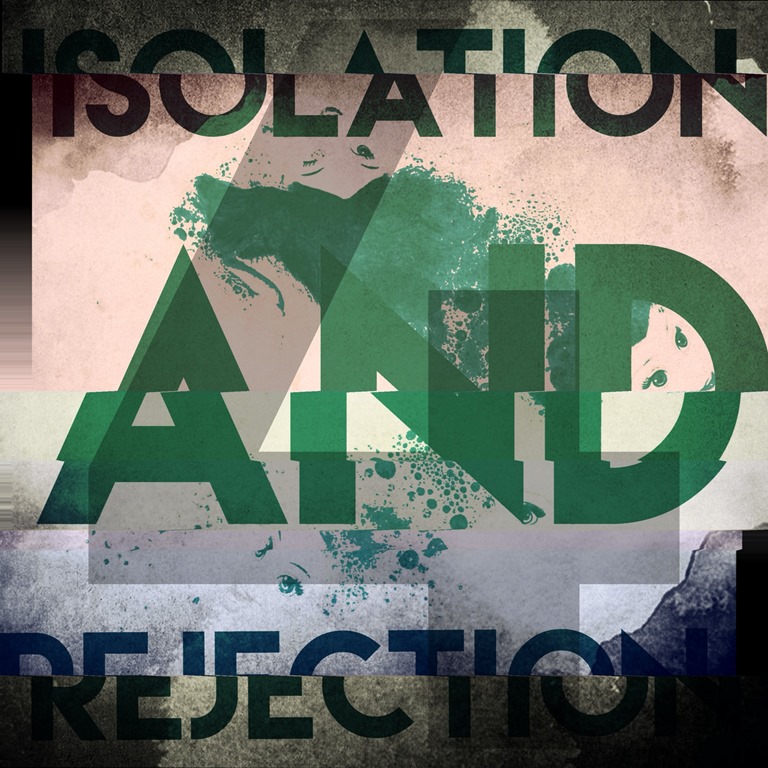
Isolation & Rejection Vol 1 is a magnificent collection at any time, but also serves as a contemplative soundtrack to strange and troubling times. It’s also classic F&F.

AA

a1782742595_10

Bearsuit Records – 26th June 2020

Christopher Nosnibor

The latest Bearsuit offering is a single by The Original Magnetic Light Parade, which is a collaboration between Belgian musician, Alexander Stordiau and Edinburgh man, and Bearsuit favourite, Harold Nono.

‘Confusion Reigns’ is surprisingly unweird, at least to begin with, exploring a sort of cinematic synthwave trajectory, a sparse machine drum low in the mix. Then it breaks into something massively bombastic, and it’s faux-epic in tone, sounding as much like someone fiddling with the voice settings on a keyboard, before finally settling on a piano sound and rolling into a space-rock explosion. With about half a dozen passages in all packed into its five-and-a-half minutes, it feels more like a collection of ideas for longer pieces than a single composition. Confusion does indeed reign.

It’s a fitting summary of the now: everything is confused and confusing, especially in the UK, especially in England. I still don’t know under what circumstances I’m supposed to stay at home or meet people, what’s essential or non-essential, and the logic behind any explanations of the changes that seem to be announced by the day seems deeply flawed and downright contradictory, even for the things I think I do know.

Nothing is as it seems and you can’t trust even trusted sources, and counterpart ‘Smoke and Mirrors’ very much hints at this global obfuscation in its title. Who can you trust? What can you trust? Certainly not statistics.

Instrumentally, it brings together acoustic guitar and smoky synths. The transitions are less frequent, resulting in a piece that twists and turns, but flows rather more smoothly. It’s still odd, and angular, just not as brain-bendingly difficult to follow.

And as a set, it’s all good. Just don’t come here looking to make sense of insane times.

AA

a2598448979_10