Posts Tagged ‘EP Review’

4th August 2020

Christopher Nosnibor

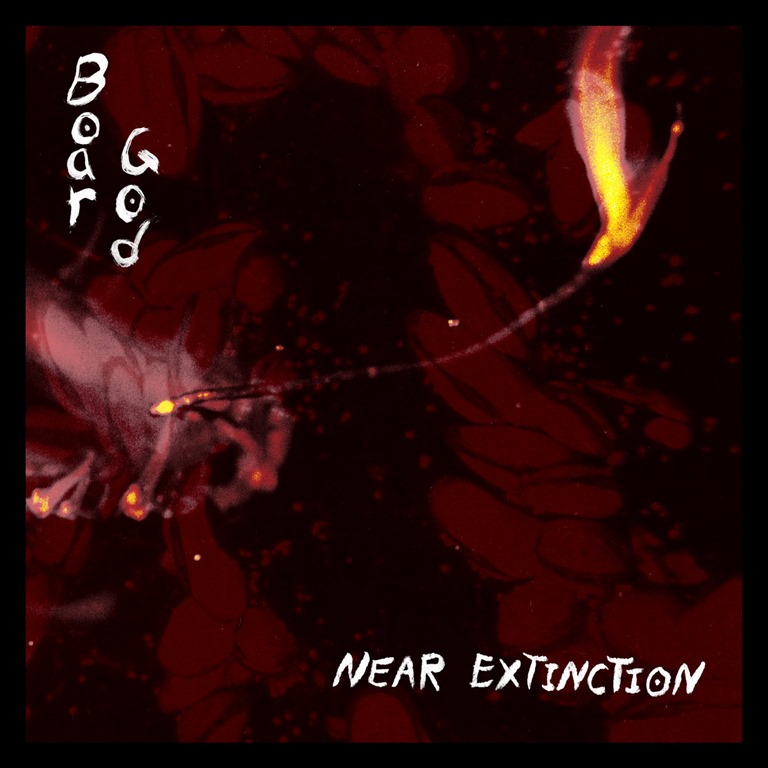
In the ever-expanding world of microgenres based on hybrids and crossovers, Montreal-based trio Boar God may be onto something as close to unique as you could imagine, describing their style as drone-punk. That said, drone takes many forms, ranging from the elongated notes that tend to feature in electronic works, to the dirgy, doom sustain of Sunn O)), with the kind of Psychedelic drone of The Black Angels in between.

Boar God’s sound belongs to none of these areas, and as such, does stand apart as different. The EP’s four tracks all sit around the six-minute mark, and blend driving alt-rock with a dash of shoegaze, and amp it all up with a spiky edge that’s as much post-punk as punk, but then I’d always say it’s the attitude that counts more than the sound in defining what’s punk.

Echoed tremolo tones shimmer like a heat-haze around guitars that scratch like sandpaper on the intro to ‘Life Eternal’. It’s a long, gradual build. The tempo quickens as the bass begins to run, faster and faster, the guitars chiming and swirling before everything breaks into a punchy clamour of everything, with Eric Bent’s vocals adding to the urgency. If it’s reminiscent of anything that immediately springs to mind, it’s Trail of Dead.

‘Azrael in Crisis’ goes all-out for the epic, with atmospheric synths swirling and wafting in the background, but still remains tightly-structured and punchy and dominated by a gritty guitar and booming bass. The energy is tempered by a chill, a bleakness, reminiscent of early Joy Division (think the outtakes that appeared on Still). The production is murky, and this is actually a good thing, as its low-budget, unpolished feel gives it an immediacy as well as replicating the late 70s’ / early 80s 8-track recording sound.

The pace and the angst are amped up on ‘The World Set Free’, a pounding amalgamation of Killing Joke and Red Lorry tallow Lorry, and again, it’s the thick, floor-shaking bass that defines and dominates the sound. Things take a twist for the gothic around two-thirds in, and as the fractal guitars glisten, the song acquires a dream-like quality.

Everything comes together at once on the closer, ‘The Tar Pits’, which locks into a motoric groove and drives it home with a searing guitar break and shrieking strains of feedback.

I know I’m a complete sucker for this kind of new-wave stuff, but as dark, angry, claustrophobic and steely-grey musings on loss go, Boar God bring a rare intensity on Near Extinction.

AA

a0466997498_10

Christopher Nosnibor

8th November 2019

The bio bit tells me that ‘NAUT is a 5 piece dark rock band from Bristol, whose shared love of classic rock and metal, alongside reverence for the post-punk pioneers of the late 70s and 80s makes itself known from the start. Their songs switch from raw tribal tom beats to uplifting anthemic synth in a moment, but always stay danceable and perhaps most dangerously, catchy’.

Fan comments on their bandcamp shed a little more light on their sound, observing the band’s ‘unique ability to recreate the original sound and feeling of 80’s uk goth rock. Sisters, Red Lorry Yellow Lorry, the Rose of Avalanche, early Nephilim…’ and their offering ‘the perfect mix of Post Punk with old school Goth Rock… Killing Joke meet The Wake & Love Like Blood.’

It’s no secret that I’m a rabid Sisters / Lorries / Nephs / KJ fan, but it’s equally documented that I consider most of the bands who’ve taken them as influences are generic and derivative, and that includes the mid-late 80s acts like Rose of Avalanche who traded in diluted forms of blueprint-based accessible alternative rock. This means I’ve no idea who The Wake or Love Like Blood are, but judging by the referential monikers, I probably don’t need to.

The EP’s title track kicks things off with a classically ‘gothy’ rhythm that’s dominated by a quickfire snare attack and defined by spindly guitars, trebly and awash with chorus. And talking of Chorus, it does boast a strong, hooky chorus, and there’s real energy behind it, which pushes it over the line from template-based to credible and sufficiently possessed of a band identity while still very much drawing well-studied inspiration from their precursors.

‘Spirit Horses’ steps down both the tempo and the individuality, and there’s a chord progression that’s lifted straight off The Sisters’ ‘Marian’, but the third and final track, which slows the pace further to a sluggish mid-tempo resembles ‘Blasting Off’ era Lorries, and works remarkably well with a looser feel but a grainy greyness that brings a certain weight.

On the strength of this outing, Naut are at their best when they go deeper and darker, and if they continue to evolve their songwriting in the directions demonstrated here, there’s a good chance they’ll break out beyond the trad-goth scene and into wider alternative circles.

AA

NAUT

8th December 2019

Christopher Nosnibor

The latest release from Yorkshire electronic noisemaker Foldhead comes with no information whatsoever. It features just one track, and laser synth sounds throb space-age pulsations into a void of distant dissonance and static air. Voices crackle somewhere almost subliminally as if tapping into the mutter line. Change the frequency. Same distorted, indecipherable message. Feedback. Hiss. Hum. Extraneous noise. Sounds like something… something indefinable. Something out of range. Something unsettling. Not painful, but uncomfortable.

At the four-minute mark: silence. Is that a low rumble or simply the heating and my laptop’s hard-drive?

The ponderance is disrupted by crawling, squalling extranea, a mess of feedback and treble, scrapes and hovers, a mid-range, mid-air act of defiance against comfort. The volume takes unexpected incrementals steps upward, while the stuttering rotary stammerings continue to churn and thrum. Faint trills of treble and low-level grinds emerge and fade. The swell of sound is increasingly unsettling as the volume and density increases… ad then, an abrupt end. Silence. This is how it ends. This is how everything ends.

Now, I like noise, but am often relieved in some sense when it ends. Foldhead’s latest isn’t as oppressive as that, but there is a certain sense or the pressure lifting after the end. It may only be ten minutes in duration, but Radio Dust MAG 4.wav has a certain sonic intensity from which there is no escape until that silence descends.

AA

Foldhead - Dust

29th November 2019

Christopher Nosnibor

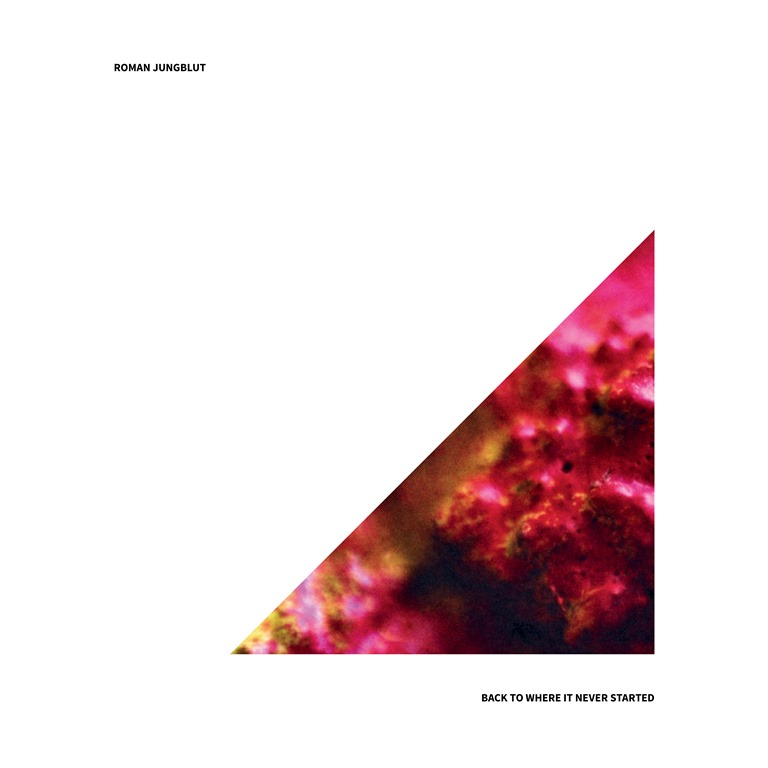
For me, there are few things worse than a story untold and only alluded do. Tell it or don’t! The press release for Cologne-based Roman Jungblut’s solo debut tantalisingly informs us that ‘His mainly improvisational musical live performances – in varying constellations since 1996 – are temporarily reduced to a few selected appearances in Cologne since 2009, due to reasons’. First and foremost, of course, my thoughts are with the artist: we all have our reasons for done – for not doing – things. Sometimes, they’re painful, or we simply don’t want to talk about them. But a story-half-told can lead to speculation. Not that I’m about to speculate on anything here, and shall instead focus on the sonic document presented in the form of Back To Where It Never Started, which comprises four pieces which explore a broad territory in a short span of time.

The blurb goes on: ‘After a ten-year full abstinence of recorded output besides contract work – and only ever having released music as a member of bands or collectives – Roman finally found it to be inevitable to not only release some music, but to do it as a solo artist, not hiding behind a pseudonym, an ensemble or even ironic distance. “Back to where it never started” is the first product of a long time filled with lots of artistic and personal moments of growth, of finding the courage for imperfection and embracing the potential of constraints’.

The most striking thing about the EP is its diversity.

‘Detox – Retox’ packs a lot into just five minutes, as a trilling top synth that surges and builds tension suddenly gives way to a plunging, thumping bass pulsation that’s low and low, and registers around the lower abdomen, before spiralling scraping drones evolve around it, conjuring a cinematic, texture-heavy soundscape that resonates in ever-expanding ripples.

‘78-7-88’ is radically different, a piano-led piece that’s almost jazzy in its stylings – but not so jazzy as to be irritating. Long, drawn-out notes hang and taper over the jaunty, mellifluous babbling backdrop, while ‘Einsicht’ is a space-age bloop-out, with whistles, bleeps, and whirrs hovering in zero-gravity slow-mo.

The final composition, the eleven-minute ‘Two for Tooth’ takes the form of a sparse yet layered ambient work that gradually grows warmer as it develops, slowly and subtly, around a rippling repetitive wave.

In some respects, the fact the set tapers out after so many shifts and ups and downs feels vaguely disappointing, but ultimately, its slow ebbing departure seems fitting as the listener’s journey ends with Jungblut meandering toward the horizon.

AA

RJ01_front

Christopher Nosnibor

Something is wrong. Seriously wrong. That there is something wrong with the enigmatic Paul T, who is Foldhead, almost goes without saying: purveyor of strange and dark noise via means of a multitude of collaborative projects as well as solo channels, creator of avant-garde visual art, William Burroughs nut, and passionate left-winger, Paul is the epitome of the fringe polyartist who confuses and confounds all things mainstream and normal. These are all the reasons I like the guy and so enjoy collaborating with him whenever we manage to get our shit together. He gets it: he lives and breathes cult and outsiderdom, and has both the means and the theoretical comprehension. Which in the eyes of the many, makes him wrong. He doesn’t fit and neither does his work, and his output as Foldhead is just so much noise to most ears.

The (at least on the surface) inexplicably-titled liveBufferingErrorTimeout (I must clean the black milk with brine) is typical, and wrong on every level. This is electronica that splinters the peripheral senses. It focuses on frequencies that register almost subliminally and that hurt the most, with shards of brain-piercing treble attacking from all sides while whipping whorls of stuttering circuit crackling prod the synapses like needles. It’s a relentless crackle, pop, hiss and fizz, like a firework display exploding inside your cranium exploding over a wash of analogue froth.

Recorded on 19 October 2019, the recording features just the one piece – ‘rotting tongue: nature’s assailed’. It’s as brutal as whiplash and ten times more likely to induce tinnitus, and with a running time of only 7’34” – instead of a classically Burroughsian 23’ that’s more typical, something is very wrong indeed. The noise stops abruptly, and in the absence of information accompanying the release itself, the clue, I suspect, is in the title.

Equipment malfunction or failure is one those things that plagues the recording artist in the digital age. And so what was mapped out to be an hour of racket has emerged as a mere seven minutes; a single rather than an album. But what it lacks in duration, it makes up in pian infliction. A short, sharp shock indeed.

AA

Foldhead - Buffering error

Bohemian Drips – BD011 – 4th October 2019

Christopher Nosnibor

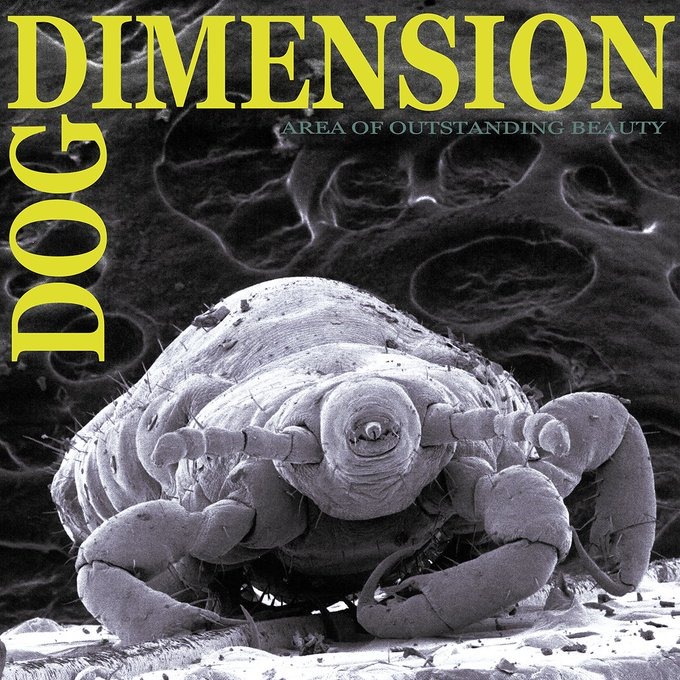
There’s not much beauty on the face of this. But it is outstanding, I’ll give it that.

The Berlin-based trio trade in a kind of angular, grungy 90s alt-rock hybrid. With Josefine Lukschy’s scratchy vocals and the off-kilter country leanings that characterise the first song, ‘Flap’, I’m reminded of Thalia Zedek’s 90s act Come, and it’s a Come / Hole / Solar Race vibe that defines this six-tracker.

You wouldn’t exactly say it’s big on tunes, but it is big on attitude, not to mention messy guitars spluttering out stop/start noise and a busy, sinewy mess of busy lead lines over some tense bass. ‘Tadpole’ brings jarring Shellac-inspired racket paired with some twisted Rage Against the machine meets

As song titles go, ‘Stuck in a Turd’ is nothing if not memorable. It brings a kind of mangled cyclical jazz groove to the fucked-up riff party ‘you’re nothing but a speck of dust!’ Lukschy spits venomously and manages not to sound comedic, which is quite an achievement.

‘I want to tear your heart out!’ she hollers as the opening line to the last song, ‘Welcoming the Awful Being’, another choppy, lurching math-tinged grunger. And it’s a killer finish, too: after some meandering, it all comes together in a climactic sustained crescendo, a space-rock workout that drives the EP to a rush of a finale.

In the tidal wave of retro and revivalism, this kind of slanted alt-rock that exploded in the late 80s and early 90s and defined what many – myself included – consider a kind of golden era when alternative broke into the mainstream and the standard and selection of noisy alternative bands was incredible, never really went away. But right now, it seems like there is more – which is most definitely a positive. Especially when that more is represented by crackers like this.

AA

Dog Dimenion Cover

9th August 2019

Gintas K’s bandcamp boasts no fewer than twenty-nine releases. The Lithuanian experimentalist isn’t one to place quantity over quantity either: this almost overwhelming output, as represented by an average two releases a year, is the product of an enquiring mind, a fertile imagination and an unstinting work ethic.

The title gives a hint as to this EP’s creation: recorded live in a single day, without any overdub; using computer, midi keyboard & controller assigned to vst plugins, the three pieces on One Day Journey are exercises in excitable minimalism, skittering glitchtronics and exemplary works in the field of circuitry-based fuckabouts.

The three tracks, distinguished simply in numerical terms, are defined by swampy bleeps, bloops, glops, thumps, pips and pops fly haphazardly flitting and flickering in all directions, surging and swelling, whumping and slumping. Drip, drop, blip, blop, slip, slop, tinkle, tinkle In so many respects, they’re devoid of both structure and substance, and yet it’s this flippant flimsiness that renders them of merit.

Gintas’ flighty, almost fanciful style of experimental electronica is amusing in an avant-garde way, and almost seems intent on being vaguely irritating to anyone who isn’t already entirely on board with this strain of whacky wild synapse-snapping oddness.

The third and final track, ‘Three’ fizzes and foams a mess of electronic froth, foaming and fermenting effervescently over a thirteen-minute sprawl of apparent discoordination. It’s a crazed mass of non-linear noise, an impossible combobulation of sound. And if you are on board with this strain of whacky wild synapse-snapping oddness, One Day Journey has everything going for it.

AA

Gintas K - One Day

31st May 2019

Christopher Nosnibor

Where We Sleep – the supergroup consisting of Debbie Smith of Echobelly and Blindness, Curve and SPC ECO, Beth Rettig of Blindness, and also Axel Ray of United Ghosts – extend their super status on this outing, with Ben Pritchard, formerly of The Fall and currently Manc Floyd contributing guitar work on ‘Control’.

Despite the more indie-leaning backgrounds of the collaborators, Experiments in the Dark espouse more of a post-punk sound, amalgamated with the blurry shoegaze of Curve. There’s reverb galore as the layers of guitar wash over and bleed into one another: ‘What I Deserve’ has one of those classic slow-building intros that’s built around a strolling bass and dual guitars – one chiming fractal, gothy, the other overdriven and set to stun. And from the emerging murk, Rettig’s voice combines sultry and dangerous to strong – yet simultaneously understated – effect.

‘The Desert’ sits between Curve and debut-album era Garbage – and it’s magnificent: rich in atmosphere, dark, brooding, and again centring around a strong rhythmic framework. ‘Control’ is a standout: after gentle start, it bursts into a mesh of guitars colliding over a woozy bass and metronomic mechanised drum sound. And as the track progresses, the icy vocals and treble snap of the snare become increasingly submerged by the squalling noise. ‘Into the Light’ repeats the form, only with the added bonus of a propulsive chorus and a bassline on a par with The Mission’s ‘Wasteland’ overlayed with howls of feedback.

The title track which draws the curtain on proceedings is sparse, stark, and minimal, and owes more to the ghostly, smoky trip-hop of Portishead than anything remotely post-punk or shoegaze.

If Experiments In The Dark is 75% 80s and 25% early 90s, it’s also 100% representative of the zeitgeist in terms of the aspects of the past it draws on. And Where We Sleep’s strength lies in their ability to absorb those elements and draw them together to forge a sound that’s both familiar and fresh, avoiding sounding derivative and instead delivering an exciting set of songs that demand repeat plays.

AA

Where We Sleep – Experiments In The Dark

19th July 2019 – Buzzhowl Records

Christopher Nosnibor

This quartet from Richmond, VA, may have a name that suggests quiet, introspective contemplation and piety, but their third EP, which follows ‘Touched’ (2015) and ‘ICUP’ (2017) whips up an unholy racket.

It’s a lumbering, off-kilter, shouty discord that defines their sound. Chugging, math-tinged rhythms cut across with angular guitars that evoke the spirit of Shellac, The Jesus Lizard, and the essence of the Touch & Go roster from the late 80s and early 90s. It’s gnarly, gut-churning, challenging – and hits the spot like a punch to the oesophagus.

Should we consider why there seems to be a resurgence of music that recrates that period around the grunge explosion, when alternative music that wasn’t grunge but centred around dirty-as-fuck guitars and difficult rhythms that would come to define ‘math’ rock? Probably. Back then, there was a revolt against radio-friendly rock, the slick sonic paste being pumped out by major labels. Of course, the ‘alternative’ sound very quickly got co-opted, but no-one was ever going to flog acts like Tad or Tar or Helmet or Guzzard to the masses even when Warners were angling Ministry at MTV and A&M had launched Therapy? As a top 40 singles band. The bands who got signed and broke through may have changed the face of the musical scene, but it was always the bands who remained underground who defined the era.

Now, with the chasm between mainstream and everything else wider than ever – and long beyond the point at which it becomes unbridgeable – the underground is more resolute than ever. They’re never going to make on this… but they have every inch of credibility intact as they channel their frustrations against an ever-grimmer world of conformity and vacuity. The bands that matter aren’t in it for the money – but then, they never were, and Prayer Group are admirable in their absolute lack of compromise.

They’ve just unleased the EP’s closer, ‘The Other’ by way of a taster. It’s nicely representative, and trust me, you need it.

AA

Prayer Group - Eudean

Christopher Nosnibor

I love getting weird shit in the post. Not literal shit, of course, not the kind of shit one might have received for panning The Levellers in a review in the early 90s, but the kind of sonic faeces people I associate with might send me when they have a new release or project in the offing.

I clocked the sender’s name on the envelope: one P.A. Morbid of Middlesbrough. Having been moving in the same circles for a while, the arrival of a package in itself was no major shock, but I hadn’t been aware of anything musical in the offing from this North-Eastern master of bleak lines who, having recently published a collection of poetry split with local luminary Harry Gallagher, has also been working on some flash fiction pieces. It’s not entirely clear where this fits in: on-line sources suggest it was released back in 2017, but the infrequently gigging band also look set to make a rare hometown appearance in July.

Morbs is credited as providing ‘vocals, rhythms, noises’ on this three-tracker, produced in collaboration with Peter Heselton, who’s responsible for guitars, electronics, keyboards, and also rhythms.

Most of those rhythms are sequenced pulsations, with the vintage feel of analogue or at least early, primitive digital drum machines, and overall, the production on this experimental electro effort is primitive to the point of condenser mic in the middle of the room standard. But this kind of straight-to-tape DIY approach is integral to both the ethos and the appeal.

Dingy pulsations drive ‘Das Jenseits’, the first cut on here, and it’s pure Throbbing Gristle. Murky drones and extraneous noise that all sits in the mid-range form a drifting sonic fog. There are vocals lurking in the smog, but they’re distorted and low in the mix: the result is that they’re an abstract disorientating addition to a difficult mess of abstract disorientation.

‘Standing by the Grave’ is more direct: a whipcrack snare cuts though the infinite murk of the guitars while Morbid moans and grunts impenetrably. There are hints of neofolk, but equally goth-tinged post-punk in evidence. The atmosphere is oppressive, dense. You don’t really know what it’s about or what’s going on, but it’s like wading through treacle and a suffocating airless smog that lies thick and heavy.

The closer, ‘what light remains’ is a mercifully short four minutes in duration. Rippling shards and quivering synths shimmer through the atmospheric fog. It’s dislocated, difficult, dark ambient; percussionless desert rock, reverby chords echoing out across space and time rippling in a heat haze.

I’m left dazed, feeling strangely alone and wondering what it was all about.

KDB