Posts Tagged ‘dark’

9th September 2022

Christopher Nosnibor

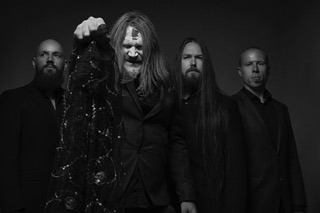
Brooklyn-based blood and gore and dark-fixated industrial metal act GLDN keep on mixing things up with their singular and innovative take on industrial / metal / electronica, and the first single released ahead of the upcoming album Hemophilia, released early October, is another genre-smashing blast of excitement.

At the start of the video, front man Nicholas Golden is wearing a minidress on a mock-up of a slightly fuzzy-looking VHS clip, and while in itself it’s not edgy, it’s both resourceful (can’t afford actors for your promo? Do it yourself) and parodic in setting a dystopian tone n a retro setting. The trouble with retro dystopias is that, as we’ve come to find the hard way, is that the projected future which is now the present is actually worse. 1984 no longer reads like fiction, but reportage. What do you actually do with that knowledge? How do you live with that grim realisation? You too could be the owner of an obelisk…

The lyrics pick at social media and Instagram perfection, and on reading the lyrics, I remember with a slow sinking feeling how I read on a daily basis in the tabloid media how professionals – nurses, teachers, name it – are taking to OnlyFans to make ends meet and in no time they’re quitting their stressful, shittily-paid dayjobs in favour of coining it in to pay off their mortgages:

Got no flaws, no imperfections

The unachievable is my new obsession

Can’t get enough, I’m never satisfied

I’ve got to whore myself out just to feel alive

‘I’d rather be dead than be irrelevant’, Golden concludes, and it’s a stark yet fair reflection: people crave the attention as much as the money, and the bottom line is that the system is fucked and society and culture is fucked.

Coming on like an electro-infused black metal cross between Placebo and Marilyn Manson and Nine Inch Nails, ‘Suicide Machine’ finds GLDN in darkly abrasive form, peaking with a blistering climactic finale that’s utterly punishing. Bring the album.

AA

su49119-Cover1

Cruel Nature Records – 6th September 2022

Christopher Nosnibor

These are interesting times for Nadja, the ‘ambient / experimental / doom metal’ duo comprising Leah Buckareff and Aidan Baker. Luminous Rot was recorded during lockdown, and found a home on the legendary Southern Lord label. Released in the spring of 2021, it’s a veritable beast of a work, which combined metal with post-punk, cold-wave, shoegaze, and industrial.

Lockdown feels like something of not so much a distant memory as an unreality, and if by May 2021 it felt like life was returning to normal, the truth is that the wounds were still raw, and any attempt to move on as if life was back as it was before was simply a wilful act of delusion to stave off the effects of the trauma.

And with every trauma, there is some residual hangover, and you might say that Labyrinthine is the product of that. As the accompanying notes detail, the material was recorded during the pandemic and concurrently with Luminous Rot, and ‘explores themes of identity and loss, monstrosity and regret, extreme aesceticism, the differences between labyrinthes and mazes, taking inspiration from Haruki Murakami’s Killing Commendatore, Ursula K. LeGuin’s The Tombs of Atuan, and Victor Pelevin’s reinterpretation of the story of the minotaur and Ariadne, The Helmet of Horror.’

When a band chooses to self-release an album, it’s no longer an indication that it’s substandard or not worthy of a label release, and the case here is that Labyrinthine, which ‘this might be Nadja’s heaviest, doomiest album to date’, it’s clear that rather than consisting of session offcuts, it stands alone as a separate project from Luminous Rot, featuring as it does, a different guest vocalist on each track, and it’s worth listing them here:

Alan Dubin – legendary American vocalist from O.L.D. and Khanate and, currently, Gnaw

Rachel Davies – vocalist and bassist from the British band, Esben & The Witch

Lane Shi Otayanii – is a Chinese multi-media artist and vocalist in Elizabeth Colour Wheel

Dylan Walker – American vocalist from grindcore/noise band Full of Hell

With such a roll-call of contributors, it’s in no way possible to fee short-changed by the fact there are only four tracks, and ‘only’ is somewhat redundant when the shortest of these is almost thirteen minutes in duration. This is an album alright, and it’s an absolute fucking monster at that.

And while the CD release is on the band’s own label, Broken Spine, there are limited cassette versions by several different indie labels from around the world: Katuktu Collective (US), Cruel Nature Recordings (UK), Bad Moon Rising (Taiwan), Adagio830 (Germany), Muzan Editions (Japan), WV Sorcerer (France/China), Pale Ghoul (Australia), and UR Audio Visual (Canada) – and it’s perhaps noting that the running order differs between formats,  and I’m going by the Cruel Nature tape sequence here rather than the CD. It may be more intuitive from a listening perspective, but limitations off format and all…

This co-operative approach to releasing music is highly commendable, and seems to offer solutions to numerous problems, not least of all surrounding distribution in the post-pandemic, post-Brexit era where everything seems on the face of it to be fucked for any band not on a major label with global distribution and access to pressing plants and warehouses worldwide.

The title track is a lugubrious droning crawl: imagine Sunn O))) with drums crashing a beat every twenty seconds in time with each pulverising power chord that vibrates your very lungs. And those beats are muffled, murky, and everything hits with a rib-crushing density, that’s only intensified by the squawking, anguished vocals that shred a blasted treble in contrast to the thick billows of booming bass sludge, and it’s a truly purgatorial experience.

And then, here it comes, and it all comes crashing down hard over the course of the most punishing nineteen minutes in the shape of the brutal behemoth that is ‘Necroausterity’. In a sense, the title speaks for itself in context of a world in lockdown, and it’s sometimes easy to forget just what terrifying times we endured, watching news reports of bodies piling up in New York and elsewhere while governments and news agencies fed a constant stream of statistics around cases and deaths. It felt truly apocalyptic. And ‘Necroausterity’ is the sound of the apocalypse, tuned up to eleven and slowed to a crawl, the writhing torture of a slow, suffocating death soundtracked by guitar and drums do dense and dark as so feel like a bag over the head and a tightening grip on the throat. The recording is overloaded, distorting, and it’s a simply excruciating experience. And it simply goes on, chord after chord, bar after bar, slugging away… and on in a fashion that makes SWANS feel lightweight in comparison. It’s relentless, unforgiving, brutal, and punishing.

‘Rue’ broods hard with dark, thick strings and a heavy atmosphere, but it’s light in comparison. It’s dense, and weighty, but Rachel Davies’ ethereal vocal drifts gloriously within the claustrophobic confines and conjures another level of melody that transforms the thick, sluggish drones into something altogether more enchanting. It builds to a throbbing crescendo that is – perhaps not entirely surprisingly – reminiscent of Esben And the Witch or Big | Brave.

Wolves howl into the groaning drone of ‘Blurred’ and the guitars slowly simmer and burn: no notes, just an endless am-bleeding distortion before the power chords crash in and drive hard, so low and slow and heavy so as to shift tectonic plates and shatter mountains. Amidst the raging tempest, Lane Shi Otayanii brings an otherworldly aspect that transcends mere words, making for a listening experience with a different kind of intensity as it trudges and churns fir what feels like a magical eternity.

The sum total is the sound of hellish desperation, and while Labyrinthine may offer absolutely no solace in the bleakest pits of deathly despair, you’ll be hard-pressed to find an album that better articulates perpetual pain and anguish better than this.

AA

cover

4th August 2022

Christopher Nosnibor

Back in November of last year, I gave ‘What If I Were the Boy?’ by The Vaulted Skies a massive double-thumbs up, having previously raved about their debut EP, No Fate back in 2018. And now ‘What If I Were the Boy?’ has been rereleased, this time as a remix courtesy of Mark Saunders, whose eye-poppingly extensive discography includes work with The Cure, Lloyd Cole, Depeche Mode, Siouxsie and the Banshees… and many others, including some truly huge names like David Bowie, but those I’ve picked out are relevant is they’re illustrative of his longstanding links with post-punk, of which The Vaulted Skies are emerging contemporary exponents. But Saunders also has a long history of wording on radio-friendly and more dance-orientated material, and it’s fair to say that his remix of ‘What If I Were the Boy?’ brings these two threads together very neatly.

The song itself draws on contrasts in its take on a ‘nostalgic tale that is filled with reflection and regret’, inspired by an encounter experienced by vocalist/guitarist, James Scott., who recounts how “In college, I was paired up in an acting assignment with one of the popular girls. She propositioned me and in doing so, verbally and indirectly alluded to a very troubled home life. I wish I’d recognized the cry for help underneath it all. This song captures the desperation I have felt when wondering what became of her.”

Saunders sensitively preserves the stark, haunted angst of the original, but subtly packs some extra oomph and wraps it in a dark disco groove. The chunky gothy bass of the original is smoothed into a more dancefloor-friendly sound, the drumming – the cymbals in particular – is slickened down and given a more buoyant disco twist. If the original sounded in some way tentative, despite its solid assurance, then the remix rolls it all out and effortlessly stretches it past the seven-minute mark in vintage 12” single style.

If the grit and flange of the driving guitar in the chorus is backed off a bit in favour of a more even sound, well, it works, as does the cleaner vocal treatment. In short, this version may lack the ragged punch of the original, but it by no means does The Vaulted Skies a disservice, and will likely be a major step toward connecting the band with the larger audience they so richly deserve.

AA

a0476272310_10

7th July 2022

Christopher Nosnibor

Well, this is a lot to take in: the pitch alone is a back and forth slap around the face of information overload as I struggle to absorb the idea of a ‘post-punk, synth-pop, new wave concept album that sings of the pleasures and difficulties of life within a haunted house’ which is ‘also multi-lingual’ whereby ‘Daniel will sing to you in Spanish about a werewolf, in English about a Ouija board, in Portuguese about a haunted house and in French about bats at Christmas time’.

Is anyone equipped to deal with this in our tiny-mind, hyper-anxietised, attention-short culture? I don’t really know if I am, and rather suspect I’m not, or even if I want this, and ‘m not sure I do, but there’s really only one way to know for certain, and that isn’t to ask someone who’s heard it.

According to the accompanying notes, ‘The title of the album, El Salón has multiple meanings. In Spanish it can reference a classroom, an art studio, a living room and of course, a salon. Daniel Ouellette says, “The best place I have learned to speak is in living rooms with loved ones who speak Spanish and this the title is in honor of my mates, my loved ones to whom I speak Spanish.”

As such, it’s a polylingual cocktail that draws on pan-cultural sources and a host of genres. This doesn’t make it any easier to assimilate, and the resulting product is a mixed bag to be polite, something I’m not always given to being. What do you get if you throw together Rammstein, Young Marble Giants, and Flying Lizards? The absolute toss of ‘A Planchette’. Pretentious, precocious, corny theatricals… it’s hard to swallow. It has novelty value, and I can accommodate that, but it just feels so painfully self-absorbed.

‘Duérmete’ is more palatable, 80s synth pop with a dash of Cure in the mix, and ‘O Lindo Sonâmbulo’ is a tidy slice of vintage electropop with a crisp and dominant snare. ‘The Kitchen Witch Who Stayed.’ is more bleepy, bouncy, and it’s wincey. It sits somewhere between Erasure and St Michel Front, but has the panache or aplomb of neither. St Michael Front demonstrate a winking knowingness, whereas Daniel Ouellette lacks that same sense of self-awareness, resulting in a clunky, awkward delivery made without a nod or a wank – and Ouellette is no Throbbing Gristle either. As a consequence, El Salon is a mixed bag and a shade patchy: at its best, it’s dark, stark, brooding and theatrical electropop: at its worst, it’s pretty cringy. In favour of El Salon, the best is proportionally better represented than the far from best, which is simply grating and cheesy. With its shifting forms, it’s hard to digest. Or maybe I’m just not ready to take it in all at once.

AA

a2394515336_10

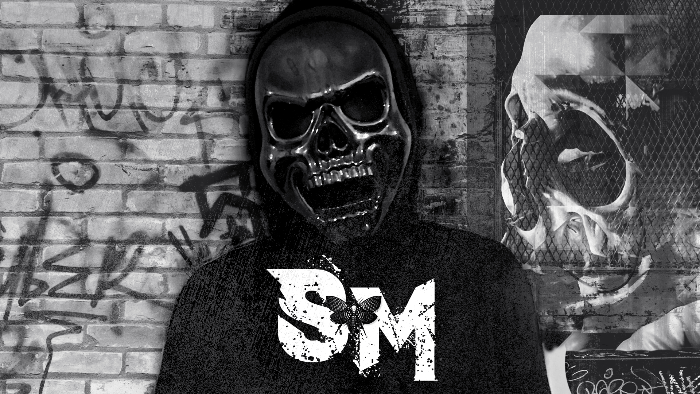
Louisiana-based industrial bass artist SINthetik Messiah has unleashed a provocative new single.  ‘Assassins That Run On Faith’ takes aim at violence and abuse in the Vatican.

"For 1,000s of years inside the Vatican a covenant of nuns exist solely to rid the evil of this world. Through sheer violence, this covenant was able to bring the Vatican to its current day power." – Bug Gigabyte

Included in the recording is an authentic recording of Pope Francis apologizing to nuns for abuse.

The release includes a remix by none other than Tom Shear of Assemblage 23.

Listen and download here:

AA

a2606050600_10

Enigmatic Italian singer Elena Alice Fossi has released the next fascinating single, ‘Indigo Cypher’, which is taken from the forthcoming new full-length of her dark electro project SPECTRA*Paris. The fifth album of that band is entitled Modernism and has been scheduled for release on August 26.

Watch the seductive and deceptively gentle electro track ‘Indigo Cypher’ here:

AA

“Memories of a life that does not belong to you”, singer, composer, and lyricist Elena Alice Fossi muses. “If you don’t feel at least a bit like a fish out of water in this grotesque theater that is humanity, then this song is not for you! We were born in deception and there we stay until we realise that real life is running elsewhere. ’They’ shape us in order that we make our own lives and that of others worse. ‘They’ mold us to obey slaves and to become slaves ourselves. ‘They’ shape us so as to love our family even when it has nothing to do with us.”

1d8bbaf0-d471-0a26-3812-e34ebd719b54

CRONE have released a pro-shot video illustrating the first single ‘Gemini’ taken from the dark rockers’ forthcoming new album Gotta Light?, which has been slated for release on September 23.

Watch the melancholic and longing video for ‘Gemini’, which perfectly mirrors the mood of this track here:

AA

“I wrote all the basics for ‘Gemini’ on an old acoustic guitar”, vocalist and guitarist Phil Jonas reveals. “It is amazing to look back and see how the song eventually developed into the piece that it is now. The lyrics came to me very quickly. I am sure their meaning unfolds with a little digging. The video by director Robert Piel at least in my mind tells the story of a lost twin and its inevitable return in some kind of a rebirth. This can be interpreted in many directions. I think each of us has already had to leave someone behind.”

AA

ppvElhW0

Misanthropic Agenda – 20th June 2022

Christopher Nosnibor

I’ll admit, I was struck by the name when this landed in my inbox. Success! With an insane number of submission emails day, I don’t even open most, let alone play the albums attached. But then I learned that PWIS is Nathalie Dreier – who’s interesting for her visual work as well as her audio – and Dave Phillips, who’s To Death I covered last year – which deepened my intrigue. And it’s one hell of a cover, too.

Meaning What Exactly? is quite a different proposition – from pretty much anything, in truth. Presenting four lengthy compositions, it’s fundamentally an electronic album, but it’s far more than that, or anything. The title is a challenge, a query, a – what I keep hearing as a phrase in my corporate dayjob – a ‘provocation’. It comes down to ‘exactly’. The word is weighted; even without explicit emphasis, it feels emphasised, vaguely stroppy even. The addition is the lexical equivalent of a hand on hip, a raised eyebrow, a scowl, a sneer of condescension to a worker from another department who has no facts. ‘Yeah, do your research, bitch’, is what it says.

And who really knows what it means, or what anything means? Exactly. And what this album means – exactly – I can’t quite fathom. The titles conflict with the contents, at least, based on my lived experience, on my reception. They say it’s a ‘dialogue mixing treated field recordings with organic acoustics and digital sources, brought together in long trance-inducing sessions of meticulous audio de/construction and philosophical debate’. But how much of that is apparent in the end product? Well, that’ debatable.

‘Pangolin’ is otherworldly eerie: a booming drum echoes out through a shifting reverberation of spine-shaking synths. It doesn’t readily evoke aardvark-like creatures, apart from perhaps in the final minute or so when Drier’s monotone vocals are replaced by snuffling barking sounds. It’s weird, but then, what did you expect? I don’t know what I expected, if I’m honest, but probably not this. This is dark, disorientating, disturbed and disturbing, and even more challenging for the absence of context. Meaning is the end product of intent, of purpose, and there’s no clear indication of where this is coming from, meaning we’re left to face the strange with no guidance.

A grinding bass and muffled, muttering voices, whispering about fish all build to a hellish tumult of murmurs and doom-sodden low range hums and thrums, and nothing feels right. It’s awkward, and unsettling. You – certainly I – don’t really tune into the words delivered by Drier in her suffocating spoken word passages, not out of disregard or disrespect, but because all of it comes together to create a claustrophobic listening experience. Meaning What Exactly? is not an album you sit and dissect, or sit and comfortably disassemble or analyse. I find myself, instead, contemplating the meaning of meaning.

‘Us vs Us’ plunges into deeper, darker territories, with a grinding, driving bass worthy of Earth, propelled by thunderous sensurround drumming, with purgatorial howls echoing all around. It’s heavy, harrowing, and it’s that simple, tribal drum style that defines and dominates the eerie eleven-minute closer, ‘The House is Black’. The house is black and the atmosphere is bleak: the vocals are mangled and distorted and play out against a murky, fragmented, fractured backing, to unsettling effect. The beats are sparse, subdued, distant, yet taut, crashing blasts and ricochets. You make it want to stop. The clock is ticking. Your chest tightens. The nerve rise, jangling, fearful. It’s like walking through a graveyard at night, knowing there’s someone lese shuffling around nearby. Make it stop, make it stop!

A crackle, a crunch. What is this, exactly? Perverts in White Shirts don’t only excavate darker domains, but scour and gouge their way into the darker, deeper territories where tension pulls tight and tighter still. It’s the sound of trauma, of suffocation. Meaning it feels like a direct passage to the depths, meaning it’s dark, uncomfortable, like it’s almost unbearable at times. Meaning it’s good.

AA

a2108573613_10

Machine Man Records – 27th May 2022

Christopher Nosnibor

‘Into the Glow’ is the second single from Michael Haggerty’s upcoming album, Fire Behind The Paper Trees, and his second official release under his real name having previously recorded as Krebs. Perhaps stepping out and being himself is in some way liberating, but whatever the motivation or rationale, it’s fair to say that the results are thus far positive.

There’s something somewhat uncomfortable when critics speak of ‘craft’ in their critiques. Perhaps it’s because ‘craft’ connotes something one works at, and improves, honing to a point whereby a level of quality can be achieved consistently, day in, day out, up at the crack of dawn and chiselling away until sundown, manufacturing… which there is a certain sense to, and it’s valid to a point, but this is to diminish the flare of creativity, the sparks of emotional channelling, the way in which elements of chance and happenstance all combine to make art. Because music isn’t furniture.

‘Into The Glow’ is probably as close to perfect songwriting as you can get. It is crafted: the dynamic shift between the 80s-style electronic verses and more guitar-driven choruses is precise, and balances subtlety with impact. The tempo change is sweet and shifts from reflective to driven, and the production is vast – also crisp, cold, mechanical. Bleak, brooding, but shining with optimism, ‘Into The Glow’ packs so much range into its concise three-and-a-half minutes, it’s a glorious thing.

AA

248581

After being involved with Heilung for two years, and more recently with the worldwide-acclaimed movie The Northman as songwriter and actor, Jonas Lorentzen decided to focus on his own musical expression, based on a reimagination of Nordic Folk and spiritually driven music. The result is Nebala, spearheaded by Jonas Lorentzen, but assisted and graced by powerful talents such as Sebastian Gainsbourough (Vessel, The Northman, Manchester Collective), Kjell Braaten (Wardruna, Origami Galaktika) as well as non-musician minds assisting in the conceptual development, Doctor Mathias Nordvig (Professor of Pre-Christian Religion at CU Boulder) and Philosopher Naina Gupta (University of Kingston).

Nebala unveils today the new single ‘Ant Mér Sjalfri Þér’, a song about unfulfilled love, desire and longing consuming us. It refers to the myth in which Wōdan sought the Billingas magwia, the Maiden of the Fleeting Moment. In this myth, love and desire are ripped away from the ones who have let themselves be consumed. The artist also releases a new video, a short film in which the songs ‘Ant Mér Sjalfri Þér’ and ‘Laþu’ merge to create ‘The Eternal Child’.

Jonas Lorentzen comments: "This is the entire art film as we originally intended. A story about a man trying to come to grips with his own demons and desires. Inspired by mythology and Jungian archetypes."

Watch the video here:

Using traditional frame drums, lyre, tagelharpa, Tibetan singing bowls, and throat singing, Jonas Lorentzen has developed a unique Indo-Nordic sound for Nebala that toys with timescapes, soundscapes, and cultural boundaries to bring you back to the primordial experience of music itself.

He comments on the album: “When you let yourself be taken by desire and lust, you will be consumed by what the ancient Germanic peoples called Laþu. The ancestor of our modern word “to let,” laþu suggests giving into natural desire and emotion. When Wōdan sought the deepest knowledge of the cosmos he had to brave the dangers of the deep caves in Hnitbjörg and let himself be taken by the desire of Gunlaþu, the forceful goddess of the underworld.”

AA

JL