Posts Tagged ‘dark’

1st June 2022

Christopher Nosnibor

It shouldn’t be a deal, really, but it is: Glytsh are a rare thing, namely an all-female industrial duo, comprising French singer Jennifer Diehl (aka Luna Blake) and Swiss guitarist Claire Genoud (aka Hella Sin). Like so many ‘rock’ and metal-orientated genres, industrial of all shades, from the electro to the metal end of the spectrum is depressingly the domain of the white male.

In this predictable, recycle-heavy world of white male angst, Glytsh are a breath of fresh air. But Glytsh aren’t a breath of fresh air because they’re women: they’re a breath of fresh air because they’re fucking exciting. While ‘(Hard)core memory’ still works with established tropes, their debut single, a cover of Nine Inch Nails’ ‘Closer’ set out their stall and managed to draw a fair bit of positive attention in the process. On the one hand, it was a pretty faithful cover, but also had enough of a slant to it to show that they’ve got game. And now, with the arrival of ‘(Hard)core memory’, Glytsh prove that they’ve got both style and substance, meshing together both electro and metal elements in an explosive three and a half minutes.

From a low, bass-heavy electronic intro, ‘(Hard)core Memory’ starts slow-grinding and sultry before tearing into a lumbering rock riff with screaming metal vocals, a collision between Rage Against The Machine and Marilyn Manson. It’s pretty full-on, and that’s before the Slash-style guitar solo blasts in near the end.

‘(Hard)core Memory’ has got the lot, and yet I somehow suspect that Glytsh have got a lot more to offer yet.

AA

Enigmatic Italian singer Elena Alice Fossi, best known for being a member of Kirlian Camera, has released the first single, ‘Devious’, which is taken from the forthcoming new full-length of her dark electro project SPECTRA*Paris. Her fifth album under that moniker is entitled Modernism and has been slated for release on August 26.

“What’s the moral conduct to follow?”, singer, composer, and lyricist Fossi asks. “This song certainly won’t teach us any morals! With a decidedly noir matrix and via its gloomy lyrics, it lets itself be crossed by a glamorous imprint where the blood goes to be combined with the enchanting reflection of a bewitching shadow. God’s body has indeed been invaded by his servants.”

Watch the video here:

AA

SPECTRA*Paris was conceived as an electronic rock oriented project in the wake Elena’s previous project SIDERARTICA. In 2007 she self-released the ultra-rare promo 3" CD-R limited to 25 copies "Spectra Murder Show" and immediately got picked-up by a label, which led to the acclaimed first album Dead Models Society (Young Ladies Homicide Club) hitting the streets in the same year. The debut reached the charts in many countries and went up to gold. Elena followed-up with two successful albums in 2010, License to Kill and Christmas Ghouls. Tracks from these recordings as well as the latest album Retromachine Betty (2017) have been used in tv and catwalk soundtracks.

With Modernism, SPECTRA*Paris chronicle Elena Alice Fossi’s musical prison-break into the freedom that only true art can grant. Aided by her accomplice and long-time friend Angelo Bergamini, who co-produced and supervised every sound in this chapter, the composer and singer has delivered a fascinating personal statement via a wide range of electronic music.

AA

SPECTRA-Paris_000_cover_Modernism

14th February 2022

Christopher Nosnibor

Was I the only one to misread the band’s name on first seeing it? Probably, and I suspect it says more about me than anything. Ah well. Meanwhile, as much as the quality of the band’s new single speaks for itself, the list of collaborators who’ve contributed remixes to this EP says a fair bit about the Chicago ‘post-punk demolition duo’, notably Stabbing Westward and Dean Garcia of Curve / SPC ECO.

It’s the Stabbing Westward remix that’s up first, and it’s a stonking industrial rock chugger. It has a crisp, bright feel and is driven by an explosive snare, the likes of which you rarely hear now, but was popular in the 80s. Of the different versions, it’s arguably the most radical, yet at the same time is also the one with the broadest commercial appeal, in that it is more overtly industrial and metal-edged.

Structurally, the song’s interesting for the fact it consists of several sections rather than a simple verse / chorus, and as each section rolls around, it develops something of a cyclical feel (I usually tend to feel most songs are a linear listening experience. ‘Confusion’ and ‘confusion’ make for a nice rhyming pair, but it’s the bass that’s as strong a hook as any of the lyrics, and it’s the bass that dominates the band’s own single version, which adds ten seconds to the original, which appeared on the Dead Lights five tracker released last year. Said bass is a shuddering low-frequency grind, and the drum machine tips a nod to ‘Blue Monday’ then goes into overdrive, giving the song a real urgency.

The DG Impulse remix grinds harder and longer, stripping it back to the bare bones of that sonorous bass and a pounding beat, to oppressive effect, while the IScintilla Remix is a full-on rabid aggrotech workout, and pretty nightmarish with it.

In contrast, the Loveless Love take on the track plays to the songs 80s electropop roots, coming on like The Human League remixed by JG Thirlwell or Raymond Watts.

It makes for a varied listening experience, and one that marks a neat evolution from the band’s previous releases to date.

AA

a0954003856_10

Christopher Nosnibor

Purveyors of aggrotech and dark electro, Against I, take something of a swerve for this new release, a four-track EP led by single ‘You and I’, which features guest vocals (and lyrics) by rising star on the scene, J:dead, who comments that “‘You And I’ is a story about a relationship breaking down, because either person cannot love themselves first. Each person is trying to hold the other up from their own struggles but in turn, is forgetting about themselves and their own needs.”

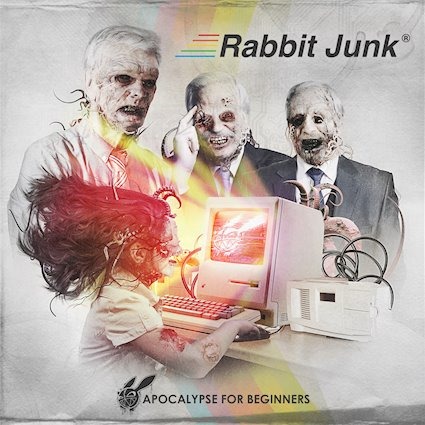
The cover art is more horror than dark techno, and it’s not entirely representative of the EP’s sonic contents, but you should never judge an EP by its cover of course.

First things first: ‘You and I’ is a richly atmospheric tune, with a so much texture and detail. There are strong leanings towards later Depeche Mode, and I’m most reminded of ‘Little 15’, but there’s a lot going on here, not least of all a thick, chuggy guitar and an insistent bass that’s pure goth vintage. The baritone vocal – rich and crooning – very much invites positive comparisons to Dave Gahan and it broods and cruises the mid-pitch, mid-tempo sonic structures that climb and loom over damaged emotional states. As a single, it’s a sock in the chops.

As an EP, this does feel like a bit of a cobbled-together effort that may have worked better with either the lead track and either the instrumental ‘My Madness’ – a high-octane technoindustrial stomper (a strong contrast) – or the ‘Club’ remix of ‘You And I’ as a B-side. Said remix is pretty decent. I don’t actually know if goth club nights are still a thing, but then this isn’t excessively dancey, and hasn’t been remixed as a dancefloor-packing stormer, but instead accentuates the track’s solid mid-tempo groove.

But then there’s the ‘Mayhem’ remix of ‘OMG’ from the debut EP, courtesy of Guilt Trip, which is so much more overtly metal, and snarls and rages like a rabid beast – save for the mellow Kraftwerkian rip in the mid-section. And if ‘You and I’ was intended to showcase a different aside of ‘Against I’, the inclusion of an older track feels like a slightly awkward fit.

Minor niggles aside, it’s a solid effort led by a cracking single tune.

AA

065550

Ipecac Recordings – 29th April 2022

Christopher Nosnibor

Dälek emerged in the late 90s when hip-hop was transforming in all directions. But while the Wu-Tang Clan and their offshoot projects had a level of dynamism and radicalism about them, it’s no understatement that Dälek shattered through their achievements, and if there was any debate about that, then Precipice really should settle it. It’s felt like we’ve been teetering on the edge of a precipice for a long time, and that pre-millennium tension has, over time, proven justified as the entire world careers into some kind of end-of-days chaos. If this sounds like some hysterical end-of-days paranoia panic, you’re probably not paying attention. The pandemic was just a sideshow, a distraction from global tension, climate change… Trump, Brexit, the war in Ukraine and the threat of nuclear war stepped up to levels not seen since the 80s… Are we still at the edge of the precipice, or have we just tipped – or powered, full-throttle – over it? I’m too dazed and bewildered to know, but Dälek have provided a soundtrack that conveys the sense of confusion and dislocation brought on by uncertainty and tension.

‘Lest We Forget’ is a mid-shade, mid-tempo swell of ambience that swirls around densely before ‘Boycott’ hits hard and heavy. Christ, that booming bass! That eddying noise that drones and warps! The beats! Man, the fucking beats! They’re heavy alright, and there’s no let up on ‘Decimation (Dis Nation)’.

If so much mainstream contemporary hip-hop has been overtly commercial, with Precipice, Dälek remind that hip-hop’s origins were a voice of protest, of antagonism toward the mainstream, against the government, against oppression, against suppression. N.W.A were telling it like it is with ‘Fuck Tha Police’, and fuck shit, nothing has changed thirty-four years later.

Dälek are a whole lot more subtle and less up-front and in your face in their antagonism, but they’re no less aggrieved, and no less political. This means that their impact is just as powerful, albeit in different ways, and sonically, Dälek are devastating. There’s a physicality to their music, and where the lyrics aren’t necessarily so prominent, the weight of the beats, the density of the bass and the murk of the midrange combine to create a force like colliding with a wall of breeze blocks.

‘The Harbingers’ slows things down, and it’s dark, stark, the atmosphere desperate, desolate, while ‘Devotion (when I cry the wind disappears)’ feels almost uplifting as the synths soar and their subtle, sonorous sounds swoop upwards before the seven-minute ‘A Heretic’s Inheritance’ crashes in, hard, cyclical, heavy, an urgent throbbing riff marking the intro amidst a maelstrom of scratching feedback and extraneous noise. It throbs and thrums, and this isn’t hip-hop like you get on the radio, it’s not the shit—hop of the mainstream beloved by the masses. No, this is fucking brutal, and it kicks and punches hard, repeatedly, leaving you winded, breathless, gurgling., while MC dälek repeats the mantra ‘I hold myself to high standards / I don’t give a fuck if the gods are angry’. No doubt that applies to the gods of capital. Fuck them.

The title track is weightier still, and it’s positively skull-crushing, and it goes to show that it doesn’t have to be metal to be heavy, and the final track, ‘Incite’ is stark, tense, and gloomy, rounding off an album that packs a lot of weight and tension. It’s hard to place exactly how it feels as an experience, and how it sits, musically. Precipice is the sound of dislocation, of alienation. It’s real life.

AA

12_GF_SLEEVE

Fabrique Records – 29th April 2022

Christopher Nosnibor

On her latest project, Jana Irmert shrinks the focus of her thoughts and her music on the microcosmic – although that certainly doesn’t extend to the microtonal. What Happens At Night is an intensely-focused work that places the lens onto textures and tones, and an examination of the relationship between the physical and the cerebral. You may call it a celebration of overthinking, but ‘philosophical’ feels a more appropriate term for her musical meditation on life and death – specifically death and beyond, the part of the life journey no-one has ever reported on and will, one assumes, be forever unknown and unknowable.

The liner notes set out the granular nature of the album’s composition: ‘Like layers of sediment, sounds are being pushed up from underneath, floating away or sinking back to the bottom. At the core of the album lies a question: What will be left of us? While Earth melts, we go on. But eventually, there will be a point in the future where all that will be left of humanity is a thin layer of rock. While this may seem like a deeply gloomy prospect, it also carries a great deal of comfort: the reminder that we are only a small particle in a vast system so big that we can never fully grasp’.

This is the limitation we all live with: the inability to comprehend life without us, what it would be like to not exist. Much of it’s ego, but perhaps it’s also a preprogramed limitation. Everything is dust, and once we pass, ashes to ashes, dust to dust, we become desert, and nothing changes: the world goes on… and on. And that’s a disheartening prospect; for the majority, our legacy won’t extend beyond our lifetimes, and the world at large is unaware of our existence while we’re here, let alone likely to experience any ripples in our wake. But even the world will be finite, ultimately. It will be swallowed by the sun in supernova. But none of us will be here to report on it by then.

What Happens At Night is dark and stark, and with just four tracks and a running time of less than half an hour, it’s perhaps technically only an EP, but feels like an album in every respect.

There’s a dolorous chime of a bell and a shrieking anguish of tortured spirits trailing like comets fading through the sky at the start of the album’s first piece, ‘Particles’, and everything simply floats and drifts. It’s ambient in the conventional sense: it’s background, you don’t really pay close attention while it’s playing, but it does subtly slant the mood.

‘Ashes’ is but a drifting fragment between the megalithic pieces on either side: it’s barely three minutes in duration. If ‘Dust is the Rust of Time’ is sparse it’s also dense, and a sedated heartbeat pulses uncomfortably throughout, amidst shuddering, gasping breaths of panic. You feel the anxiety at the passing of time; what have you achieved, and what will be your legacy? How will you be remembered in a world without you? It’s a tense, dense, gloomy sound, and you come to realise you are nothing, you’re simply here to go, and one day you will be but dust. Deal with it. And yet… It’s not a question of there being something more beyond, as such. And yet… ‘Stratum’ closes, and it’s the splash of waves and the quiet roar of a buffeting wind and the slow sound of the dust settling as incrementally, life returns to earth in slow, sedimentary layers, and each layer fossilises a period in time for all eternity. You may be dust, you may be forgotten, but in some form, are eternal in the earth.

Irmert articulates nothing specifically or directly here, but instead, What Happens At Night provides a sonic backdrop which invites contemplation.

AA

FAB097_front

Plotting a rapid follow-up to their acclaimed 2021 debut album, the track arrives as the first insight of what the band confirm will be their upcoming second full studio release.

Whereas much of their debut album, ‘Deathretro’, was thrashed out during the band’s first incarnation almost 15 years ago, “Exit Point” stands as Deathretro’s first completely original composition in over a decade.

A frenzied post/punk thrill, it veers and swerves through surf-carved curvatures and barbed guitar prangs, as the band spout nihilistic lyrics for the end-of-days.

“In the bowels, the people scream. Humanity, it appeals to me. Dirty machine, a wretched beast, We give life to the old devil.” howl Deathretro here.

Touching on the darkest of themes with a white-hot intensity, “Exit Point” rages against religion and propaganda in a dystopian realm of vivid, Dantean imagination.

Having already aired the track live at a smattering of live fixtures, Adrian of Deathretro sums-up the response so far:

“This is the only second album track that we have played live and to great reception…It’s punky, urgent, does it’s job and f**ks off”

Listen to ‘Exit Point’ here:

Around the release Deathretro are lining up a run of Spring headline shows and Summer festival dates (including Bluedot and Kendal Calling) that will offer fans another opportunity to catch the band performing “Exit Point” live. Full dates are as follows:

DEATHRETRO – LIVE DATES

28th April – Oporto, Leeds
(w/ Deathretro / Neeta)

18th June – Gorilla, Manchester
(w/ Sea Fever / Riding the Low / Deathretro

+ DJ sets from Gillian Gilbert & Stephen Mortis (New Order) & Chris Hawkins (BBC6 Music))

24th July – Bluedot
30th July – Kendal Calling

Deathretro

Prophecy Productions – 15th April 2022

Christopher Nosnibor

As Darkher, Jayn Maiven lives up to her moniker. Since beginning her career in 2012, progress has been slow but steady, with an eponymous debut EP in 2013 being followed by a second EP, The Kingdom Field in 2014 paving the way for her full-length debit, Realms in 2016. The Buried Storm, then, has been five years in the wait, but it was most definitely worth it.

‘Sirens Nocturne’ sets the bar with a low, slow, brooding drone of strings providing the backdrop to Jayn’s haunting vocal. That backdrop gradually swells with layers of tremulous violins, and her voice heads skyward, a glorious choral sound that’s spiritual beyond verbalisation.

What’s striking is just how deeply steeped in folk this is, the sparse, haunting melodies evoking rugged moorlands and windswept mountainsides. This isn’t a matter of cliché: this is music that touches the naked soul. A tribal drum thumps way off in the distance on the funereal ‘Lowly Weep’; it’s majestic and it’s moving, and over the course of its eight-minute duration, the swelling sound conveys so much more than mere words. Utilising post-rock tropes, it tapers down to quiet chiming guitar around the mid-point before bursting into a monumental thunder of slow, overdriven power chords, a slow-burning crescendo that’s both heavy and mesmerising in its graceful execution.

For its brevity and simplicity, built around a picked acoustic guitar and mournful strings, ‘Unbound’ is intense, but it’s on ‘Where the Devil Waits’ that we really feel a closer connection to Jayn; the vocals are more prominent, and we feel as it we’re riding the waves of a tempest – both literal and emotional – with her.

The true power of The Buried Storm lies in just how much Maiven does with so little. That said, ‘Love’s Sudden Death’ packs a dark density, and brings with it a slow, doomy trudge that invites comparisons to Chelsea Wolfe and Emma Ruth Rundle, and not simply because these are female artists exploring heavy terrain – although I suppose that is a factor, in that we have a crop of artists who balance weight and ethereality, all wrapped in a mist of gothic enigma.

It’s on ‘Immortals’ that everything comes together in a slow-building crescendo – the distant rolling thunder of drums and growing tension that finally breaks into a bold sweep of sound at around the mid-point of its eight-minute expanse.

The piano-led closer, ‘Fear Not, My King’ plods down into the darkest depths. It’s dolorous and dank, and sucks you down toward the depths of reflection, and places you may not want to go.

The Buried Storm is truly beautiful, elegant, with grace and poise and power – and for all its softness, its gentleness, it’s a difficult and at times harrowing album, and a magnificent artistic achievement.

AA

a0770914529_10

Kohlhaas Records – 22nd April 2022

Christopher Nosnibor

Simon Whetham’s notes which accompany (II)ntolerance – the sequel to his 2017 collection, InTolerance – are informative, albeit perhaps more so when reading between the lines: ‘InTolerance consisted of a selection of combined scenes and activities in various global locations. Through the process of constructing the piece, it became clear that it was as much about my ability and fortune to be able to travel and cross borders with relative ease as it was about the situations I was able to document. (II)nTolerance is a sequel and a response to InTolerance. It is a personal reaction to the global pandemic and its wide-reaching effects through suffering, fear, misinformation as much as confinement and curfews. It is a personal response to the (somewhat incorrectly named) United Kingdom leaving the European Union and all the resulting events that are continually unravelling.’ He continues: ‘Travel has been limited when not impossible. Cultural exchange is only possible through mobile, online, remote communication. Tactile contact is feared. Families and friends have been divided physically, mentally, politically.’

The pandemic but a block on everyone’s lives, but everyone was affected differently, and while I struggle to find sympathy for those bemoaning their inability to take their 204 kids on their half-term skiing holidays and the like, touring artists who depends on mobility for their livelihood, it’s a different matter, especially as that transit and a shifting geography is integral to the creative process. Reading Whetham’s notes, it’s clear that his obstacles have not been purely pandemic-related: The ‘United’ Kingdom has degenerated into a cesspit of division where not only ‘tactile contact’ is feared, but so is anything from ‘outside’. Never has this felt like a smaller, more isolated, island, and not just geographically.

Tolerance is something many of us – mostly those of us who wanted to remain – can now only dream of, as we hide our faces behind our hands as we peep at Twitter and Facebook, where it’s bordering on a virtual civil war.

Whetham describes (II)ntolerance as a personal response to all of this, and ultimately, that’s the only real response any artist can make. The idea that we’re all in the same boat has been proven untrue, for while we all endured the pandemic, everyone experienced it so very differently: home schooling while working from home was, for example, in no way comparable to living alone or in a shared house while on furlough. Similarly, the effect of Brexit for a container driver, versus that of, say, a hedge fund manager is simply not comparable. But this in itself is an issue: increasingly, it seems people have become unable to relate to experiences and situations which differ from their own.

As an artist, of course, one can really only represent oneself, and hope that through the personal there is an element of universal therein, and on this level, (II)ntolerance succeeds, containing as it does fourteen abstract compositions that state nothing explicitly, and yet convey so much implicitly.

There are a number of pieces that form sequences, namely the ‘Angry Earth’ pieces and the three ‘Kinetic Readymade’ pieces, which give the album a sense of cohesion and thematic unity (while making a small nod to avant-garde greats like Marcel Duchamp). And (II)ntolerance is an album of movement, of turbulence: the first piece, ‘Angry Earth Seething 1’ sounds like a harsh deluge of rain, and the lashing precipitation sets the tone for a stormy sonic journey, riven with growls and gulps and crashes of static and ominous drones and clicks and stammers.

(II)ntolerance marks a shift from field recordings and a focus on geography to shift the focus inward in a response to a shrinking environment, and the result is claustrophobic and uncomfortable. ‘Moving Sentry 2 – Angry Earth Seething 3’ is a gurgling mess of abrasion, while ‘Reception – Windpipes’ whips and gurgles in a fog of phase. Oftentimes, such as on ‘Angry Earth Seething 4’, Whetham conjures a dark, gravel-shunting grind of uncomfortable noise, while ‘Kinetic Readymade (Turbine)’ embraces all shades of difficult, dominated by churning, scraping noise – and as a whole, (II)ntolerance is not an ‘easy’ album. It’s noisy, with serrated edges and low-end growlings that unsettle the intestines. A difficult album for difficult times.

A

Simon W

15th April 2022

Christopher Nosnibor

It may sound a bit screwy, but then, we’re here on the Internet and I’m sure you’ll have read far screwier things presented in more enticing ways that are far more dangerous than my theory that individuals are somehow psychologically and biologically attuned to certain kinds of music. It’s a complex issue, and one I’m yet to fully unravel, but it feels like something that slots into the nature / nurture debate: are people born predisposed to appreciate darker music, or is it triggered by life events – or a combination of the two?

In 1983, at the age of seven or eight, I saw Killing Joke on Top of the Pops performing ‘Love Like Blood’. I was, in hindsight, enjoying a mundane middle-class upbringing, but this moment – and it was one of several – went a long way to cementing my appreciation of darker music. I’d never suffered any kind of trauma and hardship beyond maybe some kids taking the piss out of my coat or whatever, but still something drew me towards this kind of thing.

Nearly forty years on, and ultimately, nothing’s changed: the turn of the millennium brought a new wave of post-punk influenced acts, with the likes of Interpol and Editors setting the grounds of darker territory. And, in turn, we’re seeing bands emerging now that very much echo the sound and style of post-millennial wave of post-punk, or new millennium new wave if you will (there doesn’t really seem to be a label for it, but if that one ever gets used, I’m claiming it).

This is the long and meandering route to the arrival the new single from London-based alt-rockers The Palpitations who – like so many acts – emerged during lockdown out of a need to so something, and the foursome – Tom Talbot on vocals, Brett Rieser on guitar, Nishant Joshi on bass, Florin Pascu on drums – set out their agenda with the ‘Feed The Poor! Eat The Rich!’ EP.

But there’s a nugget in the Palpitations bio that shows they’re not just another bunch of musicians who were loafing around listlessly and decided to bung some tunes together to fill the time whole on furlough or unable to play live. Talbot and Joshi were, in actual fact, working as frontline doctors, and both were instrumental in protecting NHS staff with upgraded PPE, and also took part in protests that gained international attention. Joshi later took the government to court over their PPE failures, winning a landmark case.

It’s out of this passion and a sense of frustration that the music of The Palpitations comes, and ‘Denial’ is a belter, smashing together a spindly, soaring lead guitar, with cool, meandering synths and a thumping solid rhythm section; if Interpol collided with Bivouac and Eight Storey Window, you’d probably have a handle on their post-punk grunge crossover, although there’s perhaps more than a hint of Placebo in the blend, and ‘Denial’ packs some darkly melodic angst and significant tension into its four-minute duration. It resonates not just on an emotional or sonic level, but on  a cerebral and biological level – and it’s an instant grab.