Posts Tagged ‘dark’

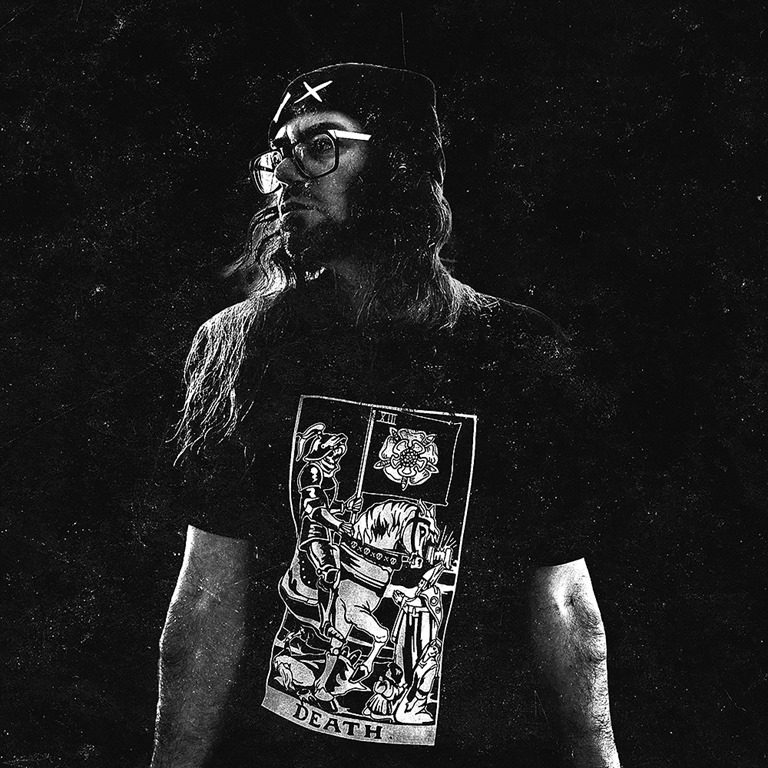
Finnish band, THE FAIR ATTEMPTS has just unveiled their latest single – the gothic rock-inspired, ‘Ghost Within’.

‘Ghost Within’ examines the internal monsters: negative self-talk, doubts, pride before collapse, and the subtle ways the human mind feeds on its own fear. The song portrays self-awareness as a mirror maze, where reflection offers no clear exit.

“This is a theme I’ve touched on in other songs because it’s something I struggle with. Ghosts may be coming to get you,” says frontman Timo Haakana, “but there’s one already inside you.”

Written during a year of deep introspection and creative pursuit, ‘Ghost Within’ depicts the emotional core off the forthcoming full-length album, Null Guide. It’s not about defeating your inner ghosts, but learning to live with them.

AA

80f14c93-1999-97d7-9393-9616af339b0a

Crónica – 20th January 2026

Christopher Nosnibor

As time passes, our tastes change. For some, they narrow and become more cemented, more deeply entrenched. There’s a broad acceptance that people become more conservative as they grow older – which may explain why, with our ageing population, we – that’s the western world – has become more in favour of conservative values, such as low tax and a belief that the past was a golden age in which hard work was rewarded, and of course, music was better. There is certainly more than a grain of truth in the boomer stereotype. And as a Gen X-er, I’ve observed people I grew up with, and /or have known for many years become set in their ways and their listening habits, locked in the 90s in their musical tastes, and becoming increasingly churlish about the youth of today and the like.

I consider myself fortunate to be surrounded by friends and acquaintances, both in real life and in the virtual world, who are deeply invested in new music. The fact I get sent new music of all kinds from around the globe is only half of the story, as it would be so easy to sweep vast swathes of it aside to listen to, and review, nothing but goth, contemporary iterations of post-punk and new wave, grunge, and reissues. In fact, I could devote my entire listening time and run a website dedicated to nothing but reissues and still be incredibly busy. It would probably garner a huge readership, too. But no: I am constantly encouraged to listen to new music, and the fact of the matter is that I thrive on it, and never fail to get a buzz from new discoveries. As such, since I began this journey as a music writer, my horizons have broadened beyond a range I would have ever imagined.

A measure of this is that my first encounter with the music of Rutger Zuydervelt, back in 2014, was marked by a most unimpressed four-star review, in which I said that Stay Tuned was ‘a bit of a drag’. While I don’t feel particularly inspired to revisit it now alongside my writing of this review, I feel I would likely have been more receptive to its longform minimalism now.

Spelonk is not quite as long in form – three compositions spanning a total of forty-two minutes, and sees Zuydervelt taking some time out from his dayjob to indulge in the act of creating for pleasure – or, perhaps, more accurately, creating out of the need to experience freedom, to feel that metaphorical – and perhaps literal – sigh of release.

As he explains, ‘Most of the music I make nowadays is commissioned for film, dance, or other projects. And I love it — it’s the best job in the world! — but sometimes I have to pull myself away from it, and make something purely for myself. My 2004 release Omval was one of these works, as is now Spelonk. These projects are always made in short bursts; once I start creating, things fall into place quickly, as if the ideas were (unknowingly) already there and just needed to get out of my system.

The three tracks that comprise Spelonk (simply titled I, II, III) are built with “hardware jams” that I recorded with my live setup. It’s all quite hands-on, with effects pedals, an oscillator, and electronic gadgets. The magic happens when combining different recordings, layering them, and hearing what happens. Listening is always a favorite moment in the process, with a welcome element of surprise. I guess it’s all about creating alien landscapes — alien also to me too — that are exciting to explore.’

‘Alien landscapes’ is a fair description of these sparse works, constructed with layers of ominous drone. On ‘Spelonk II’, there are chittering sounds which scratch like guitar string scraping against a fret, or perhaps a ragged bow dragging against a worn string, but by the same token, untranslatable voices come to mind. The drones are eerie, ethereal, and hang low like mist or dry ice: it’s not nor merely an example of dark ambient work – there is very much a 70s sci-fi feel to it, hints of BBC Radiophonic Workshop emerge between every surge and crackle as slow pulsations reverberate among the unsettling abstraction. Over the course of the track’s eighteen minutes, there is movement, evolution, and just past the midpoint, there is a shift, where trilling organ-like notes and digital bleeps emerge, evoking recordings from space travel, and, as rippling laser sounds begin to burst forth, vintage sci-fi movies and 70s TV.

There are moments of near silence as ‘Spelonk II’ drifts into ‘Spelonk III’, also eighteen minutes in duration. Here, clanks and bleeps bubble and bounce and echo erratically, unpredictably, over a backdrop of low hums and reverberations. The low-end vibrates subtly but perceptibly, and while the experience is not one which instils tension, the cave-like digital drips and sense of space, as well as darkness, is not relaxing. You find yourself looking around, wondering what’s around the corner, what’s in the shadows. And while there’s no grand reveal, no jump fright here, the second half of ‘Spelonk III’ grows increasingly murky and increasingly squelchy and unsettling.

Over the album’s duration, Spelonk grows in depth and darkness, becoming increasingly dark, strange, and unsettling. Rutger Zuydervelt makes a lot out of very little, to subtle but strong effect.

AA

Crónica 245 front

Glitch Mode Recordings – 9th January 2026

It’s been a little while since we last heard from .SYS Machine, when they slipped ‘Graceful Isolation’ out in the wake of the pandemic lockdowns. One reason for this is that Dave McAnally has been busy with industrial side-project Derision Cult – but with ‘Doubtless’, .SYS Machine presage the arrival of a new album, Parts Unknown due out in April.

While the dark electronic pop of .SYS Machine is sonically more accessible than Derision Cult McAnally’s lyrics have a tendency to draw on the experience of living through our trying times, and ‘Doubtless’ is no exception, exploring as it does the challenge of ‘maintaining sanity in an increasingly turbulent and chaotic world’.

The vocal melody and McAnally’s drawling intonation bring something of a country feel, which is quite a contrast to the metronomic pulsating disco beat and the synths, which are airy and even hint at a sense of optimism. There are strong hints of Violator-era Depeche mode woven into the fabric of the song, particularly in the chorus, and it balances broodiness with a certain buoyancy. The way the elements interlace is intriguing, and far from obvious – meaning this is a grower rather than an instant grab.

AA

a0086727392_10

MESH unveil the stylish music video ‘Exile’ as the first new song from the UK alternative electronic duo since nine years! This single is an edit of the opening track of the English band’s forthcoming new album The Truth Doesn’t Matter, which has been scheduled for release on March 27, 2026.

AA

MESH comment on ‘Exile’: “I was trying to write some music that was uplifting but had a dark and moody undertone”, Richard explains. “I had the chord structure and the chorus, but felt something was missing. That’s when I added the arpeggio type line at the start. This changed the character of the song and gave it that hypnotic, driving feel. It is the glue that holds it all together. After we had finished mixing the album and almost a year after the music was written, Mark sent me the track with the vocals added. It was one of those moments when I knew immediately that this track had to be the single. It was as quick as that.”

“We were about to go to Germany to mix the album with Olaf!, Mark adds. "I still had a couple of instrumentals from Rich which had no lyrics or vocals. I loaded one into Cubasis on my phone and started working on it in dead time during the mixing. I needed inspiration, and Judit, the wife of our producer Olaf, gave me the only English books that she had: Chicken Soup for the Soul – Stories for a Better World by various authors, and ‘The Man Who Fell to Earth’, which is a Bowie biography. I was also reading Heinlein’s ‘Stranger in a Strange Land’ on my pad. The lyrics kind of just fell out of those influences. I recorded the vocals on the phone outside on Olaf’s balcony and recorded them properly when I got home. It was all very last minute, but worth that last push.”

AA

af604c57-2ed8-c083-9aaf-bcbf9dce4061

Room40 / A Guide To Saints – 7th November 2025

Christopher Nosnibor

Free time? What’s that? Who actually has free time anymore? Something seems to have gone awry. Every technological advance promises more leisure time: from the industrial revolution to the advent of AI, the promise has always been that increased productivity through automation would give us more free time. So where the fuck is it? I don’t know anyone who isn’t constantly chasing their tail, running just to stand still, who doesn’t feel like they’re losing the plot or on the brink of burnout simply because the demands of working and running a household is close to unmanageable, and making ends meet is a major challenge… and the stress suffered as a consequence. N

Ov Pain – the experimental duo consisting of Renee Barrance and Tim Player seemingly scraped and made time to record this album, a set of live improvisations (saving the time required to write and rehearse compositions), whereby, as Tim explains, ‘We recorded four different synthesizers – two apiece – straight into a computer pulled from a skip.’ This is how you do it when there’s no free time and no spare money. Although not explicitly detailed in Tim’s commentary, these factors are quite apparently central to the album’s creation, and by no means unique to Ov Pain. There’s a reason many acts peter out when the members reach a certain point in life: jobs and families mean that creative pursuits require some serious drive to maintain.

Tim adds, ‘One thing that is important to us is the immediacy and economy with which it was made and how that immediacy and economy becomes the thing itself.’

For all of its expansive soundscapes and layered, textural sensations, there is very much a sense of immediacy to Free Time. But, by the same token, for an album recorded quickly, it certain makes the most of time, in terms of space. There are long periods of time where little happens, where drones simply… drone on. The sounds slip and slide in and out, interweaving, meshing, separating, and transitioning organically, but not without phases of discord and dissonance.

The first track, ‘Fascia’ – with a monolithic running time of nearly eleven minutes – is a tormenting, tremoring, elongated organ drone, soon embellished with quavering layers of synth which warps and wavers, .it; s like watching a light which initially stands still but suddenly begins to zip around all over. It sits somewhere between ambient and extreme prog, with some intricate motifs cascading over that monotonous, eternal hum. Towards the end, the density and distortion begin to build, making for a climactic finale.

‘Slouching Toward Erewhon’ tosses in a neat literary allusion while bringing a sense of bewilderment and abstraction to proceedings, before ‘Comparative Advantage’ slowly pulses and trills, then crackles and buzzes, a thick surging swell of noise which is uneasy on the ear. And yet, the seconds of silence in the middle of the track are more uncomfortable… at least until the throbbing distortion bursts in atop stains of feedback and whirring static.

It may have been building for some time, but this is one of those evolving sets which after a time, you suddenly come to appreciate has expanded, and gone from a fairly easy drift to a heavy-duty drone assault.

Over the course of the album’s seven pieces, Ov Pain really do push the limits of their comparatively limited instrumentation. ‘Slander’ is a squalling, eardrum-damaging blast of gnarly treble that borders on extreme electronica, a straight-up assault on the ears and the mind. It hits all the harder because there is no let-up, and the frequencies are harsh and the sounds serrated. Around the mid-point, it goes darker, gritter, more abrasive, making for a punishing six minutes. Further layer of distortion and screaming noise enter the fray. It’s not quite Merzbow, but it’s by no means accessible. The final track, ‘Pusillanimous’ presents seven minutes of slow-pulsating ambience, and is altogether more tranquil to begin with, but before long, there are thick bursts of distortion and overdrive, and low rumbles heave and grind in ways which tug at the intestines. I feel my skin crawl at the tension.

Free Time is an album of surprises, and, more often than not of discomfort. It’s the sound of our times.

AA

AA

a2380798111_10

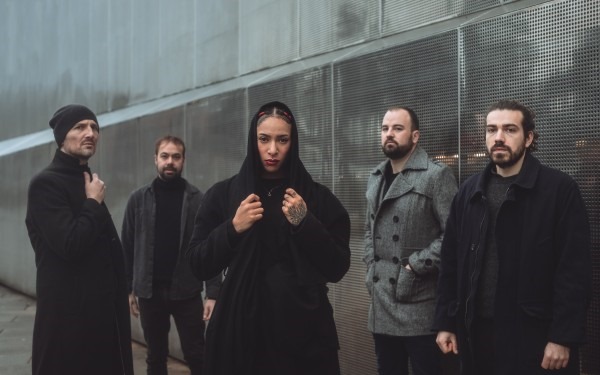
OMEN CODE reveal the pulsating and vibrant new SF-track ‘Tensor’ as the sinister final advance single taken from their forthcoming album Alpha State. The debut full-length has been announced to be released on December 5, 2025.

OMEN CODE comment on ‘Tensor’: “This was the second Omen Code track that I have recorded as a vocalist”, frontman Agi Taralas reveals. “Everything about it came very natural to me and exactly in the way that the vocals turned out in the end. As far as I am concerned, this track includes a few Nitzer Ebb tribute moments, which is hardly a surprise as they have largely shaped my personal preferences in electronic music.”

AA

With their debut album Alpha State, OMEN CODE deliver the sound of the future – and the future is grim and dark! Their future is also firmly built upon the remains of the past. Certainly constructed to fill the dance floor, the international duo channels the bleak, cold precision of mid-tempo FRONT LINE ASSEMBLY and the cinematic story-telling soundscapes of John Carpenter electronics into a thrilling sound that is both resurrecting a classic 80s vibe and also fresh at the same time.

OMEN CODE are the new rising star on the EBM firmament. Deep, dark, and gritty industrial sounds are channelled into captivating mid-tempo tracks that create the atmospheric feeling of a dystopian future ruled by technology and marked by social decline.

This grimdark science fiction approach is not meant to indicate that OMEN CODE embrace any political agenda or message. Rather the international duo took inspiration from the writings of Philip K. Dick and Alfred Bester as well as cinematic masterpieces by British director Ridley Scott such as Alien and Blade Runner among others. 
OMEN CODE were originally intended as a one-time project by Kevin Gould. The engineer, programmer, and lyricist was a member of the English Industrial EBM trio JOHNSON ENGINEERING CO. together with Sean Bailey and Ian Hicks, which released the album Unleash in 1988. He went on to found the electro-industrial act ELECTRO ASSASSIN with Ian Taylor. Following the release of Jamming the Voice of the Universe (1992), Taylor was replaced by Richard McKinlay with whom the next albums Bioculture (1993) and The Divine Invasion (1995) were recorded.

When vocalist and lyricist Agi Taralas was hand-picked from a stack of applications for the frontman position, the chemistry between the two artists proved so productive and strong that Gould and Taralas decided together to turn OMEN CODE into a permanent project that would also aim to perform live. The vocalist had already left his mark on the scene in a joint project with German electronic musician Stefan Böhm under the moniker OUR BANSHEE that released an album entitled 4200 in 2017.

AA

a95fced5-cee8-3410-d640-5c8912c593a1

Christopher Nosnibor

Live music should carry a warning over its addictive properties. Witnessing a band playing a set so good that you’re buzzing for hours, even days afterwards is a unique high, and one that sets a seed of a desperate need to replicate that experience.

I’ve seen a lot of live music since I started going to gigs over thirty years ago, but the number of acts who have ignited that sense of fervent excitement is limited. I’ve seen many, many amazing shows, but few have blown me away to the extent they’ve felt in some way transformative. Dead Space Chamber Music are one of those few, and I left the Cemetery Chapel in York a few months back feeling dazed and exhilarated, my ears whistling despite having worn earplugs. I simply had to see them again, in the hope to experience that same sense of rapture.

Eldermother – consisting of Clare de Lune on harp and vocals and Michalina Rudawska on cello – have no shortage of musical pedigree, and a superabundance of talent which they showcase with their minimal neoclassical works, a mix of covers and original material. They open with Radiohead’s ‘Street Spirit (Fade Out)’ led by harp and with Clare’s soaring vocals, and it’s one of those performances that make the hair stand up on back of your neck with its haunting atmosphere. There’s a rendition of WB Yeats’ poem ‘The Stolen Child’, a work rich with imagery inspired by wild nature and imbued with emotion and drama. The execution is magnificent, and the originals are similarly graceful and majestic. ‘Hurt’ may not be by any stretch representative of Trent Reznor’s career, but it certainly showcases his capacity for powerfully emotive songwriting, and if it’s the song which forms his legacy, it’s all to the good. Yes, Eldermother play a semi-operatic version of ‘Hurt’ with harp and dark, brooding cello, and… woah. It’s almost too much, especially this early in the evening. I find myself dabbing a tear and grateful for the low lighting.

DSC04790DSC04787DSC04785

Eldermother

Lunar Cult Club – featuring Doug Gordon, aka Futures We Lost – as the provider of the instrumental machinations, take the theatricality up several notches to deliver a set of otherworldly cold, cold, darkest electro with glacial synths and funereal forms. The bank of synths swirl and grind, muddy beats thud and pop from amidst a dense sonic fog. Sonically, they’re impressive – in the main, the arrangements are sparse, and overtly analogue in form – but visually, they’re something else. Theirs is a highly theatrical stage show, and this significantly heightens the impact of the songs. The two singers, dressed all in black and with faces obscured by long, black lace veils – Corpse Bride chic, as my notes say – sway and move their arms in an unnerving fashion, as if reanimated, exhumed. I’m reminded of Zola Jesus and of Ladytron, and I’m mesmerised by their facsimile of a Pet Sematary Human League with its spellbinding marionette choreography. The final song, ‘No-Ones Here to Save Her’ is as dark as it gets: the vocals merge and take us to another realm entirely.

DSC04800DSC04804

Lunar Cult Club

I’m still floating in a state of mild delirium when Dead Space Chamber Music take to the stage. The atmosphere is thick, tense, hushed… awed. Something about the trio’s presence alone makes you sit up, lean in, eyes wide, ears pricked. There’s a lot of detail here. Their focus is gripping by way of spectacle, and their set is designed as a linear work which evolves and transitions over its duration, in a way which calls to mind when Sunn O))) toured Monoliths and Dimensions, whereby, over the course of the set, Attila Csihar transformed into a tree. There are props and costume embellishments, mostly on the part of Ellen Southern, who performs vocals and various percussion elements and a strange stringed instrument: she brings much drama and theatricality, delivered with a sense of self-possession and deep spirituality which is utterly entrancing.

DSC04839DSC04852

Dead Space Music Orchestra

They’re so quiet you can hear matchsticks dropping into a tray. But the fact that these things are audible, amidst cavernous reverb and sepulchral echoes, is a measure of the clarity of the sound and the band’s attention to detail. Ekaterina Samarkina is impressive in the sheer versatility and nuanced approach she takes to the percussion which is truly pivotal to the performance. Her work is so detailed, subtle, the sound so bright and crisp, as she slowly scrapes the edges of her cymbals with a bow. Lurking in the background, Tom Bush – on guitar – plays with restraint, sculpting shapes and textures rather than playing conventional chords and melodies. In combination, they conjure a rarefied atmosphere.

DSC04867DSC04886DSC04906

Dead Space Chamber Music

But towards the end of the set, as if from nowhere, emerge huge cathedrals of sound. The last time around, I compared their climactic crescendos to Swans, and having seen Swans just over a week ago, I very much stand by the parallel called then. And this is not volume for volume’s sake: this is about catharsis, about escape. Dead Space Chamber Music make music which is immense, transcendental. And when they go all-out for the sustained crescendo of the finale, it’s not because of a bank of pedals or a host of gear: they simply play harder, throwing themselves behind their instruments, and full-throttle intensity. It may not be as loud as on that previous outing, or perhaps it’s simply because I’m expecting it, but they nevertheless raise the roof, and fill the space with expansive layers of sound on sound.

The three acts very much compliment one another, making for an event which is more than merely a gig, more than three bands playing some songs: this is an occasion, steeped in theatre and art, performed with a sense of ritual. The experience is all-encompassing, immersive, enveloping; it takes you out of life and suspends time for its duration. It will take some time to return to reality.

We’re late for the Halloween announcement, we’re late on this… but we love GHOLD and we love Human Worth, so… better late than never, eh? And it’s only a couple of days belated…

‘Place To Bless A Shadow’ is the second single to be taken from GHOLD’s forthcoming album Bludgeoning Simulations, produced by Wayne Adams (Petbrick, Big Lad), to be released on November 14th on Vinyl and Digital via independent label Human Worth. Proceeds from Bandcamp sales will be donated to registered charity SkatePal, providing skateboarding equipment and training courses to underfunded communities in Palestine.

AA

Filmmaker Pavel Vishnevsky returns to collaborate again with Paradox Obscur, bringing a dynamic new visual interpretation to ‘Like A Freak’, an electrifying track from IKONA, the recently released new album by the Greek synth duo.

In a vivid performance, Nicola Di Pierro defies cliché and convention, embodying the song’s spirit of freedom and self-expression – because everyone, regardless of age, has the right to dance. The result is a cinematic celebration of exuberance and individuality, amplifying the pulse of Paradox Obscur’s kinetic sound.

‘Like A Freak’ opens side 2 of IKONA with a wild jolt, pulsing with the edge of the Hexagon house music label’s rebellious spirit. Powered by the Behringer Crave synthesiser, it spits out raw analog grit – the bass growls, the synths snarl – creating a feral, ecstatic soundscape that is as visceral as it is infectious.

Lyrically, ‘Like A Freak’ explores the duality of ego; the composed persona we present to the world versus the wild, unfiltered self that thrives in secret. It is a song for those sweaty, sunrise hours when inhibition fades, judgement dissolves, and you move only for yourself as you ask: Does it make you click? / Now it’s time to go deep. / Way deep. Like a freak. / Taste my analog kick!

AA

0631b1dae417a364c26f8af59510d7ba29ffd0fe