Posts Tagged ‘bleak’

24th September 2021

Christopher Nosnibor

Pink Turns Blue have been around practically forever, having formed in 1985, and while they may not be widely regarded among the first wave of goth acts, they very much emerged from that milieu as a duo with a drum machine, and what they’ve achieved over so many of their peers while lingering on the peripheries is longevity. Having re-emerged in 2003 after an eight-year hiatus, they’ve continued to mine the classic post-punk seam that’s distinctively theirs, due in no small part to Mic Jogwer’s vocals. And of course, what goes around comes around. Their return in the early years of the new millennium was well-timed, coinciding with the point at which the post-punk renaissance bloomed with the likes of Editors and Interpol breaking through. There were of course countless also-rans, and bands who emerged but failed to fulfil their promise, but nevertheless, time has proven that the style has remained current, and the darker the times, the greater the craving for dark tunes, and this is where Pink Turns Blue really prove to be as contemporary and vital as ever.

Their eleventh album was written, recorded, mixed, and mastered during lockdown in their Berlin studio, and the first thing that strikes about Tainted is just how bleak it is. It’s achingly majestic, it’s magnificent, and possesses some wonderful hooks and choruses, but there’s an all-pervading atmosphere of sadness, of melancholy that’s draped over every beat and radiates from every note. Glimmers of positivity are dampened by an air of resignation, optimism doused with defeat. The next thing that soon becomes apparent is just how consistent the album is. It’s not only all killer, but had a remarkable cohesion. It’s true that that for cohesion you might interpret sameness, and they do operate with a fairly limited sonic palette. One suspect this is at least in part the result of the material being the product of three guys in a studio without any external input or interference.

But working within such limitations places the focus on the songwriting, on the tunes, on the delivery, instead of throwing in all sorts of fancy stuff.

The guitar to opener ‘Not Even Trying’ evokes the into to ‘Severina’ by ‘The Mission’, and it’s got that same solid four-four strike on every beat bassline that Craig Adams made his signature back in the early days of The Sisters of Mercy, and which has become something of a defining feature for so many gothy post-punk bands, and it makes the song an instant grab. ‘I’m not even trying’, Jowger admits blankly, as if admitting defeat from the outset, and setting the pessimistic tone that echoes through single cut ‘There Must Be So Much More’. It’s a song of yearning, of questing, and of determinism, and a song Editors would have likely killed to have penned for one of their first two albums.

This isn’t an album of depression, but the sound of downward-facing defeat, of staring at the ground and wondering where it all went wrong. ‘Never Give Up’ encapsulates the conflict, the inner turmoil of staring emptiness and defeat straight in the face and realising there are only two choices. But to never give up is not a positive thing, merely the stubbornness that comes from not knowing what else to do.

The bass and guitar are melded together in a tunnel of chorus and reverb, and tied to a relentless drum track, and it’s gripping and compelling. ‘Why Not Save the World’ has heavy echoes of mid-80s Depeche Mode and would sit comfortably on a She Wants Revenge album, while ‘I’m Gonna Hold You’ comes on like New Order as covered by A Place to Bury Strangers, with a nagging bass and brittle guitar that grips hard.

Just as Robert Smith can make a skippy pop song sound tear-jerkingly sad, so when Jowger sings of the joys of ‘a new day’, it’s with a wistful melancholy that aches deep and you feel something tug in your chest as you swallow it down, that inexplicable sadness. ‘Listen to the bumble bee’ he sings on ‘Summertime’, and it’s carried a way on a chiming jangle of guitars that are so wistful, while the tone is of deep nostalgia. A perfect sunny day can have its joy marred by the realisation that it isn’t quite as perfect as sunny days of a time gone by, happy, carefree times that will forever be trapped in the memory as magical, but now faded and never to be recreated.

The song structures are comparatively simple and straightforward, and built around repetitive chord sequences and guitar motifs, and there’s nothing fancy about any of the playing – which is absolutely key to the success.

Any fan of Interpol or Editors would do well to explore Tainted – but then again, so would any fan of not only post-punk, but anyone with ears and with a heart and soul. It’s a masterful work in music of the mood. The mood is low, the mood is sad, and this is an album of real depth that speaks and resonates beyond the immediate.

133936

Ventil Records – V026 – 4th August 2021

Christopher Nosnibor

Ultimately, it’s apparent now that social media changed everything. But one thing specific was the relationship between artist and audience. Historically, the distance between the two was clear and also integral. The last, ten to fifteen years hasn’t only seen that separation eroded, but a certain expectation that the artist should engage directly with the audience via online platforms, be it social media or a blog maintained as a part of their website. As a marketing tool, it makes sense, but it’s hard not to feel that something has been lost along the way. Is it right that the artist should be made accessible, or that there should be an expectation of there being some kind of quite direct interaction? It’s not even necessarily about maintaining a persona or a degree of enigma: many artists are introverts by nature, and don’t create art to stand in the limelight in front of it. Many artists create to escape something, or simply to expel or have an outlet for that which they cannot convey by any other means.

I’m often not particularly communicative myself. I don’t want to talk about it, whatever it is – assuming I even know. I simply want to write or make ‘music’. But I did, recently post on Facebook about how I often berate myself for not being as productive as I would like to be. People were largely sympathetic, but few, it would seem, truly ‘got it.’

One artist who truly does understand that eternal restlessness is polyartist Maja Osojnik, and her quest for creativity is unstinting. Having been involved in several visual exhibitions, a live stream, and various compositions in recent months, she’s also recorded an album with collaborator Matija Schellander to deliver the debut Rdeča Raketa (Red Rocket) album.

This album is both very ‘now’ and also very much an expiration of the human condition, specifically its failings and how communication is key, but very much prone to failure.

As the liner notes outline, ‘…and cannot reach the silence deals with the current world of misunderstandings, communicating past each other, willingly and unwillingly overlooking or ignoring each other’s meanings via various fast-paced forms and platforms of communication; and, with that, the tightening of incompatible parallel “realities.” It explores forms of violence; physical and verbal, external and self-inflicted. It explores forms of power; the dangerous thin line between giving power to and giving power over oneself, and forms of subjugation and addiction on both societal and, more significantly, on interpersonal levels. “… Look at us! Beasts, bottomless pits, never to be full! To be fulfilled. Glued onto each other in sweat, a never-ending pain and evenly spread, at all times…”

They go on to ask, ‘In those dark, dystopian lyrics, full of questions, such as “What is being said and what stays unspoken? Who does it refer to? Who is protecting whom? For what reasons? Who is being addressed or what needs to be considered?” the wish, the need and the struggle for self-empowerment, honesty, love and reconciliation is exposed or, at the very least, nourished.’

All of this resonates, and deeply. Only yesterday, I had been considering how depth of conversation seems to have evaporated. People have neither the time more the attention. Conversations were often cut short or curtailed or otherwise hurried back in the days of the office, but that was nothing compared to thee standard one- or two-line text exchanges, comments shared by Skype or Teams. We – collectively – don’t really ‘talk’ anymore. We’re paranoid, time-deprived, stressed. We’re also so polarised and entrenched in our oppositional viewpoints that there is no debate, only division. And with social media, 24/7 scrolling news and infinite notifications from apps, there is no respite – ever. There is no silence, wherever you may seek it.

The three longform compositions on …and cannot reach the silence are heavy and rich with atmosphere. The first, the ten-minute ‘the night is spilling across the room…’ approaches by stealth. A low, slow, ominous drone, intercut with aberrant thuds and squelches. An artisanal, wordless voice drifts in, and it’s haunting, ghostly, otherworldly. What does it mean? The lyrics, sung in a detached tone, are stark, bleak: ‘You were unspoken / She was born already broken….’ Eventually, the words drift out into a wordless undulating hum and the world slowly disintegrates.

The disintegration continues through the lumbering lurch of counterpart composition ‘…like gasoline’. Its slow, yawning rhythmic intonations evoke the heavy grind of SWANS circa 1986, relentless, booming, droning, and it’s the perfect backdrop to Maja’s semi—spoken vocal delivery. She’s robotic, inhuman, empty, even when articulating human emotions – ‘I want to you so bad, I want you so bad,’ she repeats at one point. But is it want, or is it need? Something less about choice or desire, and more about emotional survival? ‘I am tired’ she repeats, over and over, in tones ranging from weary to frustrated, defeated to angry, and you feel it – you know it. The articulation is comparable to one of Bruin Gysin’s permutational poems: only, instead if rearranging the words, the emphasis changes in order to find different meanings of the same words. This one resonates. The tiredness saps your life and saps your soul, and you feel the differences between ‘I’m tired, please leave me be,’ and ‘I’M TIRED! FUCK OFF AND LEAVE ME ALONE!’

The third and final composition, ‘waiting it out’, is fifteen and a half minutes of ominousness. The vocals are all but submerged, a babble beneath the undulating drone and trilling. Synths crank up and head for take-off as they stray into the heavily phased world of early industrial and power electronics, a wheezing wall of wailing synths puffing and groaning and bleeping and whirring and all converging in a seething sonic mound. Towards the end, it ventures skywards in a succession of laser-guided rockets arcing into the sky.

…and cannot reach the silence is an album with an immense range, and an understated intensity – and a magnificent artistic achievement.

AA

KT.eps

Khatacomb – 7th July 2021

Christopheer Nosnibor

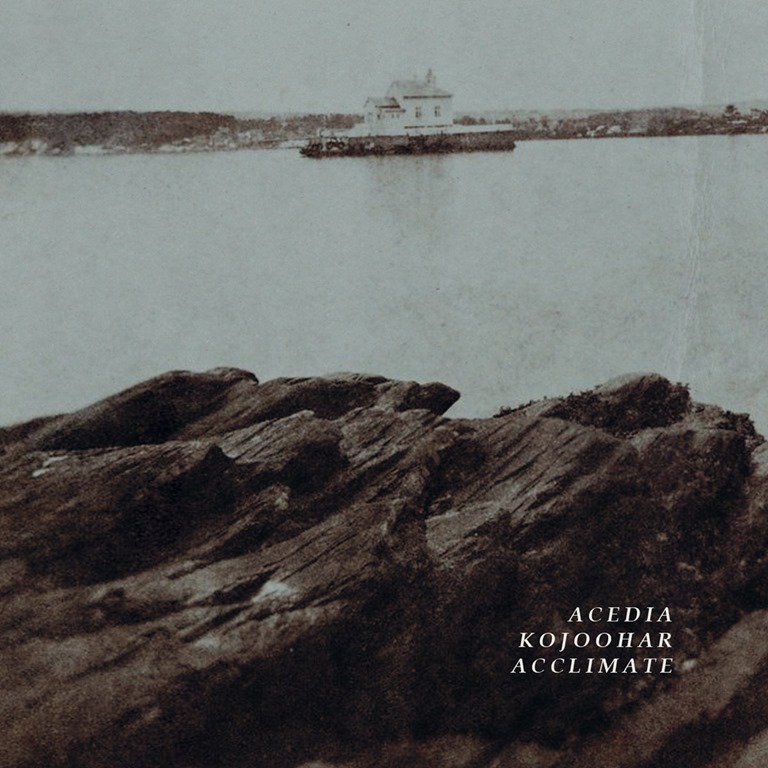
Some artists clearly thrive on collaboration, throwing themselves fully into the possibilities and potentials ideas from other quarters offer. Ukrainian experimentalist Kojoohar, aka Andrii Kozhukhar, is clearly one such artist, with the self-explanatory Split– a collaboration with fellow Ukrainian Acedia and New Zealander Acclimate – is his second release of the year so far.

Split is something of a celebration of darkness, and a coming together of artists with fundamentally divergent styles, and its finding a home on Ukrainian label / webzine Khatacomb is no coincidence, given its commitment to ‘covering various manifestations of Ukrainian post-industrial music, from dark folk to experimental electronics, and art in general’. It’s an immense departure from anything Kojoohar has done before, with his 2019 and 2021 collaborations with ködzid goo exploring the realms of industrial and avant-garde hip-hop.

The way Split is split is interesting in itself, with four solo Acedia pieces, one Acedia and Kojoohar composition, and a brace from Kojoohar and Acclimate, making it very much an album of three segments – and as such, split.

In context, the vocal element of Acedia’s contributions come as something of a surprise: against minimal, stark electronic backing, with snaking percussion and strong snare sounds that cut through, Acedia delivers a vocal that’s glacial yet warm in its human vulnerability. Ugh, comparisons feels like lazy journalism, but serve their purpose: Depeche Mode, Ladytron, and New Order’s Movement coalesce in the tone and style on these chilly tunes.

‘You’re already dead’ she intimates in a blank monotone on the cold as ice ‘Cocoon’, and the insularity closes in as each song progresses: ‘Slaughterous Game’ is as dark and dangerous as it gets, so cold that it strikes chill to the very marrow. It’s bleak but bold, and the four Acedia cuts feel like an EP in their own right.

I can’t help but feel that this release would work best in physical format, either as n album with the Acedia tracks on one side and the rest on the other, or as a pair of 12” to give each segment clear separation.

Acedia with Kojoohar conjure some darkly dreamy drone with ‘Forget my Name’, with its rolling, woozy bass and whipcracking snare that slashes away at a slow pace, and dark gets darker with ‘Enwomb’, the first of the pieces jointly forged by Kojoohar and Acclimate. It’s nearly ten minutes of ambient drone that billows and rumbles while treble bubbles and bounces eddy this way and that amidst the grumbling mid-range fog. Sparks fly and stutter incidentally but without effect, and the horizon grows broader in the face of this vast vista despite the grumbling discomfiture and whispering in tongues. It’s unsettling, a squirming, churning, twisting and turning with no breaks in which to find a position that’s comfortable. The same is true of the final track, the second Kojoohar and Acclimate cut, and it’s a cut that cuts deep: serrated edges burr and saw away, and tribal percussion thuds away insistently against subdued but wince-inducing trails of feedback.

None of this is comfortable; none of this is easy. But it’s a contrasting set that strains the edges of convention to create something quite, quite different.

AA

a4099095908_10

29th January 2021

Christopher Nosnibor

My wife detests The Twilight Sad. I love The Twilight Sad, and am prone to crying at their gigs. I’ve also been called a cunt online for suggesting the intensity of their shows may be akin to witnessing Joy Division at their peak (a suggestion I still stand by: James Graham is capable of conveying a rare emotional intensity in his performances that’s compelling, and at times, borders on the disturbing). They’re a band that are divisive beyond Marmite, but elicit a level of devotion from their fans that’s truly fervent.

When it comes to covering a band that inspire such passion, it’s a big, big challenge, and a huge risk – one of those moves that could be absolute fucking suicide, or inspire career-defining awe.

The last time I wrote about National Service, a four-piece band consisting of Fintan Campbell (vocals/guitar), Daniel Hipkin (bass/vocals), Iain Kelly (guitar/vocals) and Matthew Alston (drums) back in November on the release of ‘Caving’, I actually compared them to The Twilight Sad, so this feels like a much a test of my skills as theirs – and it’s perhaps worth noting that this is the last in a series of cover releases from Fierce Panda, which has also featured Moon Panda, Desperate Journalist, and China |Bears.

Now, you should never mess with perfection, but with their glacial, stripped-back, minimalist take on the song, National Service really capture the wintery melancholy of the original. The dark beauty of the lyrics, which blend sadness with a certain distanced, twisted psychopathy is conveyed with a sincerity that transcends the ethereal atmosphere.

The absence of the soaring finale may come as something of an anticlimax, but this is a well-conceived and magnificently-executed cover, and the distinctive, even slightly unusual vocals delivery, with a certain twang on the higher notes, are well-suited to the song, stamping a unique marker on it while accentuating the multifaceted layers embedded within the song’s dark spirit.

AA

Single cover

Cae Gwyn Records – 22nd January 2021

Christopher Nosnibor

It’s dark. It’s winter. We’re in lockdown – again / still. Whatever cheer Christmas and the prospect of new year brought – and let’s face it more than cheer, it was a flicker of false hope, or worse still, a diminutive moment of delusional hope – has faded with the return to work (from home) and (home) schooling and the prospect of socialising, pubs, and gigs but a snuffed candle for the foreseeable, meaning that the jaunty Christmas tunes that assailed us last month can well and truly delete themselves while we get back to reality.

‘Doppelgänger’, the debut single from IsoPHeX, aka 19-year-old Cian Owen from Anglesey, it pitched as ‘brooding electronica of the highest order’, and it fits the bill and no mistake.

If you’re expecting – or wanting – more dark ambient, you’ll likely be disappointed, although ‘Doppelgänger’ brings atmosphere in spades, and one that’s cold and dark.

It may only be three minutes an eighteen seconds in duration, but ‘Doppelgänger’ melds an array of styles, incorporating hip-hop and sparse electro to create something that’s simultaneously bleak and dynamic, as chilly synths wrapped like mist around a hectic beat: uptempo hip-hop or downtempo drum ‘n’ bass? Who cares? Despite the urgent pace of the stammering rhythm, ‘Doppelgänger’ is sparse, minimal, and edgy, a twitchy trip through dark alleyways at night, tense and paranoid. Is there something there? Or is it all in your head? Keep one eye over your shoulder. Keep moving. Trust no-one. Apart from me, of course, when I tell you this is a killer tune.

bAF3hL-z

2LP Editions Mego – Digital release date: 4th December 2020 / Physical release date: early February 2021

Christopher Nosnibor

Initially – and indeed, oftentimes – On Feather and Wire sounds very like so many slightly noodly minimal electro albums, incorporating elements of pop and krautrock to forge some neat synthy moments, fairly light and accessible and propelled by soft but insistent beats and bubbling bass grooves, and it’s pleasant enough, with the darker overtones providing depth and detail. Rivet’s reverence and enthusiasm for the technology is apparent, as is his appreciation for the likes of both Chris and Cosey and Kraftwerk. The invited comparisons to COH are warranted, and if the synthy explorations of the 70s and into the early 80s with the emerging industrial scene is your bag, then the appeal here is clear: there’s plenty to like, but then again, not a lot to distinguish Rivet from myriad other artists of the era or his myriad peers operating in the same field, which seems to be increasingly populous.

‘Glietende Liebe’ has hints of DAF, but then equally of Cabaret Voltaire, and even Depeche Mode with its buoyant repetitive motif. Vocals are limited just the occasional phrase, more shouted the sung, and it seems Rivet – that’s Mika Hallbäck Vuorenpää – is more than happy for the listener to wrestle – or not – with the questions of intention and meaning, as, according to the liner notes, ‘interpretation is flung open as the audience are invited to gauge what on earth is going on here… Are these songs? Are these lyrics? Words melt as beat perpetually takes us deeper into flight. Throughout this trip sharp snares punctuate ghost melodies as vocals rise and vaporise. Shadows hover the walls leaving holographic traces of the duality between fun and fear, the unexpected drifts diagonally across the audio plane teasing and taunting the listener’.

‘Keloid’ is an out-and-out minimal dance tune, and ‘Mag Mich’ is pretty much straight-up EBM, and all of this is fine and neatly executed by largely unremarkable. ‘Sodden Healer’, on the other hand is stark, clinical, dangerous in its detachment. Fragmented vocals cut across one another against a backdrop of grating analogue bass oscillations.

But ‘Coral Spate’ comes as if from nowhere, a standout and standalone, the absolute distillation of every feature of the album culminating in five minutes of claustrophobically gripping intensity, It’s the sound of anxiety, of agoraphobic panic, in ways that are difficult to pinpoint and even more difficult to express. Whereas the dislocated retrofuturism of ‘Ordine Kadmia’ sounds like so much cyberpunk and so many 80s sci-fi movie soundtracks, and is the kind of composition that’s affecting because there’s a certain sense of the unheimlich about its stark robotic repetitions and whipcrack snare sound, it’s precisely the extreme familiarity of ‘Coral Spate’ that’s so uncomfortable – suffocatingly so. And yet the experience of discovering that physical spasm articulated, given a soundtrack, is perversely comforting. It’s a rare and dichotomous sensation that’s difficult to reconcile – but then, art is at its best when it challenges us. The more it makes us feel, however much it hurts, it’s fulfilling that function of taking us beyond the limited boundaries of whatever comfort zones we may have and challenging us to confront those innermost fears by mirroring them back at us.

For this alone, this track alone, I wholeheartedly recommend this album, but maybe should forewarn those of a weaker disposition that it isn’t all breezy grooves.

AA

EMEGO293_front

generate and test – gt49 – 23rd October 2020

Christopher Nosnibor

I don’t even know what day it is most days. I’m vaguely keeping track of the months and weeks, but a mostly existing day-to-day. Turn on the laptop, check my calendar, dial into the meetings I’m booked into. It’s just mechanical, I’m not really living. I know it’s 2020, by virtue of the fact I don’t know much else: confusion reigns. Time’s meaning has evaporated over the last seven or eight months.

I was drawn by the title, as the two component parts both feel relevant. That may be a personal thing, it may be a more general thing. We’re living every moment of every dystopia ever written, ever filmed, ever imagined, and I’m deeply nostalgic for all things right now, ranging from human interaction to simply feeling as if I have a life. I know I’m not alone in being alone.

I’ve long had an acute sense of nostalgia, but loathe the way nostalgia has become an industry, capitalising in the way the ageing process rose-tints the past. Anniversary edition albums and movie reissues don’t only cash in on that sense of past times, but lock people into a cycle of nostalgia, provoking reminiscences of ‘the good old days.’ Admittedly, the future has never looked so barren and the past more appealing, but generally speaking… we always yearn for the past because things were simpler when we were younger and less burdened with responsibility and emotional baggage.

It looks like this release has been languishing in the vaults for a long time, if my reading of the liner notes is right, they state that this was ‘written, produced, performed, and recorded by Matthew Thomas 1997… mastered by Matthew Thomas 2020’ Apparently, ‘2020 demanded we revisit a 1990s vision of a dystopic future’ – and yes, maybe it did. Or maybe it didn’t. Do we need to be heaped with more dystopian anguish given the pain of living in the every day?

nostalgia:dystopia promises ‘four tracks of dystobeats, placing the human voice within a context of fractured systems’, and delivers something that may be something close, I don’t know. I’m not entirely sure what dystobeats are, but I feel that we’re all living in a nexus of systems all of which are fractured and fragmenting, much to the psychological detriment of many. If lockdown was hard, the fact we’re still living in such uncertain times and under such restrictions and at distance from our fellow human beings is taking its toll. And this… it’s electronic, it’s overloading. Layers of sound collide against one another to forge challenging sound and forms.

There’s a sense of excessive volume and colliding sonic intents on the first track, ‘Pranayama’, where yawning drones like mechanical digeridoos hum and hover amid static blasts and feedback that ruptures from the simmering sonic surface like solar flares. Pulsing rhythms merge from the layers of sound.

In contrast, ‘Within in Orange Sodium Glow’ is thick, deep, and mellow for the most, with squelchy electro vibes coming to the fore: but there’s an eerie undercurrent that’s hard to ignore as lumpy beats lurch and thump amid undulating analogue oscillations, while ‘Sheering Force’ is stark, mechanoid, depersonalised, bleak and ‘Insect’ is a scratchy, buzzing mess of distorted beats and murky gyrations that emanates detachment and dislocation.

Having languished some twenty-three years in the vaults, it does seem as if Thomas had a certain sense of gloomy premonition about the future that’s now here. But then, every year of present feels bleaker than those which preceded, and since the turn of the millennium, it’s felt as though while global warming has been melting the ice caps at an exponential rate, life has been inching closer to a perpetual winter of the soul. With nostalgia:dystopia, Matthew Thomas has created a suitably claustrophobic soundtrack.

AA

gt49_front

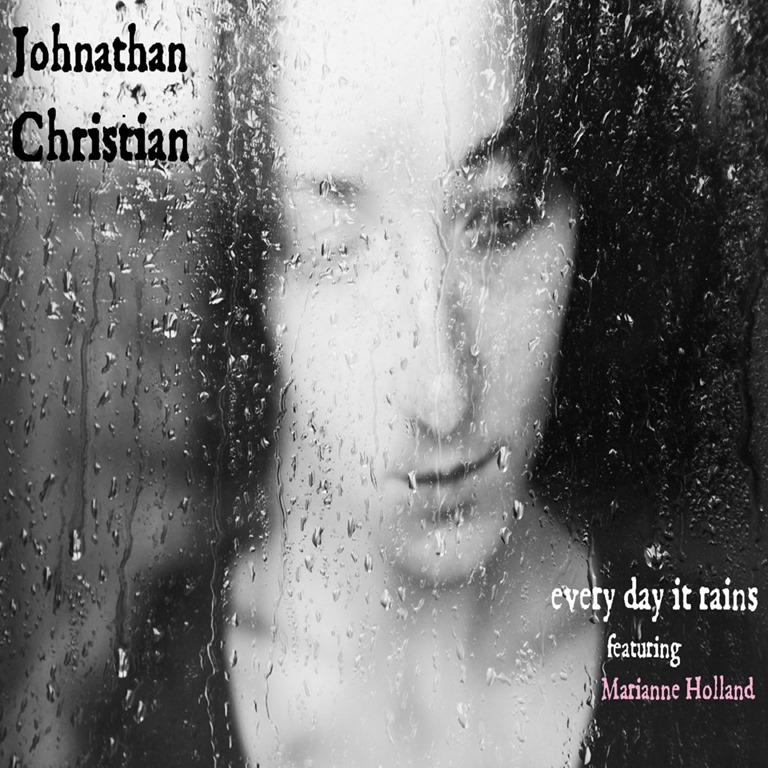
Transatlantic darkwave trio Johnathan/Christian is pleased to announce the release of their new single, “Every Day It Rains” featuring lead vocals shared jointly by lead singer Christian Granquist and North Wales recording artist Marianne Holland.

“Every Day It Rains” is a dark reminder of what we’re all living through in this new world.

Watch the bleak video here:

AA

a0843502261_10

Soundtracking The Void – 18th September 2020

Christopher Nosnibor

Before the Magic is the debut from The Incidental Crack, a new collaborative work from Front & Follow and Gated Canal Community’s Justin Watson and Rob Spencer, alongside Simon Proffitt, who also performs as Cahn Ingold Prelog and The Master Musicians Of Dyffryn Moor.

Under the seemingly eternal lockdown and difficulties arising from distancing, which continue to loom large over all things creative and musical where collectivism and collaboration are concerned (live performances are another essay altogether, and their absence will continue to leave an immeasurable void for so many and on so many levels), The Incidental Crack is a project that could only exist thanks to the Internet, which saw, ‘a six month period of remotely sharing atmospheric field recordings, samples and random noise, culminating in studio sessions focused on detailed processing and sound manipulation.’

The album’s four tracks are significantly differing in length, ranging from a ‘mere’ six-minute snippet to an eighteen-minute exploration of the deepest, darkest tunnels

Why are children’s voices always so unsettling? Especially samples of chirpy, innocent calls and singing, when juxtaposed with murky, dark ambient drones? I suppose it’s not least on account of that unheimlich sensation instilled by those quite specific contrasts of carefree naivete and gut-clenching fear. Individually, these sensations can be processed and compartmentalised, but together, they sit uneasily, tapping into a biological parental instinct that tells us that children should be kept safe from harm, and a doomy sonic fog, with connotations of imminent danger, creeping around the ankles is something of a hard-wired trigger. ‘If I Can Do It’, then, is a thoroughly unsettling collage. The voices fade out, but deep rumbles of thunder persist, a different kind of threat as a storm breaks and it reminds us that there is nothing harsher, more devastating, than nature.

‘Skin’ provides some much-needed levity, overlapping myriad snippets of adverts for skin products by way of an intro before drifting off into soft bubble of drifting mellowness. There’s a spoken-word piece, from what initially appears to be lecture on skin but wanders more into the territory of a reflection on skin more generally.

With murky, clunking percussion and inaudible sampled dialogue running throughout its twelve-minute running time, the dark and impenetrable ‘Set free all the birds from your wife’s aviary’ is another level of unsettling, and it’s difficult to settle or adjust to despite the relentless booming plod that hangs in the background.

The sparse, clanging pulsing noises of the final track are hollow, empty, and even when joined by a slow-swelling tide if amorphous, extraneous noise, feels quite bleak and desolate, and the title, ‘We All Feel Happy Now’ feels grimy ironic. Gasping breaths, the sounds of panic, along with slivers of spoken-word narrative (which in passing includes the album’s title is dense and dolorous, and there is no joy to be found here.

And yet the album as a whole feels positive, if only in terms of its fulfilment of purpose as an experimental album with unsettling connotations, and sometimes, you just need a dark, desolate atmosphere to match the mood.

AA

The Incidental Crack - Before The Magic

Sacred Bones – 11th September 2020

Christopher Nosnibor

Regular readers will likely have spotted Uniform featured on numerous occasions here at Aural Aggro, and in may ways, they encapsulate everything that inspired me to start this in the first place – namely that reviewing music that moves and affects me isn’t quite enough, because only half of it’s about the music, and the remainder is about that personal reaction, and that’s more of an essay than a review. To some this may seem indulgent, and maybe it is, but the intention is that in explaining my own personal response, there may be something relatable there for other readers – and also, potentially, something for the artist, namely an insight into how their music resonates with fans, what it means to them.

I’m not dismissing the merit of reviews that endeavour to quantify the quality of a release based on various merits and so on, but when confronted with music that exists to convey the most brutal emotions in a way that almost physically hurts, you just have to go deeper, and pick it apart properly, much as in the way you’re compelled to pick at an itchy, crusting scab until it’s weeping and raw and bleeding once more in some wrongheaded attempt to understand the nature of the wound.

The particular thing about Uniform is the way in which they balance unbridled rawness, a rage so explosive and nihilistic that words cannot even begin to convey even the outline of the sentiment, one so deeply enmeshed with a choking fury that renders words worthless, and a rare literacy.

“Thematically, the album is like a classic hard-boiled paperback novel without a case,” says front man Michael Berdan. “It focuses on the static state of an antihero as he mulls over his life in the interim between major events, just existing in the world. At the time we were making the record, I was reading books by Raymond Chandler, James Ellroy, and Dashiell Hammet and strangely found myself identifying with the internal dialogues of characters like Sam Spade and Philip Marlowe.”

These are all authors I have an immense admiration for, on account of the pace of their narrative, their economy, their capacity to deliver plot at pace, and their writing methods. Writing is one discipline. Writing to deadlines and producing quality and quantity quickly entirely another, and one I genuinely aspire to.

Uniform have demonstrated an impressive work ethic since their inception, and have been cranking out an album a year either on their own or in collaboration with The Body on an annual basis for the last few years. And never once has the quality or intensity dipped one iota, and Shame continues this unblemished record.

They have evolved over time, replaving the drum machine with a human drummer, but this hasn’t rendered them any more ‘ordinary’ and even without the harsh, pounding electronic battery of percussion, they’re still cranium-crushingly intense and head-shreddingly harsh.

Admittedly, I’ve had The Long Walk on heavy rotation for some two years now, with ‘The Walk’ not only defining that raw, aggro, nihilism that IS Uniform, but also being something of a soundtrack to life. Because life is short, cruel, and painful an there aren’t many acts who convey this as accurately as Uniform.

Shame explores all of the pains and anguish of shame and humiliation, the desire to bury one’s face or to disappear, and for all its harshness, all its abrasion, and all its brutality, Shame is an album that speaks on a deep emotional level. Shame hurts. It’s also harsh, abrasive, brutal, and as visceral an album as you’re likely to hear, and not just in clusterfuck 2020, but period.

The singles released online in advance of the album certainly give an idea of where it’s headed, but Shame needs to be heard in full – and at full volume of course – for maximum impact.

It crashes in with lead single ‘Delco’, possibly the most accessible of the ten cuts. It’s all relative, and by ‘accessible’ we’re looking at Ministry circa Psalm 69, with driving guitars dominating mangled vocals pegged low in the mix. The album swiftly descends into the depths of darkness, a murky blur of metal fury that combines the detached mechanisation of Ministry and Godflesh with the screeding impenetrable guitar noise.

The title track is tense, bleak, but there are hints of redemption at least in the intro before it turns dark and self-flagellatory. The refrain ‘That’s why I drink / That’s why I weep’ is another intertextual reference, this time made in homage to Rod Serling’s Twilight Zone episode ‘Night of the Meek’. But it distils a dark intensity that is the essence of an internal pain that can only be soothed by a chemical anaesthetic. It’s so succinct, and so absolutely magnificent, despite being painful and ugly. We’re all fucked up, and personally, I’m more wary of those who present themselves as happy and normal than anyone else. Who are they rely lying to?

‘Dispatches from the Gutter’ is a sub-two-minute blast of gnarly noise that is virtual onomatopoeia, while ‘This Won’t End Well’ is a slow-paced, industrial trudge, and closer ‘I Am the Cancer’ is just horrible, a mess of frantically-paced guitars, mangled to fuck, and vocals, distorted beyond impenetrability, all cranked out fast and hard. And this is how this album would always have to end. It would have to be painful. It would have to be like peeling flesh. It would have to be like murder.

Shame sees no sign of Uniform softening, Moreover, as they try to make sense of this ugly, violent world, their music more conveys the confusion and the pain of being alive. Embrace it or don’t, but with Shame, Uniform captures the spirit and the anguish of life right now.

AA

a2171488218_10