Posts Tagged ‘Album Review’

28th January 2022

Christopher Nosnibor

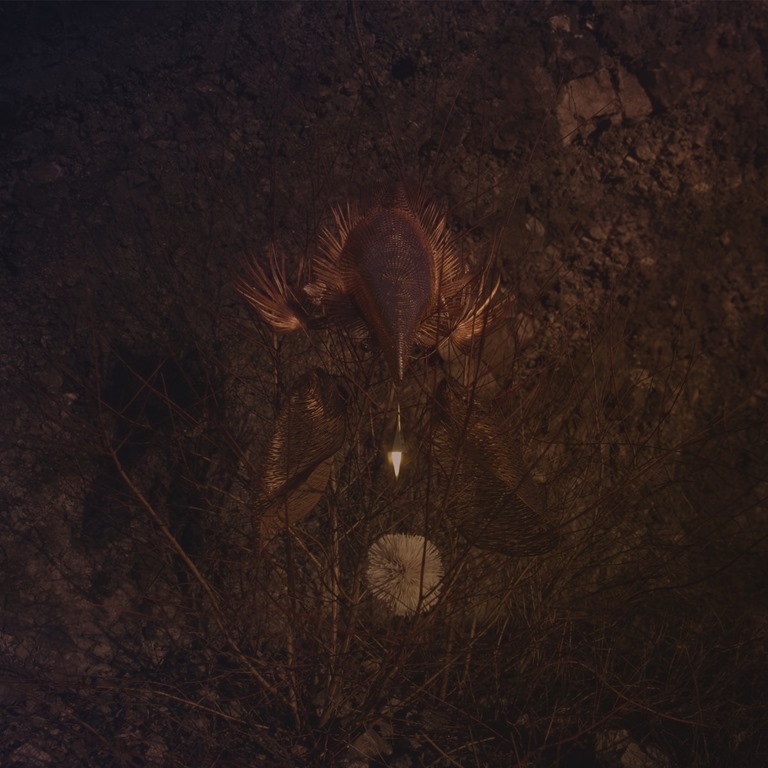
So I’ve been bigging up OMNIBAEL from the outset – not because I’m acquainted – that cuts no ice with me as a critic, and if I don’t dig the music, I’m not going to back it for anything – but because I really rate what they’re doing. And what they’re doing is… well, they’re not entirely sure. OMNIBAEL are on a voyage of discovery, and they’re inviting you – and me – and all of us – along for the ride. They have no idea where it’s headed or where it will end, and that’s a large part of the appeal. So much supposedly ‘experimental’ music is scripted and scored. Rain Soaks the Earth Where They Lie is an experiment within a long-term experiment.

Each release to date has been a document of an evolution, and their debut album roper is no exception. Twittering feedback gives way to ripping riffage that’s distorted to fuck on opener ‘Mind is a Mess’ that’s the gnarliest of black metal melted into the darkest pits of burning torture, a missive from a purgatorial inferno.

I may have written on this album elsewhere, including some abstract liner notes that capture its essence, but I haven’t previously reflected in detail on the listening experience. It’s not pleasant, but it is intense, and it is, in the same way as it is with listening to Uniform, or The Body, a full-on body slam. It’s not easy, it’s not comfortable, and it’s a physical experience – one that’s like taking a kicking from a gang. Drums hammer in like boots reining in on the ribcage, and there’s absolutely no fucking mercy across the album’s nine tracks.

The churning murk of the eight-plus minute ‘Last Days’ is pure Throbbing Gristle, and this is dark, gnarly, nasty. ‘The Repetition’ starts with a mess of overlayed tape loops that’s very much reminiscent of the Burroughs / Gysin tape loops that so influenced Cabaret Voltaire in the early days, and after a moment of crackling electronica that strays into Whitehouse / Merzbow territory, it plunges deep into torturous melting industrial metal, a dingy mess so dark and so charred as to be corrosive to the organs. It ccu88ulminates in punishing screeds of howling feedback atop thunderous percussion that hammers like thunder. There are some deeply fucked-up vocals low-down in the mix, too.

It’s not pleasant, and listening to this breeds tension upon tension, you feel your muscles tense and your head grow tight at the temples and the back of the cranium. If the dank and gloomy ethereal ambience of ‘Rung Keep’ evokes swimming underwater, it equally feels like the soundtrack to drowning slowly, and there really are no breaks on this album: despite its sonic and textural variety, it’s heavy all the way. ‘Sound of the WW2 Story’ may be a brief interlude with some soft ambience akin to the swafting of a jellyfish, but it’s still dense, tense, and oppressive, and offers but two minutes breathing before the thundering punishment of ‘Flowering backwards’, which callas to mind Swans circa 1986 and early Godflesh in dub form. The volume, the power, the force, all combine to create something utterly cruising.

Listening to Rain Soaks the Earth Where They Lie is hard. It’s a brutal nihilism I’ve been craving and welcome unreservedly; it articulates the fact that life is pain. But the pain is without letup. Rain Soaks the Earth Where They Lie is uncomfortable, painful, and very, very necessary.

Om

Dedstrange Records – 4th February 2022

Christopher Nosnibor

A Place To Bury Strangers have been pigeonholed variously in the brackets of noise-rock, shoegaze, indie, space-rock, and psychedelic rock. All of these are fair and accurate, but fail to represent the band’s expansions of these genres, and the fact that for all the noise, there is nuance. Listening to their catalogue of ear-bleeding sonic squalls reveals far more depth and range than this reductive characterisation implies.

The last few albums have tracked quite a journey, and See Through You resumes the trajectory of Worship and Transfixiation, whereby the production became evermore wayward and unconventional ahead of the rather safer-sounding pop-orientated Pinned (these things are relative, and it was hardly R1 mainstream pop). With each release, they’ve stepped further and further away from the accepted conventions of production and mixing, not only going evermore lo-fi, but also shunning by stages the conventions of balance, of tone. The vocals are way down, the drums are way up, and the EQ is utterly fucked as everything wallows in a murky midrange. It’s not an easy listen, and the song structures are far from obvious or clear either

So while recent single release ‘I’m Hurt’ leans heavily on The Jesus And Mary Chain’s ‘The Living End’ (and it’s by no means the first time they’ve taken cues from JAMC), the reverb echoes into a cavern of murk, as if a mudslide has slipped into said cavern. The chaotic crescendo that explodes by way of a finale still splinters the eardrums, but it’s not in the kind of blistering wall of treble that defined their sound up to Worship.

This evolution was necessary: they’d taken the limits of blistering psychedelic shoegaze wall of noise to – and beyond – its limits, with Worship standing as something of an apogee. But this was the album that also saw them recognise their limits while pushing beyond them. They have returned to more overtly structured songs for this outing in comparison to Transfixiation, while testing boundaries once more after the comparative retreat of Pinned. In short, it’s A Place to Bury Strangers at their best. That’s to say, it’s a squalling, blistering racket and it hurts, and there’s a fait bit going on, and beneath the crazed noise, there are some tunes. In fact, there are a fair few tunes, and some good ones at that.

The first track, ‘Nice of You to be There for Me’ feels like sarcasm and the guitars sound like melting cheese, the sonic equivalent of Dali’s clocks, a warping, dripping mess. And fucking yes. It’s as exhilarating as it is fucked up. ‘So Low’ does return to the spiralling explosive bass-driven racket of Worship and Transfixiation, but then things start to get really fucked up on ‘Dragged into a Hole’ as the frenetic disco beats are all but buries beneath a driving wall of obliterative bass and screaming guitar feedback. The distorted vocals only add to the head-smashing experience.

‘I Disappear (When You’re Near)’ is another bass-driven doomer, the pairing of a metronomic mechanised drum beat and throbbing bass that’s booming, grainy, distorted, and swathed in reverb is powerful. The guitars merely add texture, screams of feedback occasionally breaking through, while the vocals float in the swamp of noise. If It’s not already apparent, this is a noisy album. ‘My Head is Bleeding’ is kinda subdued, kinda electro, kinda pop, but in a Suicide sort pf way, and when the guitars explode in a fizzy mess, it’s an absolute rush, and everything that’s good about APTBS.

Closer ‘Love Reaches Out’ is essentially ‘Everything’s Gone Green’ merged with ‘Ceremony’: it’s the closest they get to commercial pop on this crazy roller-coaster of post-punk noise – and there is certainly a lot of noise.

So what to make of See Through You overall? It’s a solid album and quite daring, on many levels. When a band of this statute releases an album half their fans probably won’t like, you have to give respect to their prioritisation of their artistic vision.

AA

920817

Metropolis Records – 4 February 2022

Christopher Nosnibor

For years, I’ve had the rage. There is, after all plenty in this world, this life, and no doubt beyond, to rage about and against. iVardensphere focus that rage through sound rather than verbally, through an album that articulates darkness and tension through the language of sound.

‘A Whimsical Requiem for the Fey’ is appropriately titled; being a breezy, neoclassical assimilation of light-as-air plucked strings and soft, accessible melody. As such, it does nothing to prepare the listener for the instant plunge into the darkest of depths brough with the growling churn of ‘The Maw’, which features Jesse Thom. But it’s on the title track that the album really hits its stride. Tribal drums dominate a gloomy soundscape, weighted with dense bass tones, but also the portent of soaring vocals. And while the jagged strings add to the tension, the drums simply build and build and batter your very being. This isn’t rage, it’s the unleashing of vengeance via the hammering of the soul.

The individual compositions are each dramatic and powerful in their own right, and the attention not only to the details of the arrangement, but the sequencing of the album stands out, and the ambition is clear without the explanation that this is ‘a sweeping, cinematic album, equally suited as the next evolutionary step of iVardensphere, and as the film score to a post-apocalyptic motion picture.’ It’s dark, stark, and atmospheric, and thunderous rhythms evoke ancient mysticism, and scenes on barren hilltops and sweeping moorlands; tribal rituals, burials, spiritual ceremonies of great import. And there are moments when those rhythms step up, pounding harder and more intensely, so as to be all-encompassing.

As the accompanying notes outline, ‘Traditional percussion from all corners of the world, Taiko, Surdo, djembe, timpani, and more are deftly intermixed with all manner of sourced percussion sounds. Hammers and anvils, slamming doors, even the sound of a dumpster being kicked are sampled and folded into the sonic melange.’ We’re in Neubauten / Test Dept territory here, but there’s a subtlety to so many of the compositions that go beyond these comparisons too: the graceful sweeps of ‘Indomitus’ stray from anything industrial towards progressive / post rock territories, and Seeming’s vocals are almost rock.

The electronic elements are remarkably restrained in the main, with only occasional incursions, such as the bending blasts of bass on ‘Varunastra’ (which features Brittany Bindrim’s vocals); elsewhere, ‘Draconian’ brings the drones, and a low, serrated throbbing. Then, it also brings glitchy danceable beats, which evolve into another crashing assault that batters away relentlessly.

Then there’s the straight-ahead thump ‘n’ grind of ‘Orcus’ and the mournful trudge of ‘The Age of Angels is Over’; these tracks conjure very different atmospheres, but in the way the album unfolds, they develop a sense of significance. If ‘Sisters of the Vipers Womb’, with Brien Hindman’s vocals, seems a little too cliché in its sinister stylings, it sits in the broader context of an expansive and immersive work that has a trajectory through ever-changing moods, and to powerful effect.

AA

a0129874839_10

Room40 – 14th January 2022

I know I’m not alone in experiencing the sensation that large parts of my life have been spent wading through treacle. It may be something of a cliché, but it’s a valuable simile for that slow struggle.

Although these are the associations circulating sluggishly in my mind, they have no bearing on the origins of the album’s title, which is, as Cooper himself explains, ‘a soundtrack for an otherwise silent film. The title of the album, and of course the film, is borrowed from my late friend Fred Hardy’s book The Religious Culture of India – Power, Love and Wisdom, considered to be one of the most important books on the subject. In this book Fred wrote,

“In 1835 the historian Macaulay investigated whether there was anything in the traditional Indian systems of learning and education that could be used in the training of native personnel. In fairness to Mr Macaulay, we must remember that those were days long before the writings of a Tolkien or a Mervyn Peake. He came to the devastating conclusion that people who believe in oceans of milk and treacle had nothing to offer to a modern system of education. A straightforward, realistic assessment in an age that believed in science and realism! The effects were far-reaching. Traditional Indian ways of looking at the world were written off as obsolete. India was provided with three universities (Calcutta, Bombay and Madras, founded in 1857) as the hothouses to nurture a custom[1]built, English-speaking Indian intelligentsia. A new age began for India, and two of its inevitable consequences were the demand for independence and the production of atomic bombs and satellites by the post-independent Bhārat.”

This places Oceans of Milk and Treacle in an altogether more academic context, and perhaps, if only a shade, this knowledge does colour my appreciation of the work specifically, an album consisting of nine compositions.

The pieces themselves present a collaged array of sounds, from distant rumbles and clanging hammers, to wind-chimes and static crackles. The clanking windchimes and eerie vocal moans and bleats, which drift amidst a breaking storm on the first piece, ‘A Chart of the Wet Blue Yonder’ contrive to create something quite sinister, and a significant contrast from the playful Jazz frivolities of ‘Boogie Boards and Beach Rubbish’. Oceans of Milk and Treacle is very much an album of contrasts and of strange sounds, combining chillout grooves and collaged field sounds and weirdness, often simultaneously.

It’s one of those albums that packs in so much, it transcends definition or categorisation, for better and worse – because genre distinctions tend to be lazy marketing pitches, and music – or any other artistic medium – should just be. Why can’t a book simply be a book or a story? Why does I have to be crime fiction, a thriller, sci-fi, or otherwise tossed into the netherworld of literary fiction or speculative fiction? And so why can’t an album simply be an oddball amalgamation of all sorts and simply be an album? Electric guitar and Moogs or something tinkle around while something electronic happens in the background to fill the space like crickets scratching, but clearly actually something less natural in origin on the warping, bending array of almost-pleasantness of ‘Tirta Gangga’, a woozy collision of sedated bleeps and chimes that sounds like it’s nodding off near the end – and it’s not an unpleasant experience.

The title tracks goes deeper into jazz territory, but there’s trilling analogue noise humming in the background, and it nags away at the peripheral sense, while on ‘Mono-Hydra’, amidst tweeting birdsong, the musical elements sound warped., bent, as if the tape is stretched and the notes spin off their spindles to spin into strangeness. ‘Under Vertical Sunlight’ brings hectic percussion to the fore, amidst drones and groans, before drifting into abstraction on ‘Toward Great Piles of Masonry’, which sounds like a wander down a city street while the clubs are still open.

Oceans of Milk and Treacle isn’t really a journey, but then what is it? A meandering sonic amble through a succession of sonic spaces and a range of scenarios? Possibly. Whatever it s it’s interesting, and devoid of genre conventions.

AA

a0586186042_10

Room40 – 14th January 2022

Christopher Nosnibor

One of the many wonderful things about music is that it has no limits, and no constraints. There is music to be found in anything and everything, and music can be made my anyone, anywhere, anytime, with anything, or even nothing. Steve Roden’s choice of instrumentation on Oionos is noteworthy for being quite unconventional, as he explains: ‘The audio was built from field recordings and small “poor” objects such as tin whistles, toy harmonicas, and the like. These “instruments” suggested by the museum of musical instruments in Athens, where the proper instruments take up most of the museum, but there is a wonderful display case in the basement with musical toys, religious objects, and other sounding devices not considered musical instruments.’ These instruments and objects combine to conjure a magical, mystical soundscape with overtly musical sounds contrasting with less overtly musical sounds and woven together to create something that occupies a unique sonic space.

In popular western culture, we’ve come to understand only the narrowest of definitions of music, which for many is represented by an album consisting of a number of ‘songs’, bite-size pierces which are tightly structured and subject to conforming to certain parameters, including rhythm, and suchlike. Even many ambient works, which delineate many of those mainstream conventions, are created within limitations; these are compositional factors, imposed by the creators, rather than being significant of true musical limits.

With Oionos, Steve Roden frees the music, presenting a single, continuous piece with a running time of one hour, one minute, and fifty-five seconds. Time was when the CD format placed a time constraint of seventy-two minutes on a release, but technology has evolved, and the duration of this piece feels entirely natural, as if the music has run its course to a satisfying conclusion by the close.

The composition is, in many respects less concerned with time, than with place. As Roden writes on the album ‘Oionos was created for the exhibition The Grand Promenade, in Athens, Greece. The exhibition took place in various archaeological and historical sites in central Athens, creating a situation for contemporary site specific works to be in dialogue with their historical surroundings.’

Although the location was integral to the album’s inspiration, it’s less integral to the listening experience when taken out of the context, and the music featured is, if not necessarily ambient in the most conventional sense, it is very much abstract, and also very much background sounds rather than music one actively listens to. But zoning in and out is a pleasurable experience, which perhaps serves to highlight the multifaceted nature of the sounds. Metallophone-like notes chime and ring, seemingly with an almost random notations and the loosest of rhythms, against a backdrop of scrapes and drones, while sounds like wind gusts and lapping water fill the space in the background. While the different elements conglomerate throughout, by half-listening, one finds oneself becoming aware of them individually at different times, and you find yourself experiencing the recording differently at different times as you tune into and become aware of the different sounds, textures, and tones.

As a whole, Oionos feels like something living and breathing, as if the sounds in combination have taken on a life of their own – and in many senses, they have, and they merge together to form a shifting, pulsating whole. It’s unfamiliar, but not eerie despite its otherness; there is a certain calm that radiates throughout the duration.

AA

a2445050686_10

4th February 2022

Christopher Nosnibor

Nordic Giants are one of those acts who seem to exist almost mythically. Listening to their recordings, watching their visuals, even witnessing their live shows, does little to render them any more concrete or real. The duo go by the names Loki and Rôka, but beyond that, we know nothing. That they have managed to remain so shrouded in mystery is a remarkable achievement, especially in the Internet age. In doing so, they remind us of so much of what is missing in contemporary culture. Celebrities used to be distanced, unobtainable, out of reach, while underground acts were entirely obscure. It was possible to control the limits of what was in the public domain, by means of mailed or faxed press releases. Any kind of presence was optional, as radio play and word of mouth did the job of promotion. Times have changed, expectations have changed, and not necessarily for the better. Artists are expected to be so much more public now, buy to what benefit, ultimately?

Kudos, then, to Nordic Giants for being Nordic Giants, and doing what they do on their own terms. Symbiosis follows their debut album, A Sèance of Dark Delusions (2015) and their documentary / soundtrack project, Amplify Human Vibration (2017), and as such, it’s been a fair time in coming. So much so, that one worries how things will stand up in a contemporary context. A fair few bands making their post-lockdown return haven’t fared so well, largely because they still sound like their old selves – and times have changed, life had moved on. There may be nostalgia for the old times., but… we don’t need to relive the past times. This is not the early 00’s heyday of post-rock.

But Nordic Giants exist in their open space, and their own time.

According to the accompanying blurb, ‘Symbiosis represents the interdependent relationship of all life. The union and blending of polar opposites, the harmony created when two different elements combine, not just in nature or in a philosophical sense, but at the root creative level… This collection of songs blends light with dark, moments of ambience with power and the subtle with the mysterious – themes that Nordic Giants continue to experiment with extensively over the years.’

The first track, ‘Philosophy of Mind’ comprises many features typical to Nordic Giants: heraldic horns, vocal samples, resonant bass and rolling drums, depth, layers, atmosphere. It’s a mesmerising piece, spacious, moody. Rene Descartes’ famed quote (in translation) ‘I think, therefore I am’ echoes over the lilting piano, ahead of a roiling crescendo, and the closing couple of minutes grow in tension And scale. This is classic Nordic Giants, and the album progresses neatly from here. It may not present may serious surprises, but it does present a succession of immaculately-conceived and perfectly executed compositions, from the driving ‘Anamorphia’ to the supple, subtle melody of ‘Hjem’.

The featuring of guest vocalists – Alex Hedley on the expansive ‘Faceless’ and Freyja on ‘Spheres’, with its delicate, poised atmosphere and cinematic sound – add to the diversity of sound and also the stylistic range of Symbiosis, an album that really reaches deep into the emotional space. It’s lusciously-produced, but at the same time poignant, and you ache on hearing the soaring strings and the nagging piano trills. There are moments of ambience, of mind-sprawling semi-ambience, and of absolute magnificence.

Symbiosis is dateless, ageless, marvellous.

AA=

Digital_Cover

26th November 2021

James Wells

This one’s been a looooong time in the making. Like so many other creative projects, the pandemic compelled Frank Svornotten to get his shit together to revive a project that to all intents and purposes was dead and buried, and to see it to completion.

As the bio that accompanies Retroject explains, ‘Retroject is an album that was begun in 2001 but has just seen the light of day in 2021. Some of the songs may feel nostalgic and dated and that is because, well, they are!!! An excess of free time during the Covid-19 pandemic eventually grew tiresome and monotonous. So, it was decided to finish the album that had begun many years prior!’

Much as I sympathise with all of the people unable to work during lockdown, and all of the furloughed workers who struggled on reduced salaries, I can’t help but be a shade envious of all of these people who found themselves with an abundance of free time to explore creative avenues. Having a dayjob that meant working from home was entirely feasible, meaning that it was business as usual, but with home schooling on top thanks to the closure of schools, I found myself with less time than ever, and I couldn’t even go to a gig or hit the pub to unwind after.

Retroject certainly isn’t an album to unwind to, either. It’s a gnarly electogoth effort, with hefty dollops of early NIN and the signature Wax Trax! electro sound providing much of the influence there. ‘W.H.A.T’ could easily be mistaken for an outtake from Ministry’s Twitch, and would also have easily made the cut for a Wax Trax! single release in the late 80s / early 90s, while ‘Love, Hate and Machines’ really brings that KMFDM vibe and slams it in hard with some cybergoth dance grooves. Elsewhere, ‘Train Song’ is pure pop and is more Aha than aggrotech.

Some of the tunes may sound a shade dated (‘Mysterious Angel’ sounds like Depeche Mode circa 1981, which is particularly eye-opening for material from 2001), but then again, there are acts still cranking out material that sounds exactly like this, and there are some real industrial stompers along the way, and these never tire or grow old, regardless of the instrumentation, regardless of how tinny or trebly the synths sound. What matters, ultimately, are the songs, and Retroject packs some real bangers, propelled by throbbing synths and splenetic rage.

AA

a3867323310_10

4th February 2022

Christopher Nosnibor

It’s fitting that a doom / sludge metal act should take their time over things – and Sheffield trio Kurokuma have really taken their time over things in order to deliver their debut album. Having formed late 2013, they’re one band whose progress can’t have been said to have been hampered by the pandemic: instead, they’ve been evolving their sound over the course of a number of single and EP releases, notably the Advorsus EP in 2016 and 2018’s ‘Dope Rider’ single. This means that the arrival of Born of Obsidian feels like an event, a monumental summit in the band’s career. And if five tracks, in the face of it, does‘t look like much by way of a definitive statement that represents the apogee of some eight years of work, the fact that all bar one are over eight minutes long and each one packs the density of a black hole gives some necessary context.

‘Smoking Mirror’ lands things perfectly; there’s a definite groove, even a hint of funk – not in the Chili Peppers’ funk metal sense, but in a twisted, fucked-up psychedelic sense – to the bassline that bounces along before the crushing power chords crash in. The vocals snarl and scraw and everything comes together to deliver optimum weight. It may be a cliché to sat it needs to be played loud, and playing any metal not loud is a mistake, but having been recorded in London with Sanford Parker (YOB, Eyehategod, Indian), volume really increases the appreciation of the quality production. There’s not only great separation between the instruments, but each brings something more to the overall mix. On ‘Smoking Mirror’, your attention is likely to be on the churning guitar, but the drums are outstanding in the way they kick through the dense, treacle-like distortion.

They promise an album that’s ‘equal parts primitive brutality and mind-bending psychedelia’, and it’s all there in the pulverising repetitions of ‘Sacrifice to Huitzilopochtli’. For its brevity, it packs in a neatly-constructed structure, with intro, verses, chorus, mid-section – which brings an explosive change of tempo – and megalithic, gut-churning riffing that rages hard and heavy. It demonstrates that there’s a lot going on with these guys, and that they’re not just lug-headed chord-thudders, but possess a level of musical articulateness that separates them from many of their peers.

Single cut ‘Jaguar’ is, it turns out, entirely representative, a roaring beast of a tune that has a rare swing to it – and a lot of cowbell. It warps and lurches with remarkable dexterity for something of such colossal weight. The repetitive riffery of ‘Ololiuqui’ batters and bludgeons relentlessly, maintaining its form and instead varying the tone and depth of the distortion, and stepping up the volume incrementally, before the nine minute ‘Under the Fifth Sun’ delivers a decimating conclusion.

With bulldozing, unyielding mass and density, Born of Obsidian is high-impact: Kurokuma have mastered the power of hard volume and brutal force – as is in keeping with the genre. But where Kurokuma stand apart – and above – is in the detail, the nuance, the deviation from the blueprint, which shows a unique flair, and surely Born of Obsidian is destined for cult status.

AA

a0681611664_10

Everest Records – 14th January 2021

Christopher Nosnibor

Language is fluid, it evolves. Sometimes I appreciate that, and like the fact. Other times, this is something which can be intensely frustrating, and it seems the meaning of hypernormal has evolved – seems to have been reconfigured, rechannelled – with remarkable rapidity. Initially, it was something of a colloquialism, an on-trend sassy term to describe something that was so normal it was beyond bland.

The connotations of the scarily mundane, the individual who was so lacking individuality that they made clones appear unique, which emerged late in the first decade of the new millennium remained largely stable until Adam Curtis delivered his seismic three-hour documentary in 2016, which espoused the theory that HyperNormalisation is a process whereby a mundane, readily-digested version of life and society has been superimposed over the complex world by those in power. And so according to this, we now live in a ‘fake’ world. And this concept of a constructed reality overlaying the true reality seems unsettlingly feasible. What, and who can you trust or believe? Trust no-one; believe nothing.

Perhaps because I think too much and don’t sleep enough, I’ve wondered ever since I was a child if the world we live in is real, or if we’re all figments of our own imagination, and if reality is a construct. Yes, I experienced existentialism combined with some kind of take on The Matrix at the age of five. But I digress, and there is a point to all of this, and that is that nothing is fixed, nothing is certain. We know so little, we don’t even know ourselves.

Pless’ hybrid sound is absolutely not normal, and it’s certainly not normal beyond normal so as to be the next level of mundane; but nor does it feel entirely like a carefully-constructed fiction which bears the ultimate lie. That said, there is a certain element of deception here: the façade of simplicity, of minimal, semi-ambient electronica belies the detail and complexity of these layered compositions, and as such, it’s something not normal, disguised as something that resembles normal, or at least familiar. Ultimately, it’s something else entirely; something mellow, something layered, something dark and something light. All of this filters into cognisance in the first piece, the slow-paced, semi-abstract ‘Azure’, whereby spectral synths drift around a metronomic drum and ever-moving bass tones.

The drum sound is noteworthy: it’s somehow immediate, up-front, and dry, as well as reverby, landing between Joy Division and Duran Duran.

The synths of ‘La Cienaga’ lean towards A Flock of Seagulls, but the stuttering drums and stammering incidentals contribute to transporting this track to another place entirely, one filled with dark shadows cast by brooding electropop and darkwave. Meanwhile, the six-minute ‘La Grenouille Volante’ has a bass that thrums like an engine throbbing at the dark heart of its soft ambient washes and distant drums. Around two-thirds in, it unexpectedly revs up a gear, and while the same, the additional volume translates to additional intensity, too.

The haunting, spectral organ drone of ‘Ante finem’ is blasted through with hefty tribal percussion, gradually shifting to a slow, deliberate bass-driven trudge, while ‘Fog City’ is every bit as murky and disorientating as you would likely imagine, with vocal samples and reverberated snare cracks echoing through stark synth stabs, and ‘Hot God’ comes on like a collision between Kraftwerk and DAF with a dash of early New Order, mining a deep seam of late 70s/early 80s electronica. The final track, the ten-minute ‘Reodorant’ is a dark-ambient epic in every sense, deep, moody, a little unnerving.

Each of the pieces shifts as it progresses, and evolves over the course of its duration, often subtly, twisting through expansive soundscapes front one plateau to another. Under the cloak of minimalism is shrouded considerable detail, and a quite remarkable focus on texture and movement. Even in the most stagnant of moments, there isn’t an element of stillness here. It may be cold, it may be distanced, but it’s also quite its own work. Normal? What even is that anyway? Stark, sparse, yet so, so rich, with Hypernormal, it becomes clear that Pless is more.

AA

a2732208461_10

3rd December 2021

Christopher Nosnibor

If there’s ever been an emerging theme across music of all genres in the last year and a half, it’s isolation. Yes, if a global pandemic has achieved one thing, it’s brought everyone together in their feelings of isolation.

And so it is that we learn that the tracks on Graceful Isolation ‘address the feelings of isolation and coming to terms with new norms that the past year has brought. The title is derived from the fact that over the course of the album, none of the collaborators were ever in the same room.

One could counteract that in creating an album featuring numerous collaborations (notably Kimberly Kornmeier of brooding orchestral electro goth act Bow Ever Down on vocals on three songs, but also a slew of remixers), Dave McAnally has been far from alone despite being forced to work in physical isolation, yielding an album that demonstrates that distance is no object and geography is a state of mind, even if it is no substitute for proximity.

‘Poison My Skin’ makes for an atmospheric opener, with stark, minimal synths and drum machine providing a cold backdrop. ‘You’re never gonna touch me again’, Kimberly croons in a detached, robotic monotone, with subtle hints of Siouxsie, while giving voice to the thoughts that have echoed around my head that there are likely many people I have seen, heard, and been in the presence of for the last time in my life. I don’t miss the office, I don’t miss the people I used to work alongside in that artificial, uncomfortable, unnatural space, and yet… well, none of us expected that way of life to be curtailed, and certainly not in the way it was, an instant switch-off. March 2020, on being told to go home to work, I never anticipated being away more than a few weeks. And here we are… people have moved on; people have left; people are no longer with us. It’s been a long and painful couple of years.

‘All the Pieces’ and in particular ‘Impossible Dreams’ are stripped-back and sparse in their arrangements – not quite demos, but certainly skeletal, with stuttering drum machines providing the brittle spine to the songs. The lack of flesh on the bones is integral to the appeal here.

‘Drowning in the Past’ and ‘Illusions’ are tense, queasy in their taut atmosphere. McAnally resumes vocal duties, and said vocals are pegged low in the mix, compressed, accentuating the dislocation and distance. The former pegs a particularly expansive guitar solo to some nagging synths and comes on like a proggy James Ray, and it’s some good shit if you’re on the market for dark, gothy electropop.

My only niggle – surprisingly or perhaps not so much – would be that the thirteen tracks on the album consist of only five individual songs, and with three mixes of ‘All The Pieces’ slap bang in the middle, in addition to the original version, plus three versions of ‘Drowning in the Past’ it’s does get a little bit repetitive, and it may have worked better as an EP and a remix EP rather than a full-length album in its own right. Put another way, I’d play the grooves off the EP, but would probably only spin the remixes every now and again – not because they’re poor remixes, but because the original cuts hang together so well, it feels like a fully-realised document that requires no adornment.

AA

a2053013240_10