Posts Tagged ‘Album Review’

Sub Rosa – 26th November 2021

Christopher Nosnibor

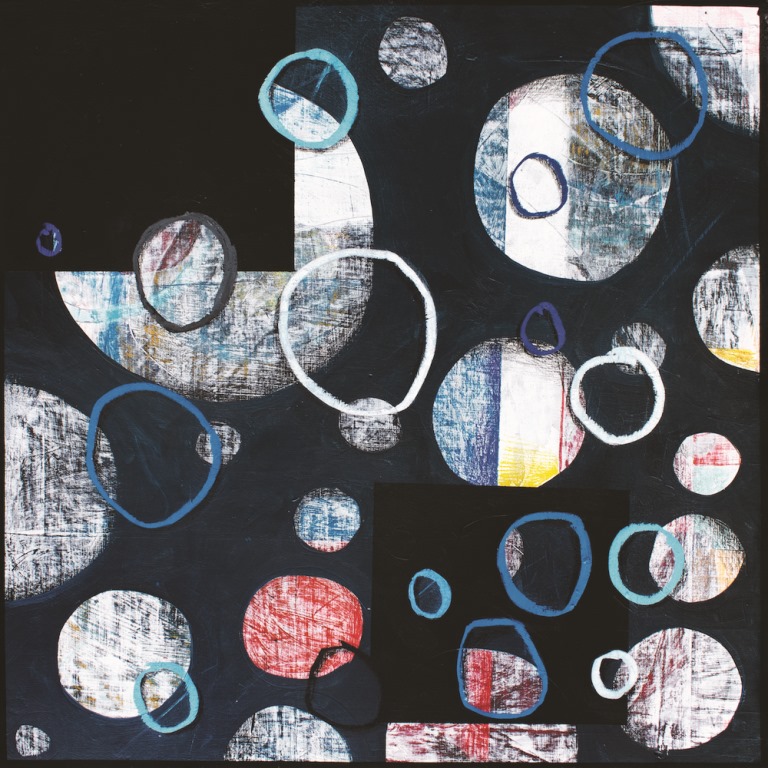
In the scheme of Ghédalia Tazartès singular career, which saw him featured more prominently in dance, theatre, and cinema than on record – a career spanning back to the mid-late 70s yielded just thirteen albums – this release is significant in several ways, not least of all in that it contains probably his final recordings prior to his death in February 2021 at the age of 73. It follows his last album release, Superdisque, which was released a full decade ago, in 2021. It also documents a collaboration that almost never happened.

As the story goes, ‘Tazartès and Chatham had met once in 1977 at CBGC’s and had not seen each other since then when they were asked by their mutual agent to play a private show in Paris. This happened in September 2018 in a house with a garden where sax player Steve Lacy had lived back in the 1990s. This album presents the recording of this show plus another show at La semaine du bizarre festival in Montreuil, France a year later, mixed with a couple of studio sessions.’

Their coming together yields something – and I’ve struggled to find a word that comes anywhere near describing what others have simply classed as ‘indescribable’ and ‘unclassifiable’ – most otherly. Tazartès singing is, in itself not only unique as a style, but also as an experience. It’s less about what it conveys as such, and more about how it touches you. It’s certainly not singing in the conventional sense; and yet, it is very much musical, rather than mere vocalisation. Tazartès sings from different parts of the body, and his voice tremors and quivers, trills, gargles, and ululates.

On the four parts (or ‘actes’) of the ‘Jardin de Simone’ performance, Chatham’s sparse, minimal backings provide a shimmering backdrop that ripples and glimmers softly. On ‘Acte 1’, it’s chiming notes, picked, on a clean electric guitar, while on ‘Acte 2’, it’s wavering woodwind which accompanies Ghédalia’s soft croon. Scraping strings create a dolorous discord alongside a wailing, weeping, skittish vocal performance on ‘Acte 3’ while the fourth and final piece floats into the atmosphere in amorphous waves if sound.

The three parts which make up the ‘Semaine du bizarre’ set are quite different, with Chatham’s backing on the ten-minute ‘Acte 1’ being denser, the electric guitar rattling and with strains of feedback filtering through the stuttering notes. The stutters are not of hesitation, but of tightly-reined tension, and over time the form evolves into an elongated tapering drone. The vocal adopts an almost falsetto-range droning quality, at times shifting to a guttural throb, at others, an open-throated note sustained on, and on. Woodwind drapes and twists around like fingers of mist. In combination, it feels mystical, in an impenetrable, occult way. Overall, this set is more drone-orientated, Tazartès’ vocals venturing more toward the lower register, the growlier, the more atonal. And yet, in places, he soars almost operatically, albeit descending like a punctured bellows after, while the instrumentation wheezes out, fatigued.

The vinyl finds a performance on each side, while the digital version features a bonus cut, appropriately entitled ‘Encore’. This, too, is quite drone-orientated, with the addition of a certain hint of an Eastern twang.

As a whole, Two Men In A Boat feels like a meditative work, and one which exists out of any kind of context, real or imposed. Without any constraints in terms of structure, culture, time, place, or even meaning – explicit or implied – the performers can be found revelling in the freedom of musical explorations. These are songs of the soul, and Two Men In A Boat is a unique document.

AA

SRV520_front

Southern Lord (CD/DL) | Pomperipossa Records (LP – Europe) – 14th January 2022

Christopher Nosnibor

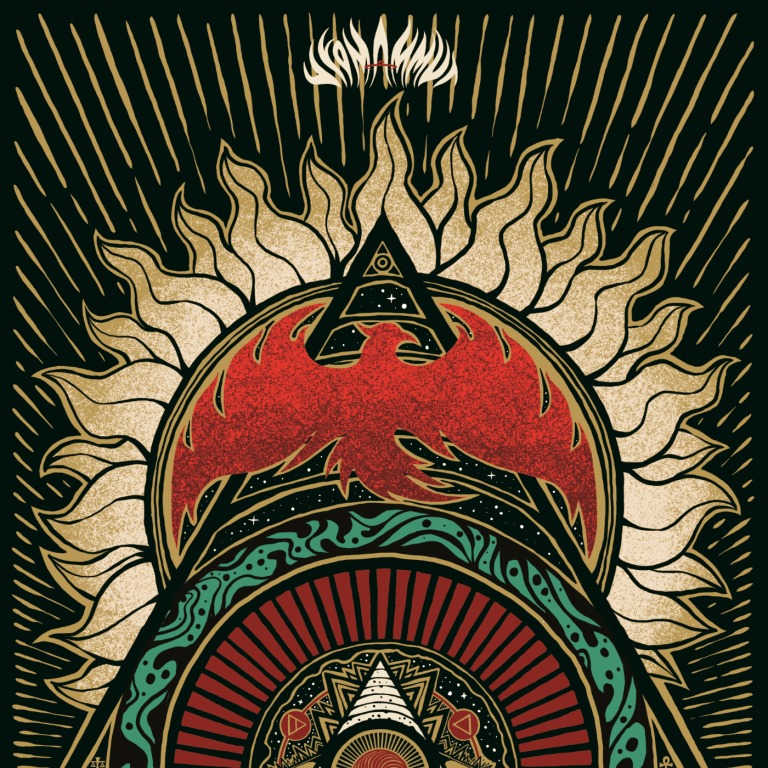
Perhaps the last thing one would expect to find being released on Southern Lord is a live jazz album. The label is, after all, home to much to the rawest, loudest, harshest metal and hardcore punk, not to mention, of course, the doom drone legends that are Sunn O))). But then, if Anna von Hausswolff seems like something of a roster misfit, it’s fair to say that her catalogue doesn’t conform to any obvious jazz tropes either.

The performance, from 2018, as the notes advise, features six fan-favourites from the two beloved albums; The Miraculous and Dead Magic, with the backing of a full band including additional vocals from her sister / cinematographer Maria von Hausswolff, and it’s ‘The Truth, The Glow, The Fall’ from Dead Magic, which opens the set in mesmerizingly hypnotic style. Against widescreen drones and rumbles, von Hausswolff’s vocal soar and swoop operatically. It’s a powerful and compelling start which paves the way for the grandiose expanse of creeping fear that is ‘Pomperipossa’ from The Miraculous.

‘The Mysterious Vanishing of Electra’ slows to a crawl with a Swans-like dirge centred around a simple, trudging repetition of bass and drum, and it’s here that things really take a turn for the heavy and the intensity builds. This rendition reminds me of the epic take on ‘Your Salvation’ by Foetus on the Male live album, grinding away at a single chord and hammering it into the ground before blossoming into something jaw-droppingly magnificent, and there simply are no words.

From hereon in, things only become more intense, more spectacular, with the brooding atmospheric ‘Ugly and Vengeful’ stretching out to almost twenty minutes, and leads the listener through an epic journey through a succession of sonic terrains. It’s a clear centrepiece within a set of vast sonic and emotional scale. It’s far, far beyond the domains of jazz, and even beyond the domain of ‘mere’ music: this is transportation and transcendental, taking you beyond the physical world and out of your own space to one beyond imagination. What’s perhaps most impressive is that this is all live; there’s no studio tweaking or trickery, but musicians conjuring pure aural alchemy in real-time.

After the delicate respite of ‘Källans återuppståndelse’, the fifteen-minute ‘Come Wander With Me Deliverance’ brings a suitably epic finale. The backing may be sparse at first, but the understated, almost wispy drones place von Hausswolff spectacular vocals to the fore. Then, when the drums and megalithic guitars crash in, they really do bring the weight. Yet the vocals remain the dominant force, and it builds – and builds, and builds – to a monumental crescendo. To have actually been there! The recording does a superb job of conveying just how gargantuan that finish would have been, and while there truly is no substitute for being in close proximity to a band working together, witnessing that connection and intuition as it flickers like electricity across the stage, and nothing can touch the experience of hearing, and feeling, music at gig volume as it vibrates the bones, Live at Montreux Jazz Festival comes very, very close.

We’re days into January, but it’s unlikely there’ll be a better live album this year.

AA

752975

Powdered Hearts – 25th December 2021

Christopher Nosnibor

I vowed not to cover anything Christmas-related, simply because, well, because, and also because fuck it. Christmas releases tend to be mawkish, and / or shitty cash-ins, which I have simply no time for, and even a general distain. Charity fundraisers are laudable, although in a just world there should be no need for them because ultimately the state should be supporting the needy and vulnerable without musicians, most of who make next to nothing from their art, having to donate their small royalty fees to food banks and the like. Christmas sucks on so many levels that it’s an essay or even a book in its own right, but this perhaps isn’t the place to begin expounding any of that.

But here we are, and here I am making an exception, and for what I feel to be the right reasons, with the additional bonus that this is no crappy cash-in, and no motive beyond itself.

The prodigiously prolific Gintas K celebrated Christmas unconventionally with yet another release, this time in the form of a Christmas treat entitled Christmas Till The End. With five tracks in all, which are mostly shorter pieces, apart from the twelve-minute title track, it’s quite a departure from much of his back-catalogue, not least of all some of his experimental digital explosions of recent years which have seen him move from microtonal explorations to squelch-laden sonic chaos delivered by means of some nifty software run though an ancient Lenovo Thinkpad (something I have infinite respect for: so many musos have state of the art hardware, while I’ve discovered for myself that reconditioned corporate laptops even from a decade ago have better specs and are built more sturdily than the majority of consumer-orientated laptops). Whatever the sonic differences, though, he’s maintained the same process, namely recording each track live in a single take with no overdubs.

Christmas Till The End may not be the frenzied digitised froth of recent releases, whereby GK simply blasts out various strains of laptop-generated whirring, blooping, crackling noise, and you couldn’t exactly call it a conventional Christmas album, or a celebration of the festive season, either. It’s more of an assemblage of elements of Christmas collaged, crossed out, crunched together.

If the first track, ‘Bah’, perhaps speaks for itself, ‘Für Elise’ presents a picture that highlights the complexities of Gintas’ work. It features Beethoven’s ‘Bagatelle No. 25 in A Minor’ (aka ‘Für Elise’) and mangles the absolute fuck out of it, because it’s a Gintas K digital mess mash-up. There’s no overt or explicit statement here but trashing the piece feels more like a desecration of the Christmas spirit than a celebration, an act of destruction that feels wonderfully irreverent and more than just a little cathartic in context. It is, also, an ultimately avant-garde act of destruction, in keeping with the principle of destroying the old to build anew. Here, Gintas renders that destruction performative, integral to the form and content.

‘Hymn Lithuania’, at first, does sound overtly Christmassy: a rendition of the Lithuanian national anthem on a glockenspiel, the notes ring out, chiming, bell-like and charming. But after about a minute, it begins to degrade and disintegrate as extraneous noise, feedback and bleeping whistles begin to disrupt the tranquillity, while the delicate piano of ‘vivaLIDL spring’ is ruptured by bomb-like detonations and the clatter and thud of descending rubble. If I’m not mistaken (and I may well be), a corruption of Vivaldi’s ‘Spring’ played at about a quarter pace provides the backdrop to this grim scene; you can almost picture the pianist playing, the film in slow motion, while the building collapses in flame around him. The wordplay is also worth noting – I’m assuming LIDL is bigger in Lithuania than Aldi, as VivALDI would have been the most seamless pun by which to highlight the commercialism of the season.

The title track wraps it all up nicely, and ventures closer to K’s whiplash blizzard off whirrs and bleeps, although in a relatively restrained form, whereby the discombobulating discord whirs and warps over delicately chiming tones. As things slowly disintegrate – both on the album and in the real world, it feels more like Christmas for the end: this is the soundtrack to the decline. May the end come soon.

AA

a3680885656_10

Klanggalerie – 5th December 2021

Christopher Nosnibor

From the Greek xénos, a noun meaning “stranger, guest” or an adjective meaning “foreign, strange”, xeno has come to used as a prefix meaning “alien,” “strange,” or “guest.” Meanwhile, ‘lith’ refers to a stone (making megalith and monolith self-explanatory).

Elliott Sharp’s power trio Bootstrappers’ brand of free jazz / classic rock crossover, they say, is ‘filtered through the ethos of cyberpunk, techno, and free jazz: raging, psychedelic, and filled with fantastic extrapolations’, and since the group’s inception in 1990, they’ve undergone numerous changes in lineup, but the ethos has remained the same, meaning that this offering truly is a strange stone – one that’s hard and soft, smooth and rough, not just in different places, but in some patches, all at once. Such a stone should be geologically impossible, but then, so should the sensory explosion of the seven wildly varied and inventive compositions here, courtesy of Sharp, along with Melvin Gibbs and Don McKenzie.

If the first, ‘Telentechy’ is, at least on the surface, a fairly standard jazz-leaning rock workout, it also possesses enough detail and enough changes to render it rather more. It does seem customary for many such acts to open an album with a track that sounds like a slowly-winding down finale at the end of an hour-long live performance, and this track just does just that, but where so many similar acts lose my attention is in making every subsequent piece sound like another eight-minute winddown and seventy minutes later you’ve had nothing but a crashing, discordant conclusion and not a lot else. So while Bootstrappers do essentially begin at the end, and have numerous sprawling, somewhat formless expanses of barely-contained chaos on Xenolith, they also present numerous changes in mood and tempo, even approximating structural form in places.

‘Sieze the Mement’ is a wibbly, noodlesome piece that evokes eastern scales while also hinting at a dizzying progressive / Krautrock crossover. Immediately after, and after bouncing along for about four and a half minutes, I suddenly realise that ‘Lo Shu’ has grown quite funky in its groove… but then just as the dawning occurs, so the groove melts and dissipates into so much flickering light.

There is a lot going on, but where Bootstrappers succeeds and stand apart is their being only three: this necessitates more minimal arrangements and means they’re not prone to the spells of chaotic discoordination whereby it sounds like six people playing six different tunes in different keys and different time signatures, and instead feels altogether more focused for the most part, and as a result, they do pitch into some nice grooves that you can really get into.

According to their bio, ‘Future editions of Bootstrappers may see the group expand to orchestral dimensions’. While this may be an exciting evolution, Xenolith evidences that they’re fine just as they are right now.

AA

a0588468219_10

1st December 2021

Christopher Nosnibor

Do you ever feel that the problems facing humanity right now are of our own making? That the phrase ‘scum of the earth’ applies to humanity as a whole, because we as a species have simply fucked everything up beyond all repair? Because the simple fact is, we have. What other creature destroy its own habitat as well as those of nearly all others? Parasites seek to achieve symbiosis with their host; viruses mutate to become more transmissible but less fatal; the aim is not to kill its host but to thrive and expand. Mankind is worse than parasitic, the most brutal virus that evolves slowly and in ways which are counterintuitive, namely to exhaust its host. Where do we actually go from here? The prospect of inhabiting Mars with colonies because we’ve fucked up the world we were born to seems beyond insane.

The shock-factor-monikered Skat Injector are – as you’d likely expect – upfront in their positioning, pitched as serving up ‘Grindcore-inspired speedcore and a diatribe of anti-human propaganda because that’s what we deserve for what we’ve become.’ They have a deep sense of self-loathing and misanthropy, and it’s abundantly cleat on this dehumanised, inhuman blasting racket that’s dark, deep, glitchy, subterranean, demonic, wrecked on every level.

They rail against ‘Willful [sic] ignorance, habitat loss, animal abuse, global ecocide, global warming, environmental pollution, overpopulation and many other attributes of a leeching narcissistic race which needs to live within its bounds’. They shouldn’t have to; this is how life should work.

On Bled Under A Burning Sky, Skat Injector pound and rage and rage and pound, as grating, raw-threated vocals spit, snarl, and grind against a backdrop of frenzies percussion. The lyrics aren’t always – or often – decipherable, but the sentiment is clear.

‘All Tomorrow’s Genocides’ is like a grindcore Prurient, with soft, spindly synths slowly spinning misty swirls of fear chords around pulverizing drill-like beats. Explosive doesn’t come close to a fitting description.

‘An Earth Cleansed with Flame’ goes full harsh electro and is straight up Chis and Cosey trance backing, at least at first, manifesting as aggressive dance with harsh vocals, while the six-minute ‘The Future Sound of Suffering’ brings the suffering and it’s painful in its crunching brutality. ‘Vanishes Rapidly’ is constructed around explosive dynamics, and flips from near ambience to the firing of an AK-47 directly into the ear. It’s brutal and it’s savage, but also very much the ultimate expression of the industrial era, and ‘Obsidian Dawn’ only amplifies and intensifies. It fucking hurts.

The album is dominated by beats so hard and fast they sound like drills and nail guns, this is industrial and its hardest and most industrial, the sonic equivalent of applying a power drill on hammer setting to the eyeball.

At almost fifty-two minutes, it packs a lot of firepower, a lot of punch – so much so that it leases you panting and pounded – in a good way, of course, assuming you have at least a faintly masochistic streak and appreciate music that’s as much about testing your endurance as it is coaxing and massaging the pleasure zones with a battering ram and a taser simultaneously.

The second CD – another fifty-three minutes – of instrumental and extended versions of the album’s tracks is certainly not one for the passing listener or casual fan, and it’s perhaps not essential even for moderate fans, although the nine-minute extended version of the title track is certainly a nice pain-inflicting bonus.

AA

a0672851917_10

Southern Lord – 26th November 2021

Christopher Nosnibor

Long after the heyday of the legendary Peel Sessions, BBC sessions remain something to be revered and something special. Even back in the 80s and 90s, when Joh Peel’s show was the place to gain exposure as an underground band, and a Peel session the pinnacle of prestige for any act outside the mainstream, the likes of David ‘Kid’ Jensen and Janice Long were also notable DJs who invited bands to record live / studio sessions, and while R1 has since become the domain if wall-to-wall major label slop without a single window for anything remotely alternative (that died with Zane Lowe’s departure in 2015, and while his sycophantic arselicking was nauseating, he did at least provide a platform in an otherwise mainstream space), 6Music, recently salvaged from decommission continues to uphold the tradition, thanks to Mark Riley (formerly of all-time Peel faves The Fall) and Mary Anne Hobbs. Hobbs(who quit R1 in 2010 to mentor students at The University of Sheffield and stepped into 6Music a couple of years later) in many ways represents the last bastion of the old-school, in a good way: the veteran DJ is more attuned to less obvious music than many DJs a fair bit younger, as her offering a slot to Sunn O))) indicates.

The beauty of BBC sessions is that they offer acts studio time to use as they please. Many crank out versions of tracks off their latest album, but others explore new territory, either with works in progress, random covers, or something else entirely. Sunn O))) elected to record a whole new album. And so it is that the follow up to Pyroclasts is an extension of the work from that previous album (plus one from its predecessor, Life Metal (2019)) – of which Pyroclasts was in turn an extension of sorts, having been recorded during the same sessions. They certainly know how to stretch a concept: the thing with Sunn O)) is that for all of their impenetrable wall of seriousness, which corresponds with their impenetrable wall of sound, there is a sense of wryness, a sense that they’re more than self-aware of their mythmaking and stylisation, and that delivering it all with not even straight faces, but faces obscured by cowls, isn’t entirely serous. By this, I mean high art and humour aren’t mutually exclusive. Sunn O))) make serious music in a serious fashion, and are even serious about it, but maintaining character throughout is integral tom the wheeze. And so in keeping with maintaining both the style and the form, they grind out longform pieces that drone interminably and gnaw away at the intestines in an uneasy tonal probing.

Having toured with the band as a support on the UK leg of their tour, Anna Von Hausswolf joined the band in the legendary Maida Vale studio and lent vocals, adding an ethereal quality to the low-end drone that continues for all eternity.

Immediately, we’re dragged into Sunn O)) time. Most radio sessions comprise three or four songs, with a duration of maybe fifteen minutes or so in total. Because most radio shows last maybe three hours, and a feature slot of fifteen to twenty minutes is proportionate. But with Sunn O))), most tracks are half a show in duration, and the first track on here, ‘Pyroclasts F’, an excerpt of which was revealed in November, is comparatively gentle, drifting semi-ambient work, combining heavy guitar drone and feedback, and of course it’s never-ending. Well, fifteen minutes in duration, to be more precise, as its counterpart Pyroclasts C#.

It’s not until ‘Troubled Air’ starts and that the truly intense, gut-shredding sensation hits. It’s five ambient minutes until the monstrous power chords strike the knell of dark doom, and we’re in classic Sunn O))) territory. Growling for an uncomfortable eleven minutes on Life Metal, this performance extends the piece for over half an hour, with downturned chords struck at An impossibly slow rate. The earth turns between chords, the sustain extending light years. The ominous organ notes trill and quaver like mist creeping in a horror movie, while the doomy chords torture the bowels and lower intestine and blossom into blooming cathedrals of chthonic darkness. It’s a sonic black hole from which there is no escape, and it grinds and billows and the listener is slowly sucked under by the relentless swirling currents.

Metta, Benevolence captures Sunn O))) at their minimal best, conjuring enormous, sweeping soundscapes of the densest, darkest, most relentlessly dark drone.

AA

a3821764350_10

By Norse – 26th November 2021

Christopher Nosnibor

Hildring is the second album by Wardruna vocalist Lindy-Fay Hella with musicians Dei Farne. It’s been a long time in the making, with ‘Taag’ dropping as a single back in the summer of 2020. But what is time when the world is off its keel and the world is spinning at a different pace, one so rapid we’ve lost touch with our innermost selves? Lindy-Fay Hella and Dei Farne connect with a past world, a time before technology: not necessarily a more primitive time, but a time in which there was a closer connection to earth and nature, and also to the inner self, the core spirit.

‘Hildring’ is the Norwegian word for mirage, and it’s fitting, for despite the solid, tribal percussion that dominates the sound, paired with solid, chunky basslines, the remaining musical elements are fleeting, flitting, mellifluous, transient, impossible to grasp a firm hold of.

That isn’t to say the album is all airy atmosphere and no substance: quite the opposite, in fact, there’s a sturdiness and density to the richly layered compositions, and it’s a very fine balance of the seemingly separate elements, namely the solid, and the ethereal and airy. The drumming is immense, ribcage-rattling, rousing. There is a wonderfully rich, earthy quality to Hildring. In keeping with Wardruna’s quest to explore Norse cultural and esoteric traditions by delving into ancient history and mythology, so in this collaborative project Lindy-Fay Hella continues that focus. The sound is modern, but the album is deeply evocative as echoes of the ancient resonate forward through every note, and you feel the aura of generations past around your being as you listen. It resonates in ways beyond expression, beyond lived experience. It’s deep, and it’s powerful, and strikes a resonant chord from the off with the percussion-led title track, where soaring vocals and a driving bass melt together amidst spacious waves of sound, and it sets the bar and the form.

In something of a shift from the overarching style, ‘Insect’ feels rather more overtly electronic, with skittering glow-worm flickers flitting hither and thither, but it’s still packing a rare emotional intensity.

‘Compositionally, ‘Briising’ is minimal; drums, bass, sweeping, droning synth, and incidental cymbals accompany a balanced, inwardly-focused vocal performance. There’s a menacing, growling vocal that is again otherworldly, and if not scary, then unsettling. ‘I return to fire’, he repeats in a dark, gravelled monotone.

‘Taag’ goes big on the expansive sound, and it’s sweeping, immense, immersive. It’s bordering on the grandiosity of post-rock, and propelled by urgent drumming. Elsewhere, the sparse, looping synth of the appropriately-titled ‘Otherworld’ is relentless and resonant.

Throughout, Lindy-Fay’s vocals are outstanding, and the album showcases her remarkable vocal dexterity. Often light and airy and floating and soaring above all layers of human perception, Hildring is magical, mystical, beautiful, majestic, and powerful. There, I managed to not to use ‘epic’!

AA

GDOB-30H3O1-001.pdf

Despot – 3rd November 2021

Christiopher Nosnibor

Ukraine continues to reveal itself as having a throbbing underground scene, producing some really high-quality nuggets of experimental and exploratory music. ‘Almost Sugar’ is one of those short albums, occupied with a single longform composition on each side of a cassette or 12” record – and with the wait times and increasingly prohibitive cost of producing short runs of vinyl die to myriad factors including but not exhausted by the pandemic, the cassette is becoming ever more the format of choice.

The cassette is something of an unexpected format to experience a renaissance, largely on account of some hipsterish nostalgia for a format that formed an integral part of the formative years for so many of us. It’s very much a rose-tinted hue: memes about pencils (I always used a Bic biro myself) fail to convey the anguish of a chewed tape that had spooled out, and never mind the hassle of endless hours rewinding and fast forwarding to locate specific tracks, and so on. Much of the cassette experience was centred around frustration, and it was simply something we accepted because that was the format we had, and the only recordable (and re-recordable) one at that. Still, it would be wrong to downplay the joy of the compilation (we didn’t all call them mixtapes back then). But also, there are now practical reasons for the return to the cassette as the physical format of choice, and that’s largely down to cost and availability.

However, as Neill Jameson recently wrote in Decibel Magazine, supply chain issues may soon prove to dent the demand for the cassette again, and while on a practical level, I can’t say I’m too disappointed, on a principal level, I very much am: the two sidedness of the format is closest to replicating the vinyl experience, and the limitations of length have a close relationship to duration of recordings. Format does matter; physical mediums to matter. Necessity isn’t only the mother of invention it’s also the driver of discipline. Two fifteen to twenty-minute sides require considerably more focus than a continuous seventy-two minute expanse.

Title track ‘Almost Sugar’ is fifteen minutes of bubbling analogue exportation, with a whole lot of hissing static and polytonal drones and hums combining to for a slow-twisting, heavily atmospheric work. It’s a high concept piece, constructed around the way in which the sugar crystal ‘changes its structure under any impact’. Consider this fact next time you’re stirring your tea or coffee, or tossing a couple of spoonfuls over your morning cereal, or maybe whipping up a cake batter.

‘Superdry People’, the piece which occupies side two, is darker, murkier, the sound of a slumbering beast awakening, an ominous dungeon rumble emanating from the some subterranean chamber or even the bowels of the earth. According to the accompanying notes, ‘Superdry People’ is ‘a play about «superdry people», who are heading to the pool, apparently to «soak off». Splashes of some substances, mechanisms, fragments of secular talks’, but the title simply makes me think of tossers in trendy expensive coats, and as a London-based brand feigning the exoticism of being from Japan with it’s ‘Superdry JPN’ logos and shit, it’s one that inspires ire that extends to the people who purchase their gear. I hope that this yawning sonic abyss is the conduit which will suck all the real Superdry people into its vortex, never to return. We can but hope.

But while we’re waiting for the tossers to evaporate, this is a perfect album to immerse yourself in.

AA

a0739924440_10

Cruel Nature Records – 3rd December 2021

Christopher Nosnibor

This is one of those albums where the approach to its creation is based around process and technical elements, and the title is not an abstract concept, but precisely the theme around which those technical aspects are centred. Specifically, as the accompanying notes explain, the album uses ‘a custom tuning system’ ‘based upon multiplications of the frequency of the human heart whilst sleeping’.

Or, indeed, not sleeping, as we learn of the composer’s own battles with ‘extreme sleep loss – waking as often as every 15 minutes throughout the night for a period of almost 3 years’ and how ‘the work encapsulates the haze of the perpetual tired’.

It’s relatable, as a near-lifelong insomniac myself, with my sleeping difficulties beginning at the age of five. And not sleeping is both traumatic and debilitating, and sleep deprivation can do awful things to the mind. The paranoia and hallucinations are real. ‘The Cats are Hiding and So Am I’ is a title that hints at this disconnection from the world that goes beyond the mind.

And so The Frequency Of The Heart At Rest is a curious compilation of sounds and sources, fleeting flickers of extranea in the mix beside powerful strings and dramatic drones, at times bordering on neoclassical, others something more industrial, others still folksy, and yet others still approaching ambience. In drawing on an array of sources, and then adapting and mutating them by means of overlays, adjustments of tape speed, this is very much a collage work, and the meticulous attention to detail – the way the sounds interact with one another, the slowing and the reverberations that contrive to create a rare and unique depth and density – is clearly the work of an artist who’s at once focused to the point of obsession, but also has found that point of detachment whereby the creation of such art becomes possible.

The result is incredibly powerful, in that it speaks to those who have occupied this space, where sleep and waking merge into a continuously blurry, bleary, fugue-like state. At times wistful, melancholic, or reflective in a more uplifting way, and yet at others bleak, The Frequency Of The Heart At Rest feels very much like an exploration, a work which strives to navigate this semi-real, half-lives, partially-cognisant existence.

‘6am, The Bathroom, Screaming’ is dark, ominous, heavy beats echo thunderously and captures the essence of the album, and the experience perfectly. No explanation as to why, what, if any story there is behind it, and it may be that the reason is unknown, but the piece transitions from bleak claustrophobia through a spell of ambient tranquillity before blossoming into a passage of soaring, string-led post rock with conventional percussion. The head is not so much a shed, as a cavern of chaos. The whiplash static storm of ‘The Hallways at Home’ is a synapse-blitzing crackle of electricity and fizz of pink noise over which gusts of nuclear wind drift with a desert emptiness. ‘Mealtimes at the Madhouse’ is Chris and Cosey in collision with Nine Inch Nails, a disorientating and hypnotic sketch built around a pulsing synth bass and thudding beat, while the final track, ‘Psalm of the Sleepless Child’ is an extended composition of dark shuffling and rumblings: it’s bleak, and feels very much like the soundtrack to being lost in an anxiety dream from which you can’t wake up, before veering into very different and positively Krautrock territory.

The Frequency Of The Heart At Rest is by no means restful, but is a work of rare intensity, one that prompts palpitations through its woozy, off-kilter other-worldly disorientations. It’s a restless jumble of tension and fatigue, where nothing makes sense, and it’s truly wonderful.

AA

a0578214927_10

Chapter 22 Records – 4th of December 2021

Christopher Nosnibor

Dawn After Dark first emerged in the second wave of goth in the late 80s, at the point where goth intersected with indie and straight-ahead rock to create something altogether more digestible for the masses than the dark, shadowy stylings of the like of The Sisters of Mercy and The March Violets (and this isn’t the time for the goth / not goth debate here, and no-one needs to hear my position on it: I’m going for the short cuts to provide context, nothing more).

The Birmingham-based act were pretty active during this time, playing in the region of 150 UK shows as headliners and support to acts including Balaam And The Angel, Wolfsbane, Fields Of The Nephilim, and Living Colour, and releasing 3 12” singles on Chapter 22 (the label that also launched The Mission in ’86 and released their first two singles, ‘Serpent’s Kiss’ and ‘Garden of Delight’) before calling it a day in 1991. 30 years on, they’ve finally delivered their debut album, and as the title suggests, its emergence is something like a phoenix from the ashes, since they’ve lain dormant all this time save for a one-off show in their hometown in September 2019.

Those three singles – ‘Maximum Overdrive’, ‘Crystal High’, and ‘The Groove’ are all featured here, albeit rerecorded using post-millennium technology and mastering, slotting in nicely alongside seven previously unreleased songs. It’s ‘Maximum Overdrive; that kick-starts the 11-track collection and is pure Cult, which is no shock given the original as performed by a band who sported long hair, leather jackets and bandanas back in the day. This version is much more polished and much more dense than the original, and you get a sense that this was how they always wanted it to sound. It’s less manic, smoother, but it still basks in rock ‘n’ roll excess and wild solos flame all over.

I’ve always filed DAD alongside the likes of Rose of Avalanche, although it’s fair to say they’ve always had a rather harder edge, and this is pressed to the fore on their long-delayed debut album, to the point that on reflection they’re more ones to file alongside The Cult and Zodiac Mindwarp now (only without the preposterous excess of the Bradford hard rockers).

‘The Day the World and I Parted Company’ brings more gritty riffery, and sounds like Sonic Temple era Cult with a hint of The Mission thanks to the twisting guitar lines and all the hammer-on descending runs. It’s enhanced by some overloading chug in the rhythm department, although there’s an expansive psychedelic workout in the mid-section.

Apart from slower, more anthemic stabs like ‘When Will You Come Home to Me’, they focus on the bold rock riffing, and you can’t exactly criticise a late 80s rock band for sounding like a late 80s rock band – and yes, that is the sound of New Dawn Rising, a title that perfectly captures their history and belatedness of their debut. It’s like they’ve never been away, apart from the fact that they’re back sounding crisp, and dense and more 2021, in terms of production if not songs.

It’s a solid, ballsy, gut kicking debut that packs in back-to-back slabs of the kind of rock they supposedly don’t make any more… only, of course, they very much do.

AA

Dawn After Dark artwork 1