Posts Tagged ‘Album Review’

Not Applicable – 4th March 2022

Christopher Nosnibor

Instant disorientation is the effect of hitting ‘play’ on Isambard Khroustaliov’s Shanzhai Acid. What the hell is this? Woozy drones and amorphous waves or warping wisps ripple and blur, and hums like a swarm of drunken bees weave precariously through an alien soundscape. I’m accustomed to experimental and sci-fi, but this… This, I was not fully prepared for. By fully, I mean at all.

It’s vaguely sci-fi in its strangeness, and I find myself blinking and bewildered in a lack of comprehension as to what it’s all about.

Welcome to the world of artificial intelligence, which may well be intelligent, but in a way that’s so artificial as to have taken leave of intuition. To unpack that, the liner notes explain that Shanzhai Acid is an album ‘produced through artificial intelligence design and interaction with modular synthesisers. Reminders of the complex, granular music of Autechre, Fennesz’s reimagined environments, the deconstructed dance music of Lorenzo Senni, and the expanse, gestures and sheer reach of Gerard Grisey’s spectral master-work: Les Espace Acoustiques, Shanzhai Acid exists in its own intersection of art, design, music and technology where process and function are transcended to produce an album of extraordinary auditory allusions’.

My initial reaction was, if I’m honest, ‘hell yeah!’ Because innovation in music seems to have slowed so badly over the last decade. No, that’s not my ageing and being stuck in the past. I’m not saying there’s been no good or exciting new music. But innovation stalled: I believe that to be pretty much fact. Because it’s pretty much all been done by now. Guitars have been taken to their limits and beyond, meaning most significant advances since the late 70s have been driven by the use and abuse of technology, and while hip hop and dance music have certainly exploited technology, we’ve not seen anything as radical as the advances made by Throbbing Gristle and the like in the last forty years.

There are points during Shanzhai Acid that both Throbbing Gristle and certain dance tropes are evoked, with crackles and fizzes and static shudders and glitches pop and hum and there is circuitry in interplay, whirring and wowing. It’s hard to tell how much meaning to attach to the titles of these pieces, or even how seriously to take it. But then serious music can have a playful element, and ‘Experts v. Shamans’ sounds like R2D2 in communication with a nightmarish fairground ride. It’s a journey – and a disorientating one at that – that leads to the seven-minute slow-grinding drone and stirring swirls and hums that build layer upon layer on ‘Meanwhile Cephalopods’. Meanwhile, cephalopods what? No, there is no what. It simply is.

Shanzhai Acid is a remarkable abstract work that delves into microtonal and glitch territory, swerves wide into drone and ambience, and scratches at the shores of early industrial and vintage avant-garde. With such wide-ranging elements scrunched together, it’s a unique hybrid and a refreshing, if at times challenging listen. And while you should supposedly never judge a book (or album) by its cover, Shanzhai Acid sounds like the cover looks.

AA
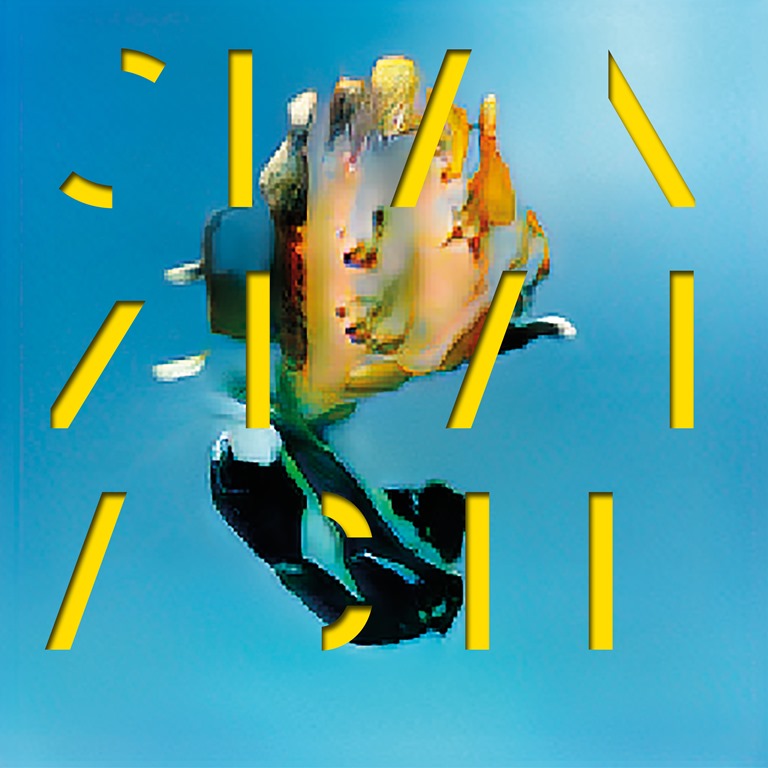
Shanzhai Acid album cover 6000px RGB

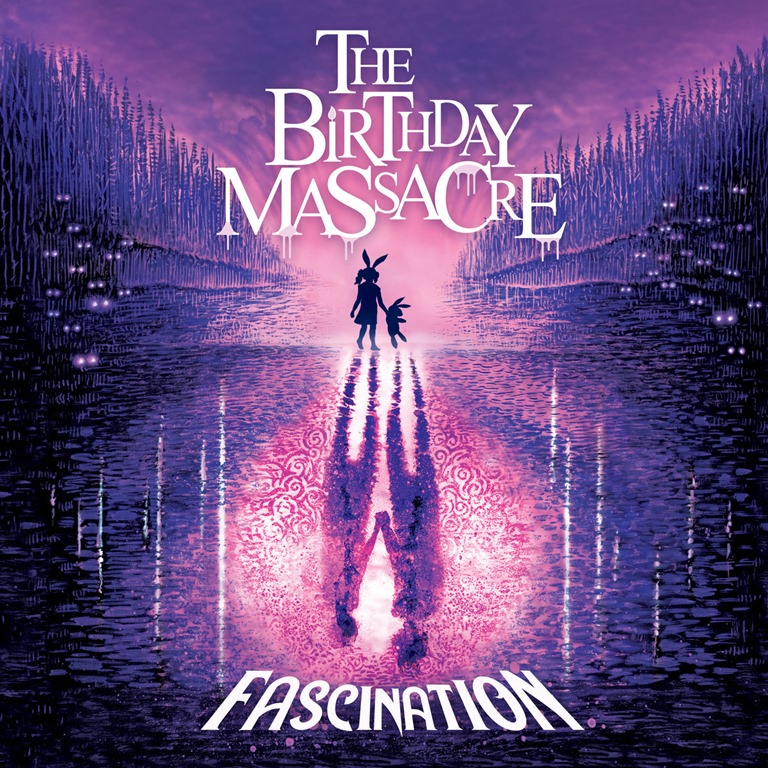
Over twenty years and a dozen albums, The Birthday Massacre have become prime exponents of goth synth pop. They describe Fascination as ‘at once the most fully realized album with the bands signature blend of haunting vocals, captivating electronica and aggressive guitars and their most accessible’.

It’s this accessibility that immediately announces itself from the outset. The title, ‘Fascination’, immediately makes my mind leap to the song by The Human League, and this is unquestionably poppy, but this is in a different league instead. It’s the title track that opens the album and it’s a colossal anthem. It’s in the slower mid-pace tempo range, and the production is so immense as to be arena-worthy, the slick synths drifting over big, bombastic guitars. Some may baulk at the notion, but it’s pretty much a power ballad. It paves the way for an album that’s back-to-back bangers.

I mean, make no mistake, this is a pop album in a pure 80s vein, and pushes tendencies that were always in evidence in BM’s work. People often seem to forget just how dark a lot of mainstream pop was in the 80s, but listen to A-Ha, even Howard Jones or Nik Kershaw objectively and the currents of darkness are clearly apparent amidst the clean lines of the clinical synth pop production of the day. It’s perhaps time to re-evaluate what actually constitutes ‘cheesy’ – an adjective so often pinned to the 80s with no real consideration – and cast aside the idea of ‘guilty pleasures’ when it comes to a lot of music of the era.

‘Stars and Satellites’ is bold and brooding, and probably the most overtly ‘goth’ track of the album’s nine, although ‘Like Fear, Like Love’ grabs bits of The Cure and tosses them into a stomping disco tune. But those drums… they’re great, they’re huge, but they really are the epitome of the 80s sound. Elsewhere, the guitar line on ‘One More Time’ actually goes 80s U2 with heavy hints of Strawberry Switchblade (and they weren’t goth either). Step too far? Maybe for some craving the chunky chug of industrial guitars, because this is fundamentally a riff-free zone, but Fascination works if you embrace the spirit of its being easy on the ear and accessible.

It feels fresh for the band, but also feels like a relatively safe step in the direction of commercialism. It’s ok, and the songwriting and performances are solid throughout, that much is undeniable. It’s one of those albums that may take some time to sink in, in the way that Editors’ On This Light and on This Evening and The Twilight Sad’s Nobody Wants to be Here, Nobody Wants to Leave, felt just that bit mainstream initially. Digesting an overtly ‘pop’ album or a change of direction – and while the direction of Fascination is something that’s always been a part of The Birthday Massacre’s sound – hearing it placed front and central inevitably feels like a shift. And it is a shift, of course, just not one of seismic proportions.

‘Is anyone real anymore?’ they ask on ‘Precious Hearts’ before the final cut, ‘The End of All Stories’ goes Cure again, only this time with monster power chords that border on metal to fill out the mix.

Dig it, soak it in, play it a few times. You’ll probably like it, even if not on first listen.

AA

a2672010454_10

Dret Skivor – 4th March 2020

Christopher Nosnibor

Swedish DIY microlabel Dret Skivor continue their steady programme of a release a month – and while the number of physical copies of releases are minuscule, it makes for a sustainable model, and those who obtain them have a bona fide rarity. The noise scene loves this kind of thing, but then, so does the market of the arts more broadly: limited editions are certainly nothing new as a selling point, but here it’s also a practical consideration.

Consequently, Dret 13, Fern’s Illustration of Sound Waves, which was released early February, is sold out now in physical format – but then there were only eight cassettes dubbed, so it’s hardly surprising.

Dret 14 sees Claus Poulsen and Dave Procter reunited once again, with experimental duo PP creating sound both indoors and outdoors last autumn to celebrate the imminent onset of winter. Being in Sweden, they have proper winters worthy of celebration. The release features two versions of ‘Drone for Autumn’ – a studio and a live take, with the latter being edited to 14:49 to fit on one side of a C30 cassette. It’s a nice detail for trainspotters (and as someone who has obsessively collected ‘versions’ from back when multiple formats was the cash-cow of choice for record labels, I consider myself among them).

It’s droney, alright. It’s a thick, quivering, mid-range oscillation that shudders away at the heart of the composition, and it rings out solidly on the studio version, while murky wisps and whirls and vaporous incidentals intersect and bisect the continuous stream of rough-edged sound. It creates a certain tension, but mostly, it creates a rich atmosphere: not overtly dark, but more shadowy, twilit. The drone wheezes on and on. Stars shoot across the darkening sky – or are they lasers or satellites falling out of orbit? There is some loose semblance of linearity, through a succession of, if not specifically crescendos, then swells and ebbs, and the arrival of a grinding organ amidst the whistling winds adds further texture. It may not evoke any specific seasonality, but in adhering to a core drone and building around it, P and P imbue the work with a bleak monotony that reflects the slow passage of time.

The live ‘version’ is less a performance of the same piece and more of a further exploration of a theme, starting with a looped vocal snippet that fades into a slow, rolling electric piano. The notes decay into crackle and there’s much more by way of extraneous noise, distant radios and chatter and rumbling here – not to mention the absence of that central continuous drone that defines and dominates the studio piece. With so many random sounds fading in and out, it’s more or less a cut-up / collage piece (some well-known 80s tunes drift through before being swallowed by a churning noise like a toilet flushing), and it’s quite bewildering in its effect on the senses and general orientation. There’s even some gentle acoustic folk guitar near the end. It’s hard to draw anything solid from it, or even really define the experience, but as an experimental electroacoustic work, it’s nicely done, with a clear sense that the artists are revelling in the process of working together to draw this array of source materials together, and it works well.

0027884458_25

Cruel Nature Recordings – 11th March 2022

Christopher Nosnibor

Following on from their eponymous debut, Pound Land – the duo consisting of vocalist/lyricist Adam Stone (Future Bomb/Holy Ghost People/frequent collaborator with Dead Sea Apes) and multi-instrumentalist Nick Harris (Reverends of Destruction/ ex-Dead Sea Apes) return with what they describe as ‘eight tracks of post-industrial post-hardcore dead-pan misery – a ‘kitchen-sink’ punk for the 21st century’.

The album title isn’t one that’s likely to see Pound Land crashing the charts, and it’s one that runs the risk of drawing easy criticism, if its contents doesn’t hit the mark for some. But then, it’s a double-bluff, because ant critic who criticises the band for sounding like they can’t be arsed clearly can’t be arsed to critique with any effort.

They slap in straight away with the blunt and subtle as a brick ‘Twatted’, and it’s a six-minute barrage of top-endy guitar racket, a simple chord sequence put through the wringer after a succession of pedals with distortion and reverb and maybe a hint of flange. The lead guitar is sinewy, a snaking twang of treble and it’s so, so raw. A primitive drum machine sound thwacks away and Stone mumbles the expletive-laden lyrics in a northern drawl: ‘You know what I’m fucking saying, mate? Everyone’s a fucking twat, mate.’ It’s raw and it’s real. The production values are bargain basement and then some, and around the mid-point they come on full Fall circa 1983 as they bludgeon away at their wonky guitar racket.

‘Brain Driver’ is a dingy mess of seething, writing no-wave and industrial racket by way of a backing to a monotone vocal performance, and this time it’s six-and-a-half minutes of dirge-like scrapings and discomfort, but they’re just warming up for the album’s thirteen-minute centrepiece, ‘Tony Ex-Miner’. It’s a sparse, grating synth effort, like Suicide without the rhythm. It’s an atonal droning expanse of bleakness that saps your very soul. This is a reason to appreciate it, in case you’re wondering. A sampled narrative about Margaret Thatcher is almost, but not fully, audible.

The sneering grunge squall of ‘Tapeworm’ follows more conventional punk/rock structures; drums, bass, guitar come together to grind out a thunderous wall of noise, and it’s early Head of David that comes to mind as they slowly tug your entrails out and squeeze the mess of guts as they spill. There is nothing pretty or pleasant about this, not the dingy murk of the title track or the dislocated electronic dissonance of the disorientating slur of ‘Total Control’, that sounds like Stone retaining control of his bowels and bladder is no small feat. ‘I look after my mind’, he drones, detached, alone on the dark.

The compositions, such as they are, are sketchy, minimal, and there’s little to cling to by way of melody: instead, Pound Land drag you through city back alleys clogged with litter, smeared dog shit and the puddled piss of street drinkers – mate. The subject matter may be kitchen sink, but the atmosphere is abject and apocalyptic. It’s an album for out times. You’re not supposed to like it.

AA

a2595844187_10

Tartarus Records – 25 February 2022

James Wells

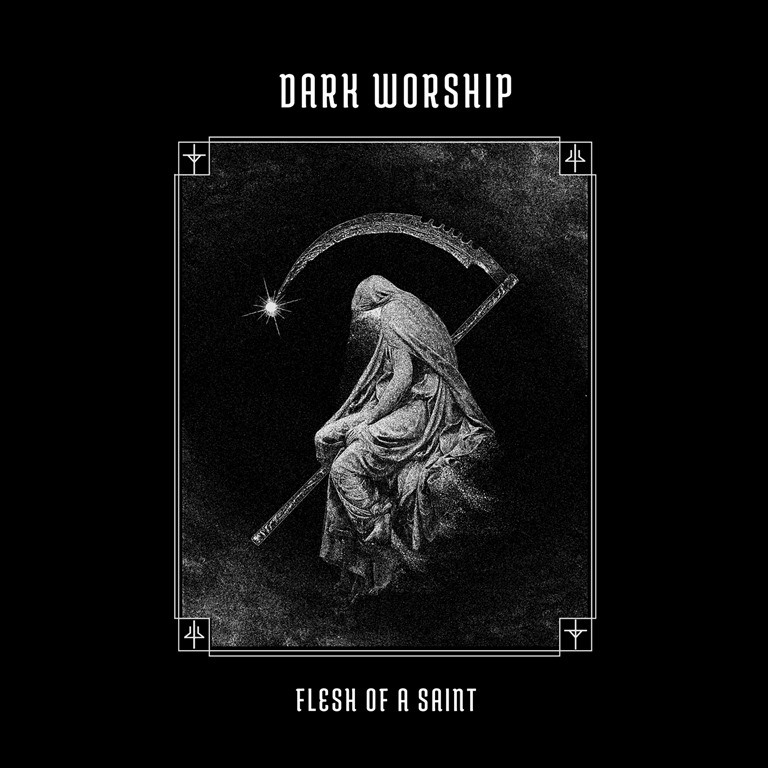
Dark Worship came together in what they describe as ‘the bleak and unsettling landscape of the post-industrial American Midwest’ and is less of a band and more of a collective of musicians from various bands, co-ordinated by J. Meyers (Axioma, Aureae Crucis). They pitch their sound as dark, and it is, but this is a different kind of dark: Flesh of a Saint has the murky lo-fi production values of black metal, which serves the bleak atmospherics well, but it’s not metal, and nor is it dark ambient or tethered to any specific or clear genre.

The two-and-a-half-minute shock of ‘We’ve Always Been Here’ begins as an ominous drone before erupting into swampy grunge spewed from Satan’s sphincter: there’s a nagging guitar riff half-submerged in the mix, and a thudding kick drum stammering out a beat that’s on the brink of a panic attack, and it only gets dingier from hereon in.

There may only be six tracks with a total running time of just over twenty minutes, but over its duration, Dark Worship live up to their name: punishing percussion hammers and clatters before giving way to doomy, funeral synth drones to provide the backing to harsh, shouted vocals on ‘Culling Song’, and it evokes the mangled noise of Prurient. It’s heavy listening. ‘Hollow Body’ brings a rasping vocal, the empty rasp of the walking dead, grating from a purgatorial pit shaped by a pulsating low-end throb.

If the final ‘Well of Light’ sounds redemptive, the light at the end of the tunnel, think again: it’s more like being sucked into the vortex after the last drops of energy have been sapped from your limbs and you hang, lifeless, waiting for the end. Oblivion can’t come too soon. Worship the dark.

AA

821847

14th February 2022

Christopher Nosnibor

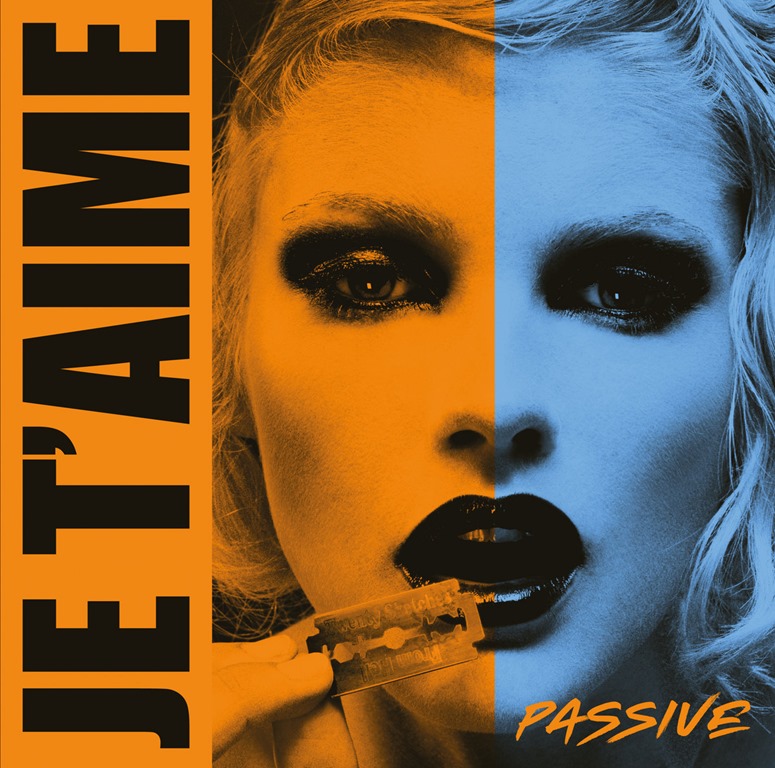
Passive is the second album from French post-punk band Je T’aime, and is the first of a two-part set, which will be completed with the release of Aggressive in the not-too distant future.

The album continues where its predecessor left off, and marks the development of a theme as part of an extended concept work, where we ‘follow the evolution of the same antihero; a common avatar of the three musicians. The tone hardens, the atmosphere becomes more melancholic, and the lyrics embrace bitterness and anger.’ The liner notes explain that Passive ‘continues the theme about the difficulty of growing up. Our main character is constantly caught up in the past, repeats the same mistakes and ends up not being able to move forward in his life. It is no mystery that the band’s music constantly looks for influences in the past 80’s for that reason’.

So many people do get hung up on the past, and seem to hit a point in their life – usually around their early 30s, in my experience – where they simply stop evolving and reach a stasis, a brick wall where they conclude that no good new music has been released since they were in their early 20s and nothing is as good as it used to be. It’s not all memberberries and memes, but there are many agents at play driving an immense nostalgia industry. And it’s easy money: no development required for new ideas when there’s a near-infinite well of past movies and music to plunder and rehash or at least lean on. Would Stranger Things have been the smash that it was if it was set in the present? However great the script, plots or acting, much of its appeal lies in its referencing and recreation of that intangible ‘golden age’. While that ‘golden age’ may depend on when an individual was born, the acceleration of nostalgic revivals and recycling means that kids who weren’t even born in the 80s or 90s are nostalgic for synth pop and grunge by proxy.

Passive is anything but. But what it is, is a dark, heavy slab of dark, bleak, brooding, a mix off sinewy guitars and icy synths with rolling bass and tribal drumming that lands in the domain of early Siouxsie, Pornography­era Cure and The Danse Society around the time of Seduction. The instruments blur into a dense sonic mesh. There’s a tripwire guitarline on ‘Another Day in Hell’, which kids off the album with a gloriously dark, stark, intensity that’s Rozz William’s era Christian Death as if played by X-Mal Deutschland. And if I’m wanking nostalgia over this, it’s less because I miss 1983 (I was 8) than the fact they capture the energy and production of that groundbreaking period with a rare authenticity.

‘Lonely Days’ is a bit more electro-poppy, but has a guitarline that trips along nicely and throws angles and shade. ‘Unleashed’ reminds me more of The Bravery and their take on 80s pop, but then again, The Cure’s influence looms large again, and elsewhere, ‘Stupid Songs’ goes altogether more New Order / Depeche Mode, but then again, more contemporaneously, it’s not a million miles off what Editors were doing on In This Light and On This Evening – and album I found disappointing at first because it felt like derivative 80s electro fare, before the quality of the songs seeped through to convince me.

One thing that’s often overlooked about 80s pop is that dark undercurrents ran through even the most buoyant of tunes from the most chart orientated acts; Duran Duran and Aha, even the music of Nick Kershaw, Howard Jones, A Flock of Seagulls, was cast with shadows flitting beneath that veneer of production. So when they go bouncy disco on ‘Givce Me More Kohl’, the parallels with The Cure’s ‘Let’s Go To Bed’ and ‘The Walk’ are apparent, with a lost and lonely aspect to the vocals, and they go full Disintegration on ‘Marble Heroes’. And that’s cool. It’s poignant, sad, wistful, an emotional cocktail. On Passive, Je T’aime revel in all of those elements of influence and pack them in tight, and they do it so well and with such discipline. They really know what they’re doing: the sound and production is class, and the songs and classic, and the sum of the parts is a truly outstanding album.

AA

a3347450970_10

Southern Lord – 25th February 2022

For many, the days of the longest, hardest lockdowns are, it would seem, behind us. And yet the shadow of the pandemic continues to hang long as dark; it’s hard to move on and truly put it behind us when life continues to be anything but normal; signage and masks and booster reminders are the new normal, and we face a new normal carrying scars of a personal nature, each and every one of us. Successive lockdowns, periods of isolation, have all affected us in different ways, and we’ve all suffered some form of trauma or psychological damage in living through conditions we’re simply not equipped for.

For many creative types, working through the experience has manifested in new artistic output. There’s something about channelling that anxiety into something, even if not direct or specific in addressing the issue, that helps to somehow minimise, contain, or otherwise manage it. Thurston Moore’s latest project, like so many was born out of a lockdown environment, and it’s an exploratory work, in so many ways. A series of instrumental guitar pieces recorded during the summer of 2020, it’s a document of, as the liner notes outline, a period where, ‘as the world confronted the pandemic shutdown and as the people of good conscious stood up against the oppression of racist police oppression and murder.’ It goes on to ask, ‘How much screen time does a parent allow a child? How much screen time does a child need to realise a world which has the means to coexist as a community in shared exchange?’

This feels like numerous issues, simultaneous but separate, have collided to inspire this album, and raises as many questions as answers. Moore is clearly placing his flag alongside Black Lives Matter, and it struck me – and surely many others – that the protests should have taken place when the world, pretty much, was in lockdown. How could this be? This was a moment in time when protest felt impossible. In fact, anything felt impossible. But the murder of George Floyd was a trigger and it marked a tipping point of something far, far bigger for so many. This was about centuries of oppression and division. The scenes aired over the news channels, globally, were electrifying. But how does this relate to monitoring the screen time parents should grant their children? Surely it’s less about the amount of time, but parental control, and the extent to which parents grant their children exposure to current affairs? That said, it’s something I’ve wrestled with myself. As a child, I had no interest in anything on the news; my own daughter, aged 10, is genuinely interested and has her views on our prime minister, our government, and the pandemic, and more. While I feel a duty to protect her from scenes of violence and endless report of rape, murder, abduction, and brutal crimes against women and children, I also feel that a certain degree of exposure to ‘the real world’ is beneficial, just as I’ve come to see that many computer games encourage problem-solving and eye-hand co-ordination. Screen time isn’t all bad if you can get over the generational differences. But.. but… no doubt, it’s a conundrum.

Screen Time offers no answers. As is often the case with instrumental works, there is little to be gleaned from them in and of themselves, and the titles offer little by way of interpretive guidance. The only thing that really struck me about the titles, in fact, is that several share their with cure songs: ‘The Walk’; ‘The Dream’. ‘The Upstairs’ feels like an allusion to ‘The Upstairs Room’ (the title of the 12” EP version of ‘The Walk’; but then again, all of the compositions are ‘the’ something: ‘The View’, ‘The Neighbour’, and these reflect the shrunken worlds we inhabited during this time: four walls, the view from the window, and the TV as the window to the world. There was nothing else but to look, and to ponder. Screen Time is a work of ponderance. It doesn’t have to be coherent, because coherent thought isn’t the state of the world right now. Show me someone who has a firm handle on everything that’s going on and I’ll show you a bullshitter. No-one knows anything, and we’re all just fumbling, stumbling through.

Many of the pieces on Screen Time are short, fragmentary, and sparse, only half-formed, but evocative and atmospheric: ‘The Walk’, a minimal piece consisting of a heavily chorused and echoed guitar trickling a cyclical motif for a minute and fifty-one seconds is exemplary. Elsewhere, ‘The Upstairs’ is a haunting piece led by disorientating, discordant piano that tumbles along.

At times reminiscent of Earth, or more specifically Dylan Carlson’s more recent solo work, Screen Time borders on ambience in its slow, soft unfurlings. The final piece, the nine-minute ‘The Realization’ is almost hypnotic; slow, with deep, resonant notes that reverberate and hover while harmonics chime and soar.

As a listening experience, Screen Time is pleasant, absorbing. I like it. But what does it say? It speaks for Thurston Moore alone, just as any such release can only speak for its composers and performers. That’s ok. When stitched together, in time, all the voices will combine to present the full picture. For now, what simply matters is that each voice keeps adding to the tapestry of documenting the present, a time unlike any other.

AA

LORD283_tp0001c_LPtipon_jacket_cover_rev011217 [Converted]

Human Worth – 4th February 2022

Christopher Nosnibor

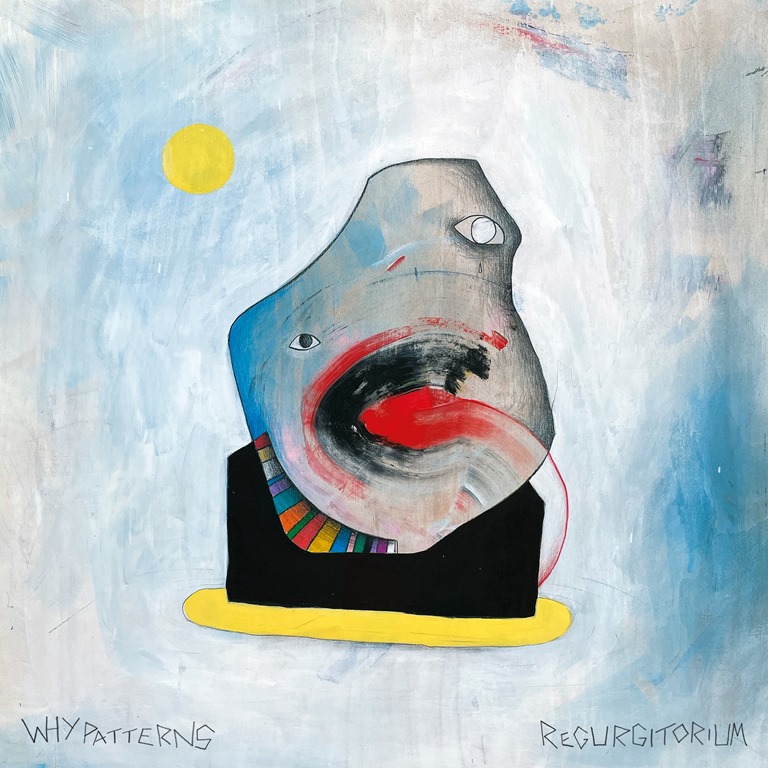
Pitched as being for fans of Primus, Lightning Bolt, Swans and Mudvayne, the accompanying text informs us that ‘Regurgitorium was haphazardly constructed with the sole goal of distressing and alienating their few remaining friends and family. Members of Warren Schoenbright, Wren and Deleted Narrative come together to deliver angular drums, discordant bass, and harrowing vocals accompanied by themes of existential paradoxes and day-to-day despair. The result being something best described as “Not Subtle”.’

If there was ever a strong and perfectly nihilistic reason to make music, that has to be it. It’s one of those hilarious band clichés that get wheeled out when they say they make music for themselves, and if anyone else likes it, then it’s a bonus. It’s almost impossible to not to be sceptical, because, well, fuck off. I mean, I believe Nirvana were sincere in not wanting international mega-stardom and that they wrote In Utero to get back to their roots and piss off casuals and their major label, but they still wrote songs to be heard by an audience – just a more select one. Of course, it depends on your ambitions as an artist, but I would say it’s better to have a small but devoted fanbase than one consisting of a larger but fleeting, fickle bunch of casuals whose interest will have cooled faster than their post-gig McDonald’s fries.

Regurgitation is not subtle, but it is high impact, and it’s a monster racket from the outset, with a clunging bass-rattling racket and squalling guitar mess of noise bursting forth with ‘Parapraxis’. It’s a minute and a half of total mayhem.

They hit optimal Big Black drilling grind on second track ‘Bachelor Machine’: the bass sounds like a chainsaw, while the guitar fires off tangential sprays of metallic feedback and harmonics, bringing together ‘Jordan, Minnesota’ and the intro to ‘Cables’. It’s a brutal squall of noise, and it goes beyond guitar: it’s sheering sparks off sheet metal that singe your skin as they fly, and it really makes a statement about both the band’s influences and intent. It’s messy, and it’s noisy. And it’s perfect.

Every track just gets nastier, more deranged. ‘Elective Affinities’ is all about wandering verses and choruses that sound like a seizure. Everything is overloading all the time: max distortion, max reverb, max treble, max crunch: the bass sounds like a saw, the guitar sounds like a drill, the drums sound like explosions: it’s intense, and it’s punishing, in the best possible way. It’s the sonic expression of a psychological spasm, and everything goes off all at once.

There’s no obvious sense of linearity or structure to the songs on Regurgitation. There’s a bass that sounds like a bulldozer grinding forward at the pulverising climax of ‘Bone Apple Teeth’. And then things go helium on ‘Wretched Makeshifts’: it’s like the Butthole Surfers gone avant-garde. And then there’s the stark spoken word of ‘Silentium’, which is tense, dark.

Listening to Regurgitation is like taking blows to the head in rapid succession. It’s not just the hits, but the dazing effect. Everything mists over, you don’t know where you are, and you’ve even less idea what the fuck this is. It’s bewildering, overwhelming. ‘Railways Spine’ is a nerve-shattering explosion of feedback-riven chaos and there is no coherent reaction. ‘Untismmung’ is the epitome of wordless anguish, this time articulated by means of experimental funk that yields to head-shredding noise. Noise, noise, noise: I keep typing it, and that’s because Regurgitation is relentless in its noise. It’s noisy. So many shades of noise. It’s fucked up. It’s deranged. It hurts. There is just so much noise, and no escape from it. Not that you should seek escape: bask in the brutality, the yawning bass grind and King Missile-like spoken-word segments that provide the brief passages between the blasts of noise, noise noise.

Closer ‘Vomitorium’ sounds like a collision between Shellac and Suicide, and the maniacal laughing at the fade sounds like the only sane reaction to all this madness.

AA

HUMANWORTH_WhyPatterns_CoverArtwork

Christopher Nosnibor

While the majority of their output belongs to the post-85, second wave of post-punk / indie-goth, both (timewise) and sonically, Salvation’s roots actually go back to the murkier days of when The Sisters of Mercy were a true Leeds band, living in a dingy terrace in LS6 and recording at Kenny Giles’ 8-track studio in Bridlington and running a label not so much on a shoestring, but on zero budget and Letraset.

Salvation’s first ingle, ‘Girlsoul’ was released on Merciful Release in ’83, and was produced by Eldritch, before a parting of the ways not dissimilar from that which befell The March Violets took place, and while their second single, ‘Jessica’s Crime’ was produced by Wayne Hussey in 1984, the mini-album Clash of Dreams which was scheduled for A Merciful Release in 1985 was shelved and only got to see the light of day in 2014.

By then, they had evolved into the more accessible indie-goth sound, which emerged circa 1985-6, and which perhaps not coincidentally corresponded with The Sisters of Mercy’s evolution towards a more commercial sound with the arrival of Wayne Hussey and their signing to WEA and the release of ‘Body and Soul’ and First and Last and Always, before the split that led to the emergence of The Mission.

But their coming together with Hussey early on marked the beginning of a longstanding partnership: in fact, it was in 1990, supporting The Mission at Sheffield City Hall I first encountered Salvation, which would have coincided with the release of their major label debut Sass, which marked something of a more commercially-orientated direction, and would also represent the band’s last new material as the band crashed under the pressures of relentless touring.

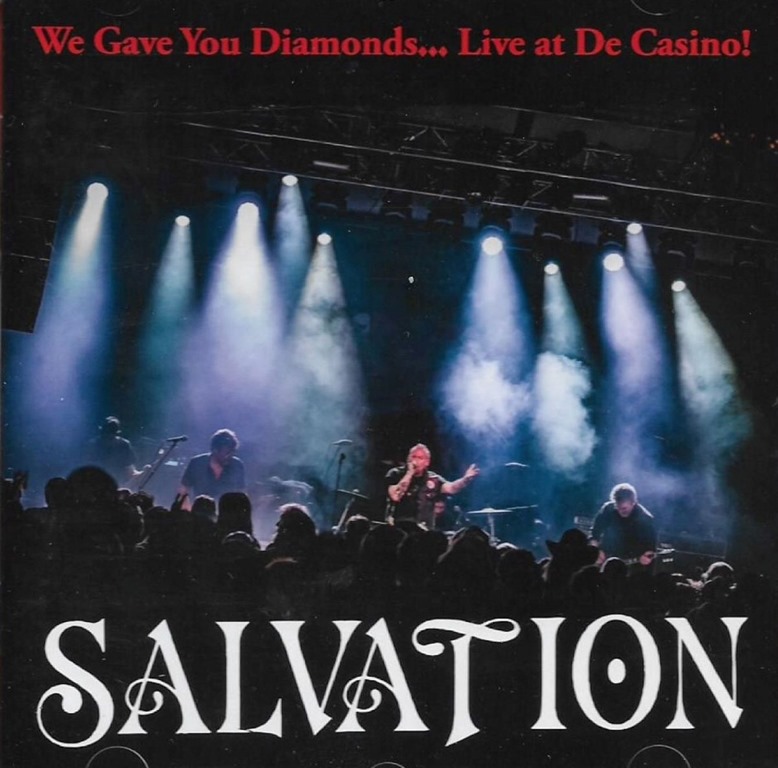
Fast-forward to 2020, and the band have emerged from their retirement to tour Europe with The Mission. We Gave You Diamonds… Live at De Casino was recorded Live at De Casino, Sint-Niklaas, Belgium on March 7th 2020 on the final night of a four-date tour supporting The Mission, and it’s a career-spanning showcase of a set that captures salvation on fine form, and Daniel Mass sounds relaxed with his chat between songs.

Only two of the eleven songs ‘(Clearing Out the) Debris’ and ‘Paint it Rose’ are from Sass, and the set is otherwise culled from their independent years, kicking off with ‘The Answer’ from 1986’s ‘Seek’ EP. It’s clearly of that mid-80s vintage, but still sounds fresh and is delivered with an energy that translated through the medium of the live recording, with its thumping bass and flowery guitar flourishes both crisp and clear. ‘Ladyfaithe’ from the same EP, which would subsequently their 1987 debut album Diamonds are Forever is also dropped early.

Mass probably doesn’t need to announce that they’re from Leeds at the start of the set: they sounds like a Leeds band, to the core. They also sound like a band who are having a blast, and the songs are played with precision and power, and they’ve held up well despite the passage of all the years: ‘All and More’ still kicks ass with twisty guitars and a solid bass groove, and reminds us just how strong they were at penning sharp hooks and nagging guitar lines.

They delve right back as far as ‘The Shining’ (a standout and a personal favourite that always gets lodged as an earworm whenever I play it) from their second single as well as the unreleased ‘The October Hour’ from the debut that never was. ‘Payola’ and ‘Pearl Necklace’, the B-sides from their single release of Donovan’s ‘Sunshine Superman’ from 1988. Yes, it’s a blast from the past, but this doesn’t have the vibe of a nostalgia trip: Salvation sound like a band reinvigorated and energised and feeling the songs.

And now, as we finally crawl out of the seemingly-eternal suspension of life that was the Covid pandemic, Salvation are once again set to play as support to The Mission – although the handful of dates isn’t quite the crippling schedule of thirty years ago. On the strength of We Gave You Diamonds, it’ll be worth making it down early doors, and with any luck they’ll be booking a few headline shows of their own before long.

AA

a0378534001_10

Fire Records – 25th February 2022

Christopher Nosnibor

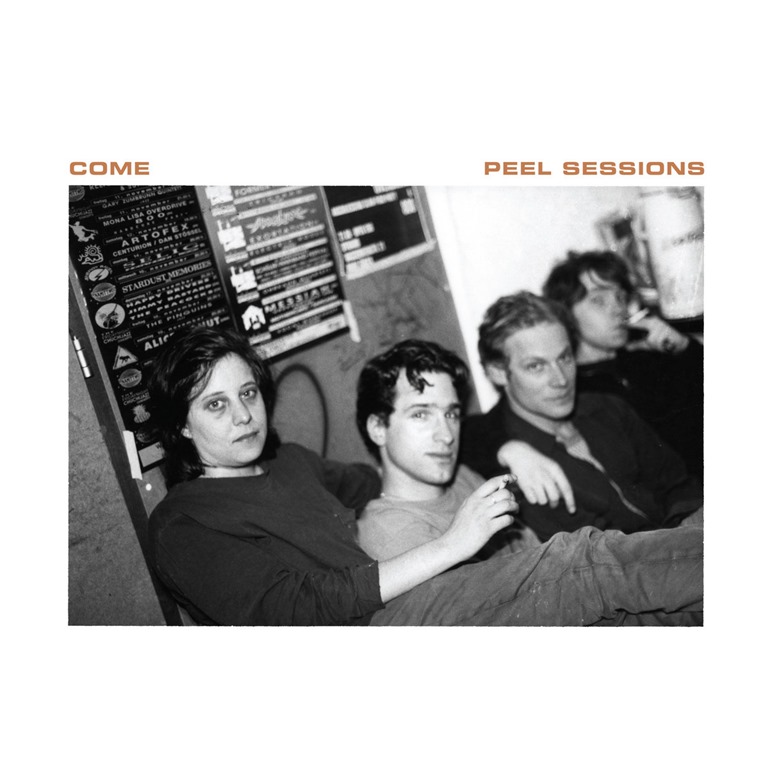
If the reissue of Come’s Don’t Ask, Don’t Tell, felt like the much-needed reappraisal of one of the 90s’ criminally underrated  – or underappreciated – bands was finally happening, then the arrival of their Peel Sessions is proof positive. It wasn’t that Come didn’t receive exposure or critical acclaim: tours supporting the likes of Dinosaur Jr at their commercial peak as they took Where You Been on the road, off the back off their widely-lauded debut album Eleven: Eleven, Come should, by rights, have been elevated to the same bracket of 90s alt-rock icons. But I guess their sound was simply too subtle and too nuanced, and too bluesy, to sit entirely comfortably with the zeitgeist. There are no instant hooks in the vein of Nirvana or RATM. In fact, there are barely any hooks, or even choruses. But the detail, the craft of the songs, the delivery of the emotional heft woven into those songs mean that Come are a band I’ve probably listened to more during the years since we left the 90s than the majority of that class of 92-94, and during this time, I’ve found myself frustrated by the fact that seemingly hardly anyone has even heard of them.

The band recorded two session for John Peel, the first in 1992 and the second in 1993, and rounding it off, perhaps a little incongruously, is the unreleased song ‘Clockface’, recorded live in Boston (that’s Massachusetts, not Lincolnshire) in 1991, and it’s rough ‘n’ ready and not the best live sound ever, but it captures the spirit and the energy, which is worth so much more than all the production in the world.

The first session comprises ‘Dead Molly’, ‘Bell’, ‘William’, and ‘Off to One Side’, all of which appear on Eleven: Eleven. Being Peel Sessions, recorded and mixed in a day, they’re rougher, more immediate versions. ‘William’ is perhaps the standout as the driving grunger of the set, a reminder of the power of which the band were capable of, particularly around the time of their debut, while ‘Off To One Side’, with its slide guitar and wonky riffery is the blusiest, and the slower-burning tune is more subtle but also less immediate.

The second sessions comprises ‘Wrong Side’, ‘Sharon vs. Karen’, ‘Mercury Falls’ and ‘City of Fun’, and while two of these would appear on sophomore album Don’t Ask, ‘Sharon vs Karen’ (a title way, way, way ahead of its time) was a feature of their love set, which appeared as a live cut on the expanded anniversary edition of Eleven:Eleven , and ‘City of Fun’ failed to make an official studio release. The sound and feel of this session is quite different, and also shows how the songwiting rapidly evolved to explore a broader palette of tone and texture as well as tempo shifts, and ‘Wrong Side’ packs it all into just under four and a half minutes. ‘Sharon vs. Karen’ brings some attack alongside some sinewy guitars as it lumbers and lurches along. ‘Mercury Falls’ is faster than the studio version, and feel both tentative and ragged, unready, yet still packs a punch, especially around the mid-section.

This is one of the many great things about Peel Sessions: bands were given free time in the studio to use as they felt fit, and many would try out new material, for better or worse. It’s most definitely for better here, and the eight session tracks are all, without exception, showcases of the magnificent guitar interplay between Chris Brokaw (Codeine) and Thalia Zedek (Live Skull); everything comes in from different angles, the tempos change not so much unexpectedly, but at key moments and turn the trajectory of the songs in an instant, and Zedek has a knack of conveying a heart-tugging melancholy with her drawling vocal and mournful guitar style. It’s not a twang, as such, more a slow bending that almost feels like tears. Pitched together with a tight and intuitive rhythm section with ‘the visceral bass and drums of Sean O’Brien and Arthur Johnson’, the sessions capture a band operating as a cohesive unit and really just hitting the mark with precision every time.

Fans will absolutely love this, as it provides an insight into their transition between first and second albums and well as capturing the live power in a studio setting. Those unfamiliar couldn’t want for a better introduction, with a set that represents the band at their finest, spanning the first two albums and, quite simply, kicking ass. Absolutely essential.

AA

a1635871735_10