Archive for the ‘Singles and EPs’ Category

Buzzhowl Records – 18th October 2019

Christopher Nosnibor

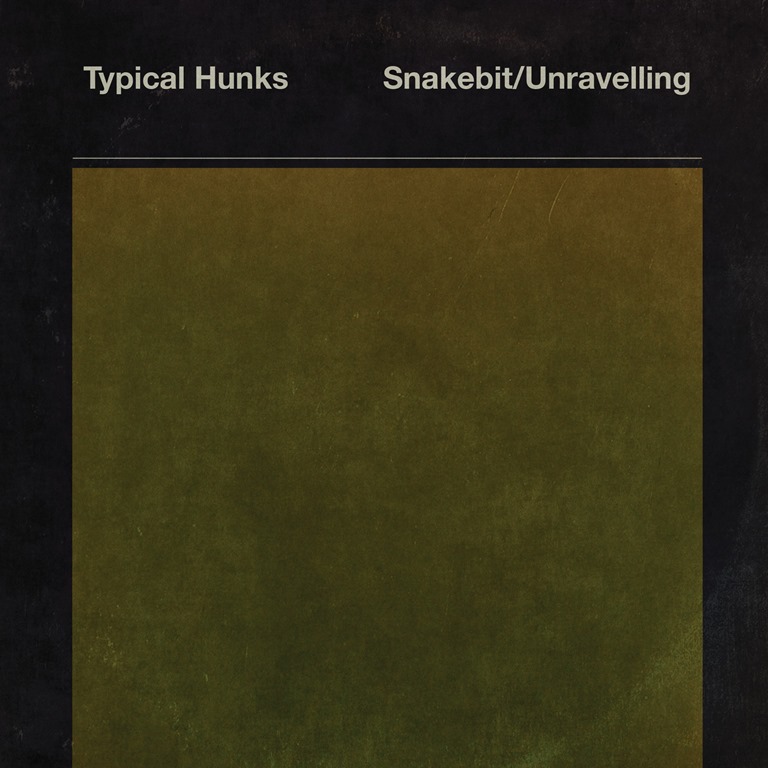
What came first, the music or the mindset? I’m going to put it down to how some of us – myself included – are wired, and will forever be drawn to that tense, dark sound that came out of the late 70s and early 80s that was a reaction to – and against – everything that was happening at the time. Just as punk was a reaction to – and rebellion against – prog and the beigeness of the times, so post -punk and its various strains, including (dare I whisper it?) goth harnessed the frustration and the dejection that was a product of the first years under Thatcher and the political climate of the second cold war and rendered it in a more articulate, and perhaps more musically resonant way (because let’s face it, 90% of so-called punk bands were just playing pub rock with the amps up).

To revisit briefly an observation I’ve made variously in recent years, these are bleak, bleak times, and the future is well out of hand. The post-punk renaissance that began around 2004 with the emergence of Editors and Interpol grew from an underground which was there long before, but now it’s in full spate. Reading’s Typical Hunks fully embrace all of this as a guitar bass duo backed by a drum machine.

The guitar on ‘Snakebit’ is spindly, reverb-heavy, weaving one of those tense post-punk guitar-lines that’s pure Joy Division, and it snakes its way around a tight, insistent bass that booms and drives along with the insistence of the grooves Craig Adams laid down to define the sound of The Sisters of Mercy in the early years. That in turn is wenled to thumping beat that’s a distillation of all things Yorkshire circa 1983-4. It’s all in the programming: nothing fancy, no attempt to make it sound like an actual drummer, no flash fills or flourishes, just a hammering repetition and a snare sound that’ll slice the top off your head. Those Boss Dr Rhythm machines really are unbeatable. The vocals are tense, paranoid, and channel disaffection.

Strains of feedback and a hesitant bass hover before everything locks in around another relentless rhythm on ‘Unravelling’ with elements of March Violets, Red Lorry Yellow Lorry, and early Danse Society all spun into a solid block of discomfort. Vintage in its roots yet ultimately providing the soundtrack of the zeitgeist, this is a cracking Aside / B-side combo housed in a suitably barren sleeve, that showcases Typical Hunks at their strongest and most focused yet.

AA
Artwork

Bohemian Drips – BD011 – 4th October 2019

Christopher Nosnibor

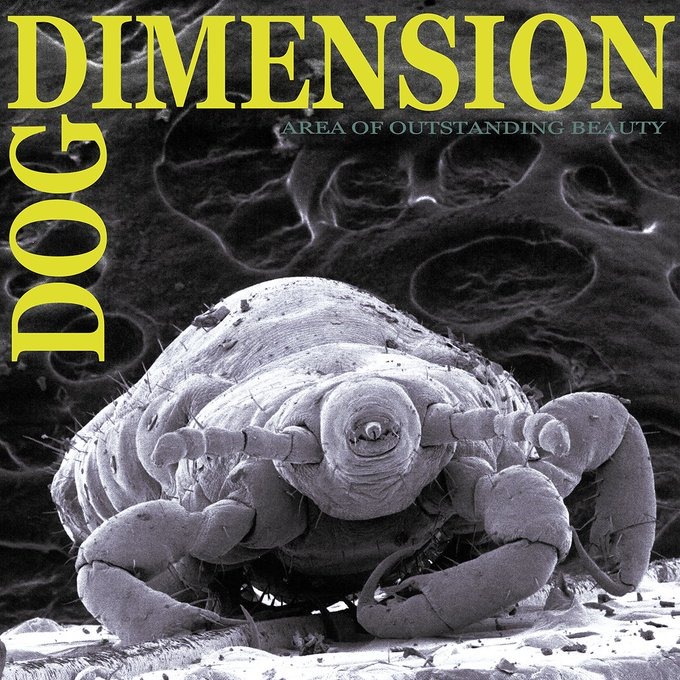
There’s not much beauty on the face of this. But it is outstanding, I’ll give it that.

The Berlin-based trio trade in a kind of angular, grungy 90s alt-rock hybrid. With Josefine Lukschy’s scratchy vocals and the off-kilter country leanings that characterise the first song, ‘Flap’, I’m reminded of Thalia Zedek’s 90s act Come, and it’s a Come / Hole / Solar Race vibe that defines this six-tracker.

You wouldn’t exactly say it’s big on tunes, but it is big on attitude, not to mention messy guitars spluttering out stop/start noise and a busy, sinewy mess of busy lead lines over some tense bass. ‘Tadpole’ brings jarring Shellac-inspired racket paired with some twisted Rage Against the machine meets

As song titles go, ‘Stuck in a Turd’ is nothing if not memorable. It brings a kind of mangled cyclical jazz groove to the fucked-up riff party ‘you’re nothing but a speck of dust!’ Lukschy spits venomously and manages not to sound comedic, which is quite an achievement.

‘I want to tear your heart out!’ she hollers as the opening line to the last song, ‘Welcoming the Awful Being’, another choppy, lurching math-tinged grunger. And it’s a killer finish, too: after some meandering, it all comes together in a climactic sustained crescendo, a space-rock workout that drives the EP to a rush of a finale.

In the tidal wave of retro and revivalism, this kind of slanted alt-rock that exploded in the late 80s and early 90s and defined what many – myself included – consider a kind of golden era when alternative broke into the mainstream and the standard and selection of noisy alternative bands was incredible, never really went away. But right now, it seems like there is more – which is most definitely a positive. Especially when that more is represented by crackers like this.

AA

Dog Dimenion Cover

31st October 2019

It’s a thick, lumbering riff that piles in at the start of Neverlanded’s latest effort and the grab is absolutely immediate. You remember, in just a few short seconds, why you got excited about guitar-driven alt-rock in the first place. You remember why grunge was a revelation and a revolution. You remember why roaring noise didn’t necessarily mean unlistenable shit, and when paired with a killer hook, it distilled all of the feelings you couldn’t articulate in as week of talking and letters scribbled late at night in a pre-Internet age.

The thing is, while Kurt Cobain opined, at the ripe old age off 25 or so, that ‘teenage angst has paid off well, now I’m bored and old,’ angst never completely settles, and instead simmers away until prodded. And this prods it, hard, reawakening the anguish, but in a good way. A way that doesn’t inflict new pain, but reminds you that the pain was more bearable when it had some kind of outlet, some kind of mirror. Angst never dies, it simply reforms, refocuses.

Less than six months after their F.u.U EP, Neverlanded prove that the driving force and primal angst they whipped up in the spring was no fluke, and signal their career’s forward trajectory. Bring it.

9th August 2019

Gintas K’s bandcamp boasts no fewer than twenty-nine releases. The Lithuanian experimentalist isn’t one to place quantity over quantity either: this almost overwhelming output, as represented by an average two releases a year, is the product of an enquiring mind, a fertile imagination and an unstinting work ethic.

The title gives a hint as to this EP’s creation: recorded live in a single day, without any overdub; using computer, midi keyboard & controller assigned to vst plugins, the three pieces on One Day Journey are exercises in excitable minimalism, skittering glitchtronics and exemplary works in the field of circuitry-based fuckabouts.

The three tracks, distinguished simply in numerical terms, are defined by swampy bleeps, bloops, glops, thumps, pips and pops fly haphazardly flitting and flickering in all directions, surging and swelling, whumping and slumping. Drip, drop, blip, blop, slip, slop, tinkle, tinkle In so many respects, they’re devoid of both structure and substance, and yet it’s this flippant flimsiness that renders them of merit.

Gintas’ flighty, almost fanciful style of experimental electronica is amusing in an avant-garde way, and almost seems intent on being vaguely irritating to anyone who isn’t already entirely on board with this strain of whacky wild synapse-snapping oddness.

The third and final track, ‘Three’ fizzes and foams a mess of electronic froth, foaming and fermenting effervescently over a thirteen-minute sprawl of apparent discoordination. It’s a crazed mass of non-linear noise, an impossible combobulation of sound. And if you are on board with this strain of whacky wild synapse-snapping oddness, One Day Journey has everything going for it.

AA

Gintas K - One Day

Crocodile Laboratories – 9th August 2019

Christopher Nosnibor

After a faltering start a couple of years ago, Amy Studt’s comeback is properly under way and in full flow now. Over the last few months, she’s unveiled a new track every six weeks from her upcoming album, The Happiest Girl in the Universe which will finally see the light of day after a long gestation and almost equally long run-up.

Building momentum after any setback is hard, and Amy’s had a protracted spell of continuous setbacks after her initial flurry of fame back in her teens. I mean it sincerely and without a hint of patronism when I write that to see her pushing through all of the sludge to emerge a stronger artist with a clear sense of self is inspiring.

Moreover, ‘Overdose’ more than delivers on the promise of an album that gives us ‘a narrative diary of depression, hope and redemption’ and ‘features eleven bold, intimate and heartfelt tracks’. Amy herself describes the song as ‘one of the most personal songs on the album (also one of my favourites)’.

It’s a simple piano-led song with an intimate vibe: Amy’s vocals are close-mic and mumbled in the lower registers, but she soars and imbues every syllable, whether intelligible or not, with emotion. The difficulty in deciphering the lyrics is perhaps significant. It’s not about embarrassment, but about the difficulty of actually committing to verbalising the intensely personal, dredging through those dark places. Digging deep is a purge, and painful. But where the words aren’t clear or audible, the sentiment remains, as does the melody and the

They say that time heals all wounds, but time is a variable quantity which differs for everyone. Some find they’re never ready, never equipped. ‘Overdose’, it’s fair to say, is another document of Amy’s self-help programme, the channelling of creativity as therapy of sorts. The result is wonderful – dark, but ultimately uplifting, conveying a fragility and humanity, not to mention a sense of personal proximity that’s beyond touching, and instead offering something to cling to. And we all need something to cling to, whether we acknowledge this publicly, or even privately.

30th August 2019 – Retratando Voces

Christopher Nosnibor

This split release, which pairs Leeds solo artist Black Ribbon with Nottingham duo Don’t Try, follows up on the former’s remix of Drahla’s single ‘Twelve Divisions of the Day’ and the latter’s 2018 single, ‘JWAFJ’, emerging on a German label. Mixed and mastered by Wayne Adams of Bear Bites Horse Studios, and featuring artwork by Hayden Menzies (METZ), this has got the lot behind it – and it delivers on all of its promise.

Listening to the dark, goth-tinged post-punk vibes that permeate both contributions, it makes sense: you get the impression that however much there’s been a sustained renaissance for all things goth-tinged and post-punk here in Britain (which, let’s face it, hasn’t been especially great of late), these are artists who will likely fare better on the mainland, especially in Germany.

Black Ribbon’s ‘Interception’ arrives in a squeal of feedback before clattering percussion and angular synth discord pave the way for a driving dark disco groove. It’s a magnificently mangled hybrid of DAF, Gary Numan, The Human League and early Foetus. Take away any one of the elements and it’s a different animal, but it’s the collision of all things at once that make it special. Done differently, it could be a straight-ahead electropop tune, albeit with an industrial production and early 80s vibe. But with incidentals exploding all over the place, while the vocals, heavily treated and low in the mix have a robotic tone and veer between blank monotone and rising desperation.

Transitioning through a series of passages with some expansive instrumental segments, it stretches out to build a masterfully epic listening experience. Fading out just shy of nine minutes, its end brings a disappointment that its not much, much longer.

The Big Black comparisons that have been hovering around Don’t Try are of merit in the context of ‘Melancholy Chapters’, the drum machine pounding relentlessly behind a gauze of guitars reminiscent very much of ‘Bad Houses’ from Big Black’s debut. Notably, this was Albini and Co’s attempt to sound like The Cure. And while it captured the claustrophobia of 17 Seconds, it did so with everything cranked up to eleven. Don’t Try bring the goth via Big Back loop full circle here with a pulverising six minutes of hard-hitting bleakness.

However, something about ‘Melancholy Chapters’ calls to mind other acts, notably to my ear The Screaming Blue Messiahs, particularly in the sneering vocal delivery. It’s kinda punk, kinda something more sophisticated. That doesn’t mean it’s not direct, hard-hitting, heavy: if anything, this is denser and packs more impact than their previous releases, which have focused on primitivism and treble.

It may only contain two songs, but this feels like a massive release, a landmark of sorts, and something deserving of a lathe-cut clear vinyl 12”. It’s challenging and likely divisive, with both acts taking something that could be accessible and rendering it with degrees of difficulty. On a personal level, this is much of the appeal: I crave art that makes demands, and admire the makers of the art that does so. But it’s more than that: art that challenges probes into the soul and the psyche, it alerts the senses and makes you feel. Against a backdrop of sameness that induces a numb torpor, we need that jolt, that kick, that buzz to remind us we’re alive. And this does that.

Hayden Menzies Artwork

Monika Enterprise – Monika94 – 16th August 2019

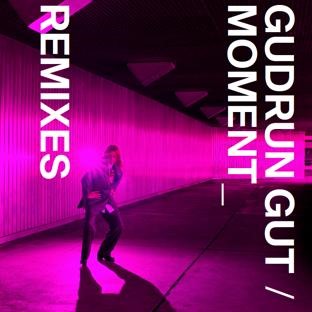
Released in December, Moment was one of those albums that grabbed my attention by virtue of its ‘otherly’ take on the conventions of electronica. Gudrun summarised it as being ‘stark, somber, sultry, and clever’, and indeed, it was all of those things, as well as being utterly compelling. How you do improve on that?

Ordinarily, I’d have said you don’t mess with near-perfection, and that you certainly don’t improve on anything with remixes. But then, much as I enjoy my reputation for always being right, I’m sometimes happy to be proven wrong, and with Moment Remixes, Gudrun Gut has found sympathetic remixers who all seem to have honed in on similar elements of the album’s tracks, meaning it’s a stylistically coherent collection, and with only four tracks, it doesn’t feel laboured or like it’s milking the material in any way.

The remixes very much accentuate the stark, minimalist aspects of Moment, as well as the retro vibe that amalgamates early DAF with ‘Warm Leatherette’ by way of a blueprint, and it’s the crisp cracks of vintage drum machine snares that dominate and define the sound here, while everything else is backed off. It’s robotic, dehumanised, and in some respects, challenging in its mechanised sterility. Or, as the press release puts it, ‘4 goose-bump inducing tracks ideal for all floors and moods’.

T. Raumschmiere’s remix of ‘Lover’ launches proceedings as a pumping dance track. It’s energetic and energized, but at the same time sultry and bleak, somehow balancing the seemingly contradictory atmospheres or claustrophobia and spaciousness.

The remix of Gut’s cover of David Bowie’s ‘Boys Keep Swinging’ courtesy of Pilocka Krach distils everything that was quirky and interesting about the album version and brings it together in magnificent style, and Dasha Rush and Paul Frick (remixing ‘Baby I Can Drive My Car’ and ‘Musik’ respectively) retain the emphasis on sparse yet ultimately danceable grooves. I don’t dance, but I do dig.

Gudrun Gut - Moment Remixes

16th August 2019

Their first release in a couple of years finds bassist Lachlan Anderson return to the fold after eight years away. Recorded in just one afternoon, the EP exudes urgency and marks a return to earlier form. The guitars jolt and scratch, sharp treble explosions that crackle like fire. They’re choppy and cut across the rhythm section at blurred, oblique angles, fraying the edges as they side and scrape skewiff and frenetic. The rhythm section pins it all together tight, but it’s attacking, relentlessly kinetic and propulsive, driving, and simultaneously solid and agile.

‘These songs find the band much more raw and harsh than they have sounded in years. Maybe it’s something personal or maybe it’s because the world is on fire’, writes Nate Holdren in his enthusiastic text which accompanies the release. It’s true: New Zealand may not be the place most directly feeling the pain of Trump or Brexit or now Johnson, but it’s clear it’s no place to be. In fact, the bottom line is that there simply is no place to be right now, with rapidly accelerating climate change and, quite simply everything. We’re all doomed. But while we’re all screwed, at least we still have art and music.

‘Casualties of Decades’ slams in hard by way of an opener, machine gun drumming driving a stop/start riff attack that’s a blend of Shellac, Fugazi, and Trail of Dead. ‘What We Choose to Remember’ is also reminiscent of Shellac, the minimal lyrics half-spoken, half shouted, and half buried beneath angular guitar blasts and a throbbing bass that’s less of a groove than a hammer assault. It’s the bass that dominates ‘Everyone Else’ and hold the whole blustering, blistering racket together. ‘Break the Mirror’ rams it home in a blistering minute and 23 seconds, a full-tilt stuttering frenzy of (post)punk noise that goes hell for leather in a scream of feedback.

This is the sound of a band rejuvenated, reinvigorated, a band bursting with energy, passion, and fury. There’s no shortage of things to fuel fury in the world now, and I’m certainly not the only one with a vast thirst for music which channels that fury and frustration.

Die! Die! Die! on Facebook and Bandcamp.

AA

Die! Die! Die! – O EP

31st May 2019

Christopher Nosnibor

Where We Sleep – the supergroup consisting of Debbie Smith of Echobelly and Blindness, Curve and SPC ECO, Beth Rettig of Blindness, and also Axel Ray of United Ghosts – extend their super status on this outing, with Ben Pritchard, formerly of The Fall and currently Manc Floyd contributing guitar work on ‘Control’.

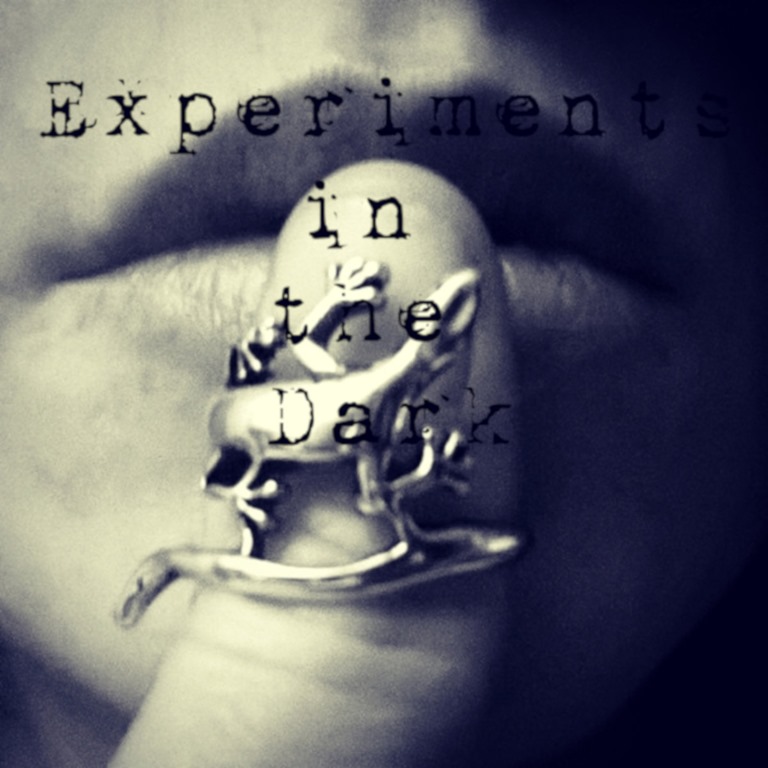
Despite the more indie-leaning backgrounds of the collaborators, Experiments in the Dark espouse more of a post-punk sound, amalgamated with the blurry shoegaze of Curve. There’s reverb galore as the layers of guitar wash over and bleed into one another: ‘What I Deserve’ has one of those classic slow-building intros that’s built around a strolling bass and dual guitars – one chiming fractal, gothy, the other overdriven and set to stun. And from the emerging murk, Rettig’s voice combines sultry and dangerous to strong – yet simultaneously understated – effect.

‘The Desert’ sits between Curve and debut-album era Garbage – and it’s magnificent: rich in atmosphere, dark, brooding, and again centring around a strong rhythmic framework. ‘Control’ is a standout: after gentle start, it bursts into a mesh of guitars colliding over a woozy bass and metronomic mechanised drum sound. And as the track progresses, the icy vocals and treble snap of the snare become increasingly submerged by the squalling noise. ‘Into the Light’ repeats the form, only with the added bonus of a propulsive chorus and a bassline on a par with The Mission’s ‘Wasteland’ overlayed with howls of feedback.

The title track which draws the curtain on proceedings is sparse, stark, and minimal, and owes more to the ghostly, smoky trip-hop of Portishead than anything remotely post-punk or shoegaze.

If Experiments In The Dark is 75% 80s and 25% early 90s, it’s also 100% representative of the zeitgeist in terms of the aspects of the past it draws on. And Where We Sleep’s strength lies in their ability to absorb those elements and draw them together to forge a sound that’s both familiar and fresh, avoiding sounding derivative and instead delivering an exciting set of songs that demand repeat plays.

AA

Where We Sleep – Experiments In The Dark

19th July 2019 – Buzzhowl Records

Christopher Nosnibor

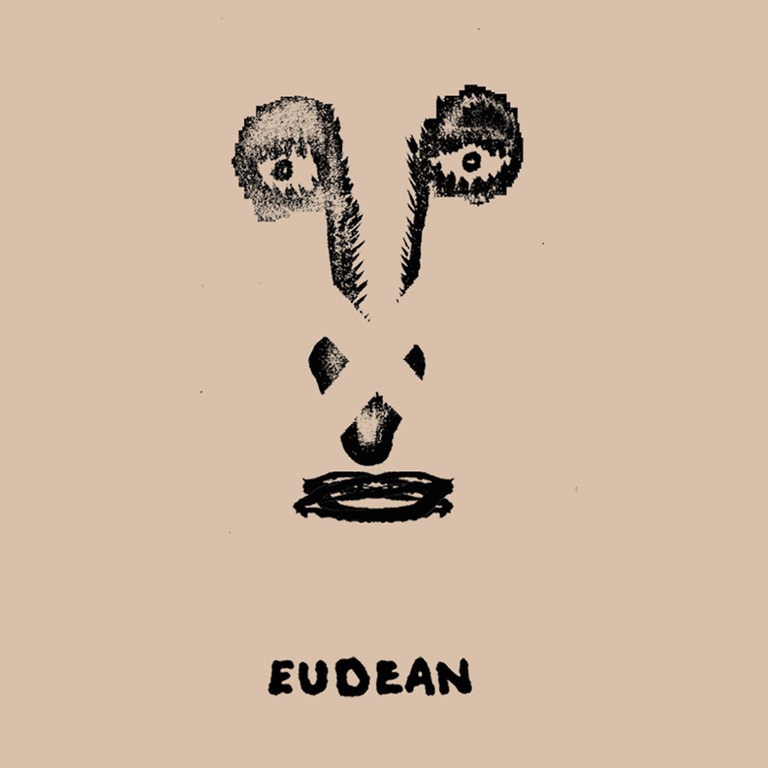
This quartet from Richmond, VA, may have a name that suggests quiet, introspective contemplation and piety, but their third EP, which follows ‘Touched’ (2015) and ‘ICUP’ (2017) whips up an unholy racket.

It’s a lumbering, off-kilter, shouty discord that defines their sound. Chugging, math-tinged rhythms cut across with angular guitars that evoke the spirit of Shellac, The Jesus Lizard, and the essence of the Touch & Go roster from the late 80s and early 90s. It’s gnarly, gut-churning, challenging – and hits the spot like a punch to the oesophagus.

Should we consider why there seems to be a resurgence of music that recrates that period around the grunge explosion, when alternative music that wasn’t grunge but centred around dirty-as-fuck guitars and difficult rhythms that would come to define ‘math’ rock? Probably. Back then, there was a revolt against radio-friendly rock, the slick sonic paste being pumped out by major labels. Of course, the ‘alternative’ sound very quickly got co-opted, but no-one was ever going to flog acts like Tad or Tar or Helmet or Guzzard to the masses even when Warners were angling Ministry at MTV and A&M had launched Therapy? As a top 40 singles band. The bands who got signed and broke through may have changed the face of the musical scene, but it was always the bands who remained underground who defined the era.

Now, with the chasm between mainstream and everything else wider than ever – and long beyond the point at which it becomes unbridgeable – the underground is more resolute than ever. They’re never going to make on this… but they have every inch of credibility intact as they channel their frustrations against an ever-grimmer world of conformity and vacuity. The bands that matter aren’t in it for the money – but then, they never were, and Prayer Group are admirable in their absolute lack of compromise.

They’ve just unleased the EP’s closer, ‘The Other’ by way of a taster. It’s nicely representative, and trust me, you need it.

AA

Prayer Group - Eudean