Archive for the ‘Singles and EPs’ Category

6th January 2021

Christopher Nosnibor

Like so many IKEA item names, Swedish black metal act Rimfrost’s moniker is one which has the capacity to raise a smirk and a snicker for English speakers. I know, I know, it’s juvenile, chuckling to myself about cold cock and chilly willy, and there‘s nothing particularly comical about this release. But as ever with black metal, there’s an element of high theatre that’s only as serious as you take it. Or, put another way, an element of theatre that can only be taken as seriously as it’s pitched. Venom’s Black Metal may have defined the genre, but ultimately, it was no more than an underproduced collision of punk with Motorhead (who arguably blended punk and metal with shedloads of speed).

The corpse-paint wearing black metallers split in 2019, but reconvened in the Autumn of 2021, and unveiled the first fruits of their reunion in the form of ‘Killer Instinct’ in October. So to refer to The Rise of Evil: Killer Instinct as an EP feels a shade disingenuous, since it contains just two songs – the aforementioned ‘Killer Instinct’ plus ‘The Rise of Evil’ make up a single that form a narrative that, as they explain ‘depicts the story of a killer’. In that sense, I’m reminded of the debut single by iLiKETRAiNS, on which the two parts of ‘As The Curtains Close’ tell of a stalker with murderous intent.

Rimfrost’s release is a lot less brooding and considerably less sinister. ‘The Rise of Evil’ is fast and furious, staccato guitars nailed to a frenetic drum driving the headbanging behemoth slog without pause, and it’s heavy alright, but there’s also some musicianship on display here.

‘Killer Instinct’ is less black in its metal persuasion and altogether more heavy metal, with histrionic guitars and a crisp production, with an overall feel – aside from Hravn’s growling, deep-throated vocal snarlings – that’s more Iron Maiden than Immortal, more Saxon than Satyricon. It’s the sound of spandex more than of souls being crushed.

Sure, genres evolve, and rightly so, but this cleanly-produced fretwork frenzy is a far cry from Bathory or even subsequent Swedish exponents of black metal like Dissection, although the theatrical element is perhaps more in common. While it’s serious music, I’m not certain that they’re entirely serious. The result, then, is ok, but rather cozy if you’re on the market for something more purely black or simply something that’s spine-crunchingly strong.

AA

30c190df-b138-be74-750c-82ee9fe8f6df

Space & I Records – 21st January 2022

January is always a shitter. Whether you love Christmas or loathe it, or even if you’re largely indifferent, January is invariably a slump month of epic proportions. Those of us who aren’t mad keen on Christmas tend to cling to the light at the end of the tunnel that is new year, not because of the New Year celebrations, but because of the prospect of things getting back to normal, where everyone isn’t flapping about doing Christmas shopping and your mates aren’t in an endless conveyor-belt of work and other social commitments and might actually have time for just a pint and a chat, and because gigs and regular social activities resume and you can turn on the TV, radio or walk into a shop without hearing wall-to-wall fucking Christmas tunes.

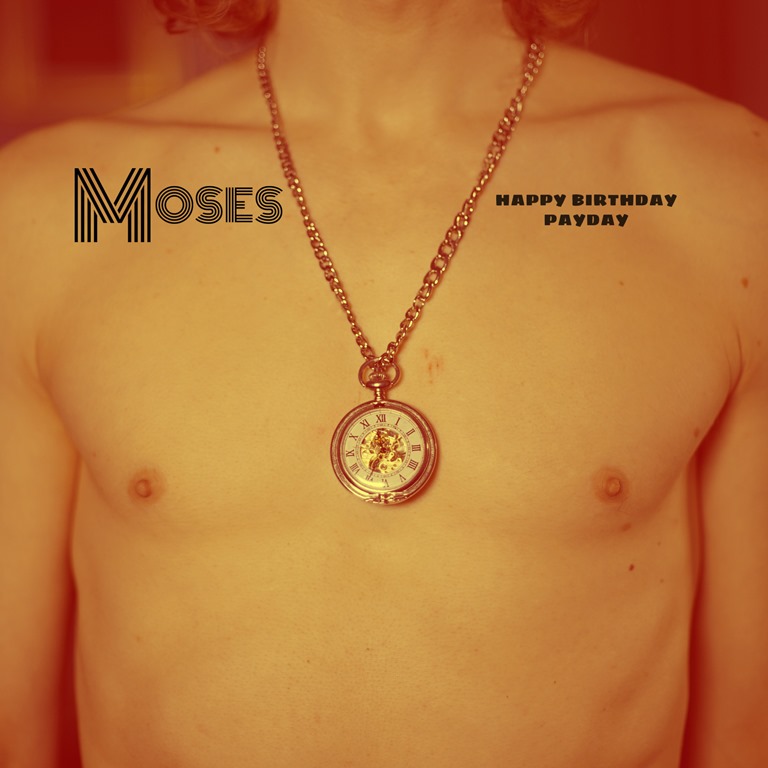
But no, everyone’s skint, the ones who aren’t are doing dry January and not going out, and the days are short and cold and miserable and Christ, it’s bleak. And for the self-employed, the unsalaried, those in the arts, it’s even bleaker, especially during a pandemic. But then, as ‘Happy Birthday payday’ reminds us, staying afloat in the arts is hard at anytime.

It’s ironic that while mainstream chart musicians are lauded and the pop icon is considered aspirational, those who actually commit themselves to the graft of being in a proper band – or pursuing creative activities like writing or visual arts as a means of earning a living are relentlessly knocked back for being dreamers or unrealistic. Granted, it’s only very few who achieve the heights of Coldplay or Radiohead, or JK Rowling or Damien Hirst, but that isn’t to say that an equitable living shouldn’t be out of reach for the many in the lower echelons, and it simply shouldn’t be the case that tends of thousands of streams on Spotify or iTunes translates to less than the price of a pint.

Moses aren’t a band who are willing to compromise to turn that pint into a round: ‘Happy Birthday Payday’ is culled from their second album, Almost Everything Is Bullshit, which is not only a cracking title but a verifiable fact in this time of endless fakery, but one that’s unlikely to see it garner much mainstream radio play. Similarly, while ‘Happy Birthday Payday’ is a strong tune, bursting with energy and hooks, and with a nagging quasi-rockabilly guitar-line and some storming bass runs, it’s hardly zeitgeist. It’s cut from the punkier end of post-punk, and could have been part of the early 90s New Wave of New Wave ‘movement’ hyped by the press. It’s fast, furious, and spirited, and exactly the kind of tunage we need on offer beyond the mainstream – which is why outsider acts need to be viable, because without them, we’re fucked.

Blighttown Records – 31 December 2021

Christopher Nosnobor

Australian metal act Hadal Maw emerge from lockdown with an EP that threatens ‘four tracks of uncompromising and confronting aural violence whilst also introducing new members Liam Weedall (Dyssidia) and Jarrod Sorbian (Départe)’, adding that ‘Musically the four track EP delves further in to the more visceral aspect of their sound and composition while maintaining the technical wizardry that the band established on previous releases’.

Metal comes in so many different shades, and while the more commercial end of metal is alright for banging heads to, it’s kinda tame, espousing nice production values. Hadal Maw, however, exist at the more raw and gritty end of the spectrum, and plough a dark furrow and plough it deep with some furiously gnarly abrasion.

They come blasting out of the traps with a magnificent amalgamation of discord and groove on the snarling blast that is ‘Fetishize Consumption’, and if firing nihilistic fury at the capitalist machine may be an obvious choice, it’s something that simply can’t be done too much, because excessive consumption isn’t simply the dominant culture, it’s the culture. And if you’re not against it, you’re part of the problem. Clearly, this is a simplistic reduction, which leaves little room for the fact it’s hard to escape the problem without going off-grid and living on roots and shoots. Living within the parameters of this contradiction – whereby digital technology and the use of social media is a necessary evil when it comes to disseminating any kind of message or output – isn’t easy, but channelling rage and(self)-loathing through catharsis can help, and Oblique Order demonstrates thar Hadal Maw are kings of catharsis.

The title track, which features ‘guest vocals from three of Australia’s most accomplished vocalists; Karina Utomo (High Tension), Luke Frizon (Growth) and Antony Oliver (Descent)’ gets darker, dirtier, with strangulated rasping vocals grate and grind over a low, slow, booming bass, which contrasts with the messy scribbly scratching guitar work. It’s turbulent and traumatic, in the most powerful, visceral way. It’s a low-end growl and chug that drives ‘Future Eaters’, a soundtrack to the darkest of all dystopias, and featuring a magnificently textured and detailed guitar break in the mid-section before everything comes crashing down hard.

The last track, ‘Vile Veneration’ could well be the soundtrack to this year’s honours list here in England. After a slower, quite intricate and evocative introduction, the drums power in and it’s a descent into the inferno from thereon in, with everything firing on all cylinders to truly punishing effect. It’s as heavy as hell and full of fury. The slowed-down, vaguely proggy midsection still packs weight as the band trudge, lumberingly through the final assault.

Oblique Order is a triumph not only because it’s relentlessly heavy, but because it’s clearly crafted and is remarkably varied in terms of tempo and tone. The band pack a lot into its duration, making for an EP that’s massively dense and hits like an asteroid on collision course.

AA

a1825260385_10

17th December 2021

James Wells

Pieces is the second in a projected series of five EPs, and on the face of it, it’s an immense undertaking: this release contains five tracks, and its predecessor four. Across the project, that’s a full two albums worth of material… until you clock that half of the tracks are remixes. Not that that’s a criticism per se, and I won’t revisit my eternal remix peeve yet again here, because no doubt readers are as sick of that as I am of remixes as a thing.

So ‘Pieces’ is in effect a single, comprising of ‘Disease of Kings’ and ‘Failure Principle’, bolstered by a brace of remixes of the former and one of the latter. ‘Disease of Kings’ is a in some respects a surprising choice of lead song, in that it’s a slow, brooding cut with expansive, cinematic synths casting an arena-wide vista over the reflective mood. It’s well-executed and emotionally charged, but the vocal treatment – namely a fuckload of autotune on the verses – is perhaps a little overdone and reduces the impact of the song’s kick-to-the-chest sincerity. It’s a fine choon, but maybe a fraction too produced and polished and even a little bit Emo, where a slightly rawer edge would have bitten harder.

‘Failure Principle’ is geared toward the mid-tempo, with quintessential dance tropes in full effect, with nagging synth loops rippling over and over an insistent dancefloor-friendly beat. While still featuring the core elements of techoindustrial, it carries a keenly commercial style.

The Assemblage 23 Remix of ‘Failure Principle’ is a standout by virtue of the way in which is accentuates the track’s danciness and general catchiness, bordering on euphoric dance which seems somewhat at odds with the lyrical content. But then, the medium is not necessarily the message, and there’s something to be said for slipping darkness in under the cover of light. In that sense, it works, although the extent to which suggesting any song by an industrial act has mainstream crossover potential and a broad appeal is questionable.

Rounding off the EP, the KALCYFR Remix of ‘Disease of Kings’ beings some fuck-off dirty great guitars and grinding bass to the party and comes on way more Nine Inch Nails, and tempers the vaguely emo leanings of the original and GenCAB remix.

The ‘limited-edition PANIC LIFT FACE MASK to accompany you on your journeys through the current post-apocalyptic landscape’ is a nice touch, too – because we need some nice things to help us navigate living through the reality of all of the dystopian fictional futures becoming reality all at once.

AA

AA

a0672630653_10

10th December 2021

Christopher Nosnibor

Sense of Scenery first came to my attention way back in 2009 with the release of The Disaster of Imagination which landed with me for review. I fucking loved it, and still love it now: it’s an album that’s stuck with me, and still gets regular play now, although it carries a certain weight of nostalgia now as it comes bearing memories of past, perhaps simpler times, and it also reminds me of people and places, and how things have changed.

But then, it always hit me with a certain level of emotional resonance, there was just something about it.

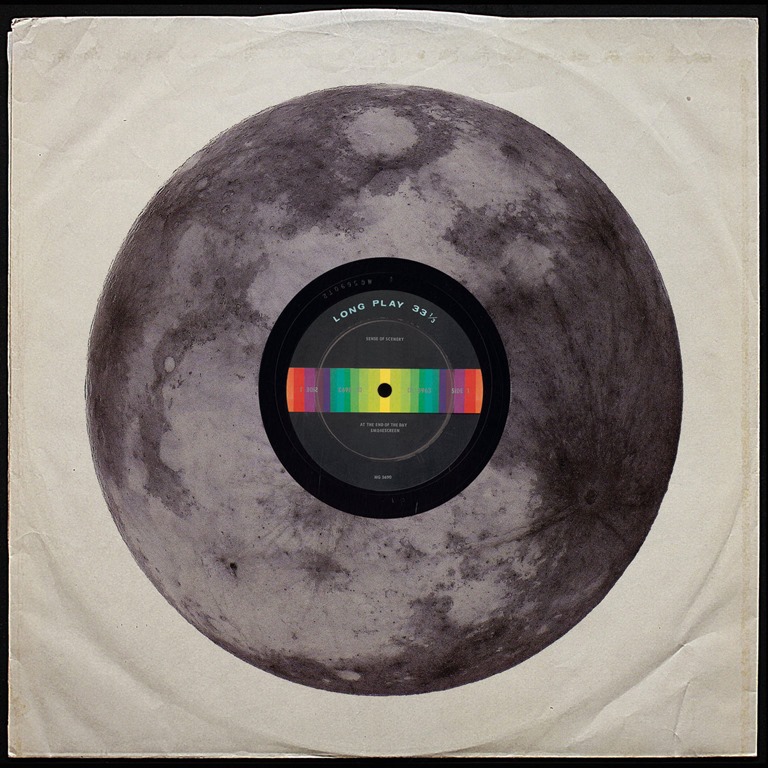
Sense of Scenery have been slow in their subsequent output: an EP in 2012, a remix EP the following year, and an instrumental single in 2017 has ben the sum of the output prior to the emergence of ‘Through the Walls’ as a single in August as a taster for an upcoming album. And now there’s this, a second single and accompanying B-side.

SOS come out swaggering with bravado about this one, claiming it to be ‘Like a direct injection of Viagra into the flaccid, shriveled wiener of Rock’. Which is pretty fucking bold, however you look at it.

It arrives on a wibbly wave of organ with some warping tape stretches, and a crisp metronomic drum sound, and while it’s immediately apparent that their style is unchanged in its post-punk leanings, it is very much evolved. Sean Douglas’ compositions still revolve around cyclical chord repetitions and choruses that step up the vocals and pack a mean hook, but things are altogether slicker, especially the production.

The drums are bordering on the mechanical, and there’s a tightness and smoothness about the overall sound that brings polish, but more than that, it brings a sense of paranoia and heightened tension. B-side ‘Smokescreen’ really brings this all to the fore, bordering on dance, especially with its blooping synth line, but it sounds like the soundtrack to an 80s car chase sequence, and it’s dynamic and exciting.

AA

a3458767912_10

James Wells

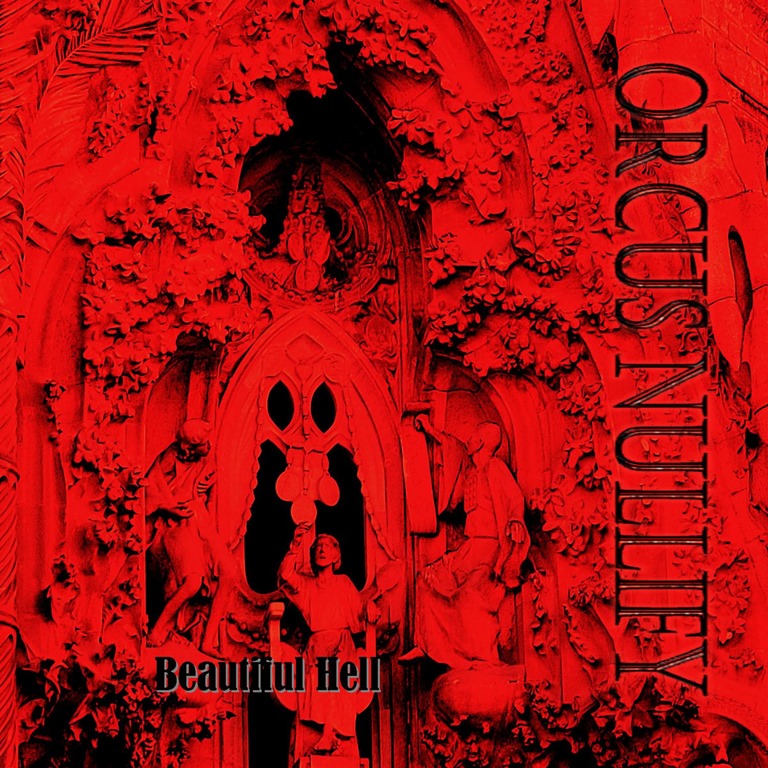
In advance, we learn that ‘The songs on Beautiful Hell will take you on a tour of the wreckage that is the contemporary state of affairs brought about during the reign of the Orange Beast. There was the destruction and reversal of environmental policies like withdrawal from the Parris Climate Accord, termination of the Clean Water Act & turning back the clock on human rights’, and that ‘the title track ‘Beautiful Hell’ draws a juxtaposition between the beauty of this planet and decaying state of political affairs. The tune ‘Under his Eye’ is focused on what is seemingly a path toward a Neo-Nazi Christian state. ‘Night Bird Cries’ is a lament for the decline of our environment and morality, that increasingly vie for our attention but go unheeded.’

The sound of Orcus Nullify – headed by bassist / vocalist Bruce Nullify – on this release is very much vintage goth, with fractal guitars, heavy in chorus and flange and setting spindly frameworks around thundering bass and tribal drums, the murky production evolving the sound and style of early Christian Death.

The intro to the title track sounds very like that of The Mission’s ‘Severina’ before it goes all splintering, spirally Nightbreed-sounding second-wave goth. For the record, that’s no criticism, just a contextual referencing placemarker. ‘Night Dance’ showcases a raw, dingy sound where the guitars are trebly and the bass is muddy and everything combines to create something dark and intense. ‘Fall from Faith’ is The Mission amped up to eleven, it’s The March Violets, it’s Groovin’ with Lucy, it’s Rosetta Stone.

As such, it’s not inventive, and Orcus Nullify clearly aren’t out to reinvent the genre, but to add to the body of the catalogue that could reasonably be labelled ‘classic goth’. Nothing wrong with that, and credit to the band, they’ve got the sound nailed, and some decent choons, too, with Beautiful Hell being a solid and dynamic EP.

AA

AA

a0128427574_10

20th December 2021

Christmaser Nosnibor

Hah, bumbug, I chunter churlishly, amusing myself with a spoonerism to lighten my grim mood. And fuck Christmas, I usually add under my breath daily from around Hallowe’en as I realise it’s already impossible to find birthday cards for friends and family with birthdays in November.

It’s not that I hate Christmas per se, just all the capitalist cash-in shit that accompanies it. And the false frivolity, and office parties, and the shit adverts and the fact I’m supposed to eat my own body weight in mice pies and party foods every day for six weeks. At least thanks to remote working and Covid, I don’t have to make excuses to avoid office Christmas nights out (although staying for just two drinks before telling colleagues I had to get a train to Leeds to review Oozing Wound a few years back wasn’t so awful, although people were already getting pissed up and lairy by six in the evening, so my escape wasn’t a minute too soon). Oh, and Christmas singles. I fucking hate Christmas singles. This statement should require not qualification, but in case anyone’s wondering, it’s because they’re all gash.

Ok, so for every rule there is an exception. Does charity maketh the exception? Nah, not really. I mean, Band Aid… To be fair, it’s not the effort I take issue with on the original Band Aid single, so much as some of the lyrics. ‘Tonight thanks God it’s them instead of you!’ Bono roars bombastically. No. Absolutely fucking no. Was it (Sir) Bob or Midge that wrote that? It’s a horrible sentiment, rendered all the worse by fucking Bono’s delivery. And do predominantly non-Christian countries know it’s Christmas? Probably, but do they give a shit? Probably not, especially when they’re starving. In Africa, though, where Christianity is the leading religion, I expect they would, but snow has no place in all of that.

Ska-tinged trad-punk act Seeds of 77, who came to my attention with the release of their ‘Lockdown Breakout’ single back in May, recorded a Christmas single as a challenge from a radio station last year, raising over £1,100 for UK homeless charities in the process. If re-releasing it a year later seems a bit Slade, it’s worth noting they’ve rerecorded it and updated the lyrics, nominating Brighton-based The Clock Tower Sanctuary which supports 16 to 25-year-olds sleeping rough or in emergency housing as this year’s recipient of the proceeds.

Opening with an organ swell of ‘In the Deep Midwinter’ with chiming sleighbells, they swiftly move on to a mid-tempo rockalong that conjures arms round shoulders swaying and lofting pints to the sociopolitical lyrics. It’s the softer, more pub-rock side of punk, and the solo’s a bit Bryan May, but you know what? It’s alright. And even if it wasn’t, fuck it, buy it anyway: it’s a decent band doing a good thing for a good cause. And they’re not fucking Bono.

AA

a2898651955_10

1st December 2021

Christopher Nosnibor

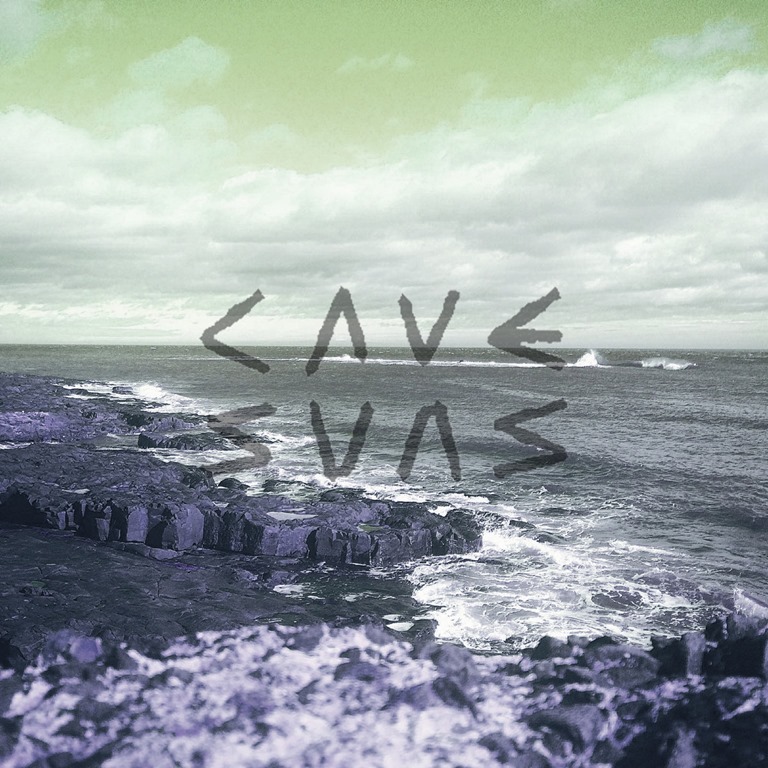
Just shy of a year since Cave Suns threw their improvised ‘Surk Skum’ EP into the plague-ridden void, they return with a proper lo-fi DIY release, consisting of four pieces, ‘improvised live one take each song apologies included’ they write. The set was captured on an iPhone and is released on a limited edition cassette (and digitally, of course).

Beyond the world of the major label (and the domain of the indie label with some cash behind it), this increasingly appears to be the future of the little band. With the chances of getting signed and getting bankrolled these days practically nil even for solids acts with some commercial potential and significantly less than zero for artists doing anything without that commercial potential (which isn’t to say there’s no audience or demand), they’re taking thee means of production into their own hands and just getting on with getting their music out there. If one positive thing has emerged from the last couple of years under the pandemic – and let’s face it, it’s been hard to find anything positive, particularly for bands and small venues (I’m hesitant to say ‘the music industry’ because Ed Sheeran and Eric Clapton won’t have suffered too heavily from the lack of touring options in terms of bank balance or their ability to reach audiences or shift units / merch and I’m sure the likes of Warners aren’t questioning their viability right now) – it’s the fact that perhaps finally any stigma around self-releasing has been eradicated. That said, for Newcastle’s Cave Suns, it’s business as usual: they’ve been self-governed and self-releasing since 2014 and haven’t been troubling studios in order to lay down their intrusive improvised sessions, preferring instead to capture live shows and rehearsal room jams

‘Dunder Salt’ is a kind of mellow psychedelic swagger with a buoyant bassline and bopping beat that seems to all cast a nod to the verse of The Beatles’ ‘Come Together’. With minimal progression, there’s a Krautrock element to the vaguely jazzy, vaguely funky groove. It’s a solid jam, but it’s not until the eleven-and-a-half-minute ‘To Who It May Concern’ that they really show us what they’re capable of. Mystical, eastern-inspired scales twist in a slow-building swell of sound, a hum and a drone of bass and tentative drumming before emerging on a vast sonic plateau. It’s one of those compositions that stops and starts so often that it’s hard to decide if it ever really gets going, or if it’s several pieces string together; perhaps more reasonably it’s best described as several movements with a succession of ebbs and flows and sustained crescendos, often with the drums pounding hard with insistent thrashing of cymbals and hitting some solid grooves even with the stretches of meandering guitar.

‘Essesse’ kicks off wide two with something altogether lighter, more technical, with a mathy aspect, and also more overtly proggy, you might even go so far as to describe it as jaunty – but then, you may not. It’s kind of a collision between That Fucking Tank, Muse, and Royal Blood. Maybe it’s more as well, It’s certainly their most ‘muso’ cut to date, and is also highly accessible.

The 11-minute ‘13th Celebration’ that rounds off the EP and the remainder of side two is built around a repetitive bas throb that evokes the monotonous groove of Suicide, but overlaid with a sprawling guitar jam that’s part prog, part space rock, all improv. They lock into a neat groove for a time and really rock out, but then slow it down and trip out, crawling to the close.

Hypnotic, groovy, completely free of the shackles of genre and commerce, No Guards knows no limits and captures Cave Suns on fine form.

AA

a1022258747_10

Time to Kill Records (TTK) – 15th December 2021

Christopher Nosnibor

A good slogan or manifesto can say so much more than the words in themselves. And so it is that Vonamor introduce themselves with a bold statement that hints at Dada or perhaps the more arch and ironic Neoism in a way.

Vonamor state that:

VONAMOR is music and movement. VONAMOR is real and virtual.

VONAMOR is the end and the beginning. VONAMOR is from love, of love, for love.

Vonamor are more than simply a band, then, and more an aesthetic, a single-act movement. They exist in the space between simultaneous contradictions, the likes of which have informed poetical works since the Renaissance, with Sir Thomas Wyatt’s ‘I Find No Peace’ sonnet effectively setting a blueprint for modern literature.

Postmodernism, and Neosim in particular positively revelled in those contradictions, taking the avant-garde idea of self-awareness and self-destruction as a means of creating anew, and this, on the strength of Vonamor’s statement, is their primary objective: to be everything, and therefore nothing: to exist, they must cease to exist.

How seriously to we take this? They look pretty serious to me, but that may all be part of the performance. The next, and perhaps most important question is, does the music validate the bravado and high art bombast?

‘Take Your Heart’ is a smart slice of stark, minimal electronica, dark pop with a gothy, post-punk leaning, a collision of Siousxie and Florence and the Machine that’s both spiky and groovy, five minutes of mid-tempo doom-disco with an industrial edge – I’m talking more later Depeche Mode than Nine Inch Nails. It’s daring in the adherence to the adage that less is more: it’s tight and claustrophobic, and this gives the song a particular intensity.

No question this is a low-budget effort on all fronts, but that’s a significant part of the appeal. This isn’t some major-label act masquerading as something cult and underground to score kudos and cool cachet; Vonamor are clearly a fringe act with big, bold ideas and a strong sense of identity, and ‘Take Your Heart’ is understated but strong.

AA

Vonamor

7th December 2021

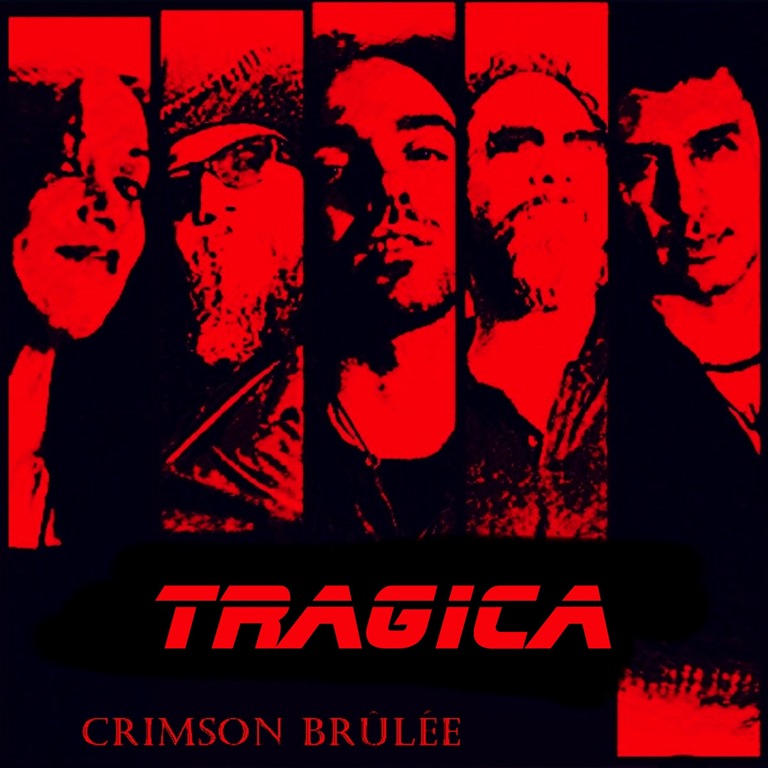
Crimson Brûlée emerged in 2019 as an offshoot of guitar-driven goths The Witch-Kings, after a difference of opinion over the incorporation of synths. No diss to The Witch-Kings, but Tragica presents a magnificent sound.

It’s a pretty awkward band name and so-so title for a great album, but there is context, at least for the latter, in that the EP is delivered in homage to the band’s original bassist, Johan, who passed away in early 2021.

He would likely have been proud. With Tragica Crimson Brûlée really nail their position as a top-notch goth act. It’s billed as an EP, but comes with a stack of remixes which bulks it uo to nine tracks, which is effectively an album or two EPs.

‘I Came Back to You’ is a strong opener, combining trad goth with the sound and feel of early Psychedelic Furs, packing minor chords and an insistent beat in the verses, that burst into something wonderful in the choruses. Light explodes and it feels redemptive. It could easily be a Talk Talk Talk outtake. The intro to ‘Nothing Dies Forever’ invites comparisons to She Wants Revenge: it’s dramatic, bold, bombastic, synth-led but driven by some meaty guitars, and absolutely fucking epic, and never lets up for its five-minute duration.

It’s the strolling bass that dominates ‘Restrained’, which is anything but in terms of its epicness. All bar one of the songs are over the five-minute mark, but ‘Where the Tarantulaa Roam’, extending beyond the six-minute mark, is an absolute beast, and one that calls to mind Susperia, only with swirling backing vocals reminiscent of All About Eve’s Julianne Reagan. With the synths backed off but sweeping all around, the mix is immense.

‘Why I Wear Black’ is more guitars, more SWR-like. Yet for all the references, this feels fresh and innovative: this is not an album that deals in tropes and the lyrics are personal and genuine rather than contrived.

It’s a really, really strong suite of songs, The remixes are pretty good, to be fair, but non-essential.

AA

a3393228744_10