Archive for the ‘Reviews’ Category

Mortality Tables – 5th January 2026

Christopher Nosnibor

Mortality Tables’ Impermanence Project has grown legs over the course of the last year, and has offered some remarkable, striking, and intensely personal responses to the theme. And as the title of this latest addition to the expanding body of work emerging under the project’s auspices alludes, Gareth Jones’ 53_StOlaves : Response is a response to a response, so to speak, adding layers of interpretation but also a certain kind of dialogue to the project.

The original St Olaves (St Olaves : Catharsis) was recorded label owner and project curator Mat Smith and released in June, and stands as one of the most intense and deeply personal pieces, a churning whorl of noise distilled from a field recording made by Smith at St. Olave’s, Hart Street, London. Amidst it, there are footsteps, voices, all vague and barely audible in the overwhelming wall of sound. The accompanying notes relate, ‘For a brief moment, you settled into silence. I said that I loved you again. It seemed to sink in who I was and why I was calling. It would be the last time that I truly connected with you, and I am convinced that despite the blur of the drugs and your Alzheimer’s that you understood.

‘The moment lasted barely a couple of seconds during our nine-minute call, but it felt like an eternity. You began saying that you were about to be taken away for tests, but you didn’t know what the tests were. Except they weren’t tests: you were being taken to theatre.

‘Two hours and five minutes after our call, at 1405, you passed away during surgery.’

It hits hard.

AA

AA

And so we arrive at 53_StOlaves : Response, a field recording made by Jones while on holiday in Greece. He writes, ‘I was moved to create a response to St. Olave’s in the spirit of impermanence understood as, viewed through the lens of, transformation.’

53_StOlaves : Response is a similar duration – meaning it contains just over nine minutes of buzzing, jarring waves of background noise. It glitches frequently, the volume suddenly surging unexpectedly after an ebb, tapering to an elongated organ-like drone before altogether more optimistic-sounding ripples emerge. It has a wistfulness, a certain air of melancholy, but over time, this too dissipates, leaving gentle, dappled ambient hues with understated beats fluttering to the fade.

If St Olaves : Catharsis is the soundtrack to raw anguish and the howl of loss, the staggering bewilderment at the fragility and brevity of life, 53_StOlaves : Response feels like the emergence of acceptance over the passage of time. And this is where Response really comes to add to the theme of impermanence, and it feels like a subtle reassurance that while we likely never necessarily ‘recover’ from those deepest losses, that the wounds will forever remain psychological scars, the pain does ease, eventually, through, as Jones puts it, ‘transformation’. Nothing lasts forever. We transition. We transform. 

AA

AA

a3259884415_10

r-ecords – 19th December 2025

Christopher Nosnibor

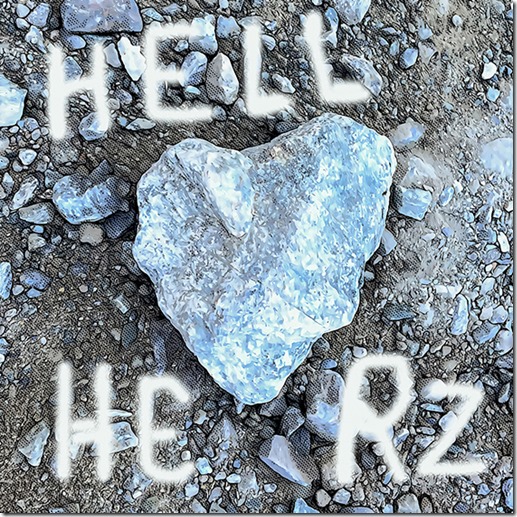
A crackle of static washes in and obfuscates the murky bass and beats which begin to emerge. It’s a strange experience, like listening to a tune while under water. Over time, this shifts: hypnotic beats with clicking, cracking snares and low, thwocking bass drum sounds cut through the curtain of hiss which hangs like heavy rain. And so it is that ‘Waiting for nothing’, the first of the three compositions on R. Schappert’s Hellherz EP. It’s an intriguing piece, layered and unpredictable and multi-faceted.

In context of his bio, which informs us that ‘Roland Schappert pursues border crossings in the form of an “organic digitality” oscillating between melos, sound and rhythm’.

The EP’s accompanying notes are somewhat winding, kind of cryptic: ‘Where do we put all the words that held us captive? We put them in a bottle post and send them out into the open sea. Back on land, there is fluttering in the space of spaces. Corners and edges crumble away in tumultuous layers. Let us take the time that the melos urges us to take, let us entrust him with our voice.

Sensually coded sequences of notes disrupt the free flow of our thoughts. Cranes hop and counter common notions of progress. Hopping instead of marching. Jumping instead of stomping. Up into the sky. From 3/4 to 4/4 time and back again. With hissing and quiet humming. Do we like it better up here? Where do we come from, where are we flying to for the winter? No more getting lost: Wrap your words. Our hearts are light.’

It appears that much of this is cultivated around the EP’s centrepiece, ‘Wrap your words’, the credits for which draw my attention in a way which imbues me with a certain unease:

Lyrics by R. Schappert

Vocals: revised AI voice

AI’s ubiquity is cause for concern in itself, and the reasons for this are a thesis in themselves. But specifically, given the way AI trains itself, voluntarily feeding it words to recycle and regurgitate feels like an abandonment of artistic ownership. When William Burrroughs cut up existing texts in order to form new ones, he questioned the notion that anyone ‘owned’ words, contending that the act of writing was simply the selection and manipulation of words in differing sequences. But this is not the same challenge of ownership and methods of creativity, because the application of AI serves to remove the artist from the process, partially or even wholly. Moreover, while AI is being used for military and medical purposes (and fears over where that may lead again are another thesis worth of debate at least), in the day-to-day, AI for the everyman seems to be about creative applications. Personally, I would rather AI did my admin and cleaned the oven in order to give me more time for creative pursuits. The idea that an artist would delegate any part of their creative work to AI is something which I find truly bewildering. Yes, there are skills we may lack, but the joy of art, in any medium – is learning those skills, or collaborating with other creatives to fill those skills gaps. There are real people with real skills, and working with them and learning from them is how we grow as artists.

So, AI voice? Why? Why not find a vocalist? Why not even apply autotune to a real vocal if that’s the desired effect? The warbling, autotuned-sounding digital vocalisations sound pretty naff, if truth be told, and add little to a tune which clops and thuds along with some retro synth sounds hovering vaguely around a beat which stutters along in soft focus. But as I listen, the whole AI vocal thing gnaws at me: has AI been utilised, uncredited, to the instrumentation too? What can we trust, what can we believe now?

The title track draws the EP to a close, with some brooding, quavering organ sounds and glitchy beats and more static, returning things full-circle before an abrupt end. It’s atmospheric, and a shade unsettling, too.

It may be brief, but there are many layers to this. As a whole, Hellherz provides much to ponder.

AA

(Click image to link to audio)

r-ecords 06 art

Infacted Recordings – 2nd January 2026

Christopher Nosnibor

Where were you when…? That’s the question that is so often asked when it comes to moments in history. Whether it’s the assassination of John Lennon or JFK, or 9/11 (I was at work on the third floor of an office in Glasgow, and as the news broke, it didn’t seem real. At some point, people may ask ‘where were you when America invaded Venezuela, abducted their president and declared that they would be running the country and taking their oil?’

Me, I was starting preparation for a pasta bake ahead of a visit from my elderly mother whose mental capacity is in severe mental decline, and my stepfather, whose mental capacity has been questionable for the thirty years I’ve known him, stressing over how much grief I would get over being vegetarian, yet again, or similar.

I found myself faced with the dilemma – did I actually want to write about music in the face of this? Was it even appropriate? The answer was that I needed to immerse myself in music, to take myself out this hellish unreality by retreating to someplace safe. Someplace safe, for me, is my office, with some candles, a large vodka, and the challenge of articulating the impact of new music in words.

Back in 1992, The Wedding Present undertook the task of releasing a single a month, on 7”, and each one hit the UK top 40, and scored the band a record number of chart singles in a year – beating Elvis Presley. A couple of years back, I covered the progress of Argonaut as they released a single a month to assemble their next album. Again, it was a great example of how deadlines and confines can push creative output, although I was rather glad I didn’t have to get busses into town after school and rush round the various record shops to source a copy of said monthly singles.

And now UK industrial/electronic artist j:dead are on a trip of twelve singles in twelve months, perversely starting in December, making this the second in the series.

For a moment, I shall step aside and share from the accompanying bio for expanded context:

‘Where opening single “Pressure” confronted the crushing weight of expectation, “Disgusting” turns the lens inward, addressing the uncomfortable realization of having slipped into complacency. Through candid, visceral lyrics, the track embodies the feeling of awakening to one’s own laziness, comfort, and decline; expressed symbolically through the erosion of physical appearance. It’s a raw, self-critical reflection delivered with the intensity that defines j:dead’s work.’

‘Disgusting’ is a slice of high-energy electronica with a gothy / industrial edge which hits hard. Pumping beats, processed vocals and buoyant dance derivative synths dominate this single release which has alternative clubnight rager written all over it. And it’s the perfect escape.

AA

AA

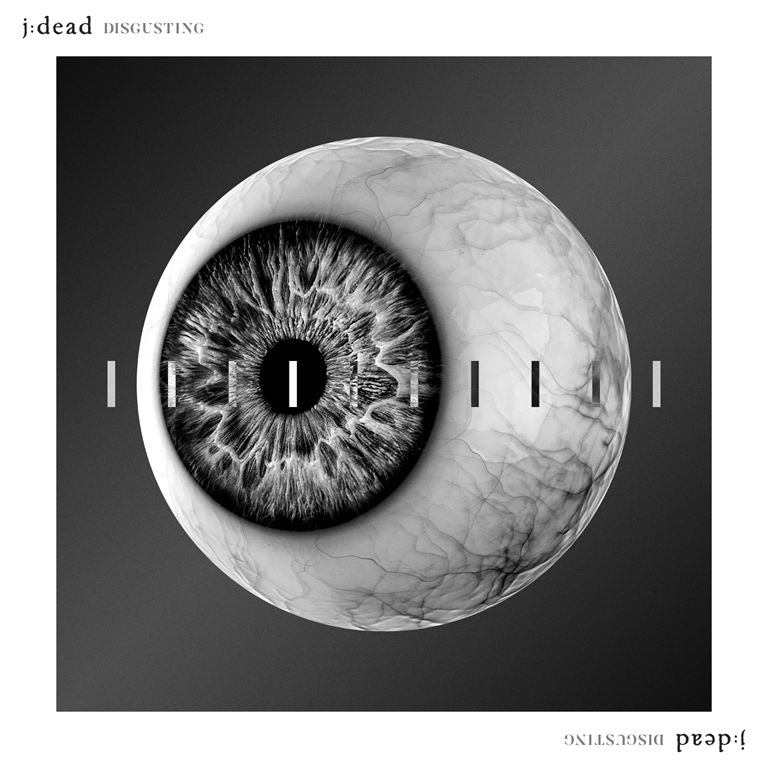
J-DEAD_DISGUSTING_BANNER_1500x1500px

Christopher Nosnibor

The debut single from Nottingham band KEE. is a rare beast – it does something different. Sure, they’re an electro act who’ve been described as ‘Portishead on steroids’, but there’s a whole lot going on here. Yes, there’s a noirish aspect to the sound, and a haunting female vocal which has undeniable shades of Beth Gibbons about it. It’s also muted, low key, with something of a vintage analogue feel. But then there’s some twanging guitar soaked in reverb and it’s more desert rock than country, and suddenly, as if from nowhere, an urgent drum ‘n’ bass beat pumps in, jittery, frantic, like a fibrillating heart, an anxiety attack arising inexplicably in a moment of tranquillity.

The accompanying video – shot in part artful black and white, naturally, the rest blurry – captures and enhances the tense, dark atmosphere.

The groove builds as the track progresses, but so does the tension, and the abrupt finish seals it. It’s exciting, and promising, and I want more.

AA

AA

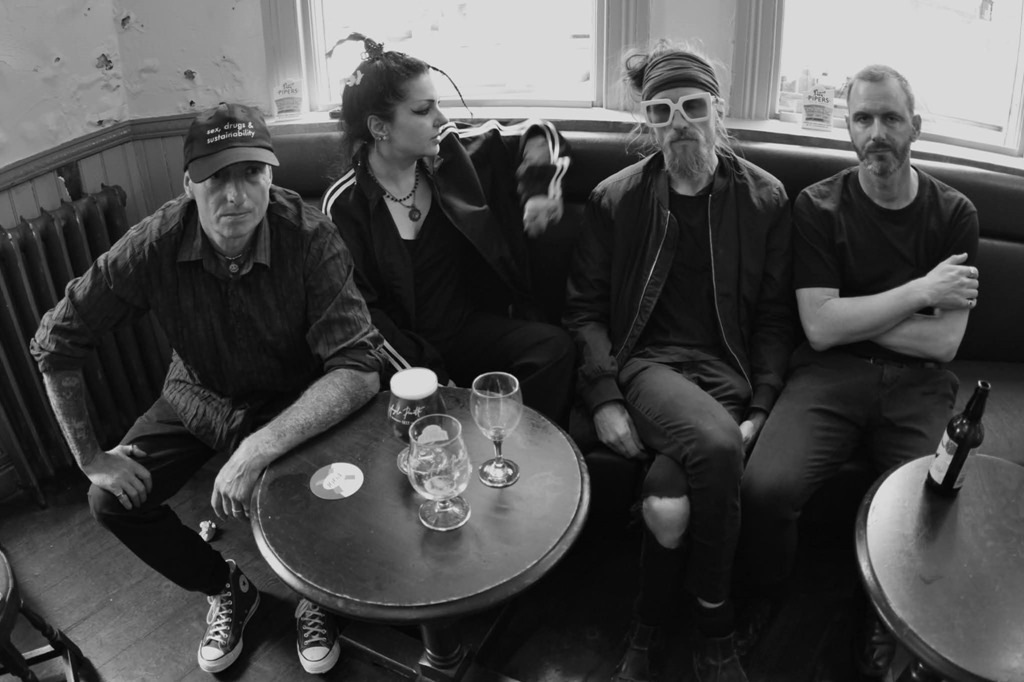
KEE. Promo shot

Ici d’ailleurs – 12th December 2025

Christopher Nosnibor

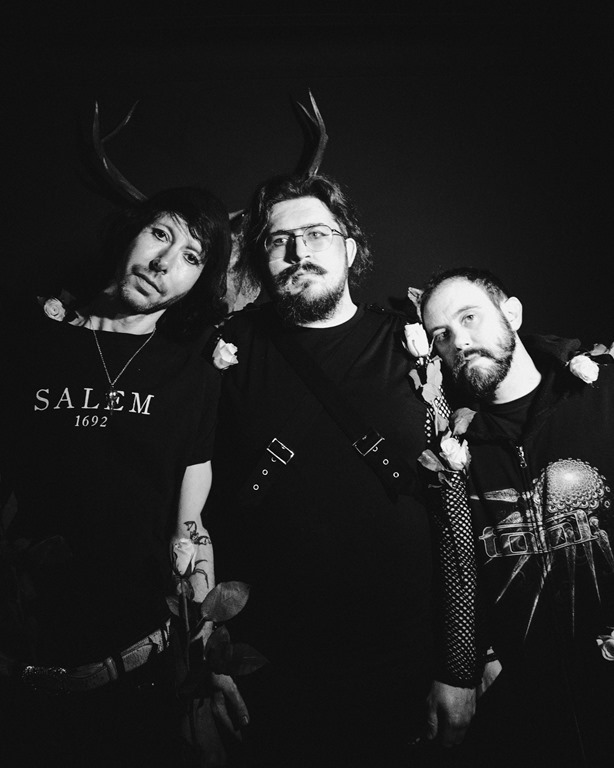
Woah, what? Is that really how it’s supposed to start? Hitting play on Dééfait’s eponymous debut EP and landing with ‘We Love Each Other We Don’t Belong to Any Species Anymore’ feels like crashing in midway through a song: there’s no intro, everything is already happening. And there’s a lot happening. It’s chaotic, lurching explosions of noise erupting through tidal waves of cacophony and discord, frenzied fretwork and spuming mania and derangement are everywhere here, to the point that you wonder if you’ve arrived at the wrong place at the wrong time, and downloaded the wrong files while you were about it. But no: welcome to the weird world of Dééfait

Their bio summarises their sound quite nicely as ‘Somewhere between krautrock, noise rock, decaying psychedelia, and pagan proto-punk’, adding that ‘Dééfait makes music as one performs a ritual: in trance, on repeat, and without a safety net. From the chaotic arteries of Mexico City to the basement venues of the Paris suburbs, Dééfait sculpts noise rock in a state of breathless tension. Their self-titled debut EP is a noise rite: a wall of guitars, incantatory percussion, and possessed voices. With Dééfait, sound twists, repeats, stretches, until exhaustion and ecstasy.’

And yes, this is all true. Dééfait transport the listener into another world, a different space, another time, where you don’t even know what space you’re in or what time it is, what year or even millennia you’re in. The warping, twisting trudge of ‘Molokh ’ is an epic, drifting desert-rock wandering into weirdness.

‘BONDNONDOND’ is a roiling rocker, the context and lyrical content aren’t easy to comprehend, but this I no way detracts from the ability to appreciate the song, which reminds me of …And You Will Know Us by the Trail of Dead. I have no idea what it’s actually about, but it’s a tempestuous aural blizzard which transports the listener on a rising tide which threatens to smash against rocks and deliver annihilation by nature. In contrast, ‘Comatose Big Sun’ is a classic example of 90s indie inspired shuffling jingle with psychedelia interwoven into the dense, droning texture. Ride and Chapterhouse are in the blend when it comes to touchstones here, but so do The Black Angels. They use a similar template for ‘Al’Ether’, but here, everything’s cranked up to ten, a wail of distortion swirls around the rolling rhythm section, and the whole thing goes off the rails in a blast of raucous jazz noise on the last song, ‘Wow! Ferreri Cooked for Us’. Wow indeed.

This isn’t so much an EP as a voyage of discovery.

AA

IDA168EP front

Testimony Records – 16th January 2026

Christopher Nosnibor

Four albums in twenty years isn’t a particularly impressive work-rate, but I’m assuming that liker the majority of bands, the members of Total Annihilation have not only day jobs, but families and all of the stuff that adults tend to. The fact that they’ve managed to continue making music – and earned themselves both a fanbase and level of reputation – is no small feat, and is a testament to their commitment to making music. This seems to be where a lot of people lose their way in life, and end up feeling bitter and unfulfilled, accepting the process of succumbing to the drudgery of capitalist structures, and becoming increasingly resentful of the way that parenting and domesticity take over. These guys clearly have no shortage of rage, but it’s not over how their lives have turned out, and of course, they have an outlet – a substantial outlet driven by heavy guitars and pounding hell-for-leather percussion… a healthy outlet. It’s an observation I’ve made before that metal gigs are some of the friendliest, least threatening, environments I’ve experienced, and the more extreme the metal, the nicer the folks. There are always exceptions, as the 90s Norwegian black metal scene evidenced, but by and large… extreme metal channels those difficult emotions, the anger, the rage, the hatred.

Mountains of Madness promises ‘all the Swiss precision and trademark elements their following has come to expect of them but also with more of everything: more tempo and serious speed, more brutality, more power, more thrash, more death but also more harmonies, more melodies, and more musicality!’

I’m not entirely sure that what we want from a death metal album is ‘more harmonies, more melodies, and more musicality’: me, I want more grunt, more grind, more attack, more brutality. May be I just like punishment, maybe I just want music that bludgeons and batters, maybe I seek catharsis through sonic violence.

The blurbage also informs us ‘There are also more tentacles, more jaws, more razor-sharp teeth, more twisted mutation, and definitely more evil! Talking about tentacles, the album title points already towards the famous cosmic horror novella At the Mountains of Madness (1936) by American gothic author H. P. Lovecraft, who has been a constant source of inspiration for the metal scene in general and TOTAL ANNIHILATION in particular…

Yet for Total Annihilation all this horror is not just escapism for entertainment but it serves a meaningful purpose. The album is permeated by a deep moral disgust and burning anger towards all the evil and reckless destruction that humanity forces onto itself and all other forms of life on this planet and earth itself. Mountains of Madness is conceived as an echo of and a bold manifesto about the state of the world as well as an artistic sign of our time.’

And there it is: it’s hard to argue, if you have any sense if the current state of the world, that we’re fucked. The question at this point seems to be less ‘will humans become extinct?’ and more ‘will we become extinct through war or climate change?’

‘The Art of Torture’ brings the rage in frenzied blast of beats, riffery, and raw-throated vocals. there is, of course, the obligatory monster solo which occupies the majority of the second half of the song, but the title track brings an instant shift. Yes, it’s very much driven by dingy guitars and pulverising drumming, but it snarls into the abyss and is gnarly and heavy, and while there are some bursts of obligatory fretwankery which feel very much template-driven, it brings the weight – before ‘Chokehold’ grinds in hard, overloading volume and thick distortion paired with rapidfire double-pedal drumming and some wild harmonic guitar soloing.

Mountains of Madness hits hard. Across the eleven tracks, Total Annihilation bring riffs galore, and while there is melody in the lead guitar parts, it’s hardly tuneful in the conventional sense. The sound is solid, the bass and guitar both chunky, the drums blasting, and the pace and rabidity seem to increase as the album progresses.

AA

207139

Cack Records – 31st December 2025

Christopher Nosnibor

When is a Christmas single not a Christmas single? When it’s released on New Year’s Eve, has nothing to do with Christmas, and it’s new work from Mr Vast. It’s been a while since we’ve heard from the king of cack in terms of releases: Touch & Go was seven years ago now.

It’s feast or famine when it comes to output from Henry Sargeant, the maniac behind the weirdness: Wevie Stonder had been mute and seemingly dormant since their compilation The Beast of Wevie (the title of which may or may not have been an influence on my own retrospective release, The Beast of Noisenibor, released in the autumn of this year. If you think environmentalism and social conscience is only about recycling papers, glass, and plastic, think again, and start recycling puns and jokes too) in 2017, only to drop a fresh dose of warpedness in the shape of Sure Beats Living in June.

Meanwhile, he’s spent the summer on the road around the UK bringing a ‘vast’ array of outfits and strangeness to venues around the country – and now, ahead of the release of a new Mr Vast album – Upping the Ante – due for release in March, he’s dropping ‘This and That’, a real banger for your New Year’s Eve party. And because it’s Mr Vast, he’s gone and picked the album’s longest track for the single.

It’s a whopping six minutes of strange – a hyped up slab of lo-fi electronica that’s big on repetition and bubbling bursts of synth. It has many of the features of 90s rave woven (or Wevien, if you will) into its fabric, and it straddles the space between a bona fide dance tune and a parody of one. But as Hugh Dennis’ embarrassing dad character used to say on The Mary Whitehouse Experience, it’s got a good beat…

AA

AA

a3950043454_10

Christopher Nosnibor

In my workplace, there’s been an email thread circulating with end of year reviews of best and worst gigs etc. It started around the end of November. I had four more shows to go to then, including this one, and you never know if your gig of the year could be a last-minute entry – especially with Cold in Berlin having dropped Wounds mid-November. What with this and Sorrows by Cwfen, it’s been a stellar year for New Heavy Sounds, showcasing some remarkable work by female-fronted bands who really bring the weight.

I’m here first and foremost as a fan tonight: not only hyped by the prospect of seeing Cold in Berlin again for the first time since 2019, but revved by the prospect of Arch Femmesis, who I discovered supporting The Lovely Eggs in May ’22. Their performance struck me and stuck with me, making them an act I vowed to see again whenever the opportunity arose.

Furthermore, this goth Christmas do is a fundraiser for the Sophie Lancaster Foundation. For those unfamiliar, Sophie, aged 20, and her boyfriend were attacked simply for being goths by a bunch of teenage boys, and Sophie would die from her injuries a few days later. It’s one of those things that’s hard to process, and as disparate as the goth / alternative ‘community’ is in such times – and as the range of acts on tonight’s lineup evidences – they prove that there is solidarity among outsiders.

I arrive feeling like I’ve not properly dressed for the occasion – no painted leather jacket, no tassels, no band T-shirt, no winklepickers. I favoured a woollen hat over my Stetson because it’s fucking freezing and I need to cover my ear as well as my hairless head. I console myself with the notion that my resemblance to Andrew Eldritch as he now looks might boost my goth cred. I’m not entirely convinced it does: the place is thick with beards and hair and leather. And I do mean it’s thick… the turnout is impressive for a cold night between Christmas and New Year, a time when a lot of people are away or hibernating or lolling in a festive food coma.

‘We are Flowers of Agony’ announces the guy with glittery makeup and a Siouxsie and the Banshees baseball cap. We? It turns out he has an entire band on his mobile phone, right down to backing vocals. The result is some kind of overwrought synth pop Meatloaf karaoke. Credit where it’s due, it takes some guts to get up there and do that, but… Agony might be a bit harsh, but it was pretty painful.
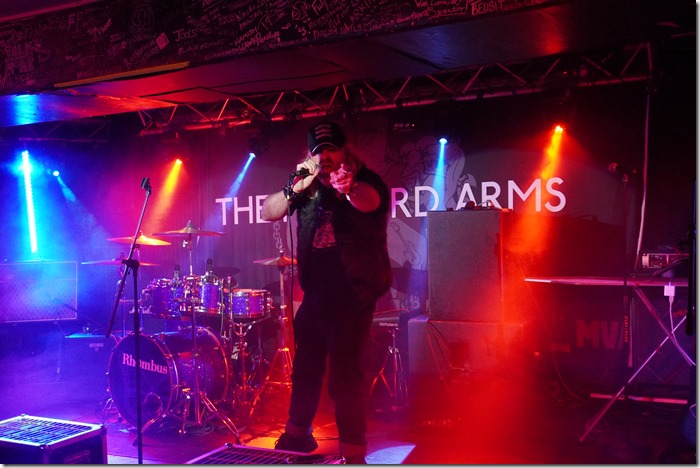
DSC05610

Flowers of Agony

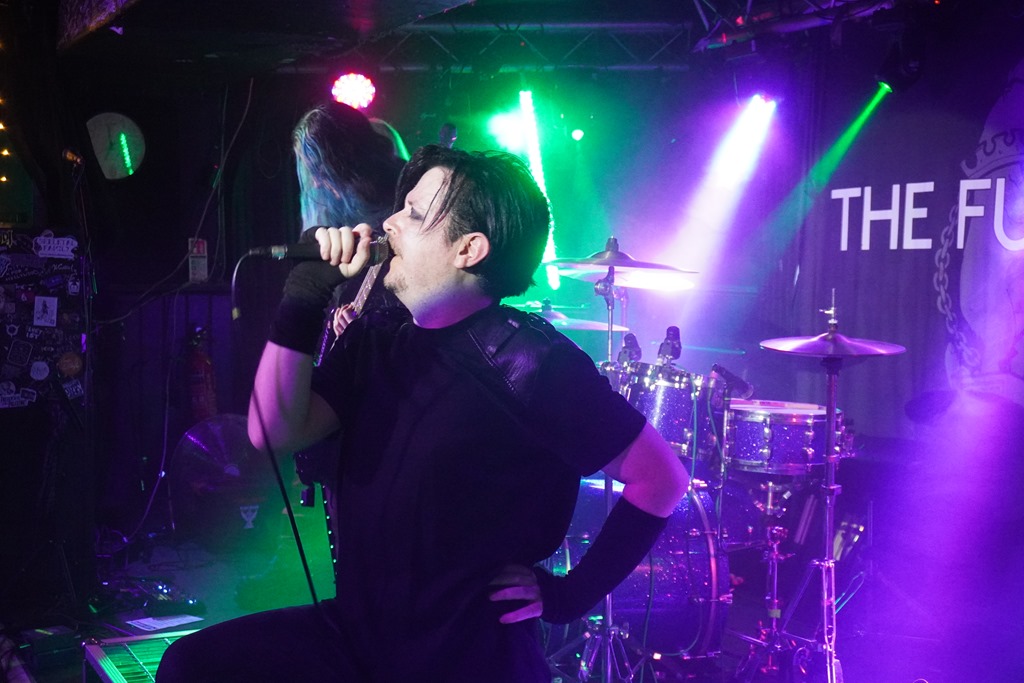
Play/Dead are hard to find online amongst the voluminous links to the 80s post-punk act Play Dead, and are very much from the industrial / metal end of the goth spectrum. The singer channels Trent Reznor all the way, and image-wise they’re strong (apart from the lead guitarist, who appears to have just got off work, while shots from previous gigs show him to be suited and booted). The songs are just as strong, and brimming with rage and angst, with programmed drums and sequenced synths interweaving well with the twin-guitar and bass assault. Nihilistic anthem ‘God is Terrorist’ is more Marilyn Manson than Nine Inch Nails, while the penultimate song, ‘Subliminal Messages’ is more Depeche Mode in its template. It’s hard to fault their execution.
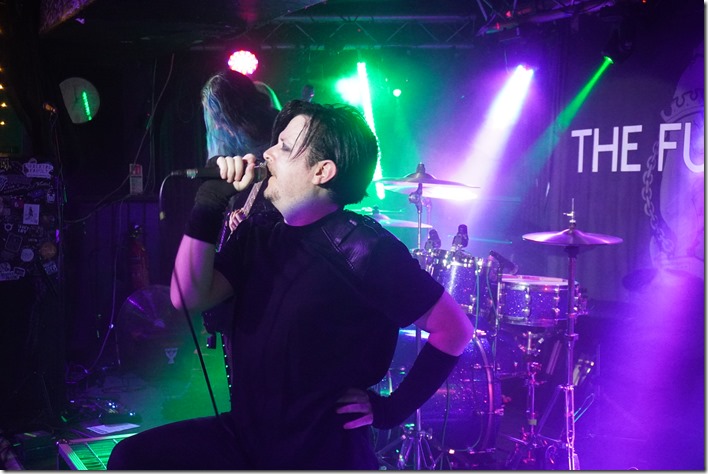
DSC05696DSC05658

Play/Dead

It’s nigh on impossible to fault Arch Femmesis on any level. The Manchester-based but from Nottingham electro-punk duo can’t be judged by other bands’ standards, because they are something of a unique proposition. Zera Tønin (who featured on ‘Land of the Tyrants’ on the latest album by Benefits) is simultaneously sultry and scary when she’s singing, but sassy and straight-talking between songs, regaling us with details of her menstruation, wind, flatulence and halitosis, and there’s some banter and audience interaction, too. Lyrically, she’s pretty up-front and straightforward, too, and again, not without humour. They’re backed by some pretty hard beats, and by the end of the set they’re pumping hard (the beats, although Zera probably is, too). There’s an element of ‘what have I just witnessed?’ circulating in the post-set buzz, but that’s part of the appeal – that and the fact they were proper bangin’.
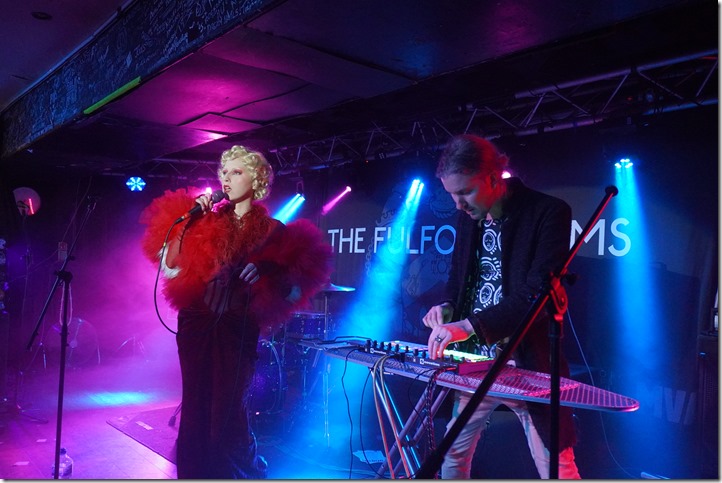
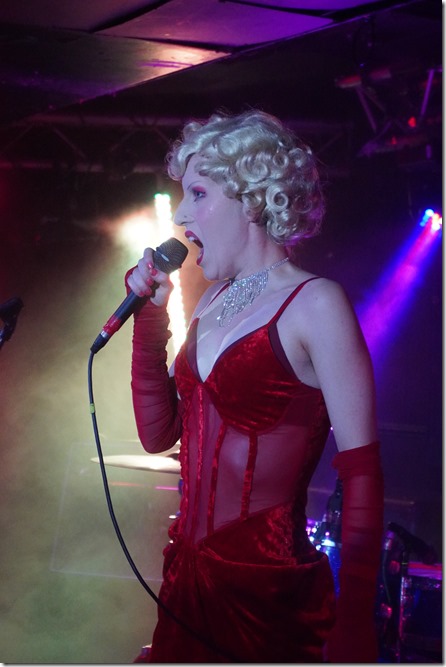
DSC05706DSC05754

Arch Femmesis

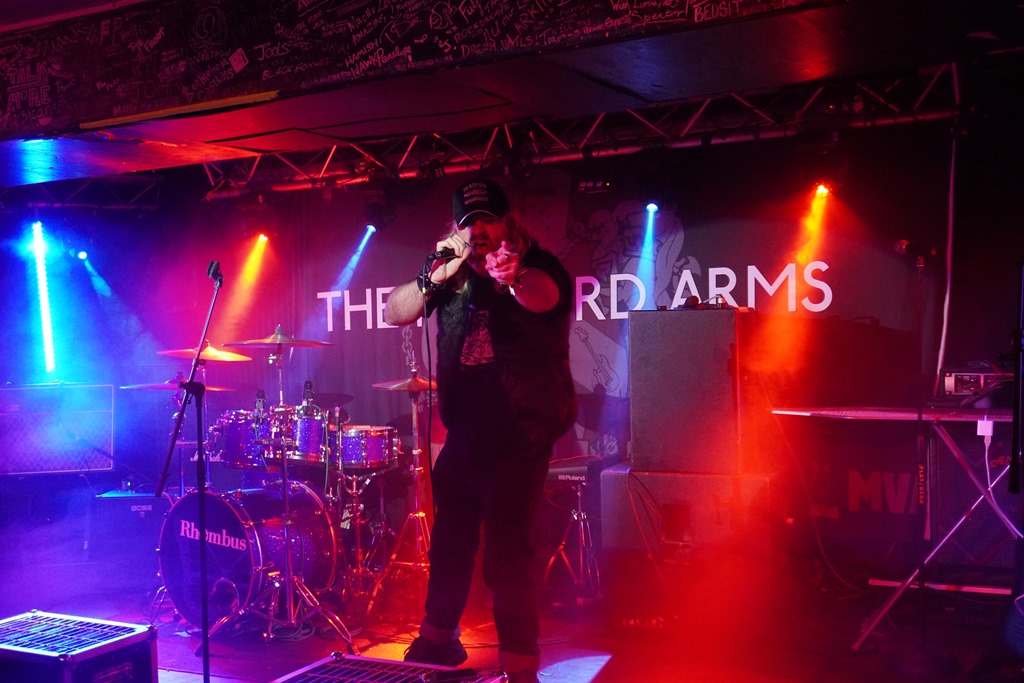
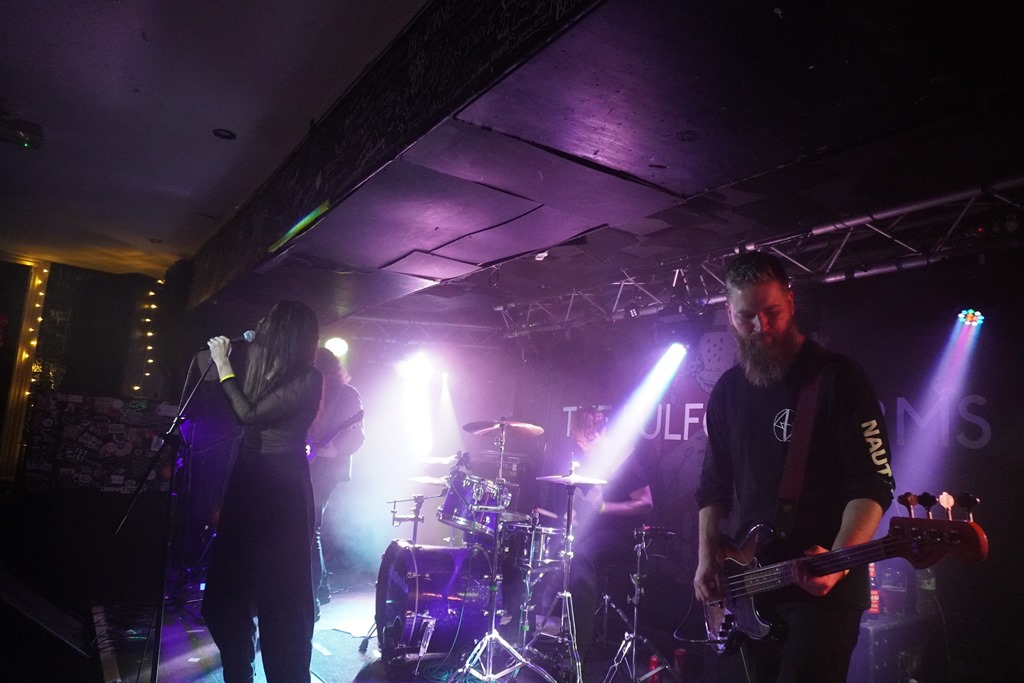
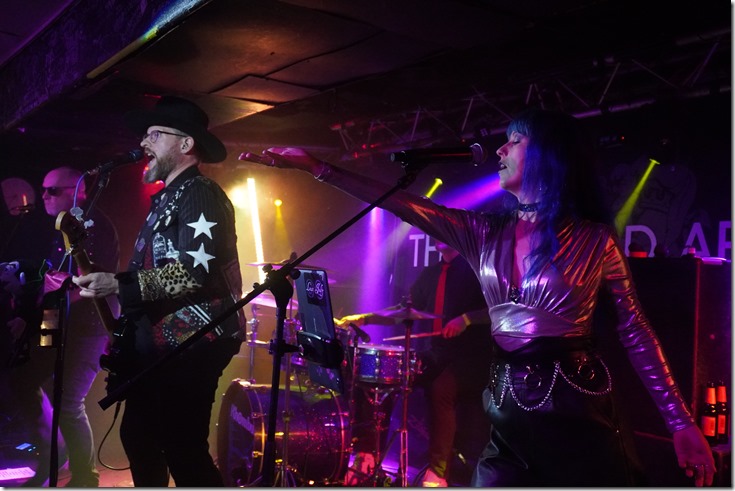
Upbeat trad goths Rhombus have been going since around the turn of the millennium, and have become ubiquitous on the scene during that time, particularly here in Yorkshire. They’ve built quite a following: there are people here tonight who’ve seen them ten, twenty times, and one guy who they hand a certificate for his fiftieth time in attendance. Their formula seems specifically designed for those whose musical credo is ‘I know what I like, and I like what I know’. By way of an example, current single ‘Running From My Shadow’ leans on ‘Walk Away’ by The Sisters of Mercy for intro (that song seems to have become one of the definitive templates for contemporary bands doing the trad goth thing) before going a bit Skeletal Family.
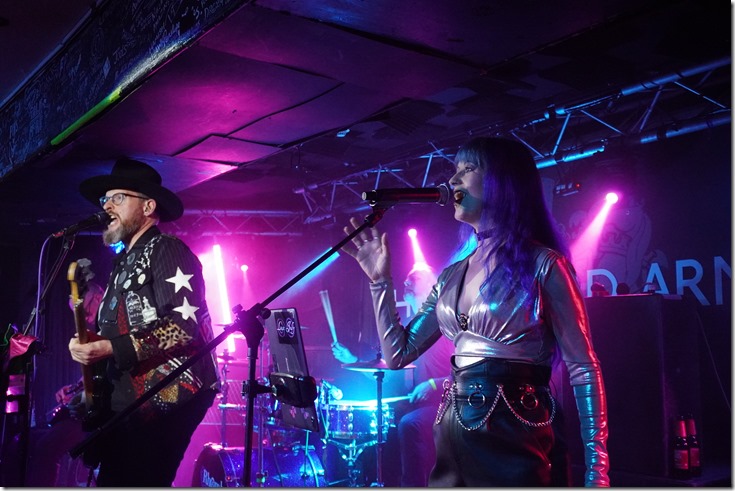
DSC05760DSC05773

Rhombus

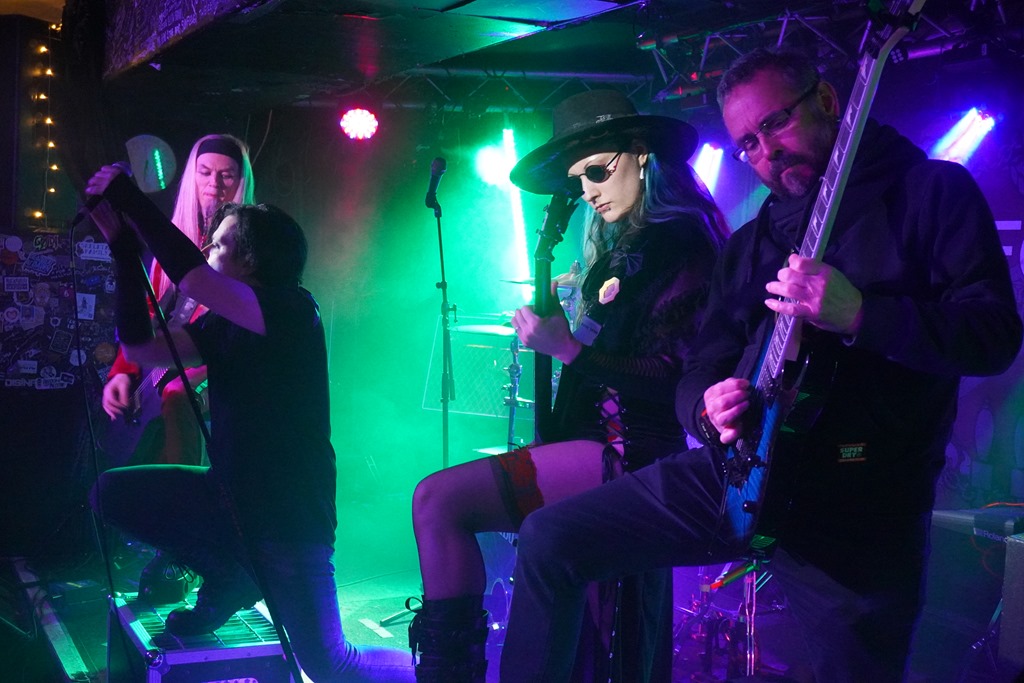
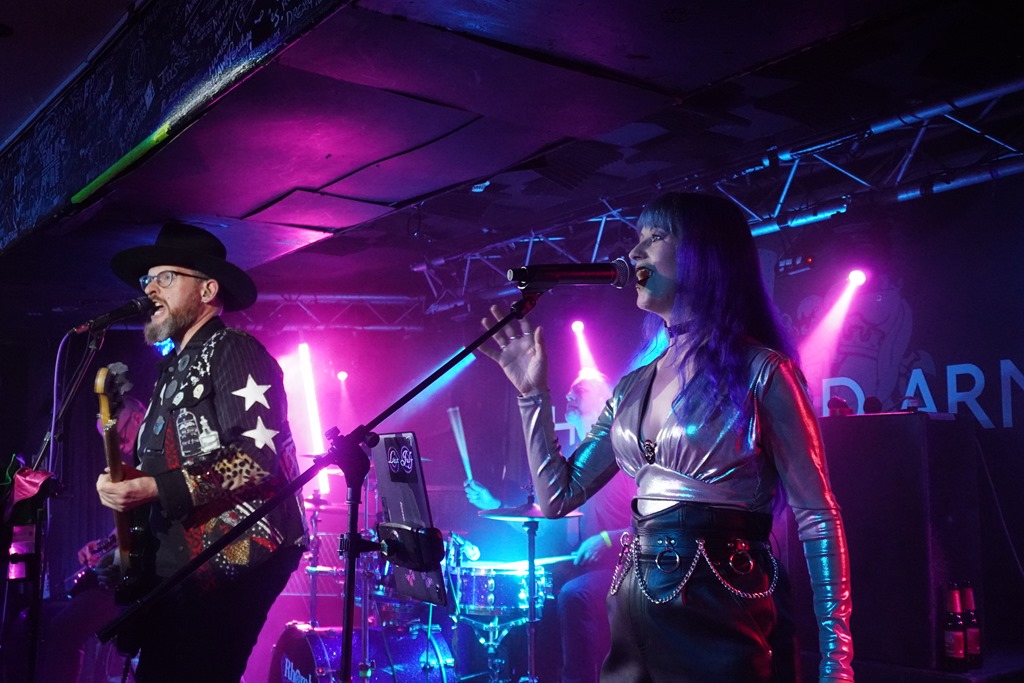
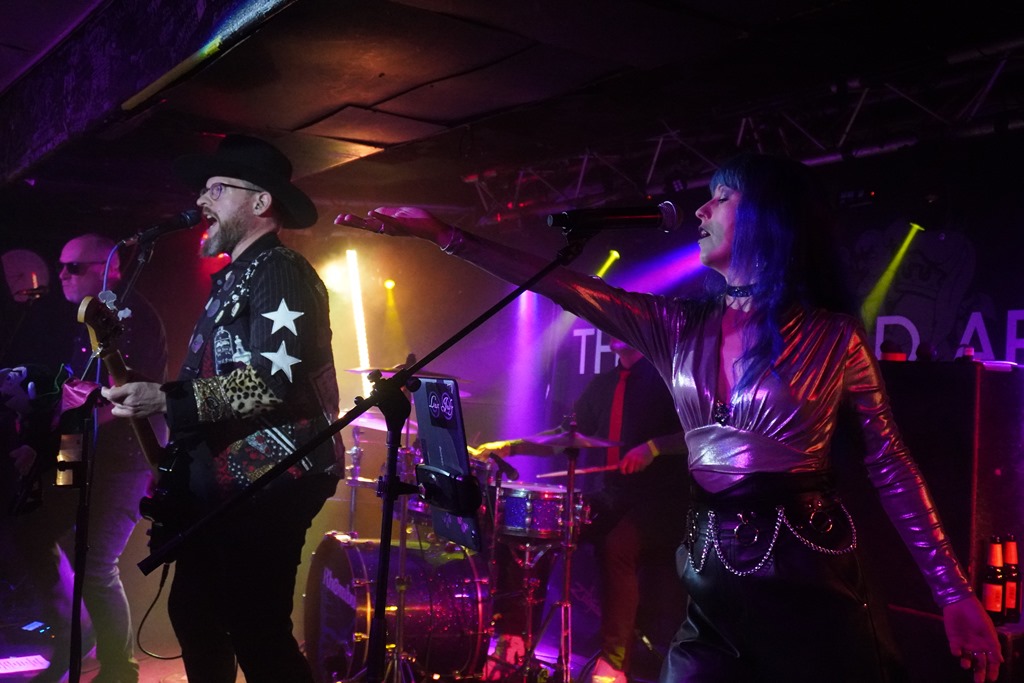
“Audience… step closer,” instructs bassist / vocalist Edward Grassby. Towering, burly, bearded, behatted, he’s a commanding presence. His addition that the band ‘Won’t come into the crowd, won’t spit beer…’ felt like a rather disparaging dismissal of the previous acts who hadn’t spent beer, but spent considerable time in amongst the punters. And this is where I realise that the band’s personality is a bigger issue than the derivative sound. Well, not the entire band: Lee Talbot’s drumming and Rob Walker’s Simon Hinkler style guitar are outstanding… but Alixandrea Corvyn’s interpretive dance and air drumming detract from her actual singing, and Grassby comes exudes an air of arrogance which far from endearing, and likely a major factor in why I’ve never taken to them. That and the fact they’re called Rhombus. That said, I seem to be in the minority in my view, as there are plenty who are hugely enthusiastic (at least by old goth standards) for them.

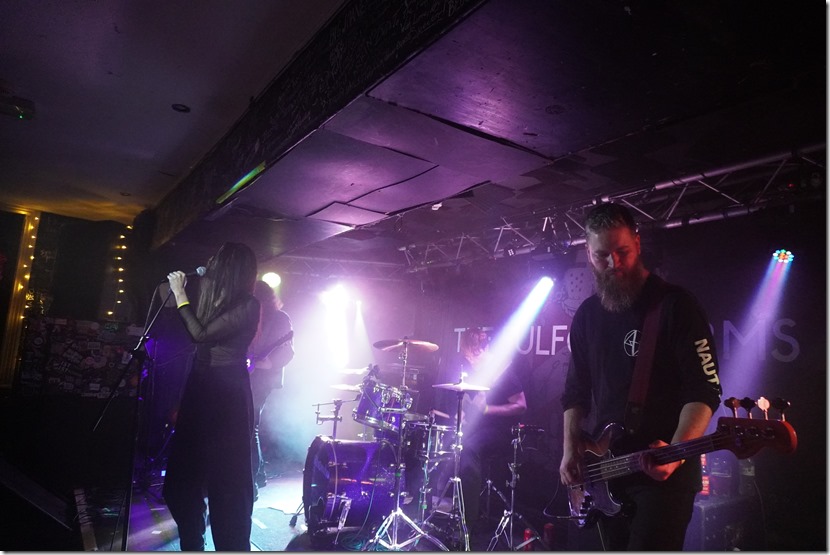
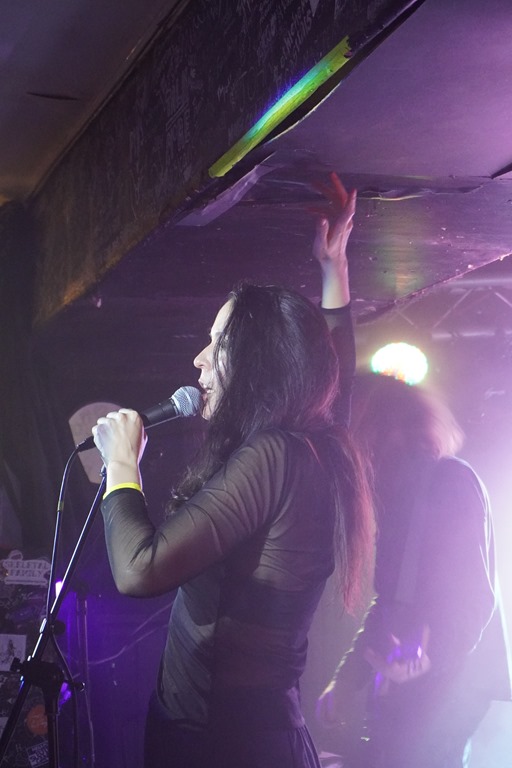
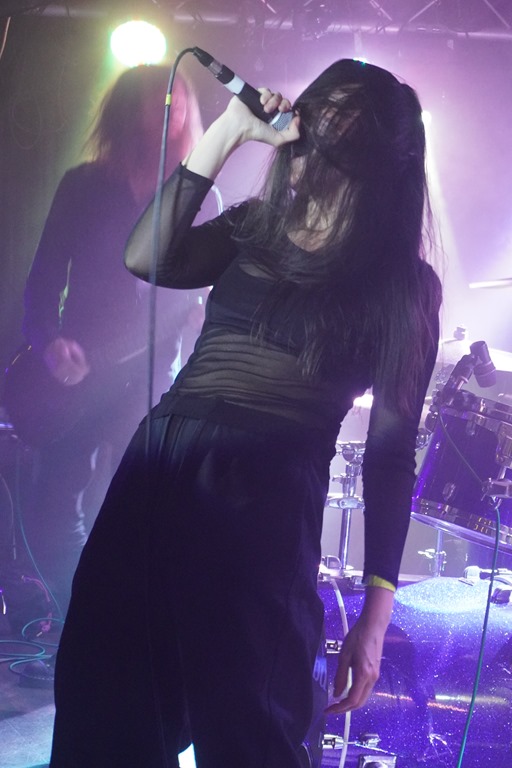
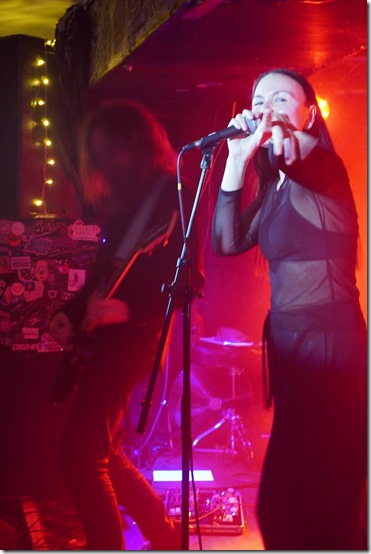
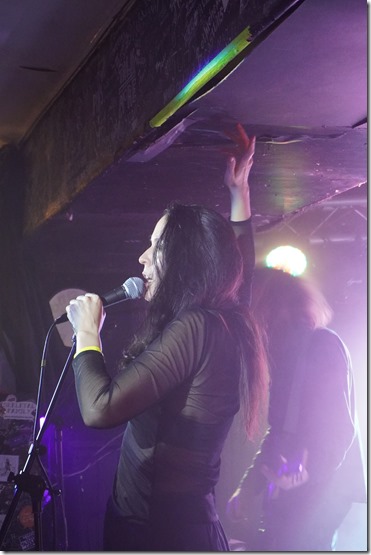
Cold in Berlin just keep getting darker and heavier with each release, and tonight’s set draws primarily on the new album, Wounds, and the EP, The Body is the Wound which foreshadowed it – meaning it’s dark and heavy. It’s also absolutely stunning. Maya seems remarkably at ease, and smiles a lot between songs – but during the songs, she emanates a chilling demeanour, a control and intense focus which is utterly petrifying. Often, she ventured out into the crowd, and glides, ghost-like, between the audience members. She’s glacial, while around her, the riffs conjure a devastating maelstrom. This is no better exemplified than when they drop ‘Dream One’: the vocal delivery is icy, stark, the control bordering on psychopathy. The instrumentation is spacious, with air between the suffocating power chords to begin, until everything crashes in and hits with an almost bewildering intensity. There is no ‘White Horse’… but the strength of the nine-song set more than compensates. There isn’t a moment that isn’t like being slammed by a sonic hurricane, and it’s not just because of the pulverising volume.
DSC05863DSC05876DSC05875

Cold in Berlin

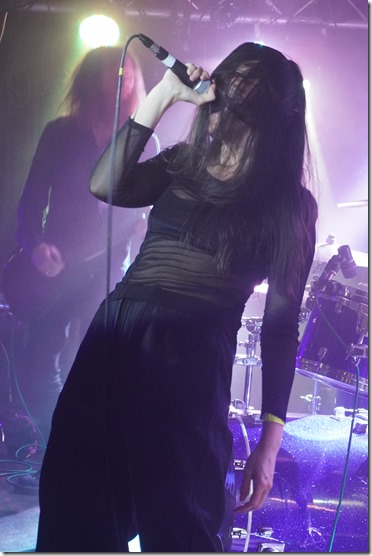
Sometimes, you don’t know what you need until you get it. I for one had no idea that what I really needed was a half-tempo rendition of ‘Love Buzz’ to conclude my last outing for beer and live music of 2025, but Cold in Berlin on peak form really outdo themselves: this is absolutely crushing, the slowed-down bass-led riffing so heavy it knocks the air from your lungs. It’s a conclusive pinnacle to a megalithic performance, and the best possible finale to a great night at the end of a great year for live music.
DSC05885

Cold in Berlin

And to close my last write-up of a live event for the year, a year which has been dominated by Oasis and festivals and immense arena events, I feel compelled to add that having attended a few academy-size events this year, all of the best shows I’ve witnessed – and I’ve been to fifty in all so have enough to benchmark by – the best by far have taken place in sub-500 capacity venues, and there is absolutely no substitute for packing into a tiny place with no barrier and standing close enough to see the whites of their eyes, the sweat beading, the chords played. And tonight encapsulated this perfectly.

Room40 – 19th December 2025

Christopher Nosnibor

2025 has been something of a year of noise for me – on the reviewing front, for sure, but perhaps more so on the creative front. Noise doesn’t have to be confrontational or antagonistic. Moreover, it can most certainly be a release. Richard Francis’ latest offering, Combinations 4, is a work which offers up some substantial noise, with a broad exploration of frequencies which are immersive rather than attacking. Churning, droning, unsettling, it spans the range of what noise can do without venturing into the domains of the harsh. Nevertheless, this makes for a pretty challenging work.

Francis’ summary of his working practice and of this album is worth digesting, for context, as he writes clearly and factually:

‘Since 2010 all of the recordings I make and release are improvised live takes, recorded down to a stereo digital recorder with very little editing other than EQ, trimmed beginnings and ends, and the occasional layering of two tracks together… I arrived here through spending many years prior trying to build an electrical system (which I now call the ‘fugue system’) that would do what I did in composition/studio work but in a live setting: combining together dozens of sounds with open feedback and generative channels, and discrete control for each. Then when I finished building that system using digital and analogue tools, I preferred what I heard and recorded ‘on the fly’ more than what I was doing in composition, so that system is now my instrument in a way.’ Precisely what this system is and how it works is unexplained, and we probably don’t need to know: process and tech can very easily become tedious and adds little, when ultimately, it’s about output.

As the title suggests, this is the fourth in his Combinations series, and here, Francis suggests ‘there’s a bit more structure and layering to the works, if that makes sense’. It makes more sense in context, I assume, because on its own, Combinations 4 is a tour though difficult terrain, and any structures are at best vague.

‘Four A’ is a deluge of dirty noise, curtains of white noise rain cascade, and ‘Leave it all alone for months’ is a queasy mess of drones and groans, a morass of undulating dissonance. This piece is quiet but uncomfortable, the sound of strain, whining, churning unsettling. ‘Parehuia’ booms frequencies which simply hurt. In places, it gets grainy and granular, and the experience is simply uncomfortable. I feel my skin crawl. From here, we plunge into ‘My Fuel! I Love It!’ It’s six-and-a-half head-shredding minutes of sonic discomfort, dominated by rising howls and rings.

Assuming ‘Phase effect on wet road’ is a purely descriptive title based on the source material, it’s three minutes of the sound of heavy rain heavily treated while undulating phase hovers and hums, creating an oppressive atmosphere which bleeds into the slow ebb and flow of ‘The alphabet is a sampler’. The effect of Combinations 4 is cumulative, and while the final four of the album’s ten compositions tend to be comparatively shorter, they’re dense and difficult to process. By the arrival of the quivering, quavering oscillations of closer ‘Four J’, which become increasingly disjointed and discombobulating as the piece progresses, you’re feeling a shade disorientated, and more than vaguely overwhelmed.

For an album which appears, on the surface, to be a fairly innocuous work of experimentalism, with Combinations 4, Richard Francis has created something which delivers substantial psychological impact by stealth.

AA

DRM4231 art