Archive for the ‘Reviews’ Category

Mortality Tables – 1st August 2025

Christopher Nosnibor

The latest instalment of the ambitious and wide-ranging Impermanence Project curated by Mortality Tables is a document, as the artist explains, simply and succinctly: ‘This is the sound of my footsteps. I walk through some woods every lunchtime when I’m at work. I try to take a different route every day. The recording starts and ends at the office door. There are two gates which separate a lake – one of several – from the woods.’

This simple premise of recording a walk – a few seconds short of seventeen minutes in duration speaks on a number of levels: the first, in context of the project’s premise, is also the context of the walk itself – the lunch break at work. A brief window in which to seek separation from the work and the workplace. Too few workers really use this time as their own, with many scoffing a sandwich as their desk, or nipping to a canteen or a supermarket for a prepackaged meal deal, instead of something more beneficial to both physical and mental health. I must stress that I’m not judging, and it’s not easy, but as a walker myself, when I was office-based, I would make a point of getting out on a lunch-break, and now home-based, divide my day with a walk. This time out from work is but brief, but affords an opportunity to decompress, to recalibrate.

The fact the artist reports trying to take a different route every day is interesting. Treading new ground, or even walking a known route in the opposite direction, or otherwise questing for variety keeps things fresh, and opens one’s eyes to new sights. These things are often in the detail, but also change with the seasons, noting the changes in the colour of the leaves, a toadstool, hearing birdsong. The world is ever changing, and while work can all too often manifest as a groundhog day of ‘same shit, different day’ which often feels like ‘same shit, same day again – and what day even is it?’ the outdoors paints a different picture. Even when the realisation hits that it only seemed as though Spring was beginning to break mere weeks ago and now summer has past and the air smells of Autumn, and that nagging sense of another year having evaporated and life slipping past settled awkwardly in the gut – a soft but palpable blow which serves as a reminder of how short life is, the outward signs of the passage of time are evidence of being alive.

Listening to 17 Minutes, we get to accompany Xqui on their walk in real-time. They keep a decent pace, too, and as one tunes the attention, changes in echo, background sounds, the metallic scrape of a gate hinges, the different terrains underfoot, all become significant. There is traffic. There are few people, at least speaking along the way. I abhor having to listen to people’s conversations as I walk. And yet I find I’ve been unable to listen to music while walking since lockdown, and simply have to hear everything.

Although documenting a walk through woods, the backdrop to 17 Minutes sounds somewhat urban, or at least overtly inhabited, a setting where human presence dominates nature. A couple of minutes from the end, a gate swings and clangs shut. Although we’re not yet back at the office door, it feels significant. I even feel myself slump a little inside, feeling that passing through this gate – which in the opposite direction represents the opening up of a path to freedom – signifies the end of this escape. And with this, comes the hard appreciation of the fact that nothing last forever, especially not a lunch break.

AA

a1847342772_10

12th August 2025

Christopher Nosnibor

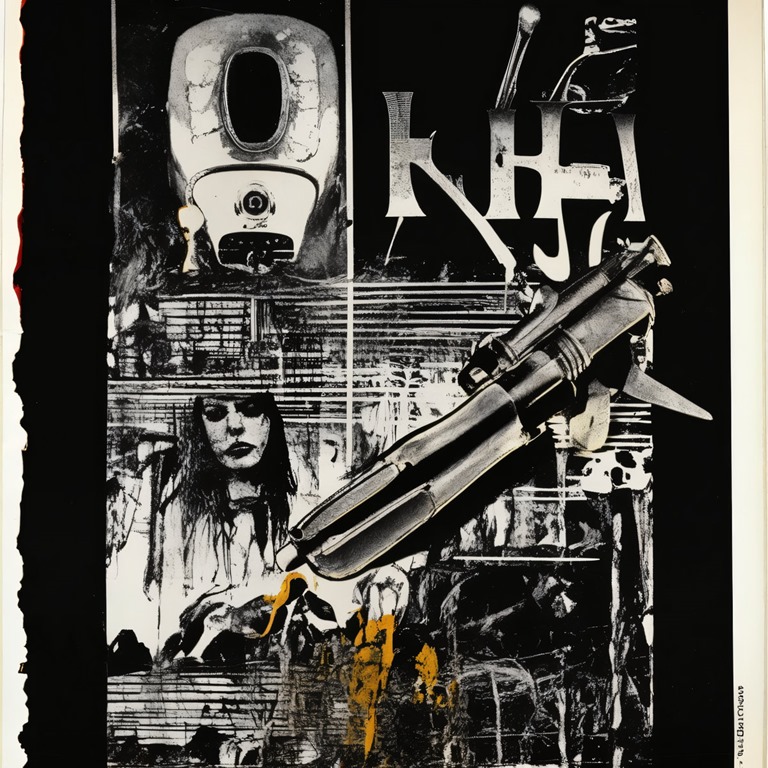
Zabus have been on fire lately, as their recent EP, Shadow Genesis, released in June. It’s not only the prolific output which is noteworthy – some acts spunk out new material every other week, but the quality simply isn’t there – but we’re looking at a creative purple patch of innovation and ideas flowing in full spate. Whores of Holyrood is their fifth full-length album in less than two years, and while Zabus is ordinarily a collective centred around project founder Jeremy Moore, Whores of Holyrood is the first ostensibly solo release by Moore under the moniker, and it’s also pitched as ‘one of the most overtly political statements from Zabus to date.’

This matters. Anyone with an outlet, or a platform, right now, has, a duty to state their position. Silence is complicity. We know this from history. Individually, there is next to nothing we can do to stop Trump’s fascistic march, or halt the genocide in Gaza, or stop the wat in Sudan. But fucking hell, we are witnessing hell on earth right now. To take a line from William Burroughs’ Exterminator, ‘There are no innocent bystanders … what are they doing there in the first place?’ I don’t necessarily entirely agree with the stance, but it’s worth unpacking a bit, particularly in the context of 2025, when people are more likely to film the most horrific events on their phones and post them on social media than to intervene. I know, people are scared and all the rest, but… something is deeply wrong.

The title, Whores of Holyrood, immediately made me think of the Scottish parliament, but it would appear that there is no connection or implication intended. Instead, the album ‘explores the positive feedback loop between fascist authoritarian rule and societal inaction, apathy and resignation. Holyrood is a metaphor for the established classist hierarchy which derives its strength and influence from our subjugation.’

As an aside, ‘rood’ is a middle English term with its origins in Saxon for the cross, and a rood screen was a feature of medieval churches, a carved wooden partition depicting the crucifixion. Whores of Holyrood may not have any direct or specific connection to these historical roots, but they still seem somewhat relevant, albeit tangentially.

It’s ‘Shadow Genesis’, the lead track from the recent EP that launches the album with its reverb-heavy blues guitar and gothic stylings, and it’s dark, brooding, but it’s nothing to the snarling lo-fo post-punk goth epic that is ‘Burn to Your Own Destruction’: six and a half minutes of echo-soaked guitar swirling beneath bombastic baritone vocals, while the tile track is commanding, archly gothic, but with murky black metal production values. The same is true of ‘A-YA Bullet V’, which brings the driving funk groove of Bauhaus at their best, while also pushing the experimentalism to the fore.

‘Cremation Psalm’ is a murky swagger, equal parts Nick Cave and The Volcanoes, and every track on this album is pure gold. The muffled, echo-heavy production is not a detriment, but an asset, accentuating the old-school vibe which is s integral to the experience.

‘Sod Martyr’ is dark, dark, dark, and sparse, and something about it calls to mind The Honolulu Mountain Daffodils, while ‘Strangers of Non-Being’ brings together goth and heavy psychedelia with the addition of low, slow drone

If the Shadow Genesis EP showcased a keen experimentalism, and a broad range of stylistic touchstones, then Whores of Holyrood takes it all to the next level. Zabus keep pushing forward, outward, onward. Right now, it seems there is no stopping them.

AA

a1395699222_10

The Helen Scarsdale Agency – 8th August 2025

Christopher Nosnibor

When the accompanying notes and press release which replicates them describes a release as ‘dire’, you know you’re in for an uncomfortable ride. In the world of noise, such a choice of adjective doesn’t carry quite the same negative connotations as is the majority of musical spheres. When it comes to noise, and certain strains of metal, the objective is to make it as unpleasant as possible. It will alienate most people, and that’s precisely the objective: those who can withstand the torture are the right people.

And so it is that Mutual Consuming is described as ‘a dire piece of isolationist thrum, spectral caterwaul, and heavy gloom through an oblique and abstracted coupling of electronics, noise, and ominous field recordings.’

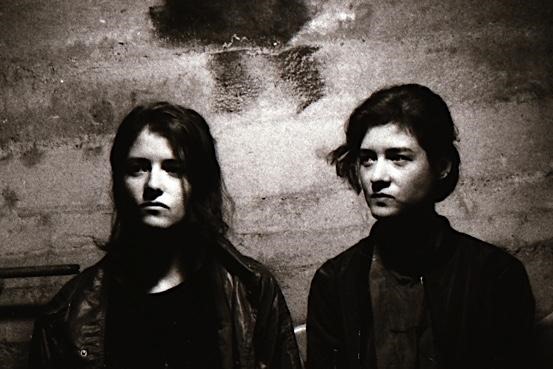
To quote further from the accompanying notes, Roxann and Rachal Spikula, the twins who make up Relay for Death’, offered the consideration that “Mutual Consuming comes from a concept in the philosophies that underpin traditional Chinese medicine theory, where the two opposing states (yin and yang) are 2 states on a continuum and their interactions produce an infinite possible number of states of aggregation. Within this interplay, there is a dynamic balance that is maintained by a constant adjustment of their relative levels. So an excess of yin consumes yang and vice versa.” We asked if this has anything to do with the concept of the Ouroboros, to which they responded, “We hadn’t thought about Ouroboros, but the eternal cycle of things makes sense too. The gorge fest of existence.” Does this relate to previous works? The twins concisely respond to that question in a rare interview in Untitled, “No.”

The album features but two pieces, each clocking in around the seventeen minute mark. An awkward length, but plenty of time to make for an uncomfortable, unsettling, and even torturous experience. And it is.

‘intone the morph orb’ is a darkly unsettling expanse of dark ambient, the sounds of thunder and cavernous growls from the pits of hell are collaged with scrawling metallic drones. Distant detonations reverberate, like volcanic eruptions beyond the horizon, as wispy ominousness lingers in the air. Very little tangible takes place, but the tension grows. There is a dark thriller / horror aspect to this: the hairs on the back of your neck prickle and you fear whatever may lie around the corner. The second half of the track is less precipitous, given to a protracted mid-to-high-end drones that swirls and eddies, cut through with occasional whistles of feedback.

There’s something vaguely Ballardian about the title ‘terminal ice wind’, and it is, indeed, a cold atmosphere which runs forth from the speakers, churning an ever denser sonic murk as the first few minute pass. It’s a seeping morass of dark discordance which takes cues from Throbbing Gristle. Three minutes in, thunderous explosions register, and all is noise, albeit for a brief time. In time, dissonant drones, thrumming reverberations and low rumbles emerge and come to dominate the mix in what is an ever-shifting soundscape, where light is in limited supply. This is, indeed, dark, and oppressive.

Everything about Mutual Consuming is as it should be. A collage of challenging sound on sound, any underlying concept fades to insignificance as the sounds assail the ears without apology. Mutual Consuming is not harsh, and on the noise spectrum, it’s fairly gentle, but it’s by no means accessible or easy on the ear.

AA

AA

RFD Promo

Metropolis Records – 8th August 2025

Christopher Nosnibor

The singles released ahead of the album did their job, at least for me, in the way it used to happen in the pre-Internet days, when you’d hear a single or two on the radio, and you’d get hyped for the album.

Half the time, the singles were the only tracks that were any good, but the other half of the time, the singles would actually prove to be representative and stand in a solid set of songs.

In this instance, the title resonated early. Perhaps it’s an age thing. In my 30s, I witnessed many of my peers somehow pass into middle-age overnight, bemoaning that there’s no good music anymore, how things aren’t how they were when they were between the ages of 16 to 21, how everything’s shit now and the nostalgia-wallowing would grow deeper with every beer consumed. As I approach fifty, it’s only got worse: many of us have teenage kids, and many of them go on about how the music their kids listen to is shit, it’s just noise, how their kids stay in bed till lunchtime at weekends and on school holidays, and so on. It’s as if the grind of the day-job and family life has erased their memories of what it was actually like being a teenager. It’s broadly true that people become more conservative as they grow older, and, despite the vehement intentions stated in youth, they become their parents, one way or another, perpetuating the same mistakes, while blaming their parents for the fact. This is but one example of the way people do have a tendency to become the thing they hated, but one which is close to my heart.

Right now, the world is almost unrecognisable from the one I grew up in, but instead of fighting the system and pushing for positive change and a more just society, greed, division, and hate have become evermore ingrained.

They open in grand style, with a smouldering six-minute epic in the form of piano-led ‘All Tomorrows’, which builds slowly and creates an air of wistfulness, of reflection, before hitting a solid upbeat dance groove. But as it ends, tomorrow is marked by departure, ending, alone. Across the course of fourteen songs, Rotersand explore the human condition in all its complexity, all the while dusting solid dancefloor-friendly tunes with a deep melancholy, their dark electropop leaning towards more industrial dance at times, as on ‘Father Ocean’, and ‘Watch Me’ particularly mines that late 80s / early 90s Wax Trax! vibe – while the use of autotune and the overall production firmly roots it in Europop territory. Elsewhere, ‘I Will Find You’ rolls up the entirety of electropop circa 1983-85 into a magnificently crisp four and a half minutes.

Unusually, the singles are both to be found in the second half of the album, but this is perhaps an indication of the consistency and depth of the material: while many albums suffer from a second-half slump, Don’t Become the Thing You Hated gets harder and more intense in the final third. ‘Private Firmament’ is a clear standout when it comes to dark intensity.

And so it is that Don’t Become the Thing You Hated is something of a caution, a reminder, a note to self, and it’s heavy with simmering anger – anger and twisted emotions directed in all directions, far and wide outward, and inwards, too. ‘Click Scroll tap Believe ‘ is a particularly taut listening experience and succinctly summarises life in the contemporary climate: ‘Technology the new religion / The lines between us are wearing thin’ may not be the pinnacle of poeticism, but it hits home. And that, really is the strength of Don’t Become the Thing You Hated: Rotersand zone in and hit their targets with a rare accuracy, again, and again.

AA

AA

727884

Dragon’s Eye Recordings  – 22nd August 2025

Christopher Nosnibor

A year on from my review of Yorkshire Modular Society’s Fiery Angels Fell, I find myself presented with another release of theirs on LA label Dragon’s Eye Recordings, and I can’t help but contemplate the circuitous routes by which music travels, since the release landed in my inbox courtesy of a PR based in Berlin – while no-one in my sphere of acquaintance, which includes a broad swathe of electronic artists around York and, indeed Yorkshire as it spreads in all directions – appears to have even the first inkling of the existence of YMS, despite their connection to Todmorden. But then, I often observe that what holds a lot of acts back is confinement to being ‘local’, and it’s a lack of vision, or ambition – or, occasionally, practical matters – which prevent them from reaching the national, or international, audience they deserve.

Yorkshire Modular Society clearly have an audience, and it’s not going to be found at pub gigs in their native county. This is true of most experimental artists: there’s no shortage of interest in niche work globally, but it’s thinly spread. There are places, predominantly across mainland Europe, and like Café Oto, which cater to such tastes, but they’re few and far between, which explains why most such projects tend to be more orientated towards the recording and release of their output, their audience growing nebulously, more often than not by association and word of mouth.

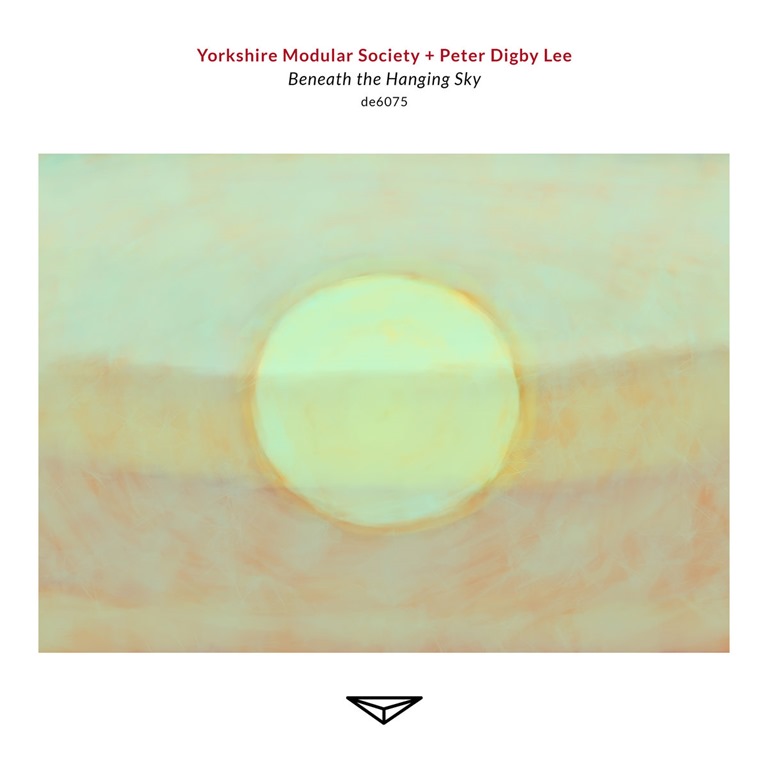
This release – which is the first collaborative album from Yorkshire Modular Society with Peter Digby Lee – could only ever really be a download. With ‘a suite of four ambient compositions shaped by intuition, ritual, and shared resonance’, it’s over two hours in duration, giving recent Swans a run in terms of epic.

The story goers that ‘The artists first crossed paths not through conversation, but through shared vibration — at the resonance Drone Bath in Todmorden. A quiet alignment. Some time later, Peter sent over a treasure trove of sound: samples he had recorded and collected over many years — textures, fragments, and moments suspended in time. From this archive, Dominick Schofield (Yorkshire Modular Society) began to listen, to loop, to stretch, to shape… What followed was a process of intuitive composition—letting the materials speak, revealing what had been buried in the dust and hum. This album is the result: four pieces, each unfolding from the source material with care and curiosity, a shared language spoken in tone, breath, and resonance.’

The title track is soft, gentle, sweeping, lilting, serene, floating in on picked strings, trilling woodwind and it all floats on a breeze of mellifluousness, cloud-like, its forms ever-shifting, impossible to solidify. With hints of Japanese influence and slow-swelling post-rock, it’s ambient, but also busy, layered, textured, thick, even, the musical equivalent of high humidity. It moves, endlessly, but the breezy feel is countered by a density which leaves the listener panting for air. The sound warps and wefts in such a way as to be a little uncomfortable around the region of the lower stomach after a time, like being on a boat which rocks slowly from side to side. ‘Beneath the Hanging Sky’ lays for almost thirty-six minutes, and it’s far from soothing, and as a consequence, I find myself feeling quite keyed up by the arrival of ‘Glass Lung’, another soundscape which stretches out for a full half-hour. This is more conventionally ambient, softer, more abstract, but follows a similar pattern of a slow rise and fall, an ebb and flow. Here, the application is emollient, sedative. I find myself yawning, not out of boredom, but from relaxation, something I don’t do often enough. And so it is that this slow-drifting sonic expanse takes things down a couple of notches. You may find yourself zoning out, your eyes drooping… and it’s to the good. Stimulation is very clearly not the objective here.

Third track, ‘Echo for the Unseen’, is the album’s shortest by some way, at a mere twenty-two minutes in length. It’s also darker, dense, more intense than anything which has preceded it, and as ambient as it ss, the eternal drones are reminiscent of recent both latter day Swans, and Sunn O)). The epic drone swells and surges, but mostly simmers, the droning growing more sonorous as it rolls and yawns wider as the track progress. There are harsher top-end tones drilling away in the mix as the track progresses. It makes for a long and weighty twenty-two minutes, and we feel as if we’re crawling our way to the closer, ‘Spiral of Breath’, which arrives on a heavy swirling drone that’s darkly atmospheric and big on the low-end. Instead of offering levity, ‘Spiral of Breath’ is the densest, darkest piece of the four, as well as the longest. With no lulls, no calm spells, no respite, it’s the most challenging track of the release. It’s suffocating. There is no respite. There is, however, endless depth, and eternal, purgatorial anguish.

AA

a1425387917_10

Christopher Nosnibor

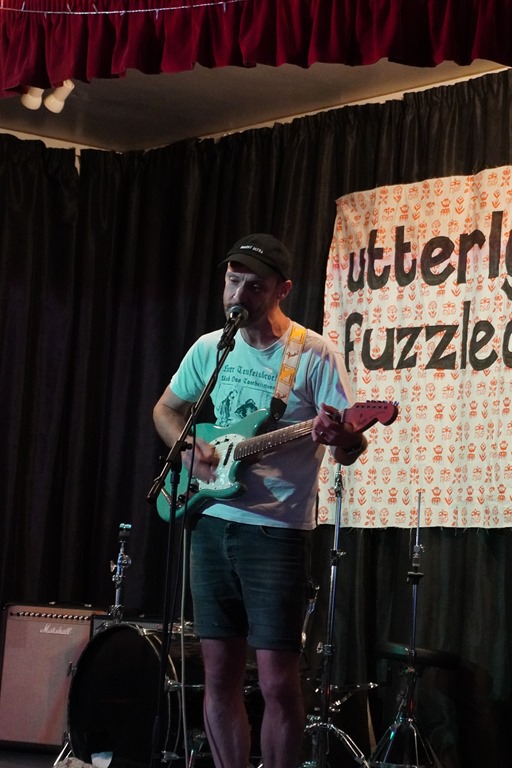
The third Utterly Fuzzled event boasts another strong lineup, with a mix of out of town talent, the cream of the crop from York, plus new and emerging acts. It seems wholly fitting that they’ve found Fulfordgate WMC as a home for these events. One might describe it as quaint, but it has everything you’d want for a DIY musical microscene – stage, PA, cheap beer, a little way off the beaten track but still accessible from the city centre – and some things which are harder to define. A sense of community, and quintessentially northern, unpretentious.

I recently finished reading Sleevenotes by Joe Thompson of Hey Colossus and Henry Blacker – which is, hands-down, the best book about being in a DIY / small band, and I cannot recommend it enough. So many of the observations on the DIY scene resonated with me as an attendee – and occasional performer – at venues which are rehearsal rooms, rooms upstairs or at the back of pubs, gigs where there are fifteen people in attendance, and eleven of those are the other bands. He writes of playing these spaces, some with capacities of fifty, and being grateful that anyone turns up at all, about how they all have day jobs and make music because… because, and not with any hope of making money – covering costs to pay for the petrol back is winning.

On my way out, JUKU’s Dan Gott asked if I would be doing a review, and expressed disappointment when I said I would be. He said he wanted me to just enjoy a gig. But just as for makers of music, making music is a compulsion, so is writing for me. As much as I assess and analyse, this project, or whatever it is, is ultimately a document – an ever-evolving document, a diary of sorts. Just as Hey Colossus have been ploughing their furrow for an eternity – or since 2003 – so I’ve been a heavy gig-goer for many years. I can’t remember everything. But I can document it.

Dragged Up are one of those acts who clearly aren’t in it for the money. I’ve covered a few of their releases, and on seeing that they were making the trip from Glasgow to play this humble venue was immediately buzzed. I suppose something about straddling being press and a music fan, and having a Facebook network largely made up of people in the same circles, it’s not always easy to maintain perspective when it comes to a band’s status. There’s an element of ‘wow, are they really playing this little place?’ – and then you’re faced with the fact that any band that’s big in your world isn’t necessarily big in the wider world. It goes both ways, of course: there are bands I’ve never heard of selling out O2 venues and bigger.

The first act on the bill is so new and emerging that they didn’t even have a name until about a week before the event, and so suffice to say that Chaffinch were an entirely unknown quantity. It transpires that they’re a new permutation of Knitting Circle, a band centred around Jo and Pete Dale, who also happen to be the movers behind Utterly Fuzzled events. Tjeir set is clearly a work in progress – Jo confessed that the lyrics to one of the songs, on a sheet of paper in front of her, had only been completed that morning. But they show great potential. As my cursory notes attest, there’s ‘jangle, post-punk, angular, Band of Susans riffiness, elsewhere more 80s indie, a bit Wedding Present. Mathy dynamics. Interesting and a very promising first outing.’ It’s a fair summary that requires little expansion.

Pea Sea is a singer/songwriter whose set is a mixed bag of rearranged traditional folk songs, and quirky narrative led indie tunes, even incorporating bossa nova rhythms, and some quite nice blues, too. It’s kinda ramshackle, and inherently Scottish, and it’s entertaining enough, although I’m not sure if it’s because of or in spite of the bad puns and awkward chat and spaces between songs.

DSC02994

Pea Sea

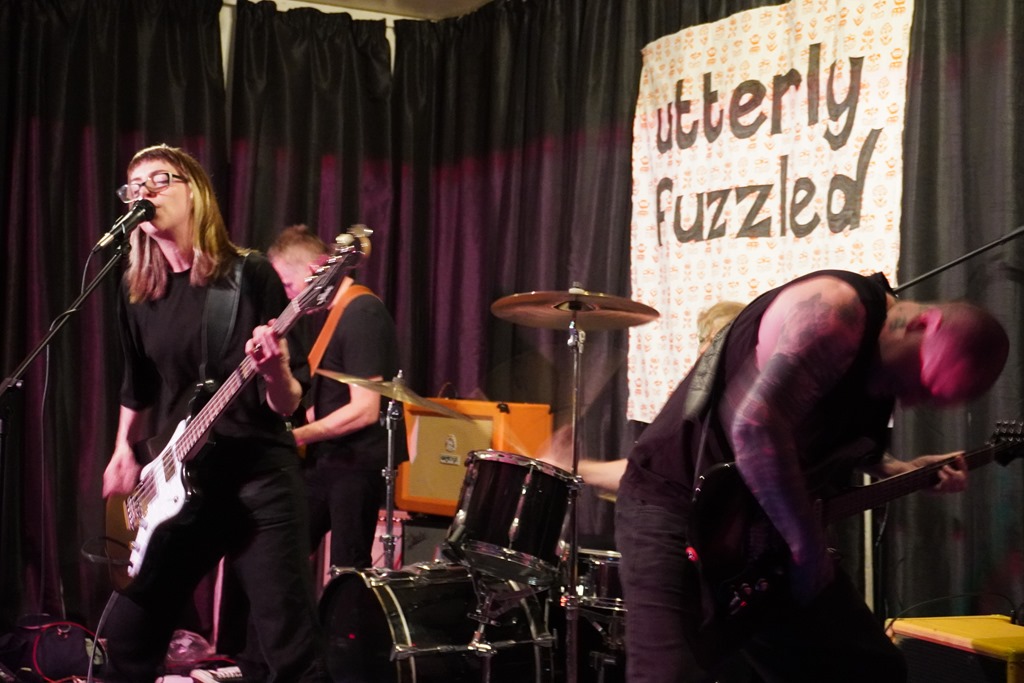
I was already down for this the second I saw Dragged Up were coming to York, but the addition of JUKU to the bill absolutely made it. I’ve been banging on about them since their debut gig. And still, some of my mates who’d come down tonight seemed perplexed as to why they hadn’t seen them, as their brand of punk rock played hard and fast and at blistering volume absolutely blew them away. My mates should pay more attention to my reviews, I say. Suffice it to say, JUKU were fucking blistering. Naomi is kinda nonchalant but also goes hard, and there’s the constant worry as to whether the mic stand will fall over or her glasses will slip off her face (in the end, by some miracle, neither) and Dan wrings noise from his guitar with clenched tattooed fists, hunched over so low his forehead is practically scraping his strings. It’s primitive, four-chord punk cranked up to eleven, and they play so, so hard. This is a band that destroys every stage it sets foot on. They need to be on a label. They need to go national, international. Live acts don’t come better than this.

DSC03008DSC03020

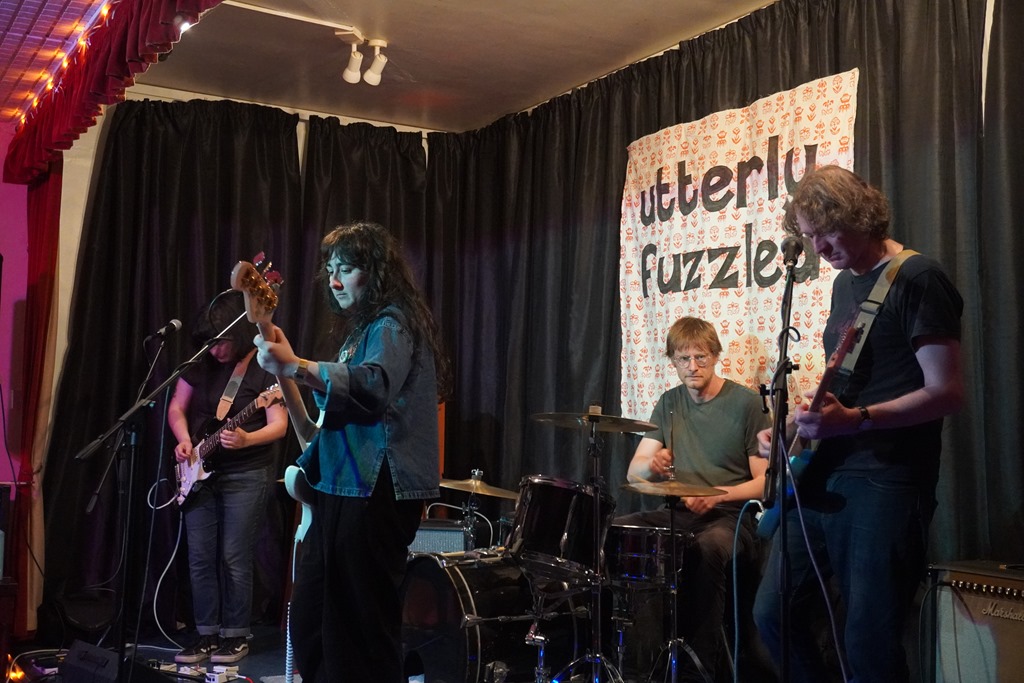
Consequently, Dragged Up perhaps suffer from having to follow JUKU. They’re decent, though, and no mistake. But venturing out with their new bassist, things feel a bit tentative at times I’m too into the set to make many notes. I’ve hashed together some observations on how they’re masters of post-Fall post-Pavement ramshackle indie, and how their songs chime and crash with strolling bass and shuffling drums.

New single ‘Clachan Dubh’ lands around mid-set with its chunky, chuggy driving groove driven by thick bass and energetic drums, and they swing between succinct killer blasts and sprawling beasts led by thumping grooved and manifold swerves and detours.

It’s hard to tell if they’re not quite firing on all cylinders or if this is simply the way pf Dragged Up, and it’s likely a bit of both. But there’s no question that they simply do their thing and don’t really give a crap, and the attitude is worth all the applause and plaudits alone.

DSC03033DSC03037

Dragged Up are one of those bands who don’t even have a game to raise most of the time. They play their songs. They have some good songs, and people take notice.

It’s a tidy/messy end to a night of solid quality.

8th August 2025

Christopher Nosnibor

The seventh single released by the Papillon de Nuit project / collective / ensemble centred around Stephen Kennedy is perhaps the most ambitious yet. It’s clear that Kennedy, who has for a number of years, operated as a live music promoter under the guise of The Velvet Sheep, is an irrepressible creative, a restless spirit never content to do or be any one thing. In Papillon de Nuit, he’s songwriter, arranger, vocalist and multi-instrumentalist, bringing to this track vocals, found-sounds, additional percussion, additional piano. And here, in just three and a half minutes, he and his collaborators have produced a song which is many things at once. They’ve also got Steve Whitfield, known for his work with The Cure and The Mission (admittedly, some of my least favourite works by The Mission, but that’s more a matter of material than production) in as producer again.

Being drawn to certain names because of songs is, I suppose, only natural: favourite songs create images and associations which in some way we use to orientate ourselves within the world, internally. And there’s no doubt that Charlotte, like Alice, is a name with special resonance to those with musical tastes which lean towards the gothier domains. That Robert Smith’s inspiration for ‘Charlotte Sometimes’ was inspired by Penelope Farmer’s haunting 1969 novel of the same title was reason enough for me to track down and read a copy of the book, and in context, the doubling / overlapping of the vocals can be seen to represent the parallel / interchangeable lives of the lead character.

‘Frozen Charlotte’ is also a work of a historical persuasion, described as ‘a dark Victorian morality tale about the folly of vanity.’ And it is, indeed, dark. It arrives with a sharp squeal of feedback and the crunch of feet on gravel, before a low but springy – classic goth – and ultimately stealthy bass strolls in and completely shapes the song’s framework. Rolling drums – a minimal, Mo Tucker style, which adds to the stark, brooding atmosphere. The addition of cello and piano builds things further ahead of the arrival of the vocals. It is all about the intro and the build here, but Kennedy gives a magnificent performance. It’s not the overdone booming baritone goth cliché, but a rich, soulful delivery which imbues the lyrics with meaning, in what I can perhaps best describe as a ‘literary’ sense. What I mean by this that while studying English literature at university, some lecturers had the ability to get you completely hooked in a writer because the way they delivered the quotations had impact: they felt the words, and could convey them in a way that opened your eyes to the fact the word on the page contained so much more depth when orated with passion.

The chorus here is understated, the emphasis very much on the dark atmosphere, although the vocal melody does still provide a clear and vital hook, and the ultimate result is alchemical.

AA

AA

Frozen Charlotte artwork

28th July 2025

Christopher Nosnibor

Beauty, as they say, is in the eye of the beholder. Certainly, it requires a fairly specific subjective standpoint to hear the beauty in a bleeping rush of effervescent electronic froth, but there is something in it – and yes, it is intense – to the extend that it’s like a fizzing chemical reaction, like vinegar and bicarbonate of soda, exploding in your brain. And it’s quite a high.

Intense Beauty finds Gintas Kraptavičius (Gintas K) in his most common setting, with the album being fully improvised, ‘recorded live, using computer, midi keyboard & controller’. Recorded in June 2025 of this year, by the power of the Internet and micro-labels, it was released as a limited cassette on Tokyo-based label Static Disc just weeks later on 10th July, before also becoming available on Gintas’ own Bandcamp page.

As is common to many of Gintas K’s works recorded in this manner and with this – seemingly unique setup, there’s something playful, even joyful and uplifting about the sound. It is chaotic, but it’s also carefree, and it’s not remotely dark or heavy: there’s nothing harsh or abrasive to be heard here. ‘intense’ is skittery and skittish, off-key electric piano thumps and stomps erratically, glitching in and out throughout, while cellular sounds fly around all over like plankton in a storm before gradually slowing, tinkling and flitting at a more sedate pace until grinding to a halt.

‘harmony’ isn’t particularly harmonious, instead merging static and drone with groaning whirrs before yielding to discordant bent notes playing across one another. One thing that is a constant throughout Intense Beauty is a sense of movement. There isn’t a moment is stillness, as sounds and ideas flit from one place to another with no discernible flow, and th9is is nowhere more apparent than on the shifting sonic collage of ‘gal bet’. It’s hyperactive, and should be exhausting, but the sheer energy is contagious and uplifting.

Watching the accompanying video of Gintas recording for the album is illuminating, particularly the vigour with which he plays, simultaneously striking keys on the keyboard with hands, wrists, forearm, seemingly at random, but with remarkable speed and dexterity, while cranking knobs hard and fast: the camera and table shake under his frenetic kinetic activity. K isn’t one of those who creates sound simply by pushing buttons here and there: this is a full-body physical performance. This, too, is an example of intensity, and the artist pours it into the act of artistic creation.

There are a lot of experimental electronic artists around, but no-one else sounds quite like Gintas K.

AA

AA

a3925363230_10

Dret Skivor – 1st August 2025

Christopher Nosnibor

Having debated the merits – or otherwise – of the extensive, expansive, hyperdetailed press release, and having felt a certain trepidation when tackling a work rooted deeply in weighty postmodern theory beyond the peripheries of my personal field of – perhaps rather specialist – expertise, I find myself on altogether more confident footing here. The latest release on Dret Skivor, a Swedish label devoted primarily to drone, noise, (darker) ambient, and general weird shit, offers up two longform tracks, each corresponding with a side of a C30 cassette, accompanied by precisely zero information, beyond the fact that it was ‘Mastered by Dave Procter at Svinig Studio, Skoghall.’ Hell, it doesn’t even have any capital letters.

I’m at ease with this. When it comes to abstract / instrumental / experimental works, I don’t need to know who the musician or musicians are, what gear they’re using, and unless there’s something quite specific which inspired or motivated the work on a theoretical or personal level, I generally prefer to allow the music to speak for itself, and for my mind to do the work of interpreting how the sounds affect me.

The tracks are, in fact, both exactly 14:27 in duration – which is oddly precise. It’s the only thing which does seem to be precise, but not odd, about the compositions – such as they are, with ‘my crustacean brother’ manifesting as a huge, churning wall of full-spectrum noise. It’s the mod-range that fills the space and fills your ears and your head as it barrels from the speakers, a dense, relentless rumble like a mangled engine – but there’s low end that hits around the gut and enough treble to add an extra level of pain. Sometimes, it sounds as if there may be fucked-up vocals gnarled up in the machine, distorted, fractured, and buried in the mix – but it’s as likely that it’s my ears deceiving me as my brain tries to subconsciously find form in the formless. If you mic’ed up a tractor engine and then ran the recording through half a dozen distortion pedals, it would likely sound like this. The sound feels mechanical, analogue: rather than harsh in the way pure digital often is, this is the sound of moving parts, or rusted metal flapping as it slowly disintegrates. Around eleven minutes in, it seems to gain in volume and intensity, but this again could be an auditory hallucination. Yes, this is how methods of torture involving sonic elements, the likes of which were trialled as part of MK Ultra, work. It’s not sensory deprivation, but complete sensory overload. When it stops, the silence feels wrong.

‘gås!’ is a fraction less dense, favouring treble a little more, and also containing more detail, or at least more clarity, which allows the detail to be heard. There is a distinct throb which creates a rhythm – one which glitches and stutters as it snarls and roars. It’s harsh, pure, brutal sonic punishment, taking the Merzbow template and… replicating it perfectly, not just sonically, but in the spirit of inflicting damage, both physical and psychological, on the listener, knowing that the whole thing is insane, beyond excessive, testing the patience as well as the stamina over the course of almost a quarter of an hour. It’s nasty, and I love it. You (probably) won’t like it, sugar…

AA

a0540901673_10

Crónica – 1st July 2025

Christopher Nosnibor

Only yesterday, I expended considerable contemplation – and verbiage – on the matter of press releases, and the level of detail they contain nowadays compared to the old A4 1-sheet – which sometimes contained just a few lines under the heading and the logo. It’s wasn’t really a complaint, as much as an observation, although there is, sometimes at least, a sense that most of the reviewer’s job has been done for them in advance.

However, there are other ways in which the detailed press release can prove to be a double-edged sword, and this is one of them. And so it is that I’m plunging into unknown territory with this release. Not in that I haven’t spent many hours immersed in ambient recordings, and not that I’m unaccustomed to postmodernism, in theory and its application, how it applies to the world as we experience it. But sometimes, a work is so inspired and invested in something specific, specialised, and conceptually-focused that it feels like I’m not fully qualified to approach it, much less critique it.

Before I do dive in, this is the context. Are you sitting comfortably?

At the end of the 1990s, Hakim Bey wrote a book about the then-emerging possibility of the virtual. With the lucidity for which he is known, he recognized at the time that the virtual was nothing more than a new avenue for the expansion of capitalism. He introduced the concept of temporary autonomous zones as a kind of Foucauldian heterotopia — spaces that existed only for as long as they could evade capture. Today’s reality reflects a radical intensification of what Bey was referring to in the 1990s. Temporalities have changed completely. We are now almost overwhelmed by an incessant pursuit of instantaneity, accompanied by the mounting impatience it inevitably breeds.

The temporalities of sound, therefore, are naturally different too.

Time must be disobeyed.

The sounds of our autonomous zones aim to be the opposite of what technology offers us today: fascination and dazzle through excess — more buttons, more effects, louder… AI. These are bare sounds, defiantly rejecting the paraphernalia that surrounds them. They are simple yet perhaps carry the greatest complexity of all: turning their backs on spectacle and presenting themselves as they are: unmasked.

This work is the outcome of a series of studio sessions recorded during the summer and autumn of 2024. We followed an exploratory approach grounded in clearly defined premises and a pre-conceived compositional outline shaped by three key notions that are central to us: repetition, silence, and duration.

There is no post-production manipulation. What you hear is what was played. Inactual by conviction, this represents an utterly contemporary mode of being. These are sounds that seek to endure as a resistant, autonomous possibility — even if only fleetingly. Suspended between silences. Those marvelous, singular, sounds that Cage taught us to hear. They are there to last for as long as they can.

The title Horizons of Suspended Zones is inspired by a book from Hakin Bey.

I find that I’m sitting rather less comfortably now than I was a few minutes ago. I’ve never read a word by Hakim Bay. I’m aware of him and his work, but have never got as far as investigating. Therefore, I’m deficient. And so, in my head-swimming uncertainty, bewilderment and state of flaking confidence, I arrive at this fifty-five minute articulation of time-challenging theory/practice feeling weak, overwhelmed. Where do I even begin? Can I relate it to my own lived experience?

I struggle, because it doesn’t communicate that postmodern overlapping and disruption of the time / space continuum in a way that I can relate. For me, cut-ups and collage works convey how I experience life: the eternal babble of chatter and time experienced in terms of simultaneity rather than in linear terms.

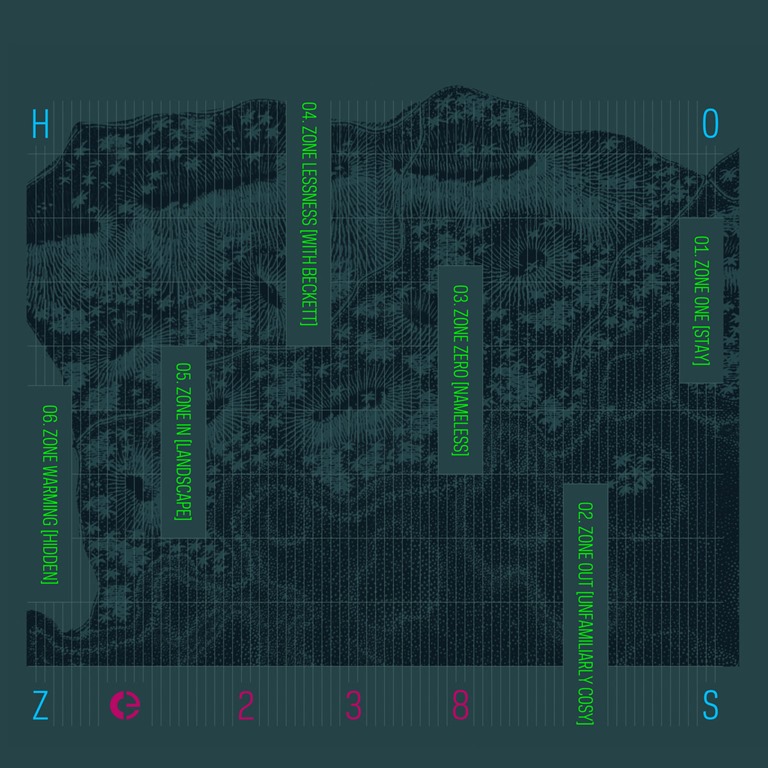
‘Zone One [stay]’ is a drifting, abstract, ethereal ambient work, and while over ten and a half minutes in duration, the time simply evaporates. It drifts into ‘Zone Out [unfamiliarly cosy]’, which is appropriately titled, and I find that I do as instructed, as the slow chimes and resonant tones hover in the air like bated breath. There’s a sense of suspense, that something will happen… but of course, it doesn’t.

For all of the detail around the concept, there’s very little around the construction by comparison. But perhaps a bell chime is simply a bell chime and an echo simply an echo. But those echoes matter. I find myself wading through the echoes of time, how it passes, how we lose time. How did we get to August? How did we – my friends and I – get so old? How, how, how is the world so utterly fucked up right now?

Each extended abstraction turns into the next, and so ‘Zone Zero [nameless]’ arrives unushered, unannounced, and unnoticed. There are whispers, the sound of the wind through rushes, and there’s something dark in the atmosphere. It’s only on returning to this after some time to reflect that I come to note the squared brackets in the titles. It’s an unusual application of this punctuation, which is more commonly found in academic work, and which I assume isn’t accidental – but why?

Anyone who’s read Beckett will know how painful and challenging, and, above all, how his work can be, and so ‘Zone Lessness [with Beckett]’ certainly reflects the emptiness of many of Becket’s works – the sprawling nothing where there are no events, no… nothing, and how life itself bypasses us as we wait. Life, indeed, it what happens while we’re making plans. It has a painful habit of passing us by. Life is not the Instagram shots or ‘making memories’ moments. It’s the trip to the supermarket, it’s endlessly checking your bank balance, it’s the dayjob and the cooking and washing up. It’s the dead moments that count for nothing. Those moments occupy the majority of time. And on this track, a low laser drone slowly undulates throughout, and over time, fades in and out, along with incidentals which allude to lighter shades, and ultimately, the nine minutes it occupies simply slip away.

‘Zone In [landscape]’ is sparse but dense, moody and atmospheric in its rumbling minimalism, and the last cut, ‘Zone Warming [hidden]’ chimes and echoes, bells ringing out into endless silence, without response, before tapering contrails of sound slowly and subtly weave their ways in and out. There are spells of silence, and the silence casts spells, and the spells float upwards in suspension.

Perhaps an appreciation of the context and theoretical framing of Horizons of Suspended Zones is advantageous, but it remains accessible as an abstract ambient work without that deeper comprehension. And it still feels as if there’s a sadness which permeates the entirety of the album. It’s by no means heavy, but it does have an emotional weight that drags the listener in, and then drags the listener down. And then leaves them… simply nowhere. Caught with their thoughts, and nowhere to take them.

AA

AA

a4170718585_10