Archive for the ‘Albums’ Category

The Helen Scarsdale Agency – HMS064 – 6th May 2022

Christopher Nosnibor

As William Burroughs said of his collaboration with Brion Gysin, The Third Mind, ‘No two minds ever come together without, thereby, creating a third, invisible force which may be likened to a third mind’. This wasn’t an entirely original concept, as he was referencing Napoleon Hill’s self-help book Think and Grow Rich, published in the 1930s. Self-help books are notorious for dispensing band advice and convincing the incapable that they’re capable of anything, but there’s a powerful shred of truth in this nugget: collaboration can – although there are absolutely no guarantees – throw open portal and new horizons and unlock unexpected avenues and whole worlds of potential. That more or less all of my attempts at collaboration have swiftly ended in failure – or, more accurately, fallen apart without producing anything more than a few paragraphs at best – probably says more about me than collaboration or my collaborators, but then when things have worked out… Yes, they’ve delivered. When it happens, it really happens. You can’t force or predict ‘gelling’: it simply happens, or it doesn’t, and when it does, alchemy ensues. You tend to find that strengths and weaknesses interlock, and all bases are covered, to use a poor assemblage of cliches.

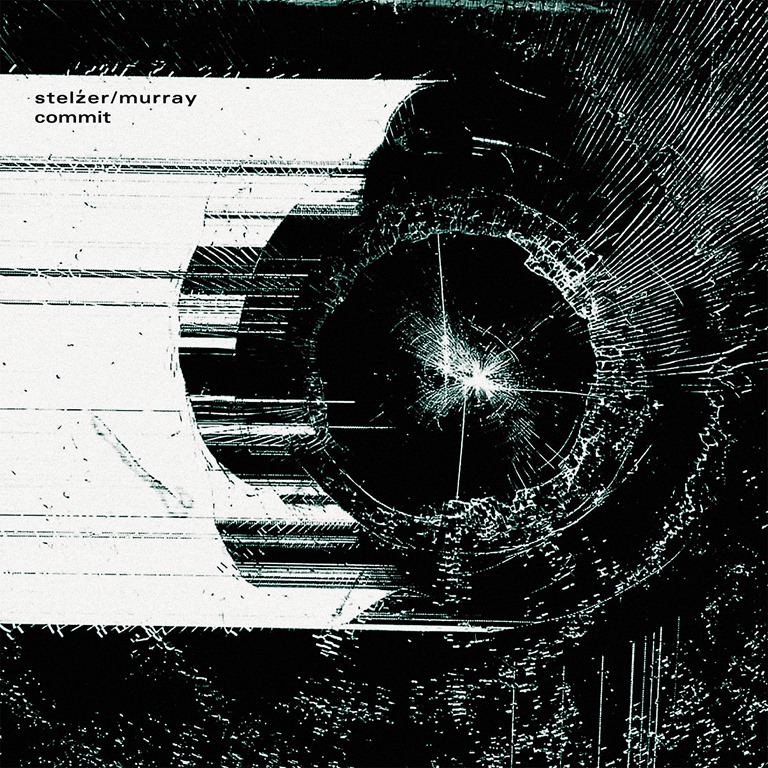
The accompanying text for the third production from the Stelzer/Murray project says that it ‘hits a sweet spot of slippery, industrial occultation that harkens back to an almost forgotten period of music from the late ‘80s and early ‘90s. Think Cranioclast, Arcane Device, Phauss, Small Cruel Party, Organum, and pretty much everything from the Quiet Artworks label… Exquisitely composed and overtly nocturnal without ever falling into the tropes of dark ambient and with plenty of gestures, signals, and threats that allude to any number of allegorically inclined processes (i.e. tape manipulation, time-delay accumulation, electro-acoustic minimalism, etc.).’

No question, despite their apparent absence of recollection of the actual process, Stelzer and Murray are the perfect foils for one another. Alchemy clearly has ensued – but make no mistake, this is some seriously dark alchemy, conjuring thick, black clouds of lung-clogging smoke that drifts, chokes, and suffocates.

On Commit, the atmosphere is dark, dank, doomy. The album is structured over two sides with the two parts of the title track, clocking in at around nine minutes apiece occupying side one before the nineteen-minute gloomfest that is ‘The House is Coming from Inside the Call’ smogging blurrily all over side two. The two parts of ‘Commit’ are darkly intense. They rumble and drone, groan and grind. There ae slow swells of cymbal, and a distant clicking, glitching that pulses time on ‘Commit 2’

is ‘The House is Coming from Inside the Call’ is sparse yet intense, and manifests as a series of movements over its duration. The atmosphere is heavy and oppressive, and the noise builds – and it is indeed noise that builds: it starts off as light drone and evolves into a thundering blast of grinding noise, clattering clanks of machinery and a howling siren that warns of danger, of imminent doom. You want to run for cover, to tale refuge, but there’s no escape and no shelter: thirteen minutes in and it’s built to a gut-churning, punishing churn of industrial noise, with clattering spanners and metal grating against metal.

In the dingy realms of dark ambient, Commit is a strong piece of work. It is dark, and dense, and intense. It possesses an unforgiving density, and it only gets darker and denser as it progresses. It’s an immersive and well-realised work, but Christ, is it bleak.

AA
HMS064_front

Prophecy Productions / Auerbach Tonträger – 13th May 2022

Christopher Nosnibor

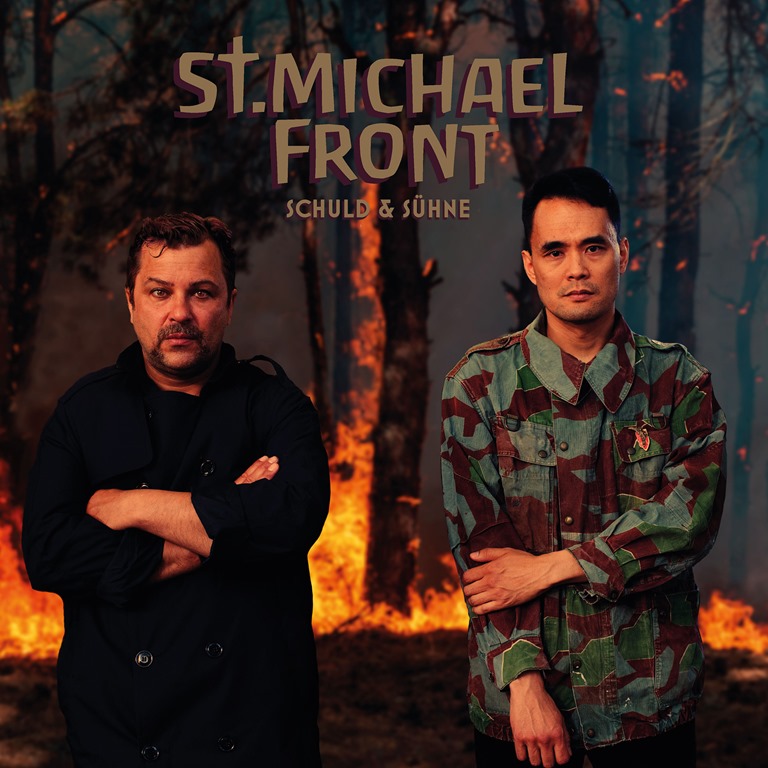
Anyone who tells you Germans lack a sense of humour probably doesn’t have one themselves. Many of the Germans I’ve had contact with have been wry wordplayers and incredibly droll. Who could deny the humour of a nation that gave us Die Toten Hosen? And so it is that St Michael Front showcase a certain tongue-in-cheek amusement, and while their debut album revelled in the preposterous, their latest, which also happens to be the first in their native tongue, exploits the disparity between drama and drollery. For a band who play small venues domestically, and with a minimal setup beyond the projection of movie clips, their sound and presentation is very much a cinematic widescreen and 5.1 sound that’s bold and ambitious – and not just a little self-aware of the pomp and extravagance of their songs.

I have to confess that the arrival of ‘Knochen und Blut’, the second single from Schuld & Sühne completely skittled me, and I immediately found myself somewhat obsessed by the song, and its accompanying video. The song is so magnificently poised, balanced, dramatic, theatrical, while the video… the video is weird. Lifting clips from vintage movies is nothing new, but there seemed to be a certain revelling in the brutal here, and it cut a path from the previous video, suggesting that these guys have something of a fascination with clips of people pummelling or shooting the crap out of one another and scenes of destruction by fire and extreme weather. I’m actually reminded a little of Home Alone, and can picture them glued to all the old black and white gangster movies.

AA

Schuld & Sühne seems to revel in being overtly German, in the way that Rammstein are – yes, I know – more German than German (although it was Hanzel Und Gretyl who took this comment on the Jewish community prior to WWII and the label ascribes to architectural historian Niklaus Pevsner for his dubious support of the Nazis as a song title for a technoindustrial banger). St Michael Front are a hell of a lot more subtle than Rammstein, and a lot more fun, too: it’s far smarter than ‘Amerika’, but no less German, and no less bold or steeped in pomp.

There’s more than a hint of Sparks or even Pet Shop Boys here, and St Michael Front clearly ‘get’ the essential dynamic of the quintessential pop duo: impassive, static, stone-faced guitarist Bruder Matthias is the perfect deadpan foil to the subtly flamboyant and vaguely campy trenchcoat-wearing Bruder Sascha, and the interplay between the two across the songs is entertaining. They build drama, and there’s a keen theatrical element to the songs.

It helps that St Michael Front don’t resort to force, lyrically or sonically. Instead of bludgeoning the listener, Bruder Sascha has a knack for an expansive gesture, a raised eyebrow that’s arch and disarming, vaguely absurd, and knowingly so – and it translates beyond the videos – you can actually hear this coming through in the songs themselves. At times incongruously jaunty, at others giving a knowing nod, there’s a dry comedic element to the performance.

AA

Schuld & Sühne is at times brooding, at times breezy, even borderline cheesy (none more so than third single ‘1000 Namen’) – but for all this, there is something aching and beautiful about so much of it that makes it a magnificent and really quite special album.

334843

Sargent House – 29th April 2022

Christopher Nosnibor

If you’re looking for the short version, Helms Alee’s sixth album is a belter – a rich, deep, and intense experience that combines the delicate and atmospheric with thunderous, grindingly heavy riff-driven assaults.

To expand on that… well, it’s hard to know exactly where to begin. It’s not really an album to dissect, because to do so would be to pick apart the magic – and yes, magic is what it is, something conjured from the air and pulling on all of the elements to create something… something beyond, and something bigger. And there are so many great tunes on Keep This Be the Way, too. Yes, real tunes, proper songs.

‘See Sights Smell Smells’ intimates a delicate chime of post-rock that builds to a crescendo, but it rapidly progresses beyond that, into a thunderous blast of tension that leaps out and scorches like a solar flare.

Helms Alee are by no means the first band to combine elements of post rock with a host of other styles and forms – And So I Watch You From Afar and pelican are among the first who come to mind when it comes to post-rock with the emphasis on rock that pack a real punch, but they’re still not particularly close comparisons: ‘How Party to You Hard’ is dreamy shoegaze but hard, like A Place to Bury Strangers covering Slowdive, and ‘Tripping Up the Stairs’ goes all out on the searing racket, explosions of noise that’s every bit as much Nirvana as it is Sonic Youth as they push their way around the dynamic range that flips between heavy and absolutely fucking raging.

Then you’ve got ‘Big Louise’, a soft, gentle, semi-ambient indie wafter that’s nice but unremarkable but for the immense reverb. You can’t exactly complain that there are a couple of cuts that seem to ease off the gas a bit, not least of all because sometimes, it’s simply impossible to any song to really hold its own in such illustrious company, and the fact of the matter is that the majority of the songs on Keep This Be the Way are so, so strong there’s only one way to go.

The seven-minute ‘Do Not Expose to the Burning Sun’ is a slow-burning serpentine twister, building around an insistent and ominous bassline into a dark, hypnotic squaller that calls to mind both The Pain Teens and The God Machine, while the yawning drone of ‘Mouth Thinker’ evokes the spirit of Ride and Chapterhouse, and boasts a breezy melody as well as scorching blasts of overdrive that emerge from nowhere to tower as shimmering walls of kaleidoscopic noise.

These contrasts provide much of the joy in listening to Keep This Be the Way. It’s an album that’s steeped in 90s vintage, and if you were going to pitch it anywhere, it would be in the indie bracket – but to pitch it anywhere, or align it to any one, or even any three genres, would be to sell the album short and grotesquely misrepresent it. Yet for all the hybridization and seemingly incongruous crossovers, Helms Alee manage to melt everything together magnificently, making not just music but pure aural alchemy.

AA

927281

Crónica – 26th April 20222

Christopher Nosnibor

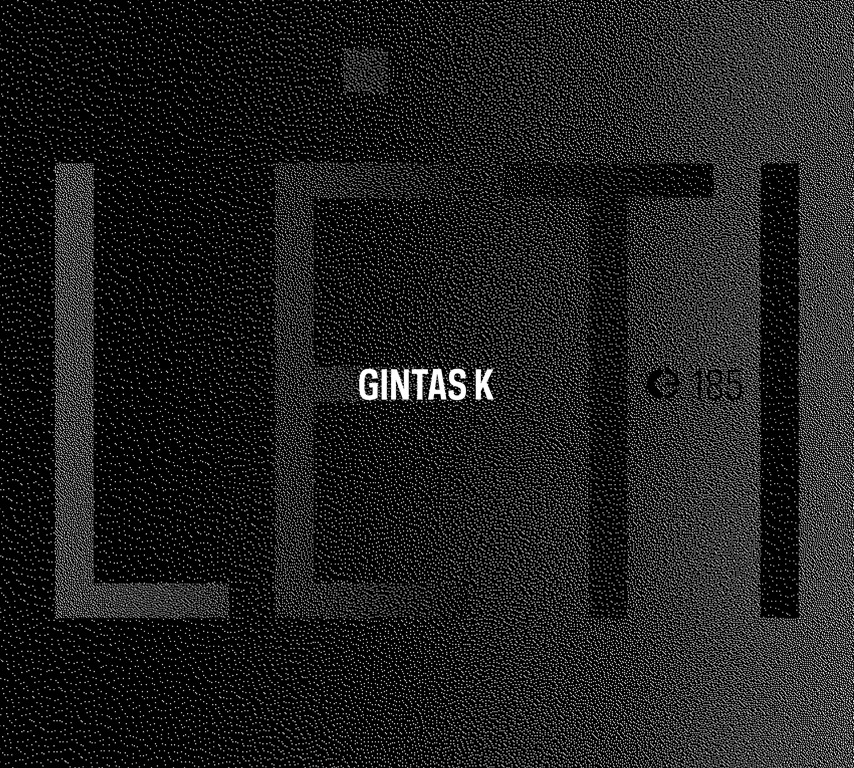
Having seen various videos of Gintas K’s improvisations, involving a keyboard and a dusty old Lenovo ThinkPad running some custom software, it’s apparent that his approach to composition is nothing if not unusual, and it’s matched by the results.

His Crónica debut, Lengvai / 60 x one minute audio colours of 2kHz sound was sixteen years ago, and his return to the label is a very different offering, although as has been a common factor throughout his career, Lėti – Lithuanian for slow – consists of comparatively short pieces – and here, the majority are four minutes long or less. Less is more, and what’s more, Gintas K invariably manages to pack more into a couple of minutes than many artists do in half an hour. Here, we have a set of eleven short pieces ‘created from recording and improvising in studio followed by extensive mixing and editing using software.’ There’s no more detail than that: some artists accompany their releases with essays explaining the creative process and the algorithms of the software and so on, but Gintas K simply leaves the music for the listener to engage with and to ponder.

Where Lėti is something of a departure is in the emphasis on the editing and mixing of the material and the fact that, as the title suggests, the arrangements are a little more sedate. The signature crackles and pops, chines and static are all present and correct, but there’s a sense of deliberation as we’re led through ethereal planes of delicate chimes and tinkling tones that resonate and hang in the air, drifting in open expanses, with time and space to reverberate and slowly decay. With this more measured feel, melodies become more apparent, with simple motifs, repeated, giving ‘Hallucination’ a sense of structure and, I suppose you might actually say ‘tune’.

It isn’t that Gintas’ works lack tunefulness as such, but that any tune is surrounded by froth and extranea, and so much is going on it’s often hard to miss. Listening to Lėti is a fairly calm, even soothing experience, at least for the most part, conjuring a mood of reflection, of contemplation. The album’s longest piece, the seven-minute ‘Various’ brings a dense wave of sound that surges and swells slowly like a turning tide. There’s almost a stately grandeur to it, but then, there’s a rattling kind of a buzz that’s something of a distraction, and a glitch that nags away and seems to accelerate. These little headfucks are quintessential Gintas K, and Lėti isn’t all soft and sweet: ‘Savage’ brings thick, fuzzing distortion and discomfort.

The flurries of sound, the babble of bubbling bleeps and bloops that are his standard fare are slowed to sparse, irregular drips in a cave on ‘Variation’, and the application of reverb is impressively nuanced, to the point that the reverbs almost become music in their own right. ‘Atmosphere’ and ‘Ambient’ are appropriately titled, while ‘Nice Pomp’ would comfortably serve as a soundtrack to a slow-motion film of a moon landing or somesuch, and again none of the pieces are without depth or detail, as the layers and slivers of sound that intersect create so much more than mere surface.

Lėti is a genuinely pleasant and pleasurable listening experience, but is most certainly isn’t straightforward or simple in what it delivers. There are many sonic nuggets to unearth, and so many tones and textures along the way, that what is, superficially ‘less’ is, in actual fact, a whole lot more.

AA

Crónica185_front

Important Records – IMPREC511 – 29th April 2022

Christopher Nosnibor

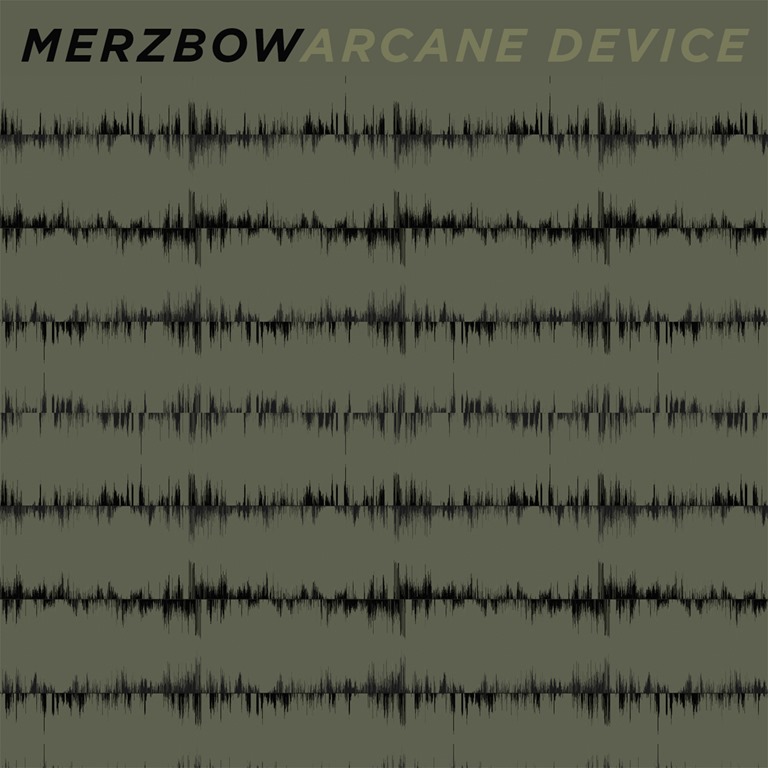
Merzbow releases are rather like proverbial busses, with this collaborative release with Arcane Device being releases simultaneously with a 20th anniversary reissue of his Merzbeat album and a CD reissue of his 1983 album Material Action, all on Important Records. The difference between Merzbow and busses is that you never have to wait long for a Merzbow album.

Merzbow & Arcane Device is a coming together of two very old hands at this experimental / noise stuff. David Lee Myers aka Arcane Device has been building electronics and creating feedback based electronic music since the late 70’s. Merzbow’s career also began at the tail end of the 70s, and the last forty-odd years has witnessed the release of a truly staggering body of work, with as many as twenty or more albums being released in a single year. It’s a daunting, overwhelming output, and the same is true of the music itself. Perhaps more than any other artist, Merzbow has pushed the boundaries of music – and even the boundaries of noise – to the absolute limits, and then continued to push beyond.

The premise of Merzbow & Arcane Device as a split LP is straightforward: each takes a piece by the other and remixes it, each presenting a longform piece correspondent with a side of vinyl.

The two pieces here are very slow, low, and drony, with the EQ geared toward the mid-ranges and lower, rather than harsh walls of treble. ‘Arcane Device Remixes Merzbow’ is particularly dense, murky, and unhurried in pace. Bubbles and pops blister the crinkled surface of churning sods. There are brief, momentary stalls to the crunching earthworks, filled with swarming hornet buzzes and wippling ripples of analogue synth sounds and skimming laser blasts. A Geiger counter crackle is pitched down and slowed to register around the gut and occasional trills of feedback break through the swampy soup. But for the most part, it’s half an hour of thick, wind-blown drone.

Merzbow’s treatment of Arcane Device’s sound is similarly given to bleeps and drones, but at a higher pitch and faster tempo; the laser bleeps are machinegun rounds by the barrage, and there are wailing siren cries of elongated feedback notes. As the drones drill deeper, the washes of static grow louder and harsher, and as the layers build, so does the volume and the tension. By the eight-minute mark, the tonal separation has become most pronounced, with barelling low-end underpinning a veil of squalling pink noise. Perhaps uncommonly for Merzbow, there are lulls, and they’re most welcome – but when the noise swells once more, the impact is amplified.

In the scheme of harsh noise, Merzbow & Arcane Device is not particularly harsh, but it’s tonally varied and its comparative subtlety is effective, as it gives the album a more considered feel, and it in no way diminishes its impact. The fact the two tracks are different – perhaps not so much for the casual listener, but to a noise enthusiast – the variations on a theme hold the attention, and draw the listener into the details of texture. These works are restrained, respectful, even, but not reverently so, and in offering two sides of a melted, battered, and pulverised coin, Merzbow & Arcane Device makes for a tough yet immersive listen.

22nd April 2022

Christopher Nosnibor

This seems to have been a long while coming – and that’s because it has. The New-wave / No-Wave gothy post-punk duo have been kicking out killer EPs for a decade already. Six EPs and a single to be precise, with each EP containing five, six, or even seven tracks. It’s a substantial body of work, however you look at it. And yet it’s only now that they’ve got around to an album proper.

They’ve made the most of the time and the previous releases to realty hone and refine their sound, and having done so, Admire feels like a proper album. It’s ten tracks, solid, packed, back-to-back, arranged with sequence in mind. It’s a sequence that finds things getting slower in the second half, and it would be interesting to hear how this pans over two sides of vinyl. Admire would likely be dissected as having a ‘fast’ and a ‘slow’ side.

As Admire demonstrates, GHXST have remained true to their original sound and ethos – scuzzy, reverb-soaked murkinesss, with a deep psychedelic twist. There’s a lot of twist and a lot of noise on Admire. Comparisons only go so far with these guys, and while The Jesus and Mary Chain is an obvious one, they’re probably closest to A Place to Bury Strangers in their shimmering wall of sound face-melting blast of FX and overdrive. I may have also mentioned Curve before as a comparison: it still stands, and I’m wondering why when people are whittering about various 90s bands

The build on the upward arc is fairly rapid to say the least: it’s just over two minutes into single cut ‘Pls, You Must Be a Dream’ that the extra level of distortion kicks in and blows the roof off everything. And for a time thereafter, you find yourself adrift in a wash of reverb and overloading distortion. Things simply drift: it’s dense, it swashes and coasts along, splashing against the shores as the waves splash the deck, and each song has a certain supple power.

‘Sonores’, the album’s seventh track, marks the first real spot of respite as they pare things back to a swampy synth and bulbous bass notes hang in the dense air, and ‘Nights of Paradise’ slows things to a crawling trudge that threatens to take the album down into a low-tempo slump, as if they’ve run out of steam and simply got stoned to a half-pace stoned sonic swamp. In context, recent single ‘Marry the Night’ is a bit of a crawler, and closer ‘Only Lovers’ is a murky slice of wistful melancholy. Of course, all the best albums conclude with a slow-burning epic, and this is definitive. Don’t ask me why, but this is one of those slow-burning min-epics with piano and a towering wall of rippling overdrive what tugs hard on the emotions and makes me want to cry without even understanding why. But it is, without question, an outstanding finale to what is, also without question, an outstanding album.

AA

AAA

173508

1st April 2022

Christopher Nosnibor

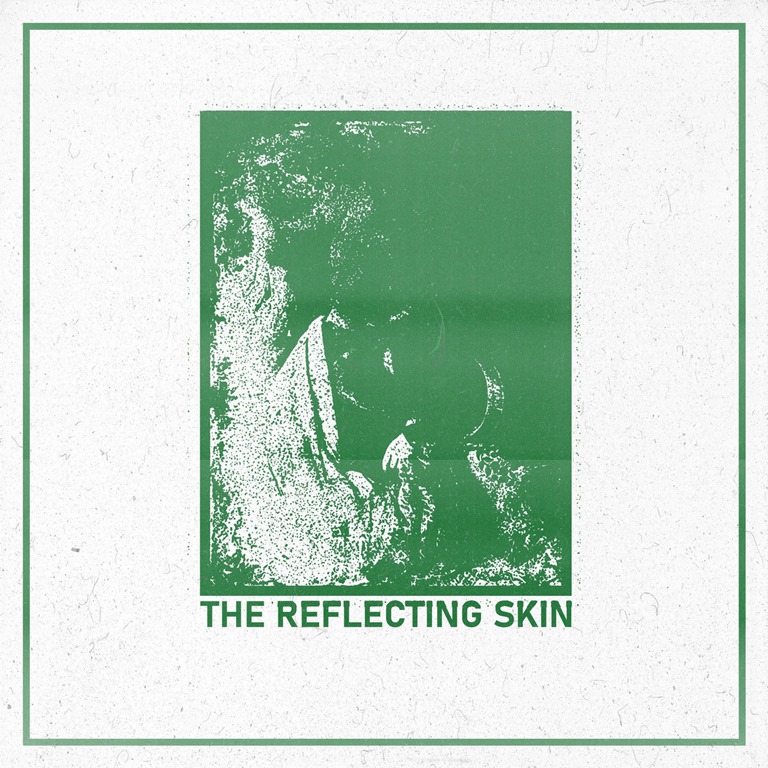
Details of this eponymous EP release from Leeds-based The Reflecting Skin are sparse. It’s only since the advent of social media and the ubiquity of the Internet that we’ve come to expect to know everything about an act and its releases – the who played what, the lyrics, the inspiration for and meaning of songs, who their musical influences are, favourite films, etc., etc. And why do we need to know? What actual benefit does it serve, and to whom?

What matters is that this is seriously harsh and heavy. A grinding chord booms, overloading the speakers by way of a welcome with ‘Ceramic Rash’. It’s slow, doomy, dirty and dark, and devoid of percussion, crawls like larva. The vocals are half-buries and swathed in so much reverb as to sound like they’ve coming from the bottom of a well – a well the shaft of which goes down, not to the water table, but the very pits of hell.

It stops abruptly, and it straight into the crashing thud of ‘Limb Off’, which finds The Reflecting Skin go full band and full-throttle gnarly hardcore nastiness. The production is authentically primitive – it’s so dirty, so rough and raw, with the feel of a Walkman recording, and playback with fluff-encrusted tape heads, but this isn’t an impedance, because it simply sounds right. If it slots right in along the mid 80s hardcore vintage, it’s equally very much contemporary Leeds underground / DIY. It’s not slick by any stretch, even the track editing sees each one cut and the next begin, but this is very much integral to the appeal and the form of genre – and it’s totally nonstop no-fi brutal racketing, punching in your face.

I’ve no idea what the title is about, but ‘IMA-IW-BF’ is so distorted it hurts: a raw, raging rehearsal tape from a damp basement or clungy garage, it’s a descending chord sequence that grinds and growls, like a half-pace Melvins trudge but with raw-throated roars for vocals… while ‘Split Wires’ clocks in at a half a minute and just quite simply the sound off punishment at a hundred miles an hour. They really do save the gnarliest noisiest shit for last, though: the six-and-a-half-minute ‘Nocturnal Cough’ is built around the nastiest, most gut0churning bass imaginable. It makes your stomach lurch to the point you want to puke, and it’s propelled by thumping drums that threaten to burst your eardrums.

It would be a stretch to describe The Reflecting Skin as a fun or enjoyable listen, because, quite simply, it hurts. But as ultra-heavy and uncompromisingly brutal releases go, it’s an absolute beast.

AA

a2827877653_10

Human Worth – 13th May 2022

Christopher Nosnibor

I don’t often give advice or tips, but sometimes it’s appropriate, and this is one of those times. If you’re into noisy music that’s inventive and of a consistently high quality, make sure you get hold of everything Human Worth release. Ever. I’ve been vaguely amused by sponsored ads on Facebook recently for Vinyl Box, a subscription service that delivers pre-selected records and enables the clueless to amass a ‘cool’ collection of instantly collectable editions of ‘cred’ albums as selected by ‘tastemakers’. As if. You want a cool record collection, and one that’s worth listening to as well, start here.

Human Worth haven’t been going all that long, but they’ve very swiftly established, if not a house style, then an ethos and a sense of curation, and every release this far has been outstanding, both musically an in terms of product, with each vinyl release feeling, looking, and sounding special. What’s more, they don’t just talk about ethics and causes, donating a percentage of the profits from each release to a worthy cause. It’s a hell of a way from the greed that fuels Records Store Day – which so happens to be today, where I’ve spent the day at home not regretting spending £30 on reissues of albums I already have two copies of. Frankly, it stinks, when you can pick up, for £16, a brand new clear vinyl release – with only 200 copies pressed – of something new and exciting that you can cherish for being more than simply an artefact. Steve Von Till is a fan, and while I may not have as much clout, so am I.

The new eponymous from Bristol-based instrumental trio Olanza is a most worthy addition to the Human Worth discography. It’s kinda mathy, kinda post-rock, but it’s got all the crunch. The guitars chop and change, twist and bend, swerving between picked lead detail and chugging riffs, but if the focus is on the guitars, it only works because of the force of the rhythm section, which isn’t only solid but as heavy as hell.

The album’s first piece, ‘Accelerator’, packs in all of this into less than three and a half explosive minutes. But they have so, so much more up their sleeves, and this is why Olanza is such a magnificent album – they’re clearly not a band to set themselves up for pigeonholing, as they simply don’t conform to any one, or even any two or three genre forms.

‘Boko Maru’ is deft, light, even, jazzy, but also a shade country, and fun… and then crashes into discord when the overdrive slams in, while ‘Descent’ is a full-on riff-driven beast with a psychedelic twist. Then there’s the nine-and-a-half minute monster that is ‘Lone Watie’ which is more indie, with hints of early Dinosaur Jr, at lest before it goes angular crunching riff-racket. With its shifts of style and tempo over such a duration, it’s practically an album in its own right, and certainly packs in more ideas and solid chunks than many bands manage over multiple albums – but the beauty is that it isn’t too hectic, and every segment flows into the next without jarring or sounding forced. This is intelligent, articulate, and magnificently crafted. So many bands try to pack in loads of stuff into each song, with the end result being cluttered, awkward, lacking in cohesion and just that bit too much. Not so with Olanza. This is masterful and compelling stuff.

‘Navarone’ lands between Oceansize and Pavement, epic neoprog and jangling indie, and builds nicely through a cruising riff. Angular, sinewy guitars a la The Jesus Lizard or Blacklisters skew in on ‘Joust’, before the minor key dissonance of ‘Constant’ brings things to a tense conclusion.

Put another way, it’s got the lot, and there’s so much range and dynamic action here, it makes for a gripping listen the absence of vocals is such a non-issue you barely notice it. What you do notice, and can’t escape, is that Olanza have landed an exciting album, where the quality of the musicianship is matched by the passion and the channelling of energy through the medium of music. It’s pretty special.

AA

a3133248245_10

Limited Noise – 29th April 2022

Christopher Nosnibor

With a CV that lists near-multitudinous membership and participation in bands (notably his regular gigs with Snack Family and World Sanguine report, but also contributing to Sly ands the Family Drone and countless others), renowned experimentally-minded jazz drummer and percussionist Will Glaser has taken some time out to continue his solo album sequence with the fourth instalment of Climbing in Circles.

Over the course of three previous releases, Glaser has explored jazz, folk, and beyond, through an experimental prism and with a methodology that’s very much about improvisation. This outing features long-time collaborator, Matthew Herd, on saxophones and piano, alongside trumpeter, electronic artist and producer, Alex Bonney, and was assembled over the course of five day. While the album is loosely constructed around two overarching ‘acts’, they consist of eleven separate and distinct pieces, and bookended by ‘Beginnings’ and ‘Endings’, there’s a narrative arc of sorts, here.

It begins with crawing birds and a gentle piano playing what one could readily describe as a charming melody with a quite conventional structure, and ends with a genuinely pleasant lilting piano tune – and yes, I mean tune in that it has all the conventional features of one.

In between, there is slow decay and infinite space. Rumbling, echoes, notes reverberate off one another at distance. Sax and trumpet trill and drone, sometimes at one, at others as if duelling. The percussion rolls and crashes, but more often than not, at distance, and creating texture and atmosphere and colouring the pieces with expression rather than maintaining rhythm.

The combination of instruments is relatively conventional in jazz, and, similarly, there’s nothing particularly radical about the way they’re played and interact on here. But there’s considerable joy to be had in simply listening to the musicianship and the way the musicians themselves interplay on the pieces. ‘Spiral Dance’ is a hypnotic serpentine spin, while ‘Bad Dream Machines’ is a drifting mass of fragmentation, dissonant, discordant, and above all, a work that exists in the spaces between the notes and in the reverb and echoes as in the notes themselves.

There will be some – perhaps many – who are deterred by the very mention of jazz, and there is a perception of there being a certain elitism about jazz – the idea that random notes and borderline unlistenable chaos is somehow a superior art form, and anyone who doesn’t ‘get’ it is clearly a philistine. But Glaser is a remarkably positive showcase for jazz, with a focus on the listener rather than purely the musicianship. Climbing in Circles Pt 4 is about atmosphere, about vibe, rather than indulgent wanking: this is jazz you don’t need to be an aficionado to appreciate. It’s listenable, and it’s varied, too.

On ‘Dead Fly Disco’, he and his collaborators play completely straight, a song with structure and swing, something you could even dance to, or at least nod a long to its toe-tapping groove in a basement bar late at night. ‘Ballad in the Jazz Style’ almost feels like they’re playing with and working within the tropes as an example of discipline, and it’s highly restrained and wonderfully moody in that sad, smoky jazz melancholy way.

There’s plenty going on, and enough to maintain interest, but not so much as to be chaotic or to lose the listener. Whether these things make it a good access point to jazz, it’s hard to say, but what it does mean is that Climbing In Circles pt.4 is a jazz album that’s accessible and enjoyable simply as a musical work.

AA

Climbing In Circles cover 1000px CMYK

Southern Lord – 23rd April 2022

Christopher Nosnibor

Covering multiple works in a single review feels like a major short-changing exercise, and I feel I should apologise to the artists involved in advance. It kind of depersonalises and maybe even cheapens the coverage, and I remember how I felt when the book version of my PhD thesis finally received a review, only to find that it was in an article alongside three other books. It may have been a paragraph of praise, but nevertheless, it was a solitary paragraph in a long article. Nine years of work, 90,000 words and 300 printed pages given a one-paragraph thumbs up… meh. But still, better than a thumbs-down or no paragraph.

A decade on, it’s still not settled with me, and I always try to do better. But sometimes, bundling makes sense and feels justified and this is one of those times.

Having spent many a virtual column inch in recent years bemoaning how Record Store day has made a deep descent from being an event that served to raise awareness of independent record shops to another cash-in for major labels cranking out shitty reissues on limited colour vinyl to wring yet more funds from completists while at the same time driving some of the most shameful scalping activity anywhere on line, it’s a relief to find something positive about RSD 2022.

That something comes of course from an independent label in the form of Southern Lord, who, as a sidenote, had commendably stuck to producing outstanding vinyl releases regardless of trends, fashions, popularity, or Record Store Day, and, admirably have continued to release whatever the hell they please, with a catalogue that’s an equal balance of cult hardcore punk re-releases and cutting-edge works of crushing weight that perpetually push the parameters of metal, with recent releases from Neon Christ and Big | Brave highlighting the polarities of the label’s interests.

This pair of RSD releases exemplify this span to perfection, and while admittedly one is a reissue, the other very much is not – and as such, they represent the label’s standard release scheduling. As the press releases outline, ‘The Catatonics were one of NYC and Syracuse’s pioneering hardcore punk bands…While the band’s seminal Hunted Down EP has remained one of the most highly sought-after releases of the genre, the heightening collector’s price made this 7” inaccessible to most people. Southern Lord has now elected to re-release this EP as a 12”, with bonus tracks.” And, meanwhile, Forest Nocturne is ‘the first full length solo venture of Greg Anderson, under the moniker of The Lord. Inspired by the great horror film composers of the 70s and 80s, Anderson turns his back on the riff worship of Goatsnake or SUNN O))) and instead creates a truly unsettling atmosphere heavy with tension, offset by 90s Scandinavian death metal’.

The Catatonics release certainly gives value for money: the original 1984 7” released on Anorexic Nympho Records featured five tracks: this reissue features a whopping eighteen. Following the bonus intro cut if ‘Descending in E’, the original EP accounts for tracks two to six, while the rest is an almost exhaustive gathering of compilation tracks, early demos and live recordings, all remastered from original tapes. Only two of the eighteen songs run beyond three minutes, with most clocking in under two, and this is rough and ready, ball-busting full-throttle, relentless fury, nonstop-pounding hardcore at its rawest and most furious, and the live cuts are particularly raw and brutal, making this a unique and comprehensive document of another underground band’s short but high-impact career.

LORD000_12inch Standard LP Jacket

The Lord’s debut is a very different proposition: it’s clearly contemporary for a start, although it’s steeped in vintage metal stylings, and driven by an understated and simple but gut-churning bass that digs tunnels beneath your ordinary lives. Forest Nocturne is an album that twists and turns, and more significantly, gnaws like rodents, and like woodworm, at the smooth, flat planes of sonic normal. I say ‘normal’, as if that’s a thing – but The Lord conjure vast aural expanses, broad vistas that invite the listener to bask in the rich density, before tearing it to pieces.

A slow, swelling church organ droned doomily on ‘Church of Hermann’, a piece which is truly awe-inspiring. This is an instrumental album that definitely marks a departure for Anderson and feels more like early Earth than Sunn O))). Then again, it’s doesn’t really sound or feel like either.

Thick swells of strings that build into brooding, megalithic waves, define the power of this instrumental work. ‘Forest Wake’ starts with the wail of a siren, and brings bulldozing bass and power chords wrapped in gut-punching clouds of distortion. Those clouds dissipate for a time, and the atmosphere looms large and heavy as things unfurl, but take a moment to breathe and there’s nothing to see here other than smoke and that absence… It grinds, and it absolutely fucking kills, going full Sunn O))) drone doom on ‘Old Growth’. Forest Nocturne is hard and harrowing, immense, epic, beautiful, and yet at the same time devastating. The last track, ‘Triumph of the Oak’ is a new shade of heavy, an angering mess of thrashing chords that crashes down so, so hard.

810538

Finally, thanks to Southern Lord, there are releases that are actually worth getting up and queuing for at the weekend.