Archive for the ‘Albums’ Category

Sub Rosa  – 22nd September 2023

Christopher Nosnibor

So many reissues recently have taught me a valuable lesson. I don’t know nearly as much music as I thought I did. Of course, it’s impossible know all the music, and despite feeling I’m reasonably knowledgeable, and compensating what I don’t know with enthusiasm. Time was, I was worried about knowledge gaps: they made me feel stupid, ignorant, and I’ve spent evenings with people who have reeled off bands in genres I’m interested in and not recognised the name of a single one, let alone heard them. I felt like a fraud claiming to be a music enthusiast and worse still, a music writer (I never proclaim to be a music journalist. I write about music, and do so very much from a personal perspective. Sometimes, I stab at maintaining an element of objectivity, but the appreciation of art isn’t objective. As I’ve written elsewhere, the reason we appreciate art is because of the feelings it stirs in us, the way it speaks to us, not first and foremost because of its technical proficiency.

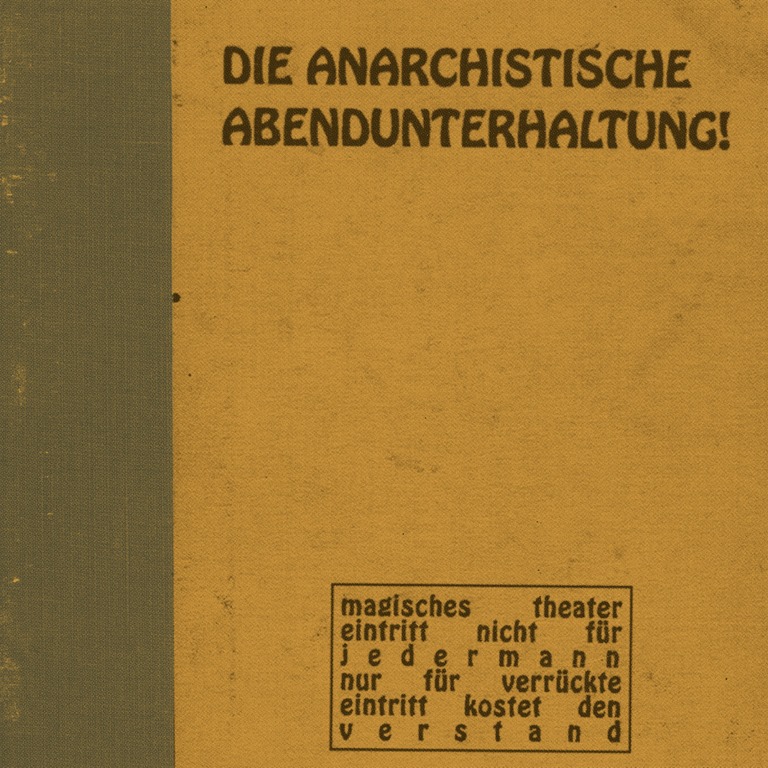
This is a lengthy circumnavigation to the confession that Die Anarchistische Abendunterhaltung completely bypassed me in the day – in fact, until today, the week of the reissue of their 1995 self-titled full-length debut. I suspect that they didn’t get much coverage in the UK music press, and this was still a while before the advent of the Internet as we know it – and I was a relatively early adopter, setting up my eBay account in 1999 following the demise of Yahoo! Auctions.

As the accompanying bio outlines, ‘The band consisted of four young, ‚classically derailed’ musicians who played their own compositions exclusively their with acoustic instruments such as violin, cello, clarinet and accordion… Their work contained influences from Roma music, Eastern European folk, klezmer and jazz, but was performed with the energy, rebellious spirit and Sturm und Drang of a bona fide punk band. DAAU was part of the fertile Antwerp scene, which also produced dEUS, Zita Swoon and Kiss My Jazz, and soon signed an international record deal with Sony Classical.’

dEUS may have briefly made a mark here in the UK in indie / alternative circles, but the others, not so much, and I suspect that even with its first vinyl pressing, this re-release will likely have a bigger landing in Germany and, indeed, the rest of mainland Europe, than this pitiful island that still celebrates Britpop, and which spent 1995 dominated by turgid sludge by the likes of Oasis, whose pinnacle release (What’s the Story) Morning Glory? and Blur’s Great Escape (which was anything but great); the best we got was The Bends, while Robson and fucking Jerome dominated the singles charts for half the year. As if we needed further proof that we’re a small, crappy island with an overinflated sense of self-importance that the longest hangover from the Empire ever. It’s embarrassing, as is the fact that this domestic Brit-centric bullshittery has denied us introductions to many great bands. Die Anarchistische Abendunterhaltung is a perfect example.

It’s perhaps not hard to grasp why this extravaganza of neoclassical extravagance and its wild woodwind and unpredictable compositional forms didn’t grab the attention of the British Music press, but they missed a work that’s hugely innovative and belongs to no one genre. It’s wild and it’s challenging , but these are positives.

Die Anarchistische Abendunterhaltung is droning strings, it’s by turns melancholy and slow, and remarkably lively. It’s an untamed beast almost with a life and energy all of its own. But the compositions aren’t in sequence!

‘V Drieslagstelsel’ is the first track, the first of five ‘Drieslagstelsel’ pieces, and it’s followed by the frenzied yet droning folksiness of ‘II Drieslagstelsel’: it’s pretty, but it’s strange. Or, it’s pretty strange. I’m on the fence, while it sounds like they’re stripping the fence with some frenzied violin work. ‘III Drieslagstelsel’ scuttles in with some cheeky chamber stylings before popping in all directions, and it’s kinda cheeky – and perhaps tongue-in-cheeky – jaunty, incredibly busy, and extremely varied. It isn’t the kind of explosive, head-spinning jazz I sometimes find myself wrestling with here, but it covers a lot of terrain in just five and a half minutes, with stage musical qualities pushing to the fore before dipping back down to something altogether less ‘production’ orientated. The last of the ‘Drieslagstelsel’ sequence is ‘I Drieslagstelsel’, and following the frenzied strings and dramatic orchestral sculptures of ‘VI Drieslagstelsel,’ it’s a compact piece of neoclassical music which fulfils the oft-underrated and oft-overlooked purpose of entertaining. It’s a fun and often frivolous piece, in parts a wild hoedown with wind instruments, with an eye-popping energy which delves in to drones and darker territory at times.

What happened to IV? Maybe it doesn’t matter. Rounding the album off is the eleven-minute ‘Doorloop’, which appears to be a traditional track, and its slow, drawn-out notes are funereal at first, before thing go g=crazy and there are even vocal.

Over the course of these six pieces, Die Anarchistische Abendunterhaltung brings massive range. Back in 95, I probably wouldn’t have appreciated it, and nor would anyone else I knew. But here we are, looking at an accomplished album with much texture and range.

And now, I appreciate it. Perhaps I wasn’t ready, perhaps it was out of step with the times for all but a few – and even fewer here in Britain – but Die Anarchistische Abendunterhaltung is a remarkable album, and one which is timeless.

AA
a3688988726_10

Neurot Recordings – 29th September 2023

Christopher Nosnibor

I’m finding myself on something of a Neurot trip this week, following my fervent frothing over the mighty new album by Great Falls. As if to prove that the label has been putting out outstanding records for a very long time (and with unstinting singularity, presenting a broad stylistic range, too: this is anything but heavy), twenty years on from its original release, Grails’ debut is getting a reissue. While the nice coloured vinyl pressings (in ‘Coke bottle clear’ and ‘beer’ hues) aren’t necessarily for everyone, the release does afford a timely opportunity to reflect on the debut release of a band who have gone on to forge a significant and varied career, with their latest album – number eight – being released next month.

Steve Von Till’s comments about hearing the demo for the album, on which the offer of’ the release was made, reminds us of the musical landscape of the time in 2002: ‘Most instrumental music at the time was trying to emulate Godspeed You! Black Emperor or Mogwai, but this was different. This seemed to have elements from more diverse sources that I loved such as Dirty Three, Comus, Richard Thompson, and Neil Young, not to mention, who in hell would dare to cover Sun City Girls?’

There was a lot of instrumental post rock around, and while there was a wealth of great bands around, locally as well as nationally and internationally, it’s fair to say that a large proportion of it was much of a muchness, with myriad explorations of chiming guitars and slow-building crescendos.

The prominence of acoustic guitars, softly picked and strummed, and rather unconventional use of violin creates an unusual dynamic on these compositions, which tend to be sparse in arrangement and with considerable space between both the instruments and the individual notes, and the crescendos are few and far between – the first doesn’t arrive until over halfway through the third track, the slow, meandering ‘The Deed’, when the swell of guitar pushes upward through yawning strings and finally the full drum kit crashes in. But the impact is less from whacking on the gain on the instruments, but the musicians utilising the dynamics of playing, and the simple equation that playing harder is louder. Against the prevailing tide of pedal boards as big as drum risers packed with effects, this stands out as being not only very different, but bold, the emphasis on the tones and timbres of the instruments in unadulterated form, the sounds the result of technique.

The soft piano of ‘In the Beginning’, when paired with picked guitar has an almost pastoral feel; the heavy smack of a drum feels incongruous before a soft yet almost clumsy waltz emerges briefly, and structurally, the pieces seem to belong more to jazz than anything else, although ‘Space Prophet Dogon’ (the Sun City Girls cover) draws together elements of Celtic-influenced folk and psychedelia, and goes for a long toe-tapping groove over a crescendo by way of an extended climax. It takes a certain courage to fly in the face of fashion in such an obtuse fashion, as well as to play in such an intimate way that you can hear the sweep of a finger across a fret, where natural reverberations become as integral to the sound as the notes themselves. This is nowhere more apparent than on the hyperpsarce intro of ‘Broken Ballad’, a sedate almost country-tinged tune and one of the album’s more conventionally-shaped pieces. The slowly-unfurling ‘White Flag’ shares a certain common ground with later releases by Earth: slow, spacious, revolving around a simple, picked guitar motif, but it does swing into an exhilarating full band finale that’s different again.

Closer ‘Canyon Hymn,’ presumably a reference to Laurel Canyon, the name of the and when they recorded the demos which would become The Burden of Hope, is by no means an anthem or a theme, but encapsulates all aspects of the album’s range within a soothing five minutes. If the title, The Burden of Hope, implies a certain weight of responsibility, the music it contains sees that hope take wings. Twenty years on, The Burden of Hope sounds uplifting, and still fresh.

AA

cosmicimg-prod.services.web.outlook

Neurot Recordings – 15th September 2023

Christopher Nosnibor

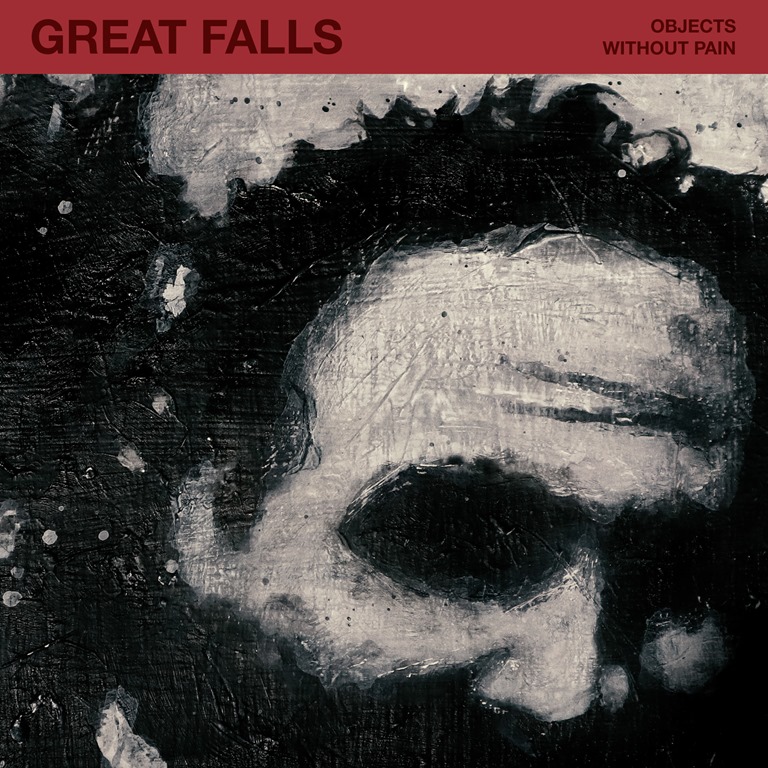
Once upon a time, way back, I’m confident I read an interview with the artist Francis Bacon which contained the phrase ‘life is pain’. It certainly sounds like one of his brutally bleak and precisely pithy lines, encapsulating his eternally dark world view, but I can’t for the life of me find it anywhere, at least not attributed to Bacon. It’s a phrase which seems to have acquired an online ubiquity to the point that it’s simply something people say now. People say all kinds of nonsense, though. I had a work colleague who would often wheel out the line that ‘pain is weakness leaving the body.’ He was an imbecile, and that’s not how it works or I’d be Hercules by now.

In this context, the concept of objects without pain is almost inconceivable. No pain? Oh, to be inanimate… But as the accompanying notes soon render apparent, Great Falls’ fourth album is a work which plunders a whole world of pain: ‘Objects Without Pain takes us on a bleak, purgative journey through a separation – a snapshot of the turmoil and indecision that occurs after the initial realization of someone’s misery, and before the ultimate decision to end a decades-long partnership. From the foreboding intro riffs of ‘Dragged Home Alive’ to the end of the 13-minute closer ‘Thrown Against The Waves,’ its eight tracks explore the thoughts that come up when a person is staring down the barrel of blowing up their life: How did this happen? Is it too late for a new life? Will the kid be OK? What will make me happier: familiar torment or unknown freedom?’

This is dark, alright. And it’s weighty, but not always in the most obvious sense. Indeed, the nine-minute opener, ‘Dragged Home Alive’ begins with nothing but a clean guitar, strummed scratchily. But then the vocals, a pure howl of anguish, tell us this is not some mellow folksy effort, and from there it builds, and when the bass and drums kick in, it’s nothing short of explosive. The drums are fast, nuanced, dynamic, almost jazzy, while the bass is thick and squirmy, it’s the sound of a snake wrestling to escape the hold of a human, and everything comes together with such fiery force you feel dizzy, whiplashed, battered from every angle – then the second half is almost another song; still slow, still heavy, but with a very different sound and level of energy, and it fucking pummels. This is powerful stuff.

They keep the riffs coming thereafter, too, as they deliver obliterative volume and endless anguish and emotional torment of a failed relationship and its fallout. It’s not pretty or poetic, but the internal monologue and the conflict laid out straight in real-time, churning through questions of blame and sifting through belongings, bald vignettes and depictions of packing, moving.

I spend my day

Searching homes

And I can be

Alone for real

I spend my day

Searching towns

And I can be

Searching alone

And I can be

Searching alone

I can’t do this

It hits hard because it’s so, so raw, so real, so much a real voice, unfiltered and rendered overtly lyrical. And because of this, rather than in spite of, the lyrics are true poetry. The pain is real, and you feel it.

‘Born as an Argument’ is considered, slow, dolorous, but also raw and ragey, and with its double-pedal drumming, it’s heavy-hitting. Even winding down to soft, almost folky vocals to fade, the heavy mood lingers, and then ‘Old Words Worn Thin’ crashes in with lumbering bass and vocals screaming anguish. The bass that crunches is at bowel-level on ‘Ceilings Inch Closer’ is the definition of energy, channelling all of the negativity and conflicting emotions into something so sonically solid the impact is physical.

As a label, Neurot has a knack for finding bands which are ‘like’ Neurosis but different, with Kowloon Walled City recent standouts for their brand of stark, bleak, nihilistic heft, and, on the same pile, Great Falls. Only, while sharing that heavy nihilism and the roaring rage of Unsane, they stand apart from so much of the label roister by virtue of their sheer force and absence of breathing spaces. Breathing is for wimps. Suck it up and plough on. Bathe in the brutality of Great Falls. Absorb the pain, and grow stronger for it.

AA

779849

Ex-Isles Records – 29th September 2023

Christopher Nosnibor

The other day, a band commented on a post linking to a review of their album saying that they usually share links to reviews, but felt unable to share mine because they weren’t sure if I liked the album or not. The fact of the matter is, I wasn’t sure either.

This is not what’s expected of a review, and I understand that. When I started out reviewing music back in the 90s, having been raised on some of the most scathing reviews in Melody Maker and NME, used to delight in demolishing an album or a gig that I thought was shit. In fact, my first published review, in The Lincolnshire Echo, was my submission piece which the editor loved and decided to run with, albeit brutally edited and ending mid-sentence after three-hundred of four-hundred-and-fifty words. It was a full-on smash-up, the likes of which had never appeared in the local press, which resulted in weeks of letters of complaint and debate.

Over time, I’ve come to take a more nuanced approach to criticism. Don’t get me wrong, I still derive great pleasure from the occasional wrecking-ball review, and will still froth at the mouth with excitement about stuff that really enthuses me. And I’m by no means alone in buying an album precisely because it’s had a slating when all of the criticisms are of things I actually like. But lately, unless I’ve a particularly good angle, I’d rather ignore something that’s annoying because it’s so banal than expend time and energy winding myself up over something underserving.

There’s also a specific reason I don’t use a star-rating system. I’ve found myself dolling out ‘safe’ sevens to releases I’m indifferent to in order to avoid upsetting anyone, because I’ve had whinges over crappy six stars, despite the fact that the role of the critic is to critique. We may be part of the promo process, but we don’t operate to proactively plug – or at least, I don’t believe we should.

We can’t always be objective, because aappreciation of music isn’t objective. Does anyone really listen to a song and think ‘yeah, I love this song because it’s technically excellent’?

So sometimes, I will find myself on the fence, particularly as I will often not have the time to digest an album for review as I would when listening for pleasure, because posting a review three months after the release isn’t really beneficial to anyone.

And so I find myself presented with Domestic Sacraments by Ex Isles. What to make of this? It’s rare I’m truly perplexed by an album, but this is one that takes some real reflection and contemplation. Conceptually, content-wise, it has considerable appeal. In terms of execution, I’m less certain.

As the accompanying notes explain, ‘Domestic Sacraments eloquently explores the mental cruelties imposed by 21st century life, the souls of humans under late Capitalism. Through exquisitely handled avant-pop compositions and a strident agenda, Domestic Sacraments emerges as a beautiful and poignant testament to resilience and introspection.’

There’s a lot going on here that I like and which feels familiar. There are equally challenging elements of which I’m less sure. But this isn’t really about me.

The rippling, listing piano and gentle, melodic vocals sit, unexpectedly, in the domain of soft rock and easy listening. It’s grandiose, even slightly pompous, not least of all on account of the crooning baritone of Pete Devlin, and with prepared piano and field recording in the mix, Domestic Sacraments has much happening.

But the sax that swerves in on ‘The Smallest Plot of Land’ has the kind of edge that’s reminiscent of the first couple of albums by The Psychedelic Furs, and it’s definitely more pop than jazz, although it’s not really pop either and we’re in uncertain, genre-straddling territory now.

I’ve oft said – or written – that there are two kinds of music; good and bad, although this does again risk returning to the short-cuts that many readers and bands alike expect from reviews, the kind of pub discussion where people will argue for hours over whether a band is awesome or shit, it’s black or white, with no room for grey space in between. Technically, this is good: there is no questioning the musicianship or compositional skills on display here. But this is the quandary: am I bound by matters of taste? Well, yes, of course I am. But… this is bigger than that.

‘A Mechanism of Release’ spans more than ten minutes, and ambles genteelly between The Divine Comedy and early Pulp, while bearing a considerable debt to Scott Walker’s later works. ‘The Gnashing Ends’ is similarly reminiscent of Tilt, with swooping, semi-operatic vocals swooping and soaring.

The ambition and scope of Domestic Sacraments is staggering. It’s like a musical in an album. And artistically, as well as musically, it’s an immense accomplishment. Lyrically, too, it’s sharp, astute, and wide-ranging. It all stacks up for an impressive release. Ask me again in a few months and I might have decided if I like it or not.

AA

Ex-Isles Domestic Sacraments cover 3000px

8th September 2023 – Cruel Nature Records

Christopher Nosnibor

One of the things that really makes Cruel Nature stand out as a label is that you never know what they’re going to put out next. Many labels – and music fans – claim to be eclectic in their tastes, but such claims rarely hold up to scrutiny. Anything that involves a permutation of guitar, bass, drums and vocals isn’t ‘eclectic’. Cruel Nature are eclectic in the John Peel sense, spanning the full gamut of experimental rick and electronica with a fair amount of jazz on offer too.

As the bio sets out, ‘Dragged Up are an off-kilter psych-garage proto-punk band. Formed in Glasgow in late 2018 by Eva Gnatiuk (Las Mitras), with Simon Shaw (Trembling Bells) & the writer Lisa Jones. In 2019, Chas Lalli (Vom/Bad Aura) & Julian Dicken (The Cosmic Dead) joined. In 2022 Stephan Mors (The Owsley Sunshine) replaced Dicken on drum duty… Their debut mini-album "D/U" was released in 2020, show-casing their seamless cross-pollination of doom, psych, proto-punk, garage, and spoken word.’

They give a track-by-track summary of their latest offering, Hex Domestic (which does have connotations to my intertextual brain of a collision of The Fall and Pavement), and the track-by-track summary maintains this vibe:

‘Hex Domestic’, is their new E.P. consisting of:

Juvenile bone-throwing at the shut-in occultist (Hex Domestic)

Posthumous Pac-Mania (Fairytale in the Super Arcadia)

A lungful of mud, a hail of toads (Hurricane)

Peering out from the eiderdown, crawling back in again (Blaming the Weather)

So now you know what the songs are about… And you’ve seen the cover art, which is a black metal parody, the horned goat almost butting at Bathory… but how do they sound?

The title tracks comes on like The Fall circa 83, jangling guitars nearly in tune, merged with Sonic Youth. It’s slackedrist, it’s proto-grunge, it’s indie with edge and at the same time it’s loose and harks back to simpler times when bands could spend a day or two in a ‘studio’ which was no more than an 8-track in someone’s garage, cut a record, and get it played by John Peel.

‘Fairytale in the Super Arcadia’ is almost seven minutes long, and it sticks to the band formula and froths with budget distortion, plugging away at the same riff for it’s almost seven-minute duration without a moment’s respite.

The three-minute ‘Hurricane’ is necessarily explosive and blows everything away, and ‘Blaming the Weather’ maintains the meteorological theme as it guides the EP to a close.

Hex Domestic is wonky, lo-fi, the clean but ramshackle guitars and overlapping vocals defining the sound, its sound very much replicating that of the late 70s and early 80s. It’s budget and it’s boss.

AA

a2573698021_10

Cruel Nature Records – 29th September 2023

Christopher Nosnibor

Following the stop-gap video release of ‘Liar’ from their singles compilation, Manchester’s most miserable are back with another long-player.

For their sixth album, they promise ‘eight filthy tracks of vitriolic desperation’ on a set that ‘often veers towards a nineties alt-metal/industrial sound, along with the usual smatterings of customary Pound Land abstraction…In addition, this new album continues to aggressively push lyrical themes relating to the same old shit that seems to be getting worse: corporate hegemony, business culture, mainstream media influence, automation, class polarisation and economic austerity.’

I sit in the dim, narrow ‘spare bedroom’ that is the office where I work my day-job by day and write reviews by night, slumped, exhausted by life. I moved into this house ten years ago, and while I was fortunate to be able to buy it, it was previously a magnolia-coated rental with fire doors and stain-forgiving turd brown carpets throughout. The fire doors may be gone, but my poky office which, measuring 7 feet by 12 feet, would make for a fucking tight bedroom, still had the turd-brown carpet, because when presented with the choice of food and beer or a new carpet, carpet seems like an extravagance I can survive without. I realise and appreciate that I’m fortunate: I can at least afford both food and beer.

If Pound Land’s releases seem to plough the same furrow only deeper and laced with a greater despondency, that’s largely the point. As they say, ‘the same old shit that seems to be getting worse’, and that’s the shit that’s grist to their mill. No doubt their mill will be sold off or shut down, or knocked down to make way for a hotel or flats before long, but for the time being at least, they’re still plugging away. And thank fuck they are.

Yes, there is a rising swell of music that’s telling it like it is: if Sleaford Mods led the way, it’s been a slow trickle rather than an opening of the floodgates in their wake, most likely because people are too busy working overtime in their day jobs to pay the electricity bill to make music, but lately we’ve seen these guys, plus Benefits, Kill! The Icon, and Bedsit calling out the shitness of everything. And make no mistake: everything really is fucking shit, unless you’re a fucking billionaire.

‘Programmed’ barrels in with a squalling mess of grimy bass and screeching electronics reminiscent of Cruise-era Whitehouse, and it’s a sonic amalgamation that’s painful and penetrating, hitting the guts and piercing the ear drums simultaneously. The thunderous ruff buries the drums and when the snarling vocals enter the mix, spitting vitriol with blinding rage, everything combines to tear forth with a wall of nihilism that’s in the same field as Uniform. Then – what the fuck? Wild roaming saxophone sprays all over before another onslaught of rabid rage. It’s seven and a half minutes of devastating carnage that leaves you feeling hollowed out and wondering where they could possibly go from here?

More of the same, of course: grimacing and with gritted teeth, they grind, thud, trudge and bulldoze their way mercilessly through another six tracks – and half an hour – of relentlessly grey sludge, by turns angry and despondent.

Like Sleaford Mods, Pound Land’s compositions are built around monotony and repetition, but whereas the former place predominant emphasis on the lyrics, the snappy wordplay and caustic commentary, Pound Land batter and bludgeon repetitive lyrics in the way that Swans did in their early years, and their music is very much a mirror of the crushing effects of drudgery. It does articulate the gut-puling anguish of the everyday, and in the most direct way possible.

The raw, raging punk of ‘New Labour’ offers a shift in tempo, but it still sounds like it was recorded on a mobile phone left in a corner of the rehearsal room.

The majority of the album, though, is a succession of crawling dirges dominates by overloading bass. The lyrics are simple, direct – when they’re audible. ‘Fuck the facts and roll the news’ Adam Stone yells repeatedly over a bowel-busting bass growl on ‘Media Amnesia’. ‘Life is so much easier / with media amnesia,’ he spits before launching into a brutal rant – one of many.

There is absolutely no let up on Violence. It’s hard and heavy, uncompromising and unpleasant. Even sparser tracks like ‘Low Health’, where it’s more spoken word with churning noise, the atmosphere is never less than crushingly oppressive, harrowingly bleak.

The last track, ‘Violence Part 2’ is five minutes of brutal racket that’s the nastiest of lo-fi- sludge and which is the perfect encapsulation of the album as a whole. It’s grim, it’s bleak, and it’s supposed to be.

Rarely has a band so perfectly captured the zeitgeist through a horrible mess of noise that makes you physically hurt and ache and feel like you’re being subjected to an array of tortures. This is the world. This is Britain, in 2023. If you’re not a millionaire, you might as well be dead. It’s what they want. Poor, disabled? Fuck off and die. This is the grim reality of the world Pound Land present, and while that isn’t actually one of their lyrics, the bleak message is clear: we’re fucked.

AA

a1836109826_10

zeitkratzer productions / Karlrecords – 22nd September 2023

Christopher Nosnibor

SCARLATTI represents something of a departure for zeitkratzer, the neoclassical collective headed by Reinhold Friedl, master of the prepared piano and a renowned avant-garde composer in his own right. While their performance and recordings usually focus on modern composers and avant-gardists spanning Stockhausen and John Cage via Whitehouse and Lou Reed, with a reinterpretation of Metal Machine Music, here they turn their attention to the altogether more historical figure of Domenico Scarlatti (1685-1757). He is best known – although this is relative – for composing some five hundred and fifty-five keyboard sonatas, and his being a progenitor of classical music. But a large portion of his work went unpublished in huis lifetime, and much has only been available sporadically since.

As the notes which accompany the album explain, ‘Little is known about Domenico Scarlatti… His music is, so to speak, left to its own devices: free, cheeky, playful, sonorous, surprising… Harmonically strolling again and again into unforeseen regions, the ear leads, not the theory; and also the fingers get their right: playful and haptic it goes. Scarlatti explained, “since nature has given me ten fingers and my instrument provides employment for all, I see no reason why I should not use all ten of them.”

But Scarlatti does not contain music by Scarlatti. Instead, the six tracks presented here are all composed by Friedl in response to Scarlatti’s work.

As such, this is much a celebration of Scarlatti’s ideas and approach to composition and so the explanation of the process and thinking behind it bears quoting: ‘Freedom, friction and listening pleasure instead of convention: “He knew quite well that he had disregarded all the rules of composition in his piano pieces, but asked whether his deviation from the rules offended the ear? He believes there is almost no other rule than that of not offending the only sense whose object is music – the ear.”

‘Reinhold Friedl applied this principle and composed the music for a choreography by dance company Rubato. Dance music drawn from Scarlatti, who was so inspired by dance music. The material of the piano sonata F-minor K.466 is twisted anew in all its richness, shifted back and forth, declined, frozen, noisified, sound structures extracted, floating. Those who know the sonata, will more than smell it’s [sic] shadows.’

The six pieces are indeed varied, in terms of mood and form. ‘lias’ is booming, droning, woozy, slow discordant jazz, low, slow, and with lengthy pauses. It’s not something anyone can dance to, and rather than light and playful, it feels dark and sombre. This is less true of the altogether sparser, but stealthily atmospheric ‘muget’.

‘pissenlit’ blasts in with churning industrial noise, a snarling blast that lurches and thunders, crashes and pounds withy relentless brutality. It’s clearly as far removed from the music of the seventeenth century as is conceivable, but beside the lilting piano and quivering, droning strings and subsequent stop-start levity of ‘reine des prés’ the sequencing of the pieces serves to highlight Scarlatti’s versatility, if not necessarily his predilection for playfulness. The playfulness manifests differently and unexpectedly here: ‘pissenlit’ is in fact the French word for ‘dandelion’, a plant often associated with a certain element of fun, of lightness, so the fact that this piece is three and a half minutes of gut-punching abrasive noise worthy of Prurient or Consumer Electronics is illustrative of the disparity between expectation and actuality.

Discord and discomfort abounds as drones and strings tangle amongst one another, heaving and wheezing and occasionally offering glorious, sun-hued vistas through the breaks in the widely varied forms, which feel elastic, and as if Friedl and co are stretching the fabric of the material to see just how much it will give. And it turns out, there is a fair bit of room. ‘reine des prés’ explores space, the gaps and pauses between the notes, and feels like a sort of musical cat-and-mouse which would equally work as soundtrack piece, but it has a cartoonish quality which means it’s more Tom and Jerry than anything else. But it is by no means flippant, throwaway. Entertainment is serious business, after all.

‘violette des marais’ brings pomp and drama… while the final track, ‘astis’, is skittish, playful but also frustrating in its hesitant, halting structure.

Scarlatti is interesting, entertaining, and bold, going out on a limb to present such an unconventional interpretation of a historical artist’s career. But this is largely the purpose of zeitkratzer: together, they re-present music, excavating the archives but presenting them through a prism of contemporary and avant-gardism, with jazz leanings but without being jazz in the way most would interpret it. In short, zeitkratzer continue to push and redefine musical boundaries, and long may they do so.

AA

a1585066167_10

Negative Gain Productions – 8th September 2023

Christopher Nosnibor

It likely seems strange to anyone born in the last thirty years that electronic music as we know it simply wasn’t a thing at one point. If the Seventies saw a slow emergence of new technology in music, it wasn’t until the early 80s that that technology became accessible – that is to say, affordable and more widely available in commercial terms. This was truly revolutionary, and to hear bands like The Human League, Soft Cell, Depeche Mode, all coming through in the charts felt like, well, the dawning of a new era. Which is precisely what it was, and this would evolve in darker directions – as well as dancier, poppier ones – as the decade progressed, and through the 90s, by which time the sense of revolution had become fully assimilated. No-one bealed about the lack of instruments involved in the making of the Utah Saints’ album.

You can see why your traditionalists hated it, of course, and the Musicians Union, too, and this friction did continue into the 90s: as they saw it, drum machines threatened to make drummers obsolete, and if you had a synthesiser which could do bass and lead, both bassists and guitarists would be out of work! It was of course pure knee-jerk, and one wonders to what extent the same is true of the outcry over AI, but on that score only time will tell. As it stands, history had proven that home taping didn’t kill music – no, that would come later with the advent of streaming, and not illegal streaming via Napster and subsequent P2P platforms like Gnutella and Soulseek.

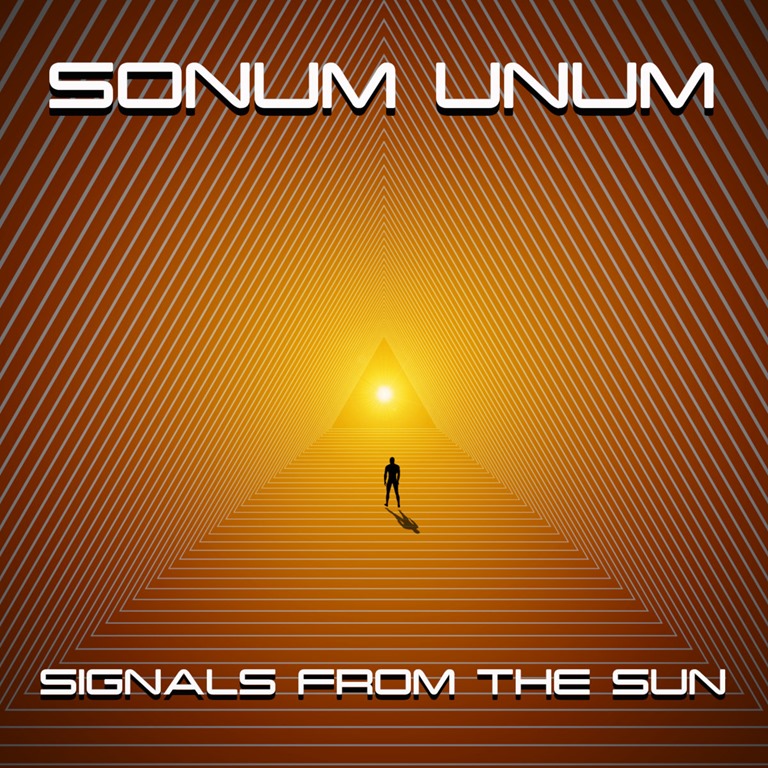
This s the backdrop for the debut album for electronic rock duo, Sonum Unum. Signals From The Sun is, according to their bio, ‘heavily inspired by 80s and 90s eras electronic and synth-pop music. Dark and ominous tones, ambient textures and thumping beats abound while lush, layered vocals soar to epic and cinematic tiers.’

It’s tempting to slide into the easy commentary which maintains the narrative of this being an album with a retro vibe, primarily because it’s true: it’s an amalgamation of two decades of electropop slickly delivered to draw in elements from specific acts, but the entire oeuvre of the timespan, from bolder darker grooves of gothier European dark electro, but also incorporating elements of the emerging case sound, with the quickfire drum builds that pace the way for expansive choruses.

There are times where it feels as if their approach to appropriation – essentially pulping and compressing the very essence of the forms into smooth perfection – results in songs that are simply too generic to have a real sense of character or identity. But then, plough through myriad releases from that time span from acts who either bubbled under or who only had a hit or two, and you’ll find the same is true of the rest of the album tracks. Moreover, to return to the question of sounding ‘retro’ – it feels like an increasingly obsolete concept. More or less everything draws on something precursive, and most of what is starting to be a recycling of a recycling. It’s no longer a case of a seventies or eighties or nineties revival: all of these things now exist in perpetuity. Retro is the new contemporary, and I can’t decide of the seeping sadness I experience listening to it is because of the emotive quality of the songs – which are tightly crafted more than gripping, to the point that they slip past without for a second taking hold – or if it’s because of the way they evoke so much that entirely removed from the songs themselves.

Signals From The Sun is Mr Mister to Depeche Mode via Eurythmics and A-Ha and Nine Inch Nails and Bastille. Slick, anthemic, it seeps nostalgia and has immense commercial appeal if it finds its way to the right channels and outlets.

AA

a3576946630_10

ant-zen – 16th September 2023

Christopher Nosnbor

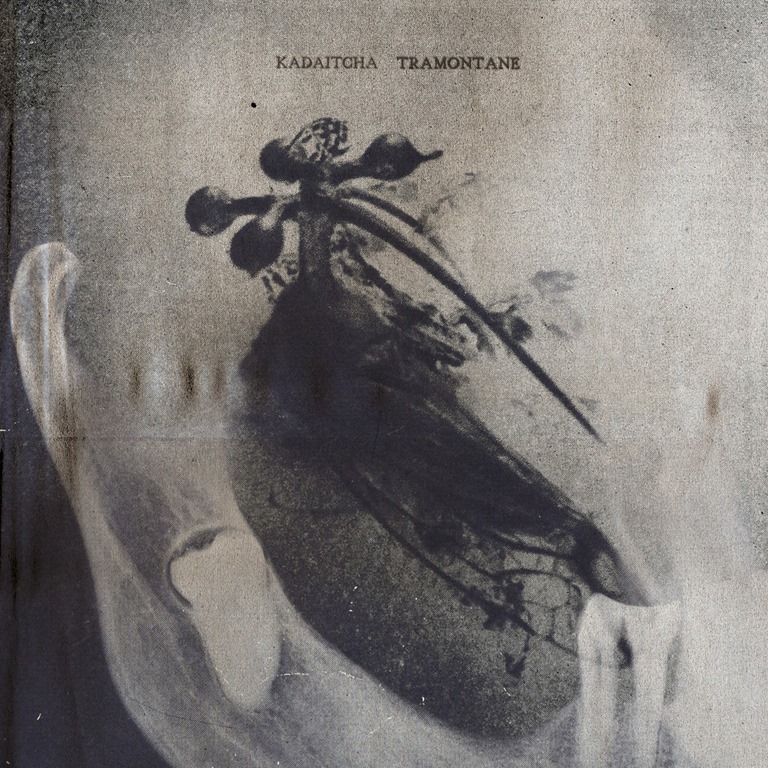
Four years on from Tar, Ukrainian industrial duo Kadaitcha, consisting of Andrii Kozhukhar and Yurii Samson, have overcome many, many challenges to deliver album number five, in the form of Tramontane.

The tracks which appeared on their limited lathe-cut single last year do not appear here, and this is admirable: singles so often tend to be used as launchpads for albums, and it was particularly common in the 80s and 90s that albums would sell on the basis of a couple of singles, but would have next to no other decent tracks. In the days before streaming, this was something that was easy to get away with, since the only way of hearing the album was by buying it, which you would do based on the singles. But then, the risk could be reduced by taking punts using your half price or free options through Britanna Music, or similar. The advent of streaming hasn’t really improved things, though, because now, at least in mainstream circles, the album is essentially obsolete.

But outside the mainstream, the album is thriving, and artists are pushing the format now that the constraints and limitations of physical formats aren’t necessarily dictatorial in determining duration, and there are infinite options for exploration. The single wasn’t so much of a stop-gap release as a standalone document of a period in time. But the key point here is that Tramontane is very much an album, and a work to be approached as such. The notes which accompany the release are almost hallucinatory – not quite Burroughs cut-ups, but fragmented, non-linear, and they serve to articulate the essence of the music contained here. Stylistically, it’s tight and cogent, and there’s a flow to it, too, which begins with the appropriately-titled ‘Intro’, which is precisely that – a short instrumental intro piece which paves the way for the ten heavyweight cuts which follow. But within that coherence, what Tramontane offers is a work which really goes all-out to disrupt and unsettle.

‘Niello’ draws primarily on the sound and style of earlier industrial music, the electronic pioneers of the late 70s and early 80s, the likes of DAF and Cabaret Voltaire, but with its distorted, menacing vocals, there’s an element of the later evolutions of industrial which emerged in the mid 80s. It seems to be that there are very different understandings of industrial, and while Al Jourgensen may be a huge fan of William Burroughs and the music that formed the body of the first wave of Industrial music, namely Throbbing Gristle and also the wild tape loop works of Foetus and the heavy percussion of Test Dept, it’s industrial metal and harsh post-NIN electronica which have come to become synonymous with industrial latterly.

On Tramontane, Kadaitcha have brought the two forms, old and new, together, and the result is discordant, noisy, difficult. And these are its selling points. It feels like a guided tour through the most challenging aspects of Industrial music through its evolution and history.

‘Knife’ is a sparse, oppressive low-end throb pinned down by a dull, thudding, muffled-sounding beat, over which twitching electrical streams flash and flow while monotone vocals are unsettlingly detached. The percussion really dominates on the tempestuous ‘Liars’ and any and all references to Einstürzende Neubauten are entirely appropriate. It’s a thunderous, dense racket where the low end really stands to the fore, but it’s tame in comparison to the dark ‘Offering’: even when it drives out as a heavy and insistent bass riff, it feels unfinished, undercomposed. Yet therein lies its success: it feels organic, and nothing is overdone.

The mangled noise and droning distorted vocal on ‘Fossil’ is pure Throbbing Gristle, a barrelling barrage of blitzkrieg laser synth bleeps and a whole mess of midrange and lower end distortion and dirt, churning, discordant, the monotone vocals almost buried in the tempest of overloading unpleasantness, and ‘Seeds’ is similarly unpleasant and uncomfortable, everything going all out on overdrive.

It all comes together on ‘Insight’: beginning as a gentle, spacious, mellow post-rock guitar-led piece, it soon erupts into a mess of overload akin to Metal Machine Music, only with drums and sinister vocals. It’s got the lot, and as the album enters its final stages, it seems to consolidate the elements of the previous tracks to punch even harder, with the percussion harder, the grinding morass denser and darker.

Perhaps a reflection of the circumstances in which it was created, perhaps a reflection of the times in the world at large, Tramontane is heavy and at times harrowing. The lyrics may not be decipherable for the most part, but the mood requires no translation or interpretation, and Tramontane will crush your soul.

AA

a3600121745_10

Sonoscopia sonos – 15th September 2023

Christopher Nosnibor

Trobollowitsch is certainly a name that sticks in the mind, and so it was that back in 2016, I penned a piece on Roha by the Austrian Sound artist. At the time, I struggled to really connect with his conceptual compositions.

This latest offering finds him working with Thomas Rohrer, a Swiss musician, who ‘plays the rabeca, (a Brazilian fiddle), and soprano saxophone’, and whose work ‘is largely based on free improvisation, but also engages in a dialogue with traditional Brazilian music.’

The collaboration between the pair actually began in 2017, but they didn’t begin work on any recording until January 2021, when, according to the bio, ‘they embarked on a duo project combining Trobollowitsch’s rotating mechanical turntables equipped with branches, wood and dried leaves with Rohrer’s soprano saxophone, small objects and rabeca… During their collaborative recording process, renowned singer Sainkho Namtchylak from the Tuva region contributed her captivating, versatile voice, which she has used to great effect in a variety of musical genres, including jazz and electronic music.’

Given their diverse background and different modes off operation, this collaboration was always going to be not only eclectic, but a collision of diversity, and the question would always be to what extent do they compliment one another, or otherwise pull in such different directions as to render the work more of a competition than a collaboration? Given that both Trobollowitsch and Rohrer are credited with ‘recomposition’ of several tracks, there’s a sense that this effort is defined, if not by friction as such, then by differences, and a working method which entails dissecting and reconstructing, a restlessness and dissatisfaction.

Crackling static and an electrical hum are the key elements of the title track. It’s somehow both spacious and claustrophobic, and as the sounds rumble and echo around, you feel like your shut right in a small room – more like a walk-in cupboard – as the serrated buzzes and grinding drilling sounds fizz and fret all around, gradually warping and twisting, sometimes ballooning and others shrivelling. Suddenly, I jump. Is that my phone vibrating? No, it’s not, it’s a vibration puncturing the third wall, something that sounds like it’s in the room rather than coming from the speakers, which are by now emanating shrill blasts of feedback.

The sound collaging on this album is something else, leaping into the three-dimensional at the most unexpected moments, and the sounds and textures constantly shifting to forge a work which is more than music, more than sound: this is something you feel, not emotionally or cerebrally, but physically: it makes your fingers tingle and move in a quest to grapple with the details. Sometimes those details are dark and demonic, as on the unsettling ‘Ovaa’. The vocals are rasping, gasping subterranean, subhuman grunts and gasps, strangled cackles that cark and bleat and croak and claw up from the sewers. It’s pure horror.

There are undulating, stuttering low-end bumps, there are hornets the size of buzzards as your car breaks down and your skull slowly crumbles as your brain struggles to process everything… anything. This is a soundtrack to something that simply shouldn’t exist; it’s aa soundtrack to your worst nightmares, as yet unimagined.

The production, the panning, the listening experience of interacting with this in the way it’s intended is terrifying and surprising in equal measure, as tweets and twitters occupy the same space as thunderous thumps and insectoid skitters and metallic scrapes and… there’s a lot going on, and it all makes for in accumulate and intense and really rather difficult sort set – not really of compositions, but largely incoherent audio processes. The accumulations and stacking of the sounds is by no means truly random or haphazard, but their assemblage creates as experience which feels altogether more happenstance. It’s a scrappy, scratchy, stop-start mangling of noise, and at times, it’s scary and strange, at other’s it’s ominous and eerie. It’s unsettling, and difficult to absorb. It’s incredible.

sonos#26A_front