Archive for the ‘Albums’ Category

7th September – Pelagic Records

Christopher Nosnibor

The absence of a question mark renders the album’s title a statement rather than a question. But there are no questions about Årabrot: 17 years and a substantial catalogue into their career, the Norwegian noise-rock act are still noisy, challenging, and kicking ass. But according to the blurb accompanying the release, ‘there is more than noise rock to Årabrot’s formula. “I’m interested in feelings, either the very silent or the extremely noisy”, band leader Kjetil Nernes comments. “I don’t care about what’s in between, the middle of the road isn’t my thing. The bible fits really well with that. I’m using it thematically all of the time.”

But mostly it’s noisy, and that’s a good thing. That said, Who Do You Love is very much an album of extremes – which is only fitting of a record that references transgressive French poet Comte de Lautréamont in its opening song, which crashes in with a heavy psych-hued riff – but the guitars are dominant and angular throughout. It’s loud, and it’s insistent. The guitars are choppy, the vocals whooping, sneery, and bathed in reverb and flange. It’s kinda punky, but equally kinda post punk, and kinda no-wave noisy.

With chunky, punky riffs carved out against solid rhythms that are by turn loping, square and stop/start, plus shouty vocals throughout the course of the album – ‘Warning’ is exemplary: Who Do You Love brings the attack in spadesful – but then again, it’s an album with textures, layers. ‘Sons and Daughters’ is a spacious country / shoegaze hybrid that’s both beautiful and captivating.

‘Pygmalion’ marks a real shift, it’s ethereal humming drones fittering like butterflies, while the sinewy ‘Simmerman’ is different again, a howling, roaring country rock stomp replete with anguished vocals that run ragged and pull Biblical anguish over devils and pain from the depths. It’s bold, theatrical, immense, but more importantly, it’s got a gut pull that’s emotionally engaging in its snarling delivery. Elsewhere ‘Look Daggers’ plunges deeper and darker still, meshing together the heavy grey nihilism and insistent throb of Killing Joke with a thicker, more metal delivery and hints of latter-day Swans in its insistent, throbbing groove that’s demolished in a roaring rage. ‘A Sacrifice’ begin with a heavy trudge, and the stop/start riffage, coupled with the blank monotone vocals – heavily treated – call to mind Foetus – before the buzzsaw riff breaks in after a couple of minutes.

Closer ‘Uniform of a Killer’ is all about the ebb and flow, the surge and fall, the climax and drop, not to mention all the drama. It again calls to mind later-day Swans, as well as pacing in hints of Bauhaus and myriad others, but compresses 15-minute builds to a minute or so, the track lasting only six and a half minutes. Never mind the length, check the density! ‘Uniform of a Killer’ certainly packs the density, and the intensity, too.

Who Do You Love is a BIG album. Not so much in duration (although it’s big enough) but in every other sense. It has depth, it has range. It has force. It has intensity, and it has tunes. Really, you couldn’t ask for more.

AA

Årabrot – Who Do You Love

Aagoo Records / REV. Lab Records

21 September 2018

Christopher Nosnibor

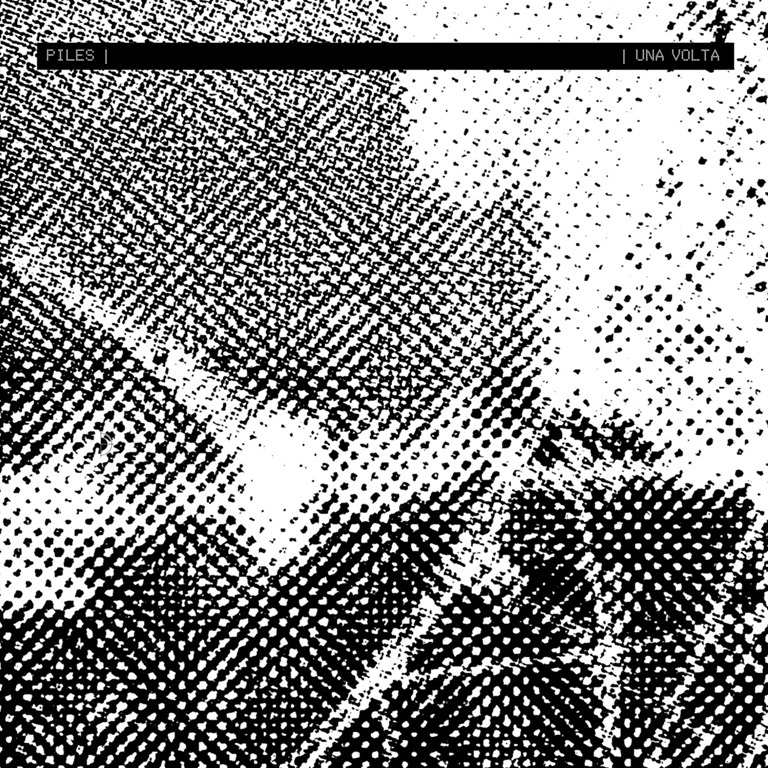
French experimental drum outfit PILES are pitched as being for fans of Neu!, Can, Trans Am, Hanged Up, Beak>, Captain Beefheart, Edgar Varese, This Heat. Yes, a drum trio. Which means dominant percussion, and then some. But hen, anyone who’s heard Japanese drum combo Voordoms will appreciate the power of percussion as a dominant aspect.

And so we have eight tracks, all as drummy as it gets. Often, drums with little more than drones and hums or hovering feedback or sustain. But all the rhythmic complexity under the sun, with two or even three kits battering away.

‘Decay’ comes in hard and heavy, the opening bars reminiscent of The Fall’s ‘Muzoweri’s Daughter’ before dispersing in myriad directions as it spills directly into ‘Ulrick’. And just as things threaten to get tedious, ‘Mort aux cons’ brings new dimensions of noise, with sludgy bass and cacophonous guitar accentuating a different range of racket. And yes, it is a racket, albeit a good one.

‘Kraut and Piles’, the first of three nine-minuters eschews accessibility in favour of relentless pudding beats and extraneous noise. In venturing into industrial territory amidst shards of feedback, PILES reach a point at which the overall weight of the album tips into that of the heavy: there’s not much let-up here as the beats pound away at the cranium and the raring noise buidls to the sound of a jet engine preparing for take-off. The sonic barrage of ‘Kraut and ‘Piles’ is immediately followed by nine minutes of cut-up sound arrangements and drone with ‘Material in US’, which creates a very different atmosphere and casts the band in a very different light, even when things burst into an explosion of drums neat the end – because this about so much more than drumming. Then again, ‘Chambre d’echo;’ suddenly erupts from brooding atmospherics into a barrage of beats before shifting into a tinkling lullaby, which is pleasant if incongruous.

The final composition, ‘Marie’ is another nine-minute-plus beast that begins with ominous drones and conjures an unsettling darkness for its duration and culminates in a weird sort of semi-climax on a cymbal that rings out to eternity.

Una Volta confounds expectations and forges a strange mix of percussive assault and ambience, and does so through unexpected forms. It makes for an album that isn’t remotely what you might expect, but is all the better for it.

AA

PILES – Una Volta

Pak40 – Crusts

Posted: 14 September 2018 in Albums
Tags: , , , , , , ,

5th September 2018

Christopher Nosnibor

I practically creamed my pants over Pak40’s live show in York, just up the road from my house, a few months back. I didn’t exactly know what to make of them, which was part of the appeal – they didn’t conform to any one style, but they were bloody good. And noisy. And now they follow up their live show with a ‘live in the studio’ EP. ‘Crusts’ was recorded live in one take, and released it the same day, the band leaving it ‘warts and all for a loud, crunchy listening experience’. And that’s exactly wat they deliver. While this type of set-up rarely works for guitar-orientated bands, York-based Pak40 prove the exception to the rule with their crossover style and experimental, big-noise approach.

A spot of research reveals that the 7.5 cm Pak 40 (7,5 cm Panzerabwehrkanone 40) was ‘a German 75 millimetre anti-tank gun developed in 1939-1941 by Rheinmetall and used during the Second World War.’ It figures: these guys sound like total war, a sonic blitzkrieg from beginning to end.

The first track, ‘Sausage Roll,’ is formed around a rolling, strolling, trippy psychedelic bass groove. It’s hefty, trudging, a mid-temp sludge-soaked stoner workout that emerges from a hum of feedback before it slows and speeds and grunts and grinds and powers along with some packed-in density. And when it slows to early Melvins pace around two-thirds in, it truly sounds like a Sabbath 45 played at 33. If you’re expecting some laddish indie jauntiness based on the title, with its connotations of working-class / low salaried simple pleasures in Gregg’s and various greasy spoons, think again.

It bleeds through a humming sustain into the ten-minute centrepiece ‘Rain’, a slow-burner that begins quietly with more strolling bass and some understated percussion. It goes nowhere fast, and in fact doesn’t do anything fast, burrowing deeper into darker depths as the squirming bass worms its way down, down, down. Time stalls: it trickles along and tapers away.

‘Pyramid’ hits a powerful groove and also calls to mind That Fucking Tank, only gnarlier, messier, more downtuned and bottom-heavy. In concluding with a definite finale, the EP has the shape of an inverted bell-curve in terms of the listening experience, and Pak40’s obtuse approach is something to be admired.

AA

Pak40 - Crusts

SVS Records

Christopher Nosnibor

This one positively explodes in the opening moments: a swirling black hole of noise that eviscerates the senses and assaults the eardrums with such ferocious force and excruciating volume that it feels like the end. The actual, living end.

Yet again, I find myself scrabbling for the press release while questioning the benefit of being told about the origins, mechanics or methodology behind the work. And so I find myself research one-line, and discover the visuals which accompany the audio, and begin to develop a real appreciation of the multimedia vision of Lukas Rehm, operating as Lybes Dimem for the purpose of the Syncleft Chronem project, a work which celebrates error and explores the relationship between various input stimuli and cognitive frictions. It’s complex, but can be readily reduced to the experience itself.

The visuals intensify the experience, but the sonic experience alone is intense and brings a blistering sensory overload. Syncleft Chronem is loud, attacking. Uncomfortable. Placing the album isn’t easy but then, it’s not entirely necessary: as a barrage of electronic noise with beats, it’s a work which assaults the listener from the outset with its sonic intensity, a combination of dense walls of noise, abrasive textures and tones, and sheer volume. How do you feel? I’m feeling tense, but excited, exhilarated as this racket assails my ears. Rehm clearly isn’t making music to win friends or influence people. He’s generating sound to see what it sounds like and how it feels.

Sometimes, you simply don’t need words. On ‘Saas’, there are threats of dancefloor-friendly beats for an industrial night as booming 4/4 bass thumps start up – but they halt abruptly, and the whole thing fractures and fragments. Everything halts before it hits a stride, everything jolts and shudders. Everything is too loud to hear properly.

Syncleft Chronem is brutal, in the sense that it affords no respite, no pause for thought. And nor should there be an apology for this: as with the best art, its intensity sustains fever pitch, is uncomfortable, feeds tension to the point of perspiration and palpitation. It hurts.

AA

LYBES-DIMEM_SYNCLEFT-CHRONEM-front-cover-woskin

Forking Paths PF0013 – 13th July 2018

Christopher Nosnibor

With a title referencing William Gibson’s Neuromancer, L5 finds maker of experimental minimal electronica New Tendencies explore an array of textures and tones with a real focus on the space around the sound. Sonar bleeps warp into whistles of feedback, consumed by underwater monsters and sonic detonations that linger like a heavy cloud of smoke, dust and rubble.

The shifts aren’t always delicate, the tones rarely gentle: the listener is dragged and hurled from high to low, abrasive, serrated edges sharpening the intensity of upper frequencies juxtaposed with rumbling, muffled lower ranges which pull at the pit of the stomach. The album’s ten compositions – which, given the way New Tendencies pull, drag, stretch, twist, and manipulate, are perhaps as well described as decompositions – are affecting by virtue of the physicality of the sound, and this in turn provokes a cerebral response.

Ordinarily, I find abstraction gives rise to an analytical rather than emotive response, but L5 is a different beast. The beats and rhythms – however diversely they manifest (and they range from distorted, crunching poundings to EQ-tweaked whiplash cracks via blasts of static) – create a sense of structure, however vague, a frame on which to hang the infinite varieties of noise, and thus draw the pieces back from absolute abstraction. And with the combination of structure and sonic impact comes a different type of response. Instead of seeking to analyse the technique, L5 invites the listener to feel the effects. And the effect becomes emotional on a certain level: the rippling waves and vibrations test the tension levels, pushing the up and pulling them down. Tense, intense, and at the very least, interesting.

AA

New Tendencies – L5

Neurot – 28th September 2018

Christopher Nosnibor

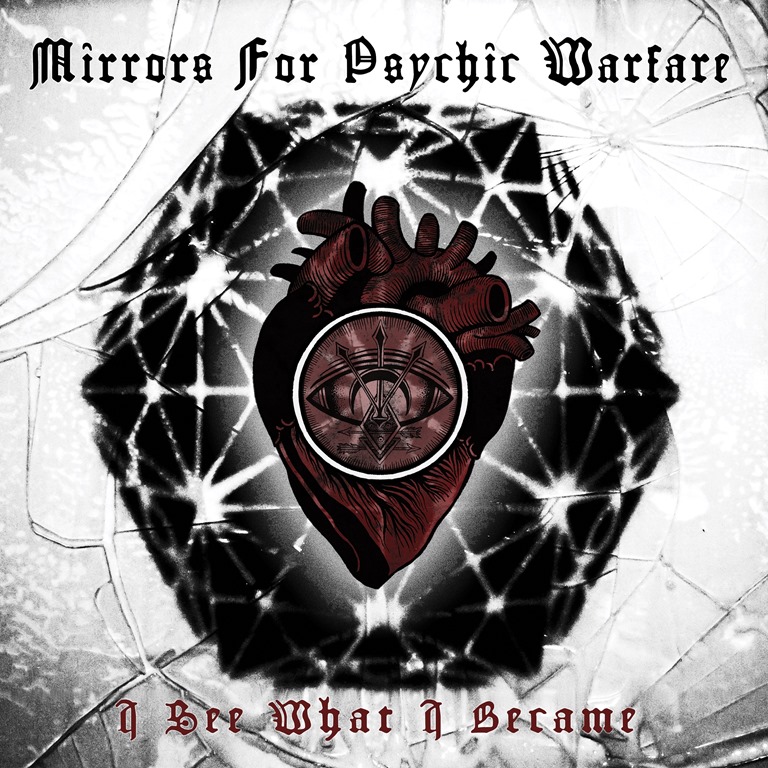
As you’d perhaps expect from an industrial collaboration between Neurosis’ Scott Kelly and Sanford Parker (Buried at Sea), Mirrors for Psychic Warfare’s second album is heavy on the atmospherics. It’s also simply heavy. The songs themselves are considerably more concise than on the eponymous debut – there are no sprawling ten-minuters here, but they pack an oppressive density. I’ve probably arrived at I See What I Became in the wrong frame of mind: it’s one of those days where the spirits are low and you now that listening to Joy Division or Faith by The Cure would be a bad idea.

I See What I Became isn’t a mopey album. It’s just bleak.

It’s a slow build to start: ‘Animal Coffins’ shifts incrementally from rumbling dark ambience through a slow pulsing beat to a swirling, rhythmic throb of noise with exotic, mystical voices. With processed beats that click and thud, ‘Tomb Puncher’ is a crawling dirge dragged from the techno end of industrial, and is highly reminiscent of PIG, while elsewhere there’s the heavy wheeze of JG Thirlwell at his more experimental. The mechanised rhythms are cold, clinical, but also distorted and decaying at the edges, adding a layer of dirt to a sound that’s encrusted in filth and dried viscera. A sense of the grand and the epic inform the delivery and the production.

There’s an eastern flavour to ‘Rats in the Alley’ with its snaking motifs and frenetic percussion, but it’s partly submerged in a swathe of extraneous noise. There’s a lot of extraneous noise on I See What I Became: the instrumentation melts together so as to render the individual sources indistinguishable. Everything congeals into a heavy-grained sonic wall. On ‘Crooked Teeth’, things crank up slowly, picking up pace, volume and claustrophobic intensity before collapsing into a synapse-flickering cacophony of discord.

What does this articulate, emotionally, psychologically? Far from the clarity of enlightenment the title may suggests, I See What I Became conveys a wallowing in darkness and a sense of resignation, hollowed out, nihilistic. It’s a heavy grind that wears you down, and by the end, I feel drained. I see nothing, and I feel numb.

AA

931335

Sargent House – 14th September 2018

Christopher Nosnibor

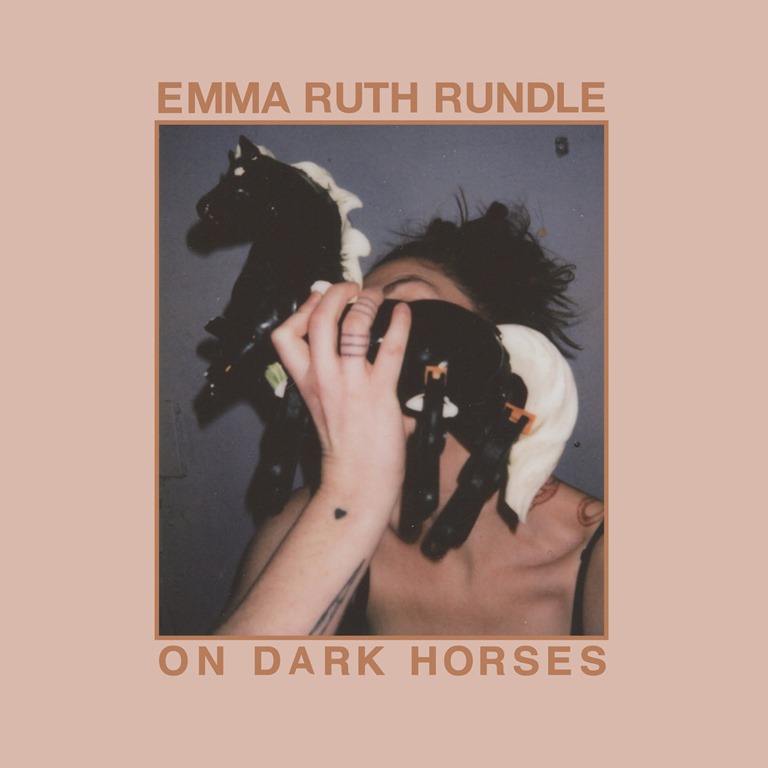
Emma Ruth Rundle clearly likes to keep busy. Her career with The Nocturnes crossed over with her joining The Red Sparowes, which in turn crossed with the start of her solo career, which saw the release of ambient effort Electric Guitar: One in 2011, while also embarking with another band in the form of the trio Marriages in 2012. Her sprawling and rapidly-expanding discography is a document of a restless soul, and a spirit who’s not only creative but incapable of taking respite.

On Dark Horses may only contain eight songs, and none of significant length (the album clocks in around the forty-two minute mark, harking back to the days of an album fitting snugly, ideally with just a little breathing room, on one side of a C90 cassette), but it’s got range and intensity.

There are dark, haunting undertones to the dramatic shades cast on opener ‘Fever Dreams’, which bursts loud from between delicate wisps of fractal guitar before taking a more languid and wistful turn around the mid-point. ‘This shit is real,’ she agitates at one point. This shit is also graceful and expansive and powerful. ‘Control’ – one of the album’s real standouts – begins gently, mellow, chiming guitar that’s a post-rock country crossover providing the backdrop to Emma’s lilting country-infused vocals… before the deluge of distortion crashes in like a landslide. And keep on crashing, thunderously, a massive mess of sludgy weight, burying the drums an all but the cymbals, mashing and crashing away in the background. ‘Darkhorse’, too, builds gradually, chimes gracefully, and roars like thunder beneath a delicate vocal.

While any Chelsea Wolfe comparisons have merit, particularly in relation to the front end of the album, Emma Ruth Rundle brings a whole slew of other aspects to the party on On Dark Horses there’s a heavy folk element, both to the music and in Emma’s voice. Then again, post-rock passages yield to blistering crescendos that also draw on the most explosively soaring shoegaze.

When she takes it downtempo, as on ‘Races’, there are deep, sad guitar notes which arc, aquiver with reverb. And across the album, the sense of depth conveyed by the rich textures and the three-dimensional fullness of the sound render the songs with a rare physicality and intensity.

AA

Emma Ruth Rundle – On Dark Horses

Karl Records – 31st August 2018

Christopher Nosnibor

Christ, what am I listening to? Everything all at once. This is one of those ‘plucked at random from the cascading pile of CD I haven’t listened to but should probably give a go’ releases. Because one downside of doing the whole music reviewing thing is that there’s a certain pressure – albeit self-made – to push certain releases to the fore, be it on account of the act, the label, the PR, or a certain sense of duty. Other times, it’s simply the pull of fascination. But because there are only so many hours in the day, especially after the drudge of the 9-5 (Or, thanks to flexible working, my preferred 6:50-3:40), I can only cover so many releases. But the randoms are often the ones that keep me going. Discovering new music – and when the whim takes, the weirder the better – is what makes this worthwhile. And this is weird, alright: it’s a live reinterpretation of the first collaboration between Turkish free jazzers Konstrukt and Keiji Haino, who’s apparently a Japanese avant-garde / noise icon, which surfaced in December last year. Here, the original album’s six tracks have been melted down into two longform works, namely ‘Into A Trap Surely So Elaborately Laid Air Has Entered And A Splendid, Beautiful Monster Now Swims’ and ‘Excess + Analysis / Courage =’, continuing the equational theme of the original.

Brooding strings scrape before suddenly breaking out into manic jig with electronic squawks and bleeps. Then, atop the ever-wilder percussion, shrieking sax erupts. There’s a segment that’s a bit jazz, a bit math, a bit Joujouka about a third of the way through, and I’m dazed, bewildered. Crashing cymbals fly in all directions – not literally, although it’s possible – and then it goes quiet for a bit. Whistles. Some people in the audience are evidently quite appreciative. By the end of the first side – some 20 minutes of cacophonous, tempestuous dissonance that builds – and builds, and builds – to a wild crescendo that ultimately and inevitably collapses into a ragged ending.

Side two, the open-ended ‘Excess + Analysis / Courage =’ is a lot sparser, more spaced, and spacey, less frenetic and more atmospheric. Its all about the scratchy angles: at one point, things take a turn for the off-kilter jazz-funk oddity, before clanging Gang of Four style guitars collide with wandering progginess and parping horns drifting though howls of multi-faceted feedback.

Toe-tapping easy jazz it isn’t, but then again, nor is it all-out free-noise, despite the occasional riotous bursts. And where does it leave us once it’s all tapered to silence? Bewildered, in no-man’s land, agog, and confused. Whether or not the intent, it’s a fair response and better than shrugging and switching off. It’s seriously niche, but it explores new avenues, and for that alone, the existence of A Philosophy Warping, Little by Little That Way Ahead Lies a Quagmire (Live) is justified.

AA

Konstrukt

Southern Lord – 24th August 2018

James Wells

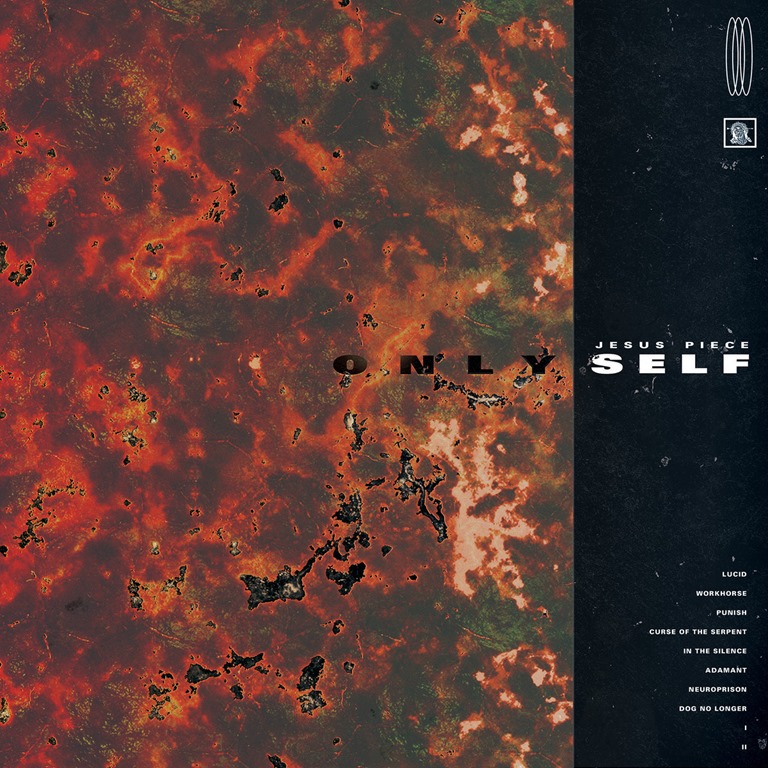
According to their biography, Jesus Piece ‘have left craters in their path over recent years, quickly developing a reputation as one of the heaviest, most uncompromising acts both on record and on the stage. With the brutal grooves of Y2K-era metallic hardcore at the core, the band also incorporates elements of noise, ominous tones, and haunting atmospheres into their dynamic songwriting.’

‘Lucid’ batters its way out to herald the album’s arrival: rapid pedal-work on the kick drum powers the cutty, hard-edged guitar. Its brutal, regimented, industrial, grinding like early Godflesh, but with snarled, guttural vocals spitting and howling nihilistic dismantlements of personal struggle and loss, racism, police brutality, and social and political injustice.

They distil all of these violent emotions and unspeakabe rage into short explosive packages: the majority of the songs on here are under three minutes. ‘Punish’ brings a sinewy, spectral lead guitar to twist its way over the grinding churn of the rhythm section, hinting at the dynamics of early Pitchshifter.

When they do slow things down, as on the stripped-back ‘In the Silence’ where the bass wanders and weaves a murky path and haunting chorused guitar notes rise from the swamp quite unexpectedly to create an unsettling atmosphere, the impact remains undiminished, and for the most part, it’s the heavy pummelling that defines Only Self.

The album concludes with an immense shift in style and sound in the form of a pair of contrasting but complimentary atmospheric pieces titled by number only: ‘I’ something of a monastic, ritual ambience to it, as voices echo in the mist before the doomy guitars break through in a slow landslide on ‘II’.

With such variations and deviations from the template of howling aggression and blind fury, Only Self stands apart from so many albums of its ilk, and reveal Jesus Piece to be capable of more than just endless anger – although they’ve got the rage in spades, and bring it to devastating effect on what is one hell of a debut.

AA

Jesus Piece – Only Self