Archive for the ‘Albums’ Category

7th December 2018

Christopher Nosnibor

Irk have been tearing it up on the Leeds scene for a little while now, and are a band at the epicentre of the DIY scene surrounding the CHUNK studio / rehearsal room space, tucked away in a rough and dilapidated industrial estate a good half-hour hike out of the city centre. It’s an apposite location for the thriving creative community of metal / sludge / noise bands.

The band describe themselves as ‘three polite wee rascals…. who make ugly, angular, noise-fused, math rock, consisting of drums, bass, and vocals’, and as such, belong to the city’s now well-established post-millennium tradition for producing seriously noisy bands who are bloody good. Many have fallen by the wayside, but a lineage of acts that includes Blacklisters, Hawk Eyes, That Fucking Tank, Holy State, Hora Douse, and yes, we’ll throw in Pulled Apart by Horses here, because they’re hardy quiet or genteel, speaks for itself.

I’ve caught them live a few times in the last couple of years, and have even performed on the same bill, exchanging books with front man Jack (I think Life Pervert is ace; I’ve no idea what he makes of The Rage Monologues). I’ve never once been disappointed by their performances, and it’s a reasonable expectation that Recipes from the Bible should sound like the work of a band who’ve been honing their material live for some time.

But by Christ, Irk really give it some here, and forge the title: this is a sonic concoction that cooks up the most unholy racket going. ‘I Bleed Horses’ begins with a howl and a barrage of frenetic drums and a mass of guitar racket. While you’re picking your jaw off the floor, check that tight, compressed, springy bass sound and the churning throb it produces that just about holds the whole squalling mess of discord together. Less that two and a half minutes in duration, the bled horses bleed out into ‘Life Changing Porno’, another unintelligible blizzard of noise that’s so chaotic it’s not always entirely clear if they’re all playing the same song: the tempo lurches unpredictably and whole racket collides in a spectacularly ugly explosion.

The seven-minute ‘The Observatory’ built around a choppy, cyclical riff reminiscent of Bleach era Nirvana, and again, it’s the menacing bass that dominates as they forge a suffocatingly claustrophobic density. It’s about as close to respite as it gets: with the only other exception being the verses of the lumbering ‘The Healer’, Recipes from the Bible is relentless in its screaming mania and brutal angles. The wild sax action on ‘You’re My Germ’ could be free jazz in another context, but here, it just adds another level of crazed hysteria to the mix.

Taking obvious cues from Shellac and Blacklisters, it’s a set of sharp-cornered, serrated brutality that stops, starts, shudders, judders, jolts and jerks – but unlike Shellac, Jack’s raving, gibbering, rabid vocals break free from the tight limits of the coiled tension of math-rock tropes and instead cut loose and careen into the wild noise of The Jesus Lizard. Snarling, howling, drawling and slavering, there’s something cracked, even psychotic. In combination, it’s a tense, intense set that sound deranged, dangerous: at times, its really quite uncomfortable. That’s a clear measure of success.

Chances are, reviews will tout this as being ‘uncompromising’, not least of all on account of it’s being self-produced by the band (of course). But Recipes from the Bible goes beyond that. Way beyond. It harnesses the full force of the band: so often, bands draft in producers only for the sound to be polished, slickened, rendered overtly ‘studio’. By keeping things in-house, they’ve retained the rawness, and the sheer velocity and unbridled power that defined them, and the sonic vision remains unadulterated. And beneath all of distortion and dirt, the ragged, jagged edges and the feel of a style of playing that’s loose and uncontained, there’s a remarkable and deceptive degree of precision.

It’s hard to find fault with Recipes from the Bible: there isn’t a weak track or an ounce of fat. There’s no filler, and no slack. There’s not a moment of tameness or timidity, and instead, they bring top-level ferocity and relentless fury, and the chances are you’ll be hard-pushed to find a better noise-rock album this year.

AA

Irk - Recipes

Gizeh Records – 23rd November 2018

Christopher Nosnibor

In their biography, FOUDRE! are described as ‘a telluric drone quartet composed of Frédéric D. Oberland (Oiseaux-Tempête, Le Réveil des Tropiques, The Rustle Of The Stars, FareWell Poetry), Romain Barbot (Saåad), Grégory Buffier (Saåad, Autrenoir) and Paul Régimbeau (Mondkopf, Autrenoir, Extreme Precautions) who meet punctually for sessions of ritual improvisation where they invoke noise and drone and the deities of chaos.’

I’m not sure I’m entirely convinced by the punctual meetings given my years of experience dealing with musicians, but no matter: KAMI , the collective’s fourth album, was improvised and recorded live at Le Rex de Toulouse while supporting French doom metal band Monarch! at their tenth anniversary show.

The five compositions which comprise the forty-five minute set are expansive, as much is sonic breadth and depth as duration, and as such, extend in all directions as the players audibly feed off one another intuitively to create immense aural vistas which are every bit as enigmatic as the titles, all of which reference Shinto gods.

Opening with a twelve-minute epic that evolves from dark, low rumblings and sparse down-tuned scraping string-like drones, tremulous, haunting, and hesitant, to a simmering ripple of waves that forge a subtle but sustained crescendo, ‘Raijin’ very much evokes images and sensations worthy of a god of lightning, thunder, and storms. ‘Raijin’ indeed.

Disembodied voices rise wordlessly, ghostly and demonic, against a heartbeat-pulsing beat. It’s all about the atmosphere, and it’s all about the slow burn. And because the shifts are so gradual, so slight, the listener’s attention becomes focused on the detail, attenuated to the tonality and texture of the individual sounds.

‘Ame-no-Uzume’ inches toward a pulsating hybrid of ambience and chillwave, with the eerie motifs of ‘Tubular Bells’ twisting into a funnel of extraneous noise against a stammering beat, and the pieces all segue seamlessly into one another, with an elongated organ drone rising up on ‘Fujin’ (the Japanese god of the wind) before the final piece, ‘Hachiman’, opens with a heavy, head-crushing crescendo of discord. All hell breaks lose amidst feedback and screeds of extraneous noise as the volume intensifies and things get ugly. Unintelligible screams and barks, distorted and inhuman, tear the air across a clattering industrial beat and blistering electronics forging a whorl of sound in a brutal blast reminiscent of Prurient.

If ever the opening and conclusion of a set emerged leagues apart, KAMI carves a most extreme trajectory, taking the full duration of the set to build from a whisper to a terrifying scream. And it’s this arc that makes KAMI so accomplished and so exciting.

More often than not, live recordings leave the impression that something is missing, and that being distant from the actual event is to subtract from the experience. KAMI is different, in that the hi-fidelity recording means it doesn’t sound like a live album, and sitting back while the sound in all its detail emanates from the speakers affords the opportunity to take in those details, the layers, the textures, and to reflect in a way that the in-the-moment experience simply cannot allow. This highlights the differences of the way we as an audience receive and experience different media and modes of delivery; the in-the-moment intensity may offer catharsis, instant gratification, and a sense of immediate impact, but when there is this much to absorb, the distance and benefit of time to reflect and repeat is invaluable. And KAMI is a work to digest at leisure.

AA

FOUDRE! – KAMI 神

Cleopatra Records – 9th November 2018

Christopher Nosnibor

Pitched as for vans of \the KVB, The Sisters of Mercy, and My Bloody Valentine amongst others, Holygram caught my attention with the second single from Modern Cults, ‘A Faction’. The album’s focus are the themes of big cities, alienation, anonymity, hope and memories, love and identity. It’s in keeping with the band’s post-punk leanings that there’s a darker hue cast over even the lighter themes – you’re more likely to get the anguish of heartbreak and the pull of distance than the bliss of perfection in the musings on love here.

There’s something solid and traditional in an album containing ten tracks – by which I mean it takes me back to me back to my 80s childhood, and if ever a contemporary album had ‘80s vintage’ written all over it, it’s Modern Cults. It begins with dark industrial rumbling, heavy atmospherics, and an insistent bass drumbeat low in the mix, before the title track breaks the levee with a thunder of sequenced tom rolls, churning, distorted bass and heavily chorused guitars. The vocals are half-lost in a wash of reverb and the spiralling guitars and stammering c.84 mechanoid drums.

It’s that drum sound – the massive splash that takes an eternity to decay as it thumps along in a cavern of echo, along with the reverberating vocals and everything else that swirls into a rippling sonic bath – that defines the album. But then, there’s a dense gauze of overt ‘production’ that covers every inch of Modern Cults that may be anything but modern, but is executed with such precision it’s hardly a point of contention.

Modern Cults is loud, deep, resonant, pitched into a swirling vortex void of noise that channels pain and anguish and the banging of one’s head against a wall. ‘Dead Channel Skies’ presents a full-tilt wall of shimmering noise, pure shoegaze but with everything post-punk circa 83 thrown in. then again, other 80s tropes are thrown into the mix: ‘She’s Like the Sun’ comes on like a shoegaze Gary Numan and there’s a deep sense of the retro that permeates every inch of this release. And yet somehow, it rises above the parts to yield a greater sum, arguably despite itself.

AA

Holygram - Modern

28th September 2018

Christopher Nosnibor

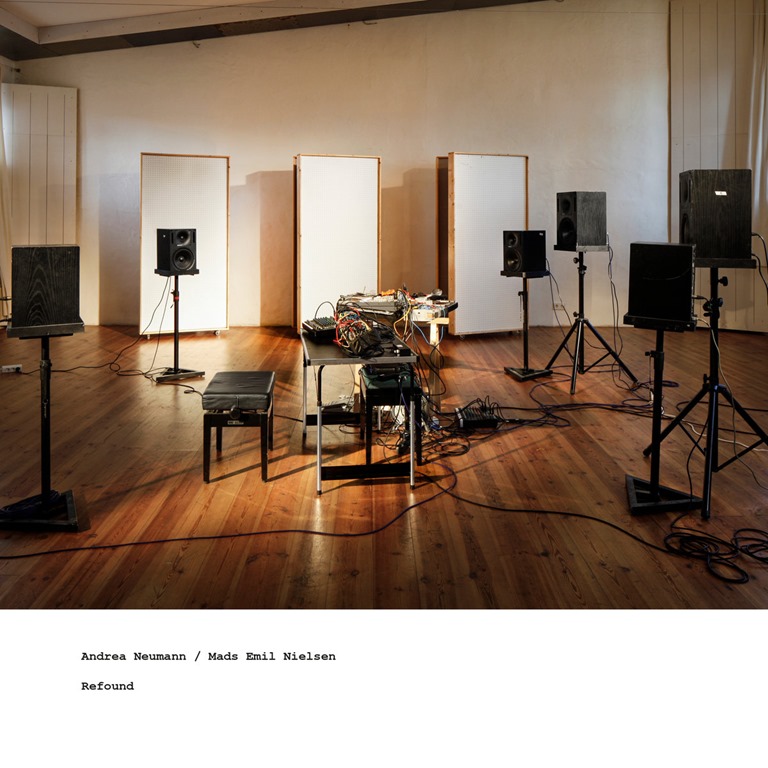
Disjointed. Fragmentary. Fractured. Sketchy. Incomplete. The ten pieces (untitled other than by numbers 1-10) on Refound are vague in structure, minimal in form, non-linear in trajectory, and often unclear in purpose. Hardly surprising, given that they emerged from improvisational sessions made with electronics and ‘inside piano’. I’m not sure if this is becoming increasingly popular as an instrument of choice in avant-garde circles, or I’m simply evermore aware of its use in the making of experimental music since I received a copy of Reinhold Freidl’s immense Inside Piano double CD four years ago.

But what are they doing to the piano to achieve these sounds? Precisely what ‘inside piano’ actually is remains is shade unclear. The liner notes to Friedl’s debut solo which effectively set the mark for and so defined the technique, is spectacularly oblique and vague in its definition of ‘inside piano’: The good old grand piano plays aggressive noise attacks, choir-like symphonic movements, strange complex sound fibrillations, sometimes lighting up single prepared piano notes, juxtaposed with the tremendous bass of the nearly three-meter long strings…

For Refound, Neumann and Neilsen’s improvised experimentations were remixed and realigned by the two contributing artists themselves to create something… well something. I was tempted to say that conveyed their joint vision, although what that vision is, assuming there was a vision beyond seeing what their playing together produced, is unclear.

Refound manifests as a succession of tweets, hisses, rumbles… skittering, bird-like treble and yawning mid-tone feedback. There’s no discernible trajectory, the pieces break off and stand separately from one another as a series of sketches rather than as a coherent, cohesive album.


AA


Andrea Neumann Mads Emil Nielsen – Refound

2nd November 2018

Christopher Nosnibor

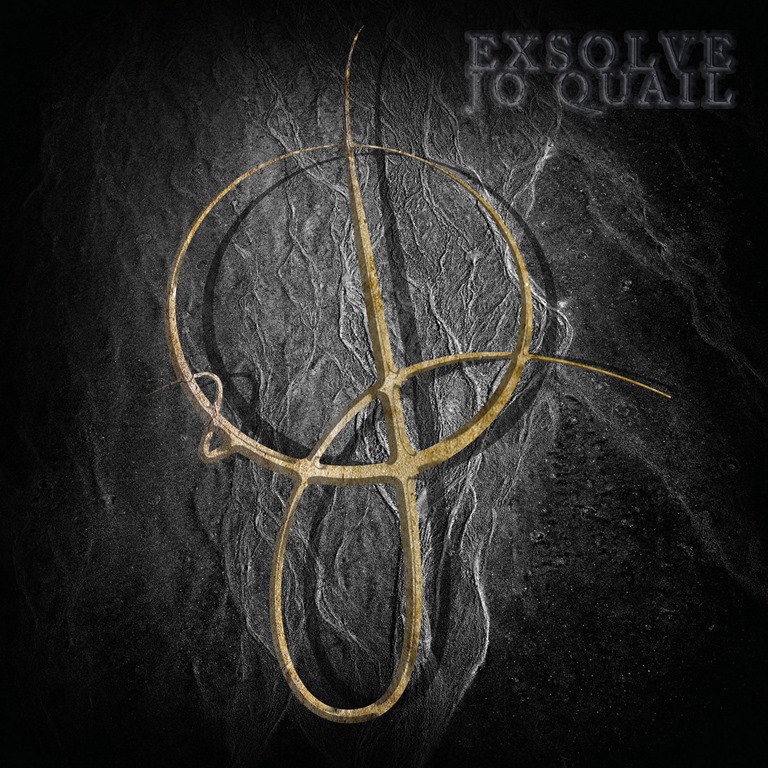
Not so long ago, I began a review by saying I felt sorry for Jo Quail. That was no slight on her musical output, but an observation that as incredible performer, it seemed wrong that she should be put on so early that her set was a third of the way through before the doors even opened. On listening to Exsolve, my awe of her musicianship is greater than ever, which only renders the injustice worse. To get the point: this is an incredible album, a triumph of musicianship and vision in tandem to create something not only greater than the sum of the parts, but beyond imagination.

The accompanying press release informs us that Exsolve is comprised of three tracks, with each one being broken down in to sections and movements across 45 minutes. Mastered by James Griffiths, himself a film composer, there is, the blurb notes, an almost symphonic quality to the album. This is true, but there is so, so much more, much of which defies conventional description: it speaks not to the domain of words, but the psyche.

The bald facts are that Jo Quail plays cello, and does so through a raft of effects to create sounds a million light years removed from the cello, looping bangs on the mic to create thunderous percussion and conjuring eerie moans and grating tempests of sound. The result is pretty heavy, not to mention intense.

Eight minutes into ‘Forge of Two Forms’, Quail is conjuring blistering interweaving prog riffs against a swirling backdrop of noise and thumping beats. Epic doesn’t come close. It sounds like a full band pushing into new realms of enormity, and with a blistering distorted picked motif that sounds like a crisply-executed lead guitar line, it’s easy to forget just how this music is made. Twelve minutes in, it’s tapered down to nothing and actually sounds like subdued, low-tempo orchestral dronings, creeping atmospherics and melancholy. The transitions are seamless, invisible, but definite as the extended soundworks transition between segments.

‘Mandrel Cantus’ sends sonar echoes across low, slow ripples of mellow cadences, and somehow builds into a monumental emulation of a guitar solo of monumental proportions. How did this happen? From whence did this immense sound emerge?

Everything coalesces on the third and final composition, ‘Causleens Wheel’ which begins delicately, builds to a rolling, roiling, sustained crescendo. It’s a multi-faceted composition, tonally rich and also moving, not just by force but by expression.

Powerful, graceful, compelling and dramatic, Exsolve is a remarkable album of rare quality.

AA

Jo Quail - Exsolve

Supernatural Cat – 8th November 2018

Christopher Nosnibor

Eerie strings streak across an ominous low-end throb, transitioning expansive vaporous drones with serrated edges on the album’s first track, ‘Hefy Lamarr’ and it sets the ominous tone for the rest of the album, as piano notes hover in rarefied atmospheres with a slow-decaying sustain carried on a cold, dry echo. It’s minimal, sparse, dislocated, disconnected. There are no sonic hugs on Doppeleben. It’s an album that builds walls, force-fields. Nihilism, isolation, introspection… these are the moods of Doppeleben.

So what do we know about the artist? The Mon is the solo name of a new project by Urlo, best known as the lead vocalist, bass and synth player in heavy trio Ufomammut. Doppelleben is The Mon’s debut album, and, as the press release notes, ‘where Ufomammut create mind-expanding, heavy psychedelic, almost other-dimensional sounds, The Mon by comparison is far more intimate, looking inward, as Urlo explores and examines his inner most thoughts through music.’

And Doppeleben is very much an introspective set, which is far from heavy and as such, it is very much a departure from Urlo’s work with Ufomammut. But heavy is relative, and ‘Relics’ still manages to come on like Ministry on ketamine, with distorted, raw-throated vocals hollering out against a backdrop of plodding percussion and howling feedback. It’s representative, but it isn’t: the atmosphere of Doppeleben recreates the claustrophobic intensity of The Cure’s Pornography, while drawing on the stark discomfort that pervaded the alternative scene circa 1979-1983.

Fear chords ripple, delicate notes drip and drop over slow surges of dark density which rise and swell through interminable sustain. ‘Hate One I Hate’ sounds like Earth circa 1992 covering ‘One Hundred Years’ by The Cure. Devoid of percussion, the glacial synths and thick, crawling guitars coalesce for create a spine-stiffening tension.

With clattering metallic drums battering away in the background, ‘Blut’ grinds hard at a bleak post-punk seam, landing somewhere between Movement era New Order and Downward Spiral era NIN, with hints of Visage’s ‘Fade to Grey’ thrown in for good measure. It’s compellingly intense and makes optimal use of a handful of chords in a descending sequence.

In contrast, ‘Her’ offers a bend of shoegaze haze and Bauhaus-hued art rock as it washes blank curtains of synth and monotone vocals before a cascade of slide guitar swerves its way into the mix. And yet never could it be as far removed from country as the notes bend and glide and slide to fade.

Low, slow, and dark, there’s an oppressive density to Doppeleben which is hard to define and even harder to let go.

AA

The Mon – Doppeleben

Karl Records – 21st September 2018

James Wells

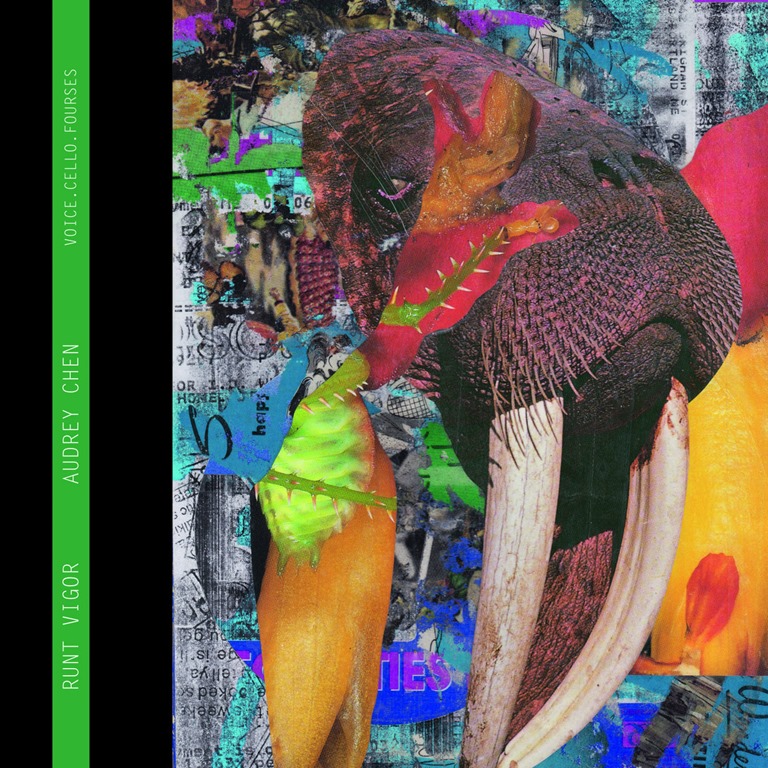
There’s nothing like an intriguing title, or one which ignites the imagination to generate interest in an album – or maybe it’s just me. And so the curious selection of the pairing of ‘runt’ with ‘vigor’ piqued my interest: the idea and image of a runt, smaller and weaker than nature intended, flailing feebly but energetically… Paired with the collage cover art, it all points toward something far-out – and I’m not mistaken or misled.

Now, I’m more accustomed and adjusted to music from the furthest, most extreme fringes, avant-gardism that redefines bizarre, inexplicable, outré. Chen is so outré that she’s bypassed me for all of 30 years, which includes a prodigious solo career punctuated by myriad collaborations that accounts for the last 15.

While much of her output is centred around cello, voice, and analogue electronics, vocal explorations have been at the heart of her most recent works including this four-track offering, which contains forty minutes of gulps, clicks, gargles and hums all emanating from the mouth and throat. Ululations and stuttering glottal stops create the very fabric of the compositions and occupy the foreground, along with asthmatic, gasping breaths, atonal, meandering whistles, and strangulation sounds.

While it’s more overtly ‘musical’ than Mike Patton’s Adult Themes for Voice which stands by way of a relatively obvious comparison, it’s not less disturbing or strange, and it’s impossible to distinguish the origins of all of the sounds here; the whispering hums, drones and wavering gusts of wind are, I would assume, as likely to originate from the artist’s body as from an instrument. It’s the way in which everything is rendered obscure, the voice twisted, pushed, pulled, distorted and disfigured beyond all recognition from the conventional utterances of speech, song, or even flatulence, which is so awestriking.

You may hear albums which share the same sonic territory, but I’d wager none will have been created in the same way.

AA

Audrey Chan

Front & Follow – 26th October 2016

Christopher Nosnibor

In the last property I rented, I suffered an infestation of moths. It may sound amusing, but it wasn’t. the larvae of said moths devoured chunks of carpet under the bed and in various other places in the bedroom and other spots on the first floor. So, moths, it transpires, consume wool-based material and require Rentokil to halt them. Miraculously, I did get my full deposit back, but was reminded that one sold never trust a creature made of dust. Yes, I fear moths. A body that powders on contact with a heavy blow presents a curious intangibility, a lack of substance, a sense of not really existing in the corporeal world.

This presumably isn’t the kind of scene the title of Sone Institute’s latest offering is attempting to convey, and the connotations of rust are more of slow decay and dilapidation, in keeping with the dark, damp crevices moths are more conventionally associated with inhabiting.

Sone Institute describes Where Moth and Rust Consume, his first new material in six years, as his ‘pop album’, but don’t expect to hear it on R1 any time soon, or ever. 6Music’s Gideon Coe has championed previous work, describing it as ‘delightfully strange,’ which seems a fair summation. Sone Institute inhabits the world of the unheimlich, the uncanny, and this is no more true than of the landscape conjured by these compositions.

Sparse, stuttering beats and even sparser synths provide the backdrop to robotic, monotone vocals on the first track, ‘Only I Exist’. ‘Your wretched anus / discoloured teeth / Tree-trunk legs / A dog on a leash…’ The obtuse, fragmented lyrics follow the trajectory that charts a line from Dada and Surrealism to Burroughs’ cut-up technique. The images layer up, juxtaposed and disconnected, and the album gradually unfurls, pushing a clinical 80s Eurodisco sound that’s centred around crisp, mechanoid beats. It’s the beats that are perhaps the most overtly ‘pop’ aspect of the album, bringing a consistency of structure and solidity to the compositions rarely found in Sone Institute’s work.

‘The Devil Works in ASDA’ judders and thumps along, building a conspicuously linear groove while exploring the dynamics of dance music, and if ‘What’s Bred in the Bone’ pulls back the intensity and volume a couple of notches, the spacious bump and bleep, built around a framework of drum machine evokes the spirit of retro-futurism. Analogue synths modulate rhythmic pulses, but stark angularity and minimal production values give the atmosphere a cold, detached edge.

‘Winter is Dead’ marks something of a departure, venturing into more ambient and also rather weirder territory with its woozy vocals and warping sonic backdrop. And there are times when it all goes Kraftwerk / Tangerine Dream, and if truth be told, that’s pretty cool. There’s creeping tension in the undulating drones and whispered vocal slivers of ‘Oblique Messages’, and the dark heart of Where Moth and Rust Consume beats on through to the final fragments of the crackle-scratched sketch of a closer that is ‘God Bless You’.

We need more of this: and with this release, we get more, lots more. Front & Follow don’t only deliver leftfield albums of quality, but are now, it seems, on a mission to go above and beyond in providing value for money with a bonus album: this release also marks the first volume of a new series on Front & Follow – Ex Post Facto – which, the label explains, ‘seeks to celebrate experimental electronic music in all its forms, showcasing new work and old, exploring the relationship between the current and the past, how they influence and shape each other and our experiences of them.’ And so, a collection of tracks from the Sone Institute archive, including remixes and previously unreleased music offers eighteen tracks lifted from the far reaches of Sone Institute’s career. Not only is it extremely interesting in its own right, but it resents a wide-ranging representation of the sample-riven, string-soaked and analogue-based wibble-tastic work of Sone Institute through the years. It’s not all comfortable, easy -listening, exploring equally areas of introspective elegy, discord, and smooth, rippling mellowness: the chanking ‘4 (Version 3)’ is a discordant guitar blitz over a creepy Theremin / organ shiver, while the stammering robotix vocal loop on ‘Dark Forest – Silver Sea’ hardy says ‘easy to get on with’: and the context is all.

Still reeling from Where Moth and Rust Consume, Past and Spared is the very definition of headfuck not because it’s especially intense, but simply because it is. And that’s cool. Just be prepared.

AA

Sone Institute – Where Moth and Rust Consume

Bearsuit Records – 20th October 2018

Christopher Nosnibor

The word ‘poets’ would seem to imply plural, but according to the accompanying text, The Moth Poets is the work of Edinburgh based musician, Billy Gilbert, who’s played in a few local indie bands and released a split LP with Japanese artist / musician Swamp Sounds, whose presence has graced this site on a previous Bearsuit release, as well as featuring in another Bearsuit-released act, Anata Wa Sukkari Tsukarete Shimai (AWSTS). Yes, once again, Bearsuit is the conduit for all of this uber-fringe creative activity from around the world, but mostly bringing Scotland and Japan together.

Doll is a magnificently idiosyncratic work which assimilates a broad range of styles and influences, and as a consequence, belongs nowhere specific or readily positionable. The eight compositions, in their titles and in their sound, convey a certain sci-fi undercurrent, infused with a twist of surrealism and plain abstraction.

‘A Hole in the Mothship’ starts the album with some spaced-out, opiate prog, a mellow, reverby instrumental which plods ponderously before trickling into the title track, where the drum machine kicks into overdrive and the soporific guitar mutates into a wildly meandering fizz of fuzz that sounds like J Mascis on a cocktail of acid and amphetamine. And this provides the backdrop for a vocal that sits somewhere between shoegaze and slacker, pitched low in the mix so as to render the lyrics indistinct. It doesn’t detract, and if anything, adds to the blurred, lo-fi layering that imbues the song with a hazy, dreamy quality.

As the title suggests, ‘Mothship Song’ is something of a companion to the opener, laying some echo-heavy guitar picking over a muffled heartbeat drum track and low, buzzing synth bass before going a different kind of strange, sort of like the into to ‘Frenz’ by The Fall, but with an oriental vibe and some synth stylings stolen from Stereolab.

‘Orange Peel Teeth’ goes grainy ambient with slanted analogue synth scrapes slipping through the rumbling atmospherics at skewed angles, and it’s this juxtaposition of tones and textures which provides Dolls with a much-needed sense of cohesion. Whether it’s prog, pop, or ambient – all performed with an experimental edge and an overt rejection of convention – Gilbert renders the pieces with an attention to less-obvious details that’s nothing if not distinctive.

All of the album’s disparate elements coalesce on the noodly, whacky weirdo wig-out of ‘Someone Put a Time Bomb in My Submarine’, the vintage drum machine sound – thudding bass, whip-crack treble top end snare – bounce it along nicely and keep things pinned to a groove that’s consistent and insistent. And because of this, however far-out The Moth Poets go, here’s always something to cling to. This is perhaps the key to keeping Doll on the right side of the line of (in)accessibility, and the reason it’s ultimately a success.

AA

The Moth Poets – Doll

LP/DL Rekem Records REKEM12/Fragment Factory FRAG45

Christopher Nosnibor

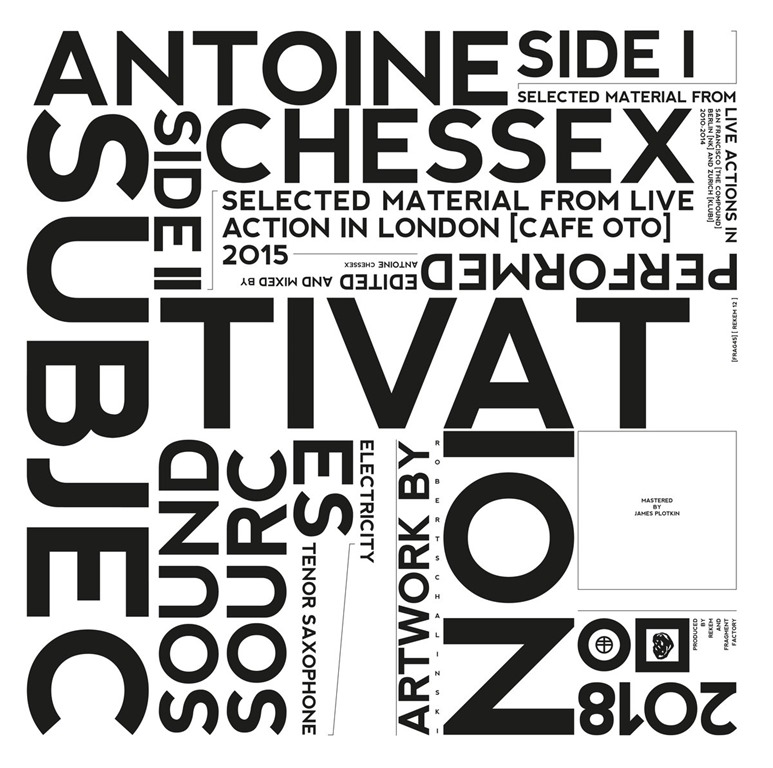
The music this album contains causes as much of a sense of overload as the cover art, with its perpendicular textual tessellations. Chessex has long pushed the tenor sax beyond the realms of conventional jazz or even overt compositional forms, and Subjectivation, a collection of live actions (a term also used by the notorious noisemakers Whitehouse). Side 1 takes pieces recorded in San Francisco, Berlin, and Zurich between 2010 and 2014, while Side 2 documents a performance at London’s Café Oto in 2015.

It’s all about the low frequencies at the front-end: the album begins with earth-moving, bowel churning bass tones that grind and snarl maliciously, and this, coupled with the conveyance of extreme volume places this in Sunn O))) territory, the atmosphere of creeping doom delivered at a pace and volume that punish slowly. And gradually – although not nearly so gradually – things intensify as additional layers of volume and frequency are added. The accompanying text describes it as a ‘field of distortion’, but it doesn’t come close. It seems unfeasible that such a raging sonic force could be sustained for any time, let alone increase, but increase it does, until there is nothing but a dense wall of obliterative noise. It’s impossible to discern there being any saxophone – or indeed any music instrument – in this vast, screaming whorl. I’m staring at the speakers in awe, wondering just how much sound they can actually carry, and moreover, how much sound could be created in pure physical terms. Seven minutes into the fourteen-minute sonic barrage – something akin to standing next to an RAF Vulcan preparing for take-off without earplugs or protective clothing, I’m wondering if my skull might not implode and my brain before the end. It’s a perverse pleasure the pain of this sonic assault provides.

The London side is less full-on, although it would surely be difficult to be more full-on. Nevertheless, it matches Side 1 in terms of intensity. It builds quickly from an irritated hornet buzz into an infinite echo, a thousand horns, honking in unison to create a rippling reverberation of sound. Some time around themed-point, the sustained crescendo fades, leaving eardrum-fluttering feedback notes, shrilly quivering on and on, before the air is rent with shards of scraping industrial noise, the grinding of metal on metal on a fast, rotational plane. It’s as if with each shift, Chessex introduces a pitch and tone more unbearable than the one before. The tiny sound that hangs where there should be silence mimics tinnitus, creating one final torture in the album’s closing seconds. There’s something cruel – and unquestionably uncompromising – about the way Chessex executes his sonic blitzkriegs, and for that, I admire him enormously.

AA

Chessex