Archive for April, 2026

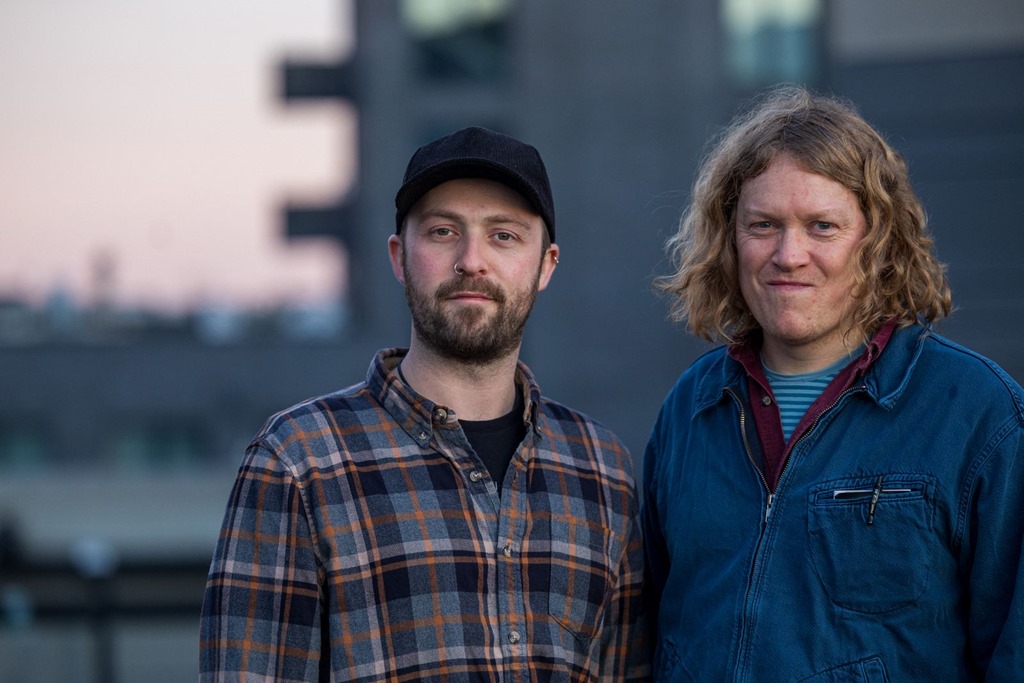
The experimental electronic duo of Craig Dunsmuir and Sandro Perri reimagines an Arthur Russell track, with longtime Russell collaborator Peter Zummo guesting on trombone.

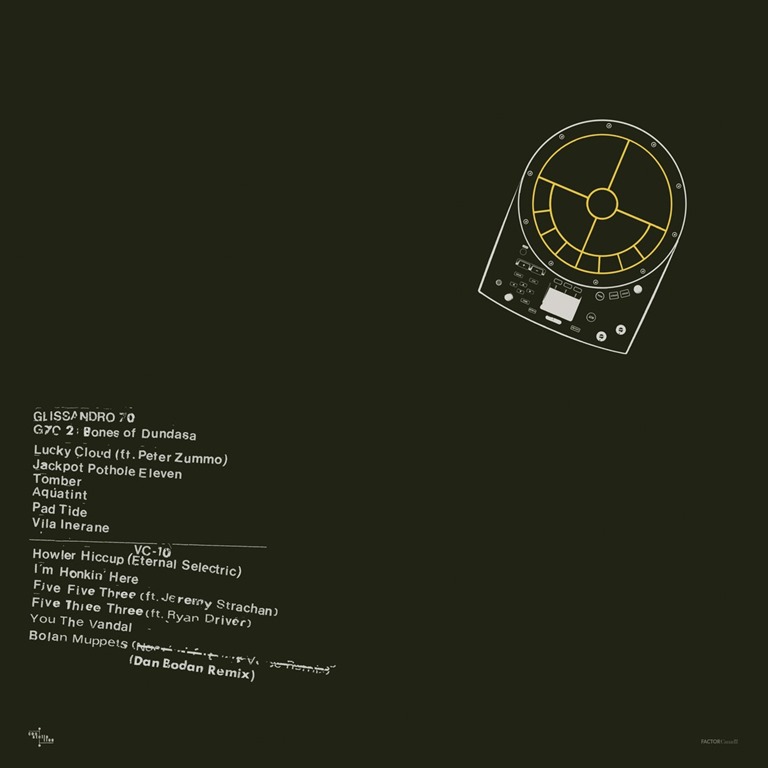
‘Lucky Cloud’ is the opening song on forthcoming album G70 2: Bones Of Dundasa out 1st May 2026.

“’Lucky Cloud’ serves to bookend the whole project in a way, since it’s the new album’s first recording chronologically (from 2004) while also containing its last recorded element (Peter Zummo’s trombone from 2025), making it simultaneously the oldest and newest track on the record. Thanks and gratitude to Peter for his key contribution, to Steve Knutson for approving our cover of the song, and to Tom Lee and the estate, memory and legacy of Arthur Russell. – Glissandro 70

Hear ‘Lucky Cloud’ here:

AA

20 years after its self-titled debut, Glissandro 70’s follow-up straddles the Album and Archive: a decade’s worth of recordings that were abandoned, lost in a hard drive mishap, recovered in the form of rough stereo mixes, reappraised with the balm of time, and restored/augmented/enhanced to forge a captivating new LP.

Glissandro 70 is the collaboration between Toronto musicians Craig Dunsmuir and Sandro Perri, first formed in 2003 as a mostly studio-based project of longform loop-based guitar and rhythm-driven experimentation. An eponymous (and up to this point singular) album appeared on Constellation in 2006, blending Dunsmuir’s afrobeat and Perri’s tropicalia influences through their shared reverence for Arthur Russell and dub techno.

While continuing to collaborate musically and foster a close friendship, Dunsmuir and Perri largely went on to helm their own projects thereafter. Perri transitioned from his ambient electronic sobriquet Polmo Polpo to a string of acclaimed singer-songwriter albums under his own name starting in 2007, with a side quest as ringmaster for the inscrutably leftfield electronic collaborations of Off World. Meanwhile Dunsmuir continued deploying lo-fi loops and broken beat iconoclasm as Guitarkestra and Kanada 70 (whose early tracks provided the original birthplace of Glissandro 70) and intermittent live concert Hi-life extravaganzas at the head of Toronto’s Dun-Dun Band (recently captured on wax for the first time by Ansible Editions).

G70 2: Bones of Dundasa arrives 20 years after the Glissandro 70 debut as an archival celebration, revisiting unfinished paths and re-assembling rediscovered recordings originally made between 2005 and 2015. The new album includes a cover of Arthur Russell’s ‘Lucky Cloud’ (augmented by Peter Zummo’s trombone newly recorded in 2025) and a previously unreleased Dan Bodan remix of the debut record’s ‘Bolan Muppets’, alongside 10 tracks of sample- and beat-based vignettes brimming with skittish guile.

AA

Glis

Romac Puncture Repairs – 17th March 2026

Christopher Nosnibor

While Rad Berms is Abigail Snail’s debut release, the musicians behind the name have a notable pedigree, and between them, drummer Will Glaser and guitarist Stef Kett (aka Stef Ketteringham) have numerous credits on record – and for Rad Berms, they’ve joined by ‘master reed player’ James Allsopp, who gets pretty much everywhere. And for this debut release, Abigail Snail’s promise ‘avant-rock, improv, and experimental soul groove into an adventurous collection of tender, boundary-pushing songs’.

After the gentlest of intros, the first track, ‘Show Breaking to Waves’ slowly derails before the arrival of the vocals. The vibe is rather Crooked Rain Crooked Rain era Pavement, only wonkier and significantly jazzier, particularly in the percussion. The instrumentation is sparse, the feel a shade folky… then ‘Soul Berm’, the first of the ‘Berms’ crashes in, wonky, scratchy, discordant. Counterpart ‘Space Berm’ sounds like a noisy tuning up / tuning down outtake, a chaotic interlude of jarring noise rock propelled by a jazz percussion break.

I remember reading a review of Trumans Water in the early 90s describing them as ‘the real Pavement’. Well, I think it was Trumans Water and not Archers of Loaf. AoL were kinda tame indie: Trumans Water were demented and truly off-kilter, taking the lo-fi slacker thing to a level that incorporated the weirdness of Captain Beefheart, down to the sounding like they were playing different songs in different keys and tempos, but all at the same time. This is a circuitous detour to arrive at the conclusion that Abigail Snail call to mind – well, my kind, which is a vault of disorganised musical files and recollections – Trumans Water, only even further out and significantly jazzier.

I appreciate that with every sentence, I’m probably alienating another ten per cent of potential listeners here. It’s probably for the best. Rad Berms is as niche as it is crazy, and it’s better to shed the ones who won’t dig it early on and save everyone the hassle of rubbing the wrong way.

A deranged howl of ‘Goooooood grief / That’s one batshit brief / Good Lord / How much shit can one chick hoard?’ delivered atop clanging, angular guitar that’s pure Shellac announces the arrival of single cut ‘Good Grief’, a raw, riotous blast of jazz and math-rock melded together. They explore a host of genre forms across Rad Berms, but manage to incorporate some jazziness into most of them.

‘Attach Bayonets’ lands in the middle of the album and brings with it a mellow psychedelic / desert rock feel, like a slacker retake of America’s ‘Horse with No Name’, only with bongos and woodwind – and no obvious hook. But you get the idea. Hopefully. It’s kinda trippy, primarily acoustic, and at times quite discordant. Laden with melody and harmonies, ‘Stay Rad’ is mellow, too, a quintessential slice of slacker indie with a dash of 60s psychedelia. There’s daftness in abundance here, and at times it does seem as if they’re just testing us as listeners while they dick about showing off their technical prowess and simply demonstrating their capacity to make music that doesn’t conform to any convention, and the fact they’re too cool for choruses, or even structure anyone can follow. ‘Yikes Bikes’ and ‘Bitchin’ Chords’ in particular feel indulgent, albeit in quite different ways. But why not? There was a time when bands would say in interviews that they made music for themselves, and it was a bonus if anyone else liked it. It became a cliché, and of course most of them were lying. But now? Who makes music to get rich and famous? Some, for sure, but the majority appreciate now that it’s not going to happen, so they may as well make music to please themselves – which is precisely what Abigail Snail are doing here. There’s no way you could accuse these guys of being predictable or lacking range.

AA

AA

nwV8XyiQ

At a time when artificial intelligence is increasingly influencing the music industry, Hannah Schneider chooses a different path. On her new album In This Room, she insists on presence, intuition, and craftsmanship as the driving forces behind the creation of her music.

For several years, Hannah Schneider has explored what kind of music emerges in specific spaces and special connections—music in dialogue with other artworks or unique environments. Her new album was written and recorded during a two-month residency at Thorvaldsens Museum in Copenhagen. Here, the museum’s historic rooms became the setting for a musical experiment in which both composition and recording were turned upside down: what happens when acoustic instruments become the starting point for modern electronic music?

The result is a sensuous encounter between organic soundscapes, electronic beats, and strong melodies, a living dialogue between human and machine. Several fellow artists joined Hannah Schneider during the recording sessions at the museum, most notably Christian Balvig (When Saints Go Machine, and arranger for BBC proms), with whom she also produced the album and was a key creative collaborator. Danish poet Peter-Clement Woetmann, who has previously worked with Hannah Schneider, co-wrote lyrics for several of the songs with her. Other contributing artists include Caspar Clausen (Efterklang) and Øyunn on drums and vocals.

Hannah’s latest release from the album is a video for ‘The Apartment’, a track which describes the four walls of home closing in around you, as if the oxygen is being sucked out of you. Arranged almost as an old chamber music piece, but with an intense electronic soundscape behind, the track creates a sense of disorientation and bewilderment.

On the video, director Nanna Tange said, “I’ve always been very inspired by Hannah’s music, which in my opinion has a special cinematic quality, and the track ‘The Apartment’ quickly created images in my mind. That simultaneously fragile and grand atmosphere… and the space it gives to let the narrative and the visuals go a little wild.”

AA

With In This Room, Hannah Schneider continues to cement her position as a singular voice within Nordic electronic music, where introspection, poetry, and enveloping production merge into a quiet yet powerful expression. Her music has been used extensively in film, television and on some of the largest theater stages in Scandinavia and in 2023 and 2024 she won the Danish composers prize ‘Carl Prisen’ together with the contemporary jazz duo Kaleiido, for her work on the albums Elements and Places.

As a composer, Hannah has made a strong mark in recent years, where she has created commissioned pieces for several of the essential museums and cultural institutions across Denmark. From 2016-2021, Hannah was one half of the electronic duo AyOwA, which combine noise pop with vapor wave and melodies with improvisation in an atmospheric and playful mix with a dreamy approach. The duo has received international attention with their remarkable sound and songs, and has received airplay from  BBC Radio 1 and BBC 6 Music and press acclaim from The Huffington Post, Wonderland Magazine and  Clash to name a few. Hannah is also part of the performance duo Philip | Schneider, who create seductive spatial compositions and installations that engage the body, ears and mind. Starting from the voice, they explore the boundaries between the worlds of music and art.

AA

W3EdNQgw

Pitter-patter, splinter-splatter, RAVAGED BY THE YETI unleash the monstrous opening track ‘Vengeance in Fur’ taken from their forthcoming new full-length Snowbound Horror as the first advance single in the shape of a gory music video.

The release date of the sophomore full-length by the frost-bitten death metal trio has been set into stone for July 10, 2026.

AA

Ravaged By The Yeti comment: “The opening track of Snowbound Horror delivers classic midtempo death metal riffage that gives way to an old school heavy groove”, frontman Rogga Johansson explains. “Punishing vocals put the icing on ‘Vengeance in Fur’. This is a headbanger through and through.”

AA

4942fb28-c87e-7d6c-01ca-75dee9bc1566

Fysisk Format – 17th April 2026

Christopher Nosnibor

King Midas’ seventh studio album is the follow-up to their 2013 Norwegian Grammy-winning album Rosso. Thirteen years is quite the gap, although such spans between albums seem rather less unusual now than in times past. In the 90s, the five-year gap between The Stone Roses eponymous debut and The Second Coming was painted by the press as being longer than an eternity, but the last few years have seen acts return after absences of a quarter century or more. The fact is that many artists find themselves mired in life and in dayjobs, because it’s hard to make a living from music alone, and regular work and raising families aren’t compatible with creative work, and especially not with touring. And so it is that Blanco arrives more than thirty years after their first EP, From the Pipeline, in 1994, and notably, they report that the band ‘still consists of founding members Ando Woltmann and Per Vigmostad who share production credit for Blanco’.

According to the duo, ‘Blanco is an album about emptiness, partly inspired by Belgian cold wave music from the early 1980s, by the noise cancellation in BMW models from 2023/24, by New Age as a concept, by the novel Lanzarote by French author Michel Houellebecq, by Rod Stewart on his way home from a party in the wee hours and by yuppie Scandinavian businessmen in all forms’.

This seems like a curious array of inspirations, and I can only comment with any real knowledge on Michel Houellebecq’s typically bleak and anticlimactic novel and Rod Stewart, whose 80s work haunts me on account of childhood memories if my mother dancing to awful, awful songs ‘Baby Jane’ and Atlantic Crossing still got played far more often than was healthy. But then, I was also exposed to dangerous levels of Phil Collins and Tina Turner, which probably indirectly explains my immersing myself in writers like Houellebecq, who I arrived at on the publication of Whatever, which was described by Tibor Fischer as ‘L’Etranger for the info generation’.

According to their bio, ‘Blanco marks a brand new start for King Midas – a tabula rasa, a blank slate – where all methodology, instrumentation, composition and production are untried ground, and all paths have been trodden anew’.

‘Sunrise’ is a drifting sprawl of muiltitracked autotuned vocals which quiver and warble over some expansive, semi-ambient synths. It’s novel and vaguely entertaining, but you hope to dog that the album gets better, and mercifully, it does, conjuring expanses of quite claustrophobic, beat-driven electronica.

As an exploration of emptiness, it works well: the vocals are largely sampled and / or looped, creating an atmosphere of detachment, human sounds without the human presence, while the instrumentation is minimal in its arrangement. There’s no comfort to be found here, no human warmth, just stark monotony, beats that thud on, and on, and on… I never really took to dance music because it felt… impersonal, is perhaps the word which summarises the experience. And that’s despite being a fan of late 80s and early 90s electronic industrial music. Anyway. Blanco seems to take those elements and turn a mirror on them. It is repetitive, impersonal, monotonous… and that’s the comment. And there are flickers where there’s a near-silent acknowledgement. ‘Look’ brings a strongly eighties feel, and things fall into place around the BMW comments with ‘Blaupunkt’. A friend of mine bought an 80s BMW in the early 90s and thought he was flash as hell with his aircon and bangin’ stereo, although we’d be freezing our tits off while he burned fuel at an alarming rate with the aircon on and the stereo sounded shit. I’ve digressed again, but this is what happens with albums which are largely instrumental, and ‘Blaupunkt’ sounds like Kraftwerk nabbing bits of Ennio Morricone and chucking in a bit of New Order circa Movement. It’s pretty cool, and also hypnotic, but also intense.

The eight-and-a-half-minute closer, ‘Infinite Sadeness’ is slow, deliberate, expansive, the pulsating beats which define the album as a whole replaced by altogether sparser, more minimal, and subtler percussion, and with the introduction of flute it adds a new dimension to the sound.

Blanco is varied, and takes some time to come around to. The indefinable absence is affecting, and reverberates around these taut compositions, which emanate a sense of emptiness, assimilating all aspects of its dominant theme. But patience is the key. It’s as a whole that Blanco works.

AA

AA

a3099271958_10

Damage Control is an electro-industrial music project centred around its current core members Bill Barsby, Richard Thacker and Alex Wise, who are all based in Australia, plus Markus App from Germany. Both Barsby and Thacker are originally from Birmingham, England.
The group have experimented with custom Kemper guitar amps and layered synth textures for ‘Oblivion’, their second recent collaboration with the Danish musician Leæther Strip aka Claus Larsen. Aiming to capture introspection and depth, the atmospheric and immersive song reflects their commitment to sonic diversity and emotional resonance. It is produced by Chris Peterson (Front Line Assembly, Noise Unit, Unit:187) and engineered by Greg Reely (Skinny Puppy, Front Line Assembly, Fear Factory), both respected names in the Canadian industrial music scene.

‘Oblivion’ is the follow-up to ‘Rage’ which also featured vocals by Leæther Strip and was issued in January. Barsby commented at the time that “we like working with guest singers and have always loved Leaether Strip since the early ’90s industrial and darkwave club scenes. We were curious to hear what the combination of our song, Claus’ vocal and Chris’ production would sound like.”

AA

a1364299318_10

8th April 2026

Christopher Nosnibor

Six months on from Benefactor, and Washington D.C. improvisational psychedelic outfit Zero Swann are back again with Ones Who Love. This marks quite a step up in output following a two-year gap after 2023’s Amon Zonaris.

Once again, it’s a set built around theatrical, gothic vocals, drones and cacophonous percussion, feedback, and more drones, all wrapped in layer upon layer upon layer upon layer of reverb.

On first hearing the album’s first song, ‘Chrisom’, I had to hit the pause button a few times to check there wasn’t some other music playing on one of my open browsers. There wasn’t. One might reasonably draw parallels to Captain Beefheart’s Trout Mask Replica, which to my ear (an ear which has been exposed to one hell of a lot of strange experimental shit) sounds like people playing different tunes in different rooms of the house, with the doors all open while you’re standing in the hallway. But the experience is truly more akin to MySpace circa 2007, when every post and profile would be playing music and you’d spend an age trying to figure what you needed to mute while slowly going mad. The drums don’t seem to be in time with themselves, let alone the abstract instrumentation, and the vocals float around in that sea of reverb as if in another dimension entirely. It’s not only disorientating, but quite quease-inducing.

This is – as anyone familiar with Zero Swann will know – the template for the album. The hectic, multi-layered percussion on ‘White Lips’ splashes around in a swirl of treble, reverb, and phase or flange, while amidst a stuttering bass throb and chaotic mess of noise. This is lo-fi to the max: black metal production values applied to Batcave-era goth with a heavily experimental edge.

It’s all going on with ‘Shrine Slavery’: drum ‘n’ bass beats put through the mangle and a thousand effects are paired with haunting, howling layers of shoegaze guitars, while Jeremy Moore comes on like Michael Gira in his messianic mode circa Children of God, calling the end of days while all burns around him. The title track is a towering, hypnotic monster of sound on sound, and it feels huge, not to mention apocalyptic and terrifying.

The derangement continues on the murky ‘Pig Scalder’ with echo-soaked guitars to the fore – the quintessential US ‘death rock’ sound (something that very much separates the UK and US interpretation of ‘goth’) – but with swirling chaos behind it all. With so much going on, and in all directions all at once, it’s virtually impossible to concentrate on or otherwise pick out the lyrical content, and while this may be detrimental in some respects, the fact of the matter is that this is Zero Swann’s sound – messy, multiplicitous, discontiguous. And it’s best approached by simply letting it all happen, immersing oneself in the mayhem. It’s impossible to pick apart the separate elements – and equally impossible to piece them together.

‘Tidal Skull’ again brings a dingy, doomy, gloomy gothy morass which is hard to penetrate and even harder to decipher and unravel, and ‘Storage Organ’ is a riot of sludgy, sepulchral darkness. Ones Who Love is hard going. And I actually dig it – but it’s one seriously challenging listening experience. The last song, ‘What You Never Wanted’ lurches and lumbers its way through five and a half minutes of sludge that stands practically waist-deep, and you slosh and crawl and trudge your way to the end. There are no short cuts, no easy routes, no alternative directions.

Whichever way you look at it, there’s no other act around which sounds like Zero Swann. On Ones Who Love, Moore goes deep and goes dark. Spectral structures emerge from thick fogs of noise and reverb, very like ruins looming through gloom. Gloom and ruins essentially summarise what Ones Who Love gives us. As was the case with its predecessor, Ones Who Love is not an easy or accessible album – to the extent that it often feels like a test, a challenge: enjoyment and appreciation are not the same thing.

AA

a1686268212_10

Industrial glam kingpin Raymond Watts and his chief songwriting partner in swine Jim Davies (ex-Prodigy and Pitchshifter) recently announced that PIG has given birth to a healthy new album, Hurt People Hurt. Weighing in at 10 tracks, this latest addition to the PIG bloodline will be released into the wild on 22nd May 2026.

‘Sex & Suicide’ came out on Friday (10th April) as a new single ahead of the album. “This is a song of pain, pleasure, obsession and possession, written for the departed, the broken-hearted and the newly started,” states Watts. “It’s a walk on the high-wire blade of want for something so bad you beg for release.”

The second track to be lifted from the upcoming album, it follows the recently issued ‘Tosca’s Kiss’, a song inspired by Watts’ well-known love of opera. Watch the lyric video here:

AA

The new album follows the dirt directly to the dustcart where misfits and reprobates can both lose and find themselves in a full fat emporium of ecstasy, naked words and momentous music. Plucked and sucked on the fruits of pain and bliss, this prime slice of PIG provides a light space for dark spirits. Enter bruised, leave changed.

PIG will be performing in the US on the opening day of the Dark Force Fest in Parsippany, New Jersey on 1st May, plus just announced September shows in Chicago, Los Angeles and Austin as part of the Cold Waves XIV festival. In Japan, a date in Tokyo on 26th June sold out immediately, with another to be added soon.

AA

236f4dcb70ae772b585e8358ffe005ee48bb775f

PIG | Raymond Watts 2026 photo by E Gabriel Edvy: Blackswitch Labs

gk. rec. – 30th March 2026

Christopher Nosnibor

There’s a clue in the album’s title as to what Gintas K’s latest musical venture is about, and while neither Merzmania nor anything else in Gintas K’s catalogue comes close to the harsh noise of Masami Akita, there are clear connections and parallels between the two artists, in particular the prodigious output, and their propensity for taking experimentation to its absolute limit. Oh, and the occasional pun. Merzmania very much seems to echo Merzbow’s revelling in self-referential ‘Merz’ prefixes with album titles like Merzbeat, Merzdub, Merzbear, and Merzbuddha. It’s by no means an homage or stylistic lift, but a simple and seemingly sincere acknowledgement of a thread of influence. But anyone familiar with the work of Gintas K will already be aware that he is a unique presence within the field of experimental electronic-based audio works.

As he explains regarding this release, ‘Merzmania is electroacoustic live electronics pieces made using my own instrument made from a computer, Plogue Bidule software & midi controller assigned to VST plugins. All software parameters controlled, altered live in real time during performance using knobs & sliders of midi controller attached to VST plugins parameters. Performance made from synthesized sounds. Merzmania is a piece connecting classical music skills with today’s noise music (slight allusion to noise icon – Merzbow). Merzmania’s main playing method is real time interaction with the computer which I am using on all my live compositions’.

The tech stuff goes over my head, if I’m honest – but I’m more interested in the output than the input, and Merzmania provides 75 minutes of sonic mayhem. From swarming, skittering microtones which crowd in a dizzy delirium, through warping drones and groans, fairground organ sounds, and the occasional subaquatic detonation, it’s all going on, and often simultaneously, as is very much the case with the first piece, the 9:41 ‘merzmania#1 main’. Five minutes in and my head is spinning and I’m experiencing a huge anxiety spike and a sense of being overwhelmed. ‘Mania’ is very much the word here.

‘merzmania#2’ is the sound of a thousand digital hornets clustering around a dial-up modem struggling to connect – for nearly eight minutes, while ‘merzmania#3 dreaming’ makes you wonder what kind of dreams this guy has. It’s by no means nightmarish, but the rush of discord very much instils the sensation of rising panic, the palpitations of an anxiety dream. There’s something that fleetingly resembles a break from some drum ‘n’ bass, and again, the fact that there’s so much going on, all at once is… headspinning. And I mean… holy shit. Just when you think it couldn’t get any wilder, any more frenzied, any more overloading or intense… Gintas K manages to take it up not just another notch, but another two or three.

‘merzmania#5 slow’ does offer some respite from the insanity, but its syncopated toots and scratches and hums and crunches are far from soothing, and the space becomes increasingly sonically crowded as it progresses. The stereo panning is nothing sort of brain-melting, and nowhere more so than on ‘merzmania#6’, tinkling chirps and motorised hums and drones, the sound of a piano being played by a dozen cats while an engine revs… the hum of the power lines…

While employing much of the same technology and largely the same performance techniques of previous releases, something about Merzmania feels like a step forward for Gintas K. It’s hard to pinpoint precisely what, but that’s likely because my head is swimming with a tonal assault. But also, it is different: many of the sounds are more piano-like, more overtly ‘keyboardy’, in place of the bubbling froth which dominated many of his past works.

There’s distortion and fizzing static and pure noise on ‘merzmania#8 spare’, and ‘merzmania#10 hum’ essentially speaks for itself. And even with all of the live demos posted on his YouTube channel, just how Gintas K conjures this wild mash-up is difficult to assimilate. Because, but really, how…? It’s a lot to process. Life, the world, everything, really. And this latest Gintas K album does not help. But if it wasn’t this, something else would assault the senses, in other ways. Gintas K’s work will never offer a diversion or escape, but it does provide a different kind of mental overload. The final track, the second ‘slow’ is very much more gentle in the main, a tinkling taking the lead, but some roars like the revving of a motorbike overtaking, and explosive noise obliterating the finale.

Merzmania finds Gintas K at his experimental best, and pushing beyond the parameters set out on previous works, which were in themselves boundary-pushing. This, then, is the outer limits… but there’s a sense that he’ll still go on from here, too.

AA

cover