Archive for September, 2025

Nocturnal Rainbow Recordings – 5th September 2025

Christopher Nosnibor

One significant downside to digital music formats is that is reduces the dimensions of the experience. With a record, and even a CD, there is a physicality which is in many ways integral to the experience. I’m not here to sell the whole multi-sensory experience and tactility of vinyl line: yes, I grew up with vinyl, and in the 90s, a new LP was maybe £7.50 while a CD was £11, so I would often buy vinyl simply because I could get more music for my money. And records do scratch, sleeves get bent, and generally, vinyl requires more care than a CD, so I’m as much a fan of 5” silver discs as I am 12” black ones. And now, vinyl has become something of a fetishised luxury item: as much as there’s still pleasure to be had from sliding a thick chunk of wax cast in whatever hues from a glossy, heavy card sleeve, there’s sometimes a sense that they’re all trying too hard, and the £30 price tag takes some of the shine off the experience. There are a few exceptions – recent Swans releases have been works of art in every sense, and the physical formats have added essential dimensions to music which is something more than just some songs, recorded.

Had Ran Slavin’s latest offering been given a vinyl release, it would have been a triple LP, containing as it does thirty tracks, with a running time of almost two hours. It would have been epic. But despite having released previous albums on esteemed labels including Mille Plateaux, Cronica, and Sub Rosa, it’s unlikely that Ran Slavin has the kind of fan base that could justify, from a label perspective, a triple-vinyl release. But what Nocturnal Rainbow Recordings have done here is interesting, and utilises the digital format in a novel way, by offering alternative artwork in recognition of the album’s multi-faceted nature. Yes, it’s been done by major artists who’ve released physical albums with variant covers, with a view to enticing hardcore fans to buy multiple copies and thus increase sales and enhance the chart position (The Rolling Stones’ Hackney Diamonds probably wins the award for the pinnacle of pisstake on this score), but the idea of buying an alternative digital cover for a nominal price isn’t something I’ve seen before.

As the notes on the Bandcamp page explain, ‘Just as the music migrates across genres, the visuals migrate across states of being, extending the album into a network of parallel identities. Together, they construct a fragmented yet coherent cosmos, where each image is both an entrance and a deviation, multiplying the ways Neon Swans can be seen, heard, and inhabited.’

Appropriately, Neon Swan doesn’t quite sound like anything I’ve heard before, either. To unpack that, it contains many elements which are common and familiar. There’s sparse techno, minimal dance cuts with sped-up vocals and swathes of space between low-key beats and glitchy grooves, as represented by single release and album opener ‘tell///me///now’ – one of many titles which reflect the sense of fragmentation and juxtaposition which define the album (‘s4dert1ac’ and ‘d3xr3rity’ provide other examples, but then there are the likes of which also disrupt the conventions of language in the same way Slavin disrupts the language of genre tropes).

‘audio ease my pain’ plunges into darker territory, while introducing rap vocals atop heavy hip-hop beats (although there’s an instrumental version as well further on, which offers a different perspective again on the same material). Elsewhere, ‘c-r-i-m-s-o-n-schema’ brings spacey, spaced-out bleeps, heavy percussion that has a late 90s feel, a blend of The Judgement Night soundtrack’s melding of rap and rock, and the Wu-Tang Clan.

For all of the space, the reverb, the minimalism, something about tracks like ‘searching_heart’ is quite claustrophobic: the intense repetition and synthetic feel, paired with crackling fizz, brain-melting glitches and some grinding bass tones. It may be constructed using the fundamental elements of dance music, but this is not dance music. Electronic music to induce uncontrolled spasms and twitches isn’t a genre, but if it was, Ran Slavin would be a leading exponent.

It’s a long album, with a lot to digest, and as it thumps and wobbles and glitches away, snippets and fragments collaged across one another, there are times it all feels a but much, a bit bewildering. At times it’s draining, exhausting, at times you simply zone out, and often, I find myself questioning the wisdom of persisting with it. The vibe is that of the kind of underground clubs I never got on with in the 90s and early 00s, and I’m particularly reminded of the time Whitehouse played an Optimo night in Glasgow in 2003: I was there for Whitehouse, who played for forty minutes starting around midnight, and the music being played was rather in the vein of the more groove-centric cuts on here. The people there for the DJs weren’t happy for the low-key electro pulsations to be paused for the noise and antics of Bennett and Best, but for my part, I struggled to get into the low-key electro pulsations. But the other reason I recount this experience, challenging in its incongruousness, is that in places, Neon Swans feels incongruous with itself, an album riven with unreconciled contradictions.

The execution of Neon Swans is hard to fault, and it does cover considerable ground, with range, over its expansive duration. But it is sprawling in its scope, its focus is variable, and it is very long. And it’s maybe better with drugs.

AA

NRR38 art 1

Eville have come to be regulars here at Aural Aggravation. We rate them highly, and we rate their latest single, ‘No Pictures Please’, from their forthcoming debut EP Brat Metal, out next month. Check it here:

AA

545528292_1605021837540146_6975921533915504455_n

FAUNA drop an excerpt from the epic over 23-minute long song ‘Eternal Return’ as the third and final advance single taken from the forthcoming album Ochre & Ash.
The Cascadian black metal duo’s fourth full-length has been slated for release on September 26, 2025.

FAUNA comment: “Journeying everward, through this nothingness comprised of all that has ever been and all that will ever be, we see”, vocalist, guitarist, and bass player Echtra writes on behalf of the duo. “World creates awareness and awareness creates world, collapsing the very self that knows in its moment of knowing. And in that gnosis becomes whole again. And thus we are born anew from nothingness. Come and become, life eats itself, womb and tomb combined. Fecund chaos, sickening soup of morass and murk, birth and rebirth; the void vomits its entrails forth, they coalesce into form, and swim off into the bog.”

Ochre & Ash is the title of the fourth full-length from Cascadian black metal shamans FAUNA. Ochre and ash are also two of the main ingredients used by ancient humans to create paintings in caves. The album cover combines these two aspects by using an image from the Cueva de las Manos ("Cave of the Hands") in Argentina, where the oldest hands stencilled onto the rock date back to about 7,300 BC.

The oldest cave paintings date back over 60,000 years, which puts them into the age of two older members of the human family tree, Neanderthals and Denisovans. When modern humans or homo sapiens emerged out of Africa, they mixed with their predecessors and continued to use ochre and ash to paint images in caves.

FAUNA are animist ministers who take listeners and participants in their live rituals back to the origins of our species, to an age of hunters and gatherers and archaic human spirituality. Ochre & Ash is conceived as a shamanic underworld journey, a process of ritual death, harrowing passage through unknown realms, and rebirth into new form.

Although Ochre & Ash looks like a regular album with six tracks at a superficial glance, it is in fact intended as one whole piece that is divided into three ‘songs’, which are interspersed with ambient interludes. This follows a distinct shamanic sequence: preparation for death and then the moment of death, descent to the underworld, a passage through the lands below, and the painful rebirth into a morass of Being.

The concept of Ochre & Ash reaches all the way back to the founding purpose of FAUNA. This musical entity came into being in Olympia, Washington in 2004, when a spiritual drive to explore shamanism and atavism, which means the reemergence of traits thought to be lost from human biology and culture, birthed itself in the creation of black metal fury.

FAUNA were formed as an antidote to the alienation of the modern human spirit and dedicated to cultivating lost channels of the human condition. Musically, FAUNA soon evolved into an integral and inspirational part of the sonic revolution now known as Cascadian black metal, alongside and in creative exchange with legends such as AGALLOCH and WOLVES IN THE THRONE ROOM.

FAUNA view their music as a collection of experience and ritual, intended to shake free the contemporary mind and bring listeners back to a more primal and free existence. They consider live rites as the true main event. These live rituals evolved into recorded echoes simply out of necessity. FAUNA desired to open their work to those who might seek it, and to share their passion for a return to primal spiritual states with people outside of the damp, vast forests of the Pacific Northwest of Cascadia.
FAUNA’s debut album Rain (2006) shared the story of homo sapiens’ evolutionary path, and our struggle to survive in the modern world. 2007’s The Hunt explores another stage in that human trajectory through the lens of a mythic hunt, followed by Avifauna in 2012 – with the title paying tribute to birds and the spiritual meaning these winged cousins provide.

With Ochre & Ash, FAUNA take their listeners on a shamanic journey back deep in time into an age of early hunters and gatherers with a black metal ritual that echoes ancient humans assembling at torchlight in dark caves to spray-paint hands, animals, and tools through hollow bone pipes with ochre and ash in an act of magic onto the bare bones of the earth.

AA

5939170a-a6b2-5ed4-0a10-59630e2268d5

5th September 2025

Christopher Nosnibor

Bandcamp Friday or nay, September is always a busy month for releases, presumably in no small part due to the fact that the festival season is over, and artists can get to the job of plugging material to fans they may have picked up along the way, while music listeners are back home rather than in fields in front of stages, or on holiday, so are placed to listen to, and maybe purchase new music.

Sometimes, it can take a while to sift through it all, and there’s a real danger that some great stuff will slip through the cracks, especially from lesser-known artists. This, in many respects, is where the music press, such as it is these days, has not only a role, but a duty, an obligation, to seek out and highlight the acts who aren’t going to be pushed into the ears of the masses by algorithms, or by labels with hods of cash for promo (who aren’t necessarily averse to insidious campaigns claiming a ‘grass-roots’ story for an unknown group of middle-class posers who’ve barely played a gig or had more than a handful of streams / likes before landing airplay, huge support slots and going stratospheric overnight… and there are a fair few of these).

Moons in Retrogtrade is Kara Kuckoo, a German artist who does a nice line in dark alternative / gothic electronic rock, and who isn’t likely to be getting algorithmic / big label backing any time soon, not because her work isn’t good, but because, well, it’s a bit arty, and in the current climate of anti-intellectualism, it’s a hard sell to the mass market.

Take, for example, this, the lead single from her upcoming debut album The Third Side of the Coin. Released as a video single, the song is accompanied by highly stylised visuals, which feature an almost Tim Burton-esque ‘Mad Hatter’s Tea Party’ scene. It’s fitting that this shimmering dark pop gem should present images offering a twisted alternative reality, given the subject matter (again, a hard sell for commercial channels), as Kuckoo explains the concept behind the single:

“Carl Jung said, ‘Everything that irritates us about others can lead us to an understanding of ourselves.’ ‘Mirror Obscura’ is about facing one’s own darkness through the infinite mirrors of other people… The video portrays the perceived duality of black and white and the madness within us as we avoid our own darkness. The elements of color are glimpses into the spectrum of wholeness… I especially wanted to shoot at sunrise because those moments of dusk and dawn are the magical spaces between day/light and night/dark.”

On the project’s broader intent, she adds: “Moons in Retrograde is about digging up and reflecting on buried emotions… MIR weaves a soundscape which shines a light into the deepest corners of the mind and exposes the truth about the dark side of humanity while simultaneously discovering the core of the human soul.”

It’s one of those tracks which takes its time with a slow build (another thing which goes against the grain in our attention-deficient world, where intros and verses have got shorter and shorter to the point that most chart pop is seventy-five percent chorus), building atmosphere, Kuckoo’s vocals emerging through cavernous reverb and washing waves to arrive by stealth to an meet with an enticing beat and subtle instrumentation before a strong chorus that goes big on the final run, a burst of bold, even epic proportions.

You’re welcome.

AA

AA

Moons in Retrograde - Rotten Tree Still

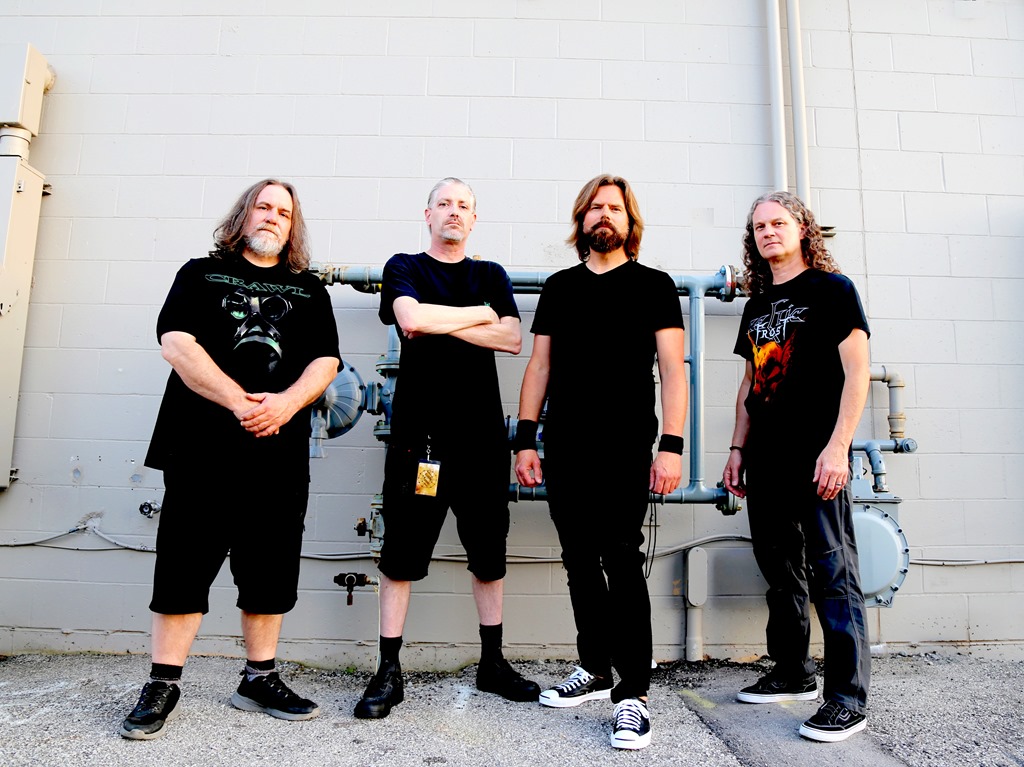
Wisconsin’s industrial death metallers CRAWL dropped a new lyric video for the song ‘No Way Out’, taken from the album with the same name released on June 27th via THC: Music/Virgin Music Group.

Pioneering Midwestern Industrial-Metal act CRAWL initially formed in 1989 in Green Bay, WI, under their original moniker, Nothing Sacred. They recorded several well-received demos, before changing their name to BLEED. The band released its seminal EP Womb in 1993, marking a violent stylistic shift for the band, moving heavily into the realm of Industrial-Death Metal.

Showcasing bombastic drum machines coupled with grotesque samples, synthetic bass, ferociously growled vocals, and an ultra-modern down-tuned progressive thrash sensibility, making the band an immediate standout in the Glam/Grunge era of the early 90’s. Bleed quickly became a major draw throughout the Midwest, performing multiple times at the legendary Milwaukee Metal Fest, and becoming the go-to opening act for major Death and Industrial acts coming through Wisconsin, sharing stages with the likes of Godflesh, Entombed, Malevolent Creation, Grave, and many more.

After signing to Olympic Records in 1994, the band changed their name to CRAWL, unleashing the classic LP Earth, showcasing a brutal industrial edge, married with innovative tunings and time signatures. CRAWL quickly found a niche in the burgeoning Industrial-Alt-Metal scene, with the rise of bands like Godflesh, Entombed, Prong, Pitchshifter, and Fear Factory, receiving glowing reviews from top Metal mags like Metal Maniacs. Crawl would follow-up Earth with Construct, Destroy, Rebuild, their first and only release without Danz, who exited the band at the end of the Earth cycle. Featuring several songs co-written with Danz prior to his departure, DeJardin assumed lead vocal duties for Construct, Destroy, Rebuild, and the corresponding touring, showcasing a more stripped-down, hardcore approach to the band’s sound, reflective of the burgeoning underground post-hardcore and nu-metal scenes rapidly developing at the time.

CRAWL stayed active for the better part of 2 years supporting the album, including several dates on the ‘97 Vans Warped Tour with Blink 182, Limp Bizkit, Social Distortion, and tons more, as well as tours alongside Acumen Nation, 20 Dead Flower Children, and more. After a successful run in support of the latest album, the band went on an indefinite hiatus that would last for almost two decades.

In 2018, the band reconnected with fellow Green Bay native and record industry executive Thom Hazaert, president of THC: Music, then managing the relaunched COMBAT RECORDS with former Megadeth bassist David Ellefson, who would go on to reissue Womb in 2019. The band would reunite with the classic line-up of Danz, DeJardin, Pantzlaff, Kabacinski along with drummer Josh Hovland for a handful of live shows. This included several dates supporting Ellefson and Hazaert and their band ELLEFSON, Taproot, and more.

Now, 35 years out from the band’s formation, CRAWL prepares to unleash their latest Industrial-Metal masterpiece No Way Out. The band’s first studio LP in almost 30 years, in stores June 27th 2025 via THC MUSIC/Virgin Music Group. With a sound that is instantly recognizable to fans of the band and remains true to the band’s groundbreaking Industrial-Metal roots, CRAWL sounds as relevant in 2025, as they did in 1995.

Crawl Photo by Victoria Fischer

Photo by Victoria Fischer

5th September 2025

Christopher Nosnibor

Bandcamp Friday may be a regular occurrence, but it is an event, and one which surpasses Records Store Day in terms of its tangible benefits – namely, that artists get paid. Who would have thought that this should have become such a topic for discussion? The sad fact is, artists haven’t been receiving fair recompense for a long time, but the Internet was supposed to herald the arrival of a new age of egalitarianism. But then the corporatisation of the Internet put paid to that. While the world was focussed on vilifying Napster and Soulseek and the like, streaming machines like Apple and Spotify erupted like Godzilla from the depths and created a new model whereby artists got paid, but by nowhere near enough, and only of they were already raking it in.

I’ve digressed already, but the flipside of Bandcamp Friday is that there are more releases in a day than I could listen to in a month, and my inbox is battered and overloaded with updates. Sometimes, I feel inclined to simply go and lie down rather than approach their contents.

But some releases remind me why I do, and it’s worth quoting here:

After much teasing and anticipation, US goth rock veterans Sunshine Blind at last release their first new songs in over twenty years: two driving goth rock bangers, ‘Ghost of You’ and the especially rousing anthem, ‘Unsinkable’. The new tracks are released together as the Scarred but Fearless single for Bandcamp Friday, 5 September 2025.

Twenty years. Twenty years! Time does, indeed, fly. People my age struggle to accept that the 90s were thirty years ago, or that when they were 21 was anything other than the definitive bygone era. Then again, Sunshine Blind’s sound was always very much rooted in the sound of 90s goth / post punk revival, when The Sisters of Mercy unleashed the altogether more rock-orientated Vision Thing, and acts like Sunshot were taking drum-machine driven gothy goodness in new and invigorating directions. It’s not just Caroline Bland’s vocals which invite favourable comparisons to Sunshot: Sunshine Blind’s catalogue is bursting with effervescent energy, and this new brace of tunes make a most welcome addition.

The janglesome intro to ‘Ghost of You’ calls to mind The Psychedelic Furs during their 80s pop phase, and there’s certainly a melodic accessibility to the song. However, it’s countered by a thunderous, driving bass sound and screeding feedback filling out the sound at the back, and captures the vibe of The March Violets, another classic act newly invigorated. What goes around comes around, and with certain parallels between now and the early 80s, it very much feels like this is the time for a goth revival, including crimped hair and hats. ‘Ghost of You’ brings the vibe, and well as guts and hooks in equal measure.

‘Unsinkable’ ups the rock leanings still further, with a brittle guitar chiming through the verses before going full tube crunch on the bold chorus, propelled by some sturdy drumming and another solid bassline. The sentiment is the perfect analogy for the band here, too. You can’t keep talent down, or buried forever.

With both songs of a standard, this is very much an AA-side single, making Scarred but Fearless a triumphant return.

AA

cover

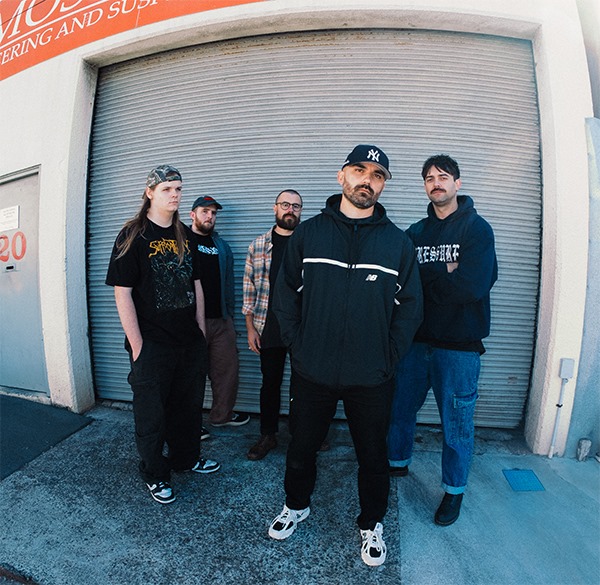
Hailed as a “hardcore Toxic Holocaust,” Wellington’s Brainwave channel the grit of Drain, Mindforce, and Forced Order into a thrashing, metallic hardcore attack all their own. After years of cementing their reputation as one of New Zealand’s most ferocious live bands, the five-piece now take the next step with their debut full-length Ill Intent, arriving October 22, 2025.

Recently, the band have dropped a new video for the album’s title track ‘Ill Intent’, featuring guest vocals from Luke Manson of Xile. The track exemplifies the record’s dual spirit, deeply personal yet politically charged, raging with both despair and defiance.

“It’s an extremely personal record, albeit one set against the backdrop of a world tearing itself apart. It’s about hopelessness, the pain of loss, and the brutality of everyday life. But it’s also about conquering the summit, overcoming both yourself and your detractors,” the band shares.

AA

The making of Ill Intent marked a turning point for Brainwave. They grew from a four- to five-piece with the addition of guitarist Ian Moore, forged a close production partnership with Lewis Noke-Edwards, and invited some key figures from New Zealand’s hardcore scene, including members of Lucre, Molosser, Martial Law, and Xile.
The result is a ten-track album that captures both the personal and the political, a raw, unflinching document of struggle, but also a rallying cry to fight back.

AA

dd17e16a-afb6-4f9b-6d87-65f3ecd676ba

29th August 2025

Christopher Nosnibor

When I was a child, I used to suffer anxiety – often when I was unable to sleep (my complex relationship with insomnia began at the age of five) – that my memories were stored in the vast eighteen-volume encyclopaedia my family owned, and I would be unable to access them because I couldn’t remember which volume they were stored in. Not that it was recognised as anxiety at the time: my parents would tell me to stop padding downstairs and bothering them, and to go to sleep. There’s a (sort of) valid reason for this (the anxiety, not the parental dismissal, but that’s an essay for another time): said encyclopaedia was made up from weekly magazines string-bound in identical hardback covers – a precursor to those infinite volume magazines devoted to knitting or whatever, or where you would build a Death Star in 300 instalments, that would likely cease publication before the collection was complete – and there were issues missing, including segments of the index, and topics were not arranged alphabetically like a conventional encyclopaedia. I couldn’t even find my favourite illustrations of dinosaurs fighting a lot of the time.

Things have only become more difficult since the advent of the Internet, and while spent my youth and even my early twenties in a pre-Internet world, there are many now who have never known anything else. Kids have existed online even pre-cognisance thanks to parents posting endless pics of them growing up on social media, and YouTube and Netflix have replaced conventional TV for anyone born in the last twenty years now.

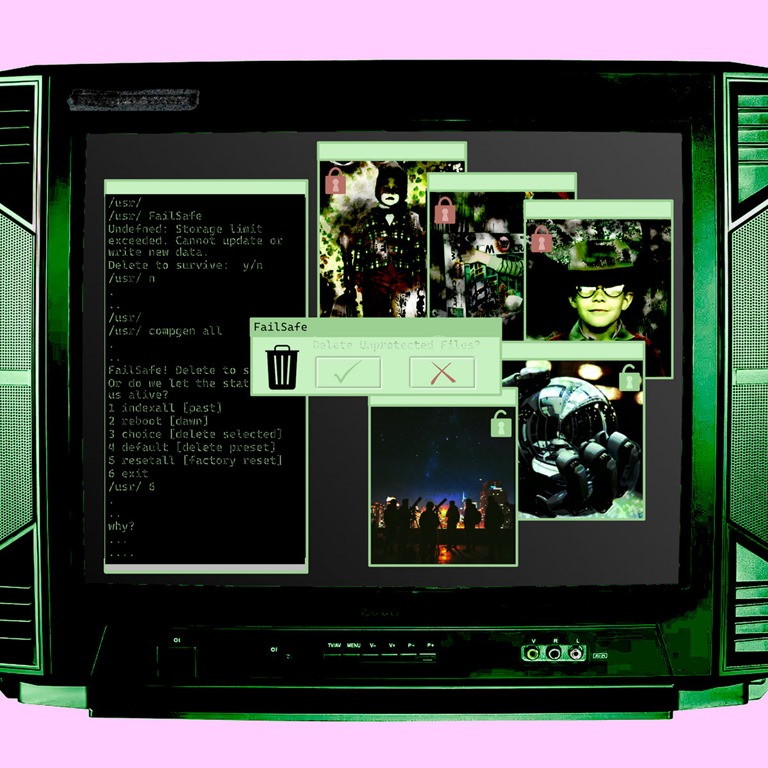
Memory, identity, and their changing nature of both under the conditions of lives lived permanently online, are primary subjects of exploration for solo artist Will N, songwriter, performer, engineer, admin, and the man behind industrial / darkwave act Solid State Sunlight. These topics provided the focus of the ExoAnthro EP last year, and ‘Failsafe’ continues that trajectory, ‘address[ing] the realization that the more we develop our own identity, the less memory remains for experiencing life moving forward. Does it delete previous memory to make space for ongoing growth? What memories are disposable? What are the consequences if it fails?’

I hadn’t considered this, or the idea of what he refers to as ‘data-poisoning’ before, having come to view the mind as a recording device, which captured and archived every single experience, every thought, e very book read, movie seen, but stored them in such a way that it accessing those archives was often a random process – Random Access Memory in the most literal sense.

But we scroll, and we scroll, and we troll, and we troll, and personalities become fragmented, real-life and online personas and experiences partitioned off from one another. Who are you? As AI takes over, the lines are becoming increasingly blurred.

‘FailSafe’ is a gnarly, glitchy technoindustrial stomp through melting circuitry that collides Depeche Mode and Nine Inch Nails with Twitch-era Ministry, with crunching beats dominating jolting electronics and raspy vocals. The intro is a grating bass throb, emerging from an abstract crackle – and then the beat kicks in. And it kicks hard.

If the autotune / robotix breakdown in the middle sounds a shade retro or corny, it works in context, reminding us of how the visions of the future portrayed not so long ago have been replaced by a truly dystopian present. The future was exciting. Computers would make life easier, give us more leisure time and infinite knowledge: that was the promise. Now look where we are. The corporate takeover of the Internet was where it all started to sour, and it was inevitable, but still somehow came as a surprise.

With ‘FailSafe’, Solid State Sunlight draw together a host of references and points of discussion, directly or otherwise, through the savvy hybrid formulation of the composition. It’s hard, and it hits with some attack. This is the vibe of the late eighties and early nineties updated to poke the paranoia of the now. We live in troublesome – by which I mean hellish, fucked-up – times, and with ‘FailSafe’, Solid State Sunlight poke that nerve.

AA

a1907026816_10

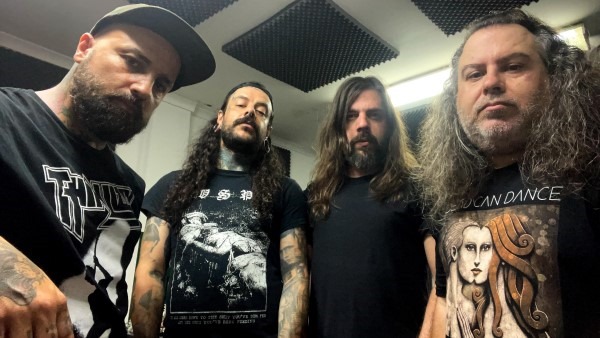
Portuguese grindcore masters BESTA return this autumn with their fiercest work to date. Their reimagined album John Carpenter Redux will be released October 4th via Raging Planet in an exclusive limited vinyl edition.

Originally unleashed in 2013 and mixed by Steve Austin (Today Is The Day), the record has now been completely re-mixed and reimagined by the band itself, with long-time frontman Paulo Rui re-recording all vocals to deliver the most unhinged and powerful version yet.

As the ultimate homage to the master of horror, John Carpenter Redux bridges feral grindcore and politically charged punk, channeling the same tension, anger, and resistance that fuel many of Carpenter’s timeless films. The result is raw, uncompromising, and urgent, a soundtrack to chaos that feels both cinematic and confrontational.

This is BESTA at their fiercest: a band with over a decade of grinding, raging, and raging against the system, now paying tribute to one of cinema’s most visionary rebels.

AA

7d04f925-e0d6-9fed-3130-af3b7b1c44f2