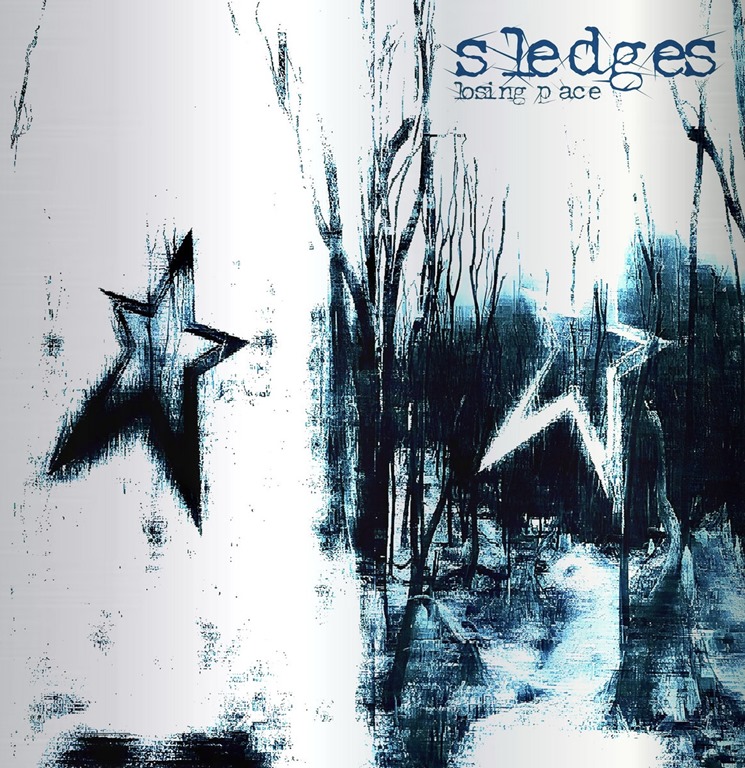
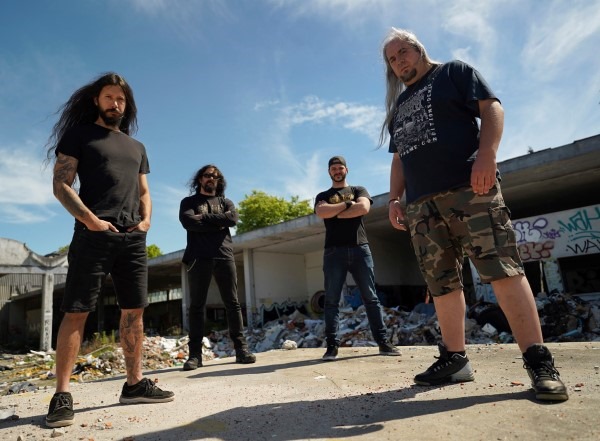
From San Diego California Sledges is a four piece Alt-metal/Heavy-shoegaze band that blends genres like grunge, metal, shoegaze, emo/post-hardcore, and alternative to craft songs with catchy hooks and big riffs. The band’s goal is to create emotional/ heavy songs that you can sing along to.
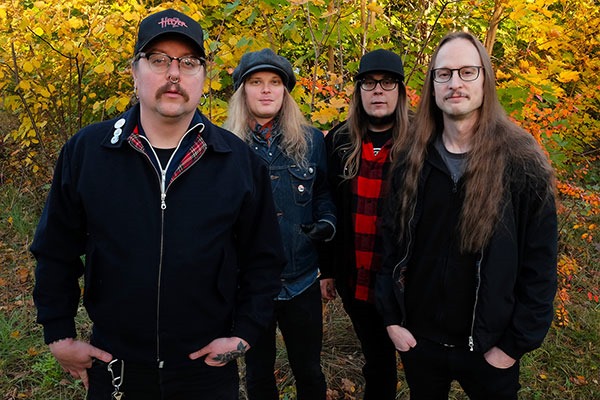
Sledges is Philly Gomez (vocals and guitar), Alex Angulo (bass), Julian Romero (guitar), Mason Haidar (drums).
Sledges’ origin starts in mid 2020 taking place in the area of Chula Vista California. From the boredom and freetime during the pandemic Sledges started as a three piece and wasted no time writing original material. During 2020 Sledges recorded and released their first single ‘Melting Lives’ which helped them start playing shows in San Diego and grow a local fan base. The group recorded and released more singles throughout 2021-2023 and added a fourth member to play lead guitar. Some notable singles during that time include ‘Headwinds’ (2022) and ‘Disgusting’ (2023).
In mid 2023 Sledges began to record their EP Losing Pace with Mike Kamoo who engineered, mixed and mastered it at Earthling Studios. Losing Pace is a four track EP that is catchy and ambitious yet heavy. The group took inspiration from bands like The Smashing Pumpkins, Nothing, Sunny Day Real Estate, and Hum with its heavy but lush wall of guitars while adding their own flavor. Sledges experimented with acoustic guitars, melodic choruses, drum samples and My Bloody Valentine-esque leads. The group wanted to simply write strong songs that can stand on their own.
Singer/songwriter Philly Gomez says Losing Pace is about a period when he felt broken from the struggles of balancing life and in the process realizing you are falling apart. With heartfelt lyrics and contagious riffs, Losing Pace was released on May 2nd 2024. With great reception the EP led the band to get signed by the label Quiet Panic and open for larger bands like From Autumn to Ashes, and Ringo Deathstarr.
Absence makes the hearty grow fonder, so the adage goes, and so it also goes that some acts return not only rejuvenated, but more prolific the second time around: this has certainly been true of a number of acts, ranging from Earth to The March Violets, and it seems that Austere are also finding a purple patch of creativity, with The Stillness of Dissolution being their third album in two years after a thirteen-year break – having only released two albums in their initial four-year career.
Older and wiser? Or perhaps older and feeling a greater sense of freedom in creative terms… it matters not, really. Here, the Australian duo, consisting of Mitchell Keepin (guitars, bass, keyboards, vocals), and Tim Yatras (drums, keyboards, vocals), we’re reminded that ‘their roots in early Norse black metal and its depressive Scandinavian offspring remain clearly audible’, and the album’s six lengthy tracks offer texture and detail, and darkness… much deep darkness.
Opening, ‘Dissolved Exile’ clocks in a little shy of eight minutes, and what’s striking us just how crisp the guitars sound, both the crunchy rhythm parks and the spindly lead, which takes off into an epic solo, propelled by double-pedal blasting drums. But something else stands out, too: as raspy and demonic as the vocals are, there’s a strong sense of groove to it, the chugging chords presenting a solid form and structure. ‘Redolent Foulness’, too, has an epic quality, and an almost neo-prog accessibility. There’s melody in the vocals, not to mention an abundance of dynamics and detail.
It would be easy to criticise Austere for pursuing a more commercial sound and a more ‘casual’ audience, but the simple fact is that they’ve got some crafted tunes here, and The Stillness of Dissolution showcases songwriting ability, rather than simply the ability to play fast while burying everything in muddy production. The Stillness of Dissolution is by no means a commercial album, or a pop album, but in melding genuine hooks to monster slugging riffs, Austere have forged an album that’s compelling, exciting, and yes, I’ll say it, catchy. Not in a pop sense, of course, but those juggernaut riffs just grab you: ‘Rusted Veins’ fully rocks out, and at nine and a half minutes, closer ‘Storm Within My Heart’ is a solid epic. Overused? Yeah, but have you got a better word? It begins atmospherically, before blasting in with explosive force, and with the snarling vocals buried beneath a frenzied blanket or fretwork, it’s the most overtly black metal cut on the album.
And what an album: it really is well-considered, crafted, detailed. ‘The Downfall’ borders on shoegaze and prog-metal, but there’s blistering rage in there, too. Metal tends to be underrated when it comes to texture and emotional range, but The Stillness of Dissolution brings it all by the truckload: ‘Time Awry’ bringing three songs in one, with a nagging lead guitar line that loops over a thunderous riff. This is an album which makes you feel – and its power is as immense as its stunning quality.
Finnish progressive heavy psychedelic rockers Craneium have just released a music video for their latest single ‘The Flow of Time and Age’, marking their second track under the Majestic Mountain Records banner.
Leaning heavily into their signature riff-laden fuzz and heavy rock energy, the song delves into themes of mortality and the quiet urgency of time slipping away.
“Lyrically, we’ve often returned to the subject of mortality and the choices that shape your life. You only get one,” reflects guitarist Martin Ahlö.
“Another track that we decided to save for later on. We felt like it could stand as a single on its own. It started out with an acoustic intro that turned into something else completely when the bass-riff came along. Droning guitars and dreamy mellotron-melodies on top. It’s different but definitely Craneium.” Shares guitarist/vocalist Andreas Kaján.
When on tour we listen to the classic Pink Floyd track ‘Time’ a lot, and I think it is safe to say that ‘Flow of Time and Age’ is a not so distant relative, musically and lyrically,” adds Martin.
“Our new track dives into the weight of memory, the slow collapse of what we hold dear, and that urgent need to act before the moment slips away. It’s heavy, melodic, and it hits like a truth you weren’t ready to face,” concludes drummer Joel Kronqvist.
AA
To celebrate the release, Craneium have also announced a new European tour, kicking off this June. Check out the full itinerary below: CRANEIUM – EUROPEAN TOUR 2025
5 JUNE – Copenhagen, DK @ Lygtens Kro (w/ Dunes, Grinding Eyes) 6 JUNE – Berlin, DE @ Pump Track (w/ Black Magic Tree, Zen Bison) 7 JUNE – Frankfurt am Main, DE @ Ponyhof (w/ The Black Cat’s Eye) 8 JUNE – Göppingen, DE @ Zille (w/ High Priest of Haze) 10 JUNE – Prague, CZ @ Sally O’Neals (w/ The Winter Sounds) 12 JUNE – Leipzig, DE @ Black Label 13 JUNE – Słupsk, PL @ Motor Rock Pub 14 JUNE – Łomża, PL @ Pub "Pod Ratuszem
And so we arrive at the end of another era in the epic history of Swans. When they called it a day in 1996 with Soundtracks for the Blind, and a farewell tour documented on Swans are Dead, it really did seem as if that was it. Swans had run their course, and the colossal Soundtracks double CD summarised everything they had achieved over
It may seem strange that the bookend to this phase of their career should be titled Birthing. But such is the cycle of life, and indeed, the avant-garde: death gives way to new life, to build anew one must first destroy. And so in this context, Birthing, which Gira has announced will be the last release of this epic, maximalist phase, makes sense. With a running time of a hundred and fifteen minutes, it’s comparable in duration to its predecessor, The Beggar, and The Glowing Man (a hundred and twenty-one minutes and a hundred and eighteen minutes respectively) , but on this outing, the individual pieces are all immense in proportion, with the album containing just seven tracks, with only one clocking in at less than ten minutes.
‘The Healers’ makes for a suitably atmospheric, slow-burning opener. Around seven minutes in, the gentle eddying begins to swell, like a breeze which wisps and ruffles the leaves on the trees – a minute or so later, the drums have entered the mix, and the ambient drift begins to take a more solid form, and there’s a change in the air temperature, the barometer plummets and the breeze becomes a wind. In no time, there’s a swirling wail of sound surrounding Gira’s increasingly exultant enunciations, but as he growls and mumbles and raises his voice higher, he’s increasingly drowned by the maelstrom. And yet, it’s nowhere near a crescendo, and I’m reminded of their set on the 2013 tour, where, having told my friend that having seen them in the same venue three years previous that they took volume to another level, the first twenty minutes of the set was loud, but not remarkably so – and then suddenly, there was a leap of around thirty percent that felt like a double-footed kick in the chest. Will it happen here? Around the fifteen minute mark, it tapers down to a haunting whistle of wind – and it’s the calm before the storm, as a raging tempest suddenly erupts, a frenzied wall of noise that has become their signature, and the song surges to a powerful sustained climax.
While the delivery is considerably less brutal than it was in the early 80s, Gira’s lyrics are still riven with dark and disturbing imagery, and now coloured with a hint of abstraction and madness, and this is nowhere more evident than on ‘I Am a Tower’, which was aired as a lyric video a little while ago. ‘With thin boneless fingers and pink polished nails, I’m searching for the fat folds of your blunder. Speak up, Dick! …Bring your fish-headed fixer to whisper in my ear. Please worry me here, tongue that victim in there…’ he intones like a cracked messianic cult leader against a backdrop of swirling drones. Attempting to unpick sense or meaning from it feels futile, and potentially traumatic, so instead, it’s perhaps experienced holistically, as a jumble of images and impressions, a fractured collage, a derangement of the senses whereby you allow it to transport you to another plane, away from anything concrete or grounded, beyond all that you know. Seemingly from nowhere, a motorik rhythm kicks in and we get something approximating a driving Krauty post-rock riff, hook and all. It could be Swans’ most pop moment since the White Light / Love of Life albums in the early 90s.
The title track arrives in a ripple of proggy synth that has a hint of Mike Oldfield about it, but gradually builds into a dramatic swell of sound, the likes of which has come to characterise the last decade of Swans, with a single chord struck repeatedly for what feels like an eternity. And then, from nowhere, they launch into something approximating a jig – on a loop, where the bass and drums simply hammer away repeatedly, like a stuck record. It is, if course, pure hypnotic magnificence. Gira’s words slip into soporific sedation amidst descending piano rolls. ‘Does it end? Will it end?’ he asks at the start of an extend wind-down, and it does feel like this would make a perfect gentle close – but there are more jarring, jolting ruptures to come, whipping up a truly punishing climax by way of a close, and by the end of the first disc – a full hour in duration – we’re left drained and hollowed out, tossed this way and that on a sonic – and emotional – tempest only Swans could create. Disc one, then, feels like a compete album. But this is a Swans release, and a landmark one, at that there isa whole further album’s worth of material yet.
‘Red Yellow’ begins in a dreamy drift, but soon slides into a warping drone pitched against another of those relentless, repetitive grooves, this time with some jazz horns freaking out in every direction. And at this point, there does arise the question of what new this iteration of Swans is offering at this point, but the immense, immersive soundscapes provide the answer in themselves. Swans have certainly evolved, but they have always done so gradually. The first half of the eighties was devoted to crushing slow grind, and you’d have to be a glutton for punishment to listen to more than one album in a sitting. The point is that Swans have always pleased themselves and made music that tests the listener’s limits, and Birthing is no exception.
Reviewing a Swans album is always a challenge, especially their comeback releases. They’re not about songs, and, broadly speaking, not really about impact in the way their early works were: instead, they’re about transcendence, about moving beyond mere music.
‘Guardian Spirit’ starts out textured an atmospheric, but ends full Merzbow, before ‘The Merge’ takes noise to the next level, albeit briefly. It’s as if Gira is toying with us. Perhaps he is, but when the noise erupts, it really erupts. ‘Rope’ returns us full cycle to there My Father Will Guide Me, while making an obvious connection with all phases of their career, through which ropes and hangings have been a perpetual theme.
Birthing is not an easy album, but it is one which requires listeners (and reviewers) to do something different in terms of approach. You don’t listen so much a feel it, and ride its endless waves: sometimes slow, gentle, at others an absolute roar, Birthing brings together everything Swans have done, and achieved, over the course of this iteration. It’s often overwhelming, and almost impossible to reduce to words. The second disc does feel softer, more abstract, and leaves on wondering precisely what the next phase will look or sound like.
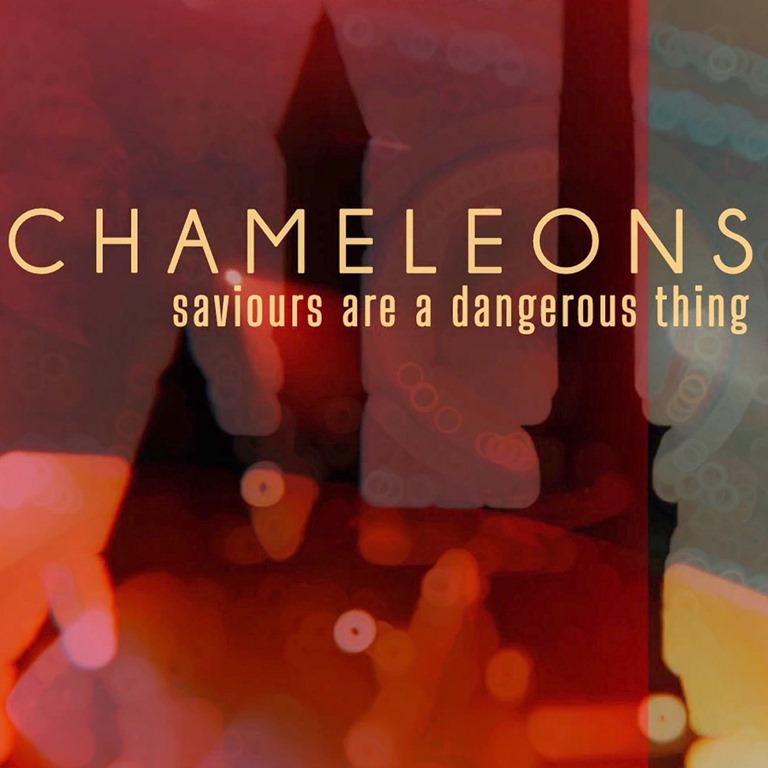
“I see too many echoes of the 1930s in what’s going on in the world, which I see as being extremely dangerous both for the country I’ve chosen to live in and the Western world in general,” says vocalist/bassist Vox (Mark Burgess) of Chameleons when talking about his band’s brand new single, ‘Saviours Are A Dangerous Thing’. Out today (29th May) via Metropolis Records, the song is taken from their recently announced and long-awaited album Arctic Moon.
“It was the last song to be completed for the album,” he continues. “I’m particularly pleased with the way it turned out, because it was our guitarist Stephen Rice who initially brought the rough idea to the table and we all then collaborated on it to produce the final song.”
Capturing Chameleons’ innate flair for crafting exquisite guitar textures and merging them with Vox’s tight grasp of melody and wordplay, ‘Saviours Are A Dangerous Thing’ harbours a dark message about the current political climate amid its thoroughly engaging sound. Further enforcing this theme, an accompanying video splices live performance footage with kaleidoscopic images of war and its effects, as well as the propaganda surrounding it, making for a compelling statement overall.
“The lyrics came to me quite quickly,” Vox explains. “They reflect what has been happening globally and how senior officials line up to kiss the rings of clowns who regard themselves as self-proclaimed kings rather than elected statesmen.”
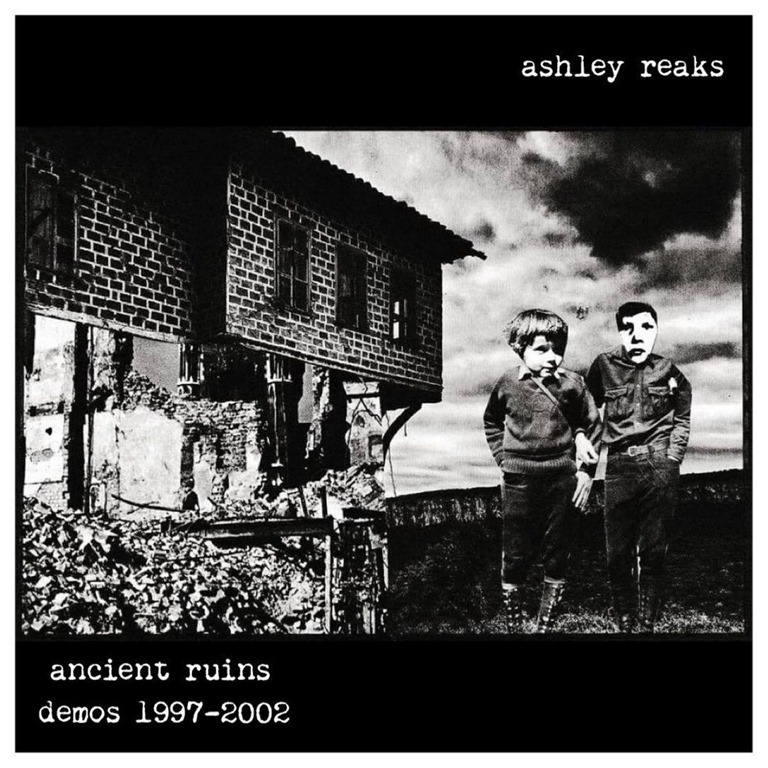
Ashley Reaks first came to the public’s attention under the guise of Joe Northern, fronting promising turn-of-the-millennium dark synthpop act Younger Younger 28s, a head-on collision between The Human League and Clock DVA, who released their sole LP, Soap in 1999. Since then, the Harrogate-based Reaks has expanded his field and is now as known for his disturbing collages as he is for his eclectic musical output, which spans dub, postpunk, and whatever other genre concepts come his way. Reak’s creative diversity, while very much an artistic strength, has likely been an obstacle to his achieving more commercial success, because the sad fact is that polyartists who venture into the domains of oddness are extremely difficult to market, because, well, how to you pigeonhole or genre categorise someone who works not only in a host of media, but does stuff which is, at times, quite disturbing and impossible to place in a given bracket? Of course, another likely, and more obvious, obstacle to commercial success is that the fact that a lot of his work is what a lot of people would likely consider plain fucking weird.
But even before Younger Younger 28s, Reaks – whose appreciation of The Sisters of Mercy and the like is widely-stated on his social media – was dabbling with the gothier aspects of post-punk, and would continue to do so for some time. His decision to release Ancient Ruins may only be for the sake of posterity, as a document, but here it is, and it’s not bad either.
Because this is Ashley Reaks, it’s not a set of songs which adhere to straight-up genre conformity, as is immediately apparent from the first track, ‘A God in the Devil’s World’, which has a certain swagger and a swing to it, the female vocals not only providing a counterpoint to the growling baritone Reaks adopts, but also a pop shimmer that’s still more Human League than The March Violets.
‘No Man’s Land’ offers picked guitar and jittery synths melded to an insistent drum machine, and comes on with the trappings of mid-80s rock, and a bit Prefab Sprout. ‘Disconnected’, however, plunges into darker territories, an echo-heavy bass-driven blast of angst that’s more the sound of the underground circa 1983. And it’s good, but then you realise how anachronistic it is for the time it was recorded.
Between 1997 and 2002, Britpop died a slow and painful death and Nu-Metal exploded. The post-punk revival was still some time off, and simply no-one was making, or listening to, anything that evoked the spirit of The Batcave. But then, they weren’t really digging 80s synth pop, other than the original stuff in a kitsch or nostalgic way, and the much-touted 80s revival hadn’t really gained any traction. To top it, in keeping with Reeks’ other output, thew songs on here are littered with lyrical observations and kitchen sink vignettes, pithy pairings, and couplets which are wilfully wordy and awkward.
‘Christiane’ is a campy goth pop effort that’s wistful and theatrical, with hints of late 80s Damned woven into its fabric, while ‘I Always Wanted to be You’ brings some indie jangle and… brass. Then again, there’s the chugging industrial blast of ‘Swimming Against the Tide’ which sounds a bit like Therapy? circa Nurse but with an overtly ‘baggy’ beat and a Prodigy-influenced midsection. Oh yes, it’s all going on here.
If nothing else, Ancient Ruins provides some insight into the evolution of Reaks’ compositions, from oddball pop to off-the-wall melting-pot madness, with loads of ska brass and a whole lot more besides. The dubby closer ‘Ghost Town In My Heart (Version 2)’ is particularly illuminating. If only all history lessons were this interesting.
Portuguese death/thrash veterans Biolence are set to return with their fifth studio album titled, Violent Obliteration, due out on September 1st, 2025 via a triple-label collaboration between Doomed Records, Raging Planet, and Selvajaria Records.
Recorded and produced at Darkhammer Studios, who also oversaw all sound and visual elements, Violent Obliteration is described by the band as their most cohesive, direct, and violent record to date.
“This upcoming album is possibly our most cohesive, direct, and violent to date, a nuclear bomb of Death/Thrash Metal, with our signature lyrical themes such as the horrors of war, biological and mass destruction weapons, greed, human corruption, and its destructive impact on the planet,” says the band.
The first taste of chaos arrives with the premiere of a lyric video for the track ‘Pit of Degradation’, a punishing preview of what’s to come, featuring blistering riffs, razor-sharp drumming, and an atmosphere soaked in menace.
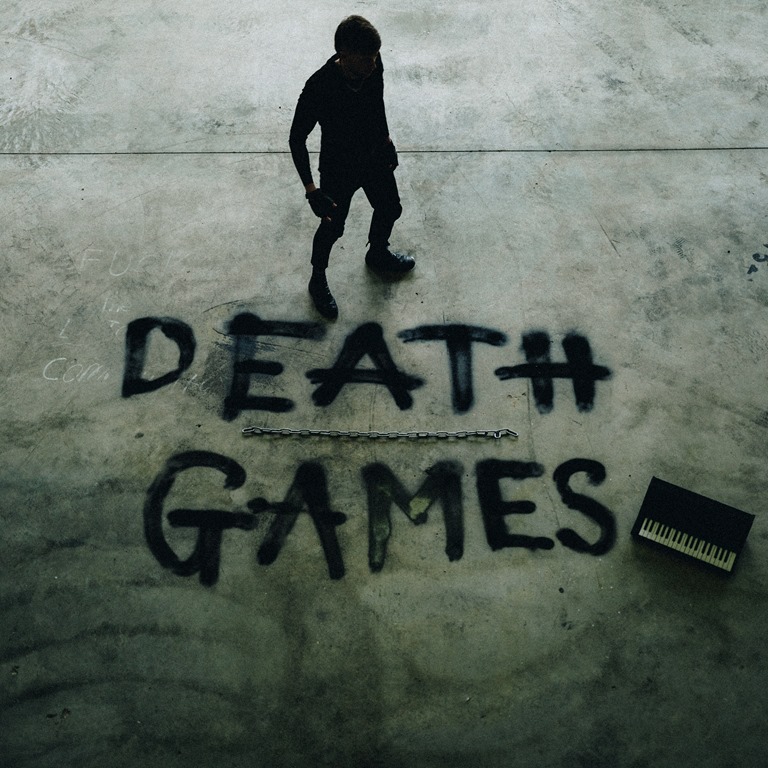
Just as the birds of prey from which they take their name are creatures of the night, so this Irish act – essentially one guy – who draw inspiration from the darker realms of postpunk, goth, and synth-based music are very much dwellers of the dark hours, as debut album Death Games attests, with titles such as ‘Perfect Nightmare’, ‘Tombs’, and ‘Send Me to My Grave’. The album’s themes are timeless and classic, offering ‘a haunting exploration of love, mortality, and the fragile nature of existence,’ while casting nods to touchstones such as Lebanon Hanover, Boy Harsher, and Black Marble.
Lead single ‘Give Me Your Stare’ opens the album in style with a disco beat and throbbing bass giving this bleak, echo-soaked song a dancefloor-friendly groove. The vocals are backed off but ring clear through a haze of reverb, offering a hint of The Cure’s Seventeen Seconds in terms of production values.
AA
The compositions on Death Games are pretty direct: there’s not a lot of detail or layers, and it’s the electronic beats and pulsating basslines which not only define the sound but drive the songs. The sonorous synths which twist and grind over the top of these predominantly serve to create atmosphere more than melody, although haunting, repetitive motifs are commonplace, and the vocals, too, being low in the mix and with a fairly processed feel, are more a part of the overall sound than the focal point.
‘Skin on Skin’ brings a wibbly, ghosty synth that sounds a bit like a theremin quivering over a minimalist backing of primitive drum machine and bass synth, and the likelihood is that they’re going for early Depeche Mode, but the end result is more like a gothed-up Sleaford Mods, although, by the same token, it’s not a million miles away from She Wants Revenge around the time of their electro-poppy debut, and that’s perhaps a kinder and more reasonable comparison. ‘Fevr 2’ brings an increased sense of urgency with skittering bleeps skating around the reverberating drums: it has both an 80s movie soundtrack vibe and a vintage goth disco feel, and despite its hectic percussion and busy bass, ‘Tombs’ conjures a haunting, requiem-like atmosphere.
The ‘death’ thematic may not always be literal, and as much concerned with the death of love and the ends of relationships, but the duality the theme offers serves OWLS well. There’s no denying that it’s both a stereotype and a cliché that an obsession with death is such a goth thing, and OWLS fulfil these unashamedly – but then, why should there be shame? Why is it only goth and some strains of metal which embrace life’s sole inevitability, and explore mortality and the finite nature of existence? Even now, after millennia, we aren’t only afraid of death, but, particularly in Western cultures, we’re afraid to think or talk about it. People passing in their eighties and nineties still elicits a response that it’s a tragedy or that they should have had more time, and I’ve seen it said of people departing in their sixties or even seventies that it’s ‘no age’. We seem to have a huge blind spot, a blanketing case of denial when it comes to death, as if it shouldn’t happen, that it’s an injustice, and that no-one deserves it. But nothing is forever, be it love or life, and while loss – any loss – is painful, it comes attached to inevitability, being a matter of when, not if.
The stark and sombre ‘Send Me to My Grave’ commences a trilogy of dark, downbeat, funereal songs, which grow progressively darker, more subdued, the vocals more swallowed by evermore cavernous reverb. Even when the beats kick in and the bass booms, things warp, degenerate, and seem to palpably decay and degrade. There’s a weight to it, a claustrophobic heaviness, and the kick drum thwocks away murkily as if muffled by earth and six feet under sods. ‘This Must be the End’ is brittle, delicate, the calm that comes with the acceptance of… of what? What comes after the end? It feels like the song, and the album, leave this question hanging with an ellipsis, a suspense mark. It seems fitting, since we simply don’t know. But it does very much leave the door ajar for OWLS’ follow up, and that is something to look forward to.
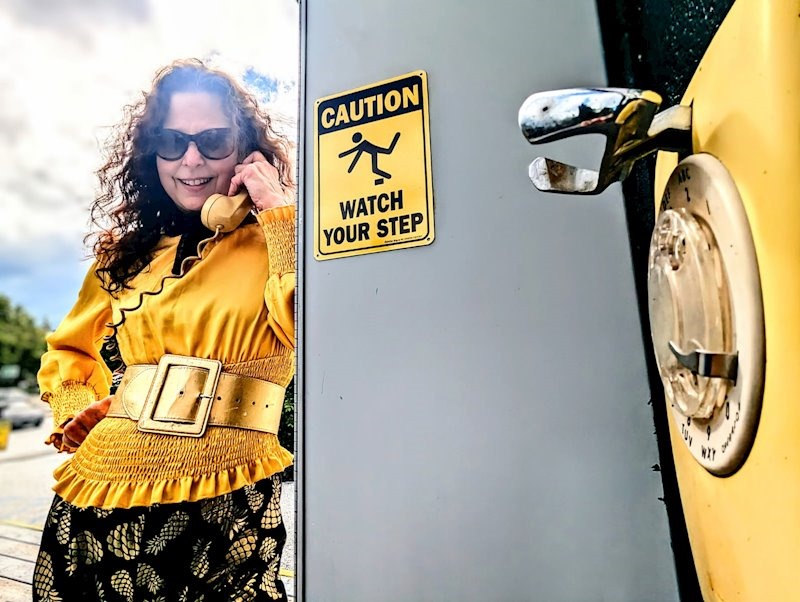
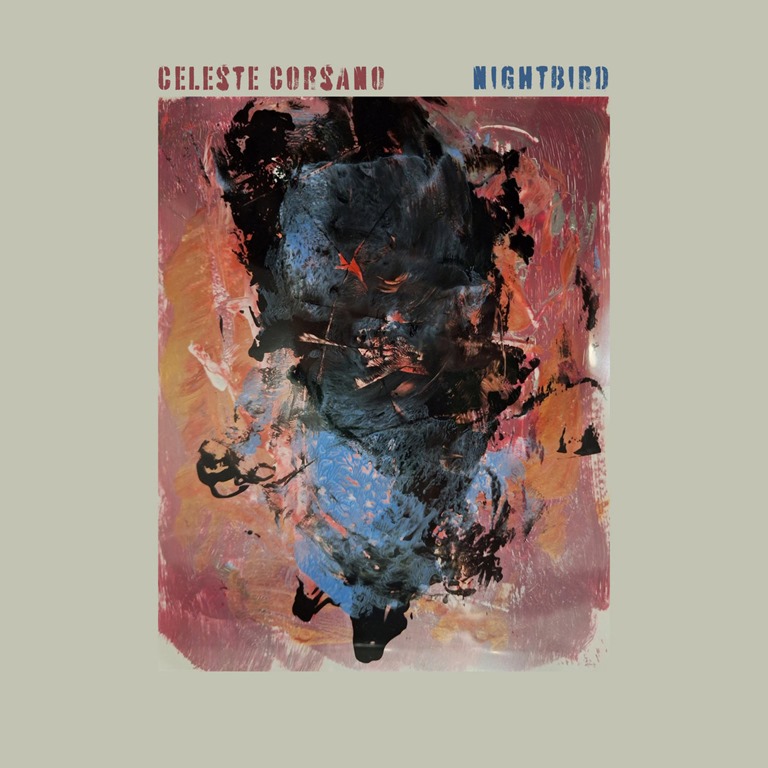
Pennsylvania-based artist Celeste Corsano presents her new single ‘Nightbird’, the dark side of the ying-yang, following her recently-released debut single ‘Sunlight Gazing’. An innovative singer-songwriter, Corsano is the latest artist to be added to the growing roster of the blossoming Montclair, NJ-based indie label Magic Door Record Label.
Corsano’s music blends poetic lyricism with adventurous arrangements, unexpected rhythms and a distinct emotional range — from ethereal and moody to playful and bold. With a natural use of mixed meters and layered vocal timbres, her fearless approach to storytelling conveys a deeper truth.
“I live in a rural area. There’s nights when I can’t sleep, thinking about my living dreams, desires and worries… the noise and chaos of my circumstances and feelings crowd my mind. When that happens, I lie in bed and look out my window and see the shadows of trees, lightning bugs flash, and sometimes hear the cry of a fisher cat… so eerie and wild. I hear the call of an owl, or see a bird that’s been disturbed from its perch and fly to another spot. The sights and sounds become part of a message to me…. a nightbird… calling to me,” says Celeste Corsano.
AA
For the past year, Corsano has been working with renowned producer Ray Ketchem (Guided by Voices, Elk City, Gramercy Arms, Luna, Crash Harmony) at Magic Door Recording Studio, who produced, recorded, mixed and mastered this release, as well as several recordings to follow.
With Ketchem also on drums, this single also features fantastically notable guitarist James Mastro (The Bongos, Mott the Hoople, Ian Hunter, Patti Smith, John Cale) and keyboardist-bass player David Nagler of Nova Social (who has also played with Joan Baez, Aaron Neville, Rosanne Cash, Andrew Bird, Steve Earle and Yo La Tengo).
“I came to Ray Ketchem with iPhone recordings of my keyboard, voice, lyrics and a dream…. and for the next few months I traveled 1 1/2 hours one way to have one of the best times and learning experiences of my life. Ray was the producer, drummer and engineer for my songs, He created the fundamental groundwork and direction for Nightbird with his distinctive drum riff,” says Celeste Corsano.
“Besides my demo, the drums were a catalyst and inspiration for guitarist James Mastro and synth player-bassist David Nagler to create the full tapestry, against which I could express myself vocally when it came time to record my tracks. I remember feeling so elated and on a musical high watching and listening to Mastro record the tracks for ‘Nightbird’. Those hours are unforgettable. He was a part of the music, his entire body and expression connected to his guitar, rippling like water to its sounds. The guitar work expresses the lyrics so perfectly. It was very moving to watch.”
She adds, “David Nagler selected the coolest sounds and added so much to the attitude of this song. When the bass first comes into the song it sends chills. Working with Ray, James and David was such an inspiration. All three of them are so down to earth, personable and into the music. They are all legendary in the music realm and I’m so fortunate to have worked with them.”
Swedish electronic environmentalists TWICE A MAN unveil a video clip with dark untertones for the catchy track ‘Second Field’ as the next advance single taken from their forthcoming new full-length The Coloured Breeze Is a New Dimension. The highly anticipated album has been scheduled for release on June 13, 2025.
TWICE A MAN comment: “The cogwheels of modern times are controlled by evil leaders without empathy”, Karl Gasleben states matter of fact on behalf of the band collective. “They grind us down and destruct our mental health. It is time to take back our dignity, nourish our inner dreams and connect them towards a more hopeful future. Are you ready to fight for what you believe in?”
AA
While the skies of the world are darkening, something powerful and resilient is pushing from below through the pungent springtime topsoil close to the City of Göteborg in Sweden. This sprout that is charged with organic and electric energy bears the name The Coloured Breeze Is a New Dimension. TWICE A MAN planted its seed with the song ‘Dahlia’, a ‘new’ track that was written to complement the compilation album Songs of Future Memories.
For three years, the Swedish dark electronic trio fertilised and nurtured the germ bud until it had taken firm root in their musical heritage and began to send offshoots to find new sonic spots beyond any previously built garden walls. The Coloured Breeze Is a New Dimension is an organic entity that creates something new by re-combining its musical DNA in various ways. As a result, its tracks blossom in many hues of electronic colours.

 Aural Aggravation