Mortality Tables – 24th January 2025
Christopher Nosnibor
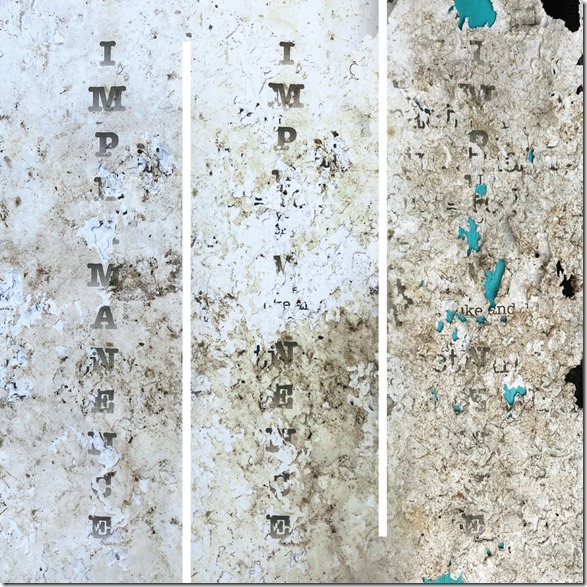
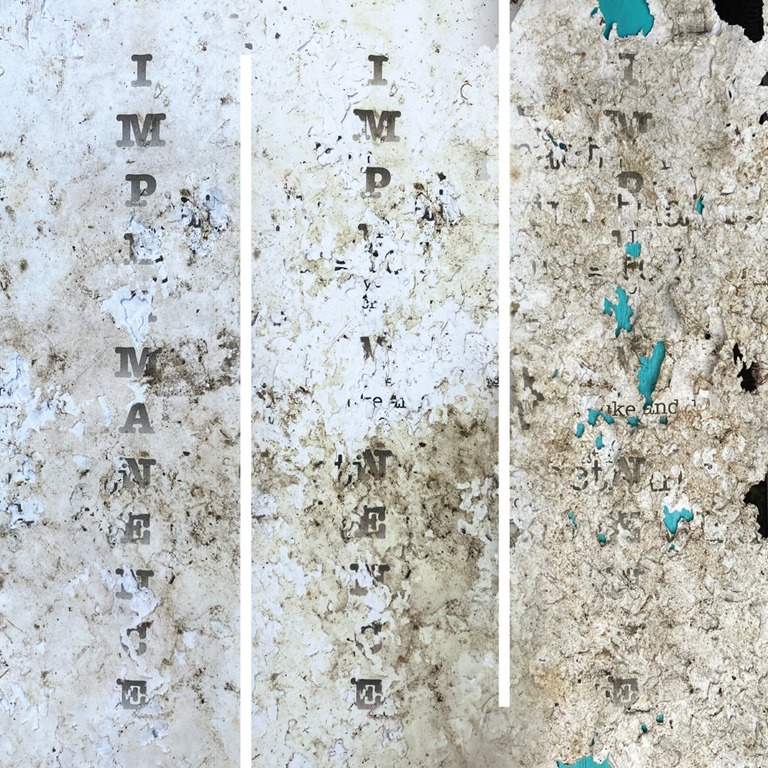
One might say that this release has been a long time in coming – but from old works, left languishing, emerge new ideas having steeped over time. Initially recorded for an event in 2001, and having languished for almost a quarter of a century, An Impermanence now spearheads the latest project to emerge from the ever-inventive Mortality Tables. The Impermanence Project is set to be ‘a large-scale, multi-disciplinary collaborative initiative that will run for the remainder of 2025 [whereby] each member of the Mortality Tables Collaborator Community will be invited to contribute a response to the word “impermanence”.’
The bar is set high for the project with this opening gambit, which is a spectacularly dramatic work, even by the label’s standards. I shall return to this presently, but shall, momentarily, step back and quote at greater length than usual in order to set out the concept and evolution:
‘An Impermanence was conceived as a total conceptual piece of audio art based around several field recordings made with a dictaphone. In the event, for An Impermanence, only one recording was used, a 25-minute recording of an evening maintenance visit to an open-plan bank’s rising security screen system. This recording consists of a variety of interesting sounds, ranging from confirmation noises of ATMs, the expulsion of air pressure from the screen equipment, to occasional conversations and typing at a keyboard. The random, inherent unpredictability of field recordings created the feelings of impermanence that gave the track its title.
The field recording was mastered ‘as is’ to CD twice to enable continuous playing across two CD players. To add to the queasy feeling of everything ultimately being temporary, the CDs were processed completely live through a sequence of effects units, creating an unpredictable sonic onslaught veering from quiet passages of calm introspection to blazing flurries of electronic feedback and onward to the sculpting or white noise into digitally-synthesised modulations, continuing long after the actual CDs had finished playing.
The whole 54-minute track was recorded entirely live in one take without overdubs or editing, and is presented in its complete, unprepared form.’
It’s hard to conceive that this whole, fifty-four-minute work was recorded in a single take. Having been recorded on a Dictaphone, there’s distortion, there’s interface, there’s crackle. It takes some listening. What sounds, initially, like crackling noise and a load of distortion and flange, is, on closer listening, a siren – probably. It’s certainly something, anyway.
Blasts of noise like avalanches, like bombs, assail the speakers: there are bursts of ear-piercing feedback, gut-shuddering grumbles like earthworks and slow tectonic collisions. There are protracted spells of shudders and sparks, crackles and fizzes, sounds like fireworks and the hum of traffic. It’s nigh on impossible to actually place most of the sounds, and for the most part, this immense track sounds like little more than the rush of wind and things breaking, the crackling sound of tension reverberating inside your skull. As much as there’s no placing the sounds, there’s no escape from the torment, either.
And yet… and yet. I used to walk around with earphones wedged firmly in my lugs as I traversed from my house to the bus, then sat on the bus for half an hour, before then walking a few hundred yards to the office, and then in the lift and finally arriving, an hour later, at my desk. With the arrival of lockdown, the onset of a new anxiety meant I felt no longer able to listen to music as I went places – but instead, I became attuned to my surroundings, at all times. And there is always sound: birdsong, the breeze in the trees, traffic, planes or helicopters overhead, water trickling down drains, the babble of conversation the whirr of bikes passing, the thud and pant of joggers who pass so close as to buffet you with their air movement, and dogs, dogs, dogs, so many fucking yapping, gasping, snapping, shitting dogs, running off lead and at will. There is no escaping sound, and while the sounds on An Impermanence feel amplified, intense, unpleasant, overloading, they do very much seem to recreate the outdoor experience of the hypersensitive.
Keep your ears open. Stay vigilant. The world is everywhere. If the rest of this series is even half as intense, it will be… an experience.
AA


 Aural Aggravation