Archive for October, 2021

5th November 2021

Christopher Nosnibor

Yes, I’m a massive fan of that post-punk sound, and am, perhaps predictably, a massive fan of Joy Division and The Cure, and perhaps less predictably, The March Violets and B Movie. And much as I love Interpol and that whole post-millennial post-punk revival with all its brooding atmospherics and often poetical lyricism, a lot of it felt, if not contrived, then measured, the production cleaner, crisper yet somehow something is lost in the process.

I suppose there’s an element of all this that leads into questions of authenticity: what we’ve come to bracket as ‘new wave’ is a strain of post-punk, and you can debate all you like whether or not goth exists, if it’s really a genre or just an aspect of post-punk. But what this really means is that post-punk / new wave was a period in time rather than a unified style. So when we describe a band as ‘post punk’ in 2021, what do we really mean? And can any contemporary post punk act be truly ‘authentic’?

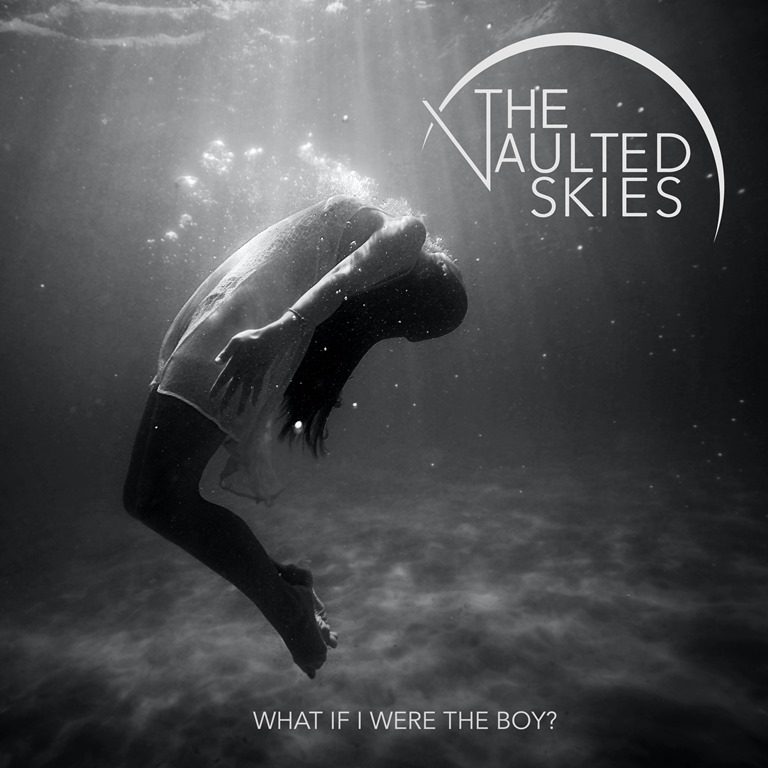
The Vaulted Skies sound, and feel authentic. Perhaps it’s the band’s chemistry, perhaps it’s tracking the song live together in a room, perhaps it’s myriad factors converging and coalescing serendipitously, but the energy of ‘What If I Were The Boy?’ is stunning. Leaning toward the darker, gothier end odd the spectrum, they not only capture the sound, but also the spirit of that late 70s / early 80s period, from the reverby guitar in the opening bars, which kicks into overdrive in the chorus. The rhythm section is so beefy with a solid four-square bass groove that’s the defining feature of so many great bands of the time (The Sisters of Mercy did it first and set the blueprint forever). The rhythm guitar squirms and drives in a grating swirl of flange and the sound is simultaneously spacious and dense and they play with a passion that’s exhilarating. So many bands over the last 30 years have striven to do the same or similar, but The Vaulted Skies have absolutely nailed it, and ‘What If I Were The Boy?’ is an absolute killer.

The Vaulted Skies - Artwork

AA

Emma Ruth Rundle’s latest single “Blooms of Oblivion” intimately reflects on an experience that was too big for her as a child — “Down at the methadone clinic we waited / hoping to take home your cure / The curdling cowards, the crackle of china / you say that it’s making you pure” she sings. For anyone that’s endured trauma and grief, there’s a beautiful solace in hearing Rundle articulate and humanise that particular type of pain not only with her words, but with her unique mysterious language of melody and timbre. Her forthcoming album, Engine of Hell captures a moment where a masterful songwriter strips away all flourishes and embellishments in order to make every note and word hit with maximum impact, leaving little to hide behind.

Today’s soft spoken guitar ballad “Blooms of Oblivion” comes alongside a vivid and compelling new video which she co-directed with John Bradburn. She explains, “In the video I use an oversized coat to represent an oversized and burdening experience for the little girl. The feeling of being free falling in chaos. Having no control over your circumstances. The song and video describe the feelings I had as a little girl and how that’s shaped who I have become – negotiating with my past and waking to the woman I strive to become through self-love, self parenting and forgiveness and the transformation that it can bring.”

Watch the video here:

https://youtu.be/Pn12FvaaRMI

panoptique electrical - decades (2001-2021)

Cruel Nature Records – 29th October 2021

Christopher Nosnibor

There’s something magnificent about the naming of Oli Heffernan’s project Ivan the Tolerable. It not only places a charming spin on history, neutralising and disarming the fearsome image of ‘the terrible’ with a superbly balanced piece of bathos, but it’s also so very quintessentially English. It’s the weak smile, the stiff upper lip… it’s not terrible. It’s not good either. It’s, you know, tolerable. No-one died. Or only a few people, it could be worse.

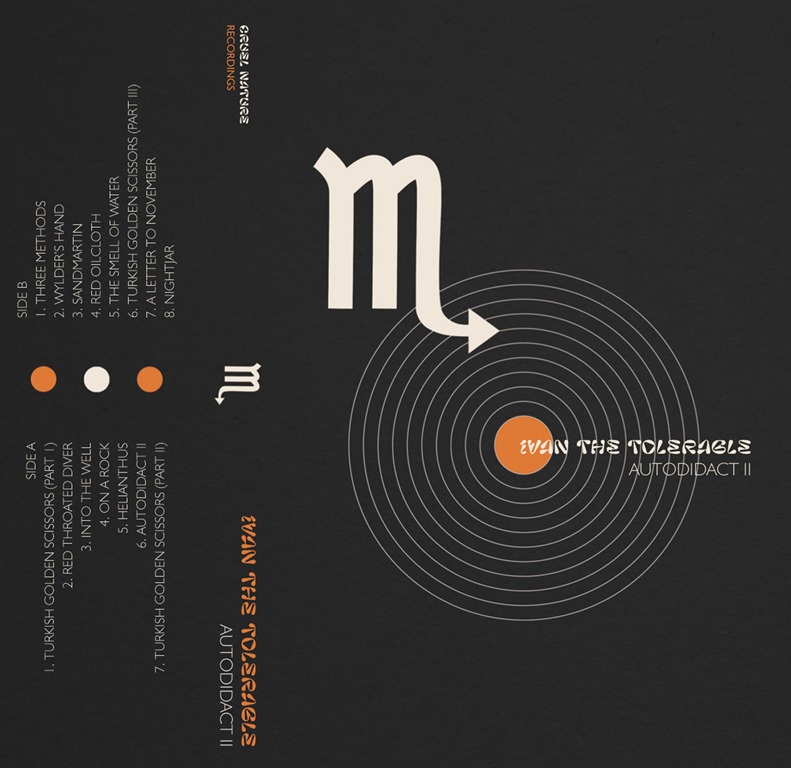
Autodidact II is the follow-up to 2018’s Autodidact, separated not only by three tears abut about a dozen releases. Heffernan is nothing if not prolific, and equally, nothing if not diverse.

This fifteen-track behemoth opens with the fifteen-minute ‘Turkish Golden Scissors (Part I) – there are two subsequent, shorter parts, situated strategically about the album. It’s a meandering progressive piece with pseudo-mystical Eastern leanings, a trippy, psychedelic jazz experience that’s utterly baked, man. There’s a trilling keyboard swirling and twirling around in the midst of the sonic sandstorm, and it’s like a collision between a deconstructed Doors track performed by The Necks.

‘Red Throated Diver’, which is centred around acoustic guitar playing a looping, cyclical motif in the style of Michael Gira, paired with some ominous and atmospheric brass and rippling synths, and clocking in at a fraction over two minutes, is a contrast in every way.

The album’s title is perhaps something of a clue to the form, presenting Heffernan as the self-taught experimentalist finding his way as he navigates the sounds in his head and working through ideas and concepts, and Autodiadact II is big on the expansive, rippling Krautrock noodling, with bubbling analogue synth sounds and trilling tones weaving over lower-end oscillations and grind and lay a gurgling, churning bedrock.

Notes chime into space amidst crackling samples and reverberations that connote space voyages – and ultimately being lost in space. It’s appropriate, as Autodidact II is not an album of focus, butt a work that wanders with or without direction in search of… well, what it’s in search if isn’t entirely clear. Not that it matters. The album started life as three separate recording sessions in July and August 2021 as work for a soundtrack to a series of films about psychogeography and North Yorkshire folklore, and as such, if the expanses of North Yorkshire, the moors and beyond, are buried in a sonic fog of otherness, the psychogeographical element reminds us that the end is not the end: it’s all about the journey. And Autodiadact II, while springing numerous surprises and drifting in and out of an array of varied sonic spaces, leads the listener on a unique, if uncertain journey.

AA

a1151846330_10

Cae Gwyn Records – 29th October 2021

James Wells

Meh, whatever, right? I wish I could be that laid back, shrug that easily, care less – and not in the American sense. I’ve always been a fan of Dinosaur Jr since my early teens, and ‘Whatever’s Cool With Me; and ‘Let it Slide’ for me encapsulated that slacker style, and the appeal was that it was something I simply couldn’t subscribe to in my own life, however I might try.

This five-tracker from The Mighty Observer is far more laid back than that: it promises ‘warm jangly guitars and a low lazy mumble influenced by the likes of Kurt Vile, Sam Evian and Mac DeMarco’. It delivers all of this, and more, with some reflective compositions and soft-hued guitars and hazy vocals propelled gently and at a sedate pace by vintage drum machine sounds.

‘Sunkiss’ turns the lights down for a laid-back simmering groove of a tune. ‘Aros Am Yr Haul’ strikes a low, slow, stealthy groove that’s got hints of psychedelia about nit as it snakes around in a soft haze – and then there’s a way cool blues-orientated guitar solo bang in the middle, and it’s wonderful, immersive and effortlessly delivered.

What’s perhaps most striking is its range: for all its weary-sounding indie stylings, Okay, Cool is remarkably diverse when You explore the details. The longest track, ‘Y Goffod Inbetween’ is a shimmering, rippling instrumental that plods a long at mid-tempo and casts waves of light as if quavering across the surface of a pond.

Hazy, mellow, and easy on the ear, there’s depth and atmosphere going here, too.

I know, I know, poor form, etc., etc. But hey, it’s not every day this kind of thing happens.

…(something) ruined coalesced by happy accident as a live proposition. Like so many bands, lockdown hit our progress and development hard. The ‘white noise and shouting’ worked because of a combination of factors all in the moment – extreme volume, intuition, adrenaline, the consumption of alcohol. Replicating the vibe without those factors proved to be a challenge – but, when offered the platform of the FEAST online streaming events organised by the Nim Brut label during lockdown, it felt like an opportunity to develop a new way of working and to refine that sound in a more controlled setting. Trial and error led to the creation of noise first, vocals second, and over the course of several months, thing evolved, and …(something) ruined became something more, with not only a more defined sound, but a thematic focus lyrically.

E.P. is a cohesive document, but also a document of an evolution, and the tracks are presented in the chronology in which they were created, each first aired at a FEAST event.

‘Life Is Too Short’: small frustrations simmer and boil over when presented with the stark reality that you could die tomorrow and you’ve squandered the last 10 years your waking hours being nice and pandering to utter cunts.

‘On Mute’: anthem for remote workers around the globe as we’ve watched cretins babble away merrily on video calls while no-one can hear a single word – although, frustrating as it is, it’s usually better than hearing their words.

‘Harder, Not Smarter’: another corporate classic. Time and again management promote smart working, time-saving, and economy. But for all the words, there’s only whip-cracking ultimately.

‘On Brand’: brand isn’t just slogans and advertising. It’s an ethos. You don’t just work for a company, you are the company, a walking promotion. Live the brand.

AA

a0772507179_16

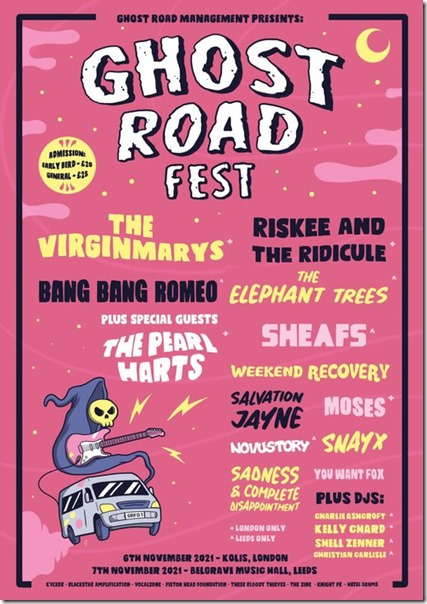
The Virginmarys may have recently paired back to a two-piece and dropped the vowels from their name, but they’re very much alive and kicking and still very much set to appear at the London date of the first Ghost Road Fest, at London’s Kolis on Saturday 6th November and at the Belgrave in Leeds on Sunday 7th November.

While the lineups differ for the two events, Weekend Recovery, Salvation Jayne, SNAYX, You Want Fox, and Sadness and the Complete Disappointment are all confirmed for both dates. bang Bang Romeo headline Leeds on what promises to be a day of thrills and quality music, and while Pearl Hearts are only playing London, Leeds gets SHEAFS and Novustory.

While the world seems to be descending to shit, Ghost Road Fest is offering an oasis of nice, with a lineup that’s solid quality and gender-equal both north and south, and in one single move achieve on a single weekend something the government hasn’t managed in a decade.

Click on the image for full details and tickets.

166718167_1121172121690314_3058921579364279298_n

We’ll see you down the front in  Leeds!

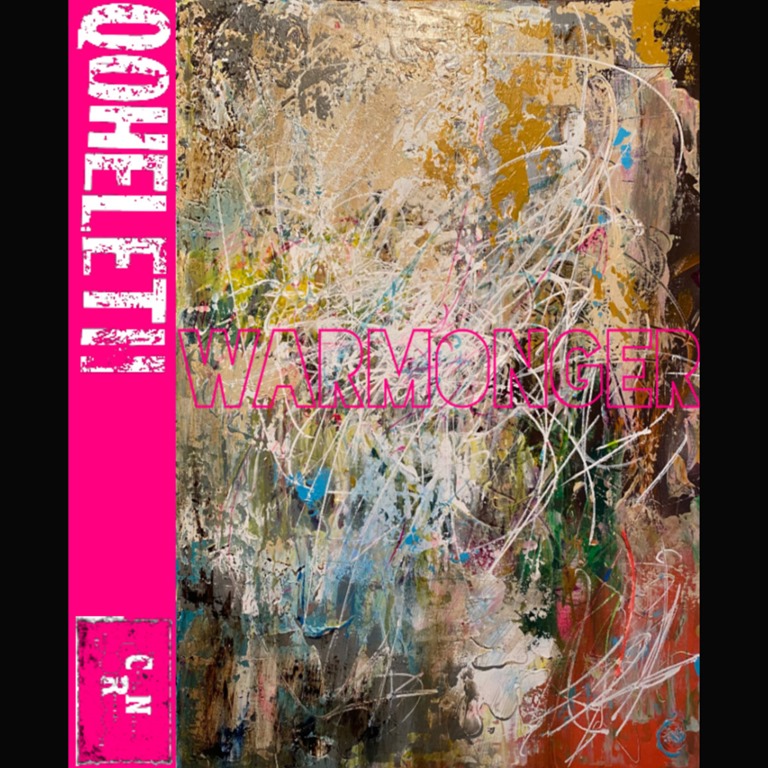
Hailing from Charlotte (USA), Qoheleth is built from the last remaining scraps of their sanity (Jeremy Hunt, Mike Strickler, and Caiden Withey). The resulting sounds and sights of the collective are rooted in upheaval: loud, obnoxious, and discomforting. Throughout their five year existence, they have focused on three central tenets: pushing the musicality of noise to its limits, never standing in one place for long, and continually asking questions.

Their newest album, Warmonger, explores the American love affair with violence. What happens when a country is: founded in violence, endowed with a mythos that both ignores and celebrates destruction, and continues to perpetuate it, over 200 years later? The American Dream is a violent one. What happens next?

Warmonger reveals a more communal aspect of QOHELETH, as they invited friends to lend their vocals and noise-making talents to the party. Artists E.B. Taylor, K, Juan Carlos Lopez, and Jon Michael help broaden the sonic palette of previous albums, offering their own perspectives on what violence hath wrought.

At the core, this record is one of lament, anger, and grief, tinged on the edges with hope. If there’s a path towards life and well-being for all, it has to start with a reckoning. This is ours.

Watch ‘The Means Undid The Ends’ here:

AA

a2312463737_10

Hypershape Records – 22nd October 2021

Christopher Nosnibor

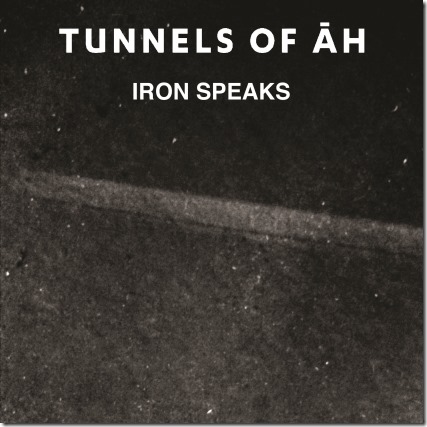
Chronology can be a real bitch sometimes. Linearity is incredibly overrated. How can it be that even now, the world can be so far behind William S. Burroughs’ concept that the conventional novel in its staid, conventional, linear form is passe, and ultimately fails to represent life as it’s lived? Iron Speaks is a release that may trouble some sequential obsessives, as it was in fact recorded before 2020’s Deathless Mind, the fifth album from Stephen Āh Burroughs, formerly known as Stephen R. Burroughs of heavy makers of noise Head of David. Since 2013, he’s pursued subterranean channels of darkness via the medium of fundamentally ambient music, but with an ancient and spiritual undercurrent.

As the press release explains, ‘Iron Speaks has become known as the ‘lost’ Tunnels of Āh album since it was abandoned as the fifth album release due to it sounding ‘unengaged’ to writer Stephen Āh Burroughs; until now. After reworking the original material, Iron Speaks emerges as a rediscovered official sixth album release.’

This is perhaps to overstate the album’s mythology – being shelved for a time is one thing, but to attain ‘lost’ status within three years another. Nevertheless, fans who’ve been keen about this album’s development will likely be happy with both its eventual emergence and its content, which is predominantly a dark whorl of bleak, churning ambience laced with a ghoulish shriek of feedback and general top-end tension. And tense it is: the six pieces bleed together to forge a continuous work that offers no respite and continually works at the psyche and the gut, twisting and gnawing at both. Time stalls, and you find yourself sucked into a subterranean space that’s dark and disorientating.

According to the accompanying blurb, ‘The material deals with the transitional stages of life and death, and it’s an ominous possessive piece of work. As ever though, the darkness of Tunnels of Āh’s output stems from and towards a place of infinite light.’ None of this is so readily apparent on listening, with any light feeling particularly distant as Burroughs leads the listener deeper and deeper through tunnels that rumble and surge with dense walls of noise – and sometimes, it hurts as the weight of it all bears down on the listener. It’s a rich, dense, elemental sound, born of earth and minerals.

We’re told that ‘The title, Iron Speaks, is a reference to the chapter in the Koran which states that iron emerges from the heavens as a gift to mankind. This is often graphically depicted as a blazing ball of molten fire approaching its earthly target, and that image perfectly encapsulates the sonic dynamism of this album. This album is a consuming experience as it slowly enters its intended orbit to its chosen point with inevitable crushing impact.’ The tile track does indeed pack that crushing impact, an oscillating tumult of treble atop layers of rhythmic squalling; in contrast, ‘Every Hour Wounds’ inflicts a different kind of pain as the lower-end notes bounce like oxygen bubbles in murky water in a deep, dark pool. Ominous drones and hums hover before an industrial slash of sheet metal strikes.

The album’s six pieces all sit around the seven- or eight-minute mark, and are densely-textured, and often quite oppressively heavy works. The first, ‘Wardens’ is a smog of bubbling murkiness, where the sound churns ad churns, like dense cloud and uncomfortable gut churning. Long strains of feedback scrape out over a barren wasteland, and ominous hums and drones hover over heavily-textured earth-shifting grind. It’s ultimately not really about ‘engagement’, but about tone texture, and atmosphere, and this is bleak, dense, and uncomfortable, and in a way that draws the listener in. Thunder rumbles, and the experience is quite discomforting. It’s more than that: it’s claustrophobic, suffocating. ‘Terminus Est’ clanks and chimes and booms out dolorous, depressing notes that offer no space to breathe or to reflect. It leaves you feeling compressed, and if not necessarily anxious, then far from relaxed or soothed, but instead on edge and unsettled – and this is why Iron Speaks is a strong work: it has the capacity to have a palpable effect on the listener.

AA
HPS013_front

Today, Danny Elfman has debuted a brand new Xiu Xiu remix of ‘Serious Ground,’ one of the songs initially featured on Elfman’s acclaimed new double album Big Mess [ANTI- / Epitaph Records]. The track serves as an experimental reinterpretation, pairing Xiu Xiu’s signature industrial noise sensibilities with chopped samples of Elfman’s original vocals and instrumentation.

Listen to the remix here:

http://a%20href=

AA

5tqs_DannyElfmanXiuXiu

‘People’ is the first video from Flood Twin, the eponymous full length debut album from this determined, disturbing Atlanta trio. It was directed by Dean Carr, known for his work with Tool, Marilyn Manson and scores of others. The album was recorded at Madison Studios, in their hometown, produced by lead singer and bassist Grant W. Curry, an alumnus of New Orleans cult rockers Pleasure Club.

The opening track and lead single, ‘People,’ introduces the album and the band with a powerful swagger: howling guitar feedback and a “let’s get this mother started” kick drum pulse gives the bass an opening to set the tone for the album, hammering home a jarring bottom whereupon Hedberg conjures the demented surf guitar nerve-twitch of the early Cramps and their Australian disciples, the Birthday Party.

It’s one hell of an introduction and a hot taster for the album. Watch the video here:

AA

Flood Twin 2 pc Brian Manley for email