Posts Tagged ‘synth’

Christopher Nosnibor

13th September 2025

It is impossible to escape AI now, and its ubiquity has arrived at a shocking pace, its acceleration seemingly exponential. You can avoid social media, but can you avoid computers or mobile phones for even more than a few hours? The news – beyond the main headlines, at least – is abrim with reports on how it’s affecting us as individuals, as a species, and the environmental impact. I watch a training video at work: it’s presented by AI actors who move their arms in strange ways and occasionally mispronounce a word in the worst way. Meanwhile, management want us to save time on report-writing by using Copilot. Drained by all of this, I go to the pub for soe decompression time, and the talk is of how jobs are being undermined by AI, and some guy’s got a video AI made using just a photograph. Why? Why do we need this? We don’t, of course, but it’s novel, mindless entertainment that can be created in seconds. Increasingly, it feels like we’re volunteering ourselves for virtual lobotomies. Despite the fact that the current technoscape is every sci-fi dystopia playing out exactly as told in real-time, it seems the majority of people are more than happy to embrace AI. Even writers, artists, and the like, present themselves as ‘curious’ and will engage with AI for prompts or to brush up something they’ve done. But the fact it that it’s a slippery slope, which gets steeper and steeper and further down is an abyss that plunges straight to hell. The worst of it is that it’d becoming increasingly difficult to separate real life.

One of the issues I have personally is that just as every significant technological advancement since the Industrial Revolution brought the promise of more leisure time by making work lighter, the opposite is true – unless you consider unemployment and life on the breadline to be leisure. AI isn’t saving time by vacuum cleaning the house, hanging up the laundry, putting the bins out or doing the school run: it’s simply devaluing creative skills. Anyone who has read an AI-generated article, heard an AI-assisted song, or seen some AI-created art will know that there’s something ‘off’ about it, that it’s soulless and vaguely alien. Meanwhile, the world seems to be spiralling into a cesspit of animosity, hatred, and division. Something happened during the pandemic which meant that when we all emerged from lockdown, war and rage and unspeakable cuntiness exploded on a scale beyond articulation. It’s no wonder people are struggling with life right now.

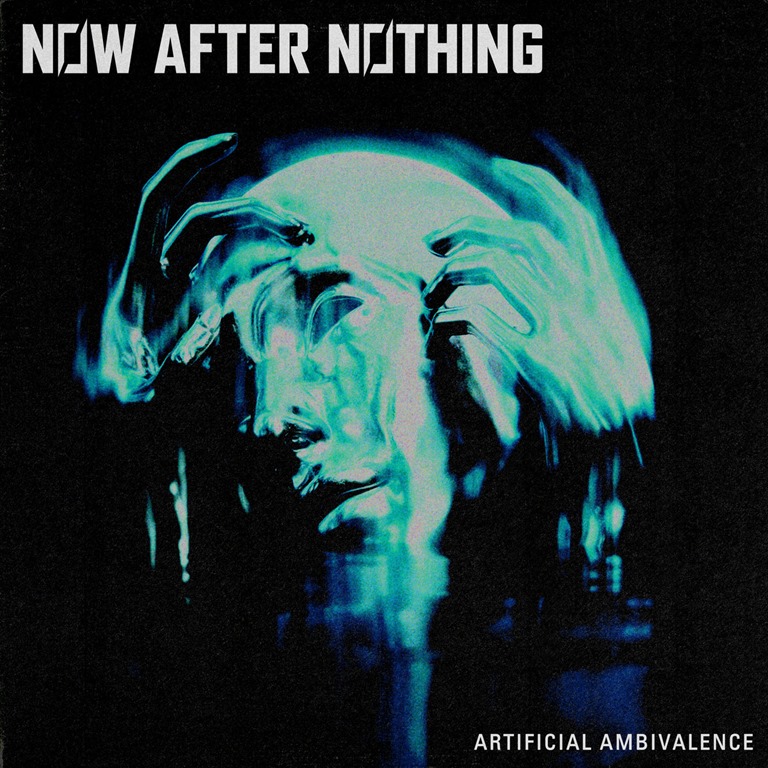
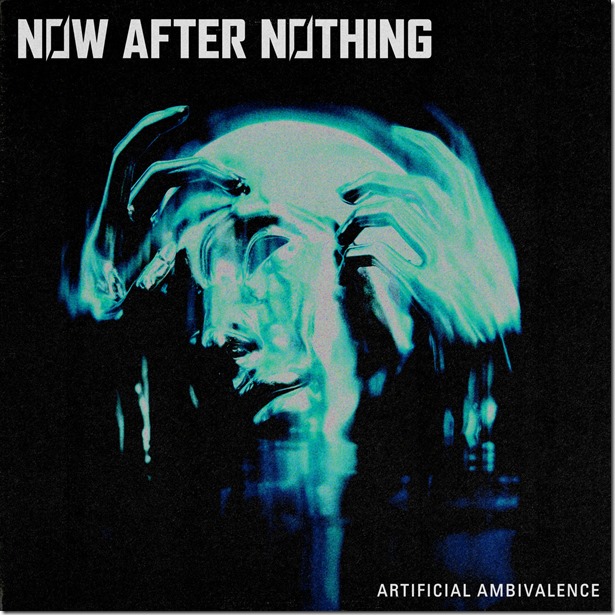
Now After Nothing is, in some respects, a therapeutic escape from all the shit. Multi-instrumentalist Matt Spatial paired with Michael Allen after what he describes as ‘a relatively difficult time in my life [where] I had become lost and depressed without a creative outlet with which to express myself’. There’s much to say that creativity – and exercise, both physical and mental – are the best self-maintenance. Listening to this EP, it’s clear that Spatial is really pouting everything into this.

His comments on the EP are worth quoting: “Artificial Ambivalence, as a concept, to me represents the state of feeling lost and/or the ‘shutting down’ from the negativity and toxicity around each of us,” Spatial explains. “They say ‘ignorance is bliss’, but in the (mis-)information age we seem to have reached a point of being pummeled into exhaustion from the constant barrage of negativity. For some, while the desire is stronger than ever to make positive change in the world, we might get derailed by feelings of helplessness, hopelessness, and being powerless in a society that seems to increasingly favor only one set of values. For others, it’s the choice to conveniently ignore the inhumane atrocities happening in our society when those atrocities don’t directly impact that individual.”

Of the music, there are references to ‘goth-glam grooves slick with sweat, raw enough to leave a mark’ and a nod to the fact that ‘fans have called it “S&M disco,” a sinister shimmer of punk, industrial grind, and nocturnal new wave.’

The first thing that strikes on the first listen of this EP is the energy. Everything is up-front and it lands like a proper punch in the face. Big, gutsy riffs underpin some sinewy lead guitar parts, driven by some explosive percussion and sturdy, throbbing bass. Straight out the traps, ‘Sick Fix’ blends post-punk and grunge to create a hard-hitting blast, and one that’s got hooks and melody in spades, too, with hints of Big Black in the background. It sets the bar high, but ‘Criminal Feature’ hurdles it effortlessly.

Slowing the pace and changing not only the tempo but the mood, the piano-led ‘Holly’ broods hard and is unashamedly mid-80d goth in its vibe, but also incorporates more post-millennial post-punk and goth in its genetics. The result is – to wheel out a cliché – anthemic. And it is, of course, the perfect mid-set slowie, which sets things up for the chugging, bass-driven beast that is ‘Fixation Fantasy’, a track that’s more 90s alt-rock than post punk or goth. More than anything, I’m reminded of psychedelic grunge also-rans Eight Storey Window in the ear for melody and the emotional heft delivered by some achesome riffs delivered at an intense volume.

‘Dare’ brings some dark pop intimations paired with some searing guitar work which lands like a post-rock Placebo crossed with Salvation – that is to say, it’s richly immersed in that mid-80s Leeds sound. It’s inspired stuff, and then some. Closing off, single release ‘Entangled’ offers glorious shoegaze gentility before breaking into a magnificent slice of synthy post-punk with some massive guitar. Artificial Ambivalence is better than ‘all killer’ (which it is) – it’s next-level solid quality and absolute gold.

AA
a3532593873_10

Filmmaker Pavel Vishnevsky returns to collaborate again with Paradox Obscur, bringing a dynamic new visual interpretation to ‘Like A Freak’, an electrifying track from IKONA, the recently released new album by the Greek synth duo.

In a vivid performance, Nicola Di Pierro defies cliché and convention, embodying the song’s spirit of freedom and self-expression – because everyone, regardless of age, has the right to dance. The result is a cinematic celebration of exuberance and individuality, amplifying the pulse of Paradox Obscur’s kinetic sound.

‘Like A Freak’ opens side 2 of IKONA with a wild jolt, pulsing with the edge of the Hexagon house music label’s rebellious spirit. Powered by the Behringer Crave synthesiser, it spits out raw analog grit – the bass growls, the synths snarl – creating a feral, ecstatic soundscape that is as visceral as it is infectious.

Lyrically, ‘Like A Freak’ explores the duality of ego; the composed persona we present to the world versus the wild, unfiltered self that thrives in secret. It is a song for those sweaty, sunrise hours when inhibition fades, judgement dissolves, and you move only for yourself as you ask: Does it make you click? / Now it’s time to go deep. / Way deep. Like a freak. / Taste my analog kick!

AA

0631b1dae417a364c26f8af59510d7ba29ffd0fe

17th October 2025

Christopher Nosnibor

Raoul Sinier first caught my attention with the release of Guilty Cloaks, although he had already built a substantial catalogue of strange and surreal works in the preceding years, notably Brain Kitchen (2008) and Tremens Industry (2009). After Welcome to My Orphanage (2013) and Late Statues (2015), I rather lost track – something which is clearly to my detriment – and then he fell silent following Death, Love and Despair in 2018. Perhaps that title was a revelation beyond any of the contents or accompanying notes. It’s not anyone’s business, regardless.

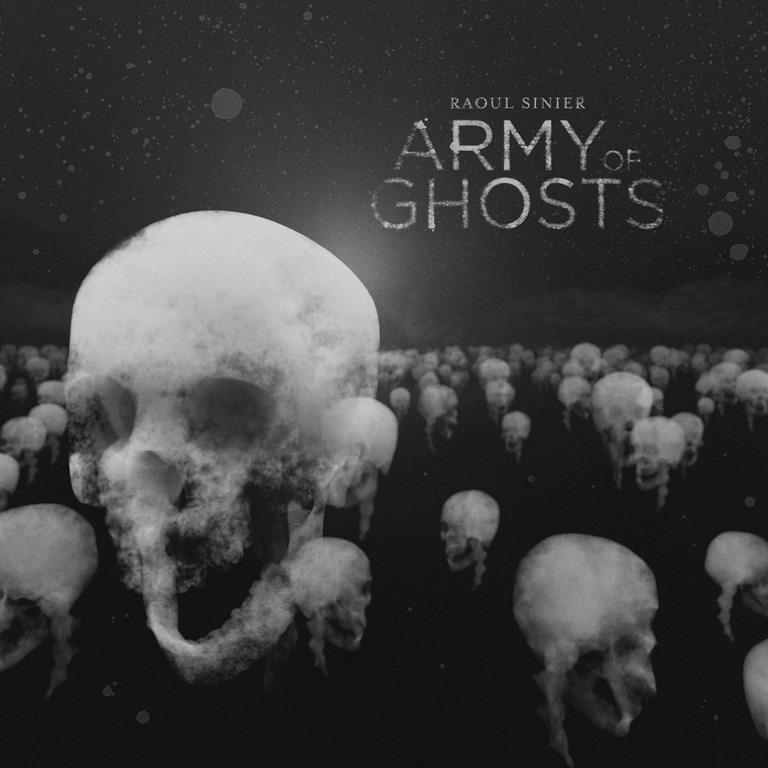
What matters is that the arrival of Army of Ghosts is a welcome one, and one which is heralded in the accompanying press release with the fanfare that ‘Raoul Sinier is back — more hybrid and unpredictable than ever’. We go on to learn that ‘His new album is a bold fusion of everything that made electronic music iconic, layered with sample work straight out of hip-hop’s golden age. Add in overdriven guitars, throbbing bass, flashes of rock, prog, and funk, and you’ve got a sonic landscape that’s as explosive as it is unique. Floating above it all is Sinier’s signature ethereal voice, a haunting counterpoint to the beautiful chaos below.

Melancholic yet sharp, lyrical yet raw, his music walks the line between introspection and confrontation.’

The appeal of Sinier’s work is its inventiveness – although with Guilty Cloaks, I will admit that I was drawn by a certain post-punk vibe, too – and Army of Ghosts is certainly inventive.

The album’s first song, ‘Phony Tales’ switches between Phantom of the Opera theatrical verses and brutal industrial choruses worthy of Trent Reznor. It’s not just the surge of sound, but the crashing, metallic bin-lid snare that dominates the mix and completely spins your head. It may only last two minutes and ten seconds, but it’s intense.

Much of Army of Ghosts is intense, but in different ways. The drums are uncommonly dominant, and Sinier’s vocals often invite parallels with A-Ha’s Morten Harket, but crucially, said vocals are wrapped in a broad range of forms. ‘Brace Yourself’ offers a lethal cocktail of this, and that, and the other, led by some trip-hop drumming and proggy guitar work, before tapering out with a dark, sonorous bass. It’s that same insistent, baggy beat and Bauhaus-meets-metal explosion which shapes ‘Disperse’, a word which has enhanced implications and resonance of late.

In its eclecticism, Army of Ghosts comes up trumps. ‘Walking Through Walls’ offers springy post-punk energy in the vein of Bauhaus at their best, while the title track straddles post-punk and Nu-Metal, and then post-rock, with sludgy bursts of low-end distortion and…piano. Unexpectedly, it calls to mind the stylistic swathe of Bowie’s 1: Outside, an album which knows no borders.

Sinier knows how to spring surprises, and the wild intro to ‘Spectral Ocean’ is indeed wild, a furious flurry of violin, layered and awash in echo abruptly giving way to a low-slung thunderous bass groove that’s got goth stamped all over it and would have been perfectly at home on the new Rosetta Stone album – and that’s before we get to the brittle, picked guitar and sturdy mechanical drumming that pumps away relentlessly. After the widescreen expanse of the moody ‘Distant Wildlife’, which builds to a dark, slow-burning climax, driven by a dense, throbbing bass, the final track, ‘Neon Sign’ pairs things back and goes all out on the haunting atmosphere, with serrated guitars cutting through drifting synths and a contemplative vocal performance – before suddenly closing with a blast of drone metal straight off Earth 2.

The thing about Army of Ghosts is that it is both detailed and direct, sometimes simultaneously, but it is never predictable. The song titles do not offer a clear overarching theme, but the ghostly and paranormal hover in every shadowy corner of this theatrical and imaginative set of songs – a set that’s wildly varied, but consistent in its quality. Raoul Sinier is most definitely back, and this is very much a good thing.

AA

WXFDSWXCXII front

The Hangnails have certainly evolved. Recent releases have been a very far cry from the raw garage blasts of their early works, starting out almost fifteen years as a full-throttle garage duo.

There was something of a fallow spell after the release of DOG in 2017, after which Martyn Fillingham and Steven Reid made an understated return, the dropping of the ‘…and the’ signifying their shift towards different territories.

‘Come On Outside’ may be their most different yet. Stripped back, mellow, atmospheric, and synthy, it boasts epic, cinematic qualities – and they still make sound that you’d think impossible for a two-piece.

The visuals for the video are pretty striking, too.

AA

557129847_1385194123607392_9211412401179351774_n

Mortality Tables – 25th September 2025

Bryan Alka’s brief post on Facebook sharing the news of his new release, is revelatory: ‘Today we release my 5th full length on Mortality Tables. After a series of breakdowns… The Magnitude Weighs Heavy.’

The Magnitude Weighs Heavy is the third and final instalment of a of dark and brooding albums, the first two parts of which – The Colour Of Terrible Crystal and Regarding The Auguries – were released by Vince Clarke’s VeryRecords. Alka, and particularly Bryan Michael, has no small back story: ‘a Philadelphia-area artist who has collaborated with Vince Clarke (Depeche Mode / Erasure / Yazoo), Roger O’Donnell (The Cure), Christian Savill (Slowdive / Monster Movie) and Michael Textbeak (Cleopatra Records). alka was formed around 2000 as a return to his bedroom producing days, and as a cleansing of his disappointing experience within the Philadelphia indie rock scene.’

This thirteen-track album is epic, grand, expansive. It’s also an exercise is taut electropop with a decidedly early 80s bent. Because what goes around comes around, the whipcrack snare and noodly electronic drift which defines many of the tracks, despite being pure 1989, have a contemporary feel, too.

‘Soliloquiy’ drifts into dreamy electro shoegaze, mellow and atmospheric, rippling, and soaked with a certain sadness, however sturdy the beats remain. Elsewhere, as on ‘Creeps; its clearly an attempt to lock things down with pinging robotic beats

This feels like quite departure for Mortality Tables, given their learning toward abstraction an ambience, but they’ve always leaned toward the different, and this is a work which is unashamedly different. ‘Unravel’ is exemplary here: it’s got groove, and is ostensibly a bopping dance cut, and a far cry from the implications of the album title. But everyone deals with trauma, grief, and distress differently, and we all articulate our internal strifes by different means. ‘enchanté’ locks into a hypnotic groove, the likes of which I haven’t been so immersed in since I discovered The Dancing Wu Li Masters by 25 Men back in 2008.

For all that, there are large, ambient expanses, passages of stuttering electro which draw together elements of industrial alongside the layered dance beats. The ten-minute ‘an attempt to conjure quiet’ feels like it’s quite willing to delve deeper into noise, the very opposite of the quiet it claims to seek, and the duration of this album feels like a teetering on edge. I’m reminded of how my late wife would hassle an and harangue over details, over chores, and the tense, jittery tone which leads n this album at times tales me there. But if the dark mutter of ‘thee individual visions ov jhonn’ is dark with resonating melancholia, The Magnitude Weighs Heavy brings things back to the light. ‘Whatever Will Become’ is a hybrid of pop and bubbling electronica, busy but mesmerising in its concentric circles of sound, its abrupt ending jolting the listener back to the moment.

The magnitude may weigh heavy, but this album has a remarkable lightness, delivered with a deftness of touch.

AA

a2561728450_10

5th September 2025

Christopher Nosnibor

Bandcamp Friday or nay, September is always a busy month for releases, presumably in no small part due to the fact that the festival season is over, and artists can get to the job of plugging material to fans they may have picked up along the way, while music listeners are back home rather than in fields in front of stages, or on holiday, so are placed to listen to, and maybe purchase new music.

Sometimes, it can take a while to sift through it all, and there’s a real danger that some great stuff will slip through the cracks, especially from lesser-known artists. This, in many respects, is where the music press, such as it is these days, has not only a role, but a duty, an obligation, to seek out and highlight the acts who aren’t going to be pushed into the ears of the masses by algorithms, or by labels with hods of cash for promo (who aren’t necessarily averse to insidious campaigns claiming a ‘grass-roots’ story for an unknown group of middle-class posers who’ve barely played a gig or had more than a handful of streams / likes before landing airplay, huge support slots and going stratospheric overnight… and there are a fair few of these).

Moons in Retrogtrade is Kara Kuckoo, a German artist who does a nice line in dark alternative / gothic electronic rock, and who isn’t likely to be getting algorithmic / big label backing any time soon, not because her work isn’t good, but because, well, it’s a bit arty, and in the current climate of anti-intellectualism, it’s a hard sell to the mass market.

Take, for example, this, the lead single from her upcoming debut album The Third Side of the Coin. Released as a video single, the song is accompanied by highly stylised visuals, which feature an almost Tim Burton-esque ‘Mad Hatter’s Tea Party’ scene. It’s fitting that this shimmering dark pop gem should present images offering a twisted alternative reality, given the subject matter (again, a hard sell for commercial channels), as Kuckoo explains the concept behind the single:

“Carl Jung said, ‘Everything that irritates us about others can lead us to an understanding of ourselves.’ ‘Mirror Obscura’ is about facing one’s own darkness through the infinite mirrors of other people… The video portrays the perceived duality of black and white and the madness within us as we avoid our own darkness. The elements of color are glimpses into the spectrum of wholeness… I especially wanted to shoot at sunrise because those moments of dusk and dawn are the magical spaces between day/light and night/dark.”

On the project’s broader intent, she adds: “Moons in Retrograde is about digging up and reflecting on buried emotions… MIR weaves a soundscape which shines a light into the deepest corners of the mind and exposes the truth about the dark side of humanity while simultaneously discovering the core of the human soul.”

It’s one of those tracks which takes its time with a slow build (another thing which goes against the grain in our attention-deficient world, where intros and verses have got shorter and shorter to the point that most chart pop is seventy-five percent chorus), building atmosphere, Kuckoo’s vocals emerging through cavernous reverb and washing waves to arrive by stealth to an meet with an enticing beat and subtle instrumentation before a strong chorus that goes big on the final run, a burst of bold, even epic proportions.

You’re welcome.

AA

AA

Moons in Retrograde - Rotten Tree Still

Metropolis Records – 8th August 2025

Christopher Nosnibor

The singles released ahead of the album did their job, at least for me, in the way it used to happen in the pre-Internet days, when you’d hear a single or two on the radio, and you’d get hyped for the album.

Half the time, the singles were the only tracks that were any good, but the other half of the time, the singles would actually prove to be representative and stand in a solid set of songs.

In this instance, the title resonated early. Perhaps it’s an age thing. In my 30s, I witnessed many of my peers somehow pass into middle-age overnight, bemoaning that there’s no good music anymore, how things aren’t how they were when they were between the ages of 16 to 21, how everything’s shit now and the nostalgia-wallowing would grow deeper with every beer consumed. As I approach fifty, it’s only got worse: many of us have teenage kids, and many of them go on about how the music their kids listen to is shit, it’s just noise, how their kids stay in bed till lunchtime at weekends and on school holidays, and so on. It’s as if the grind of the day-job and family life has erased their memories of what it was actually like being a teenager. It’s broadly true that people become more conservative as they grow older, and, despite the vehement intentions stated in youth, they become their parents, one way or another, perpetuating the same mistakes, while blaming their parents for the fact. This is but one example of the way people do have a tendency to become the thing they hated, but one which is close to my heart.

Right now, the world is almost unrecognisable from the one I grew up in, but instead of fighting the system and pushing for positive change and a more just society, greed, division, and hate have become evermore ingrained.

They open in grand style, with a smouldering six-minute epic in the form of piano-led ‘All Tomorrows’, which builds slowly and creates an air of wistfulness, of reflection, before hitting a solid upbeat dance groove. But as it ends, tomorrow is marked by departure, ending, alone. Across the course of fourteen songs, Rotersand explore the human condition in all its complexity, all the while dusting solid dancefloor-friendly tunes with a deep melancholy, their dark electropop leaning towards more industrial dance at times, as on ‘Father Ocean’, and ‘Watch Me’ particularly mines that late 80s / early 90s Wax Trax! vibe – while the use of autotune and the overall production firmly roots it in Europop territory. Elsewhere, ‘I Will Find You’ rolls up the entirety of electropop circa 1983-85 into a magnificently crisp four and a half minutes.

Unusually, the singles are both to be found in the second half of the album, but this is perhaps an indication of the consistency and depth of the material: while many albums suffer from a second-half slump, Don’t Become the Thing You Hated gets harder and more intense in the final third. ‘Private Firmament’ is a clear standout when it comes to dark intensity.

And so it is that Don’t Become the Thing You Hated is something of a caution, a reminder, a note to self, and it’s heavy with simmering anger – anger and twisted emotions directed in all directions, far and wide outward, and inwards, too. ‘Click Scroll tap Believe ‘ is a particularly taut listening experience and succinctly summarises life in the contemporary climate: ‘Technology the new religion / The lines between us are wearing thin’ may not be the pinnacle of poeticism, but it hits home. And that, really is the strength of Don’t Become the Thing You Hated: Rotersand zone in and hit their targets with a rare accuracy, again, and again.

AA

AA

727884

21st July 2025

Christopher Nosnibor

I’ve been digging GSXT for a whole decade now and shouting about it whenever the opportunity arises. I’m not sure how many people have been paying attention, but anyone who hasn’t has been missing out. They took their timing building up to their debut album, released in 2022, with half a dozen EPs preceding it. ‘Cosmic’ is the first material since Admire, three years ago, and this new single continues their trajectory of extending their repertoire, taking the form of a slow-building expansive brooder.

A cinematic piece of post-punk desert rock, and with hints of recent releases by Earth ‘Cosmic’ tones down the snarling overdrive that’s the duo’s signature sound in favour of something more hypnotic, in the vein of ‘Sonores’. It suits them well, as it happens: Shelly X’s voice drifts and aches through the bass-led verses, floating in a growing swirl of guitars in the chorus before a straight-up rock guitar solo swoops in.

To describe ‘Cosmic’ as commercial would be rather misleading, because it’s certainly no sell-out. But it does mark a significant step. What’s more, it’s absolutely huge, and immediately accessible, making it the cut which has the broadest appeal yet. Maybe now they’ll listen up, eh?

AA

a1762628991_10

Negative Gain Productions – 6th June 2025

Christopher Nosnibor

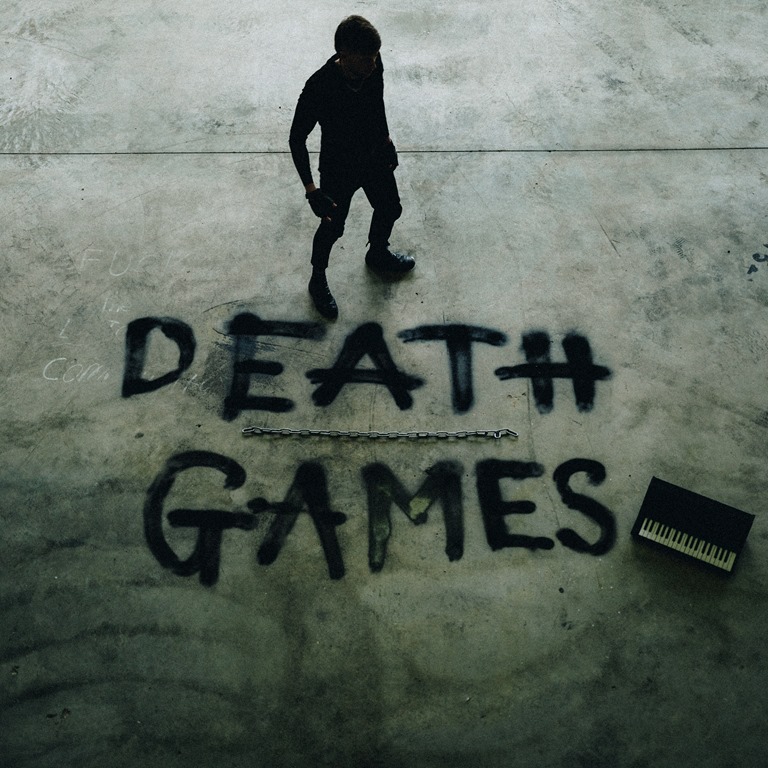
Just as the birds of prey from which they take their name are creatures of the night, so this Irish act – essentially one guy – who draw inspiration from the darker realms of postpunk, goth, and synth-based music are very much dwellers of the dark hours, as debut album Death Games attests, with titles such as ‘Perfect Nightmare’, ‘Tombs’, and ‘Send Me to My Grave’. The album’s themes are timeless and classic, offering ‘a haunting exploration of love, mortality, and the fragile nature of existence,’ while casting nods to touchstones such as Lebanon Hanover, Boy Harsher, and Black Marble.

Lead single ‘Give Me Your Stare’ opens the album in style with a disco beat and throbbing bass giving this bleak, echo-soaked song a dancefloor-friendly groove. The vocals are backed off but ring clear through a haze of reverb, offering a hint of The Cure’s Seventeen Seconds in terms of production values.

AA

The compositions on Death Games are pretty direct: there’s not a lot of detail or layers, and it’s the electronic beats and pulsating basslines which not only define the sound but drive the songs. The sonorous synths which twist and grind over the top of these predominantly serve to create atmosphere more than melody, although haunting, repetitive motifs are commonplace, and the vocals, too, being low in the mix and with a fairly processed feel, are more a part of the overall sound than the focal point.

‘Skin on Skin’ brings a wibbly, ghosty synth that sounds a bit like a theremin quivering over a minimalist backing of primitive drum machine and bass synth, and the likelihood is that they’re going for early Depeche Mode, but the end result is more like a gothed-up Sleaford Mods, although, by the same token, it’s not a million miles away from She Wants Revenge around the time of their electro-poppy debut, and that’s perhaps a kinder and more reasonable comparison. ‘Fevr 2’ brings an increased sense of urgency with skittering bleeps skating around the reverberating drums: it has both an 80s movie soundtrack vibe and a vintage goth disco feel, and despite its hectic percussion and busy bass, ‘Tombs’ conjures a haunting, requiem-like atmosphere.

The ‘death’ thematic may not always be literal, and as much concerned with the death of love and the ends of relationships, but the duality the theme offers serves OWLS well. There’s no denying that it’s both a stereotype and a cliché that an obsession with death is such a goth thing, and OWLS fulfil these unashamedly – but then, why should there be shame? Why is it only goth and some strains of metal which embrace life’s sole inevitability, and explore mortality and the finite nature of existence? Even now, after millennia, we aren’t only afraid of death, but, particularly in Western cultures, we’re afraid to think or talk about it. People passing in their eighties and nineties still elicits a response that it’s a tragedy or that they should have had more time, and I’ve seen it said of people departing in their sixties or even seventies that it’s ‘no age’. We seem to have a huge blind spot, a blanketing case of denial when it comes to death, as if it shouldn’t happen, that it’s an injustice, and that no-one deserves it. But nothing is forever, be it love or life, and while loss – any loss – is painful, it comes attached to inevitability, being a matter of when, not if.

The stark and sombre ‘Send Me to My Grave’ commences a trilogy of dark, downbeat, funereal songs, which grow progressively darker, more subdued, the vocals more swallowed by evermore cavernous reverb. Even when the beats kick in and the bass booms, things warp, degenerate, and seem to palpably decay and degrade. There’s a weight to it, a claustrophobic heaviness, and the kick drum thwocks away murkily as if muffled by earth and six feet under sods. ‘This Must be the End’ is brittle, delicate, the calm that comes with the acceptance of… of what? What comes after the end? It feels like the song, and the album, leave this question hanging with an ellipsis, a suspense mark. It seems fitting, since we simply don’t know. But it does very much leave the door ajar for OWLS’ follow up, and that is something to look forward to.

AA

AAlbum CoverA

29th November 2024

Christopher Nosnibor

While the entirely of this EP has already been made available as individual tracks, some of which have made our ‘recommended streams’ pages, songs as standalone pieces are one thing, but understanding them in context can often be quite another.

And so it is that Archetypes ‘explores timeless themes that have shaped societies for centuries. The band delves into the power of language and storytelling, celebrating legends that transcend time and culture. These stories, rich in symbolism and ritual, carry the wisdom of generations and continue to captivate audiences with their enduring lessons and sensational nature.’

Hearing the songs in isolation, the sense of thematic unity which unite them as an EP isn’t immediately apparent, particularly with the visual accompaniments of highly stylised neon-flashing cyber-tinged promo videos. They’re necessary – even essential – tools for grabbing attention in our hyper-stimulated, visually-obsessed world. Post some words, or some audio, and it’s like standing in the middle of a field at night dressed in black and expecting attention – but post an image, or a video, and people notice. It really is that clear-cut. It’s as if people need their media injected directly into their eyeballs, but listening the songs in sequence and only in audio, draws the attention to the music itself.

‘Mentor’ opens the EP, driven by a sturdy industrial groove and some tidy two-way vocals which form a dialogue and pivot around themes of disconnection while pitching a magnificently melodic chorus that really brings all the hooks. ‘Trickster’, the first song to be released from the EP, is bold and energetic, and if the backing is like a pumped-up disco interpretation of Depeche Mode, the belting vocals bring from-the-gut passion. The song’s overt pop sensibilities are enhanced with this raw edge, making it a clear and instant standout.

AA

As the title implies, ‘Shadow’ is darker, and finds the duo tunnelling deeper into the psyche and troubled waters, and satisfaction – or lack of – bubbles to the surface amidst the lyrics, and what filters through over the course of the EP is that as much as Archetypes is about the power of language, Esoterik are interrogating the shortcomings of language to fully convey complex emotions – the elements of which constitute our very DNA which ties us to those myths and legends of centuries past, and which, ultimately, are the essence of the human condition.

‘Hero’ makes for a strong, bombastic finale, the big drum-fills and powerful snare sound evoking the spirit of the 80s power ballad as they push to the conclusion with a surging chorus. Just how effectively they explore the elements of symbolism and ritual may be questionable, but as a superbly-realised slab of dark pop, Archetypes is hard to fault.

801465