Posts Tagged ‘Sparse’

Ahead of the release of her forthcoming self-released, crowdfunded album, Mosswood – which we absolutely love – minimal electronic pop artist Mayshe-Mayshe has released a third single by way of a taster.

‘Little Yeah Whatever’ encapsulates the spirit of Mayshe-Mayshe perfectly – subtle, understated, shy-sounding, but with an unexpected strength at the core.

AA

a3517779526_10

Nocturnal Rainbow Recordings – 5th September 2025

Christopher Nosnibor

One significant downside to digital music formats is that is reduces the dimensions of the experience. With a record, and even a CD, there is a physicality which is in many ways integral to the experience. I’m not here to sell the whole multi-sensory experience and tactility of vinyl line: yes, I grew up with vinyl, and in the 90s, a new LP was maybe £7.50 while a CD was £11, so I would often buy vinyl simply because I could get more music for my money. And records do scratch, sleeves get bent, and generally, vinyl requires more care than a CD, so I’m as much a fan of 5” silver discs as I am 12” black ones. And now, vinyl has become something of a fetishised luxury item: as much as there’s still pleasure to be had from sliding a thick chunk of wax cast in whatever hues from a glossy, heavy card sleeve, there’s sometimes a sense that they’re all trying too hard, and the £30 price tag takes some of the shine off the experience. There are a few exceptions – recent Swans releases have been works of art in every sense, and the physical formats have added essential dimensions to music which is something more than just some songs, recorded.

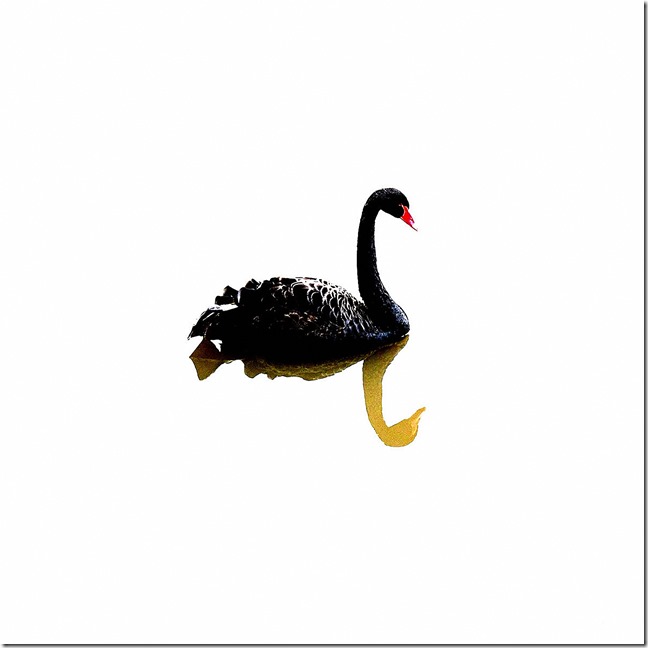
Had Ran Slavin’s latest offering been given a vinyl release, it would have been a triple LP, containing as it does thirty tracks, with a running time of almost two hours. It would have been epic. But despite having released previous albums on esteemed labels including Mille Plateaux, Cronica, and Sub Rosa, it’s unlikely that Ran Slavin has the kind of fan base that could justify, from a label perspective, a triple-vinyl release. But what Nocturnal Rainbow Recordings have done here is interesting, and utilises the digital format in a novel way, by offering alternative artwork in recognition of the album’s multi-faceted nature. Yes, it’s been done by major artists who’ve released physical albums with variant covers, with a view to enticing hardcore fans to buy multiple copies and thus increase sales and enhance the chart position (The Rolling Stones’ Hackney Diamonds probably wins the award for the pinnacle of pisstake on this score), but the idea of buying an alternative digital cover for a nominal price isn’t something I’ve seen before.

As the notes on the Bandcamp page explain, ‘Just as the music migrates across genres, the visuals migrate across states of being, extending the album into a network of parallel identities. Together, they construct a fragmented yet coherent cosmos, where each image is both an entrance and a deviation, multiplying the ways Neon Swans can be seen, heard, and inhabited.’

Appropriately, Neon Swan doesn’t quite sound like anything I’ve heard before, either. To unpack that, it contains many elements which are common and familiar. There’s sparse techno, minimal dance cuts with sped-up vocals and swathes of space between low-key beats and glitchy grooves, as represented by single release and album opener ‘tell///me///now’ – one of many titles which reflect the sense of fragmentation and juxtaposition which define the album (‘s4dert1ac’ and ‘d3xr3rity’ provide other examples, but then there are the likes of which also disrupt the conventions of language in the same way Slavin disrupts the language of genre tropes).

‘audio ease my pain’ plunges into darker territory, while introducing rap vocals atop heavy hip-hop beats (although there’s an instrumental version as well further on, which offers a different perspective again on the same material). Elsewhere, ‘c-r-i-m-s-o-n-schema’ brings spacey, spaced-out bleeps, heavy percussion that has a late 90s feel, a blend of The Judgement Night soundtrack’s melding of rap and rock, and the Wu-Tang Clan.

For all of the space, the reverb, the minimalism, something about tracks like ‘searching_heart’ is quite claustrophobic: the intense repetition and synthetic feel, paired with crackling fizz, brain-melting glitches and some grinding bass tones. It may be constructed using the fundamental elements of dance music, but this is not dance music. Electronic music to induce uncontrolled spasms and twitches isn’t a genre, but if it was, Ran Slavin would be a leading exponent.

It’s a long album, with a lot to digest, and as it thumps and wobbles and glitches away, snippets and fragments collaged across one another, there are times it all feels a but much, a bit bewildering. At times it’s draining, exhausting, at times you simply zone out, and often, I find myself questioning the wisdom of persisting with it. The vibe is that of the kind of underground clubs I never got on with in the 90s and early 00s, and I’m particularly reminded of the time Whitehouse played an Optimo night in Glasgow in 2003: I was there for Whitehouse, who played for forty minutes starting around midnight, and the music being played was rather in the vein of the more groove-centric cuts on here. The people there for the DJs weren’t happy for the low-key electro pulsations to be paused for the noise and antics of Bennett and Best, but for my part, I struggled to get into the low-key electro pulsations. But the other reason I recount this experience, challenging in its incongruousness, is that in places, Neon Swans feels incongruous with itself, an album riven with unreconciled contradictions.

The execution of Neon Swans is hard to fault, and it does cover considerable ground, with range, over its expansive duration. But it is sprawling in its scope, its focus is variable, and it is very long. And it’s maybe better with drugs.

AA
NRR38 art 1

Ideologic Organ – 5th September 2025

Christopher Nosnibor

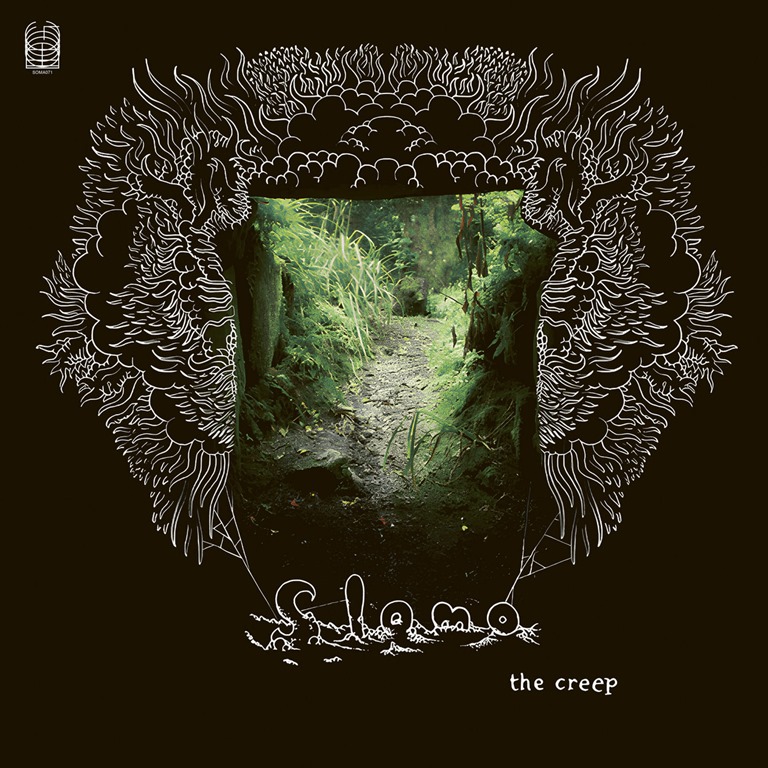
Umberto Eco is one of the many authors I feel I should have read, and hope that one day I will get around to reading. Social media has of late showered me with posts and reposts with a quite from Eco about owning more books than you will ever read – something I never much relate to. I only have so many hours in the day, and reading – since I insist on engaging with books rather than passively absorbing audio books while participating in other activities – is one of those pastimes which is time-intensive. I find music-listening to be comparable. As much as I enjoy listening to music while I’m cooking or participating in other activities, I like to give music full attention, especially new music. And it’s in this context that I often find I purchase music – like books, albeit to a lesser extent – at a faster rate than I can consume it. And this is why it’s taken me until the twentieth anniversary release of Slomo’s The Creep to catch up with this cult classic which brings together sludge / doom and vintage industrial influence.

The album’s context, too, is worth providing here, and so, I shall quote at length rather than paraphrase – not because I’m lazy in my writing, but because I fear making omissions, and feel that liner notes or press releases articulate in a way which better represent the artist.

Just one week after the passing of COIL’s Jhonn Balance in late 2004, the 61-minutes of "The Creep" manifested in a Sheffield suburb. Not yet a band and only captured due to happenstance, this first music of Slomo flowed forth without any consideration of it even being "a piece", let alone a release, though it didn’t take long for the participants (Chris "Holy" McGrail and Howard Marsden) to realise they’d captured something of distinct colour on account of how often they were listening to it.

Initially dubbed "The Ballad of Jhonn & Sleazy", the pair soon instead ascribed the music to Boleigh Fogou; a prehistoric underground chamber on the Land’s End peninsula that both had recently visited and been affected by. "The Creep" took its name from the peculiar side chamber assumed to be if ritual function, having no apparent practical use. This ponderous music chimed perfectly with the fogou; an apparently stolid place that teems with life once you become attuned to its frequency.

Fitting in perfectly alongside other massive single-track albums such as Sleep’s "Dopesmoker", COIL’s ‘Queens of the Circulating Library’, Cope’s "Odin", and Boris’ "Flood", "The Creep" secured a limited release on Cope’s Fuck Off & Di CD-R label in 2005 that quickly sold out via supportive outlets such as Southern Lord, Aquarius Records and Stephen O’Malley’s Ideologic Organ – then operating merely as a blog and micro-store.

And now, Ideologic Organ present a twentieth-anniversary vinyl edition. No doubt there will be plenty of people who are happy about this: after all, it’s never been released on vinyl, and I expect the tonal qualities of vinyl are ideal for a work where there is so much texture, so much richness of tone. The slow, resonant, reverberating bass during the quiet intro deserves deep grooves and decent speakers.

One downside of where the industry is now – and there are, as most of us are aware, many – is that the days of a promo copy of a slab of vinyl are essentially over (unless you’re writing for a major national or international publication), meaning I’m here with some decent enough speakers, but basing my opinion of the mastering and overall sonic experience based on an MP3 version. And as the low notes crawl, quivering, from those decent enough speakers, the rooms seems to darken and the atmosphere grows thicker, heavier.

Not a lot really happens during the first fifteen minutes, but the effect is profound, in that it resonates throughout the body. There is movement, but it occurs at a tectonic pace, and by stealth, rumbling around the far reaches of internal organs. For anyone who has read The Anatomy of Melancholy, Robert Burton’s seventeenth-century analysis of depression which explores the effects of the various humours on both mind and body. And The Creep slowly pulls on the gut and the intestinal tract in the most shuddering, lugubrious ways. At times it’s barely there, but shudders and shivers uncomfortably low on the psychic register. Others… there are low peaks among the troughs, but this is an album that registers more on a subliminal level and certainly low in the guts.

Where I raised the point of the vinyl release likely being popular with many fans, the counterpoint to this is the disruption to the continuity that the format creates. Listening to the MP3 version, there’s a fractional pause at just over thirty-two and a half minutes. It feels like a minor stutter, given that there is a long, low, undulating bass boom that fans out like a ship’s horn or subaquatic signals – but imagine having to get up and flip the record at this critical point before things begin to build. I’m perhaps being picky, but this feels like an unwarranted disruption.

The second half is even lower and slower than the first: twenty-nine minutes of bleak, rumbling abstraction. It’s the perfect amalgamation of drone, experimental, and dark ambient. And The Creep is dark. Whisps of feedback trail around and waft over hovering bass tines which simply roll and reverberate. Time stalls. Everything hangs in suspension: even your mind, and your digestion, hang, suspended, paused. Your breath… your mind. You stop thinking and simply float in this, this sound. Immersive is an understatement. It’s all-consuming, and you can easily lose yourself – completely – in this slow, slow, heavy drone.

20 years on, it’s clear that this is a work which is timeless. Niche, but timeless, in the same way that Earth 2 and Sleep’s Dopesmoker are more than just heavy droning noise. It’s no means an easy listen, but I’d still point to it as an essential one.

AA

a3748639222_10

Mortality Tables – 20th June 2025

Christopher Nosnibor

Lunar Forms is Rupert lally’s second release on Milton Keynes label Mortality Tables, following his Interzones album, released in November last year, and forms part of the latest ongoing project by the label, dubbed The Impermanence Project (which so happened to feature a tense but lugubrious ambient work by some guy called Nosnibor a short while ago).

Sometimes, while I try to work through my review pile in a broadly systematic way, I have to reshuffle my priorities according to mood. And right now, my mood is jittery, jumpy, tense, unfocused, meaning that what I need is something fairly gentle, somewhat abstract, if not necessarily ambient. But also something which feels relevant, in some adjacent fashion. And so here we are: bombs are dropping and missiles are flying, and it’s maybe easy to dismiss it as taking place at a safe enough distance away…. But is any distance truly safe enough?

And so, it’s necessary to seek solace in distraction, solace in abstraction, something that offers layers and textures that draw you in, captivate the attention… but at the some time, offers something more to reflect on while listening to the glitches and echoes, woozy, skitty fragments of analogue pull my attention in different directions.

Impermanence… as polyartist and the innovator of the cut-up method, Brion Gysin said, ‘we’re all here to go’. And we are. We fear it, but it’s impossible to escape the inevitable. It’s not a question of if, but when.

Lunar Forms transitions between stuttering, glitching minimal techno and slowcore EDM, and more expensive, cinematic instrumental sounds which are overtly ambient. Electronic fuzzed and buzzes spark over swirling soundscapes, and at times we’re led into Tangerine Dream territory, while at others, we find ourselves adrift. The fact that, including bonus tracks, Lunar Forms features eighteen pieces, and has a running time of some seventy-four minutes, is significant. It’s a vast and expansive work, and one which is easy to get lost in, since the tracks are distinguished only numerically, ad those numerical titles are not tagged sequentially.

There is a lot of dark atmosphere, a lot of rumbling. There is much haunting reverb, considerable space, a great deal of bubbling, blipping, hovering. The deeper it plunges into spacious, cloud-like disturbance, the more immersive and simultaneously the more the power of this work increases. Breathe deep… and feel everything this represents. ‘313’ May be sparse, but it also edges its way into the space between dance music and the BBC Radiophonic Workshop, while ‘325’ pitches jittery microtonal beats against sonorous strong-like sound. It’s simultaneously tense and introverted, and outward-facing through cloud. The beats of ‘303’ are like the dripping of a tap amidst synthesizer drones and swirls. And it goes on. As such, Lunar Forms is more than varied: it straddles boundaries in a way which renders it almost impossible to place.

AA

cover

Neurot Recordings – 16th May 2025

Christopher Nosnibor

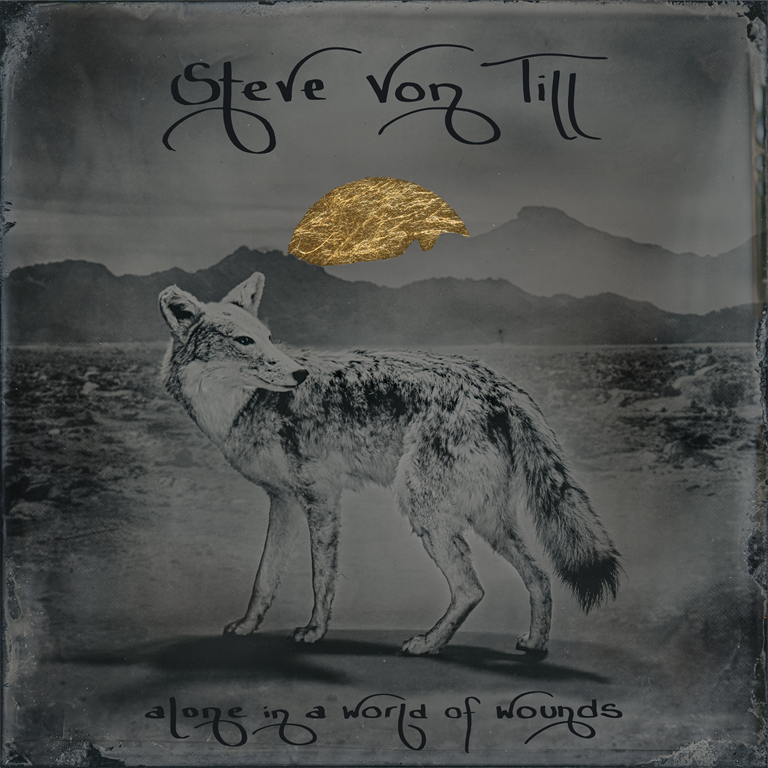
Steve Von Till doesn’t really require any introduction or preamble: the chances are, if you’re reading this, you’re already aware of his work, and if not as a solo artist, then as the guitarist / vocalist with Neurosis, active between 1985 and 2019. As much as Neurosis were labelled a post-metal band, they very much forged their own sound, which has, to an extent, become the house style of Neurot Records.

Von Till’s solo works may lean more toward folk and the gentler side of that style, but nevertheless have significant heft, and Alone in a World of Wounds – his seventh solo album, the follow-up to No Wilderness Deep Enough (2020) is no exception (he’s been busy in the intervening years with a trilogy of Harvestman albums, all released in 2024). The heft here comes from a sense of gravitas, rather than volume and distortion, and continues the softer trajectory of its predecessor, an album ‘initially inspired by the harmonic resonance of piano and synths and his long-standing love of ambient music’.

‘The Corpse Road’ sees Von Till croak and croon in a fashion that could me taken for Mark Lanegan in a blind test, against a sparse backdrop of strings which swell and swoon, heavy with sadness and gloom. There is a sense of times past, not just fading memories and bygone days, but a sense of the creak of wood and worn clothing of harder but simpler times. I find myself unexpectedly transported to a walk my daughter and I undertook from Ambleside to Grasmere in the Lake District a year or so back, via the ‘Coffin Route’. It was winding, and wet, and uneven, not to mention long, and it’s billed as a ‘strenuous’ walk, while still suitable for tourists: as the rain battered the hood of my anorak, I found myself contemplating what it must have been like hauling an actual coffin along that four-mile stretch without the benefit of modern hiking gear. Life must have been tough. Von Till taps into the essence of these past times, and a sense of the elemental.

The mood remains lugubrious on ‘Watch Them Fade’, a song redolent with sadness and reflection, weighted down with the reminder that mortality affects us all and is never far. Despite the fact that life’s only certainty is its expiration, we continue to shy away from the topic. While Alone in a World of Wounds does not confront mortality and death head-on, it’s there at every turn. “Keep on diggin’… dig a little deeper” he implores on ‘Horizons Undone’, and while there are psychological connotations here, it’s hard to ignore images of graves.

The eight-minute ‘Calling Down the Darkness’ is a super-sparse piano-led slow-burner, and confounds any expectation for a surging finish by remaining low-key and minimal to the end, ad something about it is so, so achingly sad.

‘The Dawning of the Day (Insomnia)’ is a brief spoken-word interlude with a moody piano accompaniment, while paves the way – or perhaps scatters woodchips – for the arrival of the swirling atmospheric start of ‘Old Bent Pine’, another song which revels in the forces of nature, before the six-minute ‘River of no Return’ flows toward the finish. It has hints of Slowdive about it. Moreover, its superficial ominousness reminds us that rivers only flow in one direction, and as with rivers, so with life: there is no return, no replay, no turning back. there is no undoing mistakes, only not repeating them.

‘Alone in a World of Wounds’ may be a largely acoustic album, but it is still heavy – really heavy – emotionally more than sonically – and consequently not an easy one to process. It would be impossible to deny the album’s quality. But the weight, the sadness…

AA

AA

450947

2nd May 2025

Christopher Nosnibor

British-Israeli krautfolk collective staraya derevnya are the epitome of obscure and underground, and it’s precisely for releases like Garden window escape that Aural Aggravation exists. Obscure and underground are not criticisms or judgements here: the world of music is broad and exciting because it affords room for all forms of expression. I’m not going to touch on politics or anything else that may impinge on this as an exploration of a creative work, and suffice it to say that I in no way consider any government to be representative of all of the people, especially not the artists, the creatives. staraya derevnya are the kind of artists who exist not only beyond politics, but simply beyond, and Garden window escape is one of those albums which isn’t only bold in its experimental, but

Precisely what ‘Tight-lipped thief’, the album’s first track expresses, is unclear to me. While containing traditional folk elements, the experimental edge is strong, and it twitters and tweaks, like a squeaky toy for a dog or a baby, over an array of clattering percussion, and the cumulative outcome is a wild, murky, jazzy cacophony, whereby the muttered vocals are largely submerged beneath a discordant tumult.

This isn’t only discordant, but it’s also pretty dark: while ‘What I keep in my closet’ brings a sandpapery scrape and a monotonous vocal yelp, and the effect is cumulative, like sandpaper applied to the skin slowly but steadily, becoming increasingly sore over time, before the woozy, warping, dissonant drone of the twelve-minute ‘Half-deceased uncle’ offers up new levels of discomfiture. It’s a gloopy Krauty swell and surge, combining elements of Suicide and Throbbing Gristle with the electronic pulsations of Chris and Cosey’s Trance, along with some low and heavy drone and tooting horns which evoke the spirit of Joujouka, but with a sci-fi swirl a creeping uneasiness and a tension which pulls away as the chords, the limbs, and ultimately the senses. Noises peel and lurch over a loping rhythm which plugs and plods away relentlessly for quite some minutes. There’s an acoustic guitar strumming away amidst the pings and pows and muffled vocal mutterings which melt together in this lo-fi sonic froth which occasionally calls to mind the breathy discordant tension of Xiu Xiu.

‘Cork flight operation’ grumbles and rumbles on, and on, and constructed around a sparse guitar, it’s faintly evocative of later Earth, but instead of rolling beats, there’s an insistent crunching thud like slow-marching feet and there’s rippling synths and slow drones backing the almost melody of the vocals.

AA

Amidst squealing circuitry and melting synths, ‘Onwards, through the garden window’ emerges, sparse and gloomy. The hushed vocal, thick with a syrupy distortion, is menacing, the instrumentation borders on jazz but with an industrial / dark ambient edge, which is unsettling, uncomfortable, and this is how Garden window escape slowly grows its unsettling sonic tendrils. There is nothing easy or accessible about it, but it is strangely compelling.

AA

AA

a1455615488_10

Gizeh Records – 28th March 2025

Christopher Nosnibor

I sometimes wonder if Aidan Baker has secretly mastered cloning, since he has seemingly pursued multiple careers simultaneously. He’s been active for some time, it’s true, but even the compressed version of his bio makes for quite the read:

As a member of Nadja, Hypnodrone Ensemble, Noplace Trio, Tavare and a host of other projects and solo endeavours, Baker’s prolific output remains vital as he continues to explore a vast terrain of sounds and genres across a 30 year musical career.

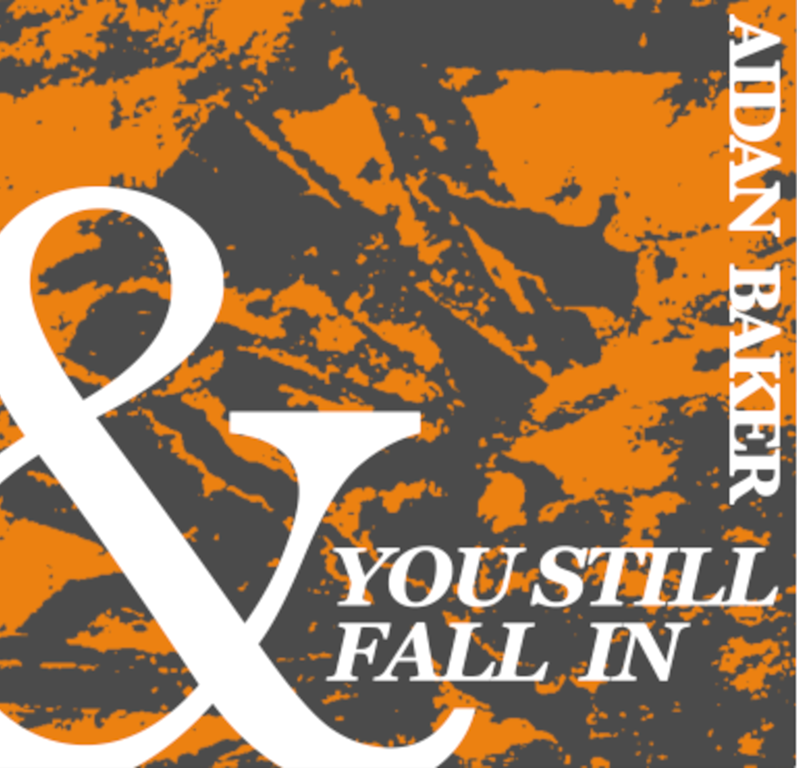
His latest work, & You Still Fall In, we learn, was recorded at Baker’s home studio in Berlin, and ‘hints at the mood and songcraft of the likes of Midwife, Hood, Stina Nordenstam and Movietone. The album is a compelling listen, stripped down to mostly electric guitar and vocals and moving at a distinctly glacial pace. The intimacy of the hushed tones and muted textures lean into a dark, hypnotic and gentle stillness that lingers in the air…’

That fact that this is a truly solo work, with Baker taking care of guitar, bass, drum machine, and vocals is perhaps key to its low-key, introspective atmosphere. Intimate is the word: on the title track which raises the curtain on this soporific sequence of compositions, the acoustic guitar strum hovers to a drone, wavering in volume, seeming to drift, seeming to warp, to fade, you can hear fingertips swiping on strings between frets, and Baker’s vocal is but a mumble; you hear sound, but the words don’t fall free to clarity.

‘Drowning Not Waving’ blends rumbling bass distortions with glitching drum machine and an air of uneasiness: the experience is every inch the struggle the title suggests. And that title… the phrase may have become a popular adaptation of the line from Stevie Smith’s 1957 poem and a metaphor for depression, but to momentarily reflect on the actuality of this all-too -common experience is to recognise the extent to which we, as a society, still – STILL – fail to identify a person in crisis. ‘Cheer up, it might never happen’, we hear often. But it does happen. Even well-meaning friends will diminish the spasms of crisis with ‘well, my life’s shit or probably worse, actually’ type responses. And each such response is like a hand on the head, pushing down. And yes, I speak from experience, and not so long ago I was out for a walk in an attempt to find some tranquillity, some headspace, some time with my thoughts. A dog, off lead, ran up to me and began barking and hassling. Its owners called it back and then groused at me for my failure to smile and thank them. “Ooh, someone’s lost their smile,” the guy said loudly, purposefully so that I could hear. No fucking shit. But you know nothing about my life. My wife died recently and I am not in the mood for being hassled by dogs, and I owe you twats nothing, least of all a smile. I continued on my way without a word, let alone a smile, and there was no point in waving. I was simply drowning. The moral? People may have stuff going on you know nothing about, so don’t be a twat. And anger is only a few degrees along from depression. Music has a boundless capacity to inspire the most unexpected responses.

Things stray into even more minimal, lo-fi territory with ‘You Say You Can See Inside Me’, which captures the spirit of Silver Jews and the soul of some of Michael Gira’s solo recordings. It’s muffled, droning, barely there, even. And yet, somehow, its sparsity accentuates its emotional intensity. There’s almost a confessional feel to this, but it’s a confession so mumbled, either through shame, embarrassment, or plain unwillingness.

On the surface, & You Still Fall In is a gentle work, defined by mellow, picked acoustic guitar and vocals so chilled as to be barely awake – but everything lies beneath the surface. And the surface isn’t as tranquil as all that: ‘When The Waves They Parted’ may be defined by a rippling surge but there’s discomfort beneath the ebb, and the reverb-soaked crunch of ‘Still Cold from the Rain’ is bleak and lugubrious.

Although presented as two separate pieces, ‘Thin Film Interface’ is a continuous thirteen-minute expanse of murky ambience with lead guitar work which soars and echoes over a shifting sonic mist. It hovers in the background, yet simultaneously alters the texture and colour of the air, relaxing but with an unresolved tension beneath.

& You Still Fall In is a difficult album to place – but why should that be necessity? A lot happens, an at the same time, it doesn’t. & You Still Fall In is sparse, drifting between acoustic and altogether simpler acoustic instrumentation. But instead of dissecting the details or reasoning, I’m going to point to the album, and simply say ‘listen to this’. Because it’s simply incredible.

AA

cover

Yes, this is indeed different… no commentary – just check it out… recommended:

AA

0028575631_10

Bearsuit Records – 31st January 2025

Christopher Nosnibor

It’s been a while since we’ve heard form Bearsuit Records, and from Eamon The Destroyer, too, with Harold Nono’s The Death of Barra slipping out quietly in October, and the last ETD release being the Alternate Piranhas EP last April. Ok, so it’s not so long in the scheme of things, but in recent months, while the world has spun into new realms of insanity, the wonderful wibbly weirdness this label specialises in has been sorely missed.

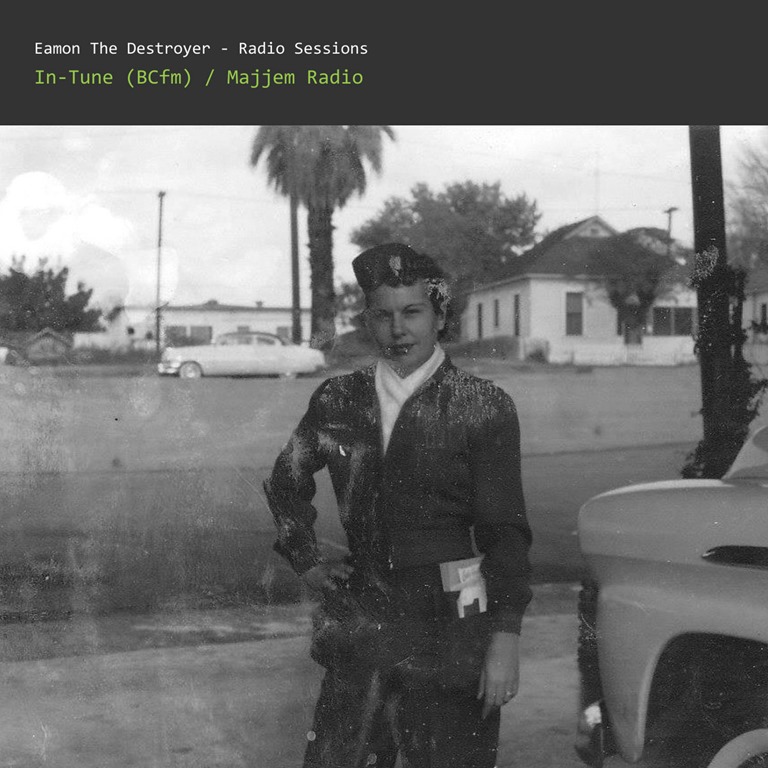
As the factual, functional title suggests, this release features tracks recorded for radio sessions, recorded for In-Tune (BCfm 93.2 FM), broadcast in September of 2024, and Majjem Radio, broadcast at the tail end of the year. And if another release with no new material seems like overkill, since the last ETD was a set of remixes from second album We’ll Be Piranhas, which came out in October 2023, then it’s pleasing to be able to report that, no, while this may well be something of a stop-gap release, it’s a worthy addition to the catalogue. It not only provides some insight into what one may call the ‘promo cycle’ of an album, particularly for a DIY act, but also casts a different light on the songs, being stripped-back acoustic guitar-based renditions of the songs – which are a 50/50 split of choice cuts from We’ll Be Piranhas and its predecessor, A Small Blue Car.

The original versions may be sparse and lo-fi in their production, but that production, and the prominence of droning, wheezing synths is what really defines them. That’s not to detract from the songwriting or performance at all, but the downtempo, downcast mood is heightened significantly by the execution, and that thick, hazy sound is integral to that.

However, hearing these songs played straight, as it were, is something of a revelation. The parts are essentially unchanged, but apart from a bit of reverb, and some vocal layering, these takes are more live-sounding, as could be performed by one man with a guitar and a pedalboard or synth with a few loops.

A far shorter rendition of ‘Underscoring the Blues’ still packs in the magnificent oddness that encapsulates everything that’s special about both Eamon and the whole Bearsuit aesthetic, suddenly spinning off from a sparse picked folksy guitar into a fantastical fairground of whirling, waltzing organ.

I’ve written previously that Eamon The Destroyer’s songs have a certain quality which casts a long, bleak shadow of lugubriousness over the soul, and how the effect is, for me, at least, similar to listening to Leonard Cohen’s Songs of Love and Hate. It’s an outstanding album, but it’s dark in a way which goes beyond the crushing lyrics of ‘Avalanche’, ‘Dress Rehearsal Rag’, and ‘Famous Blue Raincoat’. What I’m trying to articulate here is that there’s a special place for sad songs, songs which have a mood-altering effect, and this is Eamon The Destroyer’s strength. The lyrics are largely abstract and often difficult to decipher, but the feel is inescapable.

The ‘Avalanche’ on here, which first appeared on A Small Blue Car isn’t a cover of the Leonard Cohen song, but the stark atmosphere hits just as hard. It’s all about the minor chords, and the monotone croon. ETD adds layers of extraneous noise way down in the mix which adds tension to an already tense soundtrack.

Not because it sounds in any way similar, but ‘The Choirmaster’ calls to mind Chris Rea’s ‘On the Beach’ with its wistful tones and twisted hints of flamenco, and wraps the release with a vibe that’s almost uptempo, despite the heavy undercurrents of melancholy.

It’s the end of one of the longest, darkest, bleakest Januaries in living memory: we’ve been battered by storms, by global politics, by relentlessly traumatic news of war, of.. of… you name it. If you’re looking for a lift, steer clear of Eamon the Destroyer. But The Radio Sessions is nevertheless essential listening, showcasing the quality of the songwriting which lies beneath that fuzzing haze and reverb, and remember: it’s ok not to be ok.

AA

a4026067221_10

Sound in Silence – 5th December 2024

Christopher Nosnibor

As my final review of the year, what could be more fitting than a work, the title of which, suggests an element of reflection on the recent past. Businesses provide regular reports, people and musical ventures tend not to, with perhaps the notable exception of Throbbing Gristle, but then, they were an exception to more or less everything before or since. Their debut album proper, The Second Annual Report, which followed a brace of cassettes, The Best of Throbbing Gristle Volume I, and The Best of Throbbing Gristle Volume II, set new precedents in so many ways.

Arriving to the latest release from A New Line (Related) – the solo project of Andrew Johnson, who has previously released music as a member of bands such as Hood, The Remote Viewer, and Famous Boyfriend among others, one feels compelled to wonder ‘just how is The Sadness, and how has it been of late?

This is his third album, which we’re forewarned is an ‘immersive’ work, which ‘balances between minimal techno, dub house and ambient pop.’

‘Calapsis’ drifts in with low-key beats pulsing beneath delicate waves which ebb and flow subtly, gusts of compressed air which build to a hypnotic close. It’s not until the glitchy, disjointed groove of ‘3AM Worry Sessions’ arrives that we begin to get a sense of The Sadness. Stress and anxiety manifest in many ways, and while worry and panic may manifest differently their cousinly relationship It heaves, jittery unsettled and tense, conveying an uncomfortable restlessness.

The globular grumblings of ‘The Ballad of Billy Kee’ emerge from a rumbling undercurrent or mirk to glitch and twitch like a damaged electrical cable sputtering and sparking. Elsewhere, there’s a certain bounce to ‘Only Star Loop’ which gives it a levity, but the scratchy click of cymbals which mark out the percussive measures feels somehow erratic and the time signatures are apart from the bubbling synths and the distant-sounding, barely-audible vocal snippets, which give echoes of New Romanticism. Overall, the track has an elusive air of whispering paranoia.

In many ways, not a lot happens on A Quarterly Update On The Sadness, and the sparse and repetitive yet curiously dynamic title track is exemplary. It leaves you feeling strangely disconsolate, bereft, not only as if you’ve perhaps missed something, but that you’re missing something – not from the music, but from your own life. It seems, in conclusion, that The Sadness is thriving in its own, understated way.

AA

a0970760296_10