I hadn’t been looking for something that straddled Bauhaus’ more experimental cuts and David Devant and his Spirit Wife… But that’s how it goes. You don’t know what you want – or need – until you find it, and stuff lands on your lap when you least expect it. This is theatrical, crazy, over the top. It’s the sound of a band flipping out, melting down in every direction – more of a document of an electrical shock to the brain than the frazzled fizz of the frothing seafront.
‘The Wheel, the Spade, the Stars in Motion’ is no instant grab post-industrial froth: instead, it’s a frenetic electronic mania, all the froth and panic. The panic… the panic is real. It’s the soundtrack to waking up disorientated and wondering where the hell you are and what on earth is going on, and the video only adds to the bewilderment, the wackiness as surreal as the most inexplicable dream.
Strolling bass and wonky guitars are only half of a story which throws into the melting pot the sharp, sinewy guitar pop of Franz Ferdinand and the over the top agitated dramatics of The Associates.
The lyrics are utterly barking, but shouldn’t be dismissed as mere quirky nonsense: there’s a genuine poeticism and flair for language on display here.
The maid was in the garden
Disfigured by a bird
That reactionary raptor
Left her undeterred
The specksioneer made it clear
harpoon held aloft
Declaring that his love for her
could melt the permafrost
Playing with the tropes of the Elizabethan sonnet, but at the same time spinning circles of Surrealist imagery, Erotic Secrets of Pompeii are a unique proposition, and for all the warped oddness, which shouldn’t work but does, ‘The Wheel, the Spade, the Stars in Motion’ is a cracking single if you can step back from the craziness for long enough to reflect and absorb.
As my sweep-up of singles released a few weeks back but still in the later stages of 2023 continues, we come to John X Belmonte’s ‘Under the Stars of Andromeda’. The New Yorker has been slipping out slabs of dark alternative pop since 2020, and has maintained a fairly steady output these last three years. Citing David Bowie, Depeche Mode and Kate Bush as influences, he promises ‘Haunting atmospheres, beautiful melodies, driving rhythms, and rich sonorous vocals [which] draw the listener into his musical dream world.’
With perhaps the exception of Depeche Mode from Black Celebration and later, these touchstones don’t really convey just how gothy Belmonte’s work is. ‘Under the Stars of Andromeda’ is a dark, stark electro cut that pulsates and has all the ingredients of the kind of electrogoth which started coming through in the mid 90s. There are chilly layers of synth which drift and hang like a freezing fog to conjure murky atmosphere, and as the track evolves, it feels that we’ve left earth and are being carried through clouds of dust particles, floating free of any gravitational pull, and a thumping techno beat cuts in and takes things stratospheric.
It’s the vocal which really defines the sound, and the genre leanings, too: Belmonte’s baritone croon is theatrical, taking obvious cues from Andrew Eldritch and Peter Murphy, and it’s subject to heavy processing and compression, meaning that while it sits tightly within, rather than above the music, in terms of not only mix but tonal range, it feels detached, dehumanised. It’s effective, in that it sounds menacing, and sends a shiver down your spine, as you wonder just what he has in mind when he says ‘we’ll find a better place.’
The synth sounds may be trancey and expansive, but clocking in at four minutes, ‘Under the Stars of Andromeda’ is neat and compact, structurally, and the production is faultless.
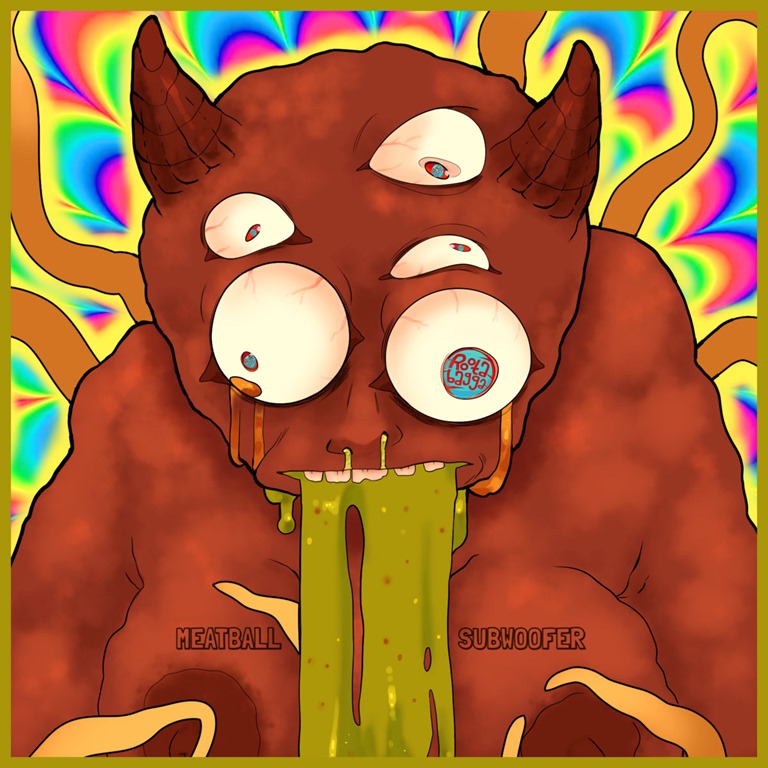
Nova Scotia’s Rootabagga describe themselves as a ‘weird wiggle rock band’. I have absolutely no idea what that means. It’s not a genre. Is it? No… it’s not. Unless you count the song by Willie Mitchell as a template. ‘Meatball Subwoofer’ suggests not. But it turns out it’s a pretty apt description of this mangled math-rock, that sits somewhere between Queens of the Stone Age and Butthole Surfers, being demented drawling stoner rock, only with a nagging technical aspect with busy guitarlines tripping over one another all over – and then it goes ever more crackers, with full-throated shouty guttural vocals and there’s a dash of Dillinger Escape Plan going on… but ultimately, this is completely deranged.
A quick flick through their previous releases on Bandcamp – all standalone singles apart from their debut release, an album entitled Abbi Normal, which came out in the summer of 2020 – confirms that this is entirely representative of their output, and reveals something of a fixation with monsters and mythical creatures, not to mention some rap-rock / nu-metal leanings, which makes for an even more bewildering mélange.
I think it works. At least, most of it. No, it does. For all of its perverse outlandishness and oddity, ‘Meatball Subwoofer’ has a fairly conventional verse / chorus / bridge structure, only with some additional wibbly bits tossed in here and there – which is perhaps what they mean by ‘wriggle rock’. And then there’s the last forty-five seconds or so when it crashes down into the most brutal metal.
Very much one for fans of music that doesn’t conform and aren’t troubled by being addled and bewildered by a sonic bombardment of uncategorisable stylistic content.
I’m aware that there’s a conspicuous absence of rap and hip-hop to be found in my coverage. I suppose that’s largely because it doesn’t really fit the rubric I envisaged for Aural Aggravation when I decided to do my own thing back in 2015. But occasionally I worry that this feels discriminatory, not to mention unjustly dismissive, of a huge swathe of music that could well appeal not only to myself, but visitors to the site. The fact I’ve raved about dälek on more than one occasion not only evidences that I’m not completely hip-hop averse, but also reminds me of the same. Some hip-hop is pretty dark, and also pretty heavy.
Snoop Dogg isn’t a name one commonly associates with dark or heavy, and my interest in this release was in fact piqued by noticing that Ooberfuse are playing a tiny venue in York ten minutes up the road from me here in York next week. How does an act who’s just released single with Snoop come to be doing that? The music industry is screwed, but it’s clear Ooberfuse aren’t doing it for the fame or the glory.
Said single, ‘Hard Times’ represents the best of hip-hop. It is dark, and it is heavy, and comes with a hard social message.
That many people find Christmas a challenging time, and in particular the homeless, is widely documented, but this documentation tends to remain the domain of the further corners of news outlets and adverts from charities. But against a stark, dark musical backing – and this is when hip-hop is absolutely at its best.
The first-person lyrics are direct and powerful, and backed by a shuffling beat and stark piano, it’s a hard-hitting track paired with an equally powerful video. One gets the impression that Snoop’s contribution serves primarily to draw attention – and I say ‘good’. This track needs to be heard and people really need to fucking listen. In a world where we have billionaires, there should be no such thing as poverty.
I may have mentioned before that I’m a sucker for the sound of vintage drum machines – partly by association with so many of the innovative acts which emerged in the late 70s and early 80s, which used them in a host of different contexts, exploring the near-infinite avenues these little bits of kit afforded. For a start – and perhaps most significantly – it was possible to make solid percussion without the need for a drummer or drum kit, meaning furthermore, thanks also to the advent of the portastudio, there was no need for a proper rehearsal space or studio to rehearse and record music. In fact, with relatively cheap synths, you could record as a band without even having a band. The other thing was that, if amped up right, these things could be immensely powerful. And so it was that we saw the emergence of acts as diverse as The Sisters of Mercy and Metal Urbain, Young Marble Giants, and The Human League.
Poly Ghost are a German synthpop trio, and ‘Ananas Ring’ is a quirky, fairly minimal tune that brings together the primitive sound of the aforementioned Young Marble Giants with the retro-chic of Stereolab, delivered with a humourous twist that could only come from a German act. Anyone who says the Germans lack humour is simply missing it. Absurdist wordplay might not be everyone’s bag, but from Die Toten Hosen to the deliberately clunky lyrics on St Michael Front’s first album, there’s no denying that there’s a thread of quirky amusement that’s uniquely German.
And so we arrive at Poly Ghost’s ‘Ananas Ring’, and while the twisted punning of the band’s name is one thing, the inter-language incongruity of ‘ananas’ – French for pineapple – with the English ‘ring’ (the French word for ‘ring’ is ‘bague’) from a German band takes messing around with language to another level. Despite the lyrics seemingly being in English, I have absolutely no idea what the song is actually about. But, I do have functional ears, which are totally sold on this quirky sound. The accompanying video is daft, and ‘Ananas Ring’ is a nifty tune that brings all the analogue, and the squeaky, inflected vocals just make it all the more wonderous.
The Australians seem to have a knack for full-throttle, high-energy punk-tinged guitar acts, where there’s a strong focus on fun. They certainly have a long punk heritage down under, with The Saints kicking things off way back in 1973, and their debut single, ‘I’m Stranded’ arriving within weeks of The Damned’s ‘New Rose’. Perhaps it’s the sun and surf, or just the broader culture in Australia which produces bands like this, cutting their teeth in tiny venues and even house parties.
Fun doesn’t have to be dumb, bone-headed or moronic: DZ Deathrays and Mannequin Death Squad are both notable exemplars who’ve proven to be popular exports here in the UK, and to that list we can add Annakye, demonstrating some songwriting savvy and an appreciation of the fact that a strong hook is everything.
‘Headstart’ is two-and-a-half minutes of big, buzzing guitars that shift from driving riffery to lurching stop/start with clattering drums that hammer in hard and paired with a bustling, busy bassline with some punch and bounce, it’s got moshery emanating from every second.
On paper, ‘Two seconds apart / head start’ isn’t much of a hook, but it’s all in the delivery – and repetition goes a long way when it comes to lodging it in your brain. Earworm? Nailed it.
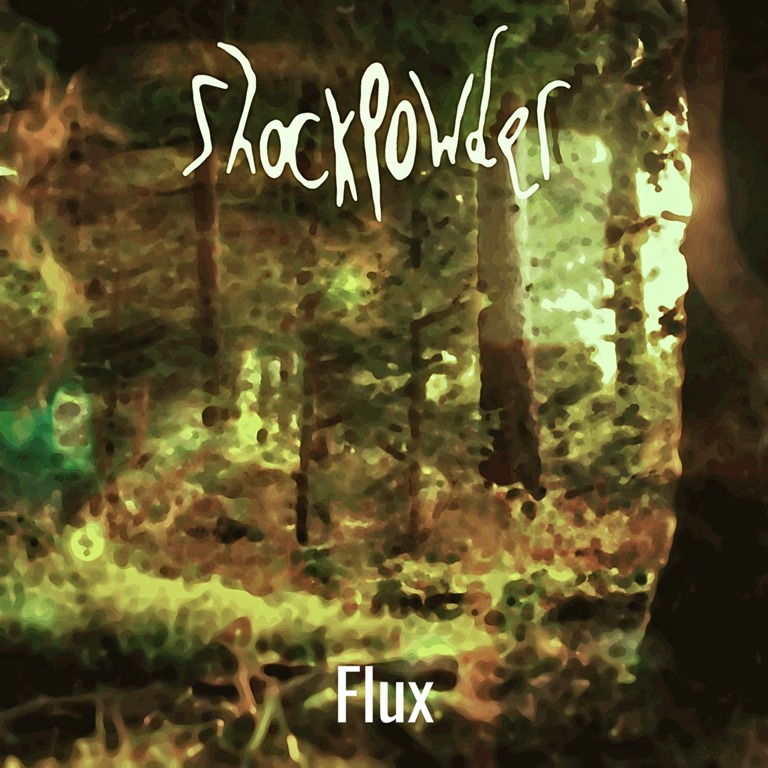
Ah, the power of a strong intro… and the power of nostalgia. The beefy riffage that launches ‘Flux’ by London act Shockpowder… it’s bold and it’s grungy, and the vocals are dreamy melodic, drifting, and I’m instantly dragged back to the early 90s.
Formed in 2015, I wonder if the members of Shockpowder would even remember the early 90s, but they clearly have a strong affinity, and note that they’re ‘heavily influenced by post rock, shoegaze and metal bands such as God is an Astronaut, Alcest and Slowdive.’
What I get from ‘Flux’ is a wistful, emotive element which is carried on some amped-up guitars that are simultaneously jangling and loud, and in many ways reminiscent of early Ride, and, perhaps rather less well-known, Eight Storey Window. Why they never gained more recognition, I will never understand, but then, the era was littered with great bands who were criminally underrated. How long did it take for The God Machine’s greatness to be recognised? Too long, and even now, they seem to be something of a cult for connoisseurs.
It’s not just a question of sound: any musician who’s spent enough time immersed in listening and paying attention to detail, and given the right gear, the right amp, the right pedals, the right production, can recreate the sound of their influences. But what counts is the feeling. ‘Flux’ is imbued with that vaguest, most inaccessible and yet essential ingredients – emotion. There’s something that goes beyond the minimal lyrics, reflecting on the ephemerality of life, something that goes beyond the distortion and reverb, hitting that indefinable spot of resonance. You don’t hear it, you feel it.
After this long, and having amassed a considerable catalogue, Shockpowder probably aren’t about to go stratospheric any time soon, but it’s the world’s loss, ultimately, because ‘Flux’ is, quite simply, a great song.
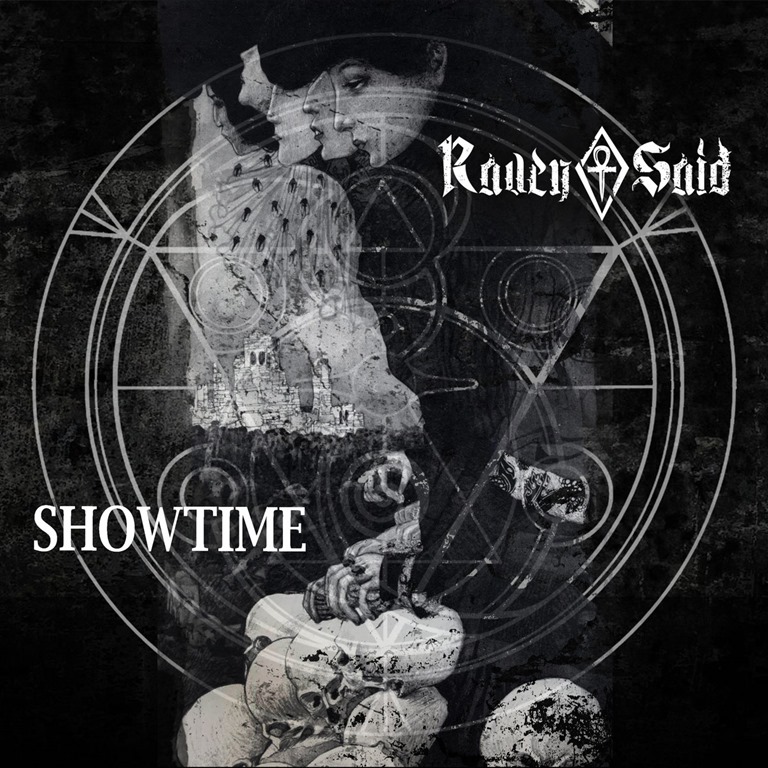
New single ‘Showtime’ from Russian ‘occult wave’ / goth duo, Raven Said, arrives just over a year on from the EP Chants to Dissolve, and it promises to be the first from their next full-length release.
They describe it as ‘a kind of exciting prologue telling about the themes of a personal awareness and braving of one’s own internal boundaries. It’s transcendence of individual subconsciousness, even in the face of the inner fear or the despair. When you’re getting the power to create and transform despite seeming hopeless; when the curtain is raised and time freezes for a moment, when the stage is lit with the spotlights and the noise of the crowd is heard ahead, you take a step towards… Showtime!’
This reminds us that there is considerably more to Russia than the news of the Western media, where they’re broadly portrayed as ‘bad guys.’ We rarely stop to consider the reality of daily life in other countries – or, indeed, how our own countries are perceived internationally, while we’re getting on with everyday life, and generally struggling to stay afloat. In all this, we rarely see the people, the society, and fail to separate these things from their governments, their diplomats, and their military.
‘Showtime’ is what one might call a ‘banger’. Thumping disco beats and bold layers of synth provide the musical backing for the vocals, delivered in a brooding cross between a croon, a whisper, and a growl, packed with classic goth theatricality, and their touchstones of Clan of Xymox and second-wave goth acts like Rosetta Stone onwards, are strongly in evidence, crunching them together to create a synth-driven song that’s strong on both melody and groove.
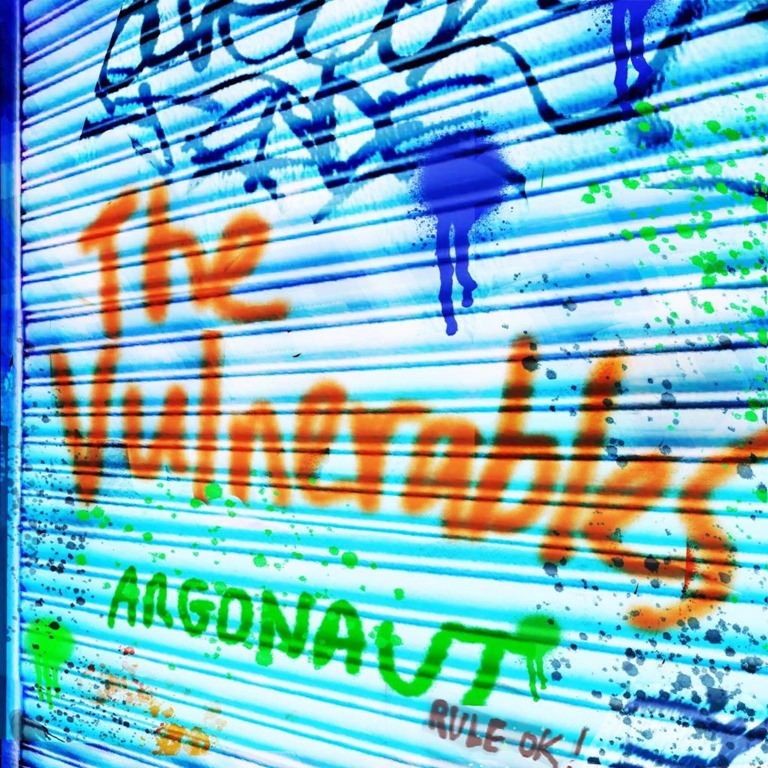
Regular readers – and fans of Argonaut – will have probably observed that we’ve been pretty consistent in plugging their open-ended album-in-progress Songs from the Black Hat, which has seen the li-fi DIY indie act self-release a song a month via BandCamp. But October’s tune is today getting an official release on a real label – namely Criminal Records, home of The Kut, with whom they’ve released two previous albums.
Nathan explains the band’s methodology for the album’s continual evolution this: “At band practices we each write song titles on slips of paper & put them in the hat. One is then picked at random. We jam around that title & see what alchemy occurs. Most times the magic flows & the combined band chemistry creates something we are really pleased with.”
With two previous albums on Criminal Records, Argonaut’s newest release is produced by Jack Ashley of Popes Of Chillitown, and mastered by The Kut who was drummer/producer on Argonaut’s self-titled debut.
I still can’t hear the world ‘vulnerable’ without thinking of Nathan Barley and an image of David Bowie pissing into a Dualit toaster, but perhaps, particularly since the pandemic and our government’s shameful treatment of the poor and the disabled, I’ve become significantly more sensitive to the way in which vulnerability can be life-shaping, and rarely in a positive way.
Whereas perhaps even in the not so distant past, vulnerability was perceived as being synonymous with weakness, a great many of us understand that it is a fundamental facet of the human condition, and recognise that almost everyone is vulnerable in some way at some time or another. This may not be true of the right-wing tossers who scoff at showing vulnerability – or sensitivity to it – as being ‘soft’ and ‘woke’, but anyone who is a reasonable human being can empathise with how circumstance and life events can place strain on an individual, and just as we’re getting to a place where we can talk about mental health without being stigmatised, so we appreciate that to show vulnerability in fact requires strength in a way we didn’t not so long ago.
The fact that ‘we’ are the vulnerables – all of us – is the crux of the song’s lyrics, along with the painful truth that others will exploit vulnerability for their own ends:.
We are the vulnerables
And we are being used
We are the vulnerables
Me and you and you and me and you
Because it’s Argonaut, it’s a natty tune in the classic indie / alternative style: Lorna’s vocals are sweet and ultra-poppy and there’s both jangle and bounce to the instrumentation – but Nathan can’t resist bringing blasts of fizzy, fuzzy distorted guitar. It all stacks up to a superbly catchy indie pop tune from a band who have quite a catalogue to catchy indie pop tunes to their credit, and no doubt plenty more to come.
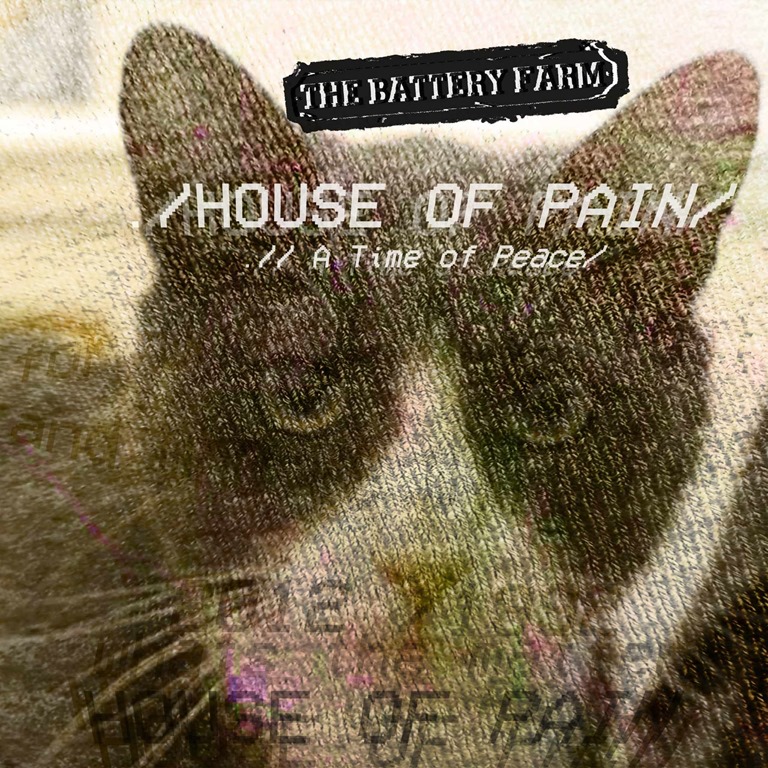
The Battery Farm have had a truly extraordinary twelve months: the Manchester foursome released their debut album last November, and have been gigging hard off the back of it, with some pretty high-profile shows along the way. And this is a band that’s driven – not so much by ambition or aspirations of stardom, but by passion. These guys are purveyors of political, pissed off, authentic punk – not haircuts and threads, but sweaty, full-throttle 110% all the way. Benjamin Corry makes for a powerful presence, vocally, visually, and in the interviews he’s given. He may appear a shade scary and borderline deranged, but comes across as affable, articulate, and genuine.
The band exists to rail against the shitness of the world we find ourselves in, and perhaps buoyed by the reception of the album and recent shows, their twelfth single is more amped-up and fiery than ever. ‘House of Pain’ is three minutes of riff-driven fury that blasts in at a hundred miles an hour with a message that needs to be heard. Arguably, that message could be boiled down to the barest bones of ‘fuck this bullshit’, but the expanded articulation is that it addresses ‘the shame imposed on all of us who are scraping by in an ongoing and worsening cost of greed crisis. You do what you have to to survive, and how dare anyone in a position of privilege look down their nose.’
It needs to be heard because, as I was reading only earlier today online in The Guardian, ‘The number of people experiencing destitution in the UK has more than doubled in the last five years – up from 1.55 million in 2017. One million children are now living in destitute homes – a staggering increase of 186% in half a decade.’ That every single supermarket now has a place to donate to food banks speaks for itself; yet our government, whose job it is to protect society’s most vulnerable, simply dispense advice that if you can’t afford a cheese sandwich, to forgo the cheese, and who seem to think that broadband and mobile phones are luxury items the poor should do without, despite the fact it’s impossible to apply for jobs or even maintain benefits without them. The privately-educated governing elite are in the pockets of the likes of the oil industry, and they absolutely fucking hate the poor, and they want you to hate the poor too. And their hateful campaigning and sloganeering is depressingly effective: how else do you explain working-class people voting Conservative? It’s bewildering to think that people in impoverished towns in the north of England would vote for these cunts who’d happily bulldoze every council estate in the country, that they might think that the likes of Bozo Johnson and Richboi Sunak give even a flake of shit about them, let alone represent them – but the increasingly right-wing Tories appeal to the mentality of the impoverished and disenfranchised by apportioning the blame for the state of everything on ‘illegal’ immigrants, who come over here and sponge all the benefits. Stop the boats! Right. Then what?
The Battery Farm are spot on when they describe the current situation in the UK as a ‘cost of greed’ crisis. Everyone who’s already in the money is making on this: banks, oil and energy companies, supermarkets… any increases in costs are being passed directly to customers, and then some, all to protect profits, all to pass on to shareholders, all to give CEOs even bigger bonuses. The injustice, the social division is at a point where something has to give. Sadly, it seems that something is the lives of those at the bottom of the heap.
The Battery Farm can’t change the world, but they can provide a voice and an outlet to the anger at this injustice, and flipside ‘A Time of Peace’ is another full-throttle gritty blast of punk fury, reminiscent of the sound of ‘79/’80 – I’m thinking grimy roar of The Anti-Nowhere League and fellow Mancunians Slaughter and the Dogs by way of references here.
At the time of writing this, four days after release (I’ve been slack / drowning in dealing with everyday life stuff (delete as appropriate); physical copies on 7”, CD, and cassette have sold out, which is a huge achievement and shows just how they’ve built a committed following through a combination of belting tunes and sheer hard slog. This is their strongest work to date.




 Aural Aggravation