Posts Tagged ‘Review’

Panurus Productions – 20th June 2025

Christopher Nosnibor

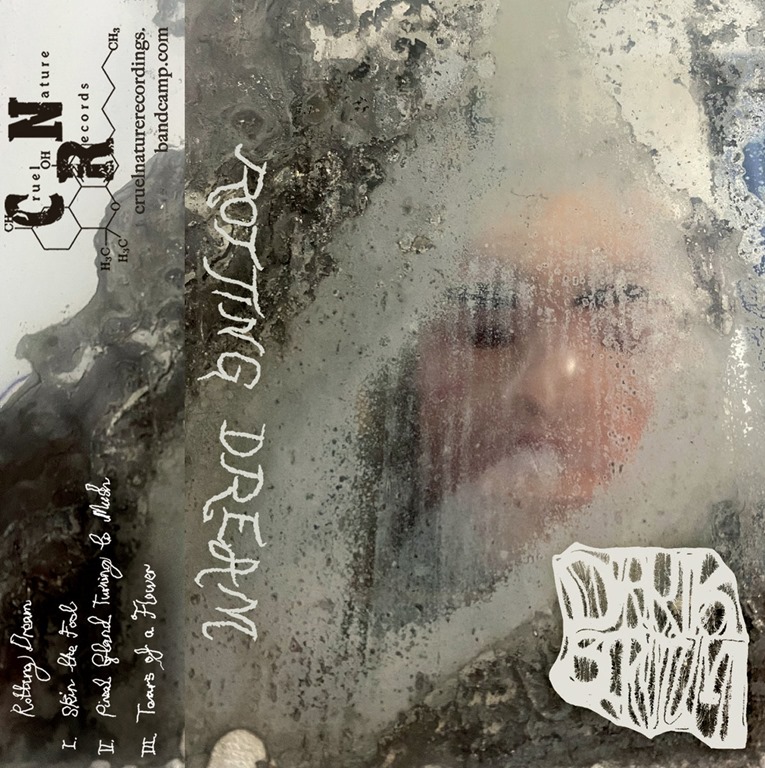
You’d think that cassette labels would be not only niche, but few and far between, and in the main, they are, but Newcastle is home to not one, but two labels who provide a near-endless supply of releases to satiate the need for weird shit the world over, with Cruel Nature Records being one, and Panurus Productions being the other. The labels have a considerable amount in common, too, not least of all in that they both favour music that’s of a quality, rather than a style.

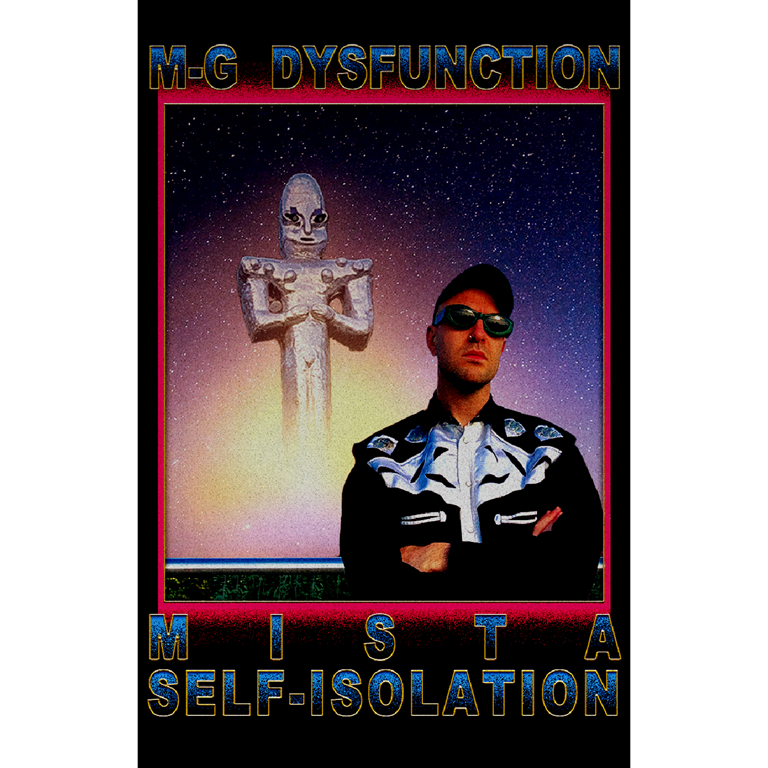
The latest Panurus release is a perfect case in point. The label’s previous offering, a split release from Belk and Casing was a raw blast of guitar overdrive. In contrast, the third album from M-G Dysfunction is of an altogether more experimental bent, leaning toward hip-hop and beat-driven electronics, but once again marking the close connection between the scenes in Leeds and Newcastle, both of which have become significant spawning grounds for the offbeat, the difficult, the wilfully obscure.

According to the blurb, ‘Mista Self-Isolation is the fullest realisation of the M-G Dysfunction project to date – a record of trepidation and humour, of lopsided passion and warped poetics. This album is about surveying the wreckage of monoculture and navigating the act of making music amidst a land-grab of rights, melodies and rhythms by people who never liked music in the first place. It’s about properly honest artistic expression – what “keeping it real” looks like, sounds like, feels like in 2024. It’s about getting some official beats and saying fly shit over them.’

That it’s quirky may be obvious, but it’s a necessary headline observation. On the one hand, it’s white rap, so there’s an awkwardness, but on the other, there’s some dirty experimental electronic noise layered over the beats, and this is an act that shared a stage with Benefits, a band who may have made their reputation by being angry, shouty, and noisy, but who aren’t without humour or an appreciation of nuance.

As tracks like ‘Roger Daltrey (Permanent Record)’ illustrate, M-G Dysfunction are multifaceted – something likely to leave many quite nonplussed. How can they do jokey, daft, a bit random and be serious at the same time? In truth, the answer is simple: because human beings are complex creatures, capable of a vast range of emotions and infinite ways of expressing them. It’s something we seem to have lost sight of in recent years, when everything has been boiled down to binaries, and everything is a conflict because the lines have been marked in such either / or terms. It’s no longer possible to be a woolly socialist: suggest that, I dunno, people on disability benefits are right to receive free prescriptions, and you’re labelled a left-wing extremist, a communist, and by the way, disabled people should get back into work or die. Something is severely fucking wrong with this picture.

Back in the early 90s, genre crossovers were all the rage, and the Judgement Night soundtrack was a real watershed moment that took the idea of rock / rap crossover, first witnessed in the mainstream when Run DMC and Aerosmith did ‘Walk This Way’ to the next level. At that time, it felt like a new future was emerging, and perhaps, even a future where boundaries and differences were dismantled. But here we are, and times are bleak.

But with Mista Self-Isolation – an album which is by no means an exercise in buoyant pop tunes – M-G Dysfunction show that in 2025, there is still scope to create something that speaks of what it is to be human.

The structured, beat-led songs are interspersed with self-reflective spoken word segments, spanning CBT meditation and contemplations on experiences and life in general. It is truly impossible to predict the twists and turns this album takes.

’50 Words for Blow’ comes on like a hip-hop-inspired barber’s shop quartet, while ‘John Wick’ is a critical memo, and the title track is abstract, minimal, dreamy but quietly intense. ‘Junglists Only’ is a perfectly executed pseudo-banger which knows it’s absurd and works because of it. The last song, ‘All that is Solid Melts into Deez Nuts’ evokes both humour and at the same time draws attention to M-G Dysfunction’s hip-hop credentials. If you know, you know, as cunts say, but for those who don’t, it’s a reference to Dr Dre’s ‘Deeez Nuuuts’ from The Chronic in 1992.

Postmodernism is alive and well after all, at least in some quarters, and it’s very well in the world of M-G Dysfunction. There is a lot going on on Mista Self-Isolation – and it’s all good.

AA

cover

Criminal Records – 20th June 2025

Christopher Nosnibor

If I didn’t know this was the new single by The Kut, I would never have guessed in a million years. ‘Sevens’ certainly sound different – very different… Beloved by Kerrang, Download veteran, with a debut album that reached number seven in the UK Rock Charts, The Kut is rock music. ‘Sevens’ however, is distinctly pop. Yes, really. But when you pick it apart, just how different really?

From their very inception, Princess Maha’s songs demonstrated a pop nouse, a knack for a hook, a nagging guitar line, a keen melody. It’s easy to overlook these components when it comes to many of the acts which have provided inspiration and comparison, the likes of Hole, Nirvana, Placebo. But all the raw energy in the world won’t translate to commercial success if there’s nothing that sticks in the mind. And so it is that all of these things are very much present on ‘Sevens’. Where it depart from previous offerings is not only that it’s sunny ad sultry, but the beats are backed off and everything is clean, smooth, the guitars are there but off in the background while a remarkably groovy bass flexes and bounces about in a way that’s not quite funky but certainly noddable. Landing in the middle of a heatwave and ahead of some festival appearances, it feels incredibly fitting. But, more to the point, if switched around to be recorded differently, with the guitars up in the mix and the vocals less compressed-sounding it would still be a solid rock tune. Done this way, it’s a solid pop tune with a post-punk flavour.

At heart it’s still The Kut, but with a new spin.

Ideologic Organ – 20th June 2025

Christopher Nosnibor

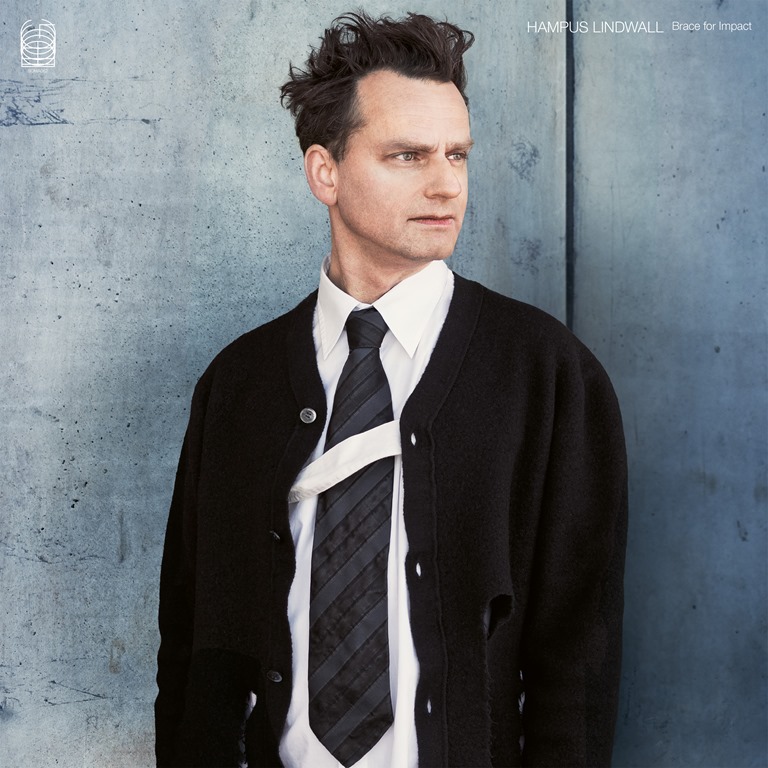
In his liner notes, Robert Barry suggests that ‘Brace for Impact might just be the first album of post-internet organ music’, and goes on to explain that ‘it is a record weaned on networked processes and algorithmic thinking, a suite of tracks which build their own systems then push them to the point of collapse. Lindwall is not a programmer, but he will wield whatever technology is ready to hand much as Chopin made use of the richer, fuller sound of an Erard piano. From the software subtly weirding the interior textures of ‘Swerve’ and ‘Piping’ to the juddering, kernel panic of ‘AFK’ and ‘À bruit secret’, these are works of music unthinkable without the ubiquitous experience of life lived online. Imparting that hypermodern aesthetic sensibility through the austere sound of a baroque organ only heightens the anachronistic sense of temporal disjuncture characteristic of days spent rabbit-holing through ever-multiplying stacks of browser windows. The vernacular of Web 2.0 is here re-transcribed in the ornate script of a medieval illuminated manuscript.’

As Barry also suggests, the organ has been undergoing something of a renaissance in recent years, and cites a number of significant organs which have been recently restored, including the grand organs at the cathedrals of St John the Divine and Notre-Dame (New York and Paris respectively, and, not so much closer to home but on my very doorstep, York Minster, which ‘heralded a “once-in-a-century” refurbishment of its own 5,000-plus pipe instrument’.

It marks something of a shift from an album I reviewed around maybe fifteen years ago, the details of which elude me now, which was recorded on a series of broken-down and dilapidated organs from around Europe which wheezed and groaned as if gasping out the last breaths from their collapsed lungs.

Brace for Impact is an altogether more vibrant work, although as much as it celebrates the organ and the instrument’s sonic magnitude, it also reaches far further into exploratory sonic territories over the course of these five compositions.

The title track features ‘a highly saturated and distorted electric guitar, performed by collaborator and SUNN O))) founding member, Stephen O’Malley’ – and ranges from tectonic crunches, machine-gun rattles and alienated whines rising from the kind of dissonant dronescape only O’Malley can conjure. And so we brace… and then we swerve. The collision fails to materialise during the ten-minute dark ambient swirl of the second track, spreading ominous overtones and watery, echo-heavy plips and plops. The muffled beats are akin to listening to a minimal techno set overlayed with a piece from the BBC Radiophonic Workshop, performed in the Blue John Cavern, and it shimmers accordingly, slipping into off-kilter fairground trilling in the final minutes.

The final diptych of compositions rally ventures out: both ‘AFK’ and ‘Piping’ extend beyond twelve minutes. The former brings jolting discord and drama, lurching stabs that manage to bring a crazed dance feel to the sound of the organ before swinging into a circus-type jive. It stands out as perhaps the most playful track on the album. There is a playfulness to ‘Piping’, too, but it feels more like it belongs to a film soundtrack or theatre performance, and it whirls and winds and spins and pirouettes it way to a pretty but perhaps confused conclusion.

Brace For Impact is very much a non-linear work, and one which stands, uncertain of where it’s going next. But is it unquestionably interesting, not to mention disorientating, and it’s a work which seems to bend time as well as notes. It’s an album to lose yourself in.

AA

SOMA062_3mmCover

11th June 2025

Christopher Nosnibor

Some artists thrive on collaboration. Deborah Fialkiewicz is one of those. While she’s prolific as a solo artist, the volume of collaborative works in her discography is also noteworthy: when she’s not working as part of SPORE, she’s part of the ever-rotating lineup of BLOOM – and that’s before we touch on the frequent collaborations with (AN) EeL, the most recent of which was only released three weeks ago.

The Improvisation Sessions was recorded live May of this year, with a lineup of Dan Dolby, Deborah Fialkiewicz, and John Koser, marking an expansion from the duo which recorded the trilogy of Parallel Minor, Besides, and Hybrid in 2020. Fialkiewicz is without doubt an artist with range, but one who favours the dark end of the ambient spectrum more often than not, and this is very much the case here.

The Improvisation Sessions features two longform tracks which would quite nicely align with a vinyl release.

‘Chameleon Soul’, which spans a colossal continuous twenty minutes, begins with low, rumbling ominous drones, but soon escalates to a busy, buzzy criss-cross of sounds, interweaving and interlacing, leaving one’s head in a spin as if after trying to trace several flies flitting about the kitchen on a hot summer’s day for any period of time. It’s a morass of warping tones overlaying a ballast of churning noise, and any comparisons to Hull luminaries Throbbing Gristle or Merzbow are entirely justified.

The layers of distortion only grow denser and gnarlier as the track progresses, crashing waves of white noise blast in from one side and then the other as they really push to test the stamina. And then you realise we’re only six minutes in. This is a positive: plenty more left to enjoy… Enjoyment is of course subjective, and enjoyment of this requires being appreciative of a dizzying, disorientating assault simultaneous with a full-on white noise blizzard.

The momentary lulls, the spells where they pull back from the precipice of all-out aural obliteration, are far from mellow, as serrated spurs of hard-edged drones, wails of feedback and brain-melting extraneous noise conglomerate to seismic effect. There are some nasty high-end frequencies knocking about in the mix, moments were one has to check if the whistle is coming from the speakers of if it’s that troublesome tinnitus nagging again, and said frequencies rise from a battery of ugly distortion, bone-shattering blasts of which simple explode around the twelve-minute mark, and from hereon in, things only grow harsher, more corrupted, more intense, more difficult to withstand. We’d be inching into polythene bags on heads territory were it not for the variation, but the last three minutes or so are fractured, damaged, and agonizing – part power electronics, part circuit meltdown.

As the world becomes evermore and increasingly fucked up, I find words fail me more by the day. It’s harder to articulate, and this is where I’ve found that sound has come into its own. Sound as the capacity to convey something beyond words, something that lies in the most innermost parts, giving voice to the subconscious, even. On The Improvisation Sessions, BLOOM convey anxiety, gloom, pessimism.

‘The Dark Room’ is indeed dark, constructed primarily around a fixed but thick, distorted hum. Oscillators whine and whistle, and something about it calls to mind Whitehouse around the time of Never Forget Death, when they discovered low-end frequencies and restraint, the impact of a low undulating wave and subtle tweaks of reverb.

It rumbles and drones on, eddying and bouncing around in a shrilling mesh of dissonance. There isn’t a moment where this is an easy listen, and so often, it sounds as if the equipment is faulty, whether it’s a stuck loop or generating unexpected noise.

This set hangs on the edge of ambience, but be warned, it’s dark, and noisy at times, to the extend that it may shred your brain. For me personally, that’s my idea of fun, so it gets a two thumbs up, but for the more sensitive, this is a release to approach with caution.

AA

a3419622385_10

Futureless – 13th June 2025

Christopher Nosnibor

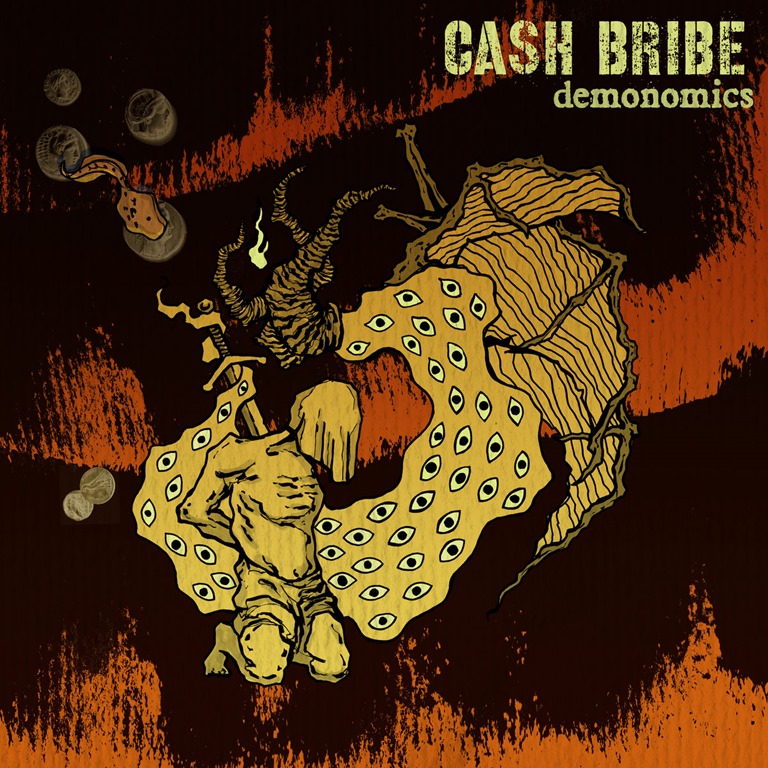
Formed in Brooklyn in 2019, Cash Bribe have released a couple of previous EPs, showcasing a sound that brings together a number of elements, but above all brings the riffs. And they’ve really turned things up a way for their latest offering, a few tracks from which we’ve already aired here at Aural Aggravation.

While it’s something of a vogue right now for bands of heavy, and particularly a metal, persuasion, to open an EP with a short intro track that’s delicate and atmospheric, and eases the listener in before hitting the pedals, Cash Bribe aren’t here to piss about with pleasantries or conventions, and the minute-and-a-half long opening track, ‘Feral’ arrives in a ferocious wall of feedback and hammers in hard and fast, a frenetic blast of raw and raucous hardcore punk that’s nothing short of savage.

Single cut ‘Bay of Pigs’ powers in before the feedback’s faded, and it’s propelled by some mighty drumming: Larry Koch is a hard-hitter, but what’s more, the drums are up in the mix and drive the track hard.

These are dark and difficult times globally, but America… America, WTF? Where to begin? It’s hard to articulate, and this is precisely why this EP is perfect, a spitting, savage roar, equal parts rage and nihilism. More often than not, I would unpack the social or political context, and perhaps explore my own reaction to the material in a reflective fashion. But sometimes, the task feel too great, and what’s more, the material speaks for itself. It’s positively explosive, and bludgeons the listener without mercy..

The title track is the longest, clocking in at exactly four minutes, and is maintains a hundred-mile-per-hour pace for its duration. There is no let-up on this EP: it is truly relentless, and the fury flames unabated. It’s all killer, alright.

AA

a0585114272_10

9th June 2025

Christopher Nosnibor

Sledges are described as ‘a four piece Alt-metal/Heavy-shoegaze band that blends genres like grunge, metal, shoegaze, emo/post-hardcore, and alternative to craft songs with catchy hooks and big riffs,’ and while this is true, it fails to convey the way the various elements melt into one another to conjure something quite special.

Take the first track, ‘Stumbling as I Fall’: the guitars bend and pixelate in a way that evokes the essence of My Bloody Valentine, but it’s grunged up and beefy, and at the same time the melodic vocals contrast with that thick overdrive, capturing the spirit and sound of ’94, and in particular, Smashing Pumpkins circa Siamese Dream. The title track is harder, heavier, with loping drums melded to a tight, chugging bass underpinning some hefty overdriven guitars that provide the backdrop for vocals that ae by turns breezy and gnarly, offering one of the most overtly metal moments on the EP. I find myself momentarily thinking of Troublegum by Therapy? – a classic example of solid tunes brimming with melody played with hard distortion and some raw aggression – but then Soundgarden also poke their way into my cognisance. If it sounds like I’m simply pulling bands out of the air, it’s very much not the case: Losing Pace simply has that much going on, although the fact that many of the touchstones I’ve referenced thus far are of a 90s vintage does also serve position the various elements which contribute to the Sledges sound.

‘Weightless’ is – ironically – pretty heavy, and it’s not (believe it or not) a criticism to stand it alongside Linkin Park, in that it brings nu-metal heft and a strong emotive hue to a song that’s both riffy and rich with a palpably sincere feeling of angst. It matters because this is no cheap stab at commercialism, and nor it is just another song that tries to alternative by hauling all of the tropes into the mix: there’s a sincerity to this which lends it an indefinable power, and it hits hard.

After a soft acoustic intro, ‘June is Better than July’ goes widescreen, a cinematic burst of post-rock, post-grunge, alt-rock riffcentric extravaganza. There’s a nagging sense that it’s a but emo, a bit ‘things we’re not supposed to like’… but bollocks to those strictures of convention. It’s pure quality, and that’s ultimately what it all boils down to.

Losing Pace was originally released as a four-track twelve-inch, but this new edition, which also marks its first digital release, offers a brace of bonus tracks, in the form of ‘Fading’ and ‘Letters’. The former is the weakest and most overtly emo song of the set, but it’s bathed in reverb and the guitars are bold and overdriven and grungy, and it’s impossible to deny that it’s well-executed. Rounding it off, bonus cut ‘Letters’ is both dreamy and dynamic, melding elements of early Ride and MBV and Chapterhouse with later exponents of shoegaze / nu-gaze like The Early Years as swirling guitars conjure cathedrals of sound around a pumping drum machine.

On Losing Pace, Sledges successfully combine classic and contemporary, and do so with an aptitude and energy, and a keen sense of dynamics. It’s quality all the way.

[bandcamp width=400 height=340 album=244179070 size=large bgcol=ffffff linkcol=0687f5 artwork=small]

AA

a3823762619_16

Panurus Productions – 2nd May 2025

Christopher Nosnibor

Northern noisemongers Belk are no strangers to the virtual pages of Aural Aggravation: I personally first caught them live as a duo back in 2021, when I remarked in my review that as fierce as they were, they might benefit from some bass. I could never have imagined just how much. These days, their sound is dominated by some juddering low-end that’s practically arsequake. It’s as if they thought ‘you want some bass, eh, bastard? Here’s some fookin’ bass. BOWWWWWWWMMMM’. They’ve certainly evolved over the last four years – but what that means, in real terms is that they’ve developed methods of making noise that’s even more nasty and gnarly and generally unkind to the eardrums. This is a good thing, and ‘Flayed’, the first of their two contributions to this split release is a beast. It has a definite and undeniable sense of swing to it, a swaggering groove that’s somewhat unexpected. But what is expected – and delivered – is a crashing riot of noise, a juddering wall of distortion, squalling, dirty guitars, drums blasting at a hundred miles an hour and guttural vocals half-submerged by the swirling chaos, with tempo changes galore and simply all hell happening at once inn explosive, brutal frenzy.

‘Cloak of Bile and Oil’ begins a little more gently – and for a moment I’m reminded of the intro to Fudge Tunnel’s ‘Hate Song’, which inevitably bursts into shards of incendiary sludge and squall – and sure enough, so does this, the extended intro giving the deluge of noise even more impact when it finally does arrive. They describe their style as ‘Blackened Leeds Hardcore’ and this must surely be a definitive example of what that means.

Casing are an unknown quantity, and their two contributions are brief – the longest piece is just over two minutes in duration. The sound they offer is certainly no less abrasive or disturbing. There’s nothing to indicate what the initialisms of the song titles actually mean, but the electronic excursion which is ‘L.U.A.N.L.B.’ begins with some rumbling dark ambience, soon rent with the wail of siren-like feedback, before a wall of harsh noise distortion swells like a tsunami and swallows everything. In contrast, ‘D.T.H.D.T.C.’ launches headlong into a gut-churning blast of manic grind, with a nauseating bass churn to rival that of Belk.

What it lacks in duration (the four tracks have a combined running time of less than eight minutes), this release more than makes up in devastating intensity. Mission accomplished.

AA

cover

Limited Edition 7" Dubplate / DL Blank Records – 13th June 2015

Christopher Nosnibor

Tobias Vethake aka Sicker Man has spent a quarter of a century doing things differently – differently from other artists, and differently in terms of his own sound and approach to making music.

As his bio points out, ‘as our world changed a lot during the last 25 years, so did his music. On his last release, KLOTZ WENZEL VETHAKE, the interaction with other musicians and the political dimension of a musical wake-up call became a main focus… The single „Gravy Train / Hollowed“ marks a new and fresh look at both, his musical history and present. It features Sicker Man’s love for dub, noise and electronic music as well his passion for classical composition and spiritual jazz… ‘Stop The Gravy Train / Hollowed’ feels like a collaboration of Moondog and The Bug’

It certainly does. For these two pieces, Sicker Man has enlisted saxophonist Matze Schinkopf, and

How many ideas is it possible to pack into four and a quarter minutes? With ‘Stop The Gravy Train’, Sicker Man manages more ideas per minute than it’s possible to even begin to count. The piece starts with a low, grinding bass and industrial hums, before the saxamaphones enter the mix, interweaving through and across one another. They trickle smoother, teasing with points and counterpoints, laid-back and mellow over the simmering rhythm section, the bass and the beats building currents beneath. Around the midpoint, the piece makes a change of trajectory, the gentle jazz giving way to something altogether more urgent and driving, locking into a robust groove with low saxophone punching rhythmically and in syncopation with the whip-cracking snare and palpating kick drum.

‘Hollowed’ is different again: a swampy surge of seething electronica, a morass of meshing noise – at least to begin, and then it melts into a rather pleasant swaying jazz work, a clip-clip beat nodding along nicely. Swells of noise bubble and surge, but don’t quite break through, and industrial grooves settle in while the saxes tootle off in different directions, hither and thither to brain-melting effect.

‘Genius’ is a word which is chronically overused and often severely misapplied. Is this a work of genius? Maybe not, but it’s got to be close. There’s no question that it’s wildly inventive, and unexpectedly listenable, while challenging every musical preconception.

AA

a1110512025_10

30th May 2025

Christopher Nosnibor

With mainstream music, all you have to do is stay tuned to prominent radio channels, watch TV, let Spotify recommend the next tune, and it lands in your lap. The further away from the mainstream you get, the more it becomes about keeping your ear to the ground, word of mouth, groups and forums – and occasionally, press releases and inboxing. Despite being a fan of a number of the acts involved, I discovered this one quite by fluke via a share in a Facebook group, which announced that ‘OMO DOOM , the Glasgow group who comprise members of Mogwai , The Twilight Sad , Desalvo , Areogramme and Stretchheads put out a new track this week, an intensely claustrophobic cover of a Head of David track – the brilliant late 80s UK Blast First act who everyone seems to have forgotten now’.

I’m perhaps one of the few who not only didn’t forget Head of David, but has a near-complete collection of their releases – and I can tell you it’s taken some years to assemble. While their first album – LP, released on Blast First in 1986, and later reissued as CD in 1990 isn’t too hard to find, and has a buzz around it on account of the fact that Justin Broadrick drummed with the band between leaving Napalm Death and forming Godflesh (although he didn’t actually play on any of their releases apart from their 1987 Peel Session, which features on the nigh-on impossible to find White Elephant compilation), their other releases are like rocking horse shit (as they used to say at record fairs in the 90s.

Their second LP, Dustbowl, which featured ‘Bugged’, was produced by Steve Albini and released in 1988. It’s a belter. While I snagged a vinyl copy in the 90s, I have never yet seen a CD copy in the wild, and it’s never been reissued, either. ‘Bugged’ also appeared on one of the 7” singles in ‘The Devil’s Jukebox’ Blast First 10-disc box set, and that’s hardly common or cheap either.

H.O.D.I.C.A. was a semi-official live album which captured Head of David playing at the ICA in London, delivering a purposefully unlistenable set with the explicit purpose of repelling EMI music execs who were sniffing around, and their final album, Seed State, released in 1991 lacked the same brutal force as its predecessors.

The reason for the history lesson is that they’re largely forgotten because their music is so hard to come by, and because Stephen R. Burroughs has pursued a very different musical trajectory subsequent to their demise, with both Tunnels of Ah and FRAG sounding nothing remotely like HoD.

But if you can hear Dustbowl, it’s aged well, a snarling mess of noise driven by pulverising drums and snarling, grinding bass that tears you in half. And this is where we resume the story, I suppose.

OMO DOOM’s version of ‘Bugged’ is slower, starker, more malevolent and menacing than the original which was ferocious in its unbridled brutality. Here, we get thick synths and punishing drum machines dominating the sound. The bassline is twisted around a way, and sounds for all the world like ‘Shirts’ by Blacklisters, and at around the two-minute mark is slumps into a low-frequency range that’s unsettling to the bowels as well as the ears. This sure as hell brings the dirt. The vocals are rabid. It’s gnarly, alright. Fans of Mogwai and The Twilight Sad and the late, lamented Aerogramme may be drawn to this, but probably won’t like it: it’s the work of a bunch of musicians trying something that’s nothing like their regular work, and it’s unfriendly and inaccessible and noisy and horrible… and of course, I absolutely love it. And maybe it could spearhead a Head of David Renaissance… We can hope.

AA

a2460593698_10

Magnetic Eye Records / Redux Records – 6th June 2025

Christopher Nosnibor

Magnetic Eye have released a few of these ‘Redux’ tribute albums now, each of which has come in two editions, and each of which has taken a different approach. Whereas the Meantime Helmet releases offered a standard and expanded version, for example, others have presented an album on one version and a ‘best of’ as a companion. And in all instances, they’ve managed to score some outstanding names as contributors. This time around, it’s the Ramones’ eponymous debut which is accompanied by a ‘best of’ set as a counterpart, and the project was ‘masterminded and curated by New York City and London-based Italian-Swiss audio engineer, sound designer, composer, multi-instrumentalist, and Grammy winner Marc Urselli’ – hence the titles.

Mondo Generator, Napalm Death, Ufomammut, Arthur Brown, David J, and Voivod are among the big-hitters featured here, but as I settle down with a cold pint of Oranjeboom, I contemplate the need for a Ramones tribute – or, more specifically, another one. There have been a few, perhaps most famously 2003’s We’re a Happy Family, which featured The Red Hot Chilli Peppers, Marilyn Manson, Green Day, Garbage, U2, Metallica, and The Pretenders, among others, and there are so many tribute acts out there, too, one has to ask ‘is this not overkill?’ Well, no, because that would be Motörhead, and what’s more, with a lower tier of ‘name’ contributors, it feels more authentic, somehow. I’m not saying U2 aren’t fans of The Ramones, but they feel like they’re on a par with the fans who bought a T-shirt in Primark and only discovered they were a band after the fact. Casuals, in other words.

Some might say that the debut album doubles as a ‘best of’, and there’s a case for that, given that every single song is a pure classic. Mondo Generator kick off the debut album covers set with a roaring ‘ONETWOTHREEFOUR’ before launching into ‘Blitzkreig Bop’, and it’s a faithful but fiery, fizzy rendition, the guitars like jet engines on what you could only describe as a proper punk blast.

Daníel Hjálmtýsson and Mortiis offer an altogether different take on ‘Beat on the Brat’ – slowed down, moody, gothic, a bit theatrical, a shade menacing, and yet somehow accentuating the pop currents which flow through this, and indeed, all Ramones songs. Boots Electric, with the help of none other than Wayne Kramer, push the pop to the forefront

Ufomammut bring the metal and convert the sub-two-minute surf-pop ‘Chain Saw’ into a six and-a-half minute grind that’s downtuned, dense, and dirty. It’s also absolutely brilliant in its execution. Napalm Death have enlisted Thurston Moore for their take on ‘Now I Wanna Sniff Some Glue’, which is a minute and a half of speaker-shredding thrash nihilism, and absolutely perfect.

The Ramones weren’t only punk progenitors, but purveyors of precise and often perfect pop songs, and this pair of albums represents the fullness of their influence (still not saying they. didn’t influence RHCP or U2., but…) Arthur Brown and The Berserker’s take on ‘I Don’t Wanna Walk Around With You’ is crazy, and absolutely perfect.

Voivod rope in JG Thirlwell for their hell-for-leather yet hooky as hell take on ‘Zero Zero UFO’ which opens the ‘best of’ set. And there are some corkers, with a slowed-down, heavy psyche yet oh-so-pop take on ‘Pet Sematary’ by Impostor Cult with Amy Tung Barry Smith being exemplary. So Hideous’ twangin’ take on ‘The KKK Took My Baby Away’ is one of the most radically different interpretations on the album, although Kayo Dot and Ihsahn push ‘Teenage Lobotomy’ in the most unexpected directions, while David J and Paul Wallfisch push ‘I Wanna Be Sedated’ to a soporific seven minutes. With a super-sparse arrangement, it sounds as if they’ve achieved their wish before entering the studio.

What these two albums illustrate, more than anything, is that The Ramones wrote superlative and truly classic songs, with earworms galore. And as tributes go, these albums do feel perfectly fitting.

AA

691820395539