Posts Tagged ‘Noise’

SVS Records

Christopher Nosnibor

This one positively explodes in the opening moments: a swirling black hole of noise that eviscerates the senses and assaults the eardrums with such ferocious force and excruciating volume that it feels like the end. The actual, living end.

Yet again, I find myself scrabbling for the press release while questioning the benefit of being told about the origins, mechanics or methodology behind the work. And so I find myself research one-line, and discover the visuals which accompany the audio, and begin to develop a real appreciation of the multimedia vision of Lukas Rehm, operating as Lybes Dimem for the purpose of the Syncleft Chronem project, a work which celebrates error and explores the relationship between various input stimuli and cognitive frictions. It’s complex, but can be readily reduced to the experience itself.

The visuals intensify the experience, but the sonic experience alone is intense and brings a blistering sensory overload. Syncleft Chronem is loud, attacking. Uncomfortable. Placing the album isn’t easy but then, it’s not entirely necessary: as a barrage of electronic noise with beats, it’s a work which assaults the listener from the outset with its sonic intensity, a combination of dense walls of noise, abrasive textures and tones, and sheer volume. How do you feel? I’m feeling tense, but excited, exhilarated as this racket assails my ears. Rehm clearly isn’t making music to win friends or influence people. He’s generating sound to see what it sounds like and how it feels.

Sometimes, you simply don’t need words. On ‘Saas’, there are threats of dancefloor-friendly beats for an industrial night as booming 4/4 bass thumps start up – but they halt abruptly, and the whole thing fractures and fragments. Everything halts before it hits a stride, everything jolts and shudders. Everything is too loud to hear properly.

Syncleft Chronem is brutal, in the sense that it affords no respite, no pause for thought. And nor should there be an apology for this: as with the best art, its intensity sustains fever pitch, is uncomfortable, feeds tension to the point of perspiration and palpitation. It hurts.

AA

LYBES-DIMEM_SYNCLEFT-CHRONEM-front-cover-woskin

Forking Paths PF0013 – 13th July 2018

Christopher Nosnibor

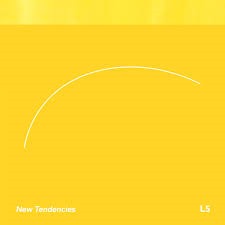
With a title referencing William Gibson’s Neuromancer, L5 finds maker of experimental minimal electronica New Tendencies explore an array of textures and tones with a real focus on the space around the sound. Sonar bleeps warp into whistles of feedback, consumed by underwater monsters and sonic detonations that linger like a heavy cloud of smoke, dust and rubble.

The shifts aren’t always delicate, the tones rarely gentle: the listener is dragged and hurled from high to low, abrasive, serrated edges sharpening the intensity of upper frequencies juxtaposed with rumbling, muffled lower ranges which pull at the pit of the stomach. The album’s ten compositions – which, given the way New Tendencies pull, drag, stretch, twist, and manipulate, are perhaps as well described as decompositions – are affecting by virtue of the physicality of the sound, and this in turn provokes a cerebral response.

Ordinarily, I find abstraction gives rise to an analytical rather than emotive response, but L5 is a different beast. The beats and rhythms – however diversely they manifest (and they range from distorted, crunching poundings to EQ-tweaked whiplash cracks via blasts of static) – create a sense of structure, however vague, a frame on which to hang the infinite varieties of noise, and thus draw the pieces back from absolute abstraction. And with the combination of structure and sonic impact comes a different type of response. Instead of seeking to analyse the technique, L5 invites the listener to feel the effects. And the effect becomes emotional on a certain level: the rippling waves and vibrations test the tension levels, pushing the up and pulling them down. Tense, intense, and at the very least, interesting.

AA

New Tendencies – L5

Season Of Mist – 31st August 2018

Christopher Nosnibor

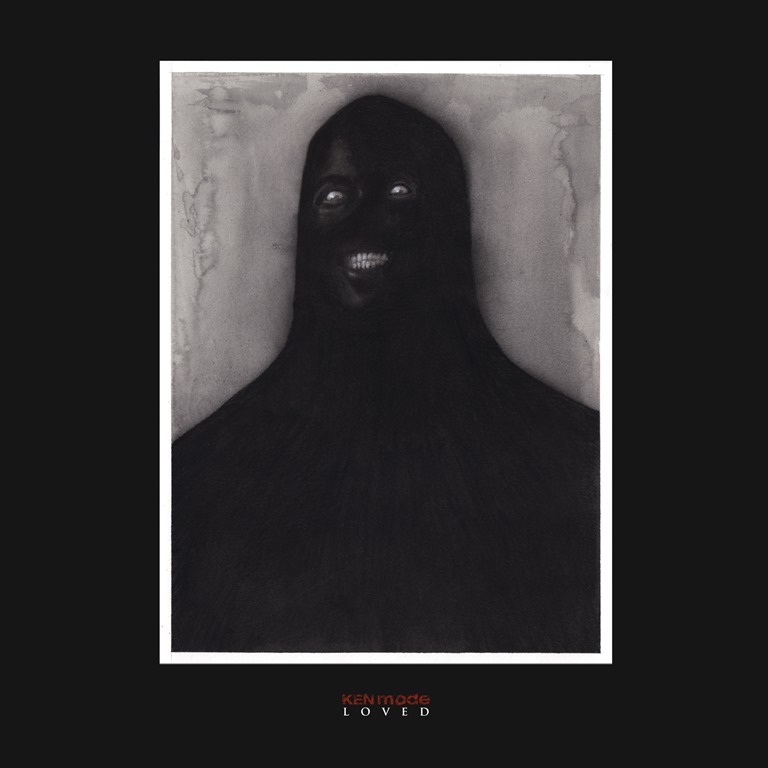
I don’t know what’s more exciting about the proposition of Loved – whether it’s the introduction of ‘decidedly more extreme tone and presence of death and black metal’ into KEN Mode’s palate, or the fact it’s been produced by Andrew Schneider (Unsane, Cave In, Daughters), who has, we’re told, a ‘vision of noise and girth’.

It’s got to be the girth.

And add all this to their existing sources – ‘the desperate noise and industrial sonics of the 80’s and 90’s’ and you’ve got a truly lethal cocktail.

Lead single ‘Doesn’t Feel Pain Like He Should’ sets the tone, a squall of feedback prefacing a deluge of thunderous bass and drums and shouted vocals. The Unsane parallels are immediately apparent. This isn’t just intense, but claustrophobic: less black than steely grey, hard, and with a matt sheen.

A heavy bass trudge and guitar that’s more geared toward texture than tune evoke the spirit of Godflesh and early Swans on ‘The Illusion of Dignity’. However, the braying sax owes more to another Justin Broadrick-related project, the industrial avant-jazz brutality of GOD. It hits hard, both sonically and sentimentally.

And that sentiment is the motivation to produce an album that responds to the fucked-up ties in which we find ourselves, while also revelling in the absurdity of it all. Because the only sane response to such madness as Trump and Brexit and social media and the dominance of global corporations is insanity – to adopt an antic disposition, to appropriate from Shakespeare. In the postmodern climate, an appropriation is appropriate, although Loved lifts more in terms of spirit than anything concrete.

Jesse Mathewson (guitar / vocals) sets out the purpose: “We wanted tones that bash and cut, and for you to feel that desperate part of yourself clawing for a way out. And then, just when things are at their most bleak, you start to focus on what’s actually being said, and you’ll see the humour in absolutely everything that is transpiring before you.”

In surveying the scene that is the socio-political landscape, the humour is pretty bleak – more grim irony and a gallows grimace than a belly laugh. But it is funny in the sense that you couldn’t make any of this shit up. Loved is also pretty bleak and also full-on and brutal. It grinds and points relentlessly, churning guitars carving angularity and discord. And the bass… it hits the guts. Hard.

The tempo and tone don’t alter all that much over the course of the album’s nine tracks (‘This is a Love Test’ notwithstanding, that is – its spacious intro with strolling bass and wandering sax create an eerie calm): like any album by Unsane, it’s a work to simply let pummel you furiously, channelling the fury of US hardcore and beefing it up to industrial strength. And yes, fury is the key: this is the sound of the fury. And while the majority of the songs are fairly short, sharp shots of adrenaline injected with a large dose of acidic bile, the album closes with the eight-and-a-half-minute ‘No Gentle Art’. It goes for the slow build, scratching away, quiet but chugging away on the low end. In that sense, it’s a bit Shellac… and when it breaks out into an explosive cacophony of distortion and braying brass… it’s a bit crazy. And by the end, I’m more than ready to kill everyone. Now.

AA

878050

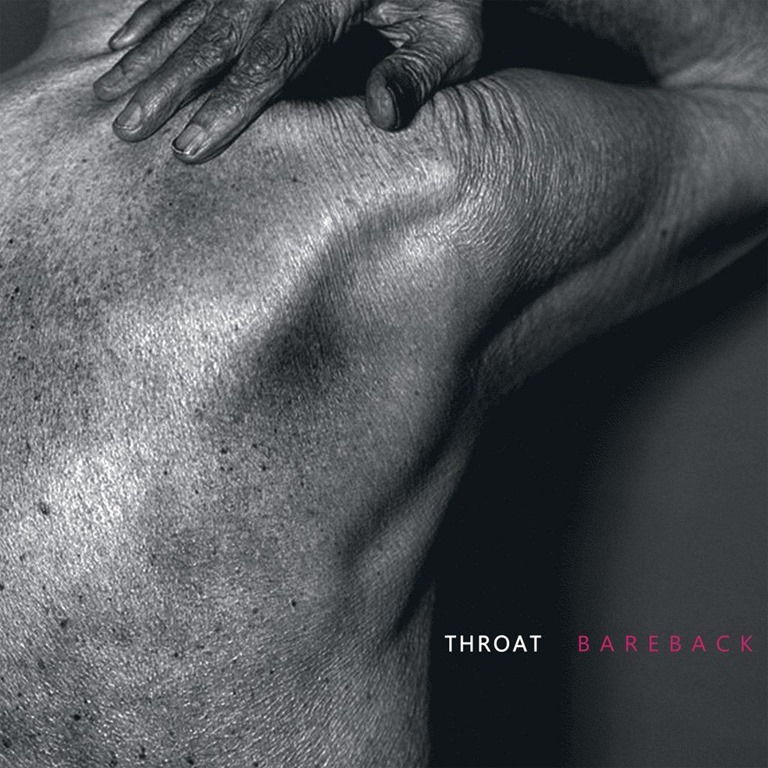
Finnish noise rockers Throat who are set to release their highly anticipated and Aural Aggro approved second album, Bareback on August 31st via Svart Records have shared a second track. ‘Born Old’ is described by vocalist/guitarist Jukka Mattila as ’a deliberate effort to break some formulas we always fall into when writing music. To most people it might sound like the same drivel we always do and in spite of the fact that they’re probably right, we’re proud of our song. Lyrically, ‘Born Old’ is about feeling bad in every which way possible. Feeling good is overrated anyway. Plus there’s a Coil reference in the lyrics, see if you can spot that!’

Listen to ‘Born Old’ here:

AA

throat-006-by-hilja-mustonen

Nonclassical – cnclss024

Christopher Nosnibor

Langham Research Centre originated through late-night experimental gatherings at the BBC studios, and have evolved to produce long-form radiophonic works, of which 2014’s Muffled Ciphers was inspiredby JG Ballard’s seminal novel -which challenged the very notion of the form – The Atrocity Exhibition. Created with an accumulation of rare and obsolete instruments and devices, and inspired by early electronic composers spanning John Cage, Alvin Lucier, and Delia Derbyshire, Tape Works Vol. 1 is pitched as ‘a collection of modern musique concrète.’

The first thing I noticed was that my copy is number 11 of an edition of 30 promos. This knowledge spurs me to get my finger out and provide some coverage. The second thing I notice, on scanning the track listing, before reading the biography containing the above, is that it features tracks with the titles ‘The Voices of Time’ and ‘The Terminal Beach’ – the former of which is a collection of short stories by Ballard, and the latter of which is the title of one of the stories in that collection, which first appeared in 1963 under the title The Four-Dimensional Nightmare.

On Tape Works Vol. 1, the Langham Research Centre (and doesn’t that sound so Ballardian in itself… I’ve spent hours scanning my collection to see if there’s a character named Langham in Ballard’s oeuvre and have drawn blanks before ultimately deciding it’s better to actually get the work done than disappear down another rabbit-hole of research) explore all the dimensions. And while at times it confirms to the template of so much experimental analogue work, at times it ventures in the truly weird.

‘LOL, Pt 1’ mixes monkey chatters and R2D2 bleeps with eerie abstractions, bibbling bloops, fractured vocal snippets and small samples of laughter enter the mix alongside the kitchen sink to from an uncomfortable, disorientating sound collage.

There’s a lot of stopping and starting, whistling and droning, woe and flutter and infinite disruption. This is the sound of dislocation, a soundtrack designed to induce maximum disorientation.

Bleeps and squiggles, trilling squeals rising to a high-pitched hum collide with woozy, groaning bass frequencies. Notes bend as if on a stretched tape, and tape whips back and forth through heads. There are moments which recall the head-spinning cut-up and drop-in tape experiments conducted by William Burroughs, Brion Gysin, and Iain Sommerville in the late 50s and early 60s.

Birdsong. New snippets. A plane roars overhead. A conglomeration of voices. Static. Interference. A howling wind. Sparse, arrhythmic beats clatter and clang. Yes, this is life: fractured discordant, difficult. Simultaneous. Overwhelming. This is essentially how I feel about it. I cannot compute. I feel dislocated, alienated. I feel tense. Nothing new there. But Just as reading Ballard makes me feel uncomfortable in my own skin, so Langham Research Centre’s fucked-up sampling of old adverts and blending them with minimalist dark ambient twists me into a state of discomfort.

At time gentle, at others abrasive and bordering on the attacking treble whistles and white/pink noise crackle of early Whitehouse and Merzbow, Tape Works Vol. 1 is at no point accessible, easy, cuddly. But it does push the senses and question linearity and accessibility and even the boundaries of musicality. And as such, it fulfils its objective.

AA

Langham

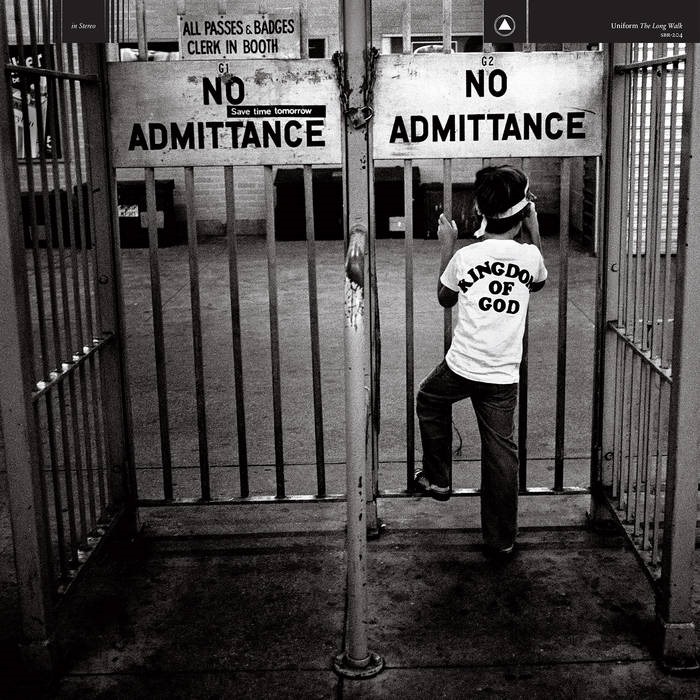
Today, Uniform unveil the second single off their highly anticipated album, The Long Walk – coming August 17th on Sacred Bones. ‘Alone in the Dark’ is an homage to Jack Sholder’s slasher flick of the same name. Vocalist Michael Berdan explains that “in the film, Jack Palance, Martin Landau and Donald Pleasance star as a gaggle of mental patients who escape an asylum during a power outage and proceed to hunt down their psychiatrist. In our song, I’m referencing my personal feelings of isolation that come in the middle of the night, when I’m left with only the sensation of college level existential terror and prayers to a God who may or may not be listening, if even there at all.”

The Long Walk already looks like being one of Aural Aggro’s albums of the year. Get your lugs round ‘Alone in the Dark’ here:

AA

Uniform - Long Wak

Sacred Bones – 17 August 2018

Christopher Nosnibor

Of all of the bands to make an impact recently, Uniform’s arrival has to have been one of the most hard-hitting. Wake in Fright was appropriately-titled: a terrifying mess of industrial and punk compressed into a brutal explosion of unproduced noise, it was the kind of tinnitus-inducing horror that rang in your ears as you sat bolt upright at 4am in a sweaty state of anxiety after a bad dream. When I say ‘you’, I’m presenting the personal as universal.

Yet none of this really prepares anyone for its follow-up. Whereas its predecessor was a ragged, raging sonic inferno, raw and trebly, having expanded to a three-piece with drummer Greg Fox (Liturgy, Zs) joining Michael Berdan (vocals) and instrumentalist Ben Greenberg, The Long Walk (the title of which references a Stephen King book) brings a newfound density to intensify the ferocity. That doesn’t mean they’ve toned it down: if anything, they’ve cranked it up and added new dimensions to the ear-bleeding brutality that defines the Uniform sound.

If I were being cynical, I might contend that Uniform only have one song, which they repeat with various minor adjustments. Michael Berdan’s vocals are hardy varied: a raging punk sneer smeared across a cyclical riff that grates and throbs amidst a tempest of overloading noise as the needles all quiver towards the top of the red. It’s a simple method, but often, simplicity is most effective, especially when the aim is to produce art that drills directly through the skull into the soft tissue of the brain. Maximum impact doesn’t require complex algorithms or theory. Maximum impact taps into the most primitive aspects of the psyche, targets the visceral, punches straight into instinct. And maximum impact isn’t necessarily about variety: that isn’t Uniform’s ambition: they’re out to batter relentlessly at the senses. The effect of The Long Walk is cumulative. And that effect, for those predisposed, is anxietising, stressful. Listening to The Long Walk actually raises my heart rate, and makes me perspire. And really, so it should: this is intense, claustrophobic, a different kind of aggression that speaks of derangement and blind rage.

The Long Walk is as raw as it gets, to the extent that its complete lack of refinement makes some of the most aggressive, antagonistic, and purposefully unlistenable songs even less appealing: you actually have to get through the jarring noise, the treble, the wilfully impenetrable mixing and what could safely be described as anti-production – to find the songs, let alone the appeal. The be clear: this isn’t just noisy: it’s fucking nasty, and is the work of a band deliberately pushing even the most accommodating of listeners to their limits, if not away altogether. It’s almost as if they don’t want any fans.

I can relate: as a spoken word performer, I discovered greater satisfaction in driving as many people from the room within the first couple of minutes than a smattering of polite applause from a full room at the end. Producing art is not about popularity. It’s about release, about channelling, about, catharsis, about being true to oneself or one’s aesthetic. If it’s commercial, it’s probably not art.

I know that in my writing I’m prone to revert to various ‘paint’-related tropes when reviewing work of a certain volume and / or intensity. But Uniform absolutely fucking decimate. Everything.

AA

Uniform - Long Wak

Svart Records – 31st August 2018

Christopher Nosnibor

I read ‘ffo Unsane, Jesus Lizard, Shellac, Blacklisters’ and practically jazzed my pants before I’d even opened the email, let along downloaded the promo. That was before I read the slick, sleazy, fluid-dripping pitch for Finland-based Throat’s sophomore album, as seeing the band plunging ‘head first into unprotected encounters with musical elements hardly even hinted at on their previous releases.’

‘Safe Unsound’ opens the album with a sparse into: just guitar and baritone croon that invited comparisons to Glenn Danzig. But then the guitar goes to picked notes and the atmosphere builds into more Neurosis territory… but they keep pulling back. You’re waiting for it to break, for something to happen… How long is it reasonable to hold back? I recall seeing Shellac-influenced Glasgow act Aereogramme circa 2003 and being bored to tears: there simply wasn’t enough reward for the patience of enduring the build-up. But then, Shellac can be masters of frustration: just listen to Terraform.Thankfully, Throat cut loose and hit the distortion pedals around the three-and-a-half minute mark during this eight-and-a-half minute epic. And the song has a sort of coda which is a repetitive, grinding loop worthy of early Swans, which culminates of two minutes of screeding feedback and noise. So far, so punishing. And there are still another seven songs left to go.

‘No Hard Shoulder’ justifies the Jesus Lizard/ Blacklisters comparisons, with its driving guitar and bass welded together and glued to pulverizing drums that forge a Melvins-ish take on grungy stoner rock. Gritty, shouty, unpolished, it also evokes the Touch ‘n’ Go vibe while also hinting at favourable parallels with contemporaries like Pissed Jeans. So far, my jizzed pants are justified, and the rest of the album doesn’t disappoint.

Things go a bit Techno Animal / Godflesh / NIN on ‘Shortage (Version)’ with its hefty, crashing beats, straining digital noise and thickly distorted vocals which, in combination, carve out a lugubrious, funereal piece. Dense and dark I equal measure, it provides a mid-album interlude of crushing, neogoth intensity that stands quite apart from the other tracks. and the sonorous, subsonic bass just kills.

‘Born Old’ slams back into 90’s T&G territory and sounds like Tar at their best. Obscure? Sure, but if you get the reference, the album’s for you. If you don’t, but are digging Throat, you need Tar in hour life. Really. ‘Rat Domain’ slams and churns hard, the jarring grunge riffery whipping up a churn that resonates in the gut, before closer ‘Maritime’ hammers home six minutes of brutally jarring noise-rock, which is angular, sinewy, and relentless in its abrasion, and even brings a hint of the gothic before piledriving into the home straight with a remarkably accessible, melodic finale. If it seems at odds with the rest of the album, it’s hardly a weak finish, and instead demonstrates that Throat aren’t all about the gnarly noise… just mostly.

AA

throat_bareback-1024x1024

Christopher Nosnibor

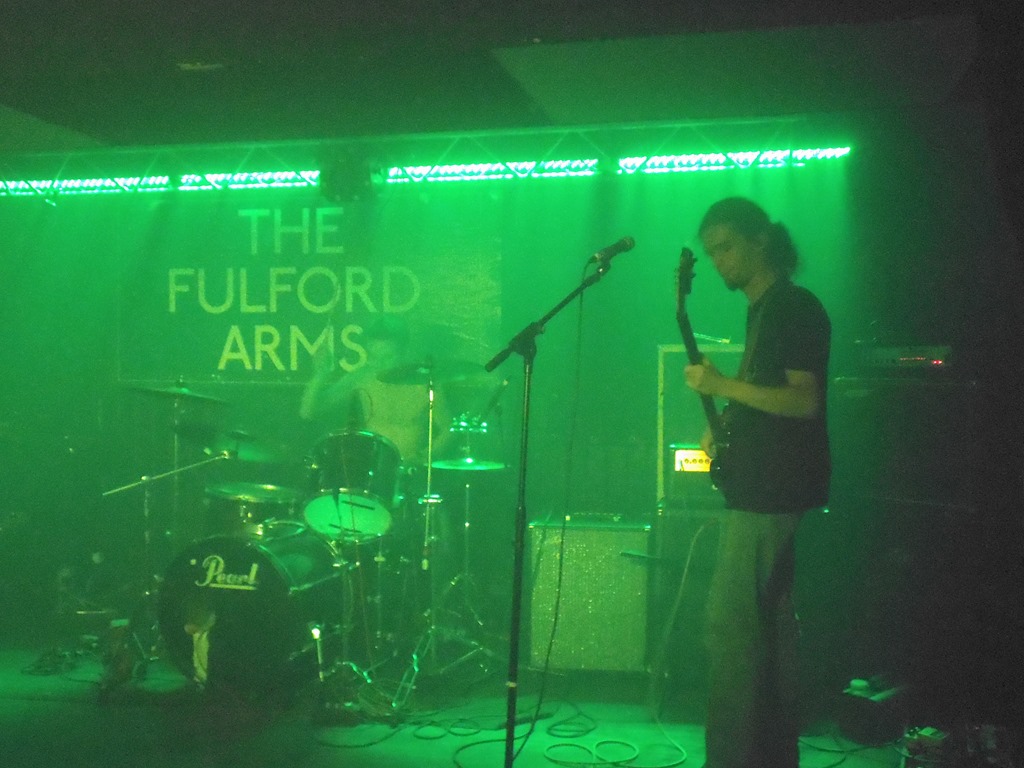
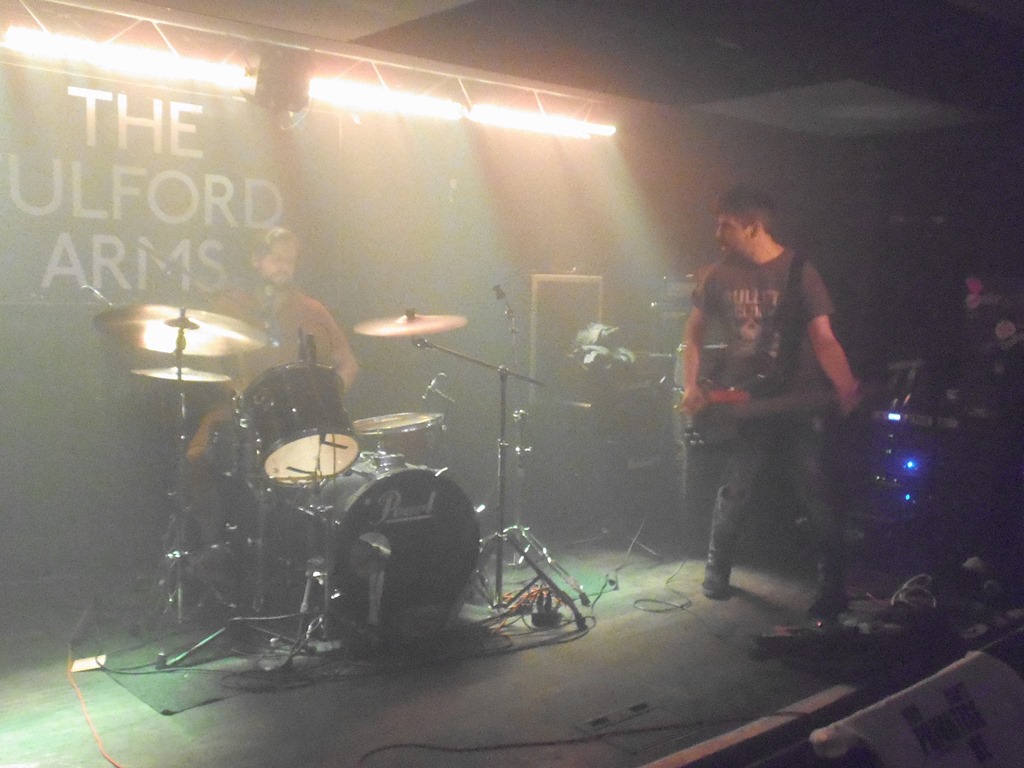
The 13th of July is a Friday. It seems like an appropriate date for a show hosted by The Trembling Hellish Infernal Nightmare Generator. And besides, an event that involves standing in a dark pub venue being aurally assaulted by four noisy bands in sweltering heat represents the perfectly antithetical alternative to the populism of a city swarming with racegoers.

It might not exactly be packed for Pak40, who begin their set with a claxon and bass hum, before thumping in with some tom-heavy drumming and thunderous, super-low bass growl that comes on like early Earth, only with percussion. While the duo’s focus is firmly on the creation of maximum noise, the stylistic manifestations are varied, with classic rock elements churned through a cement mixer and a vocal style characterised by elongated vowels that range from pysch-tinged prog to something closer to Bong. The final track is sludgy as hell, but ups the pace considerably, inviting comparisons to Fudge Tunnel.

DSCF3816

Pak40

Saltwater Injection are another drum / bass combo. As last year’s debut single, ‘Vinegar / Cuntryfile Part 3’ revealed, they’re noisy, too, cranking out a mesh of grindcore noise interspersed and overlaid with trebly, distorted samples from films and whatnot. It’s not about innovation, but execution, and after a lengthy intro, the bass feedback howls and they go full-throttle to deliver a set of high-octane aggression. It’s stick-twirling drummer Paul Soames who provides the vocals – predominantly guttural barks to their frenetic attacks. There are flickers of pop, but they’re transmogrified into roaring slabs of rage that go off like a clusterbomb.

DSCF3832

Saltwater Injection

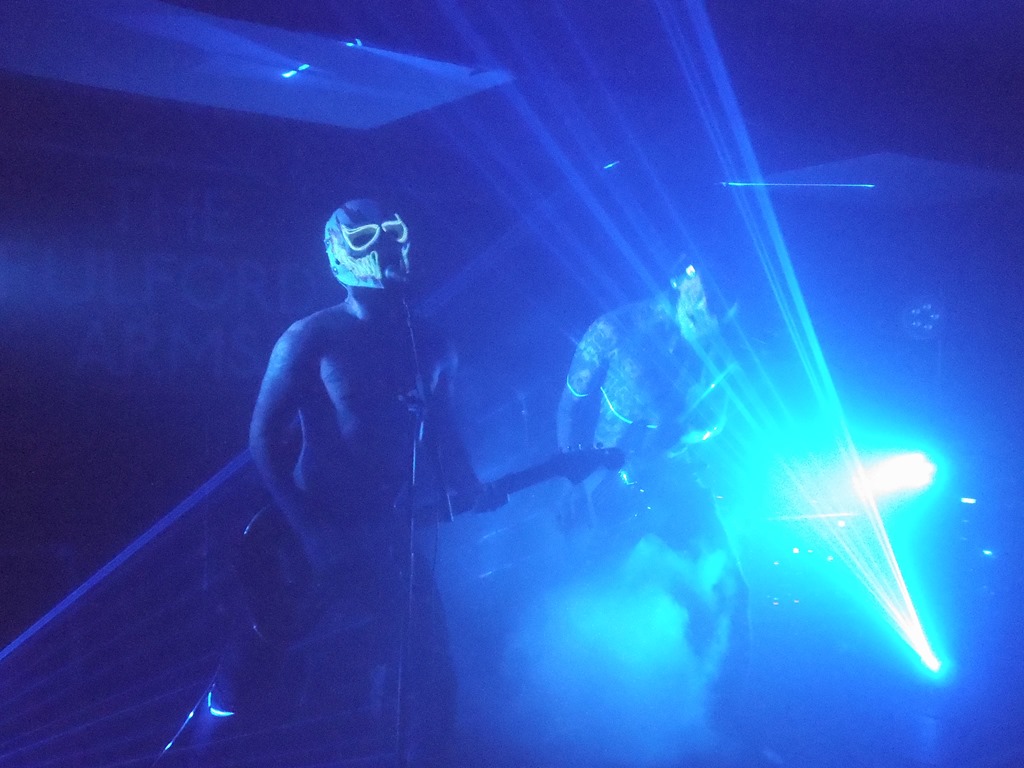
Nottingham’s Bone Cult have been on my radar for a while, and I’ve been quite taken with their brand of hard-edged technoindustrial crossover music. Visually, they’re on a whole other level: with dense smoke, neon skull-masks, a crisp, clinical sound, and laser lighting shooting every which way, they transform the 120-capacity pub venue with a stage a foot high into an academy-type gig experience. They’re so slick, so tight, so immense. For all the intensity and aggression, they do seem a shade lightweight in context, mining more the Pretty Hate Machine era sound of Nine Inch Nails and aping the electro end of the Wax Trax! roster circa 1988. Still, in terms of entertainment, they’re hard to fault.

DSCF3855

Bone Cult

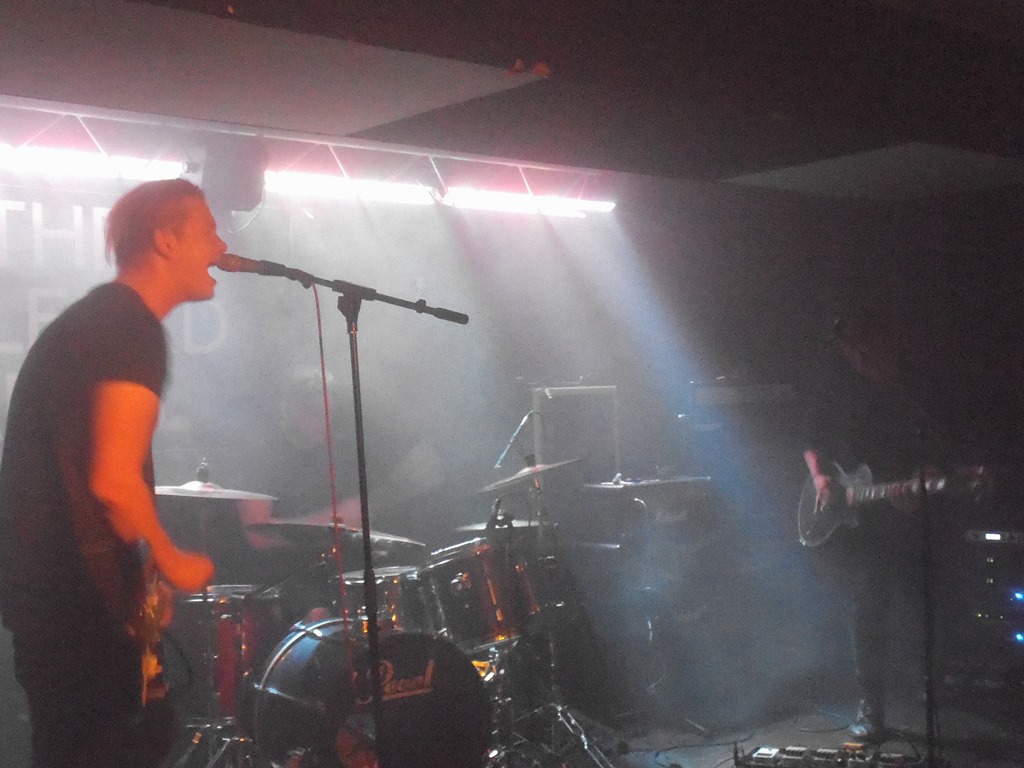
The same is true of headliners, London three-piece Little Death Machine. They neither look nor sound like a band on the lower rungs of the circuit. They’re mechanoid tight, and have a set packed with killer tunes, delivered with nuance, passion, emotion, and panache. A spot of research suggests that this is a new lineup, and while I lack the reference to compare to the old one, they seem to have gelled well. Yes, they do sound a lot like Placebo. A LOT like Placebo. But old Placebo, which is A Good Thing. It’s a punchy set, packed out with songs with massive drive and killer hooks and crackling energy. It’s also the perfect climax to an exciting night.

DSCF3965

Little Death Machine

Humpty Dumpty Records – 11th May 2018

Christopher Nosnibor

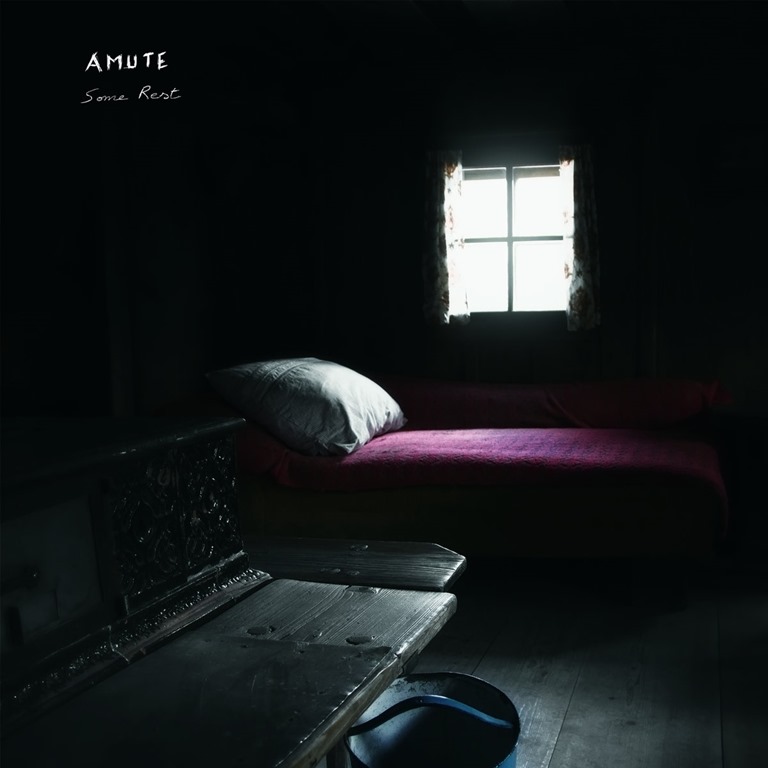
It’s quite the introduction: ‘Jérôme Deuson is an unstable musician’ is the opening sentence of the press release that accompanies his seventh album as aMute. But how many musicians are stable? And what even is stability? Is anyone entirely stable? Is it even a desirable state? So often, creativity emerges from a state of inner turmoil, or tempestuous emotional flux. There are, of course, infinite shades: this is just to peel back some of the layers of the initial and likely awkward response to the statement.

Some Rest is not the millpond calm the title may imply: it’s only some rest, not total rest, and in truth, the rest here is minimal, on an album that’s clearly the work of a restless soul.

The album’s structure and sequence is unusual, opening with the longest composition by far: the title track is almost eighteen minutes long, and transitions from a delicate swirl of strings through a vast, shoegazey post-rock vista to an expansive, driving rock workout. While there are strains of feedback amidst the humming melodic drifts and samples which echo, almost buried in the mix, and the whole thing builds to a sustained crescendo, it’s still a more sedate experience than its predecessor, the tempestuous 2016 album Bending Time in Waves.

Side two begins with the gloopy, bubbling ambience of ‘I’ve Seen it All’ before sliding into eerie dissonance on ‘Dead Cold’, which exploits ringing chimes which give way to softer, picked guitar and a more tranquil, melodic space, disturbed only be the vocal, processed and burred with distortion. It’s sort of melancholic, sort of trippy, sort of dislocated, sort of abstract, sort of shoegazey in a trilling organ swamped in echo sort of way. It’s all amplified into a fizzing digital funnel on ‘The Obsedian’, which features Christian Bailleau, emerging as a grand, slow-moving and mournful piece reminiscent in some respects of Dylan Carlson’s more recent work, exploring as it does the pitch, tone, and timbre of the guitar in near-granular detail. Closer ‘Maria’, with hints of early Pink Floyd, is similarly drifty, dreamy, trippy, echoey-warped, and it tapers away into vaporous clouds.

Because of its ever-shifting nature, and its sonic range, Some Rest provides only the briefest of respites for the listener to relax, creating as it does an atmosphere of flux and continual movement.

AA

aMute