Posts Tagged ‘Mortality Tables’

Mortality Tables – 24th January 2025

Christopher Nosnibor

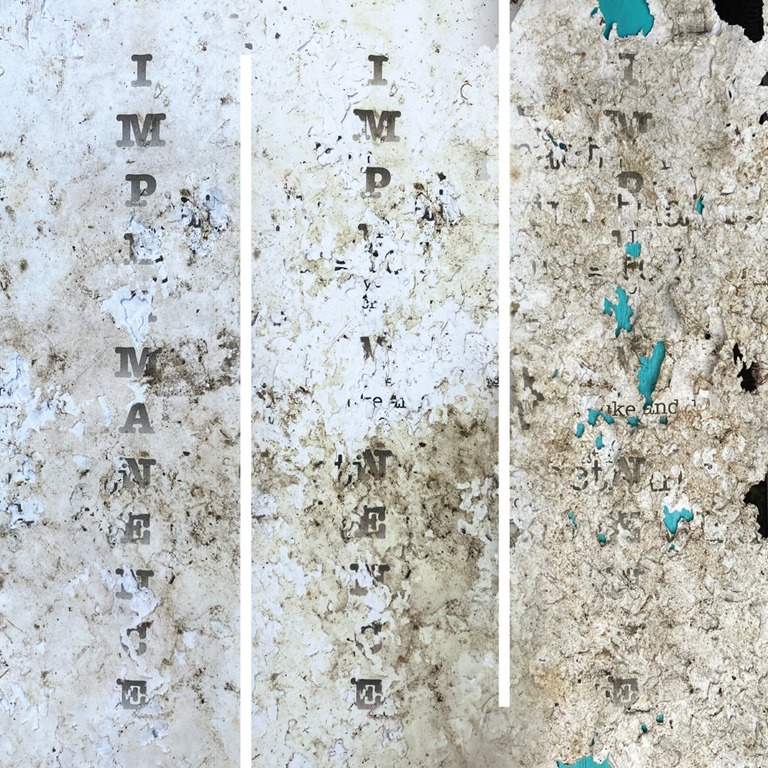
One might say that this release has been a long time in coming – but from old works, left languishing, emerge new ideas having steeped over time. Initially recorded for an event in 2001, and having languished for almost a quarter of a century, An Impermanence now spearheads the latest project to emerge from the ever-inventive Mortality Tables. The Impermanence Project is set to be ‘a large-scale, multi-disciplinary collaborative initiative that will run for the remainder of 2025 [whereby] each member of the Mortality Tables Collaborator Community will be invited to contribute a response to the word “impermanence”.’

The bar is set high for the project with this opening gambit, which is a spectacularly dramatic work, even by the label’s standards. I shall return to this presently, but shall, momentarily, step back and quote at greater length than usual in order to set out the concept and evolution:

An Impermanence was conceived as a total conceptual piece of audio art based around several field recordings made with a dictaphone. In the event, for An Impermanence, only one recording was used, a 25-minute recording of an evening maintenance visit to an open-plan bank’s rising security screen system. This recording consists of a variety of interesting sounds, ranging from confirmation noises of ATMs, the expulsion of air pressure from the screen equipment, to occasional conversations and typing at a keyboard. The random, inherent unpredictability of field recordings created the feelings of impermanence that gave the track its title.
The field recording was mastered ‘as is’ to CD twice to enable continuous playing across two CD players. To add to the queasy feeling of everything ultimately being temporary, the CDs were processed completely live through a sequence of effects units, creating an unpredictable sonic onslaught veering from quiet passages of calm introspection to blazing flurries of electronic feedback and onward to the sculpting or white noise into digitally-synthesised modulations, continuing long after the actual CDs had finished playing.

The whole 54-minute track was recorded entirely live in one take without overdubs or editing, and is presented in its complete, unprepared form.’

It’s hard to conceive that this whole, fifty-four-minute work was recorded in a single take. Having been recorded on a Dictaphone, there’s distortion, there’s interface, there’s crackle. It takes some listening. What sounds, initially, like crackling noise and a load of distortion and flange, is, on closer listening, a siren – probably. It’s certainly something, anyway.

Blasts of noise like avalanches, like bombs, assail the speakers: there are bursts of ear-piercing feedback, gut-shuddering grumbles like earthworks and slow tectonic collisions. There are protracted spells of shudders and sparks, crackles and fizzes, sounds like fireworks and the hum of traffic. It’s nigh on impossible to actually place most of the sounds, and for the most part, this immense track sounds like little more than the rush of wind and things breaking, the crackling sound of tension reverberating inside your skull. As much as there’s no placing the sounds, there’s no escape from the torment, either.

And yet… and yet. I used to walk around with earphones wedged firmly in my lugs as I traversed from my house to the bus, then sat on the bus for half an hour, before then walking a few hundred yards to the office, and then in the lift and finally arriving, an hour later, at my desk. With the arrival of lockdown, the onset of a new anxiety meant I felt no longer able to listen to music as I went places – but instead, I became attuned to my surroundings, at all times. And there is always sound: birdsong, the breeze in the trees, traffic, planes or helicopters overhead, water trickling down drains, the babble of conversation the whirr of bikes passing, the thud and pant of joggers who pass so close as to buffet you with their air movement, and dogs, dogs, dogs, so many fucking yapping, gasping, snapping, shitting dogs, running off lead and at will. There is no escaping sound, and while the sounds on An Impermanence feel amplified, intense, unpleasant, overloading, they do very much seem to recreate the outdoor experience of the hypersensitive.

Keep your ears open. Stay vigilant. The world is everywhere. If the rest of this series is even half as intense, it will be… an experience.

AA
a2246862507_10

Mortality Tables – 17th January 2025

Christopher Nosnibor

Given Mortality Tables’ liking for location-based field recordings, Circuits From Soft Frequencies makes for a comfortable fit in their rapidly-expanding catalogue.

As the liner notes explain, Circuits From Soft Frequencies originated ‘as a four-channel sound art installation developed using field recordings from sites around the South East of England.’

‘Drawing on soundtracks taken from 70s minimalist sci-fi films, both the samples used and the overall composition are based on different terrains encountered during Jamie’s field trips, describing huge shingle beaches, swamps and clifftops. The installation which was exhibited at MK Calling in Milton Keynes during the summer of 2024 also consisted of fabricated ‘cymbal speakers’, incorporating sensor-based technology to respond to changes in their environment.’

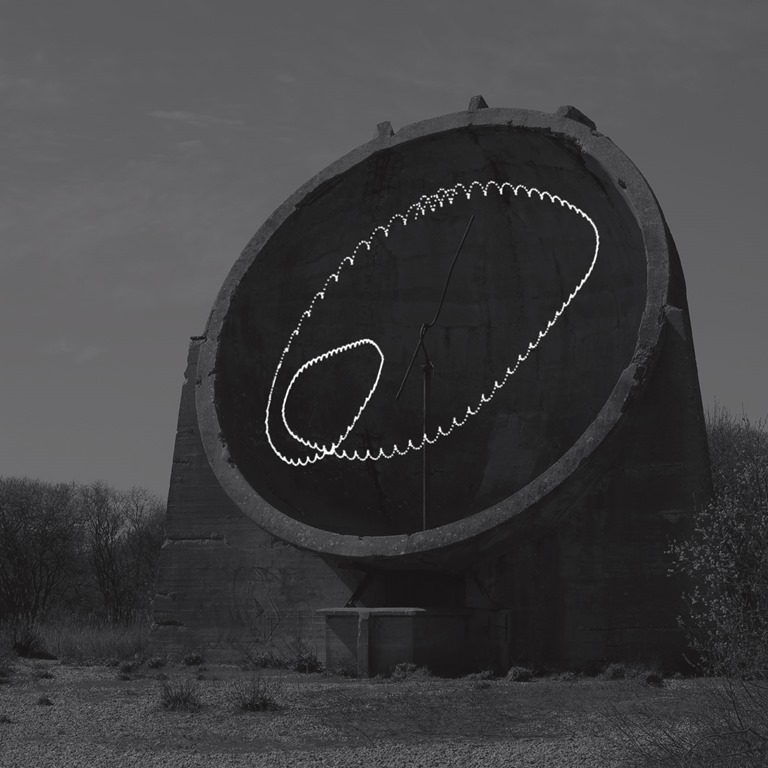
The cover art depicts one of the ‘sound mirrors’ which were constructed at various sites around the UK shortly between the world wars as an experimental early warning system, as a precursor to radar. While there are sound mirrors at two sites in Kent, those at Denge are the most renowned and best preserved, and it was here, one assumes, that the recordings of percussion, ‘incorporating cymbals, bells, gongs and clocks’, took place.

The installation, the notes go on to explain, ‘repurposes four cabinet speakers to transmit sounds collected during field trips to sites featuring [the] huge, concrete sound mirrors’.

This release contains a nineteen-and-a-half-minute recording of the installation, and highly atmospheric it is, too. Ther ticking watch not only keeps time, but gives a sense of tension and urgency which runs fast, in contrast to the long, low, reverby thuds and slow splashes of cymbals. That everything – apart from the watch – sounds somehow dulled, muffled – only adds to the atmosphere. It’s likely that this eerie, swampy echoiness is the product of the location, which features not only the thirty-foot concave ‘ear’ shown on the cover, but a two-hundred foot concrete wall. Images of the site stir the imagination, and one gets the impression to actually be in the presence of these strange-looking objects must be truly awe-inspiring. The sounds which emanate from the speakers while listening to Circuits From Soft Frequencies evoke the same sense of the alien, the otherworldly. Spurs of noise occasionally burst through, interjections of dissonance pulse through the building layers of sonic collage to unsettling effect.

It’s a reminder that often, the most alien and seemingly otherworldly creations are, in fact, man-made – and often connected in some way to war, and mankind’s destructive tendencies. I was struck, not so long ago, by the quite chilling experience of touring the cold war bunker in York – not a place of refuge, but a cramped and claustrophobic subterranean observatory which, in the event of the fulfilment of its purpose, would assure the deaths of its crew.

The sound swells and glitches, scratches and hums, and at times exudes a nightmarish quality that makes your muscles tense and your scalp tighten and crawl. It’s a remarkable piece of work, but one of those where the end comes as something of a relief.

AA

cover

Mortality Tables – 10th January 2025

Christopher Nosnibor

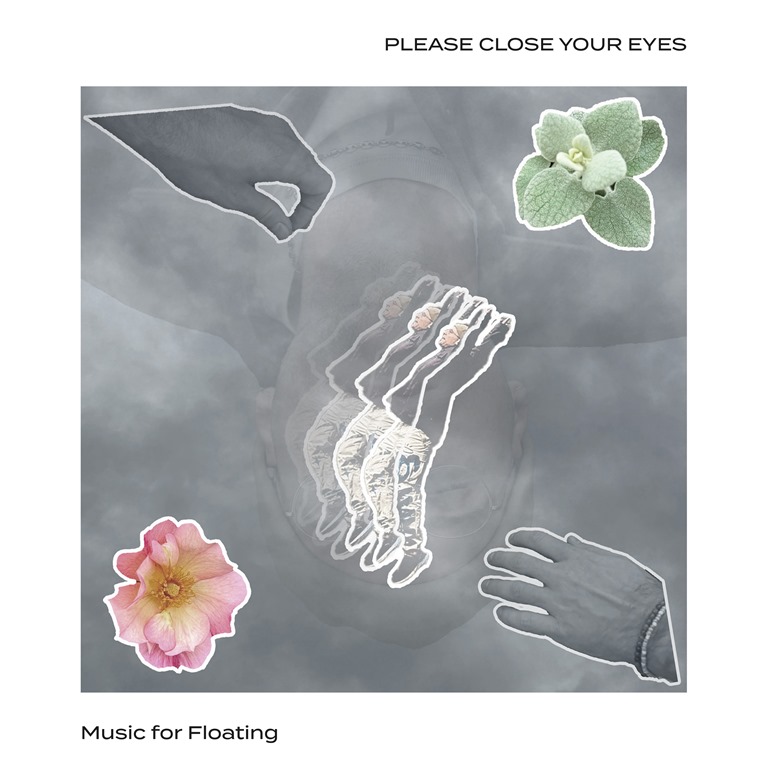
Ambient music is, in many ways, music for reflection. Or perhaps, music which provides the backdrop to reflection. Time was that I had very little interest in ambient music, but I have come to appreciate it has having quite significant functions, whether by the design of the artists or not. Reviewing requires a level of focus and attention that regular music listening does not, and when it comes to ambient works, a greater level of attention is necessary: I feel there is a requirement to tilt the ears and pluck out the details, the textures, to venture into the depths to extrapolate the moods and meanings. Sometimes, I fail, and find my mind wanders down different paths as space opens up through sonic suggestion, and random associations are triggered completely unexpectedly. Regardless, ambient music is generally best received in darkness, or by candlelight. Please… close your eyes and absorb without distraction.

As Oliver Richards – aka Please Close Your Eyes – writes, “Music for Floating is a document of transition. It collects pieces that were made over a three year period, nearly three years ago. They were all made before my last Mortality Tables release, ‘Nibiru’ / ‘Heaven On The Fourth Floor’…It’s a consciously-composed modern classical album. I have no classical training at all, but when I was making it, I set out with the intention of composing for the first time, consciously and intentionally. The music I made before under the name Goodparley was all created improvisationally and instinctively. With this I would step back and ask myself, ‘What am I actually going for here?’”

I ask myself this question often, and not just about creative endeavours, but life generally. How many of us really have any idea, about anything? Music for Floating, then, provides a magnificent soundtrack for contemplation and reflection, on the world, on life, and all things. But it’s not simply an ambient work: it’s a collection of pieces which span a broad sonic range, and while gentle and mellow throughout, there’s much more to it than drifting clouds and soothing sonic washes.

There’s something of an underwater, soft-edged soporificness about ‘The Moment Before We Sleep’, and it’s one of those pieces which lends itself to immersion and letting oneself cut adrift. In contrast, ‘The Hollow’ brings a busier, more bustling feel, not to mention something of a progressive vibe, as synth piano ripples and rolls with waves of energy. Augmented by synth strings and other elongated, organ-like sounds, the seven-minute ‘Piano for Floating’ is a standout, compositionally, structurally, and sonically. It’s subtle, layered, and casts the listener adrift on a rippling expanse of tranquil sound. Music like this has a profound effect that’s both physical and mental: you can feel your spine elongating, your muscles gradually becoming less knotted. I find myself yawning, not out of boredom, but through a rare relaxation.

At under three minutes, ‘Deeper Blue’ provides an interlude at what stands as the notional start of side two, before the six-minute ‘Heaven, Faced: or, The Fairies’ Parliament’, and the epic finale, the nine-minute ‘The Time Before the Last’. The former traces shimmering contrails through an azure sky; it’s the sound of slowly rippling aroura, of silent snowfall in a windless winter sky, of your mind spinning in amazement at the wonder of natural phenomena… while the latter brings slow abstract drifts which evoke the vastness of space, eternal in its expanse. It’s bewildering, but so, so calm… Time evaporates, and nothing matters. There is nothing.

AA

cover

Mortality Tables – 24 December 2024

Christopher Nosnibor

There’s something about Christmas that really does send people spiralling in one of two directions. The people who absolutely love it seem to love it just too much to be considered sane, and this year has been one of the worst I can remember for people actually buying chocolate and putting their trees up almost immediately after hallowe’en. Amusingly, I’m seeing them taking down their trees and decorations from Boxing Day, declaring that they’ve had enough now. Well, it’s hardly surprising after three months. I really for feel sorry for the kids of these deranged households: it must be quite confusing for them, not least of all seeing their parents troughing whole selection boxes to themselves in November as they effervesce about the Christmas spirit and plaster their hedges, bushes, trees, and house frontages with lights – which is as trashy as it is environmentally unsound (‘oh, we use green energy, it’s 90% nuclear now!’) – only to tear them down a whole tend days before twelfth night. But these are the kind of people who call what they do – things like going to work and parenting – ‘adulting’ and piss and moan about it on social media, while posting pics of their decorations at the start of November. And it’s cunts like these who make me loathe Christmas with a passion I didn’t even know I possessed. They spoil it for more moderate, more sane people – and people who just despise other people and herd mentality twattery in general.

And so I’m with Mat Smith, the main man behind Mortality Tables, and am one hundred percent into ‘Grouch Thoraces (II)’, pitched as ‘The festive sentiments of a misanthrope, processed into dark and enveloping ambient texture. An updated version of a release from 2023’. In fact, I consider this to be a release that stands alongside – in spirit, if not necessarily sonically – with my own Festive Fifty noisework, released on December 20th. Against the tidal wash of syrupy, saccharine Christmas tunes – shit covers or endless rereleases or just the same toss that’s been the staple of the airwaves since the 70s and even earlier – nothing says ‘fuck this commercial Christmas shit’ like some dark noise.

‘Grouch Thoraces’, released on Christmas Eve in 2023 was a dank, murky cut, presenting just shy of five minutes of the most rumbly dark ambience. This year – to use a phrase I despise almost as much as the cheery festivity fanatics who bounce around the office in Christmas jumpers and Deely boppers or reindeer antler headbands and start arranging secret Santa and team drinks and buffets from the middle of November – Smith has doubled down on his anti-festive sentiments with a reworked ‘Grouch Thoraces’: this time it’s even darker and danker and almost eight minutes in length. It’s a churning, disorientating mess of stuff thrown together, found sounds and elongates drones twisting together to forge a thick morass of unsettling, uncomfortable noise. According to the credits, there’s a vocal by Carroll Spinney, but it’s submerged in the slow-sinking swamp. There are chimes clattering in the dark whorl of purgatorial noise, but they sound like the ching of broken decorations swinging in a post-apocalyptic nuclear wind as the survivors crawl, blind, skin peeling, through the ruins of what little remains.

On its own merits, this is a strong dark ambient work with a certain edge: in context, it speaks. Fuck this festive shit, fuck this commercial shit, fuck the obligation to socialise: let’s celebrate stepping back from it all and just getting through it, without feeling the need to pretend that we love any of it. We misanthropes need to stand together.

AA

a0412538683_10

Mortality Tables – 22nd November 2024

Christopher Nosnibor

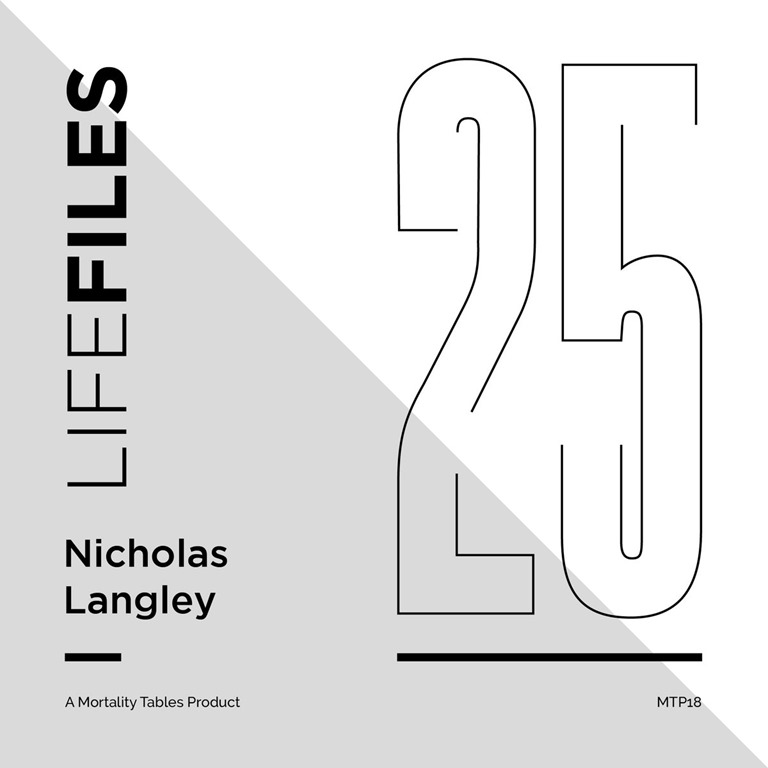
Matthew’s Hand by Nicholas Langley is the twenty-fifth instalment in Mortality Tables’ LIFEFILES series, now in its third season. The principles of this ongoing project are simple: ‘Recordings of places, people, objects, moments in time, environments and quotidian events are shared with a range of artists working across different disciplines. Those artists are free to respond to the recordings in any way they like.’

Simple principles, but in actuality, giving free reign to the artist to respond to the source material offers near-infinite possibilities. And so it is that Nicholas Langley presents to six-minute pieces in the form of ‘Milton Keynes University Hospital, 3 April 2024’ and ‘Milton Keynes University Hospital, 17 April 2024’.

Label head Mat Smith provides the following context for the source material for this release: ‘On 2 April 2024, I fell over while walking near Smithfield Market on my way to work, and broke my hand. The two recordings used by Nicholas were both made at Milton Keynes University Hospital – the first while waiting for an x-ray that confirmed the fracture the following day, and then two weeks later while in the waiting room for the cast to be removed.’

I’ll spare the tale of the time I fell and broke my ribs and shredded my hand one night, but shall move to the point that for some of us, the reaction to an event which contains an element of shock and even mild trauma is to document it. Having photographed my bleeding palm, and recorded the horrendous roar of the oxygen machines which were installed in our living room for the final nights my wife was with us, I can only conclude that recording these things creates a separation which enables us to process them as being ‘media’, for wont of a better term, rather than the painful reality of our actual lives. I certainly prefer this rationale to the idea that it’s a sociopathic impulse to revel in experiences of trauma and pain.

‘Matthew’s Hand’ captures the ambient chatter and clatter of a waiting room, at least initially, before this fades out to be replaced with something that one might describe as echo-soaked abstract synth jazz. Langley applies the principles of dub reggae, but without the percussion. The sonic experience is in some ways like the lived experience of the waiting room, as the chatter dims into the distance and your head slowly swims in a sea of overwhelmed strangeness as you wish you were elsewhere.

Someone recounts the grim tale of someone who was close to a mortar explosion at the beginning of ‘A Mortar Went Off Near Him’, before heavy elongated, humming drones enter the mix, and Langley builds a dense soundscape of whistles, hums, and whooshes which owes as much to early 80s industrial as it does to more contemporary dark ambience. A monotonous throb emerges, and it’s overlaid with scrawls of feedback and sharp, needling treble. Ultimately, little happens over the course of its seven-minute duration but somehow, you feel the effect.

Taken together, the two tracks have an impact which somehow extends beyond their sound alone.

AA

a1808514016_10

Mortality Tables – 29th November 2024

Christopher Nosnibor

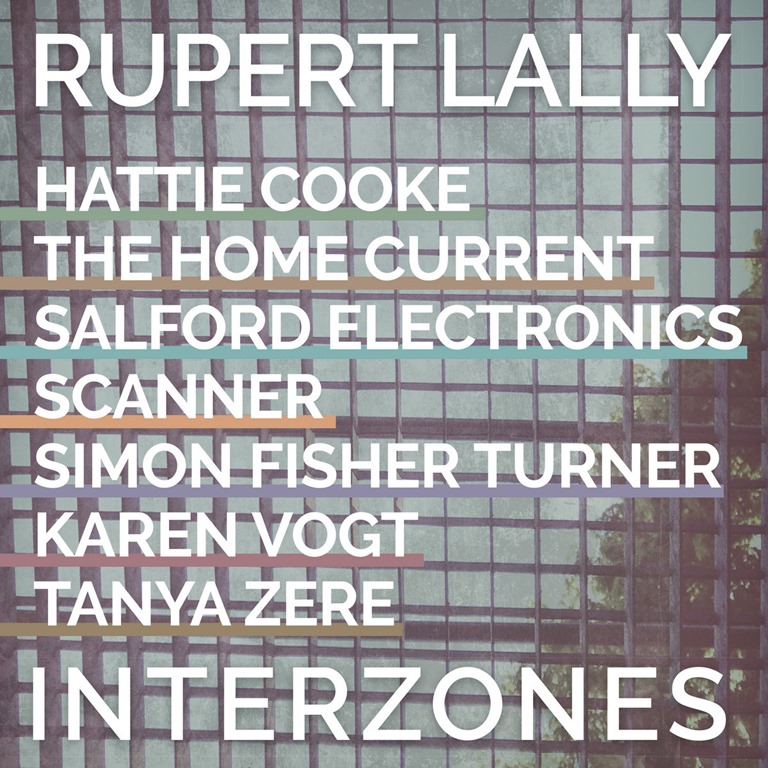
Because life experience creates linguistic associations, for me, it’s impossible to see or hear the word ‘interzone’ without immediately thinking of William S. Burroughs. The title of a collection of short stories and ‘routines’ penned in the mid-1950s, Interzone was the working title of the seminal breakthrough novel Naked Lunch (1959), and the collection, published in 1990 consists of segments which failed to make the final cut. The pieces were written while Burroughs was living in Tangier, something of a haven for expat writers, including, perhaps most notably, Paul Bowles, but also polyartist and true inventor of the cut-up method, Brion Gyson. Burroughs described the city as an ‘interzone’, and it was indeed both an ‘international zone’, as the portmanteau implies, and a space between zones, outside of any single culture or jurisdiction, its administration divided between the US, French, Spanish, and English sectors, where ‘nothing is true, everything is permitted’. Of course, there are numerous other connotations, but this is what I’m bringing in terms of prececeptional baggage to this.

The accompanying notes certainly indicate that the album’s content holds up to these parallel positions: ‘Like its name implies, these are place of transiency. Intermediate places. In-between locations. Melting pots of different people and different ideas, constantly evolving as one thing collides with another, and another, and another.’

The album was initially recorded in 2022 as a solo work, but subsequently scrapped and rerecorded with a different collaborator on each composition. Collaborations do tend to bring out different aspects of an artist, and it should therefore be of no surprise that this suite of nine pieces, recorded between 2022 and 2024 in Switzerland, England, Luxembourg, France and Zimbabwe, is eclectic in its take on electronica.

As the bookending pieces, ‘Entry Visa’ and ‘Exit Visa’ indicate, travel, movement, and transition, are the key themes here. But this is not some pan-cultural pick ‘n’ mix grab-bag, and instead creates an experience which replicates the disorientation of travel. It’s difficult to articulate just how this sonic patchwork works, or quite how the experience feels. It’s not as if it lurches from techno to grunge, to opera, to thrash, and in this respect Lally’s works represent his ‘two inches of ivory’, so to speak. But within the realm of electronica, Interzones covers substantial ground.

‘Play Position’, featuring Salford Electronics, is a sample-packed exploratory work with a prominent beat, which contrasts considerably with the near-ambience of ‘A Stealth Approach’, featuring Scanner; contrasting further, Simon Fisher Turner brings a sort of drawling space-age country aspect to ‘Calmer’, before things take a spin toward out-and-out trance on the title track, and Karen Vogt’s airy, soft vocals on ‘Running Circles’ pull the album gently into hypnotic shoegaze territory. The album continues on this trajectory, sliding deeper into dark, gothy electropop with ‘Ripples’.

The insistent beat and overtly dance style of ‘Exit Visa’ makes for an unexpected change in direction – despite the fact that, by this point, nothing should be truly unexpected. The effect, however, is disorientating, and you find yourself wondering how you came from A to B over the duration of the album. It’s testament to both Lally’s compositional skills and his selection of contributors – as well as the album’s sequencing – that somehow, it flows and the transitions themselves are seamless, which only heightens the sense of moving between spaces with no real sense of how it came to pass. Vitally, Interzones is a subtly detailed work, with hidden depths and moments of genuine beauty.

AA

a2037434320_10

Mortality Tables – 25th October 2024

Christopher Nosnibor

Some time in the last decade or so, genre distinctions simply exploded to the point of obsolescence. People – many people, and I won’t deny that I’m not immune or above doing so – will spend endless hours quibbling over categories. Is it post-punk or goth? It is doom or stoner doom? Country, or Western? Or both? It does seem that the ever-fragmenting microgenre, once the domain of dance, with its infinite focus on detail, has more recently become a battleground within metal – but then, a friend recently described an act as being ‘Jungle adjacent’ and I felt my brain begin to swim. What I suppose I’m driving at is that artists themselves are breaking out of genre confines and the place we find ourselves now is a point at which anything goes. But listeners – not to mention labels and journalists – or perhaps especially labels and journalists – find themselves clawing desperately to define whatever it is. There have to be benchmarks, touchstones, comparisons. We’re simply not attenuated to music which doesn’t conform to some parameters or others. This is one of a number of reasons that I tend to try to focus my attention on what a work does, what it actually sounds like, the sensations and emotions it elicits and other more tangential provocations – because the way we respond to music tends to be personal, and instinctive, intuitive. One may react immediately, and enthusiastically to a punch in the guts from an overdriven guitar, or may instead feel a greater emotional stirring from something soft and delicate, be it an acoustic guitar, a harp, or a flute. In summation, one’s first instinct is not to assess whether or not those opening bars belong to a specific microgenre, at least when it comes to a ‘blind listening’ experience.

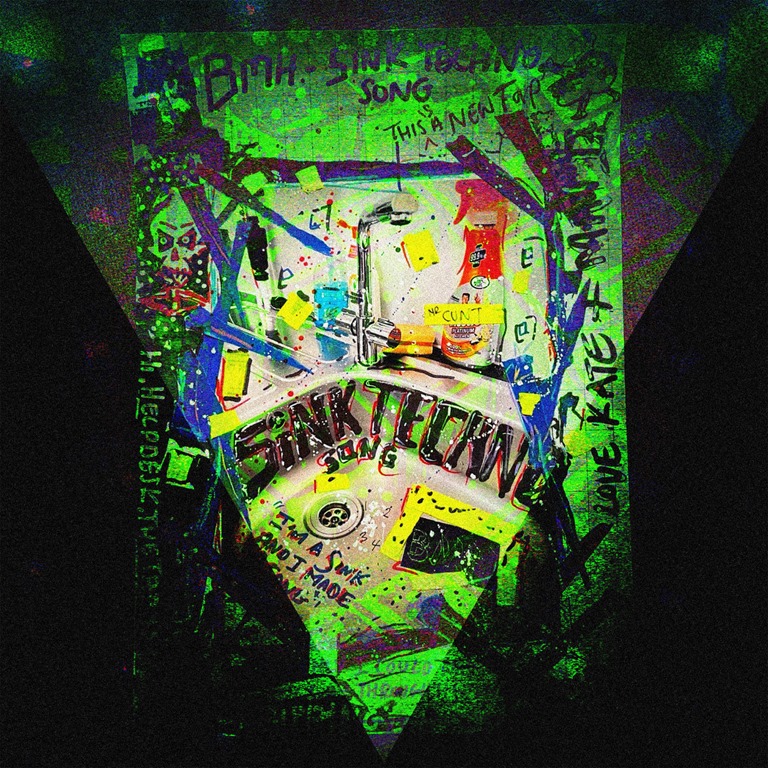
But then there’s always a spoiler, and here I find myself facing a ‘spontaneously-created acoustic punk techno EP made with a dripping tap’. What the hell do you do with that? How do you prepare for listening to something so far beyond the outer limits? Personally, I start by pouring a large vodka, and putting the light off.

The EP features four tracks; two versions of the title track, plus two versions of the longer ‘Water Sink Song’. The former centres around a relentless thudding beat, clearly derived from a dripping tap, with swishing, swashing, gurgling watery noises and other scraping and thumping and crashing incidentals. There’s nothing quite like taking the sounds from one’s surroundings and manipulating them in order to forge new sounds, and new sonic experiences. It’s life, but not was we know it. Or, perhaps it’s too close to life as we know it.

“Matt Jetten and I made the track in the sink at work,” says BMH’s Kate Bosworth. “The tap was leaking and we managed to get to it minutes before the engineer did. The original is in mono, but our mate Stuart Chapman (Terminal Optimism) suggested we ‘do a Beatles’ on it and bring it into stereo by duping and layering and adding effects etc. All in all, the process was very quick.”

‘Water Sink Song (End Dark Train 21st October 2024)’ features a haunting vocal which drifts mistily over a swampy swell and a thick wash of static, as well as more watery sounds, like heavy rain and swashing, glooping, the disconcerting sounds of ingress in a storm. The shuddering electronic rhythms call to mind Suicide, but with an esoteric folk twist; one can almost picture the performance of a pagan ritual at a stone circle in a torrential storm – but then stammering vocals cut through in a rising tide of mains hum and buzzing electricals. Synths buzz and crackle at the fade. The ‘Original’ version (17th October 2024) is more heavy rainfall and water running from a roofs onto gutters – or the sound of a number of men urinating hard onto a corrugated shed roof. Thuds, clatters, clanks, trickles and sprays, a bottle or jar filling at pace; the incidental sounds, the additional layers, are wet and uncomfortable.

It may be that my response is as much coloured – a hazy amber – by my recent experiences of a trip to Castlerigg stone circle in a saturating downpour, and a train journey whereby the train was rammed solid with rowdy football fans, who, unable to make their way to the broken toilets, resorted to urinating in water bottles and Costa coffee cups, which they left on luggage racks and on tables, while cheered on by mates passing more cans of cheap shit lager and a bottle of lager along the carriage.

Jetten’s vocals are breathy, semi-spoken, and there’s a sense that they’ve been recorded quietly in the bedroom of a flat or terrace, trying not to disturb the neighbours. There’s an element of triumph in the tone as Jetten announces the title, as if he’s utterly pumped by the experience – or something seedier.

As an experimental work that encapsulates the DIY ethos, this is a quality example of the kind of weirdness that can only happen independently. It’s perverse, and imaginative, and it’s different. Oh, and all proceeds go to Kidney Cancer UK.

AA

a4195200752_10

Mortality Tables – 16th June 2024

Sometimes, personal events drive creative work in a way which runs away from the artist. It ceases being first and foremost about ‘art’, and the need to expunge, to offload, to outpour takes precedent. It’s not a conscious thing, something planned: the fact is that creativity leads the way, and art is not something one necessarily can direct or determine – at least, not true art. Art happens in response to things, and oftentimes, the most powerful art is born from exploring the deepest, most intensely personal scenarios. Such explorations may not reveal a great universal truth, but then again, they may present something that’s unexpectedly relatable. And this is where we find ourselves with The Engineer.

Mat Smith has no ambitions of leading the country, and nor does his musical output seek to obfuscate his journey or his reality. The Engineer documents this reality, and I shall quote, quite comfortably, the press release which provides vital context here:

‘In 2012, writer and Mortality Tables founder Mat Smith (Electronic Sound, Clash, Further. wrote a short story, ‘The Engineer’. A work of fiction, the story was loosely based on his father, Jim Smith, a skilled mechanical engineer who had spent most of his adult life working in a factory in Stratford-upon-Avon. The Engineer represented Mat’s thoughts, feelings and fears about his father’s retirement.

‘The story was later narrated by author, producer, playwright and poet Barney Ashton-Bullock. 29 artists, working in the fields of sound art, electronic, experimental and contemporary jazz music, were then approached to provide a sound response to a thirty-second extract of Barney’s narration. The order in which they agreed to be involved determined which section of narration they would be asked to respond to.

‘The collated 29 responses were curated and recorded over the next two-and-a-half years and assembled into a single, 14-minute collage by James Edward Armstrong. Its sprawling, disjointed presentation of short, rapidly-replaced ideas is intended to evoke the devastating confusion of Alzheimer’s, which Mat’s father was diagnosed with in 2018.’

This is about as intense and personal as it gets, and I’d like to think that this well-crafted work makes for a fitting homage. The sleeve image depicts a teenage Jim Smith on Margate’s Promenade in the 1950s, and the narrative tells the story based on his life against a shifting sonic backdrop.

On the surface, it’s a quite charming work. But it’s also sad, a tale of the way the ageing process is one of decline. And as the story progresses, a different kind of decline becomes the focus. It’s also a narrative of the way work has a way of stealing life away, especially for the manual worker. It also speaks of the difficulty of relationships, emotional disconnection, and ultimately faces the issue of mortality in the most real and matter-of-fact way. Time passes, and it passes far too fast. When you reach a certain age, every birthday gives pause for thought, and every picture gives rise to a pang of sadness. Even the passage of a year or two… how do you compute? How do you deal?

It seems that many simply don’t: I often hear or read people remark how people dying – and they die, they don’t pass, although hardly anyone ever says or writes it – people dying in their 60s or even early 70s is ‘no age’ or how they were ‘taken too soon’. I struggle with this. People have a finite time, and I speak from painful personal experience when I write that I feel that it’s quality of time which counts most. To witness a slow degeneration tends to be far more painful for those around the person experiencing it. Alzheimer’s is a cruel disease, and all profits from this release are going to the Alzheimer’s Society. This is to be applauded, of course, but not simply for its charitability, but because of its art.

The Engineer may only be fourteen minutes in duration but represents twelve years in the making, and the input of more than thirty people in various capacities. In short, it’s an immense project, and the amount of time and energy poured into such a complex, detailed work is immeasurable.

The narrator starts out feeling vaguely AI, but in no time, we come to feel a connection with poet Barney Ashton-Bullock’s delivery. It’s crisp and clear, and in some respects has BBC documentary commentary. Its power derives from its simplicity: the narrative itself is straightforward and linear. Its sonic backdrop is not, and it’s disorientating, and at times uncomfortable, incongruous, at odds with the point of the narrative with which it’s paired. The sounds behind the narrative range from grinding, churning industrial din to woozy blooping electronica and shuffling disco and is altogether less linear, mutating over the course of the piece. It will leave you feeling disorientated, it will leave you feeling harrowed, possibly even stunned, and drained. But this is as it should be. The Engineer is ambitious, and a quite remarkable work.

AA

a0182982649_10

Mortality Tables – 7th June 2024

Christopher Nosnibor

Mortality Tables have continued to release titles from their ‘Life Files’ series at a remarkable rate, with instalments 18 and 19 landing in May, and hot on their proverbial heels, this, number 20, in the first week of June.

The premise remains consistent, namely ‘Recordings of places, people, objects, moments in time, environments and quotidian events [which] are shared with a range of artists working across different disciplines. Those artists are free to respond to the recordings in any way they like. And so, as ever, the field recordings, courtesy of Mortality Tables main man Mat Smith provide the foundation and inspiration.

Killiegrew Monument is a peculiar thing. Located in Falmouth, and intended as a memorial to the last surviving member of the Cornish family, the monument is a sharp obelisk constructed in 1738. It looks altogether more contemporary, and ultimately anomalous with its surroundings. And one might say that this release is similarly anomalous. I can imagine that beholding this curious construction would inspire an array or reactions. But why the fuck would you play a stone monument with a sharp stone? Is that really one of the responses you’d likely have to coming face to face with such a construction? Well, perhaps, if you’re possessed of an avant-garde mindset, whereby instead of reflecting on the origins of The Wind in the Willows, you find yourself contemplating ways of making unusual noises.

Once again, when it comes to the ‘Life Files’ series on Mortality Tables, we don’t know what the source materials actually sound like.

‘Killigrew Monument Played With A Sharp Stone (Part One)’ is an odd sound work: there’s chatter and ambient drift and scratches and shuffles and scrapes, but what on earth is going on? Seagulls wheeling and cawing – and on those squawks the sound echoes and reverberates, and the collage of sound collides with a strange rendition of ‘One, two, three four five, once I caught a fish alive’.

There’s lots of processed echo and cawing gulls at the start of ‘Killigrew Monument Played With A Sharp Stone (Part Two)’, as well, and it does, in some respects, sound like someone crooning abstractly into a child’s echo mic just to see how it sounds. The longer of the two pieces, at almost thirteen minutes in duration, it creates a deeply strange and disorientating atmosphere, which is likely evocative of this curious monument, which stands out of time and out of keeping with its surroundings as a testament to human folly, and, ultimately to vanity.

Too abstract to be ‘songs’, too much happening to be ‘ambient’, the result is a haunting and somewhat disorientating soundwork of a rare quality.

AA

a4230686863_10

Mortality Tables – 3rd May 2024

Christopher Nosnibor

As much as this is an album it’s an historical document, and one they’ve had to blow the dust off ahead of its release. Kullu was recorded by Carl M Knott, aka Boycalledcrow, as a series of field recordings as he traversed India in 2005 and 2006.

As the accompanying notes explain, ‘The album is an audio travelogue of Knott’s travels through India in 2005 and 2006, just after he’d graduated. That journey was part of Knott’s concerted efforts to overcome the intense feelings of stress and anxiety that had gnawed away at him throughout his adolescence. Along the way, he documented his travels in a blog and accumulated countless memory cards of photos and videos.’

Life has a habit of delaying projects, of getting in the way (I have a number of book-length projects which I embarked upon circa 2010 which are languishing, incomplete, on my hard drive, and have every sympathy). When a project has lain so long, has been placed on a backburner, or whatever else, how viable is it after eighteen years? Is it really worth resurrecting? Yes. Always, and especially if / when it’s personal.

You read and hear often talk of ‘closure’, and usually it’s in relation to a bereavement or a specific trauma. But life is trauma: a path strewn with rocks of trauma to trip you unexpectedly.

Kullu is a road trip, a narrative, and also an exorcism, a sequence of processing, a coming to terms.

More than anything – and any critic’s outlook is limited to their experience – I’m struck by the range of sounds and the way in which Kullu is an album that expands over so much ground. At the outset, the beats are to the fore and Joujouka come to mind initially, as percussion thunders loud and hard, but before long, things start to melt and dissolve into entirely less form-shaped compositions. Twisting between ambience and various shades of dissonance and slow-shifting pulsations, Kullu grates and scrapes its way through a twisted journey of difference, of fresh terrains, ranging from ominous vocal and semi-orchestral compositions like ‘Kanashi’, to clanging, clattering, altered and warping. There’s a lot going on and I sometimes wonder if I’m equipped to cover this. But ultimately there is always room

Kullu presents all the moods, all the vibes, all the breadth of experience. It’s often discordant and difficult, and that’s as it should be.

AA

a2597800960_10