Posts Tagged ‘moody’

Christopher Nosnibor

Bite the Boxer is unquestionably an unusual and intriguing name for a musical project: my mind immediately leaps to the infamous ‘bite fight’ between Mike Tyson and Evander Holyfield in 1997, where Tyson lost through disqualification after biting off a chunk of Holyfield’s ear in one of sport’s most shocking moments.

In combining an eclectic range of elements spanning industrial, alt-pop, trip-hop, and ambient lo-fi, there’s nothing about Matt Park’s music which indicates any connection to this moment in sporting history. The same is true of his objective to create music imbued with ‘he feeling of impending doom but with just a glimmer of hope’, which is inspired by ‘horror video games and dystopian, post-apocalyptic films’.

‘Venom Test’ is haunting – at first ambient, before bursting with an expansive, cinematic feel, then plunging into darker territory. Even without the aid of a beautifully-shot and remarkably stylish video, the rack leads the listener through an evocative sequence of sonic transitions. Although never harsh, the distant drums are weighty, powerful, and the overall experience feels like a juxtaposition of must and decay with rays of shining hope breaking through cloud. The listener feels as if they’re being pulled in opposite directions, the suspenseful end offering no conclusion, but instead, leaving a sense of emotional quandary, an uncertainty. ‘Venom Test’ creates a tension, and provides no closure or conclusion, only a sense of a door being left ajar. It’s a deftly woven piece, and one which feels very much like it belongs to a much larger project – which it does, being a taster (which doesn’t remotely have the flavour of bloodied ear, to the best of my knowledge) for the forthcoming album, Haunted Remains Pt.2. As a choice of single, it’s a good one, leaving us in suspense to hear it in the context it was intended.

AA

AA

92e42d4c-6d54-911b-d615-4a752d4ebad6

The Hangnails have certainly evolved. Recent releases have been a very far cry from the raw garage blasts of their early works, starting out almost fifteen years as a full-throttle garage duo.

There was something of a fallow spell after the release of DOG in 2017, after which Martyn Fillingham and Steven Reid made an understated return, the dropping of the ‘…and the’ signifying their shift towards different territories.

‘Come On Outside’ may be their most different yet. Stripped back, mellow, atmospheric, and synthy, it boasts epic, cinematic qualities – and they still make sound that you’d think impossible for a two-piece.

The visuals for the video are pretty striking, too.

AA

557129847_1385194123607392_9211412401179351774_n

Distortion Productions – 8th March 2024

Christopher Nosnibor

Metamorph have made their way onto these virtual pages a couple of times with previous single releases, most recently ‘Witchlit’ just over a year ago to the day as I write this. And, it turns out, this single was the very long lead-in for this long-player, which comprises seven new tracks which follow ‘Witchlit’, augmented by three remixes.

I’m going to park the remixes to save retreading territory that’s growing tedious and focus on the album proper, which kicks off in solid style with the pumping dark disco of ‘Veridia’ which blends surging dance pulsations with 90s enigma music and a dash of eastern mysticism to conjure a compelling hybrid or esoteric origins that lands with a dancefloor-friendly immediacy and energetic beat and throbbing bassline – and packs it all into just two pumping minutes.

There’s a lot to be said for starting an album strong and going straight in and hitting hard over the slow-build, and in today’s attention-deprived climate, it really does seem like the way to go – and Metamorph nail it here. They want your attention, and they’re bold about it.

‘Witchlit’ is up next, and it’s perfectly placed as a shimmering slice of dark electropop, sultry but lively, like Siouxsie gone electro. This is Metapmorph at their best – haunting, gothy, a little bit twisted. The title track crashes in next, bursting with flamboyant Europop vibes counterbalanced by darker shades – and once again, they pack it all into two and a half minutes.

Casting an eye down the tracklist, the majority of the songs on HEX are under three minutes in duration, and the album showcases a real economy of songwriting – no expansive mid-sections, no extravagant solos. They really do keep it tight.

‘Woo Woo’ is perhaps the album’s weakest track , not only with its mundane lyrics – ‘I won’t lie / I’m gonna get real high’ and unimaginative efforts to be sexy – but its wholesale immersion in commercial pop stylings. It feels like a stab at mainstream accessibility which is beneath them and isn’t particularly successful; in contrast, the mid-tempo brooder, ‘Raining Roses’ is brimming with dark, doomed romanticism , and ‘Broken Dolly’ borders on industrial and steps over the edge into a darker shade of darkness. ‘Wasteland Witch’ is well placed, a glammy industrial stomper that pumps up the tempo just when it’s all getting a bit dark and moody.

‘Whore Spider’, the last album track proper, could reasonably describes as an electropop anthem – mid-tempo, building, and unexpectedly hooky, while unexpectedly bringing back the wild woodwind. You can almost smell the incense as it spirals thickly to its finale.

AA

a0251618540_10

Human Worth – 1st February 2024

Christopher Nosnibor

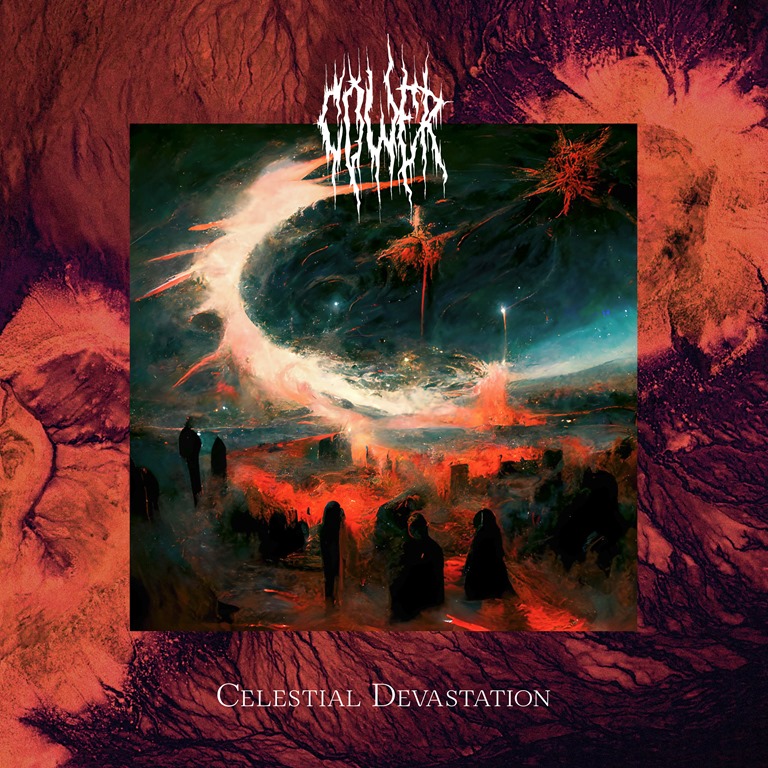
Anyone familiar with the works of William Burroughs will likely be aware of the so-called ‘23 enigma’, which essentially centres around the auspicious frequency of the occurrence of the number 23. It may be a case of confirmation-bias, but once attuned, it’s impossible not to notice, and the fact it’s filtered into mainstream consciousness via the KLF and the 2007 Jim Carey movie The Number 23 is worthy of note, if nothing else. So the fact that catalogue number HW023 has been assigned to the second album by supergroup COWER, featuring members of The Ghost of a Thousand, Petbrick, USA Nails, Yards, The Eurosuite and JAAW is something that may be of no real significance, but then again…

Few would necessarily expect the album to begin with a soft, gentle piano ballad with ‘We Need to Have the Talk’. It’s contemplative, and even if the talk is direct at times lyrically, the mood is low-key and lulls the listener into a sense of false calm. Immediately, ‘Summoner’ crashes in with pounding drums, a snare like smashing a bin lid, and a bass so thick and grimy as to churn your very guts. This broad shift is precisely what you expect from COWER, as they push parameters and do things different; this is what you want from COWER, and this is what they deliver. It’s a rambunctious roar, with an elevated artful tone and all the rage. They pack a lot into a mere three and a quarter minutes – and a lot of what they pack is beefy riffage and furious noise. It’s an instant rush, and at the same time, your muscles tense.

‘Hard-Coded In the Souls of Men’ presents as a downtempo slice of brooding electropop with hints of Depeche Mode, even down to the soulful baritone croon and spacious sound with soft synth interludes. In a parallel universe, this song would get played all over on Radio 1 and would make all of the mainstream radio and Spotify recommended playlists, and people in their tens and hundreds of thousands would love it. And then they would arrive at the album, and wonder ‘what the fuck?’ as they simultaneously shat their pants. This would be the perfect outcome, but is of course, highly unlikely, because acts on small labels just don’t have those opportunities.

The funny thing is that back in the 80s, major labels would back all kinds of bands and would promote – and shift mega-units of – an album based on a largely unrepresentative single. Back then, you couldn’t hear the album online, so would head down to Boots or Woolworths or WHS, or add it to your selection with Britannia Music, and you might love it or you might hate it, but they’d shifted the unit either way and because you only had a handful of records or tapes, you’d play it enough times there was probably a 50% chance you’d come to like it even if you hated it at first.

COWER succeed by being unpredictable, and whichever way they turn, be it noise or electropop, what they deliver is top quality. ‘Buffeted by Solar Winds’ boasts a stalking bassline and brooding vocal, as well as some synths and some circuit-melting overload that shows Nine Inch Nails how it’s done. ‘Deathless & Free’ is pure Depeche Mode circa Songs of Faith and Devotion: soulful, dark, and sonically immense, with percussion that utterly blasts you away. How is this right? And how does it work, when songs like ‘False Flag’ bring the most raging, sinewy punk, half fired-up post-punk, half incendiary grunge, entirely raw, ragged antagonism. The end result is New Model Army meets Big Black, with some wild sax tossed in for good – or crazy – measure.

The tile track is a slow, slow groover, driven by immense, industrial beats. What a contrast the energetic, intense and ultra-tense ‘Bury Me in the Lawless Lands of the West’ which really exploits the tropes of early 80s goth with is throbbing bass and fractured mesh of lattice-like guitars. Celestial Devastation;, however you pitch it, is hefty.

There are many so-called supergroups who aren’t especially super, who seem to trade on their main projects as the selling point. COWER amplify the intensity of their individual main projects to the power of three. Balancing mangled guitar noise and some pretty harsh electronics from beyond, Celestial Devastation is as good as it gets. Celestial Devastation is special.

AA

HW023_Cower_CelestialDevastation_CoverArtwork

Erototox Decodings

Christopher Nosnibor

Internationally, Kristof Hahn is best known as a member of Swans since their return in 2010, contributing electric guitar to My Father Will Guide Me up a Rope to the Sky and everything since (he was briefly a Swan in the late 80s and early 90s, becoming a touring member for The Burning World and appearing on White Light from the Mouth of Infinity and subsequently joining Gira’s Angels of Light. A lot has happened since then: My Father Will Guide Me was only forty-four minutes in total, whereas now they’ve evolved to have single tracks of that duration, and Hahn’s contribution on recent albums and tours has been lap steel. Witnessing his action on the last tour, while standing so close to him I could actually see the mud spattered around the ankles of his jeans, the significance of his contribution to the immense walls of noise the band create is clearly apparent. I’ve also been vaguely amuse by just how neat and dapper his presentation is, producing a comb to slick his hair back following particularly strenuous crescendos – although I also witnessed him taking said comb to the strings of his instrument in Leeds to yield some particularly unholy noise from an instrument more commonly associated with laid-back twangin’ country tunes.

What’s perhaps less widely known is that Kristof has enjoyed a lengthy career in music before joining Swans, as both a solo artist and a member of rockabilly garage acts The Legendary Golden Vampires, founded in 1981, and The Nirvana Devils (circa 1984). It’s with the former he’s back flexing his creative muscles despite an intense touring schedule with Swans.

Here, the Berlin-based core duo of filmmaker Olaf Kraemer (vox) and Kristof Hahn (guitars, organ, harmonica), reunited for the first time in many years, are joined by Thomas Wydler (drums), Achim Färber (also drums), and Chandra Shukla (sitar), to cook up a collection of ten songs.

The style is understated, country-leaning, occasionally folksy, with an underlying melancholy hue, with ‘Wohin Du Gehst’ crossing the language barrier to convey a low-level ache of sadness in its tone. Kraemer’s vocals are husky, almost croony, with hints of Mark Lanegan, and suit the low-key compositions well, conveying emotion and world-wearinness and a certain sense of sagacity, which is nowhere more apparent than on ‘White Horse Blues’.

If the reverby guitars of their Husker Dü’s ‘She Floated Away’ channels Chris Isaak, the song’s incongruously jaunty twist is in the vein of fellow German duo St Michael Front, while ‘The Rain’ is sparse and hypnotic and wouldn’t sound out of place on True Detective. The melancholy Leonard Cohen-esque ‘Sad Song’ speaks for itself, quite literally, self-referentially returning to the hook ‘this is such a sad song / and I sing it just for you’.

Discussing the songwriting ‘craft’ on an album feels pretentious and a bit wanky, but making songs this sparse – but also this layered – is a true example of crafting. Having mentioned Leonard Cohen previously, one thing that’s often overlooked is just how many incidental details there are on many of Cohen’s songs: The Songs of Leonard Cohen in particular is , on the face of it, acoustic guitar and voice, but there’s much more happening in the background, coming in and out of the mix, and this is something that comes through in attentive listening to Polaris. It’s subtle, keeping the overall sound quite minimal, but the attention to detail is what really makes it special.

AA

a3829215066_10

Captivating, glamorous and bold, Belle Scar is a distinctive singer-songwriter, producer and artistic director originally from Montreal but now based in London. Described by the New York Times as “a creature from another dimension, she’s phenomenal,” her dramatic, cinematic music is at times redolent of a Tim Burton film score and at others of a mash-up between Nick Cave, Björk and Portishead.

Scar’s new single, ‘I’ve Been Here Before’, is about the acknowledgement and acceptance of the ‘black dog’ of melancholy. A moody slow-burner, it develops into a superbly arranged epic replete with sumptuous strings and an angelic choir that recalls John Barry and Jean-Claude Vannier. The video for it captures the magic of London at night, with Scar playing the lead role of a wanderer and actor JD Haymer representing her shadow, the clip culminating in a symbolic face-to-face meeting.

Watch the video here:

AA

62a7329535422c57288a9fe5e62507b33dc8fbc8

BELLE SCAR | photo by Ben Wilkin

10th March 2023

Christopher Nosnibor

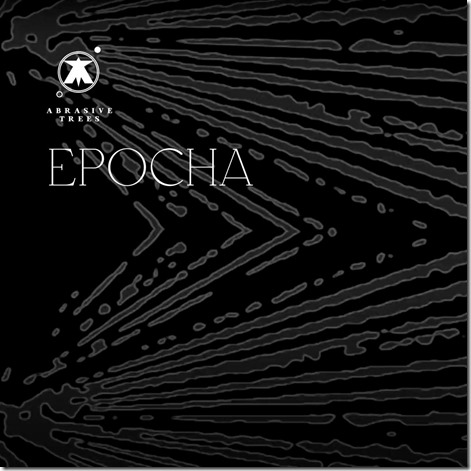
Epocha gathers together Abrasive Trees’ output from 2019-2021 – a brief but pivotal period for the band released four singles and EPs which found them evolving and solidifying their sound. They’ve been variously described as Post-Punk/Post-Rock/Post-Folk and permutations thereof, and all of these elements are in the mix in a style that has gothic – but not explicitly ‘goth’ overtones across the course of the nine tracks gathered here.

Although ostensibly a five-piece centred around Matthew Rochford in their current incarnation, these recordings feature a host of contributors, notably Mark Beazley of Rothko and Band of Holy Joy, who was also involved in elements of production, mixing, and mastering the tracks, and among others. It’s perhaps because of what these individuals bring, both in terms of playing style and instrumentation – with cello, e-bow, organ, and dulcimer among the array of instruments which augment the standard setup off bass, drums, and guitar.

The fact that the songs aren’t simply presented chronologically – and remixes have been omitted – does give this disc a more the feel of an album set than a compilation, and this makes for a journey-like listening experience.

The album opens with ‘Bound for an Infinite Sea’, the lead track of the EP bearing the same title from September 2020, and the chiming guitarline is reminiscent of The Nephilim era Fields of the Nephilim, and sets the expansive atmospheric tone that defines the sound of Abrasive Trees.

While there are vocals, they feature sparingly, rippling up between the lengthy instrumental sections. On ‘Replenishing Water’, this manifests as a percussion led swirling psych groove, whereas elsewhere, as on the slow, hypnotic ‘Before’, the vibe is rather more spaced-out and trippy, and there’s certainly an experimental, almost-jam-based aspect to the music in places.

Predominantly, though, there’s a contemplative, brooding nature that seeps through the rich yet subtle arrangements, and at times, in the folkier parts, I’m reminded of Last Harbour (granted, not a comparison that will likely leap out to many, but so often the best bands are underrated and under the radar). The dark, moody ‘Alone in the World’ is eerie, haunting, and other-worldly.

In pulling together these recordings, released variously on cassette, vinyl, and hand—packaged CD, one would hope that Abrasive Trees will find new converts, even if there are only 100 copies of this CD-only release – if its existence steers people to the digital versions of the original, then it’s all to the good, although it has to be said, as a fan of physical media, Epocha is a lovely item, as well as a well-realised document of the band’s first phase.

a4124501000_10

(Image links to Bandcamp)

Midira Records – 25th November 2022

Christopher Nosnibor

This album is, as the title suggests, a soundtrack work. Although released under the moniker Houses of Worship, it’s essentially the second album by Thisquietarmy x Hellenica.

The summer of 2020 saw Eric Quach (thisquietarmy) and Jim Demos (Hellenica) come together to record a collaborative album, which emerged as Houses of Worship, described as ‘an epic work of experimental industrial ambient, is an ode to dying buildings and the unwelcome gentrification of neighborhoods’.

This, the follow-up, came about after they ‘played their first concerts in the streets of Montreal from inside of a cube truck. These performances were filmed and recorded to produce "TQAXHLNKA: MIGRATION,” a twenty-two-minute experimental art documentary and an accompanying soundtrack. The film simulated the cautionary tale of what the Montreal arts and music scene could look like in a post-pandemic world. As the title suggests, it reflects the highly concerning exodus of artists constantly being divided and pushed out further from their community.’

At twenty-two minutes in duration, it’s a minute short of the magic spot, but this is a magnificently atmospheric work that goes beyond dark ambience and ventures into the vastly cinematic, space-drifting expansiveness that transports the listener beyond the terrestrial domain.

The album contains more audio than the film’s running time, and drags the listener through a bleak journey which articulates via the medium of sound the themes and scenes which preoccupy the duo, who explain, ‘With the current struggles linked to the pandemic restrictions, we have seen the acceleration of the gentrification process in neighborhoods where the heart of these activities takes place. As a result, a multitude of venues, studios and artistic spaces – places used for exchanging ideas with our peers and building communities meant to inspire and nurture our souls had to shut down.’

The tone is dark, the textures industrial, yet tinged with echo-heavy melancholy, a combination of anger, emptiness, and sadness. The soaring drones inspire a certain elevation, while the gritty grind is the sound of construction, regeneration. Gentrification is the face of capitalism eating itself; having run out of new ideas, it’s simply fallen into a cycle of recreation and rehashing. Upscaling, upwhatevering, it’s all about selling the new version of the same od shit at a higher price to the same saturated market. When will enough ever be enough?

Meanwhile, capitalism follows the former tropes of the avant-garde, destroying to rebuild, and Migration is the soundtrack to that.

There are lots of drones, lots of dolorous tones, lots of scraping, sinewy mid-range and gravel-grabbing, churning lower spectrum sounds, as well a haunting piano and infinite empty space. The titles paint the picture in themselves, and it’s dark, smoggy, sulphurous. ‘Total Waste Management’; ‘Polytethylene Terephthalate’; ‘Oil Terminal Tank Farm’ are all evocative of stark industrial scenes.

‘Industrial Estate Bird’s-Eye’ is a haunting wail, presumably of a theremin – over a low, throbbing drone that’s reminiscent of Suicide, and elsewhere, the duo conjure thick, billowing clouds of doom that sound like Sunn O))) behind a power station, as dense rumbles ripple forth. The twelve-and-a-half-minute finale, ‘Throbbing Magnetics’ fulfils the promise of its title, a bucking beast of claustrophobic, crushing gloom, and you feel yourself dragged into the sludge of that relentless, interminable cycle of collapse and construct.

It’s an accomplished work, but a depressing one, and listening places to the fore the abject nature of late capitalism, and the fact that any attempt to save the planet is futile in the face of the onslaught of bulldozers. Redevelopment has nothing to do with environment, only profit, and hard as you might rebel, as strongly as you may protest, you’re powerless against the big money. It’s not a conspiracy, it’s the sad truth. Houses of Worship recognise this. They may hope for better, but Migration is not a protest record, but the sound of grim acceptance.

AA

a3486628679_10

eMERGENCY heARTS – 6th May 2022

Christopher Nosnibor

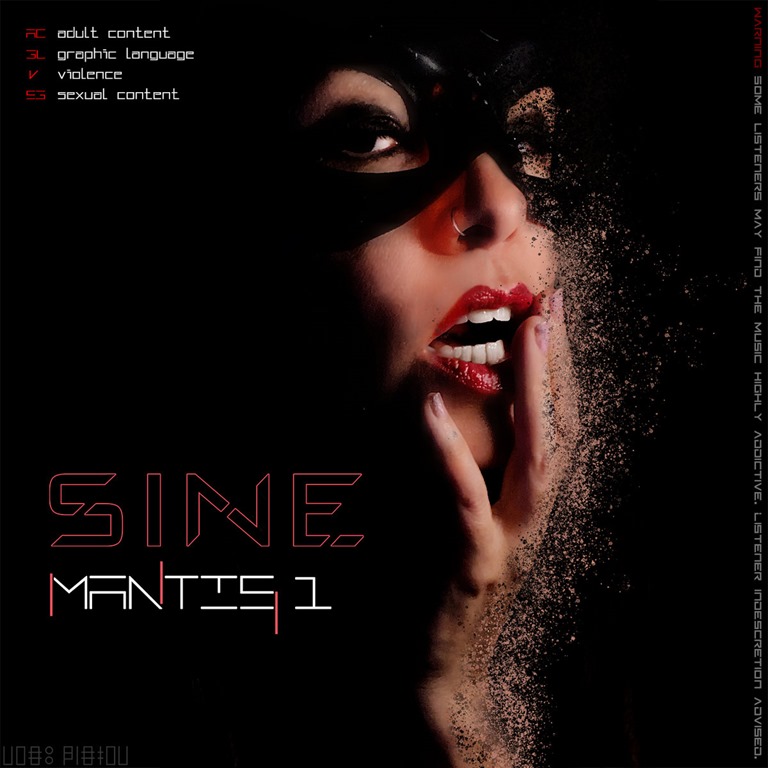
SINE’s new 5 song EP, Mantis 1, is the first in a trilogy of EPs, “Mantis 1, 2 & 3”. The hype for the release pulls a spotlight on the involvement of a name producer, with the EP being ‘produced by SINE founder, Rona Rougeheart in collaboration with esteemed audio engineer Charles Godfrey at Scary American Studio in Austin, TX. Godfrey, in his two decade plus career, has been engineer/producer on over 75 recordings, including the Yeah Yeah Yeahs’, It’s Blitz! and Mosquito, The Black Angels, Indigo Meadow, and notable work for…Trail of Dead, SWANS, among so many more’. No question: Godfrey’s resumé is impressive, and there’s similarly no question that a decent producer can make a huge, huge difference, with great production having the capacity to render a recording far more than the sum of its parts (Joy Division simply would not have been the same without Martin Hannett’s work, however unconventional and difficult his methods), while equally, poor production can be crippling. Then again, engineering is perhaps equally important: it’s worth noting that Steve Albini doesn’t consider himself to be a producer, but his engineering skills have brought the life to so many albums, and not just the ones he’s renowned for. Still, for all that, you can’t polish a turd: you still need songs and for them to be played in a way that does the material some kind of justice.

Everything comes together just so on this release, and one question I often consider is how close to the artistic ambition is the end result? I have a sense that Mantis I is everything Rougeheart had in her head at conception.

‘Attack’ certainly brings plenty, a combative, dark disco thud of a beat pitched against a relentless throb of synthesised bass. In contrast, ‘Until’ is more overtly pop, but it’s pop in the way Garbage are pop – eclectic, savvy, the production simultaneously crisp and grimy. ‘Future Whores’ is stark, and if there’s something of an early New Order vibe about it, there’s equally some early Pet Shop Boys, and that’s by no means a criticism. Then again, the expensive, yawning notes border on the mellow new age grooves of The Beloved, while the distorted vocals and thumping bass are more industrial… in combination, it crashes hard in the domain of industrial shoegaze, and if that’s not yet been recognised as a thing, now is the time because it’s here and it’s in your face.

Things get murkier and meaner on ‘Blurred’, where I’m reminded of The Human League’s ‘Being Boiled’, only with a harder technoindustrial edge, and the pulsing, bulbous bass is dominated by Rougeheart’s blank, robotic monotone vocal, that’s treated with a metallic edge and some grainy reverb.

Closer ‘Control’ burrows deeper into the darkness, a shuddering mass of slow velocity – yet for all the crushing grind and gnarly digital distortion, the dislocation and thunderous tribal drums, it still slides in a truly aching bridge with a magnificent vocal melody that evokes wistful summer scenes, before crushing them like ant underfoot in a driving death-disco slam.

It all adds up to a meaty and pretty powerful release, and if the idea of releasing three EPs instead of an album seems perverse, it will be interesting to see how SINE utilise the format after such a strong start.

AA

a2098796503_10