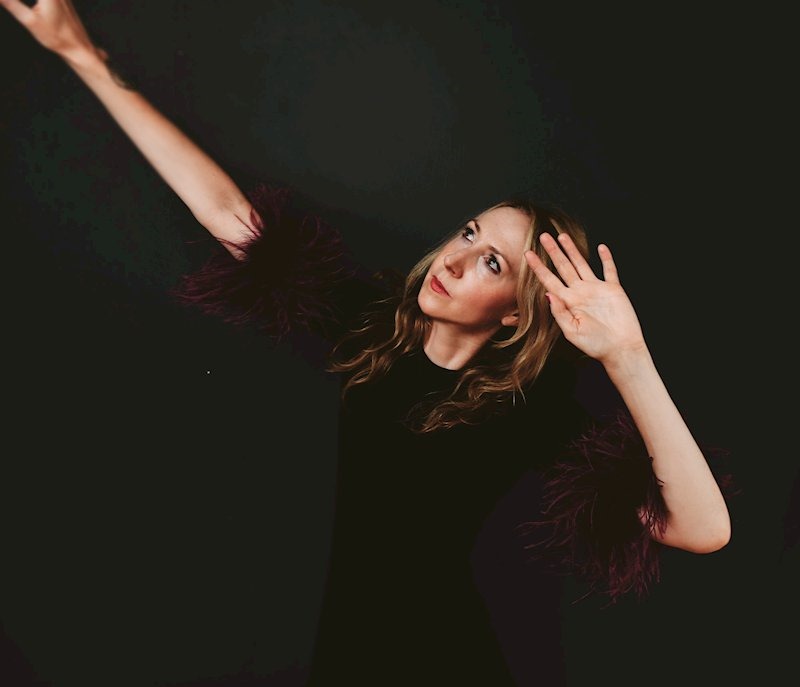
NYC singer-songwriter Jessie Kilguss presents her latest single ‘Howard Johnson’s’, previewing her sixth album They Have A Howard Johnson’s There, with an era-inspired nostalgic video by Deborah Magocsi. This album was engineered, produced, mixed and mastered by Charlie Nieland (Debbie Harry, Rufus Wainwright, Blondie, Scissor Sisters) at Saturation Point Studios in Brooklyn.
For this single, Kilguss is accompanied by John Kengla (David Byrne, Ben Kweller, Serena Ryder) on guitar, bass and keys, Rob Heath (Madison Square Gardeners, Julia Nunes) on drums and percussion, and Dave Derby (The Dambuilders, Gramercy Arms, Lloyd Cole) and Charlie Nieland on backing vocals. Other tracks on this album features Andrea Longato (Duncan Shiek, Jeremy Jordan, Alphonso Ribeiro), guitarist Kirk Schoenherr (Tegan and Sara, Elle King, Chet Faker), and Rembert Block (Rembert and the Basic Goodness).
“This song originated from some writing I did in a poetry workshop with performance artist Karen Finley. I had seen her read at the fantastic On The Verge Festival, which celebrates women artists of all disciplines at the Wild Project, produced and curated by my friend Heather Litteer. I was drawn to Karen’s writing and saw a post of hers on Instagram advertising an online poetry workshop inspired by the movie Dog Day Afternoon, as well as dogs in general. I had never taken a poetry workshop before but I am a huge dog lover and thought “what the hell”. I like pushing myself out of my comfort zone,” says Jessie Kilguss.
“In the movie, Al Pacino is speaking with his lover about what he’ll do to prove his love and he says something like “I’ll charter a plane to Algeria. They have a Howard Johnson’s there”. It stood out to me because it was so ridiculous and also, my father Howard had passed away a month earlier. So the song is a tribute to my father, Howard Kilguss, and is also inspired by Dog Day Afternoon. My father had a deep connection with dogs, so I thought it was even more appropriate to write this song for him".
It’s rare to be presented with something that has no immediate or obvious reference or context in terms of other music. But this is where I find myself with This Material Moment, the sixth album by Me Lost Me. And so it proves necessary to delve into the creative process for what Newcastle-based experimental artist Jayne Dent describes as “the most emotionally raw album I’ve ever made”. And so it is that for this release, she utilised ‘the automatic writing techniques she developed during a workshop with Julia Holter, and in the process has spun her music in different directions that draws on poetry, psalms and using mesostic poems and phonetic translations to generate words.’
And in this context, This Material Moment makes sense – at least in its own way. While automatic writing has a long history, dating back to the 16th century, it grew in cultural awareness via Dadaism, before becoming synonymous with Surrealism, and that fact that the results have yielded Dent’s ‘most emotionally raw album’ should not necessarily be a surprise – the theory is that that the process is dissociative, enabling a free passage between the subconscious and the page, with the mind freed from the constraints of self-censorship and linear thought. And This Material Moment very much seems to present an explosion of unfiltered, often free-flowing ideas, untethered by the conventions of form or structure.
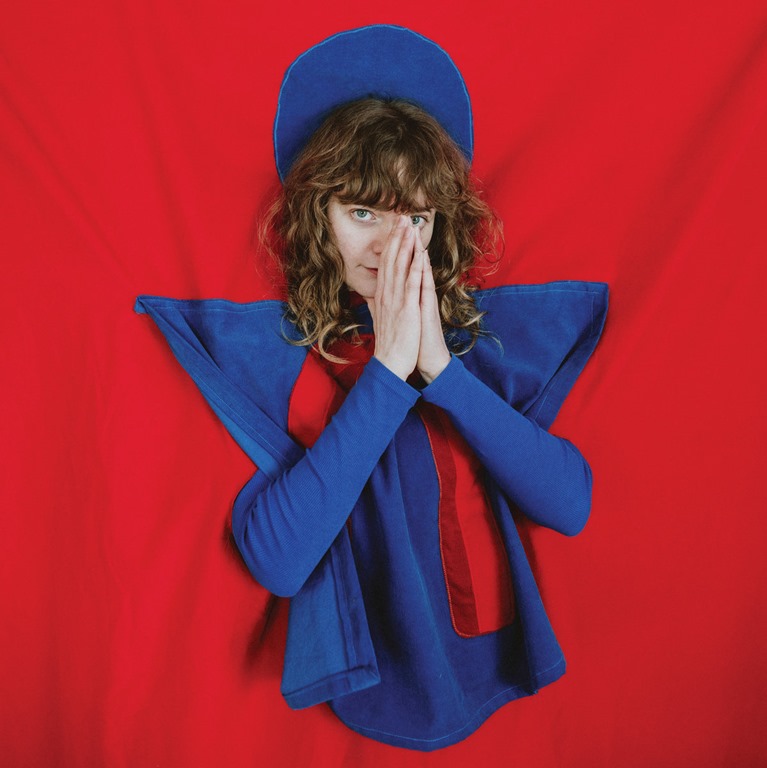
The cover art alludes to the album’s quirkiness, but in a way which rather too easy, a shade gimmicky, perhaps, failing to convey the level of nuance and complexity contained therein.
It’s on the second track, ‘Compromise!’ that the level of ‘otherness’ which defines the album. The drumming is weighty, serious, and Dent’s voice adopts an air of detachedness which is hard to define… there’s both a folksiness and elements of Eastern influence in the way it quavers against the dramatic, expanding backdrop which comes to resemble something of a mystically-hued, almost abstract, Burroughsian psychological interzone.
AA
AA
And so Me Lost Me leads the listener through a succession of dreamscapes which are often simultaneously idyllic and nightmarish. There’s a shanty-like tone to ‘Lasting, Not to Last’, but there are shrill, terrifying wails of strings or feedback which conjure images of dead souls trapped within this dimension. ‘A Painting of the Wind’ presents a sense of the unheimlich. It’s a lilting folk song… but something sits just to the left of centre, the instrumentation isn’t readily recognisable as anything, there are layer and something about is not of this plane. ‘I want to be carried away’, she intimates, and yes, perhaps so do I, I find myself thinking.
The clamour of church bells on ‘Still Life’ chimes a cord of an historical nature, evoking times past with a certain sepiatone sensation, but ‘A Souvenir’ strips everything back to an acapella – albeit multi-layered – delivery, with folk-influenced harmonies conjuring a sense of a bygone era which in many ways contrast with much of the album’s lyrical content.
I find myself flailing here: how to articulate the disconnections and disparities which are the very essence of this album? These disconnections and disparities are nowhere more highlighted than on ‘Ancient Summer’, where Steeleye Span style trad folk meets prog with a darker, almost goth vibe, with a dash of jazz and trip-hop thrown into the mix. ‘A Small Hand, Clamped’ may offer so many meanings in terms of its title: the words aren’t easy to decipher, but the atmosphere… Oh, the atmosphere. It billows and breezes, while a strolling bass… strolls.
Sometimes, albums which are ‘awkward’ to place are a turn-off in their ‘wrongness’, but This Material Moment is so absorbative, compelling, it’s impossible not to be dragged right into its very heart.
This is art which more accurately reflects our lived realities. No conversation really exists as a straightforward back-and-forth whereby each participant delivers a neat line of dialogue, and there isn’t a second in anyone’s life where their thoughts take for form of clear-cut, structurally-sound sentences. And so it is that Material Moment speaks not in a way we can readily pinpoint or identify, because it reaches us through deep, subconscious channels. It’s not an accessible album, and it’s certainly not an easy album to hail for its commercial potential. But it is an understated and yet immensely powerful album – beautiful, crafted, a folk album in many respects, but also an experimental work that seeks to explore dark psychological spaces.
Sledges are described as ‘a four piece Alt-metal/Heavy-shoegaze band that blends genres like grunge, metal, shoegaze, emo/post-hardcore, and alternative to craft songs with catchy hooks and big riffs,’ and while this is true, it fails to convey the way the various elements melt into one another to conjure something quite special.
Take the first track, ‘Stumbling as I Fall’: the guitars bend and pixelate in a way that evokes the essence of My Bloody Valentine, but it’s grunged up and beefy, and at the same time the melodic vocals contrast with that thick overdrive, capturing the spirit and sound of ’94, and in particular, Smashing Pumpkins circa Siamese Dream. The title track is harder, heavier, with loping drums melded to a tight, chugging bass underpinning some hefty overdriven guitars that provide the backdrop for vocals that ae by turns breezy and gnarly, offering one of the most overtly metal moments on the EP. I find myself momentarily thinking of Troublegum by Therapy? – a classic example of solid tunes brimming with melody played with hard distortion and some raw aggression – but then Soundgarden also poke their way into my cognisance. If it sounds like I’m simply pulling bands out of the air, it’s very much not the case: Losing Pace simply has that much going on, although the fact that many of the touchstones I’ve referenced thus far are of a 90s vintage does also serve position the various elements which contribute to the Sledges sound.
‘Weightless’ is – ironically – pretty heavy, and it’s not (believe it or not) a criticism to stand it alongside Linkin Park, in that it brings nu-metal heft and a strong emotive hue to a song that’s both riffy and rich with a palpably sincere feeling of angst. It matters because this is no cheap stab at commercialism, and nor it is just another song that tries to alternative by hauling all of the tropes into the mix: there’s a sincerity to this which lends it an indefinable power, and it hits hard.
After a soft acoustic intro, ‘June is Better than July’ goes widescreen, a cinematic burst of post-rock, post-grunge, alt-rock riffcentric extravaganza. There’s a nagging sense that it’s a but emo, a bit ‘things we’re not supposed to like’… but bollocks to those strictures of convention. It’s pure quality, and that’s ultimately what it all boils down to.
Losing Pace was originally released as a four-track twelve-inch, but this new edition, which also marks its first digital release, offers a brace of bonus tracks, in the form of ‘Fading’ and ‘Letters’. The former is the weakest and most overtly emo song of the set, but it’s bathed in reverb and the guitars are bold and overdriven and grungy, and it’s impossible to deny that it’s well-executed. Rounding it off, bonus cut ‘Letters’ is both dreamy and dynamic, melding elements of early Ride and MBV and Chapterhouse with later exponents of shoegaze / nu-gaze like The Early Years as swirling guitars conjure cathedrals of sound around a pumping drum machine.
On Losing Pace, Sledges successfully combine classic and contemporary, and do so with an aptitude and energy, and a keen sense of dynamics. It’s quality all the way.
One of the strongest cases in favour of attending shows at local grassroots venues is that a punt may reward by striking pure gold with the discovery of a band that absolutely blows you away. It may be rare, but when it happens… POW! And so it was that a few months ago, I witnessed Glasgow’s Cwfen’s first live performance south of the border in the middle of the lineup for a £6 midweek gig at my local 150-capacity venue. Even before I learned that they were signed to New Heavy Sounds – a label which consistently delivers on the promise of its name, in finding bands which are heavy, but offer something new, something different, and have homed so many outstanding acts through the years – and had some much bigger shows lined up, it was clear that this was a band of rare talent, and who wouldn’t be playing 150-capacity venues for long. On stage, they had that quality that you only know when you see it. And they had songs.
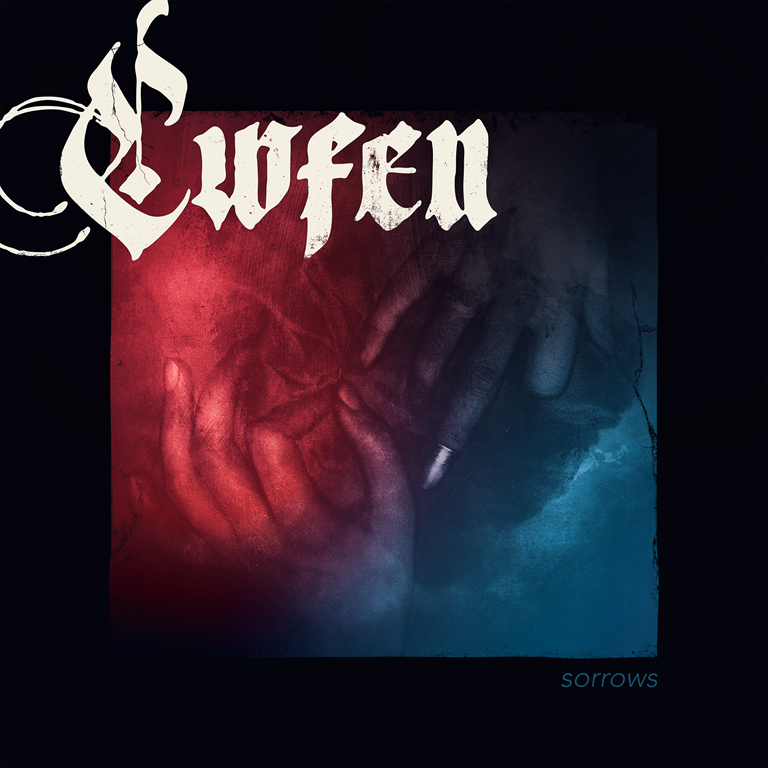
And here they are, recorded in the studio, on their debut album, Sorrows. The huge, riff-driven epics are interspersed with brief incidental instrumental pieces, appropriately entitled ‘Fragment’ and numbered sequentially. The first provides a soft intro before ‘Bodies’ blasts in with seven minutes of supreme chuggage. It’s a gritty hard rock behemoth, but it’s more than just another monolithic riff monster: there’s a shade of goth sensibility about it, not least of all in Agnes’ brooding vocal, but there’s also the brittle-edged lead guitar work, and the song brings a powerful sense of drama and theatricality, building to a rabid, demonic climax… and straight away, it’s apparent that this is something special.
Cwfen have a supreme grasp of dynamics, of mood, of atmosphere, and Sorrows has all of these in spades. Single cut ‘Wolfsbane’ grinds in, meshing together gothy lead guitar, rich with chorus, and reverb-laden vocals which are simultaneously haunting and commanding, while a thunderous bass nails things down tight at the bottom end. Next up is ‘Reliks’, released as their debut single, and it’s different again, an atmospheric mid-tempo song which soars, managing to incorporate elements of classic 80s rock and shoegaze, while at the same time bringing the atmosphere of Fields of the Nephilim. Nothing’s overdone, and nothing’s underdone, either: everything fuses together in perfect balance, while ‘Whispers’ melds 70s rock vibes with a hard rock, delivered with a hint of anthemic power ballad. And in the background, raw banshee screams fill the swell of sound towards the end with pure emotional release. ‘Penance’ brings the weight with thunderous drums, squalling feedback, and a crushing riff behind a demonic howl of a vocal, which switches to achingly magnificent melody for the chorus. ‘Embers’, meanwhile, makes for a megalithic monster of a tune, delivering seven minutes of crushing riffery and standing as the heaviest and maybe one of the most overtly ‘metal’ song in the album – although full-force closer ‘Rite’ plunges deeper into darkness, a blackened anthem by way of a finale to a superlative set.
On Sorrows, Cwfen deliver on their name: magical, mystical, menacing, haunting, dark… but they bring so much more, and certainly do not belong in any given pigeonhole. While this is indisputably a ‘heavy’ album, it’s accessible – without going pop or being overly polished. It’s an album which makes a high-impact first impression, but reveals more depths and layers with subsequent listens. Sorrows is a masterful work, which ventures far and wide in its musical inspirations and touchstones, meaning it’s never samey, never predictable, but at the same time, Cwfen demonstrate an intense focus, forging a sound which is distinctive, rather than derivative. A rare gem, and a standout of 2025 so far.
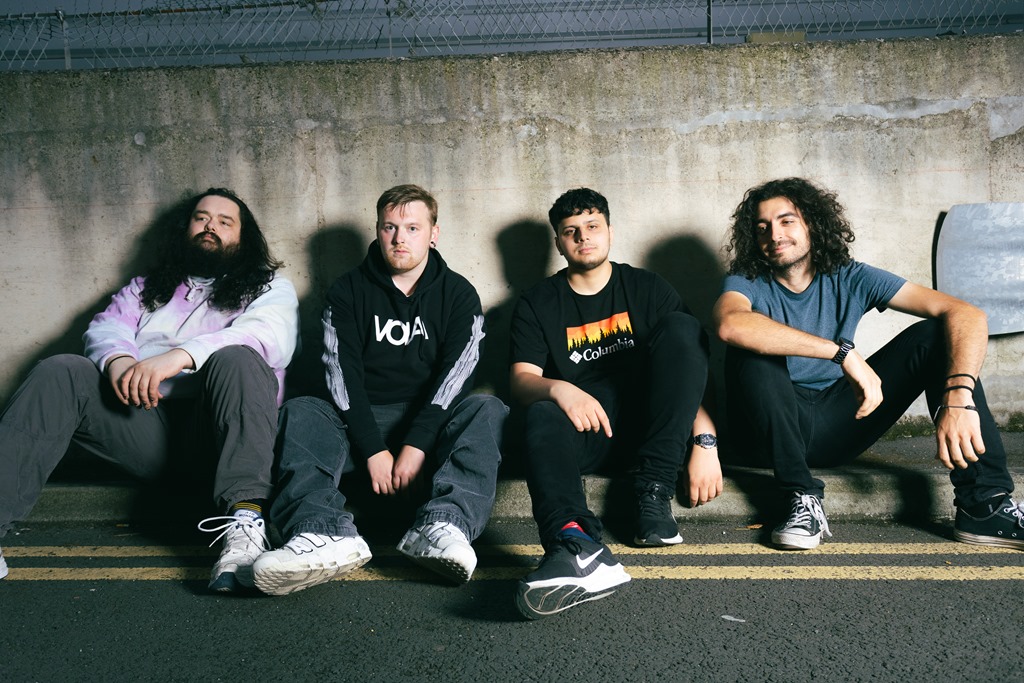
It’s still early days for London alternative / progressive metal quartet DAVAAR, formed in the summer of 2024 and with just five shows behind them, but they’ve wasted no time in venturing beyond London in their quest to build a fan-base, or in committing a chunk of their repertoire to tape (so to speak) for the release of this, their debut EP.
Although State of Feeling features four tracks, the title track is an instrumental introduction which is barely a minute long. This is a practice within metal circles that’s become so common as to be predictable and formulaic. It seemed to rise to prominence with the explosion of metalcore’s popularity in the 2010s, and often seemed to be an attempt to cover all bases for the purpose of a wider audience, as if to say ‘listen, we can play, we can do atmospheric and moody and gentle as well as WAAAAUUUGHHHHHH!’. But in doing so, it would often undermine the power of the attacking rage parts.
In fairness, it’s a little different in context of this EP, in that as much as DAVAAR trade in big riffs, their sound is cinematic, melodic, expansive, with clean vocals all the way. And so it is that this opening cut is softly atmospheric, bordering on ambient. A distant beat echoes through the drifting sonic mist. ‘Impulse’ arrives, not on a tidal wave of slugging riffery, but a ripple of picked, reverby guitar, and it’s only after some carefully-crafted build-up does the distortion kick in and the first of the big riffs hits. Even then, everything stays balanced, and the melody remains the focal point, and it’s easy to observe the parallels in their sound with those of their influences and acts they suggest sharing common ground with, including Sleep Token, Tesseract, Leprous, and Deftones.
There’s a lot of attention to detail in the song structures and the overall composition, with high levels of technical adeptness on display. There’s also a lot of polish here, with the end result being that State of Feeling feels fully formed, and DAVAAR’s potential to attain a substantial following is clear.
Norwegian post-rock outfit Korean Cars are set to release their debut mini-album “#1” on May 23 via Mas-Kina Recordings — and the leading single ‘Drömtorp’ is now available.
‘Drömtorp’ sets the tone for the record — a haunting yet powerful track that captures the emotional intensity and melodic depth at the heart of Korean Cars’ sound.
Blending melancholic post-rock with melodic post-hardcore, Korean Cars create a dynamic soundscape where atmospheric depth meets raw emotional release. Drawing from the alternative and post-hardcore scenes of the ’90s and 2000s, the band’s sound fuses soaring melodies, jagged noise, and unpredictable shifts into a captivating experience.
Formed by members of Rumble in Rhodos, Infidels Forever, Arms on Fire, and Insense, Korean Cars combine seasoned musicianship with a shared passion for layered, emotionally charged songwriting. Their sound echoes the cinematic textures of Explosions in the Sky and the emotional punch of Trail of Dead — a beautiful chaos of melody and intensity.
What is it about prog bands and Greek mythology and space? Sure, both are inspiring for their expansive and epic qualities, but it does seem to be almost a requirement for prog acts to be quite obsessed about mythology or space – or, in the case of March of Scylla, both. Indeed, Scylla is a man-eating monster which features in Homer’s Odyssey, while the French progressive metal quartet’s debut album’s title may refer to the galaxy, or daughter of Cassiopeia in Greek myth, after which said galaxy was named. I suppose there’s some intertwining there, which works. On the one hand, it’s mystical, it’s deep, and its seriousness manifest.
These guys do bring some ultra-chunky riffs which straddle nu-metal and technical metal, and they alternate these with huge, arena-friendly choruses which are impressive in the anthemic heights they scale, and no, that’s no sarcasm, believe it or not. But it does flop headlong into the template trap which is the curse of so much metal of the twenty-first century – and again, it’s something that emerged and came to prominence with the advent of mu-metal and then seemingly seeped into other strains of metal, alternating full-throated roaring verses with melodic choruses. At first, to my ears, at least, it sounded less dynamic or thrilling, and more like bands trying to please everyone by being everything all at once. And I suppose the formula must work, because a quarter of a century later, they’re still doing it, even though it’s tired and ultra-predictable now. Sure, it’s fundamentally the same form as the quiet / loud structure that defined the grunge sound in the 90s, but the difference is that with the quiet / loud thing, it felt like build-up and release, whereas this is more like splicing two different songs together. It’s Jekyll and Hyde. And a sudden turn works when it’s out of the blue, but when every song is structured around a ball-busting riff and raw-throated guttural vocals which abruptly give way to some big emotive burst of white light you can sing along to, it’s not only predictable, but feels as if one segment undermines the other. Like, c’mon, make up your minds! None of this is to say that I think ‘heavy’ bands should only do ‘heavy’: contrast is a vital element in giving a composition impact, and besides, I would simply never prescribe that music should be one thing or another. My point is that when things become overly formulaic, they risk losing that impact.
So ‘Ulysses’ Lies’ does the raging riff thing alternating with the anthemic chorus thing. I’m not sure if the lyrics are being delivered from the perspective of a protagonist from the canon of Greek mythology, or it it’s simply a framing for some introspective moan about relationships or whatever, and no doubt if I was willing to spend hours straining my ears to decipher it all, I’d find the answer, but I can’t say I’m that invested. It sounds like some introspective moan about relationships or whatever, though. Way to diminish the potency of epic tales of gods battling and whatnot.
‘Death Experience’ stretches out for a fill seven minutes, and if it’s not necessarily a full epic, it’s most certainly an epyllion, and with some tight and detailed guitar-work and a well-executed atmospheric mid-section, it delivers everything it promises, including a sense that the ‘death experience’ is one of a dazzling ascension beyond this plane. And if it seems as if I’m being unreasonably critical of March of Scylla, there’s no questioning their musicianship or capacity for solid compositions. They pack in some megalithic, churning riffs and know exactly how to hit the hammer on intensity, just as they absolutely nail the huge, hooky choruses. But it just feels so studied, and you know how it will go as each song plays out.
‘To Cassiopeia’ is an interlude which combines space and mythology in one processed, predictable but atmospheric piece, before ‘Dark Matter’ goes Metallica’ before it goes You Me At Six… and it’s a sonic identity crisis to my ears, although it’s precisely what they were going for. What to say? It’s wrong to criticise a band for what they’re not, but this is difficult for what it is – namely conflicting and predictable, but perfectly executed. The heavy segments hit hard, and the light, melodics parts are well done but ultimately a bit lame. It’s yin and yang.
Seattle’s MUSEUM OF LIGHT Unveils ‘Born All Wrong’, the third single off upcoming sophomore album Diviner, out March 14
Drummer Rob Smith says, “As with much of Diviner, ‘Born All Wrong’ is a continuation of all the things that interested us on our first record, just taken further. The heavy stuff is heavier, the pretty stuff is prettier, and the weird stuff is weirder. The song dives into some of the expanded sonic palette that sets this record apart from Horizon. Here, we used a new, lower tuning, replaced some of the synth parts with a human voice (Elissa Alvarez, who is all over this record), and even mixed in some of the crashing waves and sea birds we heard outside the studio window as we worked. The big riff that anchors the first half of the song was written several years ago when we were between bassists. So, we were leaning more on huge, monolithic ideas that sounded good with the guitar running through both guitar and bass amps at the same time. As one of the older songs on the album, we weren’t sure if if was going to make the cut, but as soon as we heard playbacks in the studio, we all had the same thought: ‘well, that’s definitely making the record.’”
Museum Of Light’s sound blends crushing, heavy swagger with ethereal, sparkling melodies, creating a dynamic, otherworldly atmosphere that combines raw intensity with haunting, operatic vocals and poetic, existential lyrics.
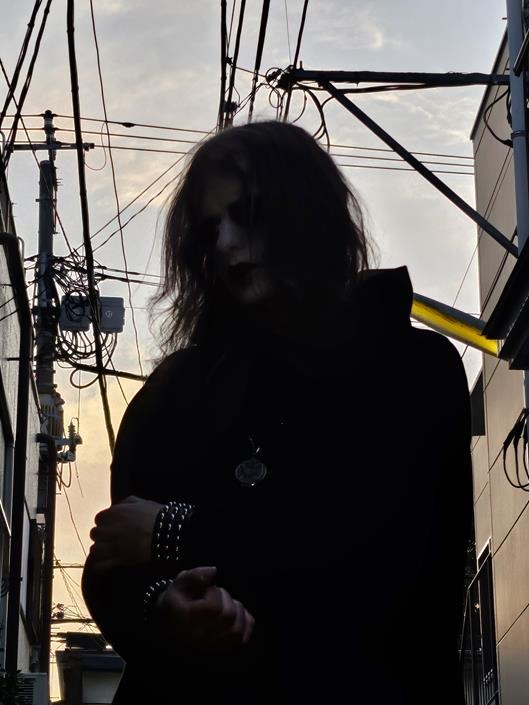
‘Dröm Sång’ emerges as a poignant ballad from Këkht Aräkh, blending melancholic melodies with an introspective narrative. Rooted in a draft originally conceived during the Pale Swordsman sessions in 2021, the song carries a familiar resonance, particularly reminiscent of the track "Swordsman" from the same album. However, its creation followed an unconventional path, with recording taking place under spontaneous, often cramped conditions across Berlin, Germany, and Tokyo, Japan.
The accompanying music video was shot entirely in Tokyo and features scenes filmed by Nick from the electronic duo IC3PEAK and additional footage self-recorded by Dmitry, all using a handheld camcorder to create a raw, personal aesthetic.
Dmitry explains:
“There’s a deeper reason behind choosing Tokyo as the location for the music video, beyond my admiration for Japan. This particular place is often idealized by people around the world who have never lived there, making it a perfect fit for the song’s escapist theme. The song reflects on life, with all its hardships and evils, as nothing more than a dream from which you’ll eventually wake into a peaceful world.”
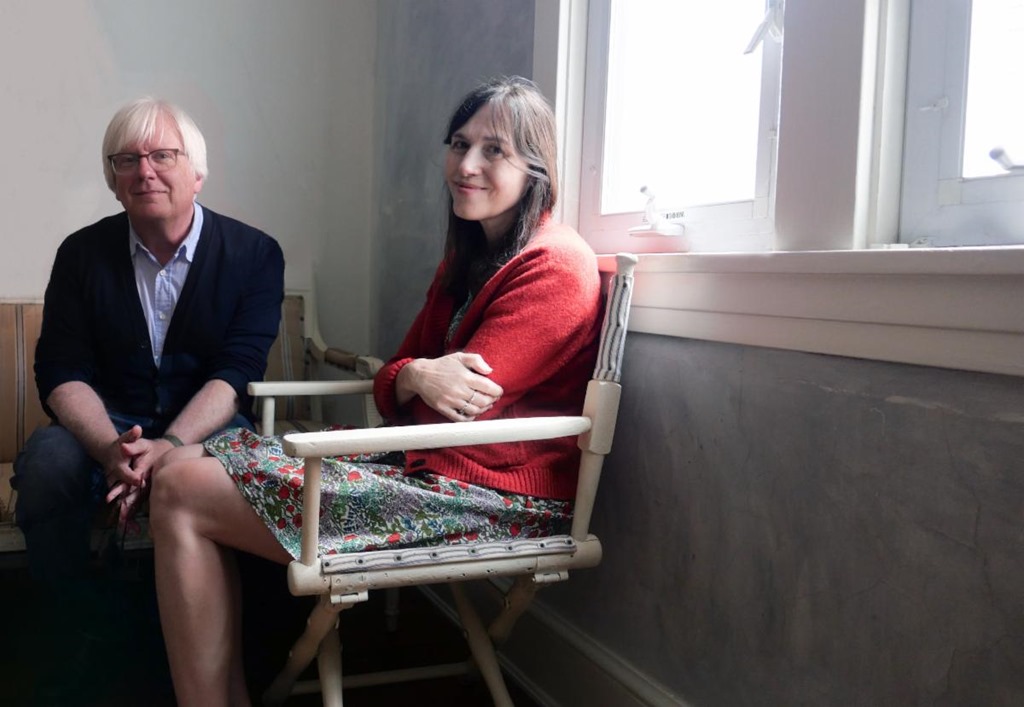
The new album, Midwinter Swimmers, sounds immediately like an old friend. At the same time, it’s a new kind of adventure for the beloved Pennsylvania band of high school friends Karen Peris, Don Peris, and Mike Bitts, having both an expansive, cinematic quality and the strange, lo-fi beauty of a newly discovered vintage folk/pop album, brimming with melody. Midwinter Swimmers is being released by Therese Records. Check out ‘Your Saturday Picture’ here:



 Aural Aggravation