Posts Tagged ‘Live’

Minsk, Belarus-based alternative metal act Mission Jupiter have recently issued Aftermath, their third album but first with powerhouse new singer Kate Varsak, whose voice is suited perfectly to a set of epic, drama-packed songs that should see the group achieve lift-off far beyond their home territory.

Describing the song’s meaning, the group explain that “it asks if we can be less selfish. Most of us tend not to look beyond our own doorstep….can we be better?”


Aftermath contains ten superbly produced songs in all. Fans of alternative and hard rock, progressive rock, metal and even Eurovision-esque crossover rock (on ‘Jak Spyniajecca Bol’, recorded in the group’s mother tongue and translated as ‘How The Pain Stops’) will be wowed by Mission Jupiter’s new songs, which combine sounds, moods and melodies wrapped around a stunning voice to leave listeners breathless.

AA

a0893313440_10

28th July 2025

Christopher Nosnibor

Beauty, as they say, is in the eye of the beholder. Certainly, it requires a fairly specific subjective standpoint to hear the beauty in a bleeping rush of effervescent electronic froth, but there is something in it – and yes, it is intense – to the extend that it’s like a fizzing chemical reaction, like vinegar and bicarbonate of soda, exploding in your brain. And it’s quite a high.

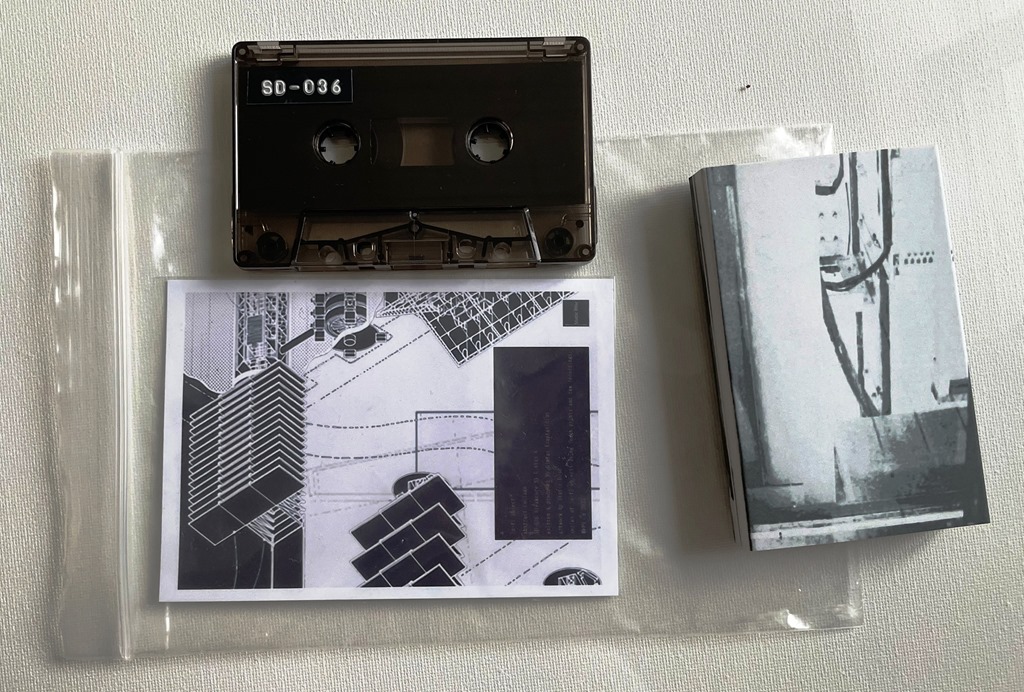
Intense Beauty finds Gintas Kraptavičius (Gintas K) in his most common setting, with the album being fully improvised, ‘recorded live, using computer, midi keyboard & controller’. Recorded in June 2025 of this year, by the power of the Internet and micro-labels, it was released as a limited cassette on Tokyo-based label Static Disc just weeks later on 10th July, before also becoming available on Gintas’ own Bandcamp page.

As is common to many of Gintas K’s works recorded in this manner and with this – seemingly unique setup, there’s something playful, even joyful and uplifting about the sound. It is chaotic, but it’s also carefree, and it’s not remotely dark or heavy: there’s nothing harsh or abrasive to be heard here. ‘intense’ is skittery and skittish, off-key electric piano thumps and stomps erratically, glitching in and out throughout, while cellular sounds fly around all over like plankton in a storm before gradually slowing, tinkling and flitting at a more sedate pace until grinding to a halt.

‘harmony’ isn’t particularly harmonious, instead merging static and drone with groaning whirrs before yielding to discordant bent notes playing across one another. One thing that is a constant throughout Intense Beauty is a sense of movement. There isn’t a moment is stillness, as sounds and ideas flit from one place to another with no discernible flow, and th9is is nowhere more apparent than on the shifting sonic collage of ‘gal bet’. It’s hyperactive, and should be exhausting, but the sheer energy is contagious and uplifting.

Watching the accompanying video of Gintas recording for the album is illuminating, particularly the vigour with which he plays, simultaneously striking keys on the keyboard with hands, wrists, forearm, seemingly at random, but with remarkable speed and dexterity, while cranking knobs hard and fast: the camera and table shake under his frenetic kinetic activity. K isn’t one of those who creates sound simply by pushing buttons here and there: this is a full-body physical performance. This, too, is an example of intensity, and the artist pours it into the act of artistic creation.

There are a lot of experimental electronic artists around, but no-one else sounds quite like Gintas K.

AA

AA

a3925363230_10

Cruel Nature Records – 12th September 2025

Cruel Nature have a solid track record for putting out some storming releases by bands who you could reasonably describe as ‘difficult’ but also ‘cult’. This is pretty much Pound Land in a nutshell. As for Headless Kross… The Glaswegian act’s Bandcamp describes them as ‘the ideal soundtrack to the slow unravelling of the world as we understand it. Their sound has been described as psychedelic doom – monolithic riffs, rumbling bass and primal beats lurk behind waves of effects, all strangely underpinned by ethereal shrieks of half heard words, possibly real, possibly not.’ That their name is – I’m assuming – an allusion to the fourteenth album by Black Sabbath offers something of a clue. The fact the label has pushed the boat out for an advance-order lathe-cut vinyl version of this release speaks for itself. At least in relative terms, this is a big ‘un.

Having toured together, they decided to put out a split release, and it’s pleasing to see these making a comeback – something Cruel Nature in particular has been spearheading. I’ve sung the praises of the split release on a number of occasions in recent months, and this is a perfect example of why they’re great: here, we essentially have an EP apiece from two quality acts who are – and this is significant, and absolutely key – contrasting and complimentary.

As the album’s accompanying notes are keen to point out, ‘The result isn’t your standard split album – it’s a sonic blood pact, equal parts homage and havoc’, going on to explain that ‘They also agreed to trade riffs and cover a song by each other: Pound Land tear into ‘Signed In Blood’ and Headless Kross unleash a doom-laden crushing riff-tastic seismic version of ‘Pathogen’.

Headless Kross are up first with their trio of ball-busting, sludge-trudge riffery. ‘The Thing Invisible’ is six minutes of thick, treacle-like riff-wading, with some extravagant solo work before the snarling, mania-driven vocals join the fray a couple of minutes in. Their take on ‘Pathogen’ is nothing short of devastating: a rabid roar tears over a thunderous trudge, and hints at how Pound Land would sound if they could be arsed to be angry or metal. The solo that breaks out toward the end is brief, but wild.

‘The Necessity of 3 Conditions’ is eight and a half minutes of relentless brutality. A Suicide-like throb pulsates: the drumming is almost buried in the dingy low-end mess and the vocals rip bling rage across the whole dingy grind.’

If you’re wanting some light relief, you’re not going to find it with Pound Land’s five tracks: operating here as a six-piece unit with Jase Kester back in the lineup and bringing layers of abrasion, they set their stall up straight away with the anti-capitalist, bollock-to-billionaires agenda served up neatly with their first track, ‘Fuck Off to Mars.’ It’s gnarly, twisted, dark, and despite the low-slung, dingy bass and rabid, reverby vocals which evoke Fudge Tunnel’s first album, there’s something about it that drags the listener in by the throat.

‘I See Crime’ is messy, dirty, but works, although I’m not sure if it’s because of or in spite of the angular contradictions of honking horns ad grimy guitars with a nasty low-end attack.

Nothing about this release is accessible: it’s low, slow, riffy, hard, heavy. Very heavy. Hypnotically heavy. It’s all the riffs, and is something special. Very special. Get this, now.

AA

a3551559418_10

Room40 – 18th July 2025

Christopher Nosnibor

Norman Westberg seems to be a man of few words. Through all of his years with Swans, I can only recall interviews with Gira and Jarboe, although I have for many a decade now admired Westberg’s stoic approach to playing: no showmanship, no seeking of attention, instead channelling the sound, often with infinite patience, screeding feedback and a single chord for an eternity. His solo material is considerably softer than Swans in tone, but no less brimming with tension and atmosphere, and this is nowhere more apparent than in his solo live sets, as I recall in particular from seeing him open for Swans in Leeds two years ago. Onstage, he was unassuming: in contrast, the sound he made, was powerful.

And so it is that the words which accompany Milan are not those of the artist, but Room40 label head Lawrence English, who recounts:

In 2016, I invited Norman Westberg to Australia for his first solo tour.

He’d been in Australia a few years before that, touring The Seer with Swans, and it was during this tour that I’d had the fortune to meet him. Since that time Norman and I have worked on a number of projects together. He very kindly played some of the central themes on my Cruel Optimism album and I had the pleasure to produced his After Vacation album.

Last year Norman shared a multichannel live recording with me from a tour where he was supporting Swans. The recording instantly transported me back to the first time I heard Norman perform.

Whilst many people know his more dynamic and tectonic playing associated with his band practice, Norman’s solo work is far more fluid. Often, when I hear him live, I imagine a vast ocean moving with a shimmer, as wind and light play across its surface.

Norman’s concerts are expeditions into just such a place. They are porous, but connected, a kind of living organism that is him, his instrument and his effects. He finds ways to create moments of connection which are at times surprising, and at others slippery, but always rewarding.

There’s a deeply performative way to his approach of live performance. There’s a core of the song that guides the way, a map of sound, but there’s also an extended sense of curiosity that allows unexpected discoveries to emerge.

Milan, which I had the pleasure to work on for Norman, captures this sense perfectly. It is a record that exists in its own right, but is of course tethered to his other works. It’s an expansive lens which reveals new perspectives on familiar vistas.

This almost perfectly encapsulates my own personal experience of witnessing Westberg performing. And Milan replicates that same experience magnificently. Admittedly, despite having listened to – and written about – a number of his solo releases, including After Vacation, I was unable to identify any of the individual pieces during or after the set. Such is the nature of ambient work, generally. Compositions delineate, merge, and while the composer will likely have given effects settings and so on, which are essential to their rendering, to most ears, it’s simply about the overall effect, the experience, the way movements – even if separable – transition from one to another.

This forty-minute set is dark, disturbing, immersive, somewhat suffocating in its density, from the very offset with disorientating oscillations of ‘An Introduction’. It flows into the next piece, ‘A Particular Tuesday’, where tinkling, cascading guitar notes begin to trickle down over that woozy undulation which rumbles and bubbles on from the previous track. And over time, it grows more warped, more distorted. Something about it is reminiscent of the instrumental passages between tracks on Swans’ Love of Life and White Light from the Mouth of Infinity, and for all the swirling abstraction, there are trilling trickles of optimism which filter through here.

Amidst a swell of bass-booming, whorling sound on sound, gentle, picked notes just – just – ring clear and give form to an amorphous sonic mass, but this too gradually achingly, passes to the next phase, and then the next again. ‘Once Before the Next’ is the sound of a struggle, like trying to land a small wooden rowing boat in a gale. And it’s in context of this realisation that there are many depths and layers to Milian, but none which make for an easy route in, and there is no easy ‘check this snippet’ segment. Instead, it’s the soundtrack which prefaced the ugly one w know is coming.

While Milan is obviously a live set – and at times, the overloading boom of the lower frequencies hit that level of distortion which only ever happens in a live setting, and the sheer warts-and-all, unedited, unmixed approach to this release is as remarkable as it is incredible in listening terms. This isn’t a tidied-up ‘studiofied’ reworking of a live show. Milan is a document of what happened, as it happened. You can feel the volume. The density and intensity are only amplified by the volume, and you really do feel as if you’re in the room. Let it carry you away.

AA

AA

a1125531819_10

Foldhead had making noise for some time. Nosnibor had spent the last few months taking steps beyond the staid spoken word scene via a series of ‘versus’ collaborations with experimental artists in and around York. So when Foldhead put out a shout out on Facebook for a collaborator to provide vocals for a set he was booked for, Nosnibor’s name cropped up.

The pair met for the first time on the day. Consequently, no one knew what the fuck to expect, least of all the two guys plugging into the PA. In an instant, a ‘third mind’ moment occurred, yielding noise terror which was infinitely greater than the sum of the parts. In that moment, they knew that this had to be the start of something. And so it was that …(something) ruined was born.

This is a document of that first explosive coming together.

Recorded live at Chunk, Leeds, 1st March 2019.

AA

AA

a0385340140_10

Sonic Pieces – 30th May 2025

Christopher Nosnibor

Five years is quite some time, and a lot has happened in the last five, that’s for certain. Although the fact so much has happened means that the last five years have been something of a void for many. And so it is that Reverie, recorded in October of 2024, sees Otto A Totland (piano) and Erik K Skodvin (guitar, cello, electronics, and processing) reunited in concert for the first time since 2019.

It’s pitched as ‘a follow up to 2014’s Recount, which saw two pieces of music created around their live-sets in different periods. This time, we are treated with a contemporary, raw live performance from October 2024 in Rabih Beaini’s studio, Morphine Raum in Berlin, during the 15th anniversary celebration of Sonic Pieces.’

The two longform pieces which make up Reverie were recorded live, and as if to prove the point, there’s the sound of a light cough just as the first piano note hits, then hangs in the air. They could have dubbed it out, I’m sure, but to have done so would be against the spirit of this work – spontaneous, improvised, in the moment. The recording is not only about capturing the music, but the moment itself.

The seventeen-minute ‘Rev’ is delicate, built primarily around Totland’s graceful, nuanced piano work, and considerable reverb, which may well be natural from the room, but however the sound is achieved, the sense of space is integral to the atmosphere. Skodvin’s contribution is magnificently understated: the slow scrapes of strings and subtle sonic details may seem secondary or additional because they’re not the focal point, but without them, the effect would be diminished by more than half. A great musician is not necessarily the one who dominates or demonstrates virtuosic talents, but the one who understands their contribution to the work as a whole, and appreciates that less is more. And so it is that elongated notes quiver and quail, wailing tones and sonorous drones swirl about and bring so much depth and texture, an as the piece progresses, the piano and extraneous incidentals achieve an equilibrium, and it’s utterly mesmerising.

‘Erie’ turns the tables, and it’s Skodvin’s strings which take the lead initially, before trepidatious piano creeps in. Trilling tones hang hauntingly like distant memories and displaced ghosts, and there’s a melancholia to this piece which is difficult to define, but lingers amidst the brooding lower notes. The slow piano is soft, and sad, while tremulous strings evoke a sense of something lost, somehow.

Without words, Reverie paints a picture, and hints that memories and reveries are inherently tinged with sadness. For even to recall a happy time is to remember a moment which has passed, and will be relived. However many times one may return to a particular place which is imbued with fond memories, however many times one may listen to that favourite song which carries such joyous connotations, that moment, that time will forever continue to recede into the past, never to be experienced again. The past is forever past, and will become further past with each day that goes by. Summers will never be as long, or as carefree as in childhood. The exhilaration of new experiences will never provide the same buzz, however hard you chase it. And with this realisation comes the slow fade, and a sense of acceptance. Bask in the reverie, and hold those times dear as the years slip away.

AA

ReveriePATTERN013 front

Photo: Alex Kozobolis

16th June 2025

Christopher Nosnibor

Gintas K’s latest offering was recorded live, using computer, midi keyboard and controller in January 2025, and first released by Japanese label Static Disc in May.

It’s worth perhaps mentioning that ‘Breakcore’ is – and I shall shamefully quote from Wikipedia here – ‘is a style of electronic dance music that emerged from jungle, hardcore, and drum and bass in the mid-to-late 1990s. It is characterized by very complex and intricate breakbeats and a wide palette of sampling sources played at high tempos.’ In the main, not really my personal field of expertise, or particularly within the remit of Aural Aggravation.

But this is a Gintas K album, and the nine pieces are typical of his style, combining experimentalism and the application of software and midi / laptop setup, producing a range of glitchy, frothy, gurgly sounds which stop and start intermittently, unpredictably. His live and improvised works always come with a sense of unpredictability, of spontaneity, while bearing his distinctive sounds. One of the key focuses within K’s work is on detail, zooming in on microtonality, granularity. When I say it sounds ‘bubbly’ or ‘frothy’, I mean it’s the sound one might consider the equivalent of the visual experience of slowly swirling a latte or a pint of ale, or hyperfixating on the bubbles in a bath. This is not, however, the gentle swill and flow of currents, but a frenzied effervescence, like the reaction between bicarbonate of soda and vinegar. And look long enough and hard enough, and patterns begin to emerge.

Listening to the bubbling blitzkrieg of digital clicks, beeps, and fizzing of any work by Gintas K can be stimulating to the point of eye-popping discombobulation. It’s almost too much – and this is nevermore true than the experience that is Breakcore. There are beats present – but they’re composed not of beats in the conventional sense, being neither rhythmic nor percussive, either from an analogue source or a digital sampled source or emulation. These are flickers, pulses, rapidfire stutters, hard sounds which replicate the essence of a beat without being a beat, per se. For example, those of a certain age may recall the successive ‘pink-pink-pink’ chattering digital babble of dial-up. Few would necessarily consider those sounds beats in context, but… yes, they have a certain beat-like quality. And this is how the beats often emerge from the clicks and pops, moans and drones or another quintessential Gintas K demonstration of circuit meltdown as an artform.

I had never considered his work in a ‘dance’ context before, and still wouldn’t: one feels as if the title is perhaps a shade ironic. But the tempo is certainly high and the beats are complex and intimate, emerging as they do from the thrum of what sounds like a revving engine, the whirr of an old hard-drive, the click of a CD driver whirring into action. Every second of this release sounds like some kind of digital or mechanical malfunction, as tempos whirl and blur, drawl and slow. Scrunching, crunching, twanging, springing, stammering and stuck, it’s a relentless attack of wrong sounds. But emerging from all of it, there are erratic beats, like a succession of deliberately jarring jazz fills and simply wild judders.

It is relentless, and it’s complete overload. The nine tracks run for a total of twenty-nine minutes: its intensity is such that you feel as if your brain is starting to melt after the first ten. In short, Breakcore is truly wild, and it’s not remotely easy or accessible – but it absolutely encapsulates everything that defines what Gintas K’s does.

AA

AA

cover

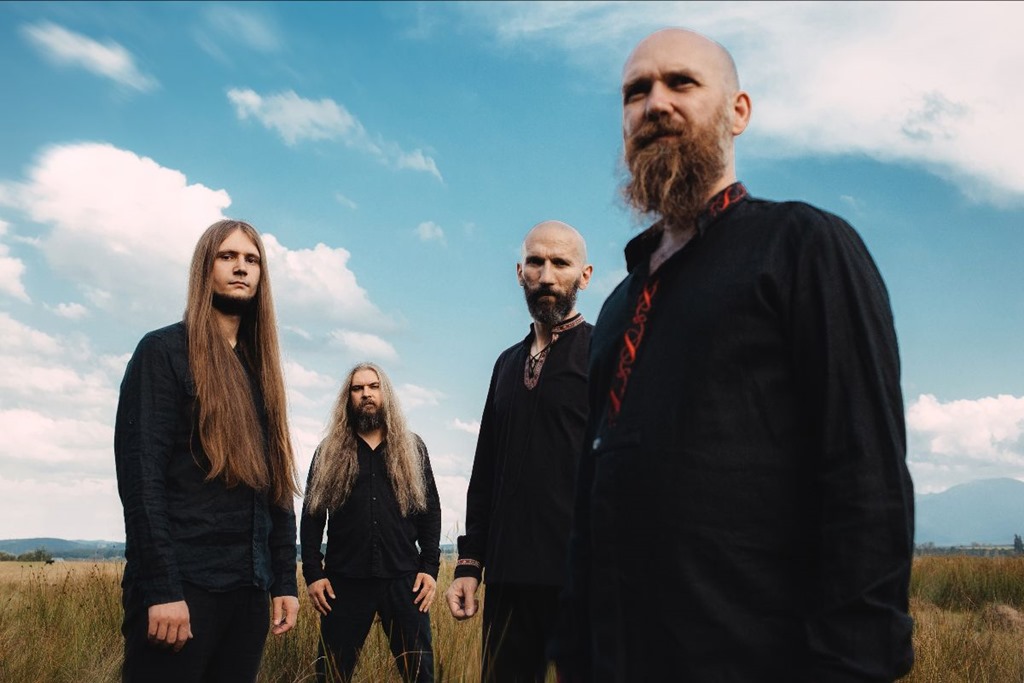
Fascinating metal innovators DORDEDUH have unveiled a new live video for the track ‘Timpul întâilor’, which was recorded during their show at the prestigious ProgPower Europe festival at the Sjiwa in Baarlo, the Netherlands in 2023.

While the Romanians were playing, their compatriot and renowned artist Costin Chioreanu created a live painting at the venue, which was directly inspired by the music. His artistic process was projected onto the backdrop behind the band.

AA

DORDEDUH comment: “First I need to mention that ProgPower is a very special festival with a particularly nice vibe to it”, frontman Edmond “Hupogrammos” Karban writes. “It is very intimate but feels like a big family meeting. There were great shows and great bands, but the afterparty at that castle-like hotel that accommodates both the musicians and the audience is something else entirely. We had a really great time there. Therefore, I am especially glad that we did something special there with our amazing friend of so many years now, Costin Chioreanu. Everybody involved deserves that and we are grateful for this opportunity. This kind of memory, this kind of beautiful moment will stay in our memories. Luckily, this one memory got immortalised for all to see in this video. Hopefully, you will enjoy it, too!”

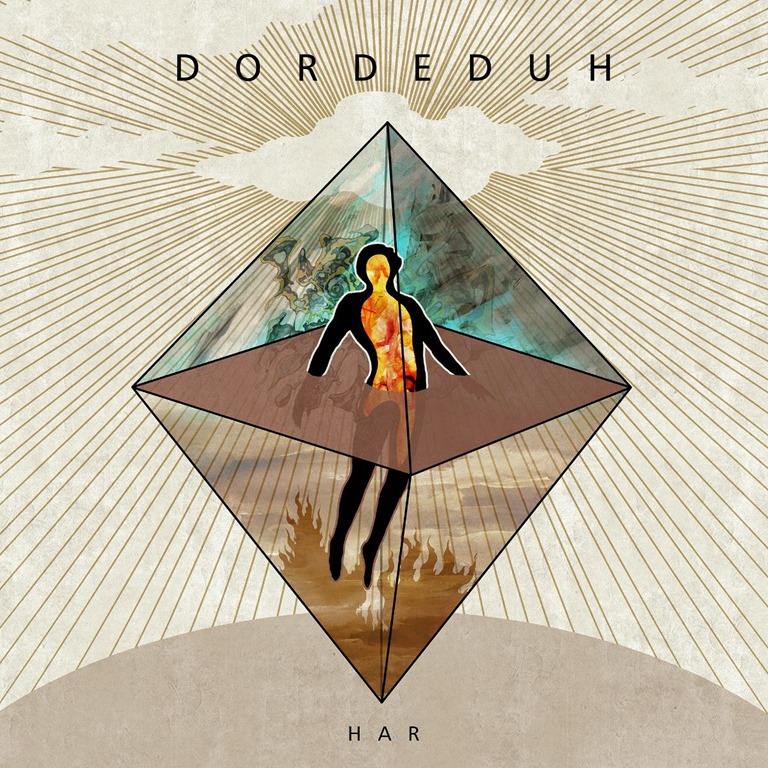
The track ‘Timpul întâilor’ is taken from the album Har.

AA

c6fcaa41-f30d-43ae-80b9-60da4f4c14057efaf133-8ed1-4fa5-8a67-b2d193356ee0

Performing at Warehouse on Tuesday 1st July 2025, the boundary-shredding Yorkshire post/punks continue their epic live comeback with this unmissable gig on home turf.

Following a rapturous reception to what were their first live shows in nearly a decade in 2023, plus high praise for their new studio output including 2024 album Crocodile Promises, which received a double thumbs-up from us at Aural Aggravation, and a reappraisal of their classic works in a series of reissues on the Jungle Records label; the cult band are clearly revelling in their recent revival.

Comprising founding members Rosie Garland (performer, poet and author) and Tom Ashton (Guitarist, producer and studio owner), plus Mat Thorpe on bass, the band are intending the shows to be a celebration of The March Violets’ legacy, while also honouring the irreplaceable contribution of friend and founding member Simon Denbigh.
Speaking about their recent reunion shows, The March Violets explain:

“Since the March Violets tour in 2015 we’ve been shocked at how many musical friends have passed over and out. And after Simon Denbigh’s life-changing stroke, it’s no surprise we all thought that was it for the Violets. When, in 2021, Jungle Records released Big Soul Kiss (The BBC Sessions double album) for Record Store Day 2021 it sold out its entire pressing in 24 hours. We were amazed at the response, absolutely amazed. We faced a choice – to fade away quietly or go out with a celebration.

We feel for Simon, and honour his massive artistic contribution & intense vision as one of The March Violets founding members. He’s irreplaceable, so we’re not going to try. We believe the legacy of The March Violets deserves a far better conclusion than sinking into silence, and now is the right time to do it.”

With their first incarnation described by Sounds magazine as “slinky, savage yet warmly delicate [with a] thirst for mystery, magic and brutal darkness”, The March Violets were a post/punk band cut from a different cloth. Founded in Leeds in 1981, from there the band would initiate an impressive career that would see them navigating all corners of the alternative scene and accrue a longstanding cult following. With their debut EP Religious As Hell released by Andrew Eldritch (frontman of fellow Leeds scene band The Sisters of Mercy), TMV would tally a total of seven successful Indie Chart singles including “Grooving in Green”, “Snake Dance”, “Deep”, and “Walk Into The Sun”, plus their ‘Radiant Boys’ EP, at the height of their powers. With an impeccable John Peel Session also under their belts, the band released two compilation albums Natural History (which peaked at No.3 in the Indie Charts) and Electric Shades in the US, before signing a major deal in 1985 with London Records. Releasing the poppier charms of the hit single “Turn to the Sky”, the track would notably feature in the John Hughes movie Some Kind of Wonderful in 1987, before the band eventually split later that year.

Reforming for a one-off hometown gig two decades later, their 2007 reunion would lead to a flurry of activity in the 21st Century including festival headline slots across Europe & the USA, the brand new studio albums Made Glorious (2013) and Mortality (2015), plus a storming Record Store Day release in 2021’s sell-out double album: Big Soul Kiss.

In 2023, The March Violets confirmed the release of their full back catalogue via Jungle Records for the first time, while releasing two new compilations Play Loud Play Purple and The Palace of Infinite Darkness in the run up. Taking their creative spurt into the studio, the band have also been working on new material and released a new record Crocodile Promises in 2024, via the Metropolis Records imprint.

Most recently, the TMV have been taking their gothic majesties stateside and have completed a triumphant tour of the USA, while also impressing UK audiences last summer with major festival appearances at the likes of Rebellion Festival and Bearded Theory.

Returning to the fore in 2025, The March Violets will be back with a vengeance for what promises to be a very special hometown show strewn with classics and new cuts, surprises and so much more.

On the night, the band will also be supported by one post/punk’s brightest new hopes – Vision Video. Following the release of their new album ‘Haunted Hours’, VV will be making the trip from Athens, GA, for a set of their refreshingly honest and dark gothic pop. Following on from their 2021 debut ‘Inked in Red’ (which told the story of lead singer Dusty Gannon (aka TikTok’s “Goth Dad”) and the darkness he saw as a soldier in Afghanistan), their recent work ‘Haunted Hours’ explores Dusty’s experience as a firefighter and paramedic working on the frontlines of the pandemic that followed his return. Vision Video will soon record their next LP Modern Horror at Maze Studios in Atlanta headed by Grammy award winning producer Ben Allen.

492416558_690408593501263_6222504979864277211_n

TICKETS / DETAILS

Tickets On General Sale Wednesday 16 April

Doors 7.30pm / Curfew 11.00pm

Age Restriction – All ages, under 14 to accompanied by an adult over the age of 18

Available here:
https://pinkdot.seetickets.com/event/the-march-violets/the-warehouse/3385250