Posts Tagged ‘Leeds’

Cruel Nature Records – 30th May 2025

Christopher Nosnibor

First things first: Beige Palace were ace, and their departure has left a gap in the musical world, especially in Leeds. In a comparatively short timespan, the trio produced a respectably body of work, evolving from their minimal lo-fi beginnings to explore musical territories far and wide, and this final release, split with another Leeds act, Lo Elgin, who, in contrast, have released precious little.

The accompanying notes provide valuable context for the final recordings laid down by Beige Palace, recorded at Wharf Chambers, one of Leeds’ finest DIY venues by Freddy Vinehill-Cliffe (guitar/keys/vocals)… and now helming the mighty Thank.

Taking a step back from the discordant post hardcore of ‘Making Sounds For Andy’ and the freewheeling experimentation of ‘Leg’, Beige Palace’s side largely favours the repetition and extreme dynamic shifts found on their 2016 EP ‘Gravel Time’. The production here also returns to the lo-fi, DIY approach from that EP, eschewing the more polished sound of their two full-length albums. Through returning to their roots, Beige Palace manages to drag their sound to new extremes, with these three tracks bringing to mind artists as disparate as US Maple and Sunn O))).

‘Wellness Retreat’ is dense and discordant, low-end synth drone and bass coalescing to a eardrum-quivering thrum over which scratchy guitars and vocals come in from all sides to forge a magnificently disjointed and angular two minutes and twenty seconds. Too chaotic to really be math-rock, it’s a squirming can of worms, a melting pot where Shellac meets Captain Beefhart at a crossroads with Trumans Water. Or something.

Bringing hints of Silver Jews, the lo-fi crawler ‘Good Shit Fizzy Orange’ does math-rock but with an experimental jazz element, the sparse picked guitar and slow-rolling cymbal work juxtaposed with what sounds like the strumming of an egg slicer before sad strings start to weave their way over it all. The lyrics are, frivolous and stupid, and we wouldn’t want things any other way. Because much as one may value well-crafted, poetical lyrics, sometimes dumb, trashy, meaningless words work just fine. Better than fine, even.

There’s a hint of later Earth about the spartan folksiness of ‘Update Hello Blue Bag Black Bag’ – a song which sounds serious but as the title suggests, isn’t quite so much, but around the midpoint, all the pedals are slammed into overdrive and suddenly there’s a tidal wave of distortion, a speaker-busting cascade of heavy doom-laden drone. And as it tapers to fade, while we mourn the departure of a truly great band, we get to rejoice that during the span of their career, Beige Palace did everything. It’s a solid legacy they’re leaving, and one which may well expand in the years to come. There will be people in five, ten, fifteen years asking ‘remember Beige Palace?’, and other people will be replying ‘Yes! I saw them at CHUNK!’. Well, I will be, anyway. And we still have Thank to be thankful for.

The two pieces which represent Lo Elgin’s contribution mark a sharp contrast to those of Beige Palace. The first, the eleven-minute monster that is ‘Beneath the Clock’, is a thunderous blast of doom-laden rage and anguish. The barking, howling vocals are low in the mix of droning, lurching, lumbering noise, through which strings poke and burst, and as the noise sways and sloshes like a boat tossed hither and thither on waves in a storm as it attempts to guide its way through the entrance to the harbour, the listener finds themselves almost seasick with the unpredictable movement. Around seven minutes in, the tempest abates and the piece meanders into altogether mellower territory, where again I’m reminded of Earth circa Angels of Darkness, Demons of Light. And then, right at the end, there’s a massive jazz segment, backed with crushing guitars. I did not see that coming. And then ‘Abomination’ is different again- a gritty, gnarly, gut-spewing blast of noise that is simply too much…. But too much is never enough as we’re led through a racketacious swamp that starts out Motorhead and toboggans down to a crazed morass of manic jazz.

The two very different sides belong to completely different worlds, at least on the surface. But they are both staunchly strange, keenly experimental, and dedicated to inventive noisemaking, and as such, compliment one another well. And this also perfectly encapsulates the essence of the Leeds scene: diverse, noisy, weird, and wonderful.

AA

a1376481820_10

4th April 2025

Christopher Nosnibor

I miss Fawn Spots. I didn’t especially like them at first – musically, they were lo-fi, energetic, and thrilling, but they came across as bratty, even a shade twatty, at times, notably in my recollection as coming across as somewhat ‘off’ and disparaging when supporting The Twilight Sad at The Duchess in York. I miss The Duchess, too. I suppose, like Fawn Spots at the time, it had its faults: the pillars weren’t great for views at times and the sound was often a bit crap, but it brought some top-notch touring bands to York, with The Fall, and The Psychedelic Furs’ DV8 performance being clear standouts.

But I came to feel an affection for Fawn Spots: they evolved, in every respect – from a raw, messy two-piece cranking out some frantic racket, to a proper band, with some proper songs – although not too polished. They never got so slick as to lose their edge. It’s easy to take bands who are always out on the local circuit for granted, and it’s only when they move on – whether it’s because they call it a day, or move on beyond the local scene – that their significance on a personal level becomes apparent. You go from seeing them every other week either headlining or supporting a bigger-name touring band and it all being so much ‘yeah, whatever, cool, but this is the sixth time this year, and it’s only May’ to suddenly, they’re absent.

After a clutch of indie and self-released EPs and bits, and some touring, and with the release of their critically-lauded debut LP From Safer Place in 2015 on Critical Heights, which received coverage from Record Collector and Louder than War Fawn Spots seemed to be on the brink of something. And then… they vanished, and we forgot about them because we were busy with our lives and all the other bands we were listening to, and all the rest.

This posthumously-released album has been lurking in the vaults for some time. As they write – and at the same time highlighting their wildly eclectic influences – ‘A few months after recording this album the band ceased to exist… The product of a period of obsession with Arab Strap, Angels of Light, Lungfish and the song ‘Don’t Dream It’s Over’ by Crowded House.’

I love Angels of Light, but don’t love nostalgia: however, while cooking the other day, I flipped to the 80s music day on the Smithsonian channel, and heard ‘Don’t Dream It’s Over’ – a song I own on 7” – for the first time in ages, and was reminded just how good it is. It’s not the first thing that comes to mind listening to the fuzzing, buzzing guitar blast of Ersatz.

‘Fortunes’ is a bit Fugazi, a bit Girls Against Boys, gritty, driving, sturdy, while ‘Blossoms’ is dynamic, textured in the way Nirvana pushed soft and chiming vs max overdrive.

The album has energy, that’s for sure. It also has some dense riffs and some keen melodies. Some are keener than others, it’s true, and the hollering ‘Daylight Runner’ feels a bit emo with a dash of mathiness. The same could be said of ‘Strangers’ but the early Dinosaur Jr vibe rescues it., while ‘Faint House’ has the post-punk-with-a-commercial-edge feel of White Lies. Quite liking White Lies, and bearing in mind the timing and context, I have no issues with this, but a decade on, I can comprehend why some may be rather less enthused.

Listening to these songs now, I feel I’d have appreciated them more contemporaneously. Buzz does count for something, it seems, as does being in the moment. If they’d sustained their momentum, if they’d remained current… things would likely have been very different. And perhaps some sounds do date, until nostalgia resurrects them. What goes around comes around, but sometimes it takes time.

Winding the clock back, the songs on Ersatz are well-realised, and played with real energy. But this an album that is, essentially, of its time. It’s not so much that its dated, as that is just feels… not entirely confluent with the zeitgeist of 2025, not entirely gripping in the sense that you need to check your back yard to feel safe.

Had it been released in 2015, and given the right press push and media uptake – because. let’s be honest, leading horses to water is only part of the equation when it comes to getting new bands heard – Ersatz could have propelled Fawn Spots to the next level – not because it was their best work, but their most accessible, and their most zeitgeisty work. And it has hooks: the post-punky ‘No Source’ is bold and guitary, but catchy, too.

Ersatz is now a historical document. It feels anachronistic, and doesn’t really sit anywhere in 2025. But it reminds us not only of how things were, but what could have been… and how we miss Fawn Spots.

AA

a3148452959_10

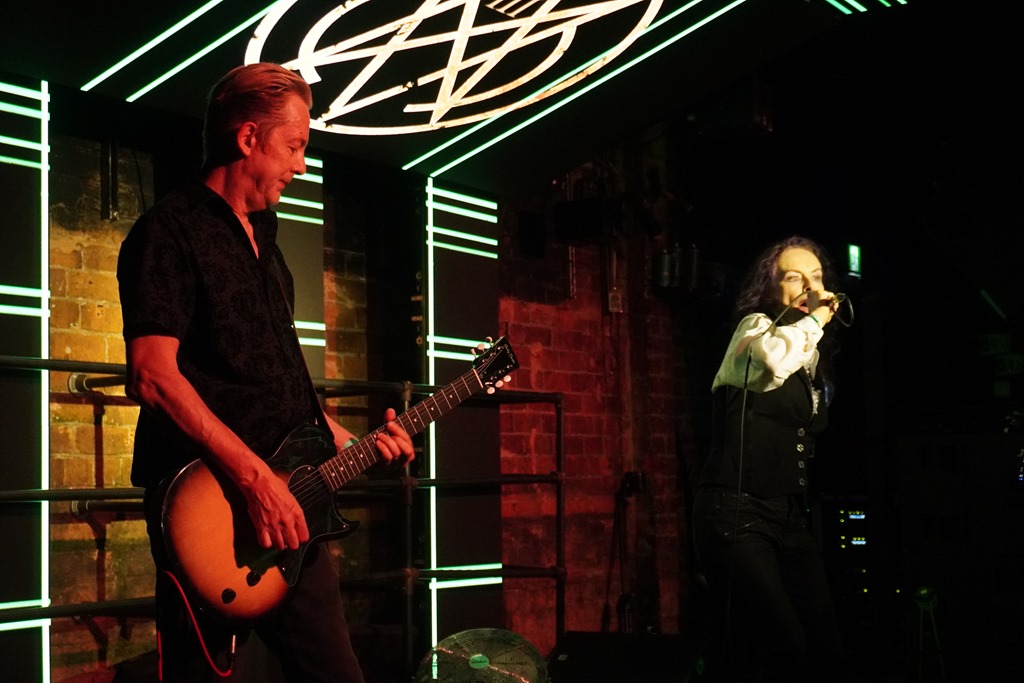
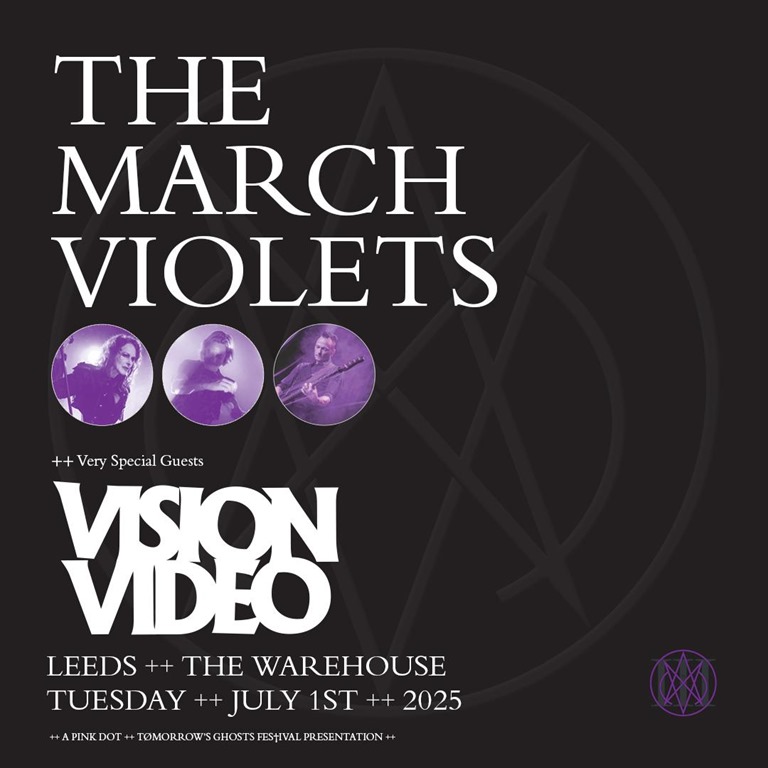
Performing at Warehouse on Tuesday 1st July 2025, the boundary-shredding Yorkshire post/punks continue their epic live comeback with this unmissable gig on home turf.

Following a rapturous reception to what were their first live shows in nearly a decade in 2023, plus high praise for their new studio output including 2024 album Crocodile Promises, which received a double thumbs-up from us at Aural Aggravation, and a reappraisal of their classic works in a series of reissues on the Jungle Records label; the cult band are clearly revelling in their recent revival.

Comprising founding members Rosie Garland (performer, poet and author) and Tom Ashton (Guitarist, producer and studio owner), plus Mat Thorpe on bass, the band are intending the shows to be a celebration of The March Violets’ legacy, while also honouring the irreplaceable contribution of friend and founding member Simon Denbigh.
Speaking about their recent reunion shows, The March Violets explain:

“Since the March Violets tour in 2015 we’ve been shocked at how many musical friends have passed over and out. And after Simon Denbigh’s life-changing stroke, it’s no surprise we all thought that was it for the Violets. When, in 2021, Jungle Records released Big Soul Kiss (The BBC Sessions double album) for Record Store Day 2021 it sold out its entire pressing in 24 hours. We were amazed at the response, absolutely amazed. We faced a choice – to fade away quietly or go out with a celebration.

We feel for Simon, and honour his massive artistic contribution & intense vision as one of The March Violets founding members. He’s irreplaceable, so we’re not going to try. We believe the legacy of The March Violets deserves a far better conclusion than sinking into silence, and now is the right time to do it.”

With their first incarnation described by Sounds magazine as “slinky, savage yet warmly delicate [with a] thirst for mystery, magic and brutal darkness”, The March Violets were a post/punk band cut from a different cloth. Founded in Leeds in 1981, from there the band would initiate an impressive career that would see them navigating all corners of the alternative scene and accrue a longstanding cult following. With their debut EP Religious As Hell released by Andrew Eldritch (frontman of fellow Leeds scene band The Sisters of Mercy), TMV would tally a total of seven successful Indie Chart singles including “Grooving in Green”, “Snake Dance”, “Deep”, and “Walk Into The Sun”, plus their ‘Radiant Boys’ EP, at the height of their powers. With an impeccable John Peel Session also under their belts, the band released two compilation albums Natural History (which peaked at No.3 in the Indie Charts) and Electric Shades in the US, before signing a major deal in 1985 with London Records. Releasing the poppier charms of the hit single “Turn to the Sky”, the track would notably feature in the John Hughes movie Some Kind of Wonderful in 1987, before the band eventually split later that year.

Reforming for a one-off hometown gig two decades later, their 2007 reunion would lead to a flurry of activity in the 21st Century including festival headline slots across Europe & the USA, the brand new studio albums Made Glorious (2013) and Mortality (2015), plus a storming Record Store Day release in 2021’s sell-out double album: Big Soul Kiss.

In 2023, The March Violets confirmed the release of their full back catalogue via Jungle Records for the first time, while releasing two new compilations Play Loud Play Purple and The Palace of Infinite Darkness in the run up. Taking their creative spurt into the studio, the band have also been working on new material and released a new record Crocodile Promises in 2024, via the Metropolis Records imprint.

Most recently, the TMV have been taking their gothic majesties stateside and have completed a triumphant tour of the USA, while also impressing UK audiences last summer with major festival appearances at the likes of Rebellion Festival and Bearded Theory.

Returning to the fore in 2025, The March Violets will be back with a vengeance for what promises to be a very special hometown show strewn with classics and new cuts, surprises and so much more.

On the night, the band will also be supported by one post/punk’s brightest new hopes – Vision Video. Following the release of their new album ‘Haunted Hours’, VV will be making the trip from Athens, GA, for a set of their refreshingly honest and dark gothic pop. Following on from their 2021 debut ‘Inked in Red’ (which told the story of lead singer Dusty Gannon (aka TikTok’s “Goth Dad”) and the darkness he saw as a soldier in Afghanistan), their recent work ‘Haunted Hours’ explores Dusty’s experience as a firefighter and paramedic working on the frontlines of the pandemic that followed his return. Vision Video will soon record their next LP Modern Horror at Maze Studios in Atlanta headed by Grammy award winning producer Ben Allen.

492416558_690408593501263_6222504979864277211_n

TICKETS / DETAILS

Tickets On General Sale Wednesday 16 April

Doors 7.30pm / Curfew 11.00pm

Age Restriction – All ages, under 14 to accompanied by an adult over the age of 18

Available here:
https://pinkdot.seetickets.com/event/the-march-violets/the-warehouse/3385250

1st March 2025

Christopher Nosniboir

Richard Rouska is something of a cult legend in his own lifetime: back in the 80s he was pivotal in the Leeds zine scene, documenting the emerging post-punk movement Leeds remains so renowned for, in real-time, subsequently writing a number of books. Along the way, he’s made some music of his own, recently making Well Martin This is Different his primary focus, with some prolific results. Finding The Ai G-Spot is WMTID’s fifth since their inception in the mid-late eighties, and serves up a set of remixes, with proceeds from any donations going to the Throat Cancer Fund.

And yes, it certainly is different, and that’s clear from the get-go. WMTID’s music is essentially electronica, but draws on a host of elements which have their origins in different decades and different scenes. I will admit that I misread the title as Finding The Ali G-Spot initially. Ai-iit! But while this album draws on a huge array of influences, you won’t find any naff cultural appropriations.

‘The Prince is Dead (Again)’ is a twisted hybrid of lo-fi post-punk, 80s electronic industrial (think Wax Trax! stuff in the late 80s / early 90s), space rock, and Krautrock, a motorik groove stricken through with some wild orchestral strikes and multi-layered vocals – and this is to an extent the template: ‘03:33 Time’s Up’ is exactly the same duration as the original version (‘333’) which appeared on I Know What You Are But Who Am I? in the Autumn of 2024, tweaked to optimise the hypnotic rhythm and detached-sounding vocals. The result is somewhere between DAF and early Human League. ‘Deep Down Low II’ – again reworking a track from I Know What You Are goes full-on techno / cybergoth stomper, with industrial-strength beats pounding away relentlessly. It works so well because it doesn’t take from the original, instead simply rendering it… more. More. MORE! And I want MORE!

There are hints of both KMFDM and very early New Order about ‘It’s (Another) Lovely Day’, but then, it’s as much a work of buoyant lo-fo indie and bedroom pop, while ‘Little Bombshells’ comes on a bit Prodigy, but again, a bit technoindustrial, and a bit kinda oddball, bleepy, bloopy, twitchy, stuttery, the vocals quavering in a wash of reverb as crashes of distortion detonate unexpectedly. Elsewhere, ‘Waiting For The End…’ goes dark and low and robotic, and ‘Three O’Clock Killer’ is hyperactive and warped, and brings menacing lyrics atop a baggy 90s beat.

It really is all going on here, and the end result feels like a wonderfully eclectic celebration of music, articulated through some quite simple compositions, all of which have solid grooves providing the backbone of each.

My general opinion of remix albums is widely documented and not entirely enthusiastic, but Finding The Ai G-Spot is a rare exception, mostly because it doesn’t feel like a remix album an doesn’t offer three or four unnecessary and unrecognisable versions of each song, boring the arse off all but the most obsessive fan. In fact, if you’re not up to speed on WMTID’s output – and there’s a fair chance you may not be, to be fair – Finding The Ai G-Spot offers a neat entry point and summarises the last couple of albums nicely, too.

AA

a2835565654_16

31st January 2025

Christopher Nosnibor

Whether they like to admit it or not everyone likes to have the opportunity to say ‘I told you’. And so Leeds feminist punk four piece Helle, who describe themselves as ‘a flurry of blistering riffs, unflinching lyrics and explosive live intensity’ and ‘an irresistible firestorm of grit and glamour that takes no prisoners’ drop their fifth single at the end of the longest month in history. And while revelling over witnessing one of their first gigs, supporting Weekend Recovery three years ago, and being blown away, leaving absolutely convinced – and rightly so – that this was a band to watch, I find myself wondering where the fuck has the time gone?

But there’s no time to wallow, and ‘Hyper Bitch’ goes a few steps beyond merely blowing away the cobwebs.

It starts with some dialogue, some chatter, it’s probably staged, but is the perfect representation of the superior music snob wanker who lectures at gigs, not only between bands, but talks over them because his opinion is so much more important. And yes, it’s always a him and it’s always some middle-class white twat who knows he knows best and could do far better. And then – BAM!

This is punk done proper: guitars, bass, drums all going all out – nothing fancy, just full-tilt, four-chord aggression, providing the perfect foil for vocals which bring that same, angry energy.

There’s some sass in the lyric department, too, constructing lines with a patchwork of movie titles in a fashion that we might have nodded to as an example of postmodern referencing and intertext not so long ago: the chorus hits with ‘I don’t wanna be a Mean Girl / I don’t wanna be Clueless like you’ as their tear into the object of antagonism.

It could be that I’m simply more aware now than before, but it seems that masculinity got even more toxic of late, that the shittiest, twattiest representations of the males of the species are pushing back against all of the progress made by feminism in preceding decades, presumably because the idea of strong women makes them feel somehow emasculated, or, put straight, scares them and wounds their pathetic egos and deflates their pathetic dicks. But what’s not necessarily worse, but harder to fathom, are women who are complicit in this, and who go out of their way to undermine others. I suppose this song is for them. But as a package – and a fiery one at that – Helle are part of a new wave of strong female bands who rock harder and rage harder than almost any of their male peers and are all about taking no shit, shouting up, and kicking ass.

‘Hyper Bitch’ encapsulates all of this perfectly.

AA

hyperbitch-draft3

COP International – 6th December 2024

Christopher Nosnibor

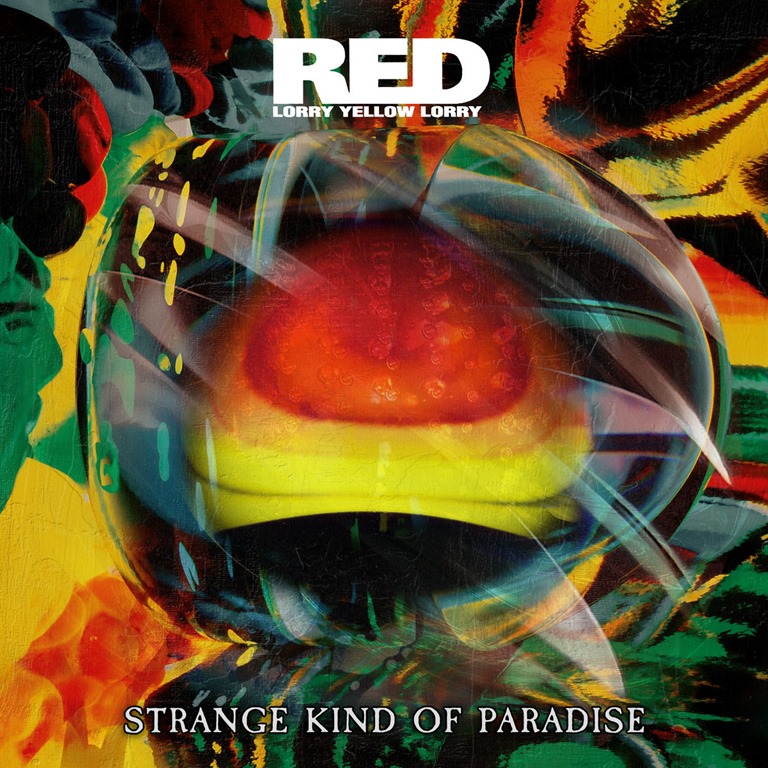
What a year this is proving to be for bands who have lain dormant, at least on the studio front, for quite literally decades. And when it comes to Red Lorry Yellow Lorry, it really has been a long time. The last Lorries release was an ultra-limited gig-only affair back in 2015, with just 50 copies pressed for Leeds in the August and 100 for Valencia the following month. Said EP featured two new songs, ‘Safe as Houses’ and ‘Piece of my Mind’, which were listed as being from the ‘forthcoming album Strange Kind of Paradise’. Time passed, and it really didn’t look like the album would ever see the light of day. But now, this official EP presages its arrival in February 2025, some thirty-three years since they called it a day with Blasting Off (1992).

The Lorries always stood apart from their contemporaries: whereas the Leeds post-punk scene of the early 80s clearly favoured black in every possible way, the band’s guitar sound was steely grey and like scraping metal, and paired with murky bass and relentless percussion, they forged an industrial clang that, was the perfect mirror to both the landscape and the times. Chris Reed’s baritone was less theatrical and more gnarly and angry-sounding than your archetypal goths which would follow. Fans will already know and appreciate all of this, but with so much history – and so much time having passed – some context is worthwhile, especially for those unfamiliar.

During their 80s heyday, they built a catalogue of outstanding 12” releases, with some of their best cuts not on the albums, and with Driving Black, they’ve added another. It contains six tracks, with two mixes of the title track – I gather the original will feature on the album – long with a mix of the as-yet-unreleased ‘Chickenfeed’. ‘Safe as Houses’ and ‘Piece of my Mind’ finally get to be heard – and owned – by more than 150 people, and hearing them again in this context reminds me of the buzz I got when first heard them almost a decade ago: they’re unmistakably RLYL, and if they’re more in the vein of the material on Blow and Blasting Off, the one thing that’s remained consistent throughout the band’s entire career is their sonic density, that claustrophobic, concrete-heavy heft, with ‘Piece of Mind’ being a solid mid-tempo chugger and a grower at the same time. It seems that the two tracks from the 2015 EP didn’t make the album cut – but this can be seen as good news, if they have material of this quality going spare. The same is true of ‘Living With Spiders’, a frenzied track which has spindly guitars crawling and scratching all over it. It would be a standout, but the consistency of quality across the EP means it’s one more cracking tune.

The strangest thing is how time – or our perception of time – seems to become evermore distorted. Perhaps some of it’s an age thing, but… I remember at the time, The Sisters of Mercy’s release of Floodland was hailed not only as the rebirth it was – stylistically and in terms of commercial success – but as a huge comeback after a great absence. But Floodland arrived only just over two years after First and Last and Always. Even more remarkably, I seem to recall the release of Crawling Mantra under the name The Lorries that same year was considered something of a comeback and a departure, even though Paint Your Wagon was released only the year before. The world seemingly lost the plot when The Stone Roses delivered The Second Coming after a five-year gap (and they really needn’t have bothered). And now, while Daniel Ek is advocating the production of ‘content’ on a constant basis, we have bands putting out their first new material in an eternity, and rather than having forgotten about them, fans are fervent – and rightly so.

Chris Reed’s reuniting with David ‘Wolfie’ Wolfenden – Leeds alumni who first appeared with Expelaires in 1979 along with one Craig Adams, who would do a stint as a member of The Mission’s touring lineup – is most welcome, because they’re simply a great pairing, and this is nowhere more apparent than on lead track ‘Driving Black’, which is vintage Lorries, kicking off with urgent, driving drums, before the throb of bass and rhythm guitar and a sinewy lead guitar, sharp and taut as a tripwire cut in and casts a thread right back to their earliest work in terms of style and structure.

The parallels between now and the 80s are uncomfortable; we may have ditched a Conservative government, but workers are still feeling the pinch, and global tensions are off the scale. That the BBC’s apocalyptic movie Threads is getting only its fourth screening – to mark its fortieth anniversary – feels worryingly relevant. And so it is that Red Lorry Yellow Lorry still sound essential and contemporary is equally testament to their songwriting and delivery, and the bleak times in which we find ourselves. Putting the social and political backdrop to one side, the Driving Black EP is an absolute triumph. There are no half-measures, nothing is weak or half-arsed, and it’s – remarkably – as if they’ve never been away.

AA

Red-Lorry-Yellow-Lorry-_Driving-Black_-EP-3000-Cover

‘Woke Frasier’ is the third and final single from the Leeds band’s upcoming second album I Have A Physical Body That Can Be Harmed, out on November 8th via Big Scary Monsters.

They write: “You can think of this as a sort of sequel to the ‘Torture Cube’ video, also by George Chadwick. Who can say whether or not Rodney Fipplecash will make further appearances within the Thank cinematic universe? Only time will tell.”

Check it here. It’s woke gone mad, I tell you!

AA

454339437_1028923172571477_5341763220979679497_n

27th August 2024

Christopher Nisnibor

Just read that bio, and reflect for a moment:

Beige Palace was a band from 2016 to 2024. During that time we released two albums, an EP, a split 7" and some other miscellaneous bits. We toured the UK a bunch, we managed to play shows in France and Belgium, and we opened for some of our favourite bands like Shellac, Mclusky and Dawn of Midi. It has been lovely!

These are no small achievements. But for all of them, Leeds’ leading exponents of low-key lo-fi have been humble and kept it DIY throughout their eight-year career. Fans inevitably feel a sense of loss at the demise of any band, but as someone who was present at their first ever show and having followed their progress through the years, this feels like a particularly sad moment. It shouldn’t: the members have moved on to become Solderer, with the addition of Theo Gowans, a Leeds luminary, gig promoter, purveyor of mad noise as Territorial Gobbing, and one-time member of Thank, another of Freddy Vinehill-Cliffe’s vehicles, and of course, they’ve all received coverage here along the way.

So we shouldn’t feel sad. Instead, we should celebrate the achievements of a band who seemingly set out with no ambitions other than to make music for themselves. But still… I was in attendance at their first show, and as I documented at the time, and as I’ve mentioned in subsequent reviews, they were ace. Unassuming, a shade awkward, perhaps, but warm, human, and appealing in the way they presented their set of sparse, minimal tunes, Young Marble Giants were my first-choice reference point.

How YMG, a band whose album was released on Rough Trade and who have been the subject of a number of articles, not to mention being referenced and covered by the likes of Hole, remain obscure, I will never comprehend. But no matter: Beige Palace picked up their baton and, er, hid it under the settee.

In contrast to the wildly flamboyant dayglo-sporting Thank, Beige Palace were always the introspective, introverted musical counterpart who hung back, heads down as they looked at their shoes. Beige Palace’s successes happened almost in spite of the band themselves. That’s no criticism. They were a great live band, and they released some great music, too. I’m reminded of one of the other great DIY Leeds – via Bradford – bands, That Fucking Tank, who bookended their career with recordings of their first and last shows. Without the documents, the events would be but myths and legends.

This looks like being the first of two retrospective releases, and as a recording of their last live show – which neatly bookends my experience of the band, having attended their first – makes my case about the quality of their performances.

LIVE For The Very Last Time (2016-2024) presents a career-spanning set, with opener ‘Mum, Tell Him’, ‘Dr Thingy’, and ‘Illegal Backflip’ representing their 2019 debut album, Leg, and a fair few cuts from Making Sounds for Andy packing out a varied set, which culminates in single ‘Waterloo Sublet’.

But there are a handful of unreleased songs here, too: like Thank, Beige Palace were always focused on the next project, the next release, and as the very naming of ‘Waterloo Sublet’ illustrates, irreverence was their thing. ‘Local Sandwich’ is a perfect illustration of their quirky irreverence, as Vinehill-Cliffe rants about, yes, a local sandwich shop.

LIVE For The Very Last Time (2016-2024) captures everything that was great about this trio. Awkward, honest, slightly disconnected between-song chat is integral to the experience, and there’s plenty of that – including comments on someone’s wind – on this warts-and-all, as-it-happened recording, captured in Leeds in the intimate but awesome grassroots venue, Wharf Chambers, where the sound is always good – and loud – the audiences are friendly, and the beer is cheap.

There are no overdubs, there’s no polish or pretence, and LIVE For The Very Last Time (2016-2024) is all the better for the fact. The mix isn’t always balanced – the vocals are half-buried and times and the guitars are way loud at times, but what you get is a feel for being in the room.

The music is gloriously wonky, skewed, angular math-rock with some valiant forays into noise. The vocals and guitar both veer wide of melody; it’s the lumbering, loping, rhythm section that keeps everything together: without them, it would be a complete disaster. But this is how some bands work, and Beight Palace always sounded like a band on the brink of falling apart, in the same way Trumans Water always sounded like they may or may not make it to the end of the song as they jerk and jolt their way through waves of chaos.

‘Update Hello Blue Bag Black Bag’ which lands mid-set making its debut and final appearance is unexpectedly evocative, and the eleven-and-a-half-minute ‘Dinner Practice’, also unreleased, hints at the trajectory they might have taken on their next album.

Beige Palace were never going to be huge: they were cut out for cult fandom, and comfortable with that, being one of those bands who made music for fun first and foremost. It’s the sense of fun that come across here. Even in the most downtempo songs, what comes across is that they’re enjoying playing. They will be missed, but we look forward to their next incarnation.

AA

a3696456151_10

Metropolis Records – 19th July 2024

Christopher Nosnibor

Metropolis Records – 19th July 2024

Cut back to not so long ago – in real terms – and the prospect of a new album from The March Violets was simply not something you’d imagine. 1987/88: The Sisters of Mercy had broken through in a major (label) way with ‘This Corrosion’ and Floodland; The Mission’s ‘Tower of Strength’ almost reached the UK Top 10 before Children scaled the heights of number two in the album charts, and this was the commercial heyday of goth… and one-time peers, The March Violets were a footnote in the genre’s history, having gone pop and signed to a major, only to go nowhere far and call it a day. They were fondly remembered by those who did, and compilation The Botanic Verses documented their body of work in the early 90s, but… Rosie was busy doing poetry and the like and Si was hiding behind smog as Nurse to Dr Avalanche as part of The Sisters of Mercy’s touring crew.

Then, in 2007, twenty years after they vanished, the band reconvened for a show in Leeds at what was then still the Met. It was a glorious celebration, not only of The Violets and their career, but also the heritage of the Leeds scene, with The Chris Reed Unit representing one of the city’s most singular and longstanding acts, and Merciful Release stalwart James Ray presenting thee magnificently eccentric ambient dance grooves of 25 Men.

Health issues stalled things for a while, but miraculously, 2013 saw the eventual release of Made Glorious – which was in fact their debut album, since the three previous long-players had all been compilations (I’m including the US-only Electric Shades among these). And now, after further setbacks – notably Denbeigh’s departure from the band following a stroke, but also some not insignificant touring under their belts – they deliver album number two, Crocodile Promises a mere eleven years later.

No-one could, or should, expect a band who’ve been going for so long and undergone so many changes – both personnel and personal – to sound exactly the same as they did when they started out. And nor should anyone want a band to exist in a state of suspension or arrested development. Here’s where The March Violets are a rare thing: a band which has evolved, expanded, grown, but equally has never lost sight of their roots. As their Bandcamp bio summarises it neatly, ‘Original Post Punk Drum Machine Band From Leeds. Started at the Beginning, Imploded, Reborn for the 21st Century. Play Loud Play Purple.’ Yes, they’ve even retained their original slogan. And it still works, too.

Whereas Made Glorious was a sprawling beast of a release, comprising sixteen tracks – a double album, effectively, Crocodile Promises is a taut, succinct nine-song document.

Single release ‘Hammer the Last Nail’ kicks the album off in classic style with a snaking drum-machine groove and twangy gothy guitar interweaving behind Rosie’s sultry, vampy vocals.

Where Made Glorious felt a tad slick, Crocodile Promises returns to the pumping, gritty sound that made the band one of the greatest first-generation post-punk acts. ‘Bite the Hand’ is a tangle of metallic, trebly, chorus-hazed guitar against a thrumming bassline and pumping mechanised drum machine, and it’s got the hunger and edge they displayed back in ’83. It’s likely a coincidence that the title is a phrase which featured in a quote from Andrew Eldritch when commenting on the Violets’ departure from Merciful Release… right?

‘Virgin Sheep’ maintains the angular energy, and once again recaptures blistering force of their first iteration, calling to mind the frenzy of ‘Radiant Boys’. ‘Mortality’, the title track from the album-in-progress which was shelved on account of Denbeigh’s stroke is another classic Violets cut, and what becomes apparent while listening to Crocodile Promises is that feels natural, comfortable, not a struggling, forced effort to recreate the past. Of course, the timing is beneficial: the next generation of new music-makers are discovering grunge, post-punk, shoegaze, and goth, and suddenly, the bands who were the progenitors of these styles are finding new audiences, and instead of sounding dates, the styles feel fresh once more.

Of course, great songs are timeless, and great songs are a feature of Crocodile Promises. ‘Crocodile Teeth’ is perhaps more fractal dream pop than goth or post-punk, but it’s got that late-80s Siouxsie vibe that gives the dreaminess a serrated edge. Its inclusion brings balance and space to the album, too.

It would be wrong to say that The March Violets are quite the same band they were without Denbeigh’s snarling interjections, but it would equally be a mistake to criticise the current iteration on account of this. The March Violets are survivors – and a great band. Ever-present co-founder Tom Ashton continues to prove pivotal in defining their sound, and, equally, their attitude. As much as they were a part of that early 80s Leeds milieu, The Violets stood apart, and that slightly wonky, sharp-edged, skewed guitar was, and remains, integral. And moreover, Crocodile Promises is a great album. Its strength lies not only in its consistency, but also its energy and its atmosphere, both of which it brings in abundance. But best of all, this is a true return to form. There isn’t a dud cut here, and every song is up there with the singles up to ’86. It’s incredible that a band at this stage in their career could drop a definitive album – but that’s exactly what The March Violets have done.

a2052340793_10