Posts Tagged ‘Leeds’

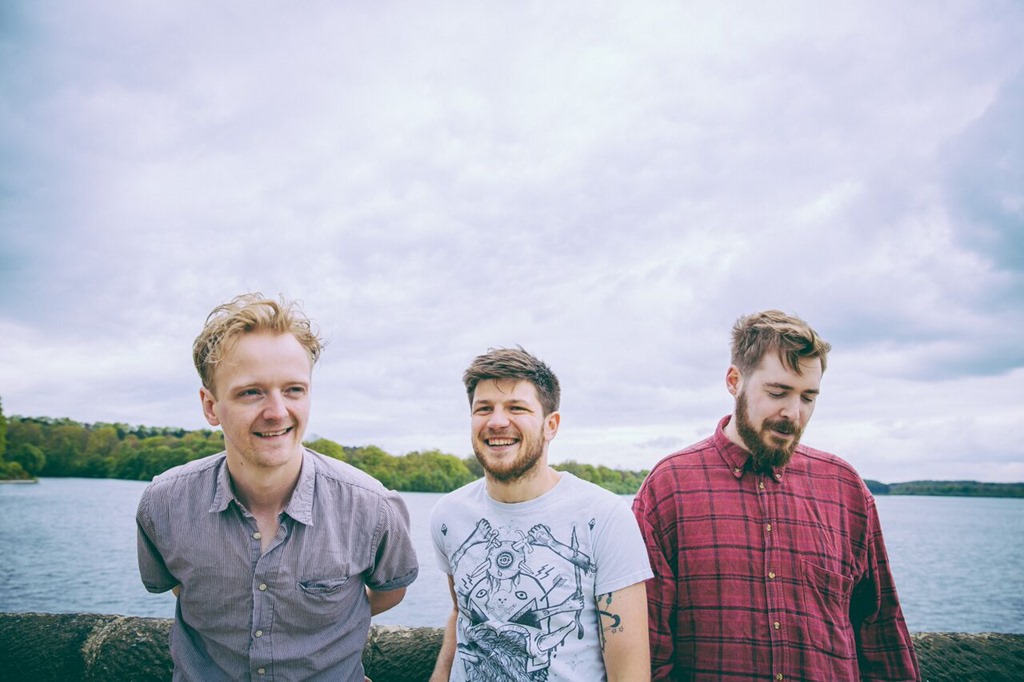
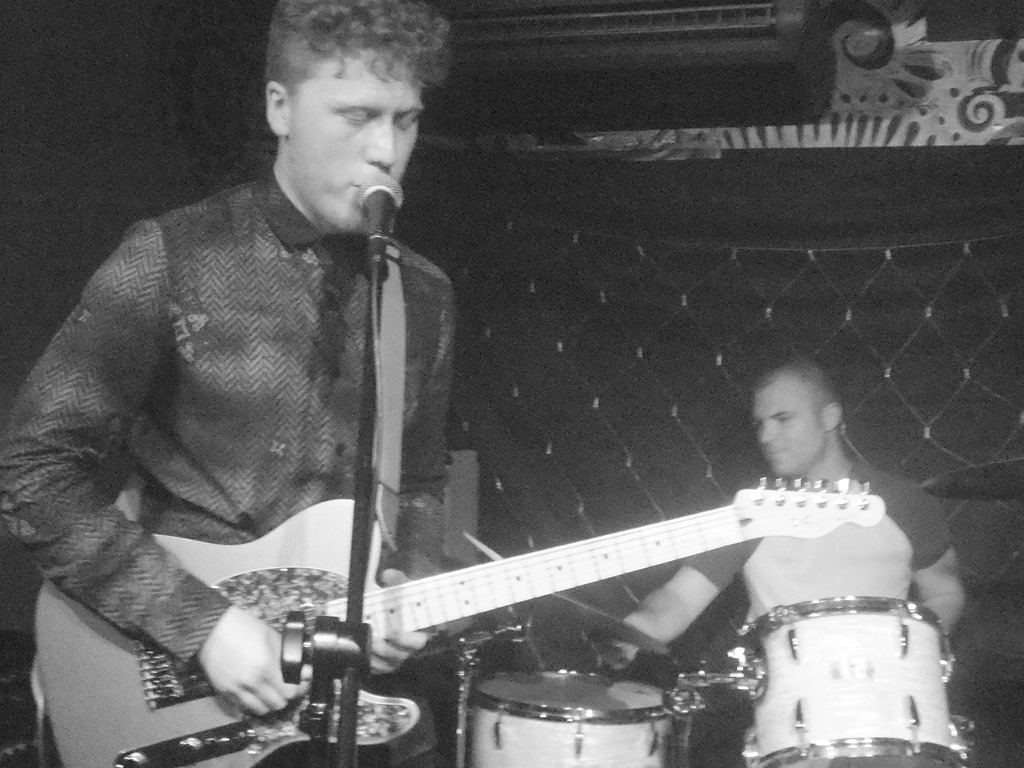
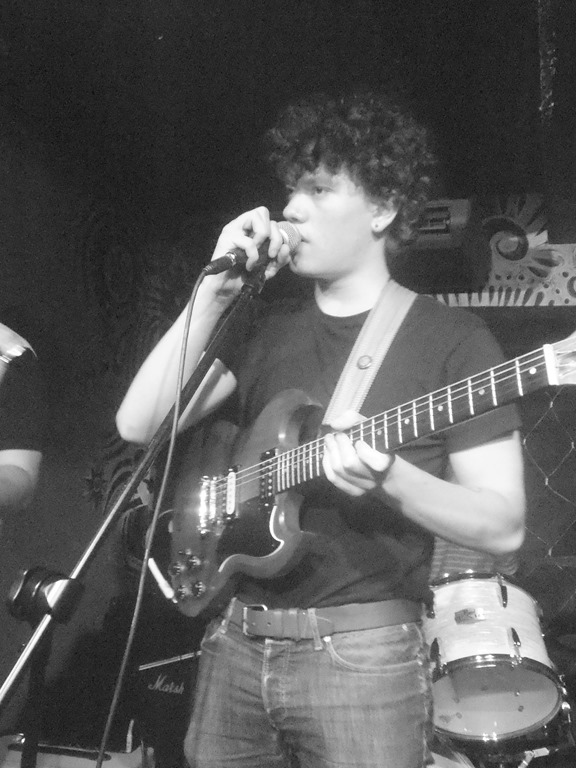
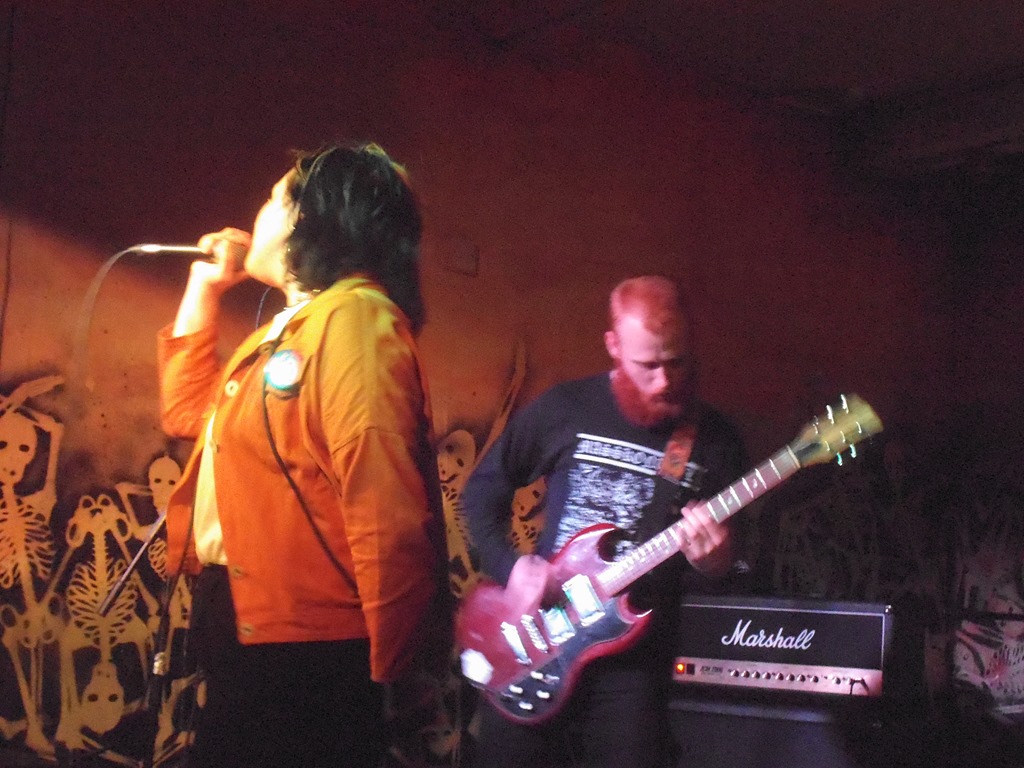
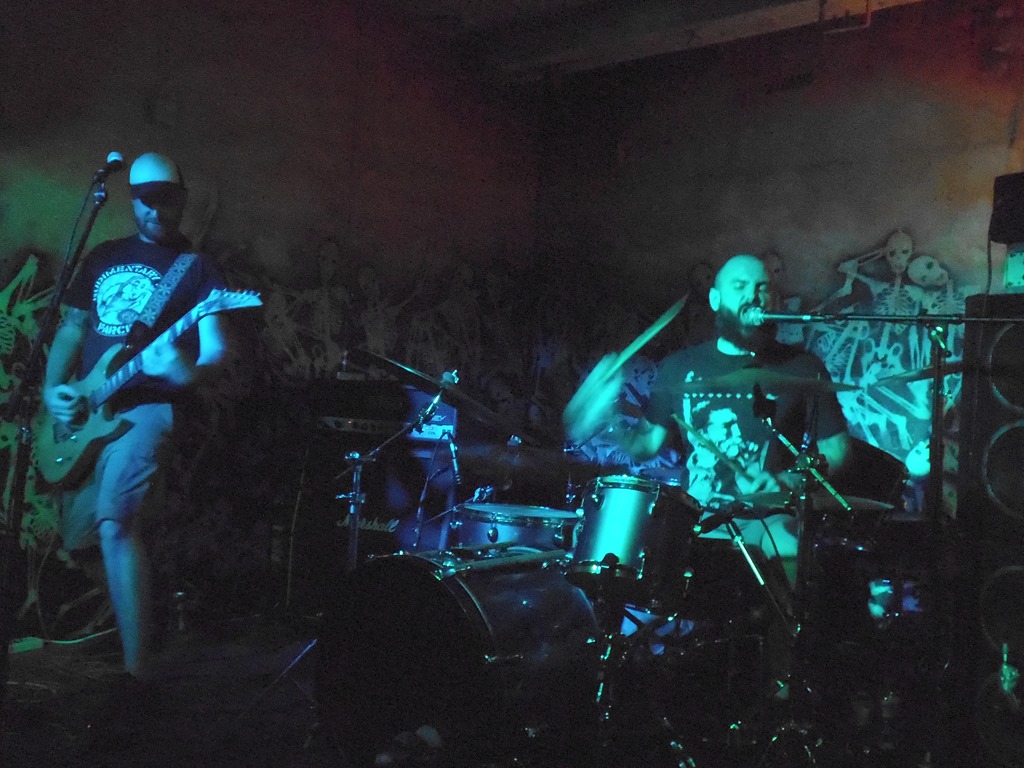
Leeds quartet Furr have shared their new single ‘Another Fable’ the first track to be taken from the next instalment of Leeds’ Come Play With Me 7” Singles Club.

Previously supported by the likes of Classic Rock Magazine and Upset Magazine, Furr play QOTSA inspired pummelling riffs complete with big choruses. The band also just played a massively well received show at Live at Leeds Festival last Saturday to a packed Dork / Key Club Stage in their home city.

You can hear ‘Another Fable’ here:


FURR

Mi Mye have announced details of the final single to be released from their 2016 album The Sympathy Sigh. The Wakefield quintet will release the soothing and melancholy ‘Methadone Church’ alongside a re-imagined ‘He Believes In Me’ featuring the vocals of James Smith of Post War Glamour Girls.

Inspired by Hemmingway’s ‘The Old Man and the Sea’, the album earned the band praise from the likes of The 405 and The Line Of Best Fit. (Aural Aggravation can’t take any credit here: we’re miserly bastards at times when it comes to praise and even selecting what we cover.)

‘Methadone Church’ is a thoughtful and beautiful song that deals with Jamie observing life around him at his place of work in Armley in Leeds. He explains “Chad and I were leaving the studio where I work and when we got to the bus stop we saw a mother with twin girls walk past us. The girls were identically dressed and the mother had blood on her top lip. That’s all the song is, just that, I wrote it as soon as I got on the bus. It’s a track that doesn’t judge or comment, it’s just what was there.”

The other side of this new single features a new version of album track ‘He Believes In Me’ sung by James Smith of label mates and long standing friends & collaborators Post War Glamour Girls. Jamie recently co-produced the band’s  Swan Songs album.

When asked on what made him so keen to collaborate with Mi Mye, James said “I adore the man and it was an honour to be asked to sing on He Believes in Me. To voice Jamie’s inner monologue of confusion and fear toward a religious maniac ranting and grabbing people on the streets of Wakefield was a more spiritually uplifting experience than that preacher man will ever have.”

So get your lugs round ‘He Believes In Me’  and enjoy….

Christopher Nosnibor

Anyone who follows me on Twitter or is a friend on Facebook is likely to have seen that I tend to draw attention to the fact that I won’t be chained to my desk at home writing music reviews because I’m taking a ‘night off’ involving beer and live music – in other words, I’m out and about watching live music, which I’m invariably reviewing. As such, these nights off aren’t really nights off in the strictest sense. Those who know me in person know that I never really take a night off, regardless, and that includes the nights when I go and watch live music as a paying punter, or a mate has very kindly bought me a ticket to join them watching one of their favourite bands. These are indeed rare occasions, but should constitute a true night off. But that simply isn’t how I work. Truth is, I no longer know how to have a night off. Stopping would likely kill me. Besides, I feel owe practically everything to underground music in some way or another.

So, while I’ve dug what I’ve heard of Part Chimp, my attendance is not in capacity of reviewer or rabid fan – although by the end of the night, I’m both. I’m already a fan of Joe Coates and his Please Please You gig promotions, though – the shows he puts on are carefully curated and the PPY name can be relied upon as a guarantee of quality. Likewise, I’m a huge fan of Wharf Chambers as a venue, and not just on account of the fact they sell decent beer on draught from as little as £2.80 a pint.

And so it is that Thick Syrup make for extremely worthy openers. Their Facebook page describes the band as ‘Garage rock/funk/post punk/hard rock… but none of those things specifically’, and it’s a fair summary. Boil it down, and they’re a solid alternative rock band, whose singer, Gemma, performs from somewhere in the audience, often right at the back of the little venue and facing the stage, on account of the fact she can’t hear what it sounds like from on stage. Out front, it does sound good, and while they’re not big on between-song banter they are big on sturdy, rocking tunes dominated by meaty, overdriven guitars. They’re good fun.

Thick SyrupThick Syrup 2

Thick Syrup

Grey Hairs, hailing from Nottingham, offer a different kind of fun – one marked by a front man possessed of an almost psychotic intensity. The rhythm section is immense, and the foursome kick out a supremely hefty racket. The riffs are big, ballsy, grunged-out slabs of noise: they’re a good fit by way of a main support for Part Chimp, and the fact that they’re also touring with Hey Colossus in May should perhaps give a fair indication both of their sound and their quality. With a new LP, Serious Business released at the start of the year, the set draws substantially on this shouty, sinewy collection, evoking the spirit and sound of vintage Touch and Go and Amphetamine Reptile releases, as well as contemporaries like Backlisters at al who draw inspiration from gnarly 90s US rock. The heavy chug of ‘Sausage’ is full-on, but then, ‘Backwards’ shows they’ve also got a knack for a cracking chorus too. They’re a motley bunch, and it’s no critiism when I observe that front man James is no pin-up. But the image they present corresponds with the angst they channel over the 9-5 grind and the twitching anxiety of immersion in mere existence amidst a morass of bland culture and the conflict of possessing a creative bent. Oh, and they’re bloody loud.

Grey Hairs

Grey Hairs

Part Chimp, however, are much, much louder. I mean, they radiate noise from every orifice and every pore. And when the guitars serrate your skull and the bass vibrates your solar plexus and every riff is as heavy as a small planet and the drums as hard as basalt, reviewing becomes a far bigger challenge than you might think. Instead of analysing precisely why Part Chimp are so bloody awesome, what about the performance completely blew me away, why I felt euphorically drunk on a lot less beer than I know I can handle, I spend an age pissing about on the Internet trying to establish precisely how hard basalt is, and how it compares to the more common ‘hardness’ reference point of granite. I discover that basalt is more porous and is considered a medium hardness rock, whereas granite is classified as a hard rock; and so my word selection seems appropriate: Part Chimp are heavy, the riffs as weighty as hell, but they’re not hard rock band. There’s a malleable, sludgy aspect to the sound. I’m still no closer to qualifying or objectively quantifying the experience of watching four guys, a few years older than myself and by no means cool in the rock star sense, or in any way ‘the kids’ might consider cool, working up a sweat as they hammer out this immense, furious racket.

Part Chimp 2Part Chimp 1

Part Chimp

They play a fair few songs from the new album, (and the first to be released following their reunion last year, following a five-year break), Iv released today. And that’s Iv, not the numeral for four. The riffs on the new songs are slow, heavy, fully doomy and laced with a psychedelic stoner infusion. There’s no pretence or posturing: there’s a keen sense that these are regular guys, who have regular lives, and when they’re not doing regular stuff, they’re making music. Music that’s noisy, dense and jarring, yet in a perverse way has the capacity to be immensely uplifting. They’re relentless, and play hard, and, as is only fitting, there’ a lot of hair being thrown about down the front. It’s music to go apeshit to. Part Chimp: All Brilliant.

Hide & Seek Records – 21st April 2017

Christopher Nosnibor

This being a Post War Glamour Girls album, there’s a lot to chew on, and I’ve played Swan Songs on the bus to and from work most days for the last month and a half in an attempt to really let the songs embed and to unravel. It’s not because Post War Glamour Girls make albums which are difficult or lack immediacy, but because there’s just so much to extract, and each listening reveals more. I’m still discovering new details and dimensions in their 2014 debut, Pink Fur, and suddenly, here we are at album number three.

And with album number three, they’ve made it a clean sweep of awesomeness: not a case of third time lucky, but a straight hat-trick. Few bands can claim such a record, although Post War Glamour Girls are unlikely to gloat, or even reflect on this achievement: chances are by the time the album tour is under way, they’ll have filled the set with new material which may or may not feature on album number four.

Swan Songs is by far their most commercial and accessible album to date, but it would be a chronic error align that in any way to them selling out, and in many ways, it’s equally their knottiest, thorniest release thus far. Yes, they’re contradictory and contrary, and that’s precisely their appeal. And while they always sound uniquely like Post War Glamour Girls – there really isn’t a band going – or, indeed, previous – who sound quite like them, they’re spectacularly varied in their style, and you never know what to expect from album to album. This is music born from restless energy and a drive to create something new, to challenge the band and their fans in equal measure. The one thing that is seemingly guaranteed is the quality of the material.

Swan Songs is most certainly their most eclectic-sounding album yet. The overall tone of the album is altogether less down than its predecessor, Feeling Strange. The downcast, brow-beaten self-loathing is replaced by a roaring defiance, at least in part. And, of course, it has all the band’s trademark qualities, honed to a new level of sharpness.

The album’s opener, ‘Guiding Light’ comes on like a cross between Big Country and The Wedding Present circa ’92 with its spiralling celtic guitar motif and stadium-fulling chorus – before making a 90-degree swerve only Post War Glamour Girls could pull off, with James Smith veering off into one of his densely-packed rants. You only catch snippets of the lyrics, but in the space of a minute he’s here, there and everywhere, pulling in what appears to be a reference to Gang of Four and macroeconomics with a line about ‘guns before butter’.

‘Chipper’ is more common PWGG terrain, and finds Smith in brawlingly nihilistic form, howling, bleating and hollering over a murky backing of guitars that jangle and warp and bend as the driving rhythm section powers on relentlessly. At the middle eight, it heads off on another trajectory, Smith coming on like a brutalised hybrid of Mark E Smith and JG Thirlwell on top of Alice Scott’s icily calm backing vocals. If ever a band knew how to work contrasts, it’s Post War Glamour Girls.

Conjuring a brilliantly visual image while working a dubby post-punk seam, the more understated ‘Gull Rips a Worm’ marks something of a departure, with Smith revealing a more soulful side in his melodic vocal delivery. Meanwhile, ‘Big Trip’, which recently found its way onto Radio 1 thanks to a shout-out from fellow Leeds legends Pulled Apart by Horses, is a brilliantly gruff and darkly grounded paean to escapism. It might not quite rank with the time the uncensored version of Rage Against the Machine’s ‘Killing in the Name’ was spun at teatime on a Sunday during the Top 40, but it’s pretty subversive. It’s also indicative of the band’s mass-market potential, given the right exposure.

Awkward buggers that they are, the two sets I saw them perform following the release of Feeling Strange, showcased unreleased material in favour of either the latest album or their rapidly-expanding back-catalogue. These shows hinted squarely at a more direct pop sound, and while Swan Songs is a long way off this, being neither direct or upbeat and poppy, the second half of the album is the closest they’ve come to creating unadulterated pop in the studio.

‘Polyanna Cowgirl’, which featured on last year’s live album, is a big, reverby song that draws together elements of classic dreampop with vintage mid-80s postpunk and even more overtly charty music of the same era. Ah, such different times… And so, they manage to imbue the song with a certain nagging nostalgia, as well as a pining wistfulness. The hefty welter of drums and driving bass render it uniquely Post War Glamour Girls, but the multifaceted harmonies and chiming guitars, expansively produced, bring that cinematic slant to the finished product. The shimmering ‘Golden Time’ wafts and warps gently before ‘Sea of Rains’ drifts into I Like Trains territory, but Smith’s bleak lyrics render it a very different animal: ‘The lust you tried to drag from the soles of his shoes / is the worst excuse for loneliness I’ve ever had to use,’ he reflects, grimly.


The jarring, splintering, ‘Welfare by Prozac’ sees the band ploughing headlong into the Fall-like realms they stomp with aplomb, Smith duelling with Scott like vintage Mark E and Brix, a snarling, spitting inscrutability counterpointed by a melodic yet icy tone, while squalling guitars break over a thick, strolling bassline.

Now, I’m a huge sucker for a monster closing track. On past form, it seems Post War Glamour Girls are masters of the monster closing track (even if Feeling Strange perversely delivered said monster track as the penultimate song in the form of ‘Cannonball Villages) and Swan Songs proves no exception, with the seven-minute ‘Divine Decline’ building from nothing to a raging behemoth of a song. ‘Love and hate stem from the same cell,’ Smith croons, before the whole thing erupts. ‘All I ever wanted /as to be a better to better person / and I’m working on it constantly / working like a dawwwwwg!’ he growls. It’s a storming finale, and no mistake, as the band whip up a dense maelstrom of sound.

As is so often the case, Smith channels a vitriolic rage which one feels is largely directed toward himself. It’s a recurrent aspect of the album’s lyrical content: ‘My manners aren’t amazing / My poetry is pisspoor / My attitude’s an anathema,’ he snarls self-critically on ‘Chipper’. At the risk of too closely, or even mistakenly, aligning the art with the artist lyrics with lyricist and assuming the role or armchair analyst, one can’t help but wonder on the evidence his lyrics, coupled by his driving of the band’s relentless forward trajectory, if he isn’t fighting himself every moment of every day, and if Post War Glamour Girls aren’t some means of his justifying his existence to himself. If this is some kind of therapy, then – from a purely selfish perspective – our best hope is that it takes a good few more albums to purge himself yet, and that the title is more a reference to the conceptual contents of the album rather than an indication of the band’s final sign off. Because, not only is Swan Songs a killer album, but a cohesive and rich set which is the work of a band really hitting their stride and riding on the crest of a wave.*


Post War Glamour Girls - Swan Songs


*The success of this closing punchline is limited, not least of all on account of the fact that swans’ natural habitat is inland and on / by rivers, lakes, and ponds, and therefore unlikely to be tidal or otherwise, meaning that swans are rarely found in an environment where waves are common. But every review needs a punchline, right?

Clue Club

The other day, I chipped in on a debate over split releases, which essentially revolved around the question ‘yay or nay?’ Personally, I like split singles. I commented that I would usually purchase a split release for one of the bands, but, often, subsequently get into the other.

It so happens that the first release by Clue Club, a subscription-based aspect of Clue Records  features two bands I’ve seen, heard, and enjoyed immensely in the last year. Split-singles-based projects seem to be popping up with increasing frequency (see, for example, the excellent Come Play With Me), and this represents a belting start to this one.

Fighting Caravans were up there with my favourite discoveries of 2016, and probably one of the best live acts I caught all year, on all three occasions I saw them. ‘It’s a Nice Ride (To be Fair)’ is entirely representative of their brand of fucked-up gospel-tinged desert country. Over a spacious, bittersweet guitar, Daniel Clark visits the classic themes of death and hell with a delivery that treads the thin line between psychopathy and self-destruction.

Similarly, the drifting, dynamic shoegaze of ‘Frail’ is exemplary of Colour of Spring’s sound, and provides a perfect stylistic contrast, too its counterpart, too. It’s a dense yet delicate song which conjures a heady atmosphere of blissful melancholy by means of understated vocals and bold, swirling guitars.

Clue Club subscription is available here.

Christopher Nosnibor

I struggle to find Bad Apples, even with my phone’ sat-nav. Talk about underground! There’s nothing like being in the know for more niche events. Hunkering down with a Newcastle Brown and Jean-Paul Sartre’s The Age of Reason, there’s a relentless thunder of thrash and grinding metal hammering out of the speakers in the upstairs bar while I wait for the first act.

It’s pretty quiet in terms of people, but then it’s the Thursday before payday and storm Doris is raging hard outside: it’s cold, it’s wet, it’s windy, and generally unappealing. Storm Doris is also the reason the headliners – who are bringing the drum kit – have still to arrive at the venue five minutes after the first act is due on, and our planned interview hasn’t happened. Music writing isn’t all cut-and-thrust, hob-nobbing and ligging: it involves a lot of hanging around, a lot of waiting, a lot of time sitting, drinking beer alone in a corner and reading books. It also involves a lot of standing, a lot of cross-city legwork, and a fair amount of train travel.

In a change to the advertised bill, which listed Sinkers (who are nowhere to be seen), and Lincoln ‘soul punk’ four-piece Striped Sight as the first act on the bill, Conrad Ashton steps up to play some acoustic numbers. This comes as quite a relief, because the write-up for the aforementioned ‘soul punk’ act sounded truly heinous. Durham Yakka Conrad Ashton – who handed me one of his plectrums sporting a Newcastle Brown logo on the flipside having clocked me supping a bottle of Broon – knows how to bash out a heartfelt punk tune solo on an acoustic guitar. Balancing keen melodies with a real sense of attack, he’s an engaging performer. He pings a string during the third song, ‘Straight to the Man’. “I’ve not got a spare guitar, like,” he apologises. Thankfully, one of the guys from Lost in Winter is on hand, and armed with a seven-string electric guitar, Conrad picks up precisely where he left off to play the last six bars. He wrapped up his acoustic -now-electric set on yet another guitar after another string met its end, and its credit to him for carrying it off with self-effacing humour. A true pro, and with some decent songs to boot.

DSCF7433

Conrad Ashton

Lost In Winter scream ‘technical’ and ‘rich middle-class posters’, with their haircuts, clan suede boots, neat beards, a five-string bass and two guitarists both geared up with seven strings. One of the guitarists spends an age clamping a camera to the PA speaker stand while the drummer fiddles with his cymbals and the singer, in a shiny new-looking biker jacket performs head-rolls. Christ, the kit they’ve got probably cost more than I earn in a year – and of course, they sound absolutely fucking incredible. They need to, of course: their brand of atmospheric, melody-driven neo-prog is crafted with near-infinite attention to detail. It wouldn’t work without those microscopic nuances, the fifty shades of delay and delicate tube crunch. But what does it all amount to? Not a lot. Lost in Winter prove slick but dull in their overly serious emoting of lines about how we ‘crumble to dust’ and how ‘we must fight our way out and into the light.’

There’s no such pomposity where Maidstone five-piece Weekend Recovery are concerned. They set up swiftly, and Lorin rocks up in a long animal-print coat which she whips off to reveal a crop top that says she’s read to rock. And rock they do. This is a band with power, passion and an infectious energy, and watching them pour everything into every song, you’d never guess they’d just spent eight hours stuck in a van and piled on stage with barely three minutes to soundcheck.

DSCF7510

Weekend Recovery

And while Lorin is the band’s clear focal point – she’s got real presence and never stays still for a second, as she struts her stuff and tosses banter like she was born to do it – it’s clear that this is a band who operate as a unit: they’re tight, cohesive and look like they’re having a blast up there. The songs themselves are punchy: banging out solid rock tunes with a keen pop sensibility, Weekend Recovery know their way around a hook, and no mistake. The set concludes with single cut and reason for the tour, ‘Don’t Try and Stop Me’, and it’s ace.

It’s a strong start to an ambitious tour, which should – if there’s any justice – see them expand their fan base considerably.

Christopher Nosnibor

Life is stressful, and life is strange. Our understanding of the world is built on a web of infinite lies, distortions, misrepresentations, and, essentially, a version of history which is skewed. This was an angle pushed by Willian Burroughs as far back as the early 1960s, and which subsequently came to be a key aspect of postmodern theory: amidst the blizzard of information, historians sift through the ‘facts’ and ascribe them narrative significance and superiority over one another, while at the same time forging a linear version of events which necessarily frames them in a position of cause and effect.

Tony Curtis’ Hypernormalisation documentary presents an alternative perspective of those events, and rationalises the semi-fictionalised version of events which has become accepted as the narrative of historical fact, in the name of simplification, and primarily for political end. The music of Manchester-based duo worriedaboutsatan features on the soundtrack to this epic documentary and, indeed, many other projects for film and television. Hypernormalisation is one of those works which makes you feel tense and uncomfortable. On the other hand, the music of worriedaboutsatan, while built on what on the surface may appear to be jarring incongruences, offers a conduit to escape the horrors of the modern world in some small but precious way.

Tonight’s event is the fifth and final date of a mini-package tour which serves as something of a platform for the type of music favoured by the label, This is it Forever, run by Gavin Miller and Thomas Ragsdale, aka worriedaboutsatan (and also for a time, Ghosting Season), with Sunset Graves – the brainchild of Andy Fosberry, who also happens to run microlabel 3rd and Debut providing a complimentary yet subtly contrasting coalition.

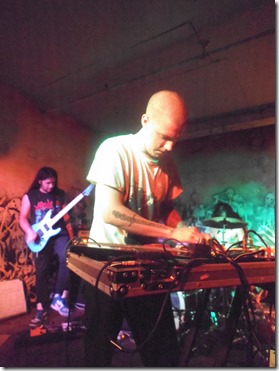
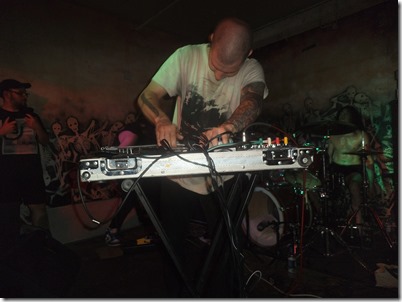
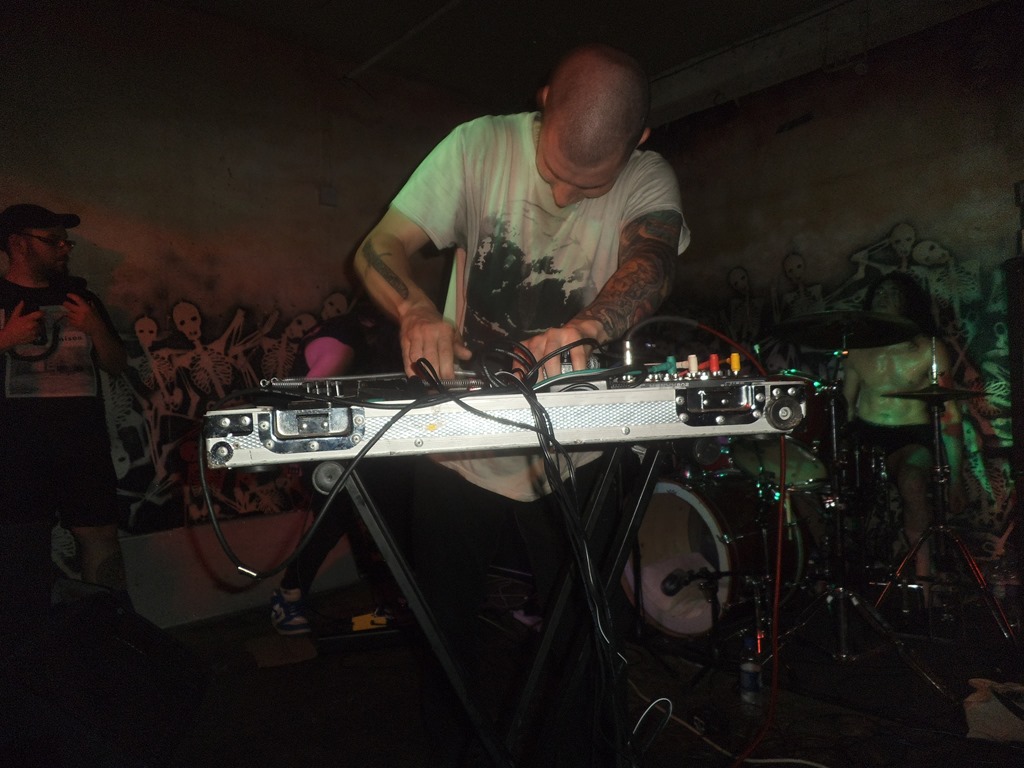
Sunset Graves’ material could reasonably be lodged into the brackets to techno and electro. And while it would be just to praise the swirling ambience which eddies around the set, and the meticulous architecture of progressive beats which defines the sound, any objective appraisal of the performance will inevitably fall short. And herein lies the magic of Sunset Graves: the carefully-considered and yet equally intuitive structures and the attention to texture and detail disappears in the enrapturing experience of simply experiencing it in the moment. Playing in near-darkness, the man with the short back and sides and the Sonic Youth ‘Confusion is Sex’ T-shirt makes musical alchemy.

DSCF7423

Sunset Graves

The same is true in many respects of worriedaboutsatan, an act who have evolved immensely over the course of the last decade. Without doubt, while they continue to exist on the fringes, the word of music is all the richer for their presence. Way back, they could be described as post rock with glitchy beats. In fact, I probably did describe them as precisely that. In fact, my first review of them in 2009 contained the following: ‘The scratchy click and pop beats give way to thunderous pounding rhythms, and Tom, arched over the Mac, looks like an alien hardwired into the mains as he twitches spasmodically. Meanwhile, lurking in the gloom, Gavin adds depth and texture with drones by means of guitar played with a violin bow.’

And so, in many respects, little has changed. Gavin still conjures layers of vaporously-textured guitar sound, occasionally with the use of a bow to the strings and Thomas still launches salvoes of thumping beats and deep, resonant basslines. Yet, by the same token, so much has changed. The pounding beats are there from the start, making for a more direct and immediate impact, and the sonic and textural contrasts are more prominent than ever.

20170217_215210

worriedaboutsatan

Having performed independently of one another during their hiatus, Gavin and Thomas’ contrasting styles have become more pronounced, and now, as Gavin cascades cinematic post-rock textures from his fretboard, Thomas cranks out evermore dense, thumping rhythms and woozy basslines which resonate around the solar plexus. They play facing one another, and if you put a line down the middle of the stage, or split the screen, you would likely be convinced you were watching two separate shows: Miller rocks silently back and forth, his guitar so drenched in effects as to not sound remotely like a guitar, while Ragsdale is a man possessed, savagely attacking his electronic gear and channelling every last drop of power from its circuitry through his veins and into the PA. But it’s the contrasts which ultimately render worriedaboutsatan such an exciting and unique proposition, both sonically and in a performance setting.

20170217_220325

worriedaboutsatan

It’s in the coming together of these seemingly dichotomous forces that worriedaboutsatan create their unique and utterly immersive space. There are vast expanses of sound which wash over the listener, and as the tracks often segue together, the set feels like a deftly-navigated sonic journey. It’s clear that I’m by no means the only one in the room who’s completely engaged: the minimal visuals – on this outing, relatively simple changes of light, and not a lot of it, as they still favour playing in near-darkness – mean that it’s the music which stands well to the fore, and this s music capable of inducing an almost trance-like state. There’s a guy in front of me who’s flailing his arms and pounding the air in time with the big beat drops, and there’s no question that he’s utterly lost in the moment; the majority of the rest of us simply stand stationery, transfixed.

20170217_220843

worriedaboutsatan

More than a decade into their career, and worriedaboutsatan are stronger than ever. If there was any doubt following the release of Blank Tape last year, they’re an act who are going far beyond fulfilling their early promise and are now well into the realms of forging a niche that’s entirely their own.

Christopher Nosnibor

It’s a cold, wet, February night in York. The wind is howling and the air is bitter. It’s not much warmer in The Crescent, despite a respectable turnout for this incredibly good value five-band extravaganza hosted by Leeds promoters and label Come Play With Me (and while I’ve never asked or otherwise bothered to research, I’ve always assumed the name is taken from the 1992 Single by Leeds indie stalwarts The Wedding Present, rather than the 1977 sex-comedy movie).

Perhaps it’s because they play so frequently in and around York that I often pass up on seeing Bull play. As a consequence, I tend to forget just how good they are, and often feel as if I’m, discovering them anew when I do see them. Their breezy US alternative sound, which hints at Dinosaur Jr and Pavement is laced with a distinctly Northern attitude, and they’ve got a real knack for a nifty pop song. They make for an uplifting start to proceedings.

The ubiquitous and multi-talented local stalwart Danny Barton features among the lineup of three-piece Sewage Farm, in capacity of bassist. Their post-grunge style is a sort of hybrid of US alt rock and 60s pop: more New York than Old York. With nods to Sonic Youth, but equally, Weezer, they’re good fun and make a dense noise for just three people.

Looking around the venue, I observe a number of long coats and above-the-ankle trousers. It’s starting to look like 1984, while on stage it sounds like it’s 1994. Time is warping, history is bending in on itself. Clearly, I need more beer. While I’m at the bar, The Jesus and Mary Chain and Slowdive pour from the PA, setting the tone nicely for the next act.

While they’re setting up, I chat briefly to Adam Weikert, drummer with Her Name is Calla. I waffle a load of bollocks, and as he heads off to get warm and grab a beverage, I realise just how unbelievably fucking tired I am. Maybe if I drink enough beer I’ll perk up, or otherwise fall asleep at the table I’m sitting at to make notes between bands. Perhaps I’ll simply care less, and also develop a much-needed beer-coat.

Team Picture describe themselves as ‘One part post-punk, two parts fuzz’, and having been impressed by their single cut released by CPWM the night before, I was keen to check them live. Biographical details about the Leeds act is scant, and despite the positioning of old-school cathode ray tube television sets around the stage and the female singer being one of the hyper-retro bods I’d clocked, giving an air of hypermodernism of a vintage circa 1979, they’re really not an image band. They are, however, an exceptionally strong live act. The six-piece forge a layered sound that oozes tension: the monotone dual vocals and fractal guitars trickle brittle over strolling basslines and taut drums. The songs are magnificently composed and executed. Atmospheric segments blow out into expansive passages propelled by motoric rhythms. I’m totally sold: it’s a cert that this is going to be a band who are on an upward trajectory and 2017 could be a big year for them.

Team Picture

Team Picture

I’m still freezing my tits off, tired, and feeling disconnected and out of sorts, so I buy a third beer: surely an Old Peculier will unthaw my toes at least. The barmaid throws a friendly smile as she hands me my change. Inexplicably, I feel hopeless and empty, and now, I’m without a seat, as the girl who stood right at my elbow during Team Picture’s set, despite the venue being only a third full is now sitting with her mate at the table I was at previously. She looks vaguely familiar, but I’m not about to embarrass myself by attempting conversation. Perhaps it’s the chilly post-punk vibes lingering in the air spurring my existentialism; perhaps not. Regardless, I don’t go to gigs to socialise.

It’s a relief when Halo Blind begin their set. Another York band featuring another ubiquitous face on bass, this time in the form of former Seahorse Stuart Fletcher (currently rocking a look that says he wants to be Tom Hardy), they’re classic exemplars of post-millennium neo-prog, and they’re seriously good at it. Having just released their second album, Occupying Forces, they showcase an evolving, expansive sound. Layered, dynamic, melodic and harmony-soaked songs, rich in atmosphere and calling to mind the likes of Oceansize and Anathema, define their set. They explore dynamics fearlessly, building some sustained crescendos and executing them with admirable precision. During ‘Downpour’, I find myself drawing parallels with ‘Pictures of a Bleeding Boy’ by The God Machine. But if a band’s worst crime is betraying echoes of The God Machine, then you know they’re a band worth hearing.

DSCF7378

Halo Blind

Her Name is Calla: another tour, another lineup. Sophie Green is out (a shame, as she’s an awesome presence), making way for a return for Anja Madhvani (which is cool, because she’s a superb player). And that bearded guy at the back, manning a bank of electronics and hoisting a trombone: is that really departed fonder Thom Corah? Yes, yes it is, and they open up a tempestuous set with the rarely-aired single-only track ‘A Moment of Clarity’. I may be in a minority, but it’s one of my favourite Her Name is Calla songs, and as Tom Morris pushes his voice to the limit with the cry of ‘the crunch / is the sound / of a human spirit breaking’ as the band erupt around him, it’s a powerful and emotive moment.

DSCF7399

Her Name is Calla

The band play a varied set with intensity and vigour. Quiet and melancholy, ‘Pour More Oil’ is delicate and moving; ‘Meridian Arc’ brings an insistent throb, vlume and tension in spades. Tiernan Welsh’s bass coms to the fore and his complete immersion in the songs is compelling.

They close the set with ‘New England’. I stopped taking notes, beyond scribbling ‘fucking yes’ in a barely decipherable scrawl. One of the highlights of The Heritage¸ this is precisely the kind of slow-building, explosive epic that made the band their name, and to see them thrash wildly, with Tom gnawing his guitar strings with his teeth amidst a tumult of ever-swelling noise, is an experience that’s something special. There is no encore: there doesn’t need to be. There is nowhere to go from here: an awesome finale to an awesome night.

Reject and Fade – 28th February 2016

Christopher Nosnibor

Tim Hann used to front a Leeds-based alternative rock band called I Concur some years ago. I forget exactly how I discovered them now, but they were really, really good, one of those bands you would see play liv and think ‘Fuck. How are they not immense?’ One of the most precise and exhilarating live acts around, they were in another league, and it felt wrong to see them play as a support at the 450-capacity Brudenell Social Club. With the NME and Huw Stephens backing them they should have been huge. Sadly, the show I caught at the Packhorse in Leeds in 2010, where they tried out some of the material that would appear on the 2012 album Burial Proof would be one of their last, and Burial Proof would effectively be their sign-off. Life had already got in the way prior to the album’s release: ‘the usual thirty-something excuses of jobs, kids & houses’, as they put it on Facebook. And so it goes: ambition and dreams crushed by reality. The guilt and the money-pit of leaving your wife to deal with the children, while you go out on tour, pursuing the life of a young, single man.

I get it. Bands slog their guts out for fuck all. So do music reviewers, it so happens. ‘It’s not work, you don’t get paid for it,’ Mrs N retorts as I wade through the thirty or so emails which have crashed into my inbox while I’ve been at the day-job. Don’t free CDs, downloads and gigs count as pay? I’m not going to argue: I take the point. At least I get free stuff in abundance. Bands just hand out free stuff to buggers like me in the hope they’ll get a review. I review maybe 20% of the material I receive these days. It’s not because I’m a shit – no, it’s not the reason – it’s because I simply can’t do any more. The point is that being in a band is hard. It’s no life for a grown adult with mouths to feed.

A brief backtrack: in my endless quest for self-promotion, I used to run round slapping stickers and postcards everywhere every time I attended a gig. I didn’t sell many books off the back of it, but I did get an introduction to Tim’s younger brother Michael, a writer and soon-to-be head honcho at experimental Reject and Fade, a label devoted to dark ambient and generally weird, dark electronic-based nastiness. It’s a small and sometimes wonderful world. Were it not for all of this backstory – and I make no apology for the anecdotal meanderings with their Sartrean, Robbe-Grillet tinted reflections – this review would not exist. You should be grateful for the existence of this review because this offering by break_fold – Tim Hann’s latest project, released on brother Michael Hann’s Reject and Fade imprint is an inspired underground work, which, by its nature is unlikely to receive much mainstream critical coverage, deserves your attention.

break_fold represents a significant departure: there isn’t a jangly guitar to be heard here, not a single emotive swell, and no vocals: in other words, nothing remotely resembling the conventions of rock. This is music produced slowly, during moments away from life. And it’s music made by one man, at home, likely in the small hours, without the need to rely on the input of others. Hann clearly has music in his blood, and possesses an incredible focus when he’s making it. As a dark ambient work, amorphous, intangible yet curiously challenging, it’s an outstanding release and one which displays a meticulous attention to detail. The tones, the texture, the crispness of the beats and the overtly synthetic elements, in contrast with the swirling background elements is quite something.

About the title: 07_07_15 – 13_04_16 is pitched as ‘a record of memories and time stamped bursts of creative activity, captured and crystallised in glacial beats, foggy textures and electrified rhythms.’ The track titles are, in fact, the dates on which the individual track were started. As a whole, it’s a document of a specific time-span. There is something simultaneously resonant and alienating about this location in time, in that time is both universal and personal. Events take place at given times which are known globally. Other events are strictly personal. But our location in time is often marked not by the event but by our reaction to it. Take, for example, the announcement that the UK had voted to leave the EU. Many, if not most, UK citizens will forever have the fateful events of the 23rd June 2016, and also the 24th (very much the morning after) etched into their memories. But their responses will vary wildly, and the memories will inevitably be shaped by that immediate reaction on hearing the result.

07_07_15 – 13_04_16 is a journey into the break_fold mind-space, but without context in terms of the events of the dates in question. This accentuates the sense of dislocation already present in the music itself – music which conveys emotional tension, conflict, unease through the medium of rumbling, uncomfortable layers of sound which drift and hang like mist or toxic gas. Murky, impenetrable, tense and dubby, it’s a challenging journey into the unknown defined by low, strolling basslines streaking, slow-turning ambient tension and clamorous beats swathed in echo.


break_fold