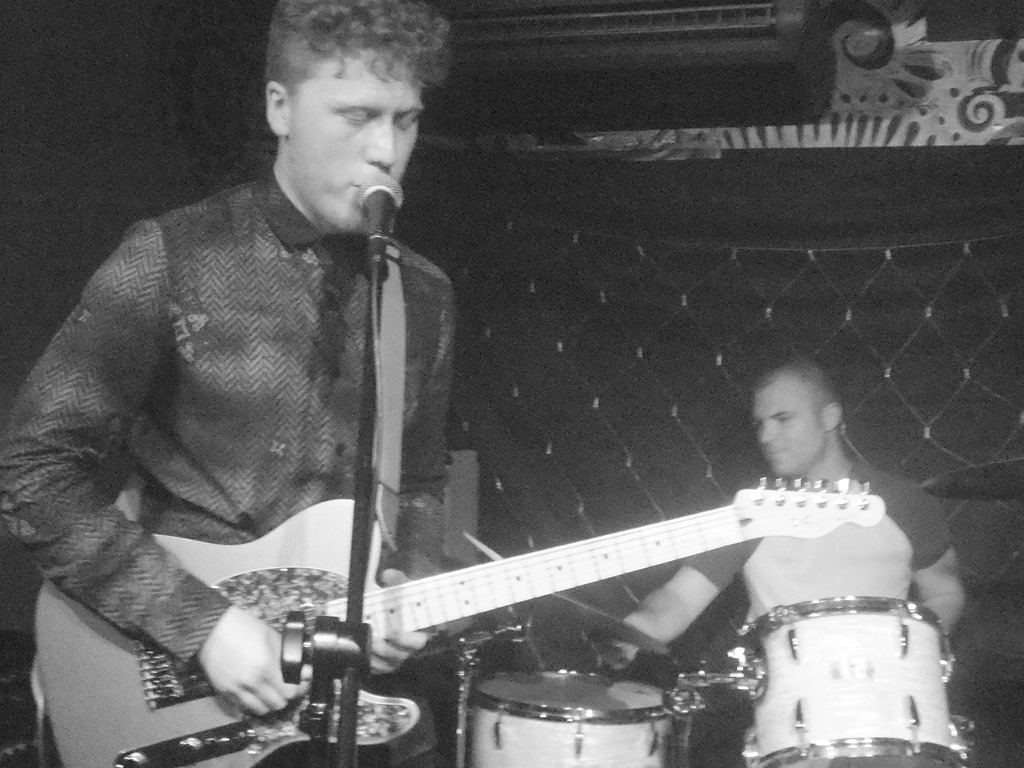
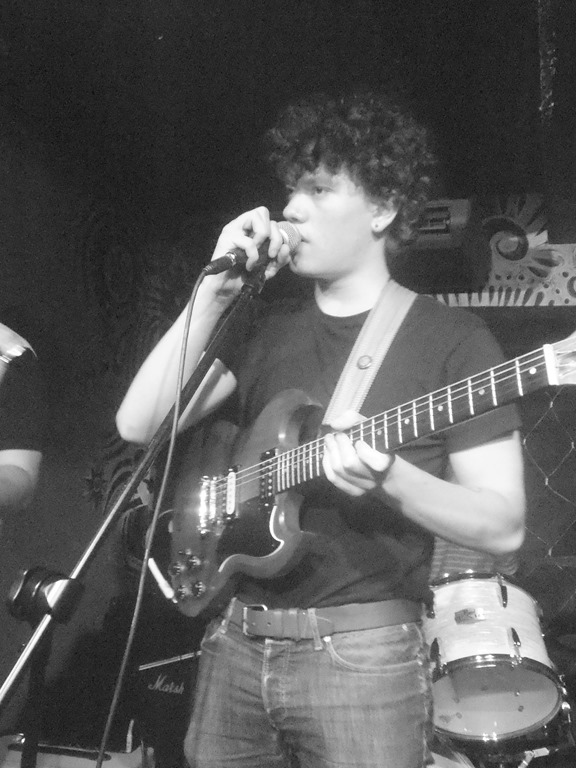
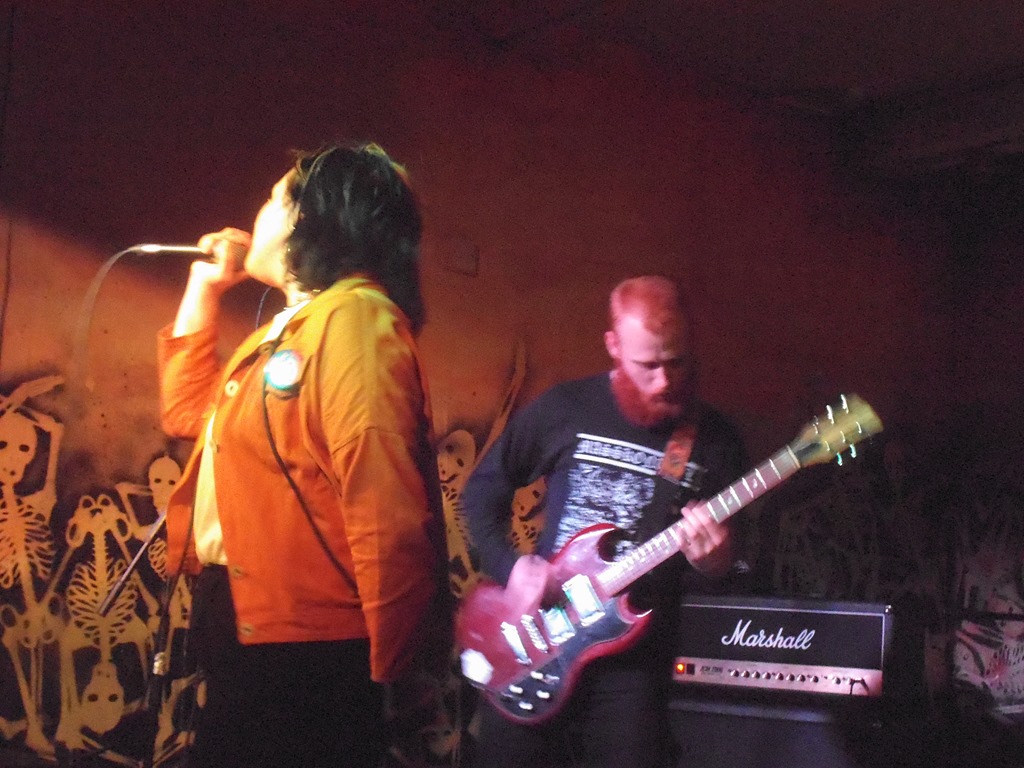
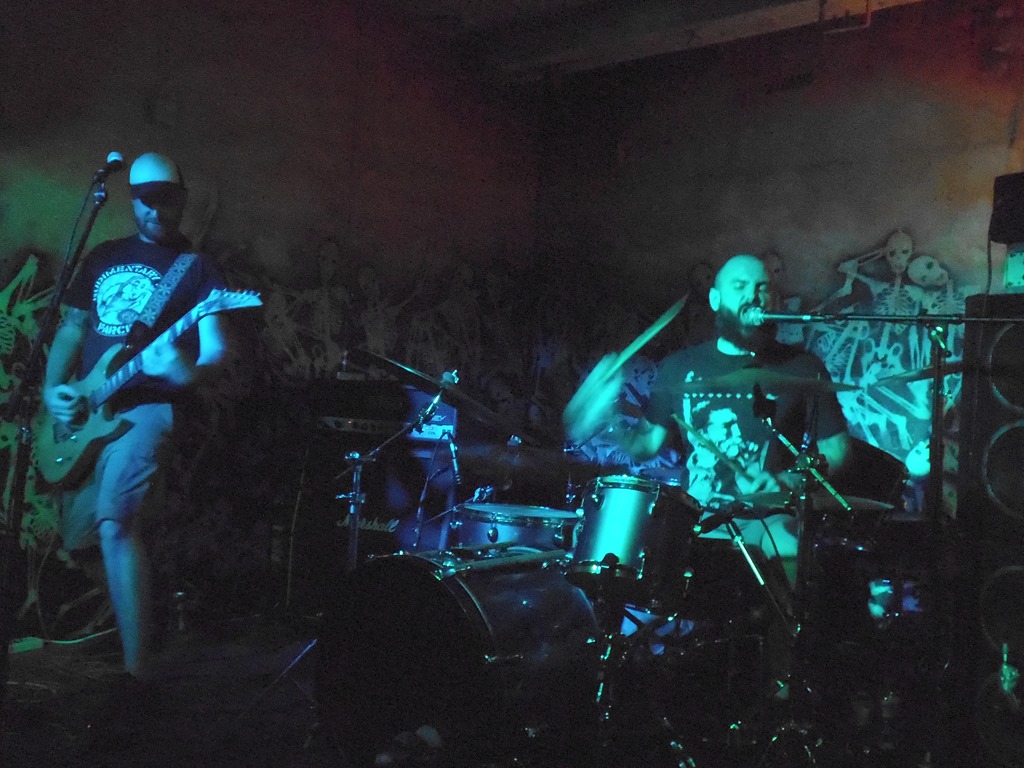
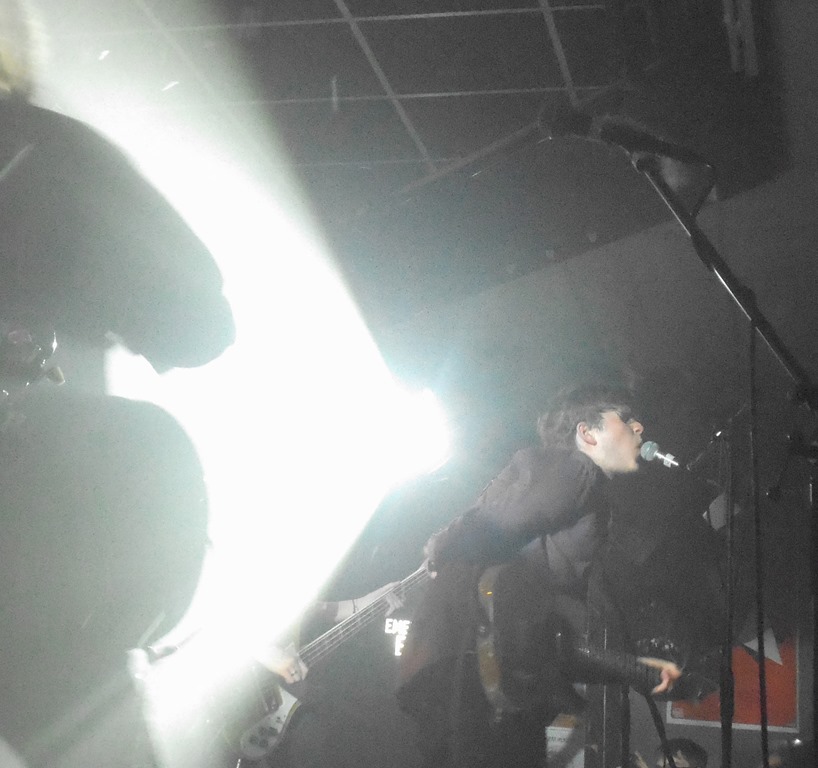
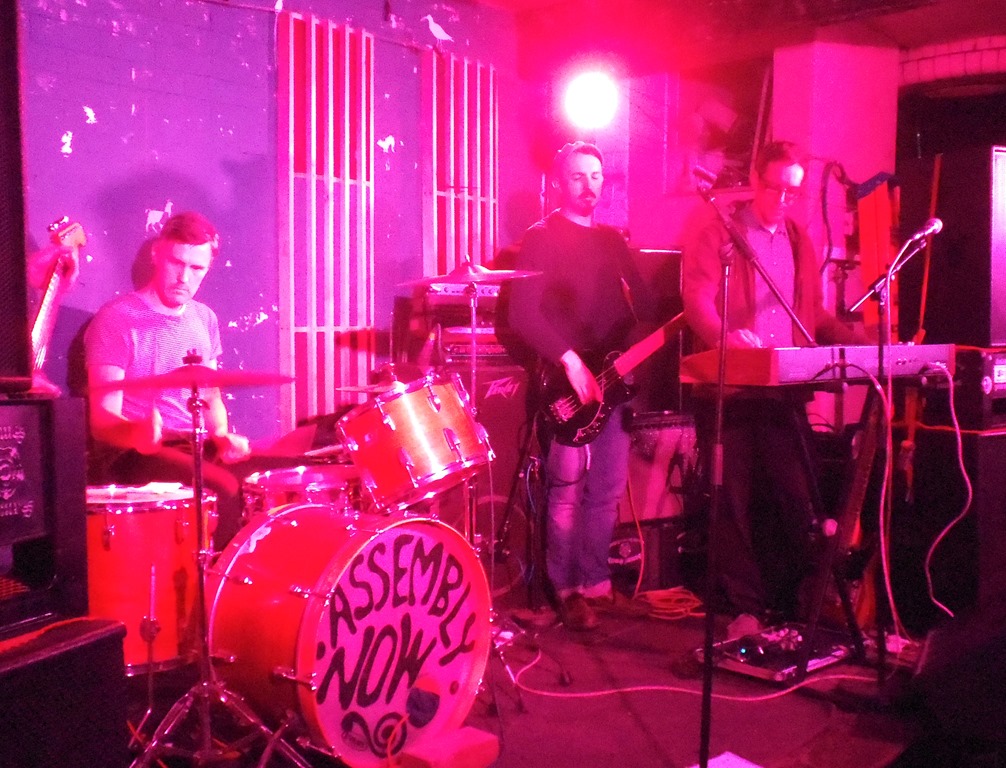
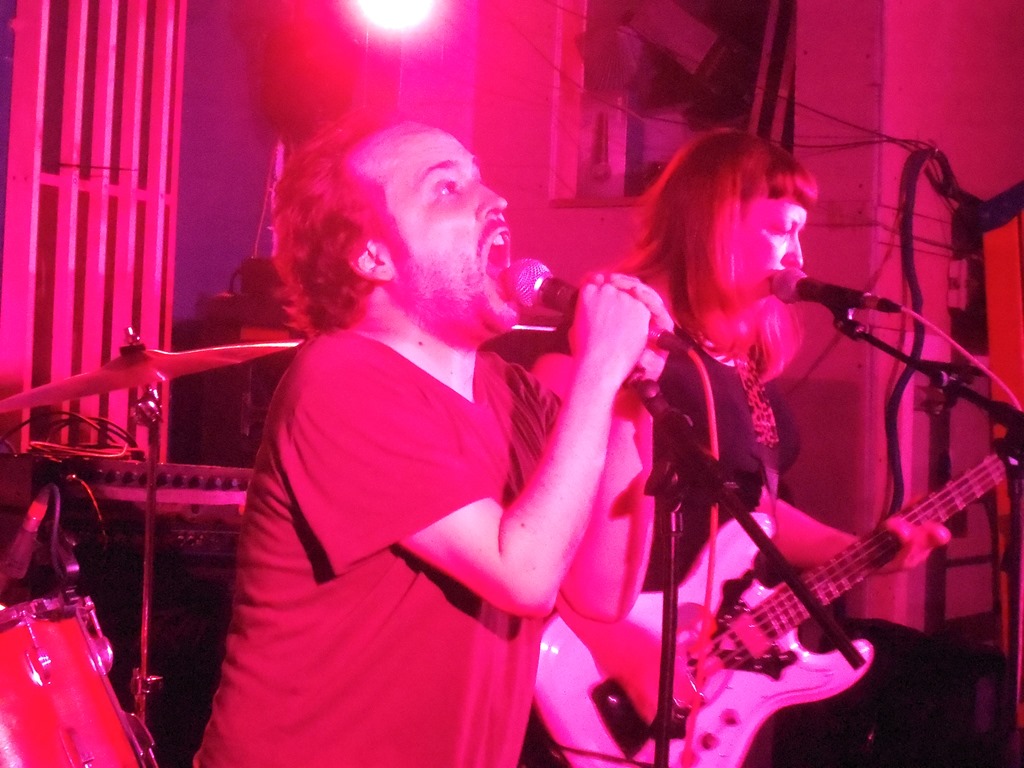
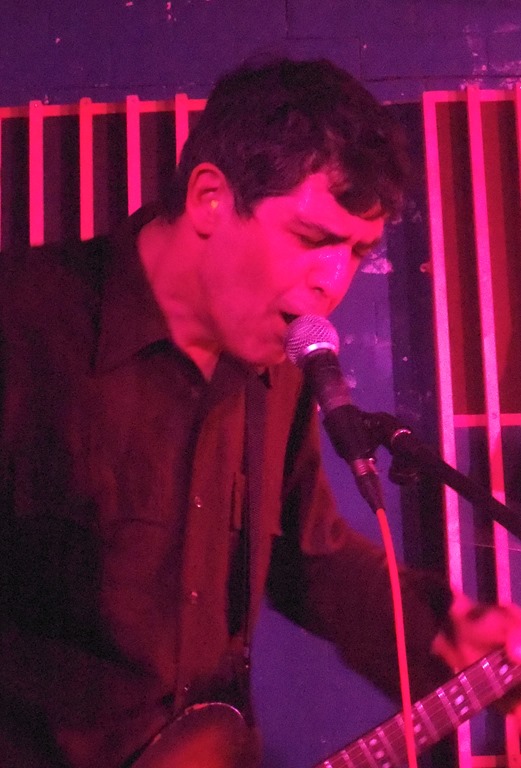
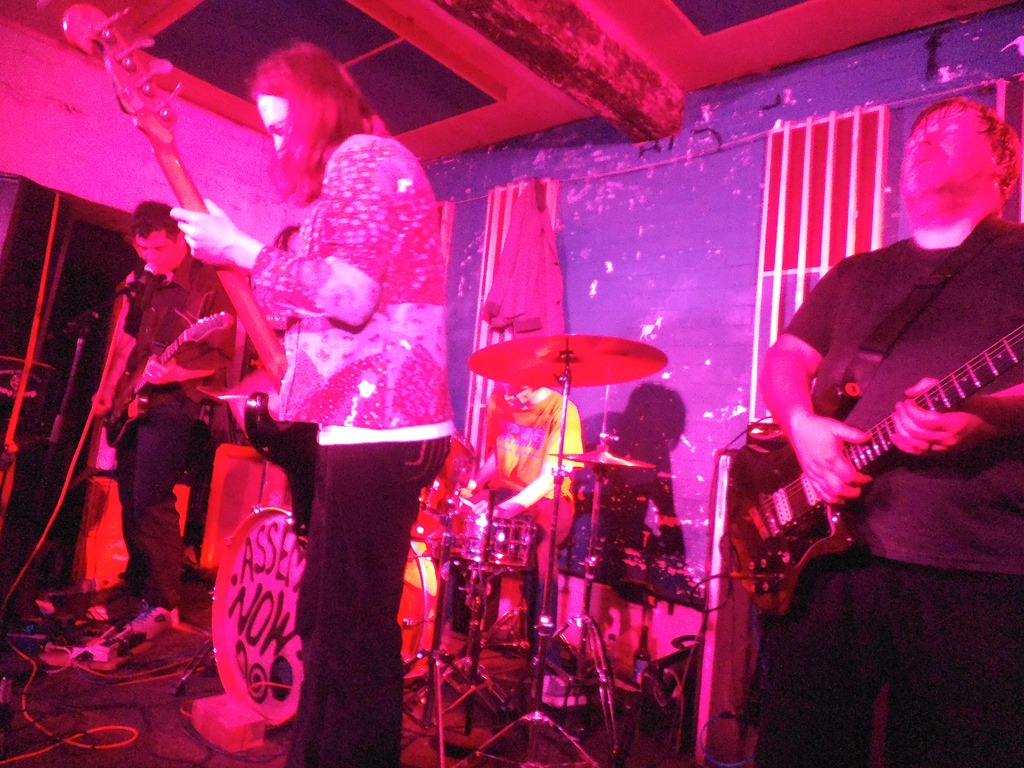
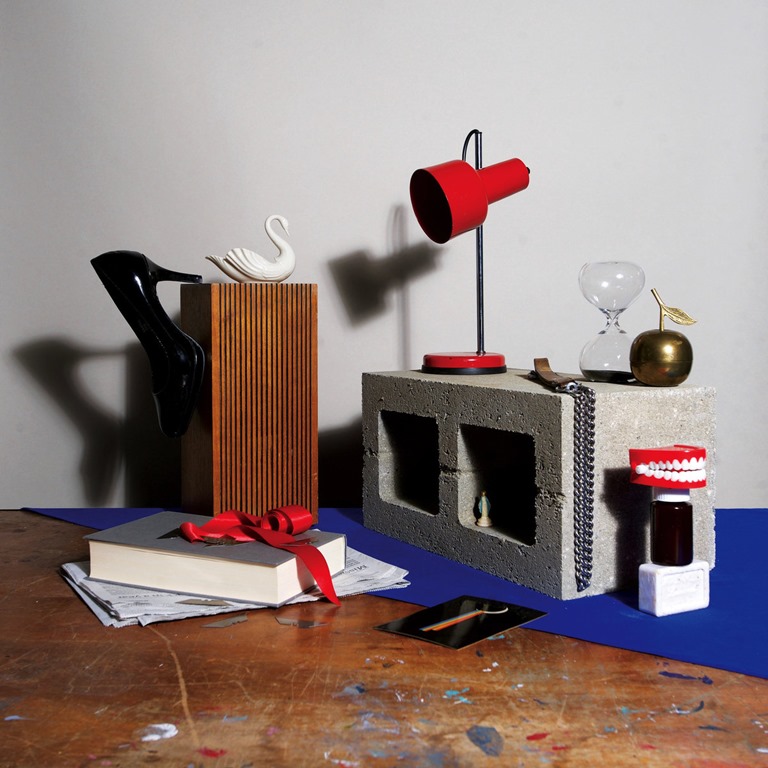
With Billy Blacklister’s recent relocation to Germany, there were likely to be questions over the future of Leeds’ masters of abrasive angular noise. The arrival a new three-tracker as part of Too Pure’s singles club series answers them: their first new material to be released since their second album, Adult, in October 2015, is absolutely fucking blistering.
It may be hard to believe, but they’ve actually gone one louder, one heavier, one more ferocious than the previous release here. A tangle over overdriven guitar wails over drumming that’s up front and pure Shellac leads the assault on Dart. The bass is brutal and Billy’s vocals are sharp and full-lunged. They’ve not gone for hooks, instead going all out for battering ram brutality, all with their trademark hint of mania.
‘Disco’ and ‘Drag’ both clock in at under three minutes (the latter only just breaking two). On the former, sinewy guitars skew angles across a nagging bass groove. Funky it isn’t. On the latter, chords stab like daggers as the whole thing lurches at pace to an abrupt halt.
Lyrically, the songs are largely impenetrable, but this isn’t music to muse to: Dart is a violent, visceral experience – and one of the best things I’ve heard all year.
It’s Saturday night on the August bank holiday weekend. The students are on holiday, and it’s Leeds Festival weekend. On the face of it, it seems like madness to put a gig on in a tiny underground venue in the city centre, but in fact, it makes a lot of sense. Not only are the big festivals insanely expensive, but because commercial concerns are inevitably a priority these days, they represent an ever-narrowing musical choice. Festivals have become tediously safe, with corporate sponsorship and the same obvious, established acts playing the headline slots at every festival year on year. But it’s at gigs like this that future festival features cut their teeth. I’d take four little bands, up close and personal, at a free entry show, over the entirety of Reading and Leeds any day.
The first band up, who I assume are The Blewes (since they’re mentioned on the poster if not the event page, and they don’t say) deliver a competent set of alternative rock tunes, foraying into light funk rock mode around halfway through the set. The singer / guitarist’s wearing cherry-red 12-hole DM’s, but his butch credentials are covered by the fact he’s got his shirt, off and relentless calls of ‘show us your tiger’ from the back to the room (presumably the band’s mates) sees the bassist get his moobs out too. Unremarkable but entertaining enough, they’re more than adequate bill-proppers.
The Claxbys proved rather less entertaining. The bassist may have a Big Muff in his rack, but it doesn’t do anything to elevate the three-piece’s pedestrian pub rock. It’s only on the last song when the Scunthorpe trio kick out some beefy blues rock that things get interesting, but it’s rather too little, too late.
The Claxbys
It turns out that the cocky kid who engaged me in conversation earlier, with seemingly good intentions, is the nineteen-year-old singer with The Bohos. It’s a crap name, but the Liverpool quartet blend psychedelic and 60s rock elements into neat packages delivered with energy. They look the part, too, and emanate a confidence befitting of a band who’ve got some big gigs including a support slot with White Lies under their belt. A critical stance would be that there’s little to differentiate them from a great many other bands, but there’s no question that they’re solid. The final song of the set, ‘I’m a Hero’ comes on like Oasis wrestling with The Cooper Temple Clause, and is the work of a band with enough assurance – or ego – to go places.
The Bohos
Weekend Recovery are a band with definite star quality, and in singer Lauren Forster, they have a compelling focal point. She does a good line I that ‘grrrrghhh’ throat thing. She plays guitar. She has a natiral charisma. And while she may have devoted more time to practising her eye movements than her fretwork, as a unit, they’re musically tight throughout. The fact the band are playing with a stand-in bassist in the form of Joe Scotcher makes this even more impressive.
Weekend Recovery
Yes, they’re a rock band with a keen pop sensibility, and since I first caught them in February, on the release of ‘Don’t Try and Stop Me’, they’ve honed their sound and grown in confidence through touring. Debus single ‘Focus’ is dropped early in a well-paced set, and latest single, ‘New Tattoo’, lifted from their ‘Rumours’ EP and their darkest, broodingest moment to date – showcases a capacity to combine emotional intensity with anthemic tunage. And despite the lateness of the hour (they don’t start till 11pm), they manage to hold the attention and even get some people moving down the front. They wrap up the night with a stomping rendition of ‘Don’t Try and Stop Me’, and exit triumphant. So yeah, take that, Eminem.
For those who aren’t fans of extreme music, it’s often hard to see the appeal. ‘How can you listen to that, let alone enjoy it?’ is a common line of questioning. Often, the response can be boiled down to a single word: catharsis.
The one thing that always strikes me about events like these is just how friendly the atmosphere is. The fans are friendly and many, like me, seem shy and reserved – until they completely go mental in the moshpit. And it’s in this context that extreme music makes perfect sense. I may be nursing bruised ribs today after my quest for photos landed me in the line of danger but never once did I feel in any way threatened: it’s all freaks, outcasts and oddballs together in a safe environment.
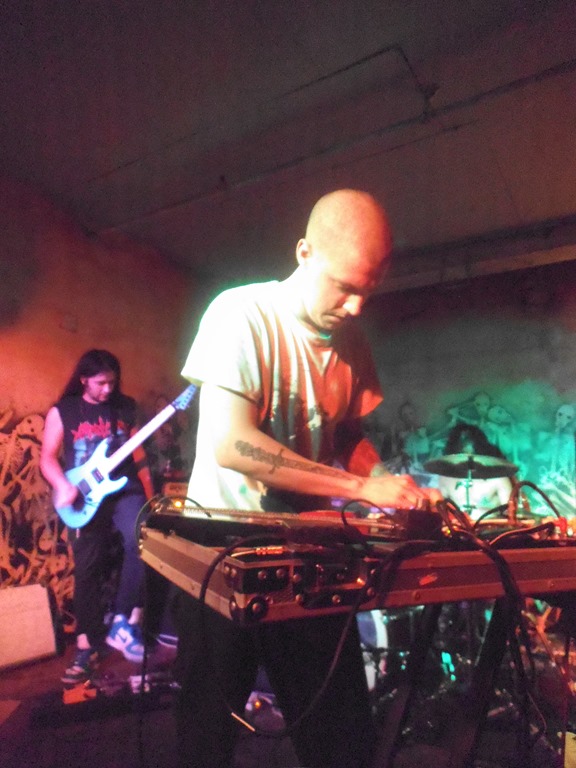
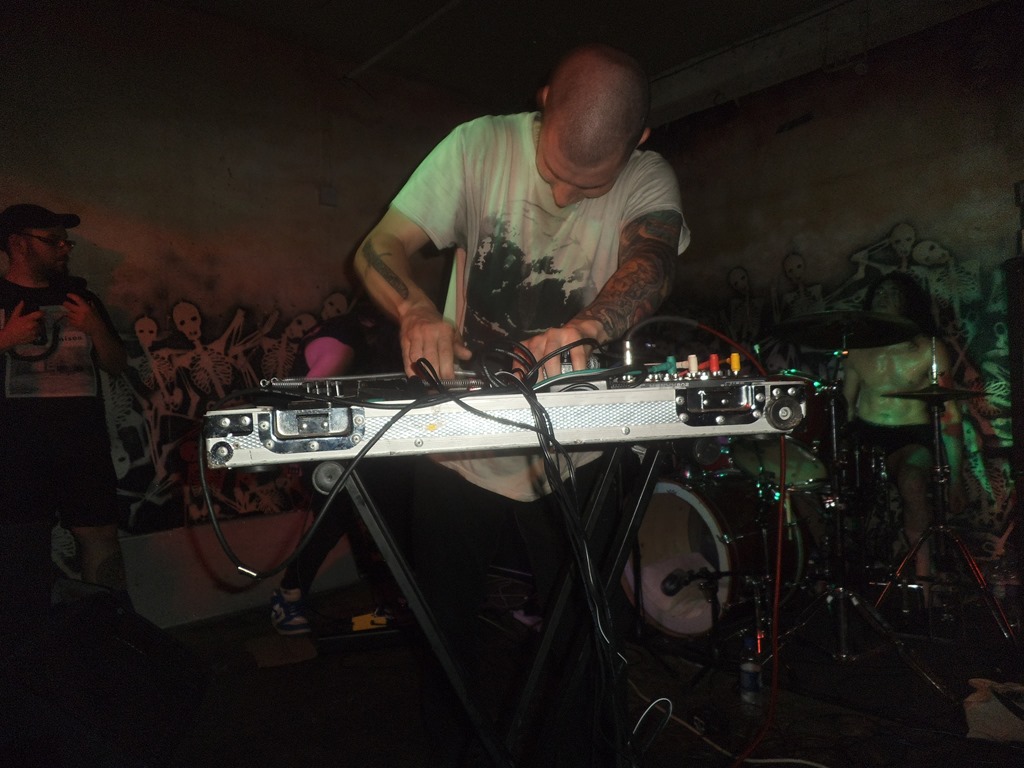
What had initially been booked as a standard date on the UK leg of Full of Hell’s tour metamorphasised into an eleven-band extravaganza when circumstances dictated a change of promoter. And there wasn’t a weak act on the bill, and the first couple, Cheap Surgery and Hoof Glove both stood at the punkier end of the musical spectrum than the screaming metal end. It’s not so much that it was welcome to be eased in gently as a positive thing to be treated to some musical range: it’s not as if either was light or poppy, with Cheap Surgery evoking the spirit of bands like Penetration. Hoof Glove, meanwhile, are a band of two halves with a metal rhythm section onstage and an electronic noise duo at a table in front of it. Processed-to-fuck female vocals add a different shade of intensity to a grainy noise reminiscent in places of the abrasive angst of Xmal Deutchschland.
Cheap Surgery Hoof Glove
A close-cropped screamer in a Crass T-shirt leads the full-throttle attack of Hex, and it was midway through their confrontational, fiery set that the slam-dancing commenced, hinting at the shape of things to come.
Led by the Throat may look like four ordinary guys, but they’re the first band to bring the full-on snarling metal assault to proceedings, and they bring it from the first bar of their tight, powerful set. As he paces the stage, the singer emanates a malevolent energy that’s as powerful as his patterned shirt is tasteless.
I can’t remember when or where I last saw Groak, but I remember them being good, and this evening’s performance confirms my memory is correct. Singer / guitarist Ben Southern is wearing a Rudimentary Peni t-shirt and the band’s sludgy, dirgy churn is propelled – slowly – by Steve Myles’ crushing percussion (how many bands is this guy in?). This is music dredged from the pits of the lower regions of hell, and pretty much as intense as it gets. Or so you’d think. But it’s only 6:30 in the evening by the time they leave the stage, and we’re not even halfway through the lineup.
Groak
Masters of Powerviolence Lugubrious Children, who released a spit EP with Groak last year are up next, and they’re punishing too. The trio bring the power and the pace, and the result is carnage.
Lugubrious Children
It only gets better, and more intense, with Gets Worse. Very much a beards and long shorts band, they’re bristling additional strings, with a massively overdriven five-string bass bringing the low-end that grinds below a pair of seven-string guitars. And all of those stings are downtuned and sludged to the max. A single power chord sustains for a full minute before the juggernaut chug slams in. This is a full-on, balls-out racket that draws together the slow trudge of Godflesh and the tearing frenzy of Napalm Death to devastating effect.
Famine are one of those bands who just get better with every outing. Having seen them grow from a snotty two-piece into a thunderous, ferocious gut-ripping threesome who are tighter and more ferocious with every show. My notes from their set are sparse and only semi-legible, but in front of a home crowd, they’re assured and received the violently rapturous reception they deserved.
I’d been recommended Unyielding Love by a friend whose opinion I very much respect, and they didn’t disappoint, taking the snarling gnarliness to a whole other level. The seven-string guitar and five-string bass congeal into a thick glutinous sonic slime with optimum low-end. It’s driven by rapid-fire drumming that’s hard enough to crack any skull, and overlaid with brain-shredding electronic noise. Their relentlessly savage set can be perhaps defined as the sound of a goat’s skull being dragged underfoot about the stage echoing amidst a heavy organ drone, before processed reverby vocals erupt into a howling vortex of noise. And tat all actually happened, in real life.
Unyielding Love
I’ve no idea who I saw performing a ‘secret set’ in the Meatlocker (the venue’s second stage, still draped with original plastic curtains because it was absolutely fucking heaving and I’d had a few beers by this point but they were intense and loud and brutal. But Full of Hell… Fucking hell. I’d run into Dylan Walker shortly before the set and was struck by just what an affable guy he was. On stage, of course, it’s another story: blasting ear-bleeding electronics and brutal vocals with a violent energy amidst a raging tempest of the harshest grindcore around, live shows don’t come more intensely visceral than this. How much of the set was lifted from the latest long-player, Trumpeting Ecstasy, I couldn’t say: I was too busy avoiding flailing feet and flying bodies, and clearly, the pain in my left side tells me I failed somewhere during the mayhem. But this…. THIS is catharsis.
Full of Hell
I stopped to have my photo taken with some random strangers on my way out: they liked my hat. I may have drunk too much beer, but in the main, I was hitting the cool night air elated and exhilarated, and on a different plane from the one I had arrived on.
Leeds singles club Come Play With Me have announced their next split single, to be released on the 14th of July. Continuing their tradition of highlighting the exceptional and diverse talent in the Leeds City Region, this next single will feature Leeds bands Furr & RIIB. These two fast risings acts find themselves joining the CPWM roster alongside the likes of Cinerama (The Wedding Present), Harkin (Sleater Kinney, Sky Larkin), Team Picture, Her Name Is Calla, Fizzy Blood, Deadwall, OFFICERS, ZoZo, Laminate Pet Animal, Esper Scout, Ceiling Demons & Maggie8.
The next CPWM single features indie-math-pop-rock band RIIB, and riffy alt-rock indie foursome Furr.
Furr’s Sam Jackson explains their contribution to the Come Play With Me single – “Another Fable is the frankenstein of all these different musical influences that make up what Furr it is about. If someone said ‘what do Furr sound like?’ this would be the song to play them. Loud in your face guitars and popish vocal melodies. There might be a guitar solo! It’s the first time we’ve been critical of things going on around us and what’s been pissing us off recently. It’s about how obsessed with people we are about people we’ve never met and all this pop culture we have shoved in our face constantly….”
I’m a huge sucker for that strain of Joy Division / Cure inspired 21st century post-punk as exemplified by Interpol, White Lies and early Editors – at least when done well. And On the evidence of their previous releases, Leeds’ Tabloids do it well. Given that they formed in 2013 and have to date only an EP and single to their credit, their debut album has effectively been some four years in the making. In doing so, they’ve created a work that feels meticulously crafted, but by no means sterile or overworked.
It’s also a very ‘Leeds’ affair: produced by Lee Smith and Jamie Lockhart (The Cribs, Pulled Apart By Horses) and mastered by Tom Woodhead, formerly of ¡Forward, Russia!. Their input has certainly been sympathetic to the band’s objectives, and they’ve balanced crisp pop sensibilities with atmospheric, analoguey tones and a vintage 80s snare-led drum sound.
The inclusion of the previous single releases does nothing to diminish the sense of All The Things That You’ve Become standing as a coherent album, although there’s very much a ‘debut album’ feel to it on account of this.
‘Pedestal’ reduces a Smiths-inspired jangle to a minimalist jag of tension skewed across a thumping bassline with a nagging lead guitar line and a falsetto vocal providing the key hooks to a killer alt-pop tune.
‘Circle’ is a magnificent, emotionally-charged slow-burner, and one of the album’s standout tracks. Taking the tempo and the drive back, it’s one of those songs that bursts into a climactic finale at precisely the right point.
Ordinarily, basing an album’s merit, or even its context, within a framework of reference points either smacks of lazy journalism or is otherwise indicative of a band who are painfully derivative. But when you’re looking at something which is knowingly and purposefully steeped in heritage, the touchstones are essentially serve to define the work. When operating in a critical capacity, it’s not necessarily as reductive as noting ‘X sounds like Y’ so much as questioning how the material holds up against the all-important points of influence. It is, of course, emblematic of the nostalgia which dominates our present space. We want bands which remind us, if only in some vague, notional sense of the past.
If heavy hints of Depeche Mode echo through the dark, sparse and soulful ‘Cannibals’, The Cure make an obvious reference point for ‘Vessels’, not least of all in Lloyd Bradley’s pining vocal, but also its funk-tinged but also dark-hued bass groove, but then, I’m also reminded of The Associates and, more contemporarily, The Cinematics. Closer ‘Toothache’ is short, but powerful, and makes for a satisfying finish to a rounded, solid album.
Leeds quartet Furr have shared their new single ‘Another Fable’ the first track to be taken from the next instalment of Leeds’ Come Play With Me 7” Singles Club.
Previously supported by the likes of Classic Rock Magazine and Upset Magazine, Furr play QOTSA inspired pummelling riffs complete with big choruses. The band also just played a massively well received show at Live at Leeds Festival last Saturday to a packed Dork / Key Club Stage in their home city.
Mi Mye have announced details of the final single to be released from their 2016 album The Sympathy Sigh. The Wakefield quintet will release the soothing and melancholy ‘Methadone Church’ alongside a re-imagined ‘He Believes In Me’ featuring the vocals of James Smith of Post War Glamour Girls.
Inspired by Hemmingway’s ‘The Old Man and the Sea’, the album earned the band praise from the likes of The 405 and The Line Of Best Fit. (Aural Aggravation can’t take any credit here: we’re miserly bastards at times when it comes to praise and even selecting what we cover.)
‘Methadone Church’ is a thoughtful and beautiful song that deals with Jamie observing life around him at his place of work in Armley in Leeds. He explains “Chad and I were leaving the studio where I work and when we got to the bus stop we saw a mother with twin girls walk past us. The girls were identically dressed and the mother had blood on her top lip. That’s all the song is, just that, I wrote it as soon as I got on the bus. It’s a track that doesn’t judge or comment, it’s just what was there.”
The other side of this new single features a new version of album track ‘He Believes In Me’ sung by James Smith of label mates and long standing friends & collaborators Post War Glamour Girls. Jamie recently co-produced the band’s Swan Songs album.
When asked on what made him so keen to collaborate with Mi Mye, James said “I adore the man and it was an honour to be asked to sing on He Believes in Me. To voice Jamie’s inner monologue of confusion and fear toward a religious maniac ranting and grabbing people on the streets of Wakefield was a more spiritually uplifting experience than that preacher man will ever have.”
So get your lugs round ‘He Believes In Me’ and enjoy….
As if the promise of hearing Post War Glamour Girls’ third album in its entirety on the day of its release in the best venue anywhere ever wasn’t quite enough of a draw, then the addition of Blacklisters to the bill had clincher written all over it.
Billy’s chugging red wine from a plastic cup and Dan’s guitar’s feeding back continuously as they piledrive into ‘Swords’ to start the set. Billy’s down in front of the stage, limbs gangling as he sways and lurches around unpredictably. The feedback between songs proves to be an issue throughout the set and becomes a running gag, but it doesn’t blight the music itself, and a thunderous ‘Shirts’ is dispatched early on. Most of the set is culled from second album, Adult, which makes for a succession of brutal riffs, and with the band playing in near darkness, it doesn’t make for an easy gig from an audience perspective. But then, since when were Blacklisters about making things easy? That said, they do round the set off with a couple of crowd-pleasers from the back catalogue, in the shape of ‘Clubfoot by Kasabian’ and, of course, the obligatory ‘Trick Fuck’.
Blacklisters
Having spent the last two months listening to Post War Glamour Girls’ Swan Songs on almost a loop, I knew exactly what to expect from Leeds’ finest tonight, and it looks as though there are a few others in the room who’ve had the privilege of an advance listen. For the remainder, though, only a handful of tracks have been streamed on-line (that, and a spin of ‘Big Trip’ on Radio 1 a couple of weeks back).
James Smith leads the band on and sets the tone in typically brazen style, promising a set with ‘none of that old shite – fuck that.’ “Progressive – move forward,” he says, setting a pitch which pretty much encapsulates the band’s ethos as it’s been from day one. You can bet that by the end of the tour, half of tonight’s set will have been ditched as being ‘old shite’ in favour of material in development for album number four.
There aren’t many albums, even among the ones I would consider my favourites and would happily listen to day in, day out, that I’d actually want to hear played in sequence live. A live set is simply a very different animal, and while it’s generally done to reserve the best material for the end of a show, the album format more often places the stronger tracks to the fore – or in the case of great albums where the songs are all consistently strong, then there’s a greater attention to the balance of the material. So, what tonight’s set highlights is just what a diverse and well-sequenced as well as consistent album Swan Songs is.
Yes, it opens with a hooky indie rock tune in the shape of ‘Guiding Light’ before piling in with one of my personal favourites, ‘Chipper’. Eighty percent of bands would plummet into a descent for the remainder of the set having shot their load at the start, but with the softer, subtle nagging groove of ‘Gull Rips a Worm to Rags,’ Post War Glamour Girls change tone and tempo but without tailing off. The band are sounding good and very much together, and the sound quality out front is excellent – which is a good thing as there’s an awful lot of detail and texture on Swan Songs of the kind often lost in a performance setting.
Smith dominates the stage, prowling and hollering, occasionally stepping to the edge of the stage and looming into the crowd as he moves into messianic rant mode: this is Post War Glamour Girls at their best, at home in front of a receptive audience and jamming out some hard volume.
Post War Glamour Girls
Another reason Swan Songs works as a live set is because it actually does pick up the page and the edge toward the end, and after the bruising pop dynamics of ‘Pollyanna Cowgirl’, the delicately chiming ‘Golden Time’, and the lugubrious reflections of ‘Sea of Rains’, ‘Welfare by Prozac’ cranks up the angular angst with its sinewy guitars, thumping drums and thick, rolling bass.
They leave the stage briefly (to get more beer, it’s not a fucking encore, we’re told) and return with ‘Sestra,’ which affords Smith the opportunity to give full throat to his hollering style, and returning to the epic closers they excel at, end the set with an immense rendition of ‘Cannonball Villages’, where, incredibly, they step it up a gear for the closing minutes. Finally, they depart in a screed of feedback and a drifting carpet of feathered carnage. Swan Songs has officially landed.
Anyone who follows me on Twitter or is a friend on Facebook is likely to have seen that I tend to draw attention to the fact that I won’t be chained to my desk at home writing music reviews because I’m taking a ‘night off’ involving beer and live music – in other words, I’m out and about watching live music, which I’m invariably reviewing. As such, these nights off aren’t really nights off in the strictest sense. Those who know me in person know that I never really take a night off, regardless, and that includes the nights when I go and watch live music as a paying punter, or a mate has very kindly bought me a ticket to join them watching one of their favourite bands. These are indeed rare occasions, but should constitute a true night off. But that simply isn’t how I work. Truth is, I no longer know how to have a night off. Stopping would likely kill me. Besides, I feel owe practically everything to underground music in some way or another.
So, while I’ve dug what I’ve heard of Part Chimp, my attendance is not in capacity of reviewer or rabid fan – although by the end of the night, I’m both. I’m already a fan of Joe Coates and his Please Please You gig promotions, though – the shows he puts on are carefully curated and the PPY name can be relied upon as a guarantee of quality. Likewise, I’m a huge fan of Wharf Chambers as a venue, and not just on account of the fact they sell decent beer on draught from as little as £2.80 a pint.
And so it is that Thick Syrup make for extremely worthy openers. Their Facebook page describes the band as ‘Garage rock/funk/post punk/hard rock… but none of those things specifically’, and it’s a fair summary. Boil it down, and they’re a solid alternative rock band, whose singer, Gemma, performs from somewhere in the audience, often right at the back of the little venue and facing the stage, on account of the fact she can’t hear what it sounds like from on stage. Out front, it does sound good, and while they’re not big on between-song banter they are big on sturdy, rocking tunes dominated by meaty, overdriven guitars. They’re good fun.
Thick Syrup
Grey Hairs, hailing from Nottingham, offer a different kind of fun – one marked by a front man possessed of an almost psychotic intensity. The rhythm section is immense, and the foursome kick out a supremely hefty racket. The riffs are big, ballsy, grunged-out slabs of noise: they’re a good fit by way of a main support for Part Chimp, and the fact that they’re also touring with Hey Colossus in May should perhaps give a fair indication both of their sound and their quality. With a new LP, Serious Business released at the start of the year, the set draws substantially on this shouty, sinewy collection, evoking the spirit and sound of vintage Touch and Go and Amphetamine Reptile releases, as well as contemporaries like Backlisters at al who draw inspiration from gnarly 90s US rock. The heavy chug of ‘Sausage’ is full-on, but then, ‘Backwards’ shows they’ve also got a knack for a cracking chorus too. They’re a motley bunch, and it’s no critiism when I observe that front man James is no pin-up. But the image they present corresponds with the angst they channel over the 9-5 grind and the twitching anxiety of immersion in mere existence amidst a morass of bland culture and the conflict of possessing a creative bent. Oh, and they’re bloody loud.
Grey Hairs
Part Chimp, however, are much, much louder. I mean, they radiate noise from every orifice and every pore. And when the guitars serrate your skull and the bass vibrates your solar plexus and every riff is as heavy as a small planet and the drums as hard as basalt, reviewing becomes a far bigger challenge than you might think. Instead of analysing precisely why Part Chimp are so bloody awesome, what about the performance completely blew me away, why I felt euphorically drunk on a lot less beer than I know I can handle, I spend an age pissing about on the Internet trying to establish precisely how hard basalt is, and how it compares to the more common ‘hardness’ reference point of granite. I discover that basalt is more porous and is considered a medium hardness rock, whereas granite is classified as a hard rock; and so my word selection seems appropriate: Part Chimp are heavy, the riffs as weighty as hell, but they’re not hard rock band. There’s a malleable, sludgy aspect to the sound. I’m still no closer to qualifying or objectively quantifying the experience of watching four guys, a few years older than myself and by no means cool in the rock star sense, or in any way ‘the kids’ might consider cool, working up a sweat as they hammer out this immense, furious racket.
Part Chimp
They play a fair few songs from the new album, (and the first to be released following their reunion last year, following a five-year break), Iv released today. And that’s Iv, not the numeral for four. The riffs on the new songs are slow, heavy, fully doomy and laced with a psychedelic stoner infusion. There’s no pretence or posturing: there’s a keen sense that these are regular guys, who have regular lives, and when they’re not doing regular stuff, they’re making music. Music that’s noisy, dense and jarring, yet in a perverse way has the capacity to be immensely uplifting. They’re relentless, and play hard, and, as is only fitting, there’ a lot of hair being thrown about down the front. It’s music to go apeshit to. Part Chimp: All Brilliant.
This being a Post War Glamour Girls album, there’s a lot to chew on, and I’ve played Swan Songs on the bus to and from work most days for the last month and a half in an attempt to really let the songs embed and to unravel. It’s not because Post War Glamour Girls make albums which are difficult or lack immediacy, but because there’s just so much to extract, and each listening reveals more. I’m still discovering new details and dimensions in their 2014 debut, Pink Fur, and suddenly, here we are at album number three.
And with album number three, they’ve made it a clean sweep of awesomeness: not a case of third time lucky, but a straight hat-trick. Few bands can claim such a record, although Post War Glamour Girls are unlikely to gloat, or even reflect on this achievement: chances are by the time the album tour is under way, they’ll have filled the set with new material which may or may not feature on album number four.
Swan Songs is by far their most commercial and accessible album to date, but it would be a chronic error align that in any way to them selling out, and in many ways, it’s equally their knottiest, thorniest release thus far. Yes, they’re contradictory and contrary, and that’s precisely their appeal. And while they always sound uniquely like Post War Glamour Girls – there really isn’t a band going – or, indeed, previous – who sound quite like them, they’re spectacularly varied in their style, and you never know what to expect from album to album. This is music born from restless energy and a drive to create something new, to challenge the band and their fans in equal measure. The one thing that is seemingly guaranteed is the quality of the material.
Swan Songs is most certainly their most eclectic-sounding album yet. The overall tone of the album is altogether less down than its predecessor, Feeling Strange. The downcast, brow-beaten self-loathing is replaced by a roaring defiance, at least in part. And, of course, it has all the band’s trademark qualities, honed to a new level of sharpness.
The album’s opener, ‘Guiding Light’ comes on like a cross between Big Country and The Wedding Present circa ’92 with its spiralling celtic guitar motif and stadium-fulling chorus – before making a 90-degree swerve only Post War Glamour Girls could pull off, with James Smith veering off into one of his densely-packed rants. You only catch snippets of the lyrics, but in the space of a minute he’s here, there and everywhere, pulling in what appears to be a reference to Gang of Four and macroeconomics with a line about ‘guns before butter’.
‘Chipper’ is more common PWGG terrain, and finds Smith in brawlingly nihilistic form, howling, bleating and hollering over a murky backing of guitars that jangle and warp and bend as the driving rhythm section powers on relentlessly. At the middle eight, it heads off on another trajectory, Smith coming on like a brutalised hybrid of Mark E Smith and JG Thirlwell on top of Alice Scott’s icily calm backing vocals. If ever a band knew how to work contrasts, it’s Post War Glamour Girls.
Conjuring a brilliantly visual image while working a dubby post-punk seam, the more understated ‘Gull Rips a Worm’ marks something of a departure, with Smith revealing a more soulful side in his melodic vocal delivery. Meanwhile, ‘Big Trip’, which recently found its way onto Radio 1 thanks to a shout-out from fellow Leeds legends Pulled Apart by Horses, is a brilliantly gruff and darkly grounded paean to escapism. It might not quite rank with the time the uncensored version of Rage Against the Machine’s ‘Killing in the Name’ was spun at teatime on a Sunday during the Top 40, but it’s pretty subversive. It’s also indicative of the band’s mass-market potential, given the right exposure.
Awkward buggers that they are, the two sets I saw them perform following the release of Feeling Strange, showcased unreleased material in favour of either the latest album or their rapidly-expanding back-catalogue. These shows hinted squarely at a more direct pop sound, and while Swan Songs is a long way off this, being neither direct or upbeat and poppy, the second half of the album is the closest they’ve come to creating unadulterated pop in the studio.
‘Polyanna Cowgirl’, which featured on last year’s live album, is a big, reverby song that draws together elements of classic dreampop with vintage mid-80s postpunk and even more overtly charty music of the same era. Ah, such different times… And so, they manage to imbue the song with a certain nagging nostalgia, as well as a pining wistfulness. The hefty welter of drums and driving bass render it uniquely Post War Glamour Girls, but the multifaceted harmonies and chiming guitars, expansively produced, bring that cinematic slant to the finished product. The shimmering ‘Golden Time’ wafts and warps gently before ‘Sea of Rains’ drifts into I Like Trains territory, but Smith’s bleak lyrics render it a very different animal: ‘The lust you tried to drag from the soles of his shoes / is the worst excuse for loneliness I’ve ever had to use,’ he reflects, grimly.
The jarring, splintering, ‘Welfare by Prozac’ sees the band ploughing headlong into the Fall-like realms they stomp with aplomb, Smith duelling with Scott like vintage Mark E and Brix, a snarling, spitting inscrutability counterpointed by a melodic yet icy tone, while squalling guitars break over a thick, strolling bassline.
Now, I’m a huge sucker for a monster closing track. On past form, it seems Post War Glamour Girls are masters of the monster closing track (even if Feeling Strange perversely delivered said monster track as the penultimate song in the form of ‘Cannonball Villages) and Swan Songs proves no exception, with the seven-minute ‘Divine Decline’ building from nothing to a raging behemoth of a song. ‘Love and hate stem from the same cell,’ Smith croons, before the whole thing erupts. ‘All I ever wanted /as to be a better to better person / and I’m working on it constantly / working like a dawwwwwg!’ he growls. It’s a storming finale, and no mistake, as the band whip up a dense maelstrom of sound.
As is so often the case, Smith channels a vitriolic rage which one feels is largely directed toward himself. It’s a recurrent aspect of the album’s lyrical content: ‘My manners aren’t amazing / My poetry is pisspoor / My attitude’s an anathema,’ he snarls self-critically on ‘Chipper’. At the risk of too closely, or even mistakenly, aligning the art with the artist lyrics with lyricist and assuming the role or armchair analyst, one can’t help but wonder on the evidence his lyrics, coupled by his driving of the band’s relentless forward trajectory, if he isn’t fighting himself every moment of every day, and if Post War Glamour Girls aren’t some means of his justifying his existence to himself. If this is some kind of therapy, then – from a purely selfish perspective – our best hope is that it takes a good few more albums to purge himself yet, and that the title is more a reference to the conceptual contents of the album rather than an indication of the band’s final sign off. Because, not only is Swan Songs a killer album, but a cohesive and rich set which is the work of a band really hitting their stride and riding on the crest of a wave.*
*The success of this closing punchline is limited, not least of all on account of the fact that swans’ natural habitat is inland and on / by rivers, lakes, and ponds, and therefore unlikely to be tidal or otherwise, meaning that swans are rarely found in an environment where waves are common. But every review needs a punchline, right?