Posts Tagged ‘Layers’

Christopher Nosnibor

13th September 2025

It is impossible to escape AI now, and its ubiquity has arrived at a shocking pace, its acceleration seemingly exponential. You can avoid social media, but can you avoid computers or mobile phones for even more than a few hours? The news – beyond the main headlines, at least – is abrim with reports on how it’s affecting us as individuals, as a species, and the environmental impact. I watch a training video at work: it’s presented by AI actors who move their arms in strange ways and occasionally mispronounce a word in the worst way. Meanwhile, management want us to save time on report-writing by using Copilot. Drained by all of this, I go to the pub for soe decompression time, and the talk is of how jobs are being undermined by AI, and some guy’s got a video AI made using just a photograph. Why? Why do we need this? We don’t, of course, but it’s novel, mindless entertainment that can be created in seconds. Increasingly, it feels like we’re volunteering ourselves for virtual lobotomies. Despite the fact that the current technoscape is every sci-fi dystopia playing out exactly as told in real-time, it seems the majority of people are more than happy to embrace AI. Even writers, artists, and the like, present themselves as ‘curious’ and will engage with AI for prompts or to brush up something they’ve done. But the fact it that it’s a slippery slope, which gets steeper and steeper and further down is an abyss that plunges straight to hell. The worst of it is that it’d becoming increasingly difficult to separate real life.

One of the issues I have personally is that just as every significant technological advancement since the Industrial Revolution brought the promise of more leisure time by making work lighter, the opposite is true – unless you consider unemployment and life on the breadline to be leisure. AI isn’t saving time by vacuum cleaning the house, hanging up the laundry, putting the bins out or doing the school run: it’s simply devaluing creative skills. Anyone who has read an AI-generated article, heard an AI-assisted song, or seen some AI-created art will know that there’s something ‘off’ about it, that it’s soulless and vaguely alien. Meanwhile, the world seems to be spiralling into a cesspit of animosity, hatred, and division. Something happened during the pandemic which meant that when we all emerged from lockdown, war and rage and unspeakable cuntiness exploded on a scale beyond articulation. It’s no wonder people are struggling with life right now.

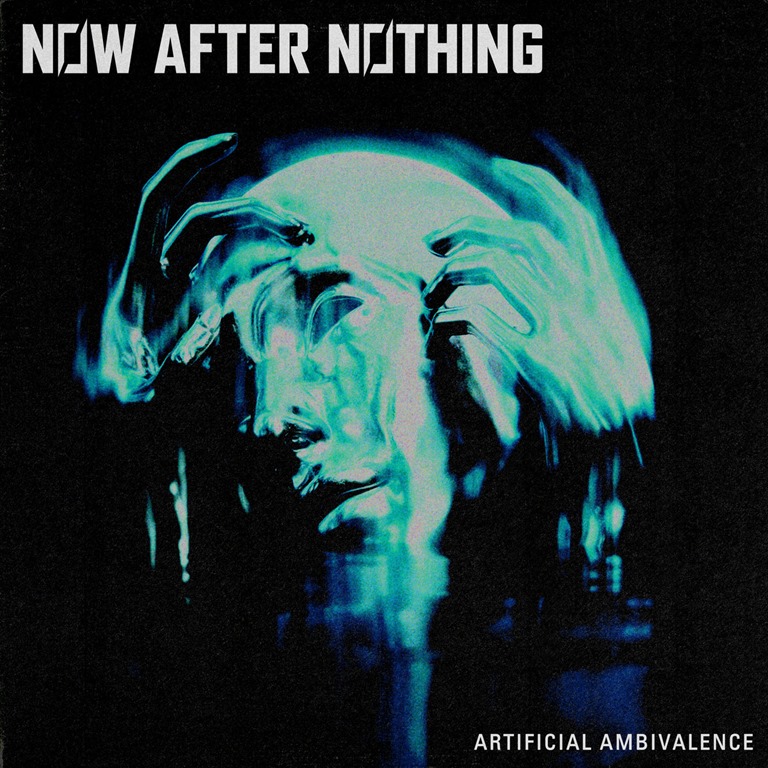
Now After Nothing is, in some respects, a therapeutic escape from all the shit. Multi-instrumentalist Matt Spatial paired with Michael Allen after what he describes as ‘a relatively difficult time in my life [where] I had become lost and depressed without a creative outlet with which to express myself’. There’s much to say that creativity – and exercise, both physical and mental – are the best self-maintenance. Listening to this EP, it’s clear that Spatial is really pouting everything into this.

His comments on the EP are worth quoting: “Artificial Ambivalence, as a concept, to me represents the state of feeling lost and/or the ‘shutting down’ from the negativity and toxicity around each of us,” Spatial explains. “They say ‘ignorance is bliss’, but in the (mis-)information age we seem to have reached a point of being pummeled into exhaustion from the constant barrage of negativity. For some, while the desire is stronger than ever to make positive change in the world, we might get derailed by feelings of helplessness, hopelessness, and being powerless in a society that seems to increasingly favor only one set of values. For others, it’s the choice to conveniently ignore the inhumane atrocities happening in our society when those atrocities don’t directly impact that individual.”

Of the music, there are references to ‘goth-glam grooves slick with sweat, raw enough to leave a mark’ and a nod to the fact that ‘fans have called it “S&M disco,” a sinister shimmer of punk, industrial grind, and nocturnal new wave.’

The first thing that strikes on the first listen of this EP is the energy. Everything is up-front and it lands like a proper punch in the face. Big, gutsy riffs underpin some sinewy lead guitar parts, driven by some explosive percussion and sturdy, throbbing bass. Straight out the traps, ‘Sick Fix’ blends post-punk and grunge to create a hard-hitting blast, and one that’s got hooks and melody in spades, too, with hints of Big Black in the background. It sets the bar high, but ‘Criminal Feature’ hurdles it effortlessly.

Slowing the pace and changing not only the tempo but the mood, the piano-led ‘Holly’ broods hard and is unashamedly mid-80d goth in its vibe, but also incorporates more post-millennial post-punk and goth in its genetics. The result is – to wheel out a cliché – anthemic. And it is, of course, the perfect mid-set slowie, which sets things up for the chugging, bass-driven beast that is ‘Fixation Fantasy’, a track that’s more 90s alt-rock than post punk or goth. More than anything, I’m reminded of psychedelic grunge also-rans Eight Storey Window in the ear for melody and the emotional heft delivered by some achesome riffs delivered at an intense volume.

‘Dare’ brings some dark pop intimations paired with some searing guitar work which lands like a post-rock Placebo crossed with Salvation – that is to say, it’s richly immersed in that mid-80s Leeds sound. It’s inspired stuff, and then some. Closing off, single release ‘Entangled’ offers glorious shoegaze gentility before breaking into a magnificent slice of synthy post-punk with some massive guitar. Artificial Ambivalence is better than ‘all killer’ (which it is) – it’s next-level solid quality and absolute gold.

AA

a3532593873_10

Mortality Tables – 17th October 2025

Christopher Nosnibor

Among their ever-expanding catalogue, Mortality Tables have put out a number of releases which are essentially singles or EPs, with this being one of them: with a running time of just over eleven and a half minutes, this single longform composition is only marginally longer than its title, but its creator, Michael Evill, has condensed a considerable amount of material and experience into this space.

As he writes, ‘I have created a movement which includes the last breaths of my beloved dog Watson. It also includes the last time I recorded with my most talented and wonderful best friend Gustaf in 2001, which I have slowed down so I (and you) can spend more time with him. There are the sounds of new stars being born – my own interpretation and ones ripped off from NASA through this modern internet connection we all have. Surely we own the stars still?

‘We have Aztecs having fun with drums. These were recorded live in Mexico, sadly not from the 14th century before we invaded. We have the hourglass from our kitchen, which Mat inspired me to sample. This was the first idea of this piece and everything else fell in to place very quickly as it’s been swimming in the back of my mind for a while.’

Clearly, some of these elements have deep emotional significance for Michael, but this isn’t conveyed – at least not overtly or explicitly – in the work itself. It’s a collage-type sonic stew, where all of the myriad elements bubble and roil together to form a dense soup, in which none of the flavours are distinct, but in combination, what he serves up is unique, and provided much to chew on. That this protracted food-orientated metaphor may not be entirely coherent is apposite, but should by no means be considered a criticism.

As Evill goes on to write, ‘this was the beginning, and I didn’t spend much time thinking about it and just coalesced those ideas.’ Sometimes, when seeking to articulate life experience, it doesn’t serve to overthink it. Life rarely happens that way: life is what happens when you’re busy thinking and planning. And just as our experiences aren’t strictly linear, neither are our thoughts and recollections. Indeed, our thoughts and memories trip over one another in an endless jumble of perpetual confusion, and the more life we live, the more time we spend accumulating experience – and absorbing books, films, TV, online media, overheard conversations and dreams, the more everything becomes intertwined, overlayed, building to a constant mental babble.

William Burrroughs utilised the cut-up technique specifically to bring writing closer to real life, contending that ‘life is a cut-up… every time you walk down the street, your stream of consciousness is cut by random factors… take a walk down a city street… you have seen half a person cut in two by a car, bits and pieces of street signs and advertisements, reflections from shop windows – a montage of fragments.’

This encapsulates the artist’s quest: to create something which conveys the thoughts in one’s head, to recreate in some tangible form the intangible nebulous inner life, if only to help to make sense of it for oneself.

‘Even Though It Was The Blink Of An Eye’ is a woozy, disorientating churn of noise, which is, at times, dizzying, unsettling, nausea-inducing. But then again, at other times, it’s gentle, even melodic, reflective, contemplative. There are some passages where it’s all of these things all at once. It very much does feel like a scan of the artist’s memory banks, the human brain equivalent of skipping through the RAM files and pulling items seemingly at random. It does feel somewhat strange, even awkward, being granted access in such a way, but at the same time, it feels like ‘Even Though It Was The Blink Of An Eye’ is more than an insight into the mind of one individual, but an exploration of the human psyche.

AA

a0518044244_10

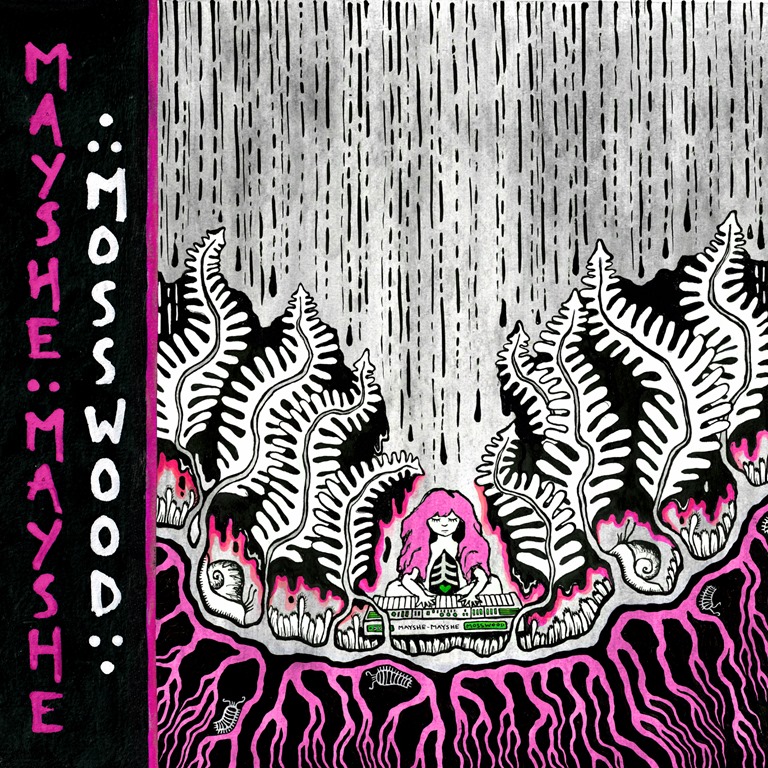
Ahead of the release of her forthcoming self-released, crowdfunded album, Mosswood – which we absolutely love – minimal electronic pop artist Mayshe-Mayshe has released a third single by way of a taster.

‘Little Yeah Whatever’ encapsulates the spirit of Mayshe-Mayshe perfectly – subtle, understated, shy-sounding, but with an unexpected strength at the core.

AA

a3517779526_10

16th October 2025

Christopher Nosnibor

Does the constant flood of bile on social media, the relentless flow of horrible, horrible news, and the general shitness of both people and society make you want to run away, hide, live in the woods? It seems that during the lull that was lockdown – a weird period which threw so many people into a spin of confusion that we really need to accept that there have been long-lasting repercussions from what amounted to a collective trauma – something changed, as if the world shifted on its axis. Some of us were more traumatised than others, it’s true, and that’s for wide-ranging reasons.

Alice Rowan – aka Mayshe-Mayshe – has documented her own post-lockdown issues with long Covid via her social media, and how it’s impacted her ability to maintain her work-rate. But here she is, finally bringing her third studio album, Mosswood to the world, and it’s the perfect antidote to all the stress and strain of modern life.

She describes it as ‘a dreamy art-pop exploration of mossy woodland and Tove Jansson’s final two Moomin novels… Her music blends dreamy art-pop and electronica with rich storytelling and infectious melodies, with organic elements woven into all aspects of her music.’ You may ask why – why would an adult be so invested in a fantasy world which has such strong connotations of childhood? A reasonable response would be ‘why not?’ In the face of the horrors which surround us everyday, retreating to the comforts of those peaceful, simpler times is the ultimate escapism. And what’s more, there is a strong connection with all things natural here, evoking the woods so many of us yearn to escape to.

Mosswood is introspective and personal, but also a passage to perfect escapism, and Mayshe-Mayshe balances breeziness and an air of naivete with anxiety and inner turmoil. And the result is so, so magnificent, magical, a balm to all of the noise. It’s the twitter of birds, the scratching of bugs, the tinkle of streams. Incorporating field recordings for the first time, on Mosswood Mayshe-Mayshe really brings nature in. Single release ‘Mycelium’ is exemplary: the percussion is more like the footsteps of overgrown insects – I’m reminded of Roald Dahl’s James and the Giant Peach in soe ways. But songs like ‘Tiny Disasters’ push to the fore the tensions and the darker aspects of the creative psyche, and reminds us that sometimes, life is simply difficult to process. ‘I’ll be afraid again…’ she repeats, twitchily, capturing perfectly exactly what it’s like to fret, chew and churn., against a glitchy, flickering beat and buzzing sound backing.

In the main, Mosswood is the sound of dappled shade, of gentility and deep breaths – and the big reverb which surrounds Alice’s voice is less like a cloak and more like a comfort blanket as the listener is led into a soft, gentle soundspace, which evokes snuffling and scuffling, and, more importantly, pure escape. On ‘The Little Things’, she sings in breathy, introspective tones of worries – but the immersive waves wash those worries away.

What Mosswood really tells us is that happy, skippy tunes do not instantly equate to effusions of joy, or endless happiness. That said, Mosswood is the sound of freedom, of connecting with nature, feeling the textures of grass, of bark, of moss. Utilising an array of instrumentation, Mosswood is understated and so, so uplifting. There are so many layers, there is so much detail to absorb. But ultimately, Mosswood reminds us that nature is there, all around, and it’s beautiful and our lives are richer if we engage with it. Look at the trees. Touch the bark. Breathe the air. This is life. Live it. Celebrate it.

AA

Mosswood cover art for digital v2Mayshe promo bug - credit Isobel Naylor

Dret Skivor – 3rd October 2023

Christopher Nosnibor

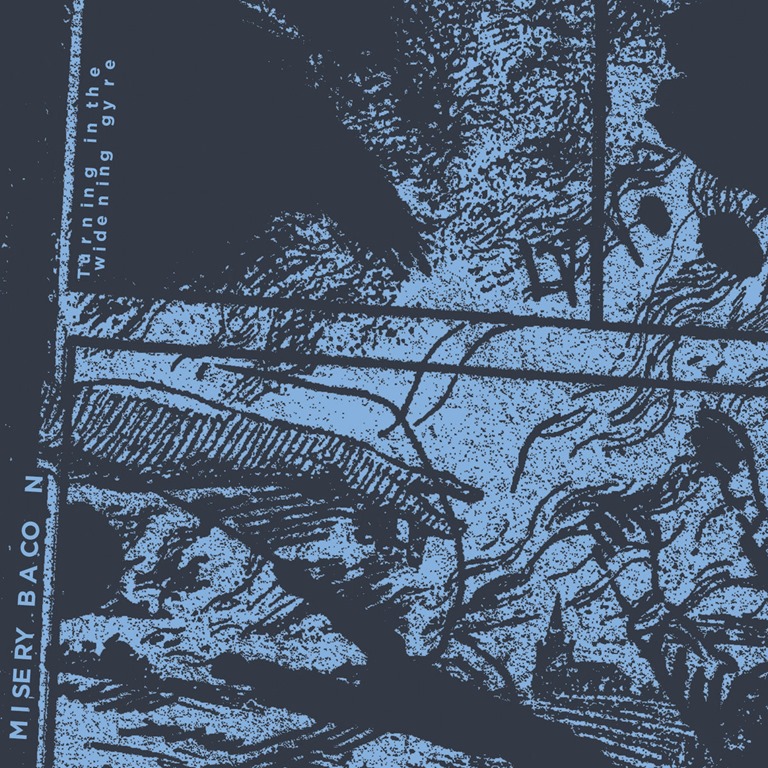
This is proving to be a particularly good week in the world of noise, what with Foldhead’s Paris Braille and this being released on the same day. There’s more information given about this release than most to slip out from Swedish underground label Dret Skivor – in that there is actually some. We learn that the work was ‘Recorded and assembled on residency at Bergen Centre for Electronic Arts, Leveld AIR and Gallery ASK, Norway 2025’, and that the ‘Album and song titles taken from / inspired by WB Yeats ‘The Second Coming’’. We also learn that Misery Bacon is the vehicle of Bergen’s Luke Drozd. It’s not clear if this is one of those monikers that’s amusing because translation, or if it’s a case of humour that doesn’t translate geographically, like Die Toten Hosen. I’m sure dead trousers are a massive wheeze in Germany, but here it’s vaguely surreal but mostly a bit odd. Then again, ‘Misery bacon’ makes me think of all the moaning gammons we have here in the UK, red-faced and chuntering into their Carling about ‘immagrunts’ and how everything’s ‘bloody woke’ nowadays.

It contains two longform pieces, each filling a side of the cassette release – of which there are just six copies – ‘Every finger double crossed as things fall apart’, and ‘Shambling onwards in the shadows of indignant birds’, and neither literary allusions or social commentary are apparent in the work itself.

‘Every finger double crossed as things fall apart’ starts with some sampled dialogue and an array of pops, clicks, whirrs and glops, a swampy collage of seemingly random elements layered across one another. It’s atmospheric, but also difficult to get a handle on any idea of where it’s headed, if there’s any theme or concept that connects the diverse sources. But soon, serrated drones and distortion build to a sustained whorl of noise atop a quivering bass judder. Five minutes in, and it’s an all-out assault worthy of Merzbow or Kevin Drumm. It’s noise, and it’s harsh, but it’s an ever-shifting, seething mass of tinnitus-inducing tones and textures, at time fizzing and crackling in such a way as to give the impression that the sound is actually inside your own head, rather than reaching the brain from an external source. There’s a niggling crackle of static that sounds like there might be a problem withy your equipment. This is most pronounced and unsettling during a quieter spell of jangling metal which sounds like a light metallic object being rattled against a metal fence, or the clattering of cutlery. It’s a piece that slides and slithers hither and thither, and sits well against Throbbing Gristle’s most experimental, abstract works. Towards the end, it does feel like it could be the soundtrack to the collapse of everything. Listening to it while the US government is in shutdown, Israel seemingly continues to level Gaza despite a supposed ceasefire, hundreds of people are arrested in London and other cities for protesting against genocide, and Russia continues to expand its campaign of interference across Europe, it’s hard to feel much positivity.

On a personal level, the present feels overwhelming. The world is at war. The world is on fire, and at the same time that we have drought, we have flooding. But instead of coming together collectively to address this global crisis, as a species, we’d rather bomb the fuck out of one another. And with shootings, mass knife attacks and all manner of savagery taking place daily, it really does feel as if humanity has descended into a spiral of insanity and self-destruction. And there are really no words to articulate the panic and anguish of all of this. Music and literature may provide a certain comfort and distraction, but it’s in sound alone – more specifically, sense-shattering noise – that I find something which articulates the experience of living in these torturous times.

And so it is that ‘Shambling onwards in the shadows of indignant birds’ returns to the sampled dialogue which opens ‘Every finger double crossed as things fall apart’, before plunging into a mess of static cackles and hiss. It’s a Bladerunner world of rust and robotics gone wrong. It’s murky and it’s unsettling. A blast like the roar of a jet engine momentarily hampers the hearing, and we sit, dazed, in the comparative quiet of crackles and pops. There’s a mid-track lull, which feels uncomfortable as whistles of feedback and laser bleeps criss-cross before collapsing into a broken wall of noise on noise.

Turning in the widening gyre is harsh, heavy, bursting with uncomfortable frequencies. The final minutes are nothing short of punishing. And yet, at the same time, that punishment offers vital release. This is where you get to let go. At last.

AA

a2298054435_10

Torto Editions / Ramble Records / Atena Records – 25th July 2025

Christopher Nosnibor

DuChamp (certainly not to be confused with the seminal avant-gardist Marcel Duchamp) is a Berlin-based artist, and for this release, is the product of ‘a journey of development, research, and refinement of a deeply personal voice’, their chosen selection of instruments is listed as ‘baritone guitar, voice, organ, synths, bouzuki, electronics, incredible stubbornness.’

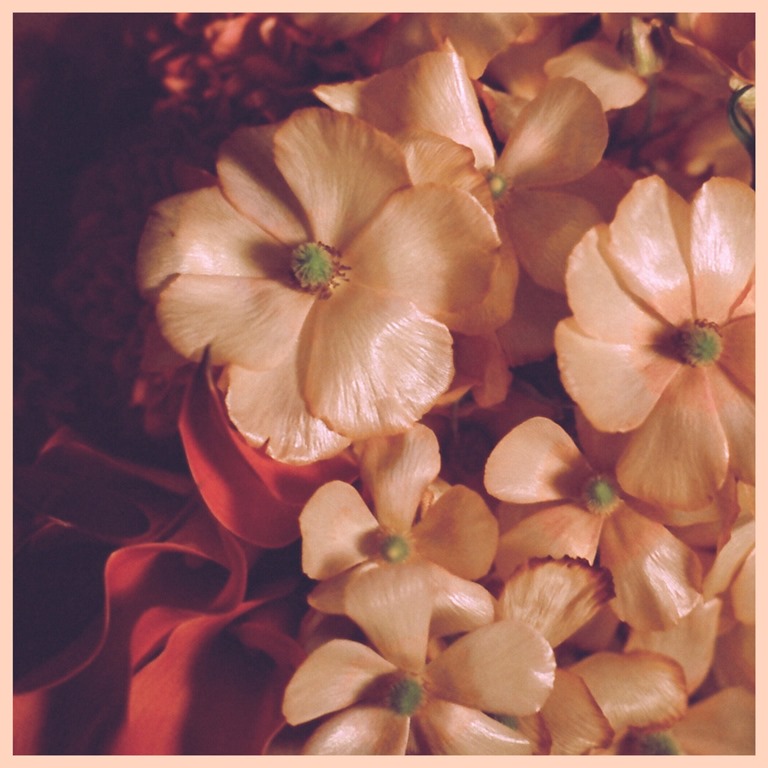
The baritone guitar is not a common instrument, but oner which sounds quite unlike any other guitar in terms of its tonality. Its application here is in providing the core to elongated sonorous drones on the five compositions on The Wild Joy. It’s a title I take to be somewhat ironic, for despite the resplendent flora which graces the album’s cover, the title of the first piece, ‘Sine proprio’ translates, depending on your choice of reference source, as ‘without property’, ‘without possession’, or ‘poverty’. Whether or not this is a reference to a physical or spiritual poverty isn’t apparent, but what this nine-and-a-half minute dronescape does possess is a wealth of texture as the layers build and vibrate against one another.

‘The Shape of Time’ is very much constructed around contrasts; a whining, scraping drone nags the conscious level of listening, while a low, rumbling bassy resonance lingers way below, and it’s something you feel as much as hear. In the space between, incidentals drift in and out. In the distance, gongs chime and fade slowly, and the disparity between their timing and that of the pulsating throb which has begun to build is disorientating, unsettling.

‘Epithalamion’ marks a dramatic shift – in every way, starting with the change of instrumentation, and by no means ending with the change of approach, with a wild, undisciplined key-bashing crescendo occupying the first couple of minutes, before giving way to a wheezing sound like an organ on the brink of expiry. With its origins in the classical age, an epithalamium is a poem written specifically for the bride on the way to her marital chamber. This, however, sounds more like a piano being pushed down six flights of stairs, before a ghastly gasp sputters along interminably for the remainder of the duration. I pity the bride this was penned for.

Things are different again on ‘Fulaxos’: there, the baritone guitar comes into its own and to the fore, played conventionally, a picked, rolling motif that’s brooding, even doomy provides the starting point for a piece which gradually unfurls toward a place of light and optimism. The final track, which is also the title track, brings us almost full-circle, but there’s a levity to this extended, delicate dronescape, and the soaring vocal only accentuates this sense of elevation.

The joy may be somewhat subdued overall, but it’s there, on what is, ultimately, an accomplished, multi-faceted work.

AA

a3734767457_10

Coju Recordings – 1st April 2024 (CD & digital)

Cruel Nature Records – 29th April 2024 (Cassette)

Christopher Nosnibor

Letters and things lost have an almost mythical status in the field of literature. So many volumes are dedicated to the reproduction of exchanges between authors of revered status, and are poured over, clawed over, by both fans and academics. Many writers of great novels were also great letter-writers, and the letters often serve to build not only biographical depth and detail but also shed light on the development of the novels, that mystical ‘creative process’. Much of history exists in letters – the rich primary source material from which we piece together the picture and assemble a coherent narrative. It may be a construct, but it’s a necessary one when it comes to understanding the world and how we collectively came to arrive at the present.

The fact no-one writes letters anymore is a great loss. The same thought and effort simply doesn’t go into emails, and they tend to be considerably shorter, too, especially in the last decade or so. In fact, the quality of communication has slumped through the floor in recent years. Emails volumes – at least, ones that aren’t transactional in some way, have plummeted in favour of WhatsApps and messenger missives via FaceBook, Twitter, etc. It’s hard to really articulate just what’s been lost over the last few years, besides simply the art of in-depth, detailed longform communications, but with anything more than five lines long likely to be dismissed as TL;DR, it’s significant. I digress… because there are rare avenues open to expand on these matters.

Benjamin Heal, one of those multi-faceted, polyartistic individuals who is hard to pin down due to the sheer range of his output, has, through the years, pursued an academic career with a focus on William S. Burroughs – a prodigious writer of letters – and performed experimental noisy indie under the guise of Cowman, sharing stages with the likes of Trumans Water and Gum Takes Tooth, as well as his more electro-centric vehicle Coaxial.

Now resident in Taiwan, his latest project seems to bring together these elements of a diverse life. The material on this, the debut release from The Lost Letters – which finds Heal working with Fulia, is a calm and calming collection of delicate songs. The duo offer a quite gentle and melodic set of tunes in which is mostly centres around mellow acoustic-led indie, and slow, sparsely-arranged, soporific shoegaze and it’s not merely projection on my part in detecting a wistful, vaguely nostalgic air permeating the songs. The songs effortlessly drift and weave, Fulya’s vocals adding a layer of sound rather than easily audible lyrics.

The seven-minute ‘Cecille’ has, by its trilling gentility, nothing to do with The Walking Dead: it’s a graceful exploratory work which is mellow, melodic, and carries heavy hints of The Cure circa Disintegration thanks in no small part to its fulsome, airy bass sound and crystalline guitars, and it’s fair to reference Cocteau Twins at this juncture, too.

Things take a turn for the darker and more discordant on the lugubrious, plodding ‘Cut’, which scrapes and scratches for another seven minutes. With its muttered, monotone vocals and insistent sparsity, it offers hints of Shellac and latter day Band of Susans, in contrast to the soft acoustic instrumental work of ‘Route Rute’. These songs are on the longer side by necessity: repetition has greater impact over duration, and if the literary allusions and lifts by means of the deployment of the cut-up technique devised by Burroughs and Gysin are largely lost in the mix, the overall effect of discomfort and disjointedness remains strong throughout the set. ‘Crystal Skies’ is murky, with a drifting ambience spun through with a softly picked guitar, before ‘Sails and Sou’wester’ brings the album full circle to its nautically-themed beginning. While inviting comparisons to Slowdive and Cranes, it cascades dreamily into a mesmerising sea of sound, so richly evocative that you ache as it drifts on toward the horizon, leaving you reaching for something intangible.

Critics often write of craft, but the most moving music often comes from intuition and feeling, and this is moving in the subtlest of ways. Quite simply, The Lost Letters is a beautiful album.

AA

a3976784992_10

Mille Plateaux – 1st December 2023

Christopher Nosnibor

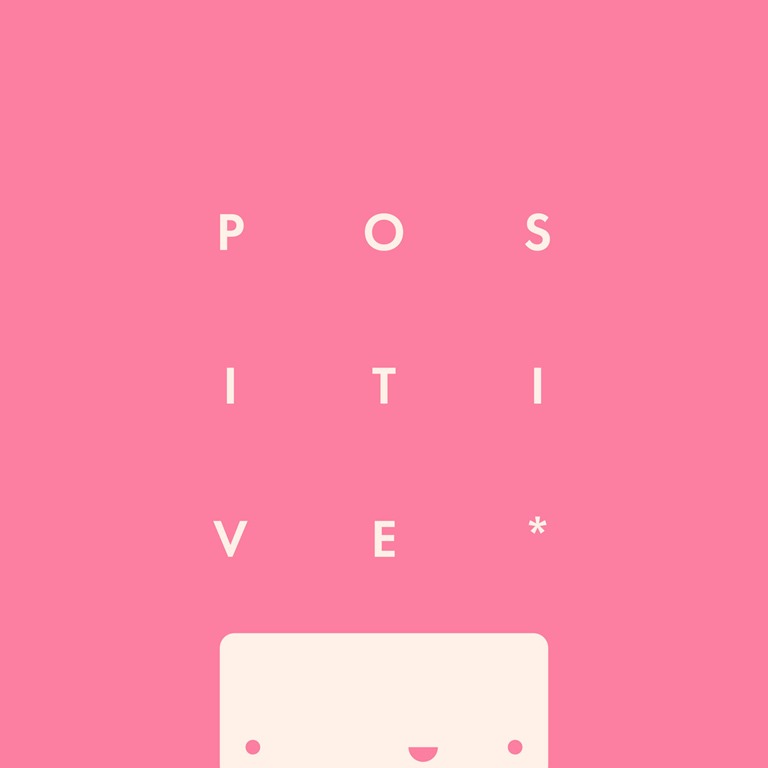
It’s always exciting to hear what electronic experimentalism Neuro… No Neuro have cooked up, and Positive* is the second album this year, following on from the collection of glitchy snippets which comprised Compartments back in January. Just as Compartments was a very different project from its predecessor, Faces & Fragments, so Positive* explores very different territory from the ‘Kawaii-Glitch’ of Compartments.

As the accompanying notes explain, ‘Positive* by Neuro… No Neuro is based upon thin slices of memory, and the disintegration of their existence. The day-to-day, with its ‘ups and downs’, all while operating/existing above and to the right of the body. When the day ends, and the separated is reunited; how does one collect what is no longer there? …Separating consciousness from the corporeal… Memory and thought are being swept out to sea in granules that are imperceptible to those around you. Short term is riddled with inconsistencies…Say “so long” to the granules.’

It’s all about focus, and the focus of Positive* is very different from any previous projects. And when it comes to projects like this, details are important. In context, it’s ok to focus on those details, and to do so isn’t obsessive or excessively picky, but to engage with a creative work on the basis of its design, its intent. I preface my assessment this way because the first thing I’m drawn to, before hearing a single note, is the asterisk in the title. Such a mark denotes a footnote, an aside, a necessary commentary on the subject.

But there is not one appended to the accompanying notes. What can it mean? Is this an accidental omission? It seems unlikely, and as such, one can only conclude that it’s for the reader to decipher the nature of the discourse. In my own experience of academic writing, it’s often the case that the real commentary and the grain of the research lies in the notes, and so it is the case here.

‘This Time for Sure’ brings some stuttering ambient drum ‘n’ bass which arrives in a drift of Japanese-inspired scales, bit there are some subtle details and textures to be found low down in the mix. It certainly sets the tone for this comparatively delicate collection of pieces, most of which are fairly fleeting, sitting around the two-and-a-half-minute mark on average.

Each of the titles pins a positive slant on neutral or even potentially negative scenarios – ‘Even I can See this Now’, ‘When You Actually Want to Wake Up’, ‘Drier days Ahead’ – all feel like phrases uttered the kind of pep talks you might give yourself in times of struggle. C’mon, you can do this! Sometimes, try as you might, it still feels empty and futile, and as oft as you repeat it, you struggle to believe it.

‘When You Actually Want to Wake Up’ perhaps represents this struggle most keenly, a loping glitch like the back and forth internal monologue you struggle to overcome: yes… no… yes… no… just get up… but…’

‘Of Course You Know it All’ has an implied snarky, snideness to its title, but it’s still positive, right? Its glitchy, picky, chiming mellowness float beneath some pinging arcs, while the sweeping ambience of ‘Almost Through’ arrives with a sense of sagging fatigue, the kind of positivity many feel in the last half hour of the working week – fagged out and clinging to that point of release.

The world is dark and life is a grind, and it’s often difficult to see the light, the positive aspects among it all – and they are few and far between. Platitudes like ‘at least I have a job’ or ‘at least I have my health’ don’t really carry much conviction. Sure, there’s always someone worse off, but it’s hardly saying much. It’s ok to be negative, to be discontent.

And perhaps it’s here we finally come to understand and appreciate the asterisk. Positive* is, overall, melodic, and feels quite uplifting, being gentle, the urgent beats tempered by ambience and melodicism. It’s actually – dare I say it – quite nice. But finding those uptempo, upbeat aspects, maintaining balance, is hard as you juggle and struggle to keep things together, a day at a time. And perhaps this is how we can best appreciate Positive*. Just as memory drifts and floats, so does our capacity to continue onwards and to stay afloat. All you can do is hang in there.

AA

a3005718583_10

Kranky – 13th October 2023

Christopher Nosnibor

One thing I’ve learned as I’ve grown older (apart from the fact you never grow younger, despite the fact that I was amused to recently stumble upon the ‘people also ask’ Google question prompt ‘Is Benjamin Button a true story?’), is that a diversified appreciation of music is particularly useful as you come to recognise the diversified nuances of mood. Adherents to a single genre: how do they deal? How do they find the right soundtrack?

I’m not previously familiar with the music of Justin Walter, but the accompanying notes inform me that it ‘veers between nebulous and numinous, coaxed from the translucent tonalities of his signature instrument, the EVI (Electronic Valve Instrument)’ and that ‘Destroyer, his latest, and third for Kranky, marks his most multifaceted work yet. Inspired by minimalistic urges (evading grandiosity, condensing scope, embracing spatial restraint) tempered with the drama of triptychs (becoming, destruction, aftermath), the album’s 11 tracks thread.’

If the album’s title implies aggression and obliteration, it’s overtly organic analogue synth vibes are quite the opposite. That isn’t to say it’s all shades of mellowness, because Walter weaves in extraneous noise and all sorts and messes with the dials to render soft tones bent and broken, twisted and warped to create a less than silky-smooth air of tranquillity at times. But at others, there are some simply magnificent passages where you feel calm and at ease. The title track is exemplary: it’s an ambient work at heart, soft, supple, gentle, but with serrated edges and spiny burrs that occasionally break through the surface.

Walter obviously has a clear sense of flow. The eleven pieces on Destroyer flow seamlessly from one to the next, and as a consequence, Destroyer feels like an album, despite the contrasts which present themselves across the work. The flow begins with an instant attention-grab in the wibbly shape of ‘For Us’, which blasts in with a blaring drone over which phasey noodles tangle over in ever-increasing layers with adrenalizing effect. While the majority of the album is rather softer, a defining feature of the composition is the exploration of interplay between tones and timbres and the notes their timings gradually shift to create the subtlest of tensions. This is particularly noticeable duribg the second half of the album, which feels slower, softer, and more soporific than the first half. Close your eyes, exhale slowly, and you really start to absorb Destroyer. And you have every reason to do that.

‘Cliff the Cloudcatcher’ is a gentle, bubbling synth piece, while the eight-minute ‘Inner Voices’ is a mellifluous movement in many directions simultaneously, which pulls together to take form, becoming graceful, and in places the sounds mimic woodwind, but sculpted into something otherly… backwards, perhaps, and the sounds bend and push and pull – gently, but they do – before a darker turn around two minutes in brings shade, clouds thickening and becoming denser.

Destroyer distinguishes itself from so many other ambient-orientated works by virtue of its dynamics. There are some thick, tones and dense blankets of noise which present themselves, often emerging from cloud-like drifts of near-nothing. But these moments of rising tension resolve to easy washes and ripples of sound, to cloud-like softness.

And this is the album’s real accomplishment, in that is balances many shades, many tones, many textures. Those darker passages serve to remind that life isn’t all easy or plain sailing, and that plans can go wrong. You can set the controls for plain sailing, but there will always be disturbance, disruption. Whatever you plan or expect, there will always be deviation.

AA

114931

2nd November 2018

Christopher Nosnibor

Not so long ago, I began a review by saying I felt sorry for Jo Quail. That was no slight on her musical output, but an observation that as incredible performer, it seemed wrong that she should be put on so early that her set was a third of the way through before the doors even opened. On listening to Exsolve, my awe of her musicianship is greater than ever, which only renders the injustice worse. To get the point: this is an incredible album, a triumph of musicianship and vision in tandem to create something not only greater than the sum of the parts, but beyond imagination.

The accompanying press release informs us that Exsolve is comprised of three tracks, with each one being broken down in to sections and movements across 45 minutes. Mastered by James Griffiths, himself a film composer, there is, the blurb notes, an almost symphonic quality to the album. This is true, but there is so, so much more, much of which defies conventional description: it speaks not to the domain of words, but the psyche.

The bald facts are that Jo Quail plays cello, and does so through a raft of effects to create sounds a million light years removed from the cello, looping bangs on the mic to create thunderous percussion and conjuring eerie moans and grating tempests of sound. The result is pretty heavy, not to mention intense.

Eight minutes into ‘Forge of Two Forms’, Quail is conjuring blistering interweaving prog riffs against a swirling backdrop of noise and thumping beats. Epic doesn’t come close. It sounds like a full band pushing into new realms of enormity, and with a blistering distorted picked motif that sounds like a crisply-executed lead guitar line, it’s easy to forget just how this music is made. Twelve minutes in, it’s tapered down to nothing and actually sounds like subdued, low-tempo orchestral dronings, creeping atmospherics and melancholy. The transitions are seamless, invisible, but definite as the extended soundworks transition between segments.

‘Mandrel Cantus’ sends sonar echoes across low, slow ripples of mellow cadences, and somehow builds into a monumental emulation of a guitar solo of monumental proportions. How did this happen? From whence did this immense sound emerge?

Everything coalesces on the third and final composition, ‘Causleens Wheel’ which begins delicately, builds to a rolling, roiling, sustained crescendo. It’s a multi-faceted composition, tonally rich and also moving, not just by force but by expression.

Powerful, graceful, compelling and dramatic, Exsolve is a remarkable album of rare quality.

AA

Jo Quail - Exsolve