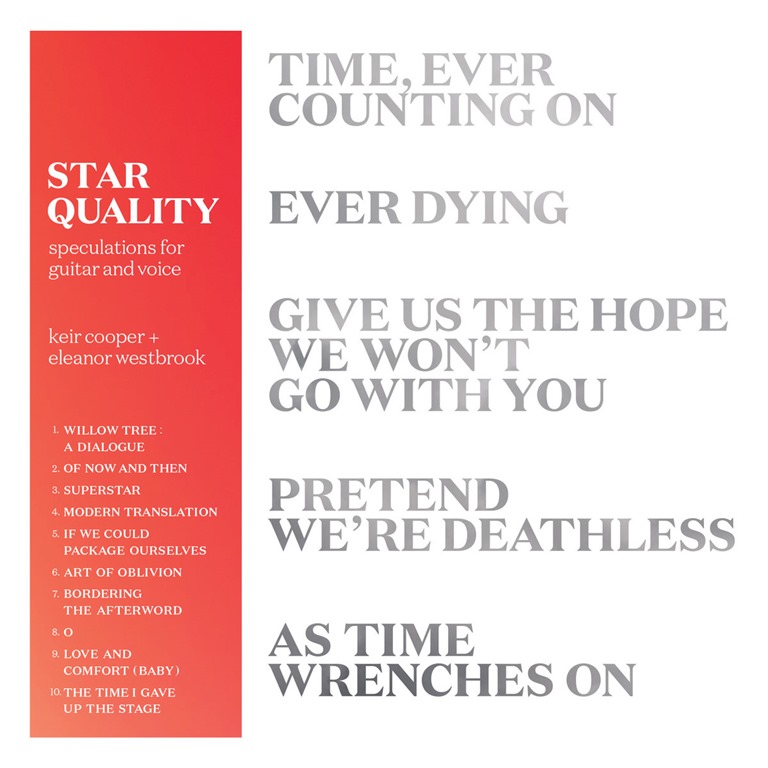
One way to tell an avant-garde musical work from its title alone is when the title provides a quite precise statement relating to its compositional nature. And so it is that this collaborative set of songs by Keir Cooper and Eleanor Westbrook are structured around guitar and voice.
‘Willow Tree – A Dialogue’ takes the interesting form of – perhaps not surprisingly – a dialogue of sorts, in which Westbrook’s adopts two contrasting modes of delivery, with a spectacular operatic aria juxtaposed with a spoken-word interrogation as a counterpoint. The effect is closer to a simultaneous internal monologue running across the song itself rather than a dialogue in the conventional sense. Meanwhile, the delicately picked neoclassical guitar is subject to interruption by clunks and distortion and occasional whirs and bleeps and the operatic vocal strays off kilter and the dream which drifted in twists and flickers with darker shades: not pronounced enough to be truly nightmarish, but unsettling.
The pair continue to explore the contrasts of melody and disharmony as Westbrook squeaks, squawks, trills, and purrs an infinite array of vocal gymnastics and Cooper’s guitar work, which chimes and treads delicately from folk to flamenco via classical streams, stamps on its own beauty with sudden and unexpected stops and stutters and forays into wrongness with stray notes and dissonance.
‘Superstar’ strays into the space which soundtracks a sense of derangement, the territory where things make no sense, and that place of incomprehension instils an unsettling confusion that borders on anxiety. ‘Modern Translation’ follows a similar trajectory: it’s a piece of magical neoclassical chamber music that’s twisted as if performed in an auditory hall of mirrors. Everything is wrong: something that should be soothing and beautiful is warped in a that it becomes unheimlich, eerie.
It’s hard to locate a touchstone or reference point for this: perhaps there are elements of later Scott Walker present, blended with hints of The Ex with its more avant-jazz leanings. One can only muse as to how they came to create this work: despite its clear foundations in the realms of classical and opera, Star Quality ventures so far from this path that it often bears little resemblance to any given style. The pieces evidently do have quite detailed and complex structures, as there’s nothing haphazard or uncoordinated about the way the two play together, but it’s impossible to decipher them from an outside perspective.
There’s a grand yet ethereal theatricality to ‘Bordering the Afterworld’, and ‘O’ soars and swoops and squeaks and whoops its way theatrically – and somewhat crazily – across some sprightly, if vaguely gothic-sounding guitar picking that suddenly, from nowhere, begins to buzz and thump. ‘The Time I Gave Up the Stage’ draws the curtain on an incredibly curious and as far off the wall as is imaginable.
Star Quality clearly has theatrical inspirations and aspirations, but shows two artists who are more interested in exploring their outer limits than taking the limelight in a mainstream setting – and for that, I applaud them.
Beige Palace was a band from 2016 to 2024. During that time we released two albums, an EP, a split 7" and some other miscellaneous bits. We toured the UK a bunch, we managed to play shows in France and Belgium, and we opened for some of our favourite bands like Shellac, Mclusky and Dawn of Midi. It has been lovely!
These are no small achievements. But for all of them, Leeds’ leading exponents of low-key lo-fi have been humble and kept it DIY throughout their eight-year career. Fans inevitably feel a sense of loss at the demise of any band, but as someone who was present at their first ever show and having followed their progress through the years, this feels like a particularly sad moment. It shouldn’t: the members have moved on to become Solderer, with the addition of Theo Gowans, a Leeds luminary, gig promoter, purveyor of mad noise as Territorial Gobbing, and one-time member of Thank, another of Freddy Vinehill-Cliffe’s vehicles, and of course, they’ve all received coverage here along the way.
So we shouldn’t feel sad. Instead, we should celebrate the achievements of a band who seemingly set out with no ambitions other than to make music for themselves. But still… I was in attendance at their first show, and as I documented at the time, and as I’ve mentioned in subsequent reviews, they were ace. Unassuming, a shade awkward, perhaps, but warm, human, and appealing in the way they presented their set of sparse, minimal tunes, Young Marble Giants were my first-choice reference point.
How YMG, a band whose album was released on Rough Trade and who have been the subject of a number of articles, not to mention being referenced and covered by the likes of Hole, remain obscure, I will never comprehend. But no matter: Beige Palace picked up their baton and, er, hid it under the settee.
In contrast to the wildly flamboyant dayglo-sporting Thank, Beige Palace were always the introspective, introverted musical counterpart who hung back, heads down as they looked at their shoes. Beige Palace’s successes happened almost in spite of the band themselves. That’s no criticism. They were a great live band, and they released some great music, too. I’m reminded of one of the other great DIY Leeds – via Bradford – bands, That Fucking Tank, who bookended their career with recordings of their first and last shows. Without the documents, the events would be but myths and legends.
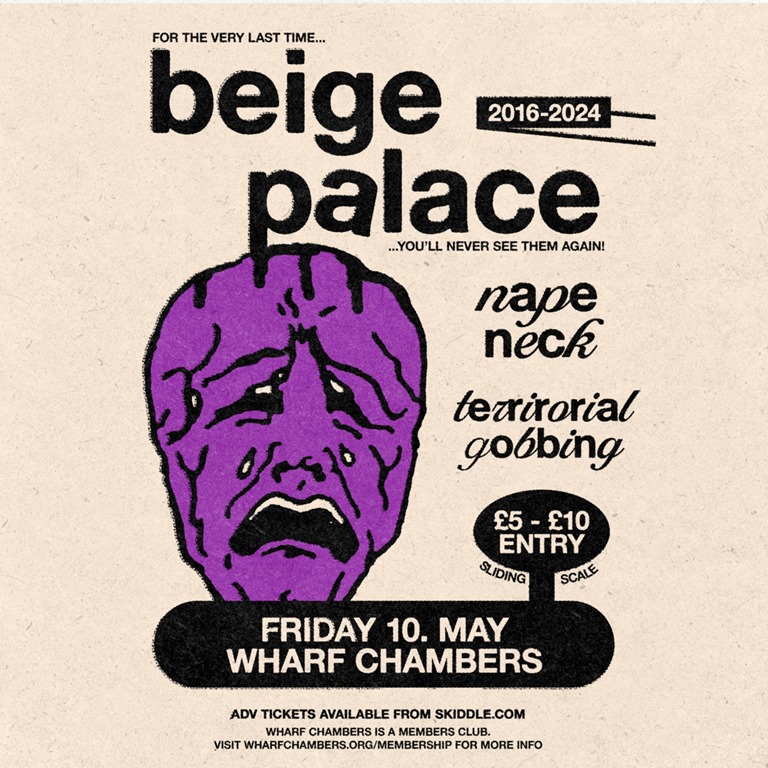
This looks like being the first of two retrospective releases, and as a recording of their last live show – which neatly bookends my experience of the band, having attended their first – makes my case about the quality of their performances.
LIVE For The Very Last Time (2016-2024) presents a career-spanning set, with opener ‘Mum, Tell Him’, ‘Dr Thingy’, and ‘Illegal Backflip’ representing their 2019 debut album, Leg, and a fair few cuts from Making Sounds for Andy packing out a varied set, which culminates in single ‘Waterloo Sublet’.
But there are a handful of unreleased songs here, too: like Thank, Beige Palace were always focused on the next project, the next release, and as the very naming of ‘Waterloo Sublet’ illustrates, irreverence was their thing. ‘Local Sandwich’ is a perfect illustration of their quirky irreverence, as Vinehill-Cliffe rants about, yes, a local sandwich shop.
LIVE For The Very Last Time (2016-2024) captures everything that was great about this trio. Awkward, honest, slightly disconnected between-song chat is integral to the experience, and there’s plenty of that – including comments on someone’s wind – on this warts-and-all, as-it-happened recording, captured in Leeds in the intimate but awesome grassroots venue, Wharf Chambers, where the sound is always good – and loud – the audiences are friendly, and the beer is cheap.
There are no overdubs, there’s no polish or pretence, and LIVE For The Very Last Time (2016-2024) is all the better for the fact. The mix isn’t always balanced – the vocals are half-buried and times and the guitars are way loud at times, but what you get is a feel for being in the room.
The music is gloriously wonky, skewed, angular math-rock with some valiant forays into noise. The vocals and guitar both veer wide of melody; it’s the lumbering, loping, rhythm section that keeps everything together: without them, it would be a complete disaster. But this is how some bands work, and Beight Palace always sounded like a band on the brink of falling apart, in the same way Trumans Water always sounded like they may or may not make it to the end of the song as they jerk and jolt their way through waves of chaos.
‘Update Hello Blue Bag Black Bag’ which lands mid-set making its debut and final appearance is unexpectedly evocative, and the eleven-and-a-half-minute ‘Dinner Practice’, also unreleased, hints at the trajectory they might have taken on their next album.
Beige Palace were never going to be huge: they were cut out for cult fandom, and comfortable with that, being one of those bands who made music for fun first and foremost. It’s the sense of fun that come across here. Even in the most downtempo songs, what comes across is that they’re enjoying playing. They will be missed, but we look forward to their next incarnation.
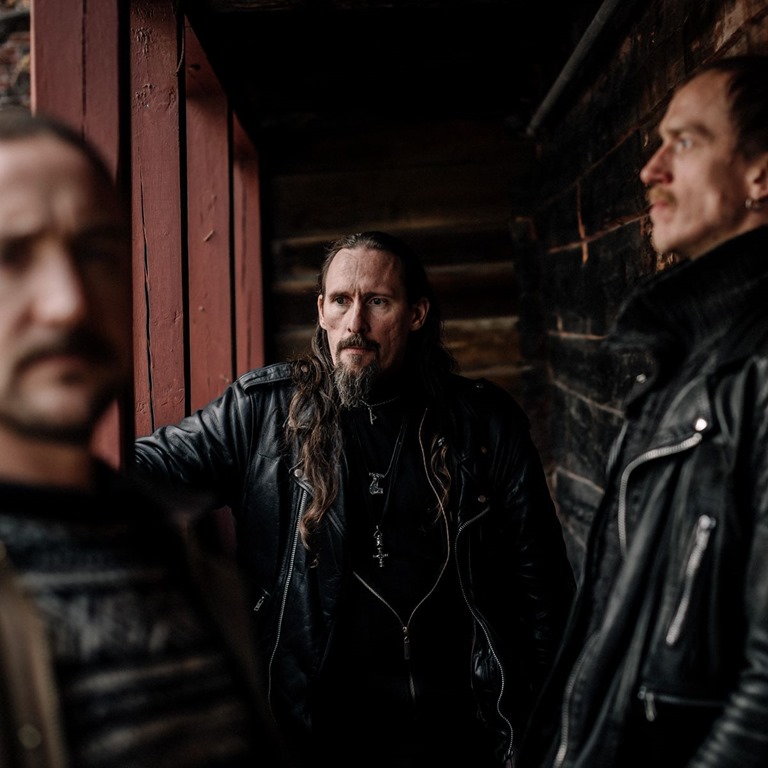
When iconic Norwegian vocalist Gaahl, revived TRELLDOM he did the only thing that could ever be expected from this exceptional artist: the unexpected. Hardly anybody could have predicted the stylistic shifts and the twists and turns of the forthcoming new full-length: …by the shadows…
A few weeks back, TRELLDOM opened their set at this year’s edition of Bergen’s Beyond the Gates festival followed the introduction via By the Shadows with the new opening track ‘The Voice of What Whispers’. This avant-garde jazzy yet relentlessly driving song conjured looks of confusion, fascination, and even rapture onto many faces in the crowd. Now the band releases ‘The Voice of What Whispers’ as the third single in the shape of an equally unexpected yet fascinating video. Who would have thought to see a Japanese horror style clip from a Norwegian band with deep roots in the black metal scene?
Neil Mackay is perhaps best known for contributing to Loop: having joined after the recording – but before the release – of their 1987 debut, Heaven’s End, he provided the big, solid bass grooves to Fade Out and A Gilded Eternity before they split in 1991. Loop all too often get lumped in alongside Spacemen 3, or otherwise as progenitors of shoegaze, both of which do them an injustice and ‘underrated’ would perhaps be the most appropriate descriptor for their legacy.
Mackay went on to form The Hair and Skin Trading Company, which, too, incorporates elements of drone and psychedelic rock. As Trouser Press outline it, following Loop’s demise, ‘Neil Mackay and drummer John Wills (augmented by ex-Savage Opera guitarist Nigel Webb) cribbed this unsavory moniker from an old warehouse in London and persisted in their efforts to rephrase Metal Machine Music as power-rock.
Having released four albums since their formation in 1991, the most recent being I Don’t Know Where You Get Those Funny Ideas From (2019), as well as a bunch of singles, EPs, and compilations, The Hair and Skin Trading Company continue as a going concern.
John Wisniewski caught up with Neil to find out about what he’s been up to lately, and reflect on a few moments from his lengthy career.
Editor’s note: some interviews, it’s appropriate to proof and tweak interviews conducted by email for spelling and punctuation, as much for readability as what one might sell as ‘professional standards’. But for this one, any substantive ‘tidying’ would feel invasive, and to strip out so much of the essence of the replies. It’s important that artists are presented ‘in their own words’, without being subject to any mangled paraphrases. When an interview reads like jazz, you let it play like jazz. And so this interview is presented more or less unedited, immediate, warts ‘n’ all, as they say.
JW: What are you doing now, Neil?
NM: Silent Invisible Radiation (SIR)
The Hair and Skin Trading Company (HASTCO)
Solo project
I have new album projects on the boil with all of them….
I am jamming regularly with Damon from SIR
And hopefully receiving and swapping more files from John and Nigel from HASTCO
HASTCO last album: I don’t know where you get those funny ideas from: released Sept 2019
SIR last album: Ventifacts : released July 2023 ….check that one out …2.5 hours long !!!
Occasionally I jam at the Vitaim S night at the Wine Cellar in Auckland central Monday nights ….( haven’t been for a while though ) ….Check that night out for some awesome improv / jazz / avant noodlings …. I want to and are planning to do much more live work …gigs etc ……
When and how did you join Loop?
I joined Loop in 1987 just before the release of their 1st album:Heavens End …For some reason the Bass player who played on that 1st album couldn’t be in the band anymore so I was one of only to people to apply for the job from an advertisement in Melody Maker …. The other guy apparently got really drunk when they met at the pub and threw up everywhere …..so I got the job lol….
Do you have any favourite bands?
too long a list
Can Stooges MC5, Moondog Sun Ra Peter Brotzmann , Faust , Einsturzende Neubaten, THe Pretty Things (UK ) , Steve Reich , Alice Coltrane , Arvo Part , Manuel Gottsching , Xenakis , Lee Perry , Dub Syndicate ,The Scientst ,Mad Proffesor, Wire , Sex Pistols, Joy Division , New Order, Aphex twin , Velvet UNderground , THe Doors , THe stranglers , the pop group, The Raincoats , Daniel Johnston , Butthole Surfers , The Clash , Dead Kennedys , Black Flag , Hunters and Collectors , Dplit Enz , Ths Stones (NZ) , The Rolling Stones ( US ) , THe Clean , The Chills , Talking Heads , Favid Bowie , Bjork , Captain Beefheart, The Residents , Sonic Youth, Brian Eno , Roxy Music , John Coltrane , Neil Young , Laurie Anderson , The Pixies , Public Image Limited , Devo , Pere ubu , Luigi Russolo , Boredoms , THe Beatles , Psychic TV , Throbbing Gristle , My Bloody Valentine , Nick Drake ,William Basinski, Beach boys , Elvis , Kraftwek , Swans , Neu ! Massive Attack , King Tubby , Mikey Dread ,Suicide , Alpha and Omega , John Zorn ,,,,,
I like any music really as long as its good !
It’s up to you what defines good
What was the concept for how Loop should sound?
Robert’s baby you should ask him …
Personally – live anyways I was trying to blast people through the back door …
Ridiculous we were too loud (sometimes )
I have really bad tinnitus now ha whatever ….
Why did Loop break up?
Burnt out I reckon …. I have read other band members give their reasons ….all good
i was gutted when we split ….but relieved in a way as well because it wasnt fun on tour at all any more ….
I remember when Loop came back from touring for 9 or so months …. I just wanted to chill out and reax at home …. But 9 o’clock came along and I got a huge energy rush of adrenalin and HAD to go out to a gig ……
When and how did you join up with The Hair and Skin Trading Company?
John the drummer from Loop and I wanted to keep doing music together I immediately contacted my old mate Nigel Webb ,,,, I had been in a band with him called Savage Opera …. We could never get a drummer to stay in the band ….. anyways Nigel is an awesome guitar player …. so walking down turnpike land one Saturday afternoon we saw a decrepid old factory that had a sign that said : The Hair and Skin Trading Company : so we thought that would be a great name for a band … that was it
Do you like jazz and avant-garde music?
Yes big fan ….. I worked at The Rough Trade shops in London for 17 years and used to hang out and buy records from Rays Jazz shop …..European and US jazz/ experimental music … I also love :world : music and have a large collection of Gamelan and African vinyl from labels such as Occora …Also like Dada (1920;s) environmental ,,,I was collecting Peter Brotzmanns label FMP …. Jazz wise IM more into the avant garde type weirdo jazz …..
Any future plans and projects, Neil?
I answered that in Question 1 ….
yes …..maybe thinking about coming to the UK for one more music blast ….
Getting older now at 60 ….
The tour with the loop re union was kinda fun great to see old fans / friends….
….
Could you tell us Neil, about your collaboration with Godflesh called Loopflesh?
And the double header tour in 2014 with Godflesh?
super cool tour ,,, we went into house in the woods and did the cover for the excellent label clawfist ……We were all freinds it was a great time ,,,,, that was a great tour apart from that ….thats it ……
The Shoegaze and psychedelia movement was much maligned, but seems to be experiencing a Renaissance. How do you feel about this?
At the time shoegaze wasn’t a expression we used ….. it was used by the press to get >something? going ….Psychedelia is a better expression ….but yeah all good ….. Im not up on new bands but Im up for new bands / music …always ….who are good in this field now ,,,( answering a question with a question )
The prospect of Objections making a return to York was incentive enough to snaffle a ticket for this some time in advance, without even paying too much attention to the rest of the lineup initially, but Teleost and The Bricks provided two strong reasons to get down early, and a fair few others clearly thought the same.
All-dayers tend to have a couple of acts people aren’t especially fussed about at the bottom of the bill, often newer acts cutting their teeth, so kicking off with a brace of well-established local talents proved to be a combination of coup, genius programming, and an indication of the quality of the bill – which, in the event, didn’t include a single weak or dud act from beginning to end.
Another rare – and impressive – thing about this lineup is that it features just one all-male act. When you hear so many promoters responding to accusations of gender inequality and a lack of representation by whining about how they struggle to find and book bands with women, it feels like a massive cop-out. And here’s the proof. Eight bands, and only one that slots into the stereotypical white male bracket – and then again, they possibly get an exemption on account of their age bracket (that is to say, they’re probably about my age bracket). Anyway.
The last time I saw them, supporting Part Chimp, Leo Hancill and Cat Redfern were playing as Uncle Bari. Now they’re Teleost, and they’ve totally nailed their slow, sludgy sound. The guitar sounds like a bass, the drums sound like explosions, and it’s a mighty, mighty sound. Slow drumming is always impressive to watch, and hear, and Cat it outstanding, in every way, a hard-hitter who makes every single slow-mo cymbal crash count. They’re properly slow and heavy, with a doomy heft, but with folky vocals. The contrast is magnificent and makes Teleost a unique proposition.
It’s been a few months since I’ve seen The Bricks, and yet again they seem to have upped their game. Their set is punchy and forceful, led by a fierce vocal performance from Gemma Hartshorn. As a band, they’ve really hit their stride, and having got a fair few gigs under their belts now, they’re super-tight.
The Bricks
Instant Bin are a busy-sounding indie duo who knock out short songs packed tightly, and they’re good entertainment, while Knitting Circle are very unlike the somewhat twee, whimsical and fluffy indie band their name suggests. They offer up some tense, mathy, angular noise with a hint of The Fall and Gang of Four, and are very much about tackling issues, with a strong anti-war song, and a song about menopause (‘Losing My Eggs’) while ‘I am the Fox’ which about fox hunting (and no, they’re not in favour) which takes its stylistic cues from Gang of Four’s ‘Not Great Men’.
The Knitting Circle
Objections – who I also last saw supporting Part Chimp, but on a different occasion – are out hot on the heels of the release of their debut album. As you’d expect from a band with their pedigree, they’re seriously strong. A tight set of noise played with precision, propelled by some magnificently crisp jazz drumming and busy baselines that nag away, they’ve got everything nailed down. The three of them each bring something unique as performers, and they’re simply great to watch in terms of style and technique. Joseph O’Sullivan’s guitar work is so physical, lurching and bouncing here there and everywhere, and working magic with an oscillator on top; Neil Turpin looks like he’s in another world, a drummer who seemingly feels the groove instead of counting time, while Claire Adams is intently focused – seemingly on the vocals, while the fast fretwork on the bass seems to happen subconsciously. They are, in so many ways, a quintessential Leeds act, both sonically and in terms of cult status. They’d have made worthy headliners, but public transport dictated their much earlier slot. Then again, there seems to be a lot of merit to spreading the quality more evenly.
Objections
After a clattering avant-jazz intro, The Unit Ama launch into some sinewy math rock with some serious blasts of abrasion interspersed with some meandering jazz discordance. They’re certainly the most unexpected act of the night. Despite having been around some twenty-three years, having played around the north and north-east quite extensively in that time, even opening for Fugazi in their early years, and releasing music on a label that also gave us music by That Fucking Tank, they’re still completely new to me. Their set is wildly varied and intriguing: deep prog with an experimental jazz element – showcasing the kind of shudder and judder, rattle and crash cymbal breaks that you’re more likely to hear in Café Oto than a pub in York on a Saturday evening, whereby it’s hard to determine at times if they’re highly technical or just tossing about like chimps messing about to see what noise they can make. It’s expansive work which makes for a compelling and intriguing set.
The Unit Ama
Wormboys are again interesting, and varied, but in a completely different way. The four-piece present a broad range of indie stylings with some strikingly athletic vocals. In places, they’re atmospheric, haunting, moving. Elsewhere, there are some motorik sections and big blasts of noise, and visually. they’re striking, with an imposing and lively bassist centre stage with the two guitarists, who also share vocals, either side.
Wormboys
The crowd had thinned a little by the time Cowtown took the stage, meaning a few missed out on their brand of buoyant synthy indie with good energy. Another frequent-gigging stalwart act on the Leeds scene, they provide another reminder of the quality of the scene between Leeds and York, and this magnificently-curated event showcased that quality.
Cowtown
That a number of the bands took time out during their sets to speak out on political issues, from giving praise for bands pulling out of Download, espousing people power, encouraging people to vote, and trans rights – to use their voices, in any capacity, and even simply providing a ‘fuck the Tories’ call of disenfranchisement, it’s heartening to feel that we have bands who are politically engaged and using their platforms for more than mere entertainment. In bleak times, that there is a real sense of artistic community among such disparate acts gives a sense of hope. That hope may be misplaced, but to just step sideways from all of the shit for a few hours, immersed in a bubble, with beer and live music is the perfect escape. We should do this again sometime.
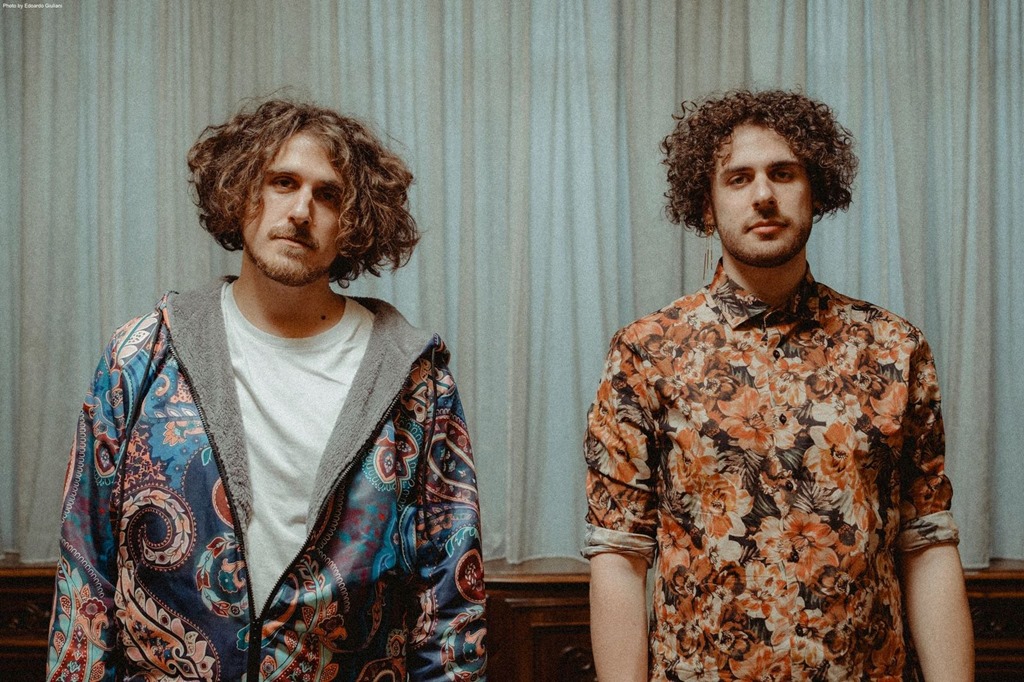
InsideOutMusic is proud to announce the signing of Italian instrumental, prog-metal fusionists Asymmetric Universe to a new worldwide deal. The band, formed by brothers Federico Vese & Nicolò Vese, are also pleased to launch a brand new track titled ‘Don’t Go Too Early’, and you can watch the video for that here:
The band comment:
“We are so excited to join such a big family as InsideOutMusic! Being part of a team with legendary artists and bands that we’ve been listening to since we started studying music, is a dream come true!
Our new single, “Don’t Go Too Early”, is a mixture of fusion-jazz, aggressive progressive metal, wind quartet arrangements and an avant-garde string quartet orchestration, that brings a unique colour to complex yet catchy music. We can’t wait to share with you all the music we are already working on!”
Freddy Palmer, InsideOutMusic, adds: “Asymmetric Universe are a perfect example of the kind of exciting, instrumental guitar music making waves right now, and we couldn’t be more thrilled to add them to the label’s roster, and be a part of their bright future.”
The band are currently confirmed to support Plini & Haken in Milan, Italy on the 5th July, as well as playing Arctangent Festival in the UK on the 16th August alongside Meshuggah, Animals As Leaders & many more.
Formed in 2018, with the goal of pushing the limit of modern prog and fusing disparate genres, they combine metal with jazz & ambient music, alongside chamber orchestration. In 2023, the band released their second EP ‘The Sun Would Disappear As I Imagined All The Stars’, which was mixed by Forrester Savell and mastered by Ermin Hamidovic. They also embarked on their first European tour as support to Australian progressive metallers Ne Obliviscaris, as well as opening for Caligula’s Horse in Italy.
Both brothers are mostly self-taught musicians, who have been heavily involved in composition and orchestration, as well as music production.
Federico has composed music for as wide ranging places as Radio Montecarlo (one of the biggest Italian radio stations), as well as one of the largest Italian amusement park Mirabilandia. He is a metal/rock producer and this background influences his work as a composer in the video game industry. He is also a professional music and guitar teacher with online students from different parts of the world.
Nicolò has composed pieces for various orchestral organisations (two pieces were performed in the latest symphonic season of Orchestra Sinfonica of Sanremo and one performed at Rome Jazz Festival in 2021 with a big band), worked as a composer in many Musicals and he is currently working in the video game soundtrack industry (also as a sound designer), ranging from indie games to bigger productions. He also professionally teaches composition, orchestration and adaptive music techniques for video games.
Over the last couple of decades, Leeds has thrown out some truly amazing acts, and while few have achieved the kind of commercial success of Kaiser Chiefs, in terms of creativity and sheer range, it’s come to stand in a league of its own. It was round about twenty years ago that The Brudenell began to build its reputation as being s place that provided a space for non-mainstream acts, notably becoming something of a residential spot for iLiKETRAiNS in their early days, hosting their Signal Failure nights. While I saw a lot of post rock there around this time, I also got to see the likes of That Fucking Tank, Pulled Apart By Horses, Blacklisters, as well as visiting acts which included Whitehouse and Unsane. The Brudenell may have expanded in terms of what it offers now, but it remains in many ways the essence of the Leeds scene, an open and accommodating space where pretty much anything goes, with emerging local acts still getting a platform and, significantly, high-profile support slots. And then that are – and have been – an array of smaller independent venues which have all been integral to the crazed melting pot which is the Leeds scene, from Wharf Chambers, to the Packhorse, via Chink and Mabgate Bleach.
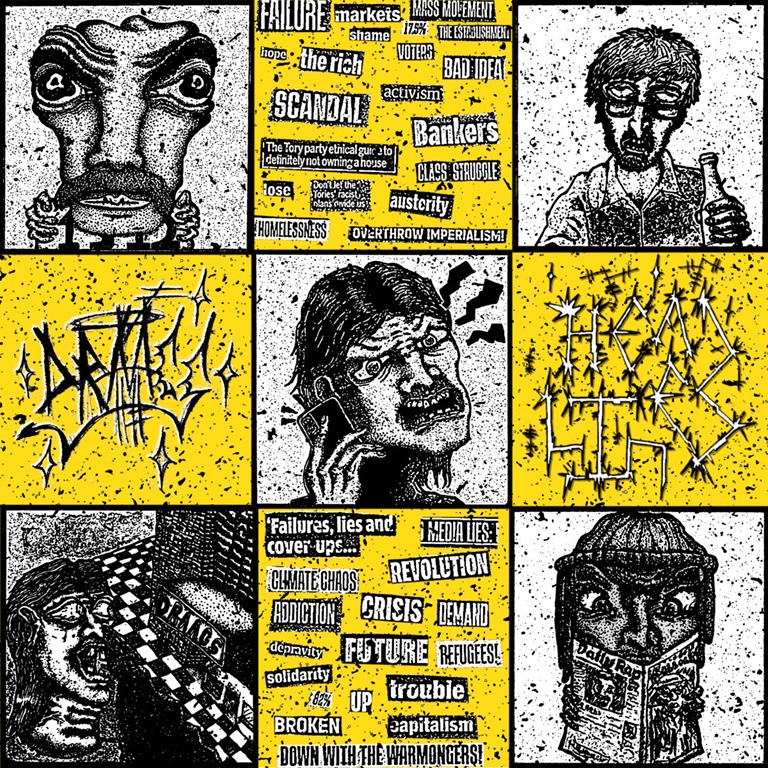
From the quirky alternative noise of Thank to the banging rave mania of Straight Girl, Leeds in 2024 really does provide a broad span of representation, in every way. And if further evidence is needed, step forward queer-dance-punk five-piece DRAAGS, who offer up their debut album on their own DIY label, LAAG Recordings.
Their bio and album pitch set out their stall nearly, as they recount how the album was ‘Made in their home over 2023’, where ‘the five-piece explored themes of escapism, queerness, rebellion, anti-capitalism, -police and -mass-media, creating melodies and lyrics to reflect their feelings at the time. No one song sounds the same, just as no member of DRAAGS is the same.’
They go on to explain how ‘In Headlines we are grappling with the alienating nature of post-internet capitalist society, fuelled by a will to understand our surroundings and not succumb to normality and drudgery. The album is an unraveling of self-purpose, self-destruction and escapism vs reality in a world that distorts the truth and seeks exponential growth through false ambition. The work as a whole intends to reflect the overstimulating impact that a possessive individualist society has on the human psyche. How this obstructs our ability to connect and the challenges we face to not degrade our beings to reflect our bleak surroundings. This project has been a driving force for us to rebel, find togetherness, community, collective joy and purpose and we hope others feel that too.’
Headlines is a deranged mash-up of absolutely everything. ‘SPINNER’ is exemplary: starting with a recording of a standard call-queue experience – we all know that that the reason all the agent are busy and an agent will be with us shortly – or not – is because no company ever hires enough staff because paying staff to provide any real service eats into their profligate profits… and then everything goes crackers, a head-on collision between Age of Chance and iForwardRussia!, in turn continuing the lineage of Leeds bands who dare to be different. Then it goes a bit operatic, a bit Sparks, a bit drum ‘n’ bass, a bit Foetus, a but Mr Bungle, a bit Selfish Cunt. To say that it’s a crazed and bewildering three-and-a-half minutes would be an understatement.
Every single song on here is ABSOLUTELY WILD! It’s quite difficult to pay attention to the lyrics when there’s so much going on. It’s arch, it’s arty, it’s a bit campy, it’s WAY over the top. It’s a RACKET! And as the song titles evidence, THEY LOVE CAPITALS, because SHOUTING AND IN YOUR FACE IS THE THING! I don’t even mean that critically: this is an album that feels like a relentless blizzard of barminess, and everything is just brain-melting. ‘PAPERS’ is a full-on, brain-melting slice of jazz-flavoured derangement, and there isn’t a moment’s let-up here, with helium-filled freneticism leading a cacophonous carnival of dementiture.
Twisted jazz and grinding funk coalesce, or congeal, into a maniacal mess, and sometimes, it gets noisy, too. How do you possibly keep up with this, or stay sane? Maybe you don’t. HEADLINES isn’t really a SONGS album, so much as an EXPLOSION that leaves you shaking our head to get clear as you find yourself sitting dazed, utterly floored.
There is no sane or objective response to this album. There is no easy way to process it: there is simply too much.
DRAAGS are going all out here to push and test themselves and their potential audience. Surrender to the CRAZINESS.
Yet another 24 May release… It really does feel as if the world had conspired to release 75% of the years albums on this one day. So I’m still working my way through them. And this release from some known names is not what I was expecting. I can’t recall precisely what it was that I was expecting but certainly not anything as heavy or as percussion-led as this.
They describe SIHR as a ‘sonic manifesto by a post-anything quartet’, a work that offers up ‘new folklore for a devastated planet’. Within these words, there’s a sense of nihilism and gloom, but simultaneously an undercurrent of ‘fuck it’ and of quintessential avant-gardism, the principle ethos of creating anew only being possible from the destruction of that which came before. There’s a sense here that the destruction – the devastation of the planet – clearly isn’t something they’ve chosen, but in the face of apparent futility, they’ve come together to create, perhaps in the hope of a brave new world, or perhaps, more likely, something to be discovered among the ashes and the ruins of society and life as we know it.
The way in which they document their coming together and the creation of SIHR has all the hallmarks of the first stages of developing a mythology, which has the potential, in time, to grow its own legend: ‘The first sonic moves of this eclectic quartet, made in a bunker studio somewhere between Paris and Berlin, urgently took the form of a quest, that of a neo-folklore for troubled times, a music seeping with many kinds of atavism and experimenting in all directions. A fertile no-man’s-land where trance and contemplation, jazz and electronica, acoustics and electricity would merge in a stimulating mystical magma. From the possible emergence of a Babelian language to the shared desire to rediscover music as a ceremonial act, this encounter took place over three days of improvised sound bacchanalia, the phases of which were all recorded by Benoit Bel.’
The first track, ‘Oui-Ja’aa’ is a nine-minute colossus of a cut, drawing together elements of electronica and ‘world’ music with a dash of Krautrock and the sensibility of Suicide, with a throbbing rhythm melting into a hypnotic bubbling sonic cauldron. The tempo twists and seems to quicken as drones and jazz horns warp this way and that as if blown by the wind and everything builds to a frenzy before collapsing, exhausted in the dying moments.
While conjured in a bunker studio, SIHR sounds as if it was improvised around a fire in the middle of a desert while string out in an hallucinogenic haze. I suppose in some respects, the two scenarios bear numerous similarities in terms of their psychological effects: while one setting is a vast expanse of space with a huge sky vista and a distinct absence of other people, so the other, equally devoid of other people, forces the contemplation of the infinite realms of inner space.
‘YouGotALight’ is slow, smoking, soporific, a crawling, sprawling, mellowed-out meditation, before the glitchy whorl of bleeps and jitters that define the sound of ‘OhmShlag (Quake Tango)’ sees things take a very different trajectory at the album’s midpoint. A pulsating, seething miasma of sonic swampiness, punctuated with a metallic tin clatter of a snare that cuts through the murk, it’s like slowly sinking, not only in boggy terrain, but in a mental fog.
‘Babel Cedex’ eliminates the fog and just goes for the mental, beginning as another slow, serpentine, hypnotic exploration before building to a deranged frenzy of frenetic percussion and howling horns and chaotic discord that’s truly brain-melting. Eastern vibes and glitchtronica ripple through the woozy ‘Black Powder’, and you find yourself marvelling and utterly bewildered by the whole experience.
My earlier visions of desert campfires dissipate life vapourising mirages during the second half of the album, and I come to conclude that SIHR is indeed the sound of bunker life: one envisages the collective huddled in semi-darkness, hunched and half-crazed after months below ground in the wake of a global catastrophe, trying to keep it together in the hope of one day being able to return above ground. How will they know when it’s safe, when the coast is clear? Or is this a scenario akin to Philip K. Dick’s The Penultimate Truth?
We live in perilous times, and likely closer to the brink than any of us know or can even compute. In this context, SIHR feels like a document, and a message to future times.
“’These Things’ was the last song written for Delights Of My Life. Often the last song is written with the aid of what has come before it, the other songs on the record. We have one song to write, or so we think, now then, what shall it be and why? I think that I asked this question. We will never know. And I also think that I thought that it might be novel to have a song with a very clear form (four times through a melodic verse, with a tag at the end that wraps it nicely). That, and that the record may very well appreciate a song with little to no improvisation. A straight curveball!
Eric Cazdyn, who made the ‘These Things’ video (and around 18 other videos for my music) may have heard the song similarly. He has certainly given me that impression. What I see in the video is a very simple movement or gesture, but with an immense amount of minimal detail. Well, that is how I often describe the dance of Angela Schubot, although she is just on the verge of dancing here in this video. She dances like vegetation. Or, she shows me again and again that vegetation is a dancing world.”
Once again, I find myself tussling with a jazz album and in a quandary as to quite what to make of it. For many, many years, I was absolutely certain I detested jazz. Until, that is, having been introduced in my line of work to acts like The Necks, I came to learn I’d simply been exposed to the wrong kinds of jazz. The weirdy, noisy, cacophonous kinds of jazz made sense in context of my appreciation of mathy noise rock, and wasn’t such an immense leap from Shellac to be incomprehensible. Like any genre, or even tea or coffee, it’s all about finding a point of entry, a flavour that suits your palette. I used to hate both tea and coffee, having been given the former with full-fat milk and sugar and the latter in the form of a fairly weak blend with milk but no sugar, and they only really clicked when I ditched the sugar and discovered Earl Grey, and that you could have really dark-roast coffee with no milk and a shovel-load of sugar. So, you know, you find your thing.
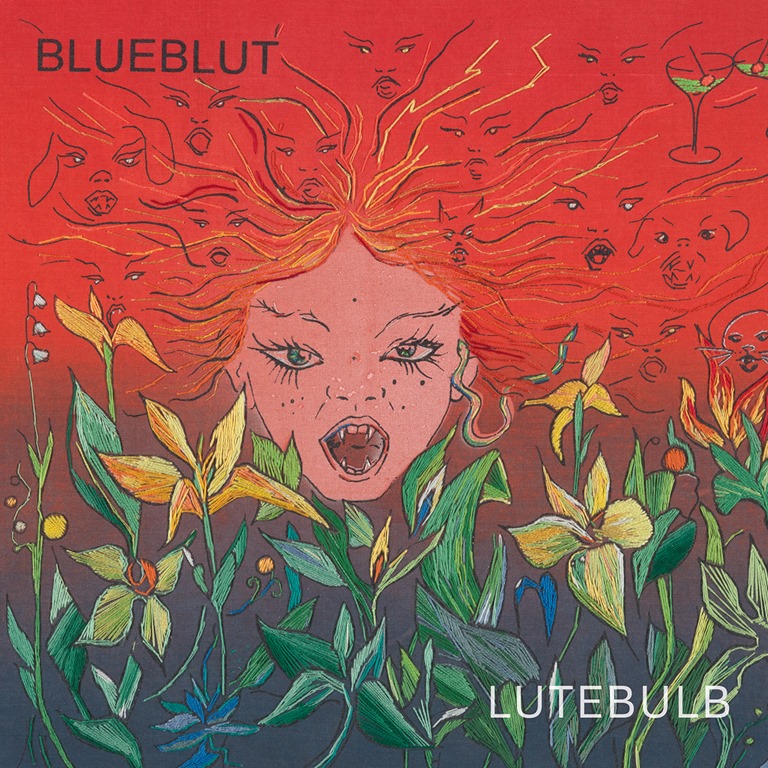
And then along comes Lutebulb, by Blueblut.
The blurb isn’t wrong in describing Blueblut’s lineup as ‘highly unusual, bringing together ‘three musicians acclaimed for exceptional contributions to their respective spheres in experimental jazz, electronica and rock.’ It’s a jazz-centred fusion, for sure, but it’s not jazz fusion as one tends to think of it, and certainly not as I’ve come to understand it. So what is it? As we learn, ‘Lutebulb is the fabulous culmination of ten years of intensive touring, with the Vienna based trio of Pamelia Stickney (theremin, vocals), Chris Janka (guitar, loops, samples) and Mark Holub (drums, vocals, percussion) socking it to global audiences with an international polystylistic musical language which takes in improv, jazz, avant-rock, ska, folk and Krautrock among other elements.’
There’s certainly a lot going on: initially, it comes on a bit laid back, not so much loungey as a smug muso pop collision of jazz and Latin dance, and I suppose the title, ‘Cocktail’ is something of a giveaway as to its swinging party vibes, but then shit happens – particularly some pretty crazy guitar work, and the percussion goes big and suddenly the party’s been crashed by a towering riot of sonic chaos, before suddenly, the entertainers seemingly remember themselves, pull their ties straight again and try to pull together some semblance of a funtime groove.
This sets the album’s template, really. Tracks tend to begin a bit kinda loose, a bit kinda boppable, a bit pool party fun times, albeit with some weirdness in the way the rhythms and the notes don’t quite chime in the conventional ways, and you wonder if it’s maybe the punch or the heat, but the tempo drifts a bit, first one way, then the other, and then maybe something doesn’t quite feel right, and it certainly doesn’t sound right and… what is going on? The room’s spinning and there are all sorts of random noises and you can’t tell if it’s people losing the plot or if some chickens have escaped and the sky’s falling in.
‘Aumba’ starts rather differently, a gentle piece led by acoustic guitar that brings a more reflective atmosphere, but it takes a hard swerve, the pace picks up, there are choral chanting vocals and then a handbrake turn into buoyant math-rock territory before some truly frantic fretwork. And because more surprises are needed, from nowhere, we get a crooning lyrical ballad in the last couple of minutes.
There’s unpredictable, and then there’s Lutebulb, which emerges with a fourteen-minute centrepiece of oddball experimental jazz that mashes absolutely everything together: one minute, I’m reminded of America’s ‘Horse With No Name’, the next, it’s Paul Simon’s Graceland and a Joolz Holland world music extravaganza. Then, somewhere in the midst of it all, we get the jazz breakdown with erratic percussion and space, dogs barking, and then, something else again. Led Zep riffage. Noise. More dogs barking. Every time I leave the house, the streets and parks and fields are like bloody Crufts, and the headfucking noise that’s emanating from my speakers – mostly a horrible conglomeration of barking and a strolling bass is making me angry and tense. And then the last piece, ‘Kaktusgetränk’, incorporates a familiar and popular jazz piece I can’t place or be bothered to research because by now I can’t decide if I need a lie-down or a massive gin.
With Lutebulb, Blueblut have created one of the most wildly varied – and in places, difficult, irritating, random – albums I’ve heard in a long time. I neither like nor dislike it: it has some truly great moments, and it has some not great moments. But when you throw this much into the blender, it’s to be expected, and I’d like to think that this kind of reaction isn’t entirely unexpected. The musicianship is outstanding, and their capacity to switch style, tempo, form, is something else, and the results are enough to leave anyone punchdrunk.





 Aural Aggravation