Posts Tagged ‘Industrial’

5th August 2022

Christopher Nosnibor

Lately, I’ve been seeing people on the Internet bemoaning the number of ‘lockdown’ albums, and even the emergence of ‘lockdown’ novels, questioning the need for anything that recreates, recounts, reflects upon or is otherwise set during the most recent of historical events. They all seem to make more or less the same case – that we all went through it, it was bad enough, and there’s no need to harp on or relive it. But artists tend to process and comprehend the world and their experiences of it through the act of creation, and just because we all experienced the pandemic and various lockdowns, no two people will have had the exact same experience or the exact same psychological response. Besides, isn’t more or less all art some form of response or reaction to the human condition, or otherwise a reflection thereof? No-one beefs about an excessive amount of war novels or poems or various genre novels, like crime or sci-fi or fantasy. Perhaps it’s because they prefer escapism to real life.

As the accompanying blurbage explains, ‘This album is a reflection of the dark days the world has seen in recent years. It’s about the tragedies many of us have faced and the effort to find the will to fight on. We remember those we have lost because it is through them that we carry on into tomorrow’.

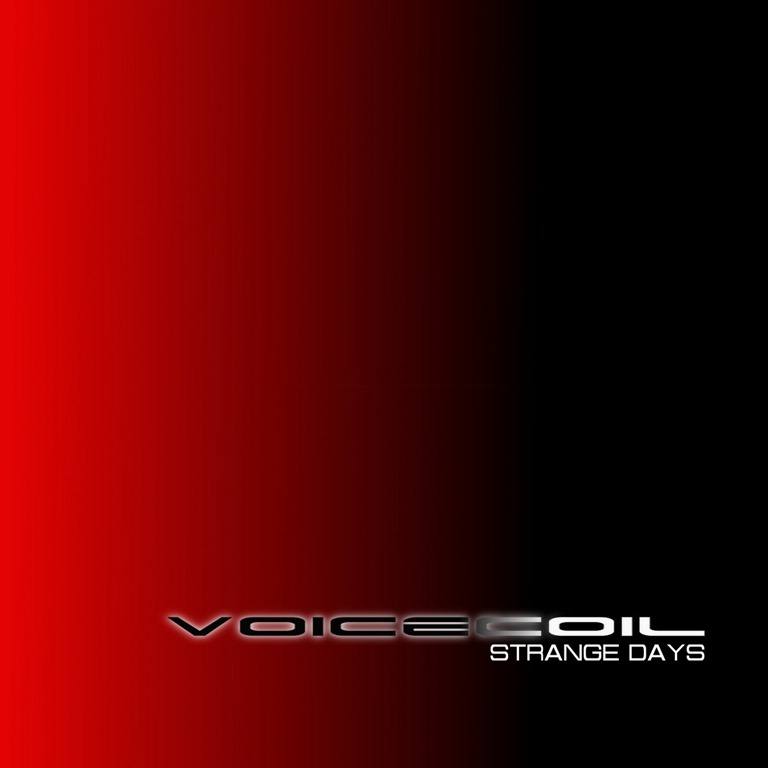
Strange Days is pitched as ‘a symbolic re-birth for the project, returning with a new zeal to create and perform’, and it’s not short on pumping beats and rippling synths. What sets it apart from so many other industrial / electropop / darkwave hybrids is Voicecoil’s vocal: it’s in that gothy baritone region, but for all of that, and the sense of performance and theatre that comes with those well-established genre tropes, his delivery had a certain emotional depth and sincerity that lifts the songs to another level.

So where ‘Versterbrogade’ comes on like a dance remix of a Depeche Mode in terms of its musical arrangement, and the verses observe the popular style of singing in the throat, a wheezy, grit-edged monotone, the verses unleash the hook and some ‘proper’ singing with heart and soul, and in doing so breathes life into the bleak experience of life where days drift and fade into one another. ‘Speak in Sine’ brings a harder-edged beat and a starker atmosphere, and it sits well with the themes of dislocation and alienation which run through the lyrics. ‘No Easy Reply’ is remarkably sensitive, not to mention accessible, and Strange Days has some great tunes, from the expansive, pulsating yet reflective ‘Why’ to the brooding piano-led curtain-closer of ‘Drift’.

While electronic music – particularly of that dark pop / industrial / goth disco persuasion – can often suffer from feeling sterile, detached, robotic, and impersonal, Strange Days is anything but. It possesses a certain warmth, a humanity, that resonates on numerous levels.

AA
a2292779137_10

Industrial / electronic black metal act Psyclon Nine has today unveiled a new video for the song  ‘See You All in Hell’ from the album Less To Heaven, also released today, 19th August.

Watch it here:

The music of Psyclon Nine is not for the faint-hearted. The brainchild of Nero Bellum, the dark, aggressive electronic assault of his group’s 2003 debut album ‘Divine Infekt’ immediately earned them popularity and notoriety worldwide. Its follow-up, ‘INRI’ (2005), displayed a marked evolution with a lyrical focus on religious themes. In the ensuing years, Bellum’s music has taken him down an even darker path, his distinctive whispered-scream vocals guiding us through an idiosyncratic take on modern underground music that has implemented elements of black metal and post-punk influences that, although often featuring haunting melodies, has often had an undercurrent of unbridled menace.

The brand new Psyclon Nine album, ‘Less To Heaven’, is a complex and immersive work that sees Bellum at a creative peak, with concussive, machine-precise drums, hammering guitars, scathing vocals and evil electronics all interplaying seamlessly. It also sees him charting undefined musical territory that bridges elements of metalcore with doom electronics, trip-techno with black metal, and experimental cinematic soundscapes with alternative rock. While many acts have a constant faster-louder approach to industrial-black metal, Bellum is unafraid to use all manner of tempos to build atmosphere.

2ddbf61d34abba6664810f1305b63f3f24a485f5

22nd July 2022

Christopher Nosnibor

New York industrial rock act GLDN, the vehicle for Nicholas Golden’s twisted noise, set their stall out pretty strongly with their debut single, ‘Parasite’. Accompanied by stark, hypersaturated visuals, it was a screaming blast of pain and anguish straight from the school of Broken era Nine Inch Nails and Strapping Young Lad’s first album.

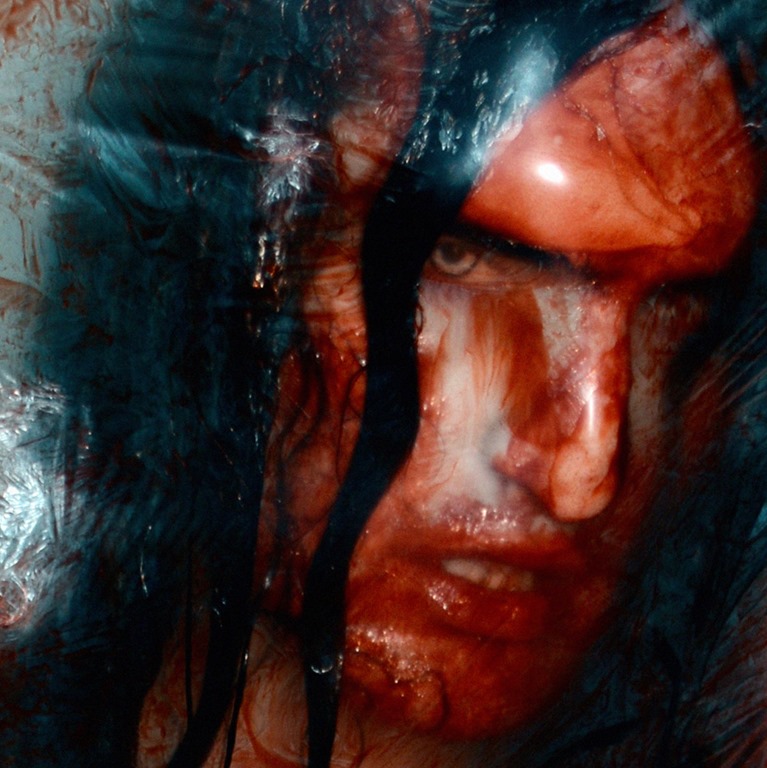
And so it is that they follow up with a debut EP, in the shape of First Blood. It’s a fitting title, and again, exploits striking, in-yer-face gored-up visuals render the pitch in explicit terms before you hear a note.

Lead track ‘Gravedigger’ grinds in with a pulsating synth bass groove and driving, metallic guitars, and they’ve achieved that perfect crisp guitar sound common to NIN, Pig, and Ministry. It’s abrasive and it’s noisy, and in following the popular quiet verse / loud chorus structure, it’s far from radical, but the key here is that it’s actually a decent tune. The title track alludes to The Prodigy’s ‘Firestarter’ with its slow fade in, before settling to a low, slow, murky trudge. Stripped back and bassy, it’s also gnarly as hell, and finds GLDN at their most Marilyn Manson. Nicholas can deliver a truly blood-curdling scream, and when he does, it’s unsettling.

‘Ripe’ is seething, serpentine, and with its squalling guitar and snaking bassline, slips into gothier territory, like Christian Death meets Filter.

Where so many NIN-emulators fail is that they’re too preoccupied with following the blueprint, with lifting and referencing; where GLDN succeed is in assimilating the elements to create something unique, and something unswervingly brutal and harsh. Its viscerality is more than worthy of the title and cover art: it’s the sound of a guy spilling his guts and experiencing a pure catharsis at a thousand decibels.

It’s ‘Parasite’ that closes off this six-tracker, and it’s a strong and violent finale, which makes the prospect of the already-in-the bag Hemophilia EP set for release in August, even more exciting. I suspect we can expect more blood.

AA

a2367090041_10

Industrial band, Kevorkian Death Cycle is revived from a seven-year sleep with the release of Collection:Injection 01, the first EP in a three-part series of releases that resurrects their classic anthology album, Collection For Injection

Released in 1996, Collection For Injection was the culmination of a particularly experimental and exploratory four year period for the band. Songs like “Veal” and “Send Me The Machine” helped to broaden the listener base due to the songs’ chaotic, thrashing beats, and the bleak, dystopian lyrical content.

The present landscape under the Covid pandemic inspired founding members, Ryan Gribbin and Roger Jarvis to revisit their 1996 anthology’s raucous perversity through a modern lens.  Its themes of a society deeply fractured with violence, health crises, political extremism, division, religious fascism, and hatred are just as relevant today as they were thirty years ago.

The resulting release series begins with the EP, Collection: Injection 01 and includes four modern machinations: “Man Made”, “Send Me the Machine”, “Spring Heel Jack”, and “Veal”.

Aiding in the band’s resurrected body of work are Rob Robinson of The Order of the Static Temple, and Sean Whitman of A Brilliant Massacre. Both artists are on the Negative Gain Productions roster and bring heir extensive composition and production knowledge to the project, twisting and revising particular songs from Collection For Injection to bring them into the contemporary consciousness.  

AA

a2525548736_10

Following the release of her successful 2022 debut single, ‘Tiptoe,’ ‘Bite My Tongue,’ BEX teases whispered vocals, edging riffs, and a stomping chorus – an explosive follow-up to say the least.

Talking about the meaning behind the track, BEX tells:

“’Bite My Tongue’ is written about times I have not stood up for myself. In the last couple of years I have been really finding myself and it has caused me to reflect back to times where I didn’t truly know who I was or what I stood for, times where I bit my tongue instead of sharing my opinion. Musically it’s riffy and simple, it has that raw punch in the face, I love all my songs to be simple and short.”

Produced by Sam Cramer, with a double bass feature from Bex and live band member Josh, across ‘Bite My Tongue,’ BEX brings out a hook packed with adrenaline. The music video was filmed by a canal in Guildford, by videographer Olivia Brisset and self-directed by BEX. The video comes with disturbing glitchy visuals shot in a retro filter, and masters a cool DIY look.

AA

Originally titled, as ‘Chez,’ ‘Bite My Tongue,’ is now a track that stands as a mantra for BEX, and you too. Emphasising just how important it is to her to stand proud, speak up for the things she cares about and to not be afraid, BEX tells:

“Always stand up for yourself and share your opinions, but at the same time listen to others. ‘I’ll hold it in so you have fun’ I think this lyric is important because it reflects how I used to not speak so I wouldn’t upset anyone or ruin anyone’s night even if I was having a bad time. SPEAK, always speak, don’t hold back, share what you wanna share, just don’t be a dickhead. ”

BEX plays Y Not Festival – Scruff Of The Neck Tent, UK on 29th July

AA

BEX

Industrial/glam-rock hybrid Terminal have just issued a video for ‘Godfire’, a song from their debut album ‘Blacken The Skies’, which was released via Metropolis Records in 2021. Showcasing the heavier, almost metallic side of the group’s sound, the track would sit well on playlists featuring the likes of Rammstein, Rob Zombie or Null Positiv, while Terminal frontman Thomas Mark Anthony has previously cited Killing Joke’s Geordie Walker as an influence on his own guitar playing.

‘Godfire’ is presented in trademark Terminal style with frantic visuals and confrontational lyrics, with words such as "Seethe in razor wire / as your palace is your pyre" a ‘j’accuse’ pointed at those bad actors who have taken the Ukrainian invasion as an opportunity to commit their own misdeeds while the world’s attention is elsewhere.

For Anthony, who was born in South Africa but raised in Canada, anti-apartheid issues remain tragically timely. The video for ‘Godfire’ is dedicated to Palestinian journalist Shireen Abu Akleh, who was recently killed by Israel’s defence forces while documenting their brutality in the West Bank. “Apartheid is unsustainable,” he states. "It will fall. We’ve seen it. But the longer it goes on, and the worse its atrocities, the harder it will be to have reconciliation instead of violent retribution.”

Watch the video here:

AA

ced69b3b5ff7b330757db67925c2b48c268a2c4c

Cruel Nature Records – 24th June 2022

Christopher Nosnibor

Hot on the heels of second album Can’t Be Arsed, Cruel Nature have repackaged the eponymous debut from the Manchester makers of ‘kitchen sink punk for the 21st century with a whole side’s worth of remixes from both previous releases – including two pretty radical reworkings of snarling single cut ‘Brain Driver’.

First, to revisit the debut – it’s a primitive, noisy document of disaffection. Adam Stone’s drawling, sneering vocal style is vintage punk, less about holding a tune as conveying attitude, and from the off they set the tone with the seven-minute ‘Food Chain’. A thick, dirty bass grinds out just a couple of notes over a plodding drum while Stone vomits vitriol. If ever a track encapsulated the monotonous drudgery of existing in Boris Johnson’s Britain, this is it. Most of the songs churn away for around seven minutes, but if you’re wondering just how far a band can push low, slow, trudging bass repeating the same simple motif atop a plodding beat, then the answer lies in ‘Half Priced Chickens’ – and the answer is just shy of fourteen minutes. This quarter-hour slog is a gloomy, dark, monotonous trudge: the kick drum sounds like a wet lump of wood, and the sneering shoutiness is replaced by a blank monotone spoken word, and in combination, they create an oppressive sonic fug. The scenes depicted are mundane. Words drift in and out – mobility scooters, office, boyfriend, cough mixture, cheese pasty – and these objects assume bleak resonance as you ask yourself, ‘is this it? Is this life?’ and the answer is there, slumped, devoid of energy, eyelids half closed: yes, this is life. And this is as good as it gets. And it’s fucking endless. Until it ends, in a swampy morass of slow decayed distortion and noise.

The final track, ‘Bunker’ locks into an uptempo groove, but while the drums rattle and bounce away, the mood remains tense, equal parts The Fall and Uniform. As the track progresses, so the anguish builds, and the effect is cumulative Stone hollers roughly about world war as feedback wails and the bass and drums just batter on, and on. Same old, same old…

There’s nothing pretty about Pound Land – the band or the album – and this is a good thing: they deal with the gritty reality of living in shit times. Pound Land articulates the languorous torpor of demotivation, of waking daily to feel the aching anguish of being beaten by life, every minute of every day. Sonically, it’s a long, long way from early Swans, but the density and oppression are very much shared aspects.

By the end of the five tracks, you’re absolutely harrowed and drained.

The remixes are a nice addition, though. The Ruffians on the Train Remix of ‘Brain Driver’ ventures into swampy, almost avant-jazz / trip-hop territory, before kicking into gnarly space-rock swirl. The drums are crisp but overloading, while the bass is pure punishment. Where remixes for most other bands are either dancier or more ambient or whatever, this set – with three of the six from R.O.D., these are primarily exercises in accentuating the gnarliness of the originals, with everything simply sounding even heavier, more crushing.

Pound Land is the real soundtrack to the now. They may have to change their name to Tenner Land before the year’s out the way things are going, so you’d be wise to bag this while you can, and hunker down before things get really tough…

AA

cover

6th May 2022

Christopher Nosnibor

This latest four-tracker from Panic Lift continues the trajectory of themed EPs that it’s been pursuing for a while now.

With two new cuts and a remix of each, it’s reminiscent of the old-school 7” and 12” formats, and ‘Every Broken Piece’ accompanied by ‘Bitter Cold’ would make for a perfect 7”, with the additional tracks – remixes respectively from Mechanical Vein and Tragic Impulse – fleshing out a 12” and CD… Such reminiscences are relevant because Panic Lift’s harsh industrial dance sound is rooted in the 90s when multi-format releases were de rigueur. Much as they were clearly a way of milking fans and boosting chart positions, I do kind of miss those days, since the majority of releases don’t even come in a physical format.

For Stitched, James Francis, aka Panic Lift, revisits the kind of sound that defined his debut, Witness To Our Collapse, and talking of the physical, there’s a strong physicality to both ‘Every Broken Piece’ and ‘Bitter Cold’ – not just their thumping hard as nails grooves and pounding beats, but the overall density of the sound hits with a physical impact, while the forced, rasping vocals equally hit hard, the sound of anguish and rage and a host of mixed and conflicting emotions aflame.

‘Every Broken Piece’ was a feature of Panic Lift’s online performances during lockdown, and it’s from this place of inner turmoil that these songs emerge, with the accompanying notes pointing out that they ‘continue with the familiar themes of stress, coping, and concerns of self-image’, and the rippling synth lines, juxtaposed against snarling, abrasive vocals, are the perfect expression of internal conflict. There’s a lot going on here in the arrangements, with churning metal guitar grazing against cinematic synths, and the slower chorus on ‘Bitter Cold’ brings impact by contrast.

AA

141322

The music of Psyclon Nine is not for the faint-hearted. The brainchild of Nero Bellum, the dark, aggressive electronic assault of his group’s 2003 debut album Divine Infekt immediately earned them popularity and notoriety worldwide. Its follow-up, INRI (2005), displayed a marked evolution with a lyrical focus on religious themes. In the ensuing years, Bellum’s music has taken him down an even darker path, his distinctive whispered-scream vocals guiding us through an idiosyncratic take on modern underground music that has implemented elements of black metal and post-punk influences that, although often featuring haunting melodies, has often had an undercurrent of unbridled menace.

The forthcoming new album, Less To Heaven, is a complex and immersive work that sees Psyclon Nine at a creative peak, with concussive, machine-precise drums, hammering guitars, scathing vocals and evil electronics all interplaying seamlessly. It also sees the group charting undefined musical territory that bridges elements of metalcore with doom electronics, trip-techno with black metal, and experimental cinematic soundscapes with alternative rock.

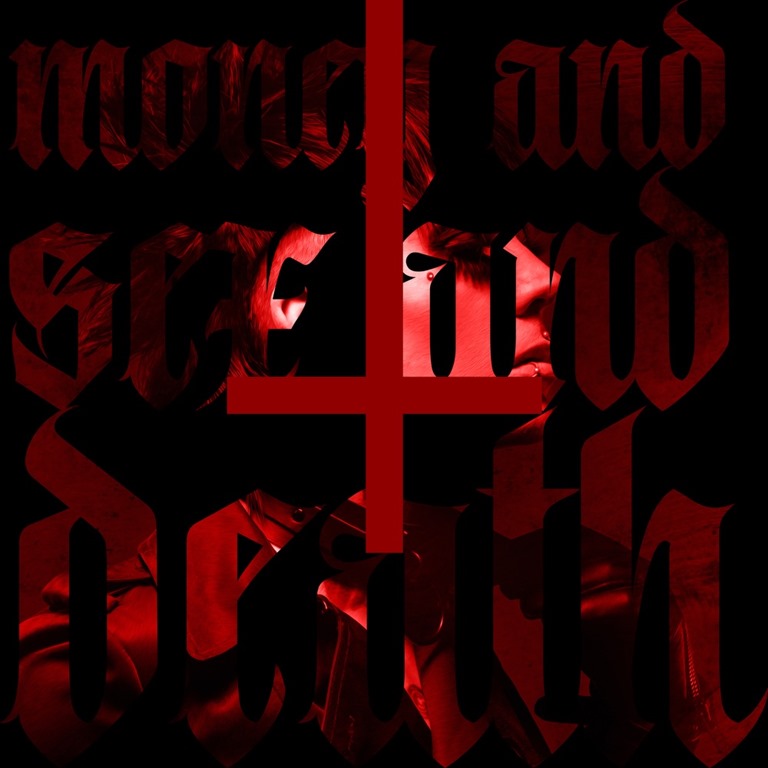
While many acts have a constant faster-louder approach to industrial-black metal, Bellum is unafraid to use all manner of tempos to build atmosphere. This is evident in the record’s first single, the seething ‘Money And Sex And Death’, which builds with writhing tension, like a snake preparing to strike its victim, before exploding into an all out audio assault.

Watch the video here:

Bellum states of the song that “it was inspired by the excitement we feel when we see the world burning around us and the abhorrent personal truths that we hold as sacred. The misery of others has never been viewed by so many angles, and strictly for our entertainment. With ‘Money And Sex And Death’ I am presenting your reflection to yourself.”

AA

82470cdefff212374389243a13b93e13bb08a201

1st June 2022

Christopher Nosnibor

It shouldn’t be a deal, really, but it is: Glytsh are a rare thing, namely an all-female industrial duo, comprising French singer Jennifer Diehl (aka Luna Blake) and Swiss guitarist Claire Genoud (aka Hella Sin). Like so many ‘rock’ and metal-orientated genres, industrial of all shades, from the electro to the metal end of the spectrum is depressingly the domain of the white male.

In this predictable, recycle-heavy world of white male angst, Glytsh are a breath of fresh air. But Glytsh aren’t a breath of fresh air because they’re women: they’re a breath of fresh air because they’re fucking exciting. While ‘(Hard)core memory’ still works with established tropes, their debut single, a cover of Nine Inch Nails’ ‘Closer’ set out their stall and managed to draw a fair bit of positive attention in the process. On the one hand, it was a pretty faithful cover, but also had enough of a slant to it to show that they’ve got game. And now, with the arrival of ‘(Hard)core memory’, Glytsh prove that they’ve got both style and substance, meshing together both electro and metal elements in an explosive three and a half minutes.

From a low, bass-heavy electronic intro, ‘(Hard)core Memory’ starts slow-grinding and sultry before tearing into a lumbering rock riff with screaming metal vocals, a collision between Rage Against The Machine and Marilyn Manson. It’s pretty full-on, and that’s before the Slash-style guitar solo blasts in near the end.

‘(Hard)core Memory’ has got the lot, and yet I somehow suspect that Glytsh have got a lot more to offer yet.

AA