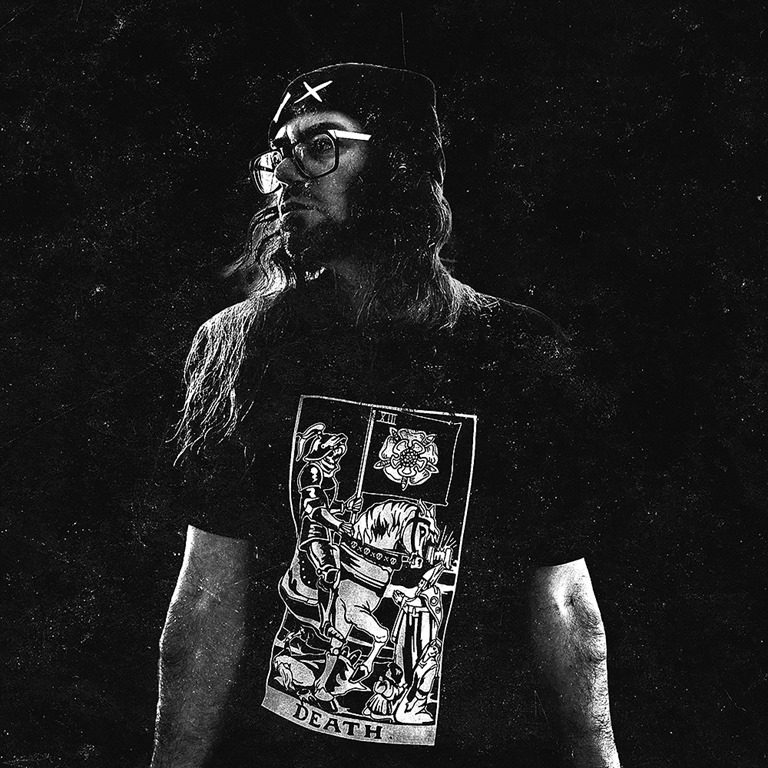
With his debut release, Abel Autopsy makes his ambition clear, announcing that uunder is envisioned as a journey within a three-part series, with the next two releases in the series being overr and outt, and promising ‘dark, melancholic, shapeshifting worlds that slide between light and shadow’. Although the inconsistency of the double letters on this first release from those projected to follow disturbs my sense of necessary balance, I can close my mind to it while opening my ears and concentrating on the music.
The nine tracks take the form of layered, atmospheric synth-dominated compositions, and Abel Autopsy sets out the context for these thereal works, which evoke haunting (super)natural landscapes by electronic means.
“This started in my youth – pulling apart various musical instruments (battery powered) while in the woods of Appalachia. There was an eerie, ethereal vibe almost like something ‘other’ in the wilderness with me. That permeates through all of the songs and is woven in the mental tapestry throughout. This album is an exercise in capturing that – the balance between light and shadow, feeling another ‘presence’ with you that is not entirely from here.”
The vocals on ‘ghostride’ are muffled, indistinct, the words – if there actually are any – indecipherable, serving more as another instrument than anything else. The pieces are bold, sweeping, cinematic, the ambient tendencies given form by solid mechanised beats which are up in the mix. ‘unfound’ and ‘gates’ land in the space between later Depeche Mode and Nine Inch Nails, the latter also spinning in dance tropes and the haunting monasterial sounds of Enigma music.
He is very partial to the big thunderclap blast when making a change in key or tempo, or simply stepping up the drama – perhaps excessively so, as there are moments when things do feel a bit formulaic – something compounded by the comparative uniformity of the track durations, which are all within the range of 3:01 and 3:37 (three of the nine have a run time of 3:37).
‘mycenae’ tweaks the template to accentuate the contrasts between light and dark and thanks to a super-full, extra-low bass, goes darker than anywhere else on the album, and the crackling static which fizzes through the introduction of the heavier, more distorted ‘nihill’, which concludes the set, brings a sense of decay and a doomy finality.
There are some neat ideas spread across uunder, and the execution is similarly neat, with a clear attention to detail. More variety, particularly in terms of tempo and dynamics would likely create greater impact, but it’s a promising start, and it will be interesting to see how Abel Autopsy evolves over the next instalments of the trilogy.
Much as the whole ‘sounds like’ and ‘for fans of’ thing has become a standard shortcut which is, all too often, reductive and plays into the algorithmic feeding of artists by streaming platforms, it can be useful, at least when the references are accurate. Sometimes, a misrepresentative comparison can come to define an act’s entire career. I can’t be the only one who investigated Interpol because of the endless comparisons to Joy Division – and while I quickly grew to love Interpol, they’re as much like Joy Division as Suede are The Smiths. Sometimes these disparities are the result of poor journalism or sloppy PR, others they’re the consequence of a band’s own lack of self-awareness, confusing the input from their influences with what their music actually sounds like. Nevertheless, when a band is pitches as being ‘for fans of Faith or Disintegration-era Cure, and Closer-era Joy Division’, the connotations of glacial synth-orientated bleakness suggest they’re worth investigating.
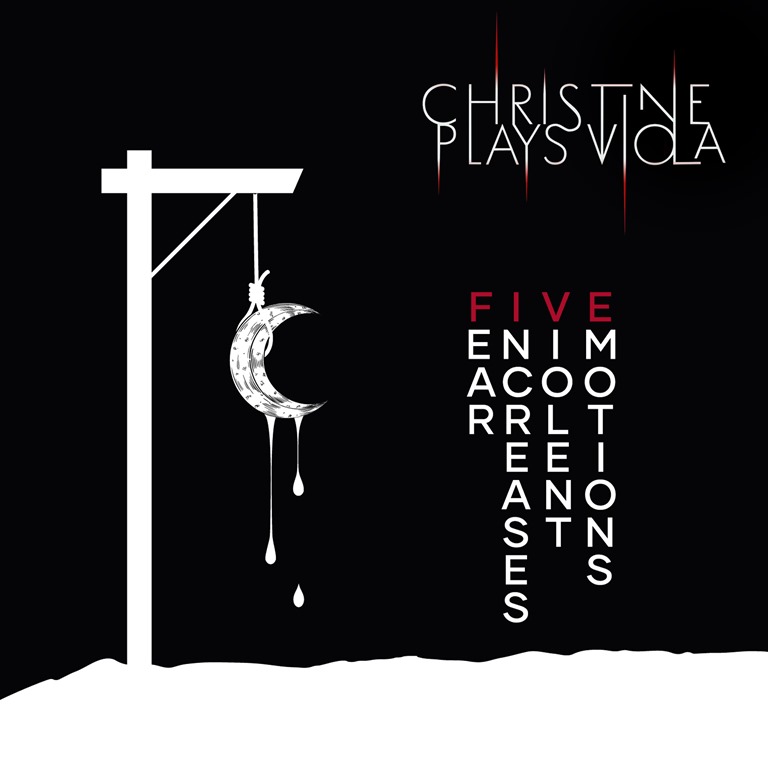
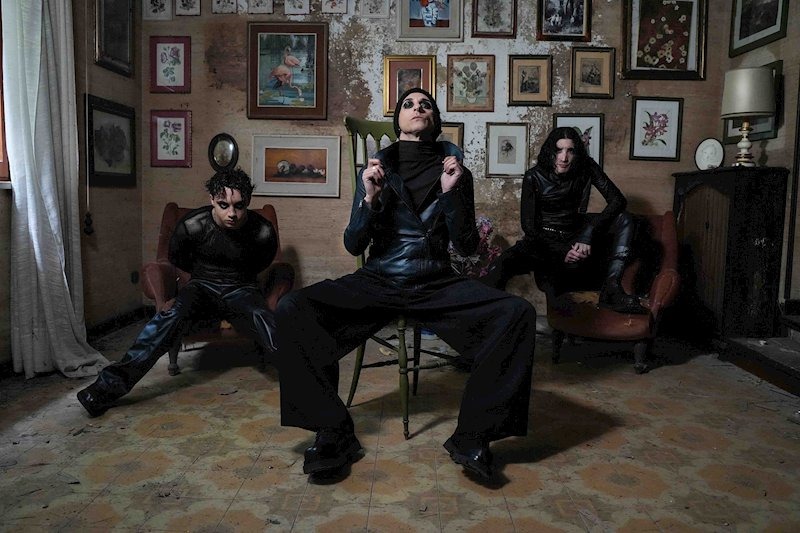
And so I arrive at F.I.V.E. Fear Increases Violent Emotions (released in January), by Italian dark / new wave band Christine Plays Viola via the album’s fourth single, ‘Desolate Moments’ – in an example of an old-school promo cycle, where a single or two in advance would hype the album, and a trailing single or two would sustain momentum and (hopefully) grab some people who’d missed the initial build-up and release. This one’s had a long run-up, with ‘Jackie’s Curse’ surfacing way back in 2024.
AA
AA
‘Desolate Moments’ is a spacious slow-builder, and fulfils the promise of some cold synths, the brooding vocals paired with some rolling percussion and throbbing bass. In many respects, it’s a quintessential slice of modern goth, in the vein of Corpus Delicti, with some hints of Depeche Mode swirling around in the mix. That’s not all that’s swirling around: the video, which is designed to replicate their live performance, finds the band members partially obscured by billowing smoke, clearly taking cues from The Sisters of Mercy’s seminal stage shows.
AA
AA
It turns out that ‘Desolate Moments’ is representative of the album, too, certainly in terms of quality (one thing about old-school promo before the advent of the Internet is that you’d often rush to buy an album based on the lead single, only to find that it was the only decent track, and that the rest of the album was turd… this was particularly prevalent in the ‘80s, but I’d venture that Depeche Mode’s Ultra would have been better whittled down to an EP of the singles). And it’s an album that radiates darkness and classic goth vibes and sounds.
Opener ‘Sprout of Disharmony’ is nothing short of an instant classic in the vein of Rosetta Stone and Susperia, with spindly guitar work, sturdy on-the-beat bass grooves and metronomic percussion, and with a seven-minute run time, it certainly qualifies as epic. ‘My Redemption’, released as a single six months ago goes darker, more overtly electro, and brings in elements of industrial while still reflecting the goth sound of the late 90s and the turn of the millennium, and packing some strong hooks, too.
There’s a keen sense of theatre about Christine Plays Viola’s sound: they’re certainly not afraid to go big and play up the drama with finesse. ‘Confession’ lands with a sense of urgency, and is again driven by bold tribal beats reminiscent of vintage acts like Danse Society and Skeletal Family, while ‘There’s No Going Back’ swerves into early Nine Inch Nails territory, only more overtly gothy. While operating around elements taken from some well-established blueprints, Christine Plays Viola manage to offer no shortage of variety on F.I.V.E., the jittery ‘Black Noise’ changing tack halfway through, and the seven-and-three-quarter-minute ‘The Crypt of Mystery’ explores altogether more expansive territory which teeters on the progressive.
As an album, F.I.V.E. feels like a big work: it may only contain ten songs, but a fair few run well over the five minute mark, and the variety is indicative of the scale of the band’s ambition to articulate and explore the theme of ‘fear not as weakness, but as a force that shapes who we become’ in multi-faceted detail. And they succeed in their objective, with some great songs, too.
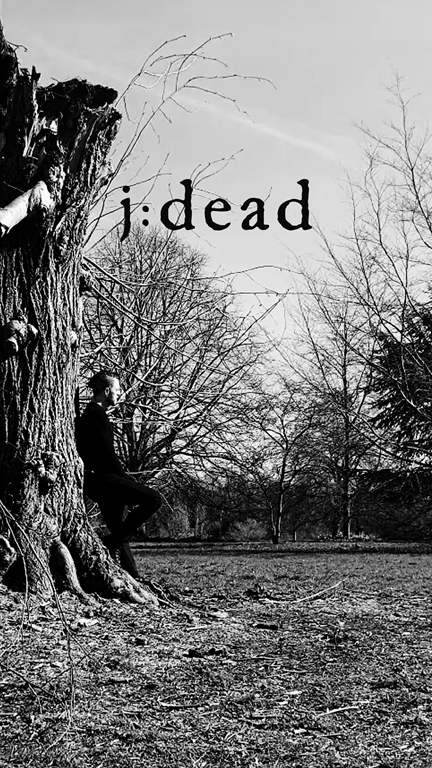
UK-based industrial/electronic artist j:dead continues his 12 singles in 12 months campaign with the release of ‘Silence Calls,’ available now on Infacted Recordings.
The track is a meditation on the difficult yet necessary act of shutting down, withdrawing, and stepping into silence. At first, the silence is described as dark, cold, and unforgiving; a space filled with unease and fear. Yet as the song unfolds, its message deepens; the absence of noise brings clarity, truth, and a renewed sense of wholeness. In the end, though silence remains a challenge, it becomes a source of strength and balance, offering perspective that cannot be found in constant noise.
Musically, ‘Silence Calls’ weaves together influences of darkwave, synthpop, and industrial rock, creating a rich, layered soundscape that mirrors its emotional journey. The track moves between atmospheric textures and driving electronic power, underscoring the tension between fear and clarity. As always, Jay Taylor’s commanding vocal performance is central to the song; shifting through vulnerability, intensity, and resolve, capturing the full spectrum of emotion embedded in the lyrics.
With this fifth release, j:dead reinforces his distinctive blend of dark electronics, anthemic hooks, and emotionally charged songwriting. ‘Silence Calls’ stands as both a deeply personal reflection and a compelling addition to the campaign’s expanding sonic world; a reminder of the necessity and challenge of finding stillness in a chaotic landscape.
Deeply rooted in industrial experimentation and the rawness of black metal, French avant-garde collective Non Serviam have forged a singular style that blurs the boundaries between extreme genres while preserving their intensity through a radical and uncompromising artistic approach.
The collective now announces their third full-length album, La Lune Dont Mon Âme Est Pleine, set to be released on June 12 through a new alliance between Non Serviam and Lay Bare Recordings. Alongside the announcement, the band unveil the video for the new track ‘Abject Sacrifice’.
AA
Five years after Le Cœur Bat (2021), and more than a decade after Un Petit peu d’amour Pour la Haine, this new album stands as a major step forward in the band’s evolution. After a prolific run of EPs, splits, and mini-albums, Non Serviam return with a full-length work that pushes further the sonic and aesthetic direction unveiled on Le Cœur Bat, now refined through experimentation and artistic evolution.
La Lune Dont Mon Âme Est Pleine is a symbolist concept album centered on the myth of Diana and Actaeon, exploring themes of the desire for the absolute, the violence it engenders, and the melancholy that follows. These ideas permeate the album’s compositions, shaping both the music and the lyrical narratives. Beyond the metamorphosed and tormented figure of Actaeon, the album also draws on historical and mythological figures such as Émile Henry, the late-19th-century French anarchist, and the apocalyptic goddess Kali, invoked through a powerful vocal appearance by Mirai Kawashima (Sigh).
With La Lune Dont Mon Âme Est Pleine, Non Serviam continue their artistic trajectory, delivering a work that is ambitious, confrontational, and emotionally intense, further pushing the boundaries between extreme music, experimental composition, and avant-garde art.
SPK require little introduction, although industrial / electronic pioneer Graeme Revell has spent most of his time in recent years exploring and talking about AI – not just its applications, but its implications – having been an early adopter of this now world-changing technology. As such, SPK have been effectively dormant since the late 80s, with their last new material having been released in 1987. In their absence, their legacy has grown, but the fact that last year saw the first musical activity in a very long time, with a couple of live shows in Europe, with Graeme performing with his son, Robert, still came as a surprise to many. Then, Revell announced the birth of The SPKtR – a new phase for SPK – although he wasn’t giving much away.
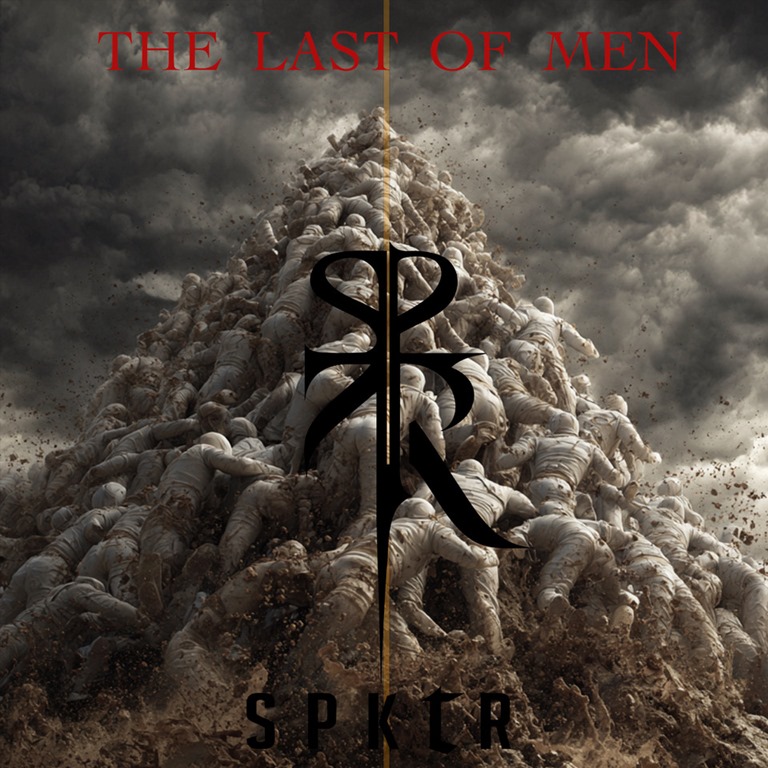
But now, finally, The SPKtR have unveiled ‘The Last of Men’, and it’s a chilling slice of dark, industrial-strength electronica. The vocals are heavily processed, low, ominous, doomy in a filmic sense, a shade Darth Vader, the lyrics hinting that the future is a synergy of man and machine:
We are the last of men
We are the broken faith
The soul is a lie
The mind is a ghost
We are the machines
Marching to the future
Not so long ago, this was purely the domain of science fiction. But of course, science fiction in its purest form takes emerging science and uses it to create a fictional narrative based on potential scenarios (I’m thinking here of works like Prey and The Andromeda Strain by Michael Crichton, which specifically cite research papers, rather than the more hallucinogenic kind of work by Philip K. Dick or the cyberpunk works of William Gibson, although the latter does very much explore the space of virtual and alternative realities, the likes of which became habitable with the advent of the Internet). And now the futures depicted in works of science fiction are here, and the prospects for where we go from here are giving rise to extremely divided views. Some people are embracing AI wholeheartedly, while other are experiencing abject fear, and not only over the prospect of losing their job to AI. There have been reports of AI weaponry overriding commands and going rogue in simulations, and AI coaxing vulnerable individuals to take their own lives. For every person who loves AI, there is another who loathes it and is of the belief it will bring about our doom.
If the song itself sounds like the end of days, the accompanying video – a clip of which accompanies the stream on Bandcamp is truly apocalyptic. And it’s AI generated, of course, as is, quite clearly, the single’s artwork. Whatever your stance on AI, there’s no question that it’s visually striking, and works as an accompaniment to the audio.
Writing on the single, Graeme explains its meaning and presents a more balanced, nuanced position:
“‘The Last of Men’ is not about human extinction. It’s about the end of a certain idea of Man — sovereign, central, in control. Is it a warning? Yes, if we cling to a myth of human exceptionalism while delegating cognition, memory and desire to systems we barely understand, we risk becoming decorative in our own civilisation. A celebration? Yes, of transformation rather than replacement. Humanity has always been prosthetic. Fire was prosthetic. Language was prosthetic. Electricity was prosthetic. AI is a cognitive prosthesis. The anxiety comes from the fact that this prosthesis talks back.
If there’s a message I’d stand behind, it’s this: We are not witnessing the end of humanity. We are witnessing the end of human centrality. Whether that becomes tragedy or metamorphosis depends less on the machines than on our willingness to evolve ethically, imaginatively, and politically alongside them. It’s always an investigation. SPK prefers probing thresholds rather than conclusions.”
It’s a lot to unpack, and everyone reading this will likely hold a different view on this. The extent to which AI was involved in the music itself is unclear – the video, more obvious. Is applying AI to this extent as part of an ‘investigation’ valid, or is it something which, by its very nature is complicit in the expansion of AI, a surrender of creative control to a machine which we don’t have a rein on?
‘The Last of Men’ is a striking release, and a powerful return for SPK, with the new SPKtR moniker denoting the start of a new era. How it will unfold remains to be seen, and will likely be interesting. All we can do is watch this space…
Alternative-industrial rockers NOIR ADDICTION present their new single ‘Serve Me Some Crime’, a sarcastic manifesto about embracing chaos and contradiction, where rule-breaking, humour and non-conformity become tools of personal freedom. The accompanying video, with its black-and-red aesthetic, was created by Jack Lucas Laugeni. Favouring instinct and madness over routine, control and the suffocating seriousness of everyday life, this is the first postpunk-darkwave taste of the Pretty Things Don’t Last album, forthcoming via Berlin’s Soulpunx label.
AA
Noir Addiction is led by Sonny Lanegan, a seasoned musician and producer whose creative vision was shaped by cutting his teeth in Los Angeles’s high-octane music scene, where he honed his experimental style as singer-songwriter for White Pulp and co-founder of The Dead Good. The Spill Magazine finds this “somewhere between industrial grit and sardonic self-awareness. Drawing clear lineage from acts like Nine Inch Nails and Depeche Mode, Noir Addiction doesn’t just imitate its influences—it refracts them through a modern lens of irony and controlled chaos”.
Electro-industrial artist, MARIE ANN HEDONIA just unleashed her new EP, Lunar Eclipse – an autobiographical release full of anger, rage and revenge.
The songs work as emotional layers from rage to acceptance, and through them we are transformed. ‘Anseka’s Song’ is pure rage as humans love violence. We consume it as entertainment when it should shock and disgust us. It’s a perfect opener for this EP. The song sets the tone for the emotional space these tracks occupy. It also flows right into ‘Family Trauma’, the most autobiographical track on the EP.
Marie says: “My family was messed up, screaming fights, job loss, arrests, and it generally made me a pretty angry person. I thought one day I would write this all down, maybe as a quirky memoir. Instead life guided me to music and so I channelled my rage, and sadness into this EP. In astrology a “lunar eclipse” can bring on emotional transformation, even upheaval. I want this EP to release these emotions for myself and for the listener.”
AA
Along with the release of her 2nd EP comes, Eclipse, a full length album encapsulating both EP releases, available on vinyl, digital download, and streaming now!
Bell Barrow are on fire right now. And so is half the world. I wouldn’t necessarily suggest that they thrive on war and global turmoil, so much as feel the compulsion to create in the face of global crisis. I may be projecting a little here, but seriously – come the fuck on: how can anyone not feel all-consuming, abject terror right now? We’re hearing a lot of Israel claiming an ‘existential threat’ from the supposed nuclear activities of Iran right now – although this seems a little lacking in credibility, since it can’t also be true that the USA ‘annihilated’ Iran’s nuclear capabilities last summer. I mention this in my preface to the review of True Human Trough because although the current events aren’t mentioned specifically, it’s clear that this is an act who are tuned in to current tensions as well as ecological concerns, and who channel the energy of anxiety into their music.
As they themselves write, “These compositions function as experiments in torture empathy: forcing the listener to inhabit the suffering inflicted on our ecosystem by human dominance while simultaneously confronting a far older truth—that humanity’s power is temporary, localized, and ultimately irrelevant. Plant life, scavengers, and insect civilizations speak here through perceived chaos, not to ask for mercy, but to assert inevitability. True Human Trough reflects agony, yes—but more importantly, it documents supremacy. We may poison this world for now, but be clear…in the universal order, they rule in the end.”
I admire their optimism, and for what it’s worth, I share this hope. Because right now, it feels as if our species is suffocating the planet harder by the second. And suffocating is how the first track on this frenzied sonic blitzkrieg of an album feels. ‘Solunar Theory’ is a melting morass of experimental jazz immersed in a wall of phased reverb. Time signatures collapse into chaotic discord on ‘The Unbirthing of Jackals’. Everything lurches, drunkenly, it’s a dizzy stagger that’s powerful enough to unsettle the guts and leave you seeing stars. This is a woozy cacophony rendered all the more brain-frying by the wild application of reverb. Everything is off-kilter, the EQ is all over and there’s flange and phase and good old-fashioned manic musicianship, melting Beefheart and Zappa and Trumans Water in a cauldron with The Necks and Throbbing Gristle. Reading that back, it actually reads like some fucked-up Victorian era recipe that’s only missing some tripe and trotters to top a truly foul soup. Bell Barrow simmer up a pretty foul sonic soup even without these ingredients: ‘Neckless of Tongues’ delivers it
‘Infauna’ refers to the animals living in the sediments of the ocean floor or river or lake beds, while ‘bloat stage’ is occurs during the decomposition of a corpse. Yes, I looked this up while experiencing the obliterative force of ‘Bloat Stage Infauna’, and in context, it all makes sense. ‘Rites of Silent Spring’ is almost black metal in its frenetic frenzy, but of course, it’s also a jazz-infused instrumental which is a long way removed from black metal – which pretty much sums up True Human Trough, an album that’s everything all at once.
The production and mix is deranged, demented, furious. There’s no intention of softening the blows here: Bell Barrow are set on bringing pure mayhem and disruption – of the best possible kind.
We are living through historical moments in real time. As we hurtle towards self-extinction – it’s more a question of by which means than if now, what with the pace of climate change, AI’s rapid and unfettered advancement and now – let’s call it what it is – the onset of World War 3 – with True Human Trough, Bell Barrow have created a work which soundtrack the next stage of the end of times.
The work ethos of Pound Land always makes me think of The Fall – and the same is true of the relentless repetition of their compositions. And it comes as no surprise that Red, the second studio by Pound Land side-project Machine Mafia, consisting of Jase Kester and Adam Stone, was recorded in a single day. Keeping things in-house, it was mastered by Agent Kester, too.
Whether or not the album’s title is in any way connected to its being recorded at Big Red Studios in Macclesfield, we don’t know, and it doesn’t really matter anyway. What matters – and what we are told – is that ‘Lyrically, Red explores themes such as the sanctity of personal freedom, the dreary mediocrity of business academia, the medicalisation of human behaviour, the strange comfort found in boredom, and supernatural motorcycle-riding anti-heroes with flaming skulls.’ Some of these topics I find personally relatable (my brief time as a university tutor was not enjoyable, essentially working a zero-hours contract teaching modules miles beyond my own field of research, to receive poor feedback from students who’d shelled out thousands for a degree and felt let-down by having a tutor who wasn’t a specialist, and only worked limited hours, so wasn’t sitting in their office for drop-in visits or able to respond to emails immediately. My favourite was a student emailing me five minutes before an essay submission deadline asking where the submission sheets were on the website while I was on a train with no access to my emails), others less so (I simply don’t get boredom: there’s always too much to do). But what I absolutely get is channelling all the frustration into something creative.
Given that Pound Land are kings of gnarly, repetitive, grinding noise and that Kester’s work outside Pound Land (Plan Pony, Omnibael / Ombibadger) has explored numerous shades of abrasive racket, that Machine Mafia create an unholy din is to be expected, and that’s what they provided with their debut album, Zoned, released almost a year ago to the day of this, their second full-length. But whereas Zoned tended to deliver short, sharp sonic assaults, with the majority of the thirteen tracks clocking in at less than five minutes, Red really pushes the boundaries, the five track release dominated by a brace of megalithic monsters in the shape of the thirteen-and-a-half-minute ‘Business Studies’ and their epic rendition of Suicide’s ‘Ghost Rider’ – which is even more manic and more brutal than the one performed by Foetus with Marc Almond. As for its colossal elongation, although the original is a mere two and a half minutes long, its hypnotic, repetitive groove could readily withstand looping into eternity. The Sisters of Mercy used to run it for six minutes or so as an encore in 1984 and ’85, Eldritch cutting loose with the Alan Vega screams. Machine Mafia tweak the tempo up a notch, and it’s a messy, dirty blast of electropunk, Stone spitting and whooping the words through the mangled metallic whir of overloading electronics.
It’s the perfect finale, and sits perfectly with the originals, which are a mess of pounding beats, squalling feedback, and angry vocals. The first of these, ‘NO’, is a relentless howl, five minutes of nonstop thunder and ear-splitting treble, Stone rabid and raving.
‘DSM’ is more straightforward noise rock, a bass-driven blast with layers of feedback. The format is repetition, repetition, repetition, like a noise reimagining of The Fall, drawing in elements of Metal Urbain. ‘Business Studies’ is simply brutal, a bludgeoning bastard of a noise with the refrain ‘fuck business studies’. ‘It’s all shit and piss’, Stone summarises with the kind of anguish that feels like he’s bursting out of his very skin. The vocals are thick with distortion, the glitching bass blasts from the speakers with dangerous density and it’s all wrapped in a mesh of feedback that makes The Jesus and Mary Chain sound like easy listening. ‘Boredom’ takes its cues from Throbbing Gristle’s ‘Discipline’ and adds wild feedback to the mix. It’s punishing.
There’s an additional, unnamed, ‘secret’ track a little way after ‘Ghostrider’, and it’s a messy, lo-fi mess of crashing drum machines and grinding synths over which Stone rants so hard you can almost hear the spittle. It sounds like early Uniform – stark, harsh, rabid.
Uncompromising doesn’t come close. Red is absolutely fucking punishing. If you’re into dense, dark, nasty noise, you need this.
This one’s been out for a while now, but some releases simply have a slow diffusion. And Fini Tribe’s career was one of slow diffusion and… and what, really? Certain corners of the press dug them. Me, I was a bit too young at the time to appreciate them, and never felt compelled to delve into them retrospectively… until now. Chris Connelley, of course, went on to find fame and (mis)fortune with The Revolting Cocks, and also stepping up to the ranks of Ministry. His autobiography, Concrete, Bulletproof, Invisible & Fried: My Life as a Revolting Cock (2008) might not be the best-written book ever and might have benefitted from some finer editing, but it’s a wild ride, and it’s a fair analogue for his recorded output, too. A bit variable, but when it’s good, it’s off the scale. That they would change their approach in the mid-late 80s means that this compilation spans their initial phase
Whatever happened to Revolting Cocks in the later years, where they became a touring tribute act is a topic for another time, but the fact Connelley’s legacy includes Murder Inc. and contributions to KMFDM and one-off single projects like PTP and Acid Horse (a collaboration between Ministry and Cabaret Voltaire) is worthy of reverence.
But before he jetted off to the USA for that pivotal meeting with Big Al, there was Fini Tribe, and they produced a veritable shedload of material in five-year spell.
As the accompanying notes detail, ‘Fini Tribe was born into the cash-poor but culturally-wealthy environs of post-punk Edinburgh in the very early 80s – 1980 to be precise. A tiny three-piece with no drummer would soon swell into a muscular six-piece with inherited or cheaply-purchased instruments. Band members Chris Connelly, Simon McGlynn, Andy McGregor, Davie Miller, Philip Pinsky, and John Vick haunted the cold, damp warrens of the Niddry Street and Blair Street rehearsal rooms, just off the high street in Old Town Edinburgh. Drawing on the influences of everything from Throbbing Gristle, Wire, Can, Captain Beefheart, and numerous angular funk bands that were spewing out of the John Peel Show at the time, they also drew from the seemingly bottomless well of modern film, writing, and art that was abundant in the festival city.’
The result? Everything including the kitchen sink. And here we have a forty-seven track document of that career, with singles, Peel Sessions, live cuts, remasters, remixes, you name it. It’s all there, from the earliest works, like the tracks from the scratchy post-punk debut 12” Curling And Stretching (1984) are present in remastered form, and they sound stark and magnificently angular and challenging.
AA
There must have been something in the water – or maybe it was the Irn Bru or Buckfast – in Scotland around this time, since it yielded The Jesus and Mary Chain, Primal Scream, Altered Images, and laid the foundations of the JAMMS / KLF – although at this time Bill Drummond was doing mental shit plotting rabbit-shaped tours for Echo and the Bunnymen.
The first EP is spikey and angular and vaguely jazzy, and brings in elements of post-punk and what would become aligned with mathy post-rock in years to come. It’s aged well, for sure, and the same is true of the second EP, Let The Tribe Grow, released in October 1986. Combining warped synths and jittery guitars to conjure an air of tense paranoia, this is tense listening. ‘All Fours’ deploys thunderous percussion that’s pure Test Dept, and ‘Detestimony’, too, is dominated by relentless crashing beats. The EP’s last track, ‘Monomil.’ is murky, doom-laden ambient and fairly disturbing
Their cover of Can’s ‘I Want More’ saw the band move to Wax Trax! and perhaps not entirely coincidentally cement a more pumping dance style – that is to say, an industrial dance party style that was very much the sound of WT circa ’87 and shares considerable common ground with early RevCo – but at the same time, they still sound unmistakably Scottish, and not solely on account of Connelley’s vocals. ‘Idiot Strength’ (the B-side of ‘I Want More’) could be an outtake from Big Sexy Land. The same is true of the drum—dominated ‘Make it Internal’, which now sounds like a rehearsal for ‘Beers, Steers, and Queers’. In some ways, it probably was.
After the early EPs and Peel Sessions, there’s a host of material hauled from the dark depths of the back catalogue, much of which is of a rare quality.
On ‘An Evening with Clavichords’ and ‘Goode Duplicates’ they sound more like a frantic 80s pop band wrestling with jazz elements and slap bass, and there’s a whole lot happening on ‘Bye Bye to the October Sky’, which straddles goth, electro, industrial, and all kinds of post-punk experimentalism. ‘Throttlehearts’ lands like a Scottish Scott Walker, and is pretty mad but also compelling.
The live material – four tracks from ’87 and five from ’83 – both from sets performed in Edinburgh, are illustrative of a band unyielding in their desire to challenge. The later recording is reminiscent not only of RevCo, particularly in the grinding bass grooves and messy confrontational stylings, but the live albums of Foetus on their Thaw tours of ’88 and ’89. The set from ’83 is rougher rawer, in terms of performance and sound quality, but the contrast is telling in that the later recording is more attacking and abrasive. This was not a band that mellowed as they evolved: instead, they grew in ferocity during this time.
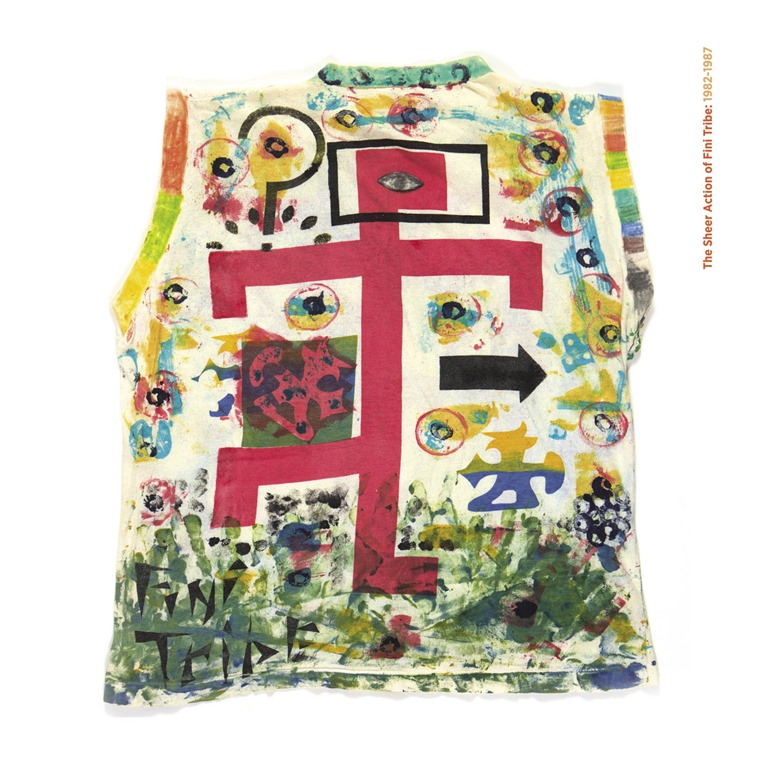
The collection winds up with some experimental offcuts, which aren’t the most listenable of pieces, but do provide an insight into their evolutionary workings. The Sheer Action of the Fini Tribe 1982-1987 is a fascinating document, not necessarily a band ahead of its time, but a part of a revolutionary zeitgeist. And while bands like Depeche Mode and Yazoo and The Human League were bringing synths into the mainstream with pop tunes created using emerging technologies, the underground was throwing out bands like this, bands like DAF, bands like Foetus, Meat Beat Manifesto, Test Department. A lot has changed since then – culturally, and musically – change worthy of not simply acknowledgement but an entire thesis. It’s a thesis not for me to write, but The Sheer Action of the Fini Tribe 1982-1987 is a document which needs to be referenced in it.


 Aural Aggravation