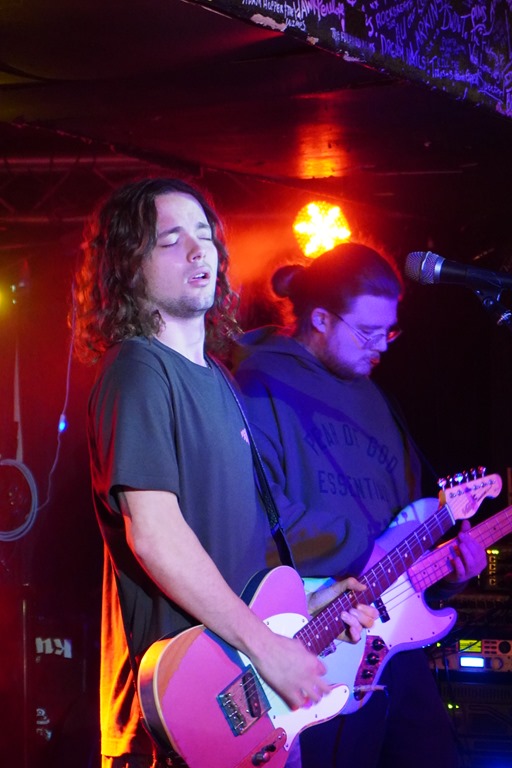
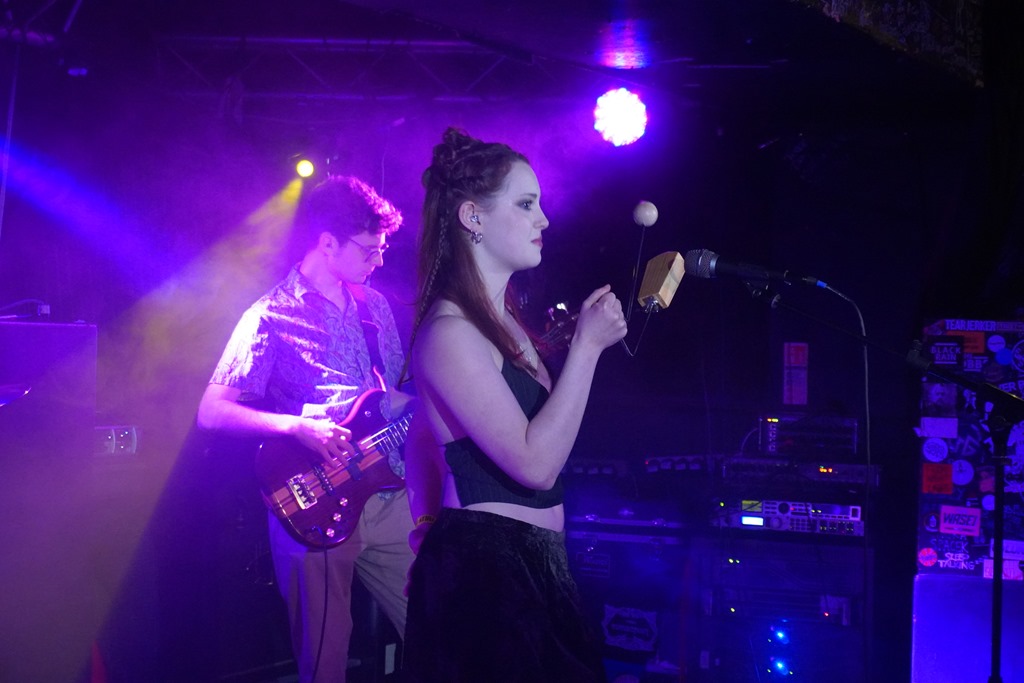
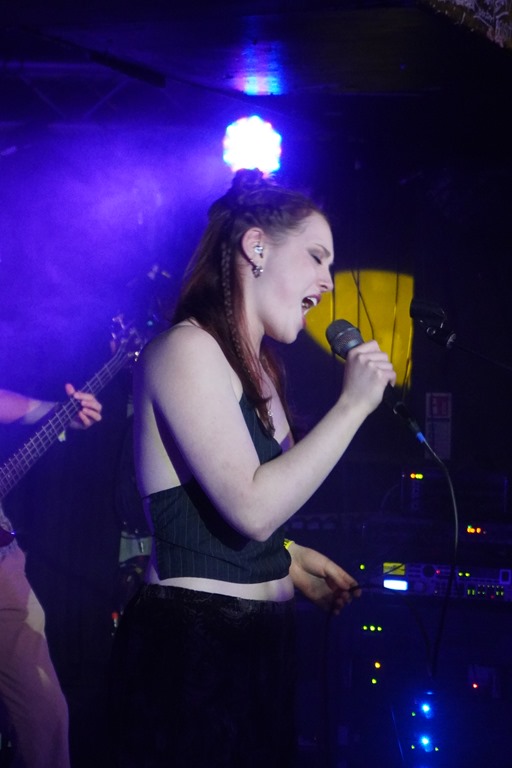
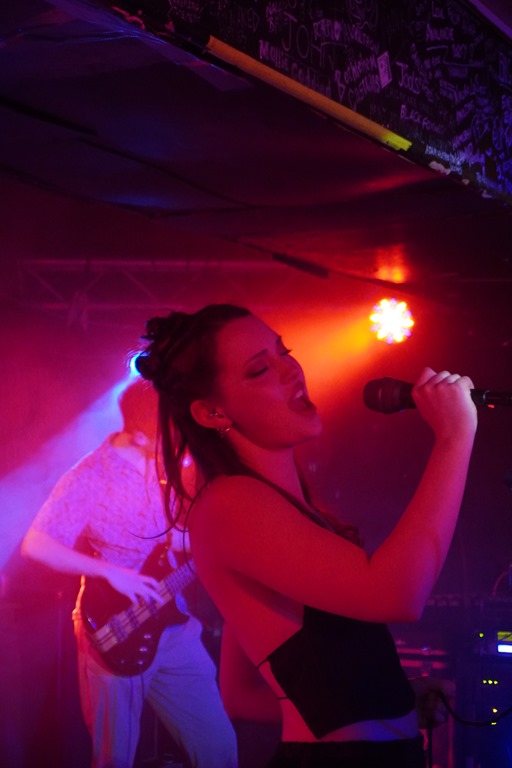
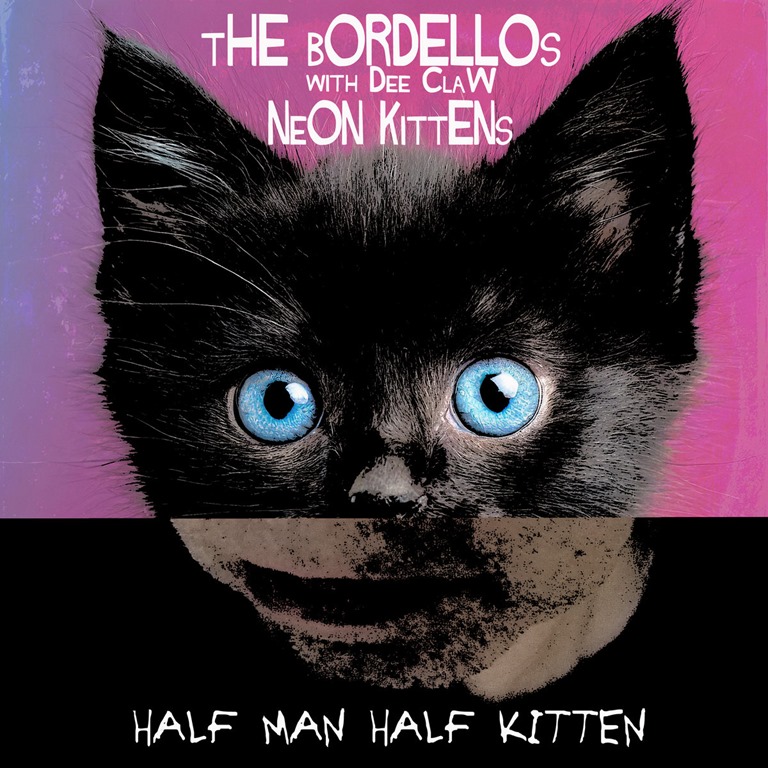
This split release has a lengthy backstory, which is given in full on the label’s Bandcamp page – but the short version is that when York’s Neon Kittens (how had I not heard (of) them, given that they appear to be from round my way and absolutely my bag? I feel ashamed, and fear I cannot even remotely claim to have the finger on the pulse of my local scene right now – but still, better late than never, right?) approached The Bordellos about a collaboration, the latter, having taken an eternity to only half-finish their current album-in-progress, some ten years after the release of will.i.am, you’re really nothing, offered everything they had for a split release. And lo, this is it.
I suppose the eight songs Neon Kittens have contributed here provide a solid starting point to their rapidly-expanding catalogue, and being paired with The Bordellos works a treat. Both espouse the same lo-fi DIY ethic, with a certain leaning toward indie with a trashy punk aesthetic.
That the cassette edition sold out on advance orders hints at the anticipation for the release: for, as The Bordellos describe themselves as being ‘ignored by millions, loathed by some, loved by a select few’, when you’ve got a small but devoted following, they get pretty excited for new material.
‘Set Your Heart to the Sun’ is perfectly representative of their scratchy, harmony-filled indie – kinda jangly, a tad ramshackle, but direct, immediate. Dee Claw’s airy vocal contributions really lift the sound and raise the melodic aspects of the songs. Not all of the songs have full drum-kit percussion, often favouring tambourine or bongos or seemingly whatever comes to hand, and more than any other acts, I’m reminded of Silver Jews or really, really early Pavement – those EPs that sounded like they were recorded on a condenser mic from the next room with more tape hiss than music, but still undeniably great tunes. And yes, they really do have great tunes – overall, they’re pretty laid-back in their approach to, well, everything: remember when ‘slacker; was a thing? Yeah. In place of polish, they have reverb, and these songs tickle the ears with joy.
Neon Kittens bring a rather denser sound and a greater sense of urgency with the buzzy, scuzzy ‘Better Stronger Faster’. A hyperactive drum machine stutters and flickers away beneath a sonic haze of fuzzy guitar: there are hints of Metal Urbain crossed with The Fall and Flying Lizards in the mix, while ‘All Done by Numbers’ brings Shellac and Trumans Water together in a head-on collision – and one suspects any similarity to Shellac’s ‘New Number Order’ is entirely intentional from a band who recently featured on a Jesus Lizard tribute. ‘Cold Leather’ presents a spoken word narrative over a lurching, lumbering morass of discord, held together by the whip crack of the snare of a vintage-sounding drum machine.
The majority of their songs are around the two-minute mark, and crash in, slap you round the chops, and are done before you really know what’s hit you. ‘Deaf Metal’ is a work of beautiful chaos, constructed around a thick, rumbling bass and rolling drums., while the rather longer ‘White Flag’ is almost a stab at a grunge-pop song, while the discordant clang of ‘Sailing in a Paper Boat’ is absolutely The Fall circa Hex Enduction Hour: lo-fi post-punk racket doesn’t get much better than this.
As they near the end of their UK and European tour, Leatherette are back with their latest single ‘Delusional’, the follow-up to the cathartic breakup anthem ‘Itchy’.
‘Delusional’ is a powerful song that explores the complex emotions of yearning for connection while feeling disconnected from the world around you. A song for those caught between the urge to dance and the desire to leave without saying goodbye. The track encapsulates the struggle of wanting to fit in with someone you love while feeling like an outsider in their world.
Musically, ‘Delusional’ weaves together elements from different eras and genres, fusing the gritty sound of ’90s alternative rock with modern influences drawn from hip-hop and electronic music. The result is a dynamic and engaging sonic experience that reflects the longing for connection and acceptance.
After testing the songs live during their second album Small Talk tour last year, they decided to record them spontaneously at home, in messy rooms and using cheap instruments (including unlikely ones such as mandolin and bouzouki).
“Being eternally dissatisfied, but also tireless explorers, we decided to return to our origins, seeking the expressive freedom that can be found in DIY”. The result was then entrusted for mixing to the usual collaborator Chris Fullard (Idles, Boris), and for mastering to Maurizio Baggio (The Soft Moon, Boy Harsher).
Sister Envy may hail from Wales, but they sound like they’re from way out of the reach of Earth’s gravitational pull.
Their third single, ‘Swallowed By The Ground’ begins gently, but builds in successive waves: the delicate, wistful jangle of the opening bars has something of a classic 90s / 00s alternative / indie vibe to it, with an emotional pull that’s equal parts Placebo and The Twilight Sad – and then the chorus powers in on a tsunami of guitar.
They set the expectation that the song ‘combin[es] elements of the epic gaze sound of early Verve or My Vitriol with echoes of the sound of bands like Smashing Pumpkins and Nirvana’, and yes, this much is true, but so many acts draw on the same touchstones without raising so much as a shrug in the direction of their underwhelming derivative sounding efforts. Yet Sister Envy take those same elements and spin pure alchemy.
The best songs are nigh on impossible to break down to the details of why they work, and it’s here where the famed line about dancing about architecture really makes the most sense. Dissect why ‘Smells Like Teen Spirit’ was an instant timeless classic and you will not only end up empty-handed, but you’ll have stripped out the joy, too. Sure, as is also the case with Radiohead’s ‘Creep’ you have disaffection, alienation, dynamics, and a huge, ripping guitar blasting the chorus, but these elements alone do not in themselves a classic make. It’s in the delivery, for sure, but it’s also in that… je ne sais quoi. ‘Swallowed By The Ground’ has it: passion, power, hook, dynamics, and fuck yeah. This is special.
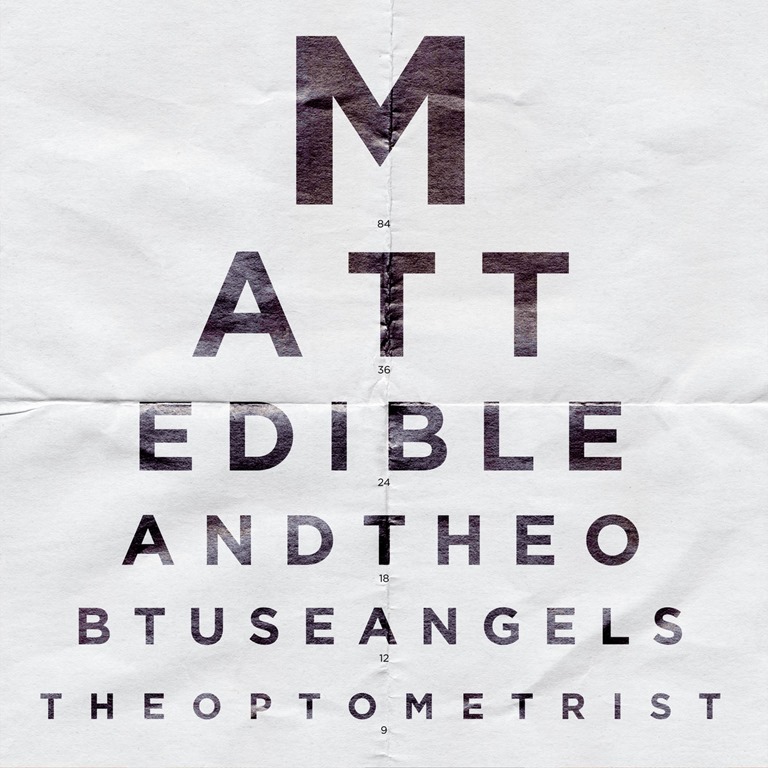
This album seems to have had a long build-up, as well as being some time in the coming. After all, it’s been six tears since Stairgazing, which yielded the instant perennial classic, ‘Advent Beard’. Glam stomper ‘Mirror Shoes’, the first new material after Stairgazing, arrived in September 2023. Since then, we’ve had a couple more singles, in the form of ‘Idiot’ and ‘Triage’,
The title track provides the album’s opening gambit, and it’s an uptempo, upbeat affair. ‘Things are getting better all the time / You have to crush some grapes to make the wine’, Edible sings encouragingly in the first chorus – and it’s a chorus that’s irrefutably catchy, and this is an unashamedly accessible classic rock tune, with a dash of punk energy to push it along. And when I say ‘classic rock’, my first reaction to the guitar in the opening bars was ‘Summer of ‘69’. The fact I appear to have two copies of Reckless on vinyl, while my wife had a copy on CD for the car says this is not a criticism.
Listening to The Optometrist is rather like going round to someone’s house for some beers and they keep remembering songs from their collection that they simply have to play, making for an eclectic playlist spanning a host of genres and decades: the aforementioned glam monster that is ‘Mirror Shoes’ blams along with a stonking beat propelling a big, fizzy guitar and brings hooks galore, while ‘Idiot’ sounds like Nathan Barley for the 2020s yapping over a rhythm that’s got a strong Adam and the Ants vibe, where The Glitter Band glam meets punk, courtesy of former Kingmaker skin slapper, John Andrew.
Despite having the hallmarks of a sad anthem, ‘Cancelled’ is a snappy post-breakup song that reflects on a relationship that was doomed from the start, while ‘Better than Oasis’ is a factually accurate title for this Beatles-esque indie-pop love song which takes a run through ‘classic’ bands and makes nods to their styles, too. Sure, the ‘Queen’ segment may be a bit novelty, but it works in context.
The CD artwork notably splits the tracks into Side A and Side B, corresponding with the vinyl, and it’s clear that despite its constant style-hopping, The Optometrist is structured as an album in the classic style, with both sides culminating in a big, long statement song: for side A, it’s the eight-minute ‘Cat Piss,’ while side B winds up with the immense, nine-minute ‘The Big Reveal’. The former is a piano-led downer while spirals into Muse-like arena-prog territory about three minutes in that seems to offer something of a companion piece to ‘Cancelled’, while the latter slides into a far darker space.
Elsewhere, ‘Dog Dirt’ – thematically connected to ‘Cat Piss’ by more than just the title – is a quintessential indie cut with fire in its belly, and third single ‘Triage’ takes a slower, more reflective turn.
For all its range, The Optometrist works as an album, thanks to some savvy sequencing, which brings the changes in mood and pace at exactly the right points. Above all, the quality of the songwriting is right there throughout.
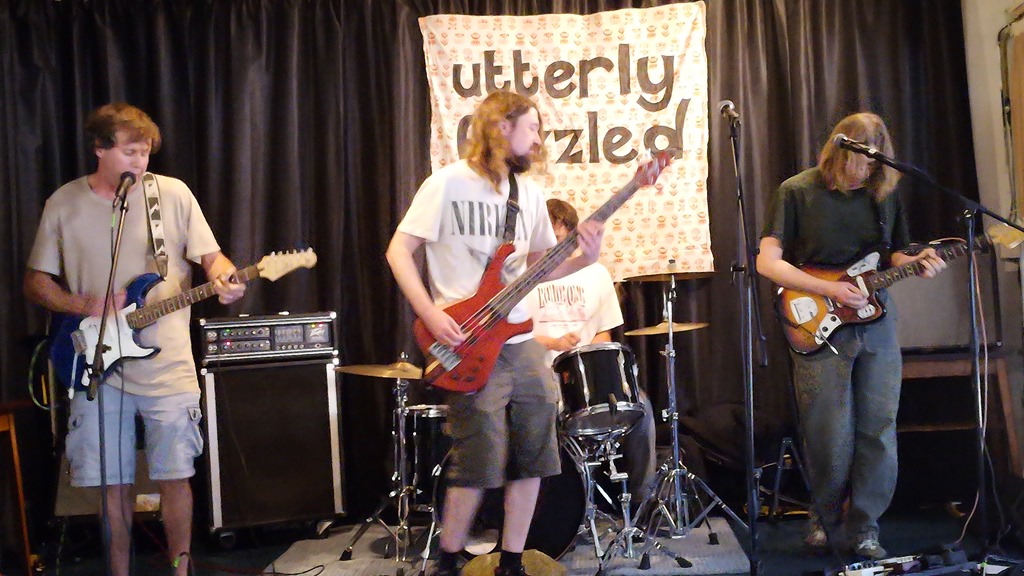
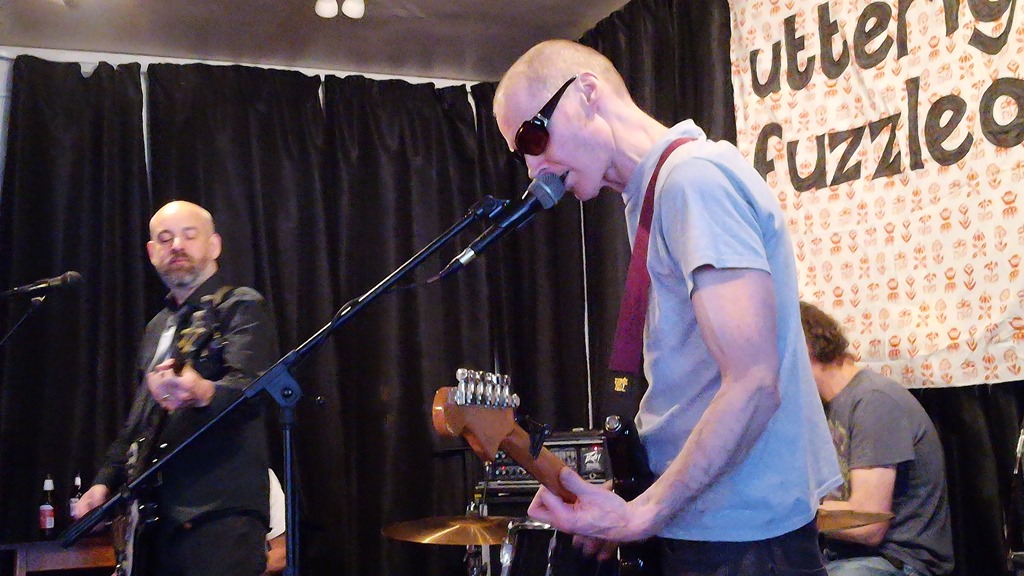
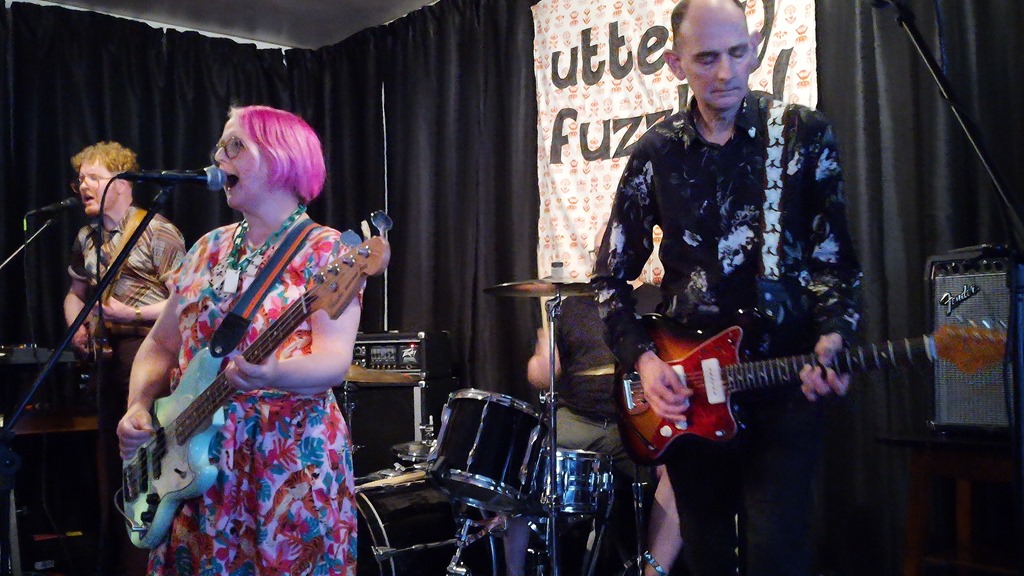
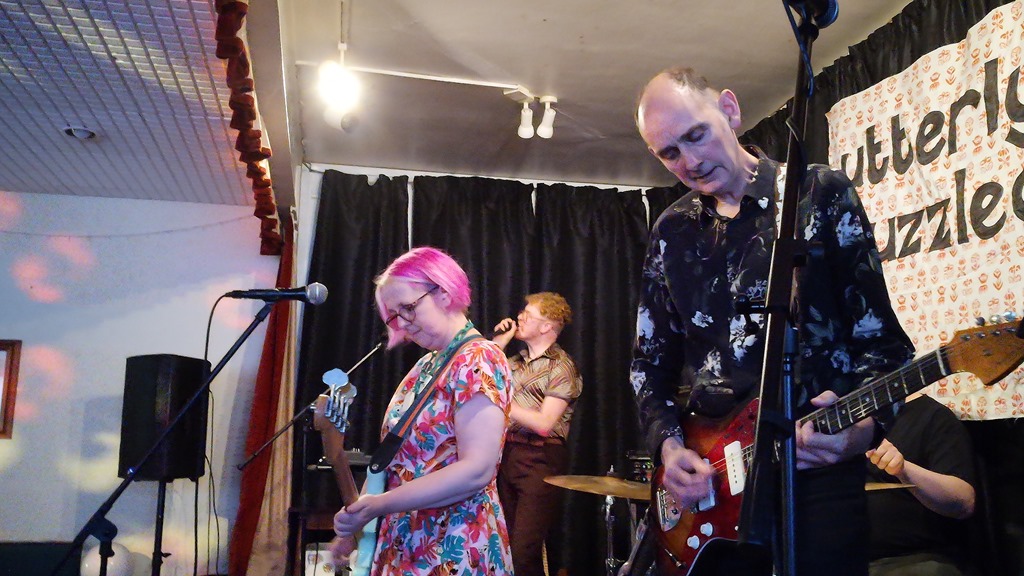
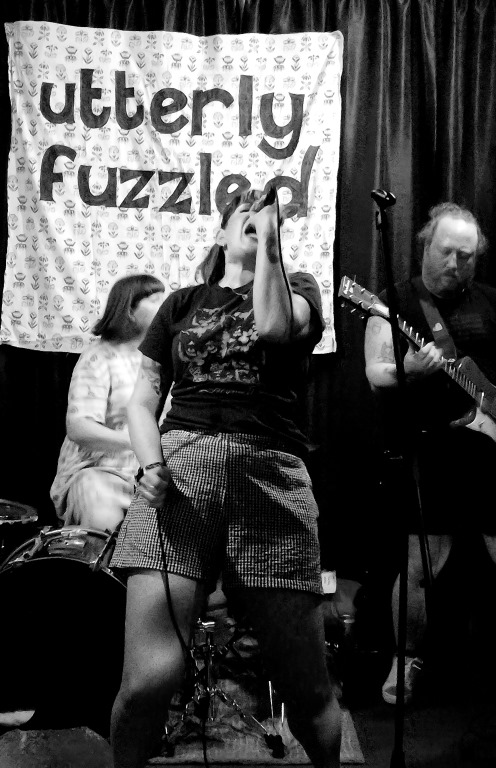
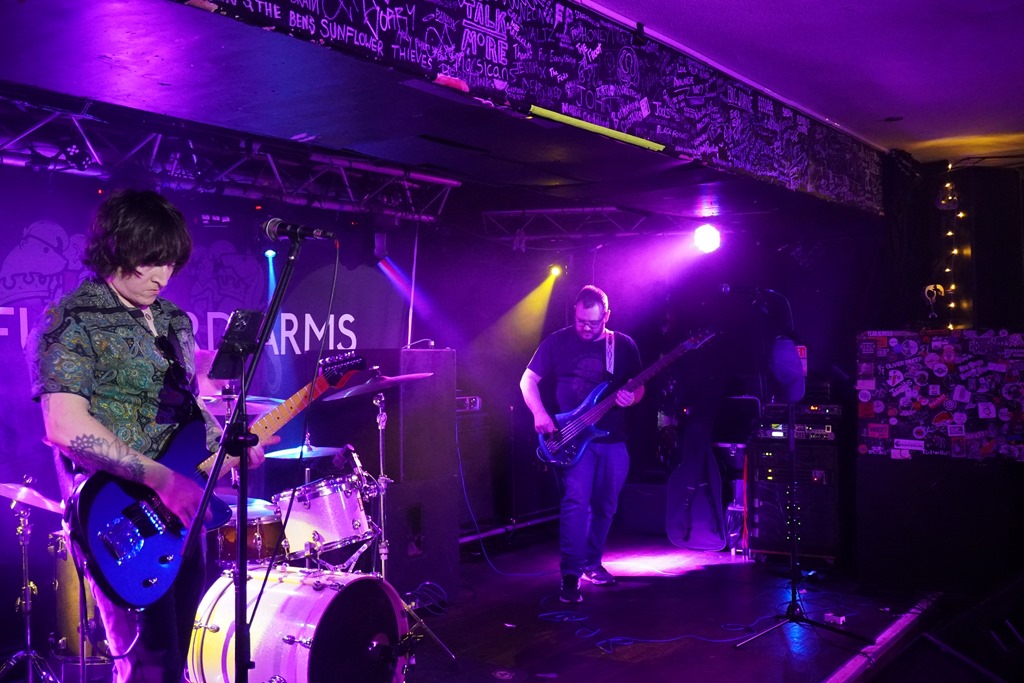
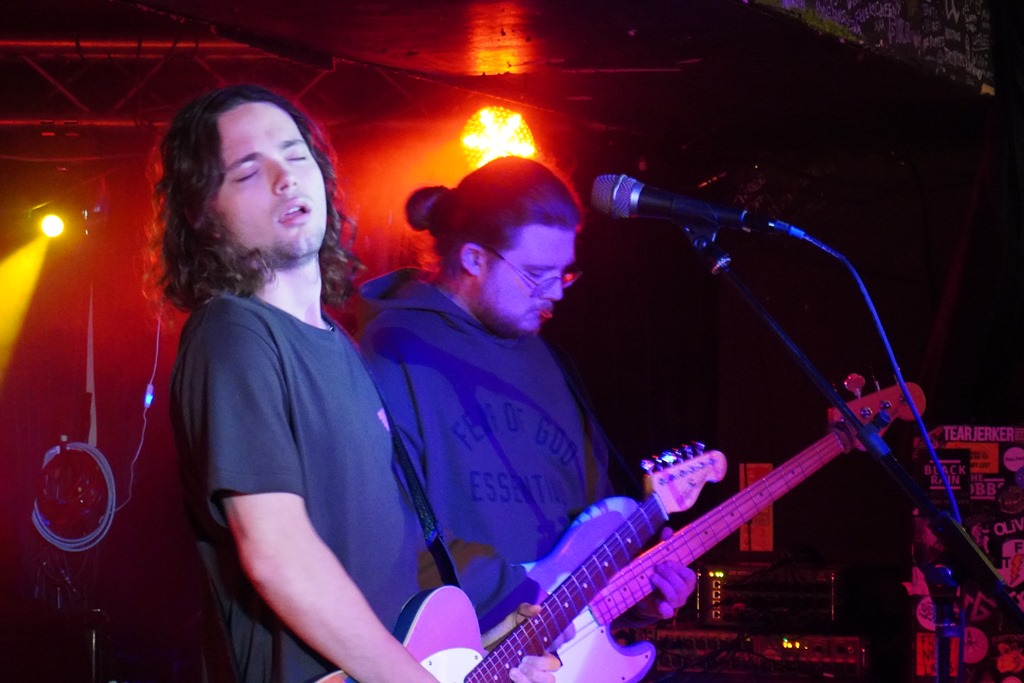
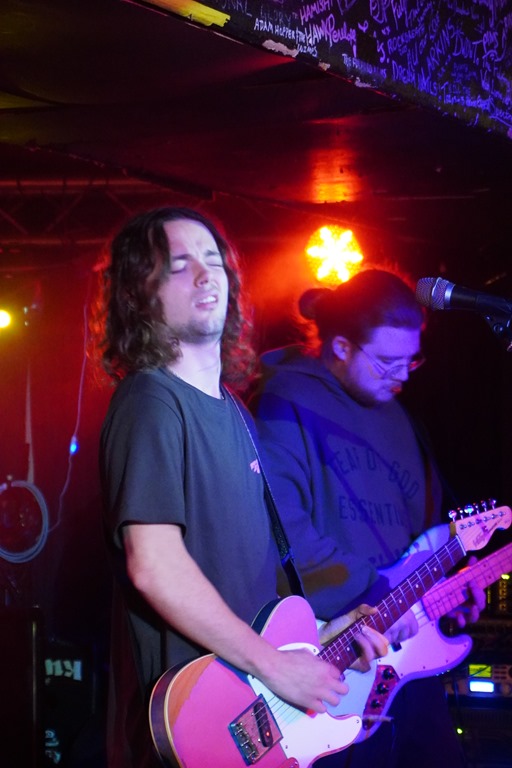
As was the case with the previous instalment of Blowing Up the House, an event curated by local legends Percy, the lineup on the night bears almost no resemblance to the one advertised when the event was announced, but the one we got was perhaps even better. Certainly, no-one’s complaining, and plenty of people have turned out despite the early stages of a storm bringing some heavy rain.
Tonight is a night of mixed emotions: it’s the penultimate gig hosted by The York Vaults, a grass roots venue within spitting distance of the train station with a capacity of around 100, which has hosted some great, great gigs, hosting out of town touring acts as well as local bands cutting their teeth and building fanbases. It’s also a magnificent celebration of the quality and range of acts on the York scene, the likes of whom have been mainstay features of the venue’s listings – alongside the inevitable tribute acts, who, love them or loathe them, are major draws and bring essential revenue to this type of venue.
The fact the Vaults is closing is a major blow to live music in York, and is just one more example of the painful collapse of the grassroots circuit.
Relative newcomers and homegrown talents Deathlounge, who pitch themselves as exponents of alt-rock / emo, serve up a grungy alty rocky racket, and there’s a hint of Fugazi, a dash of post-hardcore. As much as they do incorporate elements of contemporary alternative, there are times that they sound like a band you’d hear on John Peel in the early 90s. The mid-set slowie, I’m convinced, had the same chord sequence ‘Two Princes’ by The Spin Doctors. They’re far and away at their best when they’re on the attack, whacking out infectious riffs nailed to a solid rhythm section, and as openers, they’re hard to fault.
Deathlounge
The same can’t be said in all honesty of The Sound of Glass… One man, a guitar and a machine that does the rest. Last time I saw ‘them’, back in 2010, they were a full band going simply by the name of Glass. It’s not clear what happened to the rest of the band, but Alexander King, sporting a vest, delivers some terrible posturing, some terrible lyrics, some terrible American affectations, and a terrible mix with the drums almost completely buried. Unfortunately, his chat between songs isn’t: “We are The Sound of Glass… All of us. This is a song about mad cow disease. Sing along if you know the words….” To make matters worse, some ultra-wanky guitar solos interrupt the flow of some cringe AOR cack and the occasional power ballad. It may be forgivable to an extent, and there is absolutely no questioning his technical proficiency – the guy is clearly an outstanding musician: the main issue remains that as a performer and songwriter, he’s just not nearly as good as he thinks he is.
The Sound of Glass
Fat Spatula sit at the opposite end of the spectrum and are completely devoid of pretension. The start of their set is delayed a few minutes by a pedal malfunction, which turns out to be confusing the input and output. Their brand of US -influenced indie rock is definitely best experienced at high volume, and tonight they deliver a rambunctious set with decibels. Singer / guitarist Neil looks like he has to really concentrate to sing and play simultaneously at a hundred miles an hour, and it’s endearing to see such effort going onto a performance – and his level of effort is matched by the rest of the band, who are sounding their tightest yet. It’s indie played like it’s punk, fast and hard. A song that may or may not be called ‘Jesus in my Bed’ resembles The Vaselines’ ‘Molly’s Lips’ (as popularised by Nirvana). Bassist Presh leaps and bounces and pogos endlessly and Jamie’s drumming is so hard-hitting it takes the top off your head, and the band’s energy is infectious.
Fat Spatula
Knitting Circle have been getting out and about further afield in recent months, and there’s a certain pride in thinking that they’re going nationwide representing York as an act of such outstanding quality. They’re still relatively new, but have everything absolutely together, and they’re straight in with jarring guitar lines and thumping bass and drums. The sparsely-arranged songs are played hard and loud. The guitar is a smash of treble, and they push a single chord to its limit. A lot of their set sounds like The Fall circa This Nation’s Saving Grace, and there’s a strong dose of Gang of Four in there, but a whole lot more besides: they sit comfortably in the milieu of math-tinged noise-rock that’s been emerging from Leeds in recent years – think Thank, perhaps.
Knitting Circle
“Is my guitar too loud? I’ll turn it down”, says Jamie Wilson as he switches instruments. There truly is a first time for everything, and to hear a guitarist volunteering to turn their amp down is proof that Knitting Circle are a bit different. The ‘no guns, no borders’ call for peace is genuinely affecting, while the choppy angularity of ‘I Am the Fox’ brings a rush of dynamism and a tight groove.
Knitting Circle
They really earned the calls for an encore, which they obliged with a tidy instrumental cut to round off a top night, the likes of which only happen in venues like this.
Stuck record be damned, you can pay fifty, sixty, a hundred quid – or, indeed, several hundred quid – to see a major-league artist in a massive, massive venue and watch them from afar, or perhaps on screens, but you simply cannot beat the experience of standing within feet of the band, surrounded by people who are deeply passionate about real live music, who shut up and watch the bands instead of gabbing loudly through performances, and where you’ll probably recognise a number of faces, likely some well enough to chat to between acts, and feel the warmth of community. And you cannot put a price on that.
Anniversary editions and reissues have become a massive part of the music industry in recent years, in keeping with the ever-growing tendency to milk all things nostalgic. Many are shameless cash-ins, designed to compel dewy-eyed fans to purchase an album from their your again at eye-watering expense in order to hear it in a new ‘improved’ remastered form, accompanied by several discs of demos, outtakes, acoustic and alternative versions, and contemporaneous live recordings that no-one ever plays more than once if at all, while cherishing a deluxe booklet of photos and whatnot and reflecting on just how fucking old they are and wondering where the decades have gone.
That doesn’t mean there’s no merit to marking anniversaries, and this release is rather different, being a part of the commemorations of twenty years of Sister 9 Recordings with a comprehensive retrospective of cult Sheffield act Dolium, who first broke onto the city scene around the turn of the millennium, before coming to the attention of John Peel in 2004. The band went on indefinite hiatus in 2010, but during their years of activity, amassed a substantial body of work, including two full-length albums, Kisses Fractures (2005), and Hellhounds On The Prowl (2008). A third album, Brother Transistor, was recorded but never saw the light of day… until now. Add all of their singles and other bits and bobs, including their shelved debut single – which made it to test pressing but no further due to lack of funds – and this four-CD set provides instant access to their complete discography, and more. As such, it’s a boon for fans and an ideal introduction for anyone unfamiliar with an act described by KERRANG! as ‘a less depressing Joy Division mixed with the black horror of Bauhaus and the melodic dynamics of the Pixies’.
I’m not entirely convinced there’s much ‘black horror’ to be found in Bauhaus’ catalogue, but it does capture the punky / goth stylings of a band who espoused the indie / DIY ethic and injected every moment with pure adrenaline. They started out with a drum machine, but progressed to live drums when Simon Himsworth joined. Being a small world, it would appear that this is the same Simon Himsworth who would later play guitar in brief but legendary York band We Could Be Astronauts alongside former Seahorse Stu Fletcher.
There’s an obvious chronology about the first two discs, which contain Kisses Fractures and Hellhounds On The Prowl respectively, with contemporaneous EPs and singles by way of bonuses. As titles like ‘She’s The Pill That Makes Me Want To Stay’, ‘Drug City’, and ‘Whore Whore’, all from Kisses Fractures indicate, this is a band who are fully committed to the trash aesthetic of sex ‘n’ drugs ‘n’ rock ‘n’ roll – with a heap of death and suicide on top – and Kisses Fractures is a low-fi blast of post-punk drama. With hints of The Jesus and Mary Chain and The March Violets in the mix, likening the sound to any specific bands is difficult and rather too specific: what they bring is an assimilation of an era and an aesthetic, and the sound is more that off the mid-80s than the mid-00s. It’s exciting: there’s no let-up, no mid-album lighter-waving anthem, just back-to-back overdriven explosions of raw energy that are every bit as punk as anything released in ’77 or ’78. ‘Driving With The Deathettes’ B-side ‘Daddy’s Swinging in the Attic’ cranks up the sleaze true-crime dirt, against some repetitive lo-fi riffage.
The same themes are present on Hellhounds On The Prowl, which delivers another batch of tightly-packed squalor-filled shock, horror, and filth with titles like ‘“Suicide” Was My First Word’, ‘Coughin’ In The Coffin’, and ‘Junkie Howlin’’, the latter being a swampy, hipshaking fucked-up rockabilly boogie which pretty much sets the level for the album, which does feel more evolved, if not necessarily more mature. ‘We Want Your Blood’ is a lurch into straight-up B-movie horrorcore, and the thunderous ‘She Can’t Steak My Heart’ continues to place the vampire fixation, while ‘Gü the Destroyer’ melds the high-octane explosivity of Dead Kennedys with an Industrial edge. It works, and they get away with it because there’s clearly a dash of pastiche and self-awareness infused with the relentlessly rambunctious rock ‘n’ roll.
As much as they’re about drawing on, and revelling in, cliché, and the work of their precursors, there’s clear common ground with contemporaries like Eighties Matchbox B-Line Disaster. I say ‘like’, but it’s a very short list, to say the least. Then again, the scuzzy garage blitzkrieg of tracks like ‘Godspeed Your Love To Me’ sits comfortably alongside garage revival acts like The Strokes and The Hives. Only this evidences that Dolium were better. As is so often the case, it’s not always the good bands who make it, and perhaps Dolium were just too intense, too wild, too primitive. Among an endless list of contemporaneous vampire-themed ragers, including ‘Holy Water’, ‘Oh Lord, I See No Reflection’, ‘These Fans Have Fucking Fangs!’, ‘You’ve Got Holes!’ comes on like Queens of the Stone Age, and if nothing else, showcases the band’s eclecticism.
I’m sure forums and fans have debated the ins and out of why they decided to call it a day before putting out album number three, but there’s little out in the world on the topic, and hearing the material on its belated arrival gives no clue: it presents the band in ferocious form, evolved to another level, bursting with gritty guitars and showcasing a newfound level of songwriting ability – there are hooks galore, and the production is meaty. It may be more accessible than its predecessors, but it’s by no means mainstream. ‘Get Off on My Machine’ brings the riotous grunge blitzkrieg of Pulled Apart By Horses; ‘(There Goes My) Jellies Girl’ offers unexpected melody and could almost qualify as ‘anthemic’. The gritty uptempo chuggernaut of ‘The Future In Hands’ seems to take not-so-subtle cues from ‘My Sherona’. It’s so tempting to contemplate what might have been… but to do so is futile. The past is past, and Dolium’s peak is certainly past, but Brother Transistor is a belter and that’s an ineffable fact.
AA
The fourth and final disc, which brings together everything else not included on the other discs, namely the first four-track demos and a bunch of offcuts and rarities from the span of their career, is, as one would anticipate, something of a mixed bag, and often raw, rough, and barely ready. The demos provide an insight into the early evolution of the band and their early material, again sounding more like they were recorded in 1983.
With seventy-six tracks, this is not only a monster, but a truly definitive collection which presents the good, band, and the ugly – but mostly it’s either good or ugly. One thing is clear: Dolium were a band out of time: sounding like 1984, they’d likely have gone down a storm now or as part of either the goth revival of the late 90s or a few years ago. They just weren’t the sound of the post-rock dominated mid-noughties. But if there’s any justice, history will recognise Dolium as underground greats.
Innis Orr / UR Audio Visual / Redwig / Bar Marfil – 1st November 2024
Christopher Nosnibor
Glasgow’s Howie Reeve could never be accused of being predictable, or dull. His musical output is eclectic, experimental, and more than that, it’s often spontaneous, energetic, and in-the-moment. His last release, in 2022, was a set of songs created with his (then) ten-year-old son. Before that, there was a live recording of Chassons (that’s Cathy Heyden on alto sax, practice chanter, tin whistle, and Howie Reeve on electric bass) performing at Le Maquis de Varielles, a document which captures ‘Both of us grabbing whatever else is to hand and occasionally ululating.’ This time around, there’s a whole host of accomplices doing more or less the same to lead the listener on a wild ride. Indeed, Leaf in Fog finds Reeve working with a substantial number of friends in order to realise this ambitious and wide-ranging work.
The title – and cover art – carries connotations of the natural world, perhaps a sense of drifting autumnal melancholy, but the actuality is something altogether more jagged, dissonant, tense and disorientation. There is an earthiness to the songs and their performance, but it’s rent with the kind of twists and spasms that tear the fabric like a psychotic episode.
‘Microscopic Liberties’ starts out – and concludes – as a work of ramshackle lo-fi acoustic folk that’s not quite folk but not quite anything else one could pin down as belonging to a specific genre either. In between, there are blasts of howling noise and slanting guitar slaloming askew across a wandering bass groove. There are moments where it goes a bit Pavement, others more They Might be Giants… and it’s only two and a half minutes long. ‘Water Catalyst’ follows immediately, and tosses in elements of prog, neofolk, medieval minstrel folk and jazz.
‘Apotrope’ may be but an interlude with a running time of a minute and twenty seconds, but it’s a sharp honk of straining horn, a fragment of dissonant jazz swirling in an ambience of voices and then some sing-song poetical narrative… it’s hard to keep up. The compositions, the song structures, border on the schizophrenic, or the aural equivalent of Tourette’s, but instead of being unable to hold back the ticks and sputter ‘tits, fuck, cunt, wank’, Reeve can’t leave a song to just drift along comfortably, and it’s always just a matter of time before spasmodic bursts of all hell break loose.
From among chaos, occasionally, moments of quite affecting musicality emerge: the pick and strum opening of ‘Shop Window’ is whimsical and at the same time somehow sad, and continues to be so even when chaos and discord and bleeps and whistles collide like a speeding juggernaut travelling in the wrong carriageway, obliterating the acoustic serenity. ‘Evidence’ begins subtle, slow, a dolorous bass trudging through lugubrious strings and a sparse, simple clip-clop rhythm. The vocals veer between light and lilting and wide-eyed and tense as the instrumentation switches and slides through a succession of unpredictable transitions, before ‘Trouser Tugger’ goes full Trumans Water, but with a more muted, bedsit indie feel, leaving you dazed and bewildered at the end of its clanging, jolting three minutes.
The songs on Leaf in Fog are predominantly folk songs at heart, and the core elements expose moments which are often quite touching and pluck at emotions which are just beyond reach, beyond articulation, obscured, perhaps, by fog, but equally obscured by fret buzz and crackles and crazed strings and horns and an endless array of additions and interruptions.
It would be impossible to pretend that Leaf in Fog is in any way immediate or especially accessible, and the truth is it’s likely simply too much for many. Like Beefheart’s Trout Mask Replica, there’s so much going on its dizzying and difficult, and requires a lot of focus, and energy, to listen to. But Reeve – with more than a little help from his friends – has conjured a bold work, brimming with charm and mysticism, imagination and madness. Venture into the fog and explore, but do tread carefully.
The Lovely Eggs really are the best advert for the DIY ethos going. Here we are, in the 300-capacity Crescent in York, just over two years since their last visit, and whereas then – again, on a Sunday night – there were twenty-eight tickets left on the door, they’ve sold out well in advance this time. This is likely due in no small part to the release of the absolutely cracking Eggsistentialism earlier in the year, but equally their ever-growing reputation as a truly outstanding live act.
Track back to 2015, the first time I saw them: it was a part of the sadly gone and fondly-remembered Long Division festival in Wakefield. They weren’t a new band even then, and while they drew a respectable crowd, were just one of many punky indie bands on the circuit. Seven albums in, and having stood up to gouging from arena venues on merch from support acts and done quite literally everything themselves these intervening years, they’ve risen to prominence not only as a super band, but the definitive outsider band. And, as with last time around, we have a curated lineup with a fellow Lancashire band opening, a poetry / spoken word performer by way of an interlude, before their own set. Previously, we got Arch Femmesis and Thick Richard: this time, it’s British Birds opening, and Violet Malice providing the off-kilter spoken word.
Both are excellent. I was hugely enthused by the return of British Birds to York, having first seen them in this very venuesupporting Pale Blue Eyes, and they did not disappoint. Their set is packed solid with hooks, harmonies, jangle… and tunes. A solid rhythm section and some twiddly vintage synth tones provide the base for two- and three-way vocal interplay. In the five months since their last visit, their sound seems to have grown meatier, more solid, and they’re tighter, more focused, and Emma Townson, centre stage on vocals, keyboard, tambourine, and cowbell is more nonchalant and less six bags of Skittles exuberant in her performance, but there’s a really great vibe about them on stage, and they feel like a cohesive unit, and one with great prospects if they maintain this trajectory.
British Birds
Violet Malice is not from Lancashire, but Kent. It’s appropriate. It could almost be a typo or a mispronunciation. She belongs to the glorious lineage of snappy poets who are likely to go down better at a rock gig than your average spoken-word night which clearly has an arc from John Coopeer Clark forwards. She tells it like it is: and how it is is hilarious, but uncomfortable. I’m reminded of Manchester writer and spoken word performer Sue Fox, and the way an audience will lap up her visceral monologues about cocks and cunts, howling with mirth but breathless as they ask themselves ‘did she really just say that?’
‘Stop eating your own food and jizzing on about how good it is’, Violet intones in a blank monotone. Her best line comes in ‘Posh Cunt’ where she drop ‘enough cum to make 24 meringue nests’. It’s fair to say that if a guy had delivered the line, it would not have had the same impact, and this is but one measure of the ground which still needs to be made up. But Violet Malice is leading the charge – as, indeed, are The Lovely Eggs. What they’ve achieved with this lineup is strong female representation without being male-exclusionary: they’ve not gone on a Dream Nails kind of anti-male campaign (which is simply inverse sexism) and there’s no adopted policy of hauling single men off for interrogation by security, a la The Last Dinner Party in Lincoln. It’s as strongly feminist as it gets: no-one is alienated, and the demographic across both genders and ages is well-balanced.
Violet Malice
My notes pretty much run out during The Lovely Eggs’ set, and I make no apology for this. When this happens, it means I’ve either overimbibed or am just so in the moment I forget, and tonight, it’s very much a case of the latter.
They’re straight in with ‘Death Grip Kids’, with the killer opening line ‘Shove your funding up your arse!’, of which I wrote elsewhere, ‘the song is a proper middle finger to the industry and the establishment, a manifesto which encapsulates the way they’ve rejected the mechanisms and payola of labels’. More than a song, it’s a manifesto, which sets the tone for their bursting-with-energy hour-long set.
The Lovely Eggs
‘Magic Onion’ is a standout; ‘I am Gaia’ brings the obligatory mid-set slower tempo tune, ahead of leading a big old singalong with ‘Fuck It’, and the second half of the set is just incendiary. The packed room is united and uplifted and collectively uplifted. There’s no encore, no artifice, just pure, life-affirming entertainment: everything you could want from a gig. The Lovely Eggs really are the best.
As the album’s title suggests, this is a political record. Then again, the single ‘Cancelled’, released a few months back as a lead-up, certainly gave enough of a hint that this was going to be a rage against contemporary society, and the themes of the social media ‘shitshow shower’ and the culture wars and flame-throwing, division and disinformation that has taken over so much of the Internet – a space where we seems spend more time living virtual lives than we do on real life – dominate the lyrics.
The opening lines of ‘What a Way’ neatly encapsulate the band’s angle:
He’s a little nazi with a pop-gun,
Spilling all of his hate onto the forum,
Overcompensating for the fact that,
It’s lonely life
And so it is that these seven sharp cuts (plus a radio edit of ‘Cancelled’) really pick apart just what it is about modern life that s so rubbish. That’s perhaps rather flippant, not to mention reductive of what Let Them Eat Cake is about. It explores numerous aspects of how the world on-line has eroded so much in culture, and how it’s riven with contradictions. On the one hand, the interconnected world of the ‘global village’ Marshall McLuhan first wrote of in Understanding the Media in 1964 has truly come to pass. The world is switched on and connected 24/7, and it’s possible to conduct conversations and business with the other side of the world in real time. News is instantaneous and everywhere. All music – well, hypothetically, and moreover perhaps depending on your tastes – and media are there, instantly, and for free. But on the other hand, as much as there’s a sense of sameness and conformity – same music, same news, same memes, same opinions – and an ever-blander homogeneity, the inhabitants of the global village hate one another’s guts and seem to even derive pleasure from rage, throwing bricks through their neighbours’ windows, keying their cars and burning their houses.
Everyone is shouting louder than the next, ‘look at me, look at me!’ while posting the same generic shit, the same Instagrammable coffee and cake (let them eat it, sure, diabetes is a small price to pay for millions of followers and true ‘influencer’ status, right?), and what’s more there’s simply too much of it. Anxiety, depression, and therapy have become normalised topics as people spill their guts into the world (and the subject of ‘Come Together’), and while yes, it’s good that they’re no longer taboo or shameful, what’s not good is that we’re in this position where these are everyday realities for so many.
Let Them Eat Cake is a snapshot and a critique of all of this.
‘Cancelled’ certainly gets the album off to a fiery, riff-driven start, but it soon becomes clear that LiVES have some considerable capacity for stylistic range. Of course they do: to rail about cultural sameness while doing the same thing on every song would be hypocritical.
The title track has more of a 90s indie vibe, and even goes a bit Manics, a bit Mansun, and a little bit glammy, and ‘Come Together’ has more of an indie vibe, too, but also a theatricality which calls to mind The Sensational Alex Harvey Band, but then ‘What a Way’ cranks up the guitars and hits like a punch in the guts. ‘Already Dead’ and ‘Is This What You Want?’ bring a big stoner-meets Led Zep rock swagger, which contrasts again with the country twang of ‘Hope and Freedom’.
The span of styles makes for an album that never falls to formula or gets predictable, but the lyrical focus ensure it retains that vital cohesion. What really comes across through every song is that this is an album from the heart, born of frustration, disappointment, despondency, irritation, antagonism, that whole gamut of emotions stirred by that feeling of inflammation that everything is so very, very wrong. For all that frustration, disappointment, despondency, irritation, antagonism, Let Them Eat Cake is an album packed with passion, not to mention some corking tunes.