Almost exactly a year on from the release of their second long—player, False Company, Leeds grunge/garage-rock act and longstanding AA faves Weekend Recovery will be unleashing a new EP, No Guts on through Criminal Records on 4th February, having given us a taster with the lead track ‘No Guts, All the Glory’ in November.
With shows – and some exciting supports – lined up from the end of January through to the middle of July, they’re certainly making up for the time lost in 2020 and 2021.
29.01 Sidney&Matilda Sheffield EP listening show (we will be DJing only at this event)
Back in the early 90s, when riot grrrl emerged as a thing, the UK inkies were all over it, just as they were all over anything that looked like being the next movement (who remembers The New Wave of New Wave, or The Scene that Celebrates Itself?) and sometimes, when there wasn’t anything, then they’d sometime just shoehorn some random bands into a bracket and give it a name and see if it would stick (Romo, anyone?). At that time, the music press proselytised hard, gushing about the way that hearing bands was like an epiphany – and every other band, apart from the shit ones, all of whom were call really fucking shit, were a complete revelation, as expressed by means of a smorgasbord of extravagant similes and extended metaphors.
Of course, what goes around comes around, and riot grrrl has been making a return for a while now. It’s fitting for the times when issues of gender identity and the difficulties women face every day in society are at the forefront of discussion. It’s the real grrrl power, it’s about liberation, and a reminder to those who need reminding – which is seemingly half the planet – that women can rock just as hard and kick just as much arse as guys, if not more so.
So it’s fair to say that in being transported some way back in time, Shooting Daggers’ debut release for New Heavy Sounds – a 7” flexi no less, that comes with a fold out insert, A4 poster, sticker and badge in a poly bag in a limited run of 250 – does yield a rush that’s tinged with nostalgia (although back in the 90s you’d be legging it round your local record shops to see if you could score a copy. According to their PR, ‘Sal, Bea and Raquel are a visceral amalgam of hardcore punk, riot grrrl and metalcore. They describe themselves as a feminist punk/queercore outfit who cite their influences as bands like Gouge Away, G.L.O.S.S, Turnstile and Gel.’
‘Manic Pixie Dream Girl’ is a minute and fifty-one seconds of guitar driven shouty punk fury ‘It’s all about you!!’ Salomé Pellegrin snarls over the fuzzed-out thrash. There’s no subtext here: this is as direct and angry as it gets.
As if the point needs making any more explicitly, they double down on the vitriol on the B-side. ‘You look so sexy tonight, you make me want to dismantle the patriarchy’ – so starts ‘Missandra’ before a thick, lumbering grunge riff grinds in. Is it right to respond to hate with more hate? Perhaps not but misandry at this point in history is understandable, and it’s beyond time that men need to collectively own the centuries of shit perpetrated against women. No buts, no excuses. And it’s a corking song, too. They pack a hell of a lot into a fraction over three minutes here, switching the tempo up to go full hardcore punk, and yes, it’s a no-messing and much-deserved knee in the balls, the likes of which deserves to dismantle the patriarchy, one by one.
After paying their dues pedalling their hefty wares in all the little venues the length and breadth of the country after relocating to London from Brazil, Your Mum are really starting to reap the rewards of some incredible sweat and toil for the release of their second album.
Having shared the stage with DIY stalwarts such as Maid Of Ace, Svetlanas, Healthy Junkies, Hands Off Gretel, I-Destroy & Dream Nails as well as well-established acts and legends such as New Model Army, The Adolescents, Vice Squad, Kirk Brandon, UK Subs, The Vibrators and TV Smith, they’ve scored prestigious deals with to Chapter 22 Records in the UK and M&O Music in France. For all that, their latest release is accompanied by a video which was shot entirely on a GoPro & edited by the duo, who are evidently staying true to their DIT ethos and their roots – no sellout here!
The title track of their new album, now released as a single, finds the duo weighing in hard and heavy with blistering overdriven bass that sounds like bass and guitar at the same time, propelled by thunderous drums: ‘Club Tropicana’ is ain’t and nor is it some mellow, languorous beach chillout with a cocktail: no, the only thong tropical about this is the raging heat, meaning it’s mostly about the fuzz, Anelise Kunz’ full-lunged vocals distorted by volume and it blasts away for a high-impact, high-octane three minutes of raw power.
If you’ve not yet met Yur Mum, let me introduce you – because you’ve been missing out, and this is a beast of a track.
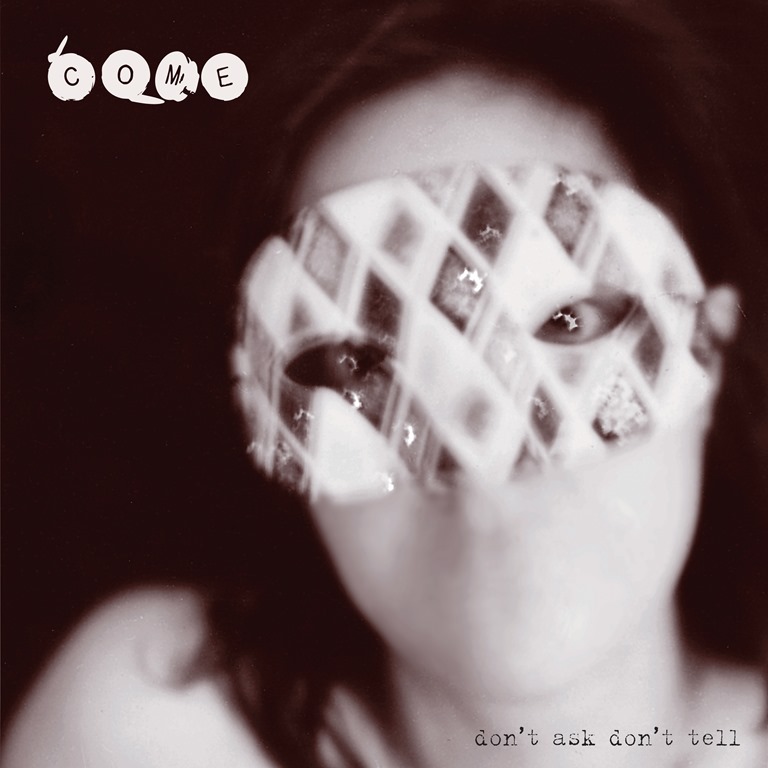
“What does ‘regret’ mean?” “Well, son, a funny thing about regret is that better to regret something you have done, than to regret something you haven’t done.” I have no shortage of regrets, but one is that I saw Come and thought ‘meh’. It was 1993: they were supporting Dinosaur Jr, who’s just released Where You Been?, along with Bettie Serveert in Nottingham. I’d read reviews of, but was still yet to hear Eleven: Eleven at the time. They’d been all over the press with that debut album. And I just didn’t get gripped. Maybe it was because, at seventeen, I was just so revved for the headliners I wasn’t in a place to fully appreciate the supports.
I had no way of knowing that their second album would become one of my absolute favourites. Again, having picked up Don’t Ask, Don’t Tell, I wasn’t immediately enamoured. I guess it took me awhile to appreciate the album’s subtlety and emotional depth – and it has so much depth – but investing in listening properly and not holding out for the big riffery of Nirvana or Dinosaur Jr or the general sound of the class of ’93-’94 unlocks Don’t Ask, Don’t Tell. Some of it’s about maturity, some of it’s about patience – I didn’t really dig The God Machine on the first few spins of Scenes from the Second Storey.
It was a long album, for a start. Only two of the songs are under four minutes long, and half are five or more. The structures aren’t obvious, there’s not a lot that’s straight verse / chorus / verse. It was also a bit slow, and quite country / blues. It really wasn’t the sound of the grunge zeitgeist of 1994. But one day, somehow, something clicket. Quite possibly it was by absently half-listening to it, that moment arrived in ‘String’. I have this thing, whereby a fleeting moment of a song -m a change of key, chord, a single sound, or something else otherwise minor, extraneous, will absolutely make it for me. By which I mean, I am completely obsessive about this. When a moment strikes me as ‘pivotal’ I simply have to hear it, over and over, and that will be a reason to play an entire song – on repeat. That first scrape of fingers on strings at the start of ‘My Black Ass’ on Shellac at Action Park? Yeah, that’s one such moment. That moment at 3:05 on ‘String’ in Don’t Ask, Don’t Tell is another. It just hits an instant of musical perfection, and it’s absolute bliss.
The song is a standout – on the CD, it’s positioned after the slow, blooding ‘Let’s Get Lost’ and picks the tempo up. The fact it arrives after a false ending or sorts and a change in direction is key, and the guitar interplay is sublime… The trouble is, explaining it in words simply doesn’t convey the impact, the way it resonates. But there it is. And now, here it is again, remastered. And it sounds great, all over again, as well as giving reason to revisit what is a remarkable and courageous album, one that represents a band committed to making the music they want to make instead of succumbing to trends or record company or peer pressure. And revisiting it only further highlights the dynamics, the tempo changes and unexpected shifts, and the way those sonic twists can instantly alter the mood, and the way the band imbue every bar with emotion. It’s so, so powerful, and all the more so for the fact it isn’t immediate. In fact, all of the things that made it ‘difficult’, that I struggled with at first, are the reasons I love it now and are the reasons it’s such a remarkable and accomplished album, and one that proved without doubt that volume is not the sole driver of intensity. Thalia Zedek’s vocal with its rich patina has a deep rasp, and carries a greater emotional than tonal range, and it’s perfectly suited to the twisting, restlessness of the songs: these are songs to lose yourself in.
The remastering is nicely done – nothing too intrusive, it just feels that bit crisper, somehow, the details clearer, and that’s nice.
The bonus disc, Wrong Sides contains an entire album’s worth of additional material, and with the exception of the demo version of ‘German Song’ (with some magnificent spiralling guitar work and if anything, this slightly less polished take, with the notable addition of clarinet and piano packs only more aching beauty), it’s not a gathering of alternative takes, radio sessions, and rehearsals, but a truly worthy assembly of contemporaneous material – B—sides, stray compilation tracks, and unreleased material, and it’s fair to say that it’s all killer.
‘Angelhead’ – a ‘String’ 12” B-side was recorded on a stop-off on tour, and is one of the most directly riff-centric grungers of the band’s career. ‘Cimarron’ is up there with the best of Come, with some crunchy guitars augmented by sweeping violin. Their cover of Swell Maps’ ‘Loin of the Surf’ is a groove-led math-rock instrumental workout, while ‘Submerge’ is chunky, crunky, dense, lumbering. This is the version that actually predates the one that appears on Eleven: Eleven, and instead came out on the German Sub Pop 12” and CD of the menacing ‘Car’ (also featured here with its warping guitars alongside B-side ‘Last Mistake’. But what matters most is that every single bonus cut here would have been worthy of the album.
With the additions as strong as the album, what the expanded version of Don’t Ask, Don’t Tell reveals is an insight into a great – if massively underrated – band at their absolute peak.
Between 2005 and 2011, Dance to the Radio was the label that wasn’t lonely synonymous with the Leeds scene, it practically was the Leeds scene, and contributed to putting the city and its bands back on the map, releasing The Pigeon Detectives, Forward Russia, This Et Al, iLiKETRAiNS, and Grammatrics, as well as a number of wide-ranging compilations featuring the like of Pulled Apart by Horses. Returning in 2017 after a six-year hiatus, they’ve focused on a small but carefully-curated roster, giving a home to Tallsaint, Aural Aggro faves Dead Naked Hippies, Jake Whiskin, and Hull’s Low Hummer, who may be relatively new but have established themselves quickly, showcasing an energetic alt-rock sound that incorporates elements of grunge, punk, postpunk, and electro-pop with potent results. Debuting in October 2019 with the single ‘I Choose Live News’, the band have marked a steadily upward trajectory in the profile stakes ever since.
Granted, over half the tracks on Modern Tricks For Living have been released as singles in the last couple of years or so, making this as much a compilation as an album proper, but nevertheless, it hangs together nicely, on account of its stylistic unity and lyrical themes, and it’s well sequenced too, with the ups and downs just where they need to be.
Classic themes of angst, anxiety, and alienation dominate, and they never grow tired or fade. They possess a universality and an eternal relevance. The power and passion of the emotions may fade with age, but they never go away: most disaffected teens still feel it, unless they sell out and become self-satisfied, complacent parts of the machine. And some do – I’ve lost friends that way – but many of us still burn with the anguish of adolescence. As such, despite the band’s youth, there’s a universality in their appeal.
‘These days I feel like I’m dead’: the drawling vocal on ‘Tell You What’ is pure grunge nihilism, but there’s a sparkly electropop aspect to it, too. And the more you delve into Modern Tricks For Living, the more detail and the more canny crafting it reveals: amidst the brashy, trashy surface, there’s a lot more going on. These songs aren’t superficial, rushed, three-chord thrashes – well, they are, but they’re a lot more besides, and that’s the appeal of Low Hummer.
‘Take Arms’ packs some attack and makes for a strong opener. It doesn’t waste any time in planting a powerful earworm, with a motorik beat and bubbling synth bass providing the spine of a spiky punky indie banger that’s pure 90s in its vibe – the guitars fizz and the shouty female backing vocals reactive the riot grrrl sound and it kicks hard.
One of the few tracks not to have been released previously, ‘Don’t You Ever Sleep’, is an exuberant, bouncy paean to boredom that powers through in a whirl of synths in two and three quarter minutes, and it’s exhilarating, and ‘I Choose Live News’ crashes in as the third track, and it’s another relentless rush.
The Curesque ‘Never Enough’ (one suspects the title isn’t entirely accidental either) brings a change of tempo and switches the full-throttle fizz for an altogether dreamier form. It’s well-placed, and proves they’re not one-dimensional or one-pace, hinting at a range that they’re yet to fully explore. Slinging lines like ‘I hate this place / I hate the world’ , they pack in the angst and nihilism
‘Sometimes I Wish’ has some neat bass runs and a cyclical guitar riff that builds, while a wild lead part tops it all off. The tempo change towards the end is both unexpected and well-executed. ‘Slow One’ isn’t all that slow, but these things are all relative, and ‘The People, This Place’, another previous single release provides a blistering finale. And what can I say? This is a cracking album from beginning to end, that presents a solid selection of songs. Modern Tricks For Living is exciting and exhilarating, and it’s as simple as that.
Grunge isn’t dead. Not by a long way. Although, the trouble with grunge is that even at its height, most of the bands weren’t that impressive, and the ones who were achieved the widest success were the weakest, most accessible of the crop. Without the polished and ultimately marketable Nevermind, Nirvana would have never achieved global domination, although both Bleach and In Utero were, and remain, far superior albums, while the like of Tad and Mudhoney are the true sound of grunge, and capture the gritty, sweaty toil of blue collar labour channelled into aural catharsis. These bands never set out to change the world, but to vent their frustrations and ultimately their sense of powerlessness through music.
Perhaps it’s an age thing, but being in sixth form when grunge exploded it felt like not only an exciting time for music, but that this was a wave of music that actually spoke both to and for my generation at the time. In a way I feel rather sorry for the Millennials and Gen Z; the blandness of contemporary music speaks of nothing but surface. Even when addressing genuine issues, there feels like not only an absence of depth, but an absence of real emotion, of soul. Perhaps it’s just that the mainstream industry, represented by the mainstream charts, dominated by mainstream artists on major labels is simply giving the entirety of its focus on monetising slick sonic wallpaper. It seems odd that generations so riven with pain and angst (and who can blame them?) should find solace in this kind of anodyne slop. It can’t just be the numbing effects of antidepressants: something is clearly awry. Small wonder, then, that some delve into their parents’ collections in order to find music that contains what’s missing for them.
New York’s Cronies formed in June 2020 by brothers Jack and Sam Carillo, the press pitch describes the project as ‘the creative offspring of Covid and isolation’. Creative is the word: having pulled in a couple of mates to render this a full band, they’ve already banged out a brace of Eps in the last year ahead of this, their eponymous debut, which Cruel Nature are releasing on another Bandcamp Friday, with Proceeds going to charity.
It’s a bowel-shaking bass note that strikes first, and the sustain is something. And then in lurches a grimy guitar that’s welded to a stumbling rhythm section – and it’s heavy. Then the drawling vocal rips into a fill-throated roar that’s pure Cobain. These guys have taken the relentless battery of Bleach and the nihilistic squall of In Utero as their template, with a dash of thrash and some of the grimy heft of Tad in the mix (‘Slush Fund’ even leans on the riff from Tad’s ‘Behemoth’ but chicks in some stun synths and some manic hollering that’s more reminiscent of The Jesus Lizard), and ‘A Slippery Slope’ throws all of these in at once, along with a sudden change of pace and direction two-thirds of the way in. On ‘Ritchie from Lebanon’ they build a massively dense bulk of noise, the guitars and bass churning, overloading at great volume.
What Cronies have that their peers lack – well, there are many things, if we’re analysing (and of course we are: that’s the purpose of music criticism). But first and foremost, it’s raw passion and energy. There’s nothing slick or ultra-processed about this: Cronies are unashamedly ragged, and really embrace the grunge ethic of the time when most of the bands from Nirvana to Mudhoney were still on labels like Sub Pop. It’s perhaps because of the band’s origins – confined, trapped – that the songs on Cronies teem and seethe with abject frustration. Sometimes, words simply cannot articulate those feelings, and all there is to do is scream and unleash howls of feedback instead of neat chords. And this is what Cronies do, and this is why they speak to us: it’s accepting the limitations of articulation and unleashing a primal howl. It’s powerful because it’s real.
It’s been a long time. An insanely long time. Apart from a brief spell where there were a handful of seated gigs on offer around August of last year, live music has been off the menu for the best – or worst – part of sixteen months, and a long, torturous sixteen months it’s been for so many of us – not least of all those whose livelihoods depend on it, but also for those of us who find comfort and catharsis in the experience, a few hours’ escape from the grind of daily life.
I haver to confess having anxietised over the prospect of attending my first live show since August 2020, since which time I’ve barely set foot in a pub or anywhere really, having been working from home since forever. Less fearful of Covid, more of social situations in general, fearful I’d lost the little social skill I had from before, I simply wasn’t sure what to expect, and the worst fear is the fear of the unknown, and this had perhaps tempered my immense excitement.
In the end, it transpired I needn’t have worried, and everything was nicely managed at the Victoria Vaults. They’ve moved the bar since I was last there, and the refit works well in making for a significantly bigger gig space and next to no bottlenecks, plus the bar staff were friendly and attentive with their table service – which was perhaps as well, because it was sweltering and needed to maintain a flow of cold cider.
Sitting just feet from a real drum kit with my shoulder against a PA stack felt great, and simply being back in that environment brought a great joy. Then there was the lineup: one of the last shows I’d seen, back in January 2020 had featured both My Wonderful Daze and Redfyrn. Both had impressed then, and given reason to come back for more. Although, of course, January 2020 feels like another life.
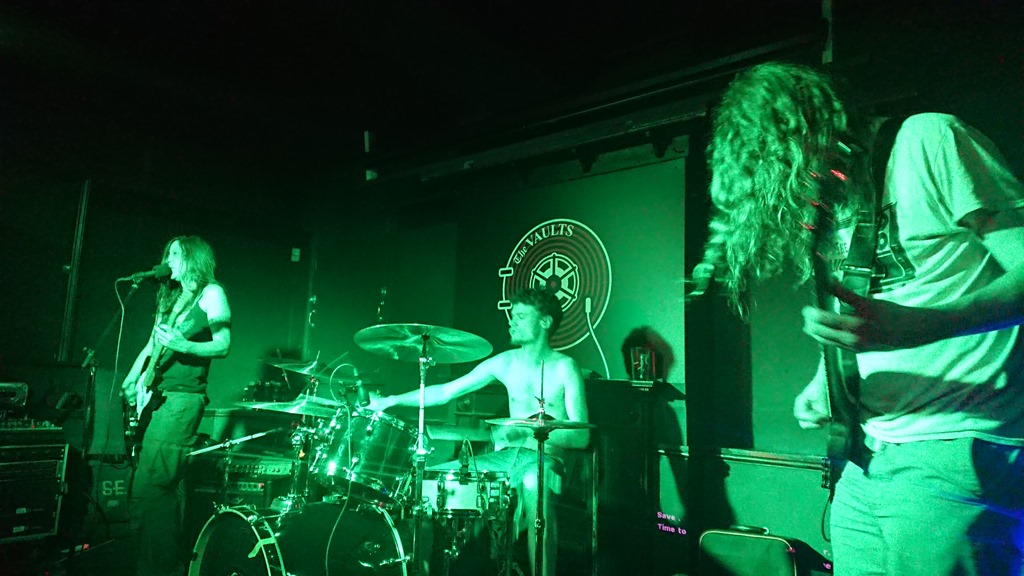
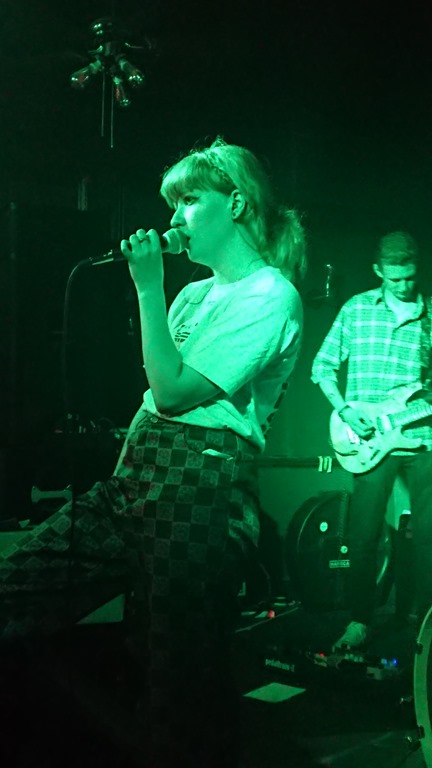
With King Orange having dropped off the bill without explanation, it’s a later start with Redfyrn straight on and straight in, with the power trio kicking out hefty blues-based grungy heavy rock with a sludgy/stoner vibe, driven hard by some crunchy 5-string bass. Cat Redfern’s soaring vocals are at times almost folksy, and contrast with the hefty lumbering riffs. Collectively, they’re tight, the songs textured and dynamic. There’s a lot of cymbal, but some proper heavy-hitting drum work and the sludgy sound is both steeped in 70s vintage and contemporary influence, resulting in some solid swinging grooves. The mix could have perhaps done with more guitar, but then I was sitting in front of the bass amp and about six feet from the drum kit. Closer ‘Unreal’ has bounce and grit and groove and is a solid as. The band were clearly pleased to be on stage again, and it came through in a spirited performance.
Redfyrn
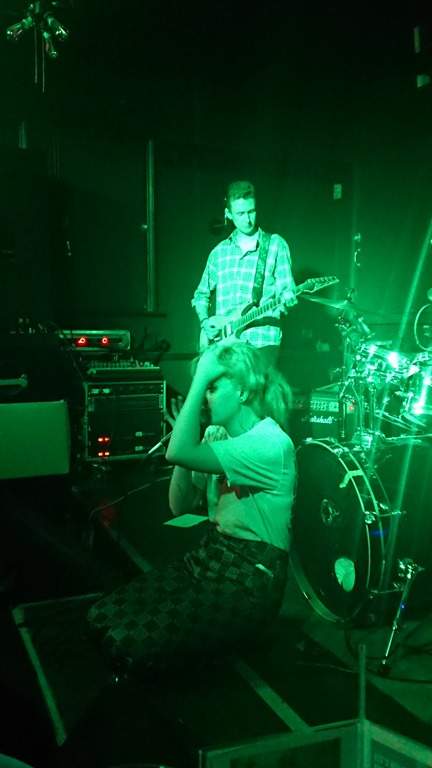
My Wonderful Daze’s singer Flowers may be feeling and looking a shade off colour but is in fine voice and all the better once she’s taken her boots off at least for a while. The band bring more big, lumbering riffs, and any concern they may have been rusty after the time out proves to be unfounded, because they’re tight – and loud. They bring all the rage early in the set, coming on more Pretty on the Inside – era Hole than Live Through This,more Solar Race than L7. It’s not long before she’s sitting down to sing because she’s dizzy, and yet still fucking belts out the angst, and despite visibly struggling throughout, it doesn’t affect things sonically: the band don’t just play on, but continue to give it their all. Watching this set really brings home just how hard bands work to do what they do. The slow-burning ‘Dust’ is something of an epic that’s emotionally rich and transitions from a gentle chime to some simmering power chords with some audience participation clapping to aid the build.
My Wonderful Daze
They announce apologetically that they’re cutting set short to skipped to encore song Tommy for fear of fainting, but it’s a valiant effort and the right choice, although Flowers didn’t make it past the first verse before rushing from the stage. The rest of the band finish the song – and the set – with force, and all the credit to them for their consummate professionalism. Both bands did themselves truly proud, and delivered a great night, and hopefully the first of many.
The Secret Warehouse of Sound Recordings – 29th June 2021
Christopher Nosnibor
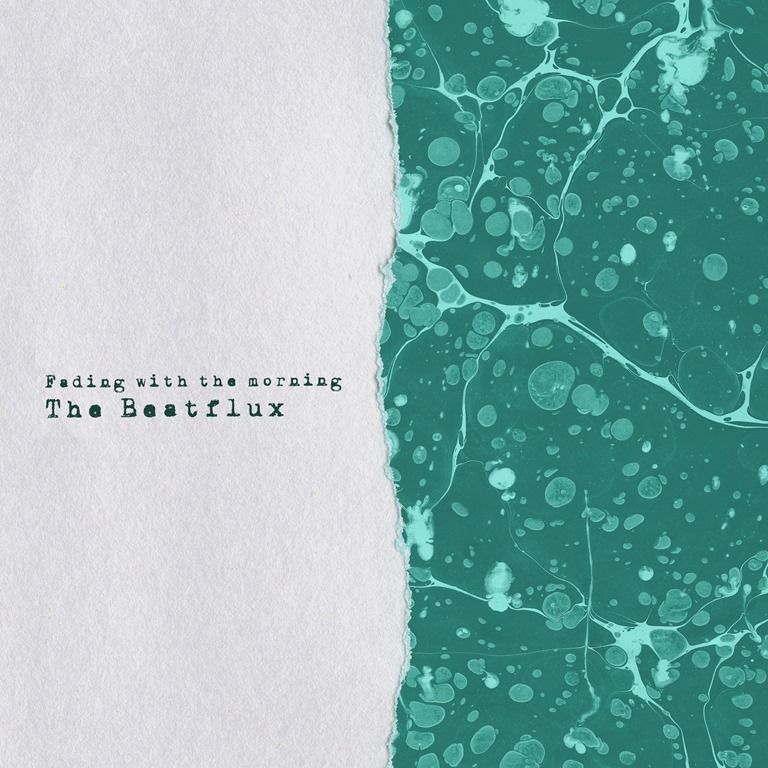
The thing that fades with the morning is the night, the hours of darkness in which so many of us find ourselves, if not sleeping, in contemplation or otherwise tormented with thoughts, while others find the memories of the night before receding with the sunrise. And what is so often vivid in those dark hours becomes hazy, intangible, and moved further out of reach with every hour that passes. And it’s that sense of loss, of the passing, of an absence that permeates ‘Fading with the Morning’ with a palpable ache.
Over the course of five finely-crafted minutes, The Beatflux build from a delicate, twinkling guitar intro that’s almost post-rock in its persuasion, into a colossal country-tinged grunger and Enrico Minelli’s gritty vocal has a grainy timbre that’s thick with emotion and a tone that says ‘drunk it, smoked it, lived it’.
Musing on how the ‘Sunlight cuts our eyes, changing hue’ may not be a startlingly poetic or vivid image, but it’s all in the delivery as the band conjure something far more evocative in the moment than on paper. ‘Fading With The Morning’ very much harks back to the sound of Alice in Chains, with a keen sense of melody and a layered subtlety in the arrangement that means it gains momentum as it progresses to truly anthemic scale.
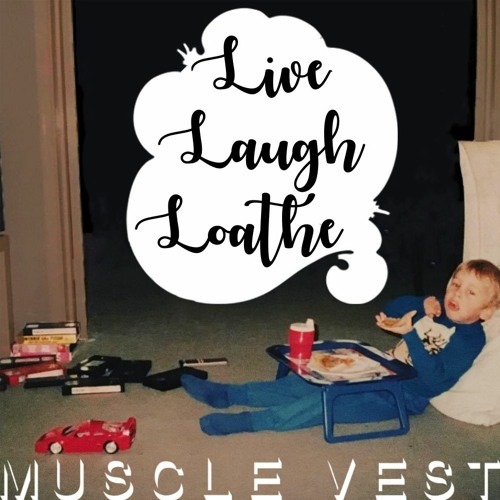
The story goes that London four-piece Muscle Vest reportedly ‘formed in 2018 over a mutual appreciation for ugly rock music’, and that’s what they serve up on their debut EP – a sweaty, guitar-driven dirty rock workout that’s brimming with churning riffs, grease and grime. They come out all guns blazing and firing wildly in all directions with the manic racket of ‘Creepy Crawlie’, a juddering, angular rager that melts the best of 90s noise into a mangled metal nugget in the vein of later acts like Blacklisters and Hawk Eyes, and it very much sets the fast and furious tone for the rest of the EP: ‘Stray’ bears fair comparison to Blacklisters’ ‘Shirts’, with a throbbing riff blasting out against a low-slung bassline. If Shellac and Big Black are in the mix, so are The Jesus Lizard and early Pulled Apart by Horses.
Muscle Vest pack in a boatload of adrenaline and bring ALL the noise: it’s fucking ugly and monstrously brutal, and those are its positive points. It ain’t polished or pretty, and if you’re on the market for something gnarly, look no further.
‘We’ll all be dead / we’ll all be dead one day’ vocalist Dave Rogers howls nihilistically into a tempest of abrasive guitar noise that churns and grinds on ‘A Slow Death’. He’s right, of course: the question is whether we will die a quiet, peaceful death, or a horrible, painful one, shrieking in agony for the duration of those final hours. This is very much the soundtrack to the latter, and it’s almost enough to make death sound appealing. Because, well, better to go out screaming than to flicker out. The last track, ‘Blissbucket’ is a minute and three-quarters of blazing napalm, taking its cues from hardcore punk and tossing in all the jarring, jolting guitars that scratch and scrape at all angles across the relentlessly churning rhythm section. It’s fast and furious and brings the EP to a blistering close and then some. It positively burns with an intense fury, and it’s beautifully brutal. Gets my vote, and then some.
The older you get, the weirder things get. On the one hand, the generational gap widens by the day, but on the other, you see thing come full circle, and faster. Growing up in the 80s, the fact of the matter is that my parents had abysmal taste in music, both contemporary and of their era. My mum would groove to Phil Collins and Tina Turner and Paul Young Van Halen and the fucking Bee Gees while ironing, while my dad hadn’t bought a new LP since Steeleye Span’s ‘All Around My Hat’. Car journeys on family holidays were a real hoot, what with Leo Sayer and 80s Cliff Richard tapes alternating with Now That’s What I Call Music 1 and 2. Philip Larking was right: your parents fuck you up in ways they don’t even realise. However, the point is that increasingly, new bands are turning to their parents’ rather cooler collections and discovering the likes of Nirvana, Pavement, Weezer, Teenage Fanclub and Pixies – and Sweethearts are a case in point.
They’re pitched as standing at the forefront of the 90s resurgence, but for some of us, the 90s never ended, especially for many of those who were in their teens and early twenties at the time and are around 4 now. Midlife crisis? Maybe. But then, for many, music stops when they hit 30, and I’ve spent the last fifteen years listening to peers bemoaning the lack of any decent new music. They’re all wrong, of course: there has been innovative and exciting new music released every year since the beginning of music. It just happens that none of the music of interest has received any kind of mainstream attention for a long time. But it’s all out there if you know where to look.
You wouldn’t call ‘If I Could I Would’ innovative, but that isn’t the point: this is a classic example of a band drawing on their influences, which so happen to reach back a generation – and distilling them into a strong and potent mix. ‘If I Could I Would’ is a melodic grunge-leaning slice of college rock, but there are some obvious indie features spun into the composition, not least of all the lead guitar part that spins its way around the rhythm section like a tripwire.
Lyrically, the song explores the limitations of desire and capability, and the song’s hook is a neat piece of circular, self-negating logic: ‘If I could, I would, but I can’t so I couldn’t’. It’s not nihilistic, just more a slackerist ‘meh’, and with its nostalgia-inducing retro musical backing, it’s the perfect summary of the listlessness of the zeitgeist.