Posts Tagged ‘goth’

Intervention Arts

Christopher Nosnibor

While eponymous debuts are commonplace, apart from artists who name all of their albums eponymously, it also seems to be a thing for long-established bands to release a self-titled album well into their career, and, to my mind, it seems somewhat strange. Nevertheless, Killing Joke have in fact done both, and Interpol have also managed two eponymous albums (if you count album number five, the anagrammatic El Pintor). Have you run out of ideas or something?

The Awakening has been a thing for a good quarter century now, during which time Ashton Nyte has also released a number of solo albums, a brace of books, and been a constant feature in the lineup of industrial / goth collective Beauty in Chaos. He’s a busy man.

The twelve tracks on The Awakening represent something of a revisiting of the classic goth template, and in this context, the title makes perfect sense. It’s a return to the beginning, treading the ground where it all began, and feeling that spark once again: an awakening, indeed.

‘Shimmer’ creates the atmosphere with dolorous bell chimes and slow, deliberate, ceremonial percussion, before single cut ‘Mirror Midnight’ thumps in with a sturdy bass groove melded tight to a relentless, solid drum machine beat. Laced with delicate traces of brittle, chorus-laden guitar, it provides the backdrop to a crooning baritone vocal delivery. Lyrically, it’s rich in esoteric imagery and it’s classic goth – mid-80s in style, md-90s in production. And this is essentially The Awakening: it’s dark, brooding, espousing the doomed romanticism that was central to The Sister of Mercy’s genre-defining debut album, First and Last and Always.

‘Through the Veil’ goes epic, and if its arena aspirations seem somewhat removed from the claustrophobic confines of the first phase of goth, it likely owes something of a debt to Floodland, while the acoustic-led ‘Your Vampire’ evokes The Mission circa Children (I’m thinking ‘Heaven on Earth’, but perhaps a little less bombastic), although ‘Island in a Stream’ is an equally valid reference point.

‘Haunting’ – also a single – and an obvious choice, it has to be said, is a burly burst of muscle-flexing guitar propelled – again – by a throbbing bass and pumping drum beat, draped with cool Cure-esque synths, culminating in a climactic rush of a finale. ‘See You Fall’ stands out as another quintessential goth banger: the instrumentation again is reminiscent of early Mission songs, and the drumming, with its dominant snare is absolutely cut from the same cloth as The First Chapter, although Nyte’s vocal reminds me – quite happily – of Andrew Eldritch demoing vocals on ‘Garden of Delight’.

Things take a turn for the heavy – and the political – on ‘Fallout’. It’s a reminder that the music of the 80s emerged from a time of terror, a political lurch to the right, and living under the shadow of the bomb. And here we are again. We can never escape history: it simply repeats. And so, it stands to reason that music is also cyclical.

‘Not Here’ hints at Bauhaus, while the thunderous ‘Cabaret’ – which seems to take certain cues from ‘Dead Pop Stars’ by Altered Images and The Psychedelic Furs’ ‘Soap Commercial’ in terms of its spindly lead guitar line – is a modern goth classic.

The Awakening mines a seam of trad goth which straddles the first wave and the 90s revival, or second wave – which is precisely the starting point of The Awakening. This album feels rather like time travel, in the best possible sense, and, in context, it’s less a case of homage as revisitation and renewal.

AA

AA

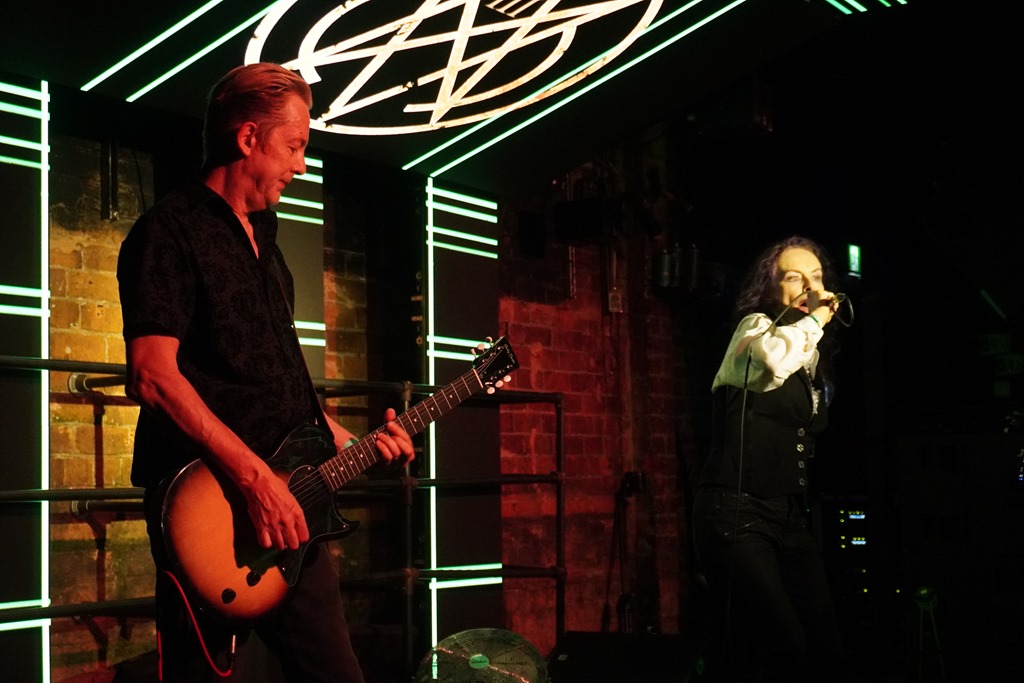
The Awakening 1 - photo by Ashton Nyte

Metropolis Records – 21st February 2025

Christopher Nosnibor

If one nation really loves its rock and it’s goth stuff, it’s Germany, and there are a fair few UK bands who, while they fair ok at home, are absolutely massive in Germany: the fact The Sisters of Mercy have continued to headline major festivals there well into the 00s, while at home, apart from Reading in ’91, they’ve never really featured in festival lineups gives a fair indication of the difference. So it should be of no surprise that it’s in Germany that Swedish post-punk/goth act Then Comes Silence grew their fanbase first in Germany, before expanding across mainland Europe after sharing stages with artists such as A Place To Bury Strangers, Chameleons and Fields Of The Nephilim.

Boxed should probably have been retitled Unboxed for this edition, being a digital reissue of tracks included in a limited and long-sold-out box set edition of their 2022 album Hunger, Consisting of two songs in Spanish, two instrumentals, two remixes and one outtake from that album, its reissue lands coincidental with the completion of a US tour in support of their seventh album, Trickery, released last year.

As one may expect from the summary, it’s more of a mixed bag of novel odds and ends than a serious or coherent EP release, and the presence of the songs sung in Spanish remind me of when The Wedding Present released ‘Pourquoi Es Tu Devenue Si Raisonnable?’, a French-language recording of ‘Why Are You Being So Reasonable Now?’ Sung in Gedge’s flat, Leeds accent, it sounds like… The Wedding Present, of course, and I’m sceptical about the translation given just how nearly the lyrics fit the melody.

Anyway. Boxed. The Spanish language versions of ‘Dias y Años’ and ‘Cebo’ are solid, but obviously don’t really bring much to the table, especially for the non-Spanish speakers – beyond a novel spin, that is. But make no mistake the ultra-percussive, stony goth groove of ‘Cebo’ (or ‘Worm’, as it is titled in English) is a killer cut in any language.

The first instrumental, ‘Spökenas Intåg (Walk-In)’, which in fact lifts the curtain on the release, is a somewhat spooky, atmospheric composition, imbued with filmic qualities, and it would sit comfortably on the soundtrack of a movie or maybe even a docudrama about a serial killer or something.

‘We Only Have So Long’ is a thrusting, energetic, guitar-driven song, packing groove and force into two and a half minutes, and while its offcut status is because of how it doesn’t really sit in the framework of the album, it might have made a standalone single, because, why not? It’s certainly not weak.

Although remixes rarely mark an improvement on the original – although there are notable exceptions – the H Zombie Remix of ‘Blood Runs Cold’ does at least bring something different.

The final track – amd second of the instrumentals – ‘Skuggornas Intåg’ bookends the EP and strives to give it some kind of cohesion, some kind of shape, being a clear counterpart to ‘Spökenas Intåg’. It’s atmospheric but inconsequential, and does feel rather like a space-filler or odd-end outro.

Ultimately, this release is simply what it is: a reissue of some bonus cuts for the benefit of the fans who missed out on the limited version of the album. It’ll no doubt make for a tidy addition for the new fans they accumulated on the tour, too, and it’s decent – but by no means their most essential offering.

AA

629423

Gothic Rock / Darkwave act THE AWAKENING presents ‘Haunting’, the latest taster of their eponymous album, out now on vinyl, CD, digitally and various limited-edition formats via Intervention Arts. With a music video in classic black-and-white format, ‘Haunting’ follows ‘Mirror Midnight’, which has amassed over 1.1 million views, establishing The Awakening’s return to its dark roots.

Now US-based, The Awakening was formed in Johannesburg, South Africa in the late ’90s as the creative expression of vocalist, multi-instrumentalist and songwriter ASHTON NYTE, anointed as ‘Johannesburg’s Bowie’ for his widely varying musical styles and theatrical performances. He calls this single “a celebration of old-school Gothic Rock, with a suitable dose of Post-Punk swagger and a wink at the camera. It’s probably the most whimsical song on the album. I wanted the video to capture some campy Horror B-Movie goodness, and I am very happy with the result”.

You can witness the result here:

AA

402933

33.3 Music Collective – 5th February 2025

Christopher Nosnibor

It doesn’t seem like five minutes since Beauty in Chaos emerged with their debut album, and here, in the blink of an eye, we are looking at a twenty-nine track ‘reimagined’ version of the fourth album from this ever-expanding collective, curated by Michael Ciravolo (formerly of Human Drama and Gene Loves Jezebel. I’m not even going to start on the roll-call of personnel who have featured on these releases: I’d still be going by the time I’d finished listening to all twenty-nine tracks.

It’s certainly quite an expansion on the original eight songs which made up Dancing with Angels, which notably featured Wayne Hussey and Ashton Nyte among its guest vocalists. There is, as one might anticipate, an abundance of remixes – no fewer than five versions of ‘Holy Ground’, for example, and four of ‘Hollow’. Some are better than others, some are pretty radical, others less so, with the standard examples of slapping a big beat and some effects tossed into the mix with variable results, but Combichrist and Bellwether Syndicate are noteworthy for their contributions.

The ’almost acoustic version’ of ‘Made of Rain’ stands out not only by virtue of not being a remix, but also being a really good take on the song. But the selling point here are the songs which didn’t appear on the original album, which appear right at the very end of the monumental track-listing.

Their take on T-Rex’s ‘Children of the Revolution’ harks back to the early 90s when Al Jurgensen was arguably at his peak and dropping leftfield covers of ‘Lay Lady Lay’ and ‘Da Ya Think I’m Sexy?’, accompanied as it is by a video which finds the band performing behind a mesh fence, as Ministry did while touring Psalm 69 (as much for their safety as for effect). It also calls to mind the club scene in The Hunger where Bauhaus play ‘Bela Lugosi’s Dead’, and I don’t doubt that this is also intentional: Bauhaus – and Bowie – can both be heard waving influence through Beauty in Chaos’ songs. “The revolution will be televised”, Al announces through a loudhailer, and well, if you’ve seen any news in the last fortnight, you’ll know this to be a fact. However, the issue isn’t that anyone’s being fooled here, but that no-one seems willing or able to stop it: just as the world watched on as Israel perpetuated genocide on the Palestinians in Gaza, so it gawps, motionless, as Trump and Musk undertake a coup, and not just making a grab for absolute control over the United States, but world domination. It’s absolutely fucking terrifying – unlike this recording. It’s a solid enough cover, but perhaps lacks the bite and heft it deserves, being more straight-up than cranked-up.

‘Open Your Eyes’, originally by Lords of the New Church, also feels apposite – indeed, lyrically, it’s never been more relevant, and while this cover, again, is almost entirely faithful to the original and is accompanied by a video clearly shot during the same session as ‘Children of the Revolution’, it hits home to wrap up the album in fine style.

AA

AA

Atomic Disc 4 Panel Wallet 2 Pocket

METAMORPH conjures 2025 with the new single & video, ‘Hiss Kiss,’ a celebration of the snake’s magic and the promise of rebirth. Dropping in time for Valentine’s Day, the witchy Imbolc celebration, and the Year of the Snake. Love strikes like venom, and ‘Hiss Kiss’ is the antidote—a gothic dance floor anthem that wraps you in its serpentine embrace.

Launching METAMORPH’s Wheel of the Year release ritual, ‘Hiss Kiss’ is the first single to drop for these witchy holidays. The ritual culminates with the release of the album on the harvest celebration, Mabon (September 22) and closes the year with haunting remixes to complete the spellbinding journey.

“’Hiss Kiss’ is serpentine spells set to sound—your fangs deep in my flesh, feel the world’s caress, new pardine, dance divine,” tempts Margot Day.

Dark, seductive, and dangerously divine, ‘Hiss Kiss’ is the ultimate goth dance floor banger to kick off the year.

AA

886206a1-e80a-160a-5ad2-bc9d597fdd76

Dark electronic & trans-atlantic duo, DEATH BY LOVE has just announced the release of their debut single & video, ‘Strong Inside’ courtesy of Distortion Productions.

‘Strong Inside’ is a song that deeply reflects the inner struggles of the human experience. The lyrics touch on universal themes of vulnerability, self-acceptance, the constant search for inner peace, and authentic connections. It’s a song about self-preservation and a yearning for closeness and connection and the aspiration for a balanced and authentic self. It’s the resilience of the human condition that makes us all “strong inside”.

DEATH BY LOVE is poised to captivate the goth-industrial music community. offering a compelling glimpse into the band’s artistry. The band is also finalizing their first full-length album, set for a summer release. It promises to deliver an immersive and richly-layered musical journey.

‘Strong Inside’ is available on most digital platforms including Bandcamp.

AA

61356596-395c-0078-cce8-0ceb12284c99

Liquid Len Recording Company – 28th January 2025

Christopher Nosnibor

I suppose I lost track of ‘new goth’ bands at the end of the 90s, and am still a way behind even now I’m a bit more back on it, and so History Of Guns, described by Mick Mercer – the authority on all things goth, who’s Gothic Rock Black Book was a bible for be when I was 13 and discovering the scene, as “By far, the most inventive UK band to have got their hands caught in the Industrial threshing machine” – bypassed me.

As the parenthetical numerals in the title suggests, this is a remixed version of their debut single, released twenty-five years ago, and it’s accompanied by a brace of new songs by way of B-sides, in the way things used to be done back then, when you had 12” and CD singles – and while I don’t get nostalgic for much, there was something special about these formats. Then there’s the fact a 12” single used to cost about £3.50 and a CD single a couple of quid – which probably sounds as incredible as a £1 pint or 3p tin of beans (Kwik-Save, No-Frills, c1995) to anyone under 35 – meant they were affordable, accessible.

But while we’re talking nostalgia and the passage of time, the accompanying video uses footage, originally filmed by Danni Cutmore on a VHS camera, of the band writing and performing the song at Earthworks studio in Barnet in 1998. It’s grainy, fuzzy, saturated, and looks like it could just have easily have bene shot in 1988, or even 1978. On the one hand, digital technology means the quality of video footage, even when shot on a cheapy mobile phone, is usually crisper, and isn’t prone to deterioration – but on the other, it’s so commonplace, it has less currency and less buzz about it, somehow.

The music itself… yes, it’s got that vintage post-punk feel to it, spun with an industrial edge, and pitching the band alongside Alien Sex Fiend, Cabaret Voltaire, Nitzer Ebb, Coil, Nine Inch Nails, Deathboy, The Prodigy, and LCD Soundsystem is all quite fair enough.

The classic spindly goth guitar sound spins spidery webs across a thumping drum machine, and there’s that quintessential low-slung bass groove… not to mention Del Gilbert’s theatrical baritone which looms powerfully over all of it. But then there are shuddering laser synth blasts which bubble up from nowhere, fizzes and whizzing and bleeps create the sensation of listening to two songs at the same time. Perversely, it somehow works, not least of all because there are strong hooks and the beat hits just right.

First B-side, ‘i am defective’ shows how they’ve evolved: it’s a dubby instrumental which leans far more into the electronic territory which only coloured their debut single. It’s also harder-edged and more overtly industrial, too, not just with the electronics, but the crunching, serrated guitars which cut in and threaten speaker damage. ‘LMS (Deep Mix)’ – a radical reworking of ‘Little Miss Suicide’ is in the vein of Rosetta Stone circa The Tyranny of Inaction – at least to begin with, but then swerves hard into the kind of electronica that qualified as technogoth or even cybergoth and reminding me why I drifted from the goth scene at the time. Now, I’m a bit more open to these things, and as an example of hard-edged industrial goth, it’s solid.

This release presents a neat straddling of the band’s formative years and their current sound: a clear win for fans, and a neat introduction for the unfamiliar.

AA

AA

a1503917006_10

Bleeding Light – 3rd January 2025

Christopher Nosnibor

Under The Sanguine Moon is the fourth album from Denver, Colorado-based goth rock band, Plague Garden. As the pitch tells it, ‘The album features a prominent vampiric theme. Delve into the catacombs of a nocturnal world, where tales of bloodlust at dusk reign supreme. Listen to fantastical tales of the undead and even a little bit of Greek mythology added in for variety… From the album’s blood-red artwork to it’s [sic] hemophilic lyrics, this LP is bound to please even the darkest children of the night. For fans of gothic rock, post punk, deathrock, darkwave.’

Having got into gothness around 1987, just on the cusp of teenagerdom, I would come to discover that, just as with metal, this was a genre with many disparate threads. The vampiric fascination, which represents the popular image of goth – and espoused by the myriad dark souls who descend upon Whitby for the legendary goth weekends and trace the steps of Dracula following the small port town’s prominence in Bram Stoker’s genre-defining novel – is a league apart from the origins of the music which would come to be synonymous with early goth – predominantly Leeds-based acts such as The Sisters of Mercy, Red Lorry Yellow Lorry, The March Violets, and Salvation. You won’t find a hint of vampirism here. Bauhaus’ debut single, ‘Bela Lugosi’s Dead’ predates the emerging Leeds scene, and the whole vampire / spooky template can be pinned squarely on this single, which can’t exactly be considered representative of their output as a whole. But still, people like to latch on to easy tags.

This perhaps unduly preface is to say that the goth / vampire thing is something I find difficult to fully embrace. Goth bands doing vampy stuff is simply not the same as Steven Severin providing live soundtracks to classic silent movies.

The other thing I find difficult to really align is that while there is a whole new wave of acts of a goth persuasion emerging, there are a lot of goth acts loitering and lingering featuring older guys – in the forty to fifty-plus demographic, which I will, in the interest of transparency record as being my demographic – doing this. Plague Garden do sit within this bracket.

Under The Sanguine Moon is a solid album. It sits in the third wave goth bracket alongside the likes of Suspiria and the Nightbreed roster of the late ‘90s – brooding, theatrical, with booming baritone vocals that are sort of aping Andrew Eldritch but fall into that more generic ‘fah-fah-fah’ singing down in the throat style. With piano taking a more prominent position among the standard musical arrangement of drums / bass / guitar, Plague Garden create a layered sound which does stand out from many of their peers, and they so absolutely nail that quintessential goth sound with the solid foot-down four-square Craig Adams style bass groove. This is nowhere better exemplified than on ‘Shadows’, with its spectral guitars, the perfect cocktail of chorus, flange and reverb creating that brittle, layered sound which defined the 80s sound.

The vocals are mixed fairly low, and it’s the bass and drums which dominate, and this is a good thing – not because the vocals are bad, but because it puts the atmosphere to the fore, and means the lyrics are less obvious, which is probably no bad thing.

‘The Dirty Dead’ is a crunchier, punkier take on the sound, and carries hints of early Christian Death – think ‘Deathwish’ – and this carries on into ‘Pandora’.

The cover they mention is ‘#1 Crush’ by Garbage, an early B-side that’s one of the hidden gems of their catalogue. Plague Garden’s take is unsurprisingly lugubrious, theatrical, and makes sense as a song selection with its nagging, picked guitar part and crunching percussion.

There’s a flood of blood at the end, with ‘Blood Fingers’ and ‘Blood Debt’ closing the album. The former, haunting, hypnotic, a classic moody goth cut, the latter offering a slower, dreamier take on the former. These guys have got their sound honed to perfection, and if you’re into more trad goth delivered with a more contemporary spin – but not too contemporary – you probably can’t go too far wrong with Under The Sanguine Moon.

AA

025780

Metropolis Records – 6th December 2024

Christopher Nosnibor

The pitch:

Clan Of Xymox will release a new EP entitled ‘Blood of Christ’ on 6th December. The title song is also included on ‘Exodus’, the current album by the dark wave wizards released in June 2024, with the EP also including the brand new ‘You’re The One’ plus six remixes of each track for a total running time of 64 minutes.

The reaction:

EP? EP??!! Well, yes, I suppose with fourteen tracks and a running time in excess of an hour, its play is certainly extended. What kind of duration would qualify for a long player, I wonder? On vinyl, this would be a double album at 33rpm. Available as a download only, Blood of Christ retails at the same price as the album which spawned it, Exodus, released in the summer.

Carping and pedantry aside, this is an ambitious project for a single, with the album track accompanied by a non-album B-side – something which is always welcome – and, as advertised, six remixes of each. Does anyone really need six remixes of any song, even the most diehard fan? It’s debatable, although not a debate I’m about to open to the floor.

I suppose electronic music does lend itself more readily to remix treatment than more rock-orientated stuff. The 80s and early 90s witnessed the rise of the remix via the extended 12” mix and then over time, we began to see 12” and CDs with different remixes, which were all about milking fans in order to boost sales and chart positions

As a choice of single, ‘The Blood of Christ’ is a strong one: pumping beat and pulsating bass underpin a solid tune with stacks of atmosphere and a huge, theatrical chorus, straddling the boundaries of both classic and contemporary goth. ‘You’re the One’ is a bit popper, but still driven by those all-essential dark undercurrents.

And so, onto the remixes: the album’s remaining twelve tracks alternate between the two songs, the obvious benefit being that you don’t get back-to-back takes of the same track for half an hour. However, by presenting the same two tracks alternately, it’s a little like the old days of flipping a 7” over and over, only hearing differences and new details with each play, and over the course of an hour and a bit it becomes quite mind-addling, and with both tracks employing similar stabby, undulating synths and tempos, the sameness starts to dull the senses after a while.

Too much of a good thing? Perhaps. And perhaps there’s a time commitment involved in distinguishing between the different versions and finding your favourites, preserved for the serious fan. Individually, the tracks are great, although I’m not convinced any of the remixes really improve on the originals, but presented together in such quantity, it feels like overkill.

AA

a1318500700_10

Sister 9 Recordings – 22nd November 2024

Christopher Nosnibor

Anniversary editions and reissues have become a massive part of the music industry in recent years, in keeping with the ever-growing tendency to milk all things nostalgic. Many are shameless cash-ins, designed to compel dewy-eyed fans to purchase an album from their your again at eye-watering expense in order to hear it in a new ‘improved’ remastered form, accompanied by several discs of demos, outtakes, acoustic and alternative versions, and contemporaneous live recordings that no-one ever plays more than once if at all, while cherishing a deluxe booklet of photos and whatnot and reflecting on just how fucking old they are and wondering where the decades have gone.

That doesn’t mean there’s no merit to marking anniversaries, and this release is rather different, being a part of the commemorations of twenty years of Sister 9 Recordings with a comprehensive retrospective of cult Sheffield act Dolium, who first broke onto the city scene around the turn of the millennium, before coming to the attention of John Peel in 2004. The band went on indefinite hiatus in 2010, but during their years of activity, amassed a substantial body of work, including two full-length albums, Kisses Fractures (2005), and Hellhounds On The Prowl (2008). A third album, Brother Transistor, was recorded but never saw the light of day… until now. Add all of their singles and other bits and bobs, including their shelved debut single – which made it to test pressing but no further due to lack of funds – and this four-CD set provides instant access to their complete discography, and more. As such, it’s a boon for fans and an ideal introduction for anyone unfamiliar with an act described by KERRANG! as ‘a less depressing Joy Division mixed with the black horror of Bauhaus and the melodic dynamics of the Pixies’.

I’m not entirely convinced there’s much ‘black horror’ to be found in Bauhaus’ catalogue, but it does capture the punky / goth stylings of a band who espoused the indie / DIY ethic and injected every moment with pure adrenaline. They started out with a drum machine, but progressed to live drums when Simon Himsworth joined. Being a small world, it would appear that this is the same Simon Himsworth who would later play guitar in brief but legendary York band We Could Be Astronauts alongside former Seahorse Stu Fletcher.

There’s an obvious chronology about the first two discs, which contain Kisses Fractures and Hellhounds On The Prowl respectively, with contemporaneous EPs and singles by way of bonuses. As titles like ‘She’s The Pill That Makes Me Want To Stay’, ‘Drug City’, and ‘Whore Whore’, all from Kisses Fractures indicate, this is a band who are fully committed to the trash aesthetic of sex ‘n’ drugs ‘n’ rock ‘n’ roll – with a heap of death and suicide on top – and Kisses Fractures is a low-fi blast of post-punk drama. With hints of The Jesus and Mary Chain and The March Violets in the mix, likening the sound to any specific bands is difficult and rather too specific: what they bring is an assimilation of an era and an aesthetic, and the sound is more that off the mid-80s than the mid-00s. It’s exciting: there’s no let-up, no mid-album lighter-waving anthem, just back-to-back overdriven explosions of raw energy that are every bit as punk as anything released in ’77 or ’78. ‘Driving With The Deathettes’ B-side ‘Daddy’s Swinging in the Attic’ cranks up the sleaze true-crime dirt, against some repetitive lo-fi riffage.

The same themes are present on Hellhounds On The Prowl, which delivers another batch of tightly-packed squalor-filled shock, horror, and filth with titles like ‘“Suicide” Was My First Word’, ‘Coughin’ In The Coffin’, and ‘Junkie Howlin’’, the latter being a swampy, hipshaking fucked-up rockabilly boogie which pretty much sets the level for the album, which does feel more evolved, if not necessarily more mature. ‘We Want Your Blood’ is a lurch into straight-up B-movie horrorcore, and the thunderous ‘She Can’t Steak My Heart’ continues to place the vampire fixation, while ‘Gü the Destroyer’ melds the high-octane explosivity of Dead Kennedys with an Industrial edge. It works, and they get away with it because there’s clearly a dash of pastiche and self-awareness infused with the relentlessly rambunctious rock ‘n’ roll.

As much as they’re about drawing on, and revelling in, cliché, and the work of their precursors, there’s clear common ground with contemporaries like Eighties Matchbox B-Line Disaster. I say ‘like’, but it’s a very short list, to say the least. Then again, the scuzzy garage blitzkrieg of tracks like ‘Godspeed Your Love To Me’ sits comfortably alongside garage revival acts like The Strokes and The Hives. Only this evidences that Dolium were better. As is so often the case, it’s not always the good bands who make it, and perhaps Dolium were just too intense, too wild, too primitive. Among an endless list of contemporaneous vampire-themed ragers, including ‘Holy Water’, ‘Oh Lord, I See No Reflection’, ‘These Fans Have Fucking Fangs!’, ‘You’ve Got Holes!’ comes on like Queens of the Stone Age, and if nothing else, showcases the band’s eclecticism.

I’m sure forums and fans have debated the ins and out of why they decided to call it a day before putting out album number three, but there’s little out in the world on the topic, and hearing the material on its belated arrival gives no clue: it presents the band in ferocious form, evolved to another level, bursting with gritty guitars and showcasing a newfound level of songwriting ability – there are hooks galore, and the production is meaty. It may be more accessible than its predecessors, but it’s by no means mainstream. ‘Get Off on My Machine’ brings the riotous grunge blitzkrieg of Pulled Apart By Horses; ‘(There Goes My) Jellies Girl’ offers unexpected melody and could almost qualify as ‘anthemic’. The gritty uptempo chuggernaut of ‘The Future In Hands’ seems to take not-so-subtle cues from ‘My Sherona’. It’s so tempting to contemplate what might have been… but to do so is futile. The past is past, and Dolium’s peak is certainly past, but Brother Transistor is a belter and that’s an ineffable fact.

AA

The fourth and final disc, which brings together everything else not included on the other discs, namely the first four-track demos and a bunch of offcuts and rarities from the span of their career, is, as one would anticipate, something of a mixed bag, and often raw, rough, and barely ready. The demos provide an insight into the early evolution of the band and their early material, again sounding more like they were recorded in 1983.

With seventy-six tracks, this is not only a monster, but a truly definitive collection which presents the good, band, and the ugly – but mostly it’s either good or ugly. One thing is clear: Dolium were a band out of time: sounding like 1984, they’d likely have gone down a storm now or as part of either the goth revival of the late 90s or a few years ago. They just weren’t the sound of the post-rock dominated mid-noughties. But if there’s any justice, history will recognise Dolium as underground greats.

a3608543170_10