Posts Tagged ‘Folk’

14th January 2025

Christopher Nosnibor

They only released their debut single on 1st December last year, and here we are, not quite halfway through January and we’re being presented with single number three.

While Argonaut’s track-a-month schedule for their ‘open-ended’ album Songs from the Black Hat, matching only that of The Wedding Present in 1992, seemed like the pinnacle of prolific – not to mention the ultimate advertisement for the DIY approach – three singles in six weeks must surely have the makings of a record (pun partly intended). As of this moment, though, we don’t know what their longer-term aim is, or even if there is one, beyond releasing new songs as soon as they’re ready, and if that is their MO, it’s admirable. Without the need to work to the schedules – or budgets – or a label, their only limitation is their own time and energy.

I had initially noted, following ‘Scarlet’, and ‘Amber’, a theme of colours linking their songs, but perhaps it’s female names. Or perhaps it’s pure coincidence, and they have simply plucked one-word titles to denote their songs.

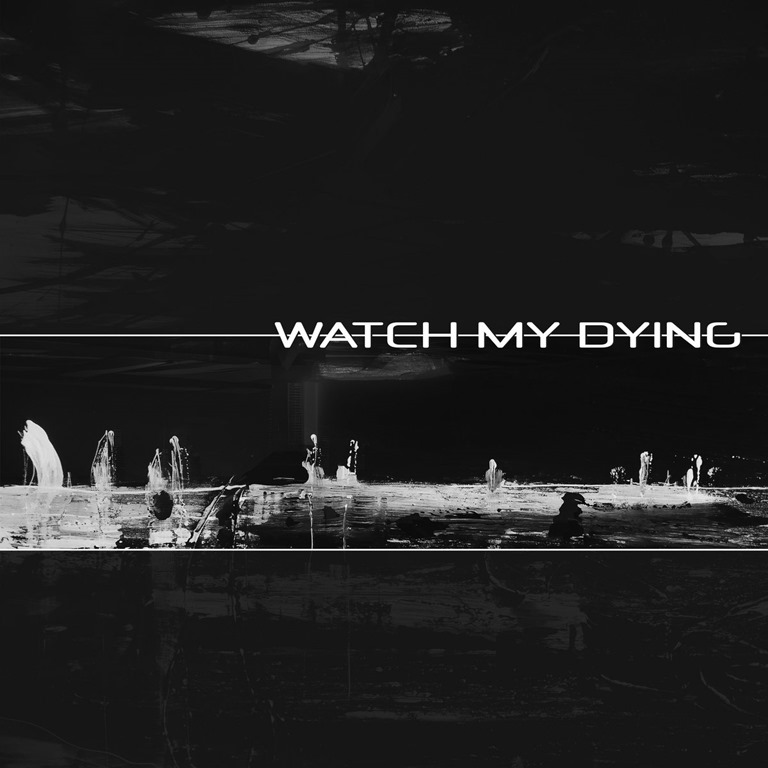
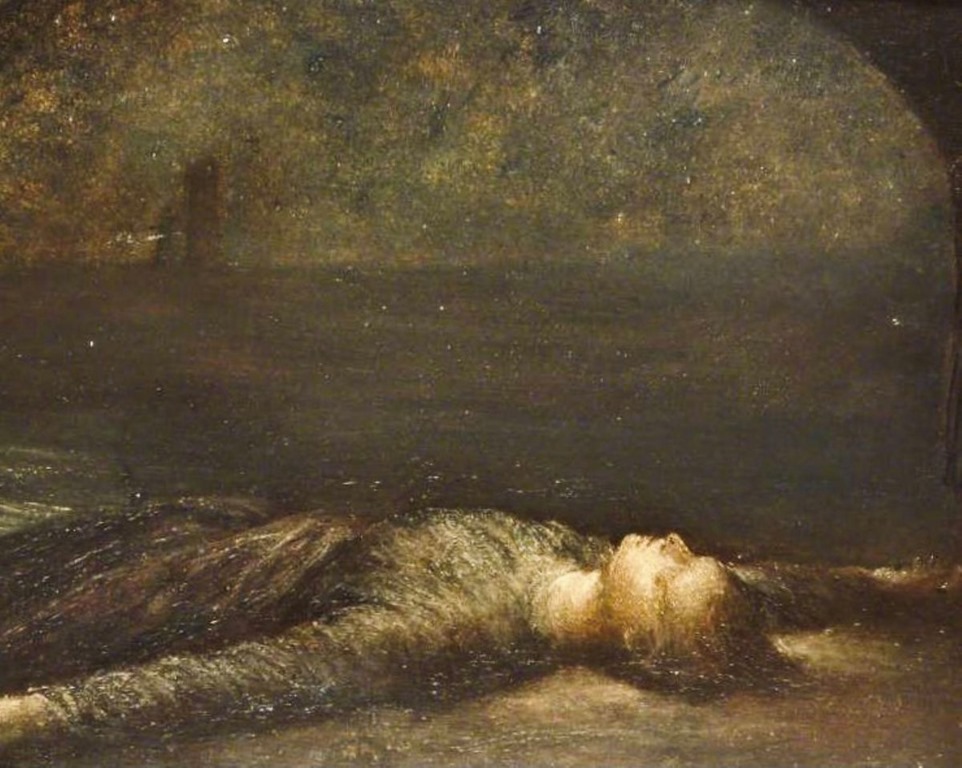
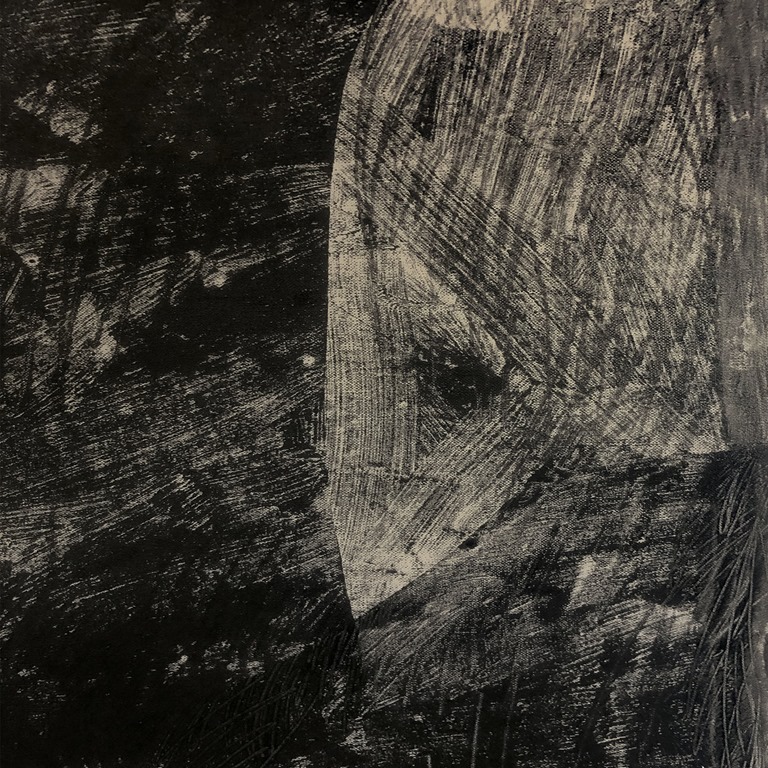
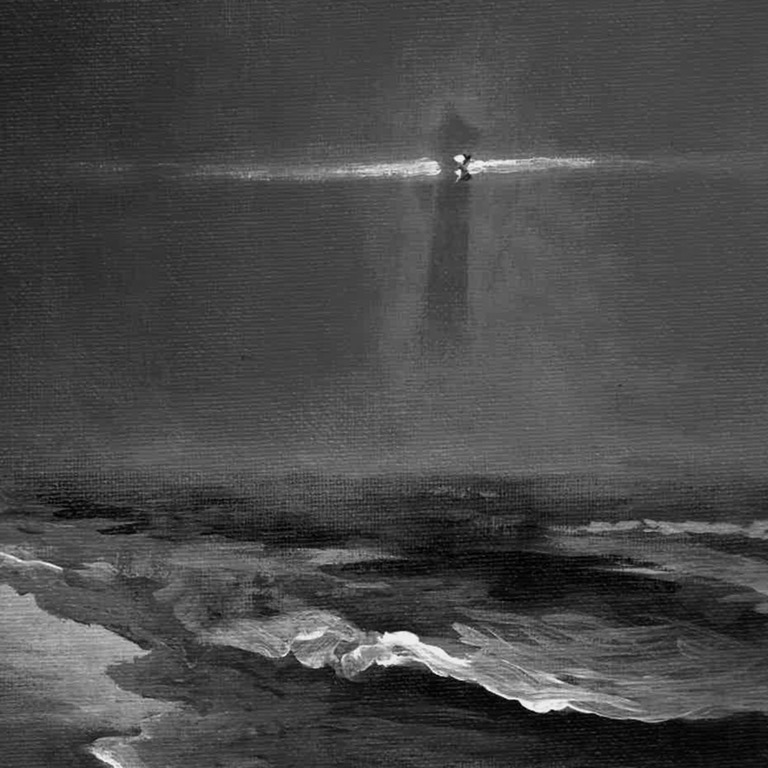
‘Jude’ – which comes with appropriately dramatic artwork, somewhere between swooning gothic drama and pre-Raphaelitism, the source of which I haven’t been able to identify – once again features the voice of poet Monica Wolfe, here whispering, and, as credited, ‘breathing’. These contributions are significant in rendering an atmospheric composition, particularly in the introduction, before the arrival of the piano – of which there are, in fact, two, adding layers to the brooding theatricality of the song, and Stephen Kennedy’s voice.

The feel – particularly in his delivery, with some quavering intonation, and enveloped in a spacious reverb – is very much gothic folk, as he casts introspection, while chasing ghosts.

‘Will the world miss me?’ I whisper

And sigh, as my life drifts away.’

It’s moving, poetic, and powerful, presenting a straight-ahead contemplation on mortality – not in some cheesy ‘romantic’ gothic style, and not in a crass emo way, but a rare sincerity.

Somewhat ironically, in our teens and twenties, we tend to agitate about death, while also treating it with a flippancy, because it’s what happens to old people, but as we grow older, we go out of our way to avoid thinking or talking about it, because as we begin to lose parents, uncles, aunts, and even – increasingly – peers, shit gets more real than we can handle. Invariably, we bury our heads in the sand, shrug off life insurance and toss making wills into the distant future along with pensions, laughing darkly how we never expect to retire anyway.

In the final minute, the song swerves into more electropop territory as the rippling piano combines with a crisp, insistent drum beat. It’s a magical, ethereal moment, which is but fleeting, like dappling sunlight through the branches of trees in a woodland on a breezy day. In many ways, this captures the essence of the song and its sentiment, in its fleeting ephemerality, a metaphor for life itself.

It ends suddenly, with only inaudible whispers fading to the close, and again the metaphor stands. This is perhaps their strongest and deepest release to date, and best absorbed by candlelight, with a large measure of something intoxicating.

AA

a0763472052_10

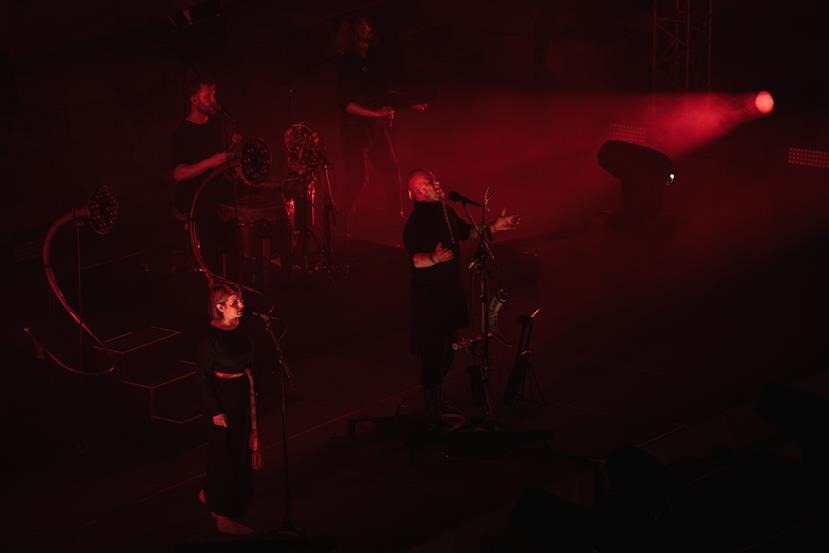
Norwegian world music collective Wardruna release a live video for the song ‘Heimta Thurs’. The video is a part of the band’s Live at the Acropolis show, which will be released on DVD and Blu-Ray alongside Wardruna’s new album Birna on January 24th.

Originating from Wardruna’s debut album Runaljod – Gap var ginnunga, the song ‘Heimta Thurs’ has grown into one of the group’s most iconic songs and a fan favourite. Set against the backdrop of the world heritage site Odeon of Herodes Atticus, Acropolis, the composition and visual experience reach ecstatic new heights.

The connections between the old and ancient, deeply human and natural at the same time can be felt at every live performance of Wardruna, resounding equally on stage and throughout the audience. Live at the Acropolis is a testament to that.

AA

Wardruna_Athens_Show_24-9903cf045104513c

Photo credit: Sebastian LOM

Metropolis Records – 10th January 2025

Christopher Nosnibor

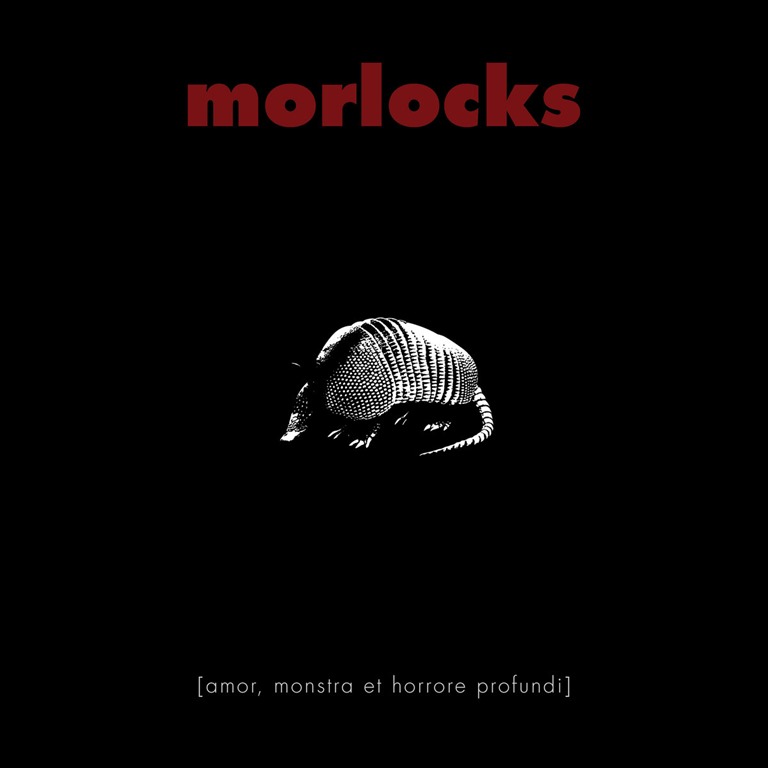
According to their bio, ‘Morlocks are a Swedish act who combine elements of industrial rock, neo-classical, darkwave and metal with epic production values to create an exciting hybrid sound. Having issued the long-awaited and well received album Praise The Iconoclast in late 2023, they subsequently promoted it with two US tours in 2024, both in support of their friends and occasional collaborators KMFDM.’

Asked about the inspiration behind the song, the band state: “Watch the world from a distance. Get angry at first, but also inspired. Take the darkest parts of it and twist them into something weird, beautiful and batshit insane – something that you could either dance to, brood in the shadows to or scream at the top of your lungs at the moon. Preferably all of the above. Everything can be turned into art, and art must hurt. Situation normal: all fucked up.”

‘Everything can be turned into art, and art must hurt’ is a phrase which stands out here. It may seem somewhat dramatic, but to summarise Buddha’s teaching, ‘all life is suffering’, or ‘life is pain’, and the function or art – true art – is to speak in some way of deep truths of what it is to be human. Art must therefore, reflect life and capture something of the existential anguish of the human condition. If it doesn’t, it isn’t art, it’s mere entertainment. And if the idea that ‘Everything can be turned into art’ may superficially seem somewhat flippant, a diminishment of serious matters, if the work is, indeed art, and not entertainment, then the obverse is true: using the pain of life as source material is the only way to interrogate in appropriate depth those most challenging of issues. In other words, making art from trauma is not reductive or to cheapen the experience – but making entertainment from it very much is.

There’s a snobbery around what constitutes art, even now, despite the breakthroughs made through modernism and postmodernism. It’s as if Duchamps had never pissed on the preconceptions of art for the upper echelons of society who still maintain that art is theatre, is opera, is Shakespeare, that art can only exist in galleries and is broadly of the canon. This is patently bollocks, but what Morlocks do is incorporate these elements of supposed ‘high’ art and toss them into the mix – most adeptly, I would add – with grimy guitars and pounding techno beats. Art and culture and quite different things, and those who are of the opinion that only high culture is art are superior snobs who have no real understanding of art or art history.

The five songs on Amor, Monstra Et Horrore Profundi are therefore very much art, although that doesn’t mean they don’t also entertain. ‘The S.N.A.F.U. Principle v3.0’ arrives in a boldly theatrical sweep of neoclassical strings and grand drama – and then the crunching guitars, thumping mechanised drums and raspy vocals kick in and all hell breaks loose. Combining the hard-edged technoindustrial of KMFDM – which is hardly surprising – with the preposterous orchestral bombast of PIG and Foetus bursting through and ascending to the very heavens, it’s complex and detailed and thrillingly dramatic, orchestral and choral and abrasive all at once.

With tribal drumming and bombastic, widescreen orchestration, ‘March of the Goblins’ has a cinematic quality to it, which sits somewhat at odds with the rather hammy narrative verses. It seems to say ‘yeah, ok, you want strings and huge production and choral backing to think it’s art? Here you go, and we’re going to sing about radioactive dinosaurs like it’s full-on Biblical’. It’s absurd and audacious, and makes for a truly epic seven and a half minutes of theatrical pomp that’s admirable on many levels. Ridiculous, but admirable.

‘The Lake’, split over two parts with a combined running time of over ten minutes explores more atmospheric territory, with graceful, delicate strings, acoustic guitar, and tambourine swirling through swirling mists before breaking through into a surging tower of power, melding crunching metal guitars with progressive extravagance, and medieval folk and martial flourishes.

Amor, Monstra Et Horrore Profundi is remarkably ambitious and unashamedly lavish in every way. Quite how serious are Morlocks? They’re certainly serious about their art. But while delivered straight, one feels there’s an appropriate level of knowingness, self-awareness in their approach to their undertaking. And that is where the art lies: theatre is acting. The stories told are drawn from life, and resonate with emotional truth: but the actors are not the action, and there is a separation between art and artifice. Amor, Monstra Et Horrore Profundi is something special.

AA

a2788665137_10

Trestle Records – 18th December 2024

Christopher Nosnibor

Tout isn’t a seedy guy flogging – or trying to buy, at a cut-price – tickets outside a gig, but a band which, on this, their fourth album (bet you never guessed that) brings together aspects of contemporary classical, jazz and ambient, in addition to the ‘folk and new age traditions’ which influence their previous works. It follows and extends the trajectory of their previous albums, sequentially numbered with the exception of their last Live, released in 2017.

It’s certainly a lot to toss in together, and with no fewer than ten musicians contributing to this release, the compositions certainly afford a considerable amount of layering and offer much to process. Even after a few listens, I’m still digesting and on the fence as to whether the combined elements are appealing or not.

Jazz comes in almost infinite flavours, and it’s not the ‘nice’ jazz to which the cliché of the listener sporting a goatee and cardigan applies which is the strain that tantalises my taste buds – but Tout do sit perilously close to this at times. At others… they’re truly sublime.

One of their habits is to title the tracks – instrumental pieces, all – in such a was as read in sequence, they form a poem, although on Fourth, it ends abruptly, despite the full stop making it clear that this is no accidental cliffhanger.

I rob the rich to feed the poor

Which hardly is a sin

A widow ne’er knocked at my door

But what I let her in

So blame me not for what I’ve done

I don’t deserve your curses

And if for any cause I’m hung.

‘I rob the rich to feed the poor’ makes for an expansive, atmospheric start to the album, slow-swelling cymbals and understated percussion hover in the background while delicate sonic waves rise and fall, while smooth saxophone echoes out atop it all, growing increasingly excited toward the climactic finish.

It’s broad-brushed, sweeping synths and soft strings which provide the backdrop to ‘Which hardly is a sin’, where a strolling bass stumbles and stutters from time to time. ‘A widow ne’er knocked at my door’ marks something of a change in tone, with sparse acoustic guitar mournful strings bringing an altogether folkier feel in contrast to the jazz vibes. At the same time, it’s reminiscent of some of the post-rock which was all the rage circa 2005.

‘So blame me not for what I’ve done’ is truly magnificent: a minimal, piano-centred piece, it’s haunting and melancholy and leaves you feeling somewhat hollowed and bereft, and it’s apparent that – to my ears, at least – the less overtly jazz works are the superior ones on the album. Admittedly, that’s a matter of taste, but, objectively, Tout seem at their most inventive and creatively enthused when venturing into these different territories.

The album ends as abruptly as the poem it spins: one moment, ‘And if for any cause I’m hung.’ after a subtle, sedate start, is jazzing along, the bass strolling and ambling – and then suddenly it isn’t, petering out, unresolved. Et c’est tout. It’s well played, both literally and figuratively.

AA

a3531274275_10

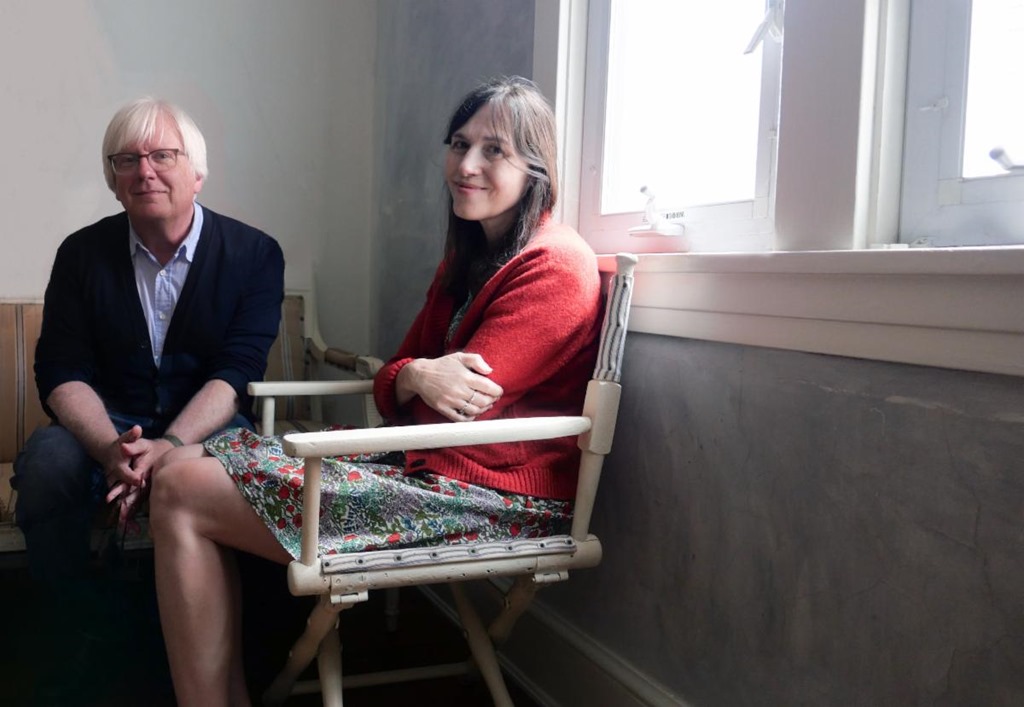
The new album, Midwinter Swimmers, sounds immediately like an old friend. At the same time, it’s a new kind of adventure for the beloved Pennsylvania band of high school friends Karen Peris, Don Peris, and Mike Bitts, having both an expansive, cinematic quality and the strange, lo-fi beauty of a newly discovered vintage folk/pop album, brimming with melody. Midwinter Swimmers is being released by Therese Records. Check out ‘Your Saturday Picture’ here:

AA

don and karen aug 2024 2

Innis Orr / UR Audio Visual / Redwig / Bar Marfil – 1st November 2024

Christopher Nosnibor

Glasgow’s Howie Reeve could never be accused of being predictable, or dull. His musical output is eclectic, experimental, and more than that, it’s often spontaneous, energetic, and in-the-moment. His last release, in 2022, was a set of songs created with his (then) ten-year-old son. Before that, there was a live recording of Chassons (that’s Cathy Heyden on alto sax, practice chanter, tin whistle, and Howie Reeve on electric bass) performing at Le Maquis de Varielles, a document which captures ‘Both of us grabbing whatever else is to hand and occasionally ululating.’ This time around, there’s a whole host of accomplices doing more or less the same to lead the listener on a wild ride. Indeed, Leaf in Fog finds Reeve working with a substantial number of friends in order to realise this ambitious and wide-ranging work.

The title – and cover art – carries connotations of the natural world, perhaps a sense of drifting autumnal melancholy, but the actuality is something altogether more jagged, dissonant, tense and disorientation. There is an earthiness to the songs and their performance, but it’s rent with the kind of twists and spasms that tear the fabric like a psychotic episode.

‘Microscopic Liberties’ starts out – and concludes – as a work of ramshackle lo-fi acoustic folk that’s not quite folk but not quite anything else one could pin down as belonging to a specific genre either. In between, there are blasts of howling noise and slanting guitar slaloming askew across a wandering bass groove. There are moments where it goes a bit Pavement, others more They Might be Giants… and it’s only two and a half minutes long. ‘Water Catalyst’ follows immediately, and tosses in elements of prog, neofolk, medieval minstrel folk and jazz.

‘Apotrope’ may be but an interlude with a running time of a minute and twenty seconds, but it’s a sharp honk of straining horn, a fragment of dissonant jazz swirling in an ambience of voices and then some sing-song poetical narrative… it’s hard to keep up. The compositions, the song structures, border on the schizophrenic, or the aural equivalent of Tourette’s, but instead of being unable to hold back the ticks and sputter ‘tits, fuck, cunt, wank’, Reeve can’t leave a song to just drift along comfortably, and it’s always just a matter of time before spasmodic bursts of all hell break loose.

From among chaos, occasionally, moments of quite affecting musicality emerge: the pick and strum opening of ‘Shop Window’ is whimsical and at the same time somehow sad, and continues to be so even when chaos and discord and bleeps and whistles collide like a speeding juggernaut travelling in the wrong carriageway, obliterating the acoustic serenity. ‘Evidence’ begins subtle, slow, a dolorous bass trudging through lugubrious strings and a sparse, simple clip-clop rhythm. The vocals veer between light and lilting and wide-eyed and tense as the instrumentation switches and slides through a succession of unpredictable transitions, before ‘Trouser Tugger’ goes full Trumans Water, but with a more muted, bedsit indie feel, leaving you dazed and bewildered at the end of its clanging, jolting three minutes.

The songs on Leaf in Fog are predominantly folk songs at heart, and the core elements expose moments which are often quite touching and pluck at emotions which are just beyond reach, beyond articulation, obscured, perhaps, by fog, but equally obscured by fret buzz and crackles and crazed strings and horns and an endless array of additions and interruptions.

It would be impossible to pretend that Leaf in Fog is in any way immediate or especially accessible, and the truth is it’s likely simply too much for many. Like Beefheart’s Trout Mask Replica, there’s so much going on its dizzying and difficult, and requires a lot of focus, and energy, to listen to. But Reeve – with more than a little help from his friends – has conjured a bold work, brimming with charm and mysticism, imagination and madness. Venture into the fog and explore, but do tread carefully.

AA

a1513935626_10

6th September 2024

Christopher Nosnibor

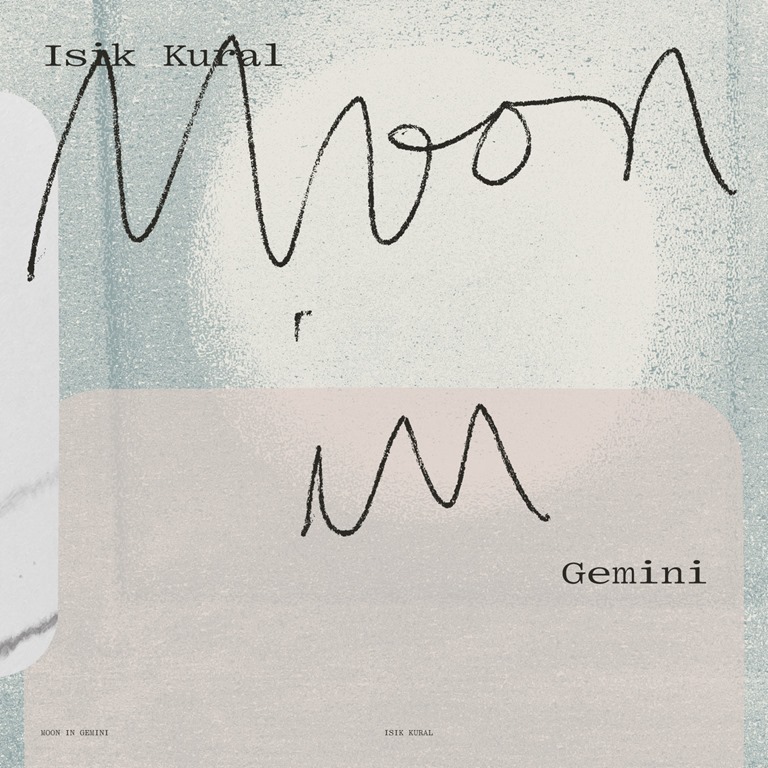
Isik Kural’s Moon in Gemini is described as ‘a luminous scrapbook of slow-flowing narratives couched in intuitive and symbolic storytelling. Awash in woodwinds and strings, lullaby-inflected lyrics and tender imagery, Isik’s voice moves closer to the listener’s ear on his third album, intoning states of being in which the wonder filled sound of everyday life can be heard and felt. Moon in Gemini is a space for wide daydreaming, where the invisible steps forward and dauntless ghosts play under a hazy lunar light.’

This is a charming proposition, and the actuality proves to be even more so. Moon in Gemini contains fourteen compositions, the majority of which are fleeting, ephemeral pieces of but perhaps a couple of minutes in length: a handful extend beyond three minutes, but none beyond four.

The overall effect, then, is soothing, but the fragmentary nature of the assemblage means the flow is broken, and often the smooth, calming flow is disrupted as compositions end – I won’t say prematurely, because who am I to say when a composition should end, how long it should be? These things are purely artistic choices, and my feeling that pieces here sometimes feel incomplete or abridged is simply a that, a feeling, as much from my desire for more than any clear or objective assessment.

The first piece, ‘Body of Water’ is typical in its soothing, tranquil ways. Delicately picked guitar and mellow woodwind drift and trill with a delicate drip-drop sound, and it’s beautifully relaxing, the sonic recreation of the experience of sitting by a still lake in warm – but not hot – sun while a gentle breeze ripples the surface. I close my eyes and find myself on the edge of a tarn in the Lake District: a happy place, a place of tranquillity, of escape. It’s a place I could spend long hours, and in my heart I believe those hours could extend for days. But it fades out, far too soon – after a mere minute and fifty seconds, the moment’s passed. But this is in many ways just how it is to be sitting by a lake, and sensing a moment of true perfection: just as you begin to bask in it, the wind picks up and a cloud drifts over the sun, the temperature drops and you realise that that perfect moment was simply that – a moment. Moments pass before you can grasp a hold on them. They exist in a momentary flicker, the blink of an eye, and so often, they’ve passed before you even realise they’ve arrived.

AA

AA

‘Prelude’ is a dainty, sugary, music box tune which exists out of time but is, at the same time, steeped in an ambiguous nostalgia. Precisely what it’s a prelude to, I’m not sure, but I’m also not sure it matters, while ‘Almost a Ghost’ is haunting, gentle, introspective and flitting with fluttering sounds of nature alongside its rippling pianos and low-key, almost spoken-word vocals. Each piece is shimmery beguiling, the supple and subtle layers rippling over one another while on the pieces where there are vocals – and much of Moon in Gemini is instrumental – it’s true that Isik’s voice is quite special, and an instrument in its own right, and also more about the enunciation and, often breathy, bedroomy, about its contribution to the overall atmosphere. ‘Mistaken for a Snow Silent’ is beautiful, and as much on account off its sparse simplicity than anything else.

We hear ambience and chatter around and even through the songs, and these incidentals work well, in context.

‘Gül Sokağı’ is low and slow and possesses a quality that difficult to define The soft woodwind on ‘Birds of the Evening’ is light and airy and mellifluous. The experience is uplifting, and as a whole, Moon in Gemini is sedate and arresting.

To bemoan that an album doesn’t provide everything that I would like is not a legitimate criticism: it’s not a failing on the artist’s part, and I cannot seriously claim a loss of expectation: with Moon in Gemini, provides everything promised, and more. This is a truly beautiful album, and one which has a rare warmth and softness.

AA

AA

a1909099100_10

Christopher Nosnibor

It doesn’t get much more goth than a gig in a graveyard. Through the wrought iron gates, the approach to the chapel, the venue for tonight’s performance, is set either side and as far as the eye can see with headstones. Fulford cemetery is immense. The chapel is an appropriately imposing building: designed by James Pigott Pritchett and completed in 1838, it’s a grand neoclassical structure and considered possibly one of the greatest cemetery chapels in the country, with huge doric columns outside, while its interior, white with gilt trimmed faux-pillars which only accentuate the incredibly high ceiling is spectacular to behold.

The room – a neat oblong – is packed out with a broad array of people, but there’s a strong showing of what I’d call Whitby goths, that is to say, the kind who dress to impress rather than your biker jacket and boots type. There’s a lot of lace, silk, and taffeta to be seen, meaning that for once I feel rather less conspicuous sporting a knee-length velvet coat. But equally, the audience is notable for its broad spectrum and diverse demographic, and while details of the event in advance had been purposefully scant, there is clearly a keen interest for something different, and not specifically in York. There are people who have travelled to be here tonight.

The bar, such as it is, is offering red and white wine, bottles of Stella, and Coke, and taking a seat toward the back – the front ten rows were full and by the time the lights go down, leaving the space illuminated by mellow candlelight, the seats are pretty much all occupied. It’s pleasing to see, especially knowing that this event coincides with the annual nighttime walk for cancer, and a metal gig not five minutes up the road.

First, we were treated to some operatic vocal accompanied by piano. It’s not only exquisitely performed, but it’s absolutely perfect for the setting. And in this moment, it becomes crystal clear that this is going to be an event like no other. To describe it as an evening of culture would be to downplay all of the other music events and spoken word nights and more on offer, but when it comes to high culture, there’s most certainly a gap – but the greatest gap is in events which bridge the divide between your regular gig and a night at the theatre or the opera or a night at the proms. This, however, is a superbly curated event which achieves precisely that.

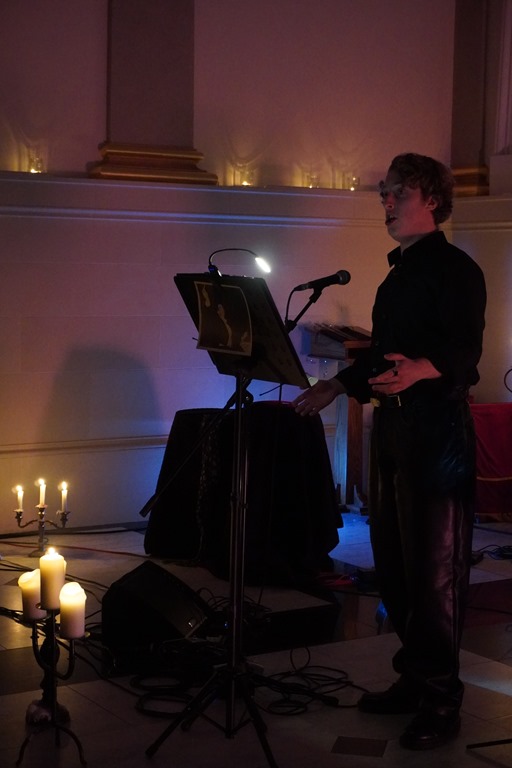
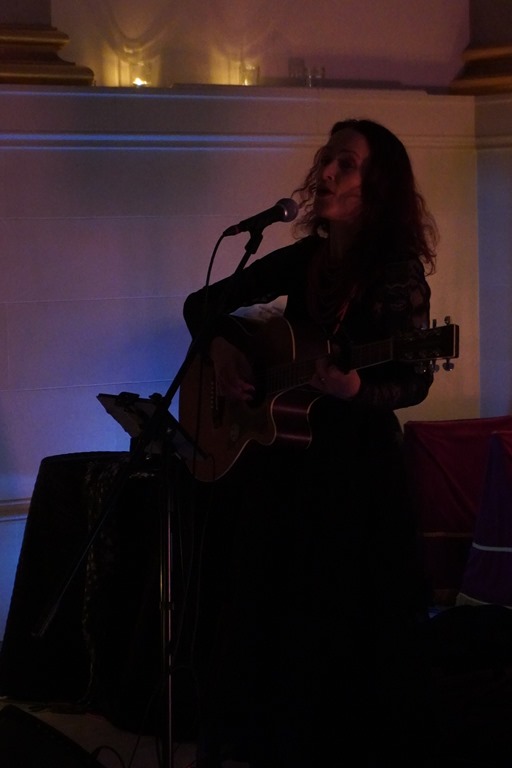
Immediately after this introduction, host and co-ordinator Stephen Kennedy leads an ensemble consisting of bass guitar and percussion through a set of three songs, starting with a brace of deep cuts from Fields of the Nephilim’s catalogue, with ‘Celebrate’, and then ‘Requiem’ from Mourning Sun, with the trio joined for the second two songs of their set by a cellist who remains on stage to play a solo set after. Kennedy’s vocal is strong, and he really does a remarkable job of reproducing Carl McCoy’s gravel-heavy growl.

DSC00069

After a handful of cello instrumentals, Kennedy returns to the stage – although technically it’s the floor, but wonderfully lit – to provide vocal accompaniment to her graceful strings.

The switches between performers are near-instantaneous, with no announcements as to who’s who and no-one informing us who they are. There is a programme available at the merch table, but in a way, the individual credits feel of little import: this is very much a collective work, an ambitiously grand collaboration, striving to create a unique experience of an ever-shifting sonic smorgasbord. Individual names and egos are put aside in the name of this being Gothic Moth. There’s harp – moving – and powerful, and an emotive vocal while makes for a stirring performance, which is rapturously received, a solo acoustic-guitar led performance with folk-hued vocals, before the first half of the evening is rounded off with a piano and tenor recital, Benjamin Staniforth’s impressive voice matched only by his impressively voluminous leather trews.

DSC00093

If the second half offered more of the same, with some of the performers getting a second set, it also gave us a while lot more. During a longer harp and voice set, the rendition of Metallica’s ‘Nothing Else Matters’ was a clear standout of the night, but then again, Iryna Muha’s Ukrainian folk performance, with acoustic guitar – with some effects to really fill out the sound – and hurdy-gurdy was mesmerising, and was equally well received.

DSC00094DSC00108

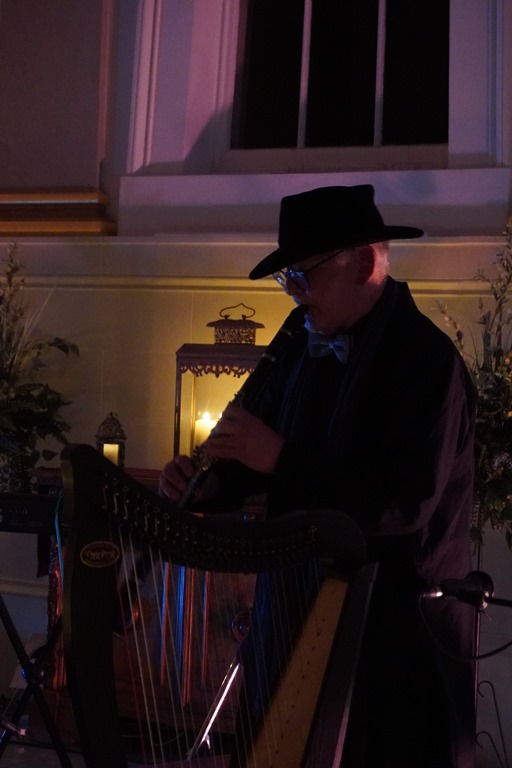
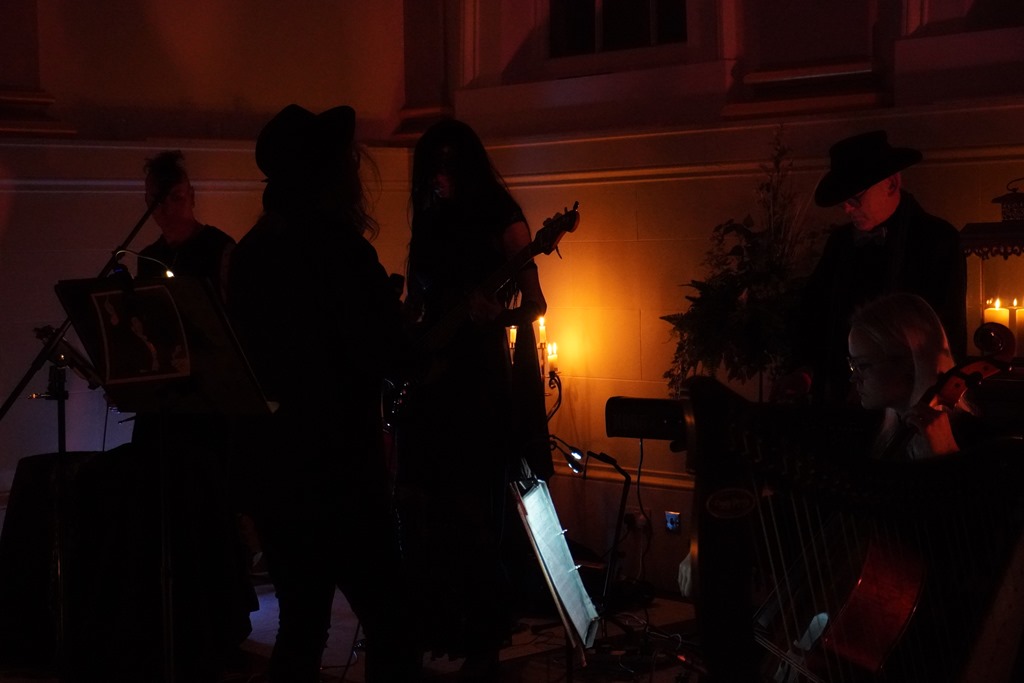
After a clarinet interlude from a man in a hat and long coat (there are a fair few of those this evening) who turns out to be Ian Karlheinz Taylor from Skeletal Family, Taylor moves to the keyboard and the full band return for a magnificent and moving rendition of The Mission’s ‘Sweet Bird of Passage’ followed by ‘Island in a Stream’. Close your eyes and it could be Wayne Hussey dinging: Kennedy, it seems, is truly a vocal chameleon, bringing the night to a close with a remarkably close approximation of Ian Curtis on an impressive version of Joy Division’s ‘Atmosphere’ – something this event had in copious amounts.

DSC00121

Stephen Kennedy needs to take a bow: this, the first Gothic Moth event, was an incredibly ambitious coming together of a staggeringly eclectic range of artists, and many of those collaborating hadn’t even met one another until the day. This is unquestionably testament to their individual and collective talent, but also to Kennedy’s aptitude as a curator in bringing them together. Everything about this evening was stunning, and it’s pleasing to see future events are already being booked, filling a niche few knew even existed.

Cruel Nature Records – 27th September 2024

Christopher Nosnibor

The scene of microlabels will always give you something absent from the mainstream. I mean it’ll give you many things, but I’m talking about variety. We live in the strangest of times. Postmodernism brought simultaneously the homogenisation of mainstream culture and the evermore extreme fragmentation of everything outside the mainstream. And example of that fragmentation is the existence of Cruel Nature Records, who operate by releasing albums digitally and on cassette in small quantities. Further, the second album by Deep Fade, is typical, released in an edition of forty copies. It’s better to know your audience and operate on a sustainable model of what you can realistically sell, of course, but do take a moment to digest the numbers and the margins and all the rest here. It’s clear that this is a label run for love rather than profit.

The sad aspect of this cultural fragmentation is that so much art worthy of a wider, if not mainstream, audience simply doesn’t get the opportunity. Not that Deep Fade have mainstream potential, by any means. As evidenced on the seven tracks – or eight, depending on format – tracks on Further, Deep Fade are just too weird and lo-fi for the mainstream to accommodate them. They simply don’t conform to a single genre, and with tracks running well over eight minutes and often running beyond the ten-minute mark, they’re not likely to receive much radio airplay either.

Opener ‘Tidal’ is exemplary. Somewhere during the course of its nine minutes it transitions from being minimal bedroom pop to glitchy computer bleepage to a devastating blast of messed-up noise. Yet through it all, Amanda Votta’s vocals remain calm and smooth as she breathily weaved her way through the sludge. The twelve-minute title track veers hard into wild Americana, a mess of country and blues and slide guitar, before tapering into fuzzed-out drone guitar reminiscent of latter-day Earth. Amidst trudging drone guitar, thick with distortion, it’s hard not to feel the lo-fi pull.

We’re immensely proud to present an exclusive premier of the video for the mighty ‘Tidal’:

AA

‘Surge’ arrives on a raw metallic blast before yielding to a spacious echo-soaked guitar drift and some dense, grating abstractions. Texture and detail are to the fore on this layered set of compositions are by no means easy to navigate.

As the band explain, ‘The album, influenced by Neil Young and Einstürzende Neubauten, was recorded across various locations including St. John’s, Providence, Liverpool, and Edinburgh. Environmental elements play a significant role, with guitars recorded during a nor’easter and vocals captured at lighthouses, incorporating natural sounds like wind and bird calls… Toronto’s Church of the Holy Trinity and the Cowboy Junkies’ The Trinity Sessions also influenced the album’s sound, adding to its atmospheric and melancholic feel.’

Atmospheric and melancholic it is, although many of the aforementioned touchstones aren’t easy to extrapolate from the mix. Nevertheless, and you feel your stomach enter a slow churn, which is exacerbated by the low-gear drones which sound like low-circling jets – there have been a lot of those lately and the air is filled with paranoia and mounting dread right now. Further, however not only provides a sonic landscape that matches this mood, but runs far deeper into the psyche.

The acoustic ‘Little Bird’ scratches and scrapes over a fret-buzzing acoustic guitar. The fifteen-minute ‘Heartword is simply a mammoth-length surge of everything, occasionally breaking down to piano and deep tectonic grinds.

It’s fitting that Deep Fade should call their second album Further, because this is where they take things. At times it’s terrifying and at times it’s immense.

The lyrics are as breathtaking as the crushing bass on ‘Wake Me’, and the sparse arrangement of closer ‘Fixed and Faded’, with its breathy, folky vocal and crunchy overdriven guitar which drones, echoes, and sculpts magnificent spares from feedback and sustain, brings a sense of finality and offers much to digest.

The digital version includes an additional track, another monumental epic in the form of the eleven-minute ‘Hawk’, a work of haunting, spectral acoustic country: it’s one hell of a bonus worthy of what is inarguably, one hell of an album.

AA

a1741881484_10

Prophecy Productions – 17th May 2024

Christopher Nosnibor

While many progressive metal bands are preoccupied with space or fantasy realms or mythology in some form, with San Francisco’s Botanist, the clue’s in the same, and it’s an obsession with species of plant-life which have provided the lyrical focus over the course of eleven previous albums before Paleobotany, which, they say, ‘take[s] us back more than 70 million years to a time when dinosaurs ruled the planet and early forests began to turn to coal. Before the age of giants ended in flames with the apocalyptic impact of the Chicxulub asteroid, some families of plants that still have descendants today also grew much larger.’ Bet you didn’t know that, did you? But then, the title tells is, really: an album about the botany of the Palaeolithic era.

Sonically, Paleobotany is interesting, and is more progressive than it is overtly metal for the most part, perhaps on account of the less conventional instrumentation used by the band, as outlined in their bio, which details how ‘Their music clearly has its foundation anchored in ‘metal’, but instead of 6-string guitars the Americans use 110-string hammered dulcimers. To the confused horror of traditionalists, BOTANIST fit these percussion-stringed folk instruments with magnetic pickups and distort them through various perverse means that range from amplifiers via analogue tape to digital manipulation.’

Perverse seems to be the operative word here. It’s fair to say that this is a band unswayed by trends or popularity. The overall sound is an amalgam of folk and progressive, and it’s highly melodic, too – and not just in the instrumentation. For the most part, the vocals are clean, soaring, tuneful, apart from the occasional foray into growliness, and they sit comfortably atop sweeping layers of cinematic sound, of which ‘Sigillaria; is perfectly exemplary. The bass runs in the closing bars of ‘Archaeamphora’ are more jazz-influenced than anything, and there are some truly black moments, such as ‘Strychnos Electri’, the verses of which are propelled by double-pedal bass beats and a deep growling vocal – but then they’re off on a tuneful trip about ferns with a tuneful piano rolling along in balladic fashion. When they’re heavy, they hit hard in the guts, but much of the album is given to expansive fields of tunefulness.

Their eschewing of all the conventional tropes is admirable and offers and exciting prospect, and while the concept is novel it is quite remarkable that they’ve managed to eke it out this long. At times, it does feel a shade pretentious – it’s certainly a little serious and lofty, with some of the lyrics sounding more like excerpts from essays in journals. This is by no means to denigrate intellectualism in music or anywhere else for that matter. Musically it’s an incredibly complex and accomplished work. It’s just… maybe it’s just a niche I can’t quite connect with.

AA

a0944583200_10