Posts Tagged ‘exploratory’

Sub Rosa  – 22nd September 2023

Christopher Nosnibor

So many reissues recently have taught me a valuable lesson. I don’t know nearly as much music as I thought I did. Of course, it’s impossible know all the music, and despite feeling I’m reasonably knowledgeable, and compensating what I don’t know with enthusiasm. Time was, I was worried about knowledge gaps: they made me feel stupid, ignorant, and I’ve spent evenings with people who have reeled off bands in genres I’m interested in and not recognised the name of a single one, let alone heard them. I felt like a fraud claiming to be a music enthusiast and worse still, a music writer (I never proclaim to be a music journalist. I write about music, and do so very much from a personal perspective. Sometimes, I stab at maintaining an element of objectivity, but the appreciation of art isn’t objective. As I’ve written elsewhere, the reason we appreciate art is because of the feelings it stirs in us, the way it speaks to us, not first and foremost because of its technical proficiency.

This is a lengthy circumnavigation to the confession that Die Anarchistische Abendunterhaltung completely bypassed me in the day – in fact, until today, the week of the reissue of their 1995 self-titled full-length debut. I suspect that they didn’t get much coverage in the UK music press, and this was still a while before the advent of the Internet as we know it – and I was a relatively early adopter, setting up my eBay account in 1999 following the demise of Yahoo! Auctions.

As the accompanying bio outlines, ‘The band consisted of four young, ‚classically derailed’ musicians who played their own compositions exclusively their with acoustic instruments such as violin, cello, clarinet and accordion… Their work contained influences from Roma music, Eastern European folk, klezmer and jazz, but was performed with the energy, rebellious spirit and Sturm und Drang of a bona fide punk band. DAAU was part of the fertile Antwerp scene, which also produced dEUS, Zita Swoon and Kiss My Jazz, and soon signed an international record deal with Sony Classical.’

dEUS may have briefly made a mark here in the UK in indie / alternative circles, but the others, not so much, and I suspect that even with its first vinyl pressing, this re-release will likely have a bigger landing in Germany and, indeed, the rest of mainland Europe, than this pitiful island that still celebrates Britpop, and which spent 1995 dominated by turgid sludge by the likes of Oasis, whose pinnacle release (What’s the Story) Morning Glory? and Blur’s Great Escape (which was anything but great); the best we got was The Bends, while Robson and fucking Jerome dominated the singles charts for half the year. As if we needed further proof that we’re a small, crappy island with an overinflated sense of self-importance that the longest hangover from the Empire ever. It’s embarrassing, as is the fact that this domestic Brit-centric bullshittery has denied us introductions to many great bands. Die Anarchistische Abendunterhaltung is a perfect example.

It’s perhaps not hard to grasp why this extravaganza of neoclassical extravagance and its wild woodwind and unpredictable compositional forms didn’t grab the attention of the British Music press, but they missed a work that’s hugely innovative and belongs to no one genre. It’s wild and it’s challenging , but these are positives.

Die Anarchistische Abendunterhaltung is droning strings, it’s by turns melancholy and slow, and remarkably lively. It’s an untamed beast almost with a life and energy all of its own. But the compositions aren’t in sequence!

‘V Drieslagstelsel’ is the first track, the first of five ‘Drieslagstelsel’ pieces, and it’s followed by the frenzied yet droning folksiness of ‘II Drieslagstelsel’: it’s pretty, but it’s strange. Or, it’s pretty strange. I’m on the fence, while it sounds like they’re stripping the fence with some frenzied violin work. ‘III Drieslagstelsel’ scuttles in with some cheeky chamber stylings before popping in all directions, and it’s kinda cheeky – and perhaps tongue-in-cheeky – jaunty, incredibly busy, and extremely varied. It isn’t the kind of explosive, head-spinning jazz I sometimes find myself wrestling with here, but it covers a lot of terrain in just five and a half minutes, with stage musical qualities pushing to the fore before dipping back down to something altogether less ‘production’ orientated. The last of the ‘Drieslagstelsel’ sequence is ‘I Drieslagstelsel’, and following the frenzied strings and dramatic orchestral sculptures of ‘VI Drieslagstelsel,’ it’s a compact piece of neoclassical music which fulfils the oft-underrated and oft-overlooked purpose of entertaining. It’s a fun and often frivolous piece, in parts a wild hoedown with wind instruments, with an eye-popping energy which delves in to drones and darker territory at times.

What happened to IV? Maybe it doesn’t matter. Rounding the album off is the eleven-minute ‘Doorloop’, which appears to be a traditional track, and its slow, drawn-out notes are funereal at first, before thing go g=crazy and there are even vocal.

Over the course of these six pieces, Die Anarchistische Abendunterhaltung brings massive range. Back in 95, I probably wouldn’t have appreciated it, and nor would anyone else I knew. But here we are, looking at an accomplished album with much texture and range.

And now, I appreciate it. Perhaps I wasn’t ready, perhaps it was out of step with the times for all but a few – and even fewer here in Britain – but Die Anarchistische Abendunterhaltung is a remarkable album, and one which is timeless.

AA

a3688988726_10

Waxing Crescent Records – 7th July 2023

Christopher Nosnibor

Since parting ways with Gavin Millar and worriedaboutsatan, Thomas Ragsdale has been incredibly busy recording both as Ffion and Sulk Rooms, as well as playing synths with Mancunian post-rock act Pijn. Looking at his bandcamp, you wonder how he has time to piss, let alone sleep.

The Incidental Crack, meanwhile, are no strangers to these pages either, and Simon Proffitt, Rob Spencer and Justin Watson are hardly idlers when it comes to creativity, with The Incidental Crack Does Nothing, released almost a year ago to the day from this release, following two albums in 2021.

And as the accompanying notes explain, it’s this shared love of the act of creating that brought the two together: ‘Split was created through the desire to collaborate. Thomas Ragsdale and The Incidental Crack spoke about the idea of working on a split release and then all hurried away into their studios to get to work. The split idea soon become a reality as music was exchanged ready to share.’

The title is factual, and gives nothing away, but it’s also descriptive in a way, in that it’s distinctly an album of two halves, complimentary and contrasting.

Sulk Rooms present a single longform composition of some twenty-one-and-a-half minutes in duration: The Incidental Crack’s contribution is of more or less equal length, but spread across three pieces.

Sulk Rooms’ ‘Objects In The Mirror Are Closer Than They Appear’ has no connection to Meat Loaf and his bombastic rock, and is instead a big, slow-moving mass of ambience, which has a density and shade as well as a certain lightness. ‘Vaporous’ and ‘cloud-like’ are terms I often reach for in the face of such works, but this feels more like standing atop a mountain while the cloud thickens to the point that there is no visibility, to the point that you’re unable to even discern the presence of your own body, and so dense as to be suffocating – perhaps more like a smog or smoke. Tim Hecker managed to create such a sensation the time I saw – or, more accurately, was present, when he played in Leeds a few years back. The smoke was so dense and the lighting so minimal as to induce a kind of sensory deprivation. But with the swirling sounds all around, there was, simultaneously, sensory overload. You need balance: many of us are reliant on multiple senses, and those who lack sight, hearing, often experiencing a sharpening of the senses which do function. But his is not an immediate thing, and to suddenly find oneself with restrictions, it’s a shock of sorts. And so while ‘Objects In The Mirror Are Closer Than They Appear’ is soft and tranquil, the experience isn’t entirely soothing as I feel an inner tension grow as the time drifts and dissolves, diffusing in reverberating waves of vocal samples.

The Incidental Crack’s three cuts are descriptively titled and combine elements of the dramatic and the mundane to intercut aspects of pathos with bathos to somewhat comic effect.

‘Rob To Holland Via Köln And Back Again’ sounds like is should have something of a travelogue feel, but is, in fact, a work of dark ambience with deep tensions evoking the chilling fear of The Cold War, while ‘Lawnmower Death And Subsequent Resurrection’ isn’t an homage to the parodic thrash band Lawnmower Deth, but a soundtrack to the trauma of dealing with tools and appliances when they don’t function as intended. Yes, most of us have been there, but to feel it so bluntly and boldly is impactful. This – if I’m not mistaken – the sound of a guy recording his DIY and the like before seeking a narrator. Yet, there are some dark atmospherics too, and thee overall sensation is ominous rather than uplifting. And by that measure, the ‘Bus Stops In Wigan’ must be pretty fucking terrifying: places to avoid in bleak territories.

As split albums go, it’s absolute perfection in that it gives you everything you want. If the two acts operate very differently in formal terms, both have created deep, dark works here that make for a release that’s wide-ranging, interesting, and just a little scary.

AA

a0921513698_10

Gizeh Records – 30th June 2023

Christopher Nosnibor

In this sense, Bleaklow is a rather different proposition, and in some respects, the instrumentation is a significant factor in the shape of the sound, with Claire contributing ‘Voice, Nord Electro, Yamaha PSS-170, field recordings, Moog Taurus’, and Richard contributing ‘Electric gtr, drones, field recordings, Yahama PSS-170, Moog Taurus’. But by the same token, there is something about anything Richard Knox does which has something of a signature – not a signature sound as such, more of a signature feel, which comes from the kind of wispy ambience and dense atmospherics.

The overall effect of Bleaklow’s debut, Glume, is mellow, amorphous washes of cloud-like sounds drifting softly on invisible air currents, but there are moments where the textures are coarser, more abrasive, and these provide vital contrast. ‘Husk’ scrapes in with a wash of distorted guitar before tapering tones supple piano and vocals, layered to a choral effect surge and swell.

Claire’s voice by turns evokes Kate Bush and Cranes, haunting, ethereal, and as much as this sits in the post-rock bracket from which Richard and Gizeh emerged back in the early 00s (the label put out not only the The Heritage, the debut mini album by Her Name is Calla, but Knox also put out a super-limited CD of ‘Condor and River’ in a crazy corrugated card sleeve, as well as Arrivals, the debut album by worriedaboutsatan, wrapped in a chunk of blown vinyl wallpaper, which looks and feels amazing but is a real bugger to store… but I digress) it also very much harks back to 90s shoegaze, with a heavy debt to Slowdive and My Bloody Valentine, but then again, it’s impossible to listen to this without recourse to The Cocteau Twins. If this sounds like a catalogue of touchstones, it’s testament to how deftly they draw on myriad elements and whip them into a sonic souffle with the texture of candyfloss – not that this is particularly sweet, but it is lighter than a feather, lighter than air. And nowadays, the packaging is a little less DIY, but still very much focused on sustainability: the packaging for Glume is a recycled cocoa-card sleeve, whereby the ‘recycled card is made from 40% Post Consumer Waste and 15% natural fibres (by-products derived from the food processing industry which would otherwise go to landfill.) Turning a waste product into a natural, GMO free, raw material derived from nuts, fruits etc, resulting in distinctive colour shades’. It’s not just commendable, environmentally: it taps into the physicality of a releasing music and rendering the physical release a work of art rather than a commodity of plastic in plastic.

Everything on Glume happens at a sedate pace, and everything melts slowly together. The chances are that at some point, you’ve sat, stood, or even laid on the grass and simply looked at the sky and watched the clouds slowly shifting shape, rabbits and elephants becoming elongated and increasingly deformed, until they’re no longer rabbits or elephants, but abstract shapes stretching and fading to formlessness. The songs on Glume are by absolutely no means formless, but the sounds are like mist and the structures are supple. It’s a magnificently realised work: textured, detailed, nuanced.

It may not be bleak, but it’s dark, and it’s got detail. Bask in it.

AA

a0373089653_10

Midira Records – 5th May 2023

Christopher Nosnibor

Aidan Baker is one of those artists whose output is almost impossible to keep pace with – but the more remarkable thing is that for all of this hyperproductivity, the standard of work is of an unstinting quality. Recorded between 2020 and 2022, Engenderine – a double CD – lands almost simultaneously with Trio Not Trio, the first in a series of five albums on Gizeh Records, and just as Baker is gearing up for a tour with Nadja, the ‘ambient doom / dreamsludge, / metalgaze’ duo he is one half of.

To pause for breath for a moment, it’s worth stepping back and running through the context of this, which is worth quoting:

‘The neologism ‘engenderine’ comes from Lydia Yuknavitch’s The Book of Joan, a futuristic/dystopian/cli-fi retelling of the Joan of Arc story, and describes beings partially composed of pure energy capable of manipulating matter who, amongst a largely devolved human population, might be considered post-gender and a new evolutionary step.

‘Other song titles come from phrases and images from Tricia Sullivan’s duology Double Vision and Sound Mind, surrealistic fantasies about the nature of reality and perception and, like The Book of Joan, the possibilities of manipulating those.

‘Musically, the songs on Engenderine began as a series of slowly evolving ambient guitar loops – a bed layer of reality, so to speak – over which were layered bass, drums, and organ parts. These instrumental additions – the trappings of perception, signifiers, metaphorically speaking, our attempts to codify perception – incorporate traditional rock structures and progressions but are stripped down to a sort of somnambulant minimalism that might encourage introspection, a meditative background, uneasy listening, as much as they demand attention.’

It really is extremely uneasy listening. It’s perhaps as well it is, for the larger part, ‘background’, because the two CDs, while only containing eight tracks in all, span almost ninety minutes. We’re not quite in Sunn O))) or latter-day Swans territory, but still…

The first track, ‘Baby Dragon Slaughter’ pitches a long, unchanging organ drone note against a growling doom guitar and stop-start percussion which crashes hard. It’s hypnotic, paralysing, and I can imagine some might toss in a Doors comparison, but that’s only on account of the organ and the slightly trippy vibe, because it’s not only nothing like The Doors, but infinitely better.

If you want comparisons – because pretty much everyone seems to work on the premise that everything sounds like something else and recommendations – mostly algorithmic and based on purchases or streams, depending on the platform, Engenderine sits in the low, slow, doom-drone bracket of Sunn O))) and Earth 2. And this is indeed some ultra-low frequency shit. The first track on Disc 2, ‘Resurrection of the Child Army’ features some melodic, trilling pipe sounds around seven minutes into its nine-and-three-quarter-minutes gloomy, thick humming drone, is something you feel as much as you hear, and it resonates through the intestines and vibrates eternally.

The bass on ‘Calabi Yau Manifestations’ is pure dub, floor-shakingly dense, dark, minimal but quiveringly heavy, and it dominates the erratic drum clatters and rumbling roar of a drone that sounds like a jet engine warming up several miles away. Having experienced jet engines nearby, trust me., this is a good thing, but the rumble is unsettling. And then there’s ‘Dorvay’, which seems to take its cues from The Cure circa Pornography, with its hefty percussion dominating the sound.

Engenderine isn’t an album for a track-by-track, blow-by-blow critique: the tracks melt into one another and it’s an album that needs to be experienced as an album – and in context, that’s a continuous droning hum of murky noise without any clear sense of shape or form.

The second disc feels lower, slower, darker and more difficult: the erratic jazz drum-work on ‘Fear Sculptures’ is difficult to digest and assimilate – but then again, so is Engenderine as a whole. It’s just so much dark and difficult droning to chew on that it leaves you feeling low on energy, sapped, physically and mentally. But this isn’t about entertainment, and artistically, Engenderine is an outstanding exploratory / concept work.

AA

MD136_front

Efpi Records – 18th November 2022

Christopher Nosnibor

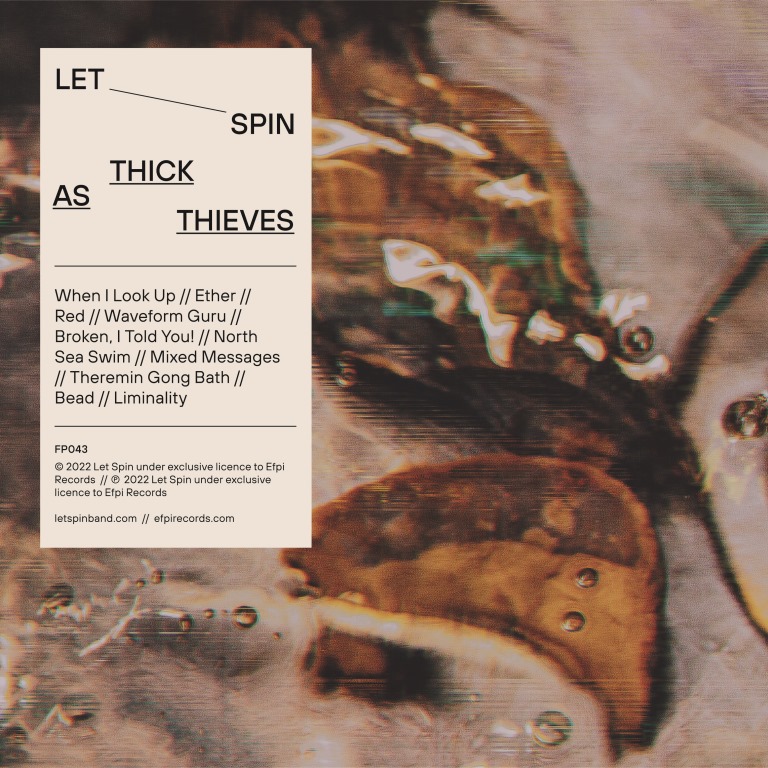
Time flies when… life. And especially when a pandemic and a series of lockdowns rob you of two tears of doing anything. And so it is that Let Spin are marking the ten-year anniversary of their fourth album, Thick As Thieves.

The band are something of a supergroup: Formed in 2012, Let Spin feature four highly acclaimed musicians: Ruth Goller (Melt Yourself Down, Vula Viel), Chris Williams (Led Bib, Sarathy Korwar), Finlay Panter (Beats & Pieces Big Band, Sound 8 Orchestra), and Moss Freed (Union Division, Spike Orchestra), and Thick As Thieves features ten segued tracks of what they describe as ‘adventurous post-rock, experimental jazz’.

Thick As Thieves may be a cliché, but the music it contains is anything but. In fact, quite the opposite is true. Much as it subscribes to aspects of both jazz and post-rock, it’s an exploratory instrumental set that doesn’t really conform to any specific genre trappings, instead borrowing from them in order to form a unique hybrid.

While it’s largely driven by some crunched-up, noodling guitar work, Thick As Thieves very much mines an overtly jazz theme, and while it starts out quite gentle and doodly, on the third track, ‘Red’ it takes a hard lurch into altogether nor challenging terrain, and not just because it gets louder and more percussive: it’s altogether more jarring, the tempos and signatures tumbling into stop/start confusion before the brass ruptures into a cacophonic maelstrom.

‘Broken, I Told You!’ brings a chubby, strolling bassline that’s got some serous groove in a stuttering sort of a way and packs in some deft runs that weave in and out of the wild woodwind and jittery guitar work that’s disorientating and discombobulating. It’s pretty much ok that this feels a bit weird and woozy: it needs to be. ‘North Sea Swim’ takes things down a way and meanders along before swerving into ‘’Mixed Messages’. ‘Bead’ is perhaps the most overtly post-rock / jazz hybrid work, an expansive succession of crescendos with a soaring sax undulating into waves of stratospheric reverb. Closer ‘Liminality’ is almost nine minutes long, and is a space-rock jazz monster that’s absolutely dizzying.

This is one of those albums that not only feels like its album status is essential – you don’t seek out or skip to particular tracks, but experience it as a whole – but there’s a keen sense it would lend itself nicely to being performed live, in its entirety. It flows from end to end, with judiciously-placed peaks and troughs. The ten songs may be marked out individually, but this really feels like a single continuous piece segmented out into ten slices, and it’s a listening journey. At times intrepid, at times curious, it’s got a lot going on, often all at once. Brace yourself!

AA

LS03 Thick As Thieves FRONT

Southern Lord continues the label’s prolific output with the release of a new album: Greg Anderson’s debut full-length as The Lord, Forest Nocturne, which we recently reviewed here at Aural Aggro.

Additionally, The Lord has unveiled the Forest Nocturne demo recordings, originally only available on the Daymare Records Japanese CD edition, now available via Bandcamp.

You can get your lugs round the demos here:

Forest Nocturne sees Anderson (guitarist of SUNN O))), Goatsnake & Southern Lord curator) taking cues from legendary film composers: John Carpenter and Bernard Hermann, in order to create cinematic landscapes which are heavy with tension, and offset by the injection of lethal doses of early 90s Scandinavian Death Metal – with Attila Csihar (of notorious Norwegian black metal band Mayhem & frequent SUNN O))) collaborator) lending his putrid vocals to final track "Triumph of the Oak."

For Forest Nocturne, Anderson worked with renowned producer Brad Wood. Dan Seagrave’s epic and fantastical style is instantly recognisable on the album’s startling artwork, something which seems to depict an ancient and unknowable force in the woodlands. Forest Nocturne is described by Anderson as “music of the night,” but inspired by imagery conjured on daytime hikes, and majestic, beautiful trees, which he sees as survivors – perhaps the last known connection that we have to an ancient world, and acting as a connector between past, present and future of the human race and of our time on this planet.

Greg Anderson began making music in the mid-eighties with hardcore bands False Liberty and Brotherhood before refining his musicality during the nineties with the post-hardcore collective Engine Kid. From that point on, the musical direction started shifting, channelling his love of tone, riffs and repetitive sound, vital elements that feed into the meditative cosmos of SUNN O))), and the ‘low and slow’ sounds of Goatsnake, both of whom find different ways to move beyond confines and tropes of their respective sound worlds.

In August and September 2021 respectively, Greg Anderson released two singles under the name The Lord; "Needle Cast" with Robin Wattie (the unmistakably emotive vocalist of BIG|BRAVE) and "We Who Walk In Light" with William Duvall (of Seattle rock legends Alice In Chains and hardcore-punk group Neon Christ). Unintentionally moving in a different direction from those bands within which he found his feet, Anderson was able to take on the mantle of The Lord in a new, pictorial approach to heavy music. Through this process, he found himself moved to collaborate with vocalists he admires.

AA

a3049798723_10

Dret Skivor – 4th February 2022

Christopher Nosnibor

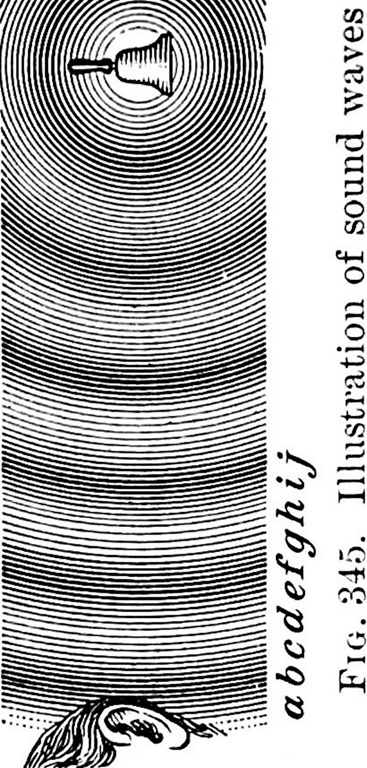
Either delayed or having skipped January, Dret Skivor’s latest monthly instalment marks quite a shift from December’s spoken word / harsh noise assault. Fern’s Illustration of Sound Waves belongs to the field of sonic microanalysis: specifically, as we learn from the minimal notes which accompany the release ‘The source of inspiration and foundation for the entire compilation have been the possibilities and limitations of the buchla 208c’. The ‘legendary Music Easel instrument’ is a modular device, and a fucking expensive piece of kit to boot. And yet it, like any other instrument, device, or programme, has its limitations.

Tonal range isn’t one of them, and nor is its capacity to create eerie electronic soundscapes, and there are plenty of both on Illustration of Sound Waves. I would perhaps be interested to hear of Fern’s frustrations, and also his motivation for this intensely-focused exploration of the buchla 208c. Many such releases offer extensive explanations of the process – sometimes to the point of excess,

‘Closed Geometry (Circle)’ bleeps and blips, while ‘Action & Reaction’ paints a haunting scene, based around sharp needles of feedback and warping, curved drones. ‘Blame the Wires’ is a classic modular synth noodle, a cyclical, repetitive motif looping hypnotically over a subdued echo of a beat, pulsing gently in the background. ‘Apparatus A’ sinks deep into the depths of swampy murk. The beats are subdued and muffled, and the entire EQ is pitched into lower and mid-ranges. There’s a slow, growling oscillation somewhere deep in the mix, and it’s a grating, Suicide-like drone that sneers and snarls on the heavyweight ‘Way of the Waves’; waves that pulse and grind and groan and thicken and envelop.

There feels like there’s a distinct and definite trajectory to the album, as the sound grows darker and denser as it progresses: this changes with the pairing of the final two pieces, which mark a rapid return to bubbling, bleeping circuitry and sound, in many ways, like an escalating meltdown of circuitry. This feels like a fitting finale to the album, as well as an apt conclusion as we melt into the waves, drowning slowly in a sea of static.

AA

a0490863369_10

Hypershape Records – 22nd October 2021

Christopher Nosnibor

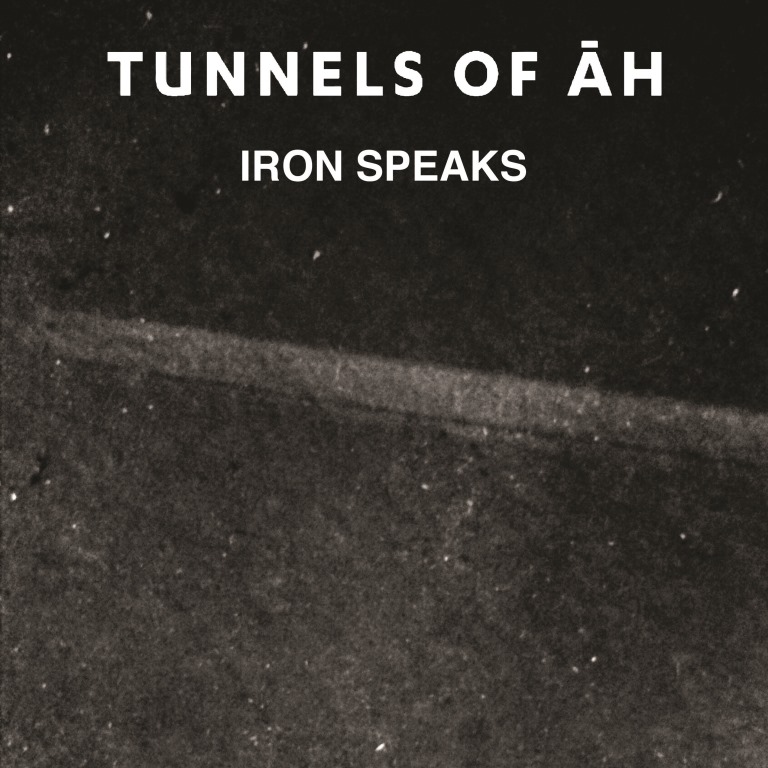
Chronology can be a real bitch sometimes. Linearity is incredibly overrated. How can it be that even now, the world can be so far behind William S. Burroughs’ concept that the conventional novel in its staid, conventional, linear form is passe, and ultimately fails to represent life as it’s lived? Iron Speaks is a release that may trouble some sequential obsessives, as it was in fact recorded before 2020’s Deathless Mind, the fifth album from Stephen Āh Burroughs, formerly known as Stephen R. Burroughs of heavy makers of noise Head of David. Since 2013, he’s pursued subterranean channels of darkness via the medium of fundamentally ambient music, but with an ancient and spiritual undercurrent.

As the press release explains, ‘Iron Speaks has become known as the ‘lost’ Tunnels of Āh album since it was abandoned as the fifth album release due to it sounding ‘unengaged’ to writer Stephen Āh Burroughs; until now. After reworking the original material, Iron Speaks emerges as a rediscovered official sixth album release.’

This is perhaps to overstate the album’s mythology – being shelved for a time is one thing, but to attain ‘lost’ status within three years another. Nevertheless, fans who’ve been keen about this album’s development will likely be happy with both its eventual emergence and its content, which is predominantly a dark whorl of bleak, churning ambience laced with a ghoulish shriek of feedback and general top-end tension. And tense it is: the six pieces bleed together to forge a continuous work that offers no respite and continually works at the psyche and the gut, twisting and gnawing at both. Time stalls, and you find yourself sucked into a subterranean space that’s dark and disorientating.

According to the accompanying blurb, ‘The material deals with the transitional stages of life and death, and it’s an ominous possessive piece of work. As ever though, the darkness of Tunnels of Āh’s output stems from and towards a place of infinite light.’ None of this is so readily apparent on listening, with any light feeling particularly distant as Burroughs leads the listener deeper and deeper through tunnels that rumble and surge with dense walls of noise – and sometimes, it hurts as the weight of it all bears down on the listener. It’s a rich, dense, elemental sound, born of earth and minerals.

We’re told that ‘The title, Iron Speaks, is a reference to the chapter in the Koran which states that iron emerges from the heavens as a gift to mankind. This is often graphically depicted as a blazing ball of molten fire approaching its earthly target, and that image perfectly encapsulates the sonic dynamism of this album. This album is a consuming experience as it slowly enters its intended orbit to its chosen point with inevitable crushing impact.’ The tile track does indeed pack that crushing impact, an oscillating tumult of treble atop layers of rhythmic squalling; in contrast, ‘Every Hour Wounds’ inflicts a different kind of pain as the lower-end notes bounce like oxygen bubbles in murky water in a deep, dark pool. Ominous drones and hums hover before an industrial slash of sheet metal strikes.

The album’s six pieces all sit around the seven- or eight-minute mark, and are densely-textured, and often quite oppressively heavy works. The first, ‘Wardens’ is a smog of bubbling murkiness, where the sound churns ad churns, like dense cloud and uncomfortable gut churning. Long strains of feedback scrape out over a barren wasteland, and ominous hums and drones hover over heavily-textured earth-shifting grind. It’s ultimately not really about ‘engagement’, but about tone texture, and atmosphere, and this is bleak, dense, and uncomfortable, and in a way that draws the listener in. Thunder rumbles, and the experience is quite discomforting. It’s more than that: it’s claustrophobic, suffocating. ‘Terminus Est’ clanks and chimes and booms out dolorous, depressing notes that offer no space to breathe or to reflect. It leaves you feeling compressed, and if not necessarily anxious, then far from relaxed or soothed, but instead on edge and unsettled – and this is why Iron Speaks is a strong work: it has the capacity to have a palpable effect on the listener.

AA

HPS013_front

6th August 2021

Christopher Nosnibor

For many, Leeds will be forever synonymous with goth, as the spawning ground of The Sisters of Mercy, as well as The Mission, The March Violets, Red Lorry Yellow Lorry, The Rose of Avalanche. But then, Leeds has always been so much more, and anyone who’s spent any time around the city in the last decade and a half will be aware that the only thing that defines the city’s sound is a complete eclecticism. There may be a leaning towards noisier stuff in recent years – well, the last ten or so – but the fact is that truly anything goes, and that’s the absolute joy of the melting pot that is such a diverse and thriving city. Bands like iLiKETRAiNS and Blacklisters, for example, couldn’t be more different, and the same is true of breakthrough acts Kaiser Chiefs and Pulled Apart by Horses.

And so here we land on Terra Incognita by Leeds-based electronic music collective Urban Exploration, which is either their third or fourth album depending on how you view their catalogue, and if you consider Utopic, Heterotopic and Dystopic as separate albums (and I probably would, but this doesn’t really carry much relevance to the task at hand, namely of discussing the new album).

The first track, ‘Beacon’, is a voyage unto itself, beginning a semi-ambient track with some subtle beats before mutating into a full-on beat-driven banger. It’s nothing short of full-on club music, and in the span of six minutes, they’ve spanned multiple genres and landed themselves squarely in the ‘eclectic’ category. ‘Virtual Light’ – presumably referencing William Gibson’s dystopian cyberpunk novel, places a looping synth motif to the fore, and it’s stark and detached. They’re big on references: ‘Kepler-186f’ is the name of the first Earth-size planet in the so-called ‘Habitable Zone’, and orbits the red dwarf Kepler-186, about 500 light-years from Earth. As such, the bands interests and influences are clearly apparent and very much on display here.

The pieces are long – the majority extending well beyond the five-minute mark – and exploratory. Terra Incognita definitely feels like it’s venturing forward and breaking new ground, tiptoeing around the space between tangerine Dream and The Orb. It’s a lot of space, and Urban Exploration seem keen to traverse it.

The full twelve-track set is a dense and dark, semi-ambient affair, which, in balancing ambience with defined beats, invites comparisons to another act who emerged from Leeds, who’ve gone on to do great things, worriedaboutsatan. The press release gives the warning / threat / promise that ‘Terra Incognita transports you to alien lands that are strangely familiar…’ and indeed it does. There is a lot of space, a lot of oddness, a lot of dissonance, and a lot of otherness circulating around Terra Incognita. It’s ain intriguing and well-realised work that is truly worthy of being described as ‘eclectic’, its experimental span leading the listener on a voyage into unknown territories, both earthly and far, far beyond.

AA

a1631477200_10

Editions Mego – EMEGO305 – 28th June 2021

Christopher Nosnibor

BJ Nilsen’s focus has long been the ‘sound of nature, the nature of sound and the effects these have on humans’, and his exploratory collages and soundscapes tend to draw of field recordings and myriad other sources to create often contrasting, and dissonant works, and Irreal is very much dissonant and contrasting, with moments of tranquillity and subtle, quivering elongated drones disrupted by battering blasts of difficult noise.

The liner notes outline how ‘Irreal is a selection of recordings from different situations encountered in Austria, Russia, South Korea and The Benelux. The range of sound is as wide as is the emotional impact which slides from the unnerving to the shimmering and gor- geous. Doors, bells, birds, wet snow falling from a tree, hacking of wood, water dripping in a cave are all exquisitely captured and moulded into vast landscapes of sound. Human voices, string instruments, descending trains, oceans, winds, grass, trees. These diverse sonic elements are grafted around and upon each other to create a rich tapestry of sound. Electronic embellishments harness the whole to create a singular expressive canvas. The 3 part suite concludes with the Beyond pebbles, rubble and dust, a grand glacial work which serves as a masterclass in extraordinary transcendental drone.’

I’m instantly primed for some challenging scraping drones as the first few seconds of ‘Short Circuit of the Conscious Thought’ build tense, treble scratches, and am immediately puzzled when it halts and there are just clicks in silence. It’s as if the file has inexplicably glitched. From the quiet, a trilling, rippling drone emerges and hangs like a haze – but that smooth stillness carries a tension, which ruptures with distortion and bands like a dozen car doors slamming simultaneously, and at the most unexpected of times. In the final minutes, it evolves into a slow-pulsing minimal ambient Krautrock sequence reminiscent of Tangerine Dream.

Rumbling thunder cracks and crackles all around at the start of ‘Motif Mekanik’, and it booms and grumbles all around a low, ominous drone, and the track is a tumbling tempest of amorphous noise like a raging storm circling and hovering, drifting back and forth, and it’s unsettling. The contrast of the sounds of the elements and the metallic scrape of the eternal drone is perhaps the most obvious way in which Nilsen highlights the relationship between nature and humans, the man-made and the organic. It also intimates the tensions at the heart of that relationship, as strains of ear-splitting feedback cut through the murk and mumble, and it segues quietly into the expansive final composition, the monumental thirty-eight minute ‘Beyond Pebbles, Rubble, and Rust’ – and I know ‘immersive’ is a word I probably use excessively, but it’s entirely appropriate as I find myself swimming amidst the thick, slow—moving sounds of the piece.

Lazy bleeps, like R2D2 on a low battery or the Clangers on ketamine bibble into the mix, before fading out to a drifting mist of dark rumblings that present not immediate routes into the heart of dark mass, only an impenetrable mass of sound, like a mountain rising to the heavens, its summit hidden by a low cloud base. A low bass registers almost subliminally, a single note repeated slow and regular, booming out dolorously. Not a lot happens over a very long time, but the effect is cumulative, and as you sit and stare while the drones and spectral wails of ambience envelop, you find yourself in contemplation and searching for the meaning.

There are all shades of reality, spanning the unreal and the hyperreal. But the irreal is not real. However, where the irreal is distinct from unreal lies in the perception – not just something unreal, but estranged and otherly. In drawing on so many found sounds and field recordings, Nilsen’s album is in fact rooted in the tangibly real, bur recontextualises it, shifting the axes so as to present that reality through the filter of human intervention and incongruity, and as such, distorts that reality to present an interpretation which in turn becomes a fiction and therefore not real, or irreal.

As the rain hammers outside on this early July night, following a day of heavy storms, it occurs to me that what Nilsen articulates through his sonic juxtapositions, is that the relationship between human and nature is precarious: we, as a species, are not nature’s friends, and that progress is disruptive and often damaging – and it’s the human way to command, control, and harness nature for our own ends. But that superiority is an illusion, a delusion, and humanity will always be at nature’s mercy. The relationship is not interdependent or symbiotic, and we need the natural world , whereas it does not need us. In time, we may reach a point where our planet is uninhabitable to us, and to many other species, but it will exist long after we have ceased to, just as it did before. Darkness descends, and at the close, the album tapers to silence – and this is as it will be.

AA

eMEGO305_front