Posts Tagged ‘electronic’

House of Halifax – 3rd October 2025

Christopher Nosnibor

Content’s career to date – such as it is – has certainly not followed a conventional trajectory, or even one designed to gain a following. It’s not the shifting lineups (that’s hardly unusual) but the fact the direction of their output is completely unpredictable. Their debut EP, We Keep Improving, released five years ago, was a riotous DIY racket, which I described as ‘a gnarly mess of electronics, popping beats and a disorientating sonic swirl’. Released in an edition of seventeen physical copies, it has all the ingredients required to become a near-mythical underground work.

So of course, with a different lineup, they followed this with an album which recreated the entirety of Yes Please! by Happy Mondays – an album which was roundly pilloried, and saw one of the weekly music papers review lead with the headline ‘No Thanks!’. It was the Mondays’ Shark Sandwich moment.

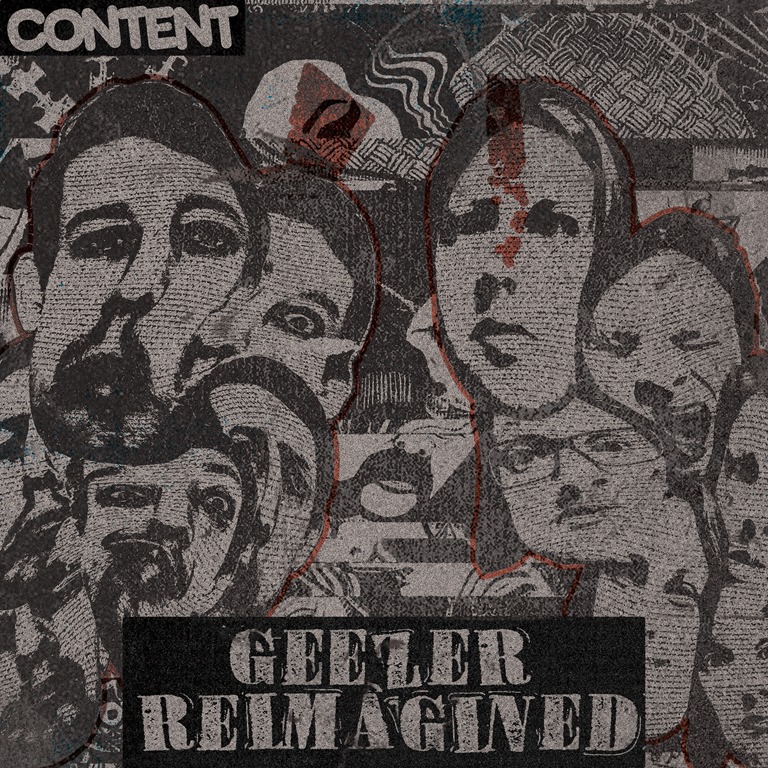
Amazingly, their second album is another cover of an album in its entirely, this time the 2018 Geezer by Leeds grindcore legends Ona Snop, who recently called it a day. I can’t think of anything further removed from, the slack, bloated funk of Yes Please! But this is Content, the vehicle of Benbow and – currently – Richard Knight. And this is absolutely guaranteed not to bring them world domination, or even more than a handful of fans. I don’t think they’re fussed about that, though.

Given that Ona Snop’s approach to powerviolence / grind was never entirely straightforward, or serious, Content’s irreverent approach to ‘reimagining’ the album, which blends industrial, techno, ambient, electropop, ‘retains some of the humour included in Ona Snop’s original work’, they say. Indeed it does. It certainly doesn’t contain much else, although that shouldn’t be construed as a criticism. The ‘reimagined’ tag gives them licence to pretty much do whatever the hell they please, and that’s precisely what they do.

And so it is that the first track, ‘In Pieces’, is transformed from forty-nine seconds of thrashing, splashing aural vomit, into a three-and-a-half-minute technoindustrial workout with a funk groove, coming on with the strut and snarl of Revolting Cocks circa Linger Fickin’ Good. It’s grimy and sleazy and fuck – and it’s as ace as it is audacious. It sets the tone for a wild ride: ‘Total Both’ brings bump and grind and flamboyance in spades, like Rammstein covering The Rocky Horror Show – or perhaps the other way around. Either way, it’s camp and crazy.

It’s all going on here: ‘More Important Than Christ’ starts out with wibbly 80s wizardry before going hyper electropop, landing somewhere between The Associates and The Teardrop Explodes in the process. There’s wonky electronica, spoken word, bleeps and horns… ‘Mustard Farm’ seemingly draws from Depeche Mode, Devo, and Man 2 Man in equal measure, while ‘Respect’ goes lounge, and there’s a hint of early Foetus in the warped disco blast of ‘Rotisserie Geezer’, before ‘Cement Head’ goes a bit Tom Waits.

How all this actually works, it’s hard to pinpoint. That each track is well executed – in that it’s apparent what they’re aiming for, and they achieve – helps, but the hectic, drum machine-propelled arrangements are dizzying, and so far removed from the source material at times it feels beyond tenuous. While the original ‘CD / DVD’ opens with a sample, Content rework it as a cut-up collage of glitched-up, mangled samples, harking back to the old-school Industrial roots demonstrated on the EP, with a debt to Throbbing Gristle and Cabaret Voltaire, and in turn, William Burrroughs. ‘Ona Snop F.C.’ is a super-slick autotuned workout that’s equal parts Prince, Har Mar Superstar, and overprocessed R’n’B. Horrible as it is, the knowing levels of cringiness are something to respect. Then, seemingly from nowhere, ‘Hot Soup’ goes all Mike Oldfield and ambient.

While the original album has a running time of less than twenty-five minutes, pulling the songs out and stretching things apart in every direction means that this reimagining runs for closer to an hour, and it never ceases to confound with its weirdness, or its willingness to embrace the cheesy. It’s almost impossible to judge Geezer Reimagined by conventional benchmarks or assess its merits by the standards one would ordinarily apply, because it simply doesn’t conform, and exists in its own sphere of strangeness. And whether or not you dig it – and I do – it’s impossible to deny that it’s imaginative in its interpretations.

AA

Content - Geezer Reimagined (House Of Halifax, 2025) (Front Cover)

Dependent Records – 3rd October 2025

Christopher Nosnibor

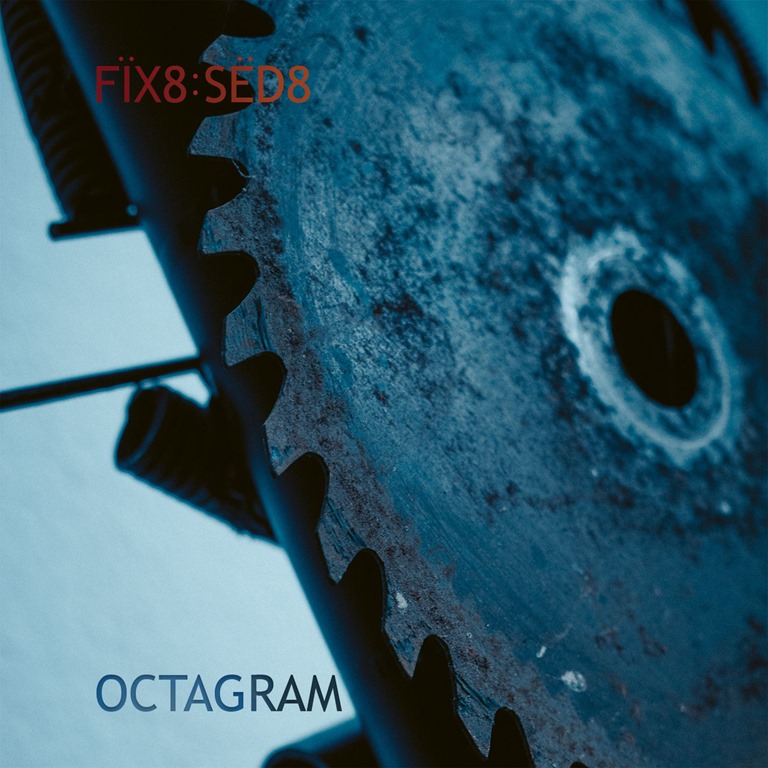
I’ve always favoured words over numbers – meaning, maths was never my strong point, and my qualifications strongly favour the arts. But it doesn’t take a maths genius to deduce that there are some serious numerical gymnastics taking place when conjuring the equation for this release. That Octagram extends the love of the number 8 which is clear from the band’s name to a concept, whereby the album features 8 songs with a playing-time of 8 minutes is logical, but when they try to spin it that ‘when the 8 just turns by a little in the context of the German electro industrial project’s sixth album, it becomes the symbol for infinity’, I’m lost. How does infinity fit in, and how does it all sit with being their sixth album, something which really screws up the whole thematic.

The tracks aren’t all exactly eight minutes in duration, but in the eight-minute span, ranging from 8:11 to 8:58, so it doesn’t feel as if the limitations / constraints of the project are so rigid as to inhibit the creative freedom necessary to explore and interrogate the themes flexibly.

We’ve already aired single cuts ‘New Eden’ and ‘Oathbreaker’ here at Aural Aggravation, and it’s fair to say they’re representative of this expansive, ambitious effort. It’s electronic industrial, with expansive, ambient trance elements woven in, as well as sampled snippets of dialogue. It’s perhaps worth noting that the vocal samples consist mainly of recitations quoting the last words of persons that were about to receive the death sentence. It’s all there on the sweeping, cinematic, dark electronic dance opener, ‘The Unborn’. In terms of texture and production, it’s absolutely meticulous, but a bit predictable and of a form. Three minutes or so in, the tone and tempo changes, the atmosphere darkens and the beats get harder, and the gritty, distorted vocals finally arrive and while it’s still quintessential technoindustrial / dark electro, the switch makes the song work in terms of structure and dynamics. And this seems to the strength to which FÏX8:SËD8 play to on Octagram, blending the trancey ambient dance elements with the driving hard-edged aspects of the genre.

Skinny Puppy are an obvious touchstone, to which they themselves draw attention, they seem to have assimilated the entirety of the Wax Trax! catalogue, while pulling from all aspects of cybergoth, and even Tubular Bells to forge a hypnotic hybrid of techno, electronica, dance, and industrial, taking a number of cues from Ministry’s Twitch. It’s true that I often return to the same sources: Wax Trax!, KMFDM, Skinny Puppy, 80s Ministry… but I feel I should stress that this isn’t entirely a reflection of my limited sphere of reference, but the two inches of ivory on which so much of the electronic industrial scene carves its tales of angst. The use of samples does feel rather cliché, the way the beats build behind fuzzy synths which ebb and slow, the minor-key one-finger synth riffs… And that’s fine: you know what you’re going to get. But at least with Octagram, FÏX8:SËD8 push that envelope a bit.

If ‘New Eden’ represents the more accessible side of all this, ‘Blisters’ goes in hard. ‘Tyrants’, too, brings a heavy Industrial throb with a dominant percussion, led by a powerful bin-lid smash of a snare sound. With the distorted vocals low in the mix, it’s tense, it’s intense, it’s claustrophobic. Taking its title from one of my favourite phrases from Milton, ‘Darkness Visible’ brings an interlude of cinematic serenity, at least initially, before locking into another dark pulsing groove. The darkness has rarely been more visible.

‘An Unquiet Mind’ makes for a slow-simmering, brooding finale, cinematic, atmospheric, expansive, as synth layers and beats build, rising from a montage of samples to stretch out an almost post-apocalyptic landscape. It feels like the end… and it is.

The best electronic industrial has an intensely inward focus, and makes you feel tense, restricted, somehow, and as much as it draws on obvious influences, with its taut, claustrophobic feel and dense production, Octagram sits – shuffling, twitching, crackling with anxiety – with the best electronic industrial.

AA

a1712199305_10

Cruel Nature Records – 12th September 2025

Christopher Nosnibor

Postmodernism, emerging primarily as a product of post-war America was defined by hybridity, the demolition of parameters and distinctions between different cultures, genres, and was, in many respects, tied to the accelerating pace of technological development, in particular the globalisation of communications and beyond. But postmodernism also not only recognised, but celebrated, the fact that originality has finite scope, and that anything ‘new’ will by necessity involve the reconfiguration of that which has gone before. Shakespeare had all the ground to break in terms of the advent of modern literature, and one might say the same of Elvis and The Beatles with the advent of rock ‘n’ roll and pop respectively. The reason the 80s were such a watershed was because technology revolutionised the potentials for music-making, and while this saw a huge refraction in terms of creative directions, from industrial to electropop, one could reasonably argue that the next leap in music after 1985 came with house and techno.

Post-millennium, it feels like there is no dominant culture, no defining movement, underground or overground: the mainstream is dominated by a handful of proficient but in many ways unremarkable pop acts, and notably, it’s largely solo artists rather than bands, and while there are bands who pack out stadiums, they tend to be of the heritage variety. At the other end of the spectrum, the underground is fragmented to the point of particles. There are some pros about this, in that there is most certainly something for everyone, but the major con is that unlike, say, in the mid- to late-noughties, when post-rock was all the rage, there’s no sense of zeitgeist or unity, and right now, that’s something we could really do with.

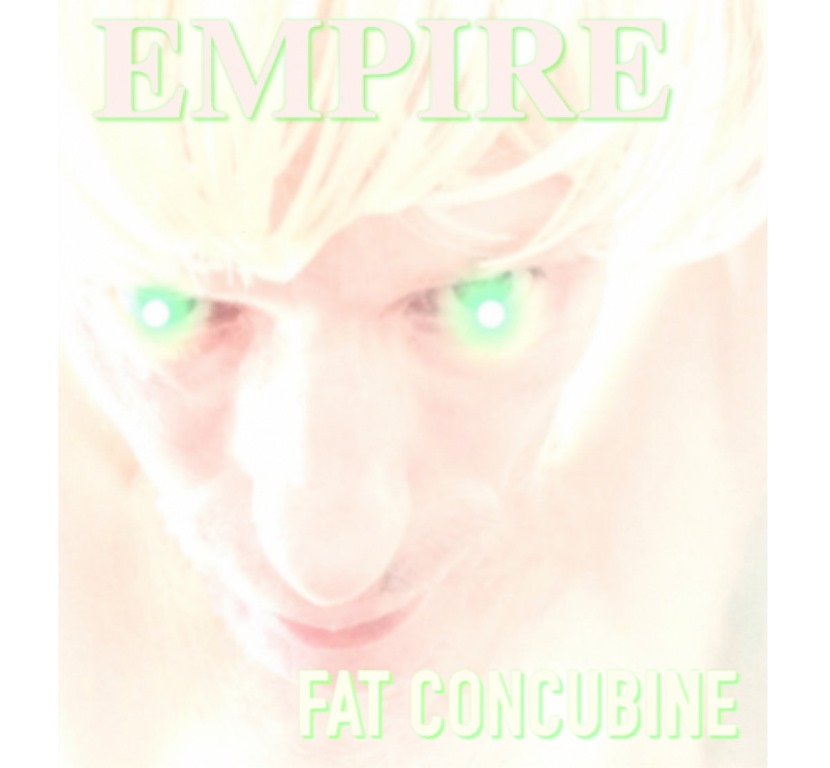
Fat Concubine are most certainly not representative of any kind of zeitgeist movement. With a name that’s not entirely PC, the London acts describe themselves as purveyors of ‘unhinged dance music’, and Empire is their debut EP, following a brace of singles. The second of those singles, ‘for Whom the Fools toll’ (with its irregular capitalisation, which is a bit jarring), is featured here, along with four previously unreleased tracks. This is a positive in my view: so many bands release four, five, or six tracks as singles, and then put them together as an EP release, which feels somewhat redundant, apart from when there’s a physical release.

And so it is, in the spirit of wild hybridisation, that they’re not kidding when they say their thing is ‘unhinged dance music’, or as quoted elsewhere, ‘unhinged no wave ravers’. ‘Feeding off the dogs’ pounds in melding angular post-punk in the vein of Alien Sex Fiend with thumping hardcore techno beats, and it’s not pretty – although it is pretty intense. The snare drum in their first thirty seconds of ‘for Whom the Fools toll’ takes the top of your head off, and the rest of the ‘tune’… well, tune is a stretch. It’s brash, sneering punk, but with hyperactive drum machines tripping over one another and a stack of synthesized horns blaring Eastern-influenced motifs.

There are hints of late 80s Ministry about ‘When we kick Their front door’, another synth horn-led tune that begins as a flap and a flutter before a kick drum that’s hard enough to smash your ribs thuds in and pumps away with relentless force. If the notes didn’t mention that it was a perversion of ‘These Boots We’re Made for Walking’, I’d have probably never guessed. As the song evolves, layers and details emerge, and the vibe is very much reverby post-punk, but with an industrial slant, and a hint of Chris and Cosey and a dash of The Prodigy. If this sounds like a somewhat confused, clutching-at-straws attempt to summarise a wild hotch-potch of stuff, to an extent, it is. But equally, it’s not so much a matter of straw-clutching as summing up a head-spinning sonic assault.

‘tiny pills’ is a brief and brutal blast of beat-driven abrasion, with a bowel-shaking bass and deranged euphoric vocals which pave the way for a finale that calls to mind, tangentially, at least, Cabaret Voltaire’s ‘Nag Nag Nag’.

The version of ‘O so peaceful’ was recorded live, and builds to an abstract chanting drone work. It offers a change of angle, but is no less attacking, its percussion-heavy distorted, shouting racket reminiscent of Test Department and even Throbbing Gristle, particularly in the last minute or so, and you can feel the volume of the performance, too. This is some brutal shit.

Empire is pretty nasty, regardless of which angle you approach it from. It’s clearly meant to be, too. Harsh, heavy, abrasive, messed-up… these are the selling points for this release. And maybe having your head mashed isn’t such a bad thing if you’re wanting to break out of your comfort zone and really feel alive.

AA

a1581875889_10

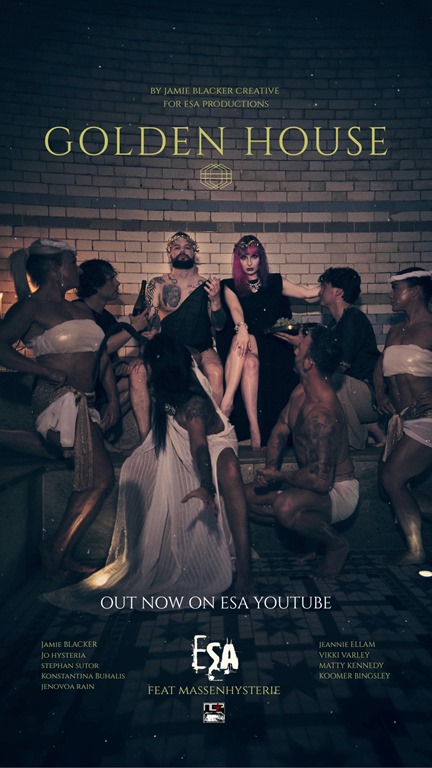
British artist J. Blacker, mastermind of ESA, has released a powerful music video for ‘Golden House’. The song is taken from the artist’s new album Sounds for Your Happiness, released on July 5th via Negative Gain Productions.

The new single and music video for ‘Golden House’ is an erotically charged, Roman tragedy inspired slab of pumping dancefloor power. Featuring Jo Hysteria from Massenhysterie on vocals, the video for ‘Golden House’ is a cynical POV on the infamous Roman rulers; Nero & Caligula (played by Jo Hysteria and Jamie Blacker respectively). As we witness their hedonistic and power hungry daily affairs (which include a servants wrestling match and body builders performance) before accompanying Nero and Caligula as they travel into modern times and seek to satisfy their hunger for pleasure.

AA

Inspired heavily by the pomp of the 1979 film Caligula, the video features competition winning body builders Jeannie Ellam and Vikki Varley alongside Jenova Rain and Stephan Sutor as the video Finale’s Insurgents, looking to swipe the ‘throne’ from the naive and arrogant Nero & Caligula.

The context that inspired this piece is the realisation that even after 1548 years since the demise of the infamous Roman Empire, the elected powers in place will still conduct themselves in the same way..and that abuse of power pays no real attention to time periods.

The single for this club edit of the track and music video is available from today (July 18). Whilst the original version of this track (which includes a historic re-telling of these two Emperors by Konstantia Buhalis) is featured on ESA’s album Sounds for Your Happiness, released on July 5th.

Sounds for Your Happiness is yet another milestone in the creative universe of ESA. Striking and thought provoking visuals, enormous electronics and powerful messages is always expected from an ESA release..Sounds for Your Happiness does not disappoint with any of these ingredients.

With this album, J Blacker paints ESA as a sinister technology company, with the musical structures from the album, utilised to create an emotional response from its listeners, which is transferred as energy to run the simulation we all live in. Its a nod to shows and films such as Severance and Soylent Green.

Musically, Sounds for Your Happiness is a bleak and furious slab of electronic meat. A journey of EBM / Industrial / Black Metal / Dark Ambient / Power Noise / Punk / Techno and Goa, the album is as ambitious as it is exhilarating and genres merge seamlessly into an energetic free-fall of sonic chaos.

Get plugged in and let the happiness wash over you.

GOLDEN HOUSE VIDEO PROMO PIC (1080 x 1920 px) - 1

Swedish electronic environmentalists TWICE A MAN unveil a video clip with dark untertones for the catchy track ‘Second Field’ as the next advance single taken from their forthcoming new full-length The Coloured Breeze Is a New Dimension. The highly anticipated album has been scheduled for release on June 13, 2025.

TWICE A MAN comment: “The cogwheels of modern times are controlled by evil leaders without empathy”, Karl Gasleben states matter of fact on behalf of the band collective. “They grind us down and destruct our mental health. It is time to take back our dignity, nourish our inner dreams and connect them towards a more hopeful future. Are you ready to fight for what you believe in?”

AA

While the skies of the world are darkening, something powerful and resilient is pushing from below through the pungent springtime topsoil close to the City of Göteborg in Sweden. This sprout that is charged with organic and electric energy bears the name The Coloured Breeze Is a New Dimension. TWICE A MAN planted its seed with the song ‘Dahlia’, a ‘new’ track that was written to complement the compilation album Songs of Future Memories.

For three years, the Swedish dark electronic trio fertilised and nurtured the germ bud until it had taken firm root in their musical heritage and began to send offshoots to find new sonic spots beyond any previously built garden walls. The Coloured Breeze Is a New Dimension is an organic entity that creates something new by re-combining its musical DNA in various ways. As a result, its tracks blossom in many hues of electronic colours.

Electronic musician and vocalist Mari Kattman is known for her work as part of the electronic duo Helix as well as a solo artist in her own right. ‘Sharp Shooter’ is the second single to be teased from a new album entitled Year Of The Katt, her debut full-length solo release for Metropolis Records (and third overall), which is scheduled for release on 20th June.

“‘Sharp Shooter’ explores the theme of an intelligent soul that navigates to painful circumstances for the chance to grow. No shots missed”, states Kattman. The song follows the recent ‘Anemia’ STREAM, which drew a parallel between vampiric exploitation and the weakness often suffered by those living with the condition.

Of the new album as a whole, she explains that “finishing it was a truly herculean effort. It was an album completely recorded, composed and produced by myself, so there were a lot of learning curves and things I needed to sort out before I was truly happy with the end product. I feel relief and enormously proud that I got it done.”
One of the most captivating artists on today’s electronic music scene, Kattman has been writing, recording, producing and performing since 2012. She has collaborated with the likes of Assemblage 23, Mesh, Ivardensphere, Jean-Marc Lederman, Psy’Aviah, Aesthetiche, Neuroticfish, BlackCarBurning, Cassetter, This Morn Omina, Solitary Experiments, Mephisto Walz, Aiboforcen, Interface, Comaduster and more.

Kattman’s impressive resumé of vocal contributions for these acts bely her own talents as a songwriter and producer. Singles such as ‘Fever Shakes’, ‘URGOD.AI’ and ‘Swallow’ have already demonstrated her prowess in crafting hook-laden, irresistibly catchy electronic songs tailor-made for the dance floor, where elements of Trap, Hip Hop, Electro, Ambient, EBM and Industrial music interplay with her powerfully distinctive voice.

AA

a1034129064_10

23rd May 2025

Christopher Nosnibor

It seems that Ava Rabiat can turn her hand to practically anything: in Gdańsk and based in Berlin, her work spans sound, experimental electronic music, visual arts, production and costume design for film and theatre. Elektro Erotyk stands as her debut album, and is the first instalment of a projected trilogy

We learn from the notes which accompany the release that ‘In her artistic process, fleeting thoughts and inner sensation transform into sonic reality, creating a space for interaction – a communication beyond conventional language.’

‘AVA’s texts oscillate between self-dissolution and physical intensity. She maps the boundaries of the self, explores extreme states and the longing for connection—directly, without detours, in raw immediacy. She deconstructs sound and reshapes it until it resonates with her physical experience.

‘Polish, AVA’s mother tongue, serves as the primary language throughout the album—a deliberate choice to explore her origins and emotional vernacular. The melodic qualities and sonic characteristics of spoken Polish become instruments themselves, with words valued as much for their sound as for their meaning. Breath becomes an instrument connecting inner and outer worlds.

‘True to its title, Elektro Erotyk embraces the erotic dimension of composition—found in the unity of mind and body, in moments of excitement and elation, and in intimate contact with one’s own self. The erotic emerges not merely as a sexual force but as a deep life energy—a creative power that drives artistic expression.’

She breathes and whispers, and speaks in low tones – sometimes her voice tracked multiple times – over a curious conglomeration of sounds of unplaceable origin. Clanks thuds and chimes, ominous hums and subtle, almost subsonic undulations. ‘Toi at Moi’ certainly has a sultry, erotic overtone, not to mention an almost dubby vibe, but there’s an undertone of something dark and hidden, too. A droning organ wavers its way through ‘Cofnij Czas’, accompanied by a simple bassline which wanders about hesitantly. Ava croons, soulful and seductive, over an increasingly tense and eerie oscillation, while elsewhere gloopy synths and backwards tapes stutter and jolt amidst collage-like layers of sound and fractured fragments of vocal. “There is still hope”, she murmurs on ‘Fool’s Fire’. “Hope… hope… hope…” With each repetition, this assertion feels less convincing.

Everything is swathed in cavernous echo, and everything feels vaguely surreal, dream-like, with glitches and flickers behind curtains and withdrawing into dark shadows as if making their presence known but without wanting to be fully seen. As such, an air of mystery hangs over Elektro Erotyk, each scene viewed only through fleeting glimpses, hints, allusions. It’s an intriguing set of pieces. Sometimes unsettling, often strange, Elektro Erotyk is always compelling.

AA

FUU012 art

Cruel Nature Records – 25th April 2025

Christopher Nosnibor

Limited to 30 cassette copies worldwide, which sold out in advance of the release date, anyone wanting this now will have to satisfy themselves with a stream or download. Tapes really have become cult cool again of late. Raised on vinyl, the cassette was my format of choice in the mid- to late-eighties, until I got a CD player for Christmas in 1991, although I continued to buy vinyl through the 90s because an LP cost about £8 whereas a CD cost around £12. I loved tapes, and I especially loved being able to copy stuff to tape, and do it so cheaply. It was a long time before the advent of the technology to rip and burn CDs.

But for a time, I would buy albums on tape, often in Woolworths or WH Smiths and sometimes from Britannia Music when my parents had made enough purchases to earn a free album – because a tape was about eight quid and you could stuff it in your Walkman and sometimes, perhaps, get it played in the car when going on holiday. Although I recall purchasing Children by The Mission in 1988 on the same trip my parents took me to buy a snake, and my mother moaned and asked if we could have ‘the nice man’ back on (meaning the Bruce Springsteen album I’d been listening to before discovering The Sisters of Mercy and The Mission.

So, the status of the cassette release has certainly changed – again, and one can’t help but wonder if it’s only a matter of time before the cassette single makes a comeback.

Before the Skeletal Dance Of Our Festering Jesters is… bassy. And with good reason for certain. As the Bandcamp blurbage details, ‘Blind Johnny Smoke was born severely deaf in both ears, and started to lose his vision as a teenager with only a few degrees of central vision remaining and still decreasing. Then at the end of 2023 he experienced a sudden loss of his remaining hearing on his left side leaving him profoundly deaf. This posed huge questions for him, what life will be like going forward, how this would change how he felt about the nefarious shit going on in the world around him, and whether he was still equipped to be able to express himself through music. With the aid of The Juddaman, the answer lies within the tapestry of Before the Dance of our Festering Jesters.

Musically, the album is almost obscenely focused on bass frequencies, which coincidentally are the only sounds Blind Johnny can detect without hearing aids. There is a dub sensibility that the band have always dabbled with, but here it weighs in heavily alongside trademark percussive programming and unmusical cut up noise. The accompanying words are as angry as ever and, after a few years of Blind Johnny performing on the spoken word circuit, the lyrics have depth and trickery sitting alongside blunt vitriol.’

‘Sensory Denudation’ presents a groaning mass of distortion, and the spoken word vocals offer up comparisons to Pound Land and Sleaford Mods, and nothing about this is easy on the ear as ambience and trudging industrial noise grind away. It’s the Mods and Benefits who come to mind during the stark electronic grind of ‘Safety First’ and ‘Words Without Echo’, which also introduces a Public Image kind of slant, and Before the Skeletal Dance Of Our Festering Jesters brings together post punk and ranty rap with hip-hop and industrial and spoken word. It’s hard going if you’re wanting tunes, but ‘Ghouls’ is perfectly representative of the low-tempo, thudding noise approach the band have taken to the creation of Skeletal Dance.

‘This is All I Hear Now’ is pure rant, raw and aggressive, the ‘blah, blah, blah’ refrain snarled over a thick, woozy bass, before the six-minute ‘Party On’ turns its focus on the UK government’s COVID lockdown ‘partygate’ shenanigans and dubious contracts for PPE as dense, industrial percussion builds, and I’m reminded of Test Dept’s The Unacceptable Face of Freedom. It’s pretty potent stuff.

Running beyond seven minutes, ‘Crooked’ is the album’s centrepiece, a murky postindindustrial wasteland of a soundscape dense in distortion, crashing beats trudging hard through an unusually melodic chorus which provides the album’s lightest moment at the point it was least expected. Sorry for the spoiler there. It’s back to seething and sparse, throbbing techno bass and thumping beats on ‘Behind Closed Doors’, a bleak slice of dark dance that wouldn’t have been entirely out of place on a Wax Trax! release in the late 80s or early 90s.

‘Laughter’ offers a sliver of illumination in this overall dark offering, although it’s very much relative and it’s a cold, mirthless cackle than an uproarious belly-shaker: a piano-led piece of Numanesque electropop, it’s stark but structured.

Everything builds perfectly for the monster finale, the twelve-minute ‘Satellites, a low, rippling drone crawling and billowing from the speakers in the most lugubrious and ominous fashion. A chorus of voices rises up, dissonant but united, before fading out in a waft of reverb, to be replaced by slow-smouldering synths and a sparse but insistent beat that strolls its way to an almost tranquil horizon.

Before the Skeletal Dance Of Our Festering Jesters covers a lot of ground, and while much of it is pretty desolate, it is not an album entirely bereft of hope.

AA

a0086783039_10

Transnational Records – 10th April 2025

James Wells

War San is the musical vehicle for Kim Warsen, an artist given to experimentalism and combining a range of genre elements. To date, he’s released four albums and an EP since starting out in 2019, and The Miraculous Life of Stella Maris is album number five. That’s quite a work rate.

Warsen himself points toward a ‘diverse range of genres, including alternative rock, electronic, and world music.’ The concept of ‘world’ music is very much a Western one, whereby Western music presents an infinite spectrum of styles, where there’s pop, electropop, EDM, EBM, rock, alternative rock, indie, indie rock, indie pop, punk, post-punk, heavy metal, thrash metal, folk, country, jazz, while the rest of the world is represented by ‘world’ music, a determination which suggests an otherness, a separation, and something of a dismissal that puts ‘everything else’ ‘over there’. I do not blame Kim Warsen for any of this: it’s simply how our (western) world works, and we use compartmentalising genre distinctions which are widely recognised as short-cuts in order to pitch works in a culture where attention is limited at best.

The first of the seven tracks, ‘The Drunken Thief’, delivers on the promise, as Warsen croons in a Leonard Cohen-esque tone over a shuffling beat, and a conglomeration of mournful strings, which surge on ‘The Sanctuary of Wonders’ amidst busy hand-percussion, while there’s a dash of David Bowie to be found on ‘Rise Rebel, Rise’, which I suspect is intentional, and if anything is even more pronounced on ‘The Iberian Oracle’. The title track is hushed and intimate, in contrast to the expansive ‘Celestial Doorway’.

Overall, The Miraculous Life of Stella Maris has a magnificently fuzzy feel, a blurry haze which clings to all aspects of the sound and the overall production lends the album a sense of mystique, and of there being something behind or beneath what you hear that’s just out of reach.

AA

STELLA_2400Photo_Pablo_Zapata

Ships In The Night is the solo project of the New York City-based songwriter, multi-instrumentalist, and producer Alethea Leventhal. Her electronic dark pop music is drawn from dreams and memories to paint an atmospheric soundscape with sweeping waves of synthesisers and kinetic beats.

‘Blood Harmony’ is released as her new single today. “The song is an incantation to keep us safe and shelter us from harm,” she explains. “It is a reflection on the balance of the light and the darkness, good and evil, strength and vulnerability. It’s about healing, survival, taking back power and letting go of the need for control.”

‘Blood Harmony’ follows the recent ‘Some Of Those Dreams’ (issued in November 2024), with both included on her upcoming third album, Protection Spells, set for digital release on 2nd May and on CD on 9th May by Metropolis Records.

Leventhal’s 2017 debut album, Myriologues, explored the depths of grief and loss, while its 2021 follow-up Latent Powers uncovered the cathartic strength that can be found within darkness.

AA

a0018196839_10